Loading summary
Transcript143 lines
- [00:00]
Candice
Foreign.
- [00:10]
Brooke Devard
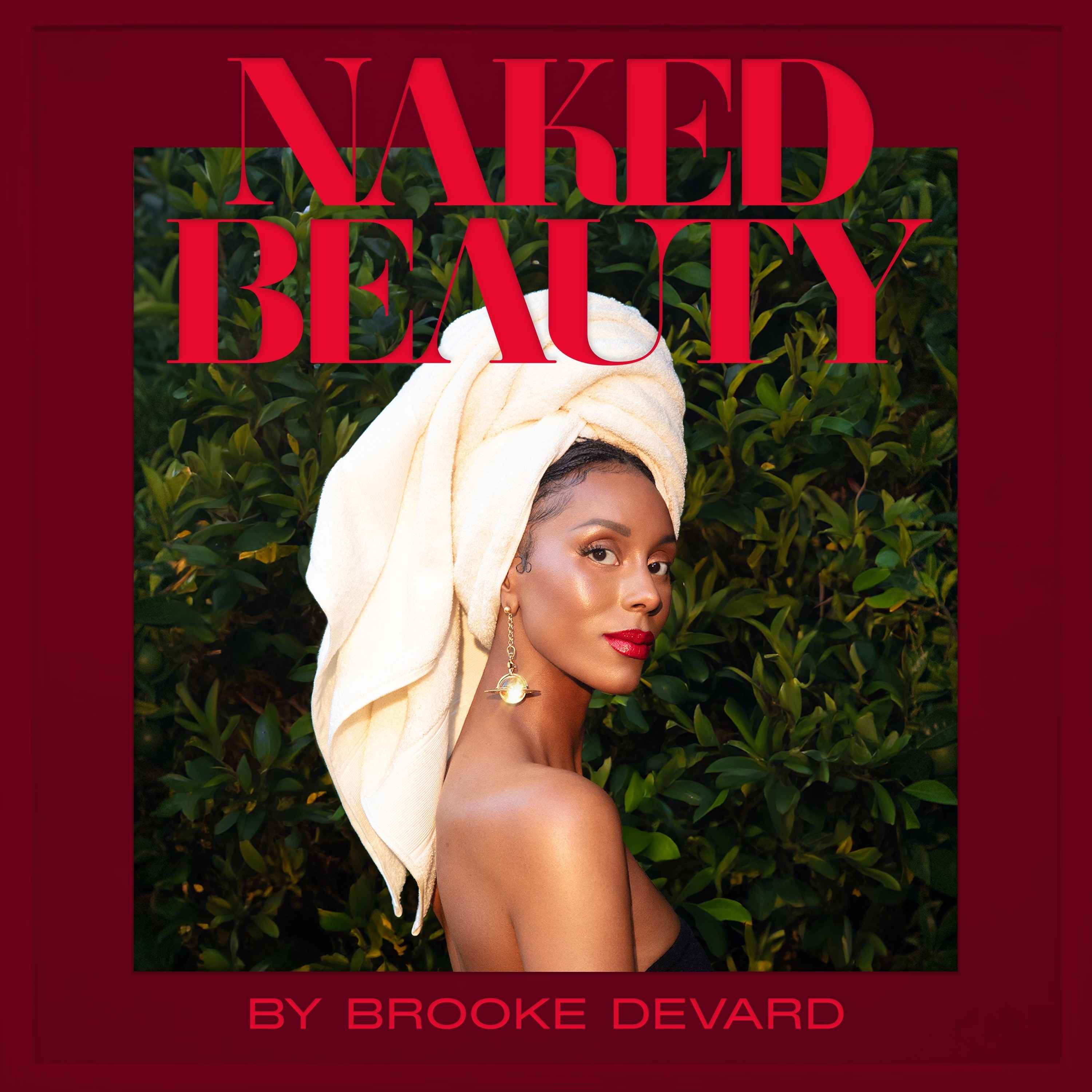
Hello. Hello, this is Brooke Devard, and you're listening to the Naked Beauty podcast. I am recording this in rainy New York. I'm back here for the weekend. It's been a whirlwind past few weeks. I've had a little bit of travel here and there, a little bit of work, but I'm actually really loving being back in New York. Being able to walk everywhere is so great. Today's conversation, I'm throwing it back to an incredible conversation I had with Candice. You all are going to love this. I'm sure. If you've listened to the show, you know I love London. I have such a soft spot in my heart for London. I used to live in London and I need to apologize to all of the naked beauty community in the UK because as my fragrance has been out now for a few weeks, I get so many messages saying, please ship to the uk. Please ship to the uk. I am working on it, but on the topic of my fragrance, I just want to say how gratifying it has been to spend so much time working on something and to have such incredible feedback from everyone that tries the fragrance, people that love it, people that have said, I wear the Naked Beauty fragrance every day. It truly makes my heart so happy. If you haven't had a chance to try it and you're in the U.S. modern magicfragrances.com make sure you look for the Naked Beauty fragrance. Bergamot. Bergamot, neroli, sandalwood, silver cedarwood. That ISO y super, that crisp, clean note. The dry down is a beautiful creamy amber and musk. And I did want to actually read some of the feedback I've gotten from people. This is from Audrey. Mine arrived yesterday. I opened it this morning and tested a spritz and it lasted all day. To be honest, I couldn't conceptualize how it would smell with the orange neroli and green tea, but I completely get what everyone means when they say it smells fresh. It is so good. Definitely fresh and clean, but still has a musky unisex vibe to it. You outdid yourself. My friend Rachel Amandi. You may know her podcast the Cutting Room Floor. She has very, very specific taste. I was, like, holding my breath for her review. She texted me. She said, brooke, I wear it every single day. She sent me a voice note.
- [02:15]
Candice
Okay, not that I expect any less of you, but when I originally saw that it came out, the fragrance, I was like, oh, okay. Like, interesting. Like, I just didn't really know what to think about it because I had always understood fragrance to be a very complicated process and that it's just not as easy for everyone and anyone to do, I guess you could say. Maybe I was doubtful. Even if it was at the subconscious level, I was like, okay, like, nice, Cool. And then you were like, I want to send you one. And I was like, okay, fine. Yeah, amazing. Love it. But, Brooke, I'm not even kidding. It's on me right now. It smells so good. Honestly, I kind of wish I'd had it earlier in the summer, like, in the spring. And I would have worn it all summer, because it feels so, like, light and fresh. Fresh. And I am so impressed. Although now I feel silly for doubting because I should expect nothing less. I don't know. I guess I was thinking that it was going to be like a bath and body spritz. Please don't hate me. I know. That's, like, so disrespectful. It's so elite. It feels so good. It's so expensive smelling. It seems like it's up there with, like, the best fragrances in the world. I genuinely, genuinely love it. Like, would buy it again for myself. So proud of you.
- [03:17]
Brooke Devard
So it's amazing the feedback that I've gotten from people saying it smells so much more expensive than it is because all of my comps were fragrances in, like, the three $300 range. You all know I love Le Labo. I love Birado. Those fragrances usually retail for around 325. So for me to make a really sophisticated fragrance that really lasts with a really delicate balance of notes under a hundred dollars. The Naked Beauty Fragrance retails for $88 was a challenge. But I feel like by pushing the team that I partnered with and everyone involved in the project, we really got to a beautiful, beautiful sense. So this is to say, definitely try the fragrance. If you're interested. We also have samples available. So many people were like, I want to sample it. I want to sample it. If you go to nakedbeautymerch.com you can get a sample of the fragrance. I think there are still a few samples left if you want to try it before you buy. But I'm just very proud of it, and I just wanted to share this with you all because I. I think if you have an idea to do something, just go for it. If you're feeling like putting something out into the world, work really hard on it. Make sure it's something that you're proud of. The feedback that you receive back, it's unlike anything I've ever experienced before. Thank you all so much for your support. I hope you love this rerun episode. I'm re listening to it again because the gems that were dropped in this were everything. And I will be back next week with a very exciting new interview.
- [04:44]
Hello, hello, it's Brooke Devard and you're listening to the Naked Beauty podcast. I am still on my travel. I went to Toky. I had an incredible time. Like truly the best time. I can't wait to do a deep dive episode on all of the beauty findings there. And now I'm in the Hamptons spending time with family. I've been reunited with my son. We're having the absolute best time. Shout out to all my Leos. It's finally Leo season. My birthday's coming up pretty soon and a huge theme for me this August is rest, relaxation, setting time to refocus and just get my life together before the fall starts. I cannot believe we're almost at the end of summer. You all are going to love this episode with Candice and you were really in for such a treat. Like I could listen to this woman speak for hours and hours and hours. She's incredibly smart, incredibly funny, and we get into like beauty conversation, but we also get into very deep conversation about interracial dating and and self acceptance and knowing when to drop toxic friends. I mean, we really run the gamut throughout this whole conversation. And I'm very grateful to Candice for coming on the show and sharing so much with us. Now, if you're listening to the podcast and you love the podcast, please take the time to rate and review. And I do go through the reviews, so I really appreciate them. If you want to drop your social handle in the reviews, I can send you a little DM to thank you as well. But I really appreciate when you take the time to review the podcast. It helps other people find Naked Beauty. And as you're listening, I also super appreciate if you share on social. You can tag me at Naked Beauty Planet or Rookdevard. You know I always love to hear from you all. Listening back to this episode has made me feel very excited and just grateful that I have a platform where I'm able to have conversations with interesting, inspiring women that I admire. And gosh, this is one of, I think my favorite interviews this year. Let's get into it.
- [06:30]
Candice
Candice, welcome to Naked Beauty. I am so excited for this conversation. Author, mother of two fashion inspiration, beauty inspiration, but also for me. And I don't know how you're going to feel about this TikToker Yes. When I see you come across my for you page, it's I like before you've even said the first, because I'm just happy to see your face before you said anything. I'm just like double tap. I love your content so much. I love everything you have to say and I love what a strong point of view you have and that you share so openly. So I know this is going to be a great conversation.
- [07:02]
No, thank you for having me. Major fan of the podcast, so thank you for having me.
- [07:07]
Oh, and I forgot to add podcaster as well. Podcaster as well. And I know you just finished your season, but people can go back and listen.
- [07:15]
Yeah, Closet Confessions Podcasting is so much.
- [07:18]
Work, but I find it to be so rewarding.
- [07:20]
Yes, agreed. Agreed.
- [07:22]
Well, we're going to dive into all things beauty, and I have to start at the beginning. What was your relationship to beauty like growing up? Take us back to being a young girl. Did you feel beautiful? Did you have ideas about what it meant to be beautiful?
- [07:39]
Yeah, as a young girl, very surrounded by beauty. My mom actually used to work on makeup counters, so there was just a lot of makeup in home. My nan was also obsessed with beauty. A lot of lotions and potions. I think, though I didn't necessarily care about any of it until those pre teen stages. I was very much a firm tomboy who was like, oh, just grease me up in cocoa butter and let me go on my way. And then at about 11, the teenage breakout started to kick in. And kick in they did, and it completely smothered my confidence because all of a sudden I. I was known for like, crystal clear skin. And then all of a sud, really bad breakouts, really bad hyperpigmentation. And I don't know if it's still like the thing to do in the UK now, but back then, oh, you've got acne. You're going on the pill. Everyone's on the pill. You get jammed. Yeah, at like 12. Everyone gets put on the pill at 12.
- [08:38]
And I was just like, okay, I'm shocked right now. I don't even think I had my period by then.
- [08:44]
So I started my period at 11, which is still really early. But yeah, I got put on the pill by 12. And they were like, oh, you know your acne. Yeah, they were like, this is going to help control your breakouts. And then I had to use. I don't know what the medical term is, but just what felt like acid on my face. It came in like this squeegee bottle and it really burned. And it took all the colors out of my bedsheets and my pillowcases.
- [09:09]
Maybe it was benzoyl peroxide or.
- [09:11]
I think so. And then they were like, this is going to help with the scarring. And so I was just in this back and forth with my skin for like the next years. And so I didn't feel beautiful at all, if that makes sense. It's just like I was just so concerned with my skin not doing what I wanted it to do.
- [09:28]
And now you have gorgeous skin. So we're going to have to get into your whole skincare routine. But talk to me about growing up in the uk. Where were you? What? Who were the beauty icons of the time? Did you have particular beauty icons growing up?
- [09:41]
Oh my gosh, where was I? I was in Brixton, which is deep South London, as they would say. Did I have beauty icons? I did. It was like Mo. It was like Stacey Dash from Clueless. It was. And Tamira. It was. Even though we were in the uk, we were being heavily influenced by like American sitcom tv. And there was a UK band out at the time, three very beautiful dark skinned black girls called Cleopatra.
- [10:09]
Like wait, Cleopatra are. They're British?
- [10:12]
Yeah, yeah.
- [10:13]
I had no Cleopatra coming at you.
- [10:16]
Cleopatra coming at ya. Cleopatra coming at ya.
- [10:21]
That was everything to me. I did not know they were from the uk.
- [10:25]
Yeah, they're from the uk. And so what was great about the time that I came of like preteen age is that tomboyism was style. It was massive baggy combat pants, All Saints. Like I said Cleopatra, I didn't necessarily feel the need to be a certain body type or show skin and that was great. That didn't really happen until like the Britney and Christina time. And even then I was just like, that's not what I look like. And that's fine. I would say though, as I got a little bit older, then came like the Foxy Brown, little Kim type. So on one hand it was like, no, I don't want to wear a crop top like Britney Spears. But then we all know what little Kim and Foxy were wearing. So it was in a completely different stratosphere. And I started, we call it clubbing in the uk. So like going out to clubs. I started clubbing really early. Like I was the girl with the fake ID. So I was in the clubs from like 1516 soaking up like dance hall culture and like Sean Paul was big bashment. Music from Jamaica was massive. And so like it was like tomboy Monday to Friday, Saturday Night, though. The shortest shorts you could imagine. The tiniest top you could imagine. Because I'm going to a dancehall club, so.
- [11:41]
Right. Well, I relate to that because growing up we went, I'm from Manhattan, New York City. We would go to nightclubs at like 16, and everyone else, what, you know, in the suburbs, they were going to house parties and drinking out of, like, I always say, like the red cups. Like, I never went to those parties. Look at the red cups. I think they're solo cups. And like beer pong have never played it. I was going to the nightclubs with my friends. Like, that's what we did for a night out.
- [12:05]
Yeah. And so you just, you just soaked up that culture. Although it was like, looking back, I feel horrified because it was deeply dangerous, adultify, too hypersexual, just everything you shouldn't be doing. But it just made for great stories. And also, I think the reason I'm so comfortable with my personal style now is because I weeded through a lot of stuff really early. Many of my friends, it's not until their mid-20s that they really started like experimenting with dressing. I was like, yeah, I was wearing that at 15. So I've been able to like come through. And now if you go shopping with me, I can go through seven shops in half an hour. I don't dilly dally.
- [12:51]
Yeah, you know what you want.
- [12:53]
I know what I want. I know what I feel good in. I'm just rifling through those rats. Like, no, no, no, no, no, no. So, like, I'm really, really keyed into what I want, how I want to show myself to the world now and not just in a sense of clothes, but also makeup. So.
- [13:07]
Yeah. Now, how old is your daughter now?
- [13:09]
He's 9.
- [13:10]
Oh, my goodness. Wow. So how do you talk to her about beauty?
- [13:15]
How do I talk to her about beauty?
- [13:17]
And you know what, let me ask for both kids, you know, because I think we always have these discussions about their daughters about beauty, but I would love to hear for your son as well. How do you talk to both of your kids about beauty? And how old is your son?
- [13:28]
My son is five.
- [13:29]
Okay.
- [13:30]
I also have a stepdaughter who's 15.
- [13:32]
Okay.
- [13:33]
So when she comes to our home, the dynamic completely changes because then my 9 year old wants to be more like. And the conversations around beauty with my daughter were really quite tough. We had quite a harsh incident when she was 4. A girl at the school she was at refused to play with her because she was black. So we moved from London to like this teeny, tiny village.
- [13:54]
What happened in that specific instance? Did the girl tell your daughter, like, how did it all go down?
- [14:00]
So I'm walking at the end of the school day to pick my daughter up from school and I get a call from my daughter's teacher. We had a little bit of a problem today at lunchtime. So this is four hours back. Yeah, go on. A girl completely refused to play with Esme because she's black. And she said her skin was dirty and she didn't like her. And the teacher, who is white, was so flippant and she was just like. And you know how kids can be. We gave her a two minute timeout. Hopefully that solves the problem. I've gone in there, like, I'm on the phone to my best friend, like, crying, because I now know what I have to pick up. It's not just my kid, it's her confidence, it's how she feels about herself. It's the beauty standard. Like, I've got all of this to pick up and my best friend is on the phone and I never forget. She said, please handle this situation more like Michelle Obama than little Kim. She. She was like, please. Because she was like, as the only black in the village, if you go low, it's going to make the front pages. Like, please try and. Because I was ready to flip some tables, go in, collect my kids, give everyone the evils, have a conversation with the head teacher maybe a week later where she lets me know that they are working with a charity that can help detect terrorism in young kids. And they, this charity have found that white children within that school believe in the National Front, which is a very racist terrorist group in the uk. And you know what I said, ma'am, don't even finish the sentence. I was like, deregister her now. Right?
- [15:38]
Wow.
- [15:38]
She was like, oh, can we work through this? I said, you, you've just told me you're having problems with the National Front. My daughter's the only black kid in this school. This is going to escalate. And now I've got to go protective mode. And then I ended up on a whim because we really couldn't afford it. Then I put my daughter in a fee paying school and like, we rock up the first day. And I'm like, okay, so this is where they're hiding. All the Nigerians just blooded with black kids. I was like, oh, we're home. I just didn't know we had to pay to be home.
- [16:09]
Right, right.
- [16:11]
But that was the first Time she questioned her beauty in a way that was outside of anything I could expect. She was four.
- [16:21]
Heartbreaking, you know, and traumatic as well for you as a mother. Because all we want to do is. My son is two and a half. All we want to do is protect them. That's like, the only thing that we think about. And when things like this happen, you're just reminded how little control you have.
- [16:36]
Exactly. And so now the school that she's in is far more diverse, and she's got a lot of friends who look like her. And so the conversation is like, how should my braids be? Her and her have been rewatching Moesha. So it's like I'm seeing myself watch these things for the first time. And as much as I know I can't control the world and what the world thinks about her or her beauty, I know how hard I'm trying in the house. I'm trying so hard.
- [17:04]
That's beautiful. I love to hear that. One of the things that you write about so well is how black women are often seen as less desirable, even from black men, which still boggles my mind. I was actually getting my hair done, talking to my hairdresser, and she was talking about how hard it is as a black woman to date in Los Angeles. She was saying, in her experience, a lot of black men do not want to date black women. And this is a topic that you've written about. I'd love to hear your thoughts about black women and desirability.
- [17:33]
Oh, it's such a. It's such a sticky conversation. And the only reason I think a my voice gets listened to when I speak about this topic or people aren't, like, affronted is because my husband's very, very black. That I think if I were single or married to a white man, there'd be such pushback on this conversation. But when I say the things I say and then present this very Nigerian traditional man, everyone was like, oh, damn. So maybe she has a point. I have found, especially in the uk, it not so much to be about, like, not desiring a black woman. It's the. It's the idea that being with a white woman, they think that represents marrying closer or marrying into whiteness. I think in their minds, that means they're more successful, that they're more protected. It. That's the. And this is a conversation I've also had with black male friends who exclusively only date white women. And they're like, oh, Candice, can we have a drink before you start? And I'm like, no, I'm. Please just tell me. And that's not to say that I have no pushback on people having preferences. Absolutely none. I'm just saying that at some point, when we're looking at nine out of 10, well, to do handsome, seemingly good, characteristic filled black men decide to date out of their race, I'm like, the data suggests that that's not necessarily just preference. There is something there that makes you feel that you are more established, more of a success. And it's a very prickly conversation.
- [19:10]
So it's the proximity to whiteness and the perceived success from the proximity to whiteness that you think is driving it less of. I don't find black women as attractive.
- [19:21]
Oh, absolutely. And this is the thing, because I'm like, I have beautiful, smart, funny, well to do black single friends. And I'm like, something's not adding up here. That saddens me so much. But now, as the mother of have that black son who is gonna go into the world and make his own choices, I am hyper aware of the conversation surrounding beauty standards in our house. Even the imagery we have on our walls. I've got. I've got stacks of magazines laying around. And I always, like, put the Erykah Badu cover on the top, like, I'm free, right? I'm very purposeful about seeding black female beauty in my house. So that should he arrive at the age where he wants to date and he's chosen to date women, and he says, you know, I'm actually in love with this white woman, I won't feel as though he's done that because he thinks that's better. I will be like, that's just the person he loves. I. And I also feel like that because I feel like he couldn't have a better example of black love than the relationship he's seen his mom and dad have.
- [20:35]
I love how you're being so intentional about that. And I completely hear you on being in a relationship for a long time. I think what you and I have in common is you've been with your husband for 12 years now. Yeah, I've been with my husband for 10 years. Not married all 10, but we've been together for 10 years. And sometimes I think, if I were single today, I don't know that I would be like, I talk to my single friends, and I am like, there's just a lot going on out here. But I agree, you have to widen your aperture, if you will, in the uk, do you find colorism? Because I know you've spent time in New York and you're in the UK now. I've, I've also lived in, I lived in London for two and a half years. Do you think colorism is a big issue in the uk?
- [21:20]
Oh, it's so huge. It's so huge it's almost crippling. And one of the issues, I wouldn't say it's an issue. I'm in a funny time in my life and my career where there's seemingly like the Oprah effect around me. I'm a very dark skinned black girl, but because I've been able to be successful in multiple columns, everyone's just like, oh, but it's just Candice. It's different. It's Candice, it's different. And so it's almost like, guys, this is a weight on my shoulders too. And sometimes I feel like I've been excommunicated from the conversation because the reality is certain brands are gonna phone me because it's Candice and they like my personality, but they also know that they're ticking a huge diversity box by hiring me. So it's almost like, oh, this is really painful. And yeah, I know there are women my complexion or even darker who can't get certain job roles, can't get a look in, especially if they work in like a public facing role. It is so crushing here. It's like our last dirty little secret. It's so crushing here that I'm seeing women who should be decades ahead in their career just hit this stealing and like, just get constant pushback. Whereas someone who is more befitting of the beauty standards look is cruising ahead and with less, with less of a bountiful cb. That's the only nice way to put it. I'm like, and, and what have they done? What? You know, what have they earned? What, what have they been doing? It doesn't matter. They fit that vibe. And so I would say, and this isn't to say because I've had conversations with friends and family who live in New York. Of course this is an issue. The world. I just feel like in England, once you get to a certain place in your career, it becomes very evident that that is like the final hurdle.
- [23:11]
Yes. You feel like you've almost hit this glass ceiling and a lot of that is driving your desire to move back to New York. Right?
- [23:19]
Oh, gosh, I gotta go, babe. I got to get home. I'm like, I've got to go.
- [23:28]
You, you are very New York. Your, your vibe, your energy, everything for me, very Much communicates you need to be in New York now. The fashion world, the beauty world, not always the most accepting, not always the most diverse. I want to hear what made you fall in love with the world of fashion and beauty.
- [23:49]
It's. It's constant reinvention. It is that, like, almost shield between me and the world. I shaved my head when I was 17. I'm five now, so I've had this haircut. Like this is all my kids and my husband know. And I remember walking into college that day and like the whole forum room just falling silent and people just being like, have you lost your mind? Because we were taught that our hair is our beauty. And I remember making that decision. And actually I was influenced by a woman in New York. I was in Queens at the time, staying with family, and I'm trying to cross the road and there's this black woman with a shaved head in like a massive Rocaware puffer jacket and like knee high Timberland boots, and she's crossing the road. And in. In my mind, I've not even noticed that the traffic lights have gone red. I am sure every car is stopping for her because the aura coming out of her that I just connected to this hairstyle, I was like, I want that in my life and I want it now. It had been 17 years of braids, cornrows, weaves, bad perms. I was like, I'm out. Look at her. Like, I couldn't. So I came home, went straight to the barbershop, and just cut it all off. And I think that was like the tipping point of me deciding I get to make choices about how I show up in the world. And so then that seeped into makeup and clothes. And the thing with like shaving your hair off at 17 is like, if you're just. If you're gonna live it, live it. So now I just tried any trend, and I really found ways to make these trends work for me also. I come from the kind of family that. So my grandparents came to the UK as the Windrush generation. The young people that were asked to come from certain islands to help this country recover after World War II.
- [25:34]
I've never heard that term windrush. It's called. Why is it called Windrush?
- [25:38]
Because the boat, the boat that a lot of them came on were called was called the Windrush.
- [25:43]
Ah, okay.
- [25:44]
Even if you didn't arrive on that boat, if you arrived in that time, you're defined as the Windrush generation. And I remember, like, of course they struggled to get jobs. Because it was like, no blacks, no dogs, no Irish. These are literally posters on doors. And my natural nana, my granddad, always used to say to me, the difference was how you dressed. You could maybe get a yes in this interview because you had on your Sunday best. And so, like, I'll just be going to meet friends, especially if they're. If they're non black, and they'll be like, God, girl, you're so dressed up. And I'd be like, really? This is something. Like, I'd just be like. And I've noticed it's because, like, I've been taught to, like, always look a certain way, always, like, carry that vibe. And it's just seeped into my everyday life, and I love it.
- [26:31]
And. And I love that you document and keep us all inspired. I think one of the things that really stands out to me is from the outside looking in, the persistent energy levels, you have to look like. It's like you're doing the peloton, you're doing the treadmill, you're working on a book, you're doing your podcast, you're getting the kids together. And then it's like, oh, and by the way, I'm wearing this fabulous outfit with this fabulous jewelry, and the makeup's perfect. And I'm like, the energy every single day to look great and do all of these other things. It's. Do you take, like. Are you taking vitamins? Like, what. What's the. What's the deal?
- [27:04]
How.
- [27:05]
How do you have the persistent energy to do it all and look great?
- [27:09]
Do you know what it is? I'll be really frank, and I don't think I've ever discussed it in this way in a podcast. In my early 20s, I really struggled with drugs. I was taking so many drugs. And I think in, like, this clean, sober era, I have had to find ways to manipulate that feeling for addiction. And this conversation I've only really just landed on with my therapist, where she's like, is running on your treadmill every day really about a personal goal? Or is it about control and addiction and success? And so I think I'm arriving at a space where I'm like, actually, all these things are in place because they're the best of the addictions.
- [27:51]
Wow.
- [27:52]
No one's going to send me to rehab for getting on my treadmill every day. No one's going to send me to rehab for wanting to wear a fabulous outfit. But I am not. Like, it's because you lack control in other areas. And this is how I'm like, buying it back. And so when I have this discussion with women who are like, how do you do it all? I'm like, it's more of a why. It's definitely more of a why. Because on a day when I'm even sick and I can't run on the treadmill or I can't get dressed up, the plummet in my mental health is so dramatic that I'm like, yeah, I don't like it here. And that's. This isn't to say that even the way I'm dealing with it is the healthiest, but I have taken note.
- [28:32]
Wow. I appreciate that openness. And that absolutely makes sense in terms of being able to, like, you have these things that you can't control, but what you can control is your workout, how you get dressed every day for you. And in the path to getting sober, was there a specific moment that pushed you towards sobriety or was it non label?
- [28:52]
It was on and off. And then I fell pregnant with my daughter and I was like, that's that, right? It was very, like, almost clean. It was just like. And also I fell pregnant at a time where I felt like I was just between two worlds. I was in this really new, loving relationship with this guy who is now my husband. But I was also, like, living in my first bachelorette pad and all my friends were staying at my house and we all had shitty jobs so we could just get schrolied and just rock up to work the next day. Thinking of last night, like, it was so Amy Winehouse esque, like, one side of my life. And then, then falling pregnant, I was like, lurched out of that world. Yeah, I was like. And I remember, like, excitedly giddily telling my friends, oh, I'm pregnant. And then that Friday night, them being like, oh, so are we getting any drugs in? And I was like, oh, God, guys, I gotta bounce. Like, there was just no right. And they're still young, they're still having fun. And I had my child quite young, 24.
- [29:53]
That's.
- [29:54]
Yeah, that's. Yeah. And so I was, like, automatically kicked out of that fun but quite destructive episode.
- [30:02]
Are you still friends with them, this group? No, not at all. How are they doing?
- [30:09]
Everyone is doing great, but I'm better for it that they're doing great away from me.
- [30:16]
I understand.
- [30:17]
I'm like. And there was a lot of, you know, as the years have gone on, there's been, like, stories about jealousy and just horrendous friendship attributes where I also had to recognize that a bit like, Feeling unloved by black men. I think I held on to friendships for too long because I was scared of dealing with myself. And so I kind of invited poor treatment and gossiping and backstabbing because I was like, well, maybe this is as good as it's gonna get, you know? And I feel like motherhood just kicks you into another gear because it's just genuinely not about me anymore. And I had to be like, am I really gonna to bring a kid into, like, quote, unquote, a crack? Then, like, no. So you got to get it together.
- [31:01]
Wow, you've said so much. That's really resonating with me. For people that feel like they're maybe in a group of friends that's not supportive to their goals or how they want to show up in the world, what advice would you give them to kind of slow. You know, getting pregnant is a great out. A great out for a friend group that's not serving you. But if you don't have that out, what is a good way to start slowly removing yourself from a friend group that feels toxic?
- [31:28]
I would say have that conversation first. I was on Live earlier today where this came up, and someone was like, get rid of all of those friends. And I was like, oh, oh, hold on, hold on. Because I now know as I swim in different friendship circles, that I'm the least developed in some of my friendship circles. Like, I'm the one that knows the least about business or investing. So imagine if that group of friends were like, oh, you're so, like, beneath us. Like, get out. I would say always have the conversation, because it doesn't mean that every single relationship needs to be over. Maybe there are a few friends you can take with you, but try and have that conversation first. And if you find then that still no one wants to come round to your way of thinking, you're just gonna have to be prepared to grieve. And I think, of course, we're used to grieving the actual dead. And of course, we're used to grieving romantic relationships. But no one's taught us how to grieve friendship, and they suck. They like you more than any guy you're seeing for a year. If you've shared five years of your life with a girlfriend, they know so much more about you, you're so intertwined, that then having to, like, pull away from them is literal grieving. And I think we don't respect that enough. It's just like, oh, they were just a friend. They were so much more than that.
- [32:50]
I love how Issa Rae really focused on this for an entire season of Insecure with Molly. It's a story that I hadn't seen, especially with black women, but really with any women on television before.
- [33:02]
Yeah. Like, and it was just so real and honest. Like, you are thinking about that person. You do for a whole year. I'd go to reach for my phone to be like, oh, my gosh, have you just. And I was like, oh, well, that's not gonna work. Like, it's just a reflex. The same way when my dad died for six months, I would, like, go to pick up the foot. No, no one's gonna answer. And so you have to give yourself that space in that grace. But also, and I'm speaking way more to, like, younger generations than me, you've got to go outside. You've got to go outside.
- [33:35]
The kids that are just on their phone inside all day.
- [33:37]
Honestly, this, like, this vortex of tick tock, which I love, but, like, you've got to put the phone down and, like, push past the anxiety of being outside none of these friends. Okay. You're going to make online friends, but even at some point, you're going to want to meet them in real life. Life. And I think we've lost the juice for just, like, going out or even going out by ourselves. Like, so many women I know specifically, they really struggle with that. And I'm like, I. I love theater, dinner, whatever. I love going by myself.
- [34:10]
Yes. And I'm sure you're serving a look even when you're all on your own. Talk to me about the products that you use for your signature makeup look. Because it's. The complexion's always flawless. The red lip is always flawless.
- [34:23]
It was so funny. We are literally sit at my vanity. So let me.
- [34:26]
Let's get in. Yeah, the bag is coming out. When people have the products with them, I get really excited because then I get the visual as well.
- [34:33]
I hope I pronounced this right, but Uoma. Beauty.
- [34:36]
Yes. Beauty. Yes.
- [34:38]
Yeah. Oh, my gosh. So this foundation is called say what? Weightless soft matte Foundation. Oh, and listen, I'm a fenty girl through and through. I've got a lot of fenty products. But there's something about this foundation, and I'm a naturally oily girl, and it just allows my natural oil to just peek through without me looking greasy. And every time I, like, put this on on live or on TikTok, everyone's like, what's that foundation? What's that? This? I cannot. I cannot.
- [35:09]
And do you use a primer before the foundation. No, no.
- [35:13]
Okay.
- [35:13]
Yeah.
- [35:14]
I use La Roche Posay, Anthelios sunscreen, sunscreen, spf. It's one of my favorites. And then I do a little. All before the spf, I use the ordinary hyaluronic acid.
- [35:27]
Okay. I love this. This one from the ordinary.
- [35:31]
And it's so reasonable. Like, it's not a hefty price tag. I am a huge Dr. Barbara Sturm fan. Huge. What is not a fan of that is my AMEX card. Because, baby, why is that? 30 mil, serum 200.
- [35:50]
I know, I know, I know. It's. It's. It's up there in price. The hyaluronic serum is wonderful, though, I think from Dr. Sturm.
- [36:00]
Darker skin tones. Oh, my. Oh, great.
- [36:03]
But it's pricey.
- [36:04]
It's pricey mascara. I've only just started using mascara because I wore fake lashes for 10 years. Is.
- [36:12]
And so can we pause there and talk about this? Because I am part of the. No lash. I mean, I've got little baby. Baby. I mean, this is me wearing mascara. I'm gonna, like, get as close to the. You can see.
- [36:22]
Oh, yeah, I see.
- [36:23]
I see.
- [36:23]
Yeah. Yeah.
- [36:24]
You're like, if I. If I squint and look, I can. I can see your lashes. I've got little tiny lashes and I, of course, eyelash extensions. When you get them, gorgeous. Oh, my gosh. Love them. But then it's like, then they fall off and you have to get them filled in. You've got to. It's like an hour and a half appointment. I don't have this type of time in my life. But the reason why I stopped doing it is because I genuinely felt ugly when I didn't have the lash extensions. And I was like, this is not a healthy thing to not feel beautiful. Which is the way my face has been my entire life because of these, these lash extensions. So I was like, but. But I feel the temptation calling my name again. Especially in la. All the girls here, it's like the lashes are on point, the hair is on point, the nails are on point. And I'm like, can I just get like a little, like, light lash extension? I'm trying to hold back, back.
- [37:10]
Honestly, lashes had me in a chokehold for 10 years. And when I was last in New York in February, I got a really gruesome eye infection. And I was like, I'm done. Because I wear contact lenses as well. I'm terribly short sighted. And I was just like, I'm so done. Because if it's not the falling out it's the re sticking. It's the whole thing. Yeah. I was like, no, no, no, no. And so I'm pretty new to mascara, and I think Charlotte Tilbury's PR team sent me pillow talk. Nice push up lashes. So good. So, okay.
- [37:44]
She does have great makeup.
- [37:45]
Oh, so these are like. Another thing that I swear by is Laura Mercier's setting powder.
- [37:51]
The loose setting powder. So good.
- [37:53]
Oh, my gosh. And I know so many people are like, oh, there's different ones. There's better. I'm very much. If it works for me, I'm gonna mess with it until they discontinue it. Like, and discontinuing something is my pet peeve. I'm like. Like, this has been in my routine for years. Don't take that away. But most importantly, the only thing that I cannot live without is a red lip. I just.
- [38:16]
Yes, that's your signature.
- [38:18]
I freak out. I freak out. And so I always line my lips in a really dark lip liner by Mac called Night Moth. And people are like, oh, is that black? No, it's a really deep purple. A very, very deep plum. And then it depends on the day, but I usually fill my lips in with Fen mvp. Love a bit of MVP on. On a. On a. On a different day. Ruby Woo by Mac. The classic Ruby Woo. My. My only issue with Ruby Woo is it's so drying. Oh, my. Oh, that formula. I'm just like. I just feel like my lips are like nails on a chalkboard. But as long as I have trusty red lipstick with me, I feel like anything's possible.
- [39:03]
That's like your signature face. And what about Skincare? Maybe take us through your nighttime routine. So what are you washing your face with? What's the moisturizer situation? Are Retinol. What's. Give us the full rundown.
- [39:14]
Okay, so I'm a. Guys, all the dermatologists listening or whatever. Please don't DM me. I know I'm crazy. I'm like a triple cleanser. So I use some kind of, like, I love a balmy cleanser. Like a very oily balmy cleanser. And I love Ren Ren. Do a great one. I'm using one by. I think.
- [39:35]
Is it Elmis Elements, the naked cleansing balm.
- [39:39]
Oh, it just has to be good and greasy to get all the makeup. Yes, yes, I do that now. I'm currently using. I think it's Purity two in one cleanser by philosophy. That's what I'll use. Second and to make sure every single thread is off it's something by Sarah vay, Sarah V. That's my final now after that, I'm a huge. I can't remember how I stumbled across this product. Pill pads by Dr. Dennis Gross.
- [40:09]
Yes. An iconic product beloved by me. Any.
- [40:13]
Oh, my. Oh. If you think you are on the cusp of a breakout, that peel pad just whips you back into shape. Also, it's really been cool to live through a time of like abrasive, gritty exfoliants. And now we just have this pad that doesn't feel as abrasive but is really doing the work. I do that then twice a week. Only twice a week. I use active ingredients. I'm on like a retinol, quite a low dosage. And I was the girl when the whole retinol thing blew up on TikTok. I was hammering it every night and then I was like, why is my skin literally falling off? Number one, I was using it every night. Number two, I didn't understand. You really have to moisturize before you go in with that. You. You should not just slap it on your naked skin. So now I'm like a bit of a barrier.
- [41:07]
Helps with tretinoin.
- [41:08]
It's just barrier.
- [41:09]
Yeah. It's a very intense. Intense chemicals that you're putting on your skin. Yes.
- [41:15]
And so I only do that twice a week. And before I've put that on, I usually use some kind of water cream I've recently just started using. Is it Tatcha?
- [41:24]
Yes.
- [41:25]
Oh, my gosh. I love that water cream. Then I'll go in with that. But the rest of the nights it's just a bit of water cream. But then the creme de la creme Advanced Night Repair by Estee Lauder.
- [41:37]
Can I get name in? I always say a cult classic for a reason. There is a reason why people love this product because it's just incredible.
- [41:47]
It was like gifted to me a year ago. And I'm the kind of gal that I'll try it if it's gifted. And then I woke up the first night I was like, okay. Wow. Second and third night, I was like, good lord, I just look renewed. And so I'm always trying to push that product on people. I'm like, have you tried the advanced night repair? But that's me at night.
- [42:09]
Love it. Love the thorough nighttime routine. And it's all paying off because your skin looks absolutely incredible. So where do you stand on the Botox filler conversation? You know, one of the big kind of light bulb moments I had was as you look at people, influencers included, but certainly celebrities. How few people have even their, like, original teeth? Like, everyone has veneer. I'm like, everyone has veneers. So, like, do I need veneers? My teeth, I thought they were fine. Very few people are walking around with, like, their original face, which is fine. And I have absolutely no judgment about it, but wondering where you. How you feel about the cosmetic enhancements that people are going for now.
- [42:49]
I have no judgment. If I wasn't so scared, I'd be chopped up to the hilt, darling. Like, I'd be on every table so fast. I'm just a scaredy cat. Also, like, I've noticed that just a little bit of, like, lack of elasticity. I've just noticed. I'm. Yeah, I'm like, okay, that looks a little bit droopier. And I remember I went to see someone who deals in these things and she was like, girl, absolutely not. She was like, I'm just not injecting you. She was like, I could take your.
- [43:19]
You wanted to get injections?
- [43:21]
Yeah, I wanted to, like, like, under my eyes. I was like, just fill them out a bit. She was like, get out of it. Like, she was.
- [43:28]
You literally have nothing to fill at all.
- [43:31]
Like, we are not doing this. And I was like, oh, okay. But I look at women, especially black women, who are now saying, like, they're using it to prevent certain things and they look good. I'm not gonna. I'm so, like, non judgmental. Because I think if we're really gonna have this discussion about body positivity, body neutrality, if we're really gonna go there, you also have to allow people to do what the hell they want to do.
- [43:57]
Yeah.
- [43:58]
You know, and as long as it's safe and you are. I wouldn't personally never trust any kind of injectable or cosmetic surgery that's a discount or on sale, as long as it's safe and well priced. I'm like, do you, baby? Do you? It's not my only issue as a mother. This is where the conversation gets interesting is I'm constantly having to reiterate to my girls, these faces aren't real. Real. These bodies aren't real. Like, you just have to keep drumming that into them. Especially as someone who has a proper mum body. Now, I've had two kids. I'm like, these rappers who are like three kids deep and they've got 14 abs, it's not real. Even sometimes I get sucked into it and I'm like, oh, should I just, like, call the surgeon? And I'M like, like, nah, you're just not. And that's not to say that I'll never be ready. I'm just like, also, I'm having the conversation with my therapist about deeply understanding, even if just on a subconscious level, how much fat phobia impacts my life. I'm really starting to have that conversation because as someone who's defined as mid size in the fashion world, so not plus size at all, but also not the smallest, I can get away with believing that conversations surrounding fatphobia are not for me. They're not about me, they don't need to include me. It's. That is a crock of. It's always like right at the front. I'll. I'll have two slices of cake and be like, oh, you've really overdone it. Or I'll see an image from a different angle and be like, well, you know, what would be the harm of just blurring the tummy area? It's actually fat phobia and the way it has just seeped into our entire beings and how I'm having to like decolonize my brain. Because there is also another level of fat phobia for black women. Our bodies have been picked apart for like 500 years. Quite literally picked apart. We are, in a lot of aspects, naturally curvier. Our curves fall in a different way, and yet those curves get taken away, put on, on a body that isn't necessarily black gets like revered and upheld whilst we get shunned and told to get on the treadmill. And at 35, I'm just having this like, come to Jesus moment where I'm like, everything's been a lie and I need, and I need to work out how to get out.
- [46:40]
It's so real. And it's something that I have found that I've had to actively train myself not to think about or focus on. I've had huge fluctuations in weight with my pregnancy and I am now close to my pre pregnancy size. I don't blame myself or anything, but the clothes that I wore before I was pregnant fit. And I get messages from people being like, oh, you look so good, what are you doing? And I've actually chosen specifically to not engage in those conversations because I'm like, I want my body to be the least interesting thing about me. I don't want it to be the focus and something you talked about. This was a wow. Now, a few years ago that I heard you have this conversation, Jameela's podcast, about choosing what to share online versus what to keep to yourself. And you made the decision to not talk about race online. And I. It's so funny. Yesterday I put something about the affirmative action ruling of the Supreme Court and I took it down so fast, I got three DMS within 20 minutes. I said, you know what? This is why I don't have these conversations here, because I'm not going to spend my Sunday going back and forth with a stranger about something. And also, if you're coming to me as the source for your news, that is not a good. You know, we've got. We've got other people, better people and better journalists that you can follow if you want that sort of discourse. And that's not how I'm going to use my platform and space. I'm here for fun and a bit of lifestyle. So talk to me about that decision to not have those conversations on social media.
- [48:10]
Yeah, they were just getting too heavy and they weren't. They weren't fulfilling me. They weren't paying me emotionally. Like, I was constantly starting these conversations and then leaving, drained. Like, two days later, I'm curled up in a ball still arguing with a stranger about why, at the very base of it, why black people should be seen as human. When we really cut through all the language, it's like, and why we should have equal rights. That's really what we're arguing about. And I was like, also, though. And I, I don't know if I said that on this podcast, and I'm. I'm clearly in a very open mic, throat chakra stage of my life. But I also noticed how in a, in a George Floyd era, how conversations about race fed the algorithm and how all of a sudden, if that was the conversation, the likes were rolling in and the reshares were, and I had to actually have a moment. And I did admit this on my Instagram, I made a post about it where I was like, I've fallen into this rabbit hole of watching. When the engagement starts to dip off, I'll speak about race again. Just to get it back on. I said, I'm now just abusing myself for likes. This is insane. I don't want to do it anymore. And. And that was like so many black influences then DM'd me and they were like, oh, gosh, like, girl, you know, in exposing yourself, you've made me feel exposed because I now having to be like. And I do the same damn thing. And it's like we were just on this content wheel of trauma and pain. And I was like, And I've had Enough of this for the entirety of 2020. There is more to blackness than being shot, than, like, fighting for our rights all the time. Sometimes we want to drink a little liquor and sit in the sun and just talk about shoes.
- [50:01]
And to do that, can we do.
- [50:03]
That, you know, in the data, just not be as respected as our trauma, as us literally dying? I was like, how can I, you know, I can't solve all the world's problems, but how can I not put into this pot anymore? And it's been the same thing with my body, because I've been sharing how much. I've been training for a while. People, I think they just saw that as an entryway to go, you've lost weight. You look great, or what? And I had to shut that down real quick. I was like, listen, guys, I never once got on any app and said, the aim of 2023 is a body transform, and I'm bringing you on my journey. It's just me sweating on a treadmill every day. Again, what fat phobia has done in our brains, it doesn't allow us to just see, especially a woman working out and just see that as her wanting to get her sweat on and have a good time. It has to be connected to physical change. Yeah. And I was like, in my social spaces, get. Learn to divorce the child, too. Because even if I was seeking a body transformation, it is absolutely not a conversation I'm going to have publicly because I feel like once you open that door, it's really hard to close. And then for the rest of the time that you're, like, defined as a public figure, everyone thinks they get to have an opinion on weight fluctuation. Is she pregnant or is she not pregnant? Like, stop.
- [51:34]
I completely agree. I completely agree. I mean, they do it to Oprah, and it's Oprah. I'm like, can we just. Just not talk about her weight? There's so many other things we can talk about for Oprah. But she. She introduced the topic, what, in the 90s, and now it's been this kind of persistent through line throughout her whole career. We're at our final question, and I'm so curious for your answer on this. When do you feel most beautiful?
- [51:57]
It's so the opposite to what everyone would say, but it's with a lot of makeup, in a really great dress, like, getting ready in my closet with my friends playing music, like, like preparing for that moment. That's that spectacle. That's when I feel most beautiful. And I know there's a therapist listening who's like, oh, no, you should have said it's when you're barefaced. And I get it. I get it. I love myself. I get it. It's like I just like being done.
- [52:31]
The transformation.
- [52:32]
Yeah. And I guess because I used to go to, like, I don't know if you guys call it stage school. Performing art school. I used to go to performing art school. And I think there is that moment of like being behind the curtain and then you go on stage and like my wardrobe and this makeup and this perfume, it's all now toys and a stage. And so when I'm just about to get into that cab, I'm like, yeah.
- [53:01]
I love it. I love it. Well, it's been truly like my honor to be able to speak to you and get your story. I've learned so much in this one hour we've had together. So thank you so much, Candice, for your time today.
- [53:12]
Thank you for having me. This has been awesome. Thank you.
- [53:19]
Brooke Devard
All right, that was my conversation with Candice. Isn't she just incredible? Please make sure you check out her podcast as well. We'll link to it in the show Notes. Notes. All of the products, everything we discussed. It's always linked in the show notes. Thank you to my producer and Ba Cassanga for putting together this episode. And I will be back next week with another incredible interview. Thank you so much for listening.
- [53:49]
Medicaid
Rediscover your skin's youthful glow with Medicaid. Medicaid is a British clinical skincare brand recommended by dermatologists for age defying results with without compromise. Right now, Medicaite is having their exclusive 25% off friends and family sale. There is no better time to shop Medicaite's best selling results driven skincare. Like Medicaite's Crystal Retinol Night Serum. This award winning night serum works 11 times faster than traditional retinol to visibly smooth stubborn wrinkles, brighten dark spots and firm skin without irritation. Or Medicaid's cult favorite liquid peptide serum proven to smooth fine lines in just seven days. You'll also love their advanced night ceramide cream. It's like beauty sleep in a jar which works overnight to firm and smooth skin. Don't Miss Medicaid's exclusive 25% off friends and family sale now through Sunday, February 23rd. Visit Medicate US. That's Medik. And the number eight US to save 25% on age defying skincare.