Loading summary
Transcript151 lines
- [00:00]
Bozema St. John
Foreign. Let's go girls.
- [00:06]
Brooke Devard
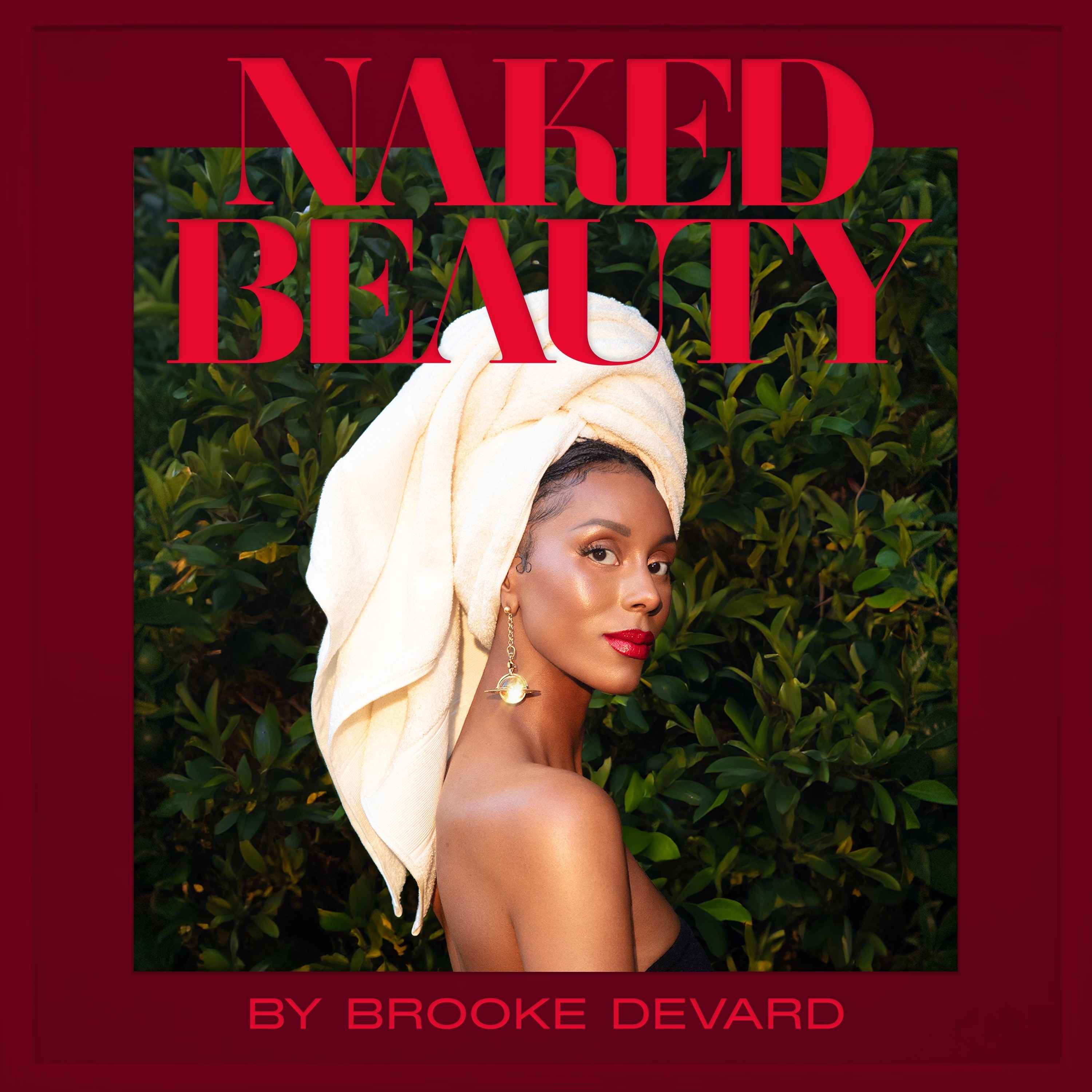
Hello, hello, this is Brooke Devard and you're listening to the Naked Beauty Podcast. Welcome back to another week of Naked Beauty where we are going deep with women I admire about self care, beauty, creating the life that you really want to live. I can think of no better person than Bozema St John to speak on this topic. She is someone who has impressed me from the moment I've met her. I've known Bozema for a long time actually. She and my mother are close and I followed her since she was at Netflix, her work with Uber, her work at Apple, her work way back with Pepsi when she was doing the Beyonce super bowl halftime show. She has been a legend for a very long time and now I feel like more people get to experience Bose's magic because she is on the Real Housewives of Beverly Hills. So I had to bring this episode back. We had this conversation actually when I was still working as a full time employee at Instagram and so much of what we're talking about is abandoning the plan you had for yourself, pivoting, reinventing yourself. She is someone that is always just firing on on all cylinders. So enjoy this throwback episode and I will be back next week with a new episode of Naked Beauty. Let's get into it.
- [01:10]
Advertisement Voice
Today's episode of Naked Beauty is brought to you by Los Angeles Tourism. Now I moved to LA from New York City, one of the best cities in the world, over two years ago and I cannot tell you all how much I love la. And there is so much to love, starting with the food and drink options here. I love eating healthy and I'm sorry if it sounds stereotypical or cliche, but I so appreciate Erewhon. I appreciate Goop Kitchen. But then the diversity of food in LA is incredible. The most amazing Thai food, the best tacos I've ever had, gorgeous high end Italian restaurants. LA truly has such a vibrant food community. And don't forget about arts and culture. Did you know that Los Angeles has more museums and theaters than New York does? I love spending my afternoons at the LACMA or special date nights at the Broad Museum where they do their after hours showings. And if Hollywood and Hollywood history is your thing, you can't forget about the iconic tours of the famous lots here in la, of the Paramount Studios lot. You could spend a full week here and still barely scratch the surface. LA just has so much to offer. Find more ways to love Los angeles@discover la.com we love LA. Let's get back to the episode okay.
- [02:22]
Interview Host
Bose, thank you so much for being on Naked Beauty. I'm so excited to have you on.
- [02:25]
Bozema St. John
Thank you. I'm glad to be here.
- [02:27]
Interview Host
Yes. And we all know you're, like, a marketing superstar, but you're also a beauty icon. I mean, you always look amazing. Your hair, your makeup, like, you're always serving a look.
- [02:37]
Bozema St. John
Come on, talk to me now. Talk to me.
- [02:39]
Interview Host
Nice. So we're going to get into all of, like, your beauty favorites, your beauty inspiration, but I want to hear kind of growing up, what was your perception of beauty growing up? Did you feel beautiful growing up? Did you have beauty icons or people you looked up to?
- [02:52]
Bozema St. John
You know, I feel like. Well, because my. My childhood was not necessarily typical. So I think my standards of beauty or my perception of beauty changed so much. You know, I think a lot of people grow up in, like, a hometown. Maybe they go to the same school, maybe they live in the same house. Maybe they have the same neighbors. You know what I mean? So it feels very common. Whatever their perception is remains constant. They move neighborhoods or they move cities. It's probably similar, you know, whereas mine wasn't like that. I was born in Middletown, Connecticut. My parents moved back to Ghana when I was six months old. We moved from there when I was five to Washington, D.C. then moved to Orange County, California, less than a year after that. From there, we moved to Nairobi, Kenya, where I was there for three years, back to Ghana for another two years, before we moved to Colorado Springs, Colorado, by the time I was 12. So I moved around a lot. And all of those cultures had different standards of beauty, you know. And so the one constant was clearly my mother. I'm also the oldest of four girls. And so that has its own dynamic, right, because we're all sort of coming of age and experimenting with beauty, using each other as the barometers, especially in cities or cultures where we were the only ones that look like us, you know, we use ourselves as the template. I remember once I. It was pretty early. I was probably, like, 14 or 15. I probably just started to wear makeup outside. I remember, like, coming out of the bathroom, getting ready to go somewhere. You know, I don't remember where I was going. Definitely wasn't school. Maybe it was, like, to a movie or something. And I remember my Sister Elua, who's 15 months younger than I am, looking at me and, like, being, like, aghast, you know, being like, oh, my God, what is that on your face? You know what I mean?
- [04:47]
Interview Host
Yeah.
- [04:47]
Bozema St. John
And I was like, what? This doesn't look good. You Know, so like, we. We were our own barometer for what beauty meant, you know, I didn't really depend on anything outside of ourselves because it was just too chaotic. If I looked at the standards of beauty in Ghana, compare them to Colorado Springs.
- [05:08]
Interview Host
So different.
- [05:09]
Bozema St. John
It's so different. So, yeah. So I think my mother. My mother was constant. You know, she's a glamour girl. She was a model in the late 60s and early 70s.
- [05:18]
Interview Host
Oh, wow. I didn't know that.
- [05:19]
Bozema St. John
Yeah. And she's a fashion designer by trade, and so she's always had the swag, you know, and always has had the beauty. And so I look to her a lot for cues and for inspiration. For sure.
- [05:32]
Interview Host
That's great. So Colorado Springs, I imagine that's not a very diverse place to grow up.
- [05:39]
Bozema St. John
No, it is not. Not at all.
- [05:41]
Interview Host
You didn't see a lot of people that looked like you?
- [05:42]
Bozema St. John
No, no, there were not very many at all. But the ones that did look like me, I like, you know, grabbed onto like, hi, I'm going to be your best friend now.
- [05:50]
Interview Host
Yes, but it sounds like you didn't really rely on external beauty validation. It was very much like in your family, your mother, your sisters, which is great.
- [05:58]
Bozema St. John
Oh, so much so. You know what's so interesting? I'm so glad that you asked this question, because now, you know, it just gives me a chance to really think about it. Right. Because I can see how I would be probably really discouraged if I looked outside of our family and outside of my home. And I think maybe part of the reason why I wasn't discouraged is because everything else was so alien, you know, there was no way for me to compare myself. It wasn't like, oh, I needed to be blonder. I'm not blonde. No way that, like, I could have the pink, rosy cheeks. I don't blush. You know, it's like I couldn't compare myself. So there was no way for me to diminish my own beauty against somebody else's because we were so different. There was no comparison. Now, that doesn't mean that I didn't wish I wasn't so different from everyone. That's a whole nother conversation, right? Not wanting to be othered is a whole different thing. Like, obviously, I wanted to be like everybody else, but that meant that I would rather have preferred to be in Ghana, where everybody else looked at least somewhat like me. And so perhaps if I had had more formative years in Ghana, perhaps my beauty perceptions would have been different because at least. And I've been like, oh, well, we're all the same kind of melanin, you know, and we have the same type of texture hair. So maybe her braids are better than mine, and therefore I can compare myself. But, like, look, I've talked about this a little bit. You know, my best friend was Summer, growing up in Colorado Springs, Colorado. She was blonde with green eyes, and there was no way I could compare myself to her. We were too different.
- [07:38]
Interview Host
Yes. And I'm a big fan of your daughter, and I've enjoyed seeing her kind of grow up. When you look at the way that she grows up and her experience with beauty and seeing other types of people, is it really different from your experience?
- [07:48]
Bozema St. John
Oh, yes, yes, yes, yes. Gosh. That's also a really interesting question because her childhood is so much different from mine. We moved to LA when she was just before she was five, and now she's 12. And so, funny enough, look at that. I moved to Colorado Springs when I was 12 and she's 12 now. But in any case, you know, she has had a constant set of references for this whole time. Right. It hasn't changed that much. I think the thing that has remained constant, at least from my experience, and I think her experience is that I hope anyway, that I'm the same type of mother to her when it comes to beauty as mine was to me in that, like, I encourage her in it. You know, I compliment her in it. I am excited about everything that is developing for her. You know, I encourage her expression. And my mom was definitely that way with me. You know, very much encouraged my experimentation with beauty. And I actually will never forgive her for a family photo we took when I was 10, and she allowed me to do my own hair.
- [08:54]
Interview Host
Independence girl.
- [08:56]
Bozema St. John
No, that look was not cute, okay? Somebody should have told me, and she didn't tell me.
- [09:00]
Interview Host
Yeah, well, you know what? I think it's great that she encouraged you. A lot of people grow up being afraid of experimenting because they're going to get in trouble with their parents. Was there anything from, like, Ghanaian beauty culture or, like, ingredients or routines that she passed down to you or that you grew up seeing her do?
- [09:17]
Bozema St. John
Yes. Oh, my goodness. Well, I mean, I think the foundations of, like, moisturization.
- [09:22]
Interview Host
Yes, yes.
- [09:23]
Bozema St. John
Is universal to all Africans in the diaspora. You know, like, we all afraid of ash. Okay. Nobody wants dry skin out here, but it meant the extra stuff for me. Right? Is that because, like, that. That's such a natural part of the culture of Ghana, you know, it's got to use shea butter, which we call in kun in Ghana. Right. So you got to put inkun on to protect your skin. And especially, like, when we got to Colorado Springs, I mean, gosh, it was like, those winters were so harsh. She was like, you slathered us down, you know, like, you went to. You didn't have to put on Vaseline to fight in school because your face was already. You know what I mean? And so, yeah, for sure, those. Those types are like, you know, just taking care of your skin. You know, the foundation of your beauty is so important in the culture. You know, it's like even the. Like a loofah or, you know, what you scrub your body. Shower, right, Is very specific in Ghana. And we brought those with us. You know, I don't use a washcloth because I use sapoh, which is what we use to, like, bathe, because it's very exfoliating. Right. You know, wash off all things. So my point is that that ritual of, you know, scrubbing off dead skin, moisturizing with shea butter, you know, taking care of your skin was the basis of all beauty for us. Right? And then after that, it's like, you know, the adornment of anything else that's going to enhance your beauty outside of your skin became the next most important thing. Right? So it's not so much about lipsticks and eyeshadows as it is about color and vibrancy and not being afraid of those things because they don't. They're not garish. So there's no such thing as, like, oh, don't wear the red lipstick or the blue eyeshadow, because it's like, have you seen the colors that we wear? You know, it's like, of course I would put that on my skin. Why wouldn't I?
- [11:18]
Interview Host
Yes. And it looks great on melanin. Rich skin.
- [11:20]
Bozema St. John
It sure does. I mean, look, give me a green eyeshadow any day, okay? I'm here for it.
- [11:25]
Interview Host
Yes. Well, we have to talk a little bit about your career. There are so many women listening that want a career just like yours. You graduated Wesleyan, you started interviewing for Spike Lee, which is like, that's. That's like a dream kind of first job opportunity. How did that even come about?
- [11:40]
Bozema St. John
It came about because I moved to New York City right after college, Right. Took a year, actually, and then moved because I was supposed to go to med school, and I wanted a break. I wanted to make sure that's actually what I want to do. And so I got a temp job. Got lots of temp jobs, actually, because I didn't have a career in Mind, you know, all I know, all I knew was that I didn't want to go to med school immediately. That was the only plan. And so how long could I put that off? Or if I could, like, can I do it for a year and then make the grand decision? And so some of it is divine, you know, I. I do believe in divine intervention. And some of it, I think, is just being open to new experiences. You know, it's. It's why now I counsel a lot of, you know, young women, especially, you know, people who are just starting out. I'm like, yo, throw away your plans, man. Like, throw them away, you know, because, like, you're so wedded to this idea, this grand idea that you're not open to the universe to deliver to you what it is that you actually need to do, because you're so busy looking at your plan and moving forward in your plan. Now, I'm not saying I don't have goals, right? It's not about goals. It's just being able to be open to the idea that perhaps the plan that you have for yourself is too small, and it's not. Right? And so it's like, what else? What are the other experiences that are open to me that will get me to the same destination of the goal? Like the higher order goal, you know, I want to be successful. I want to be powerful, I want to be happy, I want to be fulfilled. I want to be satisfied. Like, those are the words we need when we do hashtag goals. Not necessarily that. I want to be CMO of Netflix.
- [13:18]
Interview Host
Right.
- [13:19]
Bozema St. John
Because that's too limiting. And I know that sounds odd, being the fact that I sit in the job right now, you know, but I would not have been able to articulate it then. And I'm so thankful that I'm not actually on the path that I would have articulated if somebody had asked me to write it down back then. It was too small. I didn't know. And so that's how I ended up with Spike Lee was because I was being open to the universe and temping, even though I had advanced degrees and he's smarter than anybody I knew, and I still was running around picking coffee and mopping and, you know, making copies and all of that. It is why I ended up there, because I was willing to do anything.
- [14:02]
Interview Host
Yes. And I love to hear you talk about not having a specific role or title in mind, because I always get so challenged, and people say, where do you see yourself in five years? Like, that question just fills me with, like, oh, my Gosh, I don't know. I know how I want to feel and I know what I want to, to have like, you know, made other people feel, but I don't have like a specific role in mind yet.
- [14:21]
Bozema St. John
Yes, that is the exact thing to do. You know, it's like that, that is actually the whole plan is to be open and to have some other higher order goal in mind because you will find that thing, you know, but like, maybe you're not thinking big enough, you know, who knows? Like, maybe you say you want to be CMO of Netflix, but maybe that's too small for you, you know, and then, and then you would have cheated yourself out of the bigger thing. And that's the way I think about it.
- [14:50]
Interview Host
Well, I have been a marketer my whole career. As you know, my mom is in marketing, my husband is marketing. So it's. So, it's so interesting. I'm. I'm at Instagram now, which is. It's a really fast paced work environment. I've been there almost three years. Very challenging. When you left Uber in 2018, you did this interview and there was a quote from the interview that I kind of like. I read it and I read it and I read it again because it was so interesting to me. I'll just read it back to you. I know you know your own quote, but you said. What I discovered was a lot of people who had a desire to do better, honestly, but couldn't get out of their own way. You don't need to be the savior. You can save yourself too. And I think that's a sentiment that is often very difficult for black women and people of color to remember, especially when you're in workplaces where you feel like you have to kind of excel for your race or, I don't know, that you just have to show up and be better than everyone else and you kind of work yourself in a way that I think a lot of our white counterparts don't struggle with. How have you kind of learned to navigate that and protect your own peace within a work environment?
- [15:52]
Bozema St. John
Oh, you're right. That is a very layered question situation. And I'll probably just peel it back a little bit. Right, which that it is that that adage, which we all know and we rarely practice, which is that you should put your own mask on first. We know that's true. And we know it's like self care is the way to go, because if you're not taking care of yourself, you can't take care of anybody. And I say it that Way in the whole drone way. Because we know it, we just don't act on it. You know, it is the complexity of being a woman, a black woman. You know, for me, I won't speak generally, I'll speak for myself. Right. Which is that I have felt it over and over and over and over again. I feel it now that I am the representation for a lot of people, you know, and should I fail, it means something about everybody else, you know, and that is unfair because my white male counterparts don't carry that. You know, it's like right now, if you ask, well, what are the names of the people who are your colleagues? It's like, do people know, you know, do our other white guys like paying attention to who's where? You know, maybe obviously the CEO or the CO CEOs now, right. Because they're, they're well known and they're popular and they're founders and they started the company. But the other C suite, maybe not, you know, but I know that my name is known and it's known to black women especially. Yes. And women in general in the next round and then anyone who feels othered in the tertiary round, you know. So when my announcement was made for this particular job, 100,000 people liked my post. I know that had nothing to do with me, you know, had everything to do with them. Had every, every single like was somebody who said, ah, I see myself in her, you know, and that is a very, very difficult burden because I recognize the responsibility in it. But it is also a privilege, obviously. Right. Because I get to be the one who walks around and like, yeah, exactly. I'm gonna do this for us, Hashtag, for the culture, you know, and it allows me to be a little more brazen because I recognize the fact that if I don't push enough, somebody else maybe not won't be able to get in. But I think it's to the point about saving yourself. You know, it really does go back to the point of like self care. For real self care though, not the Sunday self care hashtags and stickers we put on our stories, you know, but for real. And I really meant it when I said sometimes you have to save yourself. You are the only one who knows what that limit is. And I know for sure, I know for sure that if I hadn't left at the time that I left, I would have crashed and burned and that would have been a bigger problem. Not just for me, but for everybody else too. And so yeah, I recognized it very quickly when I started seeing my own wear and tear and knew that I had to go. And then I also complicated. But in addition to that, I knew that there was not going to be real success for me there. And that is a very painful thing to realize, especially when you've worked hard, especially when you're smart, especially when you know that your ideas are the best and you are not kept. You know, you're kept from realizing them. And it was hard to give it up. You know, it's hard to look at it and say, ah, damn it, I have this incredible solution, but nobody wants to listen to me. So am I going to keep screaming into the wind and go, horse, or am I going to shut up and go talk somewhere else?
- [19:27]
Interview Host
Yeah.
- [19:28]
Bozema St. John
And that was my point. I was like, no, listen, I'm going to save my voice. Y'all are not listening to me anyway, so let me just get up the hell out of here.
- [19:35]
Interview Host
And oftentimes, knowing when to leave is one of the hardest things about having a successful career. But you have to know when you're not being recognized for your talents and when to move on. I've certainly had that experience many times in my career.
- [19:46]
Bozema St. John
Yeah. Yeah. That's for sure.
- [19:48]
Interview Host
Something that I love about you, which I know a lot of people love about you. You always show up as your full self. And I think a lot of times in corporate environments, people worry about being too much. I have people reach out to me all the time, and they say, oh, I want to post, you know, this fun bikini photo, or I want to, you know, do crochet locks in my hair. But, you know, I don't know what people at work will think of me. So you always, always, always bring it. How have you been able to maintain that sense of yourself?
- [20:15]
Bozema St. John
Oh, are we going to go here?
- [20:17]
Interview Host
Yes. Because I'm so curious about this.
- [20:20]
Bozema St. John
I have a lot to say about this.
- [20:22]
Interview Host
We've got time.
- [20:23]
Bozema St. John
Okay, good. Because it runs the gamut. And this is a hot topic right now. Right. It runs the gamut from the daggone bonnet to sequins, everything in between. I recently actually just did a post. I did this TikTok because there was a wonderful little trend going on, and I was like, oh, let me jump up on this. And essentially what I did was I wrote, I forgot what my caption is now. But it was something along the lines of, when they tell you how to look as a C suite executive.
- [20:53]
Interview Host
Yes. I saw this video. This was amazing.
- [20:55]
Bozema St. John
Okay. And then I was like, no, let me show you my outfits. Okay. It's not the Black suit with the gray shirt underneath and the scarf. That is not how I show up. And I think it's this mistaken thought that maybe I started doing this when I got to this job. And so let me make it very clear, which is that it doesn't get easier as you rise. Somehow people think that like if you get to the C suite, all of a sudden now all the shackles are off and that you're free to do anything you want. Let me burst everybody's bubble. It gets harder the higher you climb. If you don't have it at the beginning, you are for sure not going to have it at the end. I promise you that if you don't start out this way, you're not going to end up this way.
- [21:40]
Interview Host
Right?
- [21:40]
Bozema St. John
And so for me, I'm like, I didn't show up last Tuesday deciding to wear that multicolored suit when everybody else was wearing black. And there are a lot of people who've known me a long time who will tell you that that is true, that I showed up with the leather pants and the spikes going up the side when I was an assistant brand manager at PepsiCo. And everybody else was wearing khaki pants and blue button down shirts. The difference is my ideas were out of the box as well. My voice was out of the box as well. My thought process and the way that I expressed myself was also out of the box. But I didn't see any other way to be. You know, I really didn't. I didn't think that there was another way for me to be and still be successful. And the truth of the matter is that I tried to do it. I did try to wear the black suit or the gray suit. I tried to pull back my hair and guess what? It didn't matter. Nobody cared. Nobody cared. They still saw me as the loud black girl who had crazy ideas. You know, they still saw that. Even as recently as a few years ago. I won't out the person who said it to me, but it was very senior person at a very big company. I walked into a meeting and I think that day I had actually pulled my hair into some sort of bunch. Maybe I didn't have time, I don't know what the hell the problem was, but my hair was up in a bun. And he said to me, oh, I know that this is gonna be an easy day with you because your hair is not all wild today.
- [23:11]
Interview Host
What?
- [23:12]
Bozema St. John
And he said it loud enough for everybody to hear. And by the way, it wasn't the last time he said it. Whenever My hair was straight. He would also comment, oh, thank God. Boz is gonna be calm today.
- [23:22]
Interview Host
Was this a white man as well?
- [23:25]
Bozema St. John
Yes, yes, yes. White man. Who said it?
- [23:27]
Interview Host
The audacity of that over and over.
- [23:29]
Bozema St. John
And over and over again. And what was incredible to me is that. And at that time, I was, you know, very, very senior again. It wasn't like, you know, I just showed up one day and it's like, oh, I decided to, like, change from my black suit to, like, red. You know, it's like, I've been doing that. And so my point is that you are who you are. It may sound like such a simple comment, but you are who you are. So just be that person. We will normalize it, I promise you. If all of us rebelled against this idea that we have to look a certain way, we will change it. Now one person seems weird. If all of us do it, it's no longer strange. So I just want to encourage that we are who we are and that we need to celebrate that. Sometimes we do it to ourselves. You know, even the. Even the conversation around the bonnet, which drives me completely up the wall because I'm like, we have to remember that we're not actually just talking about the bonnet when we start policing ourselves and say, oh, well, you know, you're going to wear a bonnet out to the gym or to the grocery store to drop off your kid at school. You look unkempt. You look like you don't respect yourself. What? Like, how are we even okay with that sentence? You know, because did you think that when you showed up with box braids at work, did somebody was like, oh, she looked professional, or did you question it before you put the braids in? You know, I remember watching an episode. There was an episode, a season of Scandal, when Kerry Washington's character was on vacation and her hair then was curly.
- [25:08]
Interview Host
Yes, I remember this scene.
- [25:09]
Bozema St. John
Do you remember every other scene, right, when she's in her coat and looking sharp and amazing and walking with her power wall? She's got straight hair and it's like blowing in the wind.
- [25:19]
Interview Host
Yes.
- [25:19]
Bozema St. John
And I'm like, you know what? Again, bonnet, braids, curly hair, Afro, dreadlocks. Whatever the hairstyle is, it is always going to be seen as unprofessional because it is not the standard by which we've been taught to respect. And so I want to convince everyone, if there's anything coming out of this entire conversation, that we have to stop trying to achieve the levels of the standard of beauty that is not dictated by us. And that sometimes we have Stockholm syndrome. And we've been convinced that who we show up as, who we are, is also not good. And so I would like us to stop policing ourselves and judging each other when we show up in spaces, instead of being like, why are you out here in your bonnet, girl, please. Like you. This is a protective style, okay? I'm trying to protect this braid that I made. It was very difficult to put this together, okay? And I was not about to sleep on it and then mess it up before I had to show up here. So guess what? I had my bonnet on, okay? All morning. Dropped off my daughter at school with the bonnet on so that I could look fresh like this when I showed up. Yes, but that's all part of the same thing. It's all the same conversation. So when we say we're talking about the bonnet, we're not just talking about the bonnet. We're talking about the braids in the office, and we're talking about the sequins that you're going to wear to whatever event and the red lipstick because your lips are so damn big. And the red is going to. Just point it, make the lips bigger. And therefore, we feel nervous about that. Come on, let's. Let's put that all to bed.
- [26:57]
Interview Host
You've articulated it so well. And I think the thing that's really hurtful about it is oftentimes it's black women judging. It's not an external judgment. So I think if I were to wear a bonnet on my Zoom calls on Monday, my colleagues would be like. My white colleagues would be like, this is a great beret that you're wearing today. Like, what an interesting hat. Like, they wouldn't have any sort of judgment. But I think oftentimes this is, as you said, it's like this internalized judgment that we feel amongst our own race, which is. Yeah.
- [27:24]
Bozema St. John
Yes. Well, you know what's so funny? Actually, speaking of which, I had this one incident, so you mentioned your mom, who I adore and love. Okay? Jerry Devart is my chick, okay? I know she's your mom, but she's my chick, all right? It was her and Ann Fudge, who I so adored when I was early on in my career. And gosh, I think it was three years ago, maybe, maybe four years ago, I went to Harvard. They wanted me to be the keynote interview for a celebration of the start of their Black Student Union, essentially. And Ann Fudge was the one who was going to interview me. Okay? Now, look, I hadn't seen Ann Fudge in person. In about 15 or 20 years. Okay. And certainly not as an adult who has amassed any kind of success. And I was nervous as hell. I wanted to look perfect, okay? So I set my rollers, right? I went to sleep with them. I got up in the morning. I got to gym. I showered, blah, blah, blah, you know, And I had a set of meetings over video to take care of before the event that evening. Well, I get out the shower. You know what happens? Because it happened to all of us. I took out that one roller, and it was still wet.
- [28:40]
Interview Host
Yep.
- [28:41]
Bozema St. John
What was not about to happen, I was not about to have one droopy curl out here. Okay? So I rolled that bad boy back up. There were a couple more that were also a little bit still wet. I let the rest of them out. I put that bonnet back on because I didn't want to show up in the car with the rollers. And I showed up on the. On the video like that, okay? I was like, hi, everybody. In fact, I took a picture of it and put it on Instagram because I was like, y'all won't believe what happened today. This was, like, peak black girl situation. And you're right. The same thing happened, right? My colleagues were like, oh, that is such. Is that a hat? What do you have on your head? And I. And I explained it. I was like, this is my bonnet, and it is here to hide the rollers that are underneath it because I need to have my hair dry before I go and do this event that I have to do. I went on with my meeting. Nobody cared. Nobody said that I was somehow sloppy and an idiot because I showed up with a bonnet on. So it's like we do sometimes, you know? And that's an extreme case because I don't show up every day with a bonnet. I don't show up every day with, you know, my hair and rollers and whatnot. But. But my point is that we have to stop this big judgment, because the truth of the matter is that replace bonnet with anything black. And is the same conversation?
- [29:55]
Interview Host
Yes, absolutely. You brought up going to the gym. I'm always looking at your fitness videos. You're, like, so committed. You always look incredible. Have you always been into fitness? Like, how do you keep yourself motivated to continue to go to the gym and do those really killer workouts?
- [30:10]
Bozema St. John
Oh, gosh. Okay. Well, so here's the thing. I was a student athlete. I ran track. So in high school and college, I ran pretty seriously.
- [30:19]
Interview Host
I ran track as well. Which events did you do?
- [30:22]
Bozema St. John
I was a sprinter, actually. You see these right here?
- [30:25]
Interview Host
Yes.
- [30:25]
Bozema St. John
These are actually from a meet I ran in high school. They're signed by Flo Jo.
- [30:30]
Interview Host
Oh, that's amazing.
- [30:32]
Bozema St. John
Yes, exactly. I adored her.
- [30:34]
Interview Host
One of your mentees, Alameda from Topicals, was on the podcast, and she also used to do track. And we really bonded over how track makes you hate running as an adult.
- [30:42]
Bozema St. John
Oh, my God, 100%. That's exactly what I was about to say. Okay. Because I ran so damn much. I was a sprinter, but, you know, still, you've got to run a little bit of distance, you know, to get your endurance up. And so I stopped running, stopped working out everything. As soon as, like, my last race was done and I knew that I wasn't going to get paid to run, I was like, that's finished. I don't need to. I don't need to stay fit. I'm just going to keep going. In any case, I didn't work out, gosh, probably for about 20 years, you know, had got married, had my baby, like, and thank God I have the kind of jeans that allowed me to really not do much and still look somewhat fit. And so I. I hung onto that for quite some years. And then I turned 40, and, you know, I'm not afraid to say it right. I like the way I look.
- [31:32]
Interview Host
You look incredible. You look absolutely incredible.
- [31:35]
Bozema St. John
Look, I was out here like, wait, hold on. I'm cute. Like, I don't know. Look, I don't know where this pudge came from and this and that. And, you know, not that I have anything against it, but I didn't like the way I looked, and I also didn't like the way I felt, you know, and I think that's the most important thing. It wasn't about any external pressure. I really didn't feel that. You know, my mom does a lot of fitness. She walks all the time. She's always exercised, like, my entire life. I didn't feel any pressure from her to look a certain way or to be a certain way. Certainly didn't feel it from my husband. Like, you know, nobody said, like, boz, you're out of shape. You need to get in shape. It was really mine. And it was a number of reasons. One, yes, I think, you know, and I'm big enough to admit it, I think externally, I didn't like the way I was looking, and I didn't feel particularly healthy either. And so on my 41st birthday, I decided to make a change. And I was like, you know what? I'm doing this for myself. Like, I Need to feel better. I also had preeclampsia when I was pregnant with my daughter, and it never went away. And so I still suffer from high blood pressure. And, you know, I don't want to die early from a stroke. And so I was like, you know what? Let me get my heart in order. Let me get my body in order. And now I get so much energy from it. I know. I used to, like, really cringe when people who worked out a lot said that. And I was like, you've got to be be kidding me. Who gets up early in the morning and works out and then feel like they have energy? Let me tell you something. I have definitely and absolutely converted to the fitness world because I completely agree. It's like, there's not a morning now where I get up and don't feel the need to at least move my body a little bit. And it helps me to be clearer and it helps me work out things in my head that sometimes I get, you know, a little bit lost about. And I just feel better. I really do.
- [33:31]
Interview Host
And looking great also helps to motivate you as well.
- [33:34]
Bozema St. John
Okay, look, I already told. I already told Jerry Howsey, who I work out with. I was like, look, I'm going to be 45 in January. And I was like, I want to look better at 45 than I did at 25.
- [33:45]
Interview Host
Wow. I love that energy. I mean, you look better than a lot of 20 year olds, to be very honest.
- [33:53]
Bozema St. John
Listen, wait, wait, Brooke. I was like, it's hot girl Summer. Those hot girls better watch out. I'm here for it. I'm coming for all of them. Okay?
- [34:01]
Interview Host
I love it. What beauty routines or lessons do you want to pass on to your daughter?
- [34:07]
Bozema St. John
I think there's some really basic ones. You know, like, I started out with saying about, you know, just basically like skin health. To me, it's like from the inside out, right? It's what you put in your body, it's how much water you drink, it's how you exfoliate and moisturize. Like, those basics are really, really important to long term beauty, you know, and that's the thing. It's like, I want to age beauty gracefully for sure. By the way, no judgment of people who don't like. I'm like, girl, if you want to go get your thing pulled and tucked and whatever, do that. Okay? No judgment at all. But I really want to have the underlying long term health of my skin and therefore the way that my beauty shows up. And that's what I want to pass on. To my daughter, you know, that this is a marathon and not a sprint. You know, there will be trends that come and go, and sometimes we'll want, you know, fake eyelashes, and sometimes we'll be natural. Sometimes we want thin eyebrows, and sometimes we want really thick ones. You know, sometimes we'll wear a lot of concealer, and sometimes we'll be over here letting the freckles out. Right? Because she's biracial, and so she's got all kind of things going on that I don't have. But I do hope that what I'm able to pass on to her, if not even just by what I say, but how. How I do is that, you know, the. The beauty is really from within. And I realize that that sounds so corny, but the external beauty comes from within. And so it's like, let's take care of the inside, and it will really show up. You know, that glow that shows up that you can't buy, that comes from the inside. And so, you know, drink your water, eat the vegetables, eat your fruit. Let that skin underneath be what is the most beautiful part about you.
- [35:53]
Interview Host
And you have incredible skin. So we need your skincare routine. Like, what. What products are you using? What are you doing for your skin?
- [35:59]
Bozema St. John
Okay, let me tell you something. Now I'm gonna tell my sisters to listen to this podcast because they are going to cry when I tell you, because they'll be like, don't ask Bose that question. Because let me tell you something. I love Eucerin.
- [36:13]
Interview Host
Okay?
- [36:14]
Bozema St. John
I recognize that that sounds maybe a little unconventional. Okay. But for real, my skin care routine, like, from top to bottom, okay? I do exfoliate, as I said, every day with, you know, my scrub that I use, my Ghanaian scrub, by the way. My cousin also is now exporting them, which I think is so fabulous. I'm like, everybody in the world should be, you know, should. Should have access to this thing.
- [36:40]
Interview Host
Yes.
- [36:40]
Bozema St. John
Anyway, it's called Sapo, and her name is Dorian Toku Ajuman. She's so incredible.
- [36:47]
Interview Host
Anyway, okay, I'll link to it in the show notes so people can find it.
- [36:50]
Bozema St. John
Please, you have to. You have to add it. Anyway, so she exports these, and so now I've been using that more regularly. My daughter uses it. And then, like I said, I like to moisturize. And I moisturize with Eucerin.
- [37:02]
Interview Host
Like the. The kind of like petroleum jelly.
- [37:05]
Bozema St. John
One, two of them. Yes. So I use the lotion, which is the calm cream, because I feel like that, you know, soothes my skin. And then, yeah, they're heavy cream. And everywhere face.
- [37:17]
Advertisement Voice
Really?
- [37:17]
Bozema St. John
Everything. Everywhere. Yes. It saved me when I was pregnant. Like, I didn't get any stretch marks because I kept my skin very, very soluble.
- [37:28]
Interview Host
I was expecting, like a very expensive, like 12 step luxury skincare routine. Wow. And I think that also goes to show that a lot of it is genetic. Right. Because people will be out here telling you, use this $400 cream and use this and that and they don't look the way you look. And you're using Usurin, which I'm not to say username's dad, but.
- [37:49]
Bozema St. John
Yeah, no, but that's the thing is that I feel like it's. Yeah, whatever works for you. Right. And that you don't need the $400 cream all the time in order. I mean, do you know how many people have suggested to me, like, all kinds of expensive things? And look, at this point, I'm like, look, I claimed my whole, you know, like, ethos. I'm like, I made drugstore beauty queen. Okay? That's what I am. And I'm totally okay with that. I don't feel ashamed about it or anything. It's like, look, I'm just going to go to CVS and buy my Usrin and I'll be all right.
- [38:21]
Interview Host
I love it. Your makeup is always on point as well. What are your, like, go to makeups. I love your lipstick always. But all of your makeup is great. So let's maybe start with lipstick.
- [38:30]
Bozema St. John
Okay. Lipstick. Well, actually so funny because I keep it right here. This is the Revlon.
- [38:35]
Interview Host
Nice.
- [38:36]
Bozema St. John
Yes, Revlon. This, the high shine. Just like a lip balm, lip polish, extra ultra hd. And I like the red. But by the way, I have them in all kind of colors. I have the pink right here, you know, and I have to keep them around my desk, right? Because look, wait, let me. Can I just show you something right now? My lipsticks. Let me show you how many lipsticks around my desk right now. Do you hear me collecting? My gosh, it's so ridiculous. I love lipstick.
- [39:06]
Interview Host
Look at that.
- [39:06]
Bozema St. John
Look at how many I have.
- [39:08]
Interview Host
That's impressive.
- [39:09]
Bozema St. John
Mostly pinks and reds because why not like literally all of them? And I have like some sort of nude color, which. What am I doing with this? I don't even know what I'm doing with that. But anyway, I like a lot of bright lip color, but for. I do a full face almost every day, you know, so I like to layer on. You know, I do a concealer and my foundation and powder.
- [39:35]
Interview Host
Which concealer do you Like, I use Lancome. Okay. You're very good at makeup. And I feel like when you're good at doing your own makeup, I'm not like a skill. I can do like a very, very light beat, but this looks like glam. This looks like you're like tv ready, girl?
- [39:49]
Bozema St. John
I'm ready.
- [39:50]
Interview Host
When you get makeup from a professional makeup artist, is it sometimes hard for you because you kind of know how to do your makeup really well and like, what you like?
- [40:00]
Bozema St. John
Yeah, for sure. And that is why I use just one. Okay.
- [40:04]
Interview Host
Oh, you have your go to.
- [40:06]
Bozema St. John
Okay, Yeah, I have my go. Listen, Ty Young, that's my homie in la, she's the one who takes care of me in la. And when I'm in New York, I go with Viosla, who also takes care of my skin. I mean, because you're right. I think when you know what you want and how you want it, you have to go with people who will treat you a certain way and understand your face and the things that work. I mean. And you know, I have all kind of quirks, but things that I discovered over time, and some of them are philosophical and some of them are practical. You know, it's like I do wear a strip lash almost every day and I like to double up when then I'm going to be on camera somewhere. And I don't use any latex because I can get allergic to it. And so, you know, I use a non latex glue, which is black, you know, not that crazy white stuff, because it going dry looking gray on my eye, you know, so that, or even down to philosophical, which is like, I don't wear blush. I'm like, get away from me with that pink stuff because I don't blush naturally. I don't know why I would put blush on my cheeks. Things like that, where they know the rules.
- [41:09]
Interview Host
That's so interesting. And what about hair? Because you're. I feel like you change your hair very often, which I love. I love to change my hair, but I feel like you're always doing very different styles. Do you go to the same person for your hair? Do you, like, vision board, what your next styles are going to be?
- [41:26]
Bozema St. John
I know that's such a great question too. I do like to change my hair a lot because I just get bored very quickly with the same thing. Funny enough, I never actually colored my hair until last December, not in my whole entire life. And the first time I put any kind of color in it was using. I had like crochet curls and I put Like a little bit of blonde in it. To me, it's like it was so extreme because I've never done anything like that before. But I loved it and so I started doing that. But at the base of my hair. Yes. I have a stylist, you know, who I go to Tanya at Dreamgirls in la. She has that growing hand, you know how, you know, we black. So we, you know, you know, the growing hand and she has it. Oh my God. It's like, you know, my before and after pictures. I already told her. I was like, one day we're gonna do the picture where she's just like holding my hair and it's like draped over her arm because we're getting to those lengths. But usually, you know, I experiment with everything. I love braids, I love wigs, I love weaves, I love it all. I mean, and I don't pass judgment on anyone for the type of hair that they have. And now for sure, at work, my colleagues are very used to knowing that what you saw yesterday is probably not how I'm going to show up tomorrow. So don't be shocked when I walk in with a different hairstyle.
- [42:48]
Interview Host
And because you travel so much, like we travel back to Africa a lot, do you find that beauty culture is really different there? Like when you see the way women choose to self present and do their hair versus what you see, like in la?
- [42:59]
Bozema St. John
Oh, for sure. I mean, especially I would say, you know, like I said for black women. Right. I just see a lot more diversity in the types of looks in Ghana than I would in la. Because, you know, in Ghana, black women aren't trying to impress white people.
- [43:17]
Interview Host
Right. So you know what, that's a really interesting distinction. Right. When you're the majority, the way that you approach beauty is probably going to look different.
- [43:24]
Bozema St. John
Yeah, exactly. Because there's no, there's not a standard that feels like if I show up with braids or cornrows, that somehow somebody's going to think about me, that I'm unprofessional. And so the way that women present themselves is so different. And I would also make the same comment about body. You know that because our shapes are so varied, right. And we don't need to hide our hips because everybody's got them that, you know, wearing clothing that shows off your figure is actually not problematic. And so it's like you'll find people in a traditional outfit, you know, what is considered a traditional outfit. And it is very form fitting. And so that again, is not seemed unprofessional. So I think this, the standards are different because you're right. When you're the majority, your standards then appear differently.
- [44:18]
Interview Host
Yes. I'm so fascinated by how different cultures choose to approach beauty. And I'm sure as CMO of Netflix, you get a million show ideas and pitch ideas. But if you'd be open to hearing one more, I could tell you an idea that I have. But the idea is I loved Anthony Bourdain and his show and exploring food culture all over the world. And I feel like there needs to be a show like that for beauty, right? Like understanding beauty culture all over the world, traveling and talking to people about how they approach beauty there. So that's my idea.
- [44:46]
Bozema St. John
I love it. I love it. And I wouldn't be surprised if, you know, it's like they always say that, like the ideas, some are super, super unique, but sometimes there's a whole lot. Because I'm telling you again, it's like the pitch that is always like, it's a little bit of this and a little bit of that. So somewhere I'm sure there is a development person who's probably thinking about the Anthony Bourdain of travel and the Anthony Bourdain of beauty and the Anthony Bourdain of swimming. I don't know.
- [45:11]
Interview Host
Yes. Well, if anyone's listening and can help me bring it to life, please reach out your favorite, favorite beauty products of all time. Do you have like a list or is Usurin just your first, second and third fave?
- [45:23]
Bozema St. John
Yeah, I mean, kinda, but I would say, you know, maybe not a particular brand, but for sure, the red lipstick in my bag. And let's not forget the nails.
- [45:31]
Interview Host
Oh, your nails are always great. Is it gel? What do you do for your nails?
- [45:35]
Bozema St. John
Yes, well, right now I have gel for sure because the designs last longer, but. Oh, I've had, I've had all kind of nail designs and I like them long. I always have. And so I get them done like every three weeks and it's, it kind of feels like my own like self care time also, you know, those four hours that I will sit and you know, have my hands.
- [45:55]
Interview Host
Four hours?
- [45:56]
Bozema St. John
Oh yeah.
- [45:57]
Interview Host
That's how long it takes you to get your nails done?
- [45:59]
Bozema St. John
Yes, yes, I get real art. You know, my girl Kisa who's here in la, she comes by my house and we'll just sit and she will paint. And I'm talking about like paint, paint, not just color, but like, you know, design on my nails. She, she even painted like mini Basquiats on My nails.
- [46:16]
Interview Host
Oh, yeah. I mean it is, it's like a real technical skill.
- [46:19]
Bozema St. John
Oh, I tell her all the time she's a real artist. Like a for real artist.
- [46:22]
Interview Host
Yes. We talked about real self care, not fake self care before, like the fake Sunday self care. How do you practice? You're obviously very busy with work and you're a mom and you seem to have a very active social life as well. How do you practice self care for yourself?
- [46:38]
Bozema St. John
Again, it's so unique, right? It's like each of us have like our own limits on what to do. And I always find it interesting when people are like, you know, if, if ever I'm like, oh, I'm so tired, they'll be like, oh, well, try doing this thing. And I'm like, that might work for you, but it doesn't necessarily work for me. You know, for me, the biggest way that I take care of myself is to sleep. I know it sounds like I'm doing so much because, yeah, I do have a very active life. You know, I'm writing a book, I have a podcast, I'm writing a TED talk right now. I like, you know, I have a full time, very big job. As you said, I'm a mom. There's so many things. But one thing I do not give up on is my sleep. And even now, it's like this week in particular, I've had very early mornings, you know, 7am meetings every day, which means that, you know, I usually want to start getting ready around six, which means I have to go to the gym at 5, which means I have to wake up at 4:15. So that means I am actually in bed at 8:15, 15. I realize that people think that's so strange, but I will be asleep. But that also means that, you know, you have to be intentional with the schedule. You know, it's like I have to check in with my daughter and make sure, you know, her homework is done and we're ready for the next day. So that means that I need time in the evening to be able to do that so it doesn't push into, you know, that time I need for myself right before I go to sleep, you know, so it's just intentionally setting my schedule so that I don't find myself still awake at 11pm and then wake up groggy. But that was, that's a hard, it's a hard discipline and I recognize that it takes time, but believe me, it is worth it if you can self care with just sleep alone. It goes a very, very long way.
- [48:13]
Interview Host
Yes, I'm inspired. I'm going to try to go to bed early tonight. I'm so bad about it. And I have to wake up at six for my baby. He wakes up at six o'clock.
- [48:20]
Bozema St. John
So that would mean you would have to be asleep at 10:00. Like asleep in sleep at 10:00.
- [48:25]
Interview Host
Oh, I'm so far from that. I'm gonna try, though. You've been.
- [48:28]
Bozema St. John
Yeah. We're gonna have to get you back. We're gonna have to get you. Just bring it all the way back. Yes.
- [48:33]
Interview Host
Final question. I ask all of my guests this question, and it's when do you feel most beautiful?
- [48:37]
Bozema St. John
I have two answers for that. You know, one is external and one is internal. The external one is, you know, my. Like we've been saying, My daughter's 12, and so she's, you know, at that age where, you know, she's starting to get critical of things. Right. But I feel so beautiful when she looks at me. It's just like, oh, you look so pretty, you know, and she loves, she gives compliments, and so I'm very, very blessed that way is that she recognizes. And by the way, it can be me in some jeans, you know, it's not just me just done up, but she gives, she gives compliments, which I just love. I love being beautiful in her eyes, so I love that. And then, girl, look, sometimes I look at something in the mirror and I'm just like, damn, you fine. Like, I just, you know, I just look at myself. I'm like, I don't even know how the people are living out here looking at you every day, you know, so sometimes it's just. It's just myself looking at myself in the mirror and appreciating what this body has been through and knowing that it may not be perfect, perfect, but it's pretty perfect.
- [49:37]
Interview Host
Yes. Yes. Well, this was such a wonderful interview and conversation, and we will continue to root for you and, you know, stay tuned to everything that you're doing. I know everyone listening already follows you, but if on the off chance that you don't definitely follow Bose. And thank you again for your time. I know you're very busy.
- [49:53]
Bozema St. John
Oh, thank you so much, Brooke. I appreciate it. Thank you for having me.
- [49:57]
Brooke Devard
Thank you all so much for listening. I hope you are as inspired as I was listening to everything that Bozema had to share with us so generously. I also love her beauty tips. Since this conversation, I did buy an African Net sponge. And let me just tell you, the exfoliation, the smoothness of the skin off the charts. I've got to get Bose in the Studio 2025 to do a part two of this conversation, but I hope you enjoy the throwback and we'll be back next week with a brand new episode. Make sure you are subscribed to Naked Beauty for new episodes. Every single.
- [50:42]
Bozema St. John
ACAST powers the world's best podcasts. Here's a show that we recommend.
- [50:51]
Interview Host
They.
- [50:51]
Bozema St. John
Said over and over and over again and we just ignored it.
- [50:56]
Interview Host
What if a warning siren sound? Look for cover from Lawfare and Goat Rodeo. This is Escalation, a podcast about the.
- [51:05]
Bozema St. John
United States and Ukraine. We were all living in a bureaucratic process and Putin's living in the world of hard power. And the word escalation.
- [51:12]
Advertisement Voice
Everyone just says it.
- [51:13]
Bozema St. John
This latest escalation paralyzed because of nuclear escalation. And you know what is interesting about the war? When you don't want to understand the war from the distance, it comes closer and closer.
- [51:28]
Interview Host
Escalation is out now wherever you get your podcasts.
- [51:36]
Bozema St. John
ACAST helps creators launch, grow and monetize their podcasts everywhere. Acast.com.