Loading summary
Transcript405 lines
- [00:05]
A
Brown skin, you know.
- [00:08]
B
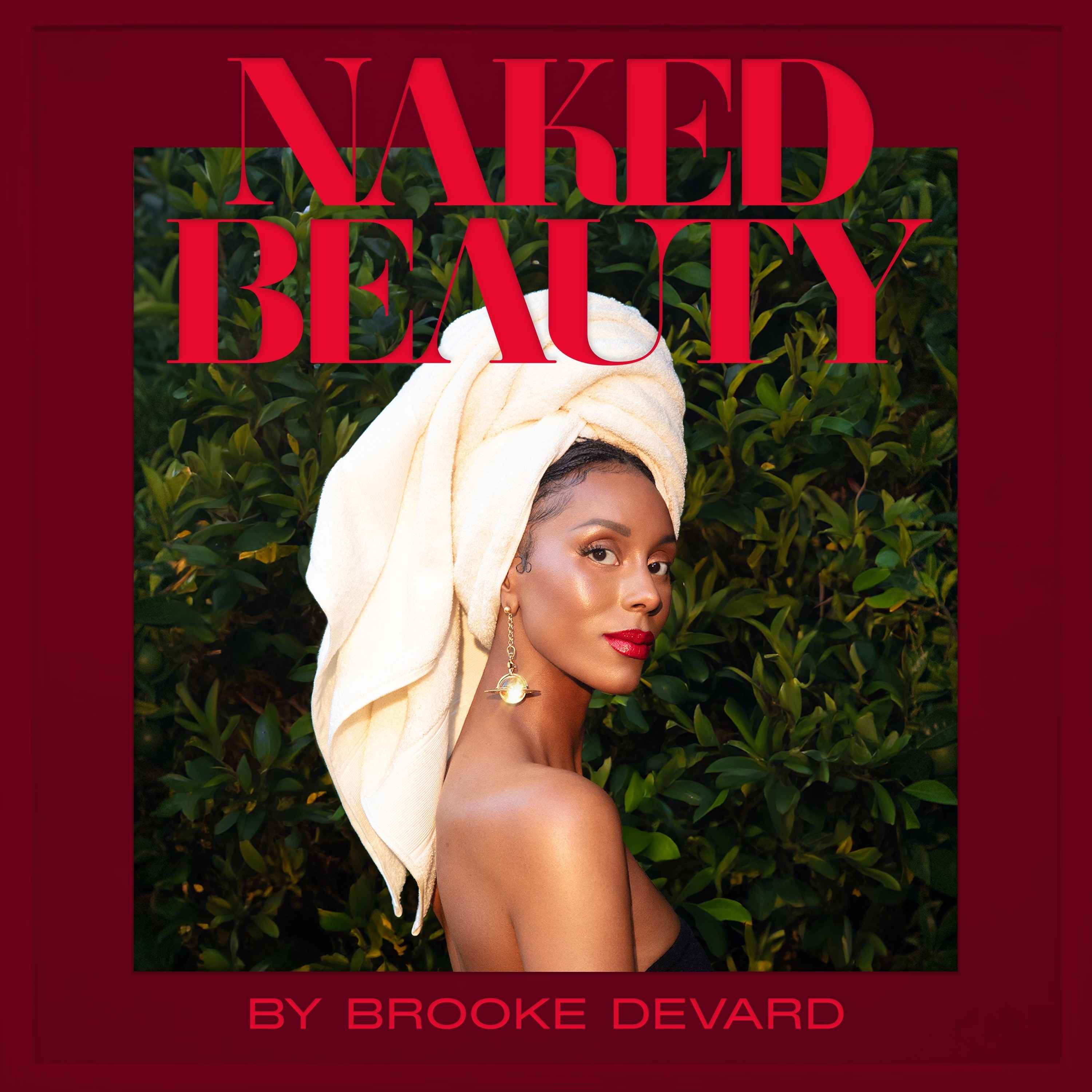
Hello. Hello. This is Brooke Devard and you're listening to the Naked Beauty Podcast. If you're joining us on YouTube, you are watching the Naked Beauty Podcast and I am so excited for today's guest, Sammy Miro, someone I've been trying to get on naked beauty since 2021 at that Teen Vogue summit. I was like, please come on the podcast. Here we are. Five years later, I finally made it happen. Sammy Miro is the founder of Sammy Miro Vintage Creative Creative director and a CFDA Vogue Fashion Fund finalist. Sammy's innovative approach to fashion and design combines her interest in emerging AI and material technologies in circular design to create ethically responsible styles. You all know sustainability is very important to me, so I'm so excited to have someone I can like nerd out on sustainability with. Sami's eco friendly work has been featured on some of the biggest stages and names in the world, including Beyonce's and her 29 dancers at the Cowboy Carter Tour. I remember that set. That was epic. But you've also dressed that you just did Emma greed for the 15% pledge gala. You guys both looked so fab that night.
- [01:10]
A
Thank you.
- [01:11]
B
You recently, like, made a dress for Lizzo. And of course, we cannot forget about the US Olympic gymnastics team in 2024. I mean, incredible. Sammy's work proves that an interest in fashion and sustainability is not mutually exclusive. They are inextricably linked to. And I, for very selfish reasons, I'm excited to talk to Sammy about her. Just like the cool girl's guide to la as a beauty and fashion icon. I have so many questions for Sammy. Sammy, welcome to Naked Beauty.
- [01:39]
A
Thank you so much. Brooke, that was a glorious introduction.
- [01:43]
B
I mean, you've done so much and you know, I admire your style a lot. Thank you. I mean, even the look today, Incredible.
- [01:50]
A
Thank you.
- [01:50]
B
This is why I tell people they've got to like, check out the, check out the YouTube. So Sami, you have always stood out to me as someone that has really great personal style and like, you make a statement with your beauty looks and just like your outfits. And I always feel like an outfit, sometimes an outfit speaks for you more than you can speak for yourself. So I've actually pulled out and we'll explain it to people that are listening on audio and we'll add the image here. This outfit to me like encapsulates like who you are as like this very cool girl. Let's describe it for people listening.
- [02:21]
A
Okay.
- [02:22]
B
It is. I'm going to hand it to you and you can describe it, it's like a plaid.
- [02:25]
A
Yes. Okay, so what we have here on bottom is a plaid skirt. I would say that it is about five sizes too large on me.
- [02:34]
B
Okay.
- [02:34]
A
It was supposed to be high waisted, but I just loved the wool and the pattern. Like it was perfect. So, you know, had to have it
- [02:43]
B
typical tartan red plaid.
- [02:45]
A
Yes, exactly.
- [02:46]
B
The shoe is sick.
- [02:47]
A
The shoe is amazing. It's a fancy club booty slash pump. But what I did to the skirt was, you know, put it on and floofed it around and pinned it here and there and then, you know, landed on like a one leg out super mini and one side and then kind of asymmetric. And then I'm wearing one of those iconic. I forget what the name of them, what, what they are.
- [03:10]
B
They're like, they're like popcorn shirts that are like tiny and then you can like put them on and they expand.
- [03:16]
A
Exactly.
- [03:16]
B
You're wearing it in this like bright blue, like aquamarine color that kind of. You wouldn't think to pair with like red plaid.
- [03:23]
A
Definitely not. And I'm also wearing it wrong. I turned it. I like, I think I tied the arms behind me so it was like a tube top and who knows. And then I'm wearing a really cute Penny Lane coat.
- [03:34]
B
A Penny Lane style coat. Very like rock and roller girlfriend coat.
- [03:39]
A
And then some Margiela gentle monster glasses.
- [03:43]
B
Yes. The eyewear on point. This to me is a like just typical example of how you can just take things, put them together. These things don't go together. I'm just going to say that. But you look so good and the way that you style it and put it together just feels very you.
- [04:02]
A
Thank you. It's also very impractical. I for some reason love to be uncomfortable all the time and have to worry about my clothes like popping open even. You know, for example, right now I'm wearing a vintage Ralph Lauren cardigan, but it's backwards. And then there's like one little tiny safety pin that I did running out of the house.
- [04:30]
B
And hopefully the way that you style. But the way that you style clothes is so inspiring because with, with a few items in your closet, you're able to create all of these infinite options.
- [04:41]
A
Yeah. And that is actually a really big problem for me when it comes to getting ready. Because whether I have a humongous wardrobe or a scrap and, you know, a T shirt, I really can make a hundred different outfits with it.
- [04:56]
B
You can make anything happen. Well, I have now been living in LA for three years and one of the Things that I've noticed about la, coming from New York and the events seen in LA is there is a lot of people that are in a head to toe look from a showroom, from a specific designer. The glam is like the perfect blowout and like the perfect, like snatched face. And then I see you at events and you've got like your skinny brow and like a really interesting blush placement and like the hair is making a statement and you're doing like your own style thing. And I'm like, okay, Sammy, who is a West coast girl and you've lived in LA for a long time. I'm like, she is doing it different from all the other LA girlies.
- [05:36]
A
Yes. I. It's not a goal of mine, I would say. I think that I'm just really in touch with what I think looks good on me and what's flattering on me and what gives me the most confidence. So it's actually interesting because do you remember we were at a Ferragamo dinner during Art Basel or no, freeze during Freeze in la and we were sitting next to each other and that was like the first day that I felt like I finally unlocked something in my beauty in. In terms of my makeup, where I fully, finally understood how to do makeup on myself. And when I say unlocked, it's because I turned off this part of my brain where, you know, we watch all of these YouTube videos and you're supposed to do this that way and this that way, but everybody's facial structure is so different, so. So it doesn't apply. And finally I understood, oh, just look at my face as if I'm, you know, sketching or, you know, doing like charcoal and smudging. And I was wearing like some really wild white. I remember eyeshadow with like super skinny brows. But, like, I felt great.
- [06:47]
B
Yeah, because you looked cool and you looked different and unique. And I think everyone here in LA in this like Hollywood industrial complex that we exist in, has a team and stylists. And like, by the way, like, I love glam. If I could be in glam every day, like, put me in glam. But I do think that sometimes. And I'll speak to the stylists in the wardrobe. Part of sort of becomes this death knell to personal style because you start to lose touch with like, what you actually like if someone is always putting you in an outfit.
- [07:19]
A
Yeah, absolutely. I agree with that. And how I would interpret it is, for me, I guess in applying it to fashion is just being scrappy when I have to get Creative. It's how I started in fashion. Then that's when, you know, my creativity really is turned on versus it. Well, it's actually interesting because when I started to kind of get like, you know, brands were reaching out, and they're like, oh, we want to send you clothes. We want to send you this and that. I found that I looked in the mirror one day, and I was like, who am I?
- [07:52]
B
Like, I just have all of the latest stuff from the. It's like, are these even the clothes that I like?
- [07:58]
A
No. At first, it's like, it's a dream. Like, this is what everyone wants, you know, and. And I'm so grateful for these opportunities to get all of these beautiful articles of clothing, but if I piece them all together at the same time, it's just like, it's not me anymore. And so I had to be really aware of that going forward and just, you know, take a step back and be like, I always have to kind of be rushed and stressed while I am getting ready with scissors in hand.
- [08:30]
B
I was gonna say, and take a pair of scissors. You're good for taking a pair of scissors to a beautiful garment.
- [08:35]
A
Yes.
- [08:35]
B
I'm always like, I'm pretty sure I
- [08:37]
A
have scissors in, like, every room of my house and in every nook and cranny of my office.
- [08:42]
B
Well, when you came in, you saw me, like, cutting your questions, and you were like, these are great scissors.
- [08:46]
A
Those are beautif scissors.
- [08:48]
B
She loves a scissor. And so I assume, then you don't have a stylist.
- [08:52]
A
Definitely not.
- [08:53]
B
Yeah. Have you worked with a stylist before?
- [08:57]
A
For myself, personally, I think on a couple of campaigns and photo shoots.
- [09:02]
B
And how was that for you?
- [09:04]
A
Early on it, I was, like, really hesitant to kind of give my opinion because I didn't want to disrespect anybody. But at the end of the day, like, things should always be collaborative, and I think people should speak up because you want them to feel confident, obviously, especially if they're gonna be in front of a camera. So I learned that there's no problem with saying how I feel and that it became more collaborative. And I think now it's like, you know, I would say it's sounding like I've worked with a lot of stylists. I really haven't. It's been maybe five, but they just kind of expect me to take the lead anyway.
- [09:37]
B
Yeah, come in as you are. I love that. I love that. So you shared that your desire to fit in with your peers led to a vintage lacoste floor polo, and ultimately, just like, experiencing the magic of vintage shopping. What brands did you initially go looking for?
- [09:54]
A
I really was not ever brand driven. Except for that vintage look. Yeah. I grew up with a dad and a brother and like, fashion, although my dad is extremely fashionable.
- [10:09]
B
Oh, is he? Okay.
- [10:10]
A
Everybody who meets my dad, they're like, he is so cool.
- [10:13]
B
Oh, my gosh. Okay, we need to see Papa Miro's style.
- [10:16]
A
Look right here. Here's some photo. But ebay was my dad's thing, you know, it was just he was always sourcing and hunting for things, and so it was kind of like in my blood.
- [10:27]
B
What's your dad's background?
- [10:29]
A
My dad has an insane background. He really is a renaissance man. He grew up in la. He was a jazz musician many, many, many years ago. And then he found himself. He was a writer on Laverne and Shirley in welcome Back Cotter.
- [10:44]
B
Wow.
- [10:45]
A
And by jazz musician, he was an alto sax player. Then he went to. He worked at NASA and he was an engineer, and he engineered a part of the first aircraft that went to the moon. So it was like, you know, when it lands, it goes like that Bolster. He.
- [11:04]
B
Wow.
- [11:05]
A
So he was on the engineering team.
- [11:06]
B
A jazz musician, a writer.
- [11:09]
A
Yes.
- [11:09]
B
A space engineer.
- [11:11]
A
Yes. And then for the last several decades of his career, then he was a professor in quantitative business analysis.
- [11:19]
B
Wow. And an ebay sourcer.
- [11:22]
A
And an ebay sourcer. He really is both creative and he has both sides.
- [11:28]
B
And I know he's encouraged you in terms of just your education and the things that you study, but. Okay, so you're in San Francisco. You want this Lacoste polo.
- [11:37]
A
Yes.
- [11:38]
B
And you go into a vintage shop.
- [11:40]
A
No. Okay. So I was walking around San Francisco. I was on. It's called Van Ness street, if anybody knows. Very busy street. I was walking with a girlfriend, I think it was in middle school. And we walk into the store, it was American Rag.
- [11:59]
B
Oh, wow. American Rag, Yeah. Which is still here in la.
- [12:01]
A
It is, yeah. American Rag. And the front of the store is all, you know, new clothing, and they all have different layouts, but they all have, you know, vintage and new sections. But the one in San Francisco was all new up front. And so I'm, like, going through the racks and, like, you know, looking at the prices and being like, okay, definitely can't afford any of those things. Then I keep walking, walking, walking. And then I hit the back of the store, and they have a whole vintage section. And I'm looking at the price tags, and it's $5 for this, you know, And I just got so excited. So I found a Lacoste polo that was purple turned, like, you know, purpley mauvey holes and, you know, the whole shebang. And it was perfect. So I bought it and that, and I wore it, like, every day.
- [12:49]
B
That was the beginning of your love affair with vintage?
- [12:52]
A
It was the beginning, yeah.
- [12:53]
B
Yeah. I mean, it is amazing when you have the eye for something. Right. Like, and you understand what you're looking for, and you understand, to your point about what your actual personal style is. Money does not have to be a constraint into finding great clothes. You can find great things, but you do have to search, and you have to have that vision.
- [13:10]
A
The lack of money is what makes you more creative with your style.
- [13:16]
B
Yes.
- [13:16]
A
At least that's my experience.
- [13:18]
B
Yes.
- [13:19]
A
Otherwise, it's just copy and paste, and you can go into anywhere and afford the same things.
- [13:25]
B
Yes.
- [13:25]
A
Yeah.
- [13:25]
B
Now, what was it like growing up in San Francisco? Did you feel beautiful growing up? Were you, like, one of the cool girls?
- [13:31]
A
I absolutely was not one of the cool girls.
- [13:33]
B
Okay.
- [13:34]
A
I did feel beautiful, though, but I didn't feel confident.
- [13:39]
B
Talk to me about that difference.
- [13:41]
A
My dad, as you can probably tell, is, like. He's, like, had such a big impact in my life and how I looked at myself and how who I wanted to be. And my dad, he's French and Russian, and my mom is black, and I didn't grow up with her, but my dad always raised me. I felt really lucky as a mixed person. I feel like a lot of mixed women feel, you know, they're like, I'm not white enough. I'm not black enough.
- [14:12]
B
And to add onto that, you were growing up in a household with just your white father, so you were very disconnected from the black experience.
- [14:19]
A
Or not necessarily that, but just disconnected from having a physical.
- [14:26]
B
Yes.
- [14:27]
A
Person there to kind of, like, guide me.
- [14:29]
B
This is how you do your hair.
- [14:30]
A
Yes. So my amazing father would do it, and he would, you know, put my hair up. He figured out. He did. He figured out braids. He did that crown braid that went up above your head. You know, ponytail with, like, curly Q. Oh, I love that. Yeah. But I felt really lucky because my dad always told me that black women are the most beautiful.
- [14:50]
B
I mean. And he is right.
- [14:51]
A
And he is right. Yes. So I felt like I never kind of questioned that. And I was typically the only black person in school, so it wasn't. So I felt beautiful knowing that, you know, I had fuller lips and that I had, you know, curly hair. But I Was just very shy, and I hadn't found my confidence yet. So beautiful, but not confident.
- [15:16]
B
Not confident. When. When do you think you came into your confidence?
- [15:20]
A
When I discovered vintage.
- [15:21]
B
When you discovered vintage. Wow.
- [15:22]
A
Yes, absolutely.
- [15:23]
B
And what was it about kind of honing in on your personal style and this experience of shopping for vintage that you felt like everything clicked.
- [15:31]
A
I realized that vintage has a story, and I was able to connect to the excitement of and the curiosity of, you know, where was this pant or shirt or jacket before I obtained it, and what life did it live, and who was wearing it, and what were they doing? And there was just something about that magic in that storytelling that made me feel so confident knowing that I was the only person in the world with that exact article of clothing on.
- [16:11]
B
I mean, it is a flex to. To be like. It's like people like, oh, where'd you get that? You're like, it's vintage.
- [16:15]
A
Yeah, sorry. Can't get it anywhere else.
- [16:19]
B
San Francisco, in particular, also has an interesting history with vintage. If you think about, like, Hayton Ashbury and, like, that whole movement of the 60s of, like, the hippies were the first to really be like, okay, we're gonna thrift clothing. And, I mean, I feel like San Francisco also has a very unique vintage scene. I don't know if it's still unique and interesting as San Francisco's been increasingly taken over by tech companies, but it definitely has that history.
- [16:42]
A
Yeah, it does. It think that I had just a lot of options around. And, yeah, Hayden Ashbury had so much vintage. I mean, really, all over the city, like, every neighborhood had a vintage store, some more than others, but it was pretty prevalent.
- [16:59]
B
Yes. So I discovered vintage shopping older than you did at middle school. I was not up on vintage, but I do. I love how the kids today, like, they really get it. Like, they're. They're all thrifting, and they're finding interesting stuff. It's so funny to see them, like, buy these things from, like, Abercrombie and Hollister that they're, like, coveting. They're like, oh, this is like a grail piece. And you're like, oh, my God, this is my, like, worst nightmare outfit. But they love it, and I love that for them. But, yes, I can remember shopping in Vintage shopping in San Francisco. I got a fringe suede jacket. So I was at Stanford, and we would go down to SF for, like, the weekend for fun stuff. And vintage shopping was a really big part of it. And I do remember exactly what you were talking about. That feeling of like, I'm the only person with this. And like that's just, it just makes you feel different and unique.
- [17:47]
A
It does, yeah. And that's just, that's what I needed to finally feel like I could walk down the hallway of high school looking with my chin up high.
- [17:59]
B
Yes, yes. Because you were doing your own thing in form. But, but you know what? I think the other thing is, because we're going to get into your background in tech, because before you were in fashion, you were in tech. To have great personal style, you have to have a unique point of view. You have to be a person of the world, you have to be experiencing culture, you have to be reading books, you have to be watching films. Like it doesn't come out of nowhere. And I think increasingly we live in this world where people are like, oh, I like that on Pinterest. Like, I'm just gonna recreate the look or I see how many TikToks recreate this look. And it's like some of it has to come from your brain, you know?
- [18:30]
A
Yeah. I mean, I think that's interesting. I. I truly feel like my fashion came from in here.
- [18:39]
B
Internal. From the soul.
- [18:41]
A
Yeah.
- [18:42]
B
Yes.
- [18:42]
A
I. It didn't come from any magazines or any sort of obvious reference. Maybe it came from, you know, those old dapper men who are just dressed to the nines every day with their little hats on, a three piece suit like that is inspiring to me. Or looking out at the clouds and seeing just something in there that creates like, I don't know, maybe a new silhouette for me, but nothing. I really just feel like it is just like, I don't know, it's just within me.
- [19:20]
B
Yeah, well, and that's why you're a designer. So before you worked in fashion, you were in tech. What were your early career experiences like? Oof.
- [19:30]
A
My early career experiences were being a young black woman in a very, very, very white male world. And that was prevalent at all times. But you know, it was just the way things were and you just roll with it and it was.
- [19:51]
B
What did you do? Where did you work?
- [19:54]
A
So I worked at. It's called Seoul Republic. I don't think it exists anymore. But it was a scary name, right? Soul Sucking Republic. But it is a. It was a spin off of Beats by Dre. So the, the tech within Beats was made from this company called Monster Cable. The son of the founder of Monster Cable left, started his own brand that was a spin off. So it was like a lifestyle consumer electronics brand. And I was with the company from the Beginning from just, like, ideation, I wrote, like, part of the marketing plan and was interning with them when I was in grad school, and then they ended up hiring me, and I was with them for four years. But, yeah, I think that because they were in San Francisco and it was, you know, tech vibe and super startup, you know, like working out of a living room, we were able to wear whatever we wanted. So I never had any constraints when it came to my wardrobe.
- [20:51]
B
Your fashion?
- [20:52]
A
Yeah.
- [20:52]
B
When did you decide you wanted to work in fashion? Like, this is not for me. This is not my path. I actually wanted to do something in fashion.
- [20:59]
A
I never felt like it wasn't my path because I find myself, like, the goal has always been to get back there.
- [21:07]
B
To tech.
- [21:08]
A
Yes, to tech.
- [21:09]
B
Interesting. Interesting. Okay.
- [21:10]
A
And to find an authentic way where they can both live simultaneously. So it's a mere break, you know, a little hiatus. Although it is how I did start my year at ces, which felt very, very, very full circle for me to have a fireside chat at the biggest consumer electronics trade show in the world, and just to talk about, like, sustainable fashion on that kind of a tech platform.
- [21:37]
B
I mean, you studied global entrepreneurship.
- [21:39]
A
Yes.
- [21:40]
B
You have this tech background. You're interested in sustainability. How do. How do all of those things come together for you to eventually create Sammy Miro Vintage?
- [21:47]
A
You just. I just made it happen. There were just all of the things that were me. And until I had an epiphany to understand how to create a brand based off of those things, then that's just how I did it. And I did for a couple of years. I had this idea of the name Sammy Miro Vintage, because my friends would call me that because I was always wearing vintage, so they would call me vintage.
- [22:14]
B
That's so funny.
- [22:15]
A
Yeah. And so I knew I wanted to start one day at school something Sammy Mirror Vintage, had no idea that it would be a clothing line. But back this was, you know, 10 years ago also. Congrats to you and your 10 years.
- [22:27]
B
Oh, my God, look at us. 10 years into building our dreams. Yes.
- [22:32]
A
What a journey.
- [22:33]
B
What a journey. You always wanted to do this and you always knew you were going to do something about vintage.
- [22:39]
A
Yes.
- [22:39]
B
The circular supply chain. I understand what those words mean, sort of. But what does it actually mean to create a sustainable fashion company? What does it mean to actually create something that uses a circular supply chain?
- [22:55]
A
Yeah. So great question. Those are two different things. A sustainable supply chain versus circular, as you kind of said.
- [23:03]
B
Educate me.
- [23:04]
A
Sustainable at this point is a marketing
- [23:07]
B
term, it's kind of a throwaway. It doesn't mean anything.
- [23:10]
A
Who knows what it could mean? Because there are so many ways to be sustainable, and it's just, it's. I mean, it's greenwashing sometimes. It's. It's very ambiguous. But circular fashion is very specific because it insinuates that there is a continuous life cycle of an article of clothing or it never goes into the abyss. And that. And that is showcased in a variety of ways. Like, one way of doing it is, you know, is by upcycling. So instead of sending something to a landfill, it can be deconstructed and the fabric reutilized to create something new and to make something, you know, better and to increase the longevity and the lifespan.
- [24:01]
B
Yes. Is that, Is that what you got to do with Levi's?
- [24:04]
A
It is what I got to do with Levi's, yes. It was my first zero waste collaboration.
- [24:09]
B
Oh, my gosh. So, so, so how does that happen? Levi's comes to you and they say you get access to all of the dead stock.
- [24:14]
A
Yeah. So Levi's came to me because I. One of my first products was. Or actually, I mean, my first canvas really was vintage Levi's and vintage denim. I don't think they knew at the time that it was vintage Levi's solely.
- [24:28]
B
Which, by the way, can I just say. Yeah, I just is the best. I just purchased vintage Levi's when I was in New York. The best.
- [24:33]
A
It's the best.
- [24:34]
B
I mean, jeans now, by the way, like, Saint Laurent is selling jeans for $1,000. It's gotten completely out of hand. You will never find a pair of jeans better than vintage Levi's. But then you have to do that extra step and get them tailored.
- [24:46]
A
Have to.
- [24:47]
B
Yeah, but like, once you get a pair. But okay, what's your go to type of Levi? Like, are you like a 501? I'm a 501, yeah. 501. And like orange tab. Like you get into, like, the tabs.
- [24:57]
A
I. I personally don't care about that
- [25:00]
B
because, you know, people go deep.
- [25:01]
A
They do. They go deep and good for them.
- [25:03]
B
Yeah.
- [25:03]
A
But I am just all about the wash. And what's your.
- [25:08]
B
What's your preferred wash? And rise and fit.
- [25:12]
A
My preferred wash, I would say, like mid wash is my preferred. Then after medium wash, I would probably skew to light wash and then dark.
- [25:23]
B
Okay.
- [25:24]
A
I also love black.
- [25:25]
B
Okay.
- [25:26]
A
You know, like faded vintage, black, gray.
- [25:28]
B
Yes.
- [25:28]
A
Rise. I am low rise girl all the way. I have a really short torso.
- [25:34]
B
Well, yes.
- [25:35]
A
Can't wear high rise when you only working with this much space.
- [25:40]
B
For me, I'm like one of two extremes. I'm like, I either want like a true, true low rise, like give me a real low rise or give me like a high rise. I don't want an in between. I don't want a mid rise.
- [25:49]
A
Yeah.
- [25:49]
B
I want like a high rise or a low rise.
- [25:51]
A
All that matters is that you know what you like.
- [25:53]
B
Yes. And then, and then what do you like for the length? Do you want it to hit ankle? Do you want it?
- [25:58]
A
I have a like 33 inch inseam, which is weird because I'm like 5 6.
- [26:04]
B
So you have long legs.
- [26:05]
A
Yeah. And so I. The longer the better for me.
- [26:09]
B
Yeah.
- [26:09]
A
I mean pool. I rather a pool on the floor than something that doesn't lengthen my body.
- [26:17]
B
Yes, yes. I'm just remembering like in high school we would always like cut our jeans on like the side hem to make that like split. It doesn't really come back.
- [26:25]
A
But yeah, I do that on my jeans. On my reworked vintage jeans on the inside.
- [26:32]
B
I want to go back to the circular supply chain. What don't people understand about waste in the fashion space? Because I've had to do my own education on this. I think I used to be very vehemently anti fast fashion. Vehemently like do not shop Zara, do not shop H and M. But then again, as I have educated myself and learned more, I've adjusted my thinking. What do you think people. People don't understand about what it means to truly have less waste in retail.
- [27:01]
A
People don't understand the actual magnitude of
- [27:05]
B
how much waste there is, of how
- [27:07]
A
many millions of pounds of waste.
- [27:10]
B
Yes.
- [27:11]
A
There are out there and where they are and how they are seeping back into circularly back into our food supply. People don't know about the chemicals that are put into our clothing when we take things like, you know, plastic and all of this polyester. And the process to make the material is just, you know, waste. So much water puts so many horrible things into what is touching our skin.
- [27:48]
B
Yes.
- [27:48]
A
Also then gets absorbed into us.
- [27:51]
B
So I want to go back to what you said about where the clothes end up. I watched a documentary and I'm so sorry, I'm forgetting the name, but they showed the beaches in Ghana where they were just dumping all of these clothes in it. It truly made me so angry. Like how dare we just dump all of this garbage onto their beautiful beaches. But the visual of just like how much stuff there is. So when you donate something so let's say you don't want something anymore, you want to donate it. How do you avoid it reaching the shores of a beautiful place? Is there anything that we can do as a consumer?
- [28:22]
A
Well, there are different ways of going about it because one, it depends what is the garment to begin with? Is it from. I don't want to plug any of the fast fashion.
- [28:34]
B
Well, okay, so okay, let's talk about the fast fashion though, because are you against fast fashion?
- [28:39]
A
Absolutely.
- [28:40]
B
Okay, wait, I'm so excited to talk about this. Tell me why. Because I want it. Because I want to hear.
- [28:46]
A
Well, why? I mean, they're ruining the planet.
- [28:47]
B
They're ruining the planet.
- [28:48]
A
Yeah.
- [28:49]
B
So I felt like this as well. And I actually spoke on my platform about why I never shop fast fashion. I got a lot of feedback from people saying that this is an incredibly elitist, out of touch take. And I was like, it's not elitist. You can go to your thrift shop and they're like, well, what if you're plus size? And people were like. And also like, you may not live in a city that has cool thrift shops. Like, you could truly be in like a small suburban town where like there is not access to, you know, an interesting thrift shop too. So that was eye opening for me. But then I also talked to. Do you know Leah Thomas? She goes by Green girl Leah?
- [29:21]
A
I think so, yeah.
- [29:22]
B
She's a climate activist.
- [29:23]
A
Yes, of course I do. I met her at the 15% pledge.
- [29:26]
B
Yes.
- [29:26]
A
We had a couple of years ago.
- [29:27]
B
We had a really interesting conversation about materials specifically. And you can go into H and M or zara and get 100% cotton. You can get like wool garments. You can actually shop for fast fashion by educating yourself on materials and saying, okay, I'm going to buy this and it's from a fast fashion brand, but I am going to keep it for 20 years. And it's becoming harder and harder because fast fashion brands are using continually reduced quality products. But she kind of like turned me onto the fact that you can actually be sustainably minded when you shop for fast fashion.
- [30:02]
A
Yes.
- [30:02]
B
If you have the intention of keeping it for a long time and like repairing it. And it's not one of these, like you wash it once and it's gone forever.
- [30:09]
A
Exactly. I think it really is the mentality and it's a lifestyle. And she said that perfectly. Because if it is 100% cotton, if it's organic cotton, if it's tinsel, if it's a regenerative material, then. And you are Planning on keeping it really? It's like, is this a disposable thing to you? Do you have that mentality? Or is this something that you plan on rewearing over and over and over again and not being worried about the trends and the this and the that? And is it a one or two wears? A lot of people buy things from fast fashion to wear once, to wear once.
- [30:44]
B
And that is so insane to me as someone who buys clothes and wears them over and over again for years, for years. I just cannot imagine buying something to wear once. Yeah, the people do it. They buy something to wear for an event, and then they're like, okay, it's done.
- [30:59]
A
Right? Yeah, exactly, exactly. I mean, it's the culture now. And it's what. The way that our minds have shifted when we think about consumption is so different. And that really is because of fast fashion. It's, you know, every day there's thousands of new styles out there available to buy, like, thousands every single day. And it. It has retrained our brains to look at clothing differently and to budget our clothing differently versus, you know, and I totally understand though, too, how, like, you have the option of buying a $15 dress that is like, you know, fulfills the need right now, or do you want to save up for the, you know, it's a couple of hundred or it's, you know, it's 100 plus. That is really hard for a lot of people. And it's. It's just. You just have to be committed to it. And it. It. I. I can understand that. It is a challenge.
- [32:01]
B
It's kind of. It's how I've always shopped, so I'm used to it. But yes, it does take some retraining even. I love a designer outlet that is like my, like, I love. I love a deal.
- [32:10]
A
Yeah.
- [32:10]
B
And I was shopping and someone sent me a dm and she said, does it bother you? I was at the. The Prada outlet outside of Florence, and she said, does it bother you that all of this stuff is, like, from, like, several seasons ago? And I was like, of course not. It's never even crossed my mind that, like, I don't care what season something is from. I like what I like. But a lot of people do live in that, like, they want to shop what's in stores right now.
- [32:31]
A
Yeah, I've never been that way either, so I can't really.
- [32:35]
B
Yes. But. So what can we do as just the average person to help, you know, not contribute to the terrible toll that fast fashion is taking on the environment. So not shopping fast fashion is one.
- [32:46]
A
Not shopping fast fashion is one. Being aware. I mean, there's no easy answer. You have to make a decision that you want to be a conscious person when it comes to thinking about fashion. Is it a. An impulsive decision or are you going to be conscious and think, you know, the. The cost benefit analysis of it all? Learning about the materials, I would say, I mean, to me, if I were to come up with something that would. Could immediately shift a lot of people's mindsets, is truly thinking about the chemicals and what that is doing when you're wearing panties that are made with forever
- [33:30]
B
materials of, like, the forever chemicals.
- [33:33]
A
Forever chemicals, yes.
- [33:35]
B
Wait, that can.
- [33:36]
A
So because.
- [33:37]
B
So I've been wearing 100 cotton underwear for years now because I realized I was like the. I used to remember hanky pankies.
- [33:44]
A
Yeah.
- [33:45]
B
I was like, no, I need to grow up and move on. And I started paying attention to the material of my underwear. But what are the bad materials? Like, if you look on a label, what are materials that we should avoid at all costs?
- [33:57]
A
Polyester for sure. That's like the number one. If there's any polyester.
- [34:03]
B
Don't buy it.
- [34:04]
A
Don't buy it.
- [34:04]
B
What else?
- [34:05]
A
I think it's really more about what I would do is just know the good materials.
- [34:10]
B
Yes. What are the good materials?
- [34:12]
A
So, obviously, cotton.
- [34:15]
B
Yes. Love cotton.
- [34:16]
A
We love cotton also. If it starts with an organic before it, that's the best because it can still be made from cotton, but with chemicals. And there are things. There are a lot of regenerative materials out there, which is like, my favorite thing in sustainable fashion right now is the materials that are made from, you know, through biodiversity. And these are. These are things like, okay, imagine a. Taking a mushroom, taking something that we know only actually benefits the ground and benefits the environment with its nutrients that it fills the soils with. And we can take the mushrooms and turn them now into leather, Vegan leather. Oh, and also a lot of things that a lot of people don't know is that a lot of vegan leathers and vegan faux fur. Info. Furs are filled with plastic and have horrible chemicals.
- [35:16]
B
Right. Well, I feel like they used. I used to know that because they used to call vegan leather pleather that, like, you. And I was like, I know plastic. Plastic leather. I know what that means. But now they, like, use all of these. Like, oh, it's a vegan leather. And I'm like, so it's pleather. Okay.
- [35:31]
A
Yes, exactly.
- [35:32]
B
But yes. Yeah. A lot of the Faux things actually aren't great for. For you. Or the environment.
- [35:36]
A
Or the environment. Yeah, exactly. But they have, you know, there's pineapple leather, there's apple leather, there's all of these different. Leather is made out of fruits and vegetables. And that also are regenerative in the sense that they improve. They leave the ground, improving the world around them. So it's not just used for one thing, but it benefits the entire ecosystem.
- [36:04]
B
Oh, I love that. I love that.
- [36:06]
A
And so those are things like Tencel.
- [36:09]
B
Tencel.
- [36:10]
A
That's something that. The dress that you have, the red, it's like, so super soft.
- [36:15]
B
My favorite Sammy Miro vintage piece, that. When did you. When did you. When did I get that? In 20. 20. 21. 2021.
- [36:23]
A
Something like that.
- [36:24]
B
Did I send you when I wore
- [36:25]
A
it, like, in Japan.
- [36:26]
B
Yeah, well, in Japan as a dress and then I wore it as a crop top. Fully pregnant.
- [36:30]
A
Yes.
- [36:31]
B
She was a dress before. I have a child growing inside of me. Now she's a crop top.
- [36:36]
A
Look at you.
- [36:37]
B
Yes, Yes.
- [36:38]
A
I love that. I loved that photo. And yeah, so those are made out of my. All of my rib is made out of tinsel, which is organic eucalyptus. So, so soft and just cozy.
- [36:52]
B
Yes.
- [36:53]
A
Then there is, like, think about also too, like eucalyptus, bamboo. These are plants that also have that grow, like, you know, they're like almost like weeds. Like, they don't ever stop growing. They can take over. So it's amazing to be able to use plants like that that, you know, removing them doesn't mean that it's going to harm the environment around it. They have just the ability to continue and to grow that. It gives us the chance to. Instead of, like, you know, tearing down a tree. We can use bamboo.
- [37:26]
B
Yes.
- [37:27]
A
We can use eucalyptus to create toilet paper, like all paper products. And like, the softest, like, bed sheets, like, all of my bed sheets, my hand towels, my shower towels, my robes, blankets, those are all made from organic bamboo eucalyptus.
- [37:47]
B
Where do you buy them?
- [37:48]
A
Several different places. Like, okay, Parachute.
- [37:50]
B
We love Parachute.
- [37:52]
A
There's also this brand called Quince.
- [37:56]
B
Quince.
- [37:56]
A
Yes, yes. That I actually didn't discover until the holiday last year. And I was, like, just going nuts on buying, like, every single throw blanket and sheet possible. But they're also, like, the best thing about it is, like, they're all so soft and cozy. Like, I have the coziest bed and she situation mattress situation that's made from, like, organic latex. And it's not like you're replacing it. And then now your skin's like chafing. It's actually, like, a nicer way to sleep.
- [38:30]
B
Yes. No, absolutely. The way that your clothes feel on your body is so important, and the fabrication is very important. Your skin is glowing right now. So I'm like, I want to jump to beauty. But before we do, before we jump to beauty, I've got to ask you about AI.
- [38:44]
A
Okay.
- [38:45]
B
Because you are a proponent of AI, but AI is largely, largely discussed as one of the key ways that we are ruining the planet. And it takes so much energy and so much water. So how do you contend with the environmental impact of AI and your goals as a fashion designer that really cares about the planet?
- [39:07]
A
It is a tricky thing that I'm honestly figuring out every single day. I think that it's interesting. You know, fashion is also the top three most detrimental industries, right behind the aviation industry.
- [39:21]
B
Crazy.
- [39:22]
A
So, you know, there's so much horror, there's so many horrible things around us that I think when it really comes down to it, is figuring out how you're going to utilize whatever the industry is for good.
- [39:38]
B
Right. Like, AI is here. It's inevitable. But how you use it for your overall goals. I hear some people saying, like, we must not give in to AI, and it's like, we're a little bit late for that. Like, it's here. It's in everything that you use. Even if you think you don't use AI, you are using AI by way of using technology. It's, like, baked into the actual code of pretty much everything we interact with now. So it's like you can't be against it anymore. I think it's just, like, how do you use it for what you want to do?
- [40:07]
A
Right, Exactly. And I mean, that's what life is all about. Figuring out how to just be good and make conscious decisions.
- [40:15]
B
Yes. Yes. Okay. Beauty chat.
- [40:19]
A
Yay. I'm really excited to talk beauty with you, by the way.
- [40:23]
B
Well, I. I'm very excited because I feel like, you know, the good places to go, and I want to know,
- [40:31]
A
like, you know, the good places to go.
- [40:34]
B
I've got a few spots. I've got a few spots. But what are your go to beauty treatments?
- [40:39]
A
I do Botox.
- [40:41]
B
Okay. How regularly do you do Botox?
- [40:43]
A
I got it for the first time a couple of weeks ago in, like, a year or something. So I take too much time off. I just kind of was like, I kind of didn't really see a difference before and after until the movement in my eyebrows was, like, for the first time, creating, like, a crease when I lifted my eyebrows and my forehead and I was like, oh, we can't have this at all, so got to get that again. And I do. Let's see. I've had micro needling, done, chemical peels, and I am going to try prfm. Pr? Yes.
- [41:21]
B
You're going to do prfm. Okay. So where are you going for all of these treatments? That's very important from my knowledge.
- [41:25]
A
Yes. So I am. I just started. I just had a consultation with Dr. Stoker.
- [41:32]
B
Okay.
- [41:33]
A
And it's a. Honestly, it's a dream situation that, like, I don't know how I got this lucky. But, you know cld.
- [41:40]
B
Yes. Yes.
- [41:41]
A
Okay. It's a PR showroom in la. Like, you know, one of the most popular ones. They emailed me.
- [41:46]
B
Oh.
- [41:47]
A
And they were like. Like, I'm sure you get these emails all the time. We're like, we want to do plastic surgery on you or, like, something.
- [41:52]
B
I know. They're always, like, kind of offensive.
- [41:54]
A
Yeah.
- [41:55]
B
You're like. They're like, we think you'd be a great candidate for. And you're like, wait.
- [41:59]
A
Right. But then also, you look them up and it's, like, terrifying. Like, you have no idea whose hands you're putting your body or face into.
- [42:07]
B
Yes. And I've actually gone out of my way to never say yes to those because I want to be an obnoxious paying customer and be really demanding and, like, what I like and, like. But Dr. Stoker's a different level. Okay.
- [42:18]
A
Yes.
- [42:18]
B
So they reached out and they were like.
- [42:20]
A
Yes, so they reached out. They were like, you know, we would love to set you up with them. You can have a consultation for either, you know, under the knife kind of thing.
- [42:30]
B
Oh, wow.
- [42:30]
A
Or surface under the knife. Or beauty. And I'm like. I'm a really natural girl. So I'm like, there's nothing I would go under the knife or yet. And. But I'm so interested in all of the treatments that are out there. So I'm going to try the prfm.
- [42:46]
B
Prfm, where they take your own blood and they, like, centrifuge it and then they inject it back into your face to, like, stimulate collagen.
- [42:52]
A
Right. Thank you so much. And I'm really interested in knowing more about sculpture.
- [42:59]
B
Okay. Yes. I've never. So I haven't done Botox.
- [43:03]
A
What?
- [43:03]
B
Yes. Yes. I'm not a Botoxer and I. But sculpture I'm interested in.
- [43:07]
A
Yes.
- [43:08]
B
I need to, like. I just need to, like, dedicate time to, like, figure out my whole situation.
- [43:12]
A
Yeah.
- [43:13]
B
But I'M kind of. I'm really big into skincare. Like, I'm like, make skincare sexy again. Everyone just jumps to like four things past skin care. And I feel like a great skincare routine is so fab.
- [43:24]
A
It's so important.
- [43:24]
B
What is your. Take me through your morning skincare.
- [43:28]
A
So my morning skincare has recently changed a lot. I got very lucky. For my entire life, I've had really amazing skin, very minimal acne. And suddenly, like six months ago, I started breaking out like crazy.
- [43:43]
B
What prompted this?
- [43:45]
A
We still don't know.
- [43:46]
B
Okay.
- [43:47]
A
There were obviously like the first go to were hormones. There were no changes in any of my, you know, like periods or anything like that. I got even, you know, blood tests. Everything was normal. And so I went to a new dermatologist who's actually a black woman, and I. She put me on tretinoin.
- [44:08]
B
Wait, you had never been on tretinoin before?
- [44:10]
A
I've never been on tretinoin.
- [44:11]
B
Oh, yeah. And your whole life changed.
- [44:13]
A
My whole life changed.
- [44:15]
B
So my tretinoin, did you do like an altrino? Like that's the lotion based one that I use or just a pure gel? Oh, yeah, like Atraline.
- [44:22]
A
No, it was white.
- [44:24]
B
Okay. Altrino, probably tretinoin.
- [44:29]
A
Yeah.
- [44:29]
B
Yes. Tretinoin is the best thing to do to transform your skin. You can spend a lot of money at Sephora and buying all the things. If you're not using tretinoin, you're starting from behind.
- [44:40]
A
Yeah. It's wild. And I think I've been on it for under a month or maybe just a month.
- [44:47]
B
And your skin looks perfect.
- [44:48]
A
My skin has transformed not only with my acne, but with any scarring that I had. And then also pore size. Just like skin tautness.
- [45:02]
B
Yes.
- [45:02]
A
I don't like.
- [45:03]
B
I mean, tretinoin is that girl.
- [45:05]
A
Yeah. Yeah.
- [45:06]
B
What's your go to sunscreen?
- [45:08]
A
I use Kosas.
- [45:10]
B
Okay. The Dream Beam.
- [45:12]
A
Yes.
- [45:12]
B
The mineral I really love.
- [45:16]
A
You know, I also will be another disappointment. But I didn't start using sunscreen until a couple of months ago. And it was through Kosas because I felt that everything was like too heavy and greasy and it would make me break out.
- [45:32]
B
Yes.
- [45:32]
A
So Kosas is wonderful. I think really when it comes down to my beauty in general these days, it's either a clean beauty brand like Kosas say, or Ilia.
- [45:45]
B
Love, love, love. What do you like from Saie Beauty?
- [45:47]
A
Oh, man. My blush is like, say the liquid blush. No.
- [45:53]
B
Oh, the powder?
- [45:54]
A
No, it's the cream.
- [45:55]
B
The compact.
- [45:56]
A
Yeah, the compact.
- [45:57]
B
Okay. I haven't tried that.
- [45:59]
A
Yeah. I'm a coral blush girl. Like, there's no other. I don't want red. I don't want a pink. I don't want.
- [46:06]
B
You want a coral blush.
- [46:08]
A
Coral.
- [46:08]
B
She likes what she likes.
- [46:09]
A
Yes.
- [46:09]
B
Ilia also has a great cream blush stick.
- [46:13]
A
The stick.
- [46:14]
B
That's great.
- [46:14]
A
Yeah, I haven't tried that one yet, but I'm just, like. I'm stuck on the. I'm stuck on the one that I use because it also has beaminess.
- [46:23]
B
Yeah. Like a little bit of light reflection in it. That's really pretty.
- [46:26]
A
Like a little bit of gold. I think it looks. It honestly looks amazing on every skin tone.
- [46:31]
B
That's a really nice one. How do you get your makeup to last? Because setting spray. I find the best setting sprays are really the toxic ones. Like the one size one that's, like, feels like you're spraying hairspray on your face and you're choking. But that's, like, what makes my makeup last. I haven't found, like, a good, clean makeup setting.
- [46:50]
A
Well, I'm really excited to share this with you then, because Saie actually just launched the first clean.
- [46:56]
B
Yes, I have sprayed.
- [46:58]
A
Have you used it?
- [46:58]
B
Yeah.
- [46:59]
A
Oh, you don't like it?
- [46:59]
B
No, no, it's. It's. Here's the thing. If I'm, like, doing an event and I need my makeup to last. Last. Last. I haven't, like, risked it. Oh, risk it, Risk it. Okay.
- [47:09]
A
It's not a risk.
- [47:10]
B
Okay. It's not a risk. Okay. We love a positive review because I have it. I've tried it for daytime. And it makes your makeup last, though.
- [47:18]
A
Yeah, it makes my. It's what I use when I go to an event. Like today. What I used is the Kosas setting spray that I like because it's. It feels less of a setting spray. It's just kind of like a moisture. Yeah. It, like, melds the makeup together, which is nice when you're doing it really fast in the car, driving over to come see you. But if I'm going to an event or I want something to kind of, like, last all night, then I use the. The Saie spray.
- [47:44]
B
I'm bringing her back out then. Yeah, I love to hear that.
- [47:46]
A
Yeah.
- [47:47]
B
I do want to ask you before we. Before we finish, do you feel pressure to conform to LA beauty standards? Because there is a beauty standard? Do you feel that pressure? I mean, you're very close to the standard, I would say just naturally, but there is an enormous pressure to kind of be, like, perfect and flawless and have certain features emphasized.
- [48:13]
A
Right, right. I would say both yes and no. The yes is that sometimes I'll look in the mirror and be like, wait, do I need a lip filler?
- [48:25]
B
You do not.
- [48:26]
A
I'm like, no, like, absolutely not.
- [48:28]
B
I don't. The fact that you've even thought that just shows, like, how deep the sickness goes.
- [48:33]
A
That's what. Exactly what I'm saying.
- [48:34]
B
It goes deep. Yeah.
- [48:35]
A
And then no, because I don't want to look like a copy and paste.
- [48:40]
B
Right, right.
- [48:41]
A
And that's more beautiful.
- [48:42]
B
Yeah.
- [48:42]
A
I rather have a little bit of flaw here and there than look like a cat lady, you know?
- [48:49]
B
Well, you know what? This is very full circle to the beginning of the interview. The reason why you were drawn to vintage was because no one else had it. And there is, like, a flex to being like, these are my original features unaltered.
- [49:01]
A
Totally.
- [49:02]
B
And this is the way that I look, and no one else looks like me. And that's something that you can lean into. And I do think that the most beautiful people do have that uniqueness. I never see a girl that has conformed herself to fit the standard and think, like, wow, she's so gorgeous and striking.
- [49:17]
A
Right? Yeah. But I mean, at the end of the day, to each his own, so.
- [49:22]
B
Oh, yeah. I mean, it's like, do for me.
- [49:25]
A
So far it's working.
- [49:26]
B
Yes. So far what you're doing, you're happy with?
- [49:30]
A
Yes.
- [49:30]
B
When do you feel your most beautiful?
- [49:33]
A
I feel my most beautiful when I feel my freest. And I feel that way when I'm probably in my office and I have my scissors and either on my body or on the mannequin or on one of my employees, I am just free form cutting and free because I don't have a plan. Free because it's like kind of like what you would imagine a sculptor when they're creating a piece of art or a painter and you have to stop and take a look back. And, you know, if it's more abstract, then you're just. It's just so free flowing.
- [50:22]
B
Yeah. You reach a flow state. Yeah, that's what they call it. Flow state.
- [50:25]
A
It is a flow state. Yeah, that's definitely. What about you?
- [50:28]
B
Oh, my goodness. I could have a different answer every time I ask this question because I feel like it changes all the time, but. But I do identify with what you're saying about when you are in process of doing the thing you feel like you were meant to do. You know, when you were. When you were creating, when you were building something, when you Were, like, truly locked in on something that does feel in a strange way, like this moment to feel beautiful because you're like, I'm doing what I'm supposed to be doing.
- [50:52]
A
Totally. Yeah. When I think of beauty, it really is. I don't always think about it from, like, an exterior point of view.
- [51:01]
B
Yeah.
- [51:02]
A
When I grew up, if I ever got a. And I don't know if this, like, gave me trauma or not, but anytime somebody complimented me physically, my dad would say, but what matters most.
- [51:17]
B
Yes.
- [51:18]
A
The inside matters most.
- [51:20]
B
And your dad was right.
- [51:21]
A
And he was right. Yes.
- [51:23]
B
So shout out to dad. I'm gonna have him on the podcast next. Please line him up. Thank you so much, Sami. This was such a great. We, like, really, like, range, like, from, like, vintage and sustain ability to beauty treatments and Botox. We really covered it all. So. Loved getting to know you more. And, yeah, I'm just. I'm excited. I feel like, you know, we're both 10 years in, but these next 10 years feel like you're going to continue to just do amazing, amazing things. And I hope I'm there to be there to see it all unfold.
- [51:55]
A
I can't wait for that.
- [51:56]
B
Yeah.
- [51:56]
A
Thank you so much for having me.
- [51:58]
B
Of course.
- [51:58]
A
Really, really fun.
- [51:59]
B
Of course. I'm amazing. Thank you all so much for listening to this episode of Naked Beauty. I will link to all of the incredible products mentioned where you can see more of Sammy and her incredible designs in the show notes. And thank you so much for being here. Brown skin up against my brown skin. Need some every now and then,
- [52:41]
C
Every
- [52:41]
B
time you come around something magnetic. Today's episode of Naked Beauty is made possible by my friends at Macy's. And I want to have an honest conversation with you all about what it means to be perfect prepared for your summer. Summer is supposed to feel fun and easy, but there is nothing fun or easy about realizing that. You have a pool party, a barbecue, a wedding, all back to back, weekend after weekend in a row, and you don't know what you're wearing. And I have been there before. Scrolling, spiraling, panicking, adding item after item into your cart, never making it to checkout. And I actually had to have a talk with myself. Brooke, it doesn't have to be this way. Line up your perfect summer outfits. And this is where Macy's has come in to save the day. Macy's is the place to find everything you need for your summer wardrobe, like this gorgeous knit sweater I got from dkny. I just picked this up at Macy's. I love the way it looks against my brown skin. If you are melanin rich, I would highly suggest adding some gorgeous yellow hues into your wardrobe. Macy's actually has a Golden Hour Glow collection that is full of warm neutrals, gorgeous metallic accents, beautiful artisanal embroidery to just help you look like a glowing goddess this summer. Macy's has everything you need to walk into this summer feeling ready. That is not just a shopping tip, that is a self care tip. Let's get back into today's episode.
- [54:03]
A
Summer smells like summer road trips, ocean breezes and long evenings under the stars. It's a feeling you want to hold onto. Restore your sense of place with Pura's new summer fragrance collection.
- [54:14]
C
We've captured the magic of the season
- [54:16]
A
in clean premium scents that transform your home, your favorite destination, discover the art of sunscaping and bring the summer in.
- [54:25]
C
Visit pura.com to explore the collection.
- [54:30]
A
ACAST powers the world's best podcasts. Here's a show that we recommend.
- [54:38]
C
Hey everybody, I'm Naomi Ekparigan. And I'm Andy Beckerman. We're a real life couple and a real life couple of comedians and we're the hosts of the podcast Couples Therapy. We're the only comedy relationship podcast ever. Yeah, I said it and we're so good. We've been written up in both the New York Times and we made Grindr's list of top podcasts. Yes, we're giving you that high, low appeal trust on the show. We talk to guests like Bob the Drag Queen, Angelica Ross Bowen Yang, Janelle James, Danny Pudi, Darcy Carden, Paul F. Tompkins and more. All about love, mental health and everything in between. And we answer your relationship questions. We are two unlicensed comedians just trying to help you out. So open your hearts, loosen your butts because we got a lot of laughs and a lot of real talk just for you. Download Couples Therapy wherever you get your podcasts.
- [55:29]
A
ACAST helps creators launch, grow and monetize their podcasts everywhere. Acast.com.