← Naked Beauty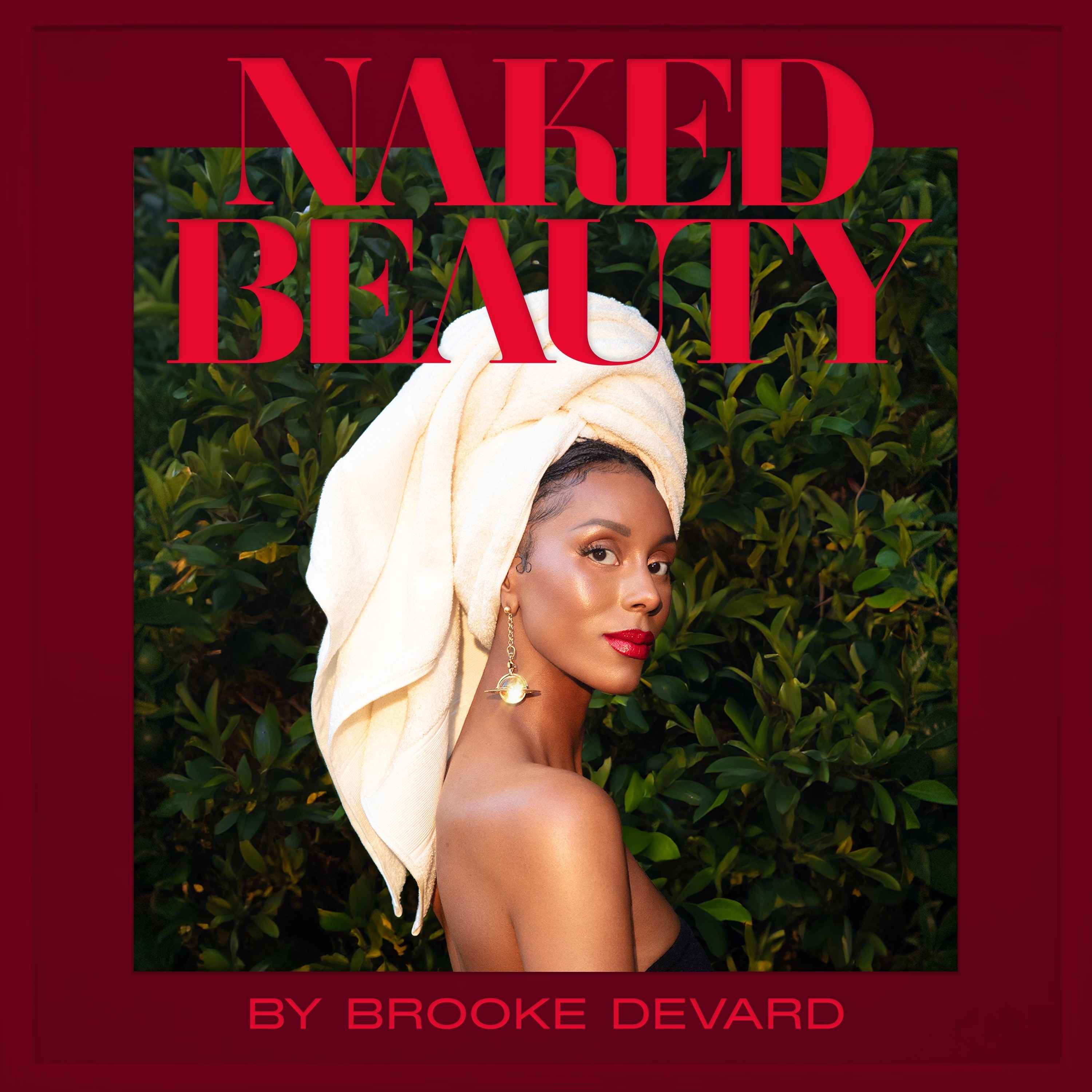
Loading summary
Transcript140 lines
- [00:00]
Annie Jackson
Foreign.
- [00:10]
Brooke Devard
Hello. Hello, this is Brooke Devard, and you're listening to the Naked Beauty Podcast. I'm recording this the night before my flight to Austin, Texas, where I will be at south by Southwest for the I Heart Podcast Awards. Naked Beauty is nominated for Best beauty Podcast. I'm excited. An honor to be nominated. I'm really excited about the look that I'm pulling together. I'm wearing Tangoro Studio. They just launched Couture. My brilliant friend Sarah JF who was on maybe the third episode of Naked beauty ever in 2017, she's got this incredible line. She's dressed Beyonce, Naomi Campbell. I mean, the stuff that she's doing is incredible. She's based in Senegal. For her to make something custom for me to wear to the awards makes me so, so excited. I got this gorgeous Schiaparelli ring, and today I got a gold chrome manicure to match the ring. I'm figuring out all of the accessories in my beauty look. I've also just been looking at all of Dochi's Paris Fashion Week looks and just doubly inspired. I'm like, I'm excited to go to this event. One, because it's fun to be around people in the podcasting industry. But two, because I'm gonna get to walk the red carpet and turn a look. So very excited for that. But on the downside, I'm really going to miss my kids. My husband as well, but really miss my kids. I have not been away from Jade since she's been born, so I'm going to be gone for three nights, and that feels like a really long time. I have been power pumping to make sure she has enough milk in my absence. And when we're apart, I'm going to have to pump seven times a day to keep my milk supply up. But it's also going to be nice to be in a hotel room solo. It's been a long time since I have had true alone time. Very much looking forward to that. And I'm looking forward again to going to this award show that really is about celebrating podcasting. I think when podcasts are at their best, they can change our perspective on life on an area we're passionate about. For Naked Beauty, I hope that is beauty for you. And that's why today's conversation is one that I'm really excited about, because it's an area of beauty that's often overlooked. But more important than ever when it comes to beauty, we have come such a long way in terms of transparency, sustainability, and making better choices as consumers. But it was not always like this. Years ago, finding clean beauty products that were both high performing and truly sustainable felt like searching for a needle in a haystack. I can remember on the early days of Naked Beauty how many episodes I had. Just about diy. Creating your own skincare, going to the health food store, buying your own oils, making hair masks, making serums. We have come so so far. But now in 2025, brands and retailers like Credo Beauty are setting a new standard. One that prioritizes ingredient integrity, responsible sourcing, a lower environmental impact, but while still delivering luxury and effectiveness that we expect. My own awareness as a beauty shopper has evolved so much over the years. I used to focus mainly on what worked for my skin and of course, I didn't want to use anything harmful. But now I ask more questions. How was this made? Where do the ingredients come from? What happens to this packaging after I'm done? Who is the founder and what are their ethos? These questions all matter, and Credo Beauty is one of the few retailers making it easier to shop with sustainability at the forefront. And I wish it was this simple. When shopping for clothes, you all know I'm a huge fan of the real real. Like if you love fashion and you're not shopping on the realreal, I truly don't know why you wouldn't be. Because there's no need to go out and buy new things. There's so much incredible clothing that is out there already. But imagine walking into a boutique where every fabric, every dye, every production method had been carefully vetted for its impact on both the planet and our skin. Imagine shopping like that for clothes. That level of transparency is still rare in fashion, but in beauty, Crisp Credo has really cracked the code. Today I'm sitting down with Annie Jackson, the co founder of Credo Beauty, to talk about how the beauty industry has evolved, what sustainability really looks like in beauty, and how we as consumers can make better choices without sacrificing performance or luxury. Let's get into it. Annie, welcome to Naked Beauty. It's such a pleasure to have you on.
- [04:30]
Annie Jackson
Thank you so much for having me. It's wonderful to be here and you.
- [04:34]
Brooke Devard
Are truly a beauty industry veteran. And now I think with Credo Beauty making such a difference in in the beauty space. But I want to go back to the beginning of your career, starting with your time at Estee Lauder. I'm curious, what initially drew you to beauty and how did you know you could make a career out of it?
- [04:53]
Annie Jackson
It's so funny, because my beginnings Were really, I guess of just my current circumstances at the time. I started at estee Lauder in 1991, so it was a long time ago. And the only reason I bring that up is because, you know, we didn't have the Internet or anything like that. I applied for a job in. That was in the newspaper and I was headed to an interview. I kid you not.
- [05:20]
Brooke Devard
What was the position that, that you saw in the newspaper?
- [05:22]
Annie Jackson
It was an administrative assistant. And it didn't say what company though. It just said, you know, send your. Which was pretty common. Send your resume. So I sent. I had just moved back. I actually lived in the Caribbean previously. Was like living the below deck lifestyle.
- [05:37]
Brooke Devard
Just because, just where, where in the. You can't just skip past that. Where in the Caribbean were you living?
- [05:41]
Annie Jackson
I was living in Tortola in the British Virgin Islands.
- [05:44]
Brooke Devard
Yes, I've been to Tortola. Beautiful.
- [05:47]
Annie Jackson
So beautiful. I, I honestly like, even to this day I question why I came back. I went all year and I don't think I wore shoes once. So I felt like it was. I had a little bit of island fever and time to maybe get back and start like getting into I guess what I thought at the time was real life. And I, yeah, I had to borrow, I remember I had to borrow a pair of kitten heels from my mom for interviews. I had nothing. I had like bathing suits. That's all I had. So yeah, I sent my resume out a bunch of places and was headed out the door truly to go for an interview as an admin to a Porta Potty company.
- [06:25]
Brooke Devard
Oh my God.
- [06:28]
Annie Jackson
And they said, you know, hey, we got your resume, we would love to interview you. And honestly the interview for that company, I still didn't know what it was at the time was closer than the Porta Potty company. And I was like, oh God, you know, it's going to save me in gas money. So I'm going to go for this one and just, just blow these people off because I'm going to take my opportunity now. When I walked in the door, it's like in this office park. I walked in the door and the first thing I saw was this beautiful image of Paulina Porizkova like on this balcony. And I thought, what is this place? And there was a bunch of like 20 something year old women in there running around. And it was for Estee Lauder. And I was at the time when they had regional offices all across the nation. And after 9, 11, all of those disappeared. But yeah, it was kind of back in the day there was offices in. In the Bay Area for Prescriptives and Clinique, all the Estee Lauder companies. And I got the job at Estee Lauder, and they were an amazing company for me. You know, I took my GED in high school. I did not go to college. I knew nothing.
- [07:36]
Brooke Devard
Wow. It's so interesting. And we're going to get into you, you know, starting Credo Beauty. But one of the things that I feel like is common amongst entrepreneurs is not knowing things allows you to take bigger risks because. Because you're unaware of what you don't know. You're kind of like, I have nothing to lose.
- [07:53]
Annie Jackson
So true. I think that's so true. And I think if you graduated with a certain degree, you probably think, I have to do that. I can't get off this track. I got to. I just. I just did all this work. So I think you're very right. Although there' been many times in my career, I'm like, God, I wish I went to business school. Like, would this help me? I don't know.
- [08:11]
Brooke Devard
It worked out.
- [08:12]
Annie Jackson
It did work out. It's like, I call it the school of life. And I think because of that, we hire people at Credo a little differently. Like, I don't go immediately to the bottom of the page of anyone's resume and think, oh, great, they have their mba. I really look for the passion that they have and what we're doing, and that always works for me every single time. So, yeah, I think it's. It's a bit of an unorthodox beginning. But Estee Lauder, it was school to a certain extent. You know, how you prepare for a market visit when Mr. Lauder is in town, and what kind of information we're trying to convey about branding and how do you drive sales through the account executives and all of our different accounts. So it was an amazing, amazing experience. I worked my way up through the company and ultimately ended up in New York working still for Estee Lauder, the brand, and ultimately got recruited away for this new concept called Sephora. And it hadn't started in the US And I left Estee Lauder for that.
- [09:15]
Brooke Devard
Wow. And Sephora, I feel like a lot of people don't know it's owned by lvmh and it was in France. I mean, it was. Yeah, it didn't exist in the U.S. so this was kind of like a new retail concept for. For beauty. Because I can remember pre Sephora, you would go to department stores and go to the beauty counter to Shop for beauty products. There was no. Or the drug store, but there was no beauty retail concept quite like it.
- [09:39]
Annie Jackson
Yeah, yeah, the, the concept was really just what you explained was the kind of mic drop for Sephora was bringing all of those brands in those points of distribution that you just mentioned out from behind the glass. So it was Open Cell was the concept. But what happened in the States was all of the brands that were in Nordstrom, Neiman Sachs, et cetera. You know, just because Sephora was an established concept in Europe didn't mean that those brands were automatically just going to go into Sephora us. And I think there was an assumption in that business model that they would. And the brands were like, no, we don't know who you guys are. And we have these established relationships with all these retailers that are very meaningful to us. Like, you know, go away, like prove your concept and then we'll talk. But for now we're not budging. So we ended up having to scramble and as merchants, you know, go to stores, look at catalogs, you know, look for brands to fill the store. We were about to open in soho, New York and it was like, I always joke to people, like during the day we looked for brands and at night I kept my resume updated because I was like, this thing is going nowhere fast. But it was the combination of those two things that were really, I think, the catalyst for Sephora because Open Cell was so unique to customers back then and it was this pent up demand for something new. You know, the brands that came to market at that point in time that we were able to find were Peter Thomas Roth, Astara, Hard Candy, Urban Decay, wow. Vincent Longo. And was just a really, really fortuitous disaster. Really was, you know, initially like, oh God. And it turned out to be, you know, their secret sauce. Really.
- [11:30]
Brooke Devard
Where did your interest and passion for environmentalism and sustainability come into play?
- [11:38]
Annie Jackson
Well, I think like most people, you don't really know it's there until it's there. Because I think what I had worked with someone for a very long time at Sephora that was my boss and later became my friend and we started Credo together and it was really his passion. He was always like a very progressive thinker and he was really, he always got very inspired by living in San Francisco. It's a very progressive city and we, I think we were, we were intrigued as business people with the notion that there was like Natural Beauty 1.0 we called it, which was like what you could find in natural beauty stores or in like natural food Markets. But yes, you always really felt like you were sacrificing a lot to use those brands.
- [12:27]
Brooke Devard
Absolutely, absolutely.
- [12:29]
Annie Jackson
Yeah, they smelled funny, they separated weird. But you were like, but I'm doing something good for the environment and for me. And so I'm going to like, muscle my way through this product.
- [12:37]
Brooke Devard
Right.
- [12:38]
Annie Jackson
And what we wanted to do is, you know, kind of buck that trend and say, you know, really what we're looking to do is come head to head with like, you know, the Kiehl's, Mac Nars La Prairie's of the world, and give something to a consumer in a really beautiful formula with the component that they're used to using on the high streets of America, but also make them very conscientiously formulated. And it was really that coupled with, you know, my entire career being dedicated to either product development or building brands in beauty, never ever once having the conversation about what's in this stuff, like, what do to people or what does this do at the end of the product's life and it's sitting in a landfill somewhere.
- [13:24]
Brooke Devard
And those conversations were never happening at the. At the big brands and retailers you worked with.
- [13:29]
Annie Jackson
Never. Never. I hate to be cliche, but it really was like not an aha, like more of like an oh, shit moment. Like, oh, my God. Wow. Really? I didn't. And then the more I kind of dug and learned, and then we started to rely on back then, what we called our clean Beauty Council, which were experts in their field that I could lean on to provide information that informed our restricted substance list and, you know, our sustainability policy that ultimately came to be. But it was really both inspiring, I think, and really, really disappointing too. I was disappointed that those conversations weren't being had.
- [14:08]
Brooke Devard
Yes. I was going to ask you if you got pushback. So when. So when you were initially starting credo and you had this concept, it was way before brands or even consumers were really thinking this way. I'm curious if you got pushback. And then I want to hear about that. The list you just mentioned, the restricted ingredients list. Is that what you called it?
- [14:28]
Annie Jackson
Restricted? It's our. We call it our dirty list.
- [14:31]
Brooke Devard
Your dirty list.
- [14:32]
Annie Jackson
It's a restricted substance list.
- [14:34]
Brooke Devard
But substance. I want to hear what was on that list and if there was any ingredient on that list that was particularly like, kind of like a hot button issue or you found that people were upset about.
- [14:47]
Annie Jackson
Yes. So if we start with your first question on pushback, we were pretty nervous because we kind of felt like this entire endeavor kind of put a target on our back, and we're really gonna piss off some conventional beauty brands. Pretty. Pretty good. So we were a little worried about that. But to your point, we felt like the only way to bridge the gap between what the brands that we were. We were currently carrying, that they stood up to conventional brands. Back in the day, we did these things called clean swaps. We felt like that was the best way to get our point across, that if we're. If you were using, you know, Armani foundation, let's say nothing against Armani foundation, but if you were using that, we would find an alternative for you that had, you know, ingredients that were very transparent and, you know, clear to you what was in the product and why it was in there, what that brand's, you know, values were, et cetera. And that was a way for us. We didn't have any desire to disparage other brands. That wasn't really what we were trying to do. We were just trying to connect the dots for people that this was not a hippie play. This was not something different. This was. You were going to get all the same things, but a really thoughtfully formulated product.
- [16:02]
Brooke Devard
I don't think people realize how new this idea of transparency is, because for so long, especially the biggest big major brands, that was like their protected, secret formula, like, they'll come up with a fancy marketing name for it. But this idea that consumers should know exactly what is in the skincare they're putting on their face is, like, newish. Like, it was something that was. I think brands had, like, a certain arrogance where they felt like they did not have to disclose that.
- [16:28]
Annie Jackson
Yeah, yeah. I think, you know, beauty is typically always in a black box, and it's not very transparent. And there is not a lot of vetting that happens in terms of bringing a product to market or, you know, any sort of standard, really, until the credo clean standard that you had to meet. And so I think that, you know, brands just kind of. It was like the wild West. You know, they would put marketing terminology in ingredient lists and mask a lot of ingredients behind certain terminology. Like the word fragrance can mask quite a bit. So, yeah, you're exactly right. It's a very smoke and mirrors kind of industry.
- [17:07]
Brooke Devard
Very smoke and mirrors. And I actually want to. Well, can we first hear what was on the no substances list? The dirty list?
- [17:15]
Annie Jackson
Yeah, well, on our dirty list, it honestly hasn't changed a ton. It has been the same. I think the pushback that we got from people was mainly from brands, and it was usually around pegs, and pegs are A classification of about 1200 different chemicals that are what we call ethoxylated chemicals. And the reason brands push back really hard is it really does make a really elegant formulation when it comes primarily to skin care. But through the manufacturing process, a carcinogen is created. And most labs today honestly strip away. It's called 14 dioxane. And most labs actually strip that away and discard it. But. So that's the pushback we get from brands. Well, it's not in the product, but our pushback is you didn't have to create it in the first place. So you like there's other ways and there's different alternatives today to pegs. You just, they're usually a little bit more costly and it usually requires a little bit more legwork. But pegs are the one that comes up the most. They're probably the most pervasively used across beauty. But. And I do think sometimes labs will strip them out of the product and sometimes they won't. But like I said, like, if you didn't have to create it in the first place.
- [18:37]
Brooke Devard
Right.
- [18:37]
Annie Jackson
Why would you.
- [18:39]
Brooke Devard
So, and I see Here there are 2700 ingredients that are on your dirty list and you classify them on your website. Allergies and irritation, cancer, hormone disruption, toxic to the environment, toxic to the human body in special cases. I think toxic to the environment is something that we have overlooked. Looked so, so much. I think there's been a lot of focus on, okay, is it bad? For me, of course we care about hormone disruption and cancer and allergies, but also toxic to the environment is huge as well.
- [19:09]
Annie Jackson
Yeah, we, I mean, we like to think that we're not just pushing brands, we're pushing our industry. So you think about contract manufacturers, suppliers, regulators to just use better chemicals and for full ingredient transparency, you know, providing brands with full ingredient safety profile, safety testing, making sure that people that brands are working with, I think most consumers think, oh, that brand created that product. No, most people are using a third party manufacturer to create their product.
- [19:41]
Brooke Devard
Absolutely.
- [19:43]
Annie Jackson
So what, what manufacturing practices are those guys following? And so we have a really steadfast approach when it comes to making this industry more sustainable. Because to your point, this whole entire industry is known for hype and consumption. And so we're really diligent about understanding the environmental impact of the products that are created. And that to us is the definition of sustainability. Like, I really think it's like, if you are certainly creating products for what the consumer wants today, which is more sustainable products, without the compromise of the generation ahead. And that's really how we, how we look at sustainability at credo.
- [20:21]
Brooke Devard
I love that. Well, I'm very proud to have a fragrance at Credo. And I want to hear from you, what exactly does it mean to be a clean fragrance? Because fragrance is one of those categories where there is such little transparency in what the ingredients are. I'd love to hear about how you think about clean fragrance.
- [20:41]
Annie Jackson
Yeah. I mean, for us, it's pretty simple. It is, first of all, clearly categorizing your fragrance to a consumer. If you walk into any fragrance bar at a retailer and were to try to understand what fragrances there were, synthetic fragrances, what fragrances there were made with essential oils, you would, you would not be able to do that. So that is like the first step for any of our fragrance partners to check that box. But then, you know, what we really would like our brand partners to do is fully disclose the ingredients behind that word fragrance. And you know, it's, it's funny. This is another thing consumers don't really understand is that often if you're going to go create a fragrance, you're working with a fragrance house and a brand might get to the end of that creation of that fragrance and say, okay, this is great, my fragrance is done. And now I would like an ingredient listing or what we call an IL for everything in that fragrance. And they won't give it to them.
- [21:38]
Brooke Devard
Right.
- [21:39]
Annie Jackson
Because it is considered a trade secret and they don't have to. And you know, we think like inherently clean beauty is about informing customers what they're buying.
- [21:48]
Brooke Devard
Yes. For me, as, as a mother that always has children on top of them, I have a four year old and now a three month old. It was really congratulations. Yes. And you know, I, especially because I'm breastfeeding, I've had to scale back on my fragrance use. But when I spray on naked beauty, I'm like, I don't want to worry that what is on my skin is going to cause irritation for them. I want to use the highest quality ingredients and I want to be really clear about where they come from. One thing I learned in the fragrance development process was that synthetic, I think there's like this, this focus on like natural, like, oh, it's an all natural palo santo or all natural sandalwood or rose oil. But there have been so many advances in synthetic, basically mimicking what you can naturally find. And that is actually way more sustainable than going out into nature foraging for it and then like using, you know, thousands of units of a natural resource to create a Specific scent profile.
- [22:44]
Annie Jackson
Exactly. I think, you know, to us, we've never shied away from synthetic. You know, we, for that very reason we did have a bunch of brands. When we first started Credo, we were like primarily plant based and we just felt like it was really just an answer to where the con, the customer's headset was at, but also just an understanding a little bit better of just their plants, you know, understanding those ingredients better. We thought there was less risk there, but we weren't really, we weren't really averse to synthetics. And I think we had quite a few brands that come to mind. Now as we started to scale and the demand grew and their business started to grow, a couple of them were saying, you know, the availability of that plant is no longer there. They couldn't really rely on that for long term use. And that's kind of, you know, if you're, if your environmental impact is, you know, making a really regrettable situation, that's not clean beauty either. And so I think it's been such a learning experience this entire thing because it really did start with let's just identify some ingredients that are bad actors in this whole thing and omit them. But then there's really so much complexity around this space and product creation and honestly a lot of ways for brands to get away with greenwashing and still creating products that really haven't changed since, you know, last 30 years.
- [24:09]
Brooke Devard
Yes. And hormone disruption, I think is another one where people are starting to get more and more savvy about, you know, whether you're dealing with pcos or just. I think women in general are sensitive to things that could, yeah, just disrupt their endocrine system. How do you think about products and making sure there's nothing in it that would disrupt your hormones?
- [24:31]
Annie Jackson
Well, we think we've identified, you know, most of the chemicals used in beauty today that are endocrine disrupt. I would say, you know, it's been interesting to watch the demographics around clean beauty change because I would say to your point, your age group, like the millennial age group, is more concerned around endocrine disrupting chemicals and chemicals that really impact their health, typically because they are about to have a child or have children. And then the younger group, the Gen Z group, is coming at this angle from more around. Oh yeah, that's still their expectation that you don't have any of those chemic. But it's more around mental health advantages or stress relief advantages and more around the emotional side of how products can support your lifestyle. So it's been very interesting to watch. You know, how the different generations have really embraced clean beauty.
- [25:31]
Brooke Devard
Yes. In your average fragrance at a department store, are there endocrine disruptors in it?
- [25:37]
Annie Jackson
Well, there are, it's hard to say because I don't know what are in those fragrances because there's no transparency to them. But you can hide basically thousands of ingredients behind the word fragrance and not disclose them to anyone. And they can be anywhere from carcinogens to allergens to endocrine disruptors, and the list goes on. So it's, it's, it's hard to say because there is no transparency about what are in those products.
- [26:01]
Brooke Devard
Right, right. Sustainable packaging, I think, is another area where consumers are getting a lot more educated. I'm curious to hear what Sustainable Packaging Solutions CREDO has explored and how you see these trends evolving in the industry.
- [26:17]
Annie Jackson
Yeah, we, this is one area that honestly it's been, if you, if you weigh the consumer demand in terms of information, there are more, even since day one, more demands for less plastic than ingredient transparency. So it's been, it's also been another one that's been pretty interesting to watch is customers come in to CREDO and they still say, you know, I understand, you know, your ingredient standards. They don't really know it in detail, but it's just that we have one is enough for them.
- [26:49]
Brooke Devard
And.
- [26:49]
Annie Jackson
But they say that I hate all this plastic.
- [26:52]
Brooke Devard
Yeah.
- [26:52]
Annie Jackson
And so we have, we introduced our sustainable packaging guidelines in 2020, I believe, and we started it with, okay, let's just eliminate anything that's single use out of the store. One and done. It's going straight into a landfill. Like, let's get rid of it. Whether.
- [27:07]
Brooke Devard
Remember you were the first retailer to take a stand against single use sheet masks.
- [27:12]
Annie Jackson
Yes. And that was major over well around the board tape board meeting table. I will tell you that because sheet masks were so hot back then. Still are. And so, yeah, when we tallied up the, the amount of salable product that we had in single use, it was over a half a million dollars in retail sales that we were saying goodbye to.
- [27:36]
Brooke Devard
Wow. Wow. But it was worth it for you to take that stand, to align with the mission of the company, which I think consumer. I certainly paid attention as a consumer. And I remember even, you know, when I was first dabbling in sheet masks, this was like early pandemic days. I did have that thought of like, this is a lot of packaging for a single small sheet of product. And it doesn't have to be this way. I'm sure did you see that your consumers appreciated you taking that stand?
- [28:03]
Annie Jackson
Totally. I think the one that was more disruptive and probably not in a good way, was eliminating the little sachets that brands use to sample, because we threw those in every box that was going out the door for our digital purchases and, you know, handing them out in stores and customers. You know, I'm sure you've done it. I've done it a million times. You just take what's handed to you, and then home, you look at it and you're like, oh, I never wanted to try that anyway. And you toss it in the garbage without even using it, which is even worse. So we did the math on that and credo, when we eliminated those, I think we had nine stores at the time, so. Nine stores for a year. We did the back of the napkin math was that by eliminating those little sachets, we eliminated 660,000 packets, leaving our business and going straight into a landfill.
- [28:57]
Brooke Devard
Wow.
- [28:58]
Annie Jackson
So if you kind of calculate that size compared to huge retailers that were throwing them in every bag or, you know, the middle of the mall, that person that's handing out the sachets to everyone that will take them, it's. It's like, this is the stuff that makes you not sleep well at night.
- [29:15]
Brooke Devard
Yes. Yes. And I feel. I feel privileged. For the past few years, I've been receiving the, like, credo mailer, like, the PR mailer of. Of the new products. And I just love how intentional that packaging is because I get these other PR pack, and it is absurd. The things that they're. It's like, I did not ask for this mug. I did not ask for this, like, plastic water bottle. I don't really need a keychain with your brand on it. Like, I don't really need. I don't really need these things. And now I feel guilty because now you've shipped it to me, and now I have to figure out what to do with it. And just. Even just the plastic that goes into the presentation of the product, when what you're really going to do is take it out of all of that and then talk about it. But I think maybe they think, okay, you're going to do this grand unboxing. And this is our marketing budget, so we want it to be really, like, a wow moment. But it doesn't feel good to receive so much extra stuff.
- [30:11]
Annie Jackson
I know, I know. And we get them too, because we get them from our brands. And we also had, you know, a ton of submissions from people that are, you know, we're basically not asking for that submission. So we've got all this product sitting around. So we did co found a company called pact. It's a nonprofit that basically was a bunch of us beauty industry stakeholders, myself and Vic Casali from Mob Beauty, as.
- [30:39]
Brooke Devard
The founder of Mac.
- [30:41]
Annie Jackson
Exactly. One of the founding members of Mac got together and said, you know, as industry stakeholders, you know, the at the very least we could do is hopefully start to put a dent in this packaging waste that's created. And so a big arm to pact, or one that's, you know, important to me and still developing is what we call obsolescent inventory. So it's filled packaging or even, like, let's say, I can't even tell you how many times companies are like, oh, we're coming out with this new blush and here's the component. And oh, no, the silk screening is slightly crooked. So now we gotta get rid of these 50,000 units of packaging somewhere. So PACT will take that now and actually try to sort the resins out and actually divert them from landfill. So, you know, we hope that Pact isn't around. You know, we always say we want to put ourselves out of business. It won't go out of business in my lifetime. But I think what's interesting is we've found like a really engaged consumer that wants to be part of the solution. So we have packed bins at our store to have people actually clean their products out. And we stand there with them and we actually read the resin code numbers on the bottom of the packages and say, okay, this one, next time you're at home, put this in your blue bin. This one actually goes to Pact. And this one's just never going to be recycled or it's just basically going to go to landfill, unfortunately. Throw it in the trash. I think everybody does this wish cycling. I'm totally guilty of it, too. You're like, I don't know, I hope I'm just going to toss that in there. And so at first we were thinking, oh, my God, customers are going to hate us. You know, they don't want to be stopped in the beauty floor and be, you know, kind of lectured at about garbage. They totally do.
- [32:23]
Brooke Devard
Yes. I would love more guidance on what to recycle and what I can't recycle. You're right. It's. I love that term, wish cycling. It's like, I hope this is the right bin that I'm putting it in. I want to go back to your time in Tortola when you were living in the Caribbean, because, you know, I. And I think moving to LA has given me a much deeper appreciation for nature. Just like going on hikes and looking around and thinking like, wow, we're so lucky to have access to nature and be able to enjoy the environment. And I think it's a privilege that we can kind of take for granted. Resources aren't unlimited. And I was talking to Amy, who I know works with you on pr, about your. It's your new ceramide serum, about the sea algae that is used in that serum and how there's this whole sustainability loop about how it's sourced and working directly with the farm. Could you talk a little bit about that?
- [33:19]
Annie Jackson
Yeah. So, you know, I think I struggled internally with creating a brand of our own. And the reason I struggled is no one needs another brand. Like, there are so many brands. You know how many brands there are. I know how many brands there are. It's overwhelming. And so I thought to myself, if we can create these brands and make them work really hard to get across what I think are really important messages or be a vehicle to drive market share to people doing the right thing, I want to do that. So in the body products, for example, we launched three body products in January and we worked with. It's a regenerative seaweed aquaculture company. It's called Atlantic Sea Farms, and they're based in Maine Women Run. And they're basically harvesting their own kelp and actually providing it to the food industry. They had never provided it to beauty before until we found them. And so we purchased our kelp from them. We then worked with a chemist, Krupa Coastline, who is fantastic and very talented in clean beauty formulation. And she worked with a company to ferment the kelp. And then we created the products and the kelp. Atlantic Sea Farms employs lobster fishermen when there is no when lobster season isn't happening. So we felt like it's like a full circle moment. But what I loved more about it was that it gave me an opportunity to actually say, hey, you know what else is kind of crappy about the beauty industry, and that's not very transparent, is people aren't disclosing who they work with.
- [34:56]
Brooke Devard
Yes.
- [34:57]
Annie Jackson
And I don't like that because it's like if you create the most beautiful, thoughtfully created brand, but you're working with a contract manufacturer that doesn't pay people a living wage or they don't follow good manufacturing processes, what's the point of all of this? It doesn't make any sense. And so. And you know it would be really bad on the contract manufacturer if someone, okay, they find out, you know, who created our serum and they're going to run to them and say, I want to knock off Credo serum. They're going to say, no, you know, I can create you a serum, but I'm not going to knock off my client.
- [35:35]
Brooke Devard
Right.
- [35:36]
Annie Jackson
So I'm not sure where the secrecy comes in, but I am excited about bringing to light these suppliers that are doing good work and actually driving market share their way.
- [35:49]
Brooke Devard
Yes, yes. It's like there's, there's no reason to gatekeep people doing good work because if they're doing good work and they're doing it for you as a client, they're not yet. They're not going to knock off what they're doing for you and give it to someone else. And that's a case of competition not pushing the industry forward. I'm, I'm just, you know, as a consumer, I think it's confusing. I think we're familiar with greenwashing. It's like hard to know when you're shopping, like, what should I be paying attention to? Are there simple things if we want to be more sustainably minded that we should be looking for?
- [36:21]
Annie Jackson
I think it is, it is hard for consumers. You know, we, we typically, you know, say if you're shopping at Credo, you know, everything's clean. We disclose what's on our restricted substance list. We talk about chemicals that are question marks. You know, yes, they're at Credo, but here's why we question them, but here's why we allow them outside of that. I think, you know, some of these rating systems, I think I respect what they're doing. If you, if you think about like other third party apps and rating systems, but I think they often miss the important context around ingredients and products that are key in really evaluating the safety of a product. Like what the use level is of an ingredient or if it's a leave on versus rinse off production.
- [37:09]
Brooke Devard
Yes. When I was first educating myself about clean beauty, I downloaded the Think Dirty app. This is like back in 2017 and it was like, everything I'm using is going to kill me.
- [37:19]
Annie Jackson
Yeah.
- [37:19]
Brooke Devard
And then, and then as I did more research, people were like, well, that, that is like an extreme, extreme, like on the extreme end of determining what's clean or not. And to your point, it's like, what is the volume of the product that you're using?
- [37:33]
Annie Jackson
Yeah. And I think what I find interesting about the space today is that I look at Clean beauty now as more of a, of a lifestyle. I spoke in someone's lifestyle choices for you know, investing in their health. I think similar to food and fitness personal care products have that are considered clean or meet the credo clean standard are just transparent, they're safer and they're more sustainable. If you think about toxins and sustainability, they are wellness issues. So they are a big part of someone's skin care regimen. Certainly they have, you know, a lower potential risk but it's the cumulative use of these products that can have long term effects on your health. So I think that you know, it is part of wellness and beauty is not, you know, insignificant in that.
- [38:31]
Brooke Devard
Yes. And the industry is under regulated so coming in and giving those regulations helps in terms of just like yeah, just concrete actionable steps. Like I have tried to purchase more products that like sell refills but a lot of my favorite products don't necessarily do that. I do love a multi use product so I love when like I can use a cheek tint as also a lip product or like a lip liner is also an eyeliner. I feel like that's a way of yeah, just cutting down on the amount of packaging per product. But are there other things that we can do just to be more environmentally conscious when we shop?
- [39:12]
Annie Jackson
I mean what I often say is I look for more products using plant based oils and butters and extracts. I use mineral sunscreens. I you know, look for brands that move towards upcycling ingredients or like you mentioned earlier using biotechnology to create synthetics that aren't being harvested from our environment. So I, and then also it's a good, you know we have a PDF of our restricted substance list and it, it would be a good exercise even if you don't shop at Credo to just read the thousands of ingredients on there linked to health or environmental concerns like certain preservatives, plastic based glitter, intentionally added pfas which is like so, so bad.
- [40:01]
Brooke Devard
But people, what is that?
- [40:04]
Annie Jackson
So PFAS are a chemical classification. They're called perfluorinated compounds where it could make your eyeshadow stay on longer or make something waterproof mascara, waterproof. And it is a carcinogen. It's a forever chemical. It is never ever, ever, ever leaving the planet. It's found naturally in rainwater, in breast milk because it's so pervasive in the environment. But what's crazy about PFAS is you can't avoid it. Like I just said, like, you know, I think if you were to capture Rainwater and test it. It would probably be in there because of the use of it. But I think if we could just stop companies from intentionally adding it. Let's not make the problem worse by adding it to your product.
- [40:53]
Brooke Devard
When you said Forever Chemicals, a light bulb went off because I saw an incredible movie about this. Dark Waters. Have you seen this movie with Mark Ruffalo and Anne Hathaway? It's based on a true story of a lawyer who he basically switched sides. He used to defend chemical companies against environmental agencies. And then he realized that these Forever Chemicals were going in like Teflon nonstick cooking pans. And he like, basically dedicated his life to fighting against Forever Chemicals. And just recently was it like in the past few months there have been these announcements on the news. Like, if you have black, black plastic spatulas, throw them out because they're like, have cancer causing chemicals. And you're like, still in 2025, things are being produced that have these chemicals in it that we know are so harmful for the environment and so harmful for our bodies. And yet again, totally unregulated. I really recommend Dark Waters if you all can take the time to watch that movie. Because the thing about these Forever Chemicals is, yeah, they've become so pervasive that they're pretty much in everything now because we made products with these chemicals for so long.
- [41:58]
Annie Jackson
Yeah, I think I agree. I thought it was a great movie. He's now gone on and dedicated a lot of his time to environmental activism on that front.
- [42:07]
Brooke Devard
Yes, Mark Ruffalo, perfect human being.
- [42:09]
Annie Jackson
Side note, he's a good human. But yeah, the PFAS thing is, I actually testified at the state level along with Breast Cancer Prevention Partners, because there was going to be a bill written that was saying, you know, we want to eliminate PFAS and all beauty products. Well, we were lobbying to say, don't write the bill like that because it's almost impossible to do that. Like, if you go to any beauty company and test for pfas, you're gonna find it. Find it because it's like in everything. In everything in the solvents that your contract manufacturer cleans the kettle with. It's in the tote bag that's holding your ingredients. It might be even coding the ingredient that you're using in your product. And you don't know it and you don't want it there, so you can't say that. But please write the bill that says people should not be intentionally adding this because why create more? It's a problem you'll never see ourselves out of.
- [43:09]
Brooke Devard
And is the thinking that people add it because it's cheaper to produce it that way? Like, what's the benefit? I know for the Teflon it was like this like non stick technology that made cooking easier, which is like crazy trade off. But for beauty products and manufacturers, why add it?
- [43:25]
Annie Jackson
For product performance.
- [43:27]
Brooke Devard
Right. The long wear eyeshadow to make it last longer.
- [43:30]
Annie Jackson
Exactly. Your mascara, waterproof, etc.
- [43:34]
Brooke Devard
Wow. So what can consumers do? We can, we can use our wallets to shop in a smart way. Is there anything else that we can do? I'm thinking about people that have social platforms. I mean, I hope I'm doing my part by having you share more on the podcast. But. But what, what can people do?
- [43:52]
Annie Jackson
Yeah, I think, like I was saying, I think, I think we have a very educated consumer out there and I think people feel very empowered by educating themselves. So I would honestly, I would just go to our website, I would look at the PDF of our restricted substance list and just read it and get familiar with chemicals that are a potential hazard to your health or the environment's health. I would also honestly, you know, you want to really nerd out. I would go to your local waste recycling facility and actually look and educate yourself on what actually can I put in the blue bin and what can't I. It's very informative and I read mine like every couple, like six months or so just to stay knowledgeable on that. Like you said, there are certain companies outside of CREDO that make very transparent what their standards are and why they carry the brands they carry. I mean, the reality is customers have to do a little work on their side, unfortunately, because it is a very opaque industry with a lot of, like I said, smoke and mirrors.
- [44:56]
Brooke Devard
Yes, yes. But I, I do love the companies that do upcycling. One of the brands that you carry, Le Prunier. I'm thinking about the sisters. Like they're, they're. And Allison's been on this podcast, but it was like, I think her dad was farming plums, right? And it was like we've got all of this left over over plum that we're not using. We can press that, make oil and do this beautiful plum oil that we can use in skin care. But I love stories like that and I love supporting brands like that.
- [45:23]
Annie Jackson
And she made such a beautiful formula from it, which I think is so inspiring. So you're exactly right. Like when we made our Credo facial skin care, we included an ingredient that's really powerful in terms of barrier repair. Of the skin. But what it's typically used for is it's vetiver. It's the vetiver root that is scenting fragrance. We actually use the discarded root and we, we took the oil out of the root and put it in our skincare and made that kind of the hero ingredient across all the products. And then we also took recovered materials from Pact, so resins from Pact and created our pump and our cap from that on the Credo Skincare. So yeah, it was a like very long project and had lots of highs and lows. But, you know, it's that kind of thing that makes us, you know, feel, I think better about creating another brand.
- [46:23]
Brooke Devard
Yes. Well, it wouldn't be an episode of Naked Beauty if I didn't ask you what skincare you're using right now and what you're loving and why you love it. What's, what's your go to for, let's say your nighttime routine right now?
- [46:35]
Annie Jackson
Oh my gosh. It is so hard to narrow it down because I try so many new brands. But I would say true botanicals cream cleanser, renew cleanser is my all time fave. There's something about that. The scent of it.
- [46:49]
Brooke Devard
Yes.
- [46:49]
Annie Jackson
And then I use the sensitive skin Credo Skin Care moisturizer.
- [46:54]
Brooke Devard
Have sensitive skin.
- [46:56]
Annie Jackson
I don't. I just like that it's fragrance free. I really, at night like that. In the day, I use Josh Rosebrook nutrient day cream with the spf. I love his products. And the hydrating mist, I carry that around with me.
- [47:10]
Brooke Devard
Yes. And I feel like he has a cult following amongst his like customers. I'm sure you, I mean you get all of the data for what people buy, but I would imagine he's got a lot of repeats customers.
- [47:21]
Annie Jackson
We have been with him since day one and he has, he started with hair care products because he's a hairstylist.
- [47:29]
Brooke Devard
Right.
- [47:30]
Annie Jackson
I know he created these skincare products like out of the clear blue sky, honestly, because he is so talented. But yeah, I have used his products. I always go back to them. I do use our Credo body products. I think if my skin gets really, really dry, I do use Dr. Rogers Cream, which is fantastic.
- [47:51]
Brooke Devard
Oh, I haven't tried that.
- [47:53]
Annie Jackson
Yeah, it's beautiful. It's like, it's like a lovely basics. But she's a board certified dermatologist and it has a very minimalist product formulation wise. And she has been a fantastic founder and contributor to our clean Beauty Council.
- [48:08]
Brooke Devard
Nice. I'm in the market for a good lip balm. Do you have any Lip balms that you're liking now?
- [48:14]
Annie Jackson
Well, I love our just our very straight up Folain lip balm.
- [48:19]
Brooke Devard
Okay.
- [48:19]
Annie Jackson
That is one of our brands as well. Full transparency and the one that actually is like a balm. I'm holding it right now that I use all the time, but it's a lipstick is so she's lipstick and speakeasy. It's like got this gorgeous balm, like consistency and just like this beautiful, like, hint of color. They did such a fantastic job with this brand. And it's refillable and.
- [48:41]
Brooke Devard
And the brand is called Sochi Sochi.
- [48:44]
Annie Jackson
So it's a brand that we've carried for about two years now. Started with three friends that had just graduated from USC and they started a brand and. And they've just knocked it out of the park.
- [48:56]
Brooke Devard
Amazing. Amazing. Well, I will link to all of that in, in the show notes. What do you think is the single biggest sustainability challenge facing the beauty industry today? And how can brands work to overcome it?
- [49:10]
Annie Jackson
Definitely the biggest challenge is packaging over packaging and not enough circularity in terms of packaging. I think we started it with our pump and our cap. But more, more people moving towards using recycled materials and less virgin plastic is by far the best thing that brands can do.
- [49:35]
Brooke Devard
And for brands that are just kind of, you know, starting out and, and do need to cut corners, how should they think about it? Because I think sometimes it's like a resource issue.
- [49:45]
Annie Jackson
Well, I think it is a resource issue, but my answer is always a little bit it blunt. Don't do it.
- [49:53]
Brooke Devard
Don't do it. Yes, yes. I mean, and I, I had that same thought. I mean, I think I've been doing this podcast for so long, and I always knew that I wanted to create product, but it was like, what is the right product? And I felt that skin care was saturated, and I didn't know that I could do it in a way that was meaningfully different from what was on the market. Fragrance. And as a fragrance lover, I was like, okay, this, like, blend of neroli and green tea and orange blossom, that's not too feminine, it's not too masculine. Like, I couldn't this fragrance. So it made sense to make the thing that I was searching for. But I do think that there are so many products that just simply don't need to be made. And I always, I'm, I'm in awe of what April has done with Vintner's Daughter, where they have like, I think three SKUs in like the 10 or 11 or like 12 years that they've been around, like, brands that are like, we don't need to offer 20 products. We can just do three things really well and be known for that. That.
- [50:49]
Annie Jackson
Yeah. I mean, it's like the same conversation around brands that want to go into Complexion but only launch four shades. It's like, really.
- [50:57]
Brooke Devard
Right. Just don't bother.
- [50:58]
Annie Jackson
Don't do it.
- [50:59]
Brooke Devard
Just don't do it. Just don't do it.
- [51:02]
Annie Jackson
I mean, I can't tell you how many times we have that conversation.
- [51:06]
Brooke Devard
Yeah, I know you all carry Westman Atelier, which I love. Westman Atelier and Coast is. All of the makeup that you carry is really beautifully formulated. And it really is a testament to how far we've come from those, like, dusty, crusty, whole foods makeup brands. In terms of what's available. Any makeup favorites that you like at Credo?
- [51:25]
Annie Jackson
Well, we created Exa foundation ourselves as an answer to, you know, being able to shade match anyone that walked in the store. But the formula, I, of course, I'm not objective, but I think the formula is fantastic. Of our foundation. I love Ari Perez's eyeliner. I love Ilya's limitless mascara. Gen Z's liquid eyeshadow illustration is gorgeous. So those are like my few, like, all time faves. So she lipstick is amazing.
- [51:54]
Brooke Devard
I could keep going, but, yeah, I mean, we're. We're spoiled for choice now, which, like. Yeah. Again, shows how far we have come. I would love to end this conversation by asking, when do you feel your most beautiful?
- [52:10]
Annie Jackson
Oh, my gosh. Probably when I feel really rested.
- [52:13]
Brooke Devard
Yes. I feel that.
- [52:15]
Annie Jackson
Yeah, sleep is such a gift and I really struggle with it. And if I wake up feeling like I've had a really good night's rest, it really changes the entire course of my day. And you must know that well, having a new baby and a toddler.
- [52:30]
Brooke Devard
Yes, I. I know that very well. I got great rest last night. And do you know what help has helped me with sleep? I discovered it kind of in my pregnancy. Magnesium powder.
- [52:39]
Annie Jackson
Oh, wow. Yes.
- [52:41]
Brooke Devard
Do you use magnesium powder?
- [52:43]
Annie Jackson
I did use magnesium. I need to get it again from Moon Juice.
- [52:47]
Brooke Devard
Yes.
- [52:47]
Annie Jackson
It is the best. And it doesn't. I. Sometimes magnesium can make you feel spacey or make you not feel well. And this one doesn't. Doesn't make you feel like that at all.
- [52:59]
Brooke Devard
At all. No, it's so good. Well, Annie, it was a pleasure talking to you. I am even more a bigger fan of what you are doing at Credo and I just appreciate you taking the time to really, like, educate us on how to be better consumers.
- [53:13]
Annie Jackson
Thank you. Thank you so much for having me. I really appreciate it. Thanks for supporting Credo.
- [53:19]
Brooke Devard
Of course. All right, that was my conversation with Annie Jackson, co founder of Credo Beauty. And if you are so compelled to shop at Credo Beauty, I'm thinking about our DEI episode that we had last week. I want to share some black owned beauty brands that are sold at Credo Beauty as well. Well, of course. Naked Beauty, my fragrance, My baby, you can buy at Credo Beauty. And Credo Beauty is one of the retailers I really wanted to be in. I actually actively pitched to them because I had so many people dming me and saying, like, is your fragrance clean? Like, what's in your fragrance? And I was like, okay, if I'm in Credo Beauty, there will be no question about the cleanliness of my fragrance. Now I've gotten a lot of inbound that people want the fragrance. France, in Europe, in Canada. I'm working on it. I'm working on it. I hear you. The feedback is very appreciated. But for now, if you're in the us you can shop it at Credo Beauty. Credo has a ton of locations. But I want to talk about the other black owned beauty products that you can find at Credo Beauty. One of them is Kluure K L U R. Now Leslie, the founder of Kluur is a genius. Like, she has such a unique mind for product formulation. Everything that she creates is done with intention natural ingredients. I interviewed her on the podcast back on 2020, but one of my favorite serums of all time is the Symmetry Fluid Anti Pollution Serum. It's a really hydrating serum that just makes your skin feel so nourished. I'm going to read the description on the site. The Chlorsymmetry Fluid Anti Pollution Serum is a nutrient rich concentrate that establishes a harmonious, breathable barrier between skin and daily exposure to urban pollution in la. I definitely need that. It has an abundant supply of vitamins, antioxidants and energy rich phytonutrients to help fortify the skin's surface to counterbalance the impact of free radical assault on the skin. In addition, each application boosts the skin's resilience to oxidation and environmental stressors, thus avoiding future degradation of your delicate complexion. I will be honest, I did not know that the serum was doing all of that. But I do know that my skin has been very happy and calm while using that serum. Serum, another black owned beauty brand that I love at Credo Beauty Sienna Naturals. You all heard from Issa Rae, the co founder here on the podcast Sienna Naturals makes incredible hair care. Her co founder, Hannah Diop has been very passionate about hair as well. The Dream Mousse is a product that we use in this household pretty much daily and my son's hair loves it. It, it's great for curly hair. It really creates like perfect little ringlets every time that are soft to the touch. I love the Sienna Naturals mousse. They also have a brilliant deep conditioner. And last but not least, I cannot talk about Credo Beauty without shouting out my peers, my black owned fragrance peers that are sold at Credo Beauty. Our side Ketta has been on this podcast and she talked about the really unique approach she has to product formulation. I've been living with the Our side fragrances for a while and I think my favorite is the Nostalgia Eau de Parfum. The top notes are mint, grapefruit, jasmine and mimosa. The middle notes are vanilla and cedar. And then on the bottom you've got an amber and patchouli. It is 196, $196 but it's a really beautiful fragrance. The Naked Beauty fragrance I will say is $88 and I did not mention the notes but I'll just run run them through again. The top notes of the Naked Beauty FR Bergamot and neroli. Middle notes, Orange blossom, Green tea, Cedarwood base notes, Sandalwood, ISO E Super, Amber and musk. Again, that ISO E Super means that it adapts to your body chemistry in a really unique way. I've only made one fragrance so there's only one fragrance to choose from. But for our side, I really like Nostalgia. All of their fragrances are gorgeous. If you're going into Credo Beauty, just smell the Our side fragrances. I think they're really unique. And then another black owned brand is Mood. Oh M O O D E A X. They have a beautiful fragrance called Worthy that I had the chance to smell. Top notes, White Tea, Orange Blossom. I love an orange blossom. Middle notes, Red rose, Lavender base notes, musk, vanilla woods and amber 98. It's a great everyday scent. It really wears beautifully on the skin. I was very impressed with this when I tried it. Those are some black owned brands that you can support while you're shopping. And again, very proud to be in this category and taking my founder hat off off as a consumer, something that I am going to continue keeping at the forefront as I am shopping is sustainability. Using my voice when I can to give brands feedback when I feel that the packaging is not sustainable when I feel like they could be more intentional about the way they're sending PR mailers. This is something very important to me. I hope it's important to you. I hope that we can work together to spread awareness on this issue. And thank you so much for listening to today's conversation. I have an Ask Brooke episode coming up soon, so if you have any burning beauty questions for me, please email me@nakedbeautypodcastmail.com put in the subject line Ask Brooke and I will answer your question on the show. You can ask me anything from like, what's a great fragrance to buy that's in my budget? I promise I won't only recommend Naked Beauty to you. You can ask me how should I wear my hair for the destination wedding I have? You can tell me I have a stubborn pimple on my top lip. What do I do to get rid of it? I just went through that. It was a saga. I got through the other side. But please, please send me any beauty questions you have, big or small. I'm excited to answer them on the show and I'll be back next week with a new episode and I'll give you an update from Austin. Of course, if you can't wait for the update, make sure you're following me. I'm Brooke Devard on Instagram at Naked Beauty Planet to join the community. Talk to you soon and wish me luck. All good luck and good vibrations sent our way are very appreciated. Closer to my dream, Lasting impact starts here with the Home Depot Retool your school Grants Classrooms become modern learning labs. Innovation lounges spark creativity while welcoming common areas. Bring everyone together. For nearly two decades, Retool youl School has awarded millions in grants, turning ideas into action and creating spaces where students thrive. Every grant goes beyond upgrading spaces. It uplifts HBCUs and strengthens their communities. Because real impact doesn't just start, it lasts. Learn more about our impactful grants@retoolyourschool.com.