Loading summary
Transcript5 lines
- [00:00]
A
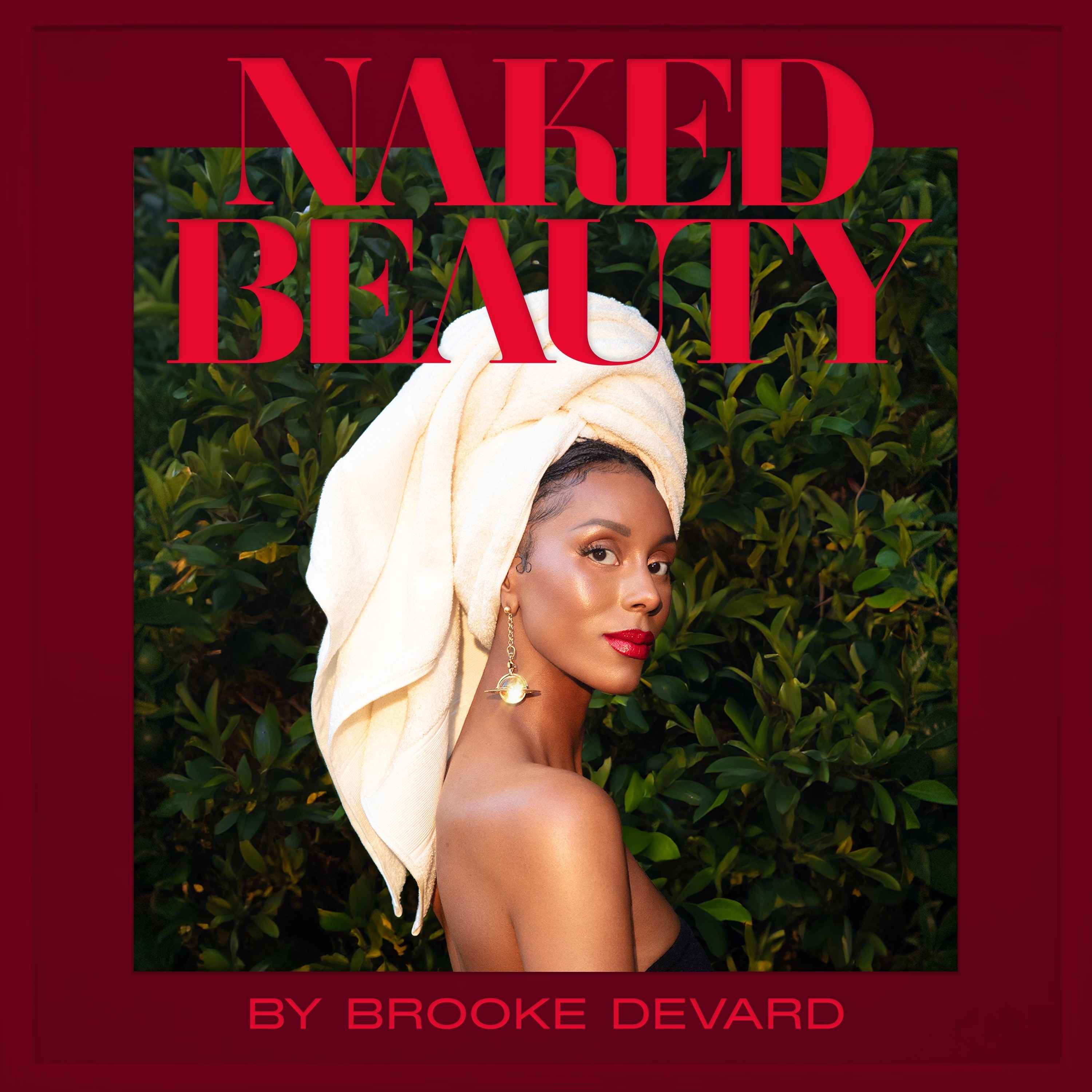
Foreign. Hello, this is Brooke Devard and you're listening to the Naked Beauty podcast. I genuinely think this episode might change the way some of you are getting dressed for the rest of your life. I quite literally feel like this is life changing advice. And I know that that's a bold claim at the top of an episode about fashion and building a look, but I have heard so, so much style content over the years. Over the years of being someone that loves to shop, loves to put together a look, I've heard about wardrobe essentials. I've heard about cost per wear. I've heard about how to develop your personal style based on your keywords. There are all of these different style archetypes. I've heard a lot about dressing for your body type, but I don't think I have heard anyone clearly articulate a philosophy on how to build a look. Not what to buy, not what's in fashion, not what color palette to pull, not what's flattering, but actually how to think about building a look. And as I I really sat down and thought about my process for building a look, I realized it's a little bit insane and out there and it's not something a lot of people do, or maybe you all listening do do it, but you haven't thought about it quite this way. So I'm just brimming with excitement to share this with you all. So I realized a few years ago that I don't actually enjoy getting dressed. Now, you may hear that and be shocked. For people that want to revoke my fashion membership card, just hear me out. I don't enjoy standing in front of my closet and asking, what should I wear? That question has absolutely never helped. The question that helps me is, what category am I walking in? Now, this comes directly from the drag balls. This comes from Paris is Burning. If you have seen the iconic documentary, ballroom culture has these categories where you're not just wearing clothes, you are embodying an entire idea. Executive realness, schoolgirl realness, town and country. Whatever the category is, it is your job to convince everyone in that room that you are that person. And I realize that's exactly how I get dressed. So I'm going to give you some practical examples of this. And before I get into these examples, I want to say it's not about becoming someone else. It's about deciding which version of yourself gets the microphone that specific night or for that specific occasion. Let's say I'm going to an art opening in Chelsea or I'm going down to the lacma for an opening night party. Instead of thinking, what should I wear to this art opening? I think, okay, tonight I'm walking in intellectual art girl realness. And suddenly I know exactly what to pull. I know I'm going to wear my Easter Miyake. I know that those interesting sculptural earrings that I have, I'm gonna pull those out. Maybe this is the crowd where, like, the tinted lenses inside can work. You can, like, pull it off even though there's no sun inside. Because it's more of an artsy crowd. Because I'm going to an abstract art opening, maybe that's the time to try that, like, splash of yellow across the lid. And again, it's not about creating a costume, right? Like, nobody wins because they take the theme too literally. You don't want to look like you're headed to a murder mystery dinner, right? But you want to look like that category inspired. Inspired the outfit. So the category, the identity, the look that you're trying to embody becomes a compass, not a costume that you adhere to. I'm going to give you a really easy example of jeans and a T shirt. People act like jeans and a T shirt is just one outfit. And it's not. There are 50 versions of jeans and a T shirt. There's the all American girl next door jeans and a T shirt. And even within the all American girl next door jeans and a T shirt, there's the 80s version of the all American girl next door jeans in a T shirt. And there's the 2026 version of that. There's model off duty jeans in a T shirt. There's Jane Bur on vacation in the south of France jeans and a T shirt. And that's with, like, an espadrille and a little straw bag and barely any makeup on and just a little bit of rouge on the lip. There's ashanti in a 2003 music video. Jeans and a T shirt where you've got a chain belt on. And maybe it's a deep V neck and a boot cut jean that's a little bit lower rise. Completely different women, completely different energy, completely different decisions. All of these looks have the same ingredients, but they're different recipes entirely. And so once you decide, okay, my energy for the summer barbecue that I'm going to this weekend is that 2003 Ashanti realness. And I. I know I want to wear jeans and a T shirt, but the category that I'm walking in is Y2K realness. So, yes, I want to get the chain belt and Yes. I want to have kind of the right silhouette of Jean and to not. You don't want to take it too literally. Maybe we don't put, like, the butterfly clips in, but maybe a light crimp of the hair and just making sure that your skin has that bronzy, glowy, dewy. Just, you know, how the makeup was in, like, the 2000s, where it was just, like, a little bit frosted, gorgeous, sun kissed. That's what you use to kind of channel your energy into to make the look feel cohesive. And it's interesting, when I speak to stylists, and I've now had the pleasure of working with several professional stylists and just talking to them about their philosophy, they talk about, what's the story that you're telling? That's something that you frequently hear from stylists. What is the story that you're telling? And who do you want to be on this night? And when I hear that question, I think about all of the years I've thought about dressing in these categories. Here's another hot take I have. I think most people aren't struggling with clothes. They're struggling with narrative. Because if you don't know the story that you're trying to tell, every decision feels kind of impossible and harder to lock in on one direction or another. It's like the shoes don't make sense, the bag doesn't make sense, the makeup doesn't make sense. Everything feels random. But once you know your category, the decisions start making themselves. And I've dressed this way for so long that it's almost become subconscious. So I'm CCO at Refinery 29. I have a meeting at L' Oreal headquarters in New York. I'm going to be talking to the lead executives. I'm not looking at my closet thinking, like, what do I wear to this meeting? I'm thinking, who do I need to be in this room? What is my category? It's giving executive boss realness. Okay, I'm going to go to my perfectly tailored Stella McCartney pinstripe suit. A strong pump. The makeup needs to be flawless. We're going to talk to l', Oreal, but it can't be distracting, right? I can't be overly glamorous because I need them to listen to what I'm saying in my slides. But I locked in on a character, a Persona, a version of myself, and then I picked the clothes and makeup and glam accordingly. Let's use the example of a destination wedding that you have over the summer. Are you tapping Into a story where it's old Hollywood glamour from the 1950s. You're Lena Horne on holiday. You're thinking about Grace Kelly, Audrey Hepburn, Marilyn Monroe. Even those women are very different directions. But are you tapping into this old 1950s Hollywood glamour, or are you giving 70s Bohemian collector of beautiful things who somehow is always going off to somewhere fabulous? Like those women don't wear the same dress, and they don't carry the same bag. They don't wear the same makeup. So the category comes first, and then the outfit comes second. I'll give another real world example. I got invited to the sacred event. You all know, if you follow me, sacred. Every single year, they do this all white party. The dress code says, wear all white. No exceptions. Now, how many white dresses? White skirts, white tops, white pants. There are infinite ways to style an all white outfit. So you can't start with just saying, okay, I need to get a white dress. I locked in on a specific. And sometimes you can find one piece that you're excited about and you're like, okay, I like this piece. And I'm going to build an archetype and Persona and character around it. So I found this great white courrege shift dress. Courreges, an iconic French designer that has roots in Paris going back to the 1960s to the mod movement. I said, okay, this is the dress I'm wearing. But then what I'm going to do is I'm going to build a hole, space age mod look around this dress. That means that for my eye makeup and my lashes, I'm looking at Diana Ross and what she was doing in the 1960s. It means that for my hair, I got this really cool wig made that I'm just, like, obsessed with. The first wig I've had custom made, by the way. We did this gorgeous short shag cut that had some real shape to it to kind of bring in those geometric elements. The shoes, I brought in geometric elements. The clutch, I did a little square clutch. But I locked in on this mod 1960s styling of an all white look in a way that made me excited to put it all together and bring it to life. It helps to tell a really cohesive style story, and that's what makes people look great in their looks. Like when you see someone in a look, you're at a party, you see someone in a look, and it all comes together. It is because they are projecting a specific character that you immediately understand. Everything else, quite frankly, just becomes middle of the road and forgettable. There are so many ways that you can find a beautiful pair of heels and a beautiful dress and the perfect clutch, and you can look nice, but that's not a look, right? And so that's why I'm excited to talk to you all about how to build a look that actually stands out, that actually turns heads. Like, you look in the mirror and you're like, this eats down. I'm winning my category. Whatever imaginary category I'm walking in, I'm winning it. Now, I do want to leave you all with some practical tips. How do you execute? Once you've figured out your category, how do you execute it? Because you still have to build the look. And this is where I think a lot of people go wrong. Shout out to Sir John. Sir John has taught me this. Invaluable. Cannot thank him enough. If you know a stylist in your life, they will tell you the same thing. One of the first things he asks me anywhere we are going to go is he will say, what does the room look like? And if you can get a pantone swatch of, like, the exact backdrop of the chair you're going to be sitting on for a panel or the room that you're. If you're hosting your baby shower, like, you need to know what that room is going to look like. What is the color on the walls? What. What color will you be up against? What's the backdrop? What's the lighting? What's the environment? Are you on a roof at sunset? Are you in a boardroom? Are you in a gallery? You need to see what the room that you're going to be in looks like before you decide your look. It is so important. And now celebrities really focus on this because they're in front of Step and repeat. So stylists work extra hard to figure out, okay, what color is the step and repeat, what color is the carpet? So that my client doesn't clash or blend into the background. You have to have that same mentality when you are dressing yourself like you are your celebrity client. And you need to know the color that you're going to be around as you're building your outfit and your look. The look that you would pull together for a candlelit dinner, it's different from what you would wear for an outdoor garden party. That's why stylists ask so many questions about, like, where are you going? Where is it going to be? What are you going to be doing in this environment? Because you are dressing for a setting. So much of getting ready for a big event is figuring out the setting and Being mindful of the colors that are going to be in your setting. And that's something that I only tapped into like, very, very recently when I did the Essence Black Women in Hollywood red carpet. I knew that I was going to be against really rich cobalt blue. I looked at the color wheel. I said, what's on the opposite side of the color wheel of blue? It is orange. And I wore bright orange. And that just made all of my pictures on the carpet pop that much more. To get deeper into the execution, you need to set aside dedicated time to make your room or your getting ready space. Some of you out there have these gorgeous walk in closet rooms. I am so jealous. For most of us, it's probably a bedroom, but if you, if you're lucky enough to have your own, you know, walk in closet situation, do it there. But you have to create a styling suite. This is what any professional stylist would do. And I have done it and I've recreated it in my own bedroom. It really works. You have to pull out a rack. If you do not have a rolling rack, you need to have a rolling rack. I actually have a non rolling rack. I got it from Zara home. It's like wood and it like kind of looks kind of aesthetic, like it's not an eyesore when I have it out in my room. You need to put all of your options on that rack. This is what every stylist does. They pull options and they put it on a rack hanging where you can see it separate from your closet. If you're following my method, the category is already decided, but now you're editing. So the clothing goes on the rack. Then all of your shoes that are part of your edit go on the floor. You kind of just like line them up in a row. You put all of your earrings, you lay them out on a tray. All of your bracelets get laid out on a tray. All of your bags get lined up next to each other. So suddenly you can start to see everything all at once. Go ahead and put your sunglasses down on the tray too. If you're getting dressed for a daytime event, everything needs to be visible. Because styling is a very visual exercise. You need to see the options that are talking to each other. It's like you can't rely on your head to remember, like, oh, yeah, I think I have this thing. No, you need to see everything. That's part of the possible consideration set out at one time. So you're going on your dream date with your dream man or your dream woman, or you're going out on date night with your husband and you're like, I'm going to channel 90s supermodel realness Naomi Linda Evangelista. And I pulled out all of my sexy little black dresses. I've got all of my strappy sandals. And in the 90s, I didn't do too much jewelry. It was very minimal. But maybe I just want to put out a few options of different studs that I could wear. As you pull the shoes, the jewelry, the bag, every decision narrows down the possibilities for the next decision. Then you move on to the glam. And I will say, there is such an excitement to this period. Like, I have done this and like, genuinely, my heart starts racing a little bit faster when the outfit reveals itself to me. It's like you can feel this energy when you know you found it, because suddenly every piece is starting to support that same story. So you're like, okay, I've got the perfect bag and the shoes. And then it's like each little decision becomes easier and easier and easier and it all falls into place. And I would honestly say, do not go shopping for a big event or a big moment until you've done this exercise of the styling suite. Because we forget what we have in own closets. I say this all the time. We always forget what we have in our own closets. Sometimes you need to go bring something to the tailor, but you very rarely need to go out and buy something net new. It's exciting to style things in different ways for different Personas. One black dress can support 12 different categories when styled and made come to life in different ways. Set aside the time to be your own stylist, to edit, to play. Because here's what I've also learned. Styling isn't just about getting dressed. It's creative direction. You are creating a character, you're building a visual narrative, and you're deciding what version of you walks into the room. Now, in terms of skin prep for a big event, hair styling options for a big event, basically my countdown, my two week countdown to looking flawless. I'm going to have to do a whole separate episode on that because that is just all about appointments and routines and doing tests. But those are really the small details. What makes sense, styling yourself so exciting is this idea that you are creating a version of yourself. It is play. It is dress up. Growing up, I had a dress up drawer in my room. I have always loved to play dress up. And as adults, as we're getting dressed, we are really doing the same thing. We are just Dressing up. We are having fun. We're building these Personas. And before I go, I want to acknowledge that this episode is coming out during Pride month. Happy pride. And it feels so fitting because if this entire episode is about creating yourself, building a character, and deciding who you want to be when you walk in the room, so much of that thinking comes from queer culture. It comes from ballroom culture. It comes from drag. It comes from people who understood long before the rest of us that clothing isn't superficial, makeup isn't superficial, hair isn't superficial. These things can be art. These things are a sacred part of our own self expression. They can be performance, they can be survival. They can be performance, they can be survival. I was walking through West Hollywood last night during Pride. Everyone was out. The girls, the dolls, the boys. And what I love about that, there's just like this one strip of in West Hollywood. People are giving it up for each other. People are stopping someone and immediately saying like, okay, I see the outfit, I see the sequins, I see the commitment, I see the vision. There's like shared acknowledgment amongst the queer community that you are building a look. And how well you build that look deserves to be commended and respected and like, applauded. And that, to me, is what fashion is supposed to be. It's not anxiety, it's not trend chasing. It's not dressing in a way that's the absolute most flattering for your body type. It's not worrying about whether you're doing it right. It's supposed to be joyful and expressive and it should take some level of bravery. I think my homework for you this week. Please stream Paris is Burning. Buy it. I own the movie. I watch Paris is Burning all the time. One of my favorite documentaries ever made, Paris is Burning is currently streaming on Tubi. You can watch it for free while you're there on Tubi, you should check out. There are some exclusive Naked Beauty episodes that are only available on Tubi right now. Six of them. Incredible episodes. So while you're on Tubi, watch Naked Beauty as well. But Paris is Burning a streaming on Tubi. It's on Hulu. I think it's on Amazon Prime Video. You can rent it on Apple for $4. Just watch this movie. If you haven't watched it yet. I think it's on HBO as well. The documentary follows New York City's ballroom scene in the 1980s, where black and Latino queer people created this entire world for themselves through fashion, performance, art and identity. You'll hear terms that have become part of mainstream culture today. Real shade voguing. But I think the reason why I've always loved this movie and I've always felt so drawn to this movie is because you get to see people consciously create themselves. You get to see them walk in these categories, build characters, construct identities using fashion, hair, makeup, and performance to express who they are on the inside, but also who they dream of becoming. It has glamour, but it's also very funny. But it's also very heartbreaking. Like, it's just such a moving documentary. I think every single beauty girl should watch Paris is Burning, and I want to acknowledge the pioneers like Venus Extravaganza, Pepper Labeja, Dorian, Corey, Willy Ninja. Their influence extends so far beyond fashion into the culture. It's really in the way that we walk, the way we perform, the way we do anything. I was looking at the new Lady Gaga and Dochi music video, and I was like, this is peak queer culture, and this is peak ballroom culture. So your homework this week is simple. Watch Paris is Burning. If your city has a pride parade, go. Whether you're in the community or an ally, go be amongst the people, really look at them and how they're constructing their looks. And that's also not to say I know that not. Not every person in the queer community is, like, pulling, you know, fabulous looks. Right? That's not necessarily going to be true for everyone across the board, but as a collective, you are going to see far more inspiring looks at the Pride parade than any other parade or gathering wherever you live. I will tell you that. Look at the intention and the creativity behind the looks and the joy in which people are getting dressed. So the next time you dressed, don't ask yourself, okay, what should I wear? Ask yourself, what category am I walking in? Because the outfit isn't the point. It's the character you're building. That's the point. I strongly believe that the most stylish people are not the people with the best clothes. They're the people who know exactly who they came to be. I'll talk to you next week for a new episode of Naked Beauty. Thank you so much for listening, and I hope this was inspiring. Bambi bella, the boy bang. Better than the moor. Never been the floor. Pretty kitty. Maniki the claw. Silly. Today's episode of Naked Beauty is made possible by my friends at Macy's. And I want to have an honest conversation with you all about what it means to be prepared for your summer. Summer is supposed to feel fun and easy, but there is nothing fun or easy about realizing that you have a pool party, a barbecue, a wedding, all back to back weekend after weekend in a row and you don't know what you're wearing. And I have been there before. Scrolling, spiraling, panicking, adding item after item into your cart, never making it to checkout. And I actually had to have a talk with myself. Brooke, it doesn't have to be this way. Line up your perfect summer outfits and this is where Macy's has come in to save the day. Macy's is the place to find everything you need for your summer wardrobe. Like this gorgeous knit sweater I got from dkny. I just picked this up at Macy's. I love the way it looks against my brown brown skin. If you are melanin rich, I would highly suggest adding some gorgeous yellow hues into your wardrobe. Macy's actually has a golden hour glow collection that is full of warm neutrals, gorgeous metallic accents, beautiful artisanal embroidery to just help you look like a glowing goddess this summer. Macy's has everything you need to walk into this summer feeling ready. That is not just a shopping tip, that is a self care tip. Let's get back into today's episode. Today's episode of Naked Beauty is sponsored by Kohler and I never thought I would be this obsessed with the toilet, but here we are. Whenever I travel, I am always blown away by how elevated the bathroom experiences abroad are. In Tokyo, the smart toilets are truly next level. In Europe, bidets are just a part of everyday life. When I go to Turkey, the same thing. And every time I traveled I came home wondering why aren't bathrooms like this in the us? So when I was renovating my bathroom, I decided to invest in the Kohler Vail smart toilet. And honestly, it has been a complete game changer. The heated seat, hands free opening and customizable bidet functions make such a difference in your everyday routine. It's one of those luxuries that very quickly stops feeling like a luxury and just becomes something you genuinely can't imagine living without. But beyond the technology, the design itself is is stunning. The veil has this beautiful curved silhouette that feels sleek and modern and incredibly intentional. It really changed the feeling of my entire bathroom and made this space feel more elevated and spa like. I love that Kohler approached this as both innovation and design because it really shows how thoughtful design can transform even the most unexpected objects. Like a toilet. Now every time I step into my bathroom, I get that same feeling of luxury and innovation that I experience while traveling. Discover the Kohler Vail smart toilet and learn more@kohler.com and let's get back into today's episode. Make your mornings effortless with the new nespresso Vertuo up machine. From bold espressos to rich lattes, brew flavorful coffee hot or over ice in just three seconds. All it takes is a simple press to enjoy your perfect cup. Shop now@nespreso.com Acast powers the world's best
- [22:04]
B
podcasts Here's a show that we record
- [22:07]
A
recommend
- [22:10]
B
hey everybody, I'm Naomi Erigan. And I'm Andy Beckerman. We're a real life couple and a real life couple of comedians. And we're the hosts of the podcast Couples Therapy. We're the only comedy relationship podcast ever. Yeah, I said it. And we're so good. We've been written up in both the New York Times and we made Grindr's list of top podcasts. Yes, we're giving you that high, low appeal trust on the show. We talk to guests like Bob Bob the Drag Queen, Angelica Ross Bowen Yang, Janelle James, Danny Pudi, Darcy Carden, Paul F. Tompkins and more. All about love, mental health, and everything in between. And we answer your relationship questions. We are two unlicensed comedians just trying to help you out. So open your hearts, loosen your butts because we got a lot of laughs and a lot of real talk just for you. Download Couples Therapy Wherever you get your podcasts,
- [23:02]
A
ACAST helps creators launch, grow and monetize their podcasts everywhere. Acast.com.