← Nephilim Death Squad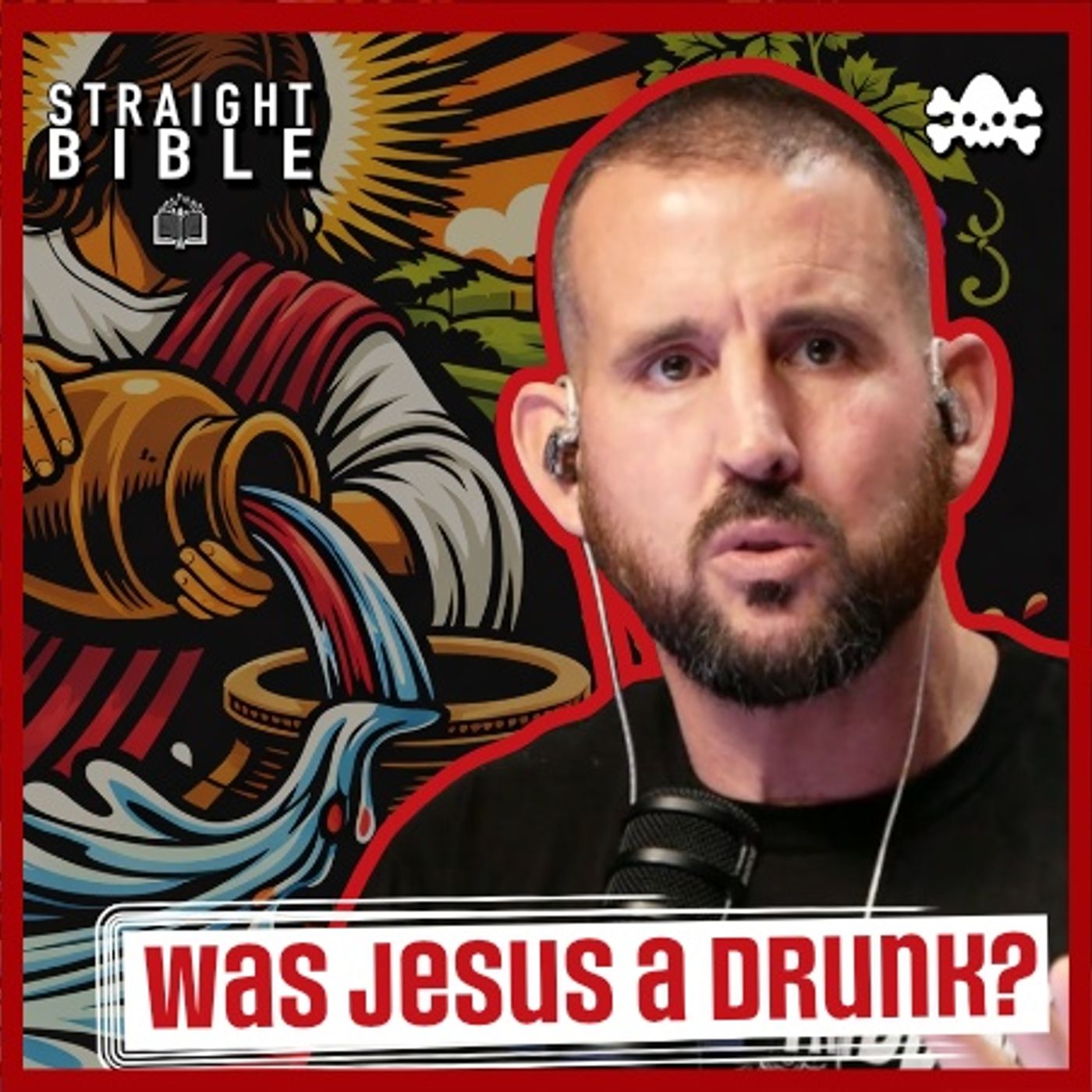
Nephilim Death Squad
Eating, Drinking & The Sabbath | Straight Bible
01:12:15
In this Straight Bible episode, we tackle one of the most controversial and misunderstood topics in modern Christianity: eating, drinking, the Sabbath, and freedom in Christ.Was Jesus really accused of being a drunkard? Did the law have a...
Loading summary
Transcript93 lines
- [00:00]
Haley
Weight Watchers now offers access to affordable GLP1s. It works for members like I'm Haley and I've lost 100 pounds. Weight Watchers has everything I need from weight loss medications to nutrition support and help with my side effects.
- [00:14]
Mike
It's all in one place.
- [00:15]
Haley
Weight Watchers handles the insurance for you and offers affordable cash pay options. With our program, our members are losing more weight with expert nutrition and side effects support.
- [00:25]
Mike
I'm Mike and I've lost 135 pounds.
- [00:27]
Scott
Weight Watchers prescribing GLP1 medications it's been life changing.
- [00:31]
Haley
I'm Shar and I lost 80 pounds on Weight Watchers. I realized that it would take more than a prescription to lose weight and.
- [00:38]
Mike
Feel good on a GLP1.
- [00:40]
Haley
Better results, expert support Lose more weight.
- [00:43]
Scott
Make it last I can't imagine doing.
- [00:45]
Mike
A GLP1 without Weight Watchers.
- [00:47]
Haley
Get started for as low as $25@weightwatchers.com GLP1 for over 60 years, we've helped millions of members find what works for them. Now it's your turn. Weight Watchers Watch it work.
- [01:00]
Rebel.com Advertiser
Did you know you can save up to 70% on the best brands just by shopping at from rebel.com we're talking about strollers, car seats, high chairs, espresso machines, cookware. Everything you need for way less. Here's how it works. Every single day, Rebel drops thousands of new products on the site for up to 70% off. It is a constant stream of endless deals from top brands like Uppababy, Nuna, Baby bjorn, Breville, Nespresso, KitchenAid, Le Creuset and more. But you have to act fast because every deal is one of a kind. So if you see something you love, make sure you add to cart fast. So stop paying full price when you don't have to. Whether it's baby gear, kitchen upgrades or a treasure for your home you didn't know you needed, Rebel has it for way less. Up to 70% less. Shop from rebel.com and save big well.
- [01:56]
Mike
The holidays have come and gone once again. But if you've forgotten to get that special someone in your life a gift. Well, Mint Mobile is extending their holiday offer of half off unlimited wireless. So here's the idea. You get it now. You call it an early present for next year. What do you have to lose? Give it a try@mintmobile.com Switch limited time.
- [02:16]
Haley
50% off regular price for new customers. Upfront payment required $45 for 3 months, $90 for 6 month or $180 for 12 month plan taxes and fees. Extra speeds may slow after 50 gigabytes per month when network is busy. See terms day.
- [02:59]
Mike
Was Jesus a wino? Like, that's literally the accusation of the Pharisees. So let's dig into this, man, because this is a. This is a crazy thing. You guys know what a wino is? It's like a. It's like an alcoholic. They accuse him of being a wine bibber, which, like, today would be like a wino, which would be like an alcoholic. So. So watch how this thing unfolds, man. We're in Mark 2:14 and it goes like this. And as he passed by, he saw Levi. Remember, Levi is Matthew. That's the same guy. I don't know if he nicknamed him that or if those two names are just compatible. I'm not totally sure, but Levi and Matthew are the same guy. As he passed by, he saw Levi, the son of Alphaeus, sitting at the receipt of custom and said unto him, follow me. And he arose and followed him. That was the great thing about all these disciples, dude, is they. He called them and they followed. And it came to pass that as Jesus sat at meat in his house, that's Matthew's house, many publicans and sinners sat also together with Jesus and his disciples. For there were many, and they followed him. And when the scribes and Pharisees saw him eat with publicans and sinners, they said unto his disciples, how is it that he eats and drinks with publicans and sinners? When Jesus heard it, he said unto them, they that are whole have no need of the physician, but they that are sick. I came not to call the righteous, but sinners to repentance. So let's just notice a couple things real quick. It's the call of Matthew, Levi. We noticed that Jesus is not afraid to be intimate with sinners. You know, sometimes you hear that maybe in church circles that, like, oh, you know, don't be around that. And it might get on you like that sin and that all that might get on, you know, which is whatever. Which is whatever is that there's a balance in this. But Jesus is not afraid to be intimate with sinners. But the religious system that's always watching him, notice how it's always watching him. That religious system is baffled by this, right? They say how. Verse 16. How like, bro, how. How is this, man? You're just. You're just at a party, like, like, let's be honest, they're saying he's eating and drinking with sinners. We understand what that means, right? Like like if you were to say, oh, I saw Bobby at the party, man, he was eating and drinking. Like we know what that's referring to. We all know what that's referring to. And the religious system is saying, what? How is this, this is not the culture of their man made religious system. But Jesus doesn't care, right? He's straight Bible. He's not church culture, he's not American church culture, he's not Jewish church culture of that day. He's just stray Bible. They're saying, what? How is this our concept of religion is that like you just be really sweet and don't say cuss words and eat chick fil a. Like he's doing this other thing, this guy. This happens in the library. Sometimes we see it where like homeless people come in. We go through phases where we get a lot of homeless people. And like the people in the back, they'll be doing Bible studies and they'll be very offended that like homeless people are back there. Like one time there was a chick who came in and she was just kind of chilling, gave her a coffee, she went and sat in the back. I let her know that there was a group coming in at 10 and she was going to need to come out. And so that group went back there, they were a little uppity. It was a Bible study group. That's a little uppity. And so she went to the bathroom, they dumped her coffee. Then she came out, she went, I was back there, they dumped my coffee. She started making this big scene. I said, whoa, whoa, hold on, let's talk through this. What? What? They done my coffee. I said, no problem, I'll get you another one. Gave her another one and she left and everything was cool. But then the one lady came out, she goes, don't believe anything that lady says. I saw her get kicked out of Spanish Springs the other night. Something, something. I said, oh yeah, you mean those people that Jesus died for? Like those sinners? Is that who you're talking about? And the lady said, she went like this, she goes, I feel convicted right now. I just saw that on the Chosen last night. That's what she said. That's. I'm just being honest what she said. And so this is still happening today, man, is people just, they don't. They're like, yeah, I want you to come to church as long as you're just like me. Like, I want you to come to my Bible study as long as you're just like me. And they're offended to see you like vibing with, with sinners and stuff. But. But do notice this too. Let's have a balance here. Jesus is not there getting trashed, right? Like, he's there as the physician. So let's notice that. He says. He said, yeah, yeah, I'm here. I'm eating and drinking with the publicans and sinners, but I'm not doing keg stands. I'm not doing like crazy bong tokes. I'm not doing like all this crazy stuff that happens at parties. I'm there as the physician. He says, they that are whole have no need of the physician, but they that are sick. I came not to call the righteous, but sinners to repentance. Let's look at Luke 5:27:32. This is another. This is going to kind of. This is going to be another example of the same story. 5:27. We're going to. We're going to probably tell this, I think, in three different stories. And after these things, he went forth and saw a publican named Levi, that's Matthew, sitting at the receipt of custom. And he said unto him, follow me. And he left all. That's. That's a great thing, if you can say that. It's a funny thing when people talk about, like, Christian businesses. We don't really have like a model of a Christian business in the Bible. It's like dudes who just left. So they're like a Christian business. Biblically is like a business that doesn't exist anymore. Right now if you're saying that, like, we're a Christian business in the sense that we're obedient to Christ and like, that's how we model our life, then that's great. But we don't necessarily have examples of, like, Christian business in the Scripture. And Levi made him a great feast. So this, so this feast that's being talked about, it's at Levi's house. Levi made him a great feast in his own house. And there was a great company of publicans and of others that sat down with them.
- [08:50]
Scott
Republicans are tax collectors, right?
- [08:52]
Mike
Yes. Which is what he was. That's what Matthew slash. Levi was public. And Levi made a great feast in his own house. And there was a great company of publicans and of others that sat down with them. But their scribes and Pharisees murmured against his disciples, saying, why do you eat and drink with publicans and sinners? And Jesus answering, said unto them, they that are whole need not a physician, but they that are sick. I came not to call the righteous, but sinners to repentance. So you're sick and need a doctor. Right? Like, that's got to be dealt with up front. Like, you're not just coming in for a checkup. You're not just adding Jesus to your life. I know we've talked about this before, that Jesus plus is wicked. We talked about that last week. That the I must be single. It must be about Jesus. And you're coming to Jesus with the mindset of, I'm sick and I need a doctor. Anything other than that's not right, man. If you're like, no, no, everything's good in my life, I'm good, and I'm just going to add Jesus to my life and it'll make it better. No, no, no. You got to come to him under that context. You're sick and you need a doctor. Let's look at Matthew 9. 9. What's interesting about this is it's Matthew that wrote it. It's Matthew that it's about. Remember, Matthew and Levi is the same name, same guy. So Matthew 9.
- [10:15]
Scott
Jesus looked like he just liked to give a lot of nicknames, huh?
- [10:18]
Mike
He did. He did.
- [10:20]
Scott
Calling you stuff.
- [10:21]
Mike
Yeah, he was about it. Well, he's just a real guy, man. He was, you know, the guy who, like, gives a lot of nicknames. He's like one of those guys. Dude.
- [10:28]
Scott
Yeah. Tank top.
- [10:30]
Mike
Exactly. And as Jesus passed forth from sitting there, he saw a man named Matthew sitting at the receipt of custom. And he said unto him, follow me. And he arose and followed him. And it came to pass as Jesus sat at meat in the house. Behold, many publicans and sinners came and sat down with him and his disciples. And when the Pharisees saw it, they said unto his disciples, why eateth your master with publicans and sinners? But when Jesus heard that, he said unto them, they that, behold, need not a physician, but they that are sick. Now, this is what's added in this story that wasn't in the first two. But go and learn what that means. I. I will have mercy and not sacrifice. For I am not come to call the righteous, but sinners to repentance. He says, go and learn. Remember, he says this to the people in the pulpit, the most educated people. Go and learn what I mean by this. Not go and memorize, or go and have, like, perfect memorization of stuff so you can win debates. No, no, no. Go and get the meaning. Go and learn the meaning of this. Go and learn what the meaning is. I will have mercy and not sacrifice. Which is saying is, God desires mercy and not Sacrifice, Right. He desires something in your life, something that's real and inside you, as opposed to some kind of external religious ceremony. Right? Which is what this had all turned into. Let's see where he. Let's see where he pulled this from. Because Jesus is quoting the scripture here. He's quoting Hosea. This is the passage he's talking about. So let's pull that up just so we have the context for this. Hosea 6. What is it? 4 Hosea 6. 4. Oh, Ephraim, what shall I do unto you? Oh, Judah, what shall I do unto you? Because your goodness is as morning cloud and as the early dew, it goes away. He's saying, like, it's fake, it's meaningless. Right? Like. Like you have this goodness, but it's fickle. It's. It's there on Sunday morning when you come in, you do the thing, but then it just kind of blows away like the morning dew, like a cloud, it's just gone. Therefore have I hoed them by the prophets, I've slain them by the words of my mouth. And thy judgments are as the light that goes forth. Because I desired mercy and not sacrifice, and the knowledge of God more than burnt offerings. But they, like men, have transgressed the covenant there have they dealt treacherously against me? And that word treacherous is like cheating. Like cheating. Like adultery, right? So what's he saying? He's saying I'm looking for a changed attitude of life. Like. Like a changed attitude of life. I'm looking for mercy. I'm not looking for sacrifice, which is just this external religious activity. I'm looking for mercy, kindness, loving kindness, goodness. That's how that word hesed is what it is in the Hebrew. That's what it's talking about. Because religious activity is fleeting. It's fleeting. He's saying it's here in the morning and then it's gone in the afternoon. Like, I think we all understand that's what that's like. Sometimes people at the church show it's just fleeting. It comes and goes. Knowledge of God. He says, I desired mercy and not sacrifice. And knowledge of God more than burnt offerings. Relationship, like knowing me, being intimate with me, more than just like some kind of external sacrifice that you can just do, it means nothing. So if you're. If your religious activity doesn't lead you into a living relationship with God, then it's meaningless. It's meaningless. Like, these were all supposed to point to something else, which is supposed to guide them into a relationship with God, which is what our time in the Bible is supposed to do. Our time in. The Bible is supposed to lead us into intimacy with God. It's not supposed to make us winners of debates, people with flawless doctrine and flawless theology. It's supposed to bring us into a living relationship with the authority. Remember Romans 12:1 is the ultimate solution to this. Do we have it? I beseech you, therefore, brethren, by the mercies of God, that you present your bodies or your whole being, a living sacrifice, wholly acceptable unto God, which is your reasonable service. For the longest time, these dudes were able to get away with these external sacrifices, but they were able to live a completely different life. These external things that was making them sort of look holy or appear holy, but they were living totally different. Romans 12:1 deals with that, says you must present your whole being, a living sacrifice. No more externals, no more doing this religious activity, but living a completely other way. We won't have that anymore. Okay, let's look at Matthew 12:1 8.
- [15:29]
Scott
At that time, Jesus went on the Sabbath day through the corn. And his disciples were. Were in hungered and began to pluck the ears of corn and to eat. But when the Pharisees saw it, they said unto him, behold, thy disciples do that which is not lawful to do upon the Sabbath day.
- [15:45]
Mike
Watch that. The Pharisees are always watching him.
- [15:48]
Scott
Yeah, right there. These guys behind the corn or something, they're.
- [15:50]
Mike
Dude, they're just always watching him. They're always trying to throw shade at him. They're just always trying to mess him up. They're always watching him. They're always observing him. And notice this phrase, not lawful. Put that in your back pocket. Because as this story unfolds, as this study unfolds, you're. You're going to want to. You're going to want to remember that. But he said unto them, have you not read what David did when he was hungered? And they that were with him, how he entered into the house of God and did eat the showbread, which was not lawful. Remember, not lawful. David did eat the show bread, which was not lawful for him to eat, neither for them which were with him, but only for the priests. This is a story about David fleeing for his life from Saul. And he's starving and has no food and there's bread in the temple. And Jesus is saying, don't you know he didn't starve to death? Like, like, yeah, that was temple bread for a very specific religious activity. Was David supposed to starve to death? This is how rational Jesus is. Think about this. See, imagine you tell Your kid. You can't go, you can't cross the street. You can't go in the street. And then they're getting chased by a bear. And they'd stop at the street line, like they're running. And they stop right at the street. They go, well, I can't. I can't go in the street. And they get mauled by a bear. Or the house is burning down, right? The house is burning down. Like everything's burning. And they're. And they are trying to run and get across the street because everything's burning and the fire's about to get to them. Well, I can't cross the street. Jesus is like, no, no, that, that's. That's not what this is intended to do. Have you not read in the law how that on the Sabbath day, the priests in the temple profane the Sabbath and are blameless? Because remember, the beef is over the Sabbath. And when, when he says profane the Sabbath, he's saying they treat the Sabbath as a common day. The. The priest in the temple, they're. They're still doing sacrifices. They're still doing the stuff that they got to do even on the Sabbath day. But I say unto you that in this place is one greater than the temple. But if you had known what this means, I will have mercy and not sacrifice. You would not have condemned the guiltless, for the Son of Man is Lord even on the Sabbath day. All right, let's. Let's look at how he breaks this down too. I don't know if we have to go to these passages, but he's. He's making these, he's just making these points about the Sabbath. Do you have, like John, the John 7 stuff? So it's, it's numbers 28, 9, and 10. If anybody was wondering what the, what the verse is where it's talking about how the priests do sacrifices on Sabbath days just like any other day. That's numbers 28, 9 and 10.
- [18:34]
Scott
And on the Sabbath day, two lambs of the first year without spot and 2 10th deal of flour for a meat offering mingled with oil and drink offering thereof. This is the burnt offering of every Sabbath beside the continual burnt offering and his drink offering, right?
- [18:49]
Mike
So he's just make. That's just, that's just a reference that like, yeah, the priests are still working on the Sabbath, right? And then look how he compares this to them in this day where he's dealing with them. Moses therefore gave unto you circumcision, not because it's of Moses, but of the Fathers and you on the Sabbath day circumcise a man. If a man on the Sabbath day receives circumcision, that the law of Moses shouldn't be broken. You're angry at me because I made a man whole on the Sabbath day. That's when he heals a guy on the Sabbath day and they hate him for it. He's saying, guys, guys, you're letting the Sabbath trap you. It's trapping you. Let's look at Luke 13:15. This is where he makes the point that the animals. The Lord then answered him and said, you hypocrite. Doesn't each one of you on the Sabbath loose his ox or his ass from the stall and lead him away to watering? He says, bro, bro, you guys do stuff on the Sabbath. You let your animals out. Like, stop letting this. This law of the Sabbath trap you. You're missing the point. Don't miss the point of the Sabbath and the ultimate rule in the ultimate point of the Sabbath. This is the ultimate thing. Anybody who wants to debate and fight and argue over the Sabbath because it. Because it's crazy what we're going to get, like, what we're talking about. You think this is like, oh, this was just an issue back then. It's still an issue in the church today. Dude, people are still beefing over the Sabbath, bro. They're still beefing over the Sabbath and food and drink, right? Mark 2:27 is the ultimate rule on the Sabbath. This is what Jesus says. The Sabbath was made for man and not man. For the Sabbath. That's. That's the ultimate rule on the Sabbath. Just keep that in mind. The Sabbath was not set in place to trap man. Man, man wasn't made to obey the Sabbath. The Sabbath was made to bless man. Like, as if God was to say, hey, man, if you take a rest one day a week, it's good that you go hard six days a week. You don't want to be somebody who only works three days a week and then is just chilling. But you should go hard and just trust me. When you take that seventh day off, God's saying, I got you. I got you. I'll take it from here. You can trust me. All right, let's unpack this. This thing with Jesus not being like, the religious system of his day, we're gonna. We're gonna follow this story out a little bit further. Matthew 11, 16, 19.
- [21:09]
Scott
But where unto shall I liken this generation? Is it like unto children sitting in the markets and calling unto their followers their fellows and saying, we've piped unto you and ye have not danced. We've mourned unto you and you have not lamented. For John came neither eating nor drinking. And they say he hath a devil.
- [21:28]
Mike
That's John the Baptist he's speaking of.
- [21:30]
Scott
The Son of man came eating and drinking. And they say, behold a man gluttonous and a wine bibber. Boom. A friend of publicans and sinners. But wisdom is justified of her children.
- [21:40]
Mike
So do you see what I'm saying? They accused him of being gluttonous and a wine bibber. They accused him of being a wino, an alcoholic. And I know there's some people, they're like, oh, no, you have to understand. The grape juice of that day was only grape juice. Okay, then. Or the wine. Oh, in the Bible, I'm talking about wine. It's just grape juice. Then why is there warnings in the scripture about drunkenness? Like, it's clearly talking about alcohol. Like, this is clearly an accusation. My take is that they saw him drinking, and so they accused him of being a wine bibber. Like, that he was an alcoholic. My views on alcohol are similar to my views on money, Right? Like, you have to be very careful with both. There's much more warning in the scripture about money than there is about alcohol. But, like, greed is way more dangerous than alcoholism, I think in America, in a lot of circles. But we don't tell people you can't get a paycheck now. You can't have a savings account. Right? Alcoholism is terrible. Terrible things come from alcoholism. I've witnessed them in my own life. I've lived through it. Like it's. There's terrible things that come from alcohol. But the Christian life, it is not saying you can never touch it because of that. Right? We just. We live in a balance. We live in a balance. But notice what he's saying about this generation now. Remember, again, remember what we said about Jesus. He'll generalize an entire generation and does not care if that offends you. He says, where unto shall I liken this generation? He doesn't say, now, I don't mean everybody. It's like unto children sitting in the markets and calling onto their fellows and saying, we piped unto you and you haven't danced. We've mourned into you, and you have not lamented. What's he saying? They're looking for a reaction. Their whole thing is like, I'm gonna do this thing and expecting some certain reaction from you. And this is where people get offended. This is where People get messed up in life because they're doing something and now they're expecting a reaction from you, Good or bad. Good or bad or whatever. It's just. They're doing a thing for reaction. That's what Tweeter basically is, Right?
- [23:37]
Scott
Yeah.
- [23:38]
Mike
Is like you're just. You're probing and you're hitting and you're just looking for a specific reaction. He's saying, that's nothing new. The fact that we're like that today, that's nothing new, man. That. That's what that generation was like. Just we. We want to react. We want you. Not only that, not only do we want a reaction, we want a specific reaction that we expect from you. That's what he's saying. And then it's intriguing what he says about John the Baptist and Jesus. He's saying, you're not. You guys aren't satisfied with either type. You guys aren't going to be happy either way. John the Baptist comes and he don't dance. He's not part of the scene, man. Dude lives in the wilderness. He's eating locusts and wild honey. He doesn't dance, he doesn't care. And you guys said he has a demon. The Son of Man comes. He's eating and drinking. He's dancing. He's. He's mingling with you guys. And you say, behold a wine bibber and a gluttonous man. They look at him. He's a glutton. He's eating and drinking. Look at the way he's carrying on. They're not satisfied with anything. Right? So we're warned about money because of greed, and we're warned about alcohol because of drunkenness. Right. They're not talking about grape juice. Let's look at 10. Let's look at Luke 10, 1 8. This is not going to be like a super long session. This isn't going to be like the Jude studies.
- [24:55]
Scott
After these things. The lord appointed over 70 also and sent them to and two before his face, into every city and place, whether he come, whether he himself would come.
- [25:08]
Mike
So this is. So this is Jesus sending out the 70. He's already sent out the 12, right? Now he's got another 70. There are these forerunners that he's going to send out to go into cities before he shows up, before he gets there. Therefore, said he unto them to the 70, the harvest truly is great, but the laborers are few. Pray you, therefore, the Lord of the harvest, that he would send forth laborers into his harvest. It's his harvest. Pray for laborers Go your ways. Behold, I send you forth as lambs among wolves. Carry neither purse nor script nor shoes, and salute no man by the way. And into whatsoever house you enter, first say, peace be to this house. And if the Son of Peace be there, your peace shall rest upon it. If not, it shall turn to you again. Look at the power we have to use this force in the universe called peace. That's a whole other study for another time. But. But this thing, peace is a very powerful force. And in the same house remain eating and drinking such things as they give. Look, he's giving the 70 the same instructions that he lives by. He goes into a party at Matthew's house, and he's eating and drinking whatever they're eating and drinking. I know that's offensive, but that's how Jesus lived, man, and that's how he instructed the 70. He gives them the same instructions that he lives by. He says, look, man, you go into a house, remain there eating and drinking whatever they give you, because the laborer is worthy of his hire. Go not from house to house. So the context is he's saying, let them take care of you. You're there blessing them in spiritual things. Let them take care of you in the natural things. That. That's what he's saying first and foremost. But in the context, he's saying, eat and drink whatever they put before you, and into whatsoever city you enter and they receive you, eat such things as are set before you. Same thing in the city, man. Eat whatever they put before you. I do think it's intriguing, though, that, like.
- [27:08]
Scott
Are these people all Jews?
- [27:09]
Mike
Yes, that's the context.
- [27:11]
Scott
But they're also visiting Jews.
- [27:13]
Mike
Yes.
- [27:13]
Scott
Okay. All right.
- [27:14]
Mike
Yes. So, but we're going to deal with that topic in a minute, too, because you're talking about, like, the blanket. Well, just. Yes. Coming out of heaven, but just, like Jewish, like, kosher rules. And what are they eating according to law. But then we're going to deal with it outside of this as we. As we continue.
- [27:32]
Scott
That expands, obviously. Yes, okay.
- [27:34]
Mike
Yes. But I do think it's interesting. He says, in any house, it's safe to eat and drink. When he says, when you go in the city, though, he doesn't mention drinking. I think that's intriguing. I think it's intriguing. I think that there's something. If you're in a house, you're with loved ones, people you can trust, that's an environment. Yeah. Eat and drink whatever you want. If you're in the city. He doesn't say drink. Like, imagine you're in the city, like, yeah, eat whatever you want. But I'd be careful with the drinking in a city environment, in a home, that's where it's pleasant. That's where it's pleasant. You have a couple drinks, you're with loved ones, you open up a little bit. You make yourself a little vulnerable with people and talk about things you wouldn't normally talk about. And there's this trust that you have with one another. Be careful doing that in a city. Be careful with that.
- [28:19]
Scott
Yeah. Cities are traps, dude. Too many people traps.
- [28:22]
Mike
Study the scripture, bro. The city not good stuff happening in cities. Yeah. And heal the sick that are therein and say unto them, the kingdom of God has come nigh unto you. But into whatsoever city you enter and they receive you not. Make sure you stay there and argue with them and prove to them that they're wrong. No, it doesn't say that. It doesn't say that. But into whatsoever city you enter and they receive you not. Don't sweat it. Go your ways out into the street of the same and say, even the very dust of your city which cleaves on us, we just wipe it off against you. Notwithstanding, be sure of this, that the kingdom of God has come close unto you. Like, you're going to be held responsible for how you respond to this. Right? But just know the kingdom of God came in your midst. Just know the kingdom of God was among you and this was your reaction to it. I just added that in. I don't even think that was in the notes, but it's just intriguing. Jesus doesn't say, stick around to make sure you argue with them and show them they're. That you're right and they're wrong, says, no, no, man, just walk away. Knock the dust off your shoes. Don't sweat it. Don't sweat it. Keep moving. Okay, so, so so far the context is eating, drinking and the Sabbath, right? Notice that these are hang ups. These are hang ups for religious people, man. Eating, drinking and the Sabbath are still hang ups for the church today. Some would say even more now than they ever were. Let's look at like the ultimate word on this. What I think is the ultimate word on this is Romans 14. If we look at Romans 14, we're going to really unpack this. Him that is weak in the faith receive you, but not to doubtful disputations. For one believes that he may eat all things. Another who is weak eats herbs or only vegetables. This is where we just jumped from the whole Jewish thing. This is written to the Romans, right? This is Paul's letter to the Romans. So now we're not in the Jewish context anymore. And he's talking to the church at Rome, which is made up of, I think at the very end of Romans, there's like six house churches named, but it's the church at Rome because, like, the church was only separated by geography before. He didn't write this letter. And then at the end, say, blessed First Baptist and Second Baptist and Third Baptist and the Presbyterian Church and the Pentecostal Church and the Methodist Church. No, no, no. He just said the church that meets in such and such house. The church at such and such house. That's all the church at Rome, but it's divided into smaller fellowships, smaller groups that meet in homes. Nevertheless, he's saying him that is weak in the faith. Receive, like somebody who's new. Somebody who's weak in the faith. Maybe they're not new, they're just weak in the faith. Receive them, but don't argue and fight with them. Especially don't argue with immature believers. This happens in the coffee shop a lot. You'll get a young person, you say, hey, what you reading in the Bible? They say, oh, I'm in such and such passage, and you love them. And you start to talk about that passage a little bit. They just read the passage for the first time and they read the commentary on it. And now they're telling you how you're wrong, what you're talking to them about. This happens all the time in that scenario. Don't argue with them. Just nod your head and smile and know that you love them. Don't. Don't argue with the weaker brother. Like they're positive that they're right because they just read a commentary. It's their first time reading the passage, and they read a commentary where a guy explains it, and boom, they tell you right now you've read it a hundred times. They explain to you that you're wrong. You just smile. You love them. That's it. Him that is weak in the faith receive, but not to doubtful disputations. Because one believes that he can eat everything. Another who is weak eats only herbs or vegetables. Let not him that eats everything, despise him that won't eat, that won't eat everything. Let not him that eats, despise him that eats not, and let not him which eats not judge him that eats, for God has received him. Who art thou that judge another man's servant. To his own master he stands or falls, yet he shall be holden up for God is able to make him stand. This is big, dude. This is big. This is what we're getting to. So now we're talking about food, right? We're talking about food and wine. And in verse 21, Romans, verse 21, in Romans 14, he's gonna. He pulls wine into the discussion. So it's about food right here in verses one through four. But trust me, this is all still about food, alcohol, and the Sabbath. It's. It's still about all this, man. Watch this. Look at verse two. He says, for one believes that he can eat everything. Another who is weak eats only herbs or vegetables. Who's the weaker one? The one with the extra rules? Yeah, the one who puts extra rules on the vegan. Yeah, the one who says, oh, no, I'm super holy. I don't eat pig and lobster and this other stuff. That's the weaker one.
- [33:35]
Scott
In the context.
- [33:36]
Mike
In the context right now. If you're doing it for health reasons, that. Amen. But they're. But they're saying in like a spiritual context, oh, we can't. We can't, according to Christianity, eat this, this and this. That's the weaker one. That's the weaker one. We're going to unpack this. I know that's offensive to some initially, but we're going to unpack this. Think about this, man, with the extra rules. Think about the chick Eve. When Satan says, oh, man, you could eat of the tree of the knowledge of good and evil. She says something to the extent of, we can eat of the tree. No, God didn't say. He said, we can have everything, but we can't eat or touch of the tree of the knowledge of good and evil. She added in an extra thing that isn't in the initial thing that God said to Adam, which is intriguing. I don't know what to make of that, because sometimes I think, like, Adam was like, yeah, don't even touch it, Eve. Don't even touch it. There's another good layer. But who knows? Maybe Eve, like, added on this extra role. And I think the. The real concern with, like, adding on extra roles is like, love God with all your heart, mind, soul and strength, and love your neighbor as yourself. You're gonna have your hands full just obeying that. You start adding on these extra roles, especially these external rules, like, you're just making this more complicated. Trust me, you got your hands full with. Love God with all your heart, mind, soul and strength, and love your neighbor as yourself. You got your hands full with that. Let's look at 1 Corinthians 6, 12 and 13. Do we have those? If we look at 1 Corinthians 6, 12, and 13, something super offensive is going to get said. Yeah, there it is. All things are lawful. Remember we said, put that in your back pocket earlier, that the Pharisees accused Jesus of doing a thing that was not lawful. You got that in your back pocket. All things are lawful. Okay, this is. Okay, let's just read it. Let's just read it. All things are lawful unto me, but all things are not expedient. All things are lawful for me, but I will not be brought under the power of any. I think we can understand that. Right? All things are lawful, but I won't be brought under the power of any. Can it. Can a Christian partake of nicotine? All things are lawful. Just be careful with that one, because that thing will get you addicted and bring you under the power of it. Do you see what I'm saying? Do you see what I'm saying? All things are lawful. The reason we don't like this. Do we have verse 13, too? Let's look at 13. Meats for the belly and the belly for meats. But God shall destroy both it and them. Just that's what I wanted to finish with, because that's. Because this is about food. The only purpose of meat is it goes in the belly. The only reason the belly's there is to eat meat, eat food. Both of those are going to die eventually. It's not going to matter. Right? All things are lawful. This is the crux of it. This is the crux of it. Man is saying, give me rules. This is a wild thing. This is a very wild thing. I don't think a lot of people understand this. Man is saying in the Christian faith, give me rules. God is saying, all things are lawful. Why would he do that? Well, one reason. Man would say, give me rules. There's one thing I've observed in man. Man loves to be right. Man loves to be right. If there's one thing that men who love to be right, if there's one thing they love more than being right, it's that you're wrong. They love to be right, but they love more that not only are they right, but you're wrong. Men love that. So if they can say, oh, the Bible is a rule book, it just has all these rules, then I can be right and you can be wrong. And this is. They're fighting with the world over it. They're fighting within the church over it. They're cutting Each other apart in the church over rules. Right. Because man wants rules. What's another reason man wants rules? And I thought about this a lot, dude. I really think that people want to be able to check the boxes. They want to say, okay, what's the rules? What's the bare minimum requirement for salvation? Because once I know that I'm going to check all the boxes and then go get back to my busy life, and God's like, yeah, that ain't going to happen. That ain't gonna happen.
- [37:56]
Scott
The rules, in a sense, are the app. It's an abdication of duty, though. And I'd like that. Sometimes where it's like you're given a thing and I go, what's the rules for the thing? Because I don't want to beseech what was given me. And so now I'm putting the responsibility back on the giver. Which is probably a sin.
- [38:16]
Mike
No. Which is probably actually lovely. Under the context, man is to say, want to do this? Right. I don't know what to do.
- [38:23]
Scott
Yeah. But sometimes it seems like he's like, hey, that stuff's there. It's all lawful. Yeah, Figure it out, dummy.
- [38:30]
Mike
Not so much that, but be led by the Spirit, because that's really the context, is if the law taught us anything, it's that we can't obey the law. Like, that was the context of the law. You can unpack that kind of in the Galatian letter and earlier in Romans that, like, here's all these rules. And by the way, they're just there to show you that you can't do it. Yeah. Nobody was made right by the law. All humans from the beginning of time and forever are saved by grace through faith. Old Testament saints were looking forward at the cross. New Testament saints like us, we're looking back at the cross. Right. It's just like if you're on the planet and two people are in different spots on the planet and they're both looking at the moon from two different spots. Same thing. It's the same thing, man. Like, they were looking forward at the cross and resurrection of Christ. We look back at it, but all men are saved by grace, through faith. Nobody was justified by the law. The Bible goes to great lengths to explain that. The law was just there to be a tutor to them, to show them that they couldn't do it in their own strength. Now we are led by the Spirit. Like, that's the difference. That's the difference. It's not a set of rules that you can just check, check, check, check. And go, get back to your busy life. Because if your desire is to just go get back to your busy life and not live in obedience and faith to God, you're not saved, bro. You wouldn't want to be anyway. If you don't want to live in obedience to God, you're not going to like heaven. Okay, so that did we look at 1 Corinthians 6:12 and 13.
- [39:58]
Scott
Yeah.
- [39:59]
Mike
Okay, let's look at 1 Timothy 4:1 through 5, because. And we're still on this topic of. Of food. Still on this topic of food and rules.
- [40:11]
Scott
Now the spirit speak. Speaketh expressly that in the latter time some shall depart from the faith, giving heed to seducing spirits and doctrines of devils, speaking lies in hypocrisy, having their conscience seared with a hot iron.
- [40:25]
Mike
Their conscience is seared. They don't know any right and wrong anymore, man. Their conscience has been seared.
- [40:30]
Scott
Forbidding to marry.
- [40:31]
Mike
That's what they do. They forbid people to marry. Hey, let's put a guy in a leadership role in a religious institution and don't let him get married. What could go wrong?
- [40:44]
Scott
And commanding to abstain from meats which God hath created to be received with Thanksgiving.
- [40:50]
Mike
Boom.
- [40:51]
Scott
Of them which believe and know the truth.
- [40:53]
Mike
So what is the deal with meats? They're clean. They're clean. These guys are saying, oh, no, you can't eat this meat. You can't eat that meat. It's meat which God hath created to be received with Thanksgiving. You thank God for that meat. You thank God for that food. This is like praying for your meal. This is kind of a dying thing today. But people pray for your meal. It doesn't matter what the meat is. Maybe that's why the food causes so much problems in people's bodies today. I don't know. Maybe something does change on a molecular level. I don't know. I don't know. But maybe that's why there's so much sickness with the food, because we're not praying for it. Which God has created to be received with thanksgiving of them which believe.
- [41:31]
Scott
For it is sanctified by the word of God in prayer.
- [41:34]
Mike
That's what he's saying. The food is sanctified by the word of God in prayer. Heavy. This is heavy stuff. But it's. But it's simply making the point that, like, none of this stuff's off limits. We're right back to this thing, man. All things are lawful. People hate that passage. People hate that passage. Because if all things are lawful, it really makes it where you can't just be arguing with everybody and pointing out wrong in this guy and that guy, right? Because. Because, because Back to verse 4. Who are thou that judges another man's servant? To his own master he stands or falls. Yea, he shall be holding up, for God is able to make him stand, so God's able to make his servant stand. Who are you picking this guy apart for the way he's living now? If we're talking about ripping down institutions, man made institutions that claim to represent God, there is a place for that who are part of the body of Christ. Don't judge them. They're. They're not your servant. They're God's servant. Let. Let him deal with that. And you know what's the funny thing about this topic too? Jesus is a carpenter. Like, imagine going in his carpenter shop and he's got this table that he's been working on. And you're like, that table's trash, man only has two legs. And look at the top, it's not even sanded. This looks like crap. And then Jesus just looked at you and said, bro, I'm not finished. I'm not even finished with it. Like, like I'm still working on it. You see what I'm saying? So just be easy judging his work. Okay, now we're going into verses 5 and 6. Watch this, because now we're going to go into the Sabbath day. Super offensive. Verse 5. One man esteems one day above another, another esteems every day alike. Let every man be fully persuaded in his own mind. That's the rule here. The rule is not obey the Sabbath or don't obey the Sabbath. The rule is, whichever you do, be fully persuaded about it. If you acknowledge the Sabbath, be fully persuaded that that's what you're supposed to be doing. If you don't acknowledge the Sabbath, be fully persuaded. We're gonna unpack that as this passage goes on. I know this is all really offensive because a lot of people don't understand. The Bible's not a rule book. It's not a list of do's and don'ts. It's a book about relationship, in Christ, guiding you into this relationship. And I know it gets hairy, I know it gets tricky. And I know, like, talking about it like this could lead people into wrong understanding and doing crazy stuff. I get it, I get it. But we want to be mature believers and understand the word of God. He that regards the day, regards it unto the Lord. So guy who says, man, I'm honoring the Sabbath today, because I love the Lord, and he that regards not the day to the Lord, he does not regard it. Another guy says, no, man, all seven days. I love the Lord. I'm going hard after the Lord. There's no difference on any of the days. I love the Lord and I'm going hard after him every day. Another guy says, there's one specific day I'm going to go extra hard for the Lord because it's the Sabbath day. I love the Lord. This is what I'm doing to honor him on the Sabbath. He says, yeah, yeah, either one's okay. Either one's okay. People don't like that, but either one's okay. He that eats, eats to the Lord, for he gives God thanks. And he that eats not to the Lord, he eats not and gives God thanks. So he brings this whole thing back around, man. Whether it's the way you eat and drink or the way you go about the Sabbath, there's freedom in it. There's freedom in it, man. Let's look at Colossians 2 because. Because Paul unpacks this a little more in Colossians.
- [45:07]
Scott
Let no man therefore judge you in meat or in drink, or in respect of any holiday or of the new moon or of the Sabbath day.
- [45:14]
Mike
Okay, so new moon. Yeah, so just. Well, that was how they celebrated. I mean, the. The Jewish calendar, like, you know, from Lisa's classes, because you love the Jewish classes that she puts on, and you learned a lot in those classes and you really appreciated the fellowship with the Jewish people. In those classes, they talk about how the entire Jewish calendar is set to the moon. It's not set to the. To the sun. But. But look at it. He. He just says it point blank right here. Let no man therefore judge you in meat or in drink or in respect of a holiday, or of this or of the new moon or of the Sabbath days. Let no man judge you according to the Sabbath. Right. So this is where this gets tricky. And the Calvinists are.
- [45:52]
Scott
Yeah, I see you have a Calvin book there. What's that about?
- [45:57]
Mike
Well, sometimes the Calvinists, like, they love to fight with me about this because they're like, we're still under the Ten Commandments. And I don't know, I've read a ton of Calvin and I love Calvin. Literally, the first guy who asked me if I was a Calvinist, I said, yeah, because I didn't know what he was talking about. I just had read a lot of Calvin and thought all his stuff was fire, man. Which doesn't mean I agree with everything he says. But I thought he wrote, like, a ton of cool stuff. But usually when I talk to Calvinists, there's a disconnect, man, between, like, what I've read from Calvin and, I don't know, like, the way they represent it, which I'm not saying I'm right, they're wrong. I'm not saying that maybe they've just read all this stuff from Calvin that I haven't read. But watch what Calvin says on this topic, man. He says, I have no doubt that the apostle refers to the. The context here is. It's actually a commentary on Calvin's commentary on Hebrews. So in Hebrews chapter four, he says, I have no doubt that the. So for everybody. I want everybody to understand the context. Like what? No, you're taking Calvin out of context. It's a commentary on Hebrews chapter 4. I have no doubt that the apostle refers to the works particular to the Sabbath in order to recall the Jews from the purely external observance of it. The annulment of it cannot be understood except by the recognition of its spiritual purpose. Right. That's the context of the Sabbath. We've got to acknowledge it according to its spiritual purpose. Man was not made for the Sabbath. That was me talking. He deals with two things at the same time. By commending the excellence of grace, he encourages us to accept it by faith, and meantime, incidentally shows us what the true pattern of the Sabbath is in case the Jews in their perverseness, stick to the external ceremonies. He does not expressly speak of its annulment because this is not his specific subject. But in teaching them to look at its observance in another way, he thus gradually weans them away from their superstitious view. Whoever believes that the purpose of the commandment is something other than an external rest or an earthly worship, soon and easily sees by looking at Christ that the ceremonial usage has been abolished by his coming. Calvin's very plain on that. The shadows flee away at the sight of the substance. Therefore, our first concern must always be to teach that Christ is the end of the law. So I don't think Calvin taught that we're still under the law. I know that people say, oh, we're still under the Ten Commandments. The Sabbath is one of the Ten Commandments. Paul is very clear in this Colossian letter. We just read it. Can we pull it back up again? Let no man judge you according to the Sabbath. You see what I'm saying? So if you start to say, oh, no, we're under some of the law. You can't do that. If you're under some of the law, you're under all of the law. Very offensive. Very offensive. But I think the Scripture is plain on this. I'm going to read it a little bit further back. Colossians 2. I'm actually going to start in 8 through 17. Beware lest any man spoil you through philosophy and vain deceit. After the tradition of men. Traditions of men, or like church culture, tradition, after the rudiments of the world, and not after Christ. Why? Because you are complete in Him. You are complete in Christ, which is the head of all principality and power, in whom also you are circumcised with the circumcision made without hands, in putting off the body of the sins of the flesh by the circumcision of Christ buried with him in baptism, wherein you are also risen with him through the faith of the operation of God, who has raised him from the. Buried with him in baptism, wherein you also are risen with him through the faith of the operation of God, who hath raised him from the dead. And you, being dead in your sins, in the uncircumcision of your flesh, hath he quickened together with him. Have him forgiven you all trespasses. Blotting out the handwriting of ordinances that was against us, which was contrary to us, and took it out of the way, nailing it to the cross. And having spoiled principalities and powers, he made a show of them, openly triumphing over them in it. Dude, Christ just did all of that. He made a spectacle out of the wicked principalities and powers ruling in high places. He made a show out of them. He pumped them, if you will. Right. Based on that. Based on the reality that you are complete in him. And he pumped the entire spirit realm. Let no man therefore judge you in meat or drink, or in respect of a holiday, or of the new moon, or of the Sabbath days, which are a shadow of things to come. But the body is of Christ. That lays it down. Dude, as far as I'm concerned, that makes it very plain. You're complete in him, not in a group of laws. All right, let's look at Galatians 3, because this is another heavy hitter too, man. This is another one that really kind of. Kind of makes this plain.
- [51:09]
Scott
For as many as are of the works of the law are under the curse.
- [51:12]
Mike
What?
- [51:14]
Scott
For it is written, cursed is everyone that continueth not in all things which are written in the book of the law to do them.
- [51:21]
Mike
Okay, that's the passage that's saying what I was saying, like, if you put yourself under the law, under any of the law, you have to be under all of the law. That's what that's saying. For as many as are of the works of the law are under the curse, for it is written. Cursed is everyone that continues not in all things which are written in the book of the law to do them. So if you start picking and choosing, like, which stuff, which is the context of the entire Galatian letter, it's a heavy topic because. Because the Galatians, Paul doesn't say, I thank God for you in the beginning. Dude, when he's writing to the Corinthians that are like, San Francisco is like what Corinth was at that time. He says, I thank God for you. The Galatians. He doesn't say that. Why? Because they came out from Christ and went back under the law. And he was irate with. That's the entire context of the book of Galatians is that they went back under the law. He says, bro, if you start picking and choosing which ones of the law you want to be under, you pick the Sabbath day, you pick this and that. You have to be under the whole thing. And of course, the thing that people say is, oh, so it's okay to murder because thou shall not murder is in the law. But imagine like, you're married. I heard this somewhere. It's not my own original thought. I heard this somewhere. Imagine you're married. Hey, Matt, do you take Jessica for the wife? Yeah, I do. Jessica, you take Matt be your husband? Yeah, I do. And then the guy goes, okay, now, Matt, here's the rules. Now, you can't murder her. You're like, yeah, no kidding. Like, what are you talking like? I don't need that law. Do you see what I'm saying? It's the same for us. Now, we're led by the Spirit of God. We don't live under a set of rules. We couldn't follow the rules anyway. All we can do is submit our life to God, a living sacrifice, and let him live through us. That's the only way we can do this. But that no man is justified by the law inside of God, it is evident. For the just shall live by faith. So no man has ever been justified by the law. Like Jews that lived under the law were not justified by the law. And the law is not of faith, but the man that does them shall live in them. Christ has redeemed us from the curse of the law being made, a curse for Us he didn't just take the penalty of the curse, he became the curse. And that spiritual darkness that sometimes we talk about, sometimes people mock it. That spiritual darkness came on Christ, dude. He became a curse. For it is written, cursed is everyone that hangs on a tree. That the blessing of Abraham might come on the Gentiles through Jesus Christ. That we might receive the promise of the Spirit through faith. Brethren, I speak after the manner of men. Though it be but a man's covenant, yet if it be confirmed, no man disannuls or adds thereto. Now to Abraham in his seed singular were the promises made. He saith not into thy seeds plural as of many, but but as of one, and to thy seed which is Christ. So it's talking about the seed of Abraham, which is Christ. And this I say that the covenant that was confirmed before of God in Christ. So there's a covenant made with Abraham in Christ. The covenant that was confirmed before of God in Christ. The law which was 430 years later cannot disannal the law that it should make the promise of no effect. Right? He's saying we've talked about this before. Like the entire Old Testament is not the old covenant. It had a beginning. There's all these dudes. Everybody before Moses that we read about was tight with God and not under the law. Not under the law. This promise was made to Abraham 430 years before the law. There's a promise made to him that the law can't change it because the promise was made to Abraham before the law ever existed. For if the inheritance be of the law, it's no more of promise. It's not received by faith. If you have to do it by the law, if you have to earn it by the law, then it's not a faith. But God gave it to Abraham by a promise. Wherefore then serveth the law? It was added. It was added. There was a beginning to the law. It's very plain. It was added because of transgressions until that means there's an end to the law. It was added because of transgressions to show us our transgressions till the seed should come to whom the promise was made, that's Christ. So it had a beginning and it had an end. It was added because of transgressions until the seed should come to whom the promise was made. And it was ordained by angels in the hand of a Mediator. Verse 22 says, but the Scripture hath concluded all understand that the promise by faith of Jesus Christ might be Given to them that believe. That's pretty plain, man. That's pretty plain. There was a beginning of the law. There was an end to the law. So let's stop bickering over what people are doing in regards to the Sabbath, what they're doing in regards to food, what they're doing in regards to drinking. That's tough, man. It's tough because we want to be like, no, no, no. There has to be rules. And I get it. I get it. I know. I struggled with this for a long time. I thought, no way. If somebody's preaching this, they're just saying, you can live however you want. No, no. It's making it even like you're giving your whole life to God now. Everything comes under that. Not externals anymore. It's everything comes under the we relationship in God. All right, let's. Let's go back to Romans 14. We're in verse seven now. For none of us lives to himself, and no man dies to himself. For whether we live, we live unto the Lord. And whether we die, we die unto the Lord. Whether we live, therefore, or die, we are the Lord's. That's the context. You don't live to yourself. You don't die to yourself. You belong to the Lord. For to this end, Christ both died and rose and revived that he might be Lord, both of the dead and the living. Whether we're here or there, we're with the Lord. But why do you judge your brother? Or why do you set at not your brother? We shall all stand before the judgment seat of Christ. That's what Paul says. We shall all stand before the judgment seat of Christ. For it is written as I live, saith the Lord. Every knee shall bow to me, and every tongue shall confess to God. So then every one of us shall give account of himself to God. Every single one of us is going to have to give an account of ourselves to God. Let us not therefore. Derek Prince used to say, anytime you see a therefore, you need to know what it's there for. The therefore is the fact that every one of us shall give an account of himself to God. So then every one of us shall give account of himself to God. Therefore, because of that, let us not judge one another anymore, but judge this rather. That no man put a stumbling block or an occasion to fall on his brother's way. In other words, like, if you live in the reality that you're going to give an account for your life before God, one day, you're going to be pretty busy dealing with that. You're not going to have time to be pointing out the flaws in everybody else. You're living in light of the reality that I'm going to have to give an account for myself before God. I think I'd rather take it easy on those guys. I think I'd rather take it easy on them. Let's look at this judgment seat, though, that Paul's talking about, because he says we will all appear, right? So in 1 Corinthians 3, starting in verse 6, it says this. This is Paul speaking. I have planted Apollos watered, but God gave the increase. So we all do our work, but God is the one who makes it grow. So then neither is he that plants anything important, neither is he that waters, but God that gives the increase. Now he that plants and he that waters are one. We're one in purpose. And every man shall receive his own reward according to his own labor. Do people know that? You know, Jesus said, don't lay up treasure on earth, but do lay up treasure in heaven. He told us to do that. The Bible says a lot about reward.
- [59:43]
Scott
What's this mention of Apollo? Is it because he's speaking to the Corinthians?
- [59:47]
Mike
Yeah. Earlier on in the letter, they're arguing, actually just earlier in this chapter, that some are saying, I'm a follower of Peter. Some are saying I'm a follower of Apollos. Some are saying I'm a follower of Paul. He's saying, whoa, whoa, whoa. Is Christ divided? Is Christ divided? No, like, we shouldn't be dividing like this. So what do we do today? We have churches that are branches of John Wesley. We have churches that are branches of Martin Luther. We have churches that are branches of Calvin. We have church. You see what I'm saying? We're still doing this even though this. He says, don't do that. Don't do that. So that's the context. He's saying, what are any of these guys? What's Luther? What's Luther, man? What's Wesley? What's Calvin? They're just workers. They're just workers. It's about Christ. Now. He that plants and he that waters are one. And every man shall receive his own reward according to his own labor. Because we are laborers together with God. This is crazy, bro. That's one of the craziest things. We're co laborers with God. We are laborers together with God. You are God's husbandry. You are God's building. So the church is described sometimes as his husbandry, sometimes as a building, sometimes as a body. Body parts. According to the grace of God, which is given unto me as a wise master builder, I have laid the foundation, and another builder and another builds thereon. But let every man take heed how he builds thereon. For another foundation can no man lay that is laid which is Jesus Christ. That's the foundation. Now, if any man builds upon this foundation of Christ, gold, silver, precious stones, wood, hay, stubble, every man's work shall be made manifest for the day shall declare it the day of the Lord, the judgment day. The day shall declare it because it shall be revealed by fire. And the fire shall try every man's work of what sort it is. If any man's work abide which he hath built, thereupon he shall receive a reward. This is separate from salvation. You're saved by grace, through faith, not of works. Lest any man should boast, this rewards and works is separate from salvation. How do we know that? Because it says in verse 15, if any man's work shall be burned, he shall suffer loss, but he himself shall be saved yet so as by fire. Right. That's what we call the Bema seat. That's not the Great White Throne, where the judgment is condemnation. And they're getting into the lake of fire. That's not what that is. This is like a blessing ceremony. This is where we receive reward or we don't receive reward if we have gold, silver and precious stones. Meaningful things that aren't found in abundance. And you have to dig underground to find. You get a little messy getting it, and nobody else sees it because it's found underground. If you have that kind of stuff, it'll remain. You'll have reward. But if you have the stuff that just piles up that everybody sees, wood, hay and stubble, just these giant piles of things for everybody to see. And you kind of get the glory because you have these giant piles, everybody. Oh, man, look at all that stuff. When Michael comes in with the flamethrower, like God say, michael, come on with the flamethrower. We got to try everybody's work. And then all that stuff just goes up in flames. You have nothing. But it looked really showy on the earth. But thank God for you. You're saved by grace, through faith, not of works. Lest any man should boast. That's where 15 comes in. If any man's work shall be burned, he shall suffer loss, his reward. But he shall. He shall be saved. He himself shall be saved. But as by fire. That's what we're talking about. There's going to be a day we're Going to give an account of our life. That's the context, that's the setting. If you keep that in mind, it'll really keep you from judging others because you really want to. You really want to be focused on the fact that, dude, there's going to be a day you're going to be gone, man. There's going to be a day you're going to be on your deathbed, right? Or, like, at some moment, there's going to be that moment where you're dying. Like, you're exiting this realm to the eternal realm, and you want to live with that in view, man. All of us are going to stand before a judgment seat and give an account for our life. Like, we want to have that in view, man. Like, I don't want to die and be like, oh, dang, there's so much other stuff I could have focused on or I should have did, and I didn't do it. I want to live life in light of the reality of the judgment seat. Leonard Ravenhill used to say, lord, stamp eternity on our eyeballs, right? He was just saying, like, keep us eternally minded. Set your affections on things above, not on things of the earth. Like, that's what he was saying. Stop focusing on the natural realm. All right, where did we end? In Romans, we ended at verse 13. Yeah. So now we're in verse 14. I know and am persuaded by the Lord Jesus that there is nothing unclean of itself. There it is, man. Nothing unclean of itself. I mean, the context is probably Jewish kosher food laws, but it still applies today, man. There's nothing unclean of itself. Paul even gets into a place somewhere else where he's saying, like, yeah, dude, even stuff that's been, like, sacrificed to demons. Be careful eating that in front of somebody else, because it may cause them to sin. It may cause them to think that you're not a real Christian because you ate that. But, like, in the end, we don't care, dude. Like, all things belong to God. I know. I'm persuaded by the Lord Jesus that there is nothing unclean of itself. But to him that esteems anything to be unclean, to him it is unclean. Dude, if you're not sure, don't do it. That's what this is teaching. If. If you do a thing that you're not sure if it's sin or not, don't do it. Don't do it. He's going to unpack this. But if your brother be grieved with your meat. Now walk us thou not Charitably, destroy not him with your meat for whom Christ died. Let not then your good be evil spoken of, right? He's saying, like, if you're going to do a thing. I think a better thing for us today is because the food isn't that big of an issue. Would be like the alcohol would be. Would be easier probably for all of us to understand it's okay to drink the alcohol. But if you're going to do that in front of especially new believers and give them the wrong idea about it and destroy them or harm them in some way, because they're going to go, oh, no, man, that guy's not a real Christian, right? Don't do it, don't do it. Think of others first. Let not then your good be evil spoken of. For the kingdom of God is not meat and drink, but righteousness and peace. Enjoy in the Holy Ghost. The kingdom of God is not a set of rules. The culture of the kingdom of God is not a set of external rules because all things are lawful. What is it though? It's a life being led by the Holy Spirit. The kingdom of God is not meat and drink. It's righteousness, though, and peace and joy in the Holy Ghost. Life in the Holy Ghost brings righteousness, peace and joy. It's life in the Holy Ghost. For he that in these things serves Christ is acceptable to God and approved of men. Let us therefore follow after or pursue the things which make for peace or harmony in things wherewith one may edify another. Make this the point of your life. Not you, but others edifying others. For meat destroys not the work of God. All things indeed are pure. All things are pure. In Titus it says, unto the pure, all things are pure. This is what I'm saying, man. We want rules because we want to be able to check the boxes and go get back to our busy life. We want to make sure, okay, I checked all those boxes. I'm good. I'm going to go to heaven. Let me get back to my busy life. God doesn't do it like that, man. He says, no, no, you've got to give me all of your being and be led by my spirit. But it is evil for that man who eats with a fence. It's evil for you. If you think it's sin, then it is. It's good neither to eat flesh nor to drink wine. So right here Paul puts food and wine on the same level. Puts him on the same level. So whatever your view is on food, he's saying, yeah, food and wine is on the Same level. It's good neither to eat flesh nor to drink wine, nor anything whereby. Nor anything whereby your brother stumbles or is offended or is made weak. Do you have faith? Have it to yourself before God. Do you know it's okay for you to do that? Okay, keep that in your back pocket. Happy is he that condemns not himself in that thing which he allows. And he that doubts is damned or condemned if he eats, because he eats not of faith, because whatever is not of faith is sin. Is this wild? This is a wild passage. I just think people need to know it, man. What? Right on, bro. Scotty, let's go.
- [68:56]
Scott
Scott's getting baptized January 4th, so shout out to him. We don't. We don't pull up many comments on this show, but I thought that was.
- [69:02]
Mike
No, I love that, man.
- [69:04]
Scott
It's one we should pull up.
- [69:06]
Mike
This is this giant topic, man. Anything that is not of faith is sin. Any motive we have outside of confidence in obedience in Christ is sin. Like, if we're doing a thing and we're like, oh, I don't know. I don't know if I should be doing this. It's sin. If. If you're doing the same thing, you're saying, like, no, I'm alive in Christ. I'm rolling with the Lord. Let's go. Then it's not sin. Like, here's the thing I think about sometimes. I know this is going to be offensive, but this is the thing I think about, like, say, I'm on some Indian reservation and I'm preaching the gospel. And they say, oh, okay, man. You want to tell us about this guy Jesus? Want. You want to preach the gospel? Like, you want to talk to us? Nobody addresses the council here unless they hit the peace pipe. What am I going to do in that situation? Am I going to be like, no, well, okay, that's off limits for me, man, because we have all these rules.
- [69:59]
Scott
That's like undercover cop stuff, I guess. You.
- [70:01]
Mike
I'm like, what? What. What would I do in that scenario? And I think. I don't know, but I think in that scenario I'd be like, okay, so if I hit the peace pipe, you guys are all going to listen to me preach the gospel? And they say, yeah. I say, okay, shake on it. If we shake on it, I think I'd be like, all right, give me the peace pipe. Do you see how offensive that gets and how murky that gets? It's just, we have to live this life in Christ. We have to be guided by his spirit. Remember, the Sabbath was made for man. Man wasn't made for the Sabbath. Like, what's really my goal here? Do you see what I'm saying? Hitting the peace pipe. Because that's their role for me to address them and to preach the gospel to them. That's clearly different than hitting the peace pipe when I'm just chilling at my house watching Netflix. Those are two different things. But this is where you get into this thing of like, do we just have a set of rules or do we have being guided by his spirit? I know you're offended by that and I don't blame you. I don't blame you. I know.
- [71:01]
Scott
I'm just thinking because they're using that peace pipe to channel their, their entities and I'm like, I'm not doing that.
- [71:07]
Mike
And then you're in the right for not doing it. Amen.
- [71:11]
Scott
Yeah.
- [71:11]
Mike
You see what this is saying? Do you see how wild this is?
- [71:14]
Scott
Yeah.
- [71:14]
Mike
And you see why people may not like this? Because a lot of people want to say, I'm not hitting it because it's wrong. Which means if you do it, it's wrong.
- [71:24]
Scott
No, I would say, I mean, this is, this is the warning that we give all the time on NDS when people are talking about psychedelics specifically. I'm like, I don't know you, I don't know, like pretty much what he's saying. I don't know where you're at. If you think this is right, go for it.
- [71:39]
Mike
But no, no, actually, just to be clear, I'm not into any of that. I don't think any of that's good. I don't think any mind altering substances or spirit altering substances are okay in the Christian life. We walk in the spirit so that we don't fulfill the lust of the flesh. We don't, we don't need these other things to get us in the spirit. Like we already live there. Right. If we already live there, we don't need these other things. I'm suddenly making a really wild story that potentially could happen that I think this story says, be led by Christ man. If you're just delving into the spirit realm through spirit enhancing substances, bad, bad for the Christian. I think that, I really think that. I think that's going to be harmful to your life. All things are lawful, but this is a thing that could really bring you down. Okay. The main point, we shouldn't think that we're right about everything. And people who see things different or wrong. This is really a thing I talk about a lot. I think it's come up between us recently, too. Like, we just shouldn't look at. Like, I'm right about everything. I have to live a life in light of. Like, I could be wrong. I could be wrong. No man has flawless doctrine. No man has flawless theology. No man is right about everything, including me. Including me. So although I may have these certain views in these certain positions, and I hopefully only hold those positions because of Scripture, line upon line and precept upon precept, even with that, I could be wrong, right? And so I have to have that position. If I'm in communication with my brothers in Christ, with the body of Christ, I. I have to. I have to come at that with a thought of, like, you know what? I could be wrong. I could be wrong. So let me be very careful how hard I'm going at it, cutting these other body members, because I could be wrong. Because I'm not right about everything. I think Romans 15:7 is kind of a good way to wrap this up. Is a good way to wrap this up. Romans 15:7 says this. Are you ready to wrap it up? Because I'm ready. I mean, it's Christmas Eve, bro.
- [73:46]
Scott
Yeah, I don't have Romans 15:7.
- [73:47]
Mike
Okay. No, I'll just read it.
- [73:49]
Scott
Okay.
- [73:49]
Mike
Romans 15:7 says, Receive one another as Christ received us. That's what it says, man. Here's the context. You're going to be in the church. You're going to be in the body of Christ. You're going to have some disagreements with people in the body. You're going to think I'm right, you're wrong. Receive those people as Christ received us. Did Christ wait till you were perfect to receive? You receive your brothers in Christ the same way? Amen. It.