← Nephilim Death Squad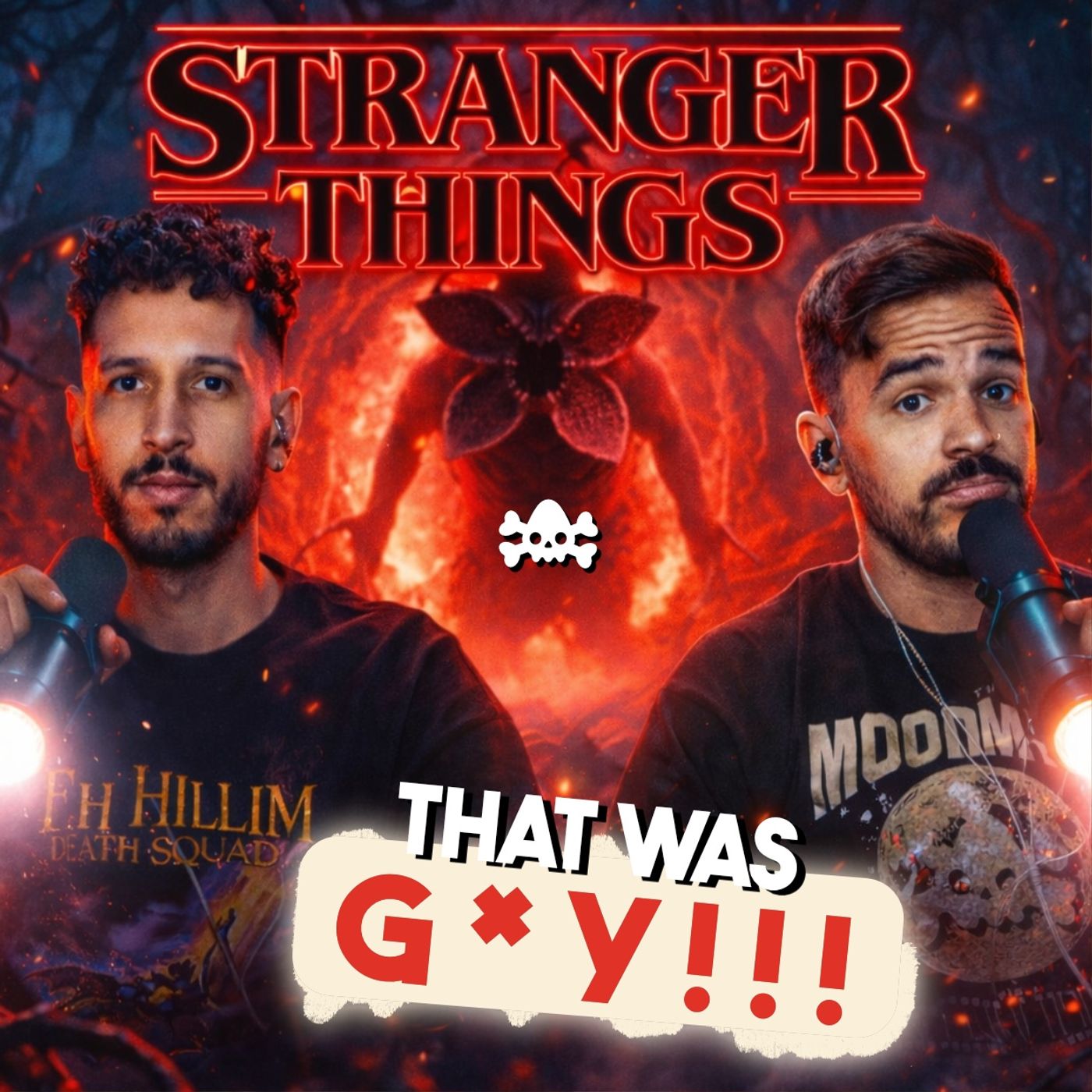
Nephilim Death Squad
Stranger Things w/ Wesley Roth
01:52:03
In this episode of Nephilim Death Squad, we’re joined by Wesley Roth, documentarian and creator of The Meadow Project, to break down the hidden symbolism, occult themes, and ideological messaging embedded in Stranger Things. What began as an ’80s...
Loading summary
Transcript455 lines
- [00:01]
Wes
If you're the purchasing manager at a manufacturing plant, you know having a trusted partner makes all the difference. That's why, hands down, you count on Grainger for auto reordering. With on time restocks, your team will have the cut resistant gloves they need at the start of their shift and you can end your day knowing they've got safety well in hand. Call 1-800-GRAINGER Click grainger.com or just stop by Grainger for the ones who get it done.
- [00:30]
Ad Host 1
Come to DSW for the shoes. Stay for the fun. Because let's be honest, if shoe shopping isn't fun, are you even doing it right? So go ahead, try something new. Try something different, good different. Try something that feels like you, you know, the real you. And then definitely brag about it later. Because at dsw, you've got unlimited freedom to play. Find the shoes that get you at prices that get your budget at DSW stores or@dsw.com let us surprise you. This podcast is supported by the RealReal. Meet Christine. She loves shopping. And this is the sound of fashion overload. Too many fabulous things, not enough space. So Christine started selling with the RealReal.
- [01:13]
Wes
I've always loved collecting designer pieces, Gucci bags, Prada heels. But my style keeps evolving.
- [01:19]
Ad Host 1
Selling with the RealReal.
- [01:20]
Wes
Game changer. I earn more.
- [01:22]
Ad Host 1
And they do everything. Seriously. Just drop off your items or schedule a pickup. We handle the photos, descriptions, pricing, even shipping. You just sit back and watch your items sell fast to our 40 million members.
- [01:34]
Wes
And I get peace of mind knowing I earn more selling with the RealReal than anywhere else.
- [01:38]
Ad Host 1
Exactly this. That's the sound of your closet working for you. The RealReal. Earn more, save time, sell fast and only for the month of January. Earn up to $550 extra when you sell with the RealReal. That's right. Up to $550 extra. Go to therealreal.com to get started. Earn up to $550 extra this month at therealreal.com terms apply.
- [02:00]
David Lee Corbo (The Raven)
Did I?
- [02:00]
Top Lobster (Mr. Nasty)
For Top Lobster Productions. In the shadows of the ancient ones they never went away.
- [02:16]
Wes
They're still here today.
- [02:25]
David Lee Corbo (The Raven)
When the last trumpet sounds and the heavens crack. Welcome back, ladies and gentlemen, to another episode of Nephilim Death Squad. I am David Lee Corbo, aka the Raven. That is Top Lobster, aka Mr. Nasty. We are guaming at you live from the standard coffee shops, slash NDS studios, slash casino slash fabrication shop. That's right.
- [03:10]
Top Lobster (Mr. Nasty)
Very soon.
- [03:11]
David Lee Corbo (The Raven)
Very soon. Coming. Coming soon. We're gonna come. Guys. Before we get into today's guest, you Might want to know where to support us. And that place is. Patreon.com forward/nephilim death Squad.
- [03:23]
Top Lobster (Mr. Nasty)
If you haven't watched this last episode, just skip to the very end there. There's some gold. Yeah, some gold. And some chainsaws for you.
- [03:30]
David Lee Corbo (The Raven)
Yep, yep, yep. Which I'm not gonna return. If you know, you know, if you don't know, you gotta listen to that episode. I'm not returning the chainsaw. It' give back gifts in this. In this household. Patreon.com forward/netflix squad. A little discount code off of merchandise from top. Lobster.com awaits you over there. We have all kinds of designs. Also, first dibs on Bohemian Grove. Tickets are going to be only to the Patreon members, and that's going to be tentatively, you know, subject to change. But March 6th through the 7th, out here in Lady Lake, Florida, we're gonna be doing vip, the VIP day in the standard coffee shop, and then the next day is going to be at a local venue. So look forward to that. Joining us today is Wes. Wes has come back because stranger things has been. I mean, obviously it's. It's the big thing right now. The. The Season 2 or Season 5.5 wrap up just happened. They just ended it and. And Wes immediately hit us up and said, there's a lot of strange crap and stranger things as far as, you know, the meaning of it all. And he wanted to come here and talk about it. But before we get into that, Wes, let's just remind the audience who you are, what you do, and then we'll get into the conversation.
- [04:42]
Wes
I am a documentarian. I recently had a documentary come out with the confessionals called the Metal Project. We've got another one coming out next year that I was there for the shoot. Not sure they've announced what that one is yet, but, uh, it was a fun time. Uh, I will say it was about. This one's about a creature. So not less abstract and strange than the last one. Well, still strange, but less abstract.
- [05:08]
David Lee Corbo (The Raven)
That is interesting. I don't know, Wes. You were watching. I was. I was live earlier doing the Raven and I was. I brought up some footage that I thought was very exciting, was supposed to be Bigfoot footage. And me and the audience were highly disappointed because the sounds that were being played on that video, it was simply a moose in the rut. This was a moose in mating season bellowing in the forest. And we played a sound clip of a moose next to the video, and you could tell it was the exact Same thing. But it is cool. I'm always fascinated with. I mean, you said creature. My mind goes to big Cryptid. I mean, that's, you know, in my mind.
- [05:47]
Top Lobster (Mr. Nasty)
We're talking about Tony here, so probably dog man. But I hope we'll leave it open and be surprised with everybody.
- [05:53]
David Lee Corbo (The Raven)
I'm excited. I'm excited that it's coming down the pipe.
- [05:58]
Wes
It's not Mothman. I will say this one. We. We interviewed a person. We stayed on a person's property for six days, and, like, so we didn't see. I mean, we saw some things that we still haven't been able to explain, but we didn't see what this particular creature. But we did discover some, like, Scooby Doo, kind of.
- [06:22]
David Lee Corbo (The Raven)
Really?
- [06:23]
Wes
Yeah. There's something going on in this town that has.
- [06:26]
David Lee Corbo (The Raven)
Somebody is leveraging maybe the legend of a thing.
- [06:29]
Wes
Yes. And I don't know. I don't know if they're going to go down that road because a particular event happened. I'm sure that. Well, no, I guess I mentioned it in the little season episode that they just did with Ed, but we had a run in with the police while we were there.
- [06:44]
David Lee Corbo (The Raven)
Yeah.
- [06:45]
Wes
And that was hilarious. That was hilarious. That was one of the funniest, most tense moments of my life because Joel called this cop Mighty Mouse to his face. And I was like. He was like, listen.
- [06:59]
Top Lobster (Mr. Nasty)
I was like, dude, energy, right?
- [07:01]
David Lee Corbo (The Raven)
That's not a thing you wanted. You don't want to. I mean, man, talk about treading on thin ice. You start saying crazy. The cops like that.
- [07:09]
Wes
Well, we had already backed them into.
- [07:12]
David Lee Corbo (The Raven)
A corner, see, so he knew comfortably that he had them.
- [07:17]
Wes
Yeah, well, our. Our producer is very intelligent, like a really smart guy. He's very successful. Knows he was prepped when we went in there. I didn't know this. I just was like, we're wandering in there. And I was like, oh, crap, we're busted. And they're like, no, we got this. And I was like, okay. But there were some things said. I'm. I'm. I don't know if they're going to go down that. That narrative path. I brought it up and I was like, dude, there's something illegal happening here that's interesting.
- [07:49]
David Lee Corbo (The Raven)
I. I mean, in the context of Scooby Doo, it sucks when it's not a real person. But in the context of real life, to find out that anybody might be pulling some shenanigans and using maybe some local lore. A Cryptid, perhaps.
- [08:02]
Top Lobster (Mr. Nasty)
I like the idea.
- [08:03]
David Lee Corbo (The Raven)
I like that.
- [08:03]
Top Lobster (Mr. Nasty)
Joel. Joel, Tony and Wes like standing behind this guy and they pull his mask off.
- [08:09]
David Lee Corbo (The Raven)
Yeah, actually it was. It was the farmer. He's protecting his object.
- [08:15]
Wes
Like, it's always real estate. Right. And this was a real estate thing where that. I'm.
- [08:20]
Top Lobster (Mr. Nasty)
Okay, listen, we're gonna get. You're gonna give.
- [08:21]
David Lee Corbo (The Raven)
Yeah, no, no, he's giving away too much. Don't talk about it anymore. So. So. All right. We're here to talk about Stranger Things. And. And I. I gotta get a couple of things out of the way first. I have not finished the last episode and a half, which apparently is pretty substantial because the last episode is like two hours long. So I've not seen an entire feature film, basically worth of. Worth of Stranger Things. Nice. The. The film, I mean, the entire series is one that is parallel. It's. It's conspiracy realism adjacent. Right. It's always right alongside actual intelligence agency operations and supposed real events. I mean, I remember the first season talking about MK Ultra. My wife showed me a TikTok the other day. I don't think this is true, but apparently in the background of the first season, he. They. They show an image of a woman that they think is Ghislaine Maxwell. And I looked at it, I said, I don't think that's actually her, but it does look pretty close. But that's. That's the lore of Stranger Things is that it's. It's reality adjacent. It's right alongside the true things that have happened that have been obfuscated from the public. And I gotta be honest, first season was fantastic. Second season was still really good. It's been a steady decline ever since. And I've gotten to this last season, dude. And these kids, they're now teenagers, adults. I don't know how old they are. They suck at acting.
- [09:43]
Top Lobster (Mr. Nasty)
They. They've done a thing masterfully. Netflix does this thing with, like, Cobra Kai where they. They create this nostalgic program that you want to watch, and it's fun and it's quirky and it has a. This, like, tinge of something underneath it that you want to keep on digging for. After about season two, they completely give up on trying. And. But I'm still in because I'm like, all right, just finish the story. That's. That's the kind of guy.
- [10:05]
David Lee Corbo (The Raven)
Yeah, finish the story. I was there. I was going to finish the story, but we watched, you know how gay.
- [10:12]
Top Lobster (Mr. Nasty)
Something has to be for you to go, I'm not going to finish this story.
- [10:15]
David Lee Corbo (The Raven)
I mean, it's, it's, it's. It's not crossed that line yet. But another thing that I did notice is something about these starry eyed little children and this fascinating story. Because it is a fascinating story. We're talking like the Montauk project. It, it parallels a lot of our work. You're inducing states of disassociation through trauma. And that trauma, that disassociation is the key to unlocking a litany of like psychic abilities, portal openings, things of that nature, communication with the spiritual realm or the Upside down, which I know I've seen what the upside down becomes. But these kids that had so much promise, they all grew up to be hideous. I mean every single one of these kids. Well that's not fair. Is the most awful looking kid I've ever seen in my life. The most attractive person in the film series or in the show is Winona Ryder. And then outside of that, these are all living walking goblins. Horrifying.
- [11:16]
Top Lobster (Mr. Nasty)
As I live and breathe.
- [11:17]
David Lee Corbo (The Raven)
As I live and breathe, these are some of the ugliest individuals and I just wanted to get that because I knew that that going to be something we tapped on. I want to get that out of the way early.
- [11:24]
Top Lobster (Mr. Nasty)
Is that something that we were going to talk?
- [11:26]
David Lee Corbo (The Raven)
I anticipated it because I felt in my heart of hearts that I was going to bring it up.
- [11:31]
Wes
Very ugly kids like prophecy.
- [11:35]
David Lee Corbo (The Raven)
This little girl, eleven has pumped her face full of so much filler that her face doesn't move anymore. It doesn't, it doesn't emote.
- [11:46]
Top Lobster (Mr. Nasty)
Is that the problem?
- [11:47]
David Lee Corbo (The Raven)
That's what's happening. Did you not notice that she bears striking resemblance to like Joan Rivers or a multitude of other cat faced celebrity women, Hollywood elite, all of these kids. I can't even look at Dustin. He is so ugly. He fills my heart with hatred.
- [12:03]
Top Lobster (Mr. Nasty)
Okay, so he has a problem. He's got like a legitimate issue, right?
- [12:06]
Wes
Yeah.
- [12:06]
David Lee Corbo (The Raven)
He's got a price giving me a problem. I got a problem looking at him. He is crazy.
- [12:11]
Top Lobster (Mr. Nasty)
He's got something about like the struck. I don't know what it is but like the structural mouth retardation. Yeah. Something about his jaw is not developed. Right. That's like his thing.
- [12:21]
Wes
Yeah. He's got, he has some sort of like congenital disorder.
- [12:26]
Top Lobster (Mr. Nasty)
Yes. He's like actually well don't put him.
- [12:29]
David Lee Corbo (The Raven)
On screen because I can't look at him.
- [12:32]
Wes
I will say out of all of them, Gaten Matarazzo, Dustin is the best actor of the kids.
- [12:43]
David Lee Corbo (The Raven)
Yeah, I'll give you that. He's the best actor. And this isn't a racial thing but the black Kid is the worst actor. He is.
- [12:52]
Wes
Will Byers is the worst actor by far.
- [12:54]
David Lee Corbo (The Raven)
Will is the.
- [12:55]
Top Lobster (Mr. Nasty)
Oh, I disagree. I'd say the main character, the kid with the really long nose.
- [13:00]
David Lee Corbo (The Raven)
Mike.
- [13:01]
Top Lobster (Mr. Nasty)
Mike, yeah, Mike. This guy in the middle. But I think that.
- [13:04]
David Lee Corbo (The Raven)
So again, off to the side. Off to the side is.
- [13:06]
Top Lobster (Mr. Nasty)
Is. No, this. This one right in the middle. Right there.
- [13:09]
David Lee Corbo (The Raven)
I forget which one's Will and which one's Mike.
- [13:10]
Wes
You know what it is about Will? It's. It's actually not that he's a bad actor. It's that I think he has the least charisma of all the actors.
- [13:17]
David Lee Corbo (The Raven)
Yes.
- [13:18]
Wes
Like, you know, Keanu is not a great actor, but he's brimming with charisma. That's the same for Mike. I don't think he's a great actor, but he had like. He has an energy. And Will's energy is like, this is my first time in a school play type energy.
- [13:32]
David Lee Corbo (The Raven)
Yes.
- [13:32]
Top Lobster (Mr. Nasty)
Well, so here's the thing.
- [13:34]
Wes
Because he's so soft spoken and he's. He's like got a. His voice is tenor, but it's like very low frequency.
- [13:41]
David Lee Corbo (The Raven)
So I can't listen to him when he talks. It ups. Everything about it upsets me.
- [13:44]
Top Lobster (Mr. Nasty)
He's got a gay Dracula.
- [13:47]
Wes
They're all very likable, but he's just not like, you know, like an eye magnet. You know, he's not.
- [13:55]
David Lee Corbo (The Raven)
Well, I would say I deviate from you tremendously on that point. None of these kids are likable.
- [13:59]
Top Lobster (Mr. Nasty)
Well, no. Here's the thing, though. I think this adds to the conspiracy of whatever Stranger Things is. This show is developed on purpose, I think, for these guys to act poorly. Oh, a lot of these kids, they've had years now. It's been probably like a decade that they've been doing this show or something.
- [14:15]
David Lee Corbo (The Raven)
Yeah. Mike was in Ghostbusters.
- [14:17]
Top Lobster (Mr. Nasty)
You had time to develop and take classes. But they. And I think they did. I think they developed, I think they took classes and I think they got better. But the point of this show is not to be better. It's not. It's not to have, like, good acting.
- [14:30]
David Lee Corbo (The Raven)
Okay.
- [14:31]
Top Lobster (Mr. Nasty)
And I think that that contributes to, like, the message of the show overall.
- [14:35]
David Lee Corbo (The Raven)
Which is.
- [14:37]
Top Lobster (Mr. Nasty)
Yeah. Which is like this very intense message about MK Ultra.
- [14:42]
David Lee Corbo (The Raven)
I mean, there's BF and kids.
- [14:45]
Wes
I don't think that's the message, personally. I think that's the dressing to give you a worse message.
- [14:51]
David Lee Corbo (The Raven)
That's interesting.
- [14:53]
Wes
I think it's. It is a gateway drug for lost truthers. So I think this show, this show is speaking directly to the people that, like, Donnie Darkened is reaching out to the people that he's trying to, like, pull back. I didn't notice it at first, and then as I was watching this final season, something like a switch flipped in my head and I was like, okay, I'm picking up on something and I may be tripping, but I'm going to continue to watch because I am a completionist and want to see where this ends. And it just started, like, you know what it was like? It was like in Family Guy when it's like, am I being advertised to. And the guy's like, smoke nose. I was like, oh, yeah, I'm being advertised something here. And I don't think it's that far under the surface. Like, I think it's. I think it's. If you notice the first thing. If you notice the first thing, then it's impossible to unsee. And it took my enjoyment, like, of the rest of the series. Like, it just tanked it because I kind of like the hokiness of this show. I kind of like how it's. It's kind of. It's like mixing, like, that age folksy and charm with the, like, modern cynicism. Right. And I was like, oh, this is interesting. I thought it was well paced. I thought in this final season, the writing was extremely subject as far as just what they had the characters say, because it was like, let me. Let me catch you up. Audience constantly. It was like, yeah, you know, like, oh, like lots of plans, lots of explaining what just happened. And I was like, okay, this is getting hard to watch. And then you get a moment of like, you know, like the. The. The moments of just like, the emotional relationships, all that stuff. Take out all of the. What I'm about to present. If you strip that all out and pretend it's not there. I like the bones of what this show is. I enjoy it. Just like you said with the first.
- [16:58]
David Lee Corbo (The Raven)
Season, it's a cool concept.
- [17:00]
Wes
Well, it's cool. We'll strip the concept out. Just that, like the kids, the. The. The nerds versus the, you know, all of that, like that 80s Stephen King kind of. Yes, I like all that. And like their friend. Yeah.
- [17:14]
David Lee Corbo (The Raven)
All of these elements. Well, hold on, Wes, before we go to whatever you're saying, let's. Let's maybe like, a little bit unpack. For the audience who may not even be familiar with Stranger Things, or if they are, they don't see the. What you're calling a surface layer sort of conspiracy. What does that look like to you? Because we've talked a little bit about it. Like these, these programs, right? MK Ultra, mind control, et cetera, et cetera.
- [17:39]
Wes
Right, Right. So, yeah, the. The series was originally pitched as. Under the title Montauk. So it was going to be the Montauk Project. And it is. And it's updated to the 80s rather than, what was it, the 60s when the Montauk Project happened. And like, I know you've.
- [17:59]
David Lee Corbo (The Raven)
Well, I want to ask you something real quick before we go any further. We're having a little bit of a disturbance here. We're having a battle with the old people that are on the other side of this wall. Can anybody hear Frank Sinatra playing?
- [18:11]
Wes
No.
- [18:12]
David Lee Corbo (The Raven)
Okay.
- [18:12]
Top Lobster (Mr. Nasty)
Actually, really funny. The guy. I just helped them do this and then they. In my mouth. The guy that, that I was helping out has a tattoo I notice on his arm. As he's like, type on his laptop, he says, six million. Never again. I'm just like, I got. Are you out of here? I swear to God. Go out there.
- [18:26]
David Lee Corbo (The Raven)
That's the funniest thing. Okay. This is not a lie. All right? So I just wanted to make sure, because we can hear it, but I didn't think you guys can hear it, but they've turned their volume up as loud as they possibly can to combat us, so I think we just got to get louder. All right, so please continue.
- [18:41]
Wes
I. I forget where I was. Now.
- [18:43]
David Lee Corbo (The Raven)
You were saying that this was originally going to be called Montauk, and Montauk takes place in the 60s, but this, you know, obviously takes place in the 80s.
- [18:51]
Top Lobster (Mr. Nasty)
Right?
- [18:51]
Wes
Yeah, so. And it's. It is very much a throwback or a, you know, a nostalgia centric TV show. There's a lot of these, you know, and there always has been. There's always been, you know, happy days and that kind of, oh, simpler times, the good old days type of thing. And to its credit, it's very successful at that.
- [19:14]
David Lee Corbo (The Raven)
But it.
- [19:15]
Wes
It isn't just that, right? Like, this isn't just a conspiracy show. It's a show about friendship. It's show about family. It's a show about togetherness. It's a show about overcoming adversity and odds, good versus evil. We'll see how we feel about that in a minute. But there. And like, it does also thread in a lot of Easter eggs for pop culture things, but it also threads in a lot of Easter eggs for other stuff that we're gonna get into. But the essence of the show, yes, is about friendship and knowledge. Knowledge.
- [20:00]
David Lee Corbo (The Raven)
That first season by the way, it. It really, like, they did it so well. They captured all those elements you just talked about where it's like, there's a conspiratorial element, knowledge, right? They're talking about MK Ultra and this and that. All these little Easter eggs for you, the aesthetic, the entire feeling, it really did immerse you in like this 80s nostalgia kind of a thing. And the storytelling was fantastic. That episode in particular, where they find Will's body, but it's not really his body. Do you remember? This is like Will goes. And the music that they played, which, by the way, nailed the music. Through the vast majority of the series, much of the music becomes iconic. In the same way that, like, the soundtrack for, like, Guardians of the Galaxy really nailed it. And it was able to be its own, like, kind of standalone soundtrack thing. They. They really did a great job. It was emotional. I. I found myself. Even though. Even when I rewatched it, and it was like, you know, that Will is not that body. It was like they. I mean, to. They did a great job of putting you in the mindset of a bunch of kids. One of your friend group goes missing. All of the emotion and the destabilization and the chaos of it, and then this. This closure of finding the body, it was like. It was heavy, man. They did an excellent job, I don't think. I just. I wish it could be remembered that way instead of the gay mess that it took, turned into.
- [21:27]
Wes
Yeah, I. I agree. I. And like. Yeah, I don't know what to say. It's the. It sort of. I lost a guess. I don't see you guys anymore.
- [21:49]
Top Lobster (Mr. Nasty)
Sorry, we got K Studio.
- [21:52]
David Lee Corbo (The Raven)
Sorry about that.
- [21:52]
Wes
I don't know what the hell happened.
- [21:54]
David Lee Corbo (The Raven)
What's this minute, Mark?
- [21:56]
Wes
I thought you guys went to the Upside Down.
- [21:58]
David Lee Corbo (The Raven)
No, no. I don't know what the hell happened.
- [22:00]
Top Lobster (Mr. Nasty)
We disagree.
- [22:04]
David Lee Corbo (The Raven)
Okay. All right. Sorry about that, guys. So. So, yeah, I mean, the show did a great job in its early seasons, but you're talking about this. This element now of. How did you put it? Like truth or. Or information.
- [22:19]
Wes
Truth ism and knowledge.
- [22:22]
David Lee Corbo (The Raven)
The.
- [22:23]
Wes
So my. My thesis here is that the entire show is a repackaging of the Gnostic gospel.
- [22:30]
David Lee Corbo (The Raven)
Oh, that's interesting.
- [22:33]
Wes
And there are big pieces, right? There are big pieces where I go, oh, that's. Yes. And. But you could look at those and go, maybe not. And then there's the small pieces that some people would say are reaching, but those only work to, like, buttress the argument, right? So there's like little Easter eggs That if it was just that, I would say, even me, I would say I'm probably reaching there. But because those big fulcrum foundational stones are there, I am pretty convinced. And I've tried, you know, because I'm definitely one of those people where even if I know something disagrees with me about very important things, I want to give it the benefit that is out. I wanted to give the show the benefit of the doubt. And that was through Christmas. Right then when the final one came out, the final episode, I was like, yep. My suspicions were not only founded, they were confirmed. I think the finale confirmed everything that I'm thinking. And there's things in there that are so easy to miss and that can also like, just like the rest of the show, there's the Easter eggs could have two meanings, but the one that I'm leaning towards or the one that I'm picking up on I think is the intended one. And that the other possibility is the distraction or the, the. The surface level. The surface level reference. And that's part and parcel how things like freemasonry and other sex work is. They say like, oh, this means this for you guys, but for us it means this.
- [24:18]
David Lee Corbo (The Raven)
You know, can we start like let's lay it out so that we have what the one that's given to you is and what the one that's the underlying. Let's. Can we try to identify those two?
- [24:32]
Top Lobster (Mr. Nasty)
Can I. I'm. Can I just start with the most obvious. The thing that's given to you? I think we've already covered it here. We have this 80s nostalgia, you know, music playlist sort of idea. Riding your bicycle through town and your friends. That's. That's like the base level. That's what kind of pulls this, this large net of people in.
- [24:52]
Wes
It's the trapping.
- [24:54]
David Lee Corbo (The Raven)
So there's technically three then, right? That's.
- [24:55]
Top Lobster (Mr. Nasty)
There might be more. The second one is for people like me and you, right where they're. They're pulling in these MK Ultra themes. This idea of the. The chrome that comes in more recently, experimental testing on children. This all, all this stuff gets trauma. Then they grab like the Tony Merkel's with the portals and the upside down world and these Cryptids. So like there's this, that secondary layer which is obviously it's very obvious that's presented to you from season one after.
- [25:26]
David Lee Corbo (The Raven)
What's not so obvious though is like, oh, that this is based in some form of reality. So there's the entertainment aspect, but the average viewer might not realize that there Was ever government programs that explored any of these elements of what you're watching?
- [25:39]
Top Lobster (Mr. Nasty)
Yeah, I think they hint. The way that they do hint at it though, is that when they tell you this story, there's something that does resonate with you. I think people do understand that, like, oh, this has happened or may have. May have happened or may happen again.
- [25:50]
David Lee Corbo (The Raven)
Yeah.
- [25:50]
Top Lobster (Mr. Nasty)
So that's all like surface level stuff.
- [25:54]
David Lee Corbo (The Raven)
Is that one of the camps west, that this, that the major chunk of this is going to fall into as far as like, what you're served up.
- [26:02]
Wes
You touched on one of them. So when I'm. I'm talking less like baseline narrative having. Well, it does have two sides, but even the individual references or the individual plot lines, like you just talked about the, the blood. I think that is a. An inversion of the blood of Christ.
- [26:25]
David Lee Corbo (The Raven)
That's interesting because I've. I've been thinking, I haven't finished it, but I'm like, there's a thing happening here throughout the film series and that is that you're engaging with the demonic realm and that's pretty well accepted.
- [26:38]
Wes
But then I disagree.
- [26:41]
David Lee Corbo (The Raven)
Interesting. Wait, that. That's what you're being served up or that's what is accepted?
- [26:46]
Wes
You. You are being. This is being presented as if it's like detached from like real world theology, but it's not. It is.
- [26:56]
David Lee Corbo (The Raven)
Right. And so what I'm getting at is that it is detached in that way because there's an absence of Christ which I do imagine emerges.
- [27:05]
Wes
Their Christ is there.
- [27:07]
David Lee Corbo (The Raven)
Yes. Yes. Okay. That's what I was gonna say. There's an absence of Jesus Christ, but there is a Christ figure.
- [27:13]
Wes
I think he is like. The idea is he is Jesus Christ. In fact, there's a scene episode where they walk in and look at him and say, Jesus Christ.
- [27:22]
David Lee Corbo (The Raven)
Really?
- [27:24]
Top Lobster (Mr. Nasty)
And like, I think we have to get into that because there's still. There's still more sprinkled on top. The latest thing Before Christmas was the gay stuff.
- [27:33]
David Lee Corbo (The Raven)
Yeah, yeah.
- [27:33]
Wes
That's all. That's all. We'll get there. That's all.
- [27:39]
Top Lobster (Mr. Nasty)
I got some stuff to say about it and it's. I probably.
- [27:42]
David Lee Corbo (The Raven)
Do you think it's like divine feminine?
- [27:44]
Top Lobster (Mr. Nasty)
Well, let's, let's, let's.
- [27:46]
Wes
Yes, it is.
- [27:47]
Top Lobster (Mr. Nasty)
Go ahead, Wes.
- [27:48]
Wes
So, okay, well, then I'll just kind of get into the, like, nuts and bolts so that you. This starts to make sense as we come together. So you've made the comment before that it's interesting that eleven's name is L in the short. Right. El Elyon. The more as we got deeper into this show now we know that Elle was created from Henry's blood. Henry being Vecna. Right. So her, his blood was given to her mom rather and she was born from that. That is sort of the idea of Sophia. Right. Like Sophia, the divine feminine, she is wisdom, but Christ is wisdom. And they're supposed, in Gnosticism they're sort of like twins, sort of polar opposites.
- [28:36]
David Lee Corbo (The Raven)
I don't know if you saw this, but I actually kind of made fun of this a little bit. I just called it Gnosticism brain because there was a big viral tweet recently where somebody was, you know, basically laying all that out. Oh, Sophia is the counterpe counterpart to Christ and this is the, the spirit that's going to come in and, and basically save us, which is this. You know, the audience knows. We talk about it all the time. We're in this era of the divine feminine. That is like the thing that's behind the veil of the big psyop that's happening. It's rolled into the, you know, the non human intelligence that's happening. The, the alien disclosure, the Galactic Federation of Light. All of this crap is centered around a Sophia Ishtar worship, the divine feminine, the goddess that is more or less kind of summoned into being. Jack Parsons Babylon, the spirit Babylon. I think we laid that out with Stephen of Biblical Hitmen on this show. And so this is, this plugs into that then.
- [29:37]
Wes
Yes. And so I'll also say that this isn't. This show is well told for its plot and it is not just a parable of this story. It's using different imagery and different ideas to convey an idea. Right. So it's, it's an original plot using, you know, just like how Harry Potter or Star wars use, like, like Star wars uses the original Star wars uses King David. Like Luke Skywalker is King David. Samuel is Obi Wan. Right. Like there's Saul is, is Darth Vader. It's adapted and twisted and, and, and fit. Which is fine. You know, like that's fine. We retell the same stories over and over. This isn't going to be like, hey, if you follow the plot of whatever Gnostic group you're going to find the plot to Stranger Things, it's not a 1 to 1, it's maybe a 1 to 1.5, but it's.
- [30:33]
David Lee Corbo (The Raven)
They're just pulling these elements that are integral parts of this Gnostic leaf.
- [30:39]
Wes
Yes. And there's a lot, there's a lot of just signaling. Right. So one of the things that I saw a lot of people theorizing about early in it was Jonathan is wearing a shirt that says the Fall.
- [30:55]
David Lee Corbo (The Raven)
Oh, that's interesting. In this season?
- [30:57]
Wes
In this season, yeah. And they took it to mean like, oh, they're hinting that at some point he's gonna fall to his death from somewhere. And they're. And that didn't happen. And I think that may have been the misdirect. Like they were putting those things in there to like signal what's happening. They're foreshadowing. Right. But.
- [31:16]
David Lee Corbo (The Raven)
Right.
- [31:17]
Wes
What I did take away from it at the end is he is, you know, it says the Fall. Who do you think of with the Fall? What do you think? If you think of Adam and Eve and his whole plot line is will he? Won't he With Nancy?
- [31:32]
David Lee Corbo (The Raven)
Oh, yeah.
- [31:33]
Wes
He's like the love triangle with Steve, which ends up not being a thing.
- [31:38]
David Lee Corbo (The Raven)
But by the way, hideous. Jonathan is just, I mean, really a prime example of how ugly these. He's been.
- [31:48]
Wes
A haggard by drugs.
- [31:49]
David Lee Corbo (The Raven)
I'll say that he is just a crazy looking. He looks like a. Almost like a Steve Buscemi or.
- [31:54]
Top Lobster (Mr. Nasty)
I like the way he looks.
- [31:55]
David Lee Corbo (The Raven)
Do you really? I can't stand him.
- [31:58]
Wes
I. I'm in that club too, the Steve Buscemi club. So trust me, I'm constantly told on Twitter replies to anything I tweet with a picture of Steve Buscemi and like, thanks. But they're. They have a. They have a scene later where he, you know, he wants to marry her and he thinks it's going to solve all their problems and they end up. He unproposes. Right. While they're. While they're in the in between. Right. Like they're in the in between. They're in.
- [32:31]
David Lee Corbo (The Raven)
Yeah. I thought that was a weird scene.
- [32:34]
Wes
It was really cool. I thought it was one of the coolest looking scenes with the goop and stuff. Very cool. But. And then how it just solidifies. I was like, it was a cool scene. There's a lot of cool ideas in the show. I'm not going to say there's not. Like, I like the show now. And like, this again, could be a stretch, but to me it's not because then there's things that are very obvious. Like, okay, there's a character in the show who is there to. I mean, I guess her power is that she creates illusions, right?
- [33:08]
David Lee Corbo (The Raven)
Oh, yeah.
- [33:09]
Wes
Well, she. She shares the name of the goddess of illusions, Kali.
- [33:14]
David Lee Corbo (The Raven)
Yeah. Also of. Of death and destruction, Right?
- [33:17]
Wes
Yes. Well, Shiva is death and destruction. Kali is, like, the destroyer of the lie. Like, okay. And, like, reveals, liberates you from basically, the prison that the world is. Right.
- [33:35]
David Lee Corbo (The Raven)
So that's another divine feminine. Because it's. We find that this, like, goddess entity, I think it's all shares the same spirit, but it's. It goes by so many different names throughout antiquity. And. And even into modern day, you're still getting all these different names. I'm sure there's a Pleiadian counterpart to it that you could find if you were studying the Galactic Federation, you would find that there's some divine feminine, goddess, protector, creator, creature, or entity named, some dumb. But it's the same. It's the same spirit.
- [34:05]
Wes
Yeah. And. And the names do. Am I gonna say here the names are relevant? The big one for me. And I'll get right into this one, because this was when I was like, oh, no. Like, this one was hard for me to find. And this could be a stretch, but I don't think it is. Is. Do you know Vecna's name? Henry.
- [34:25]
David Lee Corbo (The Raven)
Henry.
- [34:27]
Wes
Henry. Last name Creel.
- [34:34]
Top Lobster (Mr. Nasty)
Okay.
- [34:35]
David Lee Corbo (The Raven)
Like Krill.
- [34:36]
Wes
Like Creole. Like Creole, which is Christ in Greek.
- [34:41]
David Lee Corbo (The Raven)
Is it really?
- [34:42]
Wes
Yeah, really interesting.
- [34:46]
David Lee Corbo (The Raven)
So.
- [34:46]
Wes
So Creole. But it's with. With the. With the inflection. It's Creole, So you don't Creole, You Creole. So Henry Creel. Henry. Also the middle name of Jesus. Not really, but when people say Jesus H. Christ, it's Henry.
- [35:01]
David Lee Corbo (The Raven)
Yes. Yeah. And that's the. That would be the. The demiurge character. Right? The one who creates a false reality that imprisons.
- [35:11]
Wes
He's the vessel for the mind flayer, which would be the demiurge.
- [35:16]
David Lee Corbo (The Raven)
Okay, right, right, right, right, right. So all. I mean, it's a. It's, you know, part of.
- [35:20]
Wes
And he imbues the characters with his spirit. Right.
- [35:27]
Top Lobster (Mr. Nasty)
He's got this Christ, like, appearance to him as well. Like, not. Not Christ, like, but the way that we would portray him.
- [35:33]
Wes
Oh, yeah. Like, even. Even in. In his little, like, lair. He's hanging. Yeah.
- [35:39]
David Lee Corbo (The Raven)
Yeah.
- [35:40]
Wes
And that's when they say Jesus Christ, he's hanging up like this. And it's, you know, scarier. You know, he's like. His arms are lifted up by the, like, tendrils and stuff. But I was like, come on, guys. I was like, you're barely even trying to hide.
- [35:55]
David Lee Corbo (The Raven)
We're. We're painting a picture of this idea that you should fight the return of Christ.
- [36:02]
Wes
Yes, yes. That you're in the planet. And it's not just that. Well, I also say one Other thing where I was like, okay, now you're not even trying. Is when that little kid Henry, he approaches a guy in a bunker underground, like a tomb, through the thing, through the hand, like this.
- [36:23]
David Lee Corbo (The Raven)
I remember that.
- [36:25]
Wes
And I was like, come on. Because I was literally thinking in that moment, maybe I am misreading this. And then he gets shot through the hand. I was like, nope. I was right.
- [36:33]
David Lee Corbo (The Raven)
Here in the chat that it's obvious he needed 12 children, 12 disciples to impart his spirit into.
- [36:40]
Wes
Yes. Yep. And they have a last supper together, like, at the table, like a last supper scene. And what they're warning about. What they're warning about is the merging of the worlds, the merging of heaven and Earth. And. And this is one I know David's gonna love. This is when I was like, nope, I was dead on. I will never doubt myself again. Is that the way that they want to go kill him is by climbing to the top of the tower and using it to get into the spiritual realm? What?
- [37:08]
Top Lobster (Mr. Nasty)
It's so crazy that.
- [37:09]
David Lee Corbo (The Raven)
Oh, my God. It's right.
- [37:10]
Top Lobster (Mr. Nasty)
You know what I want, Because I watched it, and I'm just like. Just like. I watched it in a way. Like, just end it.
- [37:16]
David Lee Corbo (The Raven)
I was just so, you know, caught up in the slop of it all.
- [37:18]
Top Lobster (Mr. Nasty)
Yeah, I was caught up in the slop of it all.
- [37:21]
David Lee Corbo (The Raven)
Damn.
- [37:22]
Top Lobster (Mr. Nasty)
We. We lost in the slop.
- [37:23]
David Lee Corbo (The Raven)
We are lost.
- [37:24]
Top Lobster (Mr. Nasty)
We're lost in the gay slop.
- [37:26]
Wes
Yeah.
- [37:27]
David Lee Corbo (The Raven)
Oh, my God.
- [37:28]
Top Lobster (Mr. Nasty)
Yeah. Built a tower of Babel.
- [37:30]
David Lee Corbo (The Raven)
And. Okay, so. So there's. There's a lot of things here. It's like, whoa. Obviously, 11, right? L. There's a divine feminine aspect to that. And then obviously, Kali number eight, Divine feminine aspect to that. Nancy, who I see becomes Rambo, you know, who. Who somehow chambers around by grabbing the top of her M16, doing absolutely nothing. She takes this. This aggressor sort of hero, you know, which is, once again, divine feminine energy. But then the. The male character who is allowed to, you know, be a hero to any extent is gay, right. So he's got this divine feminine energy as well. So the whole thing is just. It's like girl slop everywhere.
- [38:16]
Top Lobster (Mr. Nasty)
Well, I will say. And I'll. I'll create a defense for the duffer brothers for Will's coming out and gay. Although he was pretty gay.
- [38:24]
David Lee Corbo (The Raven)
He was. Honestly, I don't think, like, kids are gay, but I looked at that one, and I was like, that's a gay kid.
- [38:29]
Top Lobster (Mr. Nasty)
Yeah. But it does track. I mean, he was, like, abducted, kind of molested.
- [38:35]
David Lee Corbo (The Raven)
Yeah.
- [38:36]
Top Lobster (Mr. Nasty)
By Vecna. He went through extreme trauma.
- [38:39]
David Lee Corbo (The Raven)
Yeah.
- [38:39]
Top Lobster (Mr. Nasty)
And then comes out of that gay. I will also say that it's a strange admission, brothers. Yeah, no, it's a very strange admission. It's like they should not have admitted. It's almost like admitting, you know, like more common, like a transgender or Ed.
- [38:53]
David Lee Corbo (The Raven)
Gaines and all the serial killers love to be cross dressers. You're like, wait a second, what are you saying here? Netflix, what's going on? Yeah.
- [39:00]
Top Lobster (Mr. Nasty)
So some people watch it and they. They see a coming out story. Some people watch it and go, oh, they're. They're just putting gay everywhere. I was kind of watching and going like, this sort of tracks.
- [39:08]
David Lee Corbo (The Raven)
Yeah.
- [39:09]
Top Lobster (Mr. Nasty)
Like the people understood the psychology of the trauma behind making a child gay, and they just played it out to its logical conclusion where, like, you've broken this child psychologically. Now, maybe you did thin the veil a little bit. Maybe they do share in your gift, whatever you imparted on them. Yeah, it's. So that's what I'm reading into. And I was like, man, that was. That was sort of well played. But I'm looking at Jack Besobic say, like, oh, the gay agenda. And I'm like, yeah, there is a gay agenda, but there's a little bit more to it.
- [39:37]
David Lee Corbo (The Raven)
So this is more like the gay explanation.
- [39:41]
Wes
It just says that they understand. They just have a different appraisal of it. Right. Like, they get why they have it. They're like, oh, but this isn't bad. And you're like, but it's good. I mean, clearly it is. You know, like, clearly this is bad, what is happening.
- [39:56]
David Lee Corbo (The Raven)
It's funny too, because it's. It's not just that he gets powers, it's specifically that he shares in demonic powers. Right. He shares in the hive mind, I.
- [40:05]
Wes
Would say that's what we would call. Or what. What they would call Christ consciousness is that he is now ascended to that level. He has a Christ consciousness. And this is all like, even your, like, regular cast of kids. They're the. They're the Gnostics. They're the ones who have the secret knowledge.
- [40:23]
David Lee Corbo (The Raven)
Yeah.
- [40:23]
Wes
Because they play D. They. They're like, oh, we know. And like, they do that with the teacher. Right? They're like, what's it like now you're one of. Now you're initiate. Now you know the truth. You know the secret. You know the. The.
- [40:35]
David Lee Corbo (The Raven)
The.
- [40:37]
Wes
Nature of the fabric of reality. And he's like, oh, it's awesome. Like, oh, it's. It's awesome. I know.
- [40:43]
David Lee Corbo (The Raven)
This, now, that episode, they laid him in the coffin. They all gathered around the coffin and.
- [40:48]
Top Lobster (Mr. Nasty)
No, that was. That was George W. Bush.
- [40:50]
David Lee Corbo (The Raven)
My bad. That's right. Wrong guy.
- [40:53]
Wes
And then, like, it all sort of got perfectly punctuated with me for when Dustin gave his speech when he graduated where it was just basically the fall, it was saying, no, I reject order, I reject authority, I rebel. You know, he's. He is like, Dustin is the, like, the nimrod of this story. He's the. The real power club. Yeah, exactly. And, and, and to them, that's like, ironic, right? Like, it's. They're the good guys, right? They're the ones fighting the great power. Who's trying to. And there's a line where, man, this, this. There's a whole bunch of, like, nails in the coffin. And one of them was when Will is connected with Henry and he says, you're just like me. You're just a man. And he's like, he's making you do this. And he says, no, I chose it because man is broken. I was like, that is like, they are saying, like, yes, Jesus. What? Like, because there's some Gnostics that are like, hey, Jesus came to fight the demiurge, but there are other ones who are like, no, Jesus is the vessel of the demiurge trying to, like, he thinks we're broken. He thinks we can't do this on our own. He's right. So. But they're turning that, they're turning that into the villain and like that on it. That disgusts me personally. And, but at the same time, here's why. And here's why I said this is like a gateway drug or like puppy child of truther is Truthers is because like us, all three of us, I would say, or I can confidently say are Christians who believe that Jesus Christ died for our sins, rose for a rose from the dead so that we may live in eternity with him, and that he is like truth and love and good embodied. That's true. There's a lot of people in our space who are still agnostic on this. And, and what we share with them is not that ultimate. You know, we don't share that ultimate truth. They aren't there yet. They're looking for truth. But what we do share with them is just an inherent. An inherent lack of trust for authority, except for the divine authority. But if you don't trust the divine authority and know that the. The authority here is not a rep. It's a representation of the principalities, powers of the air and the and the world being separate from like true nature. I can understand, like, if I was not as rooted in my faith, you could convince me that Yahweh was the demiurge.
- [43:29]
David Lee Corbo (The Raven)
You can keep going with that, with that thing that got you to the show in the first place, which is a, a healthy distrust for authority. And I think it's kind of a clever thing that the devil has pulled where it's like the authority is obviously flawed. So like, if you're anybody who is paying any attention whatsoever, you know, you're within your own good senses to rebel against that. But that becomes this gift that keeps giving. And vindication is a slippery slope. If you continue on that road, then you will follow it to its logical conclusion. Instead of hitting the brakes at the divine, at the Creator of the universe, at the God who made you and loved you or loves you, you could blow right past that. Especially when that you're, you know, that this is probably the huge warning that we get to lean not on our own understanding. Because what eventually happens is when that healthy distrust for this obviously flawed leadership and narratives in the physical realm serves you well, not only does it vindicate you, eventually it starts bearing good fruit. Not in the sense of just like knowing what's going on, but also like, let's say you're somebody like us who's sitting here and you know, I'm blessed enough to do this as my full time job. I could find an audience elsewhere. I could find like a more conspiratorial audience who is not so concerned with God and just keep going down this path. And you know, maybe I do get to do this as a full time job and, and it pays me and all this other crap. And now it's like your own wisdom and your own understanding is the thing that you're leaning on that's carving your way for you. It's getting you accolades. Good luck hitting the brakes on that. I've watched so many homies, people who I enjoy and I love them, you know, they're just in the conspiracy soup. And a lot of the audience knows, you know, lately we've been kind of coming to this place where it's like, you're not going to understand everything. And a lot of stuff in the conspiracy community is there for you to trip over. It's a golden apple for you to bonk endlessly until it gets huge and it obstructs your walk with Christ. And so in that way, there is a faith element where you have to give it to God and you have to lean on God and you have to just kind of give up on trying to understand everything. I think the opposite of that decision is digging your claws in and still sleuthing, still sifting, still going through the ancient scrolls and all this shit. Until what? Until you find something that's like. And the God of this realm is Yaldaboath, the demiurge, and he's actually imprisoned you here and everything is set up. It's a trap for the intellect, not the intellectual, but the critical thinker and the healthy skeptic to eventually have their own intellect lead them to rebelling on against God, lead them to doing the exact thing that the Fallen did.
- [46:10]
Wes
The Fall. It is the Fall. It's the shirt, it's the Fall. It's. You want the knowledge. You understand it. You. You can do this on your own. And that's all this show is, is. And like, there's. Okay, there. It's like you said, there's a line, right? To where all of these things are true. A healthy distrust of authority on earth is good.
- [46:33]
David Lee Corbo (The Raven)
Yeah.
- [46:34]
Wes
Believing in yourself on earth is good. Like self esteem is good. Believing that you're not less than the person next to you, like, and not. And not more than. Right. Like, that's sort of like, that's why Gnostics can twist the words of Christ so well, is that there are elements of truth to what they're saying. Just like the things that, you know, the, the fallen angels, the Watchers or whatever taught mankind those things aren't inherently evil. It's their use that is evil. Right. It's just like money is not evil. It's. How are you using your money? Do you lust for it?
- [47:05]
David Lee Corbo (The Raven)
Do you create it?
- [47:05]
Top Lobster (Mr. Nasty)
It's not.
- [47:06]
David Lee Corbo (The Raven)
Money's not evil. The love of money is evil. So ancient teachings aren't inherently evil. It's the love of this coveted information that elevates you above your brothers and gives you this, you know, this position in mankind where now you are. It's you. It's self worship. That's what happens. It begets self worth. It's the same thing money does. It's like, look at my. Look at everything that I have. Look at how decadent I am. Look at my life. Look at all the materialistic things that look at me, me, me, me. And what money has given me, it's the love of self that eventually emerges from it.
- [47:37]
Wes
Yes. Yeah. And. And it's, you know, we are humans, so therefore we have like this horribly dualistic nature to where we look for a God, but we Abhor a leader kind of thing. Because there's only. And I think that's because there's only one true leader, right? There's only one perfect leader. And like, even governments and kingdoms and all of those things are on earth are reflections of the relationship we're supposed to have with God. But they always fall short. David falls short. Solomon falls short. Saul falls short. They all fall short and like that. But that can be misconstrued in your mind to that just authority is. Is wrong. I mean, this is the same thing with, like, libertarianism, right? It's like, it's all about the democratization of, like, power and strength. And. And that is in its sense, like I'm pretty sure Top has said before, if you extrapolate that to cosmology, it's just, you know, Luciferianism. It's just like, it's the whole idea. Yeah, let's do what that. Well, it's. It's. I am my own. Like, I'm the. I'm the main character of my own story. I'm the God of my own consciousness. I'm. I'm all of these things. I. I will be like God. I will be like the most high and. And control the things around me. And that's what, like alchemy and magic and all these things are meant to make you believe is that you can control the. The fabric of reality. You can bend it to your will, and that is not your role.
- [49:06]
David Lee Corbo (The Raven)
And I think that part of it, you know, in this series too, is like, you know, you can do it, right? Like you're saying, like, you can control this and you can fix it and you can win and you don't need God. And what they've done is they've taken, you know, pretty unlikable. I mean, I guess I'm the only one that dislikes them. Whatever.
- [49:25]
Top Lobster (Mr. Nasty)
It's actually really crazy. Like, sorry, at the end, his shirt says Hellfire Lives. There you go. That's exactly what.
- [49:33]
David Lee Corbo (The Raven)
A little on the nose.
- [49:34]
Top Lobster (Mr. Nasty)
Yeah, that's exactly what they're getting at at the very end of the show. It's. It's the rebellion. Like, you. You've reached this level of gnosticism of knowing.
- [49:42]
David Lee Corbo (The Raven)
Yeah, you have the cap of Saturn.
- [49:44]
Ad Host 1
Or whatever, you know.
- [49:45]
Top Lobster (Mr. Nasty)
Yeah, but they have the. You still have the choice to, like, submit in a way.
- [49:50]
Wes
And that's. This is the brilliant part of that. The brilliant part about that is the average person watching feels like he's using the Hellfire Lives as an example for the nuts and bolts plot. But the plot is the example of what the shirt says. So the truth, the true message is what the shirt says, right? The true message. Like, this is very well done. This is not. Nobody's watching this and going, going, you know what? I think Jesus is the bad guy. No, no, no, no. They are watching it and it's just slightly tilting the consciousness, slightly tilting the, the thought process away. Just slightly away. Just so that when something like. So when that. It's not even that you think Jesus is the bad guy, like your average person. It's so that when you encounter some people like us, they're like, oh, you guys are the bad guys. Because you represent the. What the principle represents. The order, putting people into categories, control, inhibition, all of these things that, that limit us. Like that. That's a one to one. Like that's exactly what Gnostics teach. But that's exactly what the world teaches you too. It's like, yeah. Who you are. Love wins that like love over hate. All these things misconstruing what hate actually is and what. And like this is, you know, evil will become good and good will become evil in the end. But it is all about like the, if you stripped these things out from the show, the like, esoteric stuff. And it was just about like kids and it was just a. Not a supernatural show, not a sci fi show at all. And it was about these kids who are bullied, they play games. It's fine. That's fine. But that is being used as the, like, comfort the vehicle. Yeah. To send these larger thoughts. And that, like, I mean, that's obvious. And like I said earlier, it's conspiracy or truther gateway drug. That's why it uses the, like the MK Ultra. And also it's very, very convenient because how else would you tell the blood? Kind of like allegory. How'd you get these like deep cuts in there without that? But it, it, it's not to, you know, it's not like, like this isn't satanic panic necessarily of like they're out there saying like, hey, the devil's the good guy. Like, that's the show. Very cleverly avoided that. It makes you think that the devil's the bad guy. It makes you believe that Vecna is the devil. But what the. The thing he's actually representing is an inversion of the gospel. It is just an inverted gospel of Christ didn't come here and die for your sins so that you may live. He very abstractly died so that he can turn you into a version of him. And you'll be a slave. Which, if you think about it, that is kind of the message. Like, you are meant to. To become a Christian, which means a little Christ, like you are meant to be washed in his blood. You are meant to have the Holy Spirit imbibe you and change you and. And like, distract. Not distract you, but. But push you away from your sin nature. Where this is saying that. No, the chaos. Like he literally says, I reject order. I choose chaos in his speech. And chaos isn't, you know, just like craziness. It's the absence of God. Yeah, that's what chaos is. He's choosing a world without God.
- [53:38]
Top Lobster (Mr. Nasty)
And in a way, the. So to be a Christian, the Great Commission is like, if you are a child that's in Vecna's lair and you're within this. You know, it's like this hive mind that's kind of what a Christian. Christians are supposed to sort of be uniformed, moving in a direction in order to bring heaven on Earth. Like, yes, this is kind of what we're doing. So, like, we're bringing down this new Jerusalem in this. In this way. We're where we're all tied in. And.
- [54:08]
Wes
And that's what the show was doing, was bringing down Dimension X or the abyss. They called it the abyss to merge with Earth. And they're like, no, but that's a bad thing. And in the context of the show, it is a bad thing. Like that It's a health, not the abyss.
- [54:21]
David Lee Corbo (The Raven)
It's. It's. It's heaven.
- [54:23]
Top Lobster (Mr. Nasty)
But this is a lie. This is the lie that we're going to be talking about with. With Timothy Alberino in a. In a way.
- [54:29]
David Lee Corbo (The Raven)
Oh, yeah, about the.
- [54:30]
Top Lobster (Mr. Nasty)
The deception, like the great deception, the alien deception, specifically. And when that. When. When that thing that is floating above and it's there and you finally do notice it. It is interesting, right, that it's. It's like there, but there is a veil, but it's always there. And as it comes down, then we'll wage war on it.
- [54:52]
David Lee Corbo (The Raven)
Yeah. This kind of reminds me a little bit.
- [54:54]
Wes
I have to point out that he has demic organs and they're basically angels. Yeah.
- [54:58]
Top Lobster (Mr. Nasty)
I was just thinking, like, it would be interesting to do an AI. An AI version of like the Demogorgon. But he's like. He's an angelic creature and he's just trying to help the mom and she's running screaming through.
- [55:08]
David Lee Corbo (The Raven)
That's hilarious. Yeah, he's like, wait, wait, wait.
- [55:10]
Top Lobster (Mr. Nasty)
I'm just trying to tell you not Afraid.
- [55:12]
David Lee Corbo (The Raven)
Not afraid. They did a similar thing, though, with. With the Marvel films, because there is some element of Thanos that is. You know, you could kind of call it like the rapture that happens when the snap goes off and the people just vanish and all this other stuff. And, you know, Thanos is. He's kind of playing this God character, but portrayed in the most ungracious way. He is like this big, evil tyrant, and the heroes stand against him. Yeah. So. And. And then, of course, among those heroes is, you know, a fallen angel like Thor. So it's like there is this element over and over again. Stranger Things is just the newest rendition of that. But this is a story that's told over and over again where it's like, by their own power. By the way, you have a ragtag group that pulls it off by their own power. They're all severely flawed, too, which I don't think is. Is an accident. You know, they do it in Stranger Things to the degree that you might. None of these characters escape relatability. They're all such schmucks, and they're all so broken and they're all so ugly that, you know, they're not like these perfect people who are doing a thing that's, you know, let's say the Avengers, for example, if they didn't humanize them to such a degree, meaning the character flaws of Iron man or the character flaws of Thor or whatever, they would be unrelatable because they are super geniuses and superheroes and everything. So they need this relatable characteristic for you to kind of see some element of yourself in. With Stranger Things, they tore that all down. None of them have any kind of superpowers.
- [56:49]
Wes
They're all secret knowledge.
- [56:52]
David Lee Corbo (The Raven)
They just have secret knowledge, which is a thing that is within the grasp of every human being. All that it takes is just research. Right. But it's that story again, where it's like there is some God that is painted as the bad guy, and this ragtag group of misfits manages to rise up by their own strength, you know, not through the. The grace of God or anything like that, and, you know, cast off whatever this. This overwhelming power has in store for them, which might be either rapturing them or bringing about the Great Tribulation.
- [57:29]
Top Lobster (Mr. Nasty)
Well, no, this is the exact opposite of Revelation 29. This is what I've been talking about that they went up on. The breath of the earth encompass the camp of the saints. So the camp of the saints would be that, like, vectors. Vectors layer and the breath of the Earth. In my opinion, what the Bible is talking about is New Jerusalem, which is like this thing that's above them. So these guys go up when they're ready to make war on it. After Jesus's thousand years, thousand year reign and Satan is loose, they go up soon, right?
- [57:56]
David Lee Corbo (The Raven)
Because we're.
- [57:57]
Top Lobster (Mr. Nasty)
I mean, whatever.
- [57:58]
David Lee Corbo (The Raven)
He's loosed right now. And they go up small season.
- [58:01]
Top Lobster (Mr. Nasty)
They do war on the camp of the saints, and then God. God kills them. He just murks everybody with fire. But this, this. This show tells a different story. They go up and they're victorious within the camp of the Saints. I guess the 12. The 12 kids who are bringing. It's so bizarre.
- [58:18]
Wes
Yeah.
- [58:18]
Top Lobster (Mr. Nasty)
It's a complete inversion.
- [58:20]
Wes
Yep. Yeah. And there's even like one. This was like a little. Like I said, there's a lot of, like, little buttresses. And one of them was when he takes his saints, when he takes his disciples, he puts them in his father's house with all the many rooms.
- [58:34]
David Lee Corbo (The Raven)
Yeah.
- [58:34]
Wes
And I was like, whoa. Like, he made a place for them. And it's all about like, hey, I'm gonna. I want to save your families. But some of them just don't believe. Some of them just don't. They're. They're not going to understand. And the monsters are coming for them. That, like, it is very, like, patronizing and to, like, the evangelical crowd. It's very, like, belittling of, like, look how dumb you are. You think that, like, this guy is the good guy. Like, it's right in your face. And here's the thing. I don't know if the Duffer brothers know it. I'm not convinced they do. I don't think they do. Like, I'm sure that they're familiar with Gnosticism. They're clearly familiar with, like, Stephen King, who's very familiar with Gnosticism. But I don't know. You know, there's a lot of. In our space, there's a lot of, like, oh, the elites did this on purpose. I don't think half of them know when they make these movies. They don't know. They just had an idea come to them and they're like, whoa, this is a really cool idea. Now, wherever that idea came from, that person, that entity knows there's a. Every creative idea came from somewhere.
- [59:44]
Top Lobster (Mr. Nasty)
You think about the writing room as well. Like, they. So you have the idea initially, oracles together. Well, it's not even oracles, but, like, this is how it goes. Like when we're doing Tower Gang, Tower Gang was Just a writing room. And you go in, you have this initial idea, racism, whatever it may be, and then everybody's bouncing off each other, but Jose's on mushrooms and Clint is gay and I'm high drunk and Cole's drunk and Toad's retarded. And it's like. So now we're like, you're chat. We're like channeling. Yeah. All this stuff and we're just. And whatever's added into this now is like, these are not even our ideas.
- [60:17]
David Lee Corbo (The Raven)
Correct.
- [60:18]
Top Lobster (Mr. Nasty)
It's turned into the initial premise wasn't even our idea, but it was handed to us. And then they're like, now we're gonna spin the web. And that's what I think. That's what happens on these shows a lot. Because there's no way they entered season one saying, we're gonna tell that story.
- [60:31]
David Lee Corbo (The Raven)
Oh, yeah, they entered season one with the, with the concept. It did really well. They got green lit for season two and then they're like, we better figure this out. You know? And then whatever they had outlined for season two, maybe even three, they certainly didn't have all of this for.
- [60:44]
Wes
Yeah, Like, I don't even think that, like, there was no hint of Vecna at all. Like there it was. Or the mind flayer in the first one. It was just like, like it just compound on each other and you're like, oh, we've spun a real thing here.
- [60:59]
David Lee Corbo (The Raven)
Found each other. Yeah, yeah.
- [61:05]
Wes
But yeah, like, it, it is very. Like to me it's very obvious that they did not have this forethought in season one. It seemed like they even tried to go like an X Men route in season two. Right. Like they were gonna do spin off show with the other kids.
- [61:18]
David Lee Corbo (The Raven)
That was where they introduced like Kali and the rest of the. I really did not like that. It reminded me. No, it sucked. It reminded me of that movie from the Harry Potter series where I think it was like the Goblet of Fire where they were all like kind of teenagers and angsty. And it was like the worst, you know, entry into the film series because it just injected whatever like Hollywood thinks being an angsty teenager is, which is just nothing but cliches and cringy shit. But what is interesting to me is given all these gnostic elements before you.
- [61:53]
Top Lobster (Mr. Nasty)
Go ahead and enter that again, just like another correlation to Jesus, which may or may not fit. But what's his name? Vecna or Henry? Henry. He's tempted. He is tempted by this thing in the desert. Like when before he goes into that hole that's like a desert setting. Then he goes into the hole and the guy tells him basically like, yeah, don't touch that. And he picks it up anyway. And that's kind of where he accepts the deal with that. That picture of the hand that I'm showing you. So just another probably.
- [62:24]
David Lee Corbo (The Raven)
I didn't see that one.
- [62:25]
Wes
I thought of that like, I mean, I'm not saying you're wrong at all like 100. But I also saw that like he literally went underground and came out renewed, like a resurrection, you know. And obviously we saw the over and over and over him confronting the Mind Flayer in Dimension X and being transformed into the new body and like his spiritual power come coming to be. Which like, I would say that's like our understanding of what Jesus is, is different from the, the perspective of whatever gnostic group, obviously. But there's more as like, oh, this was a guy who was chosen as a vessel, whereas we see it the opposite. He is pre existing became man. And they're more like, no, no, this was a guy who, who made a deal with the elder both and became this spiritual vessel which. And chose it. Right? Like he chose that rather than being like the embodiment of a just and loving God on earth who dies for your. For your benefit. Like, and yes, receives a throne for it receives the deed. But it. So it's not like there's a point to their side of saying like, oh, like he did this, therefore he becomes this. Like there's. That doesn't get it.
- [63:45]
David Lee Corbo (The Raven)
When you look at all these, all these lowercase G gods they do incarnate in avatars, right? These people oftentimes will willingly strike deals with them, allow themselves to be possessed for, for lack of a better term, but I think it's a pretty damn good term. And in some instances, you know, I believe they probably do go through these ceremonies where they can either cause the spirit of a person to disassociate to such a degree that it's really way in the background and something else takes form. Or you could empty a vessel, I don't know. But I think that's where people look at reincarnation and they go, I think there's something there. It's like you could reincarnate. Not people, I don't think, but these spirits, these lowercase G gods, these things that exist in this realm can incarnate into a human vessel and then that human will eventually expire and that spirit will make attempts throughout history to come back in some way shape or form. Right. Nimrod's resurrection chamber, the resurrection chamber of Gilgamesh, whatever. But that's not for human beings. I think there's a. There's a but you could see, like, oh, there's something there. And I could see how you would conflate the two things. But what gets me is that, you know, most of these Gnostics are conspiracy theorists. Right. I mean, that's, that's kind of what it is to be a conspiracy theorist is to pursue hidden knowledge and basically get to the point where you know it all, which is Gnosis. Gnosticism. Like, there's, you know, it's all the same.
- [65:13]
Wes
God is lying to us is the biggest conspiracy that you could stumble upon.
- [65:17]
David Lee Corbo (The Raven)
That's it. When these people who are. They're like, I'll give them their flowers. The highest level of conspiracy theorists is Gnosticism.
- [65:27]
Wes
Yeah.
- [65:27]
David Lee Corbo (The Raven)
And which is why I've hit the brakes recently, because I can kind of see that cliff coming and I'm like, oh, that's where this ends. Yeah, but how do you, as a, you know, grandmaster conspiracy theorists, not look at Hollywood portraying your values and belief system over and over and over again and not akin Hollywood to the evil propaganda machine and go, why is the evil propaganda machine telling my belief system to the people? Does. Does Hollywood seek to liberate the people? What's going on? Because even if you go the demiurge bad, you then have to go, oh, and Hollywood is making endless efforts to liberate us from the demiurge. Like, what are you talking about? It is the propaganda system. It is the thing that lies, that gives you your poisonous ideology that corrodes and corrupt society. It is at the basis of every seed that is an idea that blooms into something terrible that we then later on have to face down the line. But they're trying to liberate us from the demi or I don't. Gnostics. What's happening there? There's a synapses that's not firing off. There's. There's a connection that's not being made. You have come to the seat of ultimate knowledge and information through your sleuthing, and you have figured out this harrowing truth that is, this is a prison planet. And the demi urge keeps us, you know, stuck here. And it's their siphoning. It's a constant loosh battle where they're sucking us dry. They're just sucking us.
- [67:01]
Top Lobster (Mr. Nasty)
I mean, that's how you get the knowledge.
- [67:03]
David Lee Corbo (The Raven)
That's how you get the knowledge. You gotta drink the knowledge to get the knowledge. So. So. Okay, cool, man. That's crazy. Why does that sound just like every elaborate, you know, Hollywood film? Oh, Hollywood is. Hollywood's trying to free us? Is that what's going on? I don't understand that. Because if I saw that, I would hit the brakes and be like, whoa, whoa. I'm saying the same that Stranger Things is saying. I'm saying the same that the Avengers is saying. Something's wrong here. I've miscalculated at some point, but no, we just keep marching forward.
- [67:33]
Wes
Yeah. And I'll take you one step further. Show me one happy Gnostic.
- [67:38]
David Lee Corbo (The Raven)
No, show me 1.
- [67:39]
Wes
1. 1 Gnostic or one truth. Or, like, deep, deep rabbit hole truther who has reached. Show me one person ever who has reached this level. Because they'll say, you know, they'll say, oh, Jesus did it. I was like, yeah, but he's your bad guy. Like, he's the vessel of y' all to both. Like, show me one single. Like, even the gods. Even the gods of old, like, it ended horribly for them.
- [68:08]
David Lee Corbo (The Raven)
Yeah. And horribly.
- [68:09]
Wes
For, like, their. Their empires crumbled, their. Their temples crumbled. They're in Tartarus. They're in the prison planet. Or they're in the prison within the planet as well. Like, or, but. But boots on the ground, let's say you don't believe in that. Show me one person who. Who is. Do. Well, do what Thou. Wilting into a better place. Like, I don't see it. I don't see it anywhere. But you know what I do see? I do see. And I'm not speaking for, like, the church as a whole, but true believers, true people that are imbibed by the Holy Spirit. I see peace. I see no longer being a slave to their sin nature, their worst impulses. And it's not that they don't struggle with it. And we're told we're going to struggle with it. We're not Jesus, so of course, but I see truth there. Like, I see the. Like, had. And not only that, had Jesus not come back and died for us, had that not happened, I still would give my allegiance to God for being the creator of everything. I would still be like, hey, you're the man in charge. You get to set the rules. Like, you are the boss. Everything here is just an imitation or a perversion. And like, that's what human history. Like, you can look at human history as a truth or. And say, like, oh, it's because bad people are in control. That's the way the world's bad, but we've changed the hands of control so many times, like so many times. Different people, different thought processes, different levels of enlightenment or whatever. It's always the same. The only change I see throughout history was after the, after the incarnation of Christ. That's when the world got slightly better.
- [69:46]
David Lee Corbo (The Raven)
Gnostics are, they are perpetually miserable. I mean, it's, it's a fascinating thing.
- [69:51]
Wes
You walk outside miserable with them.
- [69:53]
David Lee Corbo (The Raven)
They want you to be miserable with them. Because where I live in Florida, you walk out, it's beautiful, the birds are chirping, the air smells wonderful. I'm playing, you know, ball with my son and hugging my wife and just having, and I go, this really is prison. I'm having this like, you know, these connections with the Holy Spirit and God is revealing things to me and he's giving me the spirit of peace and of sound mind. You just go, this really is a prison. It's a horrible prison. Show me agnostic.
- [70:21]
Wes
Go ahead.
- [70:22]
David Lee Corbo (The Raven)
I was gonna say show me a Gnostic who isn't tragically betrayed by physiognomy. I can't find one. Every Gnostic I've ever seen is a horrifying looking person too. It's just like none of them are.
- [70:33]
Wes
Look at Emmon Hillman. Like, yeah, like he's just, he looks and I'm not, Not his looks, not like what? His appearance, his energy, his presentation and how he. I can't listen to Westhoff. I can't do it.
- [70:53]
David Lee Corbo (The Raven)
It's like, okay, so, so if you look at. And this is something that I'm probably, you know, I'm obviously guilty of because as a conspiracy theorist, it's all about pursuing knowledge that isn' available for the masses. But you know, who else gets like secret knowledge that's not for the masses? Schizophrenics. Happens constantly. These things are whispering unknowable, you know, concepts and twisted things to people. This guy is, he's got like the, the downward, what do you call that? Where you see like the, the whites of the under eye, seppuku eyes. Geez, man, what. That guy looks like he's drinking the blood of, of children. That's a horrifying visage. Yeah, I don't know, it just seems like you judge a thing by the fruits that it bears. And I don't see Gnostics walking around with this like real peace in their heart and this like love of life or, you know, anything like that. I wonder. So, so this, this element that we're, we've Painted here was really twofold, I would say, like the two major takeaways. Number one is this rebellion against a God character. So you invert the God character, you make him the big baddie. But the other thing is the spirit of the Savior is inherently feminine. And right now we are.
- [72:11]
Top Lobster (Mr. Nasty)
You could also say that that's like. I think that spirit of this. Of this. Well, not. Not necessarily the Savior, but the spirit of the malevolent entity that they're painting is a starseed. This thing that full. I don't know what this is, but this is that.
- [72:26]
David Lee Corbo (The Raven)
Yeah. Well, can you explain this to me? Because I've not seen this.
- [72:28]
Top Lobster (Mr. Nasty)
So Henry picks this up out of this guy's suitcase. He tells him not to. This is after the guy shoots Henry in the hand. That's why he's bleeding. He picks this up, and Vecna, or whatever this entity is, then goes into him.
- [72:41]
David Lee Corbo (The Raven)
He picks it up with his shot hand.
- [72:43]
Top Lobster (Mr. Nasty)
Yeah.
- [72:43]
David Lee Corbo (The Raven)
Why is he retarded?
- [72:44]
Top Lobster (Mr. Nasty)
Well, it's. Because it's a blood oath.
- [72:46]
David Lee Corbo (The Raven)
Right, right, right. Logistically, it makes no sense. You would probably be, like, in a tremendous amount of pain.
- [72:50]
Top Lobster (Mr. Nasty)
But this thing looks like wrap it.
- [72:53]
Wes
Around your hand is what you would do. Anything.
- [72:55]
David Lee Corbo (The Raven)
And then pick the rock up with the other scout.
- [72:58]
Wes
Not a great scout.
- [72:59]
David Lee Corbo (The Raven)
Not a great scout. He skipped the knot tying.
- [73:02]
Wes
I. I will also point out the reason I think the Eagle Scout is interesting is because, like, that is how you would describe Jesus. Right. If you're not a fan, you'd be like, oh, the boy Scout. The guy who never did any wrong.
- [73:15]
David Lee Corbo (The Raven)
Like, oh, that's interesting. Yeah.
- [73:18]
Wes
And like, that's how they paint him in like the. The musical or the. It's not a musical to play where he's like, this good, good person and. And this happens to him. And I don't know.
- [73:28]
David Lee Corbo (The Raven)
Wait, this is. There's a play of Stranger Things called the First Shadow.
- [73:32]
Wes
And it's. It's Henry's backstory.
- [73:36]
David Lee Corbo (The Raven)
Oh.
- [73:36]
Top Lobster (Mr. Nasty)
They're actually going to be making. I think they're going to do some backstory, like a follow up on Netflix. So I'm interested to see because, like, Henry's backstory. Yeah. But I. I think that we'll find out that that little rock that he picks up there is some sort of something from space suppository. They're gonna. They're gonna go the outer space, like, venom sort of thing. And I just find that very interesting because now you draw in these ideas of Starseeds. You also draw in the idea of not just interdimensional but like extraterrestrial influence on.
- [74:05]
David Lee Corbo (The Raven)
Yeah.
- [74:05]
Top Lobster (Mr. Nasty)
What they're claiming to be the devil, which I guess you can go both ways. But I just wanted to bring that up before I forgot.
- [74:11]
David Lee Corbo (The Raven)
Well, I mean, all of that does fit in really well because the elements that are being used to caused that inversion of. Of God and then that. That feminine savior energy. Savior spirit. It is like a tremendous amount of it is this kind of alien deception thing. I was watching earlier when I was doing the show, I bought up this, this. I don't know if you've seen this west, but this orb that's going hyper viral right now. And it's Chris Bledsoe, which. His son is it? You said Nick Bledsoe or What the hell is the dude's name?
- [74:43]
Top Lobster (Mr. Nasty)
Fat Bledsoe. You all right.
- [74:48]
Wes
Man?
- [74:49]
David Lee Corbo (The Raven)
I just shot like spit into my sinuses. Yeah, Fat bled. So he.
- [74:54]
Top Lobster (Mr. Nasty)
Big fat blitz.
- [74:56]
David Lee Corbo (The Raven)
He was. He came out and he goes, the lady is in control. And I'm paraphrasing, but it was like we talked about this on the episode of Nephew America that the lady is going to. Is that, Is that Chris? Yeah. All right. He's a funny looking guy.
- [75:13]
Top Lobster (Mr. Nasty)
This is the orb.
- [75:14]
David Lee Corbo (The Raven)
Yeah, we'll talk about the orb in a second. But yeah, so. So his son goes, the lady is in control, more or less. What he's saying is this. There's a divine feminine goddess character that's in control that's going to save us and liberate us from all the, you know, the evil control mechanisms that we're subjected to. And I've been talking about it endlessly probably since the show's inception. That's the exact same that not only QAnon does, which I'm telling you, I'm still fatso. Yanette said fatso. Very funny, Annette. I think that there was some element where this galactic federation of light clicks into this QAnon shit and one of the conjoining materials, mark my word, it's not really out there yet. I'm thinking things are going to emerge and we're going to start to see more elements. I think this, this chick plays a role in it. What the. Her name?
- [76:12]
Wes
The.
- [76:12]
David Lee Corbo (The Raven)
The Trump lady. Melania.
- [76:14]
Top Lobster (Mr. Nasty)
Melania Trump.
- [76:15]
David Lee Corbo (The Raven)
I think Melania plays a role in this. I think she's this kind of sleeper that's in the background. Her outfits and everything have been like kind of queuing, oh, that she is some player in this. And then of course, we still have yet to do anything with the fact that she was given an Einstein visa. To, to, to, to come to the States despite only having been a model. Now, of course, you could say, well, she was high. I don't know, not just a high earner, but like she was wrapped up with enough people that they just gave her that they could have given her anything, though, to just get her over here.
- [76:53]
Top Lobster (Mr. Nasty)
Well, the Einstein visa is specifically for people with like, extremely high IQs.
- [76:57]
David Lee Corbo (The Raven)
Genius level IQ.
- [76:58]
Top Lobster (Mr. Nasty)
I know she's multilingual, but I don't know much else about her.
- [77:01]
David Lee Corbo (The Raven)
So there's a genius level IQ character who's dressing like V for Vendetta in the background, syncing up her outfits with, with Jackie Kennedy's outfits. All this weird. That she's communicating through, through her outfits, and she's just standing behind Trump. Oh, yeah. And then they made Jesus look like her. Like, I just think that's the weirdest thing in the world, dude. Like, if you look from the eye.
- [77:21]
Top Lobster (Mr. Nasty)
From the nose, that's a painting at Mar A Lago that he did on.
- [77:25]
David Lee Corbo (The Raven)
New Year's and it has the eyes of Ivanka Trump. I mean, whatever the hell.
- [77:28]
Top Lobster (Mr. Nasty)
This has the whole, it has the whole appearance of Ivanka Trump, but it's supposed to be Jesus. Just very bizarre.
- [77:33]
David Lee Corbo (The Raven)
But that's an aside. I'm just, I'm just putting that out there because I'd like to be in, in my search for Gnostic truths. I'd like to be remembered as the guy who said that she's going to play a role in all this. But I do think the QAnon thing and the Galactic Federation of Light thing, which is what, you know, somebody else is in control. Somebody else is coming to save you. And in particular, with the Galactic Federation of Light and all this Pleiadian, it is specifically feminine. It's a feminine. They even use the female voice in the Galactic Federation of Light videos to tell you that. Just, just hold on a little bit longer because we're gonna liberate you. We're gonna save you. And that is what everybody supposes, by the way. What are they doing, these UFOs when they show up? Oh, they're, they're stopping nuclear war. They're, they're giving us prophetic warnings about, you know, destroying our own planet and, and that we need to ascend and all this crap, but we're being oppressed or suppressed by these, these evil satanic forces. So, you know, clearly they have their, their good in mind. Like all of this crap is pointing to this, this divine feminine, you know, that, that, by the way, we've been subjected to the vast majority of subliminal messaging and symbols that we're subjected to, whether it's at the. The super bowl or anything is divine feminine.
- [78:53]
Wes
You've pointed out several times over the course of this entire show you guys have been doing. And it's the same question, and I think it's. One of the most important questions is why? Because, like, you just brought up the idea of them stopping nuclear war and saving us from ourselves. Yeah, but we. And they're like, oh, well. So the. So the takeaway for a lot of people is that, look, okay, clearly some of them are good and some of them are bad. And I don't get why the critical thinking stops and says, wait a second. Maybe it's. Maybe they're lying to us. I don't get. Like you said about David Ike, it's like, because they did something that in the moment feels good does not mean they are good. I don't like. Because, like, okay, let's say little raven, you're 11 years old, and a guy pulls up at the van. He doesn't. He says, hey, I've got candy in here. He doesn't say, hey, I'm gonna touch you inappropriately. Get in here. Yeah, he doesn't say that. He says, like, hey, we're gonna go to Discovery Zone. We're gonna go to showbiz pizza or whatever. You know, like, I'm. I'm your dad's friend or whatever. You know, like, they lie to you to get you to them. And.
- [80:15]
David Lee Corbo (The Raven)
Well, the thing that. I don't. I don't. Well, I see what's happening here. It's. We want to sigh a breath of relief when we first permeate the big lie. The big lie is set up for us, and that's pretty obvious. It's just called the official narrative. The official narrative is whatever it is. And we're living a materialistic paradigm. If you have an experience where you break through that veil, that wall, and let's say you experience firsthand, like I believe David Icke did, some sort of spiritual entity, you're really not stopping to think about breaking through another layer of lies. You're just blown away that this thing that you were told was not real is in fact, real.
- [80:56]
Top Lobster (Mr. Nasty)
Yeah, you got it.
- [80:56]
David Lee Corbo (The Raven)
And now you're special, which makes it even worse and even harder to navigate this. And it's going to impart upon you the. The. The coveted information that was always right out of your grasp on the other side of this veil that you broke through. So you worked your ass off you got through the veil. They gave you a big high five, gave you a medal, told you you were special, gave you the information, done. Who wants to go past that? Who wants to go like, am I really special? Is this metal even made of precious metals? And. And is this thing lying to me? Nobody wants to do that. And then, of course, there's the, the even harder point of, like, how do you begin that. It's one thing to tear apart the Mockingbird media, it's another thing to, you know, look through Freedom of Information act documents that were finally released. The only thing that you have to deal with these spirits is to test them in the name of Jesus Christ. But if you're not a Christian and you think that Jesus was part of that old paradigm that you just busted through, you ain't got. You ain't got to deal with these entities. What's that? Ascended Pleiadian, Atlantean Master, I'm special and you have coveted information for me. Even if you have an inclination that this thing is lying to you, how the hell do you go about discerning that? And on the other side of that, if you write a book about it, you're going to have a good time. You write a couple of books about what the Ascended Masters tell you, you're going to have a good time. You're also going to find that the information they gave you plays really well with the underbelly of conspiracy information that's out there. So now you get to go out and infiltrate this community and become a first hand experiencer, talking head for the which is what David Icke has become and so many other people. Right. He's up there with like an Alex Jones or whatever. You're an authority on an intangible topic that everyone is seeking or you can ask the Pleiadians if they're lying.
- [82:54]
Wes
Yep. Yeah. No, you make a good point. But it just. Yeah, I guess once you know, once you know or once you look at like, I don't, it just seems so weird to me that, like, you know, there's people in this space that I like, but they're just so far off and, you know, it's like their heart's in the right place, but they. I don't know how you know, like, you know Chris Ramsey, Area 52.
- [83:20]
David Lee Corbo (The Raven)
I know, like the, the. No, no, I know the S2 thing with Bob Lazar. I don't think I know Chris Ramsey.
- [83:26]
Wes
Well, he's a, like, he is a stand up comedian and magician, but he has a YouTube channel called Area52. And he, like, interviews, you know, abductees and insiders and stuff in his gif. It's really well produced, really entertaining guy. Seems like a really nice guy, but he made a documentary where he went through the gateway process and, like, left his body and. No, not this guy. No, look up Area 52.
- [83:49]
David Lee Corbo (The Raven)
I do like putting that on that guy.
- [83:52]
Top Lobster (Mr. Nasty)
Everybody flawed. That gu.
- [83:53]
Wes
Nice. Just like Matt R. There's two of them. No, this guy's got, like, glasses, and he's tatted all over. Like, his hands are all tattooed with, like, runes and stuff. Seems like a really nice guy, but, like, way off on truth. And, like, he said something one time where he was like, you know, if my coffee mug started talking to me and told me the secrets of the universe, I would believe this guy.
- [84:20]
Top Lobster (Mr. Nasty)
Yeah, I just saw him recently. He has a fairly large YouTube channel, and pretty. Like, I like his production quality as well.
- [84:28]
David Lee Corbo (The Raven)
That's a fascinating thing. Look at that. Look at this pin tweet. We need aliens now more than ever. I mean, hook, line, and sinker. These people are. Oh, I was gonna watch this. Yeah, I know this guy. I've been seeing him all because I wanted to make fun of this stupid alien thing, which I don't doubt is a. Is a real gray, but I still want to ridicule it mercilessly. I've seen this guy, but, yeah, this is hook, line, and sinker. And right there, that's the. The. What you just said, Wes, is the thinking that gets you into a lot of trouble. If my coffee mug started telling me the secrets of the universe, I'd believe it. It's like, you idiot, man. So anybody can come to you and tell you something profound that just breaks the paradigm of what you previously were accustomed with, and by default, you believe it.
- [85:11]
Wes
Just not Jesus.
- [85:12]
David Lee Corbo (The Raven)
Easy to deceive, dog. Just not Jesus. Right?
- [85:17]
Wes
And which I don't get. Like, the. Like, that's the most amazing example of it. Like, the. The life he lived, the Cayman. And, like, not persecuted, but, like, rebuked his own people. The people that were going around following him and being like, hey, you're doing this wrong, by the way, and let me show you how to do it. And then it unfolding like his story before your very eyes. Like, it being a fulfillment of every story in the Old Testament of the Hebrew Bible. Like, all of that. Like, you look like you have to. Like, I can't even conceive of not believing anymore because of how tight it is over that time. And we know this right like, we know when, not exactly when every single book of the Bible was written. We just know that it was before Christ, significantly before Christ of the Old Testament, I should say. And then him fulfilling it, and then the complexity of his example of having to be pored over for the last however many centuries to be like, oh, I'm starting to understand this now. Like, now we're starting to understand stuff. Whereas, like, the idea that this was invented by Paul or whatever, or, you know, certain writers, you would just, like, we have all the proof in the world that if they were hoaxing it, they just tell you what to believe.
- [86:43]
David Lee Corbo (The Raven)
They would just recently was like, why Paul was a murderer of Christians. Right? Why should we listen to him? And it's just like, man, that's just like. I could see it in overtime right now. There was a. There's a big effort. I don't know if it's. If I'm biased because I'm in this kind of information and I'm in this walk with Christ, and so these things come across my algorithm or if it really is like some peek into the. The hive mind of humanity on social media, and there's a. There's a wave that's pushing not only people towards Christ, but also there's a. There's a opposition to that, where it's like all of this. This question. And I do find it kind of. Maybe romantic's not the word. Maybe it is ironic if I knew the meaning of that word, but I'm kind of in the Alanis Morissette camp of not knowing what that word means.
- [87:32]
Top Lobster (Mr. Nasty)
Somebody clipped that.
- [87:34]
David Lee Corbo (The Raven)
So. So it is. I. Maybe it's not. I find it ironic, despite the meaning of the word, that we search for coveted hidden information and that the truth is unbelievably accessible. Unbelievably accessible. There is no bar for entry except for reading, maybe. But even in 2025, you have it on audiobook. You know, whatever.
- [88:02]
Wes
I would say irony was the right word.
- [88:03]
David Lee Corbo (The Raven)
Yeah, there you go. So. So there is zero bar for entry where. Where Odin or. Or whatever loses an eye for coveted wisdom. You know, us simple human beings have access to the truth. In fact, it's in every. And maybe the building's a little bit messed up, maybe the pastor is a little bit messed up, maybe the congregation is a little bit messed up. But you can walk in physically put your hand on a thing and look at it and study it, and no one will stop you. And that's the truth right there. It's in there. If you just Mull over it and you pursue God and you ask the Holy Spirit to give you guidance and to help you understand. And, you know, you. You wrestle with these scriptures and you. You actually put it on your heart to understand God and understand the world that we're in. These things are revealed to you. There's so much you can know. And over time, on God's time, these things will become imparted on you and you'll have a deeper understanding. And. And that's a lot of the relationship with God too, is I. I realize now God will reach out and help you understand him because we are, you know, retarded. So there are things that just are a little bit hard to. And it's like, just give it some time and really mean in your heart that you want to know this thing. Zero bar for entry, Dog. Zero bar for entry. Or.
- [89:25]
Wes
I would disagree slightly. The bar is extremely high actually for entry. It is the thing that is most valuable to us. And like, you guys made it. You. I listened to your year in review and you. No, I liked it. I didn't not. I liked. I did not like not being on the top guest list. I'm just joking.
- [89:48]
Top Lobster (Mr. Nasty)
He should be in the intro.
- [89:49]
David Lee Corbo (The Raven)
He should be in the intro.
- [89:51]
Wes
No. Yeah.
- [89:55]
David Lee Corbo (The Raven)
He'S not in the intro.
- [89:56]
Top Lobster (Mr. Nasty)
No. I suck.
- [89:57]
David Lee Corbo (The Raven)
That's all right. There's only so much labor.
- [89:59]
Wes
I'm totally joking about that. I just wanted.
- [90:01]
David Lee Corbo (The Raven)
No, no, no, no, no.
- [90:03]
Wes
You guys or Top said something that actually does explain this. Like I just said, I don't understand. I do 100 understand. Because the hardest thing that you have to do, the single thing that you have to do, a. Is accept a. Accept Jesus Christ and believe he died for your sins. But the thing you have to do is die.
- [90:25]
David Lee Corbo (The Raven)
It's hard. It seems hard.
- [90:28]
Wes
Yes. Whereas all the others say, just stay how you are. Yeah, Just how you are. Don't change your worst things. Just become more like that. Like, they want you to ascend, which is become more like yourself. Be more yourself. Be more in your sin nature. Stop being so inhibited. Stop. Like all the things that Christianity says. That's why with Stranger Things, I think that the military isn't the military. The military is the church who's trying to, like, subdue everybody and like, use the. The power of heaven to control the masses and fight their enemies. It's like. It's like the Vatican or something. And. But yes, it is. It is simply that. It's like, I don't like. I'm sure you guys have seen that meme from like 10 years ago where it's like, who wants change? And everybody raises their hand, it says who wants to change to get the change? And nobody raises their hand. And it's like, that's, that's the essence of Christianity. And all the other things say like, hey, the problem is outside of you, whereas Christianity is, it's the only way the world changes is if you change yourself, then you go out there and help other people change themselves.
- [91:28]
David Lee Corbo (The Raven)
Pay the j in your own h. You know, there's two things I want to say on the number one is that point is worth reiterating the becoming a follower of Christ and how much it's a scary thing the thought of it. And I, and I was forced to kind of ask myself when I think about the inevitability of becoming a Christian because I forgot that I said that.
- [91:51]
Top Lobster (Mr. Nasty)
Because I'd be saying shit.
- [91:52]
David Lee Corbo (The Raven)
You do be saying, yeah, yeah, it's, it's, it's a, I didn't like the idea. I knew that that's the path that I was looking down and I knew it was the path that kept bearing good fruit. And so I knew that as long as this continued to be the case that I was going to continue to walk down that path, which meant inevitably I would become a Christian. And there was a part of me that recoiled at that. And that part of me, you know, you could kind of call it the ego, but it's the same. It's this love of self. And juxtaposed to that was the self vindication that I was experiencing, especially after the vid popped off in 2020 where I sidestepped it. And I used my own knowledge that I had learned years ago to correctly sidestep it. And I was patting myself on the back for a number of years going, look at how accurately I called all these things. And because of that, I was able to do the right thing. And now all of a sudden the path that I'm looking down says, you ain't dummy and you can't do this without God. That's, that's, that was a hard pill to swallow. But the good news is if you're somebody like me who is experiencing that recoiling at becoming a follower of Christ, God is gracious and patient and it happens in a way that it doesn't hurt. I thought it was gonna hurt.
- [93:14]
Wes
One of you said, you don't dial at once. You shed yourself over time. And I thought that's 100 true. And it's, you know, you, you make the decision all at once. But it's not like, you know, that's why I'm. I'm. I tend to stay silent on when you see, like, oh, a porn person becomes Christian the day after. People are like, didn't change. Why didn't they change? And it's like, whoa, calm down. Like, yeah, give this person a second. Like, in a. Like, not your job. Your job's not to be there and pointing at them.
- [93:44]
David Lee Corbo (The Raven)
You're not.
- [93:45]
Wes
So, like, okay, Pharisee, like, time out. If they continue doing the things that. That were a problem, you can comment on that, but that's not what happens. We go for the jugular. Humans go for the jugular. It's like, oh, they're alive. They're a grifter. They're like, you should not be wanting that. You should be more like. Because I see a lot of comments on, you know, like, what was her name? The redhead lady from.
- [94:06]
David Lee Corbo (The Raven)
Yeah, I know who you're talking. I forget what her name is, but, yeah, something.
- [94:09]
Wes
Yeah, but people are like, we've been burned too many times. And it's like, that's our job. Our job is to be burned. You know, it's a Russell Brand and Jordan Peterson Rogan. It's like, don't care. Like, your job is not to go out there and be like, oh, I called it. Oh, I called it.
- [94:27]
David Lee Corbo (The Raven)
If you're.
- [94:28]
Wes
You going out there and saying, this guy's not real, you're going to push him away from the kingdom, and that is on you. I do not want to deal with the ramifications of that. That in eternity. Yeah, I believed them. I tried.
- [94:42]
Top Lobster (Mr. Nasty)
Our job, though, as well, is to.
- [94:44]
Wes
Not say, I don't have those thoughts. I do, but I'm not going to go out there and push that person away.
- [94:49]
Top Lobster (Mr. Nasty)
Yeah. And I've done a good job. I've done a good job at not. I. I've never really commented on these people because now I think the other girl that had sex with a thousand guys just got baptized. And I, like, I saw it and I'm like, I'm not gonna say anything.
- [95:03]
David Lee Corbo (The Raven)
I hope so.
- [95:04]
Top Lobster (Mr. Nasty)
But what I think is our job is to warn other people. Like what you just said, number one, don't judge them and push them away, but also don't put them on a pedestal.
- [95:16]
Wes
They're not your leader.
- [95:18]
Top Lobster (Mr. Nasty)
No, no. Like my. And my whole big thing when I. When I was on Tim. Tim Pool's show, I had asked him about guys like Ben Shapiro and Jordan Peterson at the time and how they. I thought that they had failed in their messaging to young people. And I go, at what point, Tim, do we just say next shooter? Like, who's up next? I get you. You know, you. You brought a lot to the table, but you missed it in such a big way that I. I can't overlook it. I don't want to kill you, but we got to push you to the back of the line.
- [95:52]
David Lee Corbo (The Raven)
Right.
- [95:53]
Top Lobster (Mr. Nasty)
And Tim, he was just like, anyway. And he didn't want to even address that question, but I was like, that's a fair question because that's how we should deal with these people. Like, you were at the forefront of doing xyz. Now you think you're going to be at the forefront of pushing Christianity because you got baptized? No, you're the back of the line, but you're in line with us. We're all together here. But you got to shut up. Like, that's very important.
- [96:15]
Wes
Yeah.
- [96:16]
David Lee Corbo (The Raven)
Just because you're used to being the mouthpiece of whatever it was you were representing before.
- [96:19]
Top Lobster (Mr. Nasty)
They're bringing the weight of, like, I don't know, a million followers on Instagram. And then now they're. Now you're pushing Christianity. You could say the same for, like, Justin Bieber or whatever, you name it, whatever, Snoop Dogg, whatever new celebrity has decided to embody Christianity. But, like, thanks. Great. Back of the line. There's a lot of people here that have been talking about this for a long time accurately. And you are not fit to do that.
- [96:42]
David Lee Corbo (The Raven)
Yeah. Unless you're espousing, like, I am new in this walk, and I'm desperately trying to understand what this is like. I gotta hear some back of the line. Yeah.
- [96:50]
Top Lobster (Mr. Nasty)
Because it's. It gets very, very confusing. And the. The reaction for Christians, people that are Christians, new Christians, old Christians, is to look at you and go, you don't belong here. And I get what they're saying, because what they're going to be doing is possibly creating this weird stumbling block for other people. But that's not the right way to deal with them. The correct way is to be like, you don't really like in this landscape. You ain't sorry you're new here, so quiet down.
- [97:19]
David Lee Corbo (The Raven)
Yeah.
- [97:20]
Wes
I would say their usefulness, though, there is usefulness there for them, especially after some time. After some time. Because there's, you know, people talk about a lot like the new salvation high. You know, it's like you're on top of the world and then it fades. And a lot of people fall away when it goes away because they think that Christianity is Like this self help thing that makes you have a better life. And it's like you've got some reading to do if you think that. But what they're useful for and what somebody like, any of them, any, any of these people are useful for is we are a easily impressionable species. So somebody saying like, oh, it's okay to do this, like, it's okay to think these thoughts. It's okay to, to consider Jesus. Like Kat Von D. Kavon D is actually the best example of this because she didn't go out there and say, I am a Christian leader. She was like, I'm on fire for Jesus. I'm going to tell people that. But I'm going to continue being Kat Von D. I'm just going to no longer do the things that were not Christ. Like I'm going to teach my child about Jesus Christ. I'm going to tell people when they ask. But I'm not a leader. I'm not out here to, to, to, you know, shepherd people. But I will tell my story and how the things that I was doing before that I thought were empowering were only, you know, enslaving me. And like, that's a great example for you want to talk to people and hear testimony. You want to hear how exactly?
- [98:47]
David Lee Corbo (The Raven)
I was just doing a show and I was talking about this conversation I was having with my wife and she was.
- [98:53]
Top Lobster (Mr. Nasty)
With who?
- [98:54]
David Lee Corbo (The Raven)
With my wife.
- [98:55]
Top Lobster (Mr. Nasty)
Oh, very cool.
- [98:57]
David Lee Corbo (The Raven)
There it is. Saying to her that, you know, we were having this conversation about like, oh, I'm, it's not just me who's, who's being called, right? Like, I think she's being called too. I think we're all being called and that's pretty obvious. And, and so, you know, I, I kind of simplified it. I was talking on the, the previous show about it and I was saying like, well, what are we being called to do? It's, it's the Great Commission. Make disciples of men. Okay, how am I supposed to do that? Somebody who's not well versed in scripture, who's not a, a conspiracy theorist who.
- [99:27]
Top Lobster (Mr. Nasty)
Starts reading the Bible, number one.
- [99:29]
David Lee Corbo (The Raven)
Well, I think number one is you have a testimony about when you were saved. That is the thing that you can share, Share the things that you were doing wrong. What happened that made you realize it was wrong? What happened that made you choose Jesus Christ. And that is the best place to start. You. You know, we're all looking around. What's our job? What are we supposed to do? The Great Commission. Make disciples of men. How are you supposed to do that. You have a testimony. God has given you a unique skill set you don't need. I was even saying I'm. I'm choosing almost the cowards route in very many ways. I don't have to go and touch anybody on the shoulder, breathe people's air in, in real life and try to proselytize to them. I have a camera and I never even get to see the people who email us and say, because of you, I came closer to God. Or I used to be in the church, I fell away, now I'm back. Or I used to be agnostic or atheist. And now I've realized that that is I, I, God gave a handicap, dude. Well, I did a way to do.
- [100:33]
Top Lobster (Mr. Nasty)
It on Saturday, a guy thank God for the coffee shop because now you have to do that. David. A guy named Adam came in from north, like about three, four hours away. And he was a truck driver that was, this is disaffected from God. Started listening to the show six months ago and is now drawing the relationship. But I got to meet him and talk with him for 20 minutes. I'm also like, functionally. So, like, I was walking out, didn't realize that he was there because he liked the show. And my wife told me, she was like, no, this is. He's here because who did? Well, my wife did. Okay. Yeah. She said, my wife, that he's here because he liked the show. So I'm like, all right, well then I have to go back in and talk. So I went back in and I talked to him for like 20 minutes. And yeah, that is your commission. Stupid. Yeah, sorry, I'm being stupid. No, I mean, that's like what we're doing, whether you like it or not.
- [101:23]
David Lee Corbo (The Raven)
But what I'm saying is it's beautiful because it's so simple. Like, you don't have to be Jay Dyer level knowledge of scripture, or you don't have to be, you know, nephilim death squad level of cameras and lights and like, you don't need any of that. You need to share your testimony. If you share your testimony, if you're working towards a closeness with God, all the other stuff comes later. God inspires you and reveals things to you and guides you. But you have a story to share and you have a job to do. And it's very simple.
- [101:55]
Wes
Yeah, and like everybody's kind of got a place, you know, like what you're describing, like that new person is, is good for that kind of thing because like, faith is sort of anything, any anything is a parabola. Right? So it's like when you become a new Christian, you're, you're able to talk to people. Like, you're able to talk to people on their level. Whereas, like, I've found in my experience, as you grow in that parabola, as you enter this, like you're studying the Bible, your ability to communicate to somebody who is still like lost or, or just curious is diminished because you're in your journey. And like, you know, I see it, it a lot where it's like somebody wants to tell somebody about Jesus. They're like, okay, let me start with the Nephilim. And then you're gonna. And it's like, no time out. This, you've lost them already. Yeah. And. But as you mature and this is what I was saying to Matt before the show is like, you come back around, you horseshoe back around to being like, okay, now I can tell this simply, now I can communicate to somebody again because I'm starting to figure me out. Yeah, I'm starting to figure out the, the understanding because it is like it's not understanding Scripture, first of all, you never fully will, you just won't. But it, even in its early, early stages, it's so overwhelming, it's so nuanced to not take the wrong message away. It is so nuanced. That's why it's so easy for Gnostics or just atheists who want to use Jesus against you. Like, I don't believe in him, but let me tell you about your Jesus. It's. His words can be twisted easily because they're so, they're so intricate in what they're communicating.
- [103:40]
David Lee Corbo (The Raven)
Well, it's a supernatural book. You know, it's this thing that keeps unfolding and unfolding and showing new compartments and new, new revelations. But you know, you can think like.
- [103:51]
Wes
Render into Caesar what is Caesar's. There's 101 ways somebody could say, I'm going to take that, that scripture out of context and make you think it means what I want it to mean. And you have to like, read it deeper and understand why he said it, what situation he was in, who was in the room, what a denari is. You have to understand all these little nuances to, to know what the message is. And you know, there's a thousand and one different YouTube videos on that verse alone that all have a different take on it, you know, and maybe some of them all have elements of truth, but like that understanding, to be able to, to effectively communicate with somebody, you have to know where they're at. Right. And like, that. I think that is a lot of times easier for somebody who is new. I'm not saying that they should go lead a congregation, but they're an excellent person too. Like, I heard Matt said one time is like, oh, that person's testimony is going to be great. And it's like 100. Yeah, yeah, yeah. You want to send, like, you know, Johnny Chang. I think his name is Johnny Chang. He's an Asian guy. He's awesome. Like, you should watch his stuff. He's Asian dude, former convict, tatted all over, but he just goes and witnesses to prisons. You gotta send that guy. Like, we're not sending, you know, like, Michael Knowles there. Like, it's not gonna work. Yeah. And Jay Dyer there even, because it. There's so much, like, information, like you said, somebody who knows all this, that they're going to intellectualize it in a way. Not saying that that's bad, but that's our conversation. Right. Like, that's what we want to talk about. But to say, like, hey, let me talk to you about what it's like to be you and why this is what you've been looking for and you don't even realize it. Like, you do have to, on some level, come from that space. And sometimes it's just as simple as, not so long ago, I was where you are, and that's lost.
- [105:42]
David Lee Corbo (The Raven)
Yes.
- [105:44]
Wes
And that. That is really valuable. So it. It is a. And you know, like, when it goes to politics, the right does this all the time. Christians do this all the time. Where as soon as somebody like Nicki Minaj says something about, like, maybe they're forcing vaccines on us, they're like, oh.
- [105:58]
David Lee Corbo (The Raven)
My God, our queen, like, our base queen has arrived.
- [106:02]
Top Lobster (Mr. Nasty)
Yeah.
- [106:03]
Wes
Yeah. Who cares about everything else? Just.
- [106:05]
Top Lobster (Mr. Nasty)
That's what happens when you're looking for a savior.
- [106:07]
David Lee Corbo (The Raven)
Yeah.
- [106:08]
Top Lobster (Mr. Nasty)
Especially when you already have one.
- [106:09]
Wes
Yeah.
- [106:11]
David Lee Corbo (The Raven)
We gotta.
- [106:12]
Wes
It's validation, right. You're just like, oh, God. We're like you. We've accepted that what we believe is not popular.
- [106:20]
David Lee Corbo (The Raven)
It's vindication. Right. And that. That's that slippery slope, though, dude. That. That really is. I. I had to learn that the hard way. But we got to bring it in for landing after this. I just wanted to say, though, you know, that anybody who's listening, everybody has that thing that they ponder all the time. What am I supposed to do? It's really simple, dude. Like, yeah. Trying to bring, especially as a new Christian, bring the complexity of. Of scripture to people. That's something for you to work through and understand. You're trying to understand God, which is simple in very many ways, but also very complex, given that he's the creator of the universe and he's omnipresent and all these different things. But you have been given a testimony, and that testimony is and will be relatable to somebody out there. And what you have an opportunity to do is share your story with someone. And somewhere out there, you know, on Earth, you will win over somebody for the kingdom of God and literally save their soul. You'll point them to the facilitator of eternity. You know, with God, with Jesus Christ, you have the ability to do that. And you're going to be able to reach people that other people can't reach, because everybody's story is unique in its way, but also there is somebody who can uniquely relate to that. So I just want to put that out there. A lot of people, you know, it's a natural question to ask. How do I get involved with this great commission to just share your story, homie, Share your story. Somewhere out there, somebody's going to hear it. If you type it up and you put it somewhere. If you say it to somebody in real life, if you make a video or a clip and you put it out on the Internet, whatever. It doesn't matter if you're. If you hang out with a friend and you decide to share your experience with your friend, there's somebody out there, and there's literally no greater work to be called to than to help somebody find eternal salvation. Like, that's crazy. That's kind of a crazy.
- [108:08]
Wes
One caveat I would add to that is to actually. To. To effectively do what you're saying. Become a good listener.
- [108:18]
David Lee Corbo (The Raven)
Yeah.
- [108:19]
Wes
When somebody comes to you about this, listen to them, because that is. That is opening the door. When you sit there, somebody tells you why their life is the way it is, how they feel, what they're looking for. Not only are they connecting with you in a certain way, they're showing you which doors are unlocked and you can open. They're showing. That's right. What. What do I need to say to this person? And I mean, that's sales, right? Like, in a sense, you are selling. But yeah, it's. You will not be able to reach their soul or reach their heart unless they first opened that door to you. And the way you do that is listening to them, letting them get it all out. Let them get their frustrations out. Because I struggle with this. When I talk to people where I'm like, oh, let me I know what you're about to say and let me that you just shut the door. I just shut the door me. That's what I do. Yeah. Once I learned to like listen and let them get that thought out. And like, like I said sales, when I was in sales they would say if somebody calls you from your store and they have a complaint, all you have to do is listen to why they're upset and then they're going to listen to what you have to offer.
- [109:28]
David Lee Corbo (The Raven)
Is the whole thing. Yeah.
- [109:30]
Wes
And it's like okay, you got it out. I heard you acknowledge it. And, and like that is the example of Jesus too. Like Jesus did listen. Jesus did speak exactly to what it was that they were going through. Exactly what it was that was keeping them away or had them closed off. And that is the, it's the best tool in your, in your bag to get deeper to them. So actively listening is hard. I struggle with it a lot but it, it is extremely important if you're going to talk to somebody because I see a lot of comments on your guys tweets and videos where it's like ah, this person at work, they're just like this person and like listen, listen not to get your next word in and don't, you don't even have to answer them that day. Listen to them for a month. Listen to them for a week. Even if it's like oh man, I've heard the same story and over and over again. Is it about your comfort with what they believe or is it about their comfort with you so you can share? And it's, it's hard to get past because we're humans.
- [110:32]
David Lee Corbo (The Raven)
Yeah. Yeah. I mean it's something you got to work at. Doesn't come, it doesn't come easy. But Wes, man, thank you for coming on. Thank you for, for the conversation. I, I should I ask you for plugs? I mean where can people find the Meadow project?
- [110:46]
Wes
It's on Merkel Media now. Merkle Media. I believe it's on there. There's a bunch of like special features behind the scenes stuff on there as well. If you're not a member of the confessionals. We did a, we put out some like abandoned projects for the 12 Days of Christmas that were really fun. It was like the idea for like doing these like in person investigations but they just, it was an abandoned project but there were a lot of fun ideas in there. So we just released that. I cut those together. It's not serious. It's not that there's not a whole lot of Information there. It was like an idea that we're like, let's try this. And we're like, that didn't work out. And we just put it out anyway for fun, for members. But we might pick up that. That idea again. It was like a. I don't know if you guys know Josh Gates, but Expedit, Expedition, Unknown, Destination, Truth. He's like a fake Indiana Jones, but another one.
- [111:48]
David Lee Corbo (The Raven)
Indiana Jones.
- [111:49]
Wes
Yeah, yeah. But it's just like parodying his. His Discovery Channel.
- [111:56]
David Lee Corbo (The Raven)
Oh, I. You had shown us a little bit of something. That was hilarious.
- [112:00]
Wes
Yeah. Then the irony was, like, in that, like, I recorded, like, these voiceovers and stuff that, like, writing jokes that Tony would eventually record, and we just never got around to it. So if you watch them, like, I'm the voice of Tony in the videos, which is really silly and, like, it's just very, very raw, Unfinished. Just Loose cuts.
- [112:17]
David Lee Corbo (The Raven)
The members website.
- [112:19]
Wes
Yeah, well, they're on the.
- [112:21]
David Lee Corbo (The Raven)
They're.
- [112:22]
Wes
They might be on the members website. They're on YouTube for members.
- [112:26]
David Lee Corbo (The Raven)
Oh, okay.
- [112:28]
Top Lobster (Mr. Nasty)
This is why it's confusing.
- [112:29]
Wes
All right, all right, all right.
- [112:30]
David Lee Corbo (The Raven)
Well, we'll have to find that stuff. Well, thank you, Wes. I appreciate it, brother.
- [112:33]
Wes
I appreciate it, too. Love you guys. Thanks for having me back.
- [112:36]
David Lee Corbo (The Raven)
We'll talk soon.
- [112:37]
Wes
Talk soon.
- [112:38]
Top Lobster (Mr. Nasty)
Yeah. Dude, this was fun. I like. I like the way. I like the way this episode turned out.
- [112:43]
Wes
All my episodes do this where I'm like, I came to talk about things, and then we're like, anyway, this is how you talk to people about Jesus.
- [112:52]
David Lee Corbo (The Raven)
Well, I mean, that's a great way to. To, you know, segue, or a great thing to segue too. So I'm happy for.
- [112:57]
Wes
I'm like, youth pastor. Like, you like music? Let me tell you about the best musician of all time. Jesus.
- [113:05]
David Lee Corbo (The Raven)
Oh, boy. We have a youth pastor now.
- [113:08]
Wes
All right.
- [113:09]
Top Lobster (Mr. Nasty)
Yeah. Nds Official youth pastor. But, guys, great episode. And until next time, don't forget to obey, submit, and comply.