Podcast
Never The Chameleon
Hosted by Anna Madsen · EN
Anna Madsen is a Public Theologian, a rostered ELCA pastor, and yet serves out her call on her own platform--unaffiliated with the ELCA--of OMG: Center for Theological Conversation. She and her family live north of Duluth, Minnesota, and host The Spent Dandelion Theological Retreat Center. This podcast will tend to be audioclips of her Substack blog as well as her sermons and presentations.
The title of her podcast comes from a passage of Kaj Munk, the Danish resistance preacher and martyr, killed by the Nazis for his prophetic pulpit speech.
He wrote: "And remember the signs of the Christian Church have been the Lion, the Lamb, the Dove, and the Fish…but never the chameleon."
revdrannam.substack.com
revdrannam.substack.com
20episodes
Episodes
Newest firstAll episodes
Dressing Your Dust
Feb 1800:06:21Tap to summarizeDressing your DustEvery Ash Wednesday, I am reminded of a piece I wrote not long after the death of my husband Bill: he was killed in the same accident that gave my son his brain injury. The story concerns the moments when I stood in front of my late husband’s closet, charged by the funeral home with choosing the clothes in which he’d be cremated.Two days before, this, picking out his outfit, would have been his task.He’d picked out his own clothes since he was young.Good Lord, he was still young.Didn’t matter.Today it was my task. My absurd job. My surreal chore.Even this awful request of the funeral director led my mind down paths that should not have been mine. But there I was, standing before that closet while my mind was racing down each of them.And what difference does it make?It’s laughable, really, choosing clothes that nothing but the inside of a box will see.Anyhow, he’ll be cremated, turned back into dust.Bill won’t be in a coffin for longer than the Memorial Service.Still….naked, in a coffin?Somehow that just seems…not right. I can’t for the life of me say why, but it’s not right.And so there I stood, these thoughts in my mind, these clothes before me, and his body waiting, no choice in the matter, for my selection.So.Intake of breath.If he were here, what would he choose?Ties?Clearly out.Brand new suit?Out…though he sure looked good in it.But he was being taken under, and was not the undertaker, I thought. So no suit.He was not a suit guy. He was the anti-suit guy.That helped.Jeans, then. His favorite jeans.He was far more organized than I ever will be, so I knew right where to find them.I kept them perfectly folded as I laid them on the floor.And hiking boots, of course. Of course hiking boots, still with the dust of the Alps on them.I set them next to the jeans.I grinned when I decided on the shirt. I would surely hear it, even all the way from where-ever-he-was, if I didn’t wrap him up in an Ohio State T-Shirt.“That’s The Ohio State to you,” I could almost hear him say.Since all the OSU shirts were all his favorites, it took some time to pick the right one, the perfect one for the occasion.Silly me. Of course it had to be the one emblazoned with TBDBTL.So jeans, and a TBDBTL t-shirt, and hiking boots.Is that it? I thought. Anything more?Yep.Something was missing…what was missing….?Ah.His alb.His pastoral alb.He needs his pastoral alb.And so I reached in to the closet and I found his alb, and I took it, and I held it, and I held it close.He was so honored to wear that alb.I took it off the hanger, and I folded it neatly, and placed it on the stack of clothes, and found a bag, and placed his outfit for The Day inside of the bag, and I grabbed the handles, and I walked out the door to bring him his clothes.——————-Today is Ash Wednesday.It marks the beginning of spring. That’s what Lent means, in Latin.Spring.New beginnings.It can be a somber time, I suppose.I know of all the arguments against saying and singing Alleluia on Sundays in Lent.But as for me, give me the Alleluias.Every Sunday is an announcement of Easter, after all, of new beginnings, and I firmly believe that it is in the dark that God’s light is most clearly seen…and when we most clearly need to see it.Just as I say that Holy Saturday is the most honest day, I think Lent is the most honest season: the pivot place between death and life, despair and hope.It begins with Ash Wednesday, the day of declared dustness.We are born of dust, and we return to dust.And that’s just the way it is.We have no choice about our dustiness.But we do have choices, in-between.Like our clothes.We can choose our clothes.We can choose what to wear, what to pull on that reveals most fully who we are called to be, that makes it easier to do it and be it.We can choose the outfits we will slip on, the ones that reveal to all the world, and not just the inside of a box, what our agenda for the day will be.Sometimes, I think, we reach for something in the closet that isn’t quite right: either the outfit clashes with itself, or the outfit clashes with ourselves: the ‘self’ God loves, and wants us to love, which is the ‘self’ we are baptized and freed to be. When we pull on what’s right, we feel right. When our day is consistent with itself and with ourselves, and with God’s vision of who we are called to be, we feel more than right.We feel alive.We are living, breathing, dressed dust, clothed in our outfit, and our identity as a beloved child of God, for the day. Get full access to Anna Madsen at revdrannam.substack.com/subscribe
Transcribe →
But Where's Home?
Jan 600:10:32Tap to summarizeThe trouble is, we can’t have just spent the season of Advent talking about, urging, setting up repentance as an expected and holy expression of faith, and then revile those who actually have an Epiphany and up and repent.That’s the thought banging around in my head on this day when the Church marks the beginning of the season of Epiphany, and our nation marks the January 6 insurrection, and meanwhile, everyone is marking MAGA’s cracks in its base.It’s a fair bet that lots of even lifelong Christians aren’t quite sure of what the purpose of the season of Epiphany is, but we might know that it has something to do with the Magi.And if we know that it has something to do with the Magi, we might know that it has something to do with them “going home by another way,” which might be as much thanks to balladeers like James Taylor and Bruce Cockburn as it is brother Matthew.If you remember, Matthew tells us that Herod had heard that the Magi were on the loose in his land, because they’d heard news of a new king of the Jews in his land, and they wanted to give him, this baby, their honor.Weak, petty, and greedy kings do not approve of rising counter powers, even if in swaddling clothes, so facetiously, Herod invited the Magi to return to his lair following their discovery of the young king, “so that I may also go and pay this new king homage.” Thankfully, after they honored the baby Jesus, and just in the nick of time, the Magi were warned to go home by another way: as Bruce Cockburn sings in his majestic song, “Cry of a Tiny Babe,” they’d “Come to pay their respects to the fragile little king/Get pretty close to wrecking everything/Cause the governing body of the Holy Land/Is that of Herod, a paranoid man.”Epiphany, you see, marks their epiphany, one which led them home and away from aiding and abetting a corrupt ruler.It still leads us into a season of our own epiphanies, a word which literally means, “to make manifest,” or “to be shown.”The season of Epiphany is a time to be open to new ways, new patterns, new realizations.It’s an inherently vulnerable time, then, because if something new is made manifest, it means that what you had thought to be true isn’t now, maybe never was, isn’t quite as fully understood as you’d assumed, or something simply hadn’t ever dawned on you before, so to speak.So there’s some engaged risk, then, involved both with encountering that truth, and with identifying a new way forward.It’s a period where you may need to admit that you were wrong, misguided, and need to change.Insofar as any of that is true, Epiphany is a season, then, that takes both mindfulness and courage.The part of this Jesus/Magi/Herod story, the catchy part that catches people, is this phrase, “The Magi went home by another way.”People are drawn to “by another way,” because it “makes manifest” the Magi’s clear rebellion to the authoritarian orders.These wise ones up and subverted, what was, for all intents and purposes, the law, and well done Magi, I’m here to say, and well done anyone else who does the same against cruel orders!But today, what is catching my attention, is less that notion than the word ‘home.’Funny how we breeze right by “home,” taking for granted that they must have actually had a home to which they could return.~~~~~So it appears that there are breaks, right now, growing fractures, beginning in MAGA world.The most obvious example is Marjorie Taylor Greene’s very public defection, but those Trump tariffs are doing a number on even his most conservative ag and manufacturing supporters; health insurance spikes, traceable to Trump’s bill, are kicking in and hitting at Trump voters—perhaps most of all, if you look at red states, generally lower income states, who will be terribly affected by the increases; friends and family, even citizens and non-criminals, are being plucked off the streets by nameless faceless people; and this Venezuela (and Cuba? and Greenland?) number seems definitely not America First.Oil Execs First, maybe, but not America First.And, to the point of this reflection, there one can detect, some embarrassment, some rueing, some regretting, some what-was-I-thinking of those who voted for Trump, defended Trump, or been silently complicit as Trump and his administration have codified hate, racism, bigotry, misogyny, cruelty, and autocracy.Now, some explain MAGA by saying that it has had such appeal because it’s been a community, a club, and family of sorts. It’s tapped into a tribal yearning, Us not Them, Us vs. Them, that exploits a hard-wired human tendency.It’s been, therefore, a home.But…what if it is no longer a home?What if once-MAGA adherents don’t find MAGA to be a place where they feel at home anymore?And here’s the epiphanic quandary.Those of us who have long objected to Trump’s agenda, those of us who knew of the destruction and hardship it would bring, who couldn’t believe that others couldn’t see it because it was spelled out for all to know, those of us who see now unfolding exactly what we foresaw, we are heartbroken about the fear and trauma in immigrant communities, disabilities communities, queer communities, poor communities; about the threats to education, art, history, public lands, public services, water; about our national reputation in the global sphere…I mean, where do I stop, there’s so much dismay.And anger.There’s so much anger.Many of us are ourselves victims of the MAGA agenda, and feel very little compunction to easily trust, let alone forgive, those who once supported it.Our anger is legit, let me be clear, and worthy of vent.But also true, though, is that those who would be tempted to leave MAGA are aware of the fury of that anger directed toward them.It is hot and they feel the heat.They might even know that they have earned the singe.So some parallel binds, then:Those on the left have legit disdain for Trump and MAGA, and, also desire to welcome more people to the resistance movement.Those on the right are increasingly uncomfortable with Trump’s agenda and their part in it, but do not feel any sense of welcome to the resistance movement, and so have no where to go.They’d like to go home another way, can see another way, but have no home.These people desperately need a new home.And those in the resistance need more people in our camp.It’s not only MAGA which needs to admit that they need to change.It’s time for those of us on the left to tap into mindfulness and courage to welcome them home.~~~~~In my research for my last book, Joyful Defiance: Death Does Not Have The Last Word, I noticed that across references, the theme of home kept recurring.When one felt Joy, repeatedly authors made the analogy that was that one was at home.The more that I fussed with that observation, the more it dawned on me that likewise, when someone despairs, it’s as if one is home-less. Without a home, you might feel like you have no reliable safe place.Now, if you are merely away from home, for whatever reason you just can’t get back to it as quickly as you might like, you feel unsettled, and perhaps home-sick. Nevertheless, there is some confidence that you will walk up its path again.I think those in MAGA and it’s Mar-A-Lago home are beginning to feel restless, maybe somewhere between feeling homeless—there’s no where for them to go—and homesick—they have a hunch that there is someplace which could hold them and their newfound, refound, values, and maybe even a community to boot.Many of us just were ‘home for the holidays.’We know that sometimes being home isn’t the romanticized image of holiday perfection that seasonal coffee commercials and Hallmark movies might project.But people come ‘home’ anyway, because there is something there that unites them, and makes them feel safe enough to come back anyway, bringing their quirks, idiosyncrasies, grudges, memories of infractions and hurt, regrets and their hopes right along with them.I wonder if this Epiphany season, then, marked both by the Magi who went home by another way, and the insurrectionists who stormed the People’s Home, perhaps both people in MAGA and in the Resistance Movement can have an Epiphany of their own.Perhaps followers of Donald Trump can recognize that they have been co-opted by a despot, a dictator, one who cares nothing for them or anyone unless they are a tool to his own objectives.And perhaps people in the resistance can start rolling out the carpets, brewing the coffee, and, in this season of light, flipping on the porch light, so that those who have been part of MAGA, and are beginning to have an epiphany that maybe that wasn’t the best decision ever, can, even if by a long and winding other way, pull up a chair, a protest sign, a pen during our next letter writing campaign, and come on home. Get full access to Anna Madsen at revdrannam.substack.com/subscribe
Transcribe →
Thus Says The Lord
Jan 500:22:01Tap to summarizeI preached the below yesterday on the last Sunday in the Christmas season and the morning after the Trump administration opted to illegally bomb Venezuela. First, the texts on which I depended, and then the sermon. ~~~~~First Reading: Jeremiah 31:7-14 7 Thus says the Lord: Sing aloud with gladness for Jacob, and raise shouts for the chief of the nations; proclaim, give praise, and say, “Save, O Lord, your people, the remnant of Israel.” 8 See, I am going to bring them from the land of the north, and gather them from the farthest parts of the earth, among them the blind and the lame, those with child and those in labor, together; a great company, they shall return here. 9 With weeping they shall come, and with consolations I will lead them back, I will let them walk by brooks of water, in a straight path in which they shall not stumble; for I am as a father to Israel, and Ephraim is as my firstborn. 10 Hear the word of the Lord, O nations, and declare it in the coastlands far away; say, “The one who scattered Israel will gather them, and will keep them as a shepherd a flock.” 11 For the Lord has ransomed Jacob, and has redeemed Jacob’s people from hands too strong for them. 12 They shall come and sing aloud on the height of Zion, and they shall be radiant over the goodness of the Lord, over the grain, the wine, and the oil, and over the young of the flock and the herd; their life shall become like a watered garden, and they shall never languish again. 13 Then shall the young women rejoice in the dance, and the young men and the old shall be merry. 14 I will give the priests their fill of fatness, and my people shall be satisfied with my bounty, says the Lord.The Gospel is from John 1:1-18.1 In the beginning was the Word, and the Word was with God, and the Word was God. 2 The Word was in the beginning with God. 3 All things came into being through the Word, without whom not one thing came into being. What has come into being 4 in the Word was life, and the life was the light of all people. 5 The light shines in the darkness, and the darkness did not overcome it. 6 There was a man sent from God, whose name was John. 7 He came as a witness to testify to the light, so that all might believe through him. 8 He himself was not the light, but he came to testify to the light. 9 The true light, which enlightens everyone, was coming into the world.] 10 The light was in the world, and the world came into being through him; yet the world did not know him. 11 He came to what was his own, and his own people did not accept him. 12 But to all who received him, who believed in his name, he gave power to become children of God, 13 who were born, not of blood or of the will of the flesh or of the will of a man, but of God. 14 And the Word became flesh and lived among us, and we have seen his glory, the glory as of a father’s only son, full of grace and truth. 15 (John testified to him and cried out, “This was the one of whom I said, ‘The one who comes after me ranks ahead of me because he was before me.’ ”) 16 From his fullness we have all received, grace upon grace. 17 The law indeed was given through Moses; grace and truth came through Jesus Christ. 18 No one has ever seen God. It is God the only Son, who is close to the Father’s heart, who has made God known.Grace to you and peace from our incarnate Lord and Savior, Jesus Christ.On April 25, 1981, the US Navy commissioned a lethal nuclear submarine to be named “Corpus Christi.”Actually, the word that was, and still is used wasn’t ‘commissioned,’ but rather “christened,’ as in ‘baptized.’Well, this just made the matter even worse.See, “Corpus Christi” means, in Latin, ‘The Body of Christ.’I was 12 years old at the time, but I still remember my father, his low resonant voice quivering in furious words from the pulpit at Grace Lutheran Church in Eau Claire Wisconsin, condemning Ronald Reagan’s approval of these words for this weapon.Dad knew he was adding his voice to those of the Conference of Catholic Bishops, all 270 of them expressing words of appalled objections to placing the name of the Prince of Peace onto a nuclear submarine designed solely for massive destruction of God’s creatures and creation.One Jesuit theologian, a Rev. Richard McSorley, wrote in the Catholic Standard that “we have a new type of blasphemy…We call [the sub] Corpus Christi. What does God think of that? Do we think God feels honored by the words? Are we honored?”Their collective words gained traction, and ultimately, Reagan quietly saved face, renaming the submarine “The City of Corpus Christi,” maintaining that the vessel would just be honoring the Texas town.Dad knew that his role as preacher in the pulpit in the sanctuary was to speak the Word of God, and that the Word of God said different things than the words one might hear outside of the sanctuary, but that the People of God came to hear not the same thing but rather a re-orienting thing, a reminding thing of who and whose they were.The Word of God indicts, consoles, cajoles, and emboldens those who believe in the risen Christ. It’s a hefty thing, to hear, to speak, to live it.This story about my father came to mind thanks to the Jeremiah/John combo of today, coupled with our administration’s decision yesterday to illegally bomb Venezuela and kidnap its—very much granted illegally elected—President Maduro, and his wife.God, I do believe, would like a Word.The World Council of Churches, a federation to which we the ELCA belongs, has sure offered a Word, though, Holy Smokes: “The attacks conducted by the United States of America in Venezuela and the capture and detention of President Maduro and his wife are stunningly flagrant violations of international law. These actions set a dangerous precedent and example for others who seek to shrug off all constraints against the use of armed aggression and brute force to achieve political objectives.The World Council of Churches calls urgently for the cessation of such attacks, for respect for the principles of international law and sovereignty of States, for the resolution of disputes through dialogue and diplomacy rather than by armed violence, and for the United Nations and the Organization of American States to take swift action to ensure all members respect the relevant charters and conventions.In these dangerous and uncertain times, the world needs wise and courageous leaders for peace, rather than the proliferation of conflicts and the normalization of international illegality risking a deeper descent into chaos. We pray for wisdom and peace to prevail in this context and in other parts of the world.”Their unequivocal words, words which are as loud as my father’s were 45 years ago, are thoroughly grounded in God’s Word.The question before us is whether we will listen to the Word of God rather than the words of the world.So, “Thus says the Lord,” thunders Jeremiah to his people and now to us this morning.First thing we hear from that passage: Thus says the Lord.It’s a turn of phrase in the Hebrew tradition, very much meaning that God’s Word stands behind what follows. You can trust what is being said, because these are not the speaker’s words, but the Lord’s words being spoken, and you can trust, must trust, the Lord.Thus says the Lord.Not some power-hungry despot.Nor one’s own self-deprecating inner voice. Nor some marketing, especially this time of year, that says that you are not beloved enough, beautiful enough, young enough, rich enough, or simply enough.No, the Lord speaks this Word, and with it says something new. //Now, if there were to be a word cloud made up of these passages, the biggest bubble of the word cloud would be WORD. “Word” appears a whopping 33 times total throughout our readings.So the word for ‘word’ in Greek is ‘logos.’That’s why we have bio-logists, namely people who have a word about bios, life.When Karl was so injured and tiny in Germany, we had therapists—that word means, in Greek, to heal—who were his Logo-therapeuten, his speech-healers, speech therapists.I am a theo-logian, because I have some words—some say too many, especially at sermon time—to say about Theos, namely God.So when John tells us that in the beginning there wasn’t just a logos, but rather the Logos, well, a person ought to sit up and pay attention.And you don’t need to have been an English major to catch a reference, an allusion here about this Word, immediately at the start of John’s Gospel, because of all the words John could have chosen to launch his gospel, he chose these: “In the beginning.”Not the first time we’ve heard these words launch a biblical book, followed by some speaking. “In the beginning, when God created the heavens and the earth, the earth was a formless void and darkness covered the face of the deep, while a wind from God swept over the face of the waters. And then God said.”In the beginning was the Word, says John.In the beginning, God said, says Genesis.God said, “Let there be light! Let there be seas and sky and earth, and let the earth put forth vegetation, and let there be the sun and the moon and the stars, and let there be fish and birds and animals.”And finally, God said, “Let there be humans, humans in our image, humans who have dominion over it all.”Now, I realize I’m taking a little liberty here, injecting Genesis into the mix: it’s not like there isn’t enough to preach about sans the creation story.But a friend of mine in high school still teases me about how in college, we were taught to begin the first paragraph of our papers with a...
Transcribe →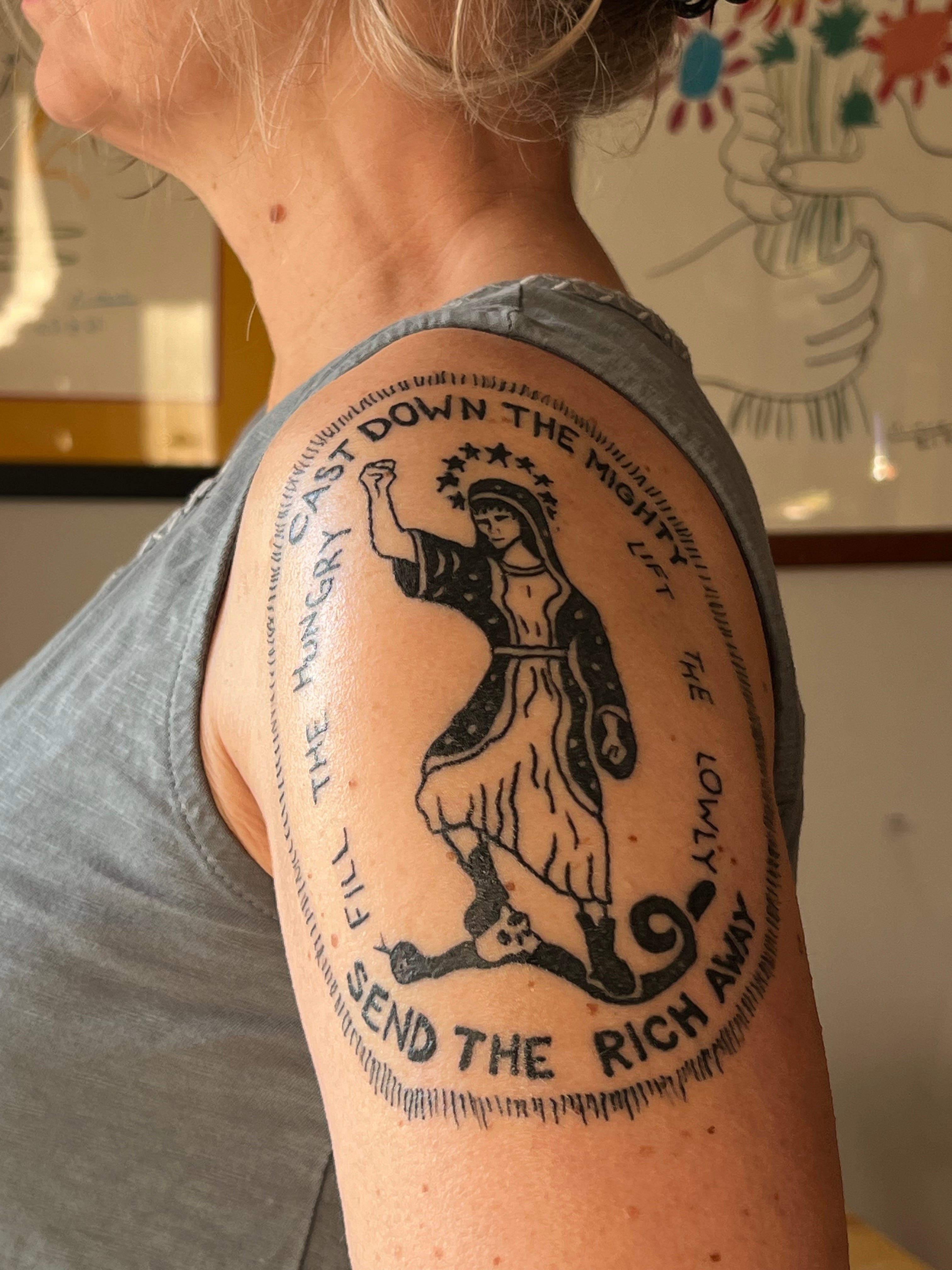
"...He has filled the hungry with good things and sent the rich away empty."
Dec 600:17:26Tap to summarizeGiven recent awareness of the increasing gap between the über wealthy and the rest of us, and the related power inequity too, a reflection on real-time conversations our nation is having about wealth inequity, with an assist from brother Lazarus and the nameless rich guy in Luke.This is a requested re-up of a sermon I preached last September when the passage came up in the RCL, but it references two pieces that might be timely for the third Sunday in Advent: the Magnificat, and Charles Dickens’ A Christmas Carol, so I offer it again now.~~~~~So when I was in late elementary school, my mama bought a hot air balloon. On our fridge, we have a picture of her positively giddy, sitting on the hood of our family’s squash-colored Buick Skylark, right after her first solo flight, a mix-of-blues thermos filled with what we were told was celebratory coffee but I have reason to be suspicious.My father had gifted my mother a ride in a balloon for her birthday, and as soon as that balloon started to fill up with air she was hooked. Her thrill was so obvious that just a week or two after her flight, the pilot—I still remember his name, Jeff Wingad—rang her up because a cheap one had just gone up for sale. It flew and all, he assured her, but some of the skirt was a bit singed, and one of the helmets was melted on the top: apparently the former owner had been super tall, and his head got a bit too close to the burner.Would she be interested?There was a lot behind that purchase: it didn’t cost much, but had been paid for by the inheritance she’d received from her own mother.And I wonder whether she could foresee certain Sundays when the wind was just right—sometimes my mom got a little tired of the tired expectations of pastors’ wives, and so when she couldn’t take it anymore, she was known to lick her finger early on Sunday morning, put it in the air to test the wind, and turn to my father and say, “It’s a good day for a balloon ride, George.”So I grew up with a hot air balloon in a trailer in our driveway, my mother occasionally in the air, and therefore a CB radio in the gondola and in that same squash colored Buick Skylark: it became known as the “Chase Vehicle,” because, well, balloonists need people to chase them, and sometimes you can’t be sure where they are when they go out of sight. You want a way to get them back to where they belong.Naturally, Mom had a CB handle: Balloonatic.My Dad, who was a preacher, had a handle too: Hot Air.It’s the “handle” part of the story, though, that came to mind as I was preparing the sermon for this morning.Isn’t it curious that one’s radio name is called “a handle?”Like, to reach someone, you have to have a handle, something to grab them by: that’s essentially the purpose of a name.Bellering out “Hey You!” in a crowd isn’t useful, but calling out “Hey Englebert!” narrows the options considerably.As you’re floating off into the great unknown, perhaps into some treacherous spaces, and people who love you can’t see you anymore, they need a handle to grab you back.They need to know your name.In Luke, we hear a story of a poor man who has a name: Lazarus, which, as an aside, means in Hebrew, “God helps.”Interestingly, Lazarus is the only named character in any parable told by Jesus anywhere, apart from him naming Abraham in this same parable.A name is not just a handle, of course: it’s a sign, a symbol that someone has worth, has dignity, deserves respect, exists.Wealthy people, see, we tend to know their names: Musk, Bezos, Cook, Gates, Trump—they have made a name for themselves.But in this story from Luke, it’s Lazarus, the poor guy, who gets a name in this tale.Even the rich guy knew his name: apparently Lazarus regularly sat on a bench outside the wealthy man’s home—benches like these were common beside the gates of the wealthy, who would help (and with some fanfare, so that they’d get recognition) the destitute who sat on them, but it seems that our rich guy had not gotten that memo.In fact, the wealthy dude knew his name so well that, once the both of them had died, and landed in their respective eternal spots, he even called out to Abraham—ABRAHAM! The father of Israel, as if Abraham were his servant—to have Lazarus—as if he were also his servant—to wet his lips.In the back and forth, Abraham had an opportunity to use the wealthy man’s name, but get this: he didn’t, beeeecause the rich guy never gets a name.Instead, Abraham merely called him “Child.”Oh the dripping condescension of it all: as if the rich man weren’t already sizzling in his present digs, what a sick burn.“Child,” said the father of Israel to the man accustomed to enjoying power, authority, privilege, and wielding it.“Child, remember,” said Abraham, because I sure do, “that during your lifetime you received your good things, and Lazarus in like manner evil things, but now he is comforted here, and you are in agony.”Now, see, here is where preaching this text gets tricky.It’s been kinda fun up until now.This text in any day and age is tricky, but especially these days, and especially if you’re Lutheran.We love grace, and we love talking about forgiveness, and this text does not provide much of either to the one character in the story who resembles a good lot of us, and who is of the ilk toward whom respect tends to go, our society and culture reveres, and for whom even our national policies are designed: not for the Lazarus’ of the day, but for the rich. Just look at the recent “Big Beautiful Bill” that was passed in Congress and tell me I’m wrong.See, if you aren’t feeling uncomfortable not only about this text from Luke, but from the regular cadence of disparagement about the wealthy and the hoarding of riches that thrums throughout Scripture, than either you aren’t paying attention or you yourself are poor, and are rejoicing in the word that you are promised the very balm that Lazarus himself received.The rest of texts assigned for this Sunday are no exception:Amos, not just here in Amos 6:1a, 4-7, but pretty much through his entire book declares woe to the wealthy. Like, it is not not good to be rich and within Amos’ earshot: For example, that passage in which he calls rich women who ignore the poor “cows of Bashaan?” I’m pretty sure that never shows up in a Sunday morning reading, and that is probably not by accident.And Psalm 146? Yeah, it sings of hope not to the rich, but to those oppressed by them.And 1 Timothy 6:6-19 refuses to allow wealthy and powerful people to live under any illusion that they are anything but constantly within the grasp of temptation, dancing with the evil that comes from private security, unless the wealthy are radically generous with their riches, and, in fact, are wealthy only in good works.But Luke is known for his concern for the poor…and also for his concern for the rich. New Testament scholar Dr. Mark Allan Powell has said that Luke’s main message is this: just as the poor need to be redeemed from their poverty, so too do the rich need to be redeemed from their wealth.As we are preparing to hear the words in the Magnificat for the third Sunday in Advent, recall the words that Luke places in the mouth of the very mother of Jesus, right out of the chute of his Gospel:“…indeed, his mercy is for those who fear himfrom generation to generation.He has shown strength with his arm;he has scattered the proud in the imagination of their hearts.He has brought down the powerful from their thronesand lifted up the lowly;he has filled the hungry with good thingsand sent the rich away empty.”Like there’s no equivocation here, no grey, no both sides-ing it.Instead, wallop after wallop after wallop throughout Scripture—I didn’t even get to Exodus, Deuteronomy, Jeremiah, Isaiah, Micah, and so on—it’s seriously unrelenting.Our texts from today about wealth aren’t outlier messages, no they are not.Economic injustice, the likes of which we see revealed in our passages today, are mentioned in Scripture more often and are more offensive to God than any other abomination, and you know what?I’m betting you don’t know that, because we, namely leaders in the church, have a pretty spotty record of naming that.We don’t want to handle it, in part because we don’t want to handle what will come after we do!The structure and systems of the Church that makes it all too easy to avoid naming that God is realllllllly angry at wealth inequity. Like, the word I want to use here instead of ‘angry’ shouldn’t be said from the pulpit.That we don’t have a habit of calling wealth and wealth inequity sinful reveals precisely why economic inequity is named more than any other offense to God: Wealth = power, and we trust the power of wealth and wealthy people more than we trust the power of God.Trouble is, unshared wealth, poverty, economic inequity not only displeases God, it infuriates God, and people will be in a mess of trouble with God until it’s all sorted out, and someone has to tell them that wealth ticks God off, and you will be judged for unshared wealth, and for not noticing that poverty is sin, and for not taking seriously that the poor have worth, and for willingly participating in an economic system that oppresses the poor, and for not appreciating that economic injustice harms not only the poor but also the rich.I just can’t nuance this biblical, faithful truth, though don’t think I haven’t spent significant time trying to do just that.I can’t nuance it because the Bible and pretty much Jesus reveals this to be God’s word time and again, and we are freed by the cross and the resurrection to, as L...
Transcribe →
Mr. President, Advent Would Like a Word
Dec 600:06:34Tap to summarizeBelow is a fusion of some FB posts I made about Donald Trump’s obnoxious—emphasis on the ‘noxious’—words about Somali immigrants. The season of Advent would like a word. ~~~~~Trump’s vile, abhorrent comments about the Minnesota Somali community are reflective of long-standing and normed racism toward this community, and I renounce it.In fact, I’ve had to renounce it for close to 10 years.In 2016, after my two children and I arrived in Two Harbors, and after Trump’s election, I wrote a blog in which I despaired about those who’d voted for this offensive con man: in it, as a key aside, I called out the Democrats and the Church too, for both had enabled his election.Some local Republicans found the blog, took offense, and, purely out of vindictiveness, with the sole purpose to undermine my application to the Planning and Zoning Commission to create the Spent Dandelion Theological Retreat Center, spread utterly false, completely base rumors about me.Among the untethered, unhinged gossip points, ones even intentionally spread on a local Fox talk radio station for at least two days running (on one day, the announcer even named my children, then in middle school, on air), rumors were planted, including that:~really the ELCA is all about building mosques, and that was my true intent;~when I lived in Sioux Falls I had harbored a terrorist from Iran;~my OMG: Center for Theological Retreat Center was -everywhere- across the globe (they were looking at omgcenter.org, not omgcenter.com, because I wish);But the most offensive, the most troubling, the most revealing, and their main plank claim was this:I was actually intending on building not a retreat center, but rather, and I quote, a “Group Home for 30 Somalis.”I knew nothing of any of these rumors until I was ambushed with them at the local planning and zoning meeting, the publicized one at which I sought approval for my proposal for the Spent Dandelion.The place was packed, nothing but butts and elbows, because word had spread everywhere (with the solitary exception being to me), about my alleged plans.When asked if this were true, namely that I was intending on building a group home for 30 Somalis, my breath was caught.I confessed that I didn’t quite know how to answer.Most obviously, I could say that No, of course not.But then I added two things:Not only was I not intending on building a group home for 30 Somalis, I was also not intending on building a group home for 30 Norwegians either.And, I said, I was appalled at the overt racism behind the accusation.All were welcome at the Spent Dandelion, even Norwegians, but racism in any form was not.Links to the blog called “The Spent Dandelion and Truth Mattering,” with receipts—including to the on-air recordings of that Fox talk radio show—is below.We were devastated, frightened, brought up face to face with unvarnished hate, and naïve no more.~~~~~So yesterday, we have our convicted felon President saying of the Minnesota community, “They contribute nothing. I don’t want them in our country, I’ll be honest with you....They come from hell and they complain and do nothing but b***h.”He called them ‘garbage.’A president, purported Christian, and convicted felon and sexual assaulter calling an entire community of citizens ‘garbage’—while pardoning a drug dealer, bombing fishermen, having pardoned convicted violent insurrectionists, and himself having been convicted of (get this) fraud—that’s next-level mind blowing bonkers.~~~~~There is no lie, of course, that there has been a wave of fraud cases involving the Somali immigrant community, and to pretend that that isn’t the case is to intentionally ignore an uncomfortable truth.Last year, Mr. Kayseh Magan, a US citizen of Somali decent—he served as an investigator in the Medicaid Fraud Division of the MN AG office—wrote such a thoughtful, candid, informative article in the Minnesota Reformer about how it is that these fraud cases seem to center the Somali community.It’s so well-done, and highlights the complicated, nuanced, cultural, communal, and economic realities facing many within the Somali community both here and in Somalia.Many of these factors have lent themselves to the very circumstances of fraud which have wreaked havoc in and for their community.He’s written another in the last few weeks: both articles are below, and I encourage you to read them for context, insight, knowledge, and compassion.Suffice it to say, though, that the entire matter is nuanced, complicated, wrenching, and also?Most fraud cases are committed by middle-to-upper class white men.Including, by the way, crimes committed by our now-President.~~~~~Two final pieces:First, this Somali race-baiting is baked into the Minnesota GOP.I have yet to see one Minnesota Republican elected official renounce it, it has clearly been a racist trope in these parts for some time, and Minnesotans need to be calling it out.Although this is who we apparently are, it is not who we should be, or who we perceive ourselves to be.Time to be honest with ourselves.Second, addressed to those who are baptized:It is long past time to lean into the promises, and get specific about the renunciations.Advent’s themes are for you and for now: repent, prepare, and be woke.https://minnesotareformer.com/2024/07/17/a-somali-american-investigator-heres-why-youre-hearing-so-much-about-fraud-in-my-community/https://minnesotareformer.com/2025/11/25/right-wing-reporting-on-somali-money-going-to-al-shabaab-is-sloppy/https://www.startribune.com/twin-cities-ice-somali-trump/601537681?taid=692f848fb6578a00018102c1&utm_campaign=trueanthem&utm_medium=social&utm_source=twitterhttps://www.startribune.com/trump-administration-targeting-somali-immigrants/601537917?taid=6930577e75940e0001479f1f&utm_campaign=trueanthem&utm_medium=social&utm_source=twitterhttps://omgcenter.com/2016/12/21/the-spent-dandelion-theological-retreat-center-and-truth/https://www.embroker.com/blog/white-collar-crime-statistics/https://www.oklahomacitylegalgroup.com/blog/2023/03/who-commits-white-collar-crimes/https://docs.house.gov/meetings/JU/JU01/20250122/117827/HHRG-119-JU01-20250122-SD006-U6.pdfhttps://rockinst.org/gun-violence/mass-shooting-factsheet/https://www.washingtonpost.com/nation/interactive/mass-shootings/shooters/ Get full access to Anna Madsen at revdrannam.substack.com/subscribe
Transcribe →
Second Week of Advent: Saying I'm Sorry Is The First Step
Dec 500:12:48Tap to summarizeIsaiah 11:1-10; Psalm 72:1-7, 18-19; Romans 15:4-13; Matthew 3:1-12Well, not gonna lie, the first and lasting image I have of these texts—and there are many images from which to choose here for this next Sunday—is that God must have holy halitosis if, as Isaiah tells us this week, it’s strong enough to kill the wicked.Can’t decide these days if I hope that God finds a mighty toothbrush or not, to be honest…Anyway, these texts again relentlessly remind us of the identity of God, and of our own identity if we take God as God seriously.I mean, listen to this: “He shall not judge by what his eyes see or decide by what his ears hear.”Coupled in a hearty way with John the Baptist dropping some beefy insults to the religious authorities of his day, people eager to be seen Doing the All the Right and Noble Things, “You brood of vipers… do not presume to say to yourselves, ‘We have Abraham as our ancestor,’ for I tell you, God is able from these stones to raise up children to Abraham.”God can hear your words, God can see your actions, but God knows you, ‘knows’ as in the Hebrew yada, which is to say that God is intimately aware of your sincerity and integrity (or lack thereof).Point is, doesn’t matter if you look or sound like you’re a person of faith: if your actions are only performative, but your heart has other loyalties, God’s got some morning breath to blow your way.Now, these texts might get under the skin of Lutherans, because they are heavy on the works.* shrugs like a Bruno-esque Lutheran *Honestly I have never been able to understand, theologically anyway, the allergy Lutherans have to being faithful as an expression of having faith.Not only are engaging in acts of faith not inconsistent with our theology of grace, that practice, as in discipline, as in disciple, is definitely not inconsistent with Scripture.Grace is not a whatevs.Grace is a recognition that no matter what, we will never be able to extricate ourselves or anyone else from engaging in that which can cause harm.It’s a rejection of selfish and base pursuits, engaging in “good works” only to earn points, making our acts manipulative, and what we receive to be rewards.It’s an acknowledgment that we are not God, and cannot save ourselves.It’s an embrace of humility.It’s trust in God more than in ourselves.All of that said, though, grace does not mean that there are no expectations, nor any mores on which we base our lives and the way we live them out.And it also doesn’t mean that there is no judgment when we fail at righteousness.Relatedly, we hear the word ‘righteousness’ four times in our first texts…six if you count the word ‘justice,’ which, both in Hebrew and in Greek, has the same root as righteousness.God will judge with righteousness, aka justice, for the poor, we hear, and decide with equity for the oppressed, and the needy will find deliverance.The second Sunday in Advent, see, wants us to pick up what it’s laying down: when we are aligned with that agenda, we are aligned with God’s justice and we live with fidelity.These texts, along with a mess of others in this Advent season, lay out the expectations, the values, the agenda, the identity of God:Welcome, compassion, equity, justice, diversity, love.Who wouldn’t want to participate in that, I ask you?Well…turns out it can be tricky.Greed, capitalism, domination, selfishness…those are powerful drugs.Of this God and the writers of Scripture are aware.And so these texts also invite us, this Sunday, to repent.Repent is a word laden with a lot of baggage that isn’t its to bear. It’s often associated with condemnatory preachers hurling it to a congregation of wide-eyed emoji parishioners, a command not so much addressed to those who maltreat the poor, the stranger, the naked, the ostracized. Instead, it’s to the ostracized themselves, especially those who have engaged in some form of sexual or gender-specific expression that is not aligned with puritanical mores.Yeah, so this Sunday gives us a chance at a repentance reboot.My son Karl, who suffered a traumatic brain injury, is 24, but developmentally is about where he was at the time of the accident: he generally sits at the 3-7 year old zone.Relatedly, the PBS (thank you PBS, our family has got your back) show Daniel Tiger, which is a spinoff of Mr. Rogers Neighborhood (RIP) is a regular at our home.It’s a terrific show, teaching not just young people about growing up, but parents about parenting those who are growing up.The producers use short ditties as a way to help viewers remember the key messages. Karl knows all of them by heart.One of them is coming to mind this week, because it has to do with apologies.It goes like this: “Saying I’m sorry is the first step, then how can I help?”That, that right there, that is full-throated repentance.Daniel gets that repentance involves several stages:* Knowing what you should have done.This step has, surprise surprise, to do with identity. Who are we, and on what basis are we that? To whom or to what are we aligned? Or, to use First Commandment language, who or what is our God, and how is that conviction demonstrably true?* Acknowledging that you have not done whatever it is that you were called to do.This step involves incredible humility, vulnerability, and faith that God and perhaps even the person, people, or system which deserve your repentance, will actually receive your acknowledgment, and ideally with some grace.* Asking what can be done to repair the breach.Typically, we think of repentance as stopping what you are doing.But Daniel and Matthew pull us further into its meaning: it is that, but it’s doing something else in the stead of what you have been doing.That’s the ‘then how can I help?’ part from Daniel, and the ‘Bear fruit worthy of repentance’ part from Matthew.If you don’t change behavior, then you haven’t really repented.The word ‘repent’ is, in Greek, metanoia, and it literally means ‘to turn around,’ as in doing a 180º.I like that, but I’m reminded of a gorgeous interview that Krista Tippett had with Prof. Louis Newman, a Jewish philosopher and ethicist, who has written a book entitled Repentance: The Meaning and Practice of Teshuvah.Turns out that the word for ‘repentance’ in Hebrew, teshuvah, has a similar meaning—a turning away from something, but also a turning, or a re-turning, to God.And then he says this, an interesting dialogue and counter point with the Christian emphasis on a drastic and immediate shift, Dr. Newman says:“If you think about this in terms of a 360 degree circle, if you’re headed in one direction and you turn only one degree or two degrees to the right or to the left, over a long period of time — it may be a very slight turn, but over an extended period of time, if you now walk in that direction, you’ll end up in an utterly different place than if you extend that line outward infinitely. And that sense of turning even slightly…it doesn’t have to be a radical, all of a sudden transformation into a new life. It’s actually a very gradual process of recognizing, ‘you know, I need to pay attention to that particular failing a little bit more, and move in a little different direction.’”That’s quite lovely.It offers grace, patience, and compassion, without losing sight of an expectation or an act.I like it…mostly.But both in our texts and in our world, we perceive—or ought to—urgent need for repentance. Patience is not always a virtue; in fact, it can sabotage the expression of reign of God, as in “Let’s just meet them where they are.”I’m certain I’ve already griped about how Jesus met ‘them’ where they were—and, in Sunday’s text, so did John the Baptist believe you me—but then either took ‘them’ to a new place, or demanded that they move their own blame selves to anew place.Perhaps here is a classic case of both/and.Change is hard.Sometimes there might be slow changes that can be made, and can only be made slowly, like a new eating or exercise pattern, or moving through trauma or unhealthy self-dialogue, or learning to load the dishwasher correctly.Little shifts every day can make a significant difference over the long haul, and can pave the way for more little shifts, or confidence in bigger ones.But other times, when we are engaging in unrighteous, unholy, unjust behaviors and systems that hurt the people of God or the creation of God, then the time to change them is now.I did vote for Trump, and now I’m going to protests.I did not speak up, and now I’m writing letters to the editor.I did not address candidly the implications of the gospel from the pulpit, for a myriad of reasons and some of them even good and understandable, but I realize that I’ve enabled Christian Nationalism and hate for our neighbor, and have allowed the oppressors to sit tight in their oppressive ways, and in so doing stood in the way of both the poor and the rich, the oppressed and the oppressors, the meek and the mighty, hearing the law and the gospel, and reminding them that they are beholden to nothing and no one but God.And that’s key, here, namely tying it all to God.The goal of the repentance, that is, is placed firmly at the identity of God.The entire point of God’s revelations to us is to express God’s hope for love, equity, joy, diversity, and peace for God’s creatures and creation.The intention of repentance is not to create a place of rigidity and fear, what one might expect were we to leave the word ‘repent’ where it h...
Transcribe →
An Intro to Advent 1, and the Year of Matthew
Dec 500:08:50Tap to summarize(Technically, we are still in Advent One, so I’m technically not late to posting about this week’s texts.) If you are wealthy, privileged, or an oppressor, seatbelts, everyone: the liturgical year of Matthew is gonna be a ride.Luke, the gospel writer from whom our readings up until two Sundays ago came, well he directed his words with a slant to the poor, the dispossessed, the oppressed.Matthew, though, he has some truth to drop to the top.It’s not that Luke doesn’t address the primary audience of Matthew, or that Matthew doesn’t address the primary audience of Luke, but the focus of their gospels is quite different.Our readings in Advent are nothing if not an introduction into the message of Matthew.Threading through the readings of Advent 1—Isaiah 2, Psalm 22, Romans 13, and Matthew 24—we heard core themes thrumming not just through this week, but ones which carry through the entire Advent season: Identity, Diversity, the centrality of Worship, and Preparation for the arrival of the Lord.In Isaiah, for example, we hear of the nations—not just individuals, but nations coming to gather at the mountain of the Lord.The bulk of humanity, all of the nations, come to God.In an age of America First, of the elimination of Diversity as a core value of our country, of the barring of certain peoples from certain places where the skin tones are not white, this is way way woke.Trouble is, although our present regime, one which fancies itself Christian, refuses welcome, God doesn’t.Once assembled, these many and various people of God hope that God will “teach them God’s ways, so that they may walk in God’s paths.”That’s a sit-down-and-take-it-all-in verse there, with heaps of intel about the identity of God and those who follow God.For example, it’s recognized that:~ there are ways of this God which are mightily distinct from other gods;~ to follow this God, one must know these ways;~ once one knows these ways, one must follow them;~ learning and applying what one has learned is a sign of humility and faithfulness;~ this God is a teacher, and we are called to sit at the feet of this God and hearken to what God has to say.And then we hear perhaps the most essential teaching about this God:This God is not one of violence, but one of growth—if we follow this God’s teachings, spears and swords shall be turned into plowshares and pruning hooks.Our Psalm for the day takes it a step further: peace, not violence, is the agenda of God.The word used here isn’t, actually, ‘peace,’ but in Hebrew is ‘shalom,’ which is arguably a more…robust word than ‘peace.’Peace can mean the absence of violence and expressed anger, but Shalom means the presence of justice.Peace can be passive, and arguably passive aggressive, but Shalom is the product of active wrestling.It takes work to experience Shalom.With that in mind, what a benediction is this:“May they prosper who love you.Shalom be within your walls and security within your towers.For the sake of my relatives and friends I will say, ‘Shalom be within you.’For the sake of the house of the LORD our God, I will seek your good.”It’s a bit jarring, then, after all this talk of peace and shalom to hop into our Romans text, and hear about dressing ourselves in armor, even if the armor of light!But what could that armor be?It comes right after we hear about salvation being near to us—the word ‘salvation’ rooted in the Greek word ‘soteria,’ which means ‘health, healing, and wholeness.’Paul, of course, is writing after the resurrection of Jesus, and after there is a tradition of Christian baptism.Perhaps this armor, then, is not one of war, but rather the armor of the promises of God we received in baptism.We do not need to fear, but rather can face the challenges of life aware that in the midst of it all, God is with us: or, as we are wont to say in Advent, Emmanuel.20+ years ago we lived in Southern Bavaria, a region in which both Roman Catholicism and a love of bronze work are vibrant traditions. Fusing the both of them, many homes, and ours now included, have a small small bronze basin with a baptismal symbol forged on it: people can dip their fingers in it going out of and coming in to their homes, ritualizing a reminder that they are baptized.That bit of water on their forehead is, in a real way, armor. You are baptized. God’s promises and your freedom to trust them, to identify that which is akin to God and that which is not, and to be emboldened to renounce that which is not—you’re literally dripping with hefty protection.And our last text of this week, Matthew.It’s a passage that has earned the likes of Hal Lindsey millions of dollars, this threatening and very much abused ‘left behind’ passage in which some are taken and some are not.The thing is—no, several things are—that:~some are taken and some are left, and, depending on the anecdote, it’s not at all clear whether a person wants to be taken or might rather be left behind;~ we do know that those hearing Matthew’s words were witnesses to the Roman authorities grabbing Christians, nabbing them off of the streets and out of their homes, persecuting them for their faith—not unlike ICE grabbing, nabbing, and persecuting people for the color of their skin.Fear was everywhere, legit and palpable fear.Not a far cry, to be honest, from people who need to be prepared about what to do where ICE to come knocking at their car windows, places of business, houses of worship, and homes, or merely plucking them off the street.This passage might well ask us, how would we react were we to be taken? To be left behind but see someone taken?“Be Woke,” says the text, a phrase that is loaded not just culturally, presently, but Scripturally as well.Do not sleep, do not presume that you are ready, do not rest on your assumption that saying you believe in Jesus cuts muster.Instead, actively root yourself in your faith, learn the commandments of Jesus, practice the ways of those who follow him, do not heed the counter-calls, and without shame, follow Jesus.Throughout Advent, and throughout this liturgical year, these themes aren’t precisely warm and fuzzy.Maybe that’s why we are so often tempted to skip over Advent and make our merry way to Christmas.They aren’t pleasant, but they are righteous, they are foundational, they are clarifying.Outside our Advent windows, our Advent calendars, our Advent rituals, the world is dizzying in its complexity, toxicity, and fear.But these texts remind us of several things: our identity as followers of the ways of God; of diversity as a blessed feature of God’s creation; of the centrality of gathering and recalling our baptism; of the hope for peace and delight, not just at some uncertain then, but right now; and the daily preparation to welcome this very in-breaking, to expect to encounter the Lord especially in our neighbor and the most vulnerable among us, and to say to that one, “‘Peace be within you,’ For the sake of the house of the LORD our God, I will seek your good.” Get full access to Anna Madsen at revdrannam.substack.com/subscribe
Transcribe →
A Day in the Life of Advent
Dec 500:08:05Tap to summarizeWhile my entire Christian faith framework begins and ends with Easter, the bones, flesh, and soul of my personality identifies with Advent.I feel Advent on the daily, even when it isn’t Advent, although the long stretches of darkness, the stars complementing it, the haunting hymns, the preparation for Christmas make me feel utterly synchronized with the season:Quiet.Waiting.Wrestling between the desire to complete all the baking and present buying and decorating, and the competing invite to savor every one of the pieces of holiday prep instead.Hygge.Worry that time is flitting by.Confidence that there is, actually, time and time to pause.Gratitude for the dark, a calibration to it in fact.A palpable tension between anxiety about reasons to repent and the reassurance in the promises to not be afraid.Swirled together like finger paints on glossy paper, Advent is roughly 30 days of urgency and waiting, anxiety and peace, vulnerability and coziness: exactly a day in the life, even when it isn’t Advent.~~~~~Recently, I’ve had a couple of occasions to actively reflect on Advent writ large, and specifically for each of the four Sunday’s texts.One event was for a church in Wisconsin, via Zoom, on Christ the King Sunday, the pivot Sunday between the last and the first days of lectionary years: this year, we are moving from Luke to Matthew.The group had asked me to reflect on the question, “What is the future of the Church?”I didn’t like the question.So I took liberty to change it. I preferred, I said to the gathered group, this question: “What is the identity of the followers of Jesus?”That prompt is far more in keeping with the season of Advent, with Matthew’s gospel’s agenda, and it’s driven less by capitalistic anxiety (I said we could imagine the first question being posed by some CEO at a huge board meeting) and more by curiosity and faithful confidence.We already know the future, because we believe that Jesus is risen: life, not death, wins.But that doesn’t mean that we skip about with baskets of flowers singing merry tunes on constant days of 72º and sunny, no: it means that we engage the moments of life, even the threatening, sorrowful, despairing, irritating ones, as people shaped by that promise.Those unwelcome moments don’t magically disappear, but they are reframed with a measure of hope and defiance.Early on in his gospel, Matthew tips his hand here, telling us that the angel of the Lord arrived to Joseph and said, “Do not be afraid.”Let’s be honest: the guy had reasons to be afraid.But as terrifying as that moment was for him, Mary pregnant and their names and lives at stake, there was greater reason to be assured: Mary would bear a son, one named Jesus, a name meaning ‘one who saves,’ who would also be called Emmanuel—God with us.Stretching from his birth to his death and resurrection, the story of Jesus envelopes both our need for saving—which means, in Greek, health, healing, and wholeness—and our freedom to act according to that very salvation, placing our faith in God rather than our faith in fear.That’s no schmarmy claim: that’s radical stuff right there is what it is: by definition, we Christians know the future and we act according to it.As to the “Church,” well, curiously, only Matthew uses that word, which in Greek is ekklesia, which literally means those called out, those set apart.It surfaces three times, namely in Matthew 16:18, when Jesus says that upon “this rock,” as in Petros, as in Peter (see what he did there?) he’d build his church, and in 18:17, when twice he uses the word to address what should happen when you have a beef with someone in the ekklesia.It’s important to recall that Matthew was rooted in the Jewish tradition, and so had held fast to the synagogue and the centrality of the teachings of the Torah.Now, though, post-destruction of the synagogue in 70 C.E., and post-resurrection, Matthew held fast to the ekklesia, a community that, even if in its nascent stages, clearly had developed enough for him to reference it and presume that others understood his reference point.The temple, he said, was “forsaken and desolate,” (23:38), but in Jesus, he said, “something greater than the temple is here” (12:6).For Matthew, that is, the commands of Jesus were central to the identity of the ekklesia: in fact, they are the parenthesis of his gospel, an embrace to all that Matthew felt compelled to convey.The first directives that we receive from Jesus are found in the Beatitudes—not to undercut John the Baptist’s calls to repent, of course, holy harangues which precede Jesus’ words—and the last are these: baptize and teach all that Jesus had commanded.In between we have perhaps the most shocking description of the commandments of Jesus when we stumble on Matthew 25, where the sheep and the goats—nations, not individuals mind you, but nations—are separated, not on the basis of whether someone has “accepted Jesus Christ as their personal Lord and Savior,” and not if they are a member of this denomination or that one, or this political party or that one, but whether they fed the hungry, gave drink to the thirsty, welcomed the stranger, clothed the naked, tended the sick and the imprisoned.You do that, and you center your identity on the commandments of Jesus, and you act as the called-out ones.If you are a member of the ekklesia, that is, you align yourself with the commandments of Jesus, and you participate in the promise and the in-breaking of the reign of God.And right here you have why, especially in Advent, and perhaps especially in Advent of Year A, I prefer transposing the question, “What is the future of the Church” to “What is the identity of a follower of Jesus?”One answer, it seems to me, is make like Advent, and not just in Advent.Stay in the Quiet.Wait.Wrestle.Find the cozy.Note the reasons to be afraid.Defy them.Repent.Be called out.Call others in.Welcome to Advent.Welcome to the way of the ekklesia. Get full access to Anna Madsen at revdrannam.substack.com/subscribe
Transcribe →
Tis the season for repentance
Dec 500:02:52Tap to summarizeThose of you who have sponsored and supported this Substack deserve a thank you, and an apology, and not just for the background sound of my snoring menagerie of three dogs and a cat by our Northern Minnesota wood stove!I am certain that I am not the only one who anticipated that resisting this Trump regime would be hard work.I had hoped it wouldn’t be all-consuming work.But it is. Right around the time I began this Substack, I became involved in creating our local branch of Indivisible: if you don’t know about this organization—movement, really—I invite you to check it out at indivisible.org, see if there’s a chapter near you, and if not, begin one yourself!In fact, I expect that I’ll have a blog up about Indivisible soon, because I find in it some parallels to the upstart expressions of Church that are garnering attention and energy.I began to pull back from that in June—we created a model much like geese flying in formation, so that leaders of the core group could fall back and others fly forward.My hope was to get back to posting here, but then life kept intervening: vocational, personal, practical responsibilities, and then, of course, all things political, which has been a daily tsunami of hard stuff demanding response, and which…sort of…got it, in various means, avenues, and outlets.Upshot: I’ve certainly been scattered in my attention and attentiveness, but frankly, I’ve never fought fascism before, and I don’t know about you, but I often feel like I’m on a balance board, using micro-muscles to try and stay upright!I’m eager to be more faithful in posting, and in fact have a backlog of posts ready to go.In the meantime, returning to that balance board notion, I’m realizing that we’re all discovering new muscles that we didn’t know we had, learning that some are weaker than others, that we might be stronger than we think, that sometimes we need a rest, and sometimes, even when it’s hard, we need to get back up and practice the hard things.Regardless, an apology for my very few postings for a too-long spell; solidarity with you in your hard work, as well as with any frustrations you might harbor toward yourselves when you can’t quite get it all done; a reminder to myself and to you that no one can get it all done, so grace, grace, grace; and gratitude to those of you who tune in. Get full access to Anna Madsen at revdrannam.substack.com/subscribe
Transcribe →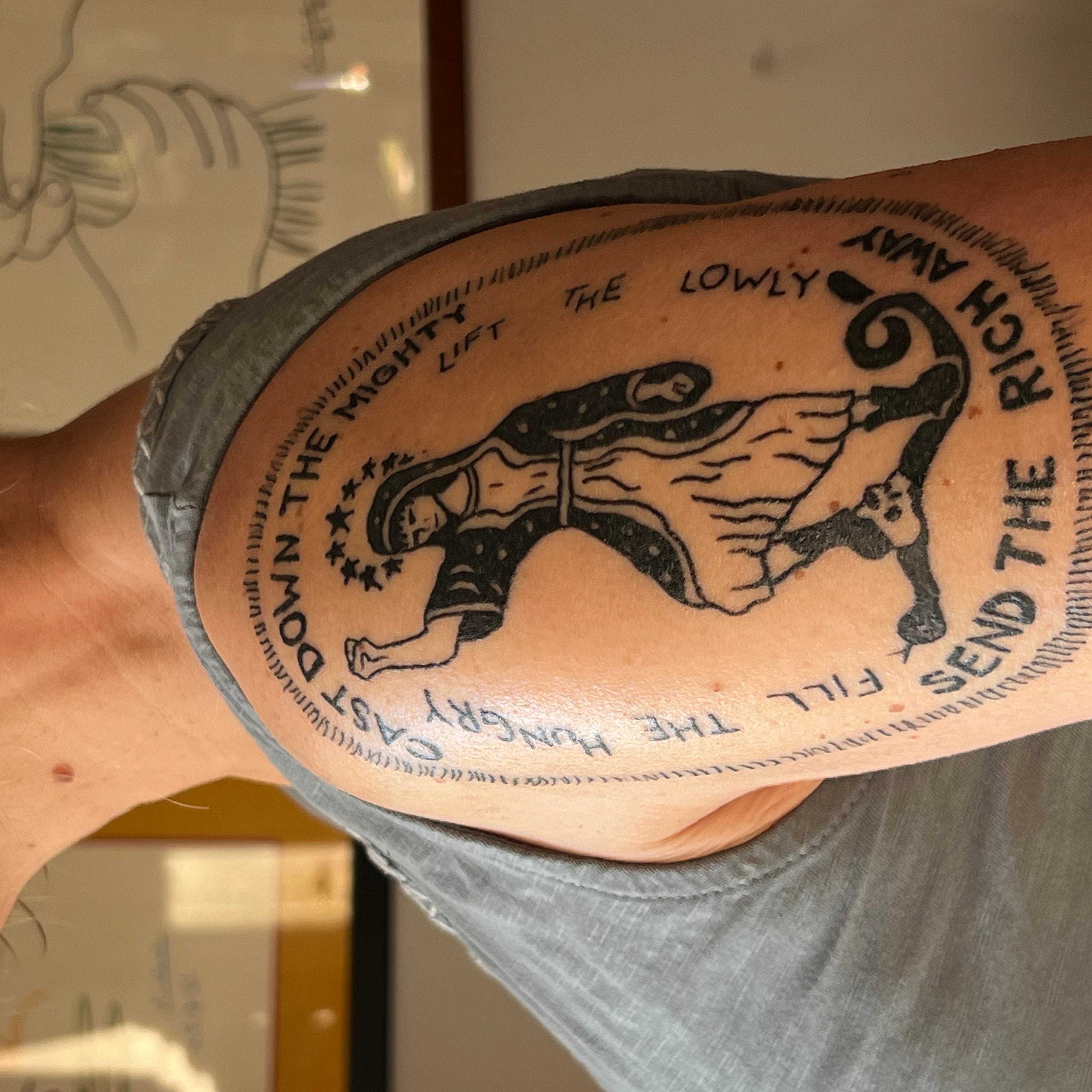
Nursing at the Breast of Jesus
May 10, 202500:10:10Tap to summarizeFor people who think on such things, May 13th marks the day of medieval mystic Julian of Norwich.I learned about her first in my college English class.Straight away, Dame Julian pulled me in. Her quiet, sensible, compassionate, and tender writing and love of God captured me at page one of her Revelations of Divine Love.I remember breathlessly pressing my professor, “Did she really have these conversations with God? Did Jesus really come to her?”My professor smiled, shrugged, and simply left me to read the book.That I have not a whiff of the mystical about me confounds and intrigues me about her all the more. Mysticism is so out of my regular range of experience that my little spirit is stretched like taffy when I’m presented with it.So, geek that I was (*ahem* am) I wrote a paper about Julian as a way to get nearer to her, to learn what “really” happened…and probably in hopes of a shot at a mystical experience too.She lived from around 1342-1423. It’s quite possible that she knew of Margery Kempe, the other mystic I studied in tandem with Julian (though one possessing a less, um, certain refinement); there’s enough textual evidence to speculate that Margery traveled to Julian for guidance, and even that Julian honored her with comment and counsel, which for any number of reasons, not least of all Margery herself, was something. Julian may well have come from a wealthy family, as it seems clear that she was literate in English. That’s a big deal–a literate person let alone a literate woman in the 14th-15th century.So her famed mystical experience occurred after some sort of illness. She wrote about her “Showings” soon after she experienced them, and then again twenty years later. There are some alterations in the versions, but most avid readers of Julian don’t trouble themselves with these differences.Because today precedes Mother’s Day, and because Julian wrote breathtakingly eloquently about the maternal nature of God, and the sensuality of God, a podcast lingering exactly here seems like a podcast well spent.Historically, the ascetic ideal was to renounce that over which one had control.So men gave up power and wealth.Women, though, gave up their bodies, often by way of fasting. (See Rudolf Bell, Holy Anorexia, Chicago: University of Chicago Press, 1985, for a remarkable peek into the connection between women religious and eating disorders).Despite a long line of well-known female ascetics and mystics who renounced food–-even to the point of vomiting before the acceptance of Holy Communion–-Julian had no need for that. While it’s probably true that as a religious anchorite she was aware of and even lived by customary expectations of moderate eating habits, she saw our bodies as a gift from God, and believed they should be treated with respect. She even has an entry about bowel movements, because, she said, they signify God’s grace and concern:For the goodness of God is the highest prayer and it comes down to us to meet our very least need…..So it is that a man walks erect; he eats the food for his body that is then hidden away within as it were in a fine purse. And when it is the time of his necessity, the purse is opened and shut again–modestly and without show. And that all this is God’s doing is shown by his words when he tells us that he comes down to the lowest part of our need. For he never despises that which he himself has made. Neither is he reluctant to serve our simplest office that belongs to our body in kind, because he loves our soul that he made in his own likeness. (First Showing)Never thought about it like that before.Anyway.On to the mother imagery in Julian.Julian thought of Jesus as Mother. The eloquent backdrop for this notion is here:This fair word ‘mother’ is so sweet and so kind in itself that it cannot truly be said of anyone or to anyone except of him and to him who is the true Mother of life and of all things. To the property of motherhood belong nature, love, wisdom and knowledge, and this is God. (14th Reflection)See, now there’s something that we Christian feminists can embrace. This is no glorified Zeus-Omnigod, mother-lode (so to speak) of All Things Testosterone, commanding obedience rather than cultivating love. No, Julian’s God is a God of compassionate, tender creativity and wisdom.And get this: the maternal Jesus meets us tangibly in Holy Communion:The mother can give her child to suck of her milk, but our precious Mother Jesus can feed us with himself, and does, most courteously and most tenderly, with the blessed sacrament, which is the precious food of true life….That is to say [Christ says]: All the health and the life of the sacraments, all the power and the grace of my word, all the goodness which is ordained in Holy Church for you, I am he.(As a geeky cool aside, in my poking around as a medieval woman mystic fiend, I discovered this explanation of breastfeeding from a medieval physician. “The pregnant woman has a vein coming out of the liver, called the ‘quilin’. It divides into two: one branch carries the blood to the breasts, and because of its new location transforms it into milk: the other branch goes to the womb.” That understanding of blood being transformed into milk makes the whole idea of a mother nursing a child/Christ nurturing his followers with his blood awfully, well, let’s leave it at symbolic.)I have often said that the Greek word soteria is translated into English as ‘salvation,’ but the sense of it, the intended meaning of it is health, healing, and wholeness.And Julian got it. Nature, love, wisdom, knowledge, health, life, power, grace, goodness.We got ourselves some serious soteria going on here.Her most famous quote is found in the following passage, a passage that concerns the “end times,” an occasion that inspired as much fear in the hearts of some then as now.But she broaches—and perhaps even crosses into—universalism with this revelation:“It appears to me that there is a deed that the Holy Trinity shall do on the last day, and when that deed shall be done and how it shall be done is unknown to all creatures under Christ, and shall be until it has been done. — This is the great deed ordained by our Lord God from eternity, treasured up and hidden in his blessed breast, only known to himself, and by this deed he shall make all things well; for just as the Holy Trinity made all things from nothing, so the Holy Trinity shall make all well that is not well.“And I wondered greatly at this revelation, and considered our faith, wondering as follows: our faith is grounded in God’s word, and it is part of our faith that we should believe that God’s word will be kept in all things; and one point of our faith is that many shall be damned…And given all this, I thought it impossible that all manner of things should be well, as our Lord revealed at this time. And I received no other answer in showing from our Lord God but this: “What is impossible to you is not impossible to me. I shall keep my word in all things and I shall make all things well.”If “making all things well” is not what mamas do, then I’m not only not a mystic, I’m also not a mama.To be clear, you don’t need to be a mama to be compelled to make all things well. Case in point: there’s no indication that Julian was a mother.But she sure did know a mother when she saw him. Get full access to Anna Madsen at revdrannam.substack.com/subscribe
Transcribe →