Loading summary
Transcript33 lines
- [00:02]
New Books Network Announcer
Hey, NBN listeners. We're running our 2026 New Books Network Audience Survey, and we'd love just a few minutes of your time. NBN has been bringing you in depth conversations with authors and scholars for over 15 years. We haven't done a comprehensive audience survey since 2022, and a lot has changed since then. It's time to hear from you again. Here's why we're asking. We want to understand who's listening, what subjects and podcasts you love most, and where you'd like to see us grow. Your responses help us tell NBN's story to the publishers, libraries, and institutions we partner with when we can show that our listeners are serious readers, lifelong learners, and heavy library users. It opens doors to new partnerships, better resources, and ultimately a stronger NBN for everyone. And one more thing. If you leave your email address at the end of the survey, you'll be entered to win a $100 gift card to bookshop.org, a chance to stock up on books while supporting independent bookstores at the same time. The survey takes just five minutes. Your answers are confidential and your email will never be shared. Head to newbooksnetwork.com to take the survey today. We really appreciate your support. Now go take the survey.
- [01:15]
Sharonik Bosu
Welcome to the new books network
- [01:20]
Dr. Senraj
foreign.
- [01:39]
Kim Adams
In this podcast, we get high on the substance of theory. I'm Kim Adams.
- [01:45]
Sharonik Bosu
And I'm Sharonik Bosu.
- [01:47]
Kim Adams
We are two tired academics trying to save critique from itself.
- [01:52]
Sharonik Bosu
Welcome to hi Theory. Today we are talking with Sentoran Raj about emotions of LGBT rights. Before we go into our conversation, can I ask you to introduce yourself to our listeners?
- [02:05]
Dr. Senraj
Thank you so much for having me today, Saranik. My name is Dr. Senraj. I'm a reader in Human Rights Law at Manchester Law School. I'm an academic activist, human rights scholar with a particular interest in the relationship between emotion, culture, social justice, LGBT rights, and law. Which is, I guess, why I'm here today.
- [02:28]
Sharonik Bosu
Yes, absolutely. And you also have a new book.
- [02:31]
Dr. Senraj
That's right. So my new book, the Emotions of LGBT Rights and Reforms Repairing Law, basically looks at some of the contemporary debates around around LGBT rights in various arenas of law reform, and looks particularly at the ways in which emotions structure the conflicts of rights that we see in these areas, as well as the opportunities for repair and reform to address some of the inequalities that LGBT people face.
- [02:59]
Sharonik Bosu
On that note, my first question what the heck are emotions of LGBT rights
- [03:05]
Dr. Senraj
for people listening at home? Emotions are something we're probably all familiar with when we think about A time when we were sad, a time when we felt joyful, frustrated, angry, hopeful, anxious, fearful, disgusted. And, you know, we only need to look at the news cycle at the moment to see the ways in which emotions not only saturate our everyday lives, but also saturate the public sphere, the political worlds that we're a part of. And so when I talk about the emotions of LGBT rights, I'm interested not just in the emotions that individual LGBT people feel, but the ways in which emotions materialize through law and politics and gain a kind of legal currency, if you like, in shaping the way we think about different rights, for example, the right to non discrimination, the right to free speech, religious freedom. And I'm interested in the ways these emotions take shape at an institutional level and what that means for our possibilities for justice.
- [04:08]
Sharonik Bosu
Obviously, there's a lot of, you know, in. In kind of scholarly fields like affect theory and in histories of emotions, a fundamental area of debate is, you know, kind of the ontology of emotions. What they are exactly, is it something or what lens? What lends them legitimacy and realness? Is it personal experience? Is it when it leaves the bounds of the person and becomes public, as, you know, what are you saying? So in pushing forward a little bit with the questions, what the heck are emotions of LGBT rights? What are their, you know, institutional and legal forms?
- [04:44]
Dr. Senraj
That's a really great question. And I suppose to begin with, as you've acknowledged, there is a lot of debate around affect, emotions, feelings. I don't have the time here to kind of go into the rich philosophical histories of around that and the debates we see in areas, of course, yes, psychology, behavioral economics, sociology and cultural studies. But to me, I'm very interested in the kind of queer engagements with affect and emotion. And I think here, particularly with Sara Ahmed's work on the cultural politics of emotion. So I suppose I'm less interested in diagnosing individual emotional states of people and looking at their kind of physiologies and, you know, neurochemistries and these kinds of things. And I'm much more interested in the ways we talk about emotions. So how do we feel certain things and then express them? So I take emotions in my work as a communicative politics, as performative enactments that shape particular realities, political realities, legal realities. So, for example, when you look at a particular area of law and it talks about passion or fear or disgust, how did those ideas get translated at a sort of legal level? So to give an example, around the world, there are still several countries that criminalize homosexuality through the language of offenses against the order of nature. And the notion of offense links very closely with the idea of disgust. You know, that which is seen as disgusting, that is, what is spat out or rejected, we see as taking shape through the law. And this obviously has a currency and material reality and impact on people's lives. So I'm really interested in following emotions as these kinds of enactments and the way that they're produced. And I'm really interested in the question, what do emotions do? Rather than what are emotions? If that makes sense.
- [06:36]
Sharonik Bosu
So on that note, from concept to action, let me ask you my second question, which is how do we use emotions of LGBT rights?
- [06:45]
Dr. Senraj
So my starting point for thinking about these issues is the way in which justice movements for LGBT rights have mobilized emotions for particular legal and social aspirations. So think about something like the Stonewall riots, which is often heralded by activists, scholars, and community members as the quote, unquote, birthplace of the gay rights movement. And that tale is one of riot. You know, we talk about the anger and frustration of individuals who felt their lives were being persecuted through police action and raids, and the ways in which they resisted on that night, and the way in which that resistance took up an emotional currency that then galvanized an entire political movement. And so I'm interested in kind of building from the ways in which we think about our own emotions in that space to how that's been translated into various pieces of law reform over the years. So we've seen the development of anti discrimination laws that have been built from the kind of anger around discrimination and inequality. We've also seen marriage equality materialize through the joy and the hope and the optimism of individuals and couples and communities who have sought to, you know, assimilate, if you like, within the state. And so what I'm interested in kind of thinking through is what are the emotional consequences of these particular reforms? So, for example, when we think about the articulation of love and happiness in something like marriage equality, what does that mean for those relationships that aren't socially sanctioned or that don't achieve particular forms of legitimacy? Alternatively, when you think about, you know, sex education in schools, which is a. A deeply contested area of law and policy at the moment, how do we manage people's anxieties about, you know, non conforming sexual practices or gendered bodies that don't conform to the sex they were assigned at birth, how do we engage with those emotions, not just at the individual level, but at the institutional level? Because what we're seeing is emotions take enormous space in kind of political conversations. And they have quite significant consequences. And at the moment, what we've witnessed, if you think about some of the recent pronouncements in the American context, they're having serious and harmful impacts on LGBT people.
- [09:09]
Sharonik Bosu
And a lot of what you're saying, of course, is in the realm of expression and expressivity. And I was also, I mean, parallel with what's happening in the US context, I was also looking at pictures from Thailand, you know, with the recent realization of marriage equality and the kind of outpouring of expression of joy, which is also very important and powerful political emotion.
- [09:32]
Dr. Senraj
Effy. Absolutely. And what I would say is that it's important to recognize that emotions like joy and hope, compassion, they're valuable, but they're also dangerous. Just like emotions like disgust, anxiety don't necessarily need to be abandoned, but we need to think carefully about what their consequences are. Part of my interest in looking carefully and feeling carefully with, with emotions is to guard against a kind of uncritical embrace of any type of emotion. You know, whether we call them quote unquote, bad emotions or quote, unquote, good emotions. Because in the political landscape, we know that emotions can articulate quite harmful politics. So, for example, when you think about love and its relationship to the nation state, you know, nationalism, for example, as an expression of national love, we know that that results in, in quite a few instances of sort of militarized borders, anti immigrant sentiment, hostile immigration environments that have particularly pernicious impacts, for example, on people who seek asylum. So I'm always really careful to say that there isn't such a thing as necessarily a good emotion or a bad emotion. You need to think about what emotions are doing in our kind of political and legal world.
- [10:46]
Sharonik Bosu
Yeah, yeah, absolutely. Before I ask you my final question, can I ask you to talk about the book a little bit in terms of, you know, we are talking about the larger import of your book, but can I ask you also to talk details a little bit, like what the chapters are, you know, what your thesis is in each chapter, so to speak.
- [11:05]
Dr. Senraj
As I mentioned, my work is very much interested in emotion as a legal concept. So looking at the ways emotion shapes through the level of legislation, at the level of jurisprudence, at the level of rulemaking, policy making, how it is transacted. So in the book, I look at emotions like anxiety, I look at shame, I look at fear, I look at worry, I look at concern, and I focus in on how they shape the debates that we're seeing at the moment around freedom of speech, freedom of religion and freedom of non discrimination as some of the key anchors. And then I look at how that's taken up within the kind of jurisprudential landscape in sort of balancing the right to freedom of religion and the right to non discrimination. In the second chapter, I look at some of the current debates around legal gender recognition, so focusing on trans and non binary people and their pursuits for amending their legal documents through a more administrative process rather than a medical process. And I focus here on the way in which anxiety and fear has sort of curtailed the self determination rights of trans and non binary people through the language of predation. So the idea that people might falsify their gender identity to gain access to a single sex service, to enter into a bathroom, a public bathroom, for example, in order to do violence towards a CIS woman. And so I, I unpack the role of anxiety in limiting the scope of legal recognition and the ways in which different minoritized groups are seen as in competition with one another. So I look at the rights of CIS women and the way that's talked about almost to curtail the rights trans and non binary people. And I kind of refuse that polarization by looking at what anxiety can open up in terms of drawing attention to more institutionalized forms of violence that affect both CIS women and trans women, for example, in similar and disparate ways. The third chapter then moves into thinking about conversion practices. So that is the idea that people should be able to change or suppress some aspect of their sexual orientation. This is primarily again, mobilized in religious and pastoral contexts. So kind of echoing some of the conversations in chapter one, I look at how pain and shame is quite central to the logic of a conversion practice. You know, the idea that you're broken, that your sexuality or your gender identity is somehow deficient, and so pain and shame become the logic of conversion practices. But then I sort of look at the ways in which legal responses to that pain and shame has also involved a redirection of pain and shame away from the kind of LGBT people who have been targeted by this practice towards those individuals who perpetrate it. So we see them as shameful now for perpetrating such interventions on LGBT people. We see the pain of those practices now register within political and legal landscapes. But I draw a kind of a cautionary tale around the turn towards criminalizing conversion practices in particular, because of the kind of institutionalized forms of harm that that reproduces. Given the broader critiques that have been made by queer feminist and critical race scholars about the ways in which policing carceral systems target already vulnerable and marginalized people. And the state isn't really in the best shape to be able to address the more insidious harms that people experience in the context of homophobia or transphobia. The final chapter then draws together a number of different emotions like pain, shame, worry, anxiety, to look at the recent debates around relationship sex and LGBT education in schools. And I focus in on two particular examples, one in England and one in Florida, to sort of compare two seemingly different approaches. So looking at the approach in England from a few years ago to make mandatory, more inclusive forms of sex and relationship education, particularly at a secondary level, to recognize, you know, diverse relationships, sexualities, and then contrast that with what's been going on in Florida around the stop woke kind of legislation and stop saying gay or trans in schools. And I track the way concern is mobilized and anxiety is mobilized across these different debates to actually suggest that rather than pointing out that they're juxtaposed, that is that, you know, one is very progressive in the case of UK and one is very regressive in the case of Florida in the us I actually point out how reading these two kind of disparate examples together highlights how they share a very similar emotional currency around anxiety and fear, around non normative sexualities. And actually the insistence in defining identity in very particular ways or relationships or bodies in particular ways actually eclipses different forms of queer expression or gender expression. And then I kind of bring all those case studies together in the conclusion of the book to rethink the kind of space for rights. So rather than thinking in the language of, you know, freedom of religion or freedom of speech or freedom of non discrimination, I kind of articulate new rights claims, again returning to a lot of the kind of queer, critical, race, decolonial feminist scholarship that underpins a lot of my thinking in this book. I look at, for example, ideas around accessibility, social belonging, identity, fluidity, bodily integrity, and draw together these ideas as new formulations for rights. And I return to thinking about some of those emotions like shame, anxiety, fear, pain, in order to not abandon those emotions, to say that we should evacuate them from our vocabulary, but actually to create space for them in our articulation of rights. To recognize that rights are always going to be in conflict in some ways. And actually we need to make space for those conflicts. And to think reparatively with emotion means that we can hold space for those conflicts, while also trying to identify points of solidarity and community building as we move towards what I hope will be a more just and equitable world.
- [17:27]
Sharonik Bosu
Thank you for that detailed description of the book that really helps understand more than conceptual, the kind of more scholarly, formal approach to this that you're taking. So, onto my final question, and I asked this with caution, which is, how will emotions of LGBT rights save the world?
- [17:46]
Dr. Senraj
We all need to recognize our own emotions when it comes to thinking about the politics we have, the campaigns we want to be a part of, the aspirations we have for the world, and whether that's focused on LGBT issues or, in fact, other issues. I think the analysis that I'm interested in pursuing and that's talked about in the book has resonance for different areas. But ultimately, what I would like us to be able to do is to recognize conflict as a necessary feature of social interaction. Now, that doesn't mean conflict in a. In the harmful sense of, you know, people being brutalized or abused or violated, but I mean conflict more in the sense of kind of contestation or inconvenience or being pressed to thinking differently. And when you think about conflict in those terms, we actually can open up dialogues. That is, we recognize our own emotions, but we then think about what our emotions are able to show us in terms of connecting different parts of our communities together. That is, do we have shared aspirations, do we have shared concerns about the inequalities that we face? And I would be really hopeful to kind of put my own emotions here into the conversation that we would then be able to utilize this kind of analysis to help change some of the institutionalized inequalities, whether that's racism, sexism, misogyny, homophobia, transphobia, in order to build worlds that are more equitable. And I see law, to return to the kind of anchor of the book, as playing a role in that, as a tool, not as the final solution or the most ideal outcome for us to pursue, but actually as one tool amongst many in order to address a number of the issues that we face today.
- [19:28]
Sharonik Bosu
That's wonderful, Sam. Thank you so much for coming to Hyde Theory and talking to us about emotions of LGBT rights. We deeply appreciate it and we will, of course, link your book in the show notes, and our listeners will get to know your work that way as well. Thank you so much.
- [19:43]
Dr. Senraj
Thank you so much for having me today, Sarani.
- [19:46]
Kim Adams
And thank you for listening to High Theory.
- [19:49]
Sharonik Bosu
If you like our podcast, please review and subscribe. Wherever you get your podcast fix.
- [19:55]
Kim Adams
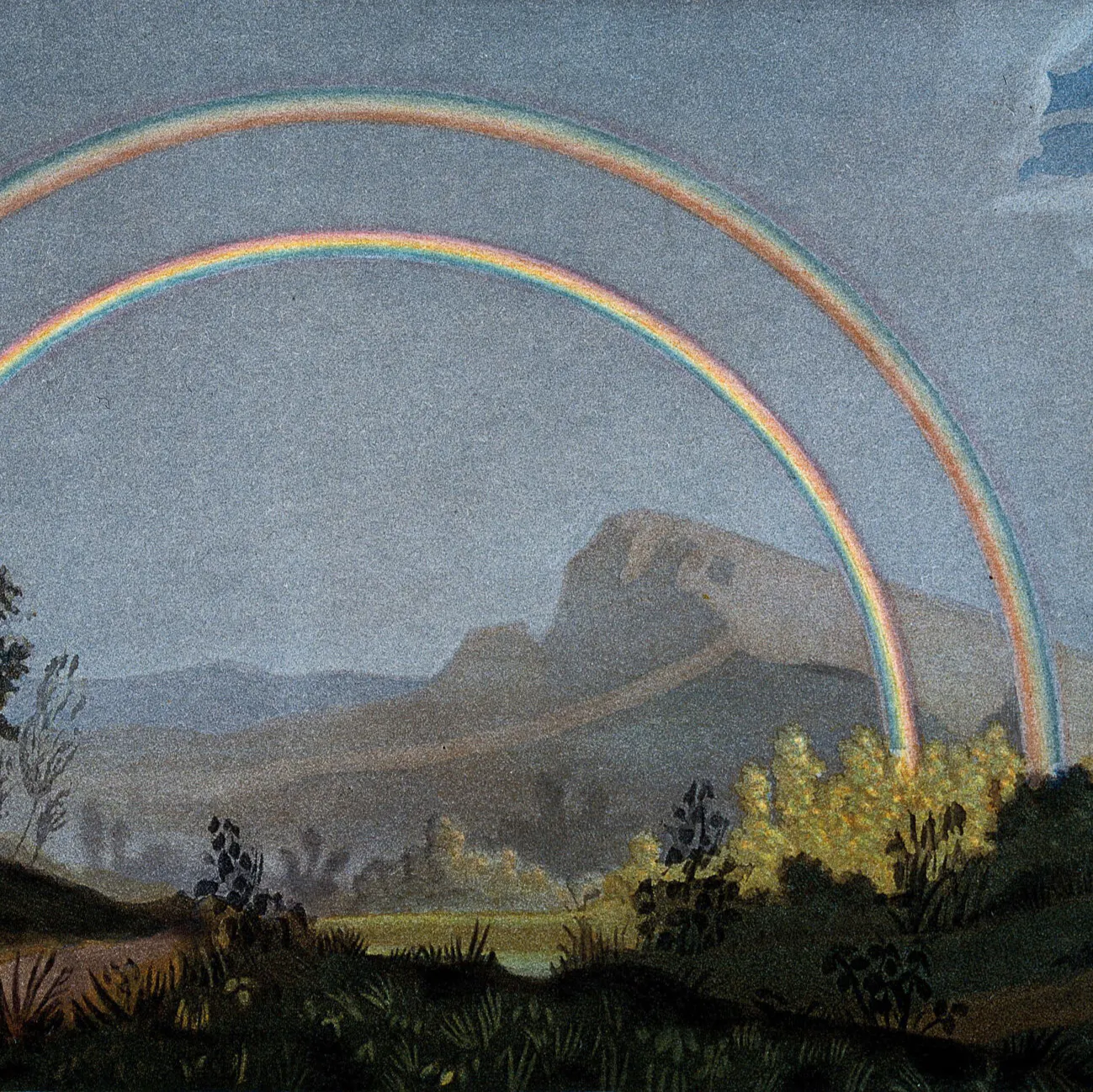
Owen Quinn composes our theme music. Asia Garcia edited this episode and Lily Epstein supplied the image.
- [20:04]
Sharonik Bosu
We are getting off social media. But if you would like to know what we are up to please subscribe to our Patreon for free.
- [20:12]
Kim Adams
Paid subscribers will get episodes without ads and warm, fuzzy feelings.
- [20:17]
Dr. Senraj
You can find High Theory on the
- [20:19]
Sharonik Bosu
New Books Network and also on hightheory.net
- [20:22]
Kim Adams
we hope you have a highly theoretical.
- [20:37]
Dr. Senraj
Sam.