← New Rory & MAL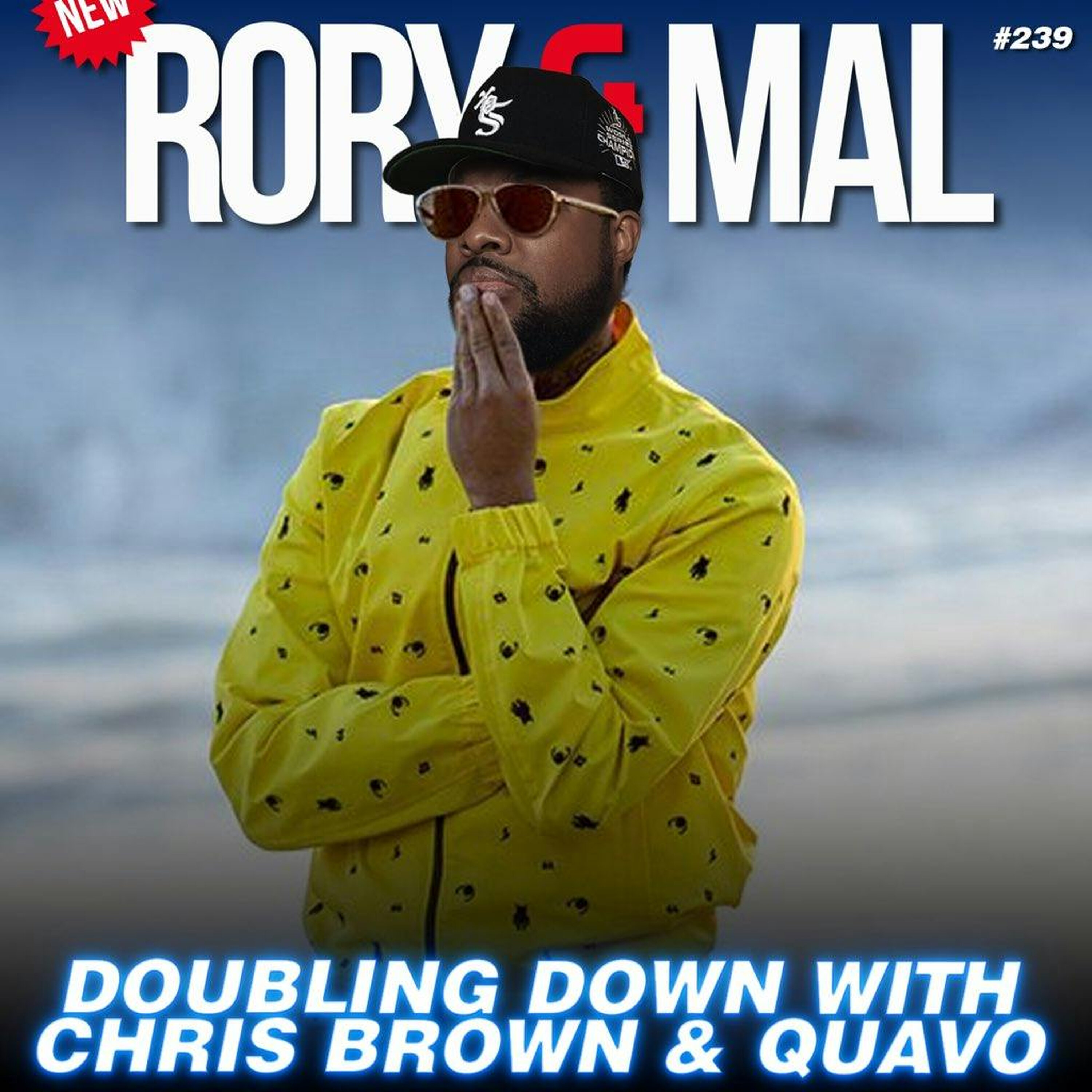
Loading summary
Transcript1,258 lines
- [00:00]
Rory
Dressed like Curious George, too, today.
- [00:02]
Mal
So the man in the yellow hat. This is Amar. We made T shirts for her birthday.
- [00:08]
Damaris
Oh, see, now, that's cool. See, that's a cool shirt.
- [00:10]
Mal
I'm a counselor.
- [00:11]
Damaris
You should have said that. You should. I'm a. You're not a counselor, actually.
- [00:14]
Mal
You're a victim, yo. Not at camp, Amara. No worry.
- [00:25]
Julian
And now.
- [00:30]
Damaris
You want to be the reason you smile. You want to be the reason you smile. It won't be the reason you smile after you wipe away your tears and dry your eyes. I'm getting the feeling you want to take revenge from the conversations we have.
- [00:52]
Rory
This is not a megastar.
- [00:53]
Mal
Let's argue. Wait. Bleep that so we don't get demonetized. Don't put your hat down.
- [01:00]
Damaris
Huh? Oh, I didn't know we started. My bad.
- [01:02]
Rory
No, we're here because you and Damaris 10 minutes ago. We're going at it for a smooth half hour, so.
- [01:07]
Damaris
And that's why she got on Mary J. Blige. I don't want to cry no more Glasses. Because she was wrong and they was killing on the Internet for the last 48 hours.
- [01:14]
Mal
The first thing Mal says when we walk in is, are you guys here to apologize? And I am not here to apologize.
- [01:22]
Damaris
I am here to double Julian that asked you that. You here to apologize? Yeah, I asked you. I said, oh, y'all gonna double down? And he was like, yeah, you know, you put your hands on your hip. Yeah, I'm gonna double down. I was like, okay.
- [01:31]
Mal
And first of all, I tried to forget that that was Julian that asked that question. Talk about throwing a rock and hiding your hand.
- [01:36]
Julian
Oh, his hands hit his.
- [01:37]
Mal
Wait. Me and Damaris need to apologize? If we need to apologize, you need to apologize as well. But we'll get to that later.
- [01:43]
Rory
You.
- [01:43]
Damaris
You yelled. Yeah, you and Damaris was harmonizing over there with everything Rory was saying.
- [01:46]
Rory
The best thing about this is the big ad libs. The clip came like. You know, usually when people clip things out of context, and it. But it's like someone else. Eclipse it. The clip came from us, so.
- [01:57]
Mal
Oh, for sure.
- [01:58]
Rory
Like.
- [01:58]
Julian
No, the clip came from Peach, so it's Peach fault.
- [02:01]
Mal
That's who the clip.
- [02:02]
Damaris
Like, love and hip hop. They can only edit and clip what.
- [02:04]
Rory
You say, but shout out PE Because I didn't look bad in the clip. So for that, you and Damaris need to defend yourself.
- [02:11]
Damaris
No, but you was. You was. Yeah, yeah. You and Damar.
- [02:14]
Rory
They're right. Catch that part.
- [02:16]
Damaris
They're right.
- [02:17]
Rory
I'm laughing their side still.
- [02:19]
Julian
Rory was barely getting killed. They were on my ass.
- [02:22]
Damaris
Well, it was because of this the boy sweet 16 bar that you got off at the end.
- [02:26]
Mal
And we'll get to that.
- [02:27]
Damaris
And then you was like. I was like. Based off of what? You was like, well, the Migos are bigger in name and recognition than Chris. I think people was like, no, that's wrong too.
- [02:36]
Mal
Let's give people some context because that clip sure didn't. Was it our Patreon episode or it was our Patreon episode? Subscribe to our Patreon right now if.
- [02:46]
Rory
You want to see the actual full.
- [02:47]
Mal
Conversation is there forward slash New Royal Mall. We were having a conversation about Chris Brown and Quavo being at the rude fashion show and there being a possible tiff between the two of them. They had to sit next to each other. Then we argued who would have to get up if they didn't want to sit next to each other, which put us down an entire Quavo vs Chris Brown rabbit hole. It was clipped by our beloved page that made it seem like we were arguing Quavo and Chris Brown, who is more relevant to music. Wise left out that Damaris and I were making a point that Quavo to Gen Z fashion world is status is just as relevant as Chris Brown's right now.
- [03:28]
Julian
Rude, rude, fat. And I want to bring up that again. We're not talking about Gucci. We're not talking. We're talking about rude.
- [03:35]
Rory
It's funny because my friend in fashion said Quavo is also more favored in Gucci and Louis Vuitton as well.
- [03:41]
Mal
So now do we think Quavo and Chris Brown should even be in the same sentence as far as music goes? No, absolutely not. But for some reason, we still argued before we got on this microphone, and I'm still here to stand on every last point that I say. And Demer is getting killed for the sweet 16 thing. I still think somebody that has a sweet 16 in 2024, let's take sweet.
- [04:03]
Julian
Out of the sweet, is driving them all crazy. So let's just say driving me crazy at all.
- [04:07]
Damaris
You said let's just. You said boys have. You said boys have sweet.
- [04:11]
Mal
Diabetics.
- [04:12]
Damaris
You said.
- [04:12]
Julian
No, you know what I mean.
- [04:13]
Damaris
Going by what you said. You said boys have sweet 16.
- [04:16]
Julian
Okay? So if I take the sweet out.
- [04:18]
Damaris
Of it, every, every, every boy that's 17 has had a 16th birthday party. We know that that's how numbers go. You said boys have sweets. There is an a whole type of difference between sweet 16 and 16th birthday party. I had a 16th birthday party. I didn't have a sweet 16.
- [04:33]
Mal
Let's say a boy's kin.
- [04:34]
Julian
Sierra, that's 15.
- [04:37]
Mal
I'm aware about Mitzvah. Do you think they want to have huevo or Chris Brown there?
- [04:43]
Damaris
Boys?
- [04:45]
Mal
Huh? Oh, never mind.
- [04:48]
Julian
Yeah, quinceanera is a girl thing, but.
- [04:51]
Damaris
Yeah, also, I'm right again. I'm right in Spanish.
- [04:54]
Mal
What do you know?
- [04:55]
Damaris
I'm writing Latin.
- [04:58]
Mal
Quavo's name sounds Spanish, though, so I think I'm right on that one.
- [05:07]
Damaris
Yeah. Yeah, Guavo. That's all it is. Thanks for that, Young. It's Quavo.
- [05:14]
Mal
Do I have to pause if I say pass the Quavo?
- [05:16]
Damaris
It depends on what. It depends on what you're asking him to pass.
- [05:21]
Mal
But I. I loved our screaming match that we had off camera. I just don't know if. Damaris, Damaris, I'm here to stand ten toes with you. If Maul wants to bring his points up, I'll. I argue your side.
- [05:34]
Damaris
All right, so let me to Damaris's point. Rude. The fashion. The kids at that weird. Rude. Whatever that means. I don't know what that means, but. So you think that if Rude had. If Ruud was doing their next campaign for their spring line and they reached out to Chris Brown and Quavo, and then Chris Brown caught wind that Quavo was going to be a part of the new campaign. If Chris Brown hits Ruigi and says, yo, I am not going to be a part of that campaign. If Quavo's a part of it, you think Ruigi would not say, okay, cool, we'll take Quavo out of it. To have Chris Brown, who is the bigger star.
- [06:07]
Mal
No, I don't. Well, one, I don't think he would reach out to both of them, knowing that they have beef together. But let's go with a hypothetical. Even when Chris Brown was at his peak. And I hate that this has just made me someone that is shitting on a legend. No.
- [06:20]
Damaris
And none of this.
- [06:21]
Mal
When has anyone ever tried to dress like Chris Brown? And this is called. I'm not a fashion Guy. I'm wearing a yellow T shirt with my daughter's name on it and corduroys. I. I'm. I know I'm not the fashion guy, and I shouldn't really be, but it's not a one.
- [06:33]
Damaris
When I was trying to.
- [06:33]
Mal
People like these kids try to dress like the Migos, but this is what I'm saying. They have a Fashion part of their brand, where Chris Brown is not a bad dresser. But no one's been like, yo, Chris was the style icon.
- [06:44]
Julian
Now it was in my inbox saying, chris, put that shit on. So, you know, okay, So I had.
- [06:48]
Mal
On a big button up at the same time. But that was because of ho. That wasn't because.
- [06:52]
Damaris
Okay, Brown, but what you're missing is.
- [06:54]
Mal
I was singing, yo.
- [06:55]
Damaris
Okay, but what you're missing is if you have a fashion line and you are trying to put out a campaign, naturally you would want the bigger star a part of your campaign.
- [07:05]
Mal
I would rather have someone that's a little bit lower of a star. Lower of a star Because Quavo was lower as a star. You said a little bit in the world. I changed.
- [07:15]
Damaris
Okay.
- [07:16]
Mal
I stopped myself.
- [07:16]
Rory
How much?
- [07:17]
Mal
Because we're talking about the whole world, not just the fashion world. I would rather take someone that is a lower star that is known for fashion and is in the fashion world and can touch the younger kids paws than I would just a superstar that has no ties to fashion whatsoever.
- [07:34]
Damaris
But you're. But that doesn't make sense because you're selling fashion to the world. So.
- [07:39]
Mal
Yeah. So let me go with the person that's known for dressing to the kids.
- [07:43]
Damaris
Right now. You're selling fashion to the world. You don't want just kids buying your clothes. You want the world to buy.
- [07:50]
Mal
When kids. I don't mean just children. I mean. I mean, people in their 20s do. I'm a kid in the early 30s.
- [07:55]
Damaris
To the world. You create clothes. You want to sell it to the world. Right. Adults buy clothes. Adults buy clothes for younger children. Whatever.
- [08:03]
Julian
Pause.
- [08:03]
Damaris
What I'm saying is you would want the bigger star that's a bigger star to the world to push your product versus somebody that's just cooler in certain sections.
- [08:15]
Mal
I got you.
- [08:15]
Julian
I got you. Every fashion house has a target audience. They all have target audiences.
- [08:20]
Damaris
All right.
- [08:20]
Mal
You actually beat me to it. If they were doing a Target clothing or JCPenney, and it's not me on Chris Brown as far as how he dresses, but if you were doing a Target ad campaign, Chris Brown. Yes. Would be your go to. Because he is a star amongst the world. He's a recognizable face. He would look good in the clothes. Rude is a huge company, but it's of the culture.
- [08:43]
Rory
Yeah. They're selling $600 basketball shorts.
- [08:45]
Damaris
Yeah.
- [08:45]
Rory
This isn't.
- [08:46]
Mal
That's where you would maybe want to lean more to the Quavo side.
- [08:49]
Damaris
Do y'all. Do y'all realize that this show was in Paris.
- [08:53]
Rory
Yes. And also for the realize that Quo walked at the Louis show in 2021, so there's that, too. Any other shows, Quo, like. The point is, Quo is more integrated in that scene.
- [09:03]
Mal
It's harder to sell rude if you're doing a backflip instead of walking. You can't see the clothes was like.
- [09:09]
Julian
Have Quavo ever did a back, a front? Flip the Merch Madness on Beat? I said, if y'all don't get the. Out my inbox, so.
- [09:16]
Mal
And we don't have to, like, you know, continue this conversation too much further because it is on Patreon.
- [09:21]
Damaris
And, yeah, I'm not even giving this topic no more energy. Y'all are wrong. Y'all were wrong, and y'all are wrong now.
- [09:26]
Mal
Go ahead.
- [09:27]
Damaris
It is what it is. Y'all are not making no sense. Chris Brown is a bigger star. He's a super, but that's star. You would want your product on a superstar because they have more eyes on the superstar than a guy that's just famous and popular in certain circles of the industry.
- [09:45]
Julian
Like the circles. The circles of the industry. Like the circles that are wearing rude clothing.
- [09:49]
Damaris
They were both invited to the show. Damaris. They were both sitting front row.
- [09:52]
Julian
Exactly. Which means this proves your point more than worse.
- [09:54]
Damaris
No. No, it doesn't. Because my. My initial point was if Chris Brown had that much of an issue with Quavo and he didn't want Quavo sitting there, I can promise you and 1000% guarantee you that Ruigi himself would have came out and. And ask Quavo to move to another side if Chris was. If that meant Chris was going to walk out of that show, I guarantee y'all that Ruigi would have asked Quavo. Yo, bro, I don't want no issues. Can you just move over here? If Chris Brown requested. And in reverse, because Chris Brown is the bigger star, and he wants Chris.
- [10:24]
Julian
Brown at his show, and he wants Quavo there, too. That's why.
- [10:27]
Damaris
Of course he does. He was invited, so obviously. But if it meant that Chris Brown was going to turn and walk out of that door if they. If he asked to move Quavo and they didn't, I guarantee you Ruigi would have stopped everything he was doing and went to Quavo personally and asked him to move, Guaranteed. And that's all I was saying. And only a superstar or a star that is bigger than Quavo can request that and do that if I'm trying to. That's all I was trying to say.
- [10:49]
Mal
If you're trying to sell hockey gear, is Chris Brown going to be my best option to sell it as a model? No. He's a star, but that's not his world.
- [10:57]
Damaris
Like, I don't understand what you.
- [10:59]
Mal
Your point was that you should always go with the bigger star, the more recognizable person. If you're trying to sell something, and I'm saying, not that rude is niche per se, but is a specific type of fashion in a specific culture, doesn't mean you should just go with the biggest superstar. If I'm trying to sell hockey gear, that's a specific culture. You don't just grab the recognizable star. You want someone. That's right. But that's close to your consumer and what they also want to do.
- [11:24]
Damaris
Right. But as you know, with any campaign, they always go with a star, a superstar. We see campaigns, Calvin Klein, all up and down Fifth Avenue, Madison Avenue. They're not getting somebody that's just like, they're going to aim for the biggest star they can get at the moment. That's all I'm saying. Now, Quavo was invited.
- [11:44]
Mal
Wahlberg, whoever.
- [11:45]
Damaris
Quavo was invited, Quavo was invited, and Chris was invited. All I was saying was if Chris had a real issue and didn't want to sit next to Quavo and he requested that they moved Quavo, Ruigi personally would have moved Quavo or asked him. Yo, because I don't want to make it seem like it'll be like, oh, get the fuck out of here. We don't want to be disrespectful. That's Quavo. But Ruigi would have asked, yo, Quavo, do me a favor, bro. Just sit on this side. Because I don't want it to be, you know, any issue. That's all I'm saying. And only a superstar or a star bigger than Quavo could request that. That's all I was saying.
- [12:16]
Mal
Well, Amara's first actual birthday couldn't have came at a better time. I was completely off my phone for this entire exchange. I checked my mentions sort of last night. Can you guys fill me in on what happened on the Internet?
- [12:31]
Damaris
Regard. In regards to what?
- [12:33]
Mal
This going viral. I understand, Quavo replied.
- [12:36]
Damaris
I got a bunch of.
- [12:37]
Mal
I understand, Chris Brown replied.
- [12:38]
Damaris
I got a bunch of calls from people that work in industry asking if the conversation was real. They thought it was like, something we were just doing just for clicks and shit like that. And I was like, no, it was a real conversation.
- [12:48]
Rory
There's so much more context to it and nuance to it, which we're not going to get into here because the actual conversation. Conversation was had on Patreon. Go find it if you want it there. But yeah, the clip wasn't addressing what we were actually talking at all. At all.
- [12:59]
Damaris
But I think so people coming to.
- [13:01]
Rory
Your defense in those comments and you coming in here and like coming and be like, I told them it doesn't apply because it wasn't what we were talking about. No idea what we were talking about.
- [13:09]
Damaris
I think based on the clips, if you say that Chris Brown, if you said the Migos is a bigger name than Chris Brown. People don't care what the context is. They're not.
- [13:19]
Julian
But that wasn't the argument.
- [13:20]
Damaris
But that was something that was said and people are responding to what they saw that was said.
- [13:25]
Julian
Okay. But that doesn't make. And that was for our argument.
- [13:27]
Damaris
But that was false. The Migos is not a bigger name than Chris Brown.
- [13:31]
Rory
They had a run more recent than Chris.
- [13:34]
Damaris
You talk about a run. That doesn't mean you're a big.
- [13:36]
Julian
Chris Brown is a household name. I'm never going to take that away from Chris Brown. But that just wasn't the argument. So people in my inbox yelling at me, talking about front flips, the March Madness on Beat. That has nothing to do with the nuance of the conversation that we were having. So the shit went viral. Viral. It was on all the blogs and everybody's giving their opinions and calling me and Rory all types of dumb. That's fine. But for the. A lot of people who got the actual conversation was like, oh, I get what y'all talking about. There were plenty of people who were backing us up. But there were. I had the carbs. Whatever the male barbs are. The carbs. Like they were in my.
- [14:09]
Mal
Oh, I thought that was a typo when you texted that.
- [14:11]
Julian
No, the carbs, they're like, I don't know what it is about Chris Brown's fan base because it wasn't women. The crazy was I expected it to be women in between the ages of like 25 and like 35. Right. That's who I thought. No, it was 30 something year old men that were on my ass and I was like, oh, like these are breezy fans. Like the.
- [14:33]
Damaris
They spoke to the fact that the map that you did with the. With the social media following. Because I thought that was funny.
- [14:39]
Rory
That was in the episode.
- [14:40]
Julian
It's in the episode. It's not.
- [14:42]
Damaris
I just want to talk about that.
- [14:43]
Rory
I'll bring it up.
- [14:44]
Damaris
No, because the marriage said.
- [14:45]
Mal
Nah.
- [14:45]
Damaris
Those are people that subscribe that follow Chris in 2008, and they don't even have their accounts no more.
- [14:50]
Julian
That was a. That was a very obvious joke, though. In the episode. You could tell that it was a joke.
- [14:55]
Mal
They rolled over from Facebook.
- [14:56]
Damaris
Yeah, yeah. Also 100 million more.
- [14:59]
Mal
He had his Instagram longer.
- [15:01]
Damaris
I ain't even do that, man.
- [15:02]
Julian
So he's also been a star for what, 15 years longer than the Migos.
- [15:07]
Damaris
I ain't do that math either. You got.
- [15:08]
Julian
Yes. He's going to have more followers.
- [15:10]
Mal
Do you think there is a world where someone can be hotter but not greater than an artist at the moment?
- [15:16]
Damaris
Of course, there's a lot of rappers hotter than Jay Z right now. None of them are greater than.
- [15:21]
Julian
Ice Spice is hotter than everybody right now.
- [15:22]
Mal
And do you think at certain events, especially for younger people, that could play a role in what is happening?
- [15:29]
Damaris
I. I think. But hot only means that, see, cause hot is different if you're. If you're more. If you're seen more. Like, if you're out more, you're more accessible, you have more events, you're more doing. That means you're hot. You got features that are currently in the market space. But Chris Brown has one of the biggest songs out right now with Davido DeVito. However, you name. No disrespect. So I'm saying, like, so what does it mean when y'all say that? It's like Chris Brown's record right now is hotter than any record Quavo has out right now.
- [15:54]
Mal
Also, we were trying to explain in the full conversation, the times we're in now and we've. We've had this convo separately. Music isn't what makes you the most relevant now. Sometimes it's just brand recognition, who you're dating, what you're doing online.
- [16:09]
Damaris
Like, yeah, that's bells and whistles, though. That's how you dress it up. We always gotta.
- [16:13]
Mal
And hotter doesn't have much value compared to greatness. Because we were arguing, too, that there was a time when Migos Run, music wise, was significantly hotter than Chris Brown. At one point, Fetty Wap was hotter than everybody. But Chris Brown's been around for 20 years, so that's what speaks to greatness. Our point was based off who was hot at the moment. And that changes things. If Ice Spice would have walked into that rude fashion show, she would be royalty. She'd take precedent because that's just how marketing and the world works, right? Now with face recognition to a younger.
- [16:49]
Damaris
Generation, as hot as Ice Spice is, I don't think that if she walks into a fashion event in Paris right now, she still is a hotter or a bigger conversation than if Chris Brown does. Only because Chris Brown is not seen at these events like that. So if he decides to come out and go to these events, it's like, oh, shit, Chris is here.
- [17:06]
Mal
And also, I don't want to put that on Rude's as a brand's jacket. They have much more integrity as far as that goes. But there is plenty of huge brands that do not care as long as that person is famous that week, they are going to come on in.
- [17:22]
Damaris
Yeah, but it's a difference.
- [17:23]
Mal
Look at the people that now get invited to the Met Gala. Out of nowhere, influencers who, like, who was it Cardi B bringing up, like, how long it took her to get there. And then now people, yeah, you could be hot that week. And Anna Winter's like, come on in.
- [17:34]
Rory
Anna Wintour, take Ice Spice to the Met gal.
- [17:36]
Julian
Yes.
- [17:36]
Rory
That's crazy.
- [17:37]
Mal
Which is like. That's what we were saying. Which speaks to what's happening right now. Sometimes it does not matter how great you are. It matters are you relevant this week, which is fucked up. But that's the world we live in.
- [17:50]
Damaris
Yeah, but that's why I said it always goes back to the product, though, the music. Like, cool. You could have other us going on. The U.S. i'm saying to. And just in period. That's what matters. Like, cool. You can be hot and have a viral moment and have this going on. But like, okay, what is it that you do? You're an artist. What is your music sounding like? What is your impact in that world? If your impact in that world is subpar, then it's like, okay, you may get invited to an event here and there, but it's like when a person that is like a legend in that field, in their, in their craft, walks into a room, there's going to be a bigger talk about that person because that is a solidified, certified legend standing right there. That's not just somebody that's hot. That is somebody that is a legend. Legends cool off and just disappear and go live life and do that. Doesn't mean that when they decide to come out, that's not still a legend that's standing there.
- [18:41]
Mal
And to us, I agree with you. But right now, the environment we live in, hot is more relevant than legend.
- [18:49]
Julian
That's just what it is. Like, I don't. Like, I don't support it. I don't like that. Yeah, it's wet, but that is what it is.
- [18:54]
Mal
And not in the long run, but I'm saying for sure short term, who's.
- [18:58]
Julian
Gonna get more share? That's what it's about.
- [19:00]
Damaris
I think it was fun though. I think it was fun for the Internet to have fun with the clip and laugh about it and people to curse people out in the comments and things like that. But they do think that y'all are some stupid. I just want to let y'all know that right now.
- [19:11]
Mal
Wouldn't be the first time I was called that.
- [19:13]
Damaris
Me neither.
- [19:14]
Julian
Nobody under the age of 25 was calling me stupid, so I don't care. But anyway, when we pick our clips, we pick our clips to, you know, do their thing. We never know which one is gonna really, really do its thing. And we deal with the aftermath of what comes. So if people want to laugh and call us stupid, that's perfectly fine.
- [19:30]
Damaris
But before we get off of this though, in your heart of hearts, like right here in the caught us on, you really feel like 16 year old girls would rather see Quavo than Chris Brown? Seriously though, I'm not.
- [19:40]
Julian
You really start throwing shit in your heart.
- [19:42]
Damaris
You feel like 16 year old girls would rather see Quavo than Chris Brown. Seriously, we just saw some white girls say she would suck and Chris every day. 18. Chris was like, yo, I'm flattered. You're too young. That's 18.
- [19:56]
Mal
Yeah, but what platform was she on?
- [19:58]
Rory
It was Twitch.
- [19:59]
Mal
Had some context. No, it's not a shot. She was a great platform.
- [20:02]
Damaris
Aiden Ross and Chris Brown had a stream and she didn't think it was real. She thought it was pre recorded. And then when she saw that they were really like on camera with her, she decided to get her shit off and she said I'm dead serious. I will suck and fuck you every day. Chris was like whoa. Like flattered, but you're too young.
- [20:17]
Mal
But, but you telling me that a woman would want to suck and Chris Brown did like, does it surprise me?
- [20:23]
Damaris
No, I'm just saying that he's not.
- [20:25]
Mal
A point that blew me away.
- [20:26]
Damaris
No, but to what Damaris is saying, young girls would like to see the light skinned handsome guy that can sing and dance before the rapper that's going to come to the party.
- [20:35]
Mal
Young would anybody that's famous.
- [20:38]
Damaris
I'm not calling them, I'm not calling them. I'm just saying young girls, okay, if.
- [20:42]
Mal
You get on any generation say I'll suck. And you, you're A horn training. And you need.
- [20:47]
Damaris
But I'm saying. Rory.
- [20:48]
Mal
Say it privately.
- [20:49]
Damaris
What I'm saying, Rory, like a real hoe. What I'm saying is.
- [20:51]
Rory
Or just suck.
- [20:52]
Damaris
Young girls.
- [20:53]
Mal
Yeah, or just suck and fuck up.
- [20:54]
Rory
Just do it.
- [20:55]
Damaris
No, we're not promoting that. What I'm saying is they're of age, right? Young girls would rather see a guy that can sing and dance. Any generation when a guy can sing. If you was the guy in school that could rap, it was like, oh, that's cool. He could rap. If you could sing and dance, every girl in the school would want to date you.
- [21:14]
Julian
And all this is where I want to bring up your age.
- [21:16]
Damaris
It does. I just said any generation. Any generation.
- [21:20]
Julian
Generation.
- [21:21]
Damaris
Singing and dancing is more attractive than rapping with jewelry on. What are you talking about?
- [21:25]
Julian
That's what you don't understand.
- [21:27]
Damaris
Any generation is more attracted to singing.
- [21:29]
Julian
And dancing that thing.
- [21:31]
Damaris
It takes more skill to sing and dance.
- [21:33]
Julian
Okay, okay.
- [21:34]
Rory
Let the mirror speak for younger generation.
- [21:36]
Julian
What I'm trying to.
- [21:37]
Damaris
She can't speak. She's 30.
- [21:39]
Mal
She's not 30.
- [21:40]
Julian
I'm not 30.
- [21:40]
Damaris
How old are you? 29. Okay, she's 29.
- [21:42]
Julian
What I'm saying. I'm not even speaking for myself. What I'm saying is I don't understand how you can't see the difference in how rap has really, really taken on. Rap was Always has. It's always been big. Rap has gotten bigger since you were in high school. Are you seeing what I'm saying? These young girls now love rappers. The singers ain't it. They were saying for so long that R and B was fucking dead. That's not for no reason. There's. That's literally. They're not saying that for. Rap has taken over the rap marriage. Taking over female rappers.
- [22:15]
Damaris
Chris Brown is not just an R and B singer.
- [22:17]
Julian
But I'm not.
- [22:17]
Damaris
He's a pop star.
- [22:18]
Julian
Brown. I'm not even talking.
- [22:20]
Damaris
That's exactly who we're talking about.
- [22:21]
Julian
No, we're. You're talking. I said take their names out of it because I don't even want to make this about them anymore.
- [22:26]
Damaris
Okay? So a pop star. A pop star.
- [22:28]
Julian
He's not a pop star.
- [22:30]
Damaris
Who.
- [22:30]
Julian
Oh, my God.
- [22:32]
Damaris
Chris Brown's got a pop star.
- [22:33]
Julian
Oh, my God. What are you talk. Listen, I don't want.
- [22:35]
Damaris
What are you talking about?
- [22:37]
Julian
What makes. What makes Chris Brown a pop star?
- [22:38]
Mal
Quickly.
- [22:39]
Julian
Chris Brown makes Chris Brown.
- [22:40]
Damaris
Hold on. Chris Brown is not a pop star.
- [22:42]
Julian
What makes a pop star.
- [22:44]
Damaris
Yo, is that. No, seriously, Seriously. Seriously.
- [22:45]
Julian
At this Moment.
- [22:46]
Damaris
What are you talking about? What are you talking about?
- [22:48]
Julian
No, I'm asking you.
- [22:49]
Damaris
What makes you think Chris Brown is not a pop star?
- [22:51]
Julian
What makes him a pop star? What makes him a pop star?
- [22:54]
Damaris
Really?
- [22:54]
Julian
What makes him a pop star?
- [22:55]
Damaris
You got it. You speak for all 16 year olds, bro.
- [22:58]
Mal
The fuck?
- [22:58]
Damaris
You just sat here. You just sat here and said Chris Brown is not a pop star.
- [23:02]
Julian
Can't tell me what makes him a pop star. You can't.
- [23:05]
Damaris
Yo, can I get some help on this or you just gonna like let her get her shit off?
- [23:08]
Rory
Well, what makes him a pop.
- [23:09]
Mal
If you guys were yelling, I didn't want to interrupt.
- [23:10]
Damaris
Is Chris Brown a pop star?
- [23:11]
Mal
I think he is.
- [23:12]
Damaris
Is Chris Brown a pop star? Julian. But is Chris Brown a pop star?
- [23:16]
Rory
What makes.
- [23:17]
Mal
That's the only time I've disagreed with Damaris in this time.
- [23:19]
Damaris
A pop star? What the are you asking me? I'm asking you a question. Is Chris Brown a pop star?
- [23:24]
Rory
I kinda.
- [23:26]
Julian
I agree that Chris Brown makes pop. Listen, I agree that Chris Brown makes pop music.
- [23:32]
Damaris
What are you talking about?
- [23:33]
Mal
Chris Brown's a pop star. But you did glide over an amazing point that she made and changed the subject. That was a little gaslighty. These girls listen to moody R B. No, R B that they love. They dance. They don't dance. They don't really even sing. Like the shit. I like it.
- [23:48]
Damaris
But actually direct question. Is Chris Brown a pop star?
- [23:51]
Mal
But before that you changed the subject.
- [23:53]
Julian
Change the subject.
- [23:54]
Mal
But that's what I'm saying.
- [23:56]
Damaris
Question though. And you said, no, he's not a pop star.
- [23:58]
Julian
We were.
- [23:59]
Damaris
Okay.
- [23:59]
Mal
You deflected off a great point she made.
- [24:01]
Damaris
What was it? What was the. What was the. What was the point you made?
- [24:03]
Julian
The conversation we were having where you were said that young girls these days are in high school would rather see are more attracted to a guy that can sing a dance than a rapper. And I'm telling you that that's an outdated concept because R and B is. Has become outdated.
- [24:16]
Damaris
Okay, that's what I'm trying to tell.
- [24:18]
Mal
That type of R and B. Cool.
- [24:19]
Damaris
I heard that point and then I said, Chris Brown is not just R and B. He's a pop star. That's what I said. Right.
- [24:24]
Julian
Okay, now let me. Let me say what I'm saying. So let's clarify this.
- [24:29]
Mal
Pop stars don't dance anymore.
- [24:30]
Julian
Chris Brown makes pop music. And good pop music. Yes. I do not think that Chris Brown is considered a pop star. I also think that Beyonce makes pop music. Does Beyonce get awarded Pop Grammys or does she get awarded R B Grammys? Does Chris Brown get nominated for pop Grammys or does he get nominated for R B Grammys? We have had this argument the same way that they kept saying that Doja Cat was rap when she. Back when she was pop. Not this last album, but before that. Doja Cat was pop. She was not rap. But us, as black artists, do not get classified as pop stars, even when we make pop music. So when you're asking me, is Chris Brown a pop star? To me, yes. But no, he is not an Ariana Grande.
- [25:14]
Damaris
Favorite pop. Favorite pop rock, male artist. He won that in 2008. Okay, what else? Keep scrolling.
- [25:22]
Julian
Because that was 2008. That was what?
- [25:23]
Damaris
Favorite soul R and B artist won artist of the year, R and B.
- [25:27]
Rory
He won one award that has pop in it.
- [25:29]
Julian
One out of all his awards. He's not considered a pop star. I don't say that. I love Chris Brown's music. He makes pop music, but he is not considered a pop star. And I'm not crazy for saying that.
- [25:39]
Damaris
Who's a pop star, in your opinion?
- [25:40]
Julian
Pop stars are people like, let me think, let me think, let me think.
- [25:44]
Rory
White women.
- [25:45]
Julian
Thank you.
- [25:46]
Rory
Like Dua, Lipa.
- [25:47]
Julian
They're the only ones that get labeled as pop. That's what I'm saying.
- [25:53]
Mal
But Beyonce's a pop star.
- [25:55]
Julian
Beyonce is a pop star, but she's not considered that to this day.
- [25:58]
Mal
I think.
- [25:58]
Julian
To this.
- [25:59]
Mal
I think her last consider. Her last two albums were extremely R B. But she's a pop star.
- [26:05]
Julian
Yes, but she was. She will never be.
- [26:07]
Mal
And Chris Brown's one of those. That. His single is usually pop, and then he has a lot of R B on the album.
- [26:12]
Julian
I. I agree.
- [26:13]
Rory
Olivia Rodrigo. It's just white people.
- [26:15]
Julian
It's like. Oh, like little. When you say pop. It's little team white people.
- [26:18]
Rory
Taylor Swift.
- [26:19]
Julian
That's what's considered pop. So, yes, he makes pop music. Yes, I enjoy the pop music. Yes, he's a superstar. He'll never be labeled a pop star. That just is what it is. I didn't create.
- [26:28]
Mal
Okay. But also. All right, to Damaris's point, though, like, I'm looking here, if Adele was black, she would not be considered pop. But I consider her pop.
- [26:35]
Damaris
What do you mean if she was black?
- [26:37]
Mal
If. If Adele was black and made the last four albums, they would call it R B.
- [26:42]
Julian
Yes.
- [26:43]
Mal
And that's. That's just how they move the gold.
- [26:45]
Julian
We've been complaining about that on this exact.
- [26:46]
Mal
Adele, to me, is a pop Star and makes incredible R B. She's one of my favorite artists. But. But that's where race does kind of.
- [26:52]
Damaris
Show Rihanna and Sizzle sitting right there. Those are black women under pop star.
- [26:57]
Rory
Well, that was just a general Google search.
- [26:58]
Mal
I think Sizzle recently became a Yo, y'all a pop star Control. That was a straight up R B album, and it went pop.
- [27:07]
Julian
Since I had two fights, I had to fight to be considered a pop star. Yeah, but Rihanna has never really made R B. She hasn't made R B in years.
- [27:13]
Damaris
All right, but you. You agree that Chris Brown is a pop star?
- [27:16]
Mal
I do.
- [27:16]
Damaris
Julian, do you agree that Chris Brown's a pop star?
- [27:18]
Rory
I Damaris made demer. I agree with the Maris said in terms of he makes music that is pop, but categorically he's not a pop.
- [27:24]
Damaris
So you don't think that Chris Brown's a pop star?
- [27:26]
Rory
He has records that are popular.
- [27:28]
Damaris
That won't answer the question. Do you think Chris Brown is a pop star? Yes or no?
- [27:31]
Rory
I think there's nuance to it. There's nuance to it, which is what Demerit said. I don't want to repeat her whole point, but I like what she said.
- [27:39]
Mal
What do you think the song I can transform you is.
- [27:42]
Rory
But that's the pop. Like someone that you can. Drake makes pop music. He's not a pop star. All of our favorite artists can make pop music, but also do other.
- [27:51]
Mal
Drake is an anomaly because he's in every genre. And that's not fair. I think people that teed the line of pop and R B and have the numbers and the icon status are allowed to be called pop stars.
- [28:01]
Rory
Sure.
- [28:01]
Mal
Chris Brown is one of those.
- [28:02]
Damaris
Chris Brown is a pop. How is this a. And this is what the Internet is saying. How is this a real conversation? I actually direct completely. I asked you a direct question. Is Chris Brown a pop star? And you can't even did that. The answ.
- [28:14]
Rory
Yes.
- [28:14]
Mal
The answer is yes.
- [28:15]
Damaris
The answer is yes. Chris Brown is a pop.
- [28:18]
Julian
And nobody disputed the argument that I'm.
- [28:22]
Damaris
Chris Brown is a pop. Dispute. What I. It's no conversation. And it's okay. That's not a knock. It's actually like, yo. That he's a popular star. He's a pop star. He makes popular music. How is this a fucking argument?
- [28:37]
Mal
Like, how would you consider Prince a pop star or a rock and roll star?
- [28:42]
Julian
That. But see, that goes into a whole different thing.
- [28:44]
Mal
But I think it's. I'm not comparing Prince. Chris. I want to make that Very clear. But somebody that teetered the line in the music that they made you could really consider as rock and roll. Yeah, but it was, it was pop.
- [28:56]
Julian
Yeah.
- [28:56]
Mal
Michael, in my opinion, had a few R B records, but he defined what a pop star is. That's pop popular music. That's pop chords. It's pop writing. It's pop.
- [29:05]
Damaris
I'm gonna just go out.
- [29:06]
Mal
I think Prince is a good example of that though.
- [29:08]
Damaris
I'm gonna just go out on the limit and say that. If you're on a. A white guy stream and an 18 year old white girl says she would suck and fuck you, it's probably because you're a pop star.
- [29:16]
Mal
So it's blue. Is blueface a pop star?
- [29:19]
Damaris
Not, not, not because, not because you're.
- [29:20]
Mal
Putting way too much on 18 year old.
- [29:23]
Damaris
I'm just saying because white girls love pop stars.
- [29:26]
Rory
White girls like rich people.
- [29:27]
Julian
White girls like black men. What the fuck are we talking about? What are we talking about, bro? That's a good.
- [29:32]
Mal
Like women.
- [29:34]
Damaris
Yeah, but she's not saying she wants to black men.
- [29:36]
Julian
That would have been on there. They're to offer to suck them.
- [29:40]
Damaris
That's not, that's not true.
- [29:41]
Julian
Okay.
- [29:41]
Damaris
I'm not saying it definitely would Drake. I'm not, I'm not, I'm not saying, I'm not saying she wouldn't have. But nine times out of ten little young white girls are attracted to pop stars. They only know about these gentlemen because they're pop stars. They're popular stars. They make popular music. How is this an argument?
- [29:59]
Julian
You can make popular music that's not pop. And like why are we acting. Like, why are we all acting dense?
- [30:04]
Damaris
Yo, they literally, they literally.
- [30:07]
Mal
There was young white girls at gunna show.
- [30:10]
Damaris
I'm not likely, I'm not, I'm not saying they can't be, but I'm just saying. I'm not saying they can't be at a rap show. I'm not saying that. I'm just saying this kid Chris. Well, not kid, this. Chris Brown, since his inception into the industry has been compared to the King of Pop. He's been compared to Michael Jackson since we've known about.
- [30:31]
Mal
I'm trying not to say negative things about Chris Brown, but I have feel now that that was an awful take.
- [30:39]
Damaris
Feel how you want to feel. Was it not a thing? Was it not a real thing?
- [30:43]
Mal
I liked that conversation people were having. Who was more talented? I know a lot of people thought that was blasphemous. I thought that was a fair conversation. Who was More talented. If you see what Chris can do, art wise, everything. He should never be in a sentence with Michael Jackson. As far as pop star.
- [30:58]
Damaris
It's not. But it's not that he's in this. I think what people are saying was because he was so young, so talented, can dance, can sing, can perform at the level that he can perform.
- [31:10]
Mal
One of the greatest.
- [31:11]
Damaris
We may not have seen somebody do that at such a young age and demand an audience and captivate an audience with their performance as Michael Jackson. There's nobody that you can compare to Michael Jackson. Nobody. Michael Jackson is the bar. He's the one that if you're compared to him, that means you're great. He's the bar.
- [31:33]
Mal
So I'm not saying that artists in the beginning that just got the. The nod of, oh, this is the next Michael.
- [31:39]
Julian
Because I'm sure the next Michael too.
- [31:41]
Mal
For a while when My Way came out, that was another legend. Oh, for sure. But you see that they're both icons but drastically different careers in how they even perform or make music like it shouldn't even be in the same. Michael is Michael like Mike is Mike.
- [31:56]
Damaris
I agree with you.
- [31:58]
Mal
And guess what? I listen to Usher more than I listen to Michael Jackson. But Mike is over here.
- [32:02]
Damaris
We know that. That's not even. I'm just saying when you're compared to a Michael Jackson, it's not because you're just a R and B star.
- [32:14]
Mal
Did Quincy like.
- [32:15]
Julian
Who did.
- [32:16]
Damaris
I don't. I'm just saying that was the general consensus.
- [32:19]
Mal
I remember.
- [32:19]
Damaris
So that's all I'm saying. I don't know. I can't name the names of exactly who was saying it. But we all know that they was comparing anytime it was a tribute to Michael Jackson who was performing.
- [32:28]
Mal
Well, we didn't get the one we wanted.
- [32:30]
Damaris
I'm just saying when there was a.
- [32:32]
Mal
Tribute, it should be. It should be Chris Brown.
- [32:34]
Damaris
This is what I'm saying. And it's a reason for that. There's a reason for that.
- [32:37]
Rory
But I think that that's. It's his talent level. It's attributed a lot because of how well he can dance.
- [32:44]
Damaris
Not only how well he can dance. Perform it. A lot of people can dance. Can you perform though?
- [32:48]
Rory
Yes, but we also weren't arguing those.
- [32:51]
Damaris
I'm just saying there's a reason that he is in these conversations because of his talent level.
- [32:56]
Julian
But they also, like Brown, we give. They also had similar octaves, like very talented.
- [33:00]
Mal
Yeah. That's why it makes so much sense. Because there's back to the Prince point, who's the one they always say should do the Prince tribute? Why am I blanking?
- [33:10]
Julian
Other than her? Somebody else.
- [33:12]
Mal
It was someone else. But either way, it's not always like, somebody that's comparable to them or even the best at the current moment or their era. It's someone that just kind of mirrors what their abilities were. Chris Brown.
- [33:25]
Julian
You can't be at a Janet tribute.
- [33:27]
Mal
Yeah, like, they. They're not comparable, but we know Sierra could smoke all Janet choreography, could sing to the best of her ability to perform that tribute. That's why. That's the comparison. It's not like they should be in the same sentence. And that's. No, not. Because I don't think anyone on earth should be compared to Michael.
- [33:43]
Julian
If they're. If they're giving a tribute to Mariah, they're not going to go get Adele, who can sing her. They're going to Ariana Grande. Like, it's a mirroring thing. It has nothing to do with you being as good as that artist or even being the next from that artist. But again, I want to move off of this because it sounds. You're making it sound like we're on Chris Brown, and I really don't like that I said that. Give Chris Brown.
- [34:03]
Mal
No, no, that just the.
- [34:04]
Damaris
Oh, listen, I never said that. I was asking direct questions.
- [34:07]
Julian
His. His. His flowers that he deserves for his artistry.
- [34:11]
Mal
So you're gonna have to protect me. That's all I'm saying.
- [34:14]
Damaris
Nah, you good.
- [34:15]
Mal
He's like one of the few big artists I run into every time I'm gonna look.
- [34:21]
Damaris
Where are you going?
- [34:22]
Rory
Every time. I've never seen him.
- [34:24]
Julian
Highlight room.
- [34:25]
Mal
Oh, and it was always love before. It's just like two times he's commented, and both times has been me saying something negative.
- [34:32]
Julian
Oh, he commented on something before when.
- [34:34]
Mal
We were talking about the selling out in arena thing.
- [34:37]
Julian
Oh, I didn't know that.
- [34:38]
Damaris
Oh, y'all said he needed Little Baby to sell.
- [34:41]
Mal
That's not what we said either.
- [34:42]
Damaris
All right, man.
- [34:43]
Mal
Anyways, did anybody.
- [34:45]
Damaris
You see that? Now you want to get off it? Like, don't do that. Stand on business. Stand on a big box.
- [34:48]
Mal
We already had the convo. It's available.
- [34:50]
Damaris
Nah, nah, that.
- [34:51]
Mal
We didn't say you needed Little Baby. We were talking about support. That's all.
- [34:54]
Julian
Yeah, y'all listen to Bruno Mars. Let's not leave that out. But okay.
- [34:57]
Rory
Yeah, there was. See, there's so much more to it.
- [35:00]
Mal
Anyways, did anyone see the We Are the World doc before we get into some more messy. I do want to take. I want to cleanse. I want to cleanse with we are the World Doc before we get to Mickey and mega that.
- [35:10]
Damaris
That we standing on business this year. We ain't moving on. Stay what y'all said the whole year.
- [35:15]
Mal
We're doing Chris Brown.
- [35:16]
Damaris
Exactly.
- [35:18]
Rory
Did you guys hear any of the Nikki spaces where she was talking about Meg?
- [35:24]
Julian
I heard some.
- [35:25]
Mal
Yeah. I did not see the full. What I think was a 30 minute conversation, but I did see the moments.
- [35:32]
Rory
The biggest takeaway I saw from it was she specifically said with Meg sitting down with Gail, she was looking for her Rihanna moment. And that seemed to be the snippet that people were running with most. It was a lot of her denying coke and then saying she has more records and all that. But the biggest piece regarding this was her making this jab, including Rihanna into the thing.
- [35:55]
Damaris
So she said that Meg was looking for a Rihanna moment after being shot.
- [35:59]
Julian
When she cried on Gayle. She was looking for her Rihanna moment because domestic violence is just like, yeah, you should get a moment. That's what that's.
- [36:09]
Damaris
It was.
- [36:09]
Julian
Listen, I.
- [36:11]
Mal
It was a little distasteful.
- [36:13]
Rory
A little.
- [36:14]
Julian
A little.
- [36:14]
Rory
A little.
- [36:16]
Mal
And I. And I was on the side. Even though I didn't like Bigfoot, I was on the side of. Nikki is allowed to say whatever she wants to Meg. But, like, Rihanna is minding her business with two kids. Like, why are you bringing me up? And Nikki knows her power. She's a star as well. Like, you can't just. Don't bring me into this. What the. Like, I've moved on. I'm married with kids. Leave me alone. It was weird. It was weird. And I don't want to continue to on Nikki either, but it's just been a weird week, to say the least.
- [36:53]
Julian
It's just shaming somebody for abuse. While the.
- [37:00]
Mal
Okay. On the rap side of it, though, I did see there was a leak of the original beat to Bigfoot. Can we look up who produced the real Bigfoot? Like, actually, I'm sorry, what? It's a very sensitive.
- [37:15]
Julian
And if the beat live, you know, little Jew made it. Megan's producer.
- [37:19]
Mal
There's words sometimes that you have to use. Oh, she had Meg, little Jewish young tunnel defensive.
- [37:26]
Damaris
No, you just made it offensive.
- [37:28]
Mal
Okay, sorry. Anyways, he's the real. He's the culprit here. Bigfoot was not as bad when I heard it on the other beat he made. He made one of the worst diss records of all time based off the beat. That he did. And whoever mixed it because it wasn't that bad on the. On the newbie. It was not great.
- [37:47]
Julian
You're missing. You're missing. Okay, so, Ma, let me give you some backstory. Meg's producer and her friend. And, like, you hear her, like, his drop is literally. And if the beat live, you know, Lil Jew made it. Megan says it all the time. That's literally her producer from when she was coming up. He made a beat six years ago or however many years ago. Nicki has had that beat. Nicki attempted to do her Megan diss track on that beat. Jude wasn't cleared a beat. That's my homie. Like, that's my.
- [38:19]
Mal
That's what a lot of artists say.
- [38:20]
Julian
Yeah. Like, that's my.
- [38:23]
Damaris
Wouldn't clear.
- [38:26]
Mal
Judas wouldn't clear it.
- [38:29]
Damaris
Okay. You could say that.
- [38:32]
Rory
Legal is always the toughest part to get through every single time. Copyright.
- [38:38]
Mal
No, my question. I know he produced the original.
- [38:40]
Julian
Catch them all up. That's what I'm telling you. Catch them all up.
- [38:43]
Damaris
So, yes, Rory is just trying to make awkward jokes right now.
- [38:46]
Mal
No, no, no. I'm really. I'm really not. I'm trying to get to who produced the one that we heard on streaming.
- [38:50]
Julian
That. I don't know.
- [38:51]
Mal
That's what I was asking. No, I know the backstory that he didn't clear it. And then Nikki was on live saying that's the guy party was saying, you were for a beat. If you want to, you could. Megan Row. I get it. Whoever produced the one we heard first is who I think we should direct our anger at.
- [39:08]
Julian
Why would you direct your anger to him? She just picked another beat that she had. She picked another beat and put her. Her bars on that new beat. That ain't the producer's fault.
- [39:18]
Mal
No, I would see a world where she just sent him the acapella and he made the beat around it. No, that's the only world I could see.
- [39:24]
Julian
Obviously, that didn't happen. She picked another beat that she had in the stash. That's what happened.
- [39:28]
Mal
It's the same flow. You're just listening to the mix and the awful beat. Like, yeah, I think they. He just did a shitty job of taking an acapella. I think Nikki sent that acapella out to a bunch of producers, and that was the one she chose, which is just a shitty, shitty beat. But if you hear the original, it's not great, but it would have hit way different. Like, way differently.
- [39:53]
Julian
Way better.
- [39:54]
Mal
She wouldn't have to post the lyrics. She wouldn't have like it was just bad. So that's. I don't want to on Nikki too much. I'll give her some. Well, let me not give her any bail there because you. You put that out, you pick that beat and you approve the mix.
- [40:08]
Damaris
So I all that. Where do we think this is going from here?
- [40:13]
Rory
So I does.
- [40:15]
Mal
She released the five records.
- [40:17]
Rory
She's put out eight versions of Bigfoot.
- [40:19]
Mal
She just put out 10 versions of Pink Friday.
- [40:22]
Rory
She just put out a. What was it the last one that came out? It's a shorter version.
- [40:26]
Julian
She has the rap. Only the rap. Only the clean. But Meg is doing the same thing. Meg has a chopped and screw for his. They do that to try to chart because it's forcing people who already listened to the original record to go listen to the new version. And it's all chart games.
- [40:38]
Rory
Well, at the point. To mall's point. Does Megan.
- [40:41]
Damaris
Our games with Beef records is hilarious.
- [40:43]
Rory
Does Megan respond?
- [40:44]
Mal
Especially when Ben Shapiro out charted both of you.
- [40:49]
Damaris
That's a sick game they play right there.
- [40:52]
Rory
Does Megan respond?
- [40:53]
Julian
I don't think Megan's going to respond.
- [40:54]
Rory
Not even after the Twitter space.
- [40:56]
Damaris
No, it's just. Yo, man, I'm telling you, man, it's just we got to. We're going to have to study this type of shit. Like being shot. And I know people like, if she didn't get shot, bullet fragmented. That's still considered being shot.
- [41:08]
Julian
There was people that said she wasn't shot at all.
- [41:09]
Damaris
She just. Well, we know that people still think, you know, whatever they want. They think Tupac is in Cuba. We know that. What I'm saying is if somebody fires a weapon and bullet fragments hit you, you were shot.
- [41:21]
Mal
Oh, I can tell you guys now if bullet fragments hit me, I'm coming in here on this microphone and bragging about how I was shot.
- [41:27]
Damaris
I mean, but you would.
- [41:29]
Mal
And I would continually tell everyone, even out of context, no conversation like, listen, you don't even know what it's like to get shot though. Yeah, like I would be that.
- [41:35]
Damaris
But you.
- [41:36]
Mal
If I just got hit by a little fragment. You just a little bit.
- [41:38]
Damaris
And you would be. And you'll be in your right to say that a mosquito didn't bite you.
- [41:42]
Mal
I'd be. I would.
- [41:43]
Damaris
Bullet fragment hit you.
- [41:44]
Mal
I'd be at Ludlow like, yo, yo, you see this little scar?
- [41:47]
Damaris
Yeah, exactly.
- [41:48]
Julian
They kick your ass out.
- [41:49]
Damaris
I just don't.
- [41:50]
Mal
I was trying to shoot at a girl. I would.
- [41:52]
Damaris
It's just how many people are fragment.
- [41:54]
Rory
Like next year vaccine booster What? Saying Roy would have a bullet hole next to, like, his 10 vaccine dabs.
- [42:03]
Mal
Listen, I would get shot before I.
- [42:07]
Damaris
Never mind.
- [42:09]
Julian
You know what? Anyway, yeah, I don't want to just get too much. I don't know. I don't. Everybody, every time I talk, they say I'm caping for Meg. But I just. I just think you should be able to just get shot and actually have sympathy.
- [42:22]
Mal
But, you know, in conclusion, if no one really replies after this, this was just a cool moment for a few days that's going to pass. Mm. I thought this. I thought. I thought this was gonna be a bigger deal. It was 48 hours.
- [42:35]
Damaris
Nobody cares. And things don't have the shelf lives that they used to. People move on as soon as they click refresh. Like we don't care. That's why I made a statement to y'all a few months ago. I said, bro, if we was to see former President Trump killed, people would talk about it for 48 hours and move right the fuck on. That's just the world we live in now. People don't give a fuck about anything anymore.
- [42:55]
Mal
No, if they went back and forth and Nikki had five records on ice and Meg replied to one, yeah, this would go for another two weeks. Which two weeks in Internet time is like seven.
- [43:07]
Damaris
I don't even think it would go two weeks. It would. It wouldn't last if. If both of these records came out today, which is basically Friday. Right. I don't think we're talking about this past Tuesday.
- [43:17]
Mal
All right, my. My last point to Meg has to reply. She's put out two singles. She shedding the snake skin or whatever.
- [43:25]
Damaris
Yes.
- [43:25]
Mal
And Hiss Not a bite.
- [43:27]
Julian
You want bite?
- [43:28]
Mal
No. That's two back to back singles. This is a rollout.
- [43:31]
Julian
Oh, no. Her album's coming.
- [43:32]
Mal
She said that. I don't even think she was really anticipating that Nikki was going to reply or drag it the way she did. I think this was a rollout that the label and her were putting together already. She's gonna have to show face an answer to shit. So if she doesn't reply to Nikki, are we about to say Meg, thee stallion doesn't need to go on press run? Because she does.
- [43:50]
Julian
No, she's not going press run. She has an album coming out.
- [43:52]
Damaris
Yeah, she said she's not going to reply because the one thing y'all are missing, she never said nobody's name.
- [43:59]
Rory
Please, come on.
- [44:01]
Mal
Come on.
- [44:01]
Damaris
That's what she going to stand by. She going to stand behind it. She didn't say no names.
- [44:04]
Julian
Yeah, she. She already said that, though. She said, hit dogs going to holla.
- [44:06]
Damaris
Yeah, she didn't say no names. This is Takeover in Ether. Even though Jay said names, but it was like it was a song on his album.
- [44:14]
Mal
The hook on Ether was, fuck Jay Z. You bet on my dick. You love my style.
- [44:19]
Damaris
No, no, no, no, no, no, no, no. You're missing what I'm saying.
- [44:21]
Mal
The interest, the first. The first bar.
- [44:23]
Damaris
You're missing what I'm saying. Takeover was on an album.
- [44:26]
Mal
Yeah.
- [44:26]
Damaris
Ether was a record that Nas has put together and threw out. In response to that record.
- [44:32]
Mal
He's. Wait, first of all, Jay said names on Takeover.
- [44:35]
Damaris
No, I said. No, I'm saying. But this version is. Meg has an album. This is an album cut. Nicki's response is just a response to that. I don't think she's. She's not putting that on that project.
- [44:45]
Mal
I consider Meg, and she would look super funny in the light, the same way any other MC or rapper would. If you put out his. Someone directly replied back to you, then you went on a press run, and your response to Charlamagne and Envy was, I didn't say any names.
- [45:00]
Damaris
But why not you? Look, she didn't say we would call.
- [45:03]
Mal
Any real rapper pussy. Like, let's get gender out of this.
- [45:06]
Damaris
But what I'm saying is she did not say any names, though.
- [45:09]
Mal
Hit dogs don't throw a stone at your hand.
- [45:12]
Damaris
Whoever. Yeah, but whoever you decide to attach those bars to, that's on you, because you can totally be wrong about that. Like a lot of things that Damaris was saying, this bar was about that person. She could be wrong in a lot of that.
- [45:24]
Julian
Good.
- [45:24]
Damaris
She could be wrong in a lot of that.
- [45:26]
Rory
Why not?
- [45:26]
Damaris
I think it's safe to assume that the Megan's Law bar is directed at Nikki. I think that's a very safe assumption. But at the end of the day, she didn't make. She didn't say anybody's name is what I'm saying. So to go on a press run and be sitting there grilled about Nikki. Nikki, Nicky, I could see a world where she's absolutely like, okay, yeah, that's what you. Okay, if you think that's what I was talking about. I didn't say anybody's name.
- [45:49]
Mal
And we have to. We don't have to drag this. I'm saying if she does a press run. And her response to the Nicki stuff, if she does not reply to the diss is, I didn't say any names, she is going to look nuts. And that's not going to be a good press run. She's going to look.
- [46:03]
Damaris
I don't think so. I think. I think female. Female rappers have.
- [46:08]
Mal
If she does that, I think Nikki puts out four disses in a row. If she gets on any publications. Like, I didn't say any names. If I'm Nikki, I'm putting all four out.
- [46:16]
Julian
I know Meg's gonna come out and say, hit Dog Tyler and brush it off. And I don't blame her for that. I don't blame her for that because I think her shit is. I put. I said. I said what the fuck I was gonna say. Like she said in the diss, I don't really know what the problem is, but like, go ahead. Jealousy. Jealousy from the opposition. Like, I don't. I don't know what the fuck your problem is, but go ahead.
- [46:34]
Damaris
And in the same way, the opposite way, I don't. Nikki didn't say her name in her diss either, did she?
- [46:39]
Rory
She.
- [46:40]
Damaris
She just like, ma. Did she?
- [46:43]
Rory
I mean, come on.
- [46:44]
Julian
No, no, she said.
- [46:45]
Damaris
I'm just. I'm asking what you mean. Come on. I didn't say. She wasn't talking about.
- [46:48]
Rory
I'm saying she said her government name.
- [46:49]
Mal
But like, did Drake say Meek's name? And back to back, did he say push his name and W freestyle?
- [46:54]
Damaris
No, I'm not. I'm not saying that. I'm just asking.
- [46:56]
Julian
Pushing W freestyle.
- [46:57]
Damaris
I'm asking because this is going on her album. So she's ready to go on the press. She's ready to do.
- [47:01]
Mal
Yeah.
- [47:02]
Damaris
Media to support this. This album. So I'm saying if she goes up there and says, oh, I didn't say nobody's name, she's going to be absolutely right in saying that. She didn't say anybody's name. She never mentioned Nikki at all. She didn't mention Drake or whoever else people are saying bars are attached to. And she didn't mention nobody's name.
- [47:19]
Mal
Even though that's true. My point in response to that is she will look insane.
- [47:22]
Damaris
Nah, I don't think she should hold. I think female MCs get a pass in that. Now, men, I don't think they get a pass in that. Women, I think they have the luxury of saying, I didn't say no names. I think women, female MCs have that luxury. It's just a difference.
- [47:35]
Rory
What's the difference?
- [47:36]
Damaris
Females have the luxury of saying, I didn't say nobody's name. Whoever y'all think I'm talking about, I believe. Cause you can't say a woman is pussy. You can't say that.
- [47:42]
Mal
Like, quote Jay Z again, I'm not talking to anybody in this.
- [47:44]
Damaris
Yeah, but she looks.
- [47:45]
Mal
He was definitely talking about mad people.
- [47:47]
Julian
Jay Z stayed.
- [47:48]
Mal
Said, I'm not talking to anybody in particular. He was talking to everybody. We knew every single person he was talking about.
- [47:54]
Damaris
But that was a bar. I mean, that, you know, whatever. But he said names, though, on other records, just not that particular record. He came out and said names after that.
- [48:06]
Mal
Yeah, that's true.
- [48:07]
Damaris
So, I mean, Nikki, Meg has that luxury. I think if she wants to go in press run. I'm not talking. Whoever y'all think I'm talking to. I'm not making this press run about anybody else other than Megan, Thee, Stallion, and my album that's out now. Whatever, whatever. I could totally see her doing it.
- [48:21]
Mal
And if. And we're gonna move on right after this. I promise. And if whoever she sits with lets her get away with that, you are now going to see me siding with Nikki in that everyone is in on destroying her. If any interviewer lets Meg get that line off and moves on to. Well, tell me about the producers on the project. I'm with Nicki Zane Lowe. I am with. I am with Nicki Minaj on this entire thing. This industry is focused on getting me the fuck out of here because no one would let Nikki get that off or any other rapper, period. Yes, yes. Roc Nation is the book. Roc Nation is the boogeyman. If Meg can get that off in an interview, they. They are the book.
- [49:02]
Julian
That's why that doesn't correlate. And second of all, they let her get that off. They let her get that. If you're not. No, if you have somebody. First of all, we've had people on our show that in this certain. If a. Say they're not talking about something, they're not talking about it either. You gonna lose the interview because you're insistent on making them talk about something that their PR rep told you that they don't want to talk about. Or are you gonna stick to the assigned question on the sheet?
- [49:24]
Mal
But we're not the Salacious podcast. Whereas Meg needs to go two platforms that are based off Salacious.
- [49:32]
Julian
Why do you think that Meg needs to go to the. The platforms that are based off Salacious? I'm asking now. I'm looking at you.
- [49:38]
Mal
You don't think Meg the Stallion needs to go to platforms that are based off Salacious.
- [49:42]
Julian
Why does she need to go. What I'm. What I'm Saying.
- [49:45]
Mal
So she should just go do rap genius in us.
- [49:47]
Julian
No, what I'm saying.
- [49:48]
Mal
Because everyone else is salacious.
- [49:50]
Damaris
The Gail King years.
- [49:51]
Julian
What I'm saying is. And Gail King is Meg's what met. From what I see, from what Meg is trying to do with her career.
- [49:56]
Mal
And I wish Nikki brought up that.
- [49:58]
Julian
Go towards the pop community. That's what I've been seeing her career going to. She's trying to go towards the pop. Okay, I didn't say that she was. What I'm saying is she's trying to go towards the pop community. She just did a fucking song with Renee rap. One of her other songs was with a pop star. She's been doing songs with K pop artists. Meg is trying to go towards the pop scene because the young white girls love me.
- [50:21]
Damaris
That.
- [50:21]
Mal
That can be true, but that's not where she is.
- [50:23]
Julian
So she.
- [50:23]
Mal
She needs to go to cultural.
- [50:24]
Julian
Why would she. The culture.
- [50:26]
Mal
She needs to go see Jason Lee when the cultural.
- [50:28]
Julian
The cultural podcast. The cult. Not podcast.
- [50:31]
Damaris
Y'all do know there's a world where she can do all of that, right?
- [50:33]
Julian
She can. Of course. But what I'm saying is she doesn't have. He's saying, like, she has to do that for her career. No, she hasn't, because she's gonna be going to all the publications that have been kicking her back in through that whole entire trial. You think she don't got. She don't feel a certain way about that.
- [50:46]
Mal
Oh, and she has every right not to go to publication on her. Oh, yeah, yeah, of course.
- [50:51]
Damaris
But I think. I think she can go do Hollywood Unlocked. I think she can go do something with Zane Lowe. I think she can.
- [50:57]
Mal
Breakfast Club is based on Breakfast Club.
- [50:58]
Damaris
I think she can do.
- [50:59]
Rory
Yeah, but to combat your point, Rory, even if it's those types of, like, salacious platforms, you still can have your publicist go in there and say, we're not talking about these three things. Shut the up.
- [51:10]
Damaris
Yeah.
- [51:10]
Mal
And I'm saying that's going to make her look crazy.
- [51:13]
Damaris
I don't think so.
- [51:13]
Rory
Not if it's not brought up. Then it's. Then it's not even.
- [51:16]
Damaris
I'm telling you, there's a difference. I think female artists, they get that.
- [51:19]
Rory
Passion and you're like, don't bring up certain. And they won't bring it up. And then it'll go out on YouTube and people like, huh? They didn't talk about it.
- [51:25]
Julian
Yeah. Why didn't.
- [51:26]
Damaris
Yeah, but it's different if a. A male MC comes in here and he's he made a record like that where we know who he's talking about. And I'm like, yo, so what about that bar? He's like, yo, nah, like, I wasn't talking to nobody. And it's like, no, if a woman says she ain't talking, I'm not pushing the issue. I'm like, okay, then let me mind my business then.
- [51:43]
Mal
And we're also not that pod that. That wants and goes after all salacious shit. Like. But then again, when in our world, when Benny and Gibbs were going at it, we consider Benny an associate. We went directly at Benny and disagree with him about a lot of shit that was going on with that entire thing and wanted to resolve it.
- [52:00]
Damaris
But that's different because Breakfast Club taking.
- [52:02]
Mal
A Meg interview and not asking about this makes everybody look nuts.
- [52:05]
Damaris
No, no, no, no, no. But it's different, though. It's different because Fred, Benny and Freddie, this situation turned physical. It turned physical.
- [52:14]
Mal
We didn't avoid.
- [52:15]
Damaris
No. So at that point. At that point, clearly they have a. You understand what I'm saying? This whole Nicki and Meg shit, do we think there's something there? Obviously, but it's not physical. Meg didn't say nobody's name in this record. So there's things that she could hide behind, like whoever y'all think I'm talking about, that's on y'all. She can definitely stand on that. She can hide behind that. Now, whether or not you think it's. It makes her look good or bad, that's subjective. But she can definitely get away with that. 100 for sure, I guess.
- [52:43]
Julian
Yeah.
- [52:44]
Mal
Are we going to more rap beef? Because I really want to get to UMG and Tick Tock. We can get through this.
- [52:48]
Julian
So much, so much beef. We're pitting so many people against each other.
- [52:51]
Damaris
And it's Black History Month.
- [52:53]
Julian
I know, right?
- [52:54]
Damaris
What are we doing? Martin had a dream, man. He had a dream. This is not Martin's dream.
- [52:59]
Julian
Where your greats. Why they not beefing? What the Jack Harlow doing?
- [53:02]
Mal
Yeah, the CIA killed JFK. What are you talking talking about?
- [53:05]
Rory
That was like 100 years ago.
- [53:07]
Damaris
Yeah, y'all do for a new one.
- [53:09]
Mal
A white. White being murdered.
- [53:11]
Damaris
Yeah.
- [53:11]
Mal
Jeffrey Epstein.
- [53:12]
Rory
Nah, he was one of their goats.
- [53:14]
Damaris
He's insane.
- [53:15]
Rory
You really break it down to a lot of people. Epstein was him.
- [53:19]
Mal
Yeah.
- [53:20]
Rory
To a lot of people that have money and influence. He was the one.
- [53:23]
Damaris
Yeah. He wasn't no Kennedy, though.
- [53:25]
Mal
Y'all are sick for bringing up Jack Harlow like you want harm to happen.
- [53:29]
Rory
Oh, who's Y'all.
- [53:30]
Damaris
No, I didn't say somebody wants to happen to anybody.
- [53:33]
Mal
I did not expect Yassin Bey to get on Instagram and discuss this Drake thing. But what is he doing more press for Yassin?
- [53:44]
Damaris
Yeah, this is press. Him sitting on IG live compared to.
- [53:47]
Mal
Doing no press or getting on Instagram for 20 years. Yeah, I would say so. After putting out an amazing Blackstar album.
- [53:54]
Damaris
No, he.
- [53:54]
Mal
Two years ago, he didn't do any press.
- [53:56]
Damaris
No, he sat down Qualis.
- [53:57]
Mal
He did quality podcast.
- [53:58]
Damaris
He sat down on a podcast and he made a comment about one of the biggest recording artists in the world. And I think that he started receiving some backlash for it and starting to see his name be attached to some things. And he felt like what he said was, like, taken out of context maybe. So he wanted to add more context to it. And then letting people know, he reached out to Drake via dm, via Dave Chappelle and other people that probably have access and communication with Drake to basically clear up and make sure that he didn't. When it seemed like he was disrespecting Drake's talent or Drake's craft. And I understand that. Cause sometimes you say things somewhere and it grows legs, and you're like, whoa, that's not what I was. Kind of like what y'all was saying about Chris Brown, right? Same shit, but this was a little more direct and personal. So I think that this is most.
- [54:50]
Mal
Most.
- [54:50]
Damaris
No. When you say things and it goes viral and it was taken out of context. And now there's a.
- [54:55]
Mal
Now there's a. I know. I know almost.
- [54:56]
Damaris
You know what I'm saying? And now you have a. Now you think that the artist may have an issue with what you said and feels away about what you said. So this is most like, nah, hold up. I want to clear this up. I don't want it to seem like I'm discrediting Drake and saying he's not talented and he's not dope. I just think that I. What we said is he requires more to say somebody is hip hop. He requires you to.
- [55:18]
Mal
He didn't walk it all the way back.
- [55:19]
Damaris
Yeah, he didn't walk it all. He was just trying to give more context to what he was saying. Like certain substances during certain times of the world, things that are going on. Hip hop is a voice of the people. You should address certain things culturally, certain things politically, and things like that that are going on that are happening. Which is what he was saying he would like to see Drake do more of.
- [55:37]
Mal
And this is Another one of those pardon my face moments while I speak. I did disagree a bit with Yassin on that. Like, if Drake's not that guy, should he force certain type of substance or speak for a certain community?
- [55:55]
Damaris
I would rather not. Because if you're not that guy, you're not from that.
- [55:58]
Mal
Don't speak on it the same way. And I'm not comparing the two situations. I've come on here and said really dumb political points, like, I shouldn't. I shouldn't be the one to do that. Like, sometimes I should do more research before I spew shit. But sometimes that comes from a place of. I feel pressure. If we have a platform, things should be talked about. I just don't know if I'm the guy all the time after I've even tried to be that guy.
- [56:24]
Damaris
Yeah.
- [56:25]
Mal
So I feel what. I feel what Yassine's saying. But if Drake is not that guy, he has a lot of substance in the shit he knows about. So keep it there.
- [56:34]
Damaris
You can't force him to want to talk about things that he probably is not well informed on or, you know, things that he doesn't really feel passionate about and things like that. Like, I respect that. I respect if an artist is like, I don't touch that. Because it's kind of like when in the Jordan documentary when people were mad when Mike didn't support the local official that was running for some type of position, and they were like, damn, well, why you didn't support him? Or why are you not backing him? And MJ said, yo, I don't get involved in that. And people were mad. But he's saying like, yo, I don't. Because I don't know much about that. I don't know what his policies are, what he's doing. So I'd rather just stay away from it. I'm not gonna support it and give him my blessings and things like that if I don't even. I'm not into that. I don't. That's not what I do. I'm into this. This is what I do. So sometimes people. Yeah, but that's because people of that caliber are expected because they're put in such a high position.
- [57:29]
Rory
Because the amount of influence that you can have.
- [57:31]
Damaris
The amount of influence you can have. But what Jordan said was, I don't want to use my influence in that way, because I don't really know about that. I don't. So I'm not gonna use my influence there. So I think that, you know, you just gotta look at what people's passions are and what they're into and things like that. And it's like, okay, so you can't expect this artist to create art based around the things that you're passionate about because they have a bigger platform and you would love to see them talk about it. But if that person's not into that, then they're totally in their right to not speak on that.
- [57:57]
Rory
And sometimes it's about the money, because Jordan even said. And they believe in that doc as well. He's like, republicans buy shoes, too. When people are like, why aren't you more vocal about politics? And he's like, some people just want to build wealth and to play both parties and to not be associated in one way or another, because it's basically, pick a side. It's pick a side.
- [58:16]
Damaris
And Mike is saying, I'm not picking a side.
- [58:18]
Rory
When you split your audience, you lose money. And if you're really trying to build an empire, in Drake's case, I think he's about his money. You shut up and just play the good guy.
- [58:27]
Damaris
I want Republicans, Democrats, and whoever else to support my music if they like it, to buy my sneakers if they like it. So I'm not picking a side because I'm not into politics. There's nothing wrong with that. Everybody's not into politics.
- [58:40]
Mal
We know that. Drake studies the landscape constantly. He saw J. Cole put out a freestyle of saying, hey, I don't know everything. I'd love to learn more. And then all of the Internet said, shut the up, you misogynistic piece of. It's like, J. Cole. Yeah, I'm never gonna say a word. Then if the Internet looks at fucking Cole crazy.
- [59:03]
Damaris
I saw something the other day on Instagram. They asked Snoop something about Trump, and he said, yo, Trump ain't never did nothing to me. And I was like, oh, they about to try to cancel Snoop now. Same thing.
- [59:16]
Julian
They're not about to try to cancel him. He just sounds stupid. But they not about to.
- [59:19]
Mal
Yeah, because even in the same breath of what we're saying, you can also just flat out say, I. I don't know. Speaking of canceling artists, though, TikTok just had all of the Universal Music Group artists canceled for possibly eternity. All right?
- [59:35]
Damaris
That means nothing to me because I'm not on Tick Tock. But I do recognize that that is a big deal because most Tick Tock videos, if not all, have music in them.
- [59:42]
Mal
To me, this is, I like music, industry wise, the biggest thing to happen since Spotify introduced streaming on a mass Level.
- [59:53]
Damaris
Yeah, it's pretty. It's a crazy.
- [59:56]
Mal
This.
- [59:56]
Damaris
This affects over 90% of TikTok, I think.
- [60:01]
Mal
For those that don't know, as of Wednesday, January 31, UMG, Universal Music Group, all of their artists, catalog songs, and for the foreseeable future cannot participate in the biggest tech company known to man right now.
- [60:20]
Damaris
And this hurts nobody but the artists.
- [60:22]
Mal
So TikTok proposed paying artists and songwriters a rate that is a fraction of the rate that. That they similarly. Similarly. See, I can't even. Similarly close enough situated major social platforms, UMG said. TikTok accused UMG of putting their own greed above the interests of their artists and songwriters. UMG then replied to TikTok in the press that TikTok only accounts for 1% of its advertising revenue. Which to me kind of like proved TikTok's point. But this is nuts. Did you guys ever see the Spotify TV series? Like just about the creation of Spotify? I think it was on Hulu.
- [61:08]
Rory
Yeah, it was. You mentioned it before. I never got.
- [61:11]
Mal
It's a really good series. If you haven't seen it, it's up there like with the Uber series, it's. It's just one of those. If you're into this type of, you need to go see it. So in the series, which is pretty accurate, that's a good representation if you want to get a back history of how tech companies and the music industry have combined. So Spotify had this great idea, created all these routers and all this that made it capable to stream all music from a computer, but they needed the music. So naturally they went to the major labels which all laughed in their faces because they own all the back catalogs of every artist ever. And it's like, why would we move to the beat of your drum and what you want and license this shit when we own what you need to even create? This entire thing was a back and forth. Looked like Spotify was never going to exist. The result was the three majors all have ownership within Spotify. That was the only conclusion that they could all come to, which to me is a fair one. At the end of the day, Spotify is a tech company, but they revolutionized how the masses can get music with their phones and their computers. But also why the majors are so important. Whether we like it or not, own all the music that we listen to. If I'm a major, I'm definitely telling Spotify no, I'm just not licensing some shit to you for a fee. I need to be a part of your tech company. Which to me is completely fair. Spotify had no leverage because they were the first. I mean, there was other streaming sites, but this was one that obviously changed everything. They had no leverage. TikTok now being who they are and who they're backed by, has a little bit more leverage than the average tech company. So them going in to negotiate with say a Universal, Warner or whatever is not looking at it the same way as Spotify. But the majors in, as arrogant as they've always been and as late to the party as they've always been, still thinks the whole world needs to beat to their drum because they have the Catalyst catalog, right? And TikTok did not budge and said it cool, we won't need to use your catalog. And the majors have never been treated that way in their entire existence, whether it be movies, because they went through this with, you know, Universal is not just, um, Universal music group. They own movies. We've seen it with Disney buying up every last other streaming site. They've never been treated this way or ever met their match before. I appreciate them not budging, but I think they're in a lose lose situation if they budge now, whatever the next tech company, of course Tick Tock is here to stay. No one's trying to argue that. But inevitably, like the World Turns because it's flat, there will always be a new tech company that's going to need music. And UMG has never feared that because they always had the leverage. If they cave to TikTok, now we're, now we're in a situation where our negotiations aren't the same as they were with Spotify, with Apple, with everybody else. But if you don't cave and you stand on your business, as arrogant as the majors are and TikTok continues to move the on and your artists are affected now, you've lost all leverage that you've ever had because clearly you're not needed for these tech companies anymore when it comes to back catalog or future relationships with artists.
- [64:35]
Damaris
How does this, how does this help?
- [64:38]
Mal
The only people that suffer in this entire thing are artists.
- [64:41]
Damaris
But how does this help independent artists?
- [64:46]
Mal
I think in a good way. I mean, if you take away, I mean umg, we don't even, that's everybody. We don't need to say Taylor Swift, Drake, et cetera, like they, they have almost everybody. I think it helps independent artists. I think it takes some leverage away from the majors too with doing deals with other artists. If I'm looking to sign and I'm the hottest thing moving right now on YouTube or whatever. And you take away my music being able to be promoted on Tick Tock, do you think I'd ever fucking sign with you?
- [65:19]
Damaris
Right.
- [65:20]
Rory
You know, I'm also thinking from, like, a younger artist perspective. Where younger artists are being discovered is on Tick Tock. So say, yeah, I'm a young artist that. That has a following. I blow up on TikTok, as most are doing now, and then I sign to Universal. Universal, their legal team, before the ink's dry, will own your back catalog. So immediately you're telling me is the day I sign with you, you're going to now have the rights to my back catalog and then rip it off a platform that I got my name from.
- [65:49]
Damaris
Right.
- [65:49]
Rory
And then what? I'm pretty much starting square zero because, say, I have a million on TikTok, but my Instagram has like a hundred thousand. My following's over here. So now we're isolating. We're depriving my audience. That got me to this point, and now I have to. What, do this on. In. On Instagram and Twitter or wherever now.
- [66:07]
Damaris
So it's basically like creating another. I have to go to this label.
- [66:10]
Rory
You're just robbing artists of. It is the real losers of the artist. I mean, to the point they're already.
- [66:16]
Mal
Now we're losing all promotion, like, no matter what, to some degree. And I'm not. I've been on record not being a majors type of person. I think with certain artists, majors are actually great for you. I think it's awesome. And I think independence are great for other artists. But if you rob me not only of my masters and probably the fair share of profit outside of what you put up, for me, it is what it is. That's the industry standard. It sucks, but that's cool. Now you're robbing me of my promotion. Now I can't even promote my record to get the pennies off the dollar that I'm getting now. Tell me now you're legitimately a bank of America.
- [66:59]
Rory
Yeah.
- [67:00]
Mal
You're not even a company as. As far as promoting my music. Like, you go to a major because they can help make you a star. And whether we like it or not, TikTok is a huge fucking part of that now. Julian, Take that out.
- [67:12]
Damaris
It's like there was a Pharrell just did an interview where he was saying that if you could find it, he was sitting down with a podcast, I believe, or he did an interview somewhere. He was saying that he doesn't feel like artists have to sign to labels anymore. More than ever now. Like there's no need for an artist to, to sign a major recording deal.
- [67:34]
Mal
And I think that was a premature statement based off the majors relationship with Spotify that is being part owners and with TikTok and with platforms like Instagram, if you erase that then at this point find a drug dealer to, to finance your dreams. Like, yeah, what are we doing? What are we doing at this?
- [67:55]
Damaris
What's happened before?
- [67:56]
Mal
I know, but it's different when you're taking so many resources. And on top of that we just watched Universal, Warner, all these reports that they're laying off half their staff. Right now the music industry is laying off more people than any other industry at all. So now I don't have a staff, I don't have access to the biggest platform. Okay, you're going to give me 100 grand to record an album that I don't own, that you're going to give me pennies off the dollar. Why?
- [68:24]
Julian
Yeah, what I'm seeing. So I'm seeing some financial people who are talking about that. So basically TikTok paid UMG 110 million. They're paying them around $110 million per year. TikTok is comparable to Facebook Meta, with whom UMG had a multi year deal with in 2022, who they're paying I think three times as much. They're paying 200 to 300 million per year to license the content, so doubling damn near tripling what TikTok is paying. Right. However, you're not gonna, you can advertise on Meta in Facebook and Instagram and all of that. It's never gonna get the type of coverage that it's gonna get on TikTok. So I don't blame Tick Tock for not wanting to pay as much, but that is a big difference.
- [69:13]
Mal
I don't think this is my personal opinion. I, I read all the articles and I have no inside information. I think UMG went in for an actual percentage of TikTok the same way they have done with every other tech company. How they've dealt with YouTube, how they dealt with everyone and they were needed. TikTok is a platform that of course we know Taylor Swift records go crazy on there. We know there's dances with every artist. They don't live and die by a back catalog or future music. They just don't. People are going to generate videos because they love TikTok and like making TikTok Tox, they'll dance to anything. That's actually kind of the beauty of Tick Tock where they almost treat it like soundcloud of a rabbit hole where those sounds and that, like, even if you don't have a huge following your can pop on Tick tock. So if you take that away, where the kids are not focused on trying to dance to what the hottest song is right now or have a back catalog. Yeah. Some random DJ could just make a beat and if it has the right dance, it's out of here. We've seen it a million times with TikTok. I think Universal finally met their match because they had every right to deal with vivo and YouTube that way. Every single right to deal with Spotify, Apple music in that capacity. Because when we use those things, we need back catalog and we need future catalog because those are strictly sort of music platforms. They're tech companies, but it's music. Tick tock is. That's just a portion. Sure. They don't. They find Universal finally met their match. And I think Universal, I don't think it's caving. I know you've been big brother forever, but adjust with the times. Adjust with the time.
- [71:00]
Damaris
I was gonna say, I think it's just time for the big brother to just adjust to the new times and the things that are going on. The way people discover music, the way people share music, the way people fall in love with artists and things like that. It's a more organic way of doing it. With TikTok, people post videos, people like the video, the video goes viral. People are like, damn, that song is dope. I like that song. What song is that? I've done it. I've seen clips and things like that. And I'm like, yo, what song is that? So it's just a sign of the time's changing and I think Universal is still trying to stand their ground and say we're the most dominant figure on the block. That may be true, but there are other ways that artists are spreading their music and growing their music now that I think you want to be a part of and help. Help to grow it in that direction as well. Like.
- [71:44]
Mal
But straight up too. Before you go to Maris, did Universal not straight up say, not even cryptically, we do not give a single about music. Their response was tick tock is 1% of our revenue. We don't care about that. So 1% of your revenue is coming from Tick Tock and music Cool. I get that. So now you're going to take away the biggest promotional thing ever for your music division. You are saying we do not give a single about music. It means Nothing to us, it means nothing at all. We're telling you it's 1% revenue over here. It's biggest promotional. So y'all. Well, that's saying.
- [72:23]
Julian
That's saying not the music.
- [72:25]
Mal
Yes. I'm saying you to music.
- [72:27]
Damaris
It is.
- [72:27]
Rory
But you're speaking shareholder language because that. You're looking at it because they. They.
- [72:31]
Mal
No, of course I am.
- [72:32]
Julian
Yeah.
- [72:32]
Rory
Yeah. But I'm saying. Yeah, it's not. It's not. Obviously. I would imagine the label, the people at the label are like, well, shit, now what are we going to do? Yeah, but, yeah, if you're looking at it holistically, if you're looking at a pie chart and you see 1%, you're like, fuck it, we'll eat that.
- [72:45]
Mal
If I'm Lucian, I'm looking like, yo, y'all. Y'all just said, fuck me.
- [72:50]
Rory
For real? Yeah.
- [72:51]
Mal
You said, fuck me and everything that I brought to this company. Yeah. And even though it is 1%, whatever. Back to perception as well. Like. Like, you guys had to start 360 deal. Because we know where you can leverage celebrity. Taylor Swift changed the economy. It was based off of music. Everyone's saying music now. Our artists, their promotion, it's barely a penny to us, y'all.
- [73:20]
Julian
But I don't.
- [73:21]
Mal
I mean, that's like, I'm. That's. To me admitting we are eventually and have been planning on dissolving this, this entire thing.
- [73:28]
Julian
Okay.
- [73:28]
Mal
This is a fun hobby.
- [73:29]
Julian
I think you're going far. I think you're going really far with that. I think you're taken to what they. When they said tick tock pays 1%, I think you're taking that.
- [73:37]
Mal
I'm not saying that's. I know it's 1% of their revenue. What they get paid out by tick tock. $100 million is one.
- [73:42]
Julian
But I don't think that.
- [73:43]
Mal
Which makes so much sense. But if the future is going into tech companies and Tick Tock is the biggest one, that was the only one that was going to make them budge and stood on their business and they decided to say, fudge you to TikTok. To me, that's saying, fudge you to the future of music. Because no matter what, music is going to be with tech companies. No matter what, I think they're going to have to do these deals again. And when they say no here, it's just going to get worse the next time. And they're saying, fuck this music department.
- [74:09]
Julian
But I think it's. This is the thing with. I think they're. They're not saying fuck.
- [74:13]
Mal
They didn't say fuck you the title there.
- [74:15]
Julian
No. I think they're standing on their business. And this is why, because out of everything that TikTok pays to the labels, TikTok paid last year to the labels around 400 to $500 million. TikTok made $18 billion. Are you seeing what I'm saying? So to them it's like we want.
- [74:34]
Damaris
A bigger piece of the pie.
- [74:36]
Julian
I. I take up about my. My catalog is about 30% of the music that's being used on this app that is majorly majority based on music. And you're going to tell me that you're only paying me $110 million a year that I have to. You have to stand on your ground on that. You have to.
- [74:52]
Mal
I agree with you. That's why I started with saying UMG is in a situation. There's no win for losing. Like either way you. You're losing all your leverage. You finally met your match. I think. I think UMG is worth more than $100 million from tick tock. You crazy? Of course. I believe that they should definitely go. They should ask for somewhat of a stake, Even if it's a.001% that we bring a lot of here. But Tick Tock in China is looking at this like these kids making their own sounds and they're going viral. We don't need your. Yeah, but if I'm an artist, I think it feels like a.
- [75:27]
Damaris
You isn't Tick Tock band in China?
- [75:29]
Rory
No.
- [75:30]
Damaris
Tick Tock is banned somewhere in one of those countries over there, North Korea.
- [75:34]
Rory
Well, nothing's allowed there.
- [75:36]
Damaris
I'm sure Tick Tock is banned.
- [75:39]
Rory
So it's a Chinese owned company.
- [75:41]
Mal
It's definitely a Chinese owned company. Something.
- [75:43]
Rory
Full bans on Tik Tok. Afghanistan. Damn it. India, Iran, Kazakhstan, Nepal and Somalia. Damn, the pirates can't scroll on there.
- [75:53]
Mal
And just to give you guys crazy.
- [75:55]
Julian
And just to give you that instead of giving you like percentages just for the listeners to make this a little bit easier. So there's a. UMG has a recording. They have recording music and they have publishing rights music. So from today, the recording music, which is 3 million over around 3 million songs have disappeared. The publishing music is an additional 4 million songs. So like there is. These are. I want to give you all numbers instead of just percentages. This is a lot of music. Like a lot of music. So.
- [76:26]
Mal
And TikTok won't suffer.
- [76:28]
Rory
TikTok doesn't need that shit.
- [76:29]
Mal
Yeah.
- [76:29]
Rory
So this is my question. Like if you're universal, rory, if it's one.
- [76:33]
Mal
If it's 1% of your revenue.
- [76:35]
Damaris
Yeah.
- [76:36]
Mal
I'm saying for future business and for the overall big picture, you should cave.
- [76:43]
Rory
Yes. 100.
- [76:44]
Mal
You should cave.
- [76:44]
Damaris
Yeah, but that is easy to say when you're not.
- [76:46]
Mal
I'm Monday morning quarterback. I don't know.
- [76:48]
Rory
No, but this is also going to hurt their bottom line. Like now, I've never went public to the initial conversation.
- [76:52]
Damaris
It's like, why do you think they didn't cave though? Because like you said, if you cave now, you're gonna have to cave to.
- [76:57]
Rory
The point you made. They're the big brother. They're like it. We've never had to bend the knee before. Why would we start now?
- [77:02]
Mal
And I'm saying quietly, they could have just done it. Because to me, this back and forth brush, it is an ego thing.
- [77:09]
Julian
Yeah, for sure.
- [77:10]
Mal
If you would have quietly caved. And you're also now saying which you're snitching on yourself to me. And listen, I'm just a dumb guy in a yellow T shirt. One per. You didn't have to laugh. Yummy. One percent of your revenue comes from Tick Tock. Okay? So for the betterment, if I believe in UMG and music and my artists and want people to continue to sign in my label and continue to care about music, I have Sir Lucian Grange over here. I may cave and come to a compromise based off 1% of my revenue.
- [77:42]
Rory
Yes.
- [77:42]
Mal
For the future of UMG, I will cave to some degree with TikTok. Now, if there's real politics, because it's China and there's some other shit that is way deeper than we know about, then I should shut the fuck up. Because they made. They made all of the NBA shut up when they said the word China. So I don't really know.
- [78:03]
Damaris
I mean, we, we do know this though, in this type of business situation, if. If one side doesn't kind of adhere or cave, like you said, it's really just all ego based. Yeah.
- [78:14]
Rory
I think they'll come back knocking.
- [78:16]
Damaris
They have to. Yeah, they have this. You have to.
- [78:19]
Julian
Well, that's a negotiation. Are we gonna see who caves? Caves first?
- [78:22]
Rory
Well, it doesn't need to ca. It's gonna have to be you and me.
- [78:24]
Julian
Well, hold on now. Well, hold on.
- [78:26]
Mal
A position they've never been in because Spotify had to caveat.
- [78:29]
Julian
I'm going to name some UMG artists.
- [78:32]
Damaris
You don't even have to.
- [78:33]
Rory
You don't have to. But.
- [78:34]
Julian
No, but I'm just, just we can.
- [78:36]
Damaris
We know, we know the listeners. Just two. Just name two of them.
- [78:40]
Julian
Taylor Swift and Bad Bunny.
- [78:41]
Damaris
There you go. You don't even have to name the third.
- [78:43]
Rory
Ariana Grande.
- [78:44]
Damaris
You don't have to own it. I mean, you have to go there.
- [78:46]
Julian
Billie Eilish, Harry Styles.
- [78:49]
Rory
We're saying names that to TikTok don't mean shit. Who gives a fuck? TikTok doesn't need these people.
- [78:54]
Mal
And I could see UMG being arrogant enough to say, like, Taylor Swift moves the economy without TikTok, I'm saying it ruins the future opportunity to have the next superstars. If you're eliminating the biggest promotional tool.
- [79:08]
Damaris
You'Re closing the door on the. On the next generation.
- [79:10]
Mal
Drake is not going to suffer. Taylor's not going to suffer. A lot of artists aren't going to suffer.
- [79:14]
Damaris
You're closing.
- [79:15]
Mal
And I also think UMG really focuses the most on them. But do you think this company is going to die with Taylor Swift and Drake? Like. Like Universal's been around for how long?
- [79:24]
Damaris
Yeah.
- [79:24]
Mal
Do you not see a future in this? That could be something too. Same way everyone's selling their catalogs. There's probably a lot going on that we're Monday morning quarterback. Like, we don't know what the. Is happening. We're going based off what we see here. But that could. Universal could think they had the. They made the best decision they ever could have because the music industry as we see it is over. So why the fuck would we cave there?
- [79:45]
Julian
I know you guys are saying that this doesn't affect TikTok. TikTok is unaffected by this. Right? And I get where you're coming from with that because TikTok, I get where you're coming from with that. But what I will also say is, okay, for example, Drake, Drake. Drake's album dropped every Tick Tock on the timeline. I'll speak for American Adult. Tick Tock was Drake songs with dances and other stuff. Whatever you do on Tick Tock with the Drake playing in the background, if Drake's album drops and you can't do Tick Tocks to Drake's music, that will force people to go to reels. Like, people will make real people will.
- [80:20]
Mal
Still be addicted to TikTok the same way if Drake, Taylor Swift, all the huge artists we're talking about came together and boycotted and was like, Yo, TikTok, all our fans delete that shit because we can't use our catalog on this, then I could see an effect happen. Yeah, these kids don't care if Lucian Grange is Like, oh, man, they don't even know who that is. And I'm telling you now, Drake, Taylor Swift, none of them are ever going to say a bad word about Tick Tock. The kids are just gonna be like, well, I can't do a Drake song. I guess I'll move on to the next sound.
- [80:52]
Rory
On to the next one. Yeah.
- [80:54]
Julian
Like, but what, what I'm saying, if.
- [80:55]
Mal
They all came in solidarity and Taylor Swift was at the super bowl in the, the booth and like had a, a sign, like the way Prince had slave over his mouth and was like, tick Tock. Because Taylor Swift and Prince are the same, then maybe you could have some effect, a tiny effect on what's going on with Tick Tock. Taylor Swift and Drake are just as afraid of China as Joe Biden, so they're gonna shut up.
- [81:18]
Julian
But what I'm, what I'm saying is you're saying, okay, onto the next song, onto the next sound. So much of the market share. So what? Who's the next. Are you seeing what I'm saying?
- [81:28]
Mal
Like, Drake and Taylor don't own the catalogs.
- [81:30]
Julian
No, I'm talking about why would, why.
- [81:32]
Mal
Would they go to bat for umg?
- [81:33]
Damaris
What happens with TikTok? What happens when TikTok decides to become a label?
- [81:37]
Rory
They should have been signing artists, but they don't need to.
- [81:40]
Mal
That's what. Yeah, like that to them, that's ass backwards.
- [81:44]
Damaris
Like kids, I'm not like, oh, your little label, they don't need, they don't need to do it. But now what if TikTok says, you know what, in response to this? Like, we're gonna create an artist division. Like, we're gonna, we're gonna become a label.
- [81:58]
Mal
We're.
- [81:58]
Damaris
Find these kids that their Tiktoks are going crazy. Sign them to deals, give them percentages.
- [82:04]
Rory
That approach made sense to what we argued in the past about what SoundCloud should have done. Yeah, because that was a more.
- [82:09]
Damaris
So take artist, take a page out of that book. But this is.
- [82:12]
Rory
Tick Tock is so self sufficient that it doesn't like it. To Roy's point, it's peanuts to them. What is an artist making music to them?
- [82:19]
Mal
I don't have the answer to your question. I have a question to your question. Same reason why Apple Music never did it. Same reason why Spotify has never done it. What. What would be the point to them? The way I watched Apple Music do that exclusive deal with Chance and a few other rappers and then Stop Love My Wife, and then Spotify never signing a single Artist ever. Because like imagine, I mean, well, we've been exclusively signed there, but imagine signing to Spotify and they're guaranteeing me the front page, everything a major does. I could sign directly to the tech company that owns the hardware, of course I will. But the tech companies looking like, why would I do this? Is. You're an advertisement. You're an advertisement. So someone can buy this to listen to your shit. Don't care about that. Like, why would I. Why would I do a label?
- [83:08]
Damaris
Sounds like somebody has a monopoly on the game.
- [83:10]
Rory
Well, Chinese, what if this is the only. Because, okay, so Universal, they tried. They. This doesn't look good to them, at least from our perspective. Maybe you're right. Maybe they have another play that they can leverage. What if Warner, like, what if all the majors, what if Universal goes go see other majors and goes, hey, take. I don't know what your deals are, but if we can get all agree to take all of our artists down, do you think then something like Tick Tock would have to bend or do.
- [83:39]
Mal
Something Tick Tock said or an article I read suggested that all the other majors have already resigned and came to a fair negotiation.
- [83:46]
Rory
Oh, that's hilarious. Well, Universal's themselves.
- [83:49]
Mal
Yeah, but. And also at the same time, like back to this Ego and big brother Warner, Sony and Universal are all arguing about Disney plus right now. Netflix, like, shit, that's way bigger than Drake albums. Like, yeah, they're not going to come together for the art of music at all. Like, their fight is with owning, streaming and monetizing their back catalogs and using that as leverage to continue to own the tech. And they all look at each other as competitors. Not. They're not coming together. They're competitors. With Ego, that would never happen. They don't even let artists. Sometimes shit doesn't get cleared because you have a feature from a Sony artist and you're on Universal, right? And they will legitimately block what would help you, which internally helps them. They would block it because they don't fuck with Sony, saying it happened a bunch of times. That feature is not getting clear. We don't have a relationship with them. Fuck them. They're a competitor. Why would you work with somebody like that? Well, I don't know. I thought it helped all of us right now. We don't work that way, bro.
- [85:00]
Julian
I watched, I watched what Disney did to the Hulk just because they couldn't get the rights to his solo movie. And the way that they destroyed an entire character and his entire character arc made him so unlikable. Because they could not get the rights to his solo movie.
- [85:16]
Mal
You know, it's the same reason Fox News fired Tucker Carlson. Nobody's bigger than the program. Like, I don't care that you're the number one TV guy. We have been around forever. You're just the hottest thing moving right now. We don't give a fuck. And in UMG world, I think that's how they've been viewing music at this point. How do we own everything that an artist does outside of music so we can leverage their celebrity where the real money is?
- [85:47]
Damaris
So let's ask the real questions, Damaris. How scared are you now that you can't use some of your favorite artist music on Tick Tock?
- [85:53]
Julian
I don't use artists. I don't really use music on Tick Tock. I talk on Tick Tock a lot.
- [85:57]
Damaris
Oh, that's what you do.
- [85:58]
Rory
But that's the point.
- [85:59]
Julian
Yeah. That's actually what gets pushed the most now is people talking on Tick Tock. I can't remember the last time I used a song on Tick Tock.
- [86:04]
Mal
And to be quite honest, TikTok's a better promotion for artists when they do the dances and those songs than it is for TikTok. It's more lucrative for the artist from a promotional.
- [86:16]
Damaris
Yeah. Oh, absolutely.
- [86:17]
Mal
Like, Tick Tock will just have somebody, you know, mouth this sound. Just talk real quick.
- [86:23]
Damaris
Yeah, that's what lucrative. The MASH tried to have us talking to our phones. I was like.
- [86:27]
Mal
I don't know if I'm like, how much money you think Tick Tock made off Meg's sassy dance?
- [86:33]
Julian
Hold on. Okay, now wait a minute.
- [86:34]
Mal
Compared to what Tick Tock makes?
- [86:36]
Julian
No, obviously, compared to what?
- [86:37]
Mal
I don't even think. I don't even think it made it to.
- [86:39]
Julian
But that management level, that's what made a. No, you're bugging. That's what made a lot of people join Tick Tock. That's what made a lot of kids join Tick Tock is when that dance went viral. So I'm not gonna. I'm not gonna take that from you.
- [86:49]
Mal
That's a lot.
- [86:49]
Julian
Really, really big moment.
- [86:51]
Mal
100, 000 people.
- [86:53]
Julian
Yeah, but at the time. But this is at the.
- [86:56]
Mal
It's a lot to me. 100,000 people is a lot to me.
- [86:58]
Julian
It is. When that happened. That happened during the pandemic. Tik Tok was nowhere near as big as it is now when that happened. So for them, that was a moment. Me, personally, that's what I think. But now it has turned because that was back when TikTok was a dancing app. Remember when Tik Tok first came out? It was Tik Tok.
- [87:16]
Mal
Drake conformed to TikTok during the pandemic. Tik Tok did not conform to Drake. Tik Tok, he was in his. He was Tootsie sliding in his. His living room.
- [87:24]
Julian
Y'all do know that TikTok was original, originally the musical lyrics app, Right? Do you guys remember musically? Okay, so you can't sit up there and say yes for Tick Tock has always been. No, no. Tick Tock was a music app. It started as a music app. Right, sure. So where people can mouth other mouth over songs and things like that and different artists. It got the reputation for a dancing app because music dancing obviously goes together. It has grown over recent years into a whole different monster, but that is still where. Where its roots were. So, yes, back in those days, Facebook.
- [87:56]
Mal
Started as a bashing woman website. Now it now owns my thoughts. Like, things change.
- [88:05]
Damaris
Those are the days. Bring it back all my life.
- [88:09]
Mal
Like, I feel you. I feel you. But things change so drastic once you get to San Francisco and it becomes backed by billion dollar investors.
- [88:18]
Julian
Yes, of course. We see.
- [88:20]
Mal
You can build a community. We can own that community.
- [88:22]
Julian
Yeah.
- [88:23]
Mal
Things change drastically. Oh, you have the software five years ago.
- [88:26]
Damaris
Yeah.
- [88:27]
Rory
We're gonna buy you.
- [88:28]
Mal
Yeah.
- [88:29]
Damaris
And you own that? We'll buy you.
- [88:31]
Mal
And anyone that uses that, we own them now.
- [88:34]
Damaris
Sick world we live in.
- [88:36]
Rory
Should we play some voicemail?
- [88:38]
Mal
You've got mail.
- [88:39]
Damaris
Oh, I forgot. We have voicemails. Yes, give us some voicemail.
- [88:43]
Rory
All right. Pivot into a sexual one.
- [88:46]
Mal
Man winning in court is crazy how y'all knowing everybody.
- [88:49]
Damaris
This Quan from Louisiana, you know, Much love to y'all, but I had a question, and it's. It's for everybody here, but it's mostly Ferrari because, you know, he. Let's say we have a similar past, you know what I'm saying? Which I ain't gonna trauma go on any of that, but which led to issues, hypersexuality and things of that nature. And I just want to know, you know, how did you get past it, you know what I'm saying? Like, obviously, I don't have a problem getting women meeting women, you know what I'm saying? Talking to women, whatever. It's just that most of my relationships with women are sexual, you know what I'm saying? And very recently, I met somebody, a young woman who I wanted to be more with. Like, you know what I'm saying? Like, more than just you Know I want my old lady type. And I feel like my over sexuality kind of messed, like, kind of that up a little bit. So I kind of just want to know, like, beside. Well, therapist, obviously. Obviously.
- [89:58]
Julian
Answer, most likely.
- [89:59]
Damaris
But how did you. How did you get over that? Like, you know what I'm saying? Like, I feel like when I told her physical touches, my love language, she kind of like that turned off her crazy, like, you know what I'm saying? Appreciate the help. You know what I'm saying? Love y'all. Love what y'all do. But listening for a minute.
- [90:17]
Mal
Physical touch can be a love language, right?
- [90:19]
Damaris
It is a love language.
- [90:20]
Mal
Yeah.
- [90:21]
Rory
If I'm.
- [90:21]
Damaris
But he's trying to say, since you're such a horny devil. No, he's a horny devil.
- [90:25]
Mal
He's saying he's been molested before, which means hypersexual, and he has trouble having real relationships because he's focused just on physical. Because he has a hypersexual brain, because he was introduced to sex way before he should have been introduced to sex. And when you have a mind that is mush and is developing and someone introduces something that should come way later in your life, it takes over most of your brain, which can fuck up all relationships. I understand what he's trying to say. I don't want to give the cliche answer because he already brought up, like, I understand therapy. I will say, for me, what worked was talking about it in therapy and understanding the root of it and making yourself more aware of it and seeing the behavior you have and where it's caused makes you more conscious of it, which allows you to change it a bit. You become more patient with stuff. You don't view things the same way once you understand the root of it. But, I mean, he's. He's made somewhat progress already of understanding his hypersexuality based off what happened to him when he was young. It takes the work on changing that, because once you realize it, that doesn't make anything you do okay. Like, I'm still on that side. I understand. If you've been abused before, it is unfortunately your job as an adult to make sure you don't. Not to say he's gonna abuse anyone, but right that you do the work to change yourself. And that takes some time, and you should get some grace through that. But you have to do the work if you don't want it to affect the rest of your life. Because once you're. Once you're 40 years old and you've been through sexual Abuse. Nobody is going to look at that as an excuse. If you are lashing out or treating people poorly, like we'll get where it comes from. But you're in a don't now.
- [92:09]
Damaris
It's not an excuse.
- [92:11]
Mal
It's. It's time to change. And that sucks because it's like, damn, like you had that feeling of like, oh well, no one protected me or cared about me at that time. Now it's my job to pick up the pieces and not be a shitty person, right? Unfortunately, yeah.
- [92:24]
Damaris
Yeah.
- [92:25]
Mal
And I know it's like the tough love version of it, but you will just continue to have awful relationships that will affect you in a terrible way. At the end of the day, it's a selfish act as well. If you want to have a real connection with somebody, you have to do the work and realize where your actions are coming from and disconnect yourself from that experience the best you can so you can have a healthy relationship with people and understand it wasn't your fault, but you are now in control for the first time. That's the beauty of it when you look at it. You were never in control at that time. Now I'm in control and it was up, but I can control now how I can work with people.
- [93:04]
Damaris
Right.
- [93:05]
Mal
So that's my advice. Was that good?
- [93:07]
Damaris
I think you got it. I think you got it right.
- [93:09]
Julian
And if you're.
- [93:09]
Mal
These are sensitive topics. I don't know if.
- [93:11]
Julian
Yeah, you did a very, a very good job. I agree with you. The only thing I'll add is as far as her getting turned off by physical touch, you can have physical touch as your love language, but that doesn't always mean sex. So if you didn't make that clear to her because a lot of times women, a lot of men's love language, they think it's physical touch because they think sexual wise, right? When a lot of them, they don't know that their love language is actually words of affirmation and a whole bunch of other shit. So they will mostly will say physical touch. So that's why it turns a lot of women off. But yours probably is physical touch because of what you've been through. But you need to learn how to channel that physical touch into other ways. Because when physical touch is your love language, it doesn't mean that you like sex. We all like sex. It means that you like hand holding, you like hugs, you like cuddling. So that's. Physical touch is your love language. You being hypersexual is not physical touch being your love language. Because there's actually no love involved in that. But I do hope that you get the help you need. I was just giving you some insights into why she was probably turned off by that.
- [94:12]
Damaris
I like cuddling, too. Until it gets too hot.
- [94:13]
Julian
Hot. You look like you get hot when you sleep.
- [94:16]
Damaris
Yeah, I. Really hot. I sleep naked. I got to. I can't sleep with clothes on. I wake up, shirt soaking wet. Everything is wet.
- [94:24]
Rory
But dream or just not just hot.
- [94:27]
Julian
Just, you know, my most comfortable relationship. As long as our feet like our feet.
- [94:32]
Damaris
I never had a wet dream. I never understood that. That's it.
- [94:35]
Rory
Having a soak shirt from a wet dream is crazy.
- [94:38]
Damaris
Where were you in your dream? He was in Dawney Park.
- [94:41]
Mal
And that means you had no bottoms.
- [94:43]
Julian
On in a shirt or Miss B. Nasty's wrangler.
- [94:46]
Damaris
Oh, Miss B. Nasty. Shout out to Miss Be Nasty. I want to shout out every episode.
- [94:50]
Mal
But also, I think it was brave that you called into a podcast to have that conversation, especially this one. Yeah, those are tough things to have conversations about, but.
- [94:58]
Damaris
Well, I mean, you know, he feels like he shares that with you.
- [95:01]
Mal
Yeah. And it. It's just something that's you're able to get over.
- [95:04]
Damaris
Yeah.
- [95:05]
Rory
How often Rory, do you field.
- [95:07]
Mal
You guys bring it up every day, so.
- [95:09]
Rory
Yeah, not us, obviously. Well, we're doing it as a psa, so people like this gentleman can call in and share and feel comfortable. But how often do you, like, feel dms or. Or, you know, messages from people about that stuff?
- [95:22]
Damaris
Well, they think Rory is, like, lying about it most of the times. Or joking about it.
- [95:27]
Mal
Yeah, well, I don't think he's joking, but they just make jokes because y'all make jokes.
- [95:30]
Damaris
Jokes. Well, I think sometimes that's. That's like. What is that called?
- [95:33]
Mal
I would never.
- [95:34]
Julian
Mechanism. Coping mechanism.
- [95:36]
Damaris
It's not words of affirmation.
- [95:39]
Julian
No.
- [95:39]
Rory
Making fun of him being touched. I think that's a word of affirmation.
- [95:43]
Damaris
Yeah.
- [95:44]
Mal
Ma, actually, can you demonstrate in an Irish household. Yeah.
- [95:46]
Julian
The love languages for me? Can you give me a demonstration, like an example of the love languages? I would love to see what you think. Showing love in that.
- [95:53]
Damaris
If I show you physical touch, we might get canceled. I'm not gonna do that.
- [95:57]
Julian
Okay. We cannot do that. What are all words of affirmation?
- [95:59]
Damaris
You are beautiful, you are powerful, you are confident. You know what I mean? Like, I support you. Things like that.
- [96:06]
Julian
Okay.
- [96:06]
Damaris
There's nothing you can't do that's not.
- [96:09]
Julian
Yes, but in love, like.
- [96:11]
Mal
Like, what if there's stuff she can't in love.
- [96:13]
Julian
Shut up.
- [96:13]
Damaris
Oh, yeah, you can't cook. I'm affirming that. You cannot cook.
- [96:16]
Julian
You can't affirm that. Nobody, baby.
- [96:18]
Damaris
Those are words.
- [96:18]
Julian
But in love, it's more like in love words. Or in relationships, words of affirmation are more like. Like, I love you. I appreciate you smell. Okay, You. Yeah. Thank you for making my life easier.
- [96:32]
Damaris
Like, I do all of that. Like, when they're giving me head, I'm like, that is good. You're doing a great job. Keep doing it. No more of that spit.
- [96:37]
Rory
No, that's a twofer. Because that's physical touch and words of information.
- [96:40]
Damaris
Exactly. And acts of service.
- [96:42]
Rory
And quality time.
- [96:43]
Damaris
If you're paying for it. I'm knocked over them off the board.
- [96:45]
Rory
And you're receiving a gift. That's all five of them.
- [96:47]
Damaris
Yo, come on, fam. I'm not a legend over here. Head is the ultimate axe for what I gave all.
- [96:55]
Rory
I think head is the ultimate love language.
- [96:57]
Damaris
That is the ultimate.
- [96:58]
Mal
So many words of affirmation in physical.
- [97:00]
Damaris
Oh, my God.
- [97:00]
Julian
What? Well, that's talking.
- [97:02]
Mal
And that's quality time.
- [97:03]
Damaris
Quality time. Quality times. Acts of service, it's everything. When you have sex, that's the best.
- [97:07]
Rory
Gift you can get.
- [97:07]
Mal
But we gotta stop letting women think head is a gift.
- [97:10]
Damaris
Well, I'll take it.
- [97:12]
Julian
Did you have it before? If you didn't have it before, it's a gift.
- [97:14]
Damaris
I love that gift. That's a gift. You can.
- [97:16]
Rory
I was gonna say, rory, what gifts do you expect from. From.
- [97:19]
Mal
I'm saying, like, if it's my birthday, don't give me head.
- [97:21]
Damaris
And that's the gift you want more than just head?
- [97:24]
Mal
Give me head on Arbor Day.
- [97:25]
Damaris
Yeah, that should be.
- [97:27]
Julian
When is Arbor Day, Rory?
- [97:28]
Mal
When the trees.
- [97:30]
Julian
No, when is it, though? What date?
- [97:32]
Mal
In spring.
- [97:32]
Damaris
Yeah.
- [97:32]
Rory
April 26th.
- [97:33]
Damaris
There you go.
- [97:34]
Mal
Everyone knows that. Yeah, I didn't think I needed to say that. Because everyone knows.
- [97:37]
Damaris
Because everyone gets special head on Arbor Day.
- [97:44]
Mal
My seed sprouts every Arbor Day.
- [97:48]
Damaris
Head is a gift, and I want it every day. Keep giving me that gift, please.
- [97:52]
Mal
Isn't love kind of like all five of these, though, outside of receiving gifts?
- [97:56]
Rory
Well, that's why it's called love languages.
- [97:58]
Julian
It's way. There's ways or not ways to show love. They're how you receive love best. Your love language is how you receive love best. For example, you could go buy me you. Well, now, I won't say me. Some girls, you can buy them a Birkin, right? Some girls, you can buy them a Birkin. But if you don't tell them that you love them, they will not believe that you love them.
- [98:17]
Mal
That's why I said receiving gifts was the one I was taking out. The rest of these, though, I think should all be part of love.
- [98:23]
Julian
No, it's not. Yes, yes, A good relationship encompasses all of the love languages, of course. But some people receive love different, you know, differently. Like you will prefer acts of service over words of affirmation. Correct? People showing people doing things to make your life easier is how you would. Would prefer to receive your love over somebody just saying I love you.
- [98:46]
Mal
Okay, but isn't love a compromise to some degree?
- [98:49]
Julian
Rory, is it not a philosopher with a tin hat on every.
- [98:53]
Damaris
You said his love. What?
- [98:54]
Mal
Love is a compromise, right?
- [98:55]
Julian
No, love is not a cop. Relationships are compromises. Love is not a compromise. Relationships are compromises.
- [99:01]
Mal
See, now you're the philosopher. If somebody's not great at giving words of affirmation, and that's the best way I receive love, but I love this person, I'm not going to be mad at them for that. They're just not good at words of affirmation.
- [99:14]
Julian
Yeah, no, but that might not be the part. Okay, but that might not be the person for you. That's. That's the. The purpose. And that's the reason why people do these relationship tests. Because you're supposed to. A relationship is not just about I love you and you love me. That won't keep a relationship going. When it comes to relationships, our puzzle pieces have to fit and we have to understand each other and be able to gel well. So if I am a person who needs to hear I love you, and you're not comfortable saying I love you, but you'll buy me every gift and touch me and spend quality time, none of that will matter to me if I never hear you say the words. So we are not a good fit.
- [99:47]
Mal
If you want someone to say I love you is. That means my love language is words of affirmation. It's like one on one shit, not saying I love you.
- [99:55]
Julian
You know, I'm not really trying to debate.
- [99:57]
Mal
I'm trying to understand, okay?
- [99:58]
Julian
Not just. And I don't want to just use I love you, but it's a good example. Not. Some people don't say, you know how I tell you I love you all the time? Like all the time I tell you I love it.
- [100:07]
Mal
But you say you love everybody, so we don't. It doesn't mean. It doesn't mean you're one of those.
- [100:11]
Julian
At the End of the day, some people are not comfortable saying how they feel, period. Let's not just say I love you. They're more comfortable showing you how I feel. You have. You'll. In dating. Y'all don't date men. I date men. You'll hear that. Well, I didn't. What do you mean? I didn't tell you that I appreciate you or. What do you mean? I didn't tell you I love you. I did this for you. I did this for you. This proves my love to you. And it's like, okay, but that's not my love language. I need to hear you say these words. I need to hear you think. Say that you think I'm beautiful. I need to hear you say that you need me and that you appreciate me, or else I won't feel it no matter how else you do it. That's why I just think that people should. If you want to be with somebody and you want that relationship to last and have that passion and that heat and that happiness throughout, I personally think you have to learn to show love in your partner's love language, period.
- [100:57]
Mal
Okay, again, I wasn't trying to debate.
- [100:58]
Julian
Yeah, but that's. Yeah, it's just, you know, it's. It is. As far as showing those, like, yes, a relationship is a compromise, and you do, do need to learn how to love your partner the way that your partner best receives love, or else the relationship is not going to last that long.
- [101:14]
Damaris
Yeah, I agree.
- [101:16]
Mal
We know.
- [101:17]
Rory
I mean, head on Arbor Day also.
- [101:18]
Damaris
Oh, man. April 26th. I can't wait.
- [101:21]
Rory
Yeah.
- [101:22]
Mal
To answer your earlier question, Julian, people that DM me, I still bought depression on the old pod and people would DM me all the time. And I reply, it was making me more depressed and making me more anxious. And, like, people would dump their problems, and I, you know, I would reply because I felt some type of way, and they were saying, yo, you made me feel seen. And, like, podcasting doesn't talk about this. It was before Charlemagne, so I enjoyed it until, like, it became a. A not a burden, because that's a bad thing. I don't like doing that anymore because it's going to affect my life. Like, I'll lose sleep thinking about a stranger that DM me that I replied to of how they're doing. It put me in a bad place. So I'm cool with, like, voicemails and having this conversation because it's here. But if I'm on the. On my phone and, like, I see a notification and then I see that unread. And I was having a conversation about depression or some other. I don't want to be this stranger's call.
- [102:22]
Damaris
Yeah.
- [102:22]
Mal
Like, and then what if something happens? And, like, yeah, I just don't need that in my life.
- [102:27]
Damaris
We talk about that a lot. Like, sometimes at these live shows, you meet people and they say, oh, you know, you saved my life. I was contemplating suicide. And this. That. That's. That's heavy, man. That's heavy. To just throwing somebody. Cause it's like, whoa. Like, you were thinking about suicide, but I'm the person that was, like, the voice of reason in your head, and you were looking forward to, like, listening to me every week.
- [102:48]
Rory
Like.
- [102:49]
Damaris
Like, that's. That's heavy. People don't understand how heavy that is. But that's, like, a really, really heavy thing to tell somebody, because I know me. I'm not. Well, I am.
- [102:58]
Julian
But you tell people to kill themselves every other day, so I don't know why they would ever want to listen to you. To keep themselves on the legs.
- [103:03]
Mal
You probably tell us people need tough love.
- [103:04]
Rory
You have a mental illness.
- [103:07]
Damaris
I mean.
- [103:07]
Rory
Yeah, that's probably more accurate.
- [103:09]
Julian
Well, they do.
- [103:10]
Damaris
That's true. Yeah.
- [103:11]
Mal
And most of it, I mean, I've watched people say that tomorrow, and I think it's cool when. Not cool, but I think I appreciate it when people say it at live shows and meet and greets and everything. To what Julian's question was, though, I had to stop with the DM because then I started feeling responsible for.
- [103:27]
Rory
Yeah, you started wearing people's trunk.
- [103:29]
Mal
Yeah. Like, what the. And now I'm like, yeah, unread messages. And they're like, about possible suicide. And then it's like, all right, what? I can't attach this to my life.
- [103:39]
Damaris
I took a page out of Ike Turner's book one time when a guy told me he was gonna kill himself. If you die, I'll kill you. He was looking at me like.
- [103:50]
Julian
Nah. But this their great black hope. For real.
- [103:52]
Mal
That's.
- [103:52]
Julian
That's who they.
- [103:53]
Mal
That's.
- [103:54]
Damaris
And they love me. They love me.
- [103:56]
Mal
Oh. Oh, Maul.
- [103:57]
Julian
Yeah, they love you. They do.
- [103:59]
Rory
Black History Month.
- [104:00]
Damaris
Shout out to Black History Month, yo. Shout out to Rabbit Movers. Shout out to my guy Anthony and his. His partner Mercedes. They helped me move my stuff yesterday.
- [104:08]
Julian
Love them.
- [104:10]
Damaris
Yeah, they was dope.
- [104:11]
Rory
Well, can't wait to not see it.
- [104:12]
Damaris
It's a bunch of boxes right now, but, you know, can we go to.
- [104:15]
Mal
The old spot that we never went to now?
- [104:17]
Damaris
Oh, sure. Yeah. Over there.
- [104:18]
Rory
Now that it's vacant.
- [104:19]
Damaris
Yeah. Go over there.
- [104:21]
Julian
You know, they would have unpacked for you if you. Rabbit does that. They unpack.
- [104:24]
Damaris
Yeah. No, I didn't need them do all that. I just need to move. Move the boxes. But shout out to Rabbit Movers if you ever need anything moved, please give Rabbit Movers. You can follow them IG rabbit movers website, rabbitmovers.com very efficient, very quick. I was. I was. I was surprised at how fast they got all those boxes out of there. Like, they. I was sitting there, like, trying to look at, like, the method, and like, that was impressive. Like, they moved that really, really quick.
- [104:49]
Mal
Did you pack everything up?
- [104:50]
Damaris
I packed most of the stuff.
- [104:52]
Rory
Did they over? Yeah. How did it.
- [104:54]
Damaris
They would have. They would have. They helped pack some of the stuff. But Jesus. Like, you know, because I knew I was moving, so I've been taking, like a couple days out of the week past two, three months to just kind of sort. Sort of start packing up. But you better than me.
- [105:06]
Julian
They pack my whole closet and everything.
- [105:08]
Rory
Really?
- [105:08]
Mal
Yep.
- [105:09]
Damaris
Yeah, they would have.
- [105:09]
Rory
They helped two of my friends move. I put them. Because by way of Damaris. I got. They contacted me. I put them in touch with my friend. They just helped them move.
- [105:17]
Julian
Great.
- [105:18]
Damaris
Really, really efficient, quick. Really cool. Good people. So anywhere, if you need any. Anything moved, anybody needs to, you know, have their stuff packed and shipped or whatever, Rabbit movers on Instagram, rabbitmovers.com. give them a call, and they definitely get the job done. Super dope.
- [105:37]
Mal
So thank y'all.
- [105:38]
Damaris
Appreciate y'all.
- [105:39]
Mal
New spot. Does it feel like a new chapter? Do you feel.
- [105:42]
Damaris
Oh, my God. Like, I'm gonna sage Headspace. Yes, I'm gonna sage. I'm gonna, like, clean out all of the evil spirits that were there before me. Even though it's a new spot. Nobody ever lived here before.
- [105:52]
Julian
You gonna bring mad, new evil spirits in that bitch. Valentine's Day. Come in, please.
- [105:56]
Rory
Why not?
- [105:57]
Mal
You're gonna have evil spirits helping you unpack?
- [105:59]
Damaris
No.
- [106:00]
Rory
When was the official day? The move in the first.
- [106:02]
Damaris
Right. Yesterday.
- [106:04]
Rory
You take a big. Did you, like, christen the toilet yet?
- [106:07]
Damaris
I didn't have any wipes with me. No, I couldn't.
- [106:09]
Rory
Damn.
- [106:09]
Damaris
Yeah, that's gonna be a good tonight, though.
- [106:11]
Mal
So you just held it?
- [106:12]
Damaris
No, took a. At the old spot. Just still happen.
- [106:15]
Julian
Oh, damn. Not you leaving them a gift.
- [106:17]
Damaris
Yeah. So now I got you. Yeah.
- [106:19]
Rory
Upper Decker.
- [106:20]
Damaris
I didn't. I didn't flush. It's still there.
- [106:23]
Rory
One's housewarming. Yeah. Thank you.
- [106:25]
Damaris
Housewarming. Men do that. Single man.
- [106:27]
Mal
Sure. Really? That's an excuse to have a kickback and get a blender.
- [106:34]
Rory
Housewarmings do come with nespresso.
- [106:36]
Damaris
Like, how many blenders do. Is somebody gonna bring you? Like, I have seven of those already. Thank you.
- [106:40]
Mal
Yeah, people, they don't coordinate. You usually get a lot of the same and then.
- [106:44]
Damaris
I'm not doing a registry for a housewarming.
- [106:45]
Julian
I was about to say you're supposed to do a registry for a housewife.
- [106:48]
Damaris
Yeah. That sounds pretty.
- [106:49]
Mal
That's a lot.
- [106:50]
Julian
Well, I do.
- [106:50]
Mal
I bring you a Scarface poster.
- [106:53]
Damaris
Please don't. I hate when I walk into God's house and he has Al Pacino on his wall. What the are you doing? It's not a real character.
- [107:03]
Julian
The gifts I always buy for, like. So I keep this rule period. For like, new married couples. So wedding gifts and housewarming gifts. I bring something that I'm going to use when I go to your house. So I always buy people, like really nice crystal wine glasses or crystal champagne glasses. Like. Like things that I'm gonna use. I don't know why I've always done that. I mean, they need them still and they're still nice gifts.
- [107:24]
Mal
But it was like the time I told you guys that my dad got my mom a Belgian waffle maker for Christmas. And then he never spent another Christmas there again.
- [107:32]
Damaris
Fire.
- [107:33]
Rory
That's hard.
- [107:33]
Damaris
Well, I. With your dad. Yeah.
- [107:36]
Rory
I always get people plants.
- [107:38]
Damaris
Yeah. That big ass dumb ass plant you got sitting out in the reception area. Get that out of here.
- [107:43]
Julian
That should look like something from here.
- [107:45]
Damaris
That is so big and obnoxious. Put that in the lobby. That should go in the lobby's fault.
- [107:49]
Mal
You helped me dig it out.
- [107:50]
Damaris
Oh, yeah.
- [107:51]
Rory
I wasn't gonna not. I was. He. He needed.
- [107:53]
Damaris
I think that belongs downstairs in the lobby.
- [107:54]
Julian
I think it would be not big enough. That big ass. That is huge. I hate it.
- [107:59]
Damaris
I mean, it's. The lobby is bigger than that space over there for sure.
- [108:03]
Mal
Yeah, we didn't really think it through.
- [108:05]
Damaris
Yeah, that was just. It's a obnoxious big ass plant for no reason. Well, that plant belongs like in the wild.
- [108:10]
Rory
Well, it was.
- [108:11]
Damaris
Yeah. That's why you need to leave it there. Like you bought that big asso Grand. Yeah.
- [108:20]
Julian
I have a perfect place for it in my house, though. I'll take it.
- [108:24]
Mal
Movers are going to take it.
- [108:26]
Damaris
Live at the White House. How big is your house? That's a big ass plant.
- [108:30]
Mal
If you want to take in the meantime. Yeah, it's it's too much here.
- [108:34]
Julian
Yeah.
- [108:35]
Mal
Rabbitmovers.com.
- [108:36]
Rory
I like it.
- [108:37]
Damaris
Do we have.
- [108:38]
Rory
Do we want to do another voicemail?
- [108:40]
Mal
Sure.
- [108:41]
Damaris
Do we?
- [108:43]
Rory
Let's see. Oh, this is actually fun. This is. So we have the Iraq caller call in the guy that was crazy.
- [108:50]
Mal
He has a name.
- [108:51]
Rory
What was his name?
- [108:52]
Damaris
Rory?
- [108:52]
Mal
I don't know, but he. I don't think of him as the Iraq caller.
- [108:54]
Rory
I just think, well, that's how we said we have two listeners out there. He's one of them. So people know who we're referring to. So he did the quick recap. His girl wasn't sure if she wanted to commit to doing the program in the States. It's too difficult. So he's like, what do I do? Do I stay with her and go somewhere else, or do I leave her and to the States? We have a caller, another guy from Iraq who did that, and he's here currently doing what this guy's doing. So he's calling to give him advice.
- [109:18]
Mal
Spoken to two of two already. Hey, Julian, my name is Taha.
- [109:22]
Damaris
I'm just leaving a voicemail or I don't know if it's just a message. I don't want to DM you or anything. So regarding you, you played a voicemail on the podcast about this Iraqi guy that's a resident, that's a doctor that wants to.
- [109:41]
Mal
So, anywho.
- [109:42]
Damaris
So I have some tools. I have some information. I'm actually a resident as well. I go to UAMs, and I'm Iraqi as well. I was just over there not too long ago. So I just wanted to get in touch with that guy. I might have some resources to help him because, you know, that's just something I would like to do. So if you can get me in touch or contact information or something with.
- [110:06]
Mal
Him, maybe his email or whatever.
- [110:08]
Damaris
I really appreciate it, but yeah, I just. I just want to see if I could help or anything like that in terms of his medical residency here in the US and his papers and stuff like that. So, yeah, just please, if you can just hit me back through my email or something, that would be great.
- [110:27]
Mal
Thanks. That's really nice.
- [110:28]
Damaris
Oh, Todd, that was cool.
- [110:29]
Mal
I think Julian misheard. I think he's from Left Rack City, not.
- [110:32]
Damaris
Yeah, Iraq. I know that it's from the same.
- [110:34]
Mal
Iraq that Nori's from.
- [110:35]
Damaris
Yeah, he's so sour on the weekends.
- [110:38]
Julian
And the weekends are so well.
- [110:41]
Rory
Yeah, I wanted to play that on air so if the other guy hears it, he can also maybe leave a voicemail. Leave a Phone number, and we can make the connection. But I thought that was cool.
- [110:49]
Damaris
Yeah, that was cool.
- [110:50]
Mal
That's beautiful.
- [110:51]
Rory
And something to help him get through his process, because that shit has got to be brutal. Yeah, we thought moving.
- [110:56]
Damaris
I mean, it's not more brutal than living over there. You know what I mean?
- [111:01]
Mal
Don't ever win. Yo, are Rabbit Movers International?
- [111:06]
Damaris
They are Rabbit.
- [111:07]
Rory
Iraq.
- [111:08]
Damaris
Yeah.
- [111:08]
Mal
Rabbit. Iraq is crazy.
- [111:09]
Damaris
Iraqi rabbit. They can help you move if you're stuck in the rubble. There's no trouble in the episode.
- [111:19]
Julian
Please stop the fucking tape.
- [111:21]
Mal
Yep.
- [111:21]
Damaris
Yeah.
- [111:22]
Mal
We still haven't moved troops out of there.
- [111:24]
Rory
Oh, speaking of troops conspiracy, this is definitely where we should transition. But the Jordan troops.
- [111:32]
Mal
Oh, we can talk about that on Patreon.
- [111:33]
Rory
Yeah.
- [111:34]
Damaris
America's back.
- [111:35]
Julian
Why y'all want to make Patreon the politics pot?
- [111:38]
Rory
Well, it's gonna be politics and religion, because we owe them the rest of that conversation too.
- [111:42]
Julian
Like.
- [111:42]
Damaris
Oh, yeah, I forgot about that question.
- [111:44]
Rory
Oh, it's happening. Yeah, we're doing it all.
- [111:47]
Damaris
You. You got more context to your answer.
- [111:49]
Rory
I sent you guys a pod to listen to. I know. No one listened to it.
- [111:52]
Damaris
No, better. Well, I was moving. I had an excuse not to listen.
- [111:55]
Mal
That's actually Tom. An actual birthday?
- [111:57]
Damaris
Yeah, it was a mars birthday.
- [111:58]
Julian
What did you guys do for her actual birthday? I called you. You ignored me. It's fine.
- [112:02]
Mal
We went to the aquarium, and then we went to lunch, and then we ate dinner, and then I prayed for all the family to leave.
- [112:10]
Damaris
Yes.
- [112:11]
Mal
You know, a birthday.
- [112:12]
Damaris
A birthday. Everyone get the out, please.
- [112:16]
Mal
Yeah, it's tough.
- [112:17]
Damaris
I know. It's okay, man.
- [112:19]
Rory
Ready for next year?
- [112:21]
Mal
I mean, is everyone. Is everyone invited?
- [112:24]
Rory
We're gonna do it all again.
- [112:25]
Mal
I gave in to all the family for the first birthday. Yeah. Next year, y'all can send the cards.
- [112:30]
Damaris
Like, yeah, next year you can skip the first birthday is the one. And then, like, maybe do it again around five.
- [112:36]
Julian
No, don't have her next birthday party until she's old enough to ask and say, I want a birthday party.
- [112:41]
Mal
I actually want to make the next birthday about Amara instead of the entire family. It was ever. It was everyone else's that I had to deal with. Like, we're not even here to. You guys buy your 50 aquarium tickets. Like, me and Kia and Amara would have went to the aquarium without you. Now I gotta. Now everyone has to come.
- [113:00]
Damaris
Yeah, yeah. Wait till she's.
- [113:02]
Mal
Next year is about Amara. It's not about everybody else. There was. It wasn't even a cool aquarium. 50 bucks. I didn't see one dolphin. Where was the aquarium at a mad.
- [113:13]
Damaris
As Rory thought he was gonna see dolphins for 50 in New York City, so.
- [113:19]
Mal
So.
- [113:20]
Damaris
Oh, my God.
- [113:21]
Mal
First of all, at the Atlanta Aquarium that I've been to twice, they have a full dolphin show. Yeah.
- [113:27]
Rory
Because that's.
- [113:28]
Mal
Thank you.
- [113:28]
Rory
Aquariums in the world.
- [113:30]
Damaris
That is not an aquarium in the world.
- [113:32]
Mal
Atlanta has the best.
- [113:33]
Rory
It's one.
- [113:33]
Damaris
It's a prison.
- [113:34]
Julian
It is a prison.
- [113:35]
Rory
Definitely in the country.
- [113:37]
Damaris
Prison, guys. It's a water prison.
- [113:39]
Mal
But I used to pay for the Q100 to go to Rikers.
- [113:42]
Damaris
Three to three to guys, three.
- [113:44]
Mal
The gods, three. Why would I want to three them?
- [113:48]
Damaris
Three to dolphins. I want them to get out of prison, man.
- [113:51]
Mal
They had, like, nothing. There was that American dream. You know the mall that's like, Yeah, I know. I've been worth negative 800. No, it was actually a article I read. That whole mall is in the biggest.
- [114:03]
Damaris
Debt, and the one in Jersey.
- [114:05]
Julian
Yeah, yeah.
- [114:05]
Mal
The one next to MetLife.
- [114:06]
Damaris
Yeah.
- [114:07]
Mal
Which is like. I mean, it was a nice aquarium, but I don't know. It's just. It wasn't Atlanta.
- [114:14]
Damaris
Yeah.
- [114:15]
Mal
And I took Amara tomorrow to the aquarium in Seattle. And you guys know I'm obsessed with otters. The entire thing was otters and, like, actual real water life. Like, this was. I saw a seahorse. None of those sharks were there.
- [114:33]
Damaris
I'm a good.
- [114:34]
Rory
Yeah. So the Georgia. The Atlanta Aquarium's on all the top aquariums in the country. It's one of the best. So I wouldn't think New Jersey is going to compete.
- [114:45]
Damaris
Definitely not.
- [114:47]
Mal
I mean, I'm not here to defend New Jersey, but it's, like, one of the biggest ports in the United States. They can't get a shark there, but they get one to Atlanta.
- [114:54]
Julian
They probably don't have the. You just said that the mall is in debt. I don't think they can afford Sharkey.
- [115:00]
Mal
They're in debt because they put. That mall is incredible. I'm not here to. On the mall.
- [115:03]
Julian
Yeah.
- [115:04]
Mal
It's insane. Like, it's actually insane. But there's, like, four people there. Like, no one goes to it. They put so much money into it. And there's, like, real roller coasters in that, a real water park, ski resort all inside. They couldn't get a Beluca whale there.
- [115:20]
Damaris
No.
- [115:21]
Mal
They got a ski lift.
- [115:22]
Damaris
Yeah. Yeah.
- [115:24]
Mal
Actual roller coaster inside.
- [115:26]
Damaris
I think I'll go to the Bronx Zoo soon. I haven't been there, so I've never been.
- [115:29]
Julian
Can you take me?
- [115:30]
Damaris
Yeah, we could do that, actually. Let's do that.
- [115:31]
Mal
I haven't been there since I lost my virginity in 2004 before.
- [115:34]
Damaris
You should go back to the same spot you were.
- [115:36]
Mal
I know I didn't. Animal. But, like.
- [115:38]
Julian
Like your actual virginity or like, your molestation? Virginity.
- [115:43]
Damaris
See, there's two different virginities. If you got molested.
- [115:48]
Mal
If you were to get molested, though, it might happen at the zoo.
- [115:51]
Damaris
That sounds like a movie.
- [115:53]
Rory
That's like a Curious George book.
- [115:56]
Mal
You're sick.
- [115:57]
Julian
You're. You're ex. You know, that was dark, Julian.
- [116:02]
Mal
Did you just call him sick and dark after what you just asked me to my face?
- [116:06]
Julian
Right, Because I really want to know. You said.
- [116:08]
Damaris
Did you lose your mind?
- [116:10]
Rory
You dressed like Curious George, too, today. So.
- [116:13]
Mal
The man in the yellow hat. This is a mar. We made T shirts for her birthday.
- [116:18]
Damaris
Oh, see, now that's cool. See, that's a cool shirt.
- [116:20]
Mal
I'm a counselor.
- [116:21]
Damaris
You should have said that. You should. You're not a counselor, actually.
- [116:24]
Mal
You're a victim.
- [116:25]
Julian
Yeah.
- [116:33]
Mal
Not at camp, Amara.
- [116:37]
Damaris
Not at camp.
- [116:38]
Mal
I just wanted to see otters.
- [116:43]
Julian
Yo.
- [116:44]
Damaris
That is wild, bro. Holy.
- [116:48]
Mal
No. Damaris. When I lost my actual virginity, we went on a field trip to the Bronx Zoo, and then afterwards.
- [116:57]
Rory
Wait, it was that same day?
- [116:59]
Mal
No. Yeah. No, I didn't. No, that wasn't.
- [117:03]
Julian
He wasn't molested the Bronx Zoo day. What is this?
- [117:08]
Mal
Okay, bro, who was the guy that called in? That's not how you lost your virginity.
- [117:14]
Damaris
Hey, Taha, help Rory. He's gonna hit you back, and you help him.
- [117:22]
Mal
No, the first time I had consensual.
- [117:25]
Damaris
Sex was the day you left the Bronx Zoo.
- [117:27]
Mal
We went on a field trip, and then afterwards.
- [117:29]
Damaris
Got you.
- [117:31]
Mal
Great day.
- [117:32]
Damaris
No, that's better.
- [117:33]
Julian
I'm sorry, Rory. I love you, and I'm sorry that you went through that.
- [117:35]
Damaris
No, you're not.
- [117:36]
Rory
No, that was the good.
- [117:37]
Damaris
What the.
- [117:37]
Julian
Yes, I am.
- [117:38]
Damaris
All right, well, let's finish up.
- [117:39]
Mal
I lost my virginity to a Lloyd Banks mixtape, so it wasn't that romantic.
- [117:43]
Damaris
That is crazy.
- [117:47]
Mal
What?
- [117:48]
Damaris
Oh, now I. Now that makes sense.
- [117:50]
Mal
Now I understand the actual fact.
- [117:52]
Damaris
Now I understand your affinity for Lloyd Bank.
- [117:54]
Mal
I had an affinity before that.
- [117:55]
Damaris
No, no, no, no, no. Well, obviously, you lost your virginity to his music, so.
- [117:58]
Mal
Yeah, but I was. I played the mixtape.
- [118:00]
Julian
You put that on, you say? Yeah, let me set the mood.
- [118:02]
Mal
No, you're trying to. I don't. It was.
- [118:05]
Rory
Which money in the bank?
- [118:07]
Mal
Big with draw. I don't think it was money in the bank, no. Yeah, I want to spend more money in the bank. Part three.
- [118:12]
Damaris
That is a sick cashing in.
- [118:14]
Rory
You definitely cashed in that day. Good job, Roy.
- [118:16]
Damaris
Wow. Did you ever tell Lloyd Banks that? That.
- [118:19]
Mal
No.
- [118:20]
Damaris
You should tell Lloyd Banks. I would, actually. We should record Rory telling Lloyd Banks he lost his virginity to his mixtape.
- [118:25]
Mal
We should.
- [118:26]
Julian
Oh, my God. That'd be a perfect tik tok, bro.
- [118:28]
Rory
You saw this cover Banks and said this will put her in the mood.
- [118:31]
Mal
No, I. You're talking about a classic mixtape series, by the way.
- [118:35]
Rory
Yeah, it's a great series, but not the to.
- [118:37]
Damaris
Yeah, like, I think that's the part you're missing. We're not saying the music is bad, but I don't. Just didn't. Wouldn't put that on.
- [118:43]
Julian
Why would you lose your virginity too? The Beatles.
- [118:45]
Damaris
It was a commercial plan. I don't know. It might have been. No, actually, it might have been the Price is Right. Might have been on TV or something.
- [118:52]
Julian
Yo, I'm screaming because I was watching.
- [118:54]
Damaris
Tv, he was watching tv and Price. I think Price is Right or something.
- [118:58]
Rory
There's no music.
- [118:59]
Damaris
Yeah, it was. The TV was on.
- [119:02]
Julian
Oh, Jesus Christ.
- [119:04]
Rory
That's. That's the song you nutted to.
- [119:06]
Mal
Well, it's only two minutes long, so I was trying to think. It was probably that one.
- [119:08]
Rory
It's probably the intro.
- [119:10]
Damaris
It was the intro.
- [119:12]
Mal
I nut it before he started rapping.
- [119:15]
Damaris
He nutted before the beast. The drums came in.
- [119:19]
Rory
You nutted on digging the ditch intro.
- [119:24]
Mal
And then, yo, and then I don't think I got. Until the big withdrawal came up. I really based, like, my first sexual partners off what Lloyd Banks mixtape was happening.
- [119:33]
Damaris
Yo, that is crazy.
- [119:36]
Mal
It's not that crazy, though. If you were my age at that time, though, bro, that was what people were listening.
- [119:41]
Damaris
I'm going to let you say you are the only person that has ever lost their virginity to Lloyd Banks.
- [119:45]
Julian
No, I ain't gonna do. I ain't gonna do that. I ain't gonna do that. I'm sure somebody else has lost everything to Karma.
- [119:50]
Damaris
To Lloyd Banks playing in the back.
- [119:52]
Mal
Smile.
- [119:52]
Damaris
No, I don't think nobody Smile is beautiful. Lloyd Banks playing while they lost their virginity. That is so crazy.
- [119:58]
Mal
I won't do it just for Rel and his editing purposes, but Karma, you don't think I would play it, but.
- [120:04]
Damaris
Like, I'm not playing.
- [120:06]
Mal
No, like, it's featuring Avant, I think, right?
- [120:10]
Damaris
That's still. It's still Lloyd bank still. Like, I just. That's just weird.
- [120:13]
Julian
Piggy bank came on one time when I was having sex.
- [120:16]
Damaris
Oh, God, that explains a lot. That explains why you always like, yo, how much money he got.
- [120:22]
Mal
But also, I didn't set the mood with Lloyd Banks. It was what was playing.
- [120:26]
Damaris
No, you put it on and then had sex.
- [120:29]
Mal
I was excited. Was inexperienced. I was dating, not dating. I'm sorry. I was a girl that was dating a senior, and she was my age. She was my friend, and she was way more experienced than I was. I didn't know I was ready to have sex.
- [120:41]
Damaris
She was a little hua.
- [120:43]
Mal
I mean.
- [120:46]
Julian
She was a young girl discovering herself.
- [120:48]
Mal
Yeah.
- [120:48]
Damaris
Oh, love those.
- [120:50]
Mal
I appreciated that. She was a freshman, a senior. She helped. She walked me through it.
- [120:55]
Damaris
Oh, shout out to her wherever she is in the world.
- [120:58]
Mal
I have not the slightest clue.
- [121:00]
Damaris
Well, we'll finish this on Patreon. Patreon.com Subscribe tickets available for DC Howard Theater, March 23rd. Newroariamal.com Merch is available. Well, some of the merch is still available. Not much of it. Some of it is still there. Subscribe to the Patreon. Subscribe to the YouTube. Hit the like button. Are you hating? We'll talk to you soon. Let's head over to patreon. Com now.
- [121:25]
Mal
New warrior now.