Loading summary
Transcript64 lines
- [00:00]
Michael Pack
This is an iHeart podcast.
- [00:04]
Anabe Sofa Advertiser
Time for a sofa Upgrade Introducing Anabe Sofas where designer style meets budget friendly prices. Every anibe sofa is modular allowing you to rearrange your space effortlessly. Perfect for both small and large spaces, Anabe is the only machine washable sofa inside and out. Say goodbye to stains and messes with liquid and stain resistant fabrics that make cleaning easy. Liquids simply slide right off. Designed for custom comfort, our high resilience foam lets you choose between between a sink and feel or a supportive memory foam blend. Plus our pet friendly stain resistant fabrics ensure your sofa stays beautiful for years. Don't compromise quality for price. Visit washablesofas.com to upgrade your living space. Today sofas start at just $699 with no risk returns and a 30 day money back guarantee. Get early access to Black Friday now. The biggest sale of the year can save you up to 60% off plus free shipping and free returns. Shop now at washablesofas.com offers are subject to change and certain restrictions may apply.
- [01:05]
Dutch Vet Service Advertiser
Time is precious and so are our pets. So time with our pets is extra precious. That's why we started Dutch. Dutch provides 24. 7 access to licensed vets with unlimited virtual visits and follow ups for up to five pets. You can message a vet at any time and schedule a video visit the same day. Our vets can even prescribe medication for many ailments and shipping is always free. With Dutch, you'll get more time with your pet and year round peace of mind when it comes to their vet care.
- [01:35]
Michael Pack
This is the story of the One as head of maintenance at a concert hall, he knows the show must always go on. That's why he works behind the scenes, ensuring every light is working, the H Vac is humming and his facility shines with Grainger's supplies and solutions for every challenge he faces.
- [01:53]
Dutch Vet Service Advertiser
Plus 24. 7 customer support.
- [01:55]
Michael Pack
His venue never misses a beat. Call quit granger.com or just stop by Granger for the ones who get it done.
- [02:10]
Newt Gingrich
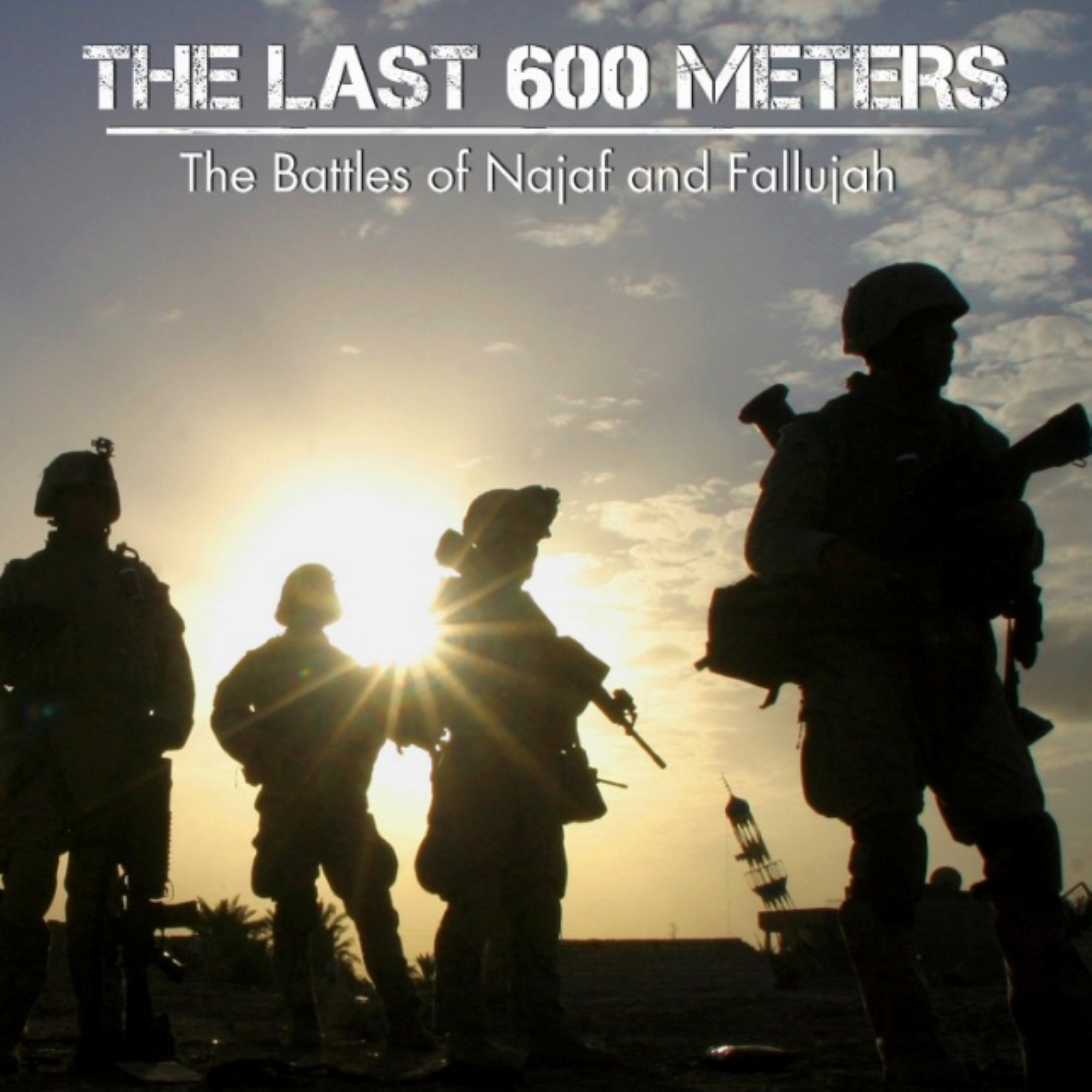
On this episode of Newt's World, the two deadliest battles of the Iraq War occurred in 2004. The Battle of Najaf was fought in the south against the Shiite Mahdi militia. The Battle of Fallujah was fought in the west against the Sunni insurgents. The Last 600 Meters tells the story of these battles not through narration, but through the words of those who fought there. I want you to listen to a sample of the audio of this new documentary by Michael Pack.
- [02:41]
Michael Pack
Foreign Policy I don't make it, I just deliver the last 600 meters of it.
- [02:46]
Newt Gingrich
The last 600 meters, the battles of Najaf and Fallujah premieres on PBS on Monday, November 10th at 10pm Eastern, 9pm Central and is absolutely worth watching. I'm really pleased to welcome my guest and friend Michael Pack. He is an award winning documentary filmmaker, president of Manifold Productions and has produced over 15 documentaries for public television, including Created Equal, Clarence Thomas In His Own Words. Michael, welcome and thank you for joining me again on Newt's World.
- [03:36]
Michael Pack
Thank you for having me back, Newt. Pleasure to be here.
- [03:39]
Newt Gingrich
The PBS premiere of the last 600 meters is on Monday, November 10th at 10pm Eastern. Significantly, the day before Veterans Day, can you start by telling us what this film is about and why you chose to focus on these two battles from the Iraq war, Najaf and Fallujah.
- [04:01]
Michael Pack
Absolutely. It's not only the day before Veterans day, it's the 250th birthday of the Marine Corps. And these are mainly but not exclusively Marine battles. It's called the last 600 meters because a sniper in the film says, I don't make foreign policy deliver the last 600 meters of it, meaning what he could see through a sniper scope. And that's the purpose of the film, to tell these battle stories from the point of view of those on the ground, not to go into the politics and policy or should we not have been in the war. I have my opinions and I know for a fact you do. But this film is really about what it's like in the battles. Ground Truth, we like to say there is no narration. We just hear directly from participants in the battles, from corporals and sergeants to sort of one star generals who are in the field. And we organized the film as we got the footage, first of the most exciting, relevant parts of the battles and then found the people in them. So people are talking about what they see. And I should point out that we conducted the interviews in 2006 and 07 when these people were still young. They were still the same age in the footage. Their memories were fresh and it simply took a long time to get to broadcast on pbs. We had originally focused on technology and warfare, which as you know, was a big part of the beginning of the Afghan war with the Northern alliance on horses and our Special Forces helping them in close air support. But as I worked on the project back in 2006, 7 and 8, when the Iraq war was still going on, I saw that these were stories of big battles and they were although technology was important, they were not technology dependent. They relied a lot on the heroism, courage of the young men and women fighting there. And I saw those stories weren't being told. Everyone was enmeshed in the political discussion, and I wanted to tell those stories. So that's what we did. And I'm pleased that now, many years later, it's finally being broadcast in this very important slot as PBS's key documentary going into Veterans Day, I want to say if you miss it, you can see it on prime, starting on Veterans Day or Amazon. I'm not just prime and other streaming services. Well, it took so long because initially when we submitted it to PBS, a version in 2008, they felt it was too pro military. They said, whatever that really means, which it isn't. I mean, whatever that means, I don't think it is. And then they wanted me to add those political stuff that we consciously took out. And every few years we begged them to put it on the air. And then just this last year, the president of pbs, Paula Kurger, who I know you know, I think courageously reversed these 17 years of other decisions, saw it with fresh eyes, saw that it was a good film, which no one has ever denied about it, and took the decision to put it on the air and in this prominent position. So I am grateful for that.
- [06:50]
Newt Gingrich
You're dealing with young men and women who have been through a tremendously difficult experience, and many of them really are cautious about going back psychologically and revisiting what they had lived through. How do you, as a filmmaker and a storyteller, how do you get them to open up and talk on camera?
- [07:14]
Michael Pack
It takes a long time. It's really part of the work of these films. You are right. They don't usually like to talk about these things, and you end up having to spend a lot of time with them before you start filming. I like to say each film has its definitive kind of food. So with these young Marines, the corporals and sergeants, it was a lot of pizza with meat on it and beer that you had to eat and drink over a lot of time to get them to agree to open up. And I'm honored that a large number of them did. We recently had a screening in Washington where a lot of these veterans came, and a lot of them now want to show it to their wives and their children and their family because they still can't talk about it. And it's a way now of talking about it to them. I'm honored they gave us the benefit of their stories and that we could tell them. And now we have preserved them for all time. I mean, I think it'll be just as relevant ten years from now. And as you know, it's important to tell these battle stories. You have spent a lot of time, I know, at Gettysburg, but we need to tell these stories. Gettysburg or Iwo Jima, the great battles that have defined America. And in the case of Fallujian and Joff, this is a kind of warfare that the world is still engaged in in Ukraine and in Gaza.
- [08:28]
Newt Gingrich
Najaf is a fairly limited battle. About 30 US troops are killed. The estimates are that the Mahdi army may have lost as many as 1500. Fallujah was a real problem because we went in first in April and May of 2004 and basically failed to get total control of the city. At the end of that fight, insurgents still had large control of the city. When we back in the second time, which was In November and December 2004, we had built up overwhelming power, and it was still one of the bloodiest battles of the war. We had 95 people killed and 450 wounded, and we killed over 2,100 insurgents. You're describing what was a very, very difficult fight. What led you to pick those two battles?
- [09:21]
Michael Pack
You describe it well. I mean, this arc of time from the first Battle of Fallujah, March April 2004, through November, the second battle really encapsulates a lot of the challenges of this kind of warfare against, as you said in the introduction, Sunnis as well as Shia. And each of them have a complex political situation. Now, we don't talk about whether politics are good or bad, but you see its impact on the Marines and soldiers in the field. As you said, the first battle of Fallujah, which started because four Blackwater contractors were murdered, burned, dragged through the city of Fallujah, and two of their charred bodies were hung from a bridge while Iraqis and children celebrated and danced under the bodies. And it so horrified people that the order was to clear that city. And the Marines clearing the city, Al Jazeera and others, were able to spin it and make it look out of proportion and violent to the point where the Iraqi government pressured the US to stop, as you said earlier, and pull out and hand Fallujah essentially over the insurgents to run as their own fiefdom until the second battle of Fallujah. But even though that battle feels inconclusive, its very inconclusiveness is emblematic of a certain aspect of this war and this kind of battle where you can't just clear the city as you would want to, as the Marines said. And we don't talk about why that decision was made, but what is it, how the people felt? As one of the people we interviewed said, well, now we're dealing with these people. We're making a deal to give them Fallujah. Yesterday we were killing each other and now we're negotiating with them, as he said. But What's a few RPGs between friends? A very sarcastic, bitter comment by a great and heroic Marine. But you get a feeling of what it's like to be pulled one way or another. And it was very similar in Najaf, a very significant battle in the sense that it's a holy city of Shia Islam and it focused on the Imam Ali shrine there, one of Shia Islam's holiest sites. So you can see the politics of the Shia part of Iraq affecting the troops. And Iraq is I think 70% Shia. So it's pretty significant. So the arc of the battles gives you a good picture. And the battle of Najaf was much more of a combined arms battle with army and Marines. So looking at all three enable us to give a feel for three different variations on urban warfare, counterinsurgency, its problems politically in that sense, and on the ground for the soldiers and marines that were fighting it. And I think a very clear picture emerges of what this kind of warfare is like. And I think the most close modern contemporary analogy is Israel fighting in Gaza where Hamas uses a lot of the same techniques that the insurgents did in Iraq, hiding behind civilians, making hospitals your headquarters, sheltering in mosques that can't be bombed, et cetera. So it remains relevant in terms of contemporary warfare. But it's important to understand it historically.
- [12:24]
Newt Gingrich
Too.
- [12:35]
Anabe Sofa Advertiser
Tired of spills and stains on your sofa? Wash away your worries with Anabe Annabe is the only machine washable sofa inside and out where designer quality meets budget friendly prices. That's right, sofas start at just $699. Enjoy a no risk experience with pet friendly stain resistant and changeable slip covers made with performance fabric Experience cloud like comfort with high resilience foam that's hypoallergenic and never needs fluffing. The sturdy steel frame ensures longevity and the modular pieces can be rearranged anytime. Shop washablesofas.com for early Black Friday savings up to 60% off site wide backed by a 30 day satisfaction guarantee. If you're not absolutely in love, send it back for a full refund. No return shipping or restocking fees. Every penny back Upgrade now@washablesofas.com Offers are subject to change and certain restrictions may apply.
- [13:35]
Dutch Vet Service Advertiser
Time is precious and so are our pets. So time with our pets is extra precious. That's why we started Dutch. Dutch provides 24. 7 access to licensed vets with unlimited virtual visits and follow ups for up to five pets. You can message a vet at any time and schedule a video visit the same day. Our vets can even prescribe medication for many ailments and shipping is always free. With Dutch, you'll get more time with your pets and year round peace of mind when it comes to their vet care.
- [14:06]
Anabe Sofa Advertiser
This is the story of the One As a custodial supervisor at a high school, he knows that during cold and flu season, germs spread fast. It's why he partners with Grainger to stay fully stocked on the products and supplies he needs, from tissues to disinfectants to floor scrubbers, all so that he can help students, staff and teachers stay healthy and focused. Call 1-800-GRAINGER, click grainger.com or just stop by Granger for the ones who get it done.
- [14:44]
Newt Gingrich
Since you are going to show this the evening before Veterans Day, what does that tell you about how important our veterans are and what they go through to serve the country?
- [14:58]
Michael Pack
It's incredible what we ask them to do. One of the people we interviewed, Seth Moulton, now a Democratic congressman from Massachusetts, then a lieutenant in the Marine Corps in Najaf, someone in his platoon, he tells the story, is underneath the hotel underground, no air support and the room is so close that neither he nor the insurgent can get their rifle out. So they both pull their bayonets and it's a knife fight until the US Marine stabs the insurgent in the eye and kills him. It's a brutal hand to hand combat. It could have been 100 years ago. And we asked them to show this kind of courage and grit. And there are many instances of that in the film. And one of the reasons I am happy that it's playing before Veterans Day because I really think Iraqi war veterans have not quite gotten their due. And the Afghan veterans as well, people don't like that war, a lot of them. People have mixed feelings about it. People would rather forget it, but that doesn't change the heroism of the young men and women over there. And we do need to celebrate that on Veterans Day. And I think what veterans want, I mean there's a big focus on Iraqi war veterans, on PTSD and difficulties coming home. And that's all important. But I think what veterans want is for us to understand what they did to look at their deeds and celebrate them, not just look at their troubles and struggles. I hope my film contributes to that.
- [16:22]
Newt Gingrich
Having immersed yourself in this, what's the difference you sense between the war as it was actually happening and the war as it was being experienced by Americans at home in the U.S.
- [16:37]
Michael Pack
Well, I think that. I mean, one of the things was this sort of media spin on these wars. They dominate, and I think you lose a sense of the reality. And there was such a big emphasis on things which makes sense, like Haditha and Abu Ghraib. And that way it got covered, I think, contributed to the sense that these veterans are not honorable. And that has been a horrible thing. So that gap between how the media, US Media, covered it and what it was like on the ground, I think was sad. And now maybe enough years have gone by for us to look back on reality of what happened in a more dispassionate way.
- [17:20]
Newt Gingrich
You have shown this and have won top honors at the GI Film Festival in Washington and the Hudson Institute Film Festival, New York. What kind of response did you get from the audiences and especially from the veterans and their families?
- [17:35]
Michael Pack
Response has been overwhelmingly positive. When we showed it very recently in Washington with these veterans and their families, and we had the veterans on stage, it was like, you know, a kind of chance for veterans to sort of air their feelings and thoughts. It was very much, you know, the film sort of released a lot of buried emotions. I mean, they wanted to go on and talk for hours about the film, but also about things ancillary to the film. We also had a small grant at one point to show it at military bases around the country. And military people were incredibly positive, including senior military people. I mean, General Mattis called it classic, a way to understand grand truth without politics. And as did many other Marine generals, Kelly and Dunford, as well as younger Marines, whatever their different views of the war and their politics, I think gave me a feeling that we did capture something authent moving. I did make the film for those of us that are not veterans, that may not even know any veterans, to sort of better understand what they did there.
- [18:36]
Newt Gingrich
The way this film evolved, you go out, you do a tremendous amount of work, you find people, you interview them, you put together a remarkable film, and then it sits there for, what, 17 years?
- [18:51]
Michael Pack
Yeah, 17 years.
- [18:54]
Newt Gingrich
How do you deal with that level of frustration?
- [18:57]
Michael Pack
Well, as you know, I've made over 15 films that have all been nationally broadcast on PBS. You mentioned the last one, Created Equal, Clarence Thomas, In His Own Words, still streaming Amazon and elsewhere. This is the only one that's had that experience. And it always tugged at me. I mean, I promised all the people in it it would be nationally broadcast and it would get a big reception. And, you know, I didn't really manage to do it. And I mean, I begged PBS year after year. It was pretty upsetting. I will say that the Marines at that screening did say that I was like a Marine in my persistence to achieve the objective at all costs and not let up.
- [19:36]
Newt Gingrich
Was there a contractual reason you couldn't have taken it somewhere else?
- [19:40]
Michael Pack
I could have taken it somewhere else. The principal funder was the Corporation for Public Broadcasting. I mean, it felt like it should have been on pbs. I could have, you know, maybe I should have, but I wanted it on pbs. They put up the money. It felt right and it's a remarkable thing. I also thought I was going to have to update it a lot more, but I hardly did because we preserved a moment, the moment around the battle at any attempt to update it and impose the views of 2025 on it felt like it would make it dated. So I feel it holds up and I'm proud that it is out there now. It was something that bothered me for 17 years and now I'm happy about it. So you don't get that too often in life.
- [20:23]
Newt Gingrich
What are you currently working on?
- [20:26]
Michael Pack
Well, we have a new company, Palladium Pictures, and people can find out about that one@palladiumpictures.com and our older films@manifoldproductions.com so Palladium does two things. It does long form documentaries like the Last 600 Meters. We are doing short documentaries in partnership with the Wall Street Journal Opinion section. Two of them are ready available and not behind a paywall. @WSJ.com opiniondocs we have three in development on a variety of subjects, including withdrawal from Afghanistan or other military subject, but also Covid skeptics like Jay Bhattacharya and the Canadian Trucker Convoy during COVID And then we have an incubator program run by my son Thomas, whom you know, to try to train young, he likes to say non woke or maybe right of center filmmakers who are at least out of the mainstream and who have made a few short films and want to really expand their skill level. And we pay for the film, we give them a full budget and we oversee it and help distribute it. And we're in our third class. You can apply now@palladiumpictures.com and we feel strongly that, you know, even though I have lots of friends who are left of center, progressive documentary filmmakers who also make great films. There's a really imbalance in the documentary world, especially in this sort of storytelling documentary. Not just sort of ones that are preaching to the choir on the left or the right. The mainstream ones are dominated by people who really have a progressive agenda. And although Netflix and Amazon and others say they have like 30% nonfiction films and a significant percentage of those have a political twist, they're all on one side. And part of the reason is we need on the conservative side, need to develop our talent the way the people on the left have done for, you know, many decades. So we are making a start at it and I'm very proud of the so far eight filmmakers who've gone through it and I hope to build a community.
- [22:34]
Anabe Sofa Advertiser
Time for a Sofa Upgrade Introducing Anabe sofas where designer style meets budget friendly prices. Every anibe sofa is modular allowing you to rearrange your space effortlessly. Perfect for both small and large spaces, Anabe is the only machine washable sofa inside and out. Say goodbye to stains and messes with liquid and stain resistant fabrics that make cleaning easy. Liquids simply slide right off. Designed for cut custom comfort, our high resilience foam lets you choose between a sink in feel or a supportive memory foam blend. Plus our pet friendly stain resistant fabrics ensure your sofa stays beautiful for years. Don't compromise quality for price. Visit washablesofas.com to upgrade your living space. Today sofas start at just $699 with no risk returns and a 30 day money back guarantee. Get early access to Black Friday now. The biggest sale of the year can save you up to 60% off plus free shipping and free returns. Shop now at washablesofas.com offers are subject to change and certain restrictions may apply.
- [23:35]
Dutch Vet Service Advertiser
Time is precious and so are our pets. So time with our pets is extra precious. That's why we started Dutch. Dutch provides 247 access to licensed vets with unlimited virtual visits and follow ups for up to five pets. You can message a vet at any time and schedule a video visit the same day. Our vets can even prescribe medication for many ailments and shipping is always free. With Dutch you'll get more time with your pets and year round peace of mind when it comes to their vet care.
- [24:04]
Michael Pack
Every now and then I rinse it out and I need jammy rinse tonight and I need it more. My kid wears the bed and the smell never leaves. Please I don't know what to do I'm always in the dark The Swein dance smells like a dark downy rinse Fights stubborn odors in just one wash when impossible odors get stuck in.
- [24:42]
Newt Gingrich
Not to put you on the spot, but how many years have you been making films?
- [24:46]
Michael Pack
Well, my wife hates me to say this, but I would say I started my company in 1977 right out of college. And my first major PBS documentary was 1987. It was called Hollywood's favorite heavy about how business and businessmen are portrayed on tv. The era of Dallas and Dynasty. But we went to Hollywood to see why Hollywood writers and producers, what made businessmen villains. Do they hate businessmen? Do they hate capitalism? Do they know anything about capitalism? And so it's an amusing film about it. Issues still there, you know, still if your evil corporation is still behind every dystopian sci fi movie, and that was 87. So it's been many decades.
- [25:28]
Newt Gingrich
The reason I ask you that is given all of the technological changes we're living through, how much different is the process of producing film today? And how much greater, for example, for young new directors learning the trade, how much greater is their ability to do things less expensively, more creatively, more conveniently? Just because the technology's changed so dramatically?
- [25:56]
Michael Pack
I think the costs are lower. So we give in our incubator program $35,000 to these filmmakers to make a 15 minute film. You couldn't have done that back in 1987, where we're shooting 16 millimeter film. Expensive to buy, expensive to develop, expensive to edit. But on the other hand, a lot of this sort of AI animation, I mean you could do more and then it's also more expensive. So you can go up the chain. The high end documentaries like the last 600 meters or created Equal, the price is in some ways the same, even way up given inflation, but the production value has gone up with it. But a key thing really in this incubator program too is really storytelling technique hasn't changed and people, there isn't a way to short circuit that. So there's a tendency in our incubator fellows whose experience has been perhaps to make films for conservative groups like AEI or Heritage, to shortcut the process by just interviewing a bunch of experts to tell the audience what to think. And although I have a huge number of friends who are experts who tell me what to think all the time, that's not telling the story. You know, the Last of Centimeters has a few comments by historians, but it's 90% of these guys in the field telling their story. And that's what viewers want to Hear, you know, other things, Fox, msnbc, whatever. People tell you what to think all the time. And as much of that as you want. The business of documentaries is to get first person stories. And that's a skill. It goes back to what you asked earlier, Newt. Just getting them to tell their story. I had to spend a lot of time with them. There was no high tech way to do that. As I say, a lot of pizza and beer. I couldn't eat electronic pizza and beer. I had to eat the real thing. You had to spend time, they had to trust you. An attempt to short circuit that people read right away as a betrayal of.
- [27:49]
Newt Gingrich
Trust to tell stories. The way you tell stories is very time consuming. You know, you really have to slow down to the pace of humans and draw out of them and maybe do a two hour conversation to get four minutes.
- [28:08]
Michael Pack
It's very time consuming. For instance, these Wall Street Journal films that we're doing right now, they're like 30 to 40 minutes and we conduct six to eight interviews that are two hours long. People are always saying, well, why don't you just shoot the four minutes you need? But you can't really do that. You have to walk everybody through the story and figure out who has the crucial moment and how does it play off the other person. It is a huge amount of time. It's a lot of work by the editor and editors, and documentaries deserve more credit than they often get. And the editor of the last 600 meters, Joe Wedemeyer, for instance, did a great job. And you work closely with the editor. You spend a lot of time in the editing room trying this, trying that, trying, as you say, one bunch of four or five minutes from somebody and then a whole other different one until you can get it to work. It takes a lot of time. And that's another thing. Technology helps a little bit. You can get transcripts quickly through AI, but the trial and error and the figuring it out is in way back to the same low tech it always was. Maybe in that way it's like the last 600 meters combination of high tech like Spectre gunships and guys with knife fights.
- [29:15]
Newt Gingrich
Jim Mattis is an old friend of mine and, you know, I think he deeply personifies the whole Marine Corps sense that in the end, and this is totally appropriate in terms of their 250th birthday, we just had the Marine Corps Ball. You have all these young guys, but they are young guys who represent 250 years. And it takes a long time to build the kind of esprit de corps and commitment. That is sort of typical of the Marine Corps.
- [29:46]
Michael Pack
It really does. People always say, well, who needs the Marine Corps? It's not logical. They're not on ships like they were in the 18th century. Why can't they just be folded into another service? And if you are just looking at it logically, that makes sense. But then you would get rid of this incredible institution with incredible strengths that give America a huge war fighting capability just because of what you said, Newt, because of the tradition. And there is no Marine that isn't conscious of the 250 year tradition. A lot of Americans are not conscious of the history, but that is not true in the US Marine Corps.
- [30:21]
Newt Gingrich
I think in that sense, the last 600 meters is not only an important story about battles, but it's an important story about an American institution that is unique and that all of us can be proud of. And that coming up on the 250th anniversary of the founding of the Core, earlier than the Declaration of Independence. It's a remarkable thing and I think that what you've done is a real contribution to America and to understanding what it takes for America to be successful.
- [30:55]
Michael Pack
Well, thank you, Newt. That's high praise coming from you, a historian and a knowledgeable filmmaker, both as well as all your other qualities.
- [31:04]
Newt Gingrich
Well, we've been friends for a long, long time. I want to thank you for joining me. Your film the Last 600 the Battles of Najaf and Fallujah premieres on PBS on Monday, November 10th at 10:00pm Eastern, 9:00pm Central and will be available at PBS.org and the PBS app. Now we're going to have a trailer from the film.
- [31:29]
Michael Pack
It was almost as though there was a bogeyman out there. We were facing a more enemy than we had the capability to deal with. They dug trenches, they fortified houses. They were ready. We wanted to go. We were just waiting on the edge of a knife. When are we going to get to go? The order is seize the city. RPGs, small arms, fire from everywhere. I told him that I wanted to go and he looked at me and said, sergeant, you're gonna die. The destruction is just horrible. The hardest thing about fighting this enemy is they're not afraid to die. If they're not afraid to die, then how do you fight them? Ramstone down. Be prepared to start at one end of the city and fight your way through to the other end. There's firing going on. There are grenades being thrown in the house. It came hand to hand.
- [32:38]
Newt Gingrich
Fight. And it was so close.
- [32:41]
Michael Pack
Two selfless Marines run across this kill zone four times to pull Marines out of there.
- [33:02]
Dutch Vet Service Advertiser
I wasn't worried about, you know, getting shot or getting wounded. I was worried about the guys to my left and right.
- [33:11]
Michael Pack
You always want to reassure these men that they've done their duty because that memory is seared into their soul.
- [33:18]
Newt Gingrich
They.
- [33:18]
Dutch Vet Service Advertiser
They never forget it.
- [33:20]
Michael Pack
None them of us do. Foreign policy. I don't make it. I just deliver the last 600 meters of it.
- [33:40]
Newt Gingrich
Thank you to my guest, Michael Peck. Newts World is produced by Gingrich360 and iHeartMedia. Our executive producer is Garnesy Sloan. Our researcher is Rachel Peterson. The artwork for the show was created by Steve Penley. Special thanks to the team at Gingrich360. If you've been enjoying Newts World, I hope you'll go to Apple Podcast and both rate us with five stars and give us a review so others can learn what it's all about. Join me on substack@gingrich360.net I'm Newt Gingrich. This is Newts World.
- [34:27]
Michael Pack
What's that sound?
- [34:28]
Dutch Vet Service Advertiser
That's the sound of Downy unstoppable scent.
- [34:31]
Michael Pack
Beads going into your washing machine and.
- [34:32]
Dutch Vet Service Advertiser
Giving your clothes freshness that lasts all day long.
- [34:35]
Michael Pack
There it is again. It's like music to your ears. Or more like music music to your nose. That freshness is irresistible. Let's get a Downy Unstoppables bottle shake.
- [34:46]
Dutch Vet Service Advertiser
And now a sniff solo. Nice.
- [34:51]
Michael Pack
With Downy Unstoppable, you just toss wash. Wow. For all day freshness, this is an I heart podcast.