Loading summary
Transcript47 lines
- [00:00]
iHeart Podcast Announcer
This is an iHeart podcast.
- [00:04]
Anabe Sofas Advertiser
Time for a sofa upgrade. Introducing Anabe Sofas where designer style meets budget friendly prices. Every anibe sofa is modular allowing you to rearrange your space effortlessly. Perfect for both small and large spaces, Anabe is the only machine washable sofa inside and out. Say goodbye to stains and messes with liquid and stain resistant fabrics that make cleaning easy. Liquids simply slide right off. Designed for custom comfort, our high resilience foam lets you choose between between a sink and feel or a supportive memory foam blend. Plus our pet friendly stain resistant fabrics ensure your sofa stays beautiful for years. Don't compromise quality for price. Visit washablesofas.com to upgrade your living space. Today sofas start at just $699 with no risk returns and a 30 day money back guarantee. Get early access to Black Friday now. The biggest sale of the year can save you up to 60% off plus free shipping and free returns. Shop now at washablesofas.com offers are subject to change and certain restrictions may apply. This is the story of the One As a custodial supervisor at a high school, he knows that during cold and flu season, germs spread fast. It's why he partners with Grainger to stay fully stocked on the products and supplies he needs, from tissues to disinfectants to floor scrubbers. Also, that he can help students, staff and teachers stay healthy and focused. Call 1-800-GRAINGER Click grainger.com or just stop by Granger for the ones who get it done.
- [01:40]
Newt Gingrich
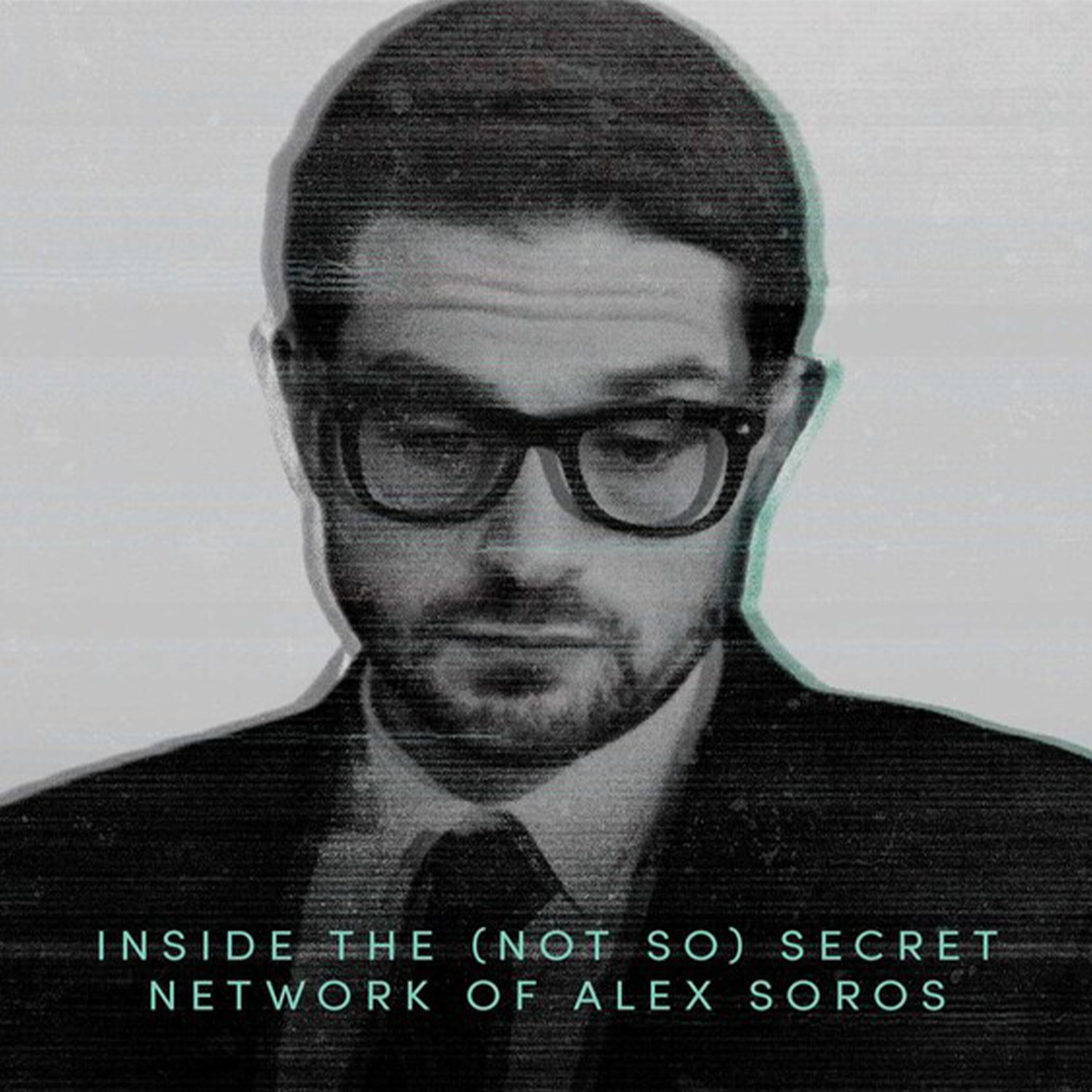
On this episode of Newt's World. The George Soros Empire is now the Alex Soros Empire and the son is even more radical than the father. In June 2023 it was finally made official. Alex Soros would be taking over the empire started by his father who has contributed $32 billion of his own money to the cause of left wing ideas. As the news broke, one question echoed around the world. What will the future of Soros influence look like? In his new book, the Inside the Not so Secret Network of Alex Soros, Matt Palumbo investigates the transformation underway. This is not the end of Soros backed radicalism. It's just the beginning. I'm really pleased to welcome my guest, Matt Palumbo. He's the content manager of bonginoreport.com and the best selling author of nine books. Matt, welcome and thank you for joining me again on newtsworld.
- [02:56]
Matt Palumbo
It's always good to be on with you. I think the George Soros book was the last we discussed together and a lot has obviously happened since then. I wrote a front cover story for the New York Post, and it was actually unintentional. They asked me to write a story and didn't tell me they were going to make it the front cover story. So that was an interesting surprise to wake up to one day in 2023. But that helped to kind of give the book new life and help spread it quite a bit. And one of the most surreal things that came from it was I got invited on Harris Faulkner's show, and she had me talk about the exact same topic they wouldn't let you talk about. So there is some bizarre shift in, I don't know, the normalization of going after George Soros or something. And I would like to think I maybe contributed slightly to that. I don't know if I can really claim credit, but I think the boogeyman status or people being afraid to even be accused of being anti Semitic or something for going after him has faded a little bit. So now we're all eyes are on the sun. And he is definitely much more open than his father in terms of his influence, which has helped me quite a bit in writing the book. I'm grateful to him for that.
- [04:09]
Newt Gingrich
Listen, before we jump into the book, which is, I think, a very important contribution to understanding what's happening and how things are going on, tell us just for a minute about your day job as content manager for the Bongino Report, which is one of the leading conservative news aggregators.
- [04:26]
Matt Palumbo
Yeah. So back in late 2019, I was working a very, very boring job at a bank I won't name. And I got a call from Dan Bongino, and he said, hey, I'm starting a new website and you're going to run it. And I thought, all right, perfect. I'm out of here. So, very shortly after we launched bonginoreport.com, it was a alternative to Drudge Report. And Drudge Forever basically was the leading conservative aggregator, pretty much the only one. There was a very noticeable shift to either the center left to the left in recent years under Trump. He seemed to have some sort of vendetta against Trump, and that influences coverage everywhere. There's been rumors that he sold the site, but I haven't seen the evidence that that's actually the case. So that was the genesis of Bungie UNO Report. And we just try to educate people the best we can on a diverse array of top mostly politics. But we throw, you know, sports and entertainment, health, fitness, and some other topics on the website just so it's more of a one stop shop. We have an opinion section that will feature yours truly quite often and a lot of other very well known authors. So that's what I've been doing. It's actually my last month there, but it's going to be in very, very good hands.
- [05:42]
Newt Gingrich
You have really, you and Dan have really built that into a very significant website in terms of conservative networking.
- [05:51]
Matt Palumbo
Thank you so much. Yeah, it's helped me a lot professionally and I know it's helped educate a lot of people. But I've made a lot of great contacts. I mean, I met you and your team through it, so it's helped me tremendously.
- [06:01]
Newt Gingrich
Before we get to your new book, I have to ask you, since you wrote Dumb and Dumber, How Cuomo and de Blasio Ruined New York, we sort of have gone way beyond de Blasio. I mean, what's your view of Zoran Mamdani as the new mayor of New York?
- [06:18]
Matt Palumbo
Well, fiscally we already know what's going to happen because it's going to be a continuation of what is already happening and there being a wealth exodus, a person exodus. And you know, as someone who is in New Jersey or even if you're in any surrounding state, even more liberals are leaving to join your state. So you know, not only is the exodus bad for the state itself losing people, the people leaving are predominantly liberals who don't understand cause and effect and don't realize that their own voting is what's causing the policies that caused them to leave. So they turn the surrounding states more blue. I mean Vermont very famously was a red state for a while. It was immigration from New York that turned it blue. So it's not going to be good for people like me in Jersey. But then also he is an anti police defund the police guy. His chief of staff supports putting social workers and sending them instead of police. And it's policies were just one question can collapse the idea. It's okay, what if they have a knife? What if they have a gun? And they always give some fantastical answer of well, in a perfect world they wouldn't have one. Well, we don't live in that world. Other ideas like having fare free buses or continuing to not enforce the fare on the subway has second order effects in terms of crime in that, you know, on an individual basis, you know, if I don't pay my fare to get onto the subway, okay, they're at three bucks. Someone who doesn't understand crime could say well the cost of processing you and blah blah blah is more than $3. So what's the point? And what they're missing is the second order effect in that of all people who commit crimes on the subway, and by extension the bus, basically 100% of them don't pay the fare. So it is a great filtering mechanism by enforcing that 100%. And for a long time, Costco, that was their business model, was to have a barrier to entry in terms of the fee you have to pay. And that pretty much filtered out anyone who would shoplift and it caused other sorts of problems. So we need that for, you know, just law and order reasons as well.
- [08:27]
Newt Gingrich
Why do you think Mamdani emerged? And I mean, he got 50% of the vote in a three way field. What do you think is happening?
- [08:36]
Matt Palumbo
Well, it's depressing that this works on adults. I would say he ran a good campaign in the sense that it's the campaign I would have run running for high school class president or middle school class president. And there's not going to be any homework and we're getting a skate park outside school. It was that kind of campaign. And whatever sort of fake charisma he had seems to fool the left. He has the almost identical fake smile that AOC has when they're trying to resonate with people. It really just worked. And his social media army was very effective as well. They would post videos of him just being a human being and blow it up as, oh my God, look how lucky we are to have him. Or things in that category, like him going to a bar or a nightclub and oh my God, when's the last time you can remember a candidate doing this? And I'm thinking, well, yeah, he wants to win an election. This wasn't rocket science here. He's trying to appeal to as many people as possible. So to be honest, the fact that he only got marginally over 50%, given how much he did out campaign his competitors, if you do a campaign adjusted basis, I think he would have lost when we out campaigned him. But it was enough to win. And we already know how the story is going to end. It only really ends positively if he can't get done anything he wants to get done. I saw a report yesterday he's going to be calling Donald Trump, I guess, to try to thaw out that relationship. Because Trump ahead of the election said he was going to freeze federal funding. He sort of walked it back. But Bloomberg yesterday was quoting Trump insiders as saying they do have certain programs in mind they're going to target potentially. So I think Zoron is going to try to maybe fall out that relationship or work with Trump a little bit, get on his good side, and maybe that will take the form of not going through uncertain policies. But there's no way this ends up well. We have hundreds of years of history to tell us exactly what's going to happen. We have states that have had government owned grocery stores. And if he does have those government owned grocery stores, we're going to have photos of New Yorkers coming to New Jersey, like Boris Yeltsin at the supermarket, all amazed that we have food in Jersey. So that'll be some amazing images.
- [10:53]
Newt Gingrich
To what extent do the limitations on the mayor, between the city council, the state legislature and the governor, to what extent is he less of a direct threat than his speeches would imply?
- [11:06]
Matt Palumbo
Well, I know Hochschule has cast doubt specifically in the free busing program. So that's at least one. Although it seems that for half of the city they already have a free busing program in that you just don't pay. And for the bus driver, it's not worth the confrontation. So maybe it's not much of a change there. And yes, he does need the city council to go along with the tax increases. I mean, I believe there's only five or six Republicans in their city council. So it just comes down to the senator left versus the progressive faction. How they decided to what extent was.
- [11:39]
Newt Gingrich
The impact of George Soros and Alex Soros and the money they pour into building these systems, to what extent did that help with the rise of Mondani?
- [11:50]
Matt Palumbo
So one of the group that got the most money that was helping Mondani was the Working Families Party. They've gotten many millions from Soros. Well, Alex and George both, and they are a third party that they do have representation in government. I think they have one or two seats in the Philadelphia City Council. But it's mostly an add on to the Democratic Party in that they will run their candidates as Democrats. And in New York they have fusion voting, meaning you can run as more than one party. So there is a single digit percent of the electorate probably that are Democrats who are so far left they are disillusioned with the party even as far left as it is and would only vote for a Democrat if they're also in the Working Families Party line and would vote for that candidate on the Working Families Party's line. Now, to get on that line you have to sign on with a bunch of very cartoonish far left policies. And this is basically what everyone at a climate hysteria protest or A Free Palestine protest believes being very anti cop tax billionaires and millionaires. And they never say how much, just always more so those kind of politicians. And Mamdani himself actually voted for himself on the Working Families Party line. So he clearly identifies with that faction and it is a socialist faction, but it's really the most successful third party we have in the country in that if you count people who are members of the Working Families Party plus the Democratic Party, they do have dozens of seats in New York legislatures and all of that.
- [13:29]
Newt Gingrich
I did not realize that he had voted on that line. What does that tell you? When he's done smiling, he actually is on the hard left.
- [13:38]
Matt Palumbo
He has the charisma of a used car salesman. Whenever I see that smile, I think you're trying to defraud me in some way. I don't know, it's just very bizarre to see because I think for us there's no way it's even convincing. But he's a wolf in sheep's clothing. He fundamentally, I don't know if he even views himself as American. And in fact, his mother himself, and this was 12 years ago, said that he doesn't. But the thing that was most notable to me during his election speech was that line where he says, you know, it's for the Senegalese taxi drivers, the Uzbek nurses. These were demographics I didn't even know were associated with these professions. I think it was like mad Libs. He was, all right, Uzbeki, okay, nurse, but we on the right have for decades criticized hyphenated Americanism. So African American, Hispanic American, Asian American. Instead of just saying American. And he reversed it, he dropped the American part. I've never seen that done before. So I don't know. He does seem to have an us versus them mentality. When AOC was at one of his rallies talking of the groups who built the country, he never mentioned the British or the Dutch. It was immigrant groups that have only been here for the past 30 to 50 years. So he I views himself and those who support him as separate from the rest of America, the country's standing stock. And we're also going to see that appear in his policies. He himself has called for taxing, in his words, richer, whiter neighborhoods. He made an effort to say whiter. So that's the kind of guy he is.
- [15:23]
Anabe Sofas Advertiser
Life gets messy spills, stains and kid chaos. But with Anibe, cleaning up is easy. Our sofas are fully machine washable inside and out, so you never have to stress about messes again. Made with liquid and stain resistant fabrics. That means fewer stains and more peace of mind. Designed for real life, Our sofas feature changeable fabric covers allowing you to refresh yourself style anytime. Need flexibility? Our modular design lets you rearrange your sofa effortlessly. Perfect for cozy apartments or spacious homes. Plus, they're earth friendly and built to last. That's why over 200,000 happy customers have made the switch. Get early access to Black Friday pricing right now. Sofas start at just $699. Visit washablesofas.com now and bring home a sofa made for life. That's washablesofas.com offers are subject to change and certain restrictions may apply.
- [16:23]
iHeart Podcast Announcer
This is the story of the One as head of maintenance at a concert hall, he knows the show must always go on. That's why he works behind the scenes, ensuring every light is working, the H Vac is humming, and his facility shines with Granger's supplies and and solutions for every challenge he faces. Plus 24. 7 customer support. His venue never misses a beat. Call quickgranger.com or just stop by Granger for the ones who get it done.
- [17:00]
Newt Gingrich
How did Alex end up becoming the heir?
- [17:03]
Matt Palumbo
He actually was not who people thought would be the first pick. A lot of people thought his son, Jonathan Soros was going to be the pick. I personally leaned towards it being Alex just because I knew that Alex was the one that was sort of accompanying him on his business trips growing up. And Alex through his social media for the past few years leading up to the announcement, just all the people he was publicly meeting with tipped me off that it would be him. But there was a article in Vanity Fair, I believe, that talked about this, and a lot of insiders actually thought that Alex was the wrong person to lead the organization. And if you've ever seen the guy speak, he's, you know, I'm not perfect myself, but he's not exactly Shakespearean. Someone who knows him described his speaking style as being like that of a record skipping. And I think if Anyone goes on YouTube and looks up a speech of his, they'll know exactly what I mean and probably laugh at that description a little bit.
- [18:03]
Newt Gingrich
So what do you think motivates Alex?
- [18:06]
Matt Palumbo
Well, I think he's to some extent a carbon copy of his father. I think that his father was to a large extent motivated not only by wealth and power, but power just for the sake of having it. And that was the life that Alex was groomed under from a very young age. He was following his father around on trips all around the world so, you know, while you and I were studying for our high school math tests, he was sitting in meetings with Nancy Pelosi and world leaders. And he flaunts it on social media every single day. It seems he is with someone new. He posted one with Mamdani. I think it was the night of or the day after the election. It was of note because he was actually in Europe when he posted that photo. Meaning he took it probably weeks prior, realized it might look bad if the anti billionaire candidate was pictured with a billionaire and then decided, all right, well, once the election's over, we can do that. And I'm told. So he has posted about 30 or so photos with the Prime Minister of Albania who is wildly accused of turning the country into a narco state. And I talk about that in the book. Maybe that's a tie in of why Alex loves being there so much. Maybe he's profiting from it. But the former Prime Minister told me he has flight logs that show something like 140 visits from Alex to Albania in the past couple of years. Meaning what he's showing us on social media as much as it is, is a microcosm of the true influence and he has officially, even before he took over, officially In June of 2023, he was posting a photo of himself introducing himself to the Prime Minister of North Macedonia. And the caption, the photo was, it's an honor to introduce my father to the president. Meaning it was a connection Alex himself had made and was now sharing them with his father. It was a total role reversal. I point out in the book. I know I'm rambling, so I'll wrap up on this. In the book, he mentioned that he had basically taken over operations in Europe in 2015. That was when George decided he was going to stop traveling there so often and he needed Alex to basically do his job there. So it caused me to reexamine a lot of the influence I had written about George's influence in Europe around those years and reanalyze, well, what's the evidence of actually being Alex there and have it all weaves together.
- [20:34]
Newt Gingrich
You point out that the level of penetration, for example, when Biden became president, there were some 17 people who came from one of the Soros funded operations. Some of them pretty important. I mean, Neera Tanden is a very major player, had been very big on the Clinton team, also worked for Obama, but she was president of center for American Progress, which Soros was a major, major funder of. Ron Clayton, this really surprised me. He's on the Board of the center for American Progress Action Fund, which is their lobbying arm. He was Biden's first White House Chief of staff and I think probably far and away his best chief of staff. When you go down this, you begin to realize they've really penetrated the system in some very significant ways.
- [21:22]
Matt Palumbo
Yeah. Then there was the three dozen or so meetings that Alex had at the White House. And a friend of mine who works at a site called NewsBusters, he's Joe Vasquez, he's kind of like their Soros guy. So I asked him if he wanted to go through all the White House visitor logs with me. And I don't know if this was because of the transition or if Biden's administration took them down, but those visitor logs actually got removed from the website at the end of his presidency. Joe. I don't know what possessed him to do it, but he happened to have archived them months prior. So without him, this chapter would have never come to fruition. Him and I spent about a month or so going through all of the visitor logs. And the real challenge was, well, let's try to figure out what those visits correlate to. And there was about two thirds of them. There was some sort of climate issue leading into the meeting or happening being announced within two weeks after it. So it might be a correlation, causation, coincidence, but in two thirds of the cases that's what would happen. And we thought it was just notable because our research had also shown, well, it was $438 million he spent on these climate causes. The first ever writings of Alex Soros publicly are on climate change. And that's kind of his issue. So that was our major correlating factor. But there was one day where in the morning the President of Kenya had visited the White House and it was at an event where Alex was their President. He was actually pictured with the President of Kenya. The President of Kenya was actually working with OSF at the time, USAID and all these green climate crazy deals and all that. And his reputation was kind of in tatters at home. There was a lot of corruption allegations. Something like half their national debt was in fact was linked to corruption. And this was viewed as an attempt to clean up his image by having him be the first Kenyan President to visit with Joe Biden. But that same exact day, just hours, I think seven or so hours later, Alex had a private meeting with Joe Biden. So after that, then all these climate related deals start occurring with Kenya's President in the White House and usaid. And it Seemed like a pretty interesting coincidence if it was one that all those people would be together and then and all these things linked to Alex would play out. So I think that was the biggest one that we found there. And also Patrick Gaspar, the former president of the Open Society foundation, ended up getting an ambassadorship late into the Biden administration as well.
- [24:02]
Newt Gingrich
You also have this, I think, intriguing strategy, dangerous strategy, where the Soroses have gone in and spent about $40 million to help elect about 75 district attorneys. And that's had a real effect on whether or not criminals get prosecuted. I mean, do you think that was a deliberate strategy to undermine the rule of law or what were they thinking?
- [24:29]
Matt Palumbo
Well, I would just say it has to be, you know, these law and order issues, the most predictable outcome is going to be the outcome. If you have someone who tried to murder someone unsuccessfully and a judge says, well, we're not going to give you any bail, you can go free. What do we think they're going to do? My guess would be they might try to kill the person they tried to kill unsuccessfully. If they are an arsonist, I think they might go consider more arson after this. The problem with these second chance judges is they think second chances are infinity chances. But a lot of them ideologically just empathize with criminals. They have this idea that just circumstance alone can exonerate you. If you had a rough childhood, that's good enough. And it was incredible that the Joe Biden of the 1990s, when speaking about the crime bill, of all people, said, I don't care if you had a rough childhood. If you're a criminal, you're a criminal. I'm going, what happened to that guy? That actually is the attitude that we need. Obviously that Joe Biden is long gone. In the first book on George, I looked through all of the crime increases under them and granted some of this was under the backdrop of the national crime wave in 2020 from the George Floyd protest. But in the places where there was the protests, plus the Soros da, the crime rate went up significantly higher. Where we had crime doubling in many cities with things like shoplifting, it's so high that in many places they don't even report it. And someone pointed out like the stats can be misleading in that if you are in a place where you have to over protect against it, you are to some extent imprisoning your own citizens because you won't imprison criminals. If I have to go into CVS and wait 30 minutes to get someone to unlock a roll of Deodorant. For me, that is a micro prison you're putting on your own customers because you won't do it to other people. And even if you had a scenario where, okay, you have Liberal City, where the theft rate is identical to Safe City, but in Liberal City, everything is locked up and in the Safe City, everything's on the honor system, are they really the same crime rate? And you can see in that analogy how misleading the stats are. In San Francisco, there was one month where there was a single Target store, just one Target location in the whole city. And they decided they were gonna test out a new System to report 100% of shoplifting incidents to the San Francisco Police Department just for one month. That month, the crime rate in the entire city doubled. And there are tens of thousands of businesses in the city. One business reporting every shoplifting incident doubled the city's crime rate. So that just goes to show you that the crime rates we see, as bad as they are, aren't even close to what they really are in those cities. And again, everyone knows this and Chasa Boudin was famously ousted. The margin of the vote was basically consistent with the percent of San Francisco's electorate that are Republican, meaning they kind of got kingmake status in that election. Without them, they might still have that da. So liberals will vote for the worst people possible and enable them to the nth degree. So I am cynical on this issue and that I think these judges know exactly what they're doing. I don't see how they couldn't possibly know it because it's the same result every time. There's never been a case where you let out a guy without bail who committed an attempted homicide and goes, well, that was nice. I won't make that mistake again.
- [28:12]
Anabe Sofas Advertiser
There's nothing like sinking into luxury. Annabe sofas combine ultimate comfort and design at an affordable price. Annabe has designed the only fully machine washable sofa. From top to bottom, the stain resistant performance fabric slipcovers and cloud like frame duvet can go straight into your wash. Perfect for anyone with kids, pets or anyone who loves an easy to clean spotless sofa. With a modular design and changeable slipcovers, you can customize your sofa to fit any space and style. Whether you need a single chair, loveseat or a luxuriously large sectional, Annabe has you covered. Visit washablesofas.com to upgrade your home. Sofas start at just $699. And right now get early access to Black Friday savings up to 60% off store wide with a 30 day money back guarantee. Shop now@washablesofas.com Add a little to your life. Offers are subject to change and certain restrictions may apply.
- [29:12]
iHeart Podcast Announcer
Run a business and not thinking about radio. Think again. Because more people are listening to the radio and iHeart today than they were 20 years ago. And only iHeart broadcast radio connects with more American than TV, digital, social, any other media. Even twice as many teens than TikTok. And that reach means everything. Just think about the universal marketing formula. The number of consumers who hear your message times the response rate equals the results. Now let's get those results growing for your business. Radio's here now more than ever and iheart's leading the way. Think radio can help your business. Think iHeart. Streaming, podcasting and radio where the reach is real. Let us show you@iheartadvertising.com that's iheartadvertising.com or call 844-844-Iheart one more time. Just call 844-844-iheart and get radio.
- [30:20]
Newt Gingrich
You write that George Soros did more than any individual to shape the narrative on drugs in America. Why did he do that and how long has he been doing it?
- [30:31]
Matt Palumbo
So since the 1980s. It was what became the Drug Policy Institute. And they started with marijuana, which was, I guess, ironically, the gateway drug to bigger drug decriminalization and legalization efforts, where you start with the least harmful drug and you have the rhetoric of, well, we really want to lock people up over a plan. And I've gone through the numbers. I don't think we really were ever locking people up. You were only getting locked up for marijuana, really, if you had a ton of it in your trunk or if it was in conjunction with other crimes. I went through the list once because there was, I think some libertarian group had 70,000 people that have been to jail for weed. And I went through just a dozen of them. And it's like, like a man committed an armed robbery, had marijuana on him. And I'm thinking, well, I don't think the weed was really the reason here for that, but that's how they would sell it. And they, through the media as well, convinced people this was something to be normalized. Then I think the narrative they then push after that was harm reduction, where it was, well, we're going to have people do drugs, so we might as well have it be safe. And that logic only works if there is a fixed percentage of the population. You're going to have hooked up to a heroin machine all day and go all right, well, something we can do, we got to make it safer. That's not how it works. When you normalize drugs and take away the stigma, you have people do more of them. And even if you can make drugs safer through these sorts of efforts, you also increase the volume by which they're used. So even if you made the drugs half as dangerous, if you're doing them twice as much, it nets out to zero. And I have stats there on the safe injection sites and, and all these sorts of efforts. And you also make surrounding areas way less safe in that you basically are sectioning off a part of town where you are going to have drug users congregating and no one else. Normally people can't go there, so you're going to have very shady people. It's going to increase crime there. So there's just all these second order effects no one is considering. And the real solution is when we just say you actually can't do drugs in the street. And if you're going to, we're going to have to put you somewhere and it's either going to be prison or some work program where you can't do drugs. And there's plenty of countries that do that. But we've convinced ourselves in this country it's cruel to stop people from destroying their lives.
- [32:56]
Newt Gingrich
I mean, you have this general picture of somebody very far to the left, very pro criminal, very pro drug, and yet, yet in Ukraine, at least on the surface, he seems to invest money in a way that's important to a country that's in danger of being overrun.
- [33:15]
Matt Palumbo
Yeah. So he has been making a lot of connections with the Zelenskyy administration. Basically Zelenskyy's number two is a guy he's been friends with quite a bit. They post pictures together on social media wishing each other a happy birthday. So I guess they're somewhat close. He has met with Zelensky a number of times. He donated a million dollars to a charity that his wife founded. Obviously, I don't have a problem with that. I don't have a problem with him helping Ukraine. The question just is, what is he going to do with the influence after the war? And I think it's going to be to sort of push a lot of the sort of social agenda. For instance, I have a whole chapter in Albania and his relationship with Prime Minister Eddie Rama. And just the last week or so they passed a law recognizing more than two genders. I talked to the former Prime Minister and I said, all right, just text him. And I'm like, so is this Alex Soros? And he just writes back, absolutely, it's Alex Soros. So I thought, okay, well, that makes a lot of sense. One tie in I did find there with his Albanian influence was there was a very large munition contract that Ukraine signed with Albania. And Albania was an odd choice because they don't have the capabilities to fulfill the contract. So they're basically just going to sublet that contract out to a different country, which I just raised the question of, why do you need a middleman? It just seemed like a favor for his friend Eddie Rama to make some extra money, given that they could have just contracted directly with whoever's going to actually fulfill the contract. So there was some minor corruption there that I think I found. It's a country that I think pay attention to for how he's going to try to liberalize the society afterwards.
- [34:56]
Newt Gingrich
This is a person, both father and son. Now, as you point out in your new book, the Air Inside the Not so Secret Network of Alex Soros, this is two generations of extraordinarily rich people trying to profoundly change the world in a direction that most of us would think is crazy. And they have the money to have.
- [35:19]
Matt Palumbo
A real impact, and they are succeeding. Yeah, I mean, it's. I mean, I don't know if it's funny or tragic that his spending is classified as philanthropy and it's, you know, the opposite of philanthropy. Another thing too is his spending too, in total, is understated because there was the USAID connection. And I had known of USAID from writing about George in the past and other left wing groups, but even I didn't realize the. The extent of it. And it is going back to the sort of Mad Libs analogy. It was just the craziest forms of left wing spending you could imagine. It would be like, all right, we're spending money on helping transgender raccoons learn dance therapy. I'm going, wait a second, what are we spending money on here? I might have made that one up.
- [36:04]
Newt Gingrich
I have a hunch that one, that one was not quite accurate.
- [36:07]
Matt Palumbo
No, it was. Things in that category of just this could easily be made up. And George Soros has been working with USAID since the 1990s. I found a document from 1993 on an early project there to train journalists in Eastern Europe to promote his agenda. And the way he would get funding from it would be both from directly getting money to groups that he controls. So in 2009, under Obama, he used his influence in USAID to basically change the rules on what you would have to do to get USAID funding. And it was sort of like that working families pledge. You'd have to sign on to a portfolio of just random left wing ideas like supporting legalizing prostitution, decriminalizing drugs, things the OSF supports. And this is even for groups that are not political. Would have to sign on to all of these things. And you'd have groups and you'd gone to who were going, I just want to build a. Well, why do I have to be on board with gay marriage all of a sudden? It was to flex control over a lot of groups globally and maybe someone would just have to fake it, but some of them would go along with it. And then he would receive billions of dollars to groups that were not even necessarily groups that he funded or founded, but groups that were adjacent, that had the exact same goals as him, that he would use to work in conjunction with him. The most notable group that he started was, was the East West Management institute which got 270 million from USAID. And it was actually the bulk of USAID funding that was direct to him. And that group is run by a woman named Alina Fizo and she is the ex wife of Edi Rama, the Prime Minister of Albania. And that group played a very large role in constitutional reform in Albania. And the consequence of that constitutional reform was it completely left their legal system in shambles. The percentage of people convicted for drug trafficking collapsed. There was a backlog for decades in cases that is still getting worked through. And it coincides with Albania becoming Europe's first narco state because they lack the capacity to prosecute these people. And I argue it is by design. There's an enormous amount of corruption in their permitting process to build buildings in Albania. And there is this, this paradox where there is a declining population, but there is a surplus, an explosion in housing construction, but it is all drug trafficking money. So they're building these high rises, no one is living in them. So it's not really adding to the housing stock. So the average rent there is $500 a month. That's basically 80% of the average salary. So if this was legitimate construction, they should have some of the cheapest housing in Eastern Europe up because it's all drug money. It is flooding the supply with housing that is not actually helping anyone. And I've seen estimates that Rahma the Prime Minister is worth hundreds of millions in euros, but hard to verify.
- [39:09]
Newt Gingrich
Let me just say I think that your new book, the Inside the Not so Secret Network of Alex Soros is available on Amazon and bookstores elsewhere, and combined with your earlier work on his father, you may well be the world's leading expert on the Soros family and their efforts to undermine the West. And I want to thank you for joining us. I think this has been fascinating and I know you're going to go on and serve the country. The work you've been doing is very.
- [39:39]
Matt Palumbo
Very important, means a lot from you. So thank you very much.
- [39:47]
Newt Gingrich
Thank you to my guest, Matt Pol Colombo. Newts World is produced by Gingrich 360 and iHeartMedia. Our executive producer is Garnji Sloan. Our researcher is Rachel Peterson. The artwork for the show was created by Steve Pendley. Special thanks to the team at Gingrich360. If you've been enjoying Newt World, I hope you'll go to Apple Podcast and both rate us with five stars and give us a review so others can learn what it's all about. Join me on substance@gingrich360.net I'm Newt Gingrich. This is Newt's World.
- [40:33]
Matt Palumbo
This is the story of the one As a maintenance supervisor at a manufacturing.
- [40:37]
Newt Gingrich
Facility, he knows keeping the line up and running is a top priority.
- [40:41]
Matt Palumbo
That's why he chooses Grainger, because when a drive belt gets damaged, Grainger makes it easy to find the exact specs.
- [40:48]
iHeart Podcast Announcer
For the replacement product he needs, and.
- [40:50]
Matt Palumbo
Next day delivery helps ensure he'll have everything in place and running like clockwork. Call 1-800-GRAINGER click granger.com or just stop by Granger for the ones who get it done.
- [41:03]
iHeart Podcast Announcer
This is an iHeart podcast.