Loading summary
Transcript68 lines
- [00:00]
Joseph Ziegler
This is an iHeart podcast.
- [00:04]
Anabe Sofas Advertiser
Time for a sofa upgrade Introducing Anabe Sofas where designer style meets budget friendly prices. Every anibe sofa is modular allowing you to rearrange your space effortlessly. Perfect for both small and large spaces, Anabe is the only machine washable sofa inside and out. Say goodbye to stains and messes with liquid and stain resistant fabrics that make cleaning easy. Liquids simply slide right off. Designed for custom comfort, our high resilience foam lets you choose between between a sink and feel or a supportive memory foam blend. Plus our pet friendly stain resistant fabrics ensure your sofa stays beautiful for years. Don't compromise quality for price. Visit washablesofas.com to upgrade your living space. Today sofas start at just $699 with no risk returns and a 30 day money back guarantee. Get early access to Black Friday now. The biggest sale of the year can save you up to 60% off plus free shipping and free returns. Shop now at washablesofas.com offers are subject to change and certain restrictions may apply.
- [01:05]
Joseph Ziegler
Tired of juggling sales tools or spending hours on prospecting just to book a few meetings? Meet Apollo, the go to market platform for finding leads, connecting with buyers and closing deals all in one place. Apollo gives you access to over 210 million contacts and AI that handles all your busy work, finding leads, drafting emails and even prioritizing your day. So stop paying for five different sales tools when one does it all. Visit Apollo I.O. and sign up free today.
- [01:34]
Grainger Advertiser
This is the story of the One as head of maintenance at a concert hall, he knows the show must always go on. That's why he works behind the scenes, ensuring every light is working, the H Vac is humming, and his facility shines with Grainger's supplies and solutions for every challenge he faces. Plus 24. 7 customer support. His venue never misses a beat. Call quitgranger.com or just stop by Granger for the ones who get it done.
- [02:08]
Newt Gingrich
On this episode of News World, Gary Shapley and Joseph Zigler made headlines when they testified before Congress revealing political interference, bureaucratic stonewalling and outright obstruction in the Hunter Biden criminal case. Despite overwhelming evidence, they watched as the system bent to protect the powerful. With the irs, FBI and DOJ failing to act as independent institutions. Their investigation ultimately led to Hunter Biden's federal conviction. But in a stunning last minute move, President Joe Biden pardoned his son, then went even further, issuing blanket pardons to other family members before leaving office. But this isn't just about Hunter Biden. It's about Two public servants who risked everything to expose corruption. Facing retaliation, isolation, and intense public scrutiny. Shapley and Zigler take us inside the high space battle between truth power. Here to discuss their new book, the Whistleblowers versus the Big Guy. I'm really pleased to welcome my guests, Gary Shapley and Joseph Zigler. Gary and Joe, welcome and thank you for joining me on News World.
- [03:37]
Gary Shapley
Thank you, sir. Great to be here. Great to meet you.
- [03:40]
Joseph Ziegler
Yeah, thank you so much for having us.
- [03:42]
Newt Gingrich
Let's start, Joe, with you. Can you start by telling us a little bit about your own background, how you got started at the IRS and how you first became connected to what became the Hunter Biden case?
- [03:54]
Joseph Ziegler
Yeah, absolutely. So I grew up in a small town in northeast Ohio. I'm an Ohio native. While I was there, worked at Ernst and Young prior to coming to the government. Decided to make the move into federal service. Moved over to the IRS in 2010, worked a variety of cases, from pharmaceutical drug diversion cases to captive insurance investigations. Worked a plethora of things. And then I was fortunate enough to join what is called the International Tax and Financial Crimes Group. It's a specialty group of agents, some of the best around the nation that work high wealth individuals who are potentially offshoring their assets to evade their income taxes. When I became a part of that group, was looking into another investigation. It was a social media company, a foreign social media company, and reviewing bank reports in that case, Hunter Biden was allegedly paying some Russian prostitutes that were also a part of that social media company. So his name came up in the bank reports. Normal course of what I do in my normal job was like, this is unusual. In the bank report, it cited that his ex wife and their divorce and their divorce proceedings claimed that her husband had tax issues. Got a diamond, very rare diamond that was high value. It really led into more kind of evidence. Started looking at the tax filings and he had unfiled tax returns for multiple years. So I'm like, this looks like a pretty good case. So I elevated it up through the process and that's where the story unfolds.
- [05:36]
Newt Gingrich
Gary, the same question for you. What led you from AmeriCorps and the Inspector General's office at NSA to IRS Criminal Investigations?
- [05:46]
Gary Shapley
Yeah, I mean, it's really a call of service. We live in the greatest country on earth and I always wanted to do the best for this country and provide my services to this country. And federal law enforcement seemed to fit where my educational background was and where I found some interest in. While I was in the AmeriCorps doing volunteer work and a volunteer income tax assistance site, oddly enough. So I over to IRS criminal investigation in 2009 from NSA. Very quickly got into the Swiss bank program in about 2013. I worked at Department of Justice tax Division for over five years, working on cases like Credit Suisse Resolve for 2.6 billion and then another Credit Suisse for 511 million recently and HSBC, PBRs and UBS. So my path took me into the international realm, especially Ziegler had already initiated this investigation when I was a manager elsewhere and then became the manager of the International Tax and Financial Crimes Group. And then I became Joe supervisor and the supervisor of the Hunter Biden investigation.
- [06:50]
Newt Gingrich
That's my path as the Hunter Biden investigation began to unfold. Did that surprise you guys? Was that differently you're spending all your time tracking down people who are breaking the law anyway. So was this in any way different? Just one more guy breaking the law?
- [07:06]
Joseph Ziegler
I actually didn't even know who Hunter Biden was. I saw the last name. I didn't know if it was a nephew. I didn't know if it was a brother. So name really didn't mean anything to me. It was facts of the case evidence that was in front of me. It really didn't. At any point early on in the investigation, it really the name Hunter Biden, I mean, it was former vice president, really. When I started digging into the facts, reading the news articles, reading all the information, it really started become apparent that all the different things that Hunter was involved in, from Ukraine to Romania to China, I mean, what it also said to me, or what it also showed to me is a lot of the money that he was making just didn't make any sense.
- [07:53]
Newt Gingrich
If I understand it in just straightforward, practical ways. Here's a guy who's not filing his income tax.
- [08:00]
Joseph Ziegler
That's not a complicated idea, not filing his income taxes. And then you also had for one of the early on years, 2014, there was a significant amount of money. He was earning a million dollars a year from Burisma and that income wasn't reported on his tax return. So now that elevates into a felony crime of potential tax evasion.
- [08:20]
Newt Gingrich
What do you think goes on in somebody's mind that they have a million dollars coming in and they don't report it? You know, if you're a real crook, if you're the mafia, if you're a drug cartel. But I mean, here's a guy who at least at one level was ostensibly normal and yet he thinks he can take a million bucks and not have to tell anybody about it.
- [08:45]
Joseph Ziegler
That's what goes into our investigations is an aspect of evading your income taxes, is willfulness. What was their mens rea. What was their mindset when they decided not to report this income? And that's what elevates something from being a civil issue to being criminal and into our hands. And that's part of what we have to look at. And I mean, like, when you look at what's in someone's mind, you look at the evidence, you look at, did they take acts to further hide their money from the IRS so that they don't have to pay income taxes on it? We had put forward evidence that showed that Hunter Biden had done that.
- [09:24]
Newt Gingrich
Do you think people like that just kind of think like they're invisible?
- [09:27]
Gary Shapley
I think it's likely that it was purposeful to not report that Ukraine income. Right. Because they knew that the engagement of his father in Ukraine and they knew what that looked like. Right. And it's similar to why the Department of Justice let the statute of limitations toll on the tax charges for 2014 and 15, which those were the years the Ukraine burisma income had come in. So they were trying to hide all the aspects of information from Ukraine because they knew underlying what was happening there. And look like we have to treat all these taxpayers the same at the end of the day. And the willfulness and the knowledge that he was evading his income taxes was clear by him pleading guilty to all the charges that Joe Ziegler recommended in the report in California.
- [10:14]
Newt Gingrich
Do you think that people like that just think that they're invulnerable?
- [10:20]
Joseph Ziegler
Yeah.
- [10:20]
Gary Shapley
I mean, at some level, they don't believe they're going to get caught. And, you know, it's possible that with, you know, his connections, he thought that it was never going to come to his front door. And the problem is that the Department of Justice did everything they could to make that come true.
- [10:35]
Newt Gingrich
That's the second big surprise to me and where your book's really important, because you guys, I mean, if you hadn't had the courage to stick to what you were doing, a lot of this would never have shown up because they were trying so hard to bury it. Given all the other big cases you'd handled and the kind of crimes you'd been dealing with, were you surprised by the degree to which the Justice Department was actively trying to discourage this case and trying to basically cover it up?
- [11:06]
Gary Shapley
I was very surprised. So surprised that it took US over two years of seeing this preferential treatment and stopping investigative steps from happening and removing political figures, figure number one from our document requests and search warrants for us to finally get to the point where we knew that Department of Justice was trying to hide this investigation and their conduct. Afterwards, after I became a whistleblower and was coming forward and after Special Agent Ziegler did as well, shows what their intent was. Right. Their intent was to not charge. They were going to offer a non prosecution agreement to them on May 15, 2023. And then that was right when I was coming forward to testify in front of Congress. So David Weiss in Delaware said to his USA said we have to get him to plead guilty. So that's when the two misdemeanor plea deal came up. And Chairman Jason Smith, the House Ways and Means Committee put in an amicus brief that had about a thousand pages that were Joe Ziegler and mine's testimony and the evidence that we provided. So that judge in Delaware threw out that plea deal. I've never seen that. I'm sure it's happened, but I've never seen that happen. This is what DOJ tried to do with the case. And then at that point, when the judge threw it out, the Department of Justice was completely stuck. They knew we were coming forward with the evidence. So that's when they started doing the right thing, which was charged him with a gun charge. A jury was peers found him guilty, charged him in California. He pleaded guilty to those violations. So if not for Joe Ziegler and I risking absolutely everything, this would have never happened. They would have never known what Hunter Biden did. And President Biden wouldn't have had to lie about pardoning him and then pardon him.
- [12:53]
Newt Gingrich
I mean, here you are as individuals up against a huge machine and up against an enormous amount of political power. How did you manage yourselves during this period? It must have been a tremendous amount of stress.
- [13:07]
Joseph Ziegler
Yeah, there was. Not only that, but we were facing retaliation at our job. Like there were multiple points to where we were isolated. A lot of the things that we were trying to do were just not getting approved. Flat out, not getting approved. I think that the way Gary and I handled ourselves in the best way possible, we had an extremely good group of attorneys at Empower Oversight. My attorney Dean Zerbe, Mark Lytle, we had a great team around us that I think helped us work through the process. But from Gary and I's perspective, we viewed this as a nonpartisan issue. This was something that is very middle of the road. You have a Department of justice that's protecting one family from any of this coming to the light of day. And I think that they did not expect Gary and I to be so buttoned up. And I mean, we heard from James Comer and various members of Congress that we were the best witnesses, whistleblowers that they have ever had, testified in front of their committees. Everything we said stood up.
- [14:11]
Newt Gingrich
When you are working in a large system, large bureaucratic system, and you suddenly stand out and you're prepared to take on the system and you go out there in public, it's a real risk and it creates real tensions in the larger system. What was it like after you had testified in front of Ways and Means to go back into the building and to go back into working with the people who realized that you were pursuing the truth in a way that many of them had not?
- [14:45]
Gary Shapley
It was actually a split, right? There's the leadership that is entrenched in the bureaucracy. Right. That they're just going to say status quo and they can't think outside the box and they're just really just following whatever Department of Justice told them to do. They weren't thinking what was right and wrong. The undercurrent of agents and the working folks that create the advantage to complete our mission on a daily basis. They were incredibly supportive. Covertly, right Overtly. No one would say anything, no one would providing support. No one was really there to help us mentally or to help us down the path. So that was very difficult, a very, very difficult time just being isolated and people fearing to come out and support us.
- [15:45]
Anabe Sofas Advertiser
Life gets messy spills, stains and kid chaos. But with anibe, cleaning up is easy. Our sofas are fully machine washable inside and out, so you never have to stress about messes again. Made with liquid and stain resistant fabrics, that means fewer stains and more peace of mind. Designed for real life, Our sofas feature changeable fabric covers allowing you to refresh your style anytime. Need flexibility? Our modular design lets you rearrange your sofa sofa effortlessly. Perfect for cozy apartments or spacious homes. Plus, they're earth friendly and built to last. That's why over 200,000 happy customers have made the switch. Get early access to Black Friday pricing right now. Sofas start at just $699. Visit washablesofas.com now and bring home a sofa made for life. That's washablesofas.com offers are subject to change and certain restrictions may apply.
- [16:45]
Grainger Advertiser
This is the story of the 1. As a maintenance supervisor at a manufacturing facility, he knows Keeping the line up and running is a top priority. That's why he chooses Grainger. Because when a drive belt gets damaged, Grainger makes it easy to find the exact specs for the replacement product he needs. And next day delivery helps ensure he'll have everything in place and running like clockwork work. Call 1-800-granger. Click granger.com or just stop by Granger for the ones who get it done.
- [17:24]
Newt Gingrich
First of all, it's a great tribute to your personal credibility and your personal sense of honor and duty. Do you think this is a unique problem that involved the President's son, or do you think there's an underlying pattern of hiding from law breaking and protecting powerful people who otherwise would be in deep trouble?
- [17:49]
Gary Shapley
I'm not tainted on the system, to me was hopefully an anomaly. But that's one of the things that the process and procedures that we're going to follow moving forward are going to ensure that no one is given preferential treatment. Everyone goes through the process. Right. And I won't be bullied into not working a case that should be worked. And we're just going to do the right things moving forward. So are there people that do the wrong things, that don't get caught? Yeah, that happens every day. But if they come across my desk and Joe Ziegler's desk, I can absolutely guarantee you they'll be treated the same as any other person that comes in front of our desk that's engaged in wrongdoing. And we're going to make sure that the right thing's done.
- [18:30]
Newt Gingrich
Given the lessons we're learning from this, are there things Congress should do to strengthen the protection of whistleblowers and to strengthen the ability to surface these things and bring them in public position?
- [18:45]
Gary Shapley
Senator Grassley has been fantastic. He's the patron saint of whistleblowers and he's a guy that supports people coming forward and getting the protections that they need that become whistleblowers and the protections. You think that there are protections for whistleblowers, but the actual process and procedures of whistleblowers are that you blow the whistle and then if you're retaliated against or you're fired, you're retaliated against and you're fired. And the law doesn't allow for those proactive protections of whistleblowers. We have to get a team together as whistleblowers and we have to fight improved that we retaliated against. So, yeah, we're working with Chairman Smith's office and we're providing some of Our lessons learned from our perspective on strengthening whistleblower laws. That's really what this book is all about. This is why we're really kind of taking an additional risk here. As whistleblowers, we want to support future whistleblowers, current whistleblowers. So all the profits from this book end up going to the nonprofit that supports whistleblowers. So that's our new mission, is to help whistleblowers come forward, forward and get the protections that they need to protect themselves.
- [19:59]
Newt Gingrich
Senator Grassia has really had an amazing impact, hasn't he? Really creating a much more practical and less dangerous environment for whistleblowers than existed 20 or 30 years ago. I mean, here's a guy who's in his 90s, still goes to farms every weekend, visits all 99 counties in Iowa every year is very tough and very firm. Did you find working with him sort of an interesting experience?
- [20:27]
Gary Shapley
He was incredible. He's so read in and he is so steadfast in his protection of whistleblowers and supporting whistleblowers. I mean, he's just an amazing individual, amazing person, and I can't say enough good things about him. Joe, what's your perspective?
- [20:45]
Joseph Ziegler
You look at the back of the book. I mean, he put his words, he put his mouth to support our book. And I think Gary said this. I want to mention this. I think that this is so important. Gary and I are not going to make a cent off this book. We're still current federal employees. So one thing that Gary and I, and I think that this is often overlooked, is that we want to be a support mechanism for future and current whistleblowers. We want to show people here is the right path to follow. Here is what you can do to bring your truth to the light of day. And that's why I think so important that the proceeds from this book are going to the nonprofit so that we can have money in there. And not only that, but the book really details what we went through, the investigation, what was going on in our personal life. And it really is a blueprint for people to see what a whistleblower is feeling as they're going through this entire process. While you have this other story about the Biden family and what they were.
- [21:46]
Newt Gingrich
Involved in, it seems to me that what you all did would not have happened without you, without people courageously taking on the whole system. They were just going to cover it up.
- [21:59]
Joseph Ziegler
They did not expect Joe Zigler or Gary Shapley to be involved in this investigation. It was apparent very early on that Department of justice wanted to investigate the case, but really didn't want to charge Hunter Biden. At the end of the day, that was by their actions, by what they were saying. You look at the terms that some of the prosecutors were saying. Optics. I don't know anywhere in the Department of Justice manual where it says optics should play into how you move forward with an investigation or how you make decisions. And it was very apparent that the Delaware U.S. attorney's office, David Weiss, were more concerned with their reputations, how they looked compared to actually working a proper investigation.
- [22:47]
Newt Gingrich
Ironically, that kind of blew up on him, didn't it?
- [22:49]
Joseph Ziegler
Absolutely.
- [22:50]
Newt Gingrich
I mean, they ended up looking bad, not good.
- [22:53]
Gary Shapley
Yeah, well, you know, it was a hard burden to get there. David Weiss never imagined, or Merrick Garland never imagined in a hundred years that Joe and I would have figured out what the legal process was to be able to put tax information in the public sphere legally with an active investigation ongoing. It's never been done before, and they knew that. So their risk was very low. They just assumed that we do something wrong and then we could get smeared and fired and discredited. And all the way into the middle of 2023, they were trying to make the case disappear. This wouldn't have happened without Joe and I. And I don't mean to be pretentious, but it's just the facts.
- [23:38]
Joseph Ziegler
What's so terrifying is that when I decided to become a whistleblower and we were removed from the investigation, that was my breaking point. I decided to come forward, and I actually wrote a heartfelt email to the commissioner of the IRS at the time, Danny Werfel, basically saying that this is a huge risk to the agency. You don't understand what the repercussions of this are. And it really was something that I thought that the commissioner would want to read that come to find out later that the deputy commissioner at the time actually deleted that email from his inbox. And I had also come to find out that that email was sent to Department of Justice, to our internal IG to investigate me for doing something wrong. So here is this agent trying to do the right thing, and they're doing exactly what you shouldn't do, retaliating against that whistleblower.
- [24:31]
Newt Gingrich
You all really illustrate the American system at its best, that courageous people willing to take real risk can take on the entire system and force it to confront a problem that it was desperately trying to avoid. In a sense, it seems to me that's a tremendous comment on the ultimate potential for citizens to influence their government and to take on corruption and to take on the powers that be. I mean, is that too positive and optimistic an explanation?
- [25:06]
Gary Shapley
Not from my perspective. Look, thank you for saying that this federal government is not perfect. Not every employee's perfect. Not every process is perfect. But there are people like Joe and I out there. We are here for public service. We are here to make this place better. And the bureaucracy wants to fight those improvements day in and day out. But even going through this process, I'll never be the same. I probably took 10 years off my life, if not more, with the stress that happened. But with all that being said, I would do it again if I had to. And I'm optimistic that we can turn this around. Maybe not make it perfect, but we can make improvements here that the American people will see and will have more confidence in the IRS and their government. And I hope that we're beacons for that for the American people.
- [26:08]
Anabe Sofas Advertiser
Time for a Sofa Upgrade Introducing Anabe Sofas where designer style meets budget friendly prices Every Annabe sofa is modular, allowing you to rearrange your space effortlessly. Perfect for both small and large spaces, Anabe is the only machine washable sofa inside and out. Say goodbye to stains and messes with liquid and stain resistant fabrics that make cleaning easy. Liquids simply slide right off. Designed for custom comfort, our high resilience foam lets you choose between a sink in feel or a supportive memory foam blend. Plus our pet friendly stain resistant fabrics ensure your sofa stays beautiful for years. Don't compromise quality for price. Visit washablesofas.com to upgrade your living space. Today sofas start at just $699 with no risk returns and a 30 day money back guarantee. Get early access to Black Friday now. The biggest sale of the year can save you up to 60% off plus free shipping and free returns. Shop now at washablesofas.com offers are subject to change and certain restrictions may apply.
- [27:09]
Grainger Advertiser
This is the story of the one as head of maintenance at a concert hall, he knows the show must always go on. That's why he works behind the scenes, ensuring every light is working, the H Vac is humming and his facility shines with Grainger's supplies and solutions for every challenge he faces. Plus 24. 7 customer support. His venue never misses a beat. Call quitgranger.com or just stop by Granger for the ones who get it done.
- [27:44]
Newt Gingrich
When you look at all the cases you two have handled in your careers, to what extent are these kind of cases like the Hunter Biden case, an anomaly and to what extent, in general, does the system work pretty well?
- [28:00]
Joseph Ziegler
That's a great question. I mean, Gary and I, as senior advisors, I mean, part of what we're trying to figure out is, is this a systemic issue or is this an anomaly? What can we do to create further guardrails, potential policy that is going to treat every taxpayer the same, that is going to ensure that the right thing is done when these investigation, these audits, whatever the IRS may be doing, are done. Like Gary said before, I hope this is an anomaly. But what I'm very concerned with is you have a lot of bureaucrats, career government employees who are sitting in positions who have tremendous power. And when you have that, obviously they lean one side of the aisle, left or right, and they're having a huge influence on what is done specifically at Department of Justice. And what I've been encouraged by is, through this administration, is that they are trying to take a hard stance in an effort to clean house, to prevent some of these things, to make our government as apolitical when you work with Department of Justice, when you work with the IRS as possible.
- [29:14]
Newt Gingrich
Maybe I'm reading too much into this, but you all stand for the depth as we approach our 250th anniversary as a country. But you sort of really, along with Senator Grassley, stand for the notion that citizens have the right to take on the biggest machine, the most corrupt politician, the most powerful people, and that the larger American system, in the end, will rally to the citizens if they have enough courage and will, in fact, find a way to make things work, which we're seeing, I think, in the Hunter Biden case.
- [29:51]
Gary Shapley
We're examples of why this country is the greatest country on earth. Right? Like our forefathers created a system that was meant to move and to be flexible and to change and to take on new, new opinions and ideas. And it's all driven by the people, right? And I think that one of the things that gave me strength through this whole process was that I knew I was doing the right thing. I knew that I was coming forward for the right reasons. And I knew that the American people were going to see the things that the government was trying to hide in their dark places, right? And I was hoping that I was the light or I was bringing some of the light forward so that the American people can say, look, like, you know what, maybe I don't agree with those guys, but they came forward, and if someone else doesn't agree with something, they can come forward following what Joe and Gary did and really affect Positive change and keep this country, the great country that it is.
- [30:48]
Newt Gingrich
I have to ask one other thing which I've never understood, and that is that the whole process, Hunter Biden forgets his laptop, but this place and the guy who's repaired it finally gets tired of waiting. And so the laptop gets surfaced in a way that's really worthy of being in a movie. And then the system tries to pretend the laptop doesn't exist. There's this astonishing effort, including 51 senior intelligence officers who deliberately lie about the nature of the laptop. So if you look at the effort to cover up the mistake that Hunter made is a remarkable story. When did you all become convinced that the laptop was real and that it was at the heart of helping us understand what was going on?
- [31:39]
Joseph Ziegler
Well, I mean, as the lead investigator on the case, it was extremely early on. It was a meeting with the FBI to where they said, hey, we know about this laptop. It's at this laptop repair shop. And then that's when we obtained the laptop. And through my search warrant we were able to look at the contents of what was on that laptop. And there were multiple search warrants that were done throughout this investigation. And I think that that's one thing that is overlooked in this, is there was also a media cover up. There was a media censorship that they didn't want this. It was discredit, discredit, discredit. It's misinformation. When this was valid information, they couldn't dispute it. And the media companies went to great lengths to suppress the information. Almost like they went to great lengths to try and suppress the information. I can tell you it was a struggle for Gary and I when we were coming through the whistleblower process. We had a ton of media interest in it. But what was disappointing for me is it was a limited amount of media interest on the left side of politics. And we tried to do a concerted effort to be as middle centrist of the road, going on different media platforms to get the story out.
- [32:57]
Newt Gingrich
But you felt pretty clearly early on that this was the real deal.
- [33:02]
Gary Shapley
We knew laptop was real very early on. Especially Ziegler knew it and he confirmed it very early on. Obviously you were like, well, how can you and Joe sit there and see these 51 intel folks say these things in the media and put their names on this letter. If the record shows that. At that time I was sending emails to the Delaware U.S. attorney's office saying that we had to have discussions about this. And it prompted a very long meeting about the laptop that I documented in detail and delivered that to House Ways and Means Committee, who made that document public. And it clearly shows that it was Hunter Biden's laptop, that none of the information on there was manipulated. And these are one of the things that help confirm firm like other journalists, like Miranda Devine, who was working the laptop story, that helped them confirm that it was accurate. The second was, is that because Joe and I came forward, Hunter Biden got charged with that gun charge in Delaware. And what did the government, what did the Department of Justice enter into evidence in that gun trial? That laptop? It was absolutely his. They knew it was his the whole time. And they allowed the media narrative and censorship to occur to try to cover that up.
- [34:13]
Newt Gingrich
My sense, having been in politics for a fairly length of time, if the truth about the laptop had come out before the election in 20, I think that Biden would have lost badly because the laptop had so many different things in it that were crazy, particularly the relationship with Ukraine, that were just indefensible.
- [34:33]
Gary Shapley
There are many items that I believe were run afoul of the election. The rules of thumb, as Department of Justice and Merrick Garland call it. Right. There were search warrants in June 2020, physical search warrants of Joe Biden's guest house and some other locations that they didn't allow happen. And then they basically gave us a cease and desist from all investigative activity. And the election meddling memorandum signed by Merrick Garland clearly states that you can't choose to or fail to take investigative steps for the purpose of affecting, in reality or in appearance, any election. And they didn't let us continue this investigation six, seven months before the election even occurred. And that's why our day of action, where we actually went out and attempted to interview Hunter Biden and others, that occurred on December 8th of 2020. It was held. It was held. It was held until after the election. And then they even held it a couple weeks after the election because they said, oh, it's a contested election, so we can't do it. So then, of course, FBI tips off Secret Service and the Biden transition team about these impending interviews and how that's not obstruction, I have no idea.
- [35:49]
Newt Gingrich
When you put your career on the line, in some ways your life on the line, when you do what you believe is absolutely true and you really make progress, and then President Biden steps in, doesn't just pardon Hunter, but issues this very strange pardon for everybody who's not even charged with anything. I mean, as people who've tried to enforce the law, what was Your reaction to that?
- [36:17]
Joseph Ziegler
So having worked this investigation since 2018, I really didn't have any reaction to it. I mean, that's the president. He has the ability to do that, and that's his right in the office of the presidency. What I found very comical was that Gary and I, two government employees, continually changed the narrative from Joe Biden and the White House. If you look back at, I never had any involvement with my son's businesses to. I never benefited financially from my son's businesses. I never talked to my son about his businesses. The narrative continued to shift as Gary and I continued to go through the whistleblower process, provide additional evidence to the House Ways and Means Committee. So that narrative continued to shift. Same thing with the pardons. I will never pardon my son. It's flat out no pardoning my son. The preemptive pardon. That has never been done before. And then ultimately they changed that narrative, and now they do it. So what I found was very comical that we could have, by us speaking the truth, that the presidency of the United States had to change their narrative continually throughout the four years of his presidency.
- [37:29]
Newt Gingrich
Of course, that does fit the Emerson vision, that one man in the truth is a majority, and it's the best of the ideal American system.
- [37:38]
Gary Shapley
Yeah, that's correct. And the pardon didn't have a lot of effect on us, right? That was up to the President. It was a power afforded to the President. But we were successful here. You know, we brought to the American people to put in front of the American people what Department of Justice was trying to do. They were trying to give this preferential treatment and to hide the conduct of a very powerful family from coming forward. And if we didn't come forward, the American people wouldn't know it. We wouldn't learn the lessons that we learned to try to create a better process and system. Now. So the pardon didn't really affect us. I think we were still very successful and proven correct here. And I think that that's the basis for all a bunch of positive change.
- [38:19]
Newt Gingrich
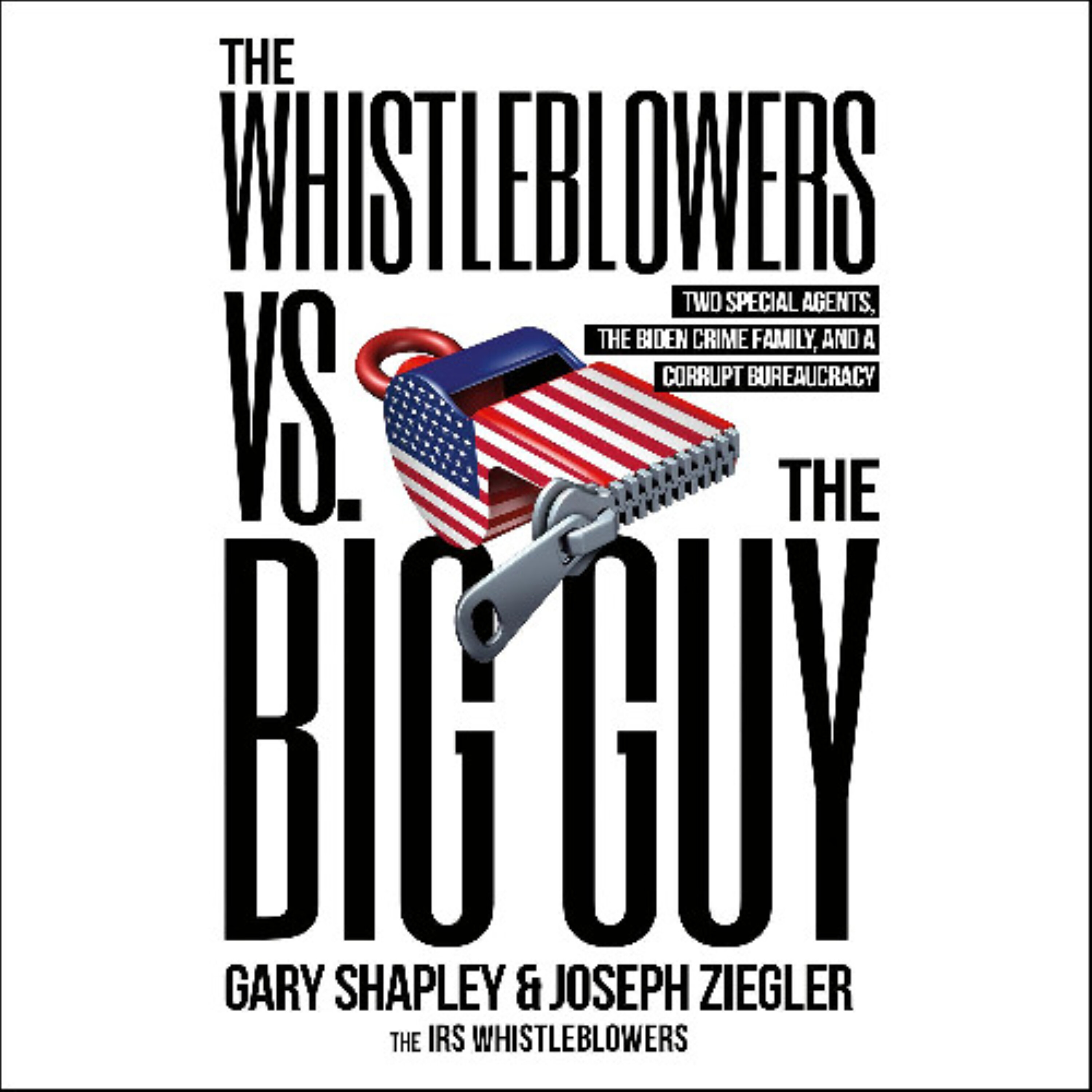
Now, what I'm struck with is that you two are literally classically American. There's this very deep tradition in the American system that just about the point that the whole thing is totally screwed up. Somebody has the courage to step out, take huge risks, and somehow in the end, the truth wins. And I think what's fascinating is that your book, the whistleblowers versus the Big Guy, two special agents, the Biden crime family, and a corrupt bureaucracy. This is, in a way, a perfect book for our 250th birthday. Because it is the deepest American tradition that one person in the truth is a majority, and that if you have the courage to stick to it, then in the end the system will drift towards the truth and away from the lies. And you two personify that, and you've paid a real price for it. And every American citizen owes the two of you a debt of gratitude for the commitment and the courage that you've shown.
- [39:27]
Gary Shapley
Thank you so much. I really appreciate that.
- [39:29]
Joseph Ziegler
Yeah, thank you so much.
- [39:34]
Newt Gingrich
Thank you to my guests Gary Shapley and Joseph Zigler. Newt World is produced by Gingrich 360 and iHeartMedia. Our executive producer is Garnzi Sloan. Our researcher is Rachel Peterson. The artwork for the show was created by Steve Pendley. Special thanks to the team at Gingrich360. If you've been enjoying Newts World, I hope you'll go to Apple Podcasts and both rate us with five stars and give us a review so others can learn what it's all about. Join me on substack@gingrich360.net I'm Newt Gingrich. This is Newt's World.
- [40:23]
Grainger Advertiser
This is the story of the One. As a maintenance supervisor at a manufacturing facility, he knows keeping the line up and running is a top priority. That's why he chooses Grainger, because when a drive belt gets damaged, Grainger makes it easy to find the exact specs for the replacement product he needs, and next day delivery helps ensure he'll have everything in place and running like clockwork. Call 1-800-GRAINGER click granger.com or just stop by Granger for the ones who get it done.
- [40:53]
Joseph Ziegler
This is an iHeart podcast.