Loading summary
Transcript52 lines
- [00:00]
iHeart Podcast Announcer
This is an iHeart podcast.
- [00:05]
Anabe Sofa Advertiser
There's nothing like sinking into luxury. Anabe sofas combine ultimate comfort and design at an affordable price. Annabe has designed the only fully machine washable sofa from top to bottom. The stain resistant performance fabric slipcovers and cloud like frame duvet can go straight into your wash. Perfect for anyone with kids, pets or anyone who loves an easy to clean spotless sofa With a modular design with changeable slipcovers, you can customize your sofa to fit any space and style. Whether you need a single chair, loveseat or a luxuriously large sectional, Anna Bay has you covered. Visit washablesofas.com to upgrade your home. Sofas start at just $699 and right now get early access to Black Friday savings up to 60% off storewide with a 30 day money back guarantee. Shop now@washablesofas.com Add a little to your life. Offers are subject to change and certain restrictions may apply.
- [01:05]
Elevate Health Advertiser
We all know those GLP1 injections work wonders, but that price tag almost gave me a heart attack. When my insurance denied coverage, I was staring at a choice between paying my mortgage or paying for weight loss. Talk about a rock and a hard place. Then I found Elevate Health Compounded semaglutide at just $58 with payment plans that don't require a second mortgage. Same medication, same results, but a price that real folks can actually afford. Visit joinelevate.com today. That's J-O-I-N E L E V A T E dot com. Your wallet will be as happy as your waistline. This medication is not FDA approved.
- [01:44]
iHeart Advertising Representative
You know what your customers are doing right this second? The exact same thing. You are listening to me. Which, let's be honest, is kind of flattering. But my point Is, ads on iHeartRadio actually get heard in the car, at the gym, on the couch while people are walking their dogs.
- [02:00]
Stephen Hunter
Who's a good boy? Who's a good boy? Boy, you're a good boy. That's right dude.
- [02:03]
iHeart Advertising Representative
You're a good so why not make the next ad about you? Get started today. Call 844-844-IHEART or go to iheartadvertising.com that's 844-844, iheart or iheartadvertising.com this is the.
- [02:16]
iHeart Podcast Announcer
Story of the one as head of maintenance at a concert hall, he knows the show must always go on. That's why he works behind the scenes, ensuring every light is working, the H Vac is humming, and his facility shines with Grainger's supplies and solutions for every challenge he faces. Plus 24. 7 customer support his venue never misses a beat. Call quickgranger.com or just stop by Grainger for the ones who get it done.
- [02:46]
iHeart Advertising Representative
Lowe's Early Black Friday deals are going fast. Don't miss up to 50% off select major appliances plus up to an extra 25% off when you bundle select major appliances and with Christmas around the corner, you're gonna need more string lights. Save $4 on GE LED 100 count string lights now just $5.98 Lowe's we help you save valid through 12. 3 selection varies by location. Select locations only while supplies last. See lowe's.com for more details.
- [03:20]
Newt Gingrich
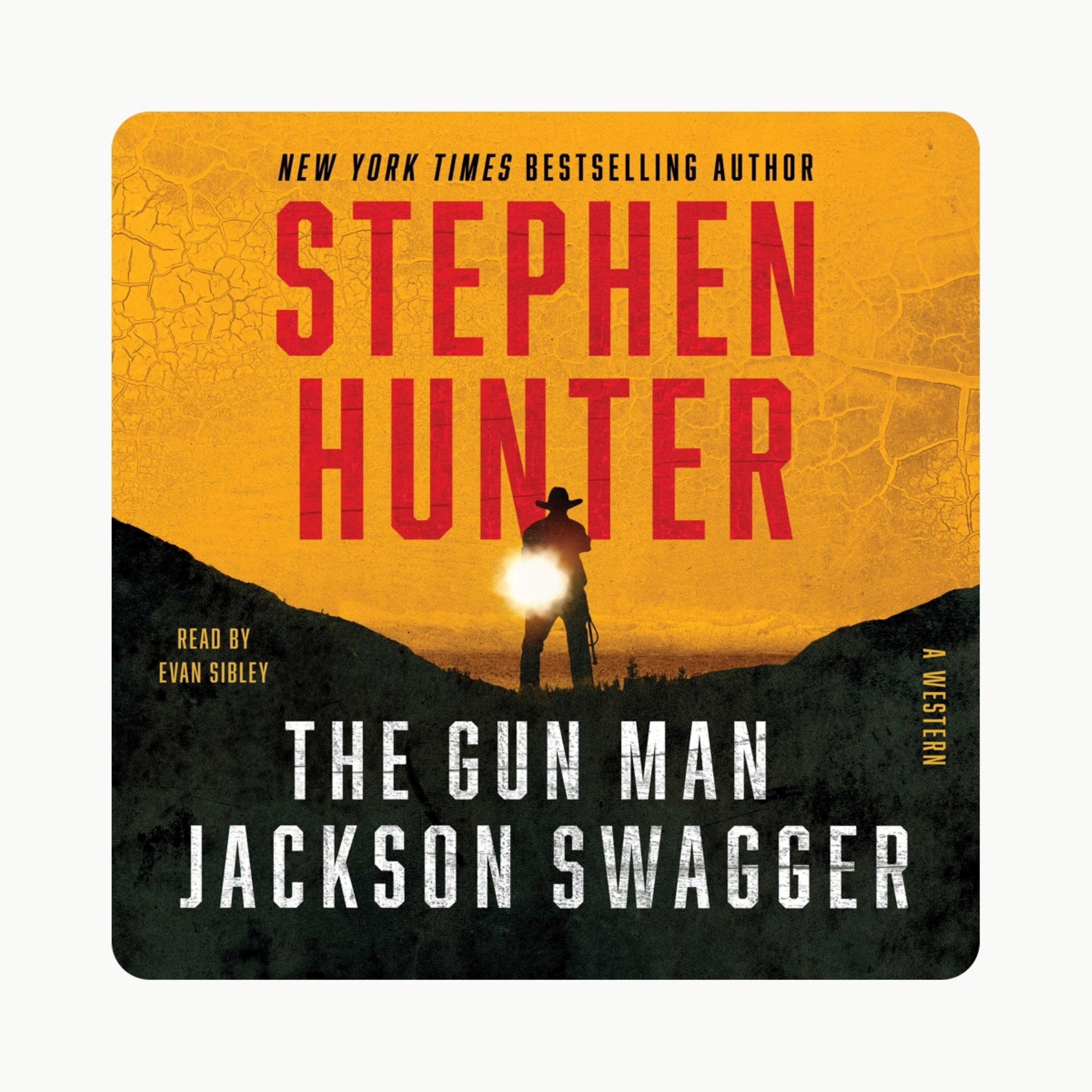
On this episode of Newts World. I am delighted to have one of my all time favorite authors back on the show, somebody who I admire greatly, Stephen Hunter. I've been reading his books about Bob Lee Swagger, starting with the very first one, point of impact in 1993 to targeted in 2022. He's joining me now to discuss his latest book, the Gunman Jackson Swagger, which I think is best described as a prequel because it's follows Jack Swagger on a ranch in the 1890s well before the rise of Bob Swagger. I am really pleased to welcome back my guest, Stephen Hunter. He is the creator of the Bob Lee Swagger novels as well as many others. He is the retired chief film critic for the Washington Post, where He won the 2003 Pulitzer Prize for distinguished criticism. He's also published two collections of film criticism and a non fiction work and his work is very wide ranging and I must say I find all of it fascinating. Steve, welcome and thank you for joining me on Newt's World.
- [04:48]
Stephen Hunter
Thank you so much for having me, Newt. I'm very excited. I'll try and control my excitement, but I don't know.
- [04:55]
Newt Gingrich
Well, hopefully our listeners will pick up a little bit of the mutual excitement here. You started at the Baltimore sun back in 1971. I was born in Harrisburg and grew up and was tutored by a local reporter who ended up running sort of a weekly newspaper. Was a great fan of the Baltimore sun, which at one time had probably the two best political reporters in the country as it was a great, great newspaper. What was it like to work at the Sun?
- [05:27]
Stephen Hunter
I got there in the 70s but the sun was still in the 30s. Well no, it was in the 50s and they didn't understand what was going on in journalism, which was under the aegis of the Washington Post Style section, the rebirth of feature sections and deep, long narratives, feature stories that rivaled magazine stories. And I was part of a radical movement to bring the sun into the 70s. And it was a very exciting time. It was a rough time. There were some labor difficulties. There's a gulf between the old timers and the hot new kids. We ultimately prevailed. I made some very good friends, people who are still my very good friends. There was a lot of turmoil. There was a lot of dialectic. There was a lot of energy in the paper for improvement. It was like a farcical version of the Russian Revolution, if you will. We could feel, you know, we thought history was on our side. We were very pompous because we were very young. We were very certain also because we were very young. And we took the paper in what I think was the right decision. And I believe that the sun's its next high water was in the 80s and particularly in the 90s, when John Carroll, who'd been managing editor of the Philadelphia Inquirer and had a lot of Philadelphia connections with the Enquirer, and he came, and he was also a part of the reform movement. I was on the sun for 26 years. I believe that in the 90s, that was the best sun. Since the 30s. Well, no, since the 40s, because the sun was very distinguished in its war correspondent, and it had guys on every beachhead in the war. I don't like to criticize it. You know, it's hard for me to criticize it, but it's been bought by someone. It's shrunk enormously. Newspapers all shrunk in the 2000s because the classified ads, which was a great river of money that poured through all newspapers, that dried up. You know, all of a sudden they couldn't afford luxuries like film critics and art critics and feature writers and all that sort of. To me, what was the fun, the heart of the business, they had to get rid of that. And now they're thin, they're dour, they've become insanely partisan. And frankly, I am at a very low point in my appreciation of American journalism. It's not journalism anymore. It's American propaganda, largely. And some great papers, the Post, I'm afraid to say, and particularly the New York Times, have drifted, floated. They've let their Trump psychosis destroy them. I think that all these people are going to look, when they're as old as I am, they're going to look at what they did. They're going to say, holy God, how? What on earth were we Thinking, I just think it's a shame and a crime.
- [08:41]
Newt Gingrich
You've been a book review editor, you've been a feature writer, and of course really made your name as a film critic. What was the biggest difference between being a book review editor and being a movie critic?
- [08:54]
Stephen Hunter
Well, I started both knowing not a whole lot about them. I thought I knew everything about them. And by the second week I realized I knew nothing about them. So I had to sort of self educate myself. Well, there's a difference between editing and writing. I'm not by nature an editor. In fact, my break in the novel writing business came when I got a note from a woman at a publishing house who I'd had lunch with. She'd come through Baltimore, and she said, you know, I know many writers and I know many editors. And I have to say that you do not have an editor's personality. You have a writer's personality. Do you have anything to show me? Well, I did, and eventually that was the Master Sniper, that first book. As I said, that was 45 years ago. I may have those facts slightly rearranged, but I'm pretty sure it actually happened. I'm almost certain that one's for real.
- [09:55]
Newt Gingrich
I think I've read virtually everything you've written, and you write as though it was a movie.
- [10:03]
Stephen Hunter
Thank you very much. It's not something I set out rationally to do, but because I had seen so many movies, the movies are just soaked into and taken over my consciousness. And I do movie stuff all the time. This book, the Gunman, is full of references to movies. And if you want to read it as a sort of a tribute to the American Western, you could do that. And you can decode it and you can have fun with it as a puzzle, figuring out what images I've taken, what scenarios I've taken, how I've rearranged them, how I've tried to make them fresh again. For me, that was much of the fun. As I bumbled along, I mean, one of my issues was, how many gunfights have we seen? 10,000 at least. Trying to figure out some way to make gunfights familiar and yet fresh. And I invested a great deal of time. And as you know, the end of the book is just a cascade of vengeance driven gunfights and injustice driven gunfights. And I tried very hard to keep them from being generic. You know, I didn't want Warner Brothers TV in the 1950s. I didn't want that. I wanted each of them to have a different texture and a different feel and A different orientation and a different point of view. And that to me was extraordinary fun.
- [11:40]
Newt Gingrich
One of the characteristics, I would say, of your books is that you learn things and you see specifics. And in some areas your mastery of weapons or of situations is remarkable. And this book is a perfect example because, you know, it's entitled the Gunman Jackson Swiger. And you make the point at the very beginning of the book, which I never thought about, that our version of what we call, say the gunfighter didn't exist in that period. Just talk for a minute about this whole notion that the American mythos about the cowboy and the 45 is a remarkably short period. It was a very intense period. But it's somehow imprinted in our culture on a scale that is amazing.
- [12:30]
Stephen Hunter
Well, I can say this, that one of the missions, if you will, of this book was to restore that figure. I mean, he has fallen into banishment and exile and disrespect, which I think is a crime. When you lose your gods, you lose everything. It's ruinous to your values and to your self confidence, to your self belief. So in one sort of. I don't want to sound pompous here, I wanted to restore that character. I wanted to restore that myth. You're very on to something when you talk about the myth of the gunfighter, the myth of the righteous gunfighter. He's a key figure in our national culture for literally 65 years, from 1900 till 1965. The Vietnam War sort of eroded a lot of confidence and authority. And I think that had to do with them. Also the internationalization of the Western. They were taken over by the Italians, I would say brilliantly. Although some people will disagree with me, old school people will disagree with me, but they kind of lost their American flavor. And when they lost that, they sort of diffused and they lost their impact in the marketplace. And the whole generation wasn't raised by the standards, the moral standards, the standards of masculine pride, a need to ensure justice. An entire generation grew up without that. So in some tiny little fragment of a way, I was trying to restore that. Maybe it'll have some impact, maybe it won't. But it was fun trying.
- [14:26]
Anabe Sofa Advertiser
Life gets messy, spills, stains and kid chaos. But with Anabe, cleaning up is easy. Our sofas are fully machine washable, inside and out, so you never have to stress about messes again. Made with liquid and stain resistant fabrics, that means fewer stains and more peace of mind. Designed for real life, our sofas feature changeable fabric covers, allowing you to refresh your style. Anytime need flexibility. Our modular design lets you rearrange your sofa effortlessly. Perfect for cozy apartments or spacious homes. Plus, they're earth friendly and built to last. That's why over 200,000 happy customers have made the switch. Get early access to Black Friday pricing right now. Sofas started just $699. Visit washablesofas.com now and bring home a sofa made for life. That's washablesofas.com offers are subject to change and certain restrictions may apply.
- [15:25]
Elevate Health Advertiser
We all know those GLP1 injections work wonders, but that price tag almost gave me a heart attack. When my insurance denied coverage, I was staring at a choice between paying my mortgage or paying for weight loss. Talk about a rock and a hard place. Then I found Elevate Health Compounded semaglutide at just $58 with payment plans that don't require a second mortgage. Same medication, same results, but a price that real folks can actually afford. Visit joinelevate.com today. That's J O I N E L E v a t e.com your wallet will be as happy as your waistline. This medication is not FDA approved.
- [16:05]
iHeart Podcast Announcer
Run a business and not thinking about radio? Think again, because more people are listening to the radio and iHeart today than they were 20 years ago. And only iHeart broadcast radio connects with more Americans than TV, digital, social, any other media, even twice as many teens than TikTok. And that reach means everything. Just think about the universal marketing formula. The number of consumers consumers who hear your message times the response rate equals the results. Now let's get those results growing for your business. Radio's here now more than ever, and iHeart's leading the way. Think radio can help your business? Think iHeart streaming, podcasting and radio. Where the reach is real. Let us show you@iheartadvertising.com that's iheartadvertising.com or call 844-844. Iheart one more time. Just call 844-844-Iheart and get radio working for you.
- [17:05]
Stephen Hunter
When the road never stops, neither should your truck. Save on a wide variety of parts you rely on most at rush truck centers, from starters to clamps and seats to quarter fenders. Plus, for a limited time, take advantage of service specials on battery removal and replacement placement for 64.99 each, 24.99 for each additional battery, and starting and charging system inspections for $129.99. Visit iheartrush.com today to see all their current specials and keep Your truck and your business running strong.
- [17:42]
Newt Gingrich
I don't want to give away the plot, but you do have this older man who at the very beginning of the book is sort of coming out of the desert with almost nothing and who's very stoic, very self reliant. And ultimately when we start seeing him trying to survive and eventually come to realize that in fact he knows exactly what he's doing, I think it's one of the most compelling people you've written. It sort of unfolded backwards. You don't start by saying, look at this compelling person. You start by saying, look at this kind of non entity. And then he just kind of like peeling the onion. He just keeps growing and becoming more complex as the book goes on.
- [18:34]
Stephen Hunter
I thank you very much for those kind words and you're exactly true to me. That's a familiar arc. That's the Bob Lee Swagger ark. When we discover him, he's a bitter ex drunk, living in a trailer by himself deep in the forest. And one of the themes of the Bobby Swagger books is his restoration and his reemergence, his reacquisition of his superior skills, the re engagement of his mind, the re engagement of his values, the re engagement of his beliefs in his country and. And sort of restoring him to his rightful place in society. Underneath it, I see a myth. This myth doesn't formally exist except in my mind, but I see all the Swagger stories as the story of the usurped prince. I mean, he is by nature, by his skills, by his courage, by his values, he is nature's nobleman. But cunning operatives have colluded to destroy him and drive him away. And one of the things about the Bobbly Swagger books is that he reinvents himself. He reacquires his old grace and beauty and lethality, and he goes to work. And at the end, he's a family man living with a wife he loves, with two successful children and a part of the community, and is revered by all who know of him. And I never thought that would appeal to me, but in the end it really appealed to me at a very deep level. And I see some of that in the Jack Swagger character. In the beginning, as you say, we don't know who he is, but gradually we understand, as you say, he knows what he's doing. You know, you watch him go from a dirty old man in unwashed clothes riding a nag to the magnificent western hero. You know, he shaves his beard, he gets a haircut, he puts on his good clothes, he Gets his handguns, puts them in specially made holsters, and he goes to town. And he's an entirely different figure by the end than he was at the beginning, not only in and of himself, but in and of his impact on society. He ends up inspiring four Harvard boys who are utterly worthless, but who, under his tutelage, they learn immensely from him, and we hope that they will carry his spirit onward. And that's what the book was really about. At some level, I found that a very provocative myth, if you will, to fill in, to invent, to polish and to offer.
- [21:41]
Newt Gingrich
I don't know if you'll agree with this, but in a way, the book opens with the world impacting on him, and the book closes with him impacting on the world.
- [21:54]
Stephen Hunter
That's very true. He goes from passivity to assertiveness to, I guess you would say, aggression. That is part of his transformation. He has to learn what he's doing. You don't get this until later, but what he's doing is he's investigating, and he has to learn what happened in certain circumstances. And once he learns that and he understands the morality of that situation, he's free to act. And, you know, in that sense, he's liberated to become his old self again, because he has a confidence in himself that he has confidence in justice. He had confidence in righteousness. And that process was the pleasure of the book for its author.
- [22:44]
Newt Gingrich
You have created in the Swaggers, and in one of your novels, you actually go all the way back to the Revolutionary War period and show the early emergence of the Swaggers and then their movement west towards Arkansas. And now you've taken us into the 19th century, and then you've also shared with us the Swaggers who come out of World War I, World War II, Vietnam, and, of course, more recently, a young person who's married into the Swaggers. You've literally created the history of an entire family.
- [23:21]
Stephen Hunter
I mean, that's absolutely true, and it's just as remarkable to me as maybe it does to you, in that it was never my goal, and yet I found that extremely compelling as I was doing it. And I began to see the connections between people, and I began to track the characteristics that were transmitted generation to generations, and sort of the family opus, the family saga, the family myth. I found that most of it was generated by my unconscious, and it just arrived while I was at the keyboard, and I found that really interesting. And I never in my life thought I would do that. It was never one of my goals. I've never read the Foresight saga, so I don't know where it came from, except that on my father's side was an old wealthy landowning banking family in rural Missouri. And it had a lot of pathologies, a lot of drunkenness, it had some violent deaths. I never went into that deeply. But you're aware of the weight of it. And in some degree I was playing with that. Not literally, you know, it's by incident, but just the sense, the weight of family, the weight of inheritance, the weight of family tradition and how that plays out over the generations. Again, great fun and I'm glad, Newt, I am so glad you're getting it and I hope at least four or five other people do too.
- [25:05]
Newt Gingrich
It's pretty clear to me you did not sit down 25 years ago and outline the Swager saga that in fact is just year by year has grown around you and you've sort of reported on it to the rest of us.
- [25:20]
Stephen Hunter
That is exactly true. I think maybe it's a fanciful exaggeration of the Hunter family in rural Missouri in the early part of the 20th century on up through the 50s, but with the addition of lots of guns and lots of gun fights. Because I like those. I find them fascinating. But again, I don't want to go too far. And it's not a one on one correspondence. It's just kind of the miracle of osmosis, of feeling things that can't quite be expressed in words, but only through drama. And that's how it came out. I never would have accessed that, that pool of information had I not written these books. You know, the books made me invent. Well, it made me access and from vague memories create a family that I hope people believe in. Some will, some won't.
- [26:42]
Newt Gingrich
You dedicate the book to the old gods, John Wayne, John Ford, Jimmy Stewart, Gary Cooper, Sam Peckinpah, William Holden, John Wayne again, Viol and Taktar Gora, Sergio Leone, Clint Eastwood, Richard Boone, James Arness, Jack Mahoney and John Wayne. Again, I have to ask a couple questions. One, why Wayne three times?
- [27:07]
Stephen Hunter
Oh, because I wanted to identify him as a central figure of 50s masculine mythology. I was born in 46, so I entered the 50s at 4. And I left them at, let's see. No, I left them at 14. And that was the high water mark of the American Western. And every night on television, when I should have been doing my homework, I was watching westerns on tv. And every Saturday and Sunday I was going to the movies and seeing Westerns. 17ft tall by 35ft wide. And that imagery, those values, those landscapes, those guns, they just soaked into me because there was just an endless profusion of them. So Wayne was predominant in that world. And so I wanted to pay attention to him. Though at the same time, I have to say that I probably didn't do it at the time. But later, as a film critic looking back and going out of my way to see some of his movies that were. That preceded my consciousness like the three great cavalry Westerns he made with John Ford and a whole variety of other Westerns. Hondo and People Don't Even Remember Anymore. And I realized that, you know, he was the king of the genre and he was the alpha male of the decade. And I felt that it was a kind of a mischievous way to pay homage to that. And all those other chaps that I mentioned. All of them great in their own way, but somehow they wouldn't have existed without John Wayne as the central totem. I must say, I must apologize here. I left Audie Murphy out because he made a lot of Westerns and some of his best movies were Westerns. I've done a lot with him in the past, but I don't want to see these people forgotten. It's just too easy to forget. And one of the things I've always tried to describe my books or my work is a ceremony of remembering. That's why there's a lot of World War II in them. I don't want it to be forgotten.
- [29:32]
Newt Gingrich
I don't know if.
- [29:33]
Stephen Hunter
Do kids today even know who won World War II? I have no evidence whatsoever. I'm here to remind them that there was a great war and there were great men and there was a lot of blood shed in this country as we settled it. For reasons good and bad. I stand squarely facing the past. And I'm really not that interested in the future, even the present. But the past is very alive to me.
- [30:03]
Newt Gingrich
I'm three years older than you. So we literally experience culturally the same cycle. One of the names you have here, which I've always felt was underrated and had an amazing ability to dominate scenes, was Richard Boone.
- [30:18]
Stephen Hunter
Yes, he's a very good actor, and he was charismatic. He was not a handsome man. He had a lumpy face and he had sort of a brusque personality. But he was the Paladin series that lasted, I think, six years. And he was just magnetic. And he went on and had a great career as a secondary lead in all sorts of movies. It's just something about that gruff, grumpy Face and its refusal to get excited. It's something magnetic about him. I like saluting the people who built the movies or build the entertainment screen media on tv, as he did. He dominates every scene he's in, even when he's not supposed to.
- [31:08]
Newt Gingrich
That's right. It reminds me of a very famous story of John Ford finally making the Quiet man with John Wayne and Marino Hara. And she had never worked with John Wayne before. And there's a scene where she's supposed to work explode with anger. And Ford can't get her to explode. Fannie takes her off to one side and she says, well, I don't want to take the scene away from Duke. And Ford looks at him and says, honey, you're going to get as much of that scene as Duke gives you. Don't worry about it. Just explode. But the whole notion that whenever Wayne wanted to, he could dominate anything, that's very true.
- [31:48]
Stephen Hunter
And he was a comforting presence. What I liked about him, and I also like about Jimmy Stewart, was he was willing to show a dark side. His character in the Searchers is very dark, almost psychotic. And he was willing to go that far, just as Jimmy Stewart was willing to go that far. And It's a Wonderful Life. And I respect them for that. And you say, well, they're not great actors, meaning they could never play Hamlet. Well, Laurence Olivier could not have been the lead in the Searchers. So you play to your strengths.
- [32:21]
Newt Gingrich
Violence felt in their own right. They're actually very good actors.
- [32:24]
Stephen Hunter
Yes, that's true. And very professional. They always do their lines. They always hit their marks. They had impatience with people who weren't up to their level of professionalism. I mean, that's just to be expected. You find that same pattern in any professional organization.
- [32:41]
Newt Gingrich
If you watch them late in their life interacting in the Shootist as John Wayne literally is filming about him. Gunfighter who's dying while John Wayne is dying. The scenes of Stuart and Wayne are amazingly touching, I think.
- [32:56]
Stephen Hunter
Yes. So I agree with you on that. That's a very fine movie. The novel by Glendon Swarthout, which I quote in the beginning of my book. There's two really good vivid Westerns, so good that they were big bestsellers and they stood out from their genre and became mainstream hits. One is the Shootist and the other is True Grit. Charles Portis was a wonderful writer. He was a wonderful writer and both books made very good movies. And we are much the richer for them.
- [33:29]
Newt Gingrich
What are you now working on? What next adventure should we expect?
- [33:33]
Stephen Hunter
Well, that's problematic. I'm trying to sell a book. I've gotten enchanted with, believe it or not, Sherlock Holmes. I have a book in mind, a very elaborate plot called Sherlock Holmes, Gunfighter. I'm encountering reluctance in some professional world, and I don't understand why. One of the problems here is I'm not that interested in my career. I don't do the career things. You know, these younger writers know all the tricks. I don't know any of the. So I don't quite know what's going on and I don't know who to call and I don't know what to do. So right now I'm sort of floundering. But I hope to sell the book and publish it in 27. And then I have one more Bob Lee Swagger book. I'll just give you the title of that one. I would call it the Bob Lee Swagger Overture. And maybe that gives you some inclination as to what it's about.
- [34:39]
Newt Gingrich
Well, I can assure you, whatever you do and whenever you do it, we will be asking you to come back, have another conversation like this.
- [34:48]
Stephen Hunter
You've been so good to me, Newt. I really can't begin to tell you.
- [34:52]
Newt Gingrich
Well, think about how many hours I've gotten of joy reading your stuff so I could tell you you've been pretty good to me, too.
- [34:58]
Stephen Hunter
Thank you very much.
- [35:00]
Newt Gingrich
I want to thank you for joining me. It's always fun to chat with you and range widely. Your new book, the Gunman Jackson Swagger, is available now on Amazon and in bookstores everywhere. And I really do look forward to having you come back and join me again.
- [35:16]
Stephen Hunter
Thank you so much, dude. It was a great chat as far as I'm concerned.
- [35:24]
Newt Gingrich
Thank you to my guests, Stephen Hunter. New Twirl is produced by Gingrich 360 and iHeartMedia. Our executive producer is Garnesey Sloan. Our researcher is Rachel Peterson. The artwork for the show was created by Steve Pendley. Special thanks to the team at Gingers360. If you've been enjoying New World, I hope you'll go to Apple Podcasts and both rate us with five stars and give us a review so others can learn what it's all about. Join me on substack@gingrich360.net I'm Newt Gingrich. This is Newt's World.
- [36:09]
iHeart Podcast Announcer
This is an iHeart podcast.