Loading summary
Transcript23 lines
- [00:00]
iHeart Podcast Announcer
This is an iHeart podcast. Guaranteed human. Season two of unrivaled basketball is here and the talent is unreal. Paige Beckers, Nafiza Collier, Kelsey Plumb, Brianna Stewart and more are back to redefine the game. Unrivaled basketball season two, sponsored by Samsung Galaxy, tips off January 5 on TNT, TruTV and HBO.
- [00:19]
Public Investing Advertiser
Max support for the show comes from Public, the investing platform for those who take it seriously. On Public, you can build a multi asset portfolio of stocks, bonds, options, crypto and now generated assets which allow you to to turn any idea into an investable index with AI. It all starts with your prompt. From renewable energy companies with high free cash flow to semiconductor suppliers growing revenue over 20% year over year, you can literally type any prompt and put the AI to work. It screens thousands of stocks, builds a one of a kind index and lets you back test it against the S&P 500. Then you can invest in a few clicks. Generated assets are like EFTs with infinite possibilities, completely customizable and based on your thesis, not someone else's. Go to public.com podcast and earn an uncapped 1% bonus when you transfer your portfolio. That's public.com podcast paid for by Public Investing Brokerage Services by Open to the Public Investing Inc. Member finra SIPC Advisory Services by Public Advisors, llc SEC Registered Advisor Generated Assets is an interactive analysis tool. Output is for informational purposes only and is not investment recommendation or advice. Complete Disclosures available at public.comDisclosures bring incredible.
- [01:30]
Whim Sound Advertiser
Sound into every corner of your home this holiday with the new Whimsound Smart speaker. Get high resolution Audio with a 1.8-inch touchscreen, smart control and modern design in one powerful speaker for just $2.99. From Quiet Mornings to lively holiday gatherings, Whim Sound makes every moment sound better and feel better too. Get the gift of the season for the music enthusiast in your life or for yourself. Whim Sound Beautifully designed, effortlessly connected. Shop now at Amazon and search Whim Sound. That's wiimsound.
- [02:00]
US Ski and Snowboard Insider Promoter
The world's best ski and snowboard athletes are chasing medals. Now you can follow their every move. Join Insider, the official US Ski and Snowboard Fan loyalty program, and get premium viewing at World cup ski events, exclusive athlete meetups, discounts from brands you love and a custom welcome gift mailed direct to your doorstep this winter. Show your support as they race for the podium. Head to insider.usski and snowboard.org and and join today.
- [02:30]
iHeart Podcast Announcer
This holiday season. Give the gift of Incredible Sound with Vizio's full soundbar lineup available at Walmart. Transform any living room into a home theater with rich, immersive audio that brings every movie, show and song to life. Whether you're gifting a loved one or upgrading your own setup, Vizio soundbars deliver powerful, crystal clear sound that turns ordinary watching into extraordinary experiences. Stream your favorite holiday Playlist with the iHeartRadio app and discover how good your music can truly sound. Head to Walmart.com and find your perfect Vizio sound. Barr Today.
- [03:05]
Newt Gingrich
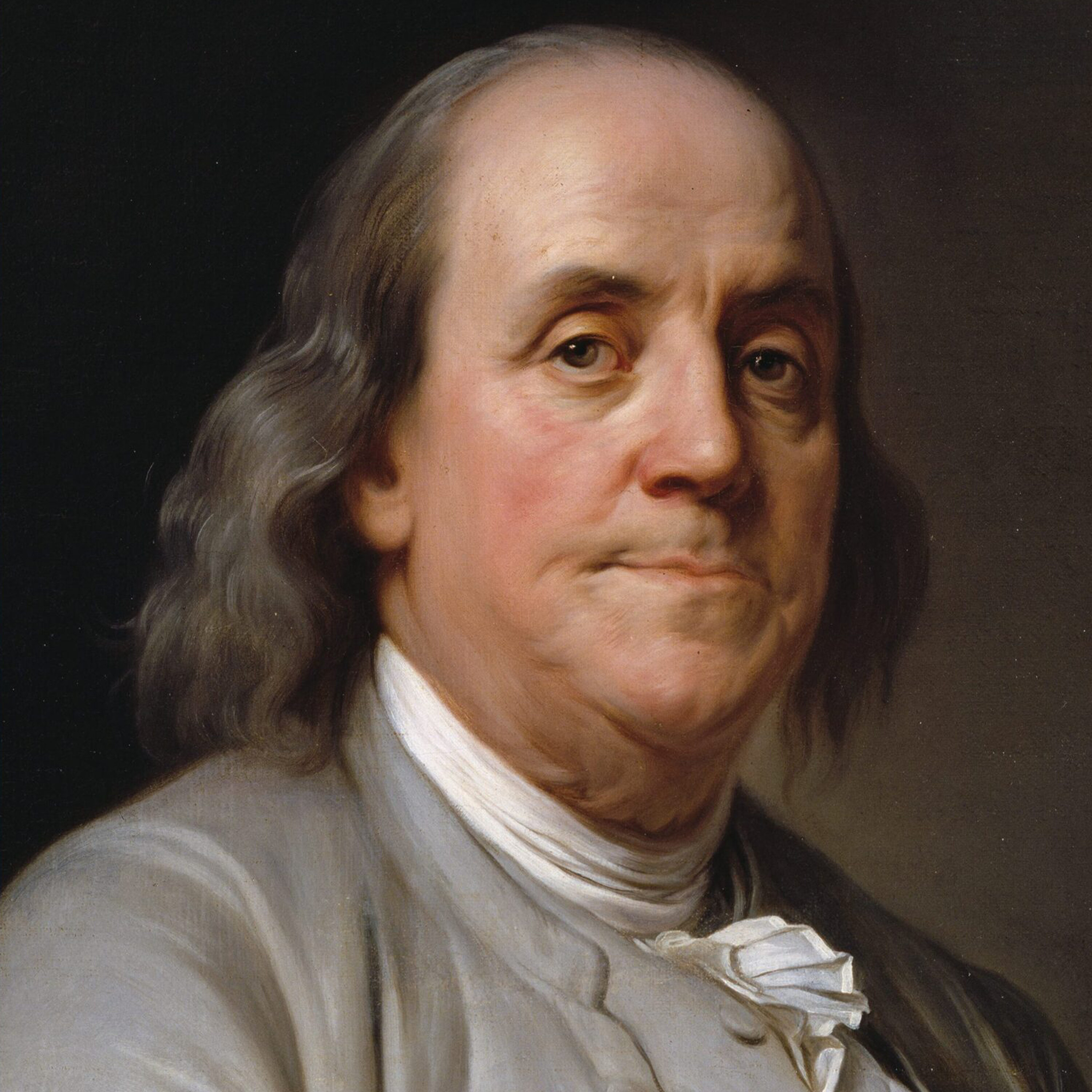
On this episode of Newts World. The lives of these men are essential to understand the American form of government and our ideals of liberty. The Founding fathers all played key roles in securing American independence from Great Britain and in the creation of the government of the United States of America. And now, the life of Benjamin Franklin. Of all of the founding fathers other than George Washington, who literally was the moral strength in which America was created and really was the father of our country, but of all the other founding fathers except Washington, the one who most deserves to be considered an immortal was Benjamin Franklin. You can make a case, and some people will, for Thomas Jefferson, who helped with Franklin to write the Declaration of Independence, who became president. But for sheer scale of achievement, for range of ideas, for the number of different kinds of contributions, Benjamin Franklin literally is an immortal. He also is a great sign of what was making America really different, because he was someone who rose by his own efforts, not because he was an aristocrat, not because he'd inherited a lot of money, not because he had a unique position, but just because he worked really hard and he was really smart. And the result was because he had this endless interest in life that every time he turned around, he was doing something fascinating. And much of the time he was doing things that were historic and that literally changed history for all of us. When you wear bifocal glasses, you are, after all, dealing with an invention of Benjamin Franklin. When you think about having a lightning rod to divert the lightning so that your house doesn't burn up, you're dealing with an invention of Benjamin Franklin. The whole concept of constantly tinkering, constantly learning the discovery of electricity, which is a true story. He goes out, he wants to figure out how electricity occurs. And so he flies a kite in the middle of a thunderstorm and he, he attaches metal so that lightning hits and he suddenly has discovered electricity. This was at the time comparable to Einstein in the 20th century discovering relativity. People across the planet were stunned that this American had undertaken what, if you think about it, is a very common sense, non theoretical experiment. And that Is sort of what marks Franklin. He just applies common sense with a lot of intelligence, a real willingness to work, and a kind of funny stubbornness. Now, remember, Franklin is born in Boston in 1706, the beginning of a new century. He's the 10th son out of 17 children. And that was an era where the number one attitude was, you gotta earn a living. Frankly, if you want to leave town, we got other kids here, too, and we'd rather have you produce money than get a degree. Franklin just stopped schooling when he was 10 years old. He worked in his father's candle shop. He made money, and he listened and paid attention to everybody. The fact is that there was nothing that didn't intrigue him. Now, he also understood that having money was good. So if you watch Franklin's long career, he is, at the end, the oldest person at the constitutional convention in Philadelphia. He's constantly aware of the fact that having money beats not having money. Franklin thought it was good to acquire wealth, that if you acquired wealth, it liberated you. And in fact, his goal was to be rich enough by 40 to be able to go into politics. And so he really was working constantly at this question of, can I find a way? And he tried many different things simultaneously. He's also focused on invention. He's focused on writing. He's one of those rare people who had so much energy, had such a great capacity to work. You know, here he is, for example, at 11 years of age, inventing swim fins for his hands. He's 11 years old, and he's inventing fins he can put on his hands so he can swim better. By the time he's 12, he's an apprentice, has left his father's candle shop, and now he's apprenticed to his brother. His brother James has a printing shop in Boston. And at the age of 12, Franklin is there, busy working away, learning how to print. His brother starts publishing the new England courant, which is the first American newspaper to use literary ideas in humorous essays. And this will become an important part of Franklin's own style. Franklin doesn't just look at facts. He has a very deep sense of humor. He has a little bit cynical sense of humor. He understood the human condition. He was quite willing to write about it. And he also must have been an amazingly fast writer. Remember, this is an age when people are setting type one letter at a time. So typesetting is a big deal. And if you write as much as Franklin did, the you're spending a lot of time setting type in order to send this stuff Out. So you have here a person who's constantly writing. Now, by the time he's 16, he's publishing his first letters and he always publishes 14 of them. In the current, he uses the pen name Silent Dogood, invents himself as a fictional widow of a country minister. You're already seeing the Franklin, who is very imaginative, very cheerful about pretending to be a widow. At the same time, when his brother finally realizes that Silent Dogood is his younger brother, Benjamin Franklin, he ain't very happy with him. Franklin somehow sort of faking people out, which he was, but he's doing it really cheerfully. So he gets entertained with his brother and he runs off to Philadelphia because he and his brother can't get along anymore. Now, at this point, he is a ripe old 17 years of age. Philadelphia then was the biggest city in America, the most bustling, had the most commerce, had the most ships coming in from London. Franklin finds work as a printer with Samuel Kemmer, and he lodges in the home of John Reed, who at the time he had no idea, but ultimately becomes his father in law. Now, Franklin is a very sociable person and apparently was a very good conversationalist. So people liked him. And you go to taverns. Hey, we got an extra seat here. Come on over, Ben, sit down, chat with us. And one of the people who did that was the Pennsylvania governor at the time, William Keith. So he gets to know Franklin. He says, why don't you set up your own print shop? Well, Franklin goes back to Boston and asks his father for a loan. His father says, you know, Ben, I mean, you're not old enough yet to do this. So Franklin goes back and says to the governor, I'd love to do this. My dad won't loan me the money. The governor loans him the money. Now, here's a guy who has only been in town a couple years and has made such a strong impression that the governor thinks he's a good business risk. Not only does he offer to pay the bill, he offers to send Franklin and pay for Franklin to go to London. Franklin gets to London, and a lesson that he will learn many times in his life. The governor forgets to pay for him to come home. So Franklin's stuck in London till he can find the money to come home. But he does come home. And when he comes home, remembering that he had been lodging with John Reed and he'd gotten to know Deborah Reed, he asked her to marry him. However, at this point in his life, he's only 18 years old. Deborah's mother is thinking you know, this is a guy who's a little bit strange. So she says, please be patient. Be patient. But when Franklin is abroad in London, Deborah's mother tries to convince Deborah that she ought to marry John Rogers. But Rogers is really a bad guy. He spends her dowry, he runs up debts, he takes off for the West Indies, and they think he's died. Franklin, who has not gotten money from the governor to come back home, is working at Samuel Palmer's print shop in London in order to publish enough stuff to make enough money to be able to get home. And in 1725, he publishes his first pamphlet in London, which is called A Dissertation on Liberty and Necessity, Pleasure and Pain, and argues that humans actually lack free will and are therefore not morally responsible for their actions. Now, this is a fairly radical idea, and people sort of thought Franklin had lost his mind. But it does not, in the long run, a fit who Franklin is, because he certainly did, in fact believe in free will and thought you could make your way, and later in life will write a whole series of articles and books about it. But it doesn't hurt him any. This is a guy who's learning the hard way that politicians don't always keep their word because the governor has not brought him back home. So ultimately, he does, in fact, get back to Philadelphia. Took him two years instead of one. And he sees Deborah, and poor Deborah is there with the guy who's run off with her dowry and apparently may have died in the Caribbean. So he tries to make her feel better. He gets his job back at Samuel Kimmery's print shop. And the very typical Franklin behavior. Franklin all his life will see an opportunity to get something done that requires founding an organization of some kind, because he understands that organizations create a life of their own. Well, he founds what's called the Junto Club. And the Junto Club is a group of young men. They meet on Friday evenings and they discuss everything. Intellectual stuff, personal stuff, business stuff, community stuff. So it's a freewheeling dialogue. But it does encourage them to read books. It encourages them to think about ideas. It gives him a space to begin to create a personal following. Because inevitably, in any group, Franklin will be the smartest guy, he'll be the best storyteller, and he'll be the funniest person. So now he's been back home, he's worked once again for somebody else. But by 1728, he's in a position of where he can now, at 22 years of age, open his own print shop with Hugh Meredith And Meredith actually gets a loan from his own Father. In 1729, they purchase the Pennsylvania Gazette from Samuel Keimer. And at that point, Franklin begins to really roll because he likes to write. He can write a lot. He has a style that people are attracted to, and it both increases his name ID in modern parlance, and it begins to create more money. He writes a modest inquiry into the nature and necessity of a paper currency, which called for an increase in the money supply to stimulate the economy. At this stage of his career, something which will change by late in life, he's basically what we would call an inflationist. He thinks if we have more paper money floating around, people will have more purchasing power and therefore the economy will work better. And this is part of what has been a permanent running debate in American society between sound money, people who believe that money ought to retain its value, and inflationary, people who believe that having money gradually depreciate actually increases the purchasing power and increases the economy. And that fight goes on for a long time. Franklin ultimately decides that paper money is dangerous. And in fact, one of the reasons we end up with the Constitution is to block those who would inflate currency. The reason that mattered is once you have a lot of property, if you're loaning out money that's worth a dollar and they're going to pay you back with money worth 90 cents, you're losing on the loan. So people who are propertied really dislike having an inflationary currency. Franklin goes from a young guy with a theory to an older, wealthy guy with money and decides as an older wealthy guy, he's with people like Washington who don't want to have an inflationary currency. Now he's picked to be the official government printer for Pennsylvania. And there's a reason that this really matters. Government then, like now, is a major purchaser of goods and services. Everything that the state needs published is going to be printed by Benjamin Franklin. So he now has a steady stream of revenue, which enables him, remember, at this stage, he's 24. But at 24, he's able to buy out Meredith. He becomes the most successful printer in town. He owns his own company, and at 24, having become the official government printer, Deborah Reed's parents think, you know, probably would be a good thing to have Benjamin Franklin as a son in law. Now he marries her even though they have no proof that her husband was dead. John Rogers, remember, had married her, spent her dowry, run up a whole bunch of debt, fled to the Caribbean, never been heard of again. And the question was what proof do you have? And Franklin, as he often will, just ignored it. And so he marries Deborah, and she plays a huge role in his life as somebody that he leans on. She did agree to raise Franklin's illegitimate son, William. Truth is, historians are not quite sure who the mother was. William becomes a deep part of Franklin's household and later in life will disappoint him deeply by being a Loyalist and staying with the British and becoming the governor of New Jersey for the king against the revolutionaries, which embitters Franklin substantially. Deborah works with Franklin and this becomes a very, very important part of his life. She's really his business partner, and when he goes off to do other things, when he goes off to politics or he goes off to be a diplomat, she's the one who stays home. She didn't particularly want to travel, and given the way ocean travel was in that generation, that's understandable. She ran the businesses, kept them profitable, made him money, and it all seemed to work. And it worked for a very long time until she died. She is a key hidden part of why Franklin was able to be as effective as he was. She also put up with him. She was willing to focus on the mundane business and household side, which would not have made him a historic figure, but was the base of his ability to have the time and energy and resources to be a historic figure. So Franklin got to play at being Ben Franklin in large part because he had a wife who was willing to tolerate him, willing to support him, and was smart enough and hard working enough that she could make a bunch of money while he was doing other things. Franklin, now that he's married and he owns his own business and he's the largest printer in Philadelphia. Now he turns and he begins to really define himself as a citizen. By 1731, he's done all the stuff I've been describing to you. And he's 25. He joins the Freemasons, which were a very, very important social and quasi religious group of that era. He helps establish the Library Company of Philadelphia, which is the first lending library in America. He aggressively defends the freedom of the press and would clearly be on the side of those who favor the First Amendment rights of the press. And at 25 years of age, he publishes An Apology for Printers, which defends freedom of the press. He also enters into a partnership, gets more printing equipment, continues to get wealthier. By 1732, they have their first child, Frances Folger Franklin. Sadly, Francis dies from smallpox at the age of four. Franklin never forgives himself because he should have been inoculated. Smallpox Inoculation was increasingly popular. People knew about it and it worked. Franklin would later write in his autobiography. Quote, In 1736 I lost one of my sons, a fine boy of 4 years old, by the smallpox taken in the common way. I long regret it bitterly and still regret that I have not given it to him by inoculation. Franklin in 1732 publishes a German foreign language newspaper. In the 18th century there were so many Germans migrating to Pennsylvania that there was serious talk of making German the second language of the country. There was a very large German population. Franklin was deeply opposed to making German the second language, but he wasn't opposed to making money. So he publishes a German language newspaper whose only difficulty is it fails financially. And again, it's an example. Entrepreneurs don't always succeed. Entrepreneurs have to be able to get back up, go back and try it again and see what they can get done and what they can learn. He also in 1732, something historic happens in the history of American literature and in the history of Benjamin Franklin as an American citizen. He publishes the first edition of of Poor Richard's Almanac using a pseudonym of Richard Saunders. Why does Poor Richard's Almanac matter? It is extraordinarily successful. It's a best seller and it's going to be a best seller for a generation because he writes it. There's a new almanac every year. It is filled with common sense things like waste not, want not a stitch in time saves nine penny wise and pound foolish things which in our era may not make a great deal of sense. For example, we don't use the British pound. So the idea of being penny wise and pound foolish, meaning you're really smart about a small thing, but you're dumb about a big thing when it does finally get to be obvious who's writing, just spreads his fame across the whole all of the colonies. He becomes the grand master of the Grand Lodge of Mason of Pennsylvania. Again. He's rising in status, he's rising in influence. He has a bigger and bigger network of friends. By 1736, at the age of 30, he's appointed clerk of the Pennsylvania Assembly. So now he's helping organize and taking care of the politicians at the same time that the colonial government is hiring his firm to print all of the printing which is helping make him increasingly wealthy.
- [22:31]
iHeart Podcast Announcer
Season two of unrivaled basketball is here and the talent is unreal. Paige Beckers, Nafiza Collier, Kelsey Plumb, Brianna Stewart and more are back to redefine the game. Unrivaled basketball season two, sponsored by Samsung Galaxy, tips off January 5 on TNT, TruTV and HBO.
- [22:46]
Public Investing Advertiser
Max support for the show comes from Public, the investing platform for those who take it seriously. On Public, you can build a multi asset portfolio of stocks, bonds, options, crypto and now generated assets which allow you to turn any idea into an investable index with AI. It all starts with your prompt. From renewable energy companies with high free cash flow to semiconductor suppliers growing revenue over 20% year over year, you can literally type any prompt and put the AI to work. It screens thousands of stocks, builds a one of a kind index and lets you back test it against the S&P 500. Then you can invest in a few clicks. Generated assets are like EFTs with infinite possibilities, completely customizable and based on your thesis, not someone else's. Go to public.com podcast and earn an uncapped 1% bonus when you transfer your portfolio. That's public.com podcast paid for by Public Investing Brokerage Services by Open to the Public Investing Inc. Member finra SIPC Advisory Services by Public Advisors, llc SEC Registered Advisor Generated Assets is an interactive analysis tool. Output is for informational purposes only and is not investment recommendation or advice. Complete disclosures of available@public.com Disclosures bring incredible.
- [23:57]
Whim Sound Advertiser
Sound into every corner of your home this holiday with the new Whim Sound smart speaker. Get high resolution audio with a 1.8-inch touchscreen, smart control and modern design in one powerful speaker for just 299. From quiet mornings to lively holiday gatherings, Wimsound makes every moment sound better and feel better too. Get the gift of the season for the music enthusiast in your life or for yourself. Whim Sound Beautifully designed, effortlessly connected. Shop now at Amazon and search Whim Sound that's wiim S O u n.
- [24:26]
US Ski and Snowboard Insider Promoter
D the world's best ski and snowboard athletes are chasing medals. Now you can follow their every move. Join Insider, the official US Ski and snowboard fan loyalty program, and get premium viewing at World cup ski events, exclusive athlete meetups, discounts from brands you love and a custom win welcome gift mailed direct to your doorstep this winter, show your support as they race for the podium. Head to Insider, usski and snowboard.org and join today.
- [24:56]
iHeart Podcast Announcer
This holiday season. Give the gift of incredible sound with Vizio's full soundbar lineup available at Walmart. Transform any living room into a home theater with rich, immersive audio that brings every movie, show and song to life. Whether you're gifting a loved one or upgrading your own setup. Vizio Soundbars deliver powerful, crystal clear sound that turns ordinary watching into extraordinary experiences. Stream your favorite holiday Playlist with the iHeartRadio app and discover how good your music can truly sound. Head to Walmart.com and find your perfect Vizio soundbar today.
- [25:33]
Newt Gingrich
In many ways, Franklin's greatest business accomplishment came from the publication of Poor Richard's Almanac. You know, he published it once a year for 25 years, beginning on December 19, 1732, originally under the pseudonym of Richard Saunders, but then ultimately everybody knew it was Benjamin Franklin. It captured all sorts of information about the calendar, weather predictions, sayings, poems, recipes, trivia advice. He thought it was a vehicle of instruction for common people, folks who couldn't afford books normally. It was a literature for the masses. And he was onto something. Because almanacs were the most read secular books in the colonies. He had little phrases from different years, but they give you a feel for Franklin's sense of what people ought to hear. He wrote, three may keep a secret if two of them are dead, lost time is never found again. And this, by the way, captures his entire life. He did not like to waste time because he felt it could never be found again. He said, love your enemies, for they tell you your faults. In the affairs of this world, men are saved not by faith, but by the lack of it. If you would not be forgotten as soon as you are dead and rotten. Write things worth reading or do things worth writing. In a way, his life was both. The way to see by faith is to shut the eye of reason. Women are books, and men the readers be. There cannot be good living where there is not good drinking. Speak little, do much. A friend in need is a friend indeed to all apparent beauties blind. Each blemish strikes an envious mind. Fish and visitors stink in three days. That may be one that's remembered as well as anything he ever wrote. Search others for their virtues, thyself for thy vices. Now there's some advice very seldom followed. Search others for their virtues, thyself for thy vices. He that drinks his cider alone, let him catch his horse alone. Fools need advice most, but wise men only are the better for it. So that was classically Franklin, somebody who listened to people, picked up common sense, language, in effect, wrote out a set of advice to everyday Americans, some of which he followed in his own life and some of which he cheerfully ignored. He helps organize the Union Fire Company of Philadelphia, and the duty of the Union Fire Company of Philadelphia was to train and organize firemen. Because the city is getting Big enough. It's the largest city in the New World, and it's getting big enough that you need to have an organized fire department because you have a real challenge of taking care of houses that start to burn down. He also becomes the postmaster of Philadelphia. Now, this is again an interesting example of Franklin. He is now 31 years old. The British government appoints him postmaster of Philadelphia, which is frankly an office that makes money. Postmasters back then were commercial assignments, so they make money out of many different things. And then he does something which truly changes history, but in a way that's very practical rather than political. In 1742, he invents a freestanding cast iron fireplace which is known as the Franklin stove. Franklin stove, by the way, is still available today. You can go online, you can buy a Franklin stove. It was a very intelligent contribution to a better life because it used wood to generate heat with greater efficiency than the stoves which preceded it. And interestingly, in terms of Franklin, he didn't patent it. In fact, he didn't patent any of his inventions. His idea was, look, if it works for me and my life is better, why shouldn't you be able to build it and your life can be better? He thought of this as part of his civic life. And he's inventing as a citizen, not as a businessman. Now, on the business side, he's very tough minded and he's independently wealthy, but as an inventor, he just liked inventing things. And of course, probably his most famous is the bifocal glasses. But he just had a constant looking at things, thinking, is there a way to do it better? Is there a way to do it differently in the same time period, by the way, in 1743, when he does have a daughter, Sarah, they have her inoculated. They'd learned the lesson, tragically from their son dying from smallpox. They're not going to take the risk. And the same year that his daughter's born, 1743, he writes a pamphlet called A Proposal for Promoting Useful Knowledge. And that leads to the American Philosophical Society. And one of the offshoots of the American Philosophical Society is the Academy of Natural Sciences in Philadelphia, which I first visited when I was about 10 and went to a couple months ago. It is a great institution. It has all of Lewis and Clark's material because at the time of the Lewis and Clark expedition, it was the only major science museum in the country. It's a remarkable place. If you go to Philadelphia to go by and see it, he wakes up in the morning and thinks, oh, why don't we have a philosophical society? Well, because he writes so fast, I think I'll write a proposal for it. And by the way, since I'm a publisher, I think I'll publish it. So he's publishing his own pamphlet. At the same time, he's offering to sell Franklin stoves. And Franklin stoves sell very well. Now, he wasn't patenting it. Anybody else who wanted to could make a Franklin stove, but he didn't mind making money off it himself. By 1747, he publishes a pamphlet called Plain Truth and proposes the formation of a Philadelphia militia. Now, just think about this is a guy who wakes up in the morning, has a big idea, and writes it down and sends it out. And people are in the habit now, thinking, I wonder what Franklin's up to next. What makes Franklin Amazing is at 42 years of age in 1748, he retires. He's now made enough money. He takes on a partner who gives him additional income the rest of his life, and the partner runs the daily operations of the printing business. And because he now has free time, he becomes a member of Philadelphia city Council. So now you have businessman, inventor, writer, now politician. And by the following year, in 1749, he writes proposals relating to the education of youth in Philadelphia. There's a great story, by the way. One of my favorites about Franklin is at one point during his political career, he took a very unpopular position, and a number of people wanted to sort of browbeat him into giving it up. And so one evening, he invited them to dinner, and they all came over to his house, and he had a very nice house, and they all sit around the dining room table, and he serves them this very strange porridge, which they all can barely taste so bad. And he finishes, he cleans his bowl, and he says, gentlemen, this is actually sawdust. Now, if I'm prepared to eat a bowl of sawdust, what do you think you're going to do to intimidate me? It was so clear that Franklin wasn't somebody that you could intimidate. By 1750, what I think after his bifocal glasses, is his most interesting invention. He proposes using lightning rods to keep houses safe. Franklin figured out that if I could put up a pole that was above the house so it would attract the lightning, and if I could ground the pole in the ground so that the electricity would come straight down the pole, go into the ground, and never touch the house, then your house wouldn't burn down. Well, it may have been, after his bifocal invention, the most practical and most widespread improvement in life that anybody had made. It's incalculable today. How many houses did not burn down because of Benjamin Franklin, but the numbers would be in the hundreds of thousands by now. He continues to be involved as an active person. In 1750, he is developing lightning rods. The following year, he decides in passing, he'll help found what was then called the academy for education of youth. We call it the University of Pennsylvania. And so he's going from place to place, almost like a Johnny Appleseed of a better life. He's also mentally exploring the world. So the same year that he's helping found what becomes the University of Pennsylvania, he also is writing a. An article on the experiments and observations on electricity. He's also that year, by the way, elected to the Pennsylvania assembly and as a city alderman. All this is happening simultaneously. The following year, in 1752, he builds on his article on the experiments and observations in electricity. And in a classically American model, he leaves the laboratory, he steps outside, and he flies a kite. And the kite attracts lightning, and the lightning is electrical. And he then publishes how you can conduct the experiment, because he thought through the key part, which is, all right, if you attract the lightning, where's the electricity going? And he made sure it wasn't going through him. He also, in passing, the same year, remember, he's making money. He's serving as a city alderman. He's serving in the Pennsylvania Assembly. He's still writing a lot. And in 1752, he founds the Philadelphia contribution ship. Now, what is a contribution ship? Well, you. And I think of it as a fire insurance company. And so, literally, in passing, he says, yeah, if we all contributed a little bit, then if one of us had our house burned down, we could collect on the value of the house based on our contributions. And so the Philadelphia contribution ship sets the base for a mutual fire insurance company, which becomes a model that's very, very widespread. The next year, in 1753, he's appointed deputy Postmaster General of the colonies. Now, think about this. The British government now is saying to Franklin, we trust you enough. We think you're smart enough. We think you're a good enough businessman. We want you to help run all of the post offices in the entire 13 colonies, which, of course, also gives him an excuse to learn more and more and to think beyond Philadelphia and think beyond Pennsylvania. Now, he'd already been born and grown up in Boston, so now he has an increasing sense of the east coast of the United States, the Atlantic coast, and all the different colonies. From Georgia up through Massachusetts. He Also, that year, 1753, he gets the Copley Medal, which is the highest award the Royal Society of London can give. So he's being recognized worldwide as a scientist. He is the postmaster for all of the colonies. He is serving in the city government, the state government, and he's active in founding various organizations, and he's continuing to be a scientist. All of this is simultaneous. And as a scientist in passing, because, remember, never went to graduate school, never took a science course. He is recognized as a worldwide contributor because of the work he's done on electricity. He's also concerned about what we would call national security, and he's concerned about the French and Indians in the West. And remember that the French and Indian War will start in what we call Pittsburgh, then called Fort Duquesne, which was a French outpost. Coming down. The French are coming down from Canada. We're coming from the Atlantic coast, and we're about to collide in western Pennsylvania. And in 1754, Franklin prints a cartoon, join or die, which argues that the colonies have to work together in confederation, they have to protect themselves, that no single colony is going to be capable of developing its own defenses. Now, this is a pretty radical view at the time, and one of the signals it's a radical view that year 1754, is the British government fires him. They say, you're now not the deputy postmaster general. Your political views are too radical. And for the first time, Franklin is faced with the consequences, that if he really believes what he says he believes, he's going to pay some real cost for that. In the midst of all this, in 1755, Franklin, with Dr. Thomas Bond, founded the Pennsylvania Hospital, the nation's first hospital, focused on the sick, the poor, and the insane. And again, when you go to Philadelphia, you just see case after case of Franklin's impact 200 years later. The French and Indian War, starting in 1756. And you remember that it's Washington who plays a leading role in starting the French and Indian War. Franklin was asked to lead Pennsylvania militia against the French who were defeating the English troops. Accompanied by his son, Franklin fought mercilessly to take back land, establish new forts, and push back against the French forces. He served as an officer in the militia without even receiving pay because his devotion to duty was so deep. He was a wealthy businessman, so he could afford to be a volunteer for free. In 1757, while the French Indian war is underway, Franklin is elected to go to England to talk about colonial disputes with Parliament. He stays for five years and this is, I think, one of the most important examples of change leading up to American independence. Franklin leaves the colonies as a loyalty British servant. He finds out over time that in fact he'll never be accepted. He can be wealthy, doesn't matter. He can be a world class scientist, doesn't matter. He can win elections back home, it doesn't matter. He can be the funniest, best storyteller in the room, doesn't matter. He's not an aristocrat. He's never going to be accepted as an aristocrat. And I think it's the bitterness of beginning to realize that which begins to turn him against the English government and make him begin to think of himself as an American. He stays from 1757 for five years, goes back to Boston for two years, and in the process he invents the glass harmonica. This was a very sophisticated device which made a series of sounds. It was widely received, probably ranked along with the lightning rod and the bifocals and the Franklin stove among the most widely received of Franklin's inventions. Both Beethoven and Mozart used Franklin's harmonica. By 1764, he loses his seat in the Pennsylvania assembly, but goes back to London as a colonial agent. And the next year, 1765, the Stamp act is passed by the House of Commons. Remember, the Stamp act is designed to raise money from the Americans to help pay the cost of the French and Indian War, which the British reasoned had protected America from attack, and therefore the Americans ought to bear some burden. The Americans, of course, resented the idea, did not want to pay the Stamp act, and that was the beginning of the deep disaffection that would ultimately lead to the Revolution because Franklin knew that Americans were against it. In 1766, just one year after the act was passed, he testifies in the House of Commons in favor of repeal of the Stamp act, proving that his loyalties are to the colonies. Yet the very same year, while he's testifying in the House of Commons, he's elected as a member of the Royal Society of Sciences. He may not be an aristocrat to the aristocrats, but he's clearly an aristocrat to the scientists and they have the greatest admiration for him. While that's going on, the British troops are being sent to Boston. The British government's getting tougher and tougher. The fact is that Franklin was committed to representing the American side. It's also in this period that his daughter Sally marries Richard Bach. Franklin really wanted her not to do that because Bach's situation financially was bad and he was afraid that Bock was just marrying her for her money. Nonetheless, his wife, Deborah allowed them to be married against Franklin's wishes. He accepted the marriage. After Sally had their first child, Ben helped Richard obtain several loans, helped him set up a few stores. But the truth is, Franklin supported Sally and her eight children for the rest of his life. He was, in fact, a very generous family man and was deeply concerned about his family, even if he didn't spend very much time with them. By 1769, the American Philosophical Society, which he had helped found, has elected Franklin as its president. And then they reelected him every single year after that until he died. So he's the head of the Philosophical Society. He's inventing musical instruments. He's inventing practical things like the Franklin stove, the bifocals and lightning rods. And then the Boston massacre occurs. British troops shoot at colonists. The whole colonies are upset and are afraid. And Franklin tries to find a way to bring Britain and the colonies back together. In 1771, he begins writing his autobiography, which I can tell you, if you have never read it, it's absolutely worth your getting and reading. It's a remarkable book. It's very candid, it's very wise. I don't care who you are, you will learn things you'll apply to your own life if you read Franklin's autobiography. In London, he gets a series of letters. Some 13 letters come to him from an anonymous sender. The letters had been stolen. They were correspondence between the Massachusetts governor, the royal governor, Thomas Hutchison, and the royal lieutenant governor, Andrew Oliver, who are writing English authorities. Somehow these letters had gotten stolen and they were given to Franklin, who then sends them to Samuel Adams and authorizes them to be shown to the members of the Massachusetts committee of correspondence, but not copied or published. Now, this clearly is a totally inappropriate act and will begin the process of really alienating the English in Franklin. By 1773, the Stamp act not having worked, Parliament passes the tea act, which then leads in Boston to people dressing up as Indians and dumping the tea in the harbor in what we call the Boston Tea party. And interestingly, Franklin, who, of course was from Boston originally, has real ties emotionally back to Boston as well as to Philadelphia. That same year, the Massachusetts speaker, Thomas Cushing, gives the letters that Franklin had sent to the Massachusetts house, and the house concluded that governor Hutcherson intended to overthrow the constitution. They decided to petition for Hutcheson and Oliver's removal. And despite Franklin's wishes, the letters were published in the Boston Gazette.
- [45:26]
iHeart Podcast Announcer
Season two of unrivaled basketball is here and the talent is unreal. The best women's players on the planet are running it back with even bigger moments and bigger stakes. Don't miss as Paige Beckers, Nafiza Collier, Kelsey Plumb, Brianna Stewart and more take the court and redefine the game. This isn't your regular season. This is unrivaled, where the pace is faster, the energy is higher and every athlete shines unless unrivaled basketball season two, sponsored by Samsung Galaxy, tips off January 5th on TNT, TruTV and HBO.
- [45:55]
Public Investing Advertiser
Max support for the show comes from Public, the investing platform for those who take it seriously. On Public, you can build a multi asset portfolio of stocks, bonds, options, crypto and now generated assets which allow you to turn any idea into an investable index with AI. It all starts with your prompt. From renewable energy companies with high free cash flow to semiconductor suppliers growing revenue over 20% year over year, you can literally type any prompt and put the AI to work. It screens thousands of stocks, builds a one of a kind index and lets you back test it against the S&P 500. Then you can invest in a few clicks. Generated assets are like EFTs with infinite possibilities, completely customizable and based on your thesis, not someone else's. Go to public.com podcast and earn an uncapped 1% bonus when you transfer your portfolio. That's public.com podcast paid for by Public Investing Brokerage Services by Open to the Public Investing Inc. Member FINRA S I P C Advisory Services by Public Advisors llc. SEC Registered Advisor Generated Assets is an interactive analysis tool. Output is for informational purposes only and is not investment recommendation or advice. Complete Disclosures available at public.comDisclosures bring incredible.
- [47:06]
Whim Sound Advertiser
Sound into every corner of your home this holiday with the new Whimsound Smart speaker. Get high resolution audio with a 1.8-inch touchscreen, smart control and modern design in one powerful speaker for just $2.99. From quiet mornings to lively holiday gatherings, WinSound makes every moment satisf sound better and feel better too. Get the gift of the season for the music enthusiast in your life or for yourself. Whim Sound Beautifully designed, effortlessly connected. Shop now at Amazon and search Whim Sound that's wiim S O U N.
- [47:35]
US Ski and Snowboard Insider Promoter
D the world's best ski and snowboard athletes are chasing medals. Now you can follow their every move. Join Insider, the official US Ski and Snowboard Fan loyalty program and get premium viewing at World cup ski events, exclusive athlete meetups, discounts from brands you love and a custom welcome gift mailed direct to your doorstep this winter. Show your support as they race for the podium. Head to insider.usski and snowboard.org and join today.
- [48:06]
iHeart Podcast Announcer
This holiday season, give the gift of incredible sound with Vizio's full Sound Bar lineup, available at Walmart. Transform any living room into a home theater with rich, immersive audio that brings every movie, show and song to life. Whether you're gifting a loved one or upgrading your own setup, Vizio soundbars deliver powerful, crystal clear sound that turns ordinary watching into extraordinary experiences. Stream your favorite holiday Playlist with the iHeartRadio app and discover how good your music can truly sound. Head to Walmart.com and find your perfect Vizio soundbar Today.
- [48:45]
Newt Gingrich
Franklin tries to communicate to the British through satire in September 1773, he publishes two articles in the Public Advertiser in London. One, quote, rules by which a great empire may be reduced to a small one, and the second, edict by the King of Prussia. Both of them are satirical, and both of them attack the British attitude toward the colonies. Now remember, at this point, the aristocrats aren't amused. They don't want to be lectured by some colonial, even if he's a famous scientist and a wealthy man. And they're increasingly angry because they see the Americans as totally ungrateful and treasonous. When Britain had fought the French, Britain had defeated the Indians, Britain had protected the colonies, and all they get back in return is constant complaint, refusal to pay taxes, and people who clearly are not appropriate for English society. Two things happened in the early 1770s that really affect Franklin. First was that his wife, Deborah, dies. He was still in England. They'd been separated physically, but they wrote each other constantly. She had run the business in his absence. When he did return home to America, he wrote a friend, quote, I have lately lost my old and faithful companion, and I every day become more sensible of the greatness of that loss, which cannot now be repaired. Close quote I suspect he both realized how many days they'd been apart, how much of their lives had been separate and with gratitude, how much she had done, how she had enabled him to be Benjamin Franklin because she had run the business, she'd earned the money, she'd paid attention to all the details that he cheerfully ignored. But the other thing which happened in the 1770s while he was still in London, when word reached Great Britain that the official letters of the Governor and the Lieutenant Governor had been somehow submitted to the House of Commons of the colony, there was an enormous uprising in Britain of interest. Where did these come from who was responsible. And finally, Franklin cleared the air. In December of 1773, he wrote a brief note to the newspaper saying, I'm the person who released him. Well, that guaranteed that the privy council, which was the, in effect, the highest political judicial body in britain, would see him and would demand to know what he was doing and why he was doing it. And he went twice. The first time he went, he frankly thought they were going to inquire about what had happened with hutchinson and oliver, the governor and lieutenant governor, and why were they in such trouble. Instead, he found that the solicitor general of Britain attacked him for a full solid hour. And when they said, okay, it's your turn, he just stood there quietly and said, I didn't realize this was the point of this, and I want a lawyer. And they agreed he ought to have a lawyer. So two weeks later, they came back together. But in the interim, the boston tea party news had reached great britain that the americans had dressed like indians, gone into the harbor, thrown the tea from the east india company into the harbor, destroying it. And there was a high sense of rage in the governing class in britain. And so when franklin shows back up, he is attacked for several hours in a very direct and aggressive and nasty way. And it's quite clear that he is the target and that there's nothing he can do to defend himself. He is wearing a blue coat, which, to show how Franklin's mind worked, he will wear again when he signs the peace treaty declaring the United States to be free and independent. And somebody said, why do you have this old coat? Remember, the peace treaty, now that he's signing is more than a decade later. And he said for a little sense of revenge. Franklin was not a man who one could attack easily or lightly or expect to ever turn the other cheek. So he goes home having been attacked by the British elites, and now he is clearly committed to independence. He's elected as a Pennsylvania delegate to the second continental congress. And he also, ironically, having been fired by the British as the postmaster general, which happened to the day after the privy council meeting to punish him, he is now elected as the postmaster general of the colonies by the continental congress. So at the very moment that the British are losing control of the post offices, they are being turned back over to the guy who had been in charge of the post offices on behalf of the king. So franklin knew what he was doing and how to do it. In 1776, he's asked to be one of five people who draft the declaration of independence. And he is clearly a key Figure who people trust and plays a significant role in working with Jefferson and Adams to get the final draft of the Declaration of Independence approved by the Congress. Then he's asked to go to France to be a commissioner from the Continental Congress in order to get the French to help us. Remember, at this point, without the help of France, the United States will lose the war to Britain because we'll have no money, we'll have no ammunition, we'll have no uniforms, we will have no effective navy. And so this was life and death. And Franklin, who had the great advantage of being a world famous scientist, is a very major player. And because he's also so personable, so amused by life and so engaging with people, he became a very, very widely admired and liked diplomat. Franklin plays a key role, is in Europe, not in America. Works very hard to keep the French on our side. And then after Cornwallis surrenders at Yorktown in 1781, effectively ending the military part of the war, Congress appoints Franklin, along with John Jay, John Adams and Henry Lawrence, to be a commissioner to negotiate peace. And in 1783, they complete the negotiations and they sign the peace treaty. Franklin, by the way, is the toughest, most hard nosed person on the question of whether or not there should be any compensation for Tories who had stayed on the side of the British and said, absolutely no, these people were traitors, they should not get a penny. And he was just firm that that was not going to be part of the agreement. They signed the peace treaty, as I said earlier, with Franklin wearing the same coat that he had worn back when the Privy Council tried to humiliate him. And Franklin then returns, because now he's no longer totally drowning in being a diplomat. So he returns to being an inventor and a commentator. In 1783, we complete negotiations, we sign the peace treaty. Now the colonies are independent states. And one year later, Franklin writes, quote, an economical project for diminishing the cost of light, which is in fact the first document proposing daylight savings time. He does this in passing. He just thinks to himself, gosh, wouldn't it make sense if we changed so that we had more daylight? And he writes this out, and of course, well over 100 years later, it begins to be implemented. So the daylight savings time that we currently celebrate can be traced back to an idea from Benjamin Franklin. Then the same year, he invents the bifocal glasses. As he's getting older, he notices he has one pair of glasses for seeing up close, one pair of glasses for seeing in the distance. He's constantly taking off one, putting on the other. You always have to carry extra glasses. And he thinks to himself, well, what if I arrange it so when you look down, which is what you do when you're reading, you have close vision. And when you look out, which you're looking up, you have distance vision. He goes to the Constitutional Convention in Philadelphia in 1787. He's the oldest person at the convention. He occasionally falls asleep during the sessions. But he also, when the convention is about to meltdown, in bitterness and in hostility between the large states and the small states, in his most important intervention, he says, why don't we suspend for a day, have a day of prayer and fasting, and have various ministers come in and pray to us to get ourselves back on the right mindset, which is in fact precisely what they do. And a very famous moment when he is leaving the Constitutional Convention, having completed the work, and the lady says to him on Independence hall steps, what have you done? And he said, we have created a republic, if you can keep it. And understood thoroughly that in the long run, it would be up to the American people whether or not it would work and whether or not it would survive. I wanted to comment. To go and stand there at Independence hall and think about the people who signed the Declaration of Independence, to go across to the great new Constitution center, which is just remarkable, to go to the Franklin Institute and to realize again and again the impact that this guy had. To take a map and go around and see all the different places where there are universities or insurance companies or libraries or fire departments, things that Benjamin Franklin created in his lifetime. By 1788, he's beginning to realize that 82 years of age, he likely doesn't have many more years left. So he writes a will leaving most of his estate to his daughter Sarah. 1789, he's elected president of the Pennsylvania Society for Promoting the Abolition of Slavery. Here's a guy who constantly, endlessly fought for human freedom, who steadily spread the opportunity for freedom, and who at the end of his life is working on the abolition of slavery, in fact submits the first anti slavery petition before the US Congress. He had had slaves very early, two slaves who worked in his household when he was young. But as he got older, he began to think, this is an evil institution. And if you believe in the principles of the American Revolution, if you believe in a declaration that says we're all created equal, it's simply wrong. At a time when it was still a very, very radical position, he was actively in favor of the abolition of slavery. Ultimately, in 1790 he dies. Washington is now president, the country is established. He leaves behind a fair amount of wealth for Sally and her husband, but he leaves behind for the world a whole series of inventions and breakthroughs in understanding that are just astonishing and that ultimately improve the lives of millions and millions of people. Gives you a sense of why he is an immortal and why he is somebody who really, I think, represents the best of the American tradition of constant effort, constant dreaming, constant hard work to turn the dreams into reality. You can learn more about Benjamin Franklin on our show page@newtsworld.com Newtsworld is produced by Gingrich 360 and iHeartMedia. Our executive producer is Garnzi Sloan and our researcher is Rachel Peterson. The artwork for the show was created by Steve Pendlet. Special thanks to the team at Gingrich360. If you've been enjoying Newts World, I hope you'll go to Apple Podcast and both rate us with five stars and give us a review so others can learn what it's all about. Right now, listeners of Newts World can sign up for my three free weekly columns at Gingrich360.com newsletter I'm Newt Gingrich. This is Newts World.
- [61:03]
iHeart Podcast Announcer
Season two of Unrivaled Basketball is here and the talent is unreal. Paige Beckers, Nafiza Collier, Kelsey Plumb, Brianna Stewart and more are back to redefine the game. Unrivaled basketball season two, sponsored by Samsung Galaxy, tips off January 5 on TNT, TruTV and HBO Max.
- [61:18]
Public Investing Advertiser
Support for the show comes from Public, the investing platform for those who take it seriously. On Public, you can build a multi asset portfolio of stocks, bonds, options, crypto and now generated assets which allow you to turn any idea into an investable index. With AI. It all starts with your prompt. From renewable energy companies with high free cash flow to semiconductor suppliers growing revenue over 20% year over year, you can literally type any prompt and put the AI to work. It screens thousands of stocks, builds a one of a kind index and lets you back test it against the S&P 500. Then you can invest in a few clicks. Generated assets are like EFTs with infinite possibilities, completely customizable and based on your thesis, not someone else's. Go to public.com podcast and earn an uncapped 1% bonus when you transfer your portfolio. That's public.com podcast paid for by Public Investing Brokerage Services by Open to the Public Investing Inc. Member finra, SIPC Advisory Services by Public Advisors llc, SEC Registered Advisor. Generated Assets is an interactive analysis tool. Output is for informational purposes only and is not investment, recommendation or advice. Complete Disclosures available at public.comDisclosures bring incredible.
- [62:28]
Whim Sound Advertiser
Sound into every corner of your home this holiday with the new Whimsound Smart get high resolution Audio with a 1.8-inch touchscreen, smart control and modern design in one powerful speaker for just 299. From Quiet Mornings to lively holiday gatherings, Whim Sound makes every moment sound better and feel better too. Get the gift of the season for the music enthusiast in your life or for yourself. Whim Sound Beautifully designed, effortlessly connected. Shop now at Amazon and search Whimsound. That's W I I M S O.
- [62:57]
US Ski and Snowboard Insider Promoter
U N D the world's best ski and snowboard athletes are chasing medals. Now you can follow their every move. Join Insider, the official US Ski and Snowboard fan loyalty program, and get premium viewing at World cup ski events, exclusive athlete meetups, discounts from brands you love, and a custom welcome gift mailed direct to your doorstep. This winter, show your support as they race for the podium. Head to insider.usski and snowboard.org and join today.
- [63:28]
iHeart Podcast Announcer
This holiday season. Give the gift of incredible sound with Vizio's full soundbar lineup available at Walmart. Transform any living room into a home theater with rich, immersive audio that brings every movie, show and song to life. Whether you're gifting a loved one or upgrading your own setup, Vizio soundbars deliver powerful, crystal clear sound that turns ordinary watching into extraordinary experience. Experience is Stream your favorite holiday Playlist with the iHeartRadio app and discover how good your music can truly sound. Head to Walmart.com and find your perfect Vizio soundbar today. This is an iHeart podcast. Guaranteed Human.