Loading summary
Transcript24 lines
- [00:00]
Unrivaled Basketball Announcer
This is an iHeart podcast. Guaranteed human season two of unrivaled basketball is here and the talent is unreal. The best women's players on the planet are running it back with even bigger moments and bigger stakes. Don't miss as Paige Becker, Snafeeza Collier, Kelsey Plumb, Brianna Stewart and more. Take the court and redefine the game. This isn't your regular season. This is unrivaled, where the pace is faster, the energy is higher and every athlete shines. Unrivaled basketball season two, sponsored by Samsung Galaxy, tips off January 5 on TNT, TruTV and HBO.
- [00:34]
Public Investing Advertiser
Max support for the show comes from Public, the investing platform for those who take it seriously. On Public, you can build a multi asset portfolio of stocks, bonds, options, crypto and now generated assets which allow you to turn any idea into an investable index with AI. It all starts with your prompt. From renewable energy companies with high free cash flow to semiconductor suppliers growing revenue over 20% year over year, you can literally type any prompt and put the AI to work. It's IT screens thousands of stocks, builds a one of a kind index and lets you back test it against the S&P 500. Then you can invest in a few clicks. Generated assets are like EFTs with infinite possibilities, completely customizable and based on your thesis, not someone else's. Go to public.com podcast and earn an uncapped 1% bonus when you transfer your portfolio. That's public.com podcast paid for by Public Investing Brokerage Services by Open to the Public Investing Inc. Member finra SIPC Advisory Services by Public Advisors, llc. SEC Registered Advisor Generated Assets is an interactive analysis tool. Output is for informational purposes only and is not investment recommendation or advice. Complete Disclosures available at public.comdisclosures ever wish.
- [01:45]
Washington Post Advertiser
You could try the Washington Post and see what all the talk is about? Right now you can with a one week pass for just $7. No commitment, no strings attached. Just $7 for one week of unlimited access to the Post. It's the perfect way to explore our award winning journalism and experience what subscribers already know. There's nothing else quite like it, so why not give us a try? Go to washingtonpost.com week and start your $7 one week pass today. That's washingtonpost.com week.
- [02:15]
US Ski and Snowboard Insider Advertiser
The world's best ski and snowboard athletes are chasing medals. Now you can follow their every move. Join Insider, the official US Ski and Snowboard Fan loyalty program and get premium viewing at World cup ski events, exclusive athlete meetups, discounts from brands you love and a custom welcome gift mailed direct to your doorstep this winter. Show your support as they race for the podium. Head to insider.usski and snowboard.org and join today.
- [02:44]
Valpak Advertiser
Your ticket to Big Savings is that big blue envelope in your mailbox. Valpak. It's brimming with deals from big name brands and your favorite local spots, dining services, stuff you're already buying, all for less. And you could score $100 or other instant prize just for opening it. Or save even faster with mobile coupons you can use right now@valpak.com Valpak there's definitely something in it for you.
- [03:20]
Newt Gingrich
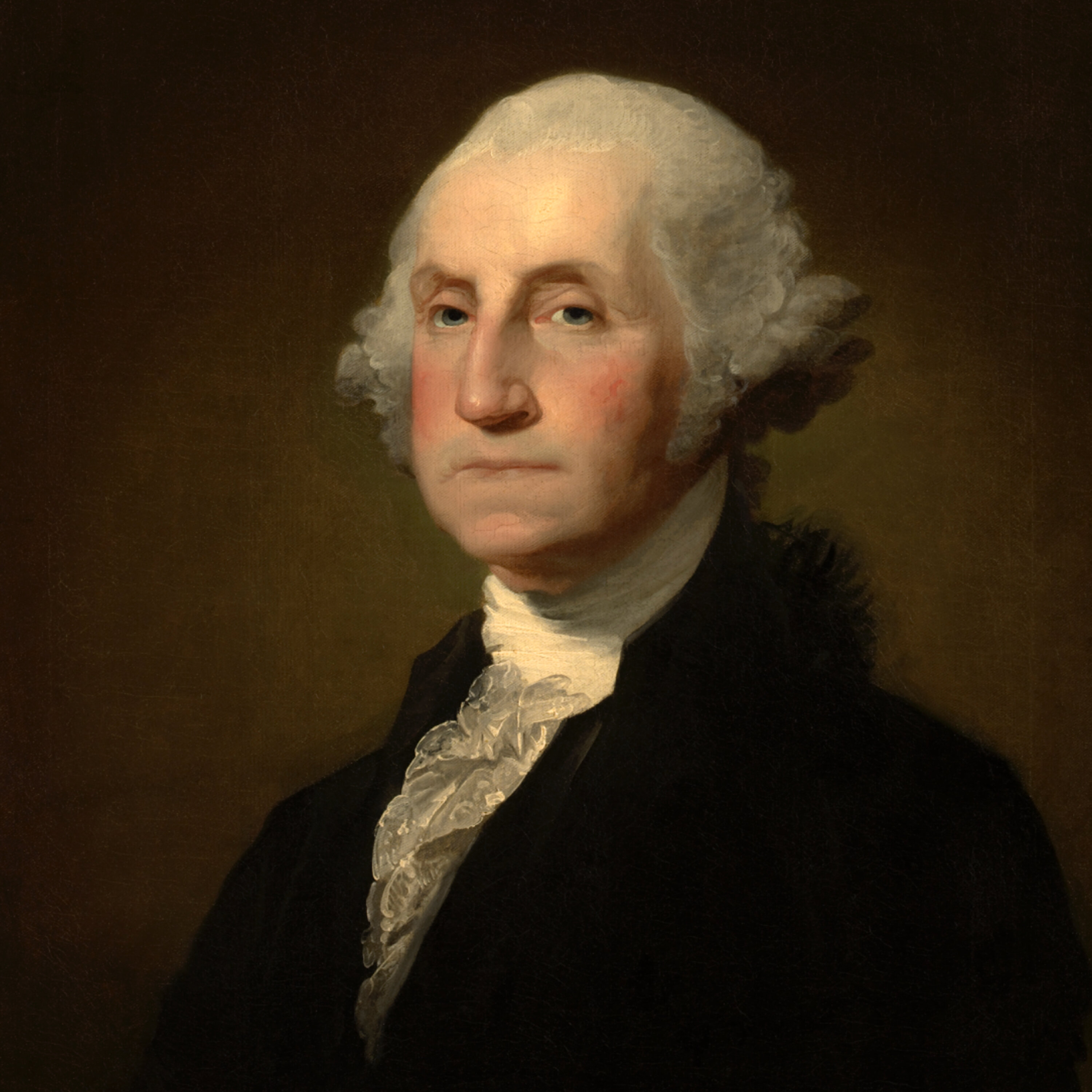
On this episode of Newts World. The lives of these men are essential to understand the American form of government and our ideals of liberty. The Founding Fathers all played key roles in securing American independence from Great Britain and in the creation of the government of the United States of America. And now, the life of George Washington. I wanted to start the entire podcast series with George Washington because literally, we all stand on his shoulders to the degree that this is a country that has a remarkable ability for freedom, that is open to everyone, and that creates a framework within which normal people can lead unusual and extraordinary lives. All of that started and was based on Washington. One of the best biographies of Washington describes him as literally irreplaceable, that he is the man that was the essential person for the entire creation of America. And I think that's true. Every time Clist and I go down to Mount Vernon and we look at that house he lived in with Martha and we look out on the Potomac, we realize that he had this sense. He loved being a farmer, he loved the land. He had a sense of solidness, partly because he was so big physically. I always tell people that if you played Washington in the modern era, you should be basically an NFL offensive lineman. He was physically so large for a time when the average man was about 5, 6. He was also considered the best horseman in the colonies, which if you're that big physically and you're that good, a horseman is astonishing. And Washington had this strength, both physical and moral. Part of his physical strength just came. I think biologically he was just that big. And he worked as a farmer, he worked as a frontiersman. He used his body his whole life when he was serving in the legislature. And people often forget this. Washington was a professional politician. He ran for office. In fact, there was a very funny story he'd been out on the west and thought of himself as a hero and ran for office the first time and in that era, you had a one day election campaign, everybody gathered at the polls and the candidates bought alcohol and got free beer, free wine, free whiskey. And Washington said, no, I am a military hero. I don't need to buy anything for anyone. And he came in last. The following election, he bought the largest quantity of alcohol ever bought in a Virginia election. And he won. People said, ah, you begin to learn the trade here. Which also fed Washington's general pattern. Many experts have studied his campaigns and said he made many mistakes once, but you never find him making the same mistake twice. So he's down at the House of Burgesses. And I always recommend to people to go to Williamsburg because it is such a remarkable recreation of that era. And you can go to the taverns that Washington went to in the evenings. They didn't have tv, they didn't have computer games. So they'd sit around playing cards and drinking and talking with each other. And there was a very famous squire named Governor Byrd. And Governor Byrd would find some stranger and he'd say, I'll bet you a shilling that George Washington can break a walnut between his thumb and his first finger. Now, I urge you sometime to try this because it takes extraordinary strength. And so he'd go over Washington, be playing cards or telling stories, and he'd say, colonel Washington, at this stage he had become an honorary colonel in the Virginia Militia. Would you mind breaking a walnut? And Washington would break the walnut. He'd collect the shilling, presumably bought Washington a drink for the favor. But it was again a sign of. In an age when people valued being strong physically, Washington was the strongest. But he was also morally strong in the sense, first of all, you can get from Mount Vernon the rules he wrote at 14 years of age, which he had copied out of several books and which were rules for being a gentleman. And he wanted very much to have respect. He wanted what the Romans had called virtu, the sense that you are a virtuous person, not in our modern sense of sin, but in the sense that you have served the community. You're bigger than normal history. You're going to live on in history as a person who's done his job. And so Washington wanted to project this sense of authority, this sense of I am, in effect, I'm noble in a world where there's no nobility in the New World. At that point, there's a famous story of Washington in Philadelphia and I think at the Constitutional Convention, and Gouverneur Morris takes a five pound bet that he can walk over and slap Washington on the shoulder and he goes over. He gets close, he gets closer. Washington turns and looks down on him because Washington looked down on everybody except Jefferson. And Morris, stands and looks at him and says, good evening, General Washington walks back over the eyes and says, you're five pounds. It is physically impossible to touch Washington because he projects this almost force field dignity that you can't penetrate. And he used that to enormous effect. Now, ironically, when he was a general, for example, serving in places that were pretty desperately Valley Forge in the winter, he would go out and throw medicine balls with the troops. He would do. He was physically very engaged. So it's not that he was incapable of being close. He loved to dance. He was capable of being close. But when he decided that he was aloof, he was aloof beyond anyone normally being able to deal with him. And that was very important. He didn't start that way, but he grew into that person. He started as a relatively poor kid, went to the Caribbean, got a slight case of smallpox, which turned out to be really valuable because it meant that he was in fact vaccinated. He also was in a position where he watched life in the Caribbean and realized he didn't particularly like that life, came back home, was not wealthy. Personally, he was adequately well off. But he knew he'd have to earn a living. So he became a surveyor. By the time he is 19 years of age, he is surveying. In fact, if you go to Little Washington, which is a town that has a remarkable inn called the Inn of Little Washington, which is a Michelin, the first place to get a Michelin star in America, Washington laid out the entire town at 19 years of age. Now, to give you a sense of how the world's different, look at a map. Little Virginia, and It is about 70 miles west of Washington and about 50 miles south. That was the frontier, not Kentucky, not Texas. I mean, western Virginia was the frontier. And Washington spent a large part of his youth in the frontier, first as a surveyor, where he earned fairly good money. He also learned something people tend to forget. Surveyors can look at topography. So as when he's a general officer. Later, he looks at a battlefield with a level of technical knowledge that no other general officer has because he knows how to. He knows the distances because he's surveyed, he knows the rolling hills, he knows how to look for gullies. He knows how in an age when you didn't have helicopters and you didn't have tanks and you didn't have cars, even a small rise is a big deal. If the other guy's got to come up and. Because it wears them out and slows them down. And so he's very good at looking at terrain. And he learned all this by the time he was 19 or 20 years of age. He's given an assignment. He's very precocious. He's very close to the Fairfax family, and they're among the largest landowners in the colony of Virginia. He gets an assignment to go west. This is supposed to be a peaceful assignment. The French have come down from Canada. They have occupied the place where the Ohio river is formed by two rivers coming together, where Three River Stadium is nowadays. He's given a letter to take to them that says, you got to get out of here. And the French basically think, you're a nice young guy. We're not getting out of here. So Washington picks a fight. He was not assigned to pick a fight. He just. Very pugnacious. He's very young. And he then ends up at a place called Fort Necessity, where they stop. And I've been out visiting Fort Necessity, which still exists as a national historical monument. And this is clearly a sign that he's not applying his surveyor skills, because the fort is in the bottom of a valley where the other guys up above are shooting down at you. Furthermore, they have huge rain. The place gets totally wet. Their powder gets wet. They have no choice except to surrender. Very fortunate for America, he wasn't killed. I mean, at that point, the French and Indians, who are their allies, are really pissed off at Washington. And here's this young guy out here picking a fight. And you can literally argue that the Seven Years War, which we call the French Indian War, the Seven Years War, which is a global war, goes in India, it goes in Europe, it's in North America, it's in the Caribbean. It's started by George Washington, who just picks this fight, and the fight starts going down the road. Washington comes back home. Now, imagine this, your early 20s, your first big assignment. It's a total mess. So what does he do? He writes a pamphlet. He says, I was really right. I did exactly the right thing. And the only thing you could have done. And none of it was my fault, and I'm really proud of the role I played. Well, the average person doesn't know anything about what's going on. There's no television, there's no live coverage from Fort Necessity. And so the only explanation of what happened is Washington's. And copies of it get to London. And he's now a Persona. He's a real person. So along comes The British finally decide, okay, this is going to be a real war. We got to get engaged. They send an army, and Washington gets some of his first basic lessons. And this is something people often forget. Washington learned a lot about war by being at war. He didn't learn about war by reading theoretical works. And so they need a colonial advisor. Now, the British aristocracy was totally contemptuous of the colonials and thought they were basically stupid and lazy and cowardly. And furthermore, they weren't British aristocrats. They were also contemptuous of British soldiers, and they were contemptuous of Heshman mercenaries because they were British aristocrats. So Washington is assigned, and he has some advice for him. He says it is not helpful to march down the middle of the road in red outfits because the other side will cheat and they will fire from behind trees, and you're going to get killed. And General Braddock explains to him, you obviously don't understand European warfare, but just relax. They actually leave. If you go to the Army War College at Carlisle, you can see the post from which they left. And they march again. Remember, the Carlisle, Pennsylvania, which is next to Harrisburg, is the beginning of the frontier. So they're now marching through the Pennsylvania Forest, and surprise, surprise, they get attacked by people who are cheating. They're wearing outfits that blend into the forest. And the French are not wearing the normal white French uniforms, which they. They do when they're in formal warfare, but when they're fighting in the woods, they're wearing stuff that fits the woods. The Indians, of course, have no uniforms anyway. And so the combined French and Indian force attacks. Braddock is killed almost immediately. The British force is disintegrating. I mean, they're confused. They're scared. They've lost a commander. And the one guy who's on the tallest horse is Washington. And so Washington starts to rally them, get them reorganized, get them the hell out of the way, because they're in real danger of being massacred. Washington, in that fight, has four bullet holes in his coat and has two horses shot out from under him. He writes to his brother the next day that God must have really been protecting him, because at some point, one of those bullets should have hit him, and it was lucky. And then he began to insist on being up on these horses, which is important for his men's morale because they can see they at least have a leader, even if he's a colonial. But at the same time, it sort of makes you a target. About a decade later, he runs into an Indian chieftain at a tribal council. And the Chieftain says God must have some big role for you because I personally shot at you 13 times. He said all of us were trying to kill you because you were so obvious and we just couldn't, couldn't hit you. That's important later because Washington, after that fight in his own mind, is a man of destiny.
- [16:44]
Unrivaled Basketball Announcer
Season two of Unrivaled Basketball is here and the talent is unreal. Paige Beckers, Nafiza Collier, Kelsey Plumb, Brianna Stewart and more are back to redefine the game. Unrivaled basketball season two, sponsored by Samsung Galaxy, tips off January 5 on TNT, TruTV and HBO.
- [16:59]
Public Investing Advertiser
Max support for the show comes from Public, the investing platform for those who take it seriously. On Public, you can build a multi asset portfolio of stocks, bonds, options, crypto and now generated assets which allow you to turn any idea into an investable index with AI. It all starts with your prompt. From renewable energy companies with high free cash flow to semiconductor suppliers growing revenue over 20% year over year, you can literally type any prompt prompt and put the AI to work. It screens thousands of stocks, builds a one of a kind index and lets you back test it against the S&P 500. Then you can invest in a few clicks. Generated assets are like EFTs with infinite possibilities, completely customizable and based on your thesis, not someone else's. Go to public.com podcast and earn an uncapped 1% bonus when you transfer your portfolio. That's public.com podcast paid for by Public Investing Brokerage Services by Open to the Public Investing Inc. Member FINRA SIPC Advisory Services by Public Advisors, llc. SEC Registered Advisor Generated Assets is an interactive analysis tool. Output is for informational purposes only and is not investment recommendation or advice. Complete disclosures available@public.com Disclosures A new year.
- [18:10]
Washington Post Advertiser
Is on the horizon and your 2026 savings start here. Right now. You can access the Washington post for just $2 every four weeks. Head into the new year with six months of savings at the special intro rate. After that it'll cost $12 every four weeks. Cancel anytime. You'll get unlimited access to trusted journalism that helps you understand the year ahead and the world around you. Now's the perfect time to subscribe because great habits and great savings start together. Go to washingtonpost.com iheart that's washingtonpost.com iheart and start your year informed with the Post.
- [18:45]
US Ski and Snowboard Insider Advertiser
The world's best ski and snowboard athletes are chasing medals. Now you can follow their every move. Join Insider, the official US Ski and Snowboard Fan loyalty program and get premium viewing at World cup ski events, exclusive athlete meetups, discounts from brands you love, and a custom welcome gift mailed direct to your doorstep. This winter, show your support as they race for the podium. Head to insider.usski and snowboard.org and join today.
- [19:15]
Unrivaled Basketball Announcer
It's the most wonderful time of the year, and Valpak is here to make it even better. This month, as you sip through holiday mail, don't miss the blue Valpak envelope. From dining to holiday shopping, there's a sleigh full of savings in your mailbox, plus a chance to instantly win $100. That's right, you can find $100 Christmas cash inside. Want to save even more money on what you love? Go to valpack pack.com for local coupons and offers. It pays to open Valpak. No purchase necessary for instant win. Void we're prohibited. Prices are randomly inserted. See specially marked Valpak envelopes for details.
- [19:53]
Newt Gingrich
So he goes back home, marries a very wealthy widow who brings him Mount Vernon, and it's, I think, a genuine love match. She has two children. They never have children on their own. Washington raises the children as his own and he and Martha entertain. And this is one of the things to remember colonial Virginia, if you were reasonably wealthy and Washington in land was the wealthiest colonist, not as wealthy as the Fairfaxes, but the Fairfaxes eventually leave during the Revolution, at which point he becomes the wealthiest person in America in land, not in money. But you always entertain. If you look at, if you go to Mount Vernon and you look at the register of who comes by, there are always people coming to visit. I mean, at one point later in his life, James Madison comes over and spends, I think, six weeks living with Washington, writing, arguing and writing about the Constitution. And they're just used to this. This is their life. Washington regularly will ride up to Alexandria and if you want to, you can go to Gatsby's Tavern, which still exists, which was the site of Washington's birthday parties. And he would they'd all ride up together and have a great party and have a few drinks. They tended to party during the daytime so they could get home around dark. But it was, this was all real. It was a social life. It was a nice life. And Washington's faced with the same problem as every other American, which is you are trying to have a cash based economy with no cash. And you're dealing with British merchants who are constantly cheating you, cheating you in the sense that they want to pay you less for what you sell and charge you more for what they sell. So you're always juggling this very tight financial burden and you're not particularly happy with the British. And Washington is serving in public life as a legislator, but mostly he's a farmer and a gentleman who is nice to people who come wandering through. And then the British decide that they are going to pay for the debt coming out of the Seven Years War by raising taxes on the Americans. And their rationale is not crazy. Their rationale is, look, we saved you from the French, we saved you from the Indians. Things are relatively safe. You ought to pay your fair share. Now, the American attitude is very different. The American attitude is, you know, it's not our fault that you're a profligate government in London and that you waste all your money and that you're surrounded by corruption and no, we're not going to pay anything. We're happy to have you around, but frankly, since we no longer have any threat from the French, why do we need you? And so you have this weird moment where the British think that generosity is going to lead the Americans, out of gratitude, to want to pay taxes. And the Americans are saying, no, the very fact that you won means we don't need you. And Washington's in the faction that's going, you know, I don't think I want to pay any taxes. I mean, I don't like those guys anyway. They're all always trying to cheat me. He's not a firebrand. He's not out there saying, let's rebel, let's do something. But he's clearly in the group around Patrick Henry and others who want to stand up to the English. And then, of course, you end up with a series of events again, thinking yourself as a planter sitting on the Potomac river, having a nice life. You're not connected by cable tv. You're not connected by Internet. You don't get any text messages. You occasionally read things. And so one day you read or you hear from somebody who's riding through some spending the night that there was the massacre in Boston and the British. British troops had shot Americans who were protesting. Well, you sort of lean, you know, start thinking about that. Could that happen here? Could it happen at Williamsburg? Do I feel a little pissed off that the British are shooting Americans? And the alienation starts to build. And a call goes out to come to Philadelphia and let's talk about how bad this is getting when the British decide to impose taxes that the Americans really get mad about, particularly tax on tea, which leads to the Bostonians dressing up as Indians and having a tea party, throwing all the Indian East India Company tea into the river. And ironically, the British thought they were being clever because they actually had organized it so that the price of tea would be less under the new rules, even though you paid taxes. And the Americans go, no, no, it's the principle. We don't care that it's cheaper. We care that part of the money goes to you and we're not going to pay your money. And so they're cheerfully throwing all of these bales of tea, which are very valuable, into the Boston harbor, which really makes the British pretty mad. And so the British decided that they're going to close down on Boston and ultimately isolate the city of Boston to punish it in the theory that that will then scare the rest of the Americans into being obedient. But what it really does is just makes them angry. So the call goes out. They meet in what is called the Continental Congress, which is a huge breakthrough. I mean, these people hadn't thought of themselves as Americans. They were Virginians, they were Georgians, they were Massachusetts. They spoke very different dialects in the sense of the tone of their language, the patterns. They ate differently and they hadn't really begun to identify that they were Americans. And now they have this problem. And Washington is one of the people who is drifting towards being more and more alienated and more and more angry. And he's ultimately affected, I think in part by Benjamin Franklin. Franklin is a world class scientist recognized all over the world. He is a very successful businessman who makes enough money by 40 to sell his businesses and devote himself to public life. He writes for Richard's Almanac every year and is very widely known as the first Postmaster General of the colonies and therefore has connections in all of the colonies because he handles the mail. And he is sent by the colony of Pennsylvania to London to plead with the British and to basically say, look, there's some things we need solved and we can be nice. He spends about seven or eight years in London and he ends up suddenly realizing they'll never accept him. They're aristocrats. He's not an aristocrat. Even though he's a world famous scientist, even though he's wealthier than some of the aristocrats, they'll never be anything in British society. And it just totally infuriates me. And somebody once wrote that he left America as an Englishman and he returned as an American. And so his spirit, he's very widely respected. People like Washington look to him and say, you know, you've been There, you've lived there. What do you think? And he's basically saying, I don't think we have any choice. These people are never going to treat us fairly. Now they think that we're servants. And so the spirit begins to build. And the British begin sending troops to Boston because they're determined to crush the spirit of resistance. And they think that if they can break Boston, that that will symbolically shift the whole country. Now, one of the myths about Washington is that he's sort of self effacing. He's this guy who really wasn't ambitious. But I always thought one of the most telling things is in the Continental Congress, there is only one person wearing a military uniform. He's also the one of the two biggest people, Jefferson being the other. Jefferson's thin, but tall, very tall. But Washington is big. And so you have this huge guy walking around in the uniform of a Virginia militia and saying to everybody, now, of course, I wouldn't want to go to Boston. I don't want you to think I'm a military man just because I'm standing here in my uniform. But it just seemed to me it was the appropriate thing to wear. And gradually they all look around each thing. Aha. Because they have a problem politically. They need a Southerner to go to Boston because they need to unify the colonies. They can't appoint a Bostonian or a New Hampshireite to be commander of the army because they'll have no linkage to New York, Pennsylvania, Virginia. And Virginia is the biggest colony in wealth and population at that point. So they turn to Washington, who says, with great reluctance, I will accept this burden, although I fear that I will be inadequate and I probably will fail. But as long as you recognize that I'm only doing this because he wanted me to, I will go to Boston. And I think it's hard for us to realize. You have this guy who's in many ways an aristocrat. He's very wealthy, you know, he rides a horse very well in the style of the rest. If you're a farmer, you don't ride a horse the way George Washington does. He rode to the foxes. And he shows up and you have to think about this. You have a New England army, and this weird guy shows up from Virginia, speaking in slightly strange English and with an attitude of being sort of a little austere and a little, you know. And he's got to really think about this because he realizes he's got to find a way to get all these New Englanders to follow him. Or he's got a problem. And so he really works at it. And he spends a lot of time with the troops. And again, I think there's an advantage that we underestimate. If you imagine this as a movie scene, you'd have this, as I said, a guy in the modern era who's the size of an NFL offensive lineman. He's walking around the camp. Well, it's pretty obvious when he walks around the camp, because he towers over everybody. He's also the strongest guy in the army. Well, that gives them a certain sense of immediate acceptance that he should be the leader. And he designs a very intelligent strategy. And they move the cannon in a position where the British have to flee. And so Washington, in a matter of a couple months, has driven the British out of Boston, which is an enormous achievement. And at that point, you can imagine everybody's excited and everybody's positive. And there's a problem because the British have a navy, and they're not leaving. They just left Boston. They went to Canada to regroup. And they're probably going to come back to New York, which is in many ways the key town for the whole war because it's a big port. It links it. If you can break New York, then you cut off New England from the rest of the country. So Washington takes his army and marches it to New York, and they feeling pretty good about themselves. And in his first great outing, he's been very successful. And he has the Declaration of Independence read to everybody. And they're all pumped up, and they have a real problem. It's not a very good army. They're not trained very well. They don't have very good equipment. And they're up against the best army in the world and the British land and just knock them all over the place, capture a bunch of them, kill a bunch of them, and they're in real danger of being annihilated. And one of those miracles that Washington refers to when he has said later in life that anybody who thinks of that God wasn't watching over us, he would have used the word Providence misunderstands how it happened. Because what happens is the Gloucester fishermen come and say, look, we can get the army across and get you out of Brooklyn before you're annihilated. If we go at night, and the Royal Navy probably won't see us, and we'll get certainly a large part of you across. Well, the night they decide to do this, a huge fog rolls in and the British can't see anything. And so Washington's Getting these troops. And he goes last. He's getting all these troops in these boats. They're rolling across to Manhattan. But they've been beaten. There's no question. They just ran head on into the British and lost. They get into Manhattan. Well, they're this huge problem. One British man of war has more artillery than the entire American army has at any point in the Revolutionary War. These are big ships. They're the equivalent of modern naval aircraft carriers. They're powerful. And if you're close to water, they're going to just knock you about with artillery. And so they're driven out of Manhattan where they lose again. And at one point, General Greene of Rhode island has, probably his best general, has this clever idea. We're going to name this Fort Fort Washington. And the moral effect of defending Fort Washington, 3,000 men will stand firm. Well, for Washington falls because in fact, they're not capable of fighting the British. So Washington suggests agreeing that in the future they should probably not try gimmicks like that. And he flees across to White Plains, and then he flees across into New Jersey. And week by week it gets smaller, tireder, more defeated. Washington, who's a very smart guy about people in a way that you wouldn't expect, given his austerity. Washington knows that Thomas Paine has written tremendously important pamphlet on the revolution and probably the best selling pamphlet describing the revolution. And so he goes to him and he says, look, you wrote that when everything was great in the summer and we got a problem because all of us thought we were going to win easily and now we're getting beat and I need a new pamphlet. And so I don't need you to be a rifleman. Payton's actually in the army and he says he had written Common Sense. It's the most widely read explanation of the revolution. And he says, go to Philadelphia and write. Explain to us what we're living through. And so pain writes the crisis which begins. These are the times that try men's souls. And people read it and they suddenly go, oh, yeah, this is what I'm living through. And Pain basically says, look, you know, hell is going to grab on to you as long as it can. It's not going to be easy to beat. And you've got to be any compares basically fighting the British to trying to fight your way out of hell. And people read it and they go, look, okay, it's not going to be easy. It's not going to be this week. So Washington ends up at Christmas Day, the week before Christmas. He's dropped from 30,000 men to 5,000. Of the 5,000, 2500 are sick. So he's actually got 2,500 effectives. Of the 2500 effectives, 1/3 do not have boots and are actually marching in burlap bags leaving a trail of blood. So Washington is sitting here. 2,500 men left cross the river in New Jersey. Washington's in Pennsylvania. Across the river in New Jersey is the British army. And Washington brings all of his generals in and says, we have a really big problem. We don't win a victory. Most of our men actually expire in their enlistment sometime in January. If they don't have some reason to stay, we will have no army left. So we have to win something. So I propose let's cross the Delaware at night during a snowstorm in the ice march, 11 miles to Trenton, surprised the British army. Actually the Hessian who were there, who were paid mercenaries, which was an honorable job back then. And then we'll have won a great victory and then people will be excited and it'll be okay. Every one of his generals looks at him like he's insane. And they go, we've been losing now since September. We've shrunk down from 30,000 to 2,500. And Washington has a plan which has three units that are going to cross the river at three different places in a coordinated attack, which even a first class professional army would have had a hard time doing. And they're just staring at him. And it's really important at this point to go back and think about Washington in the ambush because he's sitting there as a guy who's had two horses shot out from under him in four bullet holes. And he's thinking, you got to take risks. You know, they're all guys who hadn't had that experience. And they're going, I don't want to take. Are you crazy? I don't want to take this risk. And then he has the winning argument. He says, look, if this army disappears, the revolution's over. If the revolution's over, we're all going to be hung. So you don't have anything to risk. So we might as well try to win because at least that way we have a shot. So they cross over and interestingly, he has the officers who can read weeding pains the crisis to the troops as they get in the boats. Again, this is not. This is a very subtle man. He's got to get the morale up. Interesting line. Mao Zedong once said, all power comes out of the End of a rifle. And somebody corrected it and said, no, all power comes from the person who's willing to shoot the rifle man. It's exactly right. You've got to keep morale up. So he takes his 2,500 men and then in a situation which can only be described as a miracle, they cross over. There's this huge snowstorm coming from the north, which means it's coming to their back, but it's coming to the face of the Hessian troops. The Hessians run into a small Virginia unit which is off on its own without any authority which arouses them. About 2 or 3 in the morning, they jump up, they stand arms, they're all getting cold and wet, and this small unit takes off. Washington runs into this unit and thinks they've ruined the chance of success. The Hessians are going to be awake, probably going to get slaughtered. But what the hell, they have no choice. Well, just the opposite happened. The Hessians stand outside for about an hour. They get totally soaked. They realize that this was just a guerrilla unit that was wandering through. They all go to bed. It's not that the Hessians were drunk. The Hessians were in the middle of a snowstorm. Now, here's the key thing to remember. In Europe, there are no real battles fought in winter. From, I think, 1767 to 1944. The German army never launches a winter offensive. Frederick launches the last one, I think it's in 1767, and then the Battle of Bulge in 44. Because winter is hard. I mean, it's cold and it's miserable. Americans deer hunt in the winter. Americans are all in the woods in the winter. So the Americans are going, oh, we had a snowstorm, okay, the passions are gone. We got a snowstorm. Let's stay in the house. Because no rational European army would be out in a snowstorm. So they're safe. Well, they wake up in the morning and Trenton back then is a very small town and has just two streets. And so if you put cannon at the end of the two streets, you control the town. And the Hessians are all in these little houses and they can't get out of them. And they finally get a semi organized. Washington captures 800 first class professional soldiers for the loss of one American and then does a very intelligent thing. They run like hell because the British Army's coming and they get across the river before the British can get there. Now victory really matters. They go from 2,500 effectives within two weeks to 15,000 because people are, this is cool. We're winning. Same effect happens in football. You know, people like to go to the game where they win. So they show up. And Washington now has enough troops to go back across the river. And one of the most important examples of Washington's system, they get to Trenton. This time, Cornwallis, and the British are ready. They are charging down the road from Princeton. Washington calls a council of war. And in the council of war, there are two farmers. And I always said, I'm teaching military courses. I always say to the officers, why do you think there are two farmers? Because they're the only two people who knew the territory. So the British would never have done this, because as an aristocrat, you don't listen to farmers. They haven't had military training. They only have one great advantage. They actually know the neighborhood. Well, it turns out that there is a sunken road on the south side of Trenton. He goes from Trenton to Princeton that you cannot see if you're on the northern road from Princeton to Trenton. So Washington takes his entire army, runs down the road, and the British are running towards Trenton. He's running towards Princeton. And my favorite Washington painting is Washington and Princeton with the cannon sitting there and the British captured British flags behind it. And Washington at this point is about 44 years old, is standing jauntily leaning on a British cannon, looking like the fox hunter who's caught the fox. I mean, it's the best picture because we tend to see Washington backwards. We see the guy who's president late in his life. This is still a young, energetic, aggressive guy. So the revolution has survived, and Washington's now in a position to continue to develop the army. But it's important to remember this is not everybody worships Washington. I mean, if you're not in the army with Washington, you're thinking, this guy's not had a very good run here. I mean, okay, did okay in Boston, got cleaned out in New York, got cleaned out in New Jersey. I mean, can we do better? Of course, during this period when the Americans win at Saratoga, where the British army collapses, you suddenly have an interest in somebody other than Washington. So there's about a third of the Continental Congress would like to fire Washington and is actively plotting. And one of the reasons, when Washington ends up the next year going into Valley Forge where he'd been promised there'd be food, there'd be equipment to build, build houses, et cetera, and they had nothing.
- [42:55]
Unrivaled Basketball Announcer
Season two of unrivaled basketball is here, and the talent is unreal. The best women's players on the planet are running it back with even bigger moments and bigger stakes. Don't miss as Paige Beckers, Nafiza Collier, Kelsey Plumb, Brianna Stewart and more. More Take the court and redefine the game. This isn't your regular season. This is unrivaled where the pace is faster, the energy is higher and every athlete shines unrivaled basketball Season 2, sponsored by Samsung Galaxy, tips off January 5 on TNT, TruTV and HBO.
- [43:24]
Public Investing Advertiser
Max support for the show comes from Public, the investing platform for those who take it seriously. On Public, you can build a multi asset portfolio of stocks, bonds, options, crypto and now generated assets which allow you to turn any idea into an investable index with AI. It all starts with your prompt. From renewable energy companies with high free cash flow to semiconductor suppliers growing revenue over 20% year over year, you can literally type any prompt and put the AI to work. It screens thousands of stocks, builds a one of a kind index and lets you back test it against the S&P 500. Then you can invest in a few clicks. Generated assets are like EFTs with infinite possibilities, completely customizable and based on your thesis, not someone else's. Go to public.com podcast and earn an uncapped 1% bonus when you transfer your portfolio. That's public.com podcast paid for by Public Investing Brokerage Services by Open to the Public Investing Inc. Member finra, SIPC Advisory Services by Public Advisors LLC SEC Registered Advisor Generated Assets is an interactive analysis tool. Output is for informational purposes only and is not investment recommendation or advice. Complete disclosures available at. Public Document.
- [44:35]
Washington Post Advertiser
Ever wish you could try the Washington Post and see what all the talk is about? Right now you can with a one week pass for just $7. No commitment, no strings attached. Just $7 for one week of unlimited access to the Post. It's the perfect way to explore our award winning journalism and experience what subscribers already know. There's nothing else quite like it, so why not give us a try? Go to washingtonpost.com week and start your $7 one week pass today. That's washingtonpost.com week.
- [45:05]
US Ski and Snowboard Insider Advertiser
The world's best ski and snowboard athletes are chasing medals. Now you can follow their every move. Join Insider, the official US Ski and Snowboard fan loyalty program and get premium viewing at World cup ski events, exclusive athlete meetups, discounts from brands you love and a custom welcome gift mailed direct to your doorstep this winter. Show your support at as they race for the podium. Head to insider dot, USSKI and snowboard dot org and join today.
- [45:35]
Valpak Advertiser
Your ticket to Big savings is that big blue envelope in your mailbox. Valpak. It's brimming with deals from big name brands and your favorite local spots, dining services, stuff you're already buying, all for less. And you could score $100 or other instant prizes just for a opening it. Or save even faster with mobile coupons you can use right now@valpack.com Valpak there's definitely something in it for you.
- [46:12]
Newt Gingrich
People in Congress are deliberately setting them up to fail because they want to get rid of it. And again, you get a sense of Washington subtlety. Washington, who had no children himself, had basically adopted the Marquis de Lafayette, who was in his early 20s as kind of like a stepson. He loved Lafayette. Lafayette loved him. And so Lafayette happens to write a letter to the Congress that says, you know, French king thinks so highly of General Washington that if something were to happen to him and he was no longer in command, I really fear that all French money, French ammunition, French uniforms, French assistance would disappear. And I certainly, because of my deep belief in the Revolution, wouldn't want that to happen. Well, that's it. Washington has reasserted that he's in charge. He also understands that he still doesn't have a very good army. And a guy shows up named Ludsteiben, who is a character in his own right. I mean, almost somebody you could do an entire novel about. He's a German officer, claims more credit than he really deserves, claims higher rank than he really deserves, shows up and says, you know, I can train your army. And this is one of those miracles, a little bit like Washington listening to farmers, because von Steuben looks around for a little while and realizes if I try to apply European systems, they will all rebel because they're Americans. So I can't just go in and force. And in Europe, I can force obedience because the peasants expect me to force obedience. In the US they'll all, you know, they'll just throw me out. And so he figures out, you have to tell Americans why you're doing it. But if you'll tell them why you're doing it, they actually learn faster than the Europeans. And so he begins to train this army. And when they're in Valley Forge, Washington again is very careful about a number of things. They have a huge bakehouse which bakes all the bread for the army, and they turn it into a theater. And so they bake bread in the morning. In the evening, they have plays. Washington's favorite play is Cato, which is a remarkable study in 18th century Britain, you could not directly attack the king because that would be treason. So they tended to write about the Romans because you could write about tyranny and corruption in Rome, and that's not really attacking the king, Although everybody who sees the play knows you're talking about the king. So Cato is about the Roman senator who, at the time of Caesar, refuses to accept Caesar as the head of the government. And Caesar ultimately chases him across the Mediterranean and ends up face to face and says, look, I want you to live. You're my friend. I really believe in you. All you have to do is swear loyalty, and you'll be rich and happy the rest of your life. And Cato basically says, you know, my son's already been killed. Freedom is worth everything. I would rather die as a free person than live swearing loyalty to you. This is Washington's favorite play. He cried every time he saw it. And it was the center, in a way, of Washington's own belief that he is in rebellion because he is a free man and he is not going to give in. And so they would. I think they showed it three times that winter. And then they showed other things. He was very concerned about morale. How do you keep morale up? And they began to build a real army. They collide with the British shortly after Valley Forge, and they beat them head to head. And the British suddenly realized they have a real problem. They can no longer count on the Americans breaking down. Washington then chases them across New Jersey, and the British end up going back into New York City, where the Royal Navy can sustain them. Now, by this stage, you've also got a French army showing up. You have the French Navy occasionally showing up. You have French money showing up, which is really important. But Washington can't win. He cannot break into New York. He can't drive the British out of New York. And what the British have done is they've got Washington sucked into basically laying siege to New York, while the British army is moving troops into South Carolina and Georgia and trying to reconquer the colonies from the south coming north, which turns out also to fail because Washington sends Greene, who was his best general, and they organized guerrilla warfare and ultimately organized regular warfare and gradually started chewing up the British in the South. But the Southern war is a really miserable, nasty war. And it was good that Washington couldn't go there because he would not have liked isn't who he. He wanted. He believed deeply you had to have a regular army that had discipline because it was the base of civilization. He did not want to be involved in the guerrilla war. He knew how to. I mean, he'd been fought. He'd fought the Indians. He understood a lot about how to fight a guerrilla. He thought in the end would be so bitter and so bloody that it would shatter the society. And so he really worked hard at keeping the army together. And one of the great gambles, if you ever get a chance, just look at a map. Washington's sitting in New York. The French army is actually sitting in Rhode Island. And all of a sudden, Cornwallis, who has a large British army, finds himself cooped up at Yorktown in Virginia. Remember, this is. People are marching, no trains, no airplanes, no cars. And Washington has to make a decision. If I leave New York, these people are really getting terrible. I've been at it for seven years. I leave New York, I march down through Philadelphia and get to Yorktown. Will Cornwallis still be there? Will the French navy show up? And will the French army walk with me, go with me, and can I raise the money to pay the troops? And if it works, I might be able to win the battle that will lead to victory in the war. If it fails, we may well collapse. And because we've been at this so long and we're so tired, this is one of the great strategic game. It takes a no. If you imagine the courage to sit there and think this through and go, you know what I'm going to do is I'm going to move. I'm going to decoy the British with just enough forces left behind that they think I'm still in New York and we're going to march as fast as we can. And when I get to Philadelphia, I'm going to see Gouverneur Morris and beg him to bring together all the rich people in the city to see them raise enough money to pay the army to keep moving. And hopefully, by the time I get to Yorktown, if you're marching, this is a long march. Hopefully, by then the French navy will have shown up so we can cut Cornwallis off so the British navy can't take him off Yorktown. Well, it is said that when Washington crossed the last ridge and could see Yorktown and beyond Yorktown could see the French fleet, that he physically jumped off his horse and did a jig. The only people said it's the only time in the entire war that he saw him just lose control. He was so excited because he had him. So the French and the British, I mean the French and the Americans lay siege. Cornwallis, who's a good professional British officer, who later on, goes on to become a very successful governor General of India, recognizes after a couple days that, you know, he can't win. So he sends the word that he's prepared to surrender to the French. And the French send the word back, no, surrender to Washington. And then Cornwallis says, I am not surrendering to Washington. I'm sending a junior officer. At which point Washington says, fine, I'm sending a junior officer. So General Lincoln, who was, I think, a brigadier general at the time, accepts the surrender of the British. And supposedly the band plays the World Turn Upside Down. Now, Washington at that point does the most hurl like which people really undervalue. They go back north because the war is not over. I mean, the fighting's over now. The diplomats are negotiating. You got to work out all the details, so you have to keep an army in bay. And his officers get really angry because they're not getting paid. The Congress in that period was setting a standard. The current Congress is matching. It was often irresponsible, often failed to do what it should do, often had really dumb policies. And in this period, they weren't paying the army. So a group of the officers get together and decide that Washington should become a dictator. And there was a precedent for this because 100 years earlier, in the English Civil War, Cromwell had emerged and established a dictatorship. And in fact, a lot of people had worried about Washington getting to be too powerful and too popular precisely because he would become Cromwell. There's a great scene where the officers have met in the schoolroom, and Washington comes in, and as he recounted, he took out his glasses in order to remind him that he'd grown old in the service of his country. And he pulls out this letter, and he reads a letter, the essence of which is, do you really think that we rebelled against George III to create George I? This would destroy everything that we fought for for years. The officers all do, okay, he won't be the dictator. I guess we'll continue. He then does something that is remarkable. And George III says, if Washington gives up power, he'll be the greatest man of the century. So Washington on the way home, having been. I always tell people when they get frustrated and they get tired of trying to do something, Washington spends eight years in the field. He's in Mount Vernon for two weeks in the entire war, and he loves Mount Vernon. So now he's on the way home. So he goes to Annapolis, where the Continental Congress is meeting, and you can actually go to the State House. They still have the room, and they have it set up with statues. The Congress is sitting, Washington is standing, and the Congress is sitting to show that he is obedient to them, but that they are his superior collectively. And he gives them his sword. He literally says, I've now done my job. I'm returning to you the sword that I was given back in Philadelphia. And he then goes home. He's at home, he's happy. He's being a farmer, Martha's happy, and things don't work very well. And it turns out people forget this. Virtually every state, as they've now become ceased to be colonized, has to rewrite its Constitution. They all fail. And so you have people getting pretty good practice of writing constitutions. And people got involved in a variety of fairly dumb ideas. Repudiating the debt, inflating the currency. And people begin to write Washington and say, you know, we're going to have to do something to fix this. This is not working. And it's creating a vacuum where the British and the French and the Spanish can come in and exploit us. Washington writes several of his friends and says, no, people aren't tired enough yet. They've got to finish celebrating. They've got to finish getting over this. And I'm not going to go now, because if I go now, it'll be too soon. And so he's very patient. Now again, everybody and their brother is coming to Mount Vernon to spend the night, to have dinner, to chat with him. He's receiving letters from all over the country. Finally, a group gets together in Annapolis and they get him to come to the meeting. And I say, we've got to fix the Articles of Confederation because they're not working. We need to have a meeting to fix the current system. So he's the center of this. If he's willing to sign the letter, people will show up. If he doesn't sign the letter, it would never happen. So he agrees. He's the lead signer and basically says, I'm going to go to Philadelphia and try to fix this. Why don't you come join me? So every state sends a delegation to Philadelphia in 1787. And again, it's very different than people think. First of all, when they meet for 55 days, it's in secret. There's no press corps, there's no press secretary. They don't tell anybody anything. Second, at several points, it almost breaks down. One point, the oldest man there, Benjamin Franklin, says, we need to stop, have a day of fast and prayer and get our head on straight, because right now we're just screwing up they do that. They get a sermon, they pray, they fast. They're together, they talk. And people who study it carefully make the point that I think is often very misunderstood about Washington. Washington is presiding inevitably. And so he's sitting up here, and you actually go and look at the room. It occurs in. In Philadelphia. But at lunch, at breakfast, at dinner, he's constantly politicking. What if we did this? What if we fixed that? What if we pulled this together? Maybe if you work with so and so, you can work something out. So his. His underlying influence is enormous, but it's all private. It's not public speeches. It's not speaking from the chair. He represents the whole convention. And they do something which is really quite remarkable. They're sent there to fix the Articles of Confederation. And by the time they all get there, they go, this is stupid. They are not going to work. Let's just write a Constitution. So you technically have a coup d'. Etat. I mean, you have a group of people who decide they're going to fix the whole thing. They have no authority to do it. They just assert it. They then publish it. And again, Washington, when this thing started and Madison in particular was all over Washington, you got to go do this. You got to go do this. The reason Madison ends up living in Mount Vernon for a while is Washington said, fine. You come here, you do the reading, you put together the writing, you do all the work. And when you get that done, I'll think about going, but I'm not going to do all that junk. You're the intellectual. I'm not. I'm going to go run my farm. And so Washington's happily entertaining at night and going around running his farm. Poor Madison is trapped. Who loves it? Is trapped in a room at Mount Vernon, thinking through the whole thing. They then do something that's quite remarkable. They go to the 13 states and they say, basically, you have to vote. We will not be legitimate unless you vote. And the greatest political brochure in history is the Federalist Papers, because that's what it is. It's a campaign document. And Jay and Hamilton and Madison write it. And you get Washington sending a letter out to the whole country saying, basically, this is what we've done. We need you to vote yes. This is important. Not an overwhelming margin. The country says yes, and they adopt a Constitution, at which point, of course, they turn a meeting and go, gosh, we're going to need a first president. Now Washington's saying, wait a second. I'm in Mount Vernon. I've done you know, I've done my share. No, no, no. You got to come up. So he agrees. He and Martha go to New York by the end of the first term, and he's very conscious. He is setting the precedents which we still live by, and he knows that, and he operates that way. He convinces Jefferson and Hamilton to serve in the Cabinet. They hate each other. They each subsidize a newspaper to attack the other, and he doesn't care. He says, you guys are invaluable. You got to stay here, and if I got to be here, you got to be here. Late in the first term, New York newspapers are attacking Martha for holding high tea, which they regard as the first step towards monarchy. Washington is so angry that he says, I'm going home. I've served a term. It's over. I am not going to subject my wife Martha to this kind of vicious behavior. The threat of Washington leaving is so central to the survival of the United States as a concept that Jefferson and Hamilton, who have become bitter opponents, put aside their hostility, get together jointly, go to see him, and they say, you can't go home. The country's not stable enough without your leadership, without your prestige, the country won't last. You have to stay for one more term. He very grudgingly agrees. He really is so angry about the news media treatment of his wife. But they convince him that for the country, he has to stay. And as a patriot, in the end, he's going to do what the country needs. And it's a very important, very difficult period. Britain and France are engaged in a deep war which will last until 1815. He's trying to make sure the United States doesn't get drawn in on either side, because he understands it would just tear the country apart. So he's being very careful about not getting into European politics and not getting into conflict at the same time. On our western frontier, particularly in Pennsylvania, farmers have gotten really angry about a tax break which was designed to help big distillers in the east and actually hurts the small farmers in the west who are producing corn whiskey in small batches. And so they're refusing to pay their taxes. And there's what became known as the Whiskey Rebellion. And it takes the prestige of Washington to insist that the law be enforced. And he literally organizes an army, which they are about to send into western Pennsylvania in order to force people to pay their taxes. Confronted by Washington's prestige and by Washington's seriousness and by the size of the army he's raising, the farmers ultimately cave the Laws are changed a little bit so that they have a face saving way out. The Whiskey Rebellion disappears. But that's the kind of thing going on that indicates how shaky this new country is and how little people, people understand the concept of a central government and that it has power which can reach all the way to the boundaries of the country. Without Washington's prestige, that might not have been survivable. He does stay, and then he really is done. One of the greatest things he does is he goes home. And that's really important because it sends a signal that power is loaned to you, you don't own it, and that you have a duty to limit yourself to be disciplined. And with the exception of President Franklin D. Roosevelt In World War II, no president has violated the Washington principle of a maximum of two terms. And in fact, after Roosevelt, we passed a constitutional amendment to block anybody from serving more than two terms. So Washington set the principle that he served the people, they didn't serve him. That power was deliberately limited. He goes home finally to Mount Vernon, a place he loves. He relaxes. He goes back to being a gentleman farmer. He's just drowning in visitors because everybody wants to drop by and see the great man. He's out riding on a wet, cold, rainy day. He comes down with a fever. In that generation, the doctors thought they would help you by bleeding you. They put leeches on him, probably hurting him by draining some of his blood. Although there are some modern studies that indicate the leeches actually had for some kind of diseases. They were actually very helpful because they had certain things that they actually put in your body. But in the case of Washington, it probably further weakened him. His throat seized up and he finally died. Martha was left alone. She promptly did something which every historian ever since has regretted. She burned all of their personal letters because she felt it was private. She didn't want people to see what Washington had written to her or she'd written to Washington. And so she, literally, shortly after his death, eliminates all of the personal records which had grown up over a long lifetime and would have been fascinating. The country mourns him. The country realizes that he really had been the father of the country, that he really was first in their hearts and that he was the symbol of what a free society was supposed to be. Which is why our national capital is named for him and why the Washington Monument stands there as a memorial to a man who had literally created the modern system of freedom under the rule of law that we've come to take for granted. So when you look around the world. And you see countries failing. You see people who are in desperate trouble. You see places where the rule of law doesn't exist. You look at kleptocracy, corruption, dictatorship. It's really important to remember that the United States could have been that kind of country. It still could someday be that kind of country. But that people can make an enormous difference. The Founding Fathers collectively and by their commitment to the rule of law, to the Constitution, made that difference. And the person who was indispensable, who really surmounted all of the others, they all looked up to him, they all followed his judgment, was President Washington, first as a general, then as president, but above all as a human being. Washington personified the kind of dignified patriotism that was at the heart of the rule of law. Each of us can learn from Washington. Each of us can learn about freedom, about discipline, about persistence. Each of us can come to understand why he loved America so much and why he loved freedom so much. And then we can teach others that anybody, anywhere on the planet can learn to be free, can learn to live under the rule of law, can learn to pursue happiness. And Washington in that sense, is a person for all of humanity, not just America, and a person for all time, not just the 18th century. I want to thank my longtime writing partner and fellow George Washington historian, Bill Fortune. I also want to thank the Fred W. Smith National Library for the study of George Washington at Mount Vernon. And frankly, the person who did more than anybody else to create that library, Gay Gaines. The thank you for listening to Founding Fathers Week on Newts World. You can learn more about George Washington on our show page@newtsworld.com Newts World is produced by Gingrich360 and iHeartMedia. Our executive producer is Garnzi Sloan and our researcher is Rachel Peterson. The artwork for the show was created by Steve Pendley. Special thanks the team at Gingrich 37 if you've been enjoying Newts World, I hope you'll go to Apple Podcast and both rate us with five stars and give us a review so others can learn what it's all about. Right now, listeners of Newtsworld can sign up for my three free weekly columns at Gingrich360.com Newsletter. I'm Newt Gingrich. This is Newts World.
- [71:59]
Unrivaled Basketball Announcer
Season two of unrivaled basketball is here and the talent is unreal. The best women's players on the planet are running it back with even bigger moments and bigger stakes. Don't miss as Paige Becker snafeeza Collier, Kelsey Plumb, Brianna Stewart and more. Take the court and redefine the game. This isn't your regular season. This is unrivaled, where the pace is faster, the energy is higher and every athlete shines unrivaled basketball Season 2, sponsored by Samsung Galaxy, tips off January 5 on TNT, TruTV and HBO Max support.
- [72:29]
Public Investing Advertiser
For the show comes from Public, the investing platform for those who take it seriously. On Public, you can build a multi asset portfolio of stocks, bonds, options, crypto and now generated assets which allow you to turn any idea into an investable index with AI. It all starts with your prompt. From renewable energy companies with high free cash flow to semiconductor suppliers growing revenue over 20% year over year, you can literally type any prompt and put the AI to work. It screens thousands of stocks, builds a one of a kind index and lets you back test it against the S&P 500. Then you can invest in a few clicks. Generated assets are like EFTs with infinite possibilities, completely customizable and based on your thesis, not someone else's. Go to public.com podcast and earn an uncapped 1% bonus when you transfer your portfolio. That's public.com podcast paid for by Public Investing Brokerage Services by Open to the Public Investing Inc. Member finra SIPC Advisory Services by Public Advisors, llc SEC Registered Advisor Generated Assets is an interactive analysis tool. Output is for informational purposes only and is not investment recommendation or advice. Complete disclosures available@public.com Disclosures A new year.
- [73:39]
Washington Post Advertiser
Is on the horizon and your 2026 savings start here. Right now, you can access the Washington post for just $2 every four weeks. Head into the new year with six months of savings at this special intro rate. After that, it'll cost $12 every four weeks. Cancel anytime. You'll get unlimited access to trusted journalism that helps you understand the year ahead and the world around you. Now's the perfect time to subscribe because great habits and great savings start together. Go to washingtonpost.com iheart that's washingtonpost.com iheart and start your year informed with the Post.
- [74:14]
US Ski and Snowboard Insider Advertiser
The world's best ski and snowboard athletes are chasing medals. Now you can follow their every move. Join Insider, the official US Ski and snowboard fan loyalty program, and get premium viewing at World cup skill ski events, exclusive athlete meetups, discounts from brands you love and a custom welcome gift mailed direct to your doorstep. This winter. Show your support as they race for the podium. Head to insider.usski and snowboard.org and join today.
- [74:44]
Valpak Advertiser
Your ticket to big savings is that big blue envelope in your mailbox. Valpak. It's brimming with deals from big name brands and your favorite local spots, dining services, stuff you're already buying all for less. And you could score $100 or other instant prizes just for opening it. Or save even faster with mobile coupons you can use right now@valpak.com Valpak there's definitely something in it for you.
- [75:14]
Unrivaled Basketball Announcer
This is an iHeart podcast. Guaranteed Human.