Loading summary
Transcript40 lines
- [00:00]
iHeart Podcast Announcer
This is an iHeart podcast.
- [00:02]
Greg Jenner
Guaranteed Human Hello, Greg Jenner here, host of youf're Dead to Me in my new family friendly podcast series Dead Funny History. Historical figures come back to life for just about long enough to argue with me, tell us their life stories and sometimes get on my nerves. There's 15 lovely episodes to unwrap, including the life of Ramses the Great Josephine Baker and the history of football. Plus much, much more. So this Christmas, give your ears a treat with Dead Funny History. You can find it in the youe're Dead to me feed on BBC.com or wherever you get your podcasts.
- [00:35]
Trainer Games Announcer
10 athletes will face the toughest job interview in fitness that will push past physical and mental breaking points. You are the fittest of the fit. Only one of you will leave here with an IFIT contract for $250,000.
- [00:54]
Newt Gingrich
This is where mindset comes in.
- [00:56]
Trainer Games Announcer
Someone will be eliminated. Pressure is coming down.
- [01:00]
Public Investing Sponsor
Trina games on Prime Video January 8th.
- [01:02]
Greg Jenner
Watch the trailer on trainergames.com Season 2.
- [01:05]
iHeart Podcast Announcer
Of Unrivaled Basketball is here and the talent is unreal. Paige Beckers, Nafiza Collier, Kelsey Plumb, Brianna Stewart and more are back to redefine the game. Unrivaled basketball Season 2, sponsored by Samsung Galaxy tips off January 5th on TNT, TruTV and HBO Max.
- [01:20]
Public Investing Sponsor
Support for the show comes from Public the investing platform for those who take it seriously. On Public you can build a multi asset portfolio of stocks, bonds, options, crypto and now generated assets which allow you to turn any idea into an investable index. With AI. It all starts with your prompt. From renewable energy companies with high free cash flow to semiconductor suppliers growing revenue over 20% year over year. You can literally type any prompt and put the AI to work. It screens thousands of stocks, builds a one of a kind index and lets you back test it against the S&P 500. Then you can invest in a few clicks. Generated assets are like EFTs with infinite possibilities, completely customizable and based on your thesis, not someone else's. Go to public.com podcast and earn an uncapped 1% bonus when you transfer your portfolio. That's public.com podcast paid for by Public Investing Brokerage Services by Open to the Public Investing Inc. Member FINRA SIPC Advisory Services by Public Advisors llc SEC Registered Advisor Generated Assets is an interactive analysis tool. Output is for informational purposes only and is not investment recommendation or advice. Complete Disclosures available at public.comdisclosures ever wish.
- [02:30]
Trainer Games Announcer
You could try the Washington Post and see what all the talk is about right now you can, with a one week pass for just $7. No commitment, no strings attached. Just $7 for one week of unlimited access to the Post. It's the perfect way to explore our award winning journalism and experience what subscribers already know. There's nothing else quite like it. So why not give us a try? Go to washingtonpost.com week and start your $7 one week pass today. That's washingtonpost.com week.
- [03:04]
Newt Gingrich
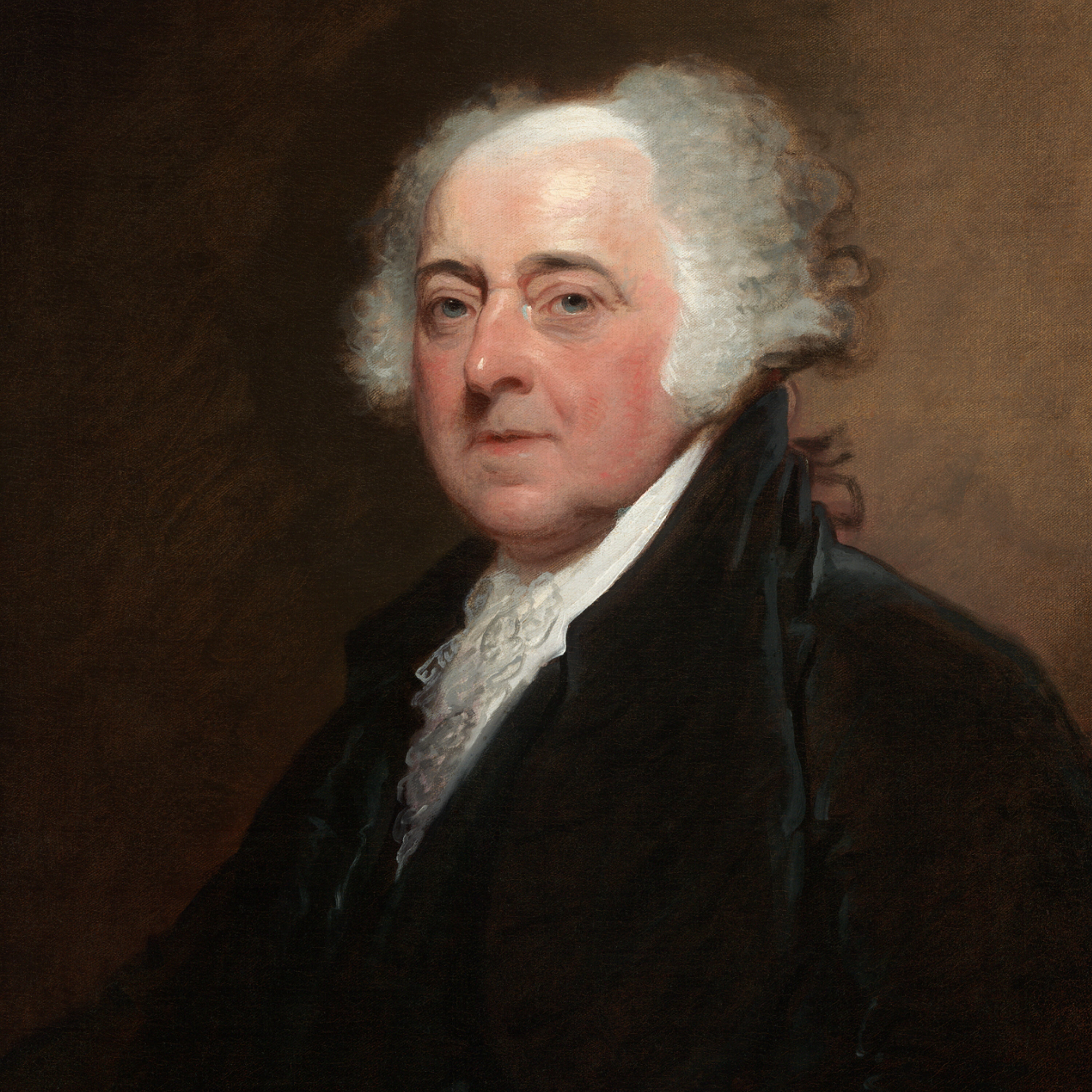
On this episode of Newts World. The lives of these men are essential to understand the American form of government and our ideals of liberty. The Founding fathers all played key roles in securing American independence from Great Britain and in the creation of the government of the United States of America. And now the life of John Adams. We're going to talk about probably the most misunderstood of the Founding Fathers, John Adams. Adams is a little bit of an odd duck, partly because he's from New England, which at that time was just very different from either New York or Virginia. Partly because Adams himself was really, really smart, but he was very argumentative and he was very blunt. He also had enormous courage. Adams had really developed over time a view of the British as a tyranny. He didn't arrive at it immediately. He was also, of all of the Founding Fathers, probably the one who believed the most deeply in the rule of law. And in fact, one of the most creative and courageous parts of his life was his willingness to defend the British soldiers who were charged with murder during the Boston Massacre. It was very unpopular in Boston because it was sort of a lynch mob desire to just, you know, hang them. And Adams said, no, I mean, this whole thing is about the rule of law. He ultimately wrote the Massachusetts Constitution, which served as a model for the U.S. constitution. And he worked very, very hard to knit together the country. He understood that Virginia as the biggest colony and then biggest state in population and in wealth, had to be at the center. But at the same time, he also realized that bringing all of New England in really, really mattered. And it's important to remember that in this period, the idea of America is a really sort of vague idea to most people. Most people think of themselves in terms of their colony or later on in terms of their state. On Adam's case, he was born in the Massachusetts Bay Colony. So it's again hard for us to look back and realize. But his early life, starting in 1735 when he was born, you know, he was English. He thought of himself purely as a colonist. He didn't think. He was a nationalist. He was educated at Harvard, the first University created in the United States and gradually came to believe that the British were behaving in the manner of a dictatorship. And the real fight here is over power. It's not over money. The stamp tax and other kind of things are points they fight over. But what they're really fighting over is a core question. Can the British parliament sitting in London pass laws that affect directly people in the colonies? And the colonies had become increasingly independent and they were increasingly wealthy. By 1790, they would have about 3 million people, where Britain had about 5 million. So they were really pretty big already. And of course, given their geographic size, they were rapidly going to pass Britain in size and ultimately in power. So they're looking around thinking, wait a second, why is this parliament sitting in London telling me what to do? And why are they taking money out of my pocket? And why are they rigging the trade laws to favor the British and to hurt the Americans? So all of these things began to build a momentum of criticism. In a place like Boston, which had a very, very busy port and which had a trade which included the West Indies, the fact is that they were subject to British regulation in ways that very much disadvantaged the Boston sailors and advantage the British sailors. And so there was a resentment both about regulations, there was a resentment about taxes. But most of all, there was a resentment about power, about where the center of power ought to be. Adams is one of those who comes to believe that in the end, the colonies have to become independent. And they recognize that to become independent, they need all the colonies on the same side. Massachusetts by itself isn't big enough, isn't strong enough to take on the British. So I think it's important to recognize that Adams and his cousin Samuel Adams, who's more radical than John Adams, more of a populous rabble rouser, the kind of guy who would dress up like an Indian and throw tea in the harbor, Very, very different. John Adams is a scholar, he's an intellectual. He's a man who operates in a law court. He doesn't operate out on the street arousing people. The other thing, by the way, is that Adam's wife, Abigail Adams, is the most famous, certainly the most literate of the founding mothers. And her letters to John are just amazing. And it's very clear that she is sort of the archetype of the modern woman. She operates independently. He is gone for a long time. She's running the family farm. She is sending him advice on everything. She is very well educated. She's just such a remarkable woman. Adams himself, born in Massachusetts, October 30, 1735, was the oldest son to John Adams Senior and Susannah Boylston. His father was a deacon in the Congregational Church and earned a living as both a farmer and shoemaker in Braintree, Massachusetts. John wanted to become a farmer, but his father said no. He had to get an education and hoped he would become a minister, which in that period was a very, very prestigious position. But Adam's at 15. And it's useful to remember, by the way, that back then people went to college at a much younger age. They also went to work at a much younger age. In Adams case, at 15. He's off to college. Now, from Braintree to Cambridge is only 12 miles, but it's a very big 12 miles from rural farming to the center of learning in America. At that time, Adams was so anxiety ridden, he almost went home. In his diary, he wrote, quote, I at first resolved to return home, but foreseeing the grief of my father and apprehending he would not only be offended with me, but my master too, whom I sincerely loved, I aroused myself and collected resolution enough to proceed also gives you sort of a flavor. This guy's a little bit pompous. He thinks about himself, he thinks about life. He is perfectly at home. Once he gets used to Harvard. He excels academically, graduates in 1755 at the age of 20. But he doesn't want to be a clergyman, so he decides instead to teach in a Latin school to earn tuition fees to study the law. Now, back then, you usually studied the law by working with a lawyer. When they talked about reading the law, that's what they literally meant. You were in a law office and you were reading all these law books. You were learning about the process. And Adams becomes a lawyer. Now, he's not a very good lawyer. He only had one client in his first year, didn't win his first case until three years after he opened his practice. And part of it is being a lawyer in a small town requires a pleasing personality. Well, Adams wasn't very big on pleasing anybody, including himself. He represented sort of that curmudgeonly New England kind of religiosity. And as long as God was happy with him, what did he care about the rest of us? But he begins to get drawn into the politics of the time. He spoke very much against the stamp act of 1765, which was the first effort by Parliament to get money out of the Americans. I mean, here's what had happened. With the help of the Americans, the British won what they called the seven years War, what we called the French and Indian War. Now, the upside and downside of that was they drove the French out of Canada. It was an upside, obviously, because it meant Britain was dominant in all of North America. It was a downside because it meant the Americans no longer looked to Great Britain to protect them because there was no overt threat from France. And so the Americans kind of relaxed and thought, you know, everything's peaceful. Why are you bothering us? The British, however, had run up a huge debt, and they were trying to figure out a way to pay off their debt. And their thinking was, wait a second, you know, we saved you from the French and the Indians. You owe us. And the Americans are going, no, we don't. We volunteered. We fought in the war. It's not our fault. You guys are stupid. And it took longer than it should have because of you. And the result was that the Americans were unhappy to pay it and the British were unhappy not to get paid. Well, that's sort of like a bad marriage. By 1765, Adams is writing an anonymous essay in the Boston Gazette entitled A Dissertation on Canon and Feudal Law. And this is what he wrote. It seems very manifest from the Stamp act itself that a design is formed to strip us in a great measure of the means of knowledge by loading the press, the colleges, and even an almanac in a newspaper with restraints and duties, and to introduce the inequalities and dependencies of the feudal system by taking from the poorer sort of people all their little subsistence and conferring on a set of stamp officers, distributors, and their deputies. This is, by the way, the attitude Americans will take to the Internal Revenue Service and the general attitude Americans have had ever since, which is, why is the government bothering me? I made the money. I want to keep the money. Why are you putting your hand in my pocket? Now, Adams went on to write the Braintree instructions, which were in opposition to the Stamp Act. He presented it on September 24, 1765, at the Braintree town meeting, which unanimously approved it. And this is a key thing, he says, and notice, this is about power. The tax itself is just what they're fighting over. But the underlying core question is, where does power lie? This is what Adams wrote. This is 1765 now, more than a decade before we would declare independence, quote, and we have always understood it to be a grand and fundamental principle of the British Constitution that no free man should be subjected to any tax to which he has not given his own consent in person or by proxy. The paper was published in Draper's papers And in newspapers across Massachusetts, more than 40 towns endorsed and adopted it. Then in October 1765, representatives from Massachusetts and eight other felonies met in New York for what was called the Stamp Act. Congress, using Adams brain tree instructions, the and other resolutions across the colonies, Pennsylvania lawyer John Dickinson drafted the Declaration of Rights and Grievances which was sent to George III. Now this again is 11 years before we will declare our independence. In a December 18, 1765 diary entry, Adams called the Stamp act, quote, an enormous engine fabricated by the British Parliament for battering down all the rights and liberties of America. Notice again, this is not about money. It is, I want to repeat this one line. An enormous engine for battering down all the rights and liberties of America. This is an attitude about our rights and liberties which continues up to today. It's why the second Amendment fight is so deep. It's why the whole fight over the rule of law is so deep. It's why the intrusion of government spying on us arouses such rage. The fact is, Americans have now for 300 years had this deep sense that we are a free people and we deeply distrust any government. The British passage of the townshend Acts in 1767 led to mob violence throughout the colonies. On March 5, 1770, a group of British soldiers were struck with snowballs, ice and stones. In the chaos, they opened fire and shot five civilians. A few days later, Adams received a note from Captain Preston, who was in jail and on trial for murder of several Boston citizens during the massacre. Preston asked Adams if he would defend him in court since no one else would agree to him. This is not, let me go to Adams because he's the best lawyer around. He said, let me go to Adams because he's the only lawyer dumb enough to defend the British. Adams, believing in the rule of law and the right to trial, agreed to defend not only Captain Preston, but the eight other British soldiers charged with murder. Now think about this. Here's a guy who's not a very successful lawyer anyway, but he's a great political writer. He's already having an impact all the way across America with his writing. And now, even though he's a patriot, even though he's been very, very opposed to what the British are doing, he does something which confuses the average person. He agrees that he will defend these soldiers. During the week long trial, Adams argued that it was impossible to prove that Captain Preston had ordered his soldiers to fire. He brought in over 22 witnesses. Adams during the trial said, quote, facts are stubborn things and whatever may be our wishes, our inclinations, or our dictates of our passion, they cannot alter the state of facts and evidence. It's a very powerful moment because in the rule of law, the jury's job is to determine the facts, not to determine the emotions. Adams later went on to say, quote, it is more important that innocence be protected than it is that guilt be punished. For guilt and crimes are so frequent in this world that they cannot all be punished. But if innocence itself is brought to the bar and condemned perhaps to die, then the citizen will say, whether I do good or whether I do evil is immaterial. For innocence itself is no protection. There is seldom but a better explanation of why the rule of law matters. It is the law which protects us from ourselves. It is the law which protects us from the mob. It is the law which protects us from a sudden wave of emotion. During the trial of the eight British soldiers, Adams argued that they acted in self defense. Adams argued that since it was unclear as to which soldier fired, quote, it's of more importance to community that innocence should be protected than it is that guilt should be punished. The jury acquitted six of the eight soldiers, while two who fired directly into the crowd were convicted of manslaughter. This is not an outcome anyone could have predicted at the beginning. When Adams took on the trial on the third anniversary of the Boston Massacre, March 5, 1773, Adams wrote in his diary, quote, judgment of death against those soldiers would have been as foul a stain upon this country as as the execution of the Quakers or witches. This, however, is no reason why the town should not call the action of that night a massacre, nor is it any argument in favor of the governor or minister. Now, notice his reference back to executing Quakers and witches. Remember that Massachusetts had been the scene of the Salem witchcraft trials, a period of people allowing emotions to run amok to create threats that did not really exist, to prosecute people who clearly, in retrospect, were innocent. There was a deep feeling that controlling passion and doing what the law required in a calm and reasonable way was essential to avoid the kind of injustice that the Salem witchcraft trials had led to.
- [18:39]
Greg Jenner
Hello, Greg Jenner here, host of youf're Dead to Me. In my new family friendly podcast series, Dead Funny History. Historical figures come back to life for just about long enough to argue with me, tell us their life stories, and sometimes get on my nerves. There's 15 lovely episodes to unwrap, including the life of Ramses the Great Josephine Baker and the history of football, plus much, much more. So this Christmas, give your ears a treat with dead funny history. You can find it in the you're dead to me feed on BBC.com or wherever you get your podcasts.
- [19:09]
Trainer Games Announcer
10 athletes will face the toughest job interview in fitness that will push past physical and mental breaking points. You are the fittest of the fit. Only one of you will leave here with an IFIT contract for $250,000.
- [19:28]
Newt Gingrich
This is where mindset comes in.
- [19:29]
Trainer Games Announcer
Someone will be eliminated. Pressure is coming down.
- [19:34]
Public Investing Sponsor
Trainer Games on Prime Video January 8th.
- [19:36]
Greg Jenner
Watch the trailer on trainer games.com Season.
- [19:39]
iHeart Podcast Announcer
Two of unrivaled basketball is here and the talent is unreal. Paige Beckers, Nafiza Collier, Kelsey Plum, Brianna Stewart and more are back to redefine the game. Unrivaled basketball Season 2, sponsored by Samsung Galaxy, tips off January 5 on TNT.
- [19:52]
Newt Gingrich
True TV.
- [19:54]
Public Investing Sponsor
Support for the show comes from Public, the investing platform for those who take it seriously. On Public you can build a multi asset portfolio of stocks, bonds, options, crypto and now generated assets which allow you to turn any idea into an investable index with AI. It all starts with your prompt. From renewable energy companies with high free cash flow to semiconductor suppliers growing revenue over 20% year over year, you can literally type any prompt and put the AI to work. It screens thousands of stocks, builds a one of a kind index and lets you back test it against the S&P 500. Then you can invest in a few clicks. Generated assets are like EFTs with infinite possibilities, completely customizable and based on your thesis, not someone else's. Go to public.com podcast and earn an uncapped 1% bonus when you transfer your portfolio. That's public.com podcast paid for by Public Investing Brokerage Services by Open to the Public Investing Inc. Member FINRA SIPC Advisory Services by Public Advisors, llc SEC Registered Advisor Generated Assets is an interactive analysis tool. Output is for informational purposes only and is not investment recommendation or advice. Complete disclosures available@public.com Disclosures A new year.
- [21:04]
Trainer Games Announcer
Is on the horizon and your 2026 savings start here. Right now you can access the Washington post for just $2 every four weeks. Head into the new year with six months of savings at this special intro rate. After that it'll cost $12 every four weeks. Cancel anytime. You'll get unlimited access to trusted journalism that helps you understand the year ahead and the world around you. Now's the perfect time to subscribe because great habits and great savings start together. Go to washingtonpost.com iheart that's washingtonpost.com iheart and start your year Informed with the post.
- [21:45]
Newt Gingrich
Adams himself, hardly a shrinking violet, later called his defending of the British soldiers, quote, one of the most gallant, generous, manly, and disinterested actions of my whole life, and one of the best pieces of service I ever rendered my country. As you can tell, Adams is not a man of modesty, or what we might have called somebody who was hiding his talents. He was, in fact, quite cheerful about telling you how great he was. He lost about half of his Boston law practice by defending the British soldiers. But I think he looked back and thought that was exactly right. Now, this did not mean he was pro British. It meant he was pro the rule of law. And you can tell that because shortly after this period, he ends up in April 1776, writing thoughts on government in response to a resolution of the North Carolina Provincial Congress. In it, he outlined why he believed three branches of government was necessary. Quote, representation of the people in one assembly being obtained, a question arises whether all the powers of government, legislative, executive, and judicial, shall be left in this body. I think a people cannot be long free, nor ever happy whose government is in one assembly. It's important to remember that the founding fathers were very skeptical of the rule of the mob. They thought that the lesson of Athens had been that when you have a pure democracy, that passion influences it, that no one is safe. And then in a moment of passion, anyone can be killed or anyone can have their property taken away. And as a result, there had been a constant effort to try to find a structure to think of themselves sort of as architects of self government. And they had taken a great deal from Montesquieu, the French theoretician's spirit of the laws. In the spirit of the laws, Montesquieu outlines the idea of dividing power into three separate agencies. An agency for the judicial, an agency for the executive, and an agency for legislation, with the thought that by dividing power into three, they will balance each other, and it will be much harder to threaten the freedom of people because there'll be no way to gather all that power from all three at the same time. Now, Adams, taking that model, became the primary author of the Massachusetts Constitution in 1780, which is four years after the Declaration of Independence, but right in the middle of the Revolutionary War. The Massachusetts constitution included many of the themes of the US Constitution. It says, partly drawn from the Declaration of Independence, all men are born free and equal and have certain natural, essential, and unalienable rights, among which may be reckoned the right of enjoying and defending their lives and liberties, that of acquiring, possessing, and protecting Property in fine that of seeking and obtaining their safety and happiness. Every subject has a right to be secure from all unreasonable searches and seizures of his person, his houses, his papers, and all his possessions. The people have a right to keep and bear arms for the common defense. Original purpose of the second amendment, growing straight out of this line in the Massachusetts Constitution, is simple. The people have a right to keep and to bear arms for the common defense. And what did that mean? It meant both defense against foreigners and defense against their own government. And they got to this because in 1775, in April, when the British army marched to Concord and Lexington to seize the American weapons, if they had not had a militia, if they had not been prepared to fight, if they had not been able to bear arms, the British would have won instantly. The revolution would have been over. And it was the fact that the Massachusetts farmers did have weapons, did know how to use them, were training as a militia that enabled them to drive the British back into Boston, suffering substantial casualties. Every one of the founding fathers understood that. Every one of the founding fathers believed that you had to have the right to bear arms to remain free, and that if you gave up the right to bear arms, sooner or later you'd be faced with a dictatorship that would take away all of your rights. And Adams, in that sense, is an explicit, direct statement of that. He goes on to say in the Massachusetts Constitution, quote, the people have a right in an orderly and peaceable manner to assemble, to consult upon the common good, to give instructions to their representatives, and to request of the legislative body by the way of addresses, petitions, or remonstrances, redress of the wrongs done them, and of the grievances they suffer. No subsidy, charge, tax, impost, or duties ought to be established, fixed, laid, or levied under any pretext whatsoever without the consent of the people or their representatives in the legislature. Now, if you listen carefully, in the Massachusetts Constitution in 1780, you see the forerunner of the Bill of Rights. And while Jefferson is given credit and Madison actually offered it in the Congress, it's clear that their concept of the Bill of Rights was deeply shaped by John Adams, who gets almost no credit for it. And it's one of Adams's great problems that he was, in fact, a remarkably important person. He was extremely thoughtful, but at the same time, he didn't have a very good publicity machine. He wasn't a very attractive personality. He was always in Washington's shadow. And then, as you'll see, he's also in Hamilton's shadow. And so Jefferson gets great Press as a great propagandist, and he and Madison get the credit for things that, in fact, John Adams did. Now, after the war and after the Constitution is adopted, Adams comes in second to Washington. Washington is elected unanimously. They had not thought this through. And so you actually voted for the president and vice president at the same time. And whoever came in first got to be president. Whoever came in second got to be vice president. And so you cast both ballots. This would really lead to a mess with Jefferson, because Jefferson and Aaron Burr tie, and so they have a huge fight because everybody understood Jefferson was supposed to be president, but Aaron Burr, who's a total snake, tries to steal the presidency, something which, of course, permanently estranged him from Jefferson. Well, in the very first election we ever had, with people voting twice, Washington is elected president unanimously. And in the second ballot, Adams comes in second, but he only gets 34 votes to Washington, 69. Now, Adams was kind of humiliated because even though Washington clearly was the giant who had won the Revolutionary War and the man who had presided over the Continental Congress, Adam's ego was such that he thought he should be the first to just go home. But he then decided that he would accept it and become vice president. His job was to preside over the Senate. He was not allowed to debate, which he had done in the Continental Congress. And so, in a sense, he has this job that is symbolic, which is not exactly what Adams wanted. And Adams doesn't quite get populism when they're debating over what's the title for the president. Adams suggests His Highness, the President, United States of America and Protector of the rights of the Same. This is not a country which says His Highness very easily, and it just gives you a flavor that Adams is never quite the common man and never quite has the common touch. And part of Jefferson's genius was that while he was an intellectual and had no more interest in commoners than Adams did, he nonetheless was able to pretend with great skill, and Adams just couldn't. It wasn't worth the effort to him. He had a reasonable relationship to Washington, but he was never a close advisor. He didn't help shape policies. So for eight years, he's just sitting around and has a very similar attitude towards the vice presidency that a number of other vice presidents will get. He writes Abigail at one point, my country has in its wisdom contrived for me the most insignificant office that ever the invention of man contrived or his imagination conceived. He considered seriously resigning, but he stayed on for eight years. Now, the fact is, a vice president's basic job was to wait around and see if the President died. And so Adams was deeply, deeply frustrated. However, his patience worked out in a four way race between Adams and Thomas Pinckney on the Federalist ticket and Jefferson and Aaron Burr on the Republican. Adams received 71 electoral votes and Jefferson 68. And therefore, as Vice President, Adams, as President of the Senate, opened and read his own election results, proclaiming himself President. The Infinite Monkey Cage returns imminently. I am Robert Ince and I've sat next to Brian Cox, who has so much to tell you about what's on the new series, primarily Eels and what else that it was fascinating though. The Eels. But we're not just doing Eels, are we? We're doing a bit with brain computer interfaces, timekeeping, fusion, monkey business, cloud science of the North Pole and Eels. Did I mention the Eels? Is this ever since you bought that timeshare underneath the Sargasso sea, listen on BBC.com or wherever you get your podcasts.
- [31:33]
Trainer Games Announcer
10 athletes will face the toughest job interview in fitness that will push past physical and mental breaking points. You are the fittest of the fit. Only one of you will leave here with an IFIT contract for 200.
- [31:52]
Newt Gingrich
This is where mindset comes in.
- [31:53]
Trainer Games Announcer
Someone will be eliminated. Pressure is coming down.
- [31:58]
Public Investing Sponsor
Trainer Games on Prime Video January 8th.
- [32:00]
Greg Jenner
Watch the trailer on trainer games.com Season.
- [32:03]
iHeart Podcast Announcer
Two of unrivaled basketball is here and the talent is unreal. Paige Beckers, Nafiza Collier, Kelsey Plumb, Brianna Stewart and more are back to redefine the game. Unrivaled basketball Season 2, sponsored by Samsung Galaxy tips off January 5th on TN AT&T, TruTV and HBO.
- [32:17]
Public Investing Sponsor
Max support for the show comes from Public, the investing platform for those who take it seriously. On Public, you can build a multi asset portfolio of stocks, bonds, options, crypto and now generated assets which allow you to turn any idea into an investable index with AI. It all starts with your prompt. From renewable energy companies with high free cash flow to semiconductor suppliers growing revenue over 20% year over year, you can literally type any prompt and put the AI to work. It screens thousands of stocks, builds a one of a kind index and lets you back test it against the S&P 500. Then you can invest in a few clicks. Generated assets are like EFTs with infinite possibilities, completely customizable and based on your thesis, not someone else's. Go to public.com podcast and earn an uncapped 1% bonus when you transfer your portfolio. That's public.com podcast paid for by public investing brokerage Services by Open to the Public Investing Inc. Member FINRA SIPC Advisory Services by Public Advisors, LLC SEC Registered Advisor Generated Assets is an interactive analysis tool. Output is for informational purposes only and is not investment recommendation or advice. Complete Disclosures available at public.comdisclosures ever wish.
- [33:28]
Trainer Games Announcer
You could try the Washington Post and see what all the talk is about? Right now you can with a one week pass for just $7. No commitment, no strings attached. Just $7 for one week of unlimited access to the Post. It's the perfect way to explore our award winning journalism and experience what subscribers already know. There's nothing else quite like it, so why not give us a try? Go to washingtonpost.com week and start your $7 one week pass today. That's washingtonpost.com week.
- [34:06]
Newt Gingrich
In 1796, Alexander Hamilton urged Federalist leaders to support Thomas Pinckney as president to ensure Jefferson's defeat. But Hamilton made no secret of his preference for Pinckney over Adams. In a January 1797 letter to his wife, Abigail, Adams said of Hamilton, quote Hamilton I know to be proud, spirited, conceited, aspiring mortal, always pretending to morality with as debauched morals as old Franklin, who is more his model than anyone I know, as great a hypocrite as any in the U.S. his intrigues in the election, I despise that. He has talents, I admit, but I dread none of them. I shall take no notice of his puppyhood, but retain the same opinion of him I always had and maintain the same conduct towards him I always did, that is keep him at a distance. Close Corp. By the mid-1790s, two political parties existed in the United States, the Federalists and the Democratic Republicans. By the time Adams became president, the nation was facing worsening relations with France. France, who thought the United States should honor the French American alliance during the American Revolution, was angered that the US Signed the Jay Treaty with Great Britain. French privateers started seizing hundreds of US merchant ships in the Caribbean beginning in mid-1797. Adams wanted to resolve the issue diplomatically. However, the Federalist Party demanded war. Adams, going against what his party wanted, established a committee of three American diplomats to meet with France's minister of foreign affairs. When the committee arrived, the French demanded large bribes before any negotiations. The diplomats disagreed on whether to pay the bribe, and they eventually left without meeting anyone. Fearing that this would push the United States into a war, Adams initially refused to turn over any notes from the diplomats to Congress. When he finally did, Adams redacted the names of the French officials that tried to bribe them Calling them X, y, and z instead. The democratic republican party were angered with France over the bribery, but were against going to war with France. The federalists, however, were ready to go to war. Adams asking congress to appropriate funds to create a navy, improve their coastal defenses, and for authority to summon militiamen to active duty if needed. The navy commissioned privately owned American ships and gave captains permission to seize French ships. Between 1798 and 1800, the private ships captured about 80 French ships, but war had never been officially declared. Adams again tried a diplomatic solution, sending diplomats in early 1800. The Democratic Republicans, more moderate federalists and most of the country agreed with this move. But Hamilton and other federalists were opposed, wanting to go to war instead. By the time the diplomats arrived in France, Napoleon had seized control of the French government. Napoleon signed the treaty of mortefontaine, which released the United States from its revolutionary war alliance with France and brought an end to this quasi war with France. Adams viewed this peace treaty with France as. As his greatest accomplishment as president, later writing to James Lloyd in January 1818 that he desire no other inscription over my gravestone than here lies John Adams, who took upon himself the responsibility of the peace with France in the year 1800. However, Hamilton and many federalists were deeply upset over Adams negotiating with France. As president, Adams decided that he would keep Washington's cabinet rather than appointing his own. Hamilton, who was not a part of Adams administration, influenced several members of Adams cabinet. In the spring of 1800, Adams requested the resignation of two cabinet members, Timothy Pickering, the secretary of State, and James McHenry, the Secretary of war. For listening to Hamilton instead of himself, Pickering opposed Adams nomination of William S. Smith and Henry Knox as adjutant general and second in command of the army. Pickering also conspired against Adams, reporting to Hamilton and other federalists what went on in cabinet meetings with President Adams. On May 10, 1800, Adams wrote a letter to Timothy Pickering requesting his resignation. As I perceive a necessity of introducing a change in the administration of the office of state, I think it proper to make this communication of it to the present secretary of state that he may have an opportunity of resigning if he chooses, I should wish the day on which his resignations take place to be named by himself. Pickering, on May 12, 1800, responded in a letter refusing to resign. Nevertheless, after deliberately reflecting on the overture you have been pleased to make to me, I do not feel to be my duty to resign. Adams responded by discharging Pickering. Diverse causes and considerations essential to the administration of the government in my judgment, require a change in the department of State, you are hereby discharged from any further service as Secretary of State. On May 6, 1800, James McHenry on Lake Pickering wrote his letter of resignation. Immediately after Adams requested his resignation. In preparation for the 1800 election, Adams separated himself from Hamilton and the Federalists opposed to him. The Federalist party, however, chose Adams as their presidential candidate and Pinckney as their second choice. Democratic Republicans decided to stay with their 1796 choices with Thomas Jefferson as their presidential candidate and Aaron Burr as their second choice. 1800 was the last presidential election where the runner up of the election would become the Vice president. So each party had two candidates hoping to get their most popular candidate as president and their second most popular as Vice president, with the possibility that one candidate from each party could become president and Vice President. Which remember is what had happened in 1796 when Adams became president, but his rival Thomas Jefferson became Vice President, was a flaw in the original design of the Constitution. From the beginning, Adams had two major issues against him. The first was the deep divide within his party on Adams deciding not to wage war with France. On October 24, 1800, Hamilton wrote a very long pamphlet. It was called concerning the public conduct of John Adams on why he believed Adams should not be re elected as president. Hamilton stated that Adams, quote, does not possess the talents adapted to the administration of government and that there are great and intrinsic defects in his character which unfit him for the chief magistrate. As certain fixed points of character which tend naturally to the detriment of any cause of which he is the chief, of any administration of which he is the head. It is a fact that he is often liable to paroxysms of anger which deprive him of self command and produce very outrageous behavior to those who approach him. Most, if not all, his ministers and several distinguished members of the two houses of Congress have been humiliated by the effects of these gusts of passion. In addition to the really deep bitter hostility between Hamilton and Adams, there was an unpopularity of the alien and sedition laws. These laws basically were an effort to censor the American people. They said if you said certain things, you could be charged. It was just short of treason. People hated the idea that the government could try them for saying the wrong things in the election. Jefferson and Burr, both the Democratic Republican candidates, tied with 73 electoral votes. Adams won 65 votes, Pinckney won 64 and John Jay received one vote. Remember that Jay had been the co author of the Federalist papers. Interestingly, you now end up with Jefferson and Burr clearly in violation of their agreement Burr, who is a snake who will later on shoot Alexander Hamilton and then after that engage in treasonous acts trying to steal parts of the west from the United States. Burr would not concede to Jefferson. The tie went to the House of Representatives. Everybody understood Jefferson was the candidate for president. Burr was the candidate for Vice president. But Burr's ego and ambition led him to try to somehow usurp Jefferson, who was really the founding genius behind the rise of the Democratic Republican Party, which is today the longest existing political party in the world. The Democratic Republican Party evolved into just being called the Democratic Party and it is literally the longest serving political institution in the world today. A tribute both to Jefferson and to whatever patterns he developed in that party. Adams became the last Federalist president. This was really an amazing moment in history. There was no real experience of an opposition party peacefully taking over. Normally it involved a military coup d', etat, sometimes it involved a revolution. But here you had a moment where Washington, who had set the stage by voluntarily giving up power when he surrendered his sword after the American Revolution and then once again giving up power by leaving after eight years in presidency, had really set a tone that people operated within the Constitution. And Adams, within the Constitution had lost. And so you had literally the rise of an opposition party which then became the governing party. And in some ways, you know, Adams willingness to follow the Constitution, to be a part of a larger system and to subordinate his ego to his patriotism is one of the key moments in American history. Months after losing the 1800 election, Adam Adams threw himself into writing for the rest of his life. Adams wrote his autobiography. He wrote letters to the other founding fathers. In 1812, a mutual friend brought Jefferson and Adams together again and they exchanged hundreds of letters until their death 14 years later. Interestingly, both Adams and Jefferson died on the same day. July 4, 1826, the 50th anniversary of the signing of the Declaration of Independence. Jefferson died. At 12:50pm a few hours after Jefferson's death, Adams woke from sleep and said, thomas Jefferson survives. These were his last words as he fell into a coma. Shortly afterwards, at about 6pm Adams died. He was 91 years old. One of the remarkable Founding Fathers and a man whose dedication to the rule of law, dedication to the concept of a Constitution, dedication to a belief in ideas and that legitimate argument mattered, and dedication to subordinating himself to the greater cause of American independence and American self government make him one, I think, of most honorable and most respected of the Founding Fathers. And John Adams can be always approached with an idea that you're going to learn a little bit more by reading what he said, and it's even more true if you will also read what his wife Abigail wrote. She was clearly the most literary of all of the Founding Fathers wives and she had a tremendous impact on John by the letters she wrote and by her commitment to public life. So I look back on Adams and think how lucky we were as a country to have citizens like this willing to dedicate themselves to the development of freedom. Thank you for listening to Founding Fathers Week on Newts World. You can learn more about John Adams on our show page@newtsworld.com Newts World is produced by Gingrich360 and iHeartMedia Media. Our executive producer is Garnesy Sloan and our researcher is Rachel Peterson. The artwork for the show was created by Steve Pendley. Special thanks to the team at Gingrich360. If you've been enjoying Newts World, I hope you'll go to Apple Podcast and both rate us with five stars and give us a review so others can learn what it's all about. Right now, listeners of Newtsworld can support Sign up for my three free weekly columns at Gingrich360.com Newsletter I'm Newt Gingrich. This is New 12.
- [48:11]
Greg Jenner
Hello. Greg Jenner here, host of youf're Dead to Me. In my new family friendly podcast series, Dead Funny History, historical figures come back to life for just about long enough to argue with me, tell us their life stories, and sometimes get on my nerves. There's 15 lovely episodes to unwrap, including the life of Ramses, the Great Josephine Baker and the history of football. Plus much, much more. So this Christmas, give your ears a treat with Dead Funny History. You can find it in the youe're Dead to me feed on BBC.com or wherever you get your podcasts.
- [48:41]
Trainer Games Announcer
10 athletes will face the toughest job interview in fitness that will push past physical and mental breaking points. You are the fittest of the fit. Only one of you will leave here with an IFIT contract worth $250,000.
- [49:00]
Newt Gingrich
This is where mindset comes in.
- [49:02]
Trainer Games Announcer
Someone will be eliminated. Pressure is coming down.
- [49:06]
Public Investing Sponsor
Trainer Games on Prime Video January 8th. Watch the trailer on trainergames.com Season 2.
- [49:12]
iHeart Podcast Announcer
Of Unrivaled Basketball is here and the talent is unreal. The best women's players on the planet are running it back with even bigger moments and bigger stakes. Don't miss as Paige Becker, Snafeeza Collier, Kelsey Plumb, Briana Stewart and more. Take the court and Redefine the game. This isn't your regular season. This is unrivaled, where the pace is faster, the energy is higher and every athlete shines unrivaled. Basketball Season 2, sponsored by Samsung Galaxy, tips off January 5 on TNT, TruTV.
- [49:39]
Public Investing Sponsor
And HBO Max support for the show comes from Public, the investing platform for those who take it seriously. On Public, you can build a multi asset portfolio of stocks, bonds, options, crypto and now generated assets which allow you to turn any idea into an investable index with AI. It all starts with your prompt. From renewable energy companies with high free cash flow to semiconductor suppliers growing revenue over 20% year over year, you can literally type any prompt and put the AI to work. It screens thousands of stocks, builds a one of a kind index and lets you back test it against the S&P 500. Then you can invest in a few clicks. Generated assets are like EFTs with infinite possibilities, completely customizable and based on your thesis, not someone else's. Go to public.com podcast and earn an uncapped 1% bonus when you transfer your portfolio. That's public.com podcast paid for by Public Investing Brokerage Services by Open to the Public Investing Inc. Member finra SIPC Advisory Services by Public Advisors, llc SEC Registered Advisor Generated Assets is an interactive analysis tool. Output is for informational purposes only and is not investment recommendation or advice. Complete disclosures available@public.com Disclosures A new year.
- [50:51]
Trainer Games Announcer
Is on the horizon and your 2026 savings start here. Right now you can access the Washington post for just $2 every four weeks. Head into the new year with six months of savings at the special intro rate. After that, it'll cost $12 every four weeks. Cancel anytime. You'll get unlimited access to trusted journalism that helps you understand the year ahead and the world around you. Now's the perfect time to subscribe because great habits and great savings start together. Go to washingtonpost.com iheart that's washingtonpost.com iheart and start your year informed with the Post.
- [51:26]
iHeart Podcast Announcer
This is an iHeart podcast. Guaranteed Human.