Loading summary
Transcript41 lines
- [00:00]
A
This is an iHeart podcast guaranteed human.
- [00:05]
B
10 athletes will face the toughest job interview in fitness that will push past physical and mental breaking points. You are the fittest of the fit. Only one of you will leave here with an IFIT contract worth $250,000.
- [00:24]
A
This is where mindset comes in.
- [00:26]
B
Someone will be eliminated.
- [00:28]
C
Pressure is coming down.
- [00:30]
D
Trainer Games on Prime Video Watch the.
- [00:33]
E
Trailer on trainergames.com did you know Microsoft has officially ended Support for Windows 10? Upgrade to Windows 11 with an LG Gram laptop, voted PCMag's Reader's Choice top laptop brand for 2025. Thin and ultra lightweight, the LG Gram keeps you productive anywhere and Windows 11 gives you access to free security updates and ongoing feature upgrades. Visit LGUSA.com iHeart for great seasonal savings on LG Gram laptops with Windows 11 PC Mag Reader's Choice Used with permission. All rights reserved.
- [01:05]
A
Season two of Unrivaled Basketball is here and the talent is unreal. Paige Beckers, Nafiza Collier, Kelsey Plumb, Brianna Stewart and more are back to redefine the game. Unrivaled basketball Season 2, sponsored by Samsung Galaxy, tips off January 5 on TNT, TruTV and HBO Max.
- [01:20]
D
Support for the show comes from Public, the investing platform for those who take it seriously. On public you can build a multi asset portfolio of stocks, bonds, options, crypto and now generated assets which allow you to turn any idea into an investable index with AI. It all starts with your prompt. From renewable energy companies with high free cash flow to semiconductor suppliers growing revenue over 20% year over year, you can literally type any prompt and put the AI to work. It screens thousands of stocks, builds a one of a kind index and lets you back test it against the S&P 500. Then you can invest in a few clicks. Generated assets are like EFTs with infinite possibilities, completely customizable and based on your thesis, not someone else's. Go to public.com, and earn an uncapped 1% bonus when you transfer your portfolio. That's public.com podcast paid for by Public Investing Brokerage Services by Open to the Public Investing Inc. Member FINRA SIPC Advisory Services by Public Advisors, LLC SEC Registered Advisor Generated Assets is an interactive analysis tool. Output is for informational purposes only and is not investment recommendation or advice. Complete disclosures available@public.com Disclosures A new year.
- [02:30]
C
Is on the horizon and your 2026 savings start here. Right now you can access the Washington post for just $2 every four weeks. Head into the new year with six months of savings at this special intro rate. After that, it'll cost $12 every four weeks. Cancel anytime. You'll get unlimited access to trusted journalism that helps you understand the year ahead and the world around you. Now's the perfect time to subscribe because great habits and great savings start together. Go to washingtonpost.com iheart that's washingtonpost.com iheart and start your year informed with the Post.
- [03:11]
F
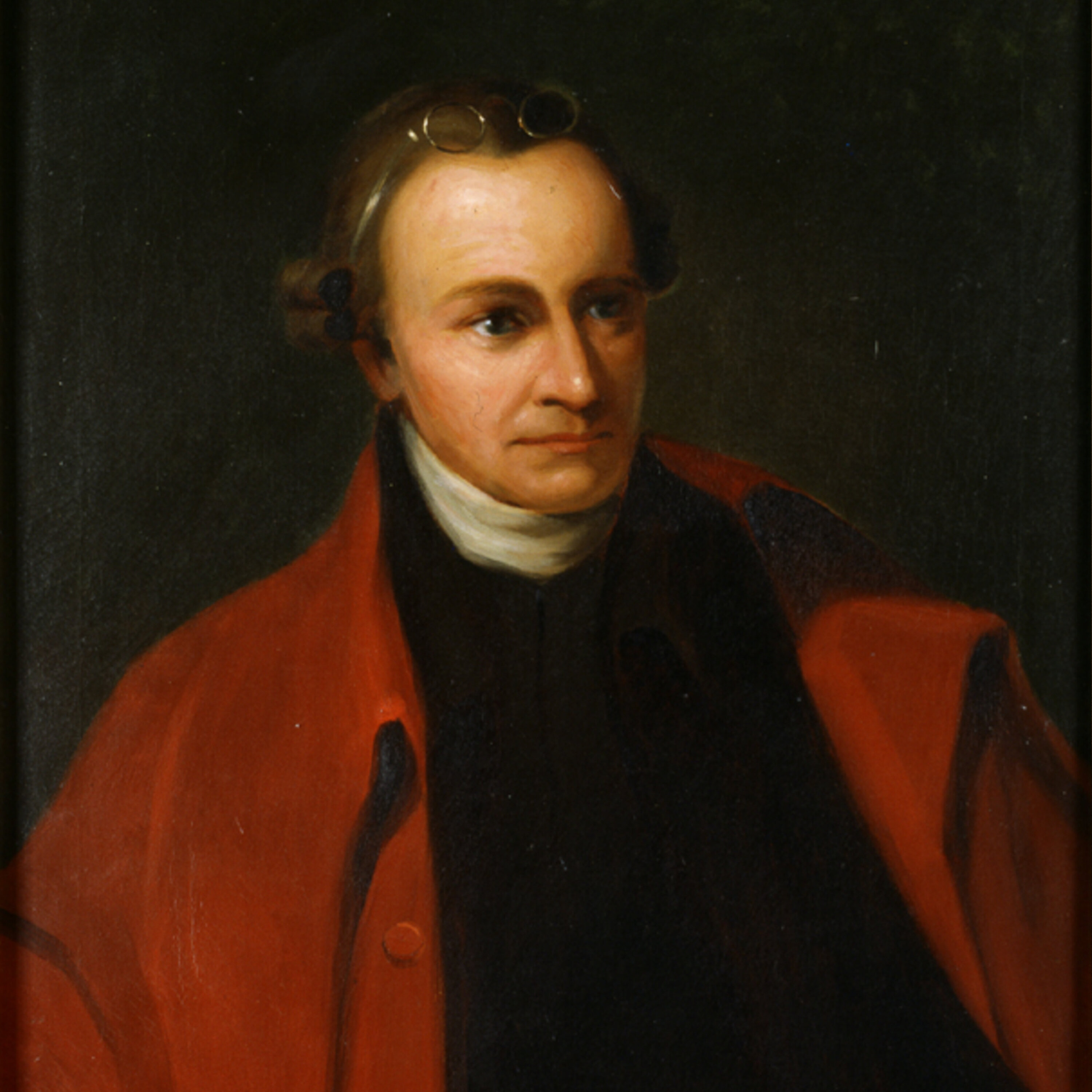
On this episode of Newts World. The lives of these men are essential to understanding the American form of government and our ideals of liberty. The Founding Fathers all played key roles in securing American independence from Great Britain and in the creation of the government of the United States of America. And now the Life of Thomas Paine. As a young person, Patrick Henry accompanied his mother to sermons given by evangelical Presbyterian Samuel Davies, whose oratorical skills had a strong influence on him. Remember, this was during the Great Awakening, a period of enormous Protestant revivalism which had a deep impact, grew in part out of the work of the Wesley brothers. The founding of the Methodist Church and the whole notion of individuals approaching God outside of the established religions, whether Anglican or Catholic, became enormously deep emotional power both in Britain and in the United States. And Patrick Henry was influenced by Samuel Davies both in his religion but also in rhetorical skills, in the ability to weave words so that they had a magic effect. He was the second son of John Henry, a Scottish born planter, and Sarah Winston Syme, a young widow from a prominent family. He was born on May 29, 1736 in Hanover County, Virginia. Back then, Hanover county is pretty close to the frontier. We tend to forget because we're used to a continent wide America that in the early phases, the American colonies were really a thin layer along the coast. And as you went towards the Blue Ridge Mountains, you were beginning to get into Indian country and you begin to get into a very different wilderness area. So a lot of these folks who grow up grow up not exactly on the frontier, but near enough to the frontier to be vividly aware of it. Up until the age of 10, Patrick Henry was sent to a neighborhood school. Then his father opened a grammar school in his own house and Henry started to attend and learn under his father. At the age of 15, Henry began working as a clerk for a local merchant. And let me say, by the way, I think we'd be a lot better off to have a lot of young people who are sitting around or standing around on street corners actually having a job. I think that in many ways our effort to avoid children working too early has meant that all too many children don't work at all. But people like Patrick Henry, or for that matter Benjamin Franklin, started young, grew and learned and became important people. A year later, in 1752, Henry and his older brother opened their own shop. However it failed, but nonetheless noticed that at 16 years of age, he's out there as an entrepreneur. At the age of 18, Henry married 16 year old Sarah Shelton, whose dowry included a 600 acre farm. Not a bad deal. His first attempt as a planter ended when a fire destroyed his house. In 1757, he attempted to open a store for a second time and it was again unsuccessful. Sometimes some of our greatest leaders have been people who weren't exactly have their greatest strengths in running a store. In fact, remember that Lincoln ends up with a partner and goes broke as a young man and spends years paying off the debt. By 1760, near Patrick Henry's 24th birthday, after all his previous attempts at making a living failed, Henry decided to become a lawyer. I won't go into my own biases here that once you fill out everything else you could become a lawyer, but nonetheless that's what he did. Henry was barely prepared, but managed to persuade the panel of Virginia attorneys that he was smart enough to obtain admission to the bar. Remember back then you didn't have the formal educational structure and the formal test that you had to pass in order to become a lawyer. You usually read under other lawyers learned from them and then at some point were judged to be capable of representing the law on your own. Within a few years after his admission to the bar, he had a large and profitable clientele. I think part of that was because he really was articulate and he really could weave words for a jury. And he liked people, just had a natural proclivity for talking to people. And so folks knew that he was approachable, they could take their problem to him and he tended to win the cases. One of the most famous cases Henry argued was the Parsons cause case. The Anglican church in Virginia at the time was funded through public revenues and clergymen were paid in tobacco. When a severe drought caused shortages, the price of tobacco went up from 2 cents per pound to 6 cents per pound. In response, the Virginia legislature passed the Two Penny act in 1758, which set the value of the contracts that the clergyman got paid to be the normal market price before the price of tobacco went up. Well, that of course led to the clergyman salaries being pretty dramatically reduced. They thought they were going to get six cents a pound. Now they were told they're going to get 2 cents a pound. The clergy appealed to authorities in England, who then overturned the law and encouraged the ministers to sue for back pay. In Hanover county, the Rev. James Morey sued his parish vestry for back pay. In December 1763, a young Patrick Henry argued on behalf of the vestry that England changing the law was an overreach of British authority. Now, think about this in the context of how it's going to evolve from here. Here he is in 1763, arguing the following quote, The act of 1758 had every characteristic of a good law and a king, by annulling or disallowing acts of so solitary a nature, from being father of his people, degenerated into a tyrant and forfeits all rights to his subjects, obedience. Now, think about this language. And by the way, in the British system at that time, this could have counted as treason. He says, degenerated into a tyrant. Remember, he's referring specifically to the King of England forfeits all rights to his subjects. Obedience. And this is over a simple law involving the payment to clergy of tobacco. Henry persuaded the jury to award Maury a minimum compensation of one penny. Henry's role in the case helped launch his political career. In 1764, Henry moved to Louisa county, where he was elected to the Virginia House of Burgesses. He was sworn into office on May 20, 1765. And it's a very, very key time in American history because later that month, that is May 1765, Parliament passes the Stamp Act. Now, what was happening was the British had spent a huge amount of money winning the French and Indian War, or the Seven Years War was called in Britain. And in the French and Indian War, they had conquered Canada. So that had eliminated the primary threat of Indians. To the colonists, the British attitude was, since we've now liberated you from this threat, we should have your help in paying off the debts we ran up during the war. The American colonists, of course, who, as Paul Johnson once said, probably had the lowest tax rate of any people in civilized history and resented every penny of it, the colonists were not particularly grateful. They figured the British king had won because that was to his advantage and they had no interest in helping him pay off the debt. So the Parliament passes the Stamp act in order to try to get money out of the colonies to pay off the debt that had grown up during the Seven Years War. Henry authors the Virginia Stamp act resolutions in response to the stamp act of 1765. During heated debates in the House of Burgesses, Henry compared King George III to both Julius Caesar and Charles I, Charles, I remember, is the English king who in the Civil War is beheaded, noting that George might, quote, profit by their example. Now, what's he saying? He's saying, well, Caesar, who, of course, is assassinated by people who feared he was going to become a dictator, and Charles I, who literally had his head cut off by his subjects. When you say somebody might profit by their example, he's kind of indirectly suggesting that the king might in fact lose his head and his life if he continues down this road. Henry introduced seven resolutions. Five of those resolutions he introduced during the debate. The fifth one was adopted by a marginal one vote. But the next day, under pressure from the governor, the House of Burgesses rescinded the resolution and had it erased from the official record. His fifth resolution read, now think about this, because this is the very beginnings of the movement towards independence. Resolved, therefore, that the General assembly of this colony, with the consent of His Majesty or his substitute, have the sole right and authority to lay taxes and impositions upon its inhabitants, and that every attempt to vest such authority in any other person or persons whatsoever has a manifest tendency to destroy American freedom. Now, there are two things that are important about this. The first is, this is an assertion that only the colonies can tax themselves, that London cannot tax them. Second, notice the word he uses doesn't talk about Virginia to destroy American freedom. And it's one of the earliest references that this is about to become an American Revolution, not just a colonial revolution of individual colonies. Virginia's royal governor, Francis Fauquier, prevented the publications of all seven of Henry's resolutions, including the one that was struck from the record, from being published in the Virginia Gazette, despite the governor's attempts to suppress this information. Within a few weeks, Henry's resolutions were published in other colonies, including Maryland, Rhode island and Massachusetts. He's beginning to get a national audience for what he's saying and how he's doing it. Henry continued to serve in the House of burgesses throughout the 1760s and the early 1770s. In September 1774, Henry and six other Virginia delegates traveled to the First Continental Congress. In all, 56 delegates from 12 colonies came to Philadelphia. Henry believed the colonies were on the path to war and declared distinctions between Virginians, Pennsylvanians, New Yorkers, and New Englanders are no more. I am not a Virginian, but an American. Now, this is a revolutionary statement. You'll notice that when you get to the American Civil War some 70 years, 80 years later. @ that point you have people say, well, I can't. Robert E. Lee's a good example. He breaks his oath as a West Point graduate to side with Virginia. So he didn't quite get what Patrick Henry was getting at, which is that Henry was an American. Now he saw the future as all the colonies working together, not as a Virginia rebellion, but an American.
- [14:29]
B
Rebellion. 10 athletes will face the toughest job interview in fitness that will push past physical and mental breaking points. You are the fittest of the fit. Only one of you will leave here with an IFIT contract worth.
- [14:57]
A
$250,000. This is where mindset comes.
- [15:01]
B
In. Someone will be.
- [15:02]
C
Eliminated. Pressure is coming.
- [15:04]
D
Down. Trainer Games on Prime Video January 8th watch the trailer on trainergames.com did.
- [15:10]
E
You know Microsoft has officially ended Support for Windows 10? Upgrade to Windows 11 with an LG Gram laptop, voted PCMag's Reader's Choice top laptop brand for 2025. Thin and ultra lightweight, the LG Gram keeps you productive anywhere and Windows 11 gives you access to free security updates and ongoing feature upgrades. Visit lgusa.com iheart for great seasonal savings on LG Gram laptops with Windows 11. PCMag reader's choice used with permission. All rights.
- [15:39]
A
Reserved. Season 2 of unrivaled basketball is here and the talent is unreal. The best women's players on the planet are running it back with even bigger moments and bigger stakes. Don't miss as Paige Becker, Snafeeza Collier, Kelsey Plumb, Brianna Stewart and more. Take the court and redefine the game. This isn't your regular season. This is unrivaled, where the pace is faster, the energy is higher and every athlete shines. Unrivaled basketball Season 2, sponsored by Samsung Galaxy, tips off January 5 on TNT, TruTV and.
- [16:09]
D
HBO. Max support for the show comes from Public, the investing platform for those who take it seriously. On Public, you can build a multi asset portfolio of stocks, bonds, options, crypto and now generated assets which allow you to turn any idea into an investable index. With AI. It all starts with your prompt. From renewable energy companies with high free cash flow to semiconductor suppliers growing revenue over 20% year over year, you can literally type any prompt and put the AI to work. It screens thousands of stocks, builds a one of a kind index and lets you back test it against the S&P 500. Then you can invest in a few clicks. Generated assets are like EFTs with infinite possibilities, completely customizable and based on your thesis, not someone else's. Go to public.com podcast and earn an uncapped 1% bonus when you transfer your portfolio. That's public.com podcast paid for by Public Investing Brokerage Services by Open to the Public Investing Inc. Member FINRA SIPC Advisory Services by Public Advisors, llc SEC Registered Advisor Generated Assets is an interactive analysis tool. Output is for informational purposes only and is not investment recommendation or advice. Complete disclosures available@public.com Disclosures A new.
- [17:20]
C
Year is on the horizon, and your 2026 savings start here. Right now. You can access the Washington post for just $2 every four weeks. Head into the new year with six months of savings at the special intro rate. After that, it'll cost $12 every four weeks. Cancel anytime. You'll get unlimited access to trusted journalism that helps you understand the year ahead and the world around you. Now's the perfect time to subscribe because great habits and great savings start together. Go to washingtonpost.com iheart that's washingtonpost.com iheart and start your year informed with the.
- [17:55]
F
Post. During their session in Philadelphia in this first Continental Congress, the group agreed to boycott British goods with the in the colonies as a sign of protest. They also called for an end exports to Great Britain the following year if the Intolerable Acts were not repealed. By the way, as a great example of good word use, the acts were intolerable. Now who's going to be for an Intolerable act? While he attended the first Continental Congress, Henry cared for his sick wife, Sarah. Henry became depressed and violent after the birth of their sixth and last child in 1771. Rather than moving his wife to an institution, Henry kept her at home and she was cared by an enslaved servant. She died in early 1775. On March 23, 1775, at St. John's Church in Richmond, Henry spoke at the second Virginia Convention in response to interference of the Royal Navy brought in from the king's appointed governor, Lord Dunmore. Henry had discussed the need to form armed militias in Virginia in case British troops attempted to control the area, and this is an important note about the American Revolution. It is the existence of armed militias which enables the Americans to stand up to the British. If they had not had armed militias, the British would have crushed them easily, and that's why they wrote in the Second Amendment on the right to bear arms, because they understood the difference between an armed citizenry and a disarmed citizenry. It's not exactly known what Henry said during the meeting, but years later, biographer William Wirt in 1817 reconstructed the speech based on recollections of Thomas Jefferson and others in attendance. The end of Ritz recollection ended with the famous give me liberty or give me death line. But it's actually unknown if Henry actually said it, and that's pretty much drawing a line. Roots recollection of speech is this. No man thinks more highly than I do of the patriotism as well as abilities of the very worthy gentlemen who have just addressed the house. But different men often see the same subject in different lights. And therefore I hope it will not be thought disrespectful to those gentlemen if, entertaining, as I do opinions of a character very opposite to theirs, I shall speak forth my sentiments freely and without reserve. This is no time for ceremony. The question before the House is one of awful moment to this country. For my own part, I consider it as nothing less than a question of freedom or slavery. And in proportion to the magnitude of the subject ought to be the freedom of the debate. It is only in this way that we can hope to arrive at truth and fulfill the great responsibility which we hold to God and our country. Should I keep back my opinions at such a time through fear of giving offense, I should consider myself as guilty of treason towards my country, of an act of disloyalty toward the majesty of heaven, which I revere above all earthly kings. Mr. President, it is natural to a man to indulge in the illusions of hope. We are apt to shut our eyes against a painful truth and listen to the song of that siren shil she transforms us into beasts. Is this the part of wise men engaged in a great and arduous struggle for liberty? Are we disposed to be of the number of those who, having eyes, see not and having ears, hear not the things which so nearly concern their temporal salvation? For my part, whatever anguish of spirit it may cost, I am willing to know the whole truth, to know the worst, and to provide for it. I have but one lamp by which my feet are guided by, and that is the lamp of experience. I know of no way of judging of the future but by the past. And judging by the past, I wish to know what there has been in the conduct of the British Ministry for the last 10 years to justify those hopes with which gentlemen have been pleased to solace themselves in the house. Is it that insidious smile with which our petition has been lately received? Trust it not, sir. It will prove a snare to your feet. Suffer not yourselves to be betrayed with a kiss. Ask yourselves how this gracious reception of our petition comports with those warlike preparations which cover our waters and darken our land. Are fleets and armies necessary to a work of love and Reconciliation. Have we shown ourselves so unwilling to be reconciled that force must be called in to win back our love? Let us not deceive ourselves. These are the implements of war and subjugation, the last arguments to which kings resort. I ask, gentlemen, sir, what means this martial array, if its purpose be not to force us into submission? Can gentlemen, assign any other possible motive for it? Has Great Britain, any enemy in this quarter of the world to call for all this accumulation of armies and navies? No, sir, she has none. They are meant for us. They can be meant for no other. They are sent over to bind and rivet upon us those chains which the British Ministry have been so long forging. And what have we to oppose them? Shall we try argument, sir? We have been trying that for the last 10 years. Have we anything new to offer upon the subject? Nothing. We have held the subject up in every light of which it is capable, but it has been all in vain. Shall we resort to entreaty and humble supplication? What terms shall we find which have not been already exhausted? Let us not, I beseech you, sir, deceive ourselves. Sir, we have done everything that could be done to avert the storm which is now coming on. We have petitioned, we have remonstrated, we have supplicated. We have prostrated ourselves before the throne and have implored its interposition to arrest the tyrannical hands of the Ministry and Parliament. Our petitions have been slighted, our remonstrances have produced additional violence and insult. Our supplications have been disregarded and we have been spurned with contempt from the foot of the throne. In vain. After these things, may we indulge the fond hope of peace and reconciliation. There is no longer any room for hope if we wish to be free, if we mean to preserve inviolate those inestimable privileges for which we have been so long contending, if we mean not basely to abandon the noble struggle in which we've been so long engaged, in which we have pledged ourselves never to abandon until the glorious object of our contest shall be obtained, we must fight. I repeat it, sir. We must fight. An appeal to arms and to the God of hosts is all that is left us. They tell us, sir, that we are weak, unable to cope with so formidable an adversary. But when shall we be stronger? Will it be the next week or the next year? Will it be when we are totally disarmed? And what a British guard shall we station in every house? Shall we gather strength by irresolution and inaction. Shall we acquire the means of effectual resistance by lying supinely on our backs and hugging the delusive phantom of hope until our enemies have bound us by hand and foot? Sir, we are not weak if we make a proper use of those means which the God of nature hath placed in our power. The millions of people armed in the holy cause of liberty and in such a country as that which we possess are invincible by any force which our enemy can send against us. Besides, we shall not fight our battles alone. There is a just God who presides over the destinies of nations and who will raise up friends to fight our battles for us. There is. The battle, sir, is not to the strong alone. It is to the vigilant, the active, the brave. Besides, sir, we have no election if we were base enough to desire it. It is now too late to retire from the contest. There is no retreat but in submission and slavery. Our chains are forged. Their clanking may be heard on the plains of Boston. The war is inevitable, and let it come. I repeat it, sir. Let it come. It is in vain, sir, to extenuate the matter. Gentlemen may cry peace. Peace. But there is no peace. The war has actually begun. The next gale that sweeps from the north will bring to our ears the clash of resounding arms. Our brethren are already in the field. Why stand we here idle? What is it the gentlemen wish? What would they have? Is life so dear or peace so sweet as to be purchased at the price of chains and slavery? Forbid it, Almighty God. I know not what course others may take, but as for me, give me liberty or give me death. Now I'll tell you, if you stand in that church, the very same church he stood in, and you read that out loud, you will have chills. You will realize what a historic, amazing moment this was and what an extraordinary leader and great orator he was. The convention passed the resolution to form militias to defend Virginia. Virginia's royal governor, John Murray, dispatched a company of marines to seize the colony's munitions, days after, British soldiers marched towards Lexington and Concord for exactly the same purpose. The raid angered the Virginias, and Henry led his militia company towards Williamsburg to demand compensation for the stolen gunpowder. In response, Murray issued a proclamation on May 6, 1775, denouncing a certain Patrick Henry and a number of deluded followers who have taken up arms and put themselves in the posture of war. He also directed, quote, all persons upon their allegiance not to aid, abet, or give countenance to the said Patrick Henry. Of course, all this did is it made Patrick Henry really well known. It strengthened his reputation. The governor had in fact increased the power and the capacity of his opponent. On May 10, 1775, Henry attended the Second Continental Congress. Henry was asked to prepare the colony's final petition to the king, but his draft was considered too radical. Frankly, listen to that speech. You can imagine why. Fellow Virginia delegate Richard Henry Lee attempted a second draft, but Congress opted for Pennsylvania's John Dickinson's draft, which had a much gentler rhetoric. While Henry was in Philadelphia, the Virginia Convention created two provincial regiments and elected Henry Colonel of the 1st Virginia Regiment and commander of the overall militia. Henry tried to recruit and organize the troops, but in December 1775, William Woodford in the 2nd Virginia Regiment was sent to challenge the British army near Fort Norfolk in the Battle of Great Bridge. Henry, after being passed over for leading the battle, decided to resign his commission. Many of the soldiers he recruited threatened to leave because Henry was leaving, but he persuaded them to put the American cause first and accept their new leadership. During the Virginia Convention of 1776, Henry helped to write Virginia's new constitution. Remember, these colonies become states are all writing constitutions, which is great preparation a decade later when they will have to go to Philadelphia to write the Constitution of the United States. So Henry's there in 1776 helping write Virginia's new Constitution, its Declaration of Rights, and a resolution to Congress proposing.
- [29:28]
B
Independence. 10 athletes will face the toughest job interview in fitness that will push past physical and mental breaking points. You are the fittest of the fit. Only one of you will leave here with an IFIT contract worth.
- [29:56]
A
$250,000. This is where mindset comes.
- [29:59]
B
In. Someone will be.
- [30:01]
C
Eliminated. Pressure is coming.
- [30:03]
D
Down. Trainer Games on Prime Video January 8th watch the trailer on trainer games.com.
- [30:08]
E
Did you know Microsoft has officially ended Support for Windows 10? Upgrade to Windows 11 with an LG Gram laptop Voted PCMag's Reader's Choice top laptop brand for 2025. Thin and ultra lightweight, the LG Gram keeps you productive anywhere, and Windows 11 gives you access to free security updates and ongoing feature upgrades. Visit lgusa.com iheart for great seasonal savings on LG Gram laptops with Windows 11. PCMag reader's choice used with permission. All rights.
- [30:38]
A
Reserved. Season 2 of unrivaled basketball is here and the talent is unreal. Paige Beckers, Nafiza Collier, Kelsey Plumb, Brianna Stewart and more are back to redefine the game. Unrivaled basketball season two, sponsored by Samsung Galaxy, tips off January 5 on TNT, TruTV and.
- [30:53]
D
HBO. Max support for the show comes from Public, the investing platform for those who take it seriously. On Public you can build a multi asset portfolio of stocks, bonds, options, crypto and now generated assets which allow you to turn any idea into an investable index with AI. It all starts with your prompt. From renewable energy companies with high free cash flow to semiconductor suppliers growing revenue over 20% year over year, you can literally type any prompt and put the AI to work. It screens thousands of stocks, builds a one of a kind index and lets you back test it against the S&P 500. Then you can invest in a few clicks. Generated assets are like EFTs with infinite possibilities, completely customizable and based on your thesis, not someone else's. Go to public.com podcast and earn an uncapped 1% bonus when you transfer your portfolio. That's public.com podcast paid for by Public Investing Brokerage Services by Open to the Public Investing Inc. Member FINRA SIPC Advisory Services by Public Advisors, llc. SEC Registered Advisor Generated Assets is an interactive analysis tool. Output is for informational purposes only and is not investment recommendation or advice. Complete disclosures available@public.com Disclosures A new.
- [32:04]
C
Year is on the horizon and your 2026 savings start here. Right now you can access the Washington post for just $2 every four weeks. Head into the new year with six months of savings at the special intro rate. After that it'll cost $12 every four weeks. Cancel anytime. You'll get unlimited access to trusted journalism that helps you understand the year ahead and the world around you. Now's the perfect time to subscribe because great habits and great savings start together. Go to washingtonpost.com iheart that's washingtonpost.com iheart and start your year informed with the.
- [32:38]
F
Post. On June 29, 1776, Henry was chosen as the first governor of Virginia. As governor, Henry worked closely with George Washington to raise and equip forces. Henry was re elected twice for one year terms and served as governor until June 1779 when he was succeeded by Thomas Jefferson. Henry remarried in October 1777 and he and his second wife Dorothy Dandridge Henry had 11 children together, adding to the six children from his first wife. In 1779, Henry was elected to the Virginia House of Delegates. During this time, Virginia politicians were split into two Anti Federalist and Federalist. That is one side wanted to have a federal government, the United States. The other side wanted to strengthen the states and called themselves the Anti Federalist because they didn't want a strong central government. They wanted to continue the Articles of Confederation, which were very weak and which really reposed power in each individual state. Henry often found himself in opposition to James Madison over the separation of church and state. James Madison and Thomas Jefferson advocated strict separation of church and successfully pushed for the Virginia Statute for Religious freedom. Henry, on the other hand, advocated for state support for religious teachers. As governor of Virginia, he introduced a plan for a tax to support Christian teachers, a plan that was vividly opposed by Madison and Jefferson. Madison took this opportunity to rally support for Jefferson's bill for establishing religious freedom. And since Henry was denied a vote in the legislature, since he'd been elected governor, the bill passed. Henry and Madison also differed in what role the federal government should play. In 1785, Henry pushed to strengthen the Articles of Confederation. He told Madison to sketch out some plan for giving greater powers to the federal government and he would support it on the floor. Madison, however, pushed for a much more centralized national government. So where Henry wanted to strengthen the Articles of Confederation, Madison wanted to replace them. Henry was elected, but refused to attend the constitutional convention of 1787, where the articles of Confederation were supposed to be revised. But in an amazing coup d', etat, by the way, the Constitutional Convention decided they would replace the Articles, not revise them. When Washington sent him a copy of the constitution and asked him to support it, Henry expressed concerns, writing to Washington on October 19, 1787, quote, I have to lament that I cannot bring my mind to accord with the proposed constitution. The concern I feel on this account is really greater than I am able to express. Perhaps mature reflection may furnish me with reasons to change my present sentiments into a conformity with the opinion of those personages for whom I have the highest reference. In other words, Henry found himself in the awkward position of turning down his fellow Virginian and the first great American, George Washington. But he did turn him down during the Virginia Convention of 1788, aimed at ratifying the Constitution. Henry and George Mason led the anti federalist in debate against the plan, saying, and this is very important because you need to remember this wasn't automatic, it was not inevitable that we were going to end up with a centralized government and with a Constitution of the United States as opposed to a confederation of the individual states. So Henry and Madison wrote, quote, what right had they to say we the people? Who authorized them to speak the language of we the people instead of we the states? If the states be not the agents of this compact, it must be one great consolidated national government. I am not free from Suspicion, I am apt to entertain doubts. I arose yesterday to ask a question which arose in my own mind. When I asked the question, I thought the meaning of my interrogation was obvious. The fate of this question in America may depend on this. Have they said we the states? Had they made a proposal of a compact between states? If they had, this would be a confederation. It is otherwise most clearly a consolidated government. The question turns, sir, on that poor little thing. The expression we the people instead of the states of America. I need not take much pains to show that the principles of this system are extremely pernicious, impolitic and dangerous. Is this a monarchy like England, A compact between prince and people, with checks on the former to secure the liberty of the latter? Is this a confederacy, like Holland, an association of a number of independent states, each of which retain its individual sovereignty? It is not a democracy when the people retain all their rights securely. Had these principles been adhered to, we should not have been brought to this alarming transition from a confederacy to a consolidated government. We have no detail of these great considerations which, in my opinion, ought to have abounded before we should recur to a government of this kind. Here is a revolution as radical as that which separated us from Great Britain. It is as radical if, in this transition our rights and privileges are endangered and the sovereignty of the states be relinquished. And cannot we plainly see that this is actually the case? The rights of conscience, trial by jury, liberty of the press, all your immunities and franchises, all pretensions to human rights and privileges are rendered insecure, if not lost, by this change so loudly talked of by some and inconsiderately by others. Is this same relinquishment of rights worthy of free men? Is it worthy of that manly fortitude that ought to characterize republicans? It is said eight states have adopted this plan. I declare that if 12 states and a half had adopted it, I would with manly firmness and in spite of an erring world, reject it. You are not to inquire how your trade may be increased, nor how you are to become a great and powerful people, but how your liberties can be secured. For liberty ought to be the direct end of your government. Now, obviously, this is a huge fight between those who want America to become a country and those who want America to become a confederation of independent states. On June 4, 1788, in a speech during the Virginia ratifying convention later entitled A wrong step now and the republic will be lost forever, Henry said, quote, I conceived the republic to be in extreme danger if a wrong step be now made, the republic may be lost forever if this new government will not come up to the expectation of the people, Their liberty will be lost and tyranny must and will arise. Henry was wary of the powers that the executive branch would have, saying during the Virginia convention, quote, if your American chief be a man of ambition and abilities, how easy is it for him to reduce himself absolute? The army is in his hands, and where is the existing force to punish him? Can he not, at the head of his army, beat down every opposition? What will then become of you and your rights? Will not absolute despotism ensure? Despite this, Henry's opponents won over enough moderate, anti federalist to ratify the Constitution 89 to 79. But think about that. In the largest state, the central state, that ultimately was the key to whether or not you could create a United States. The margin was 10 votes 89 to 79. So even with Washington on the other side, even with Jefferson on the other side, there were still 79 Virginians who said no. In 1791, an ailing Henry retired from active politics. In 1793, Henry worked with John Marshall to defend a Virginia physician, a lawsuit by a British merchant house to recover pre war debts. Henry won, cementing his reputation as a lawyer. Washington in 1799 convinced Henry to return to politics after the Kentucky and Virginia resolutions were passed, Henry stood again for election to the Virginia House of Delegates in the spring of 1799, and he delivered his last public speech on his election day. If I am asked what is to be done when a people feel themselves intolerably oppressed, my answer is ready. Overturn the government. Wait at least until some infringement is made upon your rights that cannot be otherwise redressed. Otherwise, like failed republics of the past, you might bid adieu forever to representative government, for you can never exchange the present government but for a monarchy. Henry won the election, but he died on June 6, 1799, a few months before the assembly was to be convened. He was 63 years old. Henry left a small envelope with his last will and testament inside, in addition to his will was a single sheet of paper with his 1765 resolutions against the Stamp Act. And on the back, he left a brief message about his resolutions. It said, quote, the within resolutions passed the House of burgesses in May 1765. They formed the first opposition to the Stamp act and the scheme of taxing America by the British Parliament. All the colonies, either through fear or want of opportunity to form an opposition, or from influence of some kind or other, had remained silent. I had been for the first time elected to Burgess a few days before, was young, inexperienced, unacquainted with the forms of the House and the members that composed it. Finding the men of weight averse to opposition, and the commencement of the tax at hand, and that no person was likely to step forth, I determined to venture, and alone, unadvised and unassisted, on a blank leaf of an old law book, wrote to within, upon offering them to the House. Violent debates ensued, many threats were uttered, and much abuse cast on me by the party for submission. After a long and warm contest, the resolutions passed by a very small majority, perhaps of one or two only. The alarm spread throughout America with astonishing quickness, and the ministerial party were overwhelmed. The great point of resistance to British taxation was universally established in the colonies. This brought on the war, which finally separated the two countries, and gave independence to ours. Whether this will prove a blessing or a curse, will depend upon the use our people make of the blessings which a gracious God has bestowed on us. Pretty good line for today, too. On June 14, 1799, the Virginia Gazette announced the death of Patrick Henry, writing as long as our rivers flow, our mountains stand. Virginia will say to rising generations, imitate my Henry. It's about as good a cause for liberty, for freedom, for thinking clearly, for having the courage to stand for what you believe as anything I've ever heard or read. And Patrick Henry was essential in defining the cause of freedom, essential in establishing that we had to be a country that was free and courageous in his willingness to stand up when necessary to the British King and of the necessary to George Washington. He's a life worth studying, and he was a remarkable advocate for the freedom which we now cherish. Thank you for listening to Founding Fathers Week on Newts World. You can learn more about Patrick Henry on our show page@newtsworld.com Newts World is produced by Gingrich360 and iHeartMedia. Our executive producer is Garnesey Sloan and our researcher is Rachel Peterson. The artwork for the show was created by Steve Pendley. Special thanks to the team at Gingrich360. If you've been enjoying Newts World, I hope you'll go to Apple Podcast and both rate us with five stars and give us a review so others can learn what it's all about. Right now, listeners of newtsworld can sign up for my three free weekly columns at Gingrich Research Newsletter. I'm Newt Gingrich. This is New.
- [44:40]
B
Twirl. 10 athletes will face the toughest job interview in fitness that will push past physical and mental breaking points. You are the fittest of the fit. Only one of you will leave here with an IFIT contract worth.
- [45:12]
A
$250,000. This is where mindset comes.
- [45:15]
B
In. Someone will be.
- [45:17]
C
Eliminated. Pressure is coming.
- [45:18]
D
Down. Trainer Games on Prime Video January 8th. Watch the trailer on trainergames.com did.
- [45:24]
E
You know Microsoft has officially ended Support for Windows 10? Upgrade to Windows 11 with an LG Gram laptop voted PCMag's Reader's Choice Top Laptop Brand for 2025. Thin and ultra lightweight, the LG Gram keeps you productive anywhere, and Windows 11 gives you access to free security updates and ongoing feature upgrades. Visit lgusa.com iheart for great seasonal savings on LG Gram laptops with Windows 11. PCMag reader's choice used with permission. All rights.
- [45:53]
A
Reserved. Season 2 of unrivaled basketball is here and the talent is unreal. Paige Beckers, Nafiza Collier, Kelsey Plumb, Brianna Stewart and more are back to redefine the game. Unrivaled basketball Season 2, sponsored by Samsung Galaxy, tips off January 5 on TNT, TruTV and HBO Max support for.
- [46:10]
D
The show comes from Public, the investing platform for those who take it seriously. On Public, you can build a multi asset portfolio of stocks, bonds, options, crypto and now generated assets which allow you to turn any idea into an investable index with AI. It all starts with your prompt. From renewable energy companies with high free cash flow to semiconductor suppliers growing revenue over 20% year over year, you can literally type any prompt and put the AI to work. It screens thousands of stocks, builds a one of a kind index and lets you back test it against the S&P 500. Then you can invest in a few clicks. Generated assets are like EFTs with infinite possibilities, completely customizable and based on your thesis, not someone else's. Go to public.com podcast and earn an uncapped 1% bonus when you transfer your portfolio. That's public.com podcast paid for by Public Investing Brokerage Services by Open to the Public Investing Inc. Member FINRA SIPC Advisory Services by Public Advisors, llc SEC Registered Advisor Generated Assets is an interactive analysis tool. Output is for informational purposes only and is not investment recommendation or advice. Complete disclosures available@public.com Disclosures A new.
- [47:19]
C
Year is on the horizon and your 2026 savings start here. Right now you can access the Washington post for just $2 every four weeks. Head into the new year with six months of savings at this special intro rate. After that it'll cost $12 every four weeks cancel anytime. You'll get unlimited access to trusted journalism that helps you understand the year ahead and the world around you. Now's the perfect time to subscribe, because great habits and great savings start together. Go to washingtonpost.com iheart that's washingtonpost.com iheart and start your year informed with the.
- [47:54]
A
Post. This is an iHeart podcast. Guaranteed.