Loading summary
Transcript41 lines
- [00:00]
Sports Announcer
This is an iHeart podcast guaranteed human.
- [00:05]
Fitness Competition Host
10 athletes will face the toughest job interview in fitness that will push past physical and mental breaking points. You are the fittest of the fit. Only one of you will leave here with an IFIT contract worth $250,000.
- [00:24]
Sports Announcer
This is where mindset comes in.
- [00:26]
Fitness Competition Host
Someone will be eliminated.
- [00:28]
Washington Post Advertiser
Pressure is coming down.
- [00:30]
Public Investing Advertiser
Trainer Games on Prime Video. Watch the trailer on trainergames.com did you.
- [00:35]
LG Gram Laptop Advertiser
Know Microsoft has officially ended Support for Windows 10? Upgrade to Windows 11 with an LG Gram laptop voted PCMag's Reader's Choice Top Laptop Brand for 2025. Thin and ultra lightweight, the LG Gram keeps you productive anywhere and Windows 11 gives you access to free security updates and ongoing feature upgrades. Visit LGUSA.com iHeart for great seasonal savings on LG Gram laptops with Windows 11 PC Mag Reader's Choice Used with permission. All rights reserved.
- [01:05]
Sports Announcer
Season two of Unrivaled Basketball is here and the talent is unreal. The best women's players on the planet are running it back with even bigger moments and bigger stakes. Don't miss as Paige Beckers, Nafiza Collier, Kelsey Plumb, Brianna Stewart and more take the court and redefine the game. This isn't your regular season. This is unrivaled, where the pace is faster, the energy is higher and every athlete shines. Unrivaled basketball sports season two, sponsored by Samsung Galaxy, tips off January 5 on TNT, TruTV and HBO.
- [01:34]
Public Investing Advertiser
Max support for the show comes from Public, the investing platform for those who take it seriously. On public, you can build a multi asset portfolio of stocks, bonds, options, crypto and now generated assets which allow you to turn any idea into an investable index with AI. It all starts with your prompt. From renewable energy companies with high free cash flow to semiconductor suppliers growing revenue over 20% year over year. You can literally type any prompt and put the AI to work. It screens thousands of stocks, builds a one of a kind index and lets you back test it against the S&P 500. Then you can invest in a few clicks. Generated assets are like EFTs with infinite possibilities, completely customizable and based on your thesis, not someone else's. Go to public.com podcast and earn an uncapped 1% bonus when you transfer your portfolio. That's public.com podcast paid for by Public Investing Brokerage Services by Open to the Public Investing Inc. Member FINRA S I P C Advisory Services by Public Advisors, llc. SEC Registered Advisor Generated Assets is an interactive analysis tool. Output is for informational purposes only. And is not investment, recommendation or advice. Complete disclosures available@public.com Disclosures A new year.
- [02:45]
Washington Post Advertiser
Is on the horizon and your 2026 savings start here. Right now. You can access the Washington post for just $2 every four weeks. Head into the new year with six months of savings at the special intro rate. After that, it'll cost $12 every four weeks. Cancel anytime. You'll get unlimited access to trusted journalism that helps you understand the year ahead and the world around you. Now's the perfect time to subscribe because great habits and great savings start together. Go to washingtonpost.com iheart that's washingtonpost.com iheart and start your year informed with the.
- [03:19]
Newt Gingrich
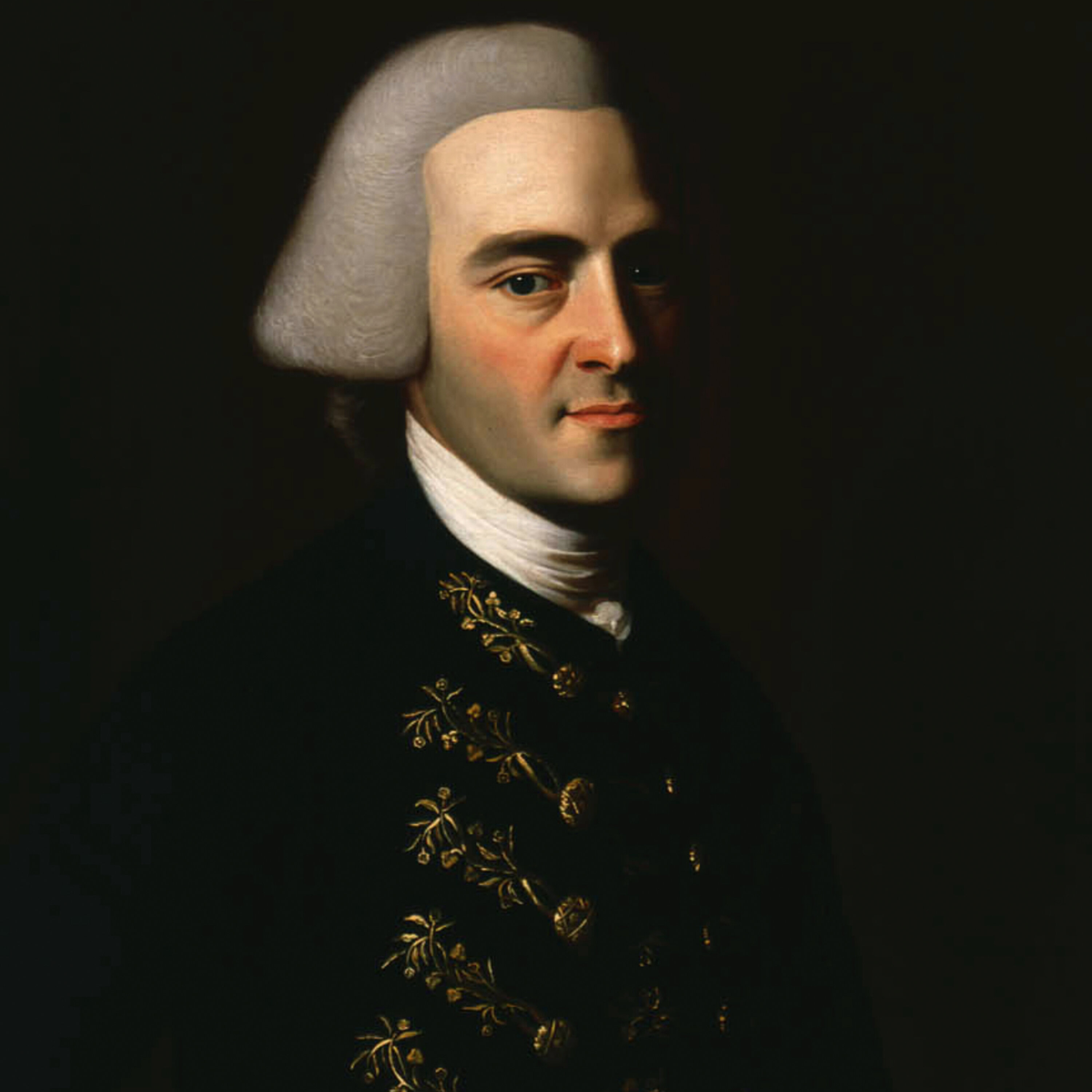
Post on this episode of Newts World as part of Founding Fathers Week, I'm talking about the lives and legacies of our original founders and the impact they've had in our country. On this episode of Newts World. John Hancock was an American Founding father, merchant, statesman and prominent patriot of the American Revolution. He served as president of the Second Continental Congress and was the first and third governor of the Commonwealth of Massachusetts. And perhaps he is remembered best because of his huge signature of the Declaration of Independence. He also signed the Articles of Confederation and used his influence to ensure that Massachusetts ratified the United states constitution in 1788. Hancock had a fascinating life. He was the son and grandson of ministers. Born January 12, 1737, he was sort of destined to become a minister. However, his life changed when Hancock was 7 years old after his father died and his mother, brother and sister went to live with his grandparents in Lexington, Massachusetts. Hancock's stay in Lexington was brief as his grandfather sent him to Boston to live with his Uncle Thomas and Aunt Lydia, who had no children of their own. They wanted to have a better schooling to prepare him for Harvard College. His uncle was one of the richest merchants in Boston and lived in a mansion on top of Beacon Hill. Hancock attended Boston Latin School and graduated from Harvard in 1754 at the age of 17. Instead of following in his late father and grandfather's footsteps, Hancock returned to his uncle's to work in his merchant business and notice he was graduating younger than many Americans today Enter college when his uncle died in 1765, Hancock, who was 27 years old at the time, inherited his uncle's entire fortune and the merchant business. Now Hancock was actually more interested in politics than in business, and in 1765 he was elected as a selectman of Boston when the British government passed the Stamp Act. Initially, Hancock was not opposed to the act, but after witnessing the protest In Boston, he changed his mind. He then started participating in the protest by boycotting the importation of British goods, and that made him popular with people in Boston. In 1766, Samuel Adams voiced his public support for Hancock, which helped him get elected to the Massachusetts House of Representatives. And by the way, that must have been quite a contrast between the oratory of Samuel Adams and the merchant background of Hancock and made him quite a pair as allies. When Parliament passed the Townshend act, colonists began smuggling goods to avoid paying taxes, which caused British ships to illegally search and seize ships. In April 1768, a British Customs agent illegally boarded Hancock's boat Liberty. And it tells you a little bit psychologically about where Hancock's coming from that he would name his ship Liberty. Hancock demanded to see warrants authorizing the search, and when the official was unable to produce the documents, he was asked to leave. On May 9, 1768, Hancock's ship came into port with Madeira wine, and customs officials again visited his boat, but this time they had the proper warrants. The ship was loaded onto the dock, and Hancock paid the customs fee. But the officials thought that his shipment of wine, 25 casks, which was about a quarter of what the ship could hold, seemed too small and speculated that he had smuggled some of the wine before coming into port. A month later, on June 9, 1768, Thomas Kirk, the customs official who boarded Hancock's boat a month earlier, changed his initial story and accused Hancock of offering him a bribe. He claimed that Hancock offered him several casks of wine if he told the British government that his ship only contained 25 casks so that he could avoid paying the fee. He insisted that he did not take the bribe, but Hancock's captain, John Marshall, had threatened him if he ever told the truth. John Harrison, the official collector of the port, brought Kirk's statement to the commissioners and wanted to place the king's mark on Hancock's boat waiting for legal proceedings. Comptroller Benjamin Hallowell, however, urged him to seize the boat instead. So Harrison enlisted a crew. Another smuggler, Daniel Malcolm, and a handful of men saw Harrison boarding the boat and argued that they should at least wait for Hancock to arrive first. A fight broke out between the men, but Harrington and his crew still managed to bring Hancock's boat onto the side of their boat. Capturing it, Hollowell Harrison and his son fled the fight. On the wharf with scrapes and bruises. An angry crowd began to assemble when word of Hancock's boat being seized got out. A crowd of about 3,000 men began to search the city for harrison and hollowell. When they couldn't find him, they shattered the windows of their houses instead. The following month, a suit was filed against Hancock for the sum of £9,000 for the smuggling of wine. Being unable to negotiate this himself, Hancock enlisted John Adams to defend him in court. That's a cousin to samuel Adams. They were both deeply involved in seeking freedom. In his defense, John Adams questioned the validity of the case as it denied Hancock the right of a jury trial. And according to Adams, it repealed the magna carta. As far as America is concerned, degrading Hancock below the rank of an englishman. This is a theme that goes through again and again with the founding fathers. They saw themselves as englishmen, and the british people had come to believe that they had certain rights to which the government could not infringe on, and the right to trial was one of them. Adams is weaving back into british history to claim the rights of an englishman, not of an american colonist. Adams defense was successful, and on March 25, the case was dropped and the record read quote, the advocate general prays leave to retract this information and says, our sovereign lord the king, will prosecute no further hereon. On September 14, 1768, Hancock, with Joseph Jackson, John ruddock, John Roe, and Samuel Pemberton, wrote a letter in response to the townshend. You are already too well acquainted with the melancholy and very alarming circumstances to which this province, as well as America in general, is now reduced. Taxes equally detrimental to the commercial interests of the parent country and her colonies Are imposed upon the people without their consent. Taxes designed for the support of the civil government and the colonies In a manner clearly unconstitutional and contrary to that in which till of late, government has been supported by the free gift of the people in american assemblies or parliaments, as also for the maintenance of a large standing army, not for the defense of newly acquired territories, but for. But for the old colonies and in a time of peace. The decent, humble and truly loyal applications and petitions from the representatives of this province for the redress of these heavy and very threatening grievances have hitherto been ineffectual, Being assured from authentic intelligence that they have not yet reached the royal ear. The only effect of transmitting these applications hitherto perceivable has been a mandate from one of his majesty's secretaries of state to the governor of this province to dissolve the general assembly Merely because the late house of representatives refused to rescind a resolution of a former house which implied nothing more than a right in the american subjects to unite in humble and dutiful petitions to their gracious sovereign when they found themselves aggrieved. This is a right naturally inherent in every man and expressly recognized at the Glorious Revolution as the birthright of an Englishman. Let me point out that the Glorious Revolution is, of course, the return of Protestant monarchy as William and Mary come from Holland in 1688. It's a decisive moment in British history and leads directly to the whole concept of natural rights. And what they're saying here is, we're Englishmen, you owe us these rights. You are stepping upon our natural right here. This is all going to echo into Thomas Jefferson's Declaration of Independence. Also, notice there's this constant effort to draw a distinction between the bad government and the good king. There's a very important psychological goal here of trying to make sure that people understand that they're loyal to the king. They're just angry at the government. Now, of course, the government and king in England see it differently because the government sees itself as the king and the king sees himself as the government. This is why, historically, it's very hard to petition the King without looking like you're engaged in treason, which is the refusal to be loyal to your sovereign.
- [13:21]
Fitness Competition Host
10 athletes will face the toughest job interview in fitness that will push past physical and mental breaking points. You are the fittest of the fit. Only one of you will leave here with an IFIT contract for $250,000.
- [13:40]
Newt Gingrich
This is where mindset comes in.
- [13:41]
Fitness Competition Host
Someone will be eliminated.
- [13:43]
Washington Post Advertiser
Pressure is coming down.
- [13:46]
Public Investing Advertiser
Trainer Games on Prime Video January 8th. Watch the trailer on trainergames.com did you know?
- [13:51]
LG Gram Laptop Advertiser
Microsoft has officially ended Support for Windows 10? Upgrade to Windows 11 with an LG Gram laptop, voted PCMag's Reader's Choice top laptop brand for 2025. Thin and ultra lightweight, the LG Gram keeps you productive anywhere, and Windows 11 gives you access to free security updates and ongoing feature upgrades. Visit lgusa.com iheart for great seasonal savings on LG Gram laptops with Windows 11. PCMag reader's choice used with permission. All rights reserved.
- [14:20]
Sports Announcer
Season 2 of unrivaled basketball is here, and the talent is unreal. Paige Beckers, Nafiza Collier, Kelsey Plumb, Brianna Stewart and more are back to redefine the game. Unrivaled basketball season two, sponsored by Samsung Galaxy TV, kicks off January 5 on TNT, TruTV and HBO.
- [14:35]
Public Investing Advertiser
Max support for the show comes from Public, the investing platform for those who take it seriously. On Public. You can build a multi asset portfolio of stocks, bonds, options, crypto and now Generated Assets, which allow you to turn any idea into an investable index with AI. It all starts with your prompt. From renewable energy companies with high free cash flow to semiconductor suppliers growing revenue over 20% year over year, you can literally type any prompt and put the AI to work. It screens thousands of stocks, builds a one of a kind index and lets you back test it against the S&P 500. Then you can invest in a few clicks. Generated assets are like EFTs with infinite possibilities, completely customizable and based on your thesis, not someone else's. Go to public.com podcast and earn an uncapped 1% bonus when you transfer your portfolio. That's public.com podcast paid for by Public Investing Brokerage Services by Open to the Public Investing Inc. Member finra SIPC Advisory Services by Public Advisors, llc SEC Registered Advisor Generated Assets is an interactive analysis tool. Output is for informational purposes only and is not investment recommendation or advice. Complete disclosures available@public.com Disclosures A new year.
- [15:46]
Washington Post Advertiser
Is on the horizon and your 2026 savings start here. Right now. You can access the Washington post for just $2 every four weeks. Head into the new year with six months of savings at this special intro rate. After that, it'll cost $12 every four weeks. Cancel anytime. You'll get unlimited access to trusted journalism that helps you understand the year ahead and the world around you. Now's the perfect time to subscribe because great habits and great savings start together. Go to washingtonpost.com iheart that's washingtonpost.com iheart and start your year informed with the Post.
- [16:22]
Newt Gingrich
Hi, this is Newt. In my new book, March the the Real Story of the Republican Revolution, I offer strategies and insights for everyday citizens and for seasoned politicians. It's both a guide for political success and for winning back the majority in 2024. March the majority outlines the 16 year campaign to write the Contract with America explains how we elected the first Republican House majority in 40 years and how we worked with President Bill Clinton to pass major reforms including four consecutive balanced budgets. March to the Majority tells the behind the scenes story of how we got it done. Go to gingrich360.com book and order your copy now. Order it today at gingrich360.com book. Now. They go on to say this dissolution, you are sensible has taken place. The Governor has publicly and repeatedly declared that he cannot call another assembly and the Secretary of State for the American Department, in one of his letters communicated to the late House, has been pleased to say that proper Care will be taken for the support of the dignity of government, the meaning of which is too plain to be misunderstood. In other words, the British officials are now saying to the American colonists, we will take care of things, we will raise money, we will decide how to spend it. You have no rights. They go on to say, the concern and perplexity into which these things have thrown the people have been greatly aggravated by a late declaration of his excellency Governor Bernard, that one or more regiments may soon be expected in this province. The design of these troops is in everyone's apprehension, nothing short of enforcing by military power the execution of acts of parliament and the forming of which the colonies have not and cannot have any constitutional influence. This is one of the greatest distress to which a free people can be reduced. Notice what they're saying here. The very fact that the British have concluded that they have to oppress the Americans. They can't really negotiate with them, they can't reason with them. So they're going to send an army, and that army is going to, in fact, live in Boston and is going to impose the will of the British government, no matter what the local folks think. This is the sort of thing which began to move in a direction where suddenly they create the Committee of the Boston Sons of Liberty, which included John Hancock, Samuel Adams, John Adams, James Otis. The group's amazing. This is the beginning of real patriotism. Defining itself more and more and more isolated from the British. 1769, the Committee of the Boston Sons of Liberty notice again, liberty is a huge word in this period. 1840, an older man was asked, why did you fight the revolution? They were looking for the Stamp act or the tax on tea or whatever. He said, you know, we aim to be free, and they aimed that we shouldn't. And that's what it was all about. And that's why liberty is such an important word here. Because they're coming back again and again the idea, we are a free people. You are about to take away our freedom. So in their mind, they've already got the freedom. They're not fighting for freedom. They're fighting against the oppression which would take away freedom. So this continues to move in the same direction. By December 1770, the Massachusetts House representative wrote a letter which Hancock again signed to Benjamin Franklin, appointing him an agent at the court of Great Britain. This is the first letter to Franklin, the only one known to have survived. Franklin is asked by the Commonwealth of Pennsylvania to go to London to represent them. He goes to London. He's initially very well received, but gradually the longer he's there, the more he realizes he will never be an Englishman. They will never accept him into their circle. He will always be a colonist. No matter how bright he is, no matter how renowned he is as a scientist, no matter how wealthy he is. He just isn't them. Somebody once wrote, franklin left America as an Englishman and returned as an American. This is the person who the Massachusetts House is asking, since you're already there anyway, would you also represent us? And they explained to him what they're worried about. The House representatives of this province, after appointing you their agent at the court of Great Britain, directed us to correspond with you in the recess of the court upon matters that concern the interest of the province in general. There is nothing that will more promote the true interest of this party as well as Great Britain herself than a happy settlement of the disputes that have too long subsisted between the mother country and the colonies. These are justly tenacious of their constitutional, natural rights and will never willingly part with them. And it certainly can never be for the advantage of the nation to force them away. Great Britain can lose nothing that she ought to retain by restoring the colonies to the state they were in before passing the obnoxious Stamp Act. And we are persuaded, if that is done, they will no further contend. This we think it necessary early to inform you of as our own opinion, because we have reason to think that there are persons on both sides of the Atlantic whose interest it may be to keep alive a spirit of discord, who are continually insinuating to men of power that such a concession on the part of Great Britain would only serve to increase our claims and there would be no end of them, which we believe, and may even venture to assure you is without the least color of foundation and truth. In other words, the Founding Fathers, generally speaking, and Hancock was a key member of this, are not asking to leave Great Britain. They're not moving towards independence. What they want is their rights to be respected, their role to raise taxes on themselves in the spirit of the Magna Carta, to be accepted, to negotiate with the British government as equals, and not in any way to move towards independence. Now, the fact is, Hancock is faced with the Boston Tea Party coming up. He's faced with a growing public anger, and there's actually not certain that Hancock was involved in planning the Boston Tea Party, which is when a group of Americans dressed as Indians broke into a British ship and threw tea into the Boston harbor in order that it not be available to sell because they did not want to pay the Tax on tea. Hancock the most he said that we know publicly. He told the crowd, let every man do what is right in his own eyes. So he's not saying he's going to participate, but he's also not saying he shouldn't do it. And that very same evening, the crowd went into the Boston harbor dressed as Native Americans, boarded the ship, dumped 342 chests of tea into the harbor. Tea back then was expensive. So this is a substantial hit on the East India Company and a direct defiance of the British government. Now, Hancock never talked about it other than this comment that night before it happened. Now there also, as a part of this growing separation, there was an annual commemoration of the Boston massacre, which in 1771, British soldiers who were rattled, shot and killed several Massachusetts colonists. And so Hancock was chosen on March 5, 1774, to read the third annual oration to commemorate the Boston Massacre. So he really is beginning to lay the case out here as a public figure. He says in his oration, quote, is the present system which the British administration have adopted for the government of the colonies a righteous government, or is it tyranny here? Suffer me to ask, and would to heaven there could be an answer. What tenderness, what regard, respect or consideration has Great Britain shown in their late transactions for the security of the persons or properties of the inhabitants of the colonies? Or rather, what have they omitted doing to destroy that security? They have declared that they have ever had and a right ought to ever have full power to make laws of sufficient validity to bind the colonies in all cases, whatever. They have exercised this pretended right by imposing a tax upon us without our consent and notice. This is at the heart of it. Lest we should show some reluctance at parting with our property. Her fleets and armies are sent to enforce their mad pretensions. The town of Boston, ever faithful to the British crown, has been invested by a British fleet. The troops of George 3rd have crossed the wide Atlantic not to engage an enemy, but to assist a band of traitors in trampling on the rights and liberties of his most loyal subjects in America. Those rights and liberties which as a father, he ought ever to regard, and as a king, he is bound in honor to defend from violation, even at the risk of his own life. Notice what he's now starting to say. Hancock is saying, if you help enforce this law, notice the word he uses. Band of traitors. You are a traitor to America. You're a traitor to our rights under the Constitution. And therefore the division is getting deeper and deeper.
- [26:10]
Fitness Competition Host
10 athletes will face the toughest job interview in fitness that will push past physical and mental breaking points. You are the fittest of the fit. Only one of you will leave here with an IFIT contract worth $250,000.
- [26:29]
Sports Announcer
This is where mindset comes in.
- [26:30]
Fitness Competition Host
Someone will be eliminated.
- [26:33]
Washington Post Advertiser
Pressure is coming down.
- [26:35]
Public Investing Advertiser
Trainer Games on Prime Video January 8th watch the trailer on trainergames.com did you.
- [26:40]
LG Gram Laptop Advertiser
Know Microsoft has officially ended Support for Windows 10? Upgrade to Windows 11 with an LG Gram laptop voted PCMag's Reader's Choice Top Laptop Brand for 2025. Thin and ultra lightweight, the LG Gram keeps you productive anywhere, and Windows 11 gives you access to free security updates and ongoing feature upgrades. Visit lgusa.com iheart for great seasonal savings on LG Gram laptops with Windows 11. PCMag reader's choice used with permission. All rights reserved.
- [27:10]
Sports Announcer
Season 2 of unrivaled basketball is here and the talent is unreal. The best women's players on the planet are running it back with even bigger moments and bigger stakes. Don't miss as Paige Becker, Snafeeza Collier, Kelsey Plumb, Brianna Stewart and more take the court and redefine the game. This isn't your regular season. This is unrivaled, where the pace is faster, the energy is higher and every athlete shines. Unrivaled basketball Season 2, sponsored by Samsung Galaxy, tips off January 5 on TNT, TruTV and HBO.
- [27:39]
Public Investing Advertiser
Max support for the show comes from Public, the investing platform for those who take it seriously. On public, you can build a multi asset portfolio of stocks, bonds, options, crypto and now generated assets which allow you to turn any idea into an investable index. With AI. It all starts with your prompt. From renewable energy companies with high free cash flow to semiconductor suppliers growing revenue over 20% year over year, you can literally type any prompt and put the AI to work. It screens thousands of stocks, builds a one of a kind index and lets you back test it against the S&P 500. Then you can invest in a few clicks. Generated assets are like EFTs with infinite possibilities, completely customizable and based on your thesis, not someone else's. Go to public.com podcast and earn an uncapped 1% bonus when you transfer your portfolio. That's public.com podcast paid for by Public Investing Brokerage Services by Open to the Public Investing Inc. Member FINRA SIPC Advisory Services by Public Advisors llc. SEC Registered Advisor Generated Assets is an interactive analysis tool. Output is for informational purposes only and is not investment recommendation or advice. Complete Disclosures available at public.comdisclosures ever wish.
- [28:50]
Washington Post Advertiser
You could try the Washington Post and see what all the talk is about? Right now you can. With a one week pass for just $7. No commitment, no strings attached. Just $7 for one week of unlimited access to the Post. It's the perfect way to explore our award winning journalism and experience what subscribers already know. There's nothing else quite like it. So why not give us a try? Go to washingtonpost.com week and start your $7 one week pass today. That's washingtonpost.com week.
- [29:28]
Newt Gingrich
That year he's elected as a delegate to the first Continental Congress. Called to bring together the colonies to talk about what's going on. And he's also faced with the fact that living in Boston is less and less safe because the British could come and arrest him at any time. So Hancock moves to his grandfather's home in Lexington. And on April 18, 1775, Dr. Joseph Warren got news that British troops were heading toward Lexington. Warren sent three riders, the most famous of them Paul Revere, to warn people. Revere warned Hancock and Adams of the incoming troops and suggested they flee before the British reach Lexington. This is the first real moment of violence because what had happened was the American militia had been practicing and this is one of the great differences and of course, behind the whole notion of the second Amendment and the right to bear arms. The British army was very good at putting down peasant revolts. They put down revolts in England, in Scotland, in Wales, in Ireland. And so they marched out of Boston assuming this would be just like all those other peasant revolts. But they had a problem. They were now faced with a free people who had weapons and who had been practicing and also people who frankly went deer hunting and generally actually provisioned their houses by their effectiveness as hunters. The result was a disaster for the British army. They were shot at all the way back to Boston. They took a substantial number of casualties. Suddenly, what was then called the shot heard round the world, the Americans stood up and said, if you try to take our weapons, we will shoot you. Across all of the colonies, people were shaken because suddenly this was a real fight. This wasn't just words. The British army had attempted to do something which would have stripped the Americans of their ability to be free. Shortly after that, Hancock was elected President of the Second Continental Congress. He is a significant figure in the development of the ideas and the movement that leads to American freedom. As President, he presided during the discussion on the appointment of commander in chief for the Continental Army. Now this is a very interesting moment in American history. They need an army in order to stand up to the British. However, that army is going to be in Boston. It's going to be largely New England. And they have to find a way to unite all of the colonies into this fight and not just have it be a New England fight. Now, one of the great moments of theater, there's a very tall man walking around wearing the uniform of a Virginia militia officer, Colonel Washington, who says to everybody, oh, I don't know why you would think of me as the commander. I'm not sure I could be the commander. I'm not really sure I could do the job. But he's the only guy at the whole place wearing a uniform. And it's just one of those things about Washington, who's very understudied but very strategic. So of course, they pick Washington. And now you have this Virginian going to Boston to lead a largely New England army. Remember, the accents were wildly different, and there was this whole sense of getting used to each other. Washington does a brilliant job. Throughout the Revolutionary War, Hancock takes the wealth he had inherited, and he'd grown with his own businesses, and he helped fund the army. I mean, Hancock is genuinely putting his life, his liberty and his fortune to the fight for freedom. He oversaw the Declaration of independence. On July 4, 1776, in his most famous single moment, John Hancock was the first to sign the document. He had a large cursive signature and said there, john Bull can read my name without spectacles. He may double his reward. What he's saying is John Bull meant England. The king can see clearly that Hancock has signed the Declaration of Independence, and the king then wants to double the reward for killing him. That's fine. And that's where the term John Hancock, meaning signature, comes from, because he deliberately went out of his way almost as a propaganda act. Two days later, on July 6, Hancock writes Washington instructing him to read the Declaration of Independence to his troops. And this is an important thing to remember about the American Revolution. This was an informed military again and again. Washington, who's a master at this, makes sure that they understand why they're fighting, they understand what the situation is, and they are reminded that they have a moral cause. That's a key part of it. Now, I think Hamilton felt that this was a duty they were doing, working and doing everything they can as a team. And so you have militia coming from all over, you have people showing up on a regular basis, and you begin to really see that there's going to be an American force, not a Massachusetts force or a Virginia force, but a genuinely American force. Hancock stays as president of Congress until 1777, when he resigns as president. He had his chance as a military leader. He led 5,000 Massachusetts soldiers to attempt to recapture Newport, Rhode island, in 1778. The mission ultimately was a failure, but he went back home. And in 1780, he helped frame the Massachusetts Constitution and was elected as the first governor of the Commonwealth of Massachusetts. Remember, we are still fighting at this point, and he's now the governor of the Commonwealth. Where you could argue the fight started. In 1788. Delegates elected Hancock to serve as president of the Massachusetts ratifying convention. Unfortunately, he had gout, which is a recurring ailment for Hancock and which he probably tried to solve by drinking port, which made the gout worse. But he was prevented from attending the debates until January 30th. At that point, he did everything he could to make sure that the majority would be in favor of ratifying the Constitution. In fact, he felt so deeply that on the morning of January 30, wrapped in blankets, he was carried into the convention and attended the debates for the first time. He was absolutely in favor of the new system. This is a quote from Henry Van Schaak, who was actually in attendance, who writes, governor Hancock had come to the convention and declared himself decidedly in favor of the system, which had an amazing influence over a great number of wavering members. Ill health had prevented the governor's attendance in convention before the opposition took advantage of this and industriously reported that His Excellency was opposed to the Constitution and advised him to reject it. There's room to conjecture that the Governor would not have come out so soon if it had not been for those reports, as he was extremely unwell at the time he went out. And a day later, on January 31, Hancock read from a speech prepared by the Federalist Caucus supporting the signing of the Constitution. And I think it's very important to realize here's a guy who has personally spent his money helping fight the war, who has taken great risks, who has been persecuted by the British, and he is committed to working on the Constitution, getting it approved. And at that point, I think he has had a major role because Massachusetts, which is one of the biggest colonies in both population and wealth, having endorsed the Constitution is a major step in the right direction. And it's not decisive. It's very likely, if Hancock had come out against the Constitution, that it might have lost. It only wins in the Massachusetts convention by 187 to 168. So there's a pretty narrow margin there. It wouldn't have taken much to have turned it into a defeat in 1789. Hancock's a candidate in the first US presidential election, but only received four electoral votes out of a total of 138. George Washington garnered 69 votes. John Adams captured 36 votes, earning the two men the presidency and vice presidency. Back then, you all ran on one ticket and the number one in two people got to be president and vice president. That changed after Adams and Jefferson had to suffer each other and realized that it was crazy to have a system where you were not elected as a ticket. After the adoption of the Constitution, Hamlet Hancock was elected for a final time as governor, and he kept getting elected until his death. On October 24, 1789, President Washington, in a tour of the eastern states, arrived in Boston, where the whole town minus Hancock went out to greet him. Hancock believed that his governor Washington should come to him. However, soon after he realized this was a mistake. He visited Washington and claimed that an illness kept him from arriving sooner. On October 8, 1793, Hancock, while still in office, died at the age of 56 and received one of the largest state funerals from his longtime friend Samuel Adams. John Hancock is one of the people upon whom America stands. It was his commitment, his courage, his belief in liberty, his willingness to risk everything and literally to spend his fortune to help us become free, which has helped make America the country it is. And that is why he's one of the immortals as we look at the Founding Fathers. Thank you for listening. You can read more about John Hancock and get links to my other Founding Fathers episodes on our show page@newtsworld.com Newts World is produced by Gingrich360 and iHeartMedia. Our executive producer is Garnesy Sloan and our researcher is Rachel Peterson. The artwork for the show was created by Steve Penley. Special thanks to the team at Gingrich360. If you've been enjoying Newts World, I hope you'll go to Apple Podcast and both rate us with five stars and give us a review so others can learn what it's all about. Right now, listeners of Newtsworld can sign up for my three free weekly columns at Gingrich360.com Newsletter. I'm not Newt Gingrich. This is Newt's World.
- [39:58]
Fitness Competition Host
10 athletes will face the toughest job interview in fitness that will push past physical and mental breaking points. You are the fittest of the fitness. Only one of you will leave here with an IFIT contract worth $250,000.
- [40:17]
Sports Announcer
This is where mindset comes in.
- [40:19]
Fitness Competition Host
Someone will be eliminated.
- [40:21]
Washington Post Advertiser
Pressure is coming down.
- [40:23]
Public Investing Advertiser
Trainer Games on Prime Video January 8th watch the trailer on trainergames.com did you.
- [40:28]
LG Gram Laptop Advertiser
Know Microsoft has officially ended Support for Windows 10? Upgrade to Windows 11 with an LG Gram laptop Voted PCMag's Reader's Choice top laptop brand for 2025. Thin and ultra lightweight, the LG Gram keeps you productive anywhere, and Windows 11 gives you access to free security updates and ongoing feature upgrades. Visit lgusa.com iheart for great seasonal savings on LG Gram laptops with Windows 11. PCMag reader's choice used with permission. All rights reserved.
- [40:58]
Sports Announcer
Season 2 of unrivaled basketball is here and the talent is unreal. The best women's players on the planet are running it back with even bigger moments and bigger stakes. Don't miss as Paige Beckers, Nafiza Collier, Kelsey Plumb, Brianna Stewart and more take the court and redefine the game. This isn't your regular season. This is unrivaled, where the pace is faster, the energy is higher and every athlete shines. Unrivaled basketball Season 2, sponsored by Samsung Galaxy, tips off January 5 on TNT, TruTV and HBO Max.
- [41:28]
Public Investing Advertiser
Support for the show comes from Public, the investing platform for those who take it seriously. On public you can build a multi asset portfolio of stocks, bonds, options, crypto and now generated assets which allow you to turn any idea into an investable index with AI. It all starts with your prompt. From renewable energy companies with high free cash flow to semiconductor suppliers growing revenue over 20% year over year. You can literally type any prompt and put the AI to work. It screens thousands of stocks, builds a one of a kind index and lets you back test it against the S&P 500. Then you can invest in a few clicks. Generated assets are like EFTs with infinite possibilities, completely customizable and based on your thesis, not someone else's. Go to public.com podcast and earn an uncapped 1% bonus when you transfer your portfolio. That's public.com podcast paid for by Public Investing Brokerage Services by Open to the Public Investing Inc. Member finra SIPC Advisory Services by Public Advisors LLC SEC Registered Advisor Generated Assets is an interactive analysis tool. Output is for informational purposes only and is not investment recommendation or advice. Complete disclosure available at public.comdisclosures Ever wish.
- [42:38]
Washington Post Advertiser
You could try the Washington Post and see what all the talk is about? Right now you can with a one week pass for just $7. No commitment, no strings attached just $7 for one week of unlimited access to the Post. It's the perfect way to explore our award winning journalism and experience what subscribers already know. There's nothing else quite like it, so why not give us a try? Go to washingtonpost.com week and start your $7 one week pass today. That's washingtonpost. Com week.
- [43:07]
Sports Announcer
This is an iHeart podcast. Guaranteed Human.