Loading summary
Transcript11 lines
- [00:00]
A
This is an iHeart podcast, Guaranteed Human.
- [00:10]
B
On this episode of Newts World. The lives of these men are essential to understand the American form of government and our ideals of liberty. The Founding Fathers all played key roles in securing American independence from Great Britain and in the creation of the government.
- [00:24]
A
Of the United States of America.
- [00:27]
B
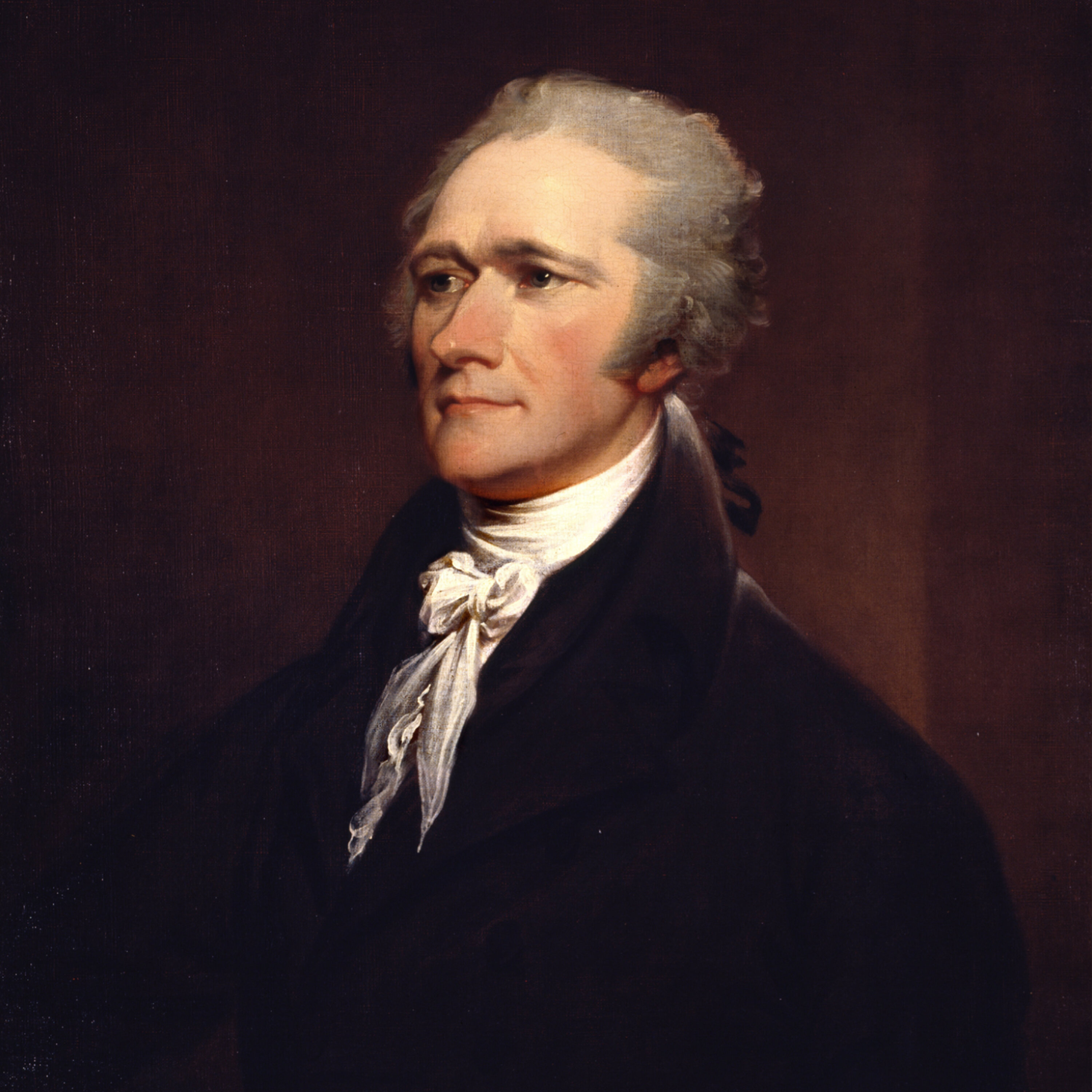
And now the life of Alexander Hamilton.
- [00:38]
A
Hamilton, in a sense, has had a new burst of fame, but he's somebody who really never should have disappeared. First of all, he was extraordinarily bright. Hamilton may have been, in sheer iq, the smartest of all the Founding Fathers. He was just deeply admired by Washington. He was invaluable to Washington as a staff officer. He was endlessly competent. And I think that's a key part of this, is that Hamilton was a person who was very ambitious, but he was also a person who worked very hard and who applied his considerable intelligence to whatever job he had. Now, he actually had not gotten to the US very much before the Revolution began. He was born, we think, either in 1755 or 1757 on Nevis. His father was a Scottish trader named James Hamilton. His mother, Rachel Fossette Levienne. They were not married at the time. Rachel, in fact, was married to another man at the time of Hamilton's birthday, but had left her husband after he spent much of her family fortune and he had had her imprisoned for adultery. Now, you may be curious why James Hamilton settled in Nevis. The British gained control of the island in 1713, and Nevis and St Kitts soon were the leading areas of sugar production in the Caribbean. The colonists and others wanted sugar to sweeten their tea and coffee. It's hard for us to remember, but these islands were considered so amazingly valuable that that at one point in negotiations, the British kept some islands in the Caribbean as being of greater value than all of Canada. Unfortunately, the islands also had malaria, so a number of people died over the 200 years in which they were producing sugar there. Hamilton's father abandoned his family in 1766. His mother died of yellow fever two years later, in February 1768. So he was orphaned probably at either 11 or 13, depending on which year of birth was accurate. Hamilton and his older brother, James Jr. Moved in with a cousin who eventually died, and then an uncle who also died. As I said, this is an area that suffered huge casualties, largely from various tropical diseases. After the death of his uncle, Hamilton was taken in by Thomas Stevens, a merchant, and he was apprenticed with him. Hamilton viewed this as the most formative part of his education, learning how to track freight chart courses for ships and calculate prices by different currencies. In his youth, Hamilton sent poems and letters to the local newspaper. It was remarkable because Hamilton did not have a formal education. It's just that he was really smart and he kept learning. He never attended school on the island, but when his mother was alive, she taught him French and bought books for him and his older brother to read. In 1772, impressed by Hamilton's quick learning abilities and intelligence, Hamilton's boss sponsored the young clerk's trip to the United States to attend school there. Hamilton began his preparation for college at a grammar school in New Jersey and enrolled in what was then called King's College. In 1774, it becomes eventually Columbia University. Hamilton's enrollment at King's College speaks to his astounding skills and intelligence. He wanted to be admitted to a university on his own terms, to be allowed to enroll in any class for which he was qualified, and to graduate as soon as he'd completed the minimum requirements. After being denied admission at Princeton because of his unorthodox request, Hamilton was admitted to King's College under the proposed arrangement and subsequently assigned a special tutor. Now imagine here's this guy who shows up from the Caribbean and immediately begins setting his own terms of life and gets away with it. People are so impressed with how smart he is and how hard he works that they keep bending over trying to help him accommodate on his terms. During his time at King's College, Hamilton's eloquence and genius took a political application as the debates became more poised about the role of the British Empire and whether or not we should become independent. While he was a sophomore in the college, Hamilton delivered an impromptu speech that passionately outlined the case of the colonies against parliamentary injustices. Remember, this is a time when Americans are arguing with themselves. Are they really English and merely petitioning the Crown to do whatever the Crown wants? Or are they really this new creature called an American? Hamilton cited as somebody who self had no great roots anywhere, that he was an American. He also became well known for his publishing a series of scathing but reasoned responses to the Continental Congress that were published when Hamilton was 18 years old. While Hamilton was in college, the Revolutionary War began and in 1775 he quit school to join the army. Now, Hamilton was an impressive leader. He was well organized, he knew how to get supplies to the troops, he could get an amazing number of things done. And George Washington, who was in desperate need of Columbia competent help, ask Hamilton to become his assistant, helping him plan battles, write letters and manage Washington staff. Hamilton served in this position for four years. Now remember, they're in the field the entire time. They're together every single day. They truly get to know each other. Washington gets in the habit of relying heavily on Hamilton and realizing that this is one of the brightest people, if not the brightest person he's ever met. Hamilton often used his writing skills to write to the Continental Congress asking for food and supplies for General Washington's troops. And he watched as the Continental Congress wrote the Declaration of Independence and debated how to run the country. Now, Hamilton was so smart and so widely read that with six months of studying, he passed the bar exam without formal training. It was just amazing. He had decided he In January of 1782, he wanted to become a lawyer. He petitioned the New York Supreme Court to let him take the bar exam without the required three year internship. And after all, he had served four years as an aide to Washington. So they sort of fudged and said, well, that kind of counts as an internship. Hamilton taught himself law. Now. To aid in his studies, Hamilton studied old New York court cases and wrote his analysis in a book he later published called Practical Proceedings in the Supreme Court of New York. He wrote it at the age of 25. This puts him in the same league as Theodore Roosevelt, who wrote his famous history of the naval War of 1812 and was published when he was 25. Hamilton saw his book become the standard text in New York legal studies for the rest of his life. In October 1782, Hamilton passed the bar and was legally allowed to practice law in New York. Now by this stage the war is winding down and which begin to be a national country. And this is part of what makes Hamilton so important. Hamilton had a vision of America as a country, not a collection of 13 colonies or later on, not as a collection of 13 states, but rather as a truly national system. In 1781, Hamilton proposed to Robert Morris, who was Congress's superintendent of finance, that we needed a national bank. He also suggested that Congress should have the power to raise taxes. At the time, the Continental Congress couldn't actually levy any taxes. They had to ask the colonies and then later when they became states to voluntarily give the money. But they didn't have any power to actually raise money. So Morris liked Hamilton's ideas and fought for them in Congress. Morris then appointed Hamilton to the position of receiver of Continental taxes in New York in May of 1782. Remember, this is a few months before he even passes the bar. So he's inventing the national bank, developing a tax system Becoming the receiver of taxes in New York while he's also studying to pass the bar. He accepted the position. He didn't have much time to get collected taxes. And frankly at the point there was no real power in that job. He couldn't go in and subpoena people or send them to jail or do anything. It was all basically nagging. But from October 1782 to August of 1783, basically from the time he passed the bar to 1783, he served in Congress as a representative of the State of New York. While he was there, he helped draft the peace treaty between the US and Great Britain that ended the war. He proposed that naval activities be banned from the Great Lakes between the US and British controlled Canada. That suggestion was ignored. And by the way, by 1812, naval power on the Great Lakes would become a real issue and one of the major points of combat during the War of 1812. In August of 1783, after eight months as a congressman, Hamilton returned to New York and finally used his law degree to establish a legal practice. He represented several Tories. Remember there were about a third of the American people actually were on the side of the British. A third were for independence and a third just wanted to hide. The fact is, as a lawyer, he felt people deserved representation. So he represented a number of Tories who had various claims because their property had been stolen or their bills hadn't been paid. And a lot of people thought that Hamilton was betraying the new country by this kind of representation. But Hamilton really taking a position that John Adams had taken after the Boston Massacre when he had defended the British soldiers in Boston. Hamilton thought that the lawyer had to apply the law, that people deserved representation and that the war was over, that the time had come to move forward, to look to the future, and that going after the Loyalists, as the Tories were called, would simply weaken the country because it would drive people away, which they did. A very substantial number of the wealthier Loyalists left America went to Britain or to Canada. Hamilton, in fact, had a very different view. In June of 1784, he defended a loyalist in the Rutgers vs. Waddington case, which rose from the Trespass act of 1783. Hamilton argued the Trespass act was inconsistent with things in the Treaty of Peace that he had helped write. Remember, he helps write the treaty, helps pass the treaty. So he's now in court debating what the treaty means. And he clearly has a great deal of expertise. He was very worried that if the case was won and the Loyalist was punished, it would drive thousands of Loyalists Away from new York, negatively impacting trade. He lost. But hamilton used the arguments he made in the case as the basis for the Federalist Papers, number 22 and 78, where he argued, quote, the interpretation of the law is the proper and peculiar province of the courts. The case also set the state precedent for judicial review established by the Supreme Court in 1803. Now, Hamilton wanted a strong and powerful federal government. The truth is, Hamilton felt more comfortable with an aristocratic government. If he could have figured out a way to get there, he'd love to have had George Washington as a new king. But that's not where the country was going. His deeper impact that really mattered was that he wanted to have the nation come together, and he looked for things that would bring together everybody into thinking of themselves as americans. Hamilton maneuvered and worked very hard. He ended up playing a major role in the constitutional convention, and he really understood that it was very, very important that we become a unified country. His role in the convention was important. And the convention is an interesting example of two things we tend not to remember. One, it was a coup d'. Etat. The people who went to the convention were sent to the convention to reform the articles of confederation. When they got there, they looked around and said, this is crazy. These things will never work. So without any kind of basic approval from back home, they decided they'd write a new constitution and completely replace the articles of confederation. They did a second thing, which we often tend to forget. They decided they'd meet in secret. So the most important document defining America, the constitution, is written in secret by a group of people who have basically violated their rules by giving themselves a much bigger assignment than they were elected for. They have to work out an amazing number of details, and it involves very deep political negotiation. They finally come together with a program, and they pass out a constitution. Now, because they understood a little bit different than some of our current leadership, that you couldn't sustain something if it wasn't supported by the people. They said, you know, all the states have to, in fact, endorse it. I think nine of them had to endorse the constitution for it to go into effect. Well, that meant you had to go back. Each state would have a different way of doing it. Some would do it by vote. Some would do it by having the state legislature involved. But each state had to find a way to ratify the constitution. So here's this document, which had been drafted in secret, it suddenly sprung on the country. It is outlining a very complicated system which, frankly, even today in government class People have a hard time mastering all the details of the Constitution. And Hamilton, along with two other people, John Jay of New York and James Madison of Virginia, decide to write what is in fact, the most elegant and most powerful campaign brochure ever written. It's important to think of it that way. The Federalist Papers nowadays seem like this very sophisticated academic document that people study. But that's not what it was. It was a collection of 85 articles, essays written by Hamilton, Madison and Jay. They appeared anonymously in New York newspapers in 1787 and 1788 under the pen name Publius. And I have to say, having spent large parts of my life dealing with the Federalist Papers, they're unbelievably brilliant. Now, the vast majority of them were written by Hamilton. 52 out of the 85 are written by Hamilton. They address every major question about the nature of the new government. They walk people through the reasoning that led the government to be designed the way it was. They are far and away the best primary source for understanding what the Founding Fathers intended. And they worked. Now, remember, this is a country where probably only about a third of the people could read. And here you have this document. When I say campaign brochure, just pick it up and look at it. This wasn't some two page fancy colored document with seven pictures. This is pure print. And what happened was, of course, relatively smart people read it and then would sit around the tavern and explain it. So the people who couldn't read were listening and asking questions from the people who could read. And the net result was one of the greatest educational moments in history. The American people came together. They concluded both that it was the right thing to do and that it was creating a government which was legitimate. Now, the Federalist Papers originally were published primarily in two New York state newspapers, the New York Packet and the Independent Journal. They were then reprinted in other newspapers in New York and in cities around the country. Then a bound edition was produced with revisions and corrections by Hamilton, and that was published in 1788. Another edition would be published some 30 years later by Jacob Gideon in 1818 with revisions and corrections by Madison, which was the first one that actually identified each essay by its author's name. So think about that. You get this series of articles in newspapers and then a book by Publius, and you end up reading what the arguments are and you go, well, you know, they've really thought this through. And in fact, if you take the time to read it, you'll realize that Hamilton was a genius. He and Madison are the Two primary writers and their grasp of the most important fundamentals of freedom is just astonishing. I think as long as humans want to understand how to be free, the Federalist Papers will have a role to play and will be a primary source document on the nature of freedom. Now, while he's in the middle of creating a new country, he also becomes a member of the board of trustees of what used to be King's College when he went to it, but now was Columbia College, which of course has evolved into Columbia University. He helped develop a detailed outline of the new academic departments and faculty appointments. He assisted in analyzing their finances and budget allocations. And he would work on the board of Columbia and serve Columbia for the next 20 years until he died. Well, people always identify Jefferson with founding the University of Virginia. The fact is, Hamilton was on the board of Columbia College long before Jefferson got around to creating the University of Virginia. Hamilton's most famous role is first Secretary of the Treasury. Washington brought him in immediately. There were two great important jobs. I think the most important was Secretary of the Treasury. The second most important was the Secretary of State. Jefferson is made Secretary of State. Hamilton is made Secretary of the Treasury. And they are amazingly different in their approach to things. Jefferson is an intellectual. He spent a great deal of time representing the United States and France. He watched the early stages of the French Revolution. He was actually sympathetic in the early days against the monarchy, even though the monarchy had supported the United States in its War of Independence. And then I think Jefferson, like everybody else, was horrified as the French Revolution went crazy and began guillotine people imposing a dictatorship of the left. But he came home. He was very concerned about a strong central government. This is one of the first places where he and Hamilton have a profound disagreement. Jefferson agrees to support the new Constitution only if Madison will carry a series of amendments which became known as the Bill of Rights. And it's important to recognize that where Hamilton is trying to strengthen the government, Jefferson is really worried that a strong government will infringe on our liberties. By contrast, Hamilton had a more idealized vision that humans could have power without being corrupted by it. I would say that Jefferson was almost certainly more correct about humans than Hamilton, But Hamilton was almost certainly more correct about the economy and about how money worked. And that makes it one of the most amazing things in American history that you end up at this magic moment, first of all, with Washington, who is the moral giant, the man of honor, the person everybody relies on, the person on whose shoulders all of us stand, the genuine father of his country. But Washington recognizes he doesn't know all these details. That's not his strength. He'd lead a war for eight years. He was a great planter. He's actually a very innovative planter who bred an entire new species of more powerful mule. For example, he worked very assiduously at understanding the business of running the largest plantation in America. But Washington was a very good, very shrewd selector of people. He knew that Jefferson loved foreign affairs and Jefferson understood Europe. And he knew that Hamilton could master finance. At a time when we'd had enormous inflation, the money issued by the Continental Congress had collapsed in value. There was a huge amount of debt held by the public. There was a huge amount of debt held by the Dutch and others. And the question was, were we going to dissolve into being incapable of paying our debts, having our currency collapse and. And not being acceptable as a financial risk around the world, or were we going to in fact, fund the debt, pay it off, and pay off the debt that we had accrued overseas? And along comes Hamilton. Hamilton is a student of Adam Smith, who published the wealth of nations in 1776 as one of the great magic moments. The book which most explains the importance of freedom in markets was published the same year as the Declaration of Independence, which explains the importance of political freedom. And the two go hand in hand. They reinforce each other. And Hamilton understands what Smith is doing. Smith's not a theoretician. He's not writing about theory. Smith is an observer of a world that is emerging. The world of manufacturing, the world of commerce. And he's describing how it's working. When Smith has a section on the needle factory and how efficient it is and how productive it is, it's because he's actually been in a needle factory and watched it work. And so Hamilton comes along. Remember now, he's been a lawyer, he's been an artilleryman, he's been a personal aide to General Washington. He's become a lawyer. Now he pivots and he becomes a financier. And he's brilliant enough that he gets right to the heart of the matter. There were 12 volumes of Hamilton's personal papers. They were introduced by Henry Cabot Lodge, who wrote this extraordinary explanation of Hamilton about 1882. And Lodge says Hamilton's genius was understanding facts, and he allowed facts to then develop theories. He didn't start with theories and try to twist the facts. And so Hamilton looked at if you want a healthy country and you want to be able to have sound credit, and in a crisis, you want to be able to borrow money from the Dutch and others. What do you have to do? And he said, well, first of all, you have to acknowledge all of the debts coming out of the Continental Congress during the war. Second, you have to acknowledge all the debts that you signed your name for in terms of the Dutch and others. And then you have to build an ability to gradually pay them off. And you did that by always running a small surplus and. And taking that small surplus and what was called a sinking fund and paying down the debt. Now, Hamilton also had the advantage of studying what William Pitt the Younger had done in Great Britain in the 1780s. So he knew this could work. His problem was, how do you get it through a Congress which isn't all that excited about, first of all, the domestic debt? Because what had happened was a lot of the veterans who'd earned these IOUs had sold them out of despair. So you had speculators, many of them in New York and Massachusetts, who had gone across the south, buying up these IOUs, sometimes at 10 or 15 cents on the dollar. And now, if you're going to actually pay them off, that means that the veteran's not going to get very much, but all of these speculators are going to get rich. Similarly, in a great American tradition, Congress wasn't all that excited about raising hard taxes from its own people in order to ship the money to the Dutch, who had loaned us the money with which we fought the war. So Hamilton had to put together a political movement that would be in favor of a national economy, be in favor of what we would call sound money. And he started by writing a report on the public credit, which is an amazing document. It's probably as good an introduction as to thinking about finance as anybody ever has. He followed it up about a year later by writing a report on manufactures, which is the best document ever written on how a country can go about creating a strong manufacturing base. It's one which, by the way, modern liberal economists hate because it argues for focusing on America first and using tariffs and other things to protect American jobs. Because if you had a purely free trade environment in the 1790s, the British were so much more advanced than we were, they would have wiped out all of our industries. And so Hamilton, in a very practical way, says that's not going to work, that what you have to do is find a way to grow American jobs with American manufacturing and then pay off the debt from this growing economy. He also proposed that there be a national bank, something he talked about a decade earlier, and that the bank would be independent from the government, but the government would own 20% of the bank stock. Now, potentially, he could get it through the Congress. There were some people who argued that the Constitution does not give them the power to establish a national bank. This was Jefferson's position. But Washington stepped in and said, well, the Constitution can be loosely interpreted. And he approved Hamilton's plan. So with Hamilton and Washington both in favor of the national bank, it got created. Hamilton then turned his attention to establishing a national currency, because, again, remember, up to this point, you have all of these states producing money much as the Scottish banks had each been producing their own money. And you had this extraordinarily weak and frankly useless money that the Continental Congress had created. So he establishes a national mint and begins to put together with the mint act of 1792, creating a national currency. That led to a fundamental split. There was a Federalist Party, which was deeply committed to the Constitution, deeply committed to a national economy, in many ways biased in favor of New England and New York and to some extent, Pennsylvania. And then there was a Democratic Republican Party, which was really the anti Federalist. And that was created by Jefferson and Madison. It used to be said, and John F. Kennedy used to use this line, that Jefferson and Madison went to New York butterfly collecting, and happened to run into Aaron Burr, who ran the political machine in New York. And the three of them happened to create the Democratic Republican Party while they were butterfly collecting. The butterfly collecting, I think, never actually happened, but was the COVID for their trip. Well, to show you how successful Jefferson was as a politician, the Federalist Party basically disappears by around 1812, and the Democratic Republican Party evolves into the Democratic Party, and it is today the longest surviving political party in the world. It has amazing capacity for adapting and mutating and evolving and enormous tenacity of survival. But Hamilton was the leader of the Federalist Party, and I. Hamilton has created an economic system heavily favoring the cities, heavily favoring manufacturing. Remember, if you're a farmer in the south in particular, you are not all that happy to have manufacturing protected, because that raises the price of what you pay for. So there's a certain bias in favor of lower tariffs in agricultural areas and higher tariffs in manufacturing areas. The Federalist Party represented the manufacturing side. Now, at the same time, in order to get all of this done, they had to find some ability to have a mutual agreement. And the pact they created, with a great deal of negotiating, was a dinner that Madison and Jefferson had with Hamilton. At the time, the government had moved initially to New York. Then it moved to Philadelphia. The Southerners really wanted the government to be between Virginia and Maryland. The Northerners didn't particularly want it to go that far south. But the Southerners didn't particularly want to follow Hamilton's financial plans. And so they cut a deal. Again, a lesson about the complexities of history. They negotiated for several months. They finally thought they had a deal and they sat down, had dinner and looked at each other. Now remember, by this stage, they're both still in Washington's cabinet. Jefferson is still the Secretary of State, Hamilton's still the Secretary of the Treasury. Madison is in the Congress, but he's Jefferson's closest ally and also probably the leading figure in the Congress. They're both financing newspapers. I mean, Jefferson subsidizing a newspaper whose job it is to attack Hamilton. Hamilton is subsidizing a newspaper whose job it is to attack Jefferson. And they all know this. It's a very small town, but they have this bigger problem. They've got to find a way to create a sound currency, to create a sound economic policy, and they need a place to put the government. And so finally they agree. Jefferson gets the capital, Washington, D.C. between Virginia and Maryland, and Hamilton gets his economic policies. And with that you have the birth of the modern American system. Now, in the middle of all that, Washington leaves. And his successor was his vice president, partially, I think, as a function of geographic equity, because Washington was from Virginia and John Adams is from Massachusetts. So again, it's a step towards binding the country together. However, the Federalist Party, which had been largely created by Hamilton, who had in fact, as a part of that process, created all sorts of mechanisms of propaganda, had built a political machine. But he and Adams had a big falling out. And as a result, Hamilton was very bitter about Adams. Adams found himself being undermined and in 1796 he had replaced Washington because he had been vice president by 1800. He has lost so much popularity that he loses to Thomas Jefferson in what in some ways is the first modern example of a genuine opposition party peacefully taking power. Jefferson becomes president. Hamilton is now basically out of power. The Federalists are in fact declining rapidly. And Hamilton goes back to New York to make money and begins to make a lot of money. He founds the New York Evening Post. And this becomes the New York Post. The New York post, founded in 1801, oldest continuous newspaper in the United States, still publishing, and it is the fourth largest newspaper in America, founded by Alexander Hamilton, who on the very first day had a statement of principles. This is co authored by the editor, William Coleman and Alexander Hamilton says, quote, the design of this paper is to diffuse among the people, correct information on all interesting subjects, to inculcate just principles in religion, morals and politics, and to cultivate a taste for sound literature. Hamilton at this stage is successful, has been a national figure, has helped invent the modern American system, and probably could have lived a very long life, except for the tragedy that Hamilton tended to inspire hatred. Jefferson had people who disliked him, but generally they didn't hate him. Hamilton, partly, I think, because he was so smart and he was so aggressive, he was so arrogant that people who couldn't compete with him intellectually just burned with hatred. Tragically for him, his son was killed in a duel in 1801, defending his father's honor. And then Hamilton gets crosswise with Aaron Burr. Now, Aaron Burr is a genuine scoundrel, a truly bad man. He'd been the boss of New York. He'd helped Jefferson and Madison create the Democratic Party. But it was typical of how bad he was that when he and Jefferson both agreed to run Jefferson for president, Burr for vice president, nobody had thought through that. The original Constitution didn't provide for any way to tell who was running for president and who was not. And it was all done based on the number of electoral votes you got, I think the theory in the early days being that whoever came in first would be president, whoever came in second would be vice president, which is what had happened in 1796 when Adams became president and Jefferson became vice president. But in 1800, in a truly weird moment, Burr and Jefferson were tied. Now, everybody knew Burr was supposed to be the vice president, but Burr saw an opportunity, so he tried to become president. He was outmaneuvered. Hamilton spoke out against him, further increasing how much Burr disliked Hamilton. Jefferson gets elected, Burr becomes vice president. He then goes back to New York, runs for governor and loses, with Hamilton once again speaking out against him. Hamilton is the person that Burr thinks has ruined his life. So Burr challenges him to a duel. And dueling back then was very common. It begins to disappear about 40 years later. And we. One of the people who helped end dueling was Abraham Lincoln, who, when he was challenged to a duel, the person being challenged always gets to choose the weapons. Lincoln chose shotguns at three feet. And the other guy said, boy, that would be murder. Lincoln said, right, you challenge me, you want to have a duel? So he shotguns at three feet. The guy said, okay, I didn't actually mean it. And the duel disappeared. But at 7am on July 11, 1804, in Weehawken, New Jersey, a town where Hamilton's son had already been killed in a duel three years earlier. Hamilton and Burr stood 10 paces apart, announced they were ready, turned and fired. Hamilton missed, probably deliberately. Burr shot Hamilton just above his right hip. And the next day Hamilton died in agony at 49 years of age. Now that of course sets up the drama which becomes the musical. And it's interesting in some ways a little bit like Lincoln being killed immediately after winning the war in the second inaugural, which then permanently placed Lincoln in the unique position of being a martyr to the country. Hamilton's death blocked him from any future involvement. So we have no idea, since he was only 49, we have no idea what the next 20 or 30 years or 40 years would have been like. But it also meant that for a while he sort of disappeared. It's one of the comments that Henry Cabot Lodge makes in his introduction to Hamilton's 12 volumes. And that was unfortunate. I mean, the dominance of the Jeffersonians led to, and remember that they win with Jefferson, then they come back and they win with Madison, and then they come back and win again with Monroe. So you have a very long Virginia dynasty which had followed eight years of George Washington with only four years by Adams from Massachusetts. And in that process, Hamilton sort of ceases to be the brilliant financial revolutionary who had unified the country, the extraordinary propagandist who'd written the Federalist Papers, the efficient staffer who'd helped George Washington win the Revolutionary War. And Hamilton just kind of faded for a while. He then began to come back after the Civil War as we became a much more unified national country and people fought in national terms. I think Hamilton is an immortal. I think that what he did in creating the core system, funding the debt, creating the framework in which America could be accepted by other nations, establishing a national economy, creating a bank of the United States, all of these things came together, combined with the sheer genius of the Federalist Papers. And I think that it's easy to look back and forget that there was this relatively small handful of people, Washington, Franklin, Jefferson, Madison, Hamilton, among the key who changed the history of the world. They made it possible for us to forget the divine right of kings. They made it possible for us to come to believe that we are truly all endowed by our Creator with certain unalienable rights. They made it possible for us to imagine that a continent wide country could govern itself, that the people of that country could in fact be in a position to have better lives, to create a nation, to develop a patriotism that transcended any of the normal things which had split us apart. And I think as we go through our own travails and we have our own difficulties of figuring out who we are and how we're going to operate, it's useful to go back and look at these folks and realize that every generation has to find some people who have that kind of capacity and that Hamilton is certainly worthy of study as somebody who had a remarkable impact. Born out of wedlock, an orphan, self educated, and in the end, one of the greatest of Americans.
- [39:27]
B
Thank you for listening to Founding Fathers Week on Newts World. You can learn more about Alexander Hamilton on our show page@newtsworld.com Newts World is produced by Gingrich360 and iHeartMedia. Our executive producer is Garnesey Sloan and.
- [39:42]
A
Our researcher is Rachel Peterson.
- [39:44]
B
The artwork for the show was created by Steve Pendley.
- [39:48]
A
Special thanks to the team at Gingrich 360.
- [39:52]
B
If you've been enjoying Newts World, I hope you'll go to Apple Podcast and both rate us with five stars and give us a review so others can learn what it's all about. Right now, listeners of Newtsworld can sign up for my three free weekly columns at Gingrich360.com Newsletter I'm Newt Gingrich. This is New 12.
- [40:25]
A
This is an iHeart podcast. Guaranteed Human.