Loading summary
Transcript35 lines
- [00:00]
A
This is an iHeart podcast. Guaranteed Human.
- [00:09]
B
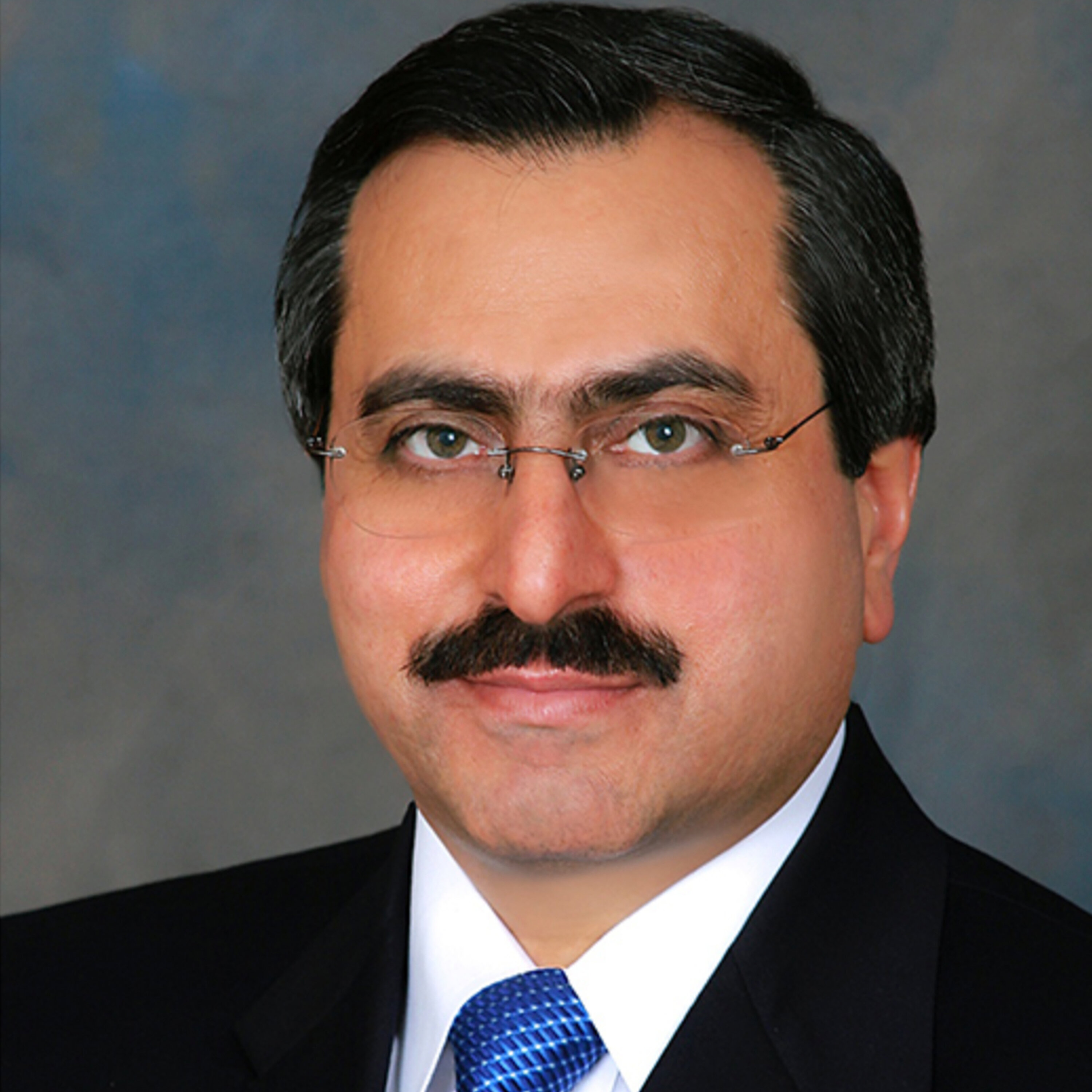
On this episode of Newts World, the citizens of Iran began protesting in late December over runaway inflation that has imposed widespread hardships on the people. As protests grew, demand shifted from economic relief to calls for the overthrow of the Islamic Republic, Iran's theocratic dictatorship. In power since 1979, the Iranian dictatorship led by Ayatollah Ali Khamenei has tried to crack down on the protesters by arresting them or killing them. They shut down the Internet, which has made it difficult to confirm death tolls. But in reports that have managed to get out, eyewitnesses say government forces have begun opening fire on unarmed protesters, killing more than 3,000 people across the country since the protests began. Now President Trump is weighing options on whether the United States should get involved in supporting the protesters. Here to discuss everything going on in Iran, I'm really pleased to welcome my guest and friend, somebody I have worked with off and on now for almost 20 years, Aloriza Jefferzade. He is the deputy Director of the U.S. office of the National Council of Resistance of Iran and the author of the Iran Threat. Alireza, welcome and thank you for joining me. Again, a neutral speaking.
- [01:49]
A
Ingrid, I thank you. I always a pleasure to be on your show. I appreciate everything you have done for decades, not just for the people of Iran, but around the world with your wisdom, with your leadership and with your direction. Appreciate that.
- [02:06]
B
Well, thank you. Let me start with how we got here. In the recent past, there are reports suggesting that the collapse of the Ayenda bank, which wiped out the savings of millions of Iranians, was the incident that triggered the protest. Do you think that was the key moment or were there other things building that were even bigger?
- [02:28]
A
Iran has been in a very volatile situation for many years. The society is an explosive society. So it all depends like where the trigger comes from. And of course, economy is a very foundation. And just for the audience to get a sense of how bad things are, just a few years after the ayatollahs came to power, in order to get a dollar, you had to provide 80 Riyals to get a dollar. Right now you have to provide one and a half million riyals to get the dollar. It's even hard to calculate. And things are getting worse. Unemployment, there's nothing working from electricity to water. And on top of all of that is the lack of freedom. There is absolutely no freedom for anybody, whether it's like their personal freedoms or the political freedoms. So when you have that explosive situation, it just takes a trigger and that trigger came as a result of deteriorating value of the currency in bazaar, which is the small businesses, the merchants. This used to be the bedrock of support for the ayatollahs for decades. And when they stand up and raise their concerns, their protests, you know, things are very troubling for the regime. And then it expanded quickly to other sectors of the society. The poor, the deprived, the workers, smaller towns and cities. And the students then expand, joined an added voice. So suddenly, the whole thing expanded all over the country to 31 provinces of the country. And the call of the nation was death to the dictator, death to Khamenei, who is the supreme leader of the Iran regime, death to the oppressor, be the shah or the supreme leader, making it very clear that the call in Iran is to go forward for freedom and democracy, not to settle with the current theocracy or go back to the.
- [04:30]
B
Shah's dictatorship when this thing began to break up. And as I understand this is the first time we've seen the businesses actually out there. Up until now, they've supported the regime, but now you have the small business owners all over the place helping the other side. Is that accurate?
- [04:49]
A
Yeah, for a while, they have been very dissatisfied with the circumstances. But until now, they wouldn't really get in an active position. A significant sign. And the fact that others join. So it's a very unique situation that you have different sectors of society all involved, opposing the regime.
- [05:08]
B
And I get the impression that the protests have actually spread across the entire country now.
- [05:15]
A
Yes, absolutely. Even though it started in Tehran and then expanded to other parts of Tehran. But soon, Mashad, for instance, which is the second most populated city of Iran, got engulfed in major protests in a matter of days. Mashada, about almost a million people showed up protesting the regime. And then the same situation in all 31 provinces of the country. Now, what is important is the things don't just happen by themselves. Obviously, there is trigger, there is foundational problems, but you need to have an engine that drives things into a certain direction. And the engine came from the organized opposition. You know, the mek, the Mediterranean Opposition Movement that has been fighting Ayatollah since almost day one. They're very active. They also have what they call resistance units on the ground, mostly consist of young people. And they got active in Mashhad and other cities, in 230 cities, in all 31 provinces of the country. You saw the protests and the role of the MEK Resistance units were very significant.
- [06:27]
B
When that was going on, the dictatorship stepped in and cut off The Internet, I thought, for the purpose of stopping local people from organizing. How significant was that in just slowing down the process?
- [06:43]
A
Well, of course, when you cut off Internet nowadays, that disrupts communication because a lot of it is relying on that and certainly wouldn't. It's intended to block the information from leaking out, but also communications. But the regime wasn't really all that successful because our movement, the network inside Iran, is not relying only on the Internet. And actually most of it is done in other ways, because to have a reliable, sustainable network, you cannot rely on something that the regime can easily cut off and paralyze you. That's why the meks managed to build these resistance networks that have their own network, their own way of communications. A lot of it is just basically done locally. So even though that couldn't really help much, the regime to slow down the process, but it did help them from getting the information out. And it took a while before all the information was exposed to the outside world.
- [07:45]
B
Given your reach, and I know from years of working with you that the MEK has amazing sources inside the country. There are reports that as many as 50,000 people have been arrested since this began on December 28. What is your sense? Do you have any feel for both the number arrested and the number killed?
- [08:08]
A
Yes, you know, we have always been, as you said, Mr. Speaker, you know, we've always very careful to put out accurate information. And based on the information we were able to compile from all 31 provinces from our own network, adding to it the reports from hospitals, morgues, local people, families, our estimate is that over 3,000 have been killed. And I know the other numbers are out there that are much higher. And among those who have been killed, many of them were actually members of the MEK resistance units, mostly young people. I was just looking at some of the names of those who have been killed that were released very young. You know, one of them I mentioned, Zahra Bohlulipur, she was only 18 years old. Gen Z, a student at University of Tehran. And she was killed on January 8 in Tehran. There were two workers who belonged to the MEK. 17 years old, Reza Gambarian, Rasuleh Kadivarian, both killed in Kermanshah, the first early days of the protest, January 3, both of them in Kermanshah. And you look at all the names that come out, you see the younger generation. But the role that these resistance units have played, and the 50,000 you mentioned is accurate. The 50,000 people at least have been arrested. This is in addition to a lot of the people that they just did a group arrest and then they released some of them. But those they have kept is actually 50,000. And the regime has threatened that they're going to go after them and eventually put them on trial. You know, most of the time it takes just few minutes and then deal with them. And they describe them as whole, as muharib, meaning waging war against God, which is punishable by execution. They're trying to frighten the population with killings and murder. But I think none of that is going to work, Mr. Gingrich, because the regime has done everything to frighten the population. This is a generation that has no fear because they have nothing to lose, but they have a lot to gain. The prospect for change is so powerful. The message of freedom is so powerful. That just gives them the encouragement.
- [10:31]
B
Foreign.
- [10:37]
C
Debt is one of the toughest opponents you'll face unless you power up with a Sofi personal loan. A Sofi personal loan could repackage your bad debt into one low fixed rate monthly payment. It's even got super speed, since you could get the funds as soon as the same day you sign. Visit sofi.compower to learn more. That's sofi.com p o w e r loans originated by Sofi Bank NA member FDIC terms and conditions apply and MLS 696891.
- [11:14]
B
I think two days ago, the regime announced that there would be no more hangings. I think this was an effort to appease President Trump. And I wrote a column and argued that anybody who believed that is very foolish. The regime cannot survive if it doesn't keep killing people. Now, can you imagine them giving up killing people and still staying in power?
- [11:42]
A
If the regime gives up killings and declares that there will be no killings even for one day, this regime cannot survive. Since day one, they have thrived on two pillars. Number one, repression and killings inside Iran. And second, their export of terrorism and warmongering and development, nuclear weapons, missile and drone program. These two are the essential elements of keeping the regime in power. And that's how the whole thing started. You know, just in the summer of 1988, as many as 30,000 political prisoners. I'm not talking about regular prisoners, I'm talking political prisoners, in a matter of few weeks, were executed by the regime. At that time, the first Supreme Leader, Khomeini, was alive. And it was based on a fatwa, a religious decree saying anyone who has anything or any association with the MEK must be killed. And 90% of the people who were killed were MEK members, hoping that this will wipe them out and ensure the survival of the regime that hasn't worked. You know, nowadays those who you see in the streets of Iran, they are the grandchildren, the brothers and sisters, siblings, friends, family members of those who the regime thought that destroyed and killed the movement for change. None of that is working and will ever work.
- [13:08]
B
This is very important for people to realize that the Iranian dictatorship's habit of slaughtering its political opponents goes all the way back to the founder, Ayatollah Khomeini, who was extraordinarily ruthless once he was in power. And I think people don't appreciate that this is the core of the dictatorship. They can't function without fear.
- [13:36]
A
Absolutely. The regime came to power not because it was popular. There was a genuine revolution that was percolating in the months before the fall of the Shah in February 1979. And people were entirely fed up with the dictatorship of the Shah because he had a notorious secret police, savak, that would put intellectuals in jail. The Eben prison was actually built under the Shah for political prisoners, which is now the main prison torture center for the Ayatollahs. He dissolved all political parties who were allegiant to him anyways. He declared that, you know, a single party that stuck his party said this is my party. You either join or go to jail or leave the country for good. And then he was extremely corrupt, dominating everything under his own one man control. And that didn't play well with the Iranian population who have a very rich culture and history and desire for freedom. So they stood up and and swept the Shah out of power. Too bad that the Mullahs managed to steal the leadership of that genuine revolution. They took advantage of a very historic opportunity because there was a vacuum of leadership at the time that existed because the Shah had either wiped out the intellectuals or put them in jail and had supported the mosque. He was giving money to the mosque because they were praising him. And when the time came, so Khomeini took advantage of that situation. He knew he cannot survive that situation unless he resorts to repression and monopolizing everything. And that's exactly what happened. He went after intellectuals, he rallied everything around anti Americanism. And then anyone who was in any way opposed to the mullahs, they would get rid of him and kill them.
- [15:27]
B
One of the things I don't understand, as recently as last Sunday in the parliament, they were chanting death to America. Now, as a historian, I'm inclined to think that when guys chant Death to your country, they probably mean Death to your country. And I know you travel all over the United States and in all over Europe. Why is it so hard to get people who should have common sense to understand that this dictatorship doesn't want to coexist with us, it wants to endure long enough to destroy us? I mean, what am I missing?
- [16:10]
A
Well, you're not missing anything, Speaker. There are people who just don't want to look at the realities, and they either have illusions or they feel that there are ways that they can try to bring the ayatollahs to sense. There are actually three slogans after the mullahs came to power that they constantly chant at the Friday prayers at the Parliament, when Khamenei speaks from the podium. Number one, they say, death to America, death to Israel, death to the MEK. For over 30 years, 40 years, actually, those chants have been there. And look at their actions, and they delivered that. The world's leading state sponsor of terrorism. You look at all the actions, the terrorism the Iran regime has done. And when it comes to Israel, they call for wiping Israel off the map. And they have all these proxy groups, and then when it comes to the mek, they try to do exactly the same thing to wipe them, kill them, any of their members. Right now, as we speak, they are going after the leadership of those who were involved in. In the uprising. And they know the meks played a significant role. Just today, Tasnim News Agency, which is associated with the Iranian regime, announced that they have arrested 3,000 members of what they call terrorist grouplets. Now, terrorist grouplet is actually the description they use for the mek. So that shows, like, where their focus is. And that's why I think it's so important for the world to realize that there's no way you can come into terms and settle things with the ayatollahs so long as they're in power. And the ayatollahs are telling the world that their number one internal enemy is the MEK and their resistance units, the network inside Iran, which the mek, by the way, is a member of their larger parliament in exile, the National Council of Resistance of Iran, headed by Mrs. Rajavi.
- [18:08]
B
The way they've approached this, I had a distinct sense that Trump was moving towards action. But apparently Turkey and Qatar and Saudi Arabia are urging him not to do anything. I sort of get Turkey, but why would Saudi Arabia, given the level of threat they sense from this dictatorship, why would they be asking him not to intervene and get this solved?
- [18:38]
A
I don't know really what's on the mind of any country when it comes their Policies related to Iran. Obviously, one of the most important factors that has really dominated policymaking, whether it's in the west, in the region, or in the United States, was always the terrorism of the Iran regime. Terrorism has been a very profitable, effective tool in the hands of the Iranian regime, threatening others. So this way they can take hostage their foreign policy. The good news is that the regime is so weak right now, they have lost much of their clout in the region in terms of their proxies. Their biggest ally in Syria, Assad, is gone. Even their biggest ally in Western hemisphere, Maduro, is gone. So that's one big change that has been happening. And then the nuclear weapons program, which everyone was afraid of, and thanks to the MEK network in Iran. We exposed the major nuclear sites of Iran dating back to two decades ago. You know, the Natanz uranium enrichment facility we exposed in 2002 that triggered the IAEA inspections of Iranian nuclear sites. We exposed FARDO under the mountains in 2005 and a whole host of others. So their nuclear weapons program is no longer the way it was. And then you have this big momentum inside Iran that is shaping up. I think they need to revisit their approach, their view about Iran. The old vision was that the mullahs are in control. They have all the power, they have all the proxies, they have all the means to suppress the people. And there is really nothing that can be done except just negotiating with the mullahs. Don't stir the pot. But the new reality of Iran is that Iran does have a very powerful alternative that has both the people on his side, it has a network inside Iran, it has a clear platform outside of Iran. And it's not asking for boots on the ground because a lot of people are concerned that, you know, you're going to send troops, you're going to send money, you're going to get involved. How are you going to get out of that? This is not what Mrs. Rajavi has asked the outside world. And I think that should be understood that all we are saying is that the way to get involved is to A, deny the regime the resources, don't give them money, don't give them legitimacy, don't give them rewards for their terrorism, B, hold them accountable for whatever they're doing in terms of terrorism, developing nuclear weapons and the killings inside Iran, and C, help regime change in Iran by the people of Iran. And what that means is that recognize the right of those on the ground who are fighting the regime. Because the most effective blow to the mullahs is when you see the international community lining up behind this organized resistance, that shifts the balance of power. Because no matter what the outside world does, at the end of the day, in order to bring about change, you need to have force on the ground, Iranian force on the ground. That's the resistance, especially a country like Iran, 92 million population, very large, two, three times bigger than Iraq and Venezuela and all those countries. So that's why I think if they line up their vectors, realize that change is happening by the people of Iran. But it won't just happen simply by protest. You need to have to strengthen and stand on the side of those who are organizing the organized structure on the ground. That will shift the balance of power.
- [22:34]
B
Let me just ask you, when Mahsa Amini, the young lady who was killed because she wasn't wearing the appropriate hijab, it led to huge demonstrations in 2022. And there was sort of a sense then that the system was on the verge of collapse, and then it recovered. What makes this experience different?
- [22:55]
A
Well, you know, the 2022 uprising in Iran, which, as you correctly said, was triggered by the death of a young Kurdish girl, Mahsa Amini. It was very important development because it soon expanded to all the 31 provinces of the country. People were really angry about that, especially women and others got involved in the protest. And it was a moment for the world to understand the cruelty of the Iran regime. Of course, the regime managed, even though this protest lasted longer than the previous protests. It was very eye opening to the world about the nature of the regime, but also very eye opening to the Iranian people. They realized that the more they're getting engaged in the protests and opposition, the regime is just going to come back and kill more people. They were arresting a lot of people. They put them on trial. And some of our members actually were arrested during that period and were later executed. Some of them are now on death row. And I think that became a very foundational element for the next round of uprising, because each time there is an uprising, the whole society and the organized resistance learn something. They gain experience. And every time it goes deeper, both in terms of the dedication of the people, but also in terms of strategy, where you're going to focus and how you're going to confront them. What we saw this time, the new protests that started in December 28, 2025, it quickly became a scene of confrontation. Not just protests, not just opposing the regime, but confrontation between the younger people and the Revolutionary Guards and the state Security forces. The slogans were so focused, not Just on certain rights, but focused on overthrowing the regime. The slogan death to the dictator, Death to Khamenei became the focal slogan of these protests. And you saw a lot of scenes of confrontation of the young people with the Revolutionary Guard. So this is just sort of like an elevation of the 2022 protests into a higher level. And it will lead eventually. There's going to be ups and downs in, you know, revolutions and uprisings. But there is no way out of this for the mullahs, because the foundational reason, reasons for the formation of these protests are not only there, but they have been further augmented by the way that Tehran responded to the protests.
- [25:32]
B
What should the United States actually do?
- [25:35]
A
I think it's important for the US to understand, first of all, who are the players in the society. In Iran, they know probably a lot about the regime, but they know much less about the people, because there was no attention the people, the organized resistance, because they were entirely focused on appeasing the regime, number one. Second, understand the fact that Iran is not going to go backwards. Of course, there was an ally of the United States. The Shah, who was so arrogant, had full support of the US but he was so detached from his people, started because of repression, because of corruption, that the people overthrew that you don't want to be associated with that kind of a past. Because, by the way, the Shah came to power as a result of a coup d' etat, and his father also came to power as a result of that. So realize that this is a new world. This is not the time that you can rule a country like Iran, allow it to have a dictatorship, and then build a good relationship with that. That's not going to happen. So therefore, they need to look, look at the players in Iran. I know the son of the Shah goes around and says, you know, I'm here. But the problem with that is that he has no connection. He's totally irrelevant to the affairs of the country. He only represents his deposed father, a dictatorship. He defends his father and all the savak and the repression and whatever the regime was doing. He refers to that era as a golden era which the people overthrew. You don't want to go that route. You want to look at the people on the ground. Those young people, I mentioned their names today, the young generation in Iran, they're thirsty for freedom, for political pluralism. You know, that's where the focus should be. Congress is looking at it that way, in a bipartisan way. I remember from the time you were in the House, Mr. Gingrich, you supported this movement that is very grassroots, looking at a pluralistic Iran. And you want to bring all of the sectors of the Iranian society together to stand for freedom, not those who are associated with the dictatorship of the past. And that's why when Mrs. Rajavi introduced her 10 point platform many, many years ago, but over two decades ago, that platform is based on ballot box as being the sole criteria for legitimacy, saying it's only the vote of the people, separation of religion and state, freedom of religion, freedom of political parties, freedom of the press, freedom of speech, freedom of religion. As I said, free market economy, Recognizing the rights of the minorities of Iran and a non nuclear republic. Iran and those minorities I mentioned is very important because at least a third of the Iranian population are minorities. Ethnic minorities, whether they're Kurds, the Azeris, the Baluchis, the Arabs, the lords, and all of them were badly suppressed during the Pahlavi dynasty, badly, whether by the Shah or his father. And they are vehemently opposed to reviving or even hinting towards that direction. That's where you really need to rely on unifying elements that could represent all the sentiments of the Iranian people.
- [28:55]
B
My interim question though is before we get around to organizing the post dictatorship, if the dictatorship is prepared to kill people on the scale that we're being told, why will it break down? Doesn't it have the capacity just to outlast the protesters and just keep either arresting or killing them?
- [29:15]
A
When you have a nation that has decided to fight the regime and overthrow them, that makes a huge difference. Now, of course, the mullahs have most of the guns. They control the repressive forces. But on the other side, the resistance has the capacity to fight back. During the purchase, there were a lot of cases and there are video clips that shows that the young people were disarming the Revolutionary Guards. Some of them were trying to deny the repressive forces of the ability to kill people. But what can really help them effectively is that if the international community comes out and says the Iranian patriots have the right to fight the regime, okay, the problem is not guns, because you can obtain guns in Iran. And that's what they're doing. People on the ground. It's just the outside world recognizing their right. When they recognize they side with those who are confronting Revolutionary Guards, that will shift the balance of power. If the United States, Europe, other countries would say anyone has the right to confront the Guards and settle their scores with them, that makes a difference. So that wasn't the case so far. In the past 40 years.
- [30:29]
B
You're sort of, I think, optimistic, aren't you, that you could be close to the end of the dictatorship?
- [30:36]
A
Absolutely. Because what I'm looking at and I'm counting on is especially the younger generation in Iran, number one, that the regime has tremendous problems in definitely recruiting people on their side or keeping people on their side. Second, the fact that there is an organized force. This regime is not going to just be overthrown by itself. You need to have a force on the ground. Look at the history in this country. I remember once you were telling in one of your speeches about George Washington that he seemed to have like, pretty much nothing. He had a ragtag army. I remember you were explaining that the soldiers didn't have boots and they had almost like no chance. But they succeeded. And that's the real fight in today's Iran. The MEK resistance units, they have a lot more capabilities now than they even had like 10 years ago, five years ago. The regime is much weaker. The momentum internationally is shifting. I think if we are able to keep the focus there, that's the only way I can think of that change is going to come to Iran. Iran is not Iraq. Iran is not any of those countries. There's no way that US can invade and overthrow. And all of those scenarios are not realistic and not desirable. So that's why I'm so optimistic about the momentum that has shifted in favor of the people.
- [32:03]
B
It's exciting because you have dedicated your life to bringing freedom to the Iranian people. Alireza, I want to thank you for joining me. Our listeners can learn more about the National Council of Resistance of Iran in the United States by visiting your website@ncris.org and I thank you so much for, for taking the time to help explain these things.
- [32:31]
A
Thank you so much, Speaker Gingrich, you have done tremendous work. A great guide. Your podcast, your speeches, your comments, your interviews are very, very eye opening for not just the American public. For everyone who listens to that, I really commend you and I'm very much looking forward to meet you in a free. You know, we have a beautiful country, amazing country, with tremendous culture and great people. And hopefully when Iran is free, you will see the impact.
- [33:07]
B
Thank you to my guest, Alireza Jafarzadeh. Newts World is produced by Gingerbrush360 and iHeartMedia. Our executive producer is Garnji Sloan. Our researcher is is Rachel Peterson. The artwork for the show was created by Steve Pendley. Special thanks to the team at Gingrich 360. If you've been enjoying Newtsworld. I hope you'll go to Apple Podcasts and both rate us with five stars and give us a review so others can learn what it's all about. Join me on substat@gingrich360.net I'm Nick Gingrich, this is Newtsworth.
- [33:59]
A
This is an iHeart podcast. Guaranteed Human.