Loading summary
Transcript40 lines
- [00:00]
A
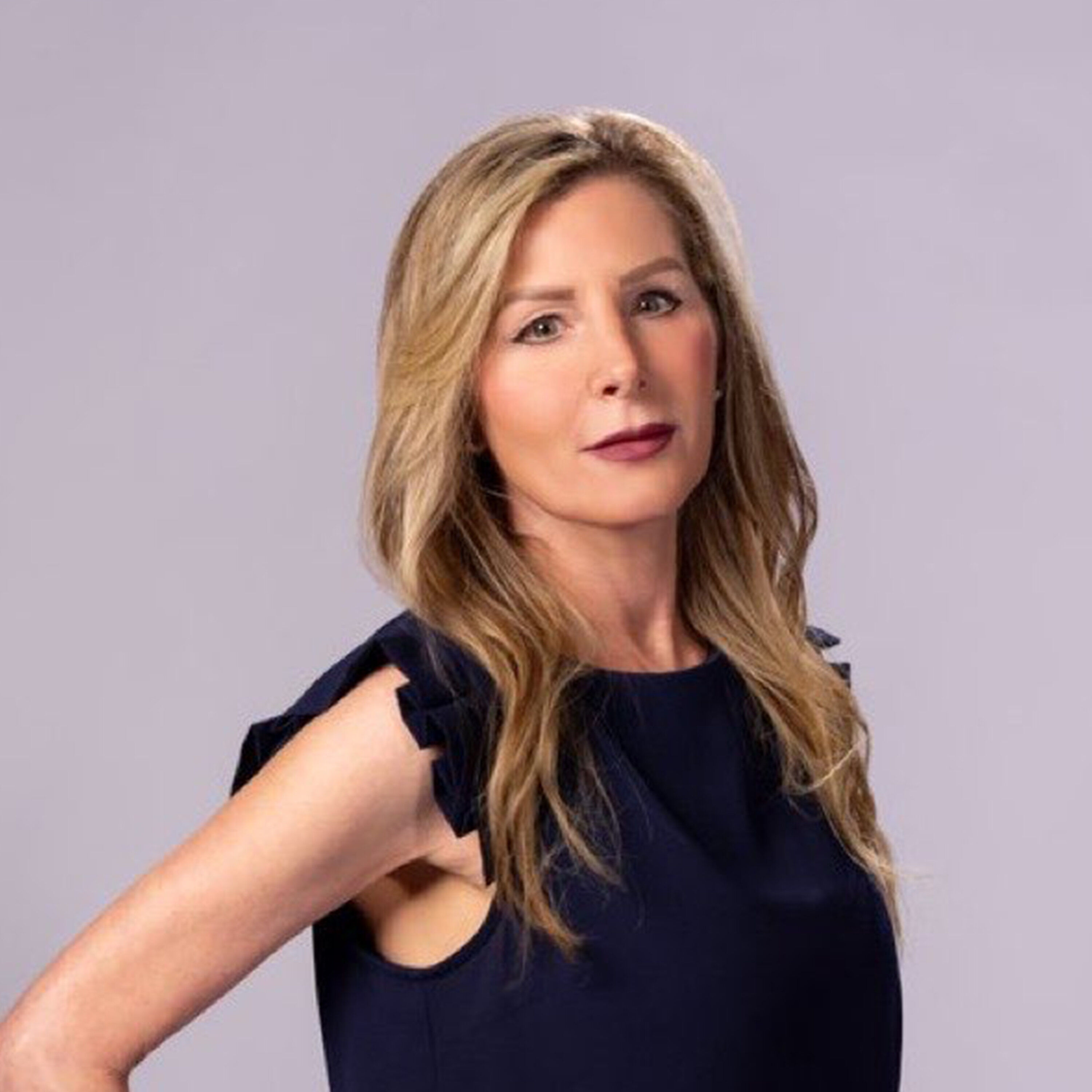
This is an iHeart podcast. Guaranteed Human. On this episode of newtsworld, my guest today is Tracy Shuchart, a senior economist for Ninja Trader Live. In her role, she delivers daily insights on key macroeconomic events, analyzing their significance and how they act as a driving force in the financial markets. She's just written two fascinating articles about Venezuela on Substack which caught my attention. The Venezuelan oil narrative is pure theater and why big oil is apprehensive about Trump's Venezuela deal. I was fascinated to hear her take on Venezuela and I am very pleased to welcome Tracy Shucart as my guest. Tracy, welcome and thank you for joining me on New Troll.
- [01:15]
B
Well, thank you. The pleasure is all mine.
- [01:18]
A
And before we get to Venezuela, I'm just curious, can you tell us a little bit about your own background and what you currently do as a senior economist for Ninja Trader?
- [01:28]
B
Yes, so my background, I started in the commodities world at the Chicago Board of Trade. So that is my background is specifically in commodities and I am now with ninjatrader as their senior economist. Ninjatrader is the first to offer retail traders and on ramp to the world of futures and has spent over 20 years educating and equipping traders with best in class tools to participate in the fast growing asset class of commodities and the futures markets. And we now are streaming live every morning have a macro show on Ninja Trader Live discussing all aspects of the economy with an emphasis on the commodity markets.
- [02:17]
A
To people who want to get in on that. Do they then subscribe to NinjaTrader live?
- [02:24]
B
Yep, you can go to the YouTube channel and just hit subscribe and notifications and it will notify you when we are on air.
- [02:32]
A
That's great. I was truly fascinated with the depth and complexity of your analysis on Venezuela. So could you share with us why you think the current public narrative is not giving us the full story?
- [02:52]
B
I think the current narrative is wrong because I think what people really need to be focusing on is, and I know that the administration keeps saying it's about oil, but it's really not about oil. It's about critical minerals as well as the influence of of China, Iran and Russia on the Western hemisphere right in our backyard.
- [03:17]
A
Why do you think the rare earth minerals are more important than oil in analyzing Venezuela's importance in the modern world?
- [03:30]
B
Well, I think we need to focus on critical minerals right now because you're solving the wrong problem with the wrong tools. And so we have to realize when we look, look at Venezuela, if we're just looking at it this through like the crude Lens, this is incorrect. And what markets are completely missing is that Venezuela sits on the largest known deposits of coltan, a rare earth element, as well as many other critical minerals in the Western Hemisphere. The Oronico mining ark contains exactly the kind of materials the Pentagon needs to break dependency on China, which currently controls 60 to 95% of global processing capacity for these critical minerals. And the US is 100% import reliant for 12 critical minerals and over 50% reliant on 28 to 50 of the minerals deemed essential to national security. And these materials can go to Tomahawk cruise missiles, laser guidance systems, fighter jets, radar systems. And we know that the Pentagon has already allocated $7.5 billion under the one big beautiful bill act specifically for critical mineral stockpiling because this is existential vulnerability. And China has been operating buyers directly at Venezuelan mines and moving these minerals through the Amazon, through Colombia ports to China for processing. And once they cross into Colombia and blend with other sources, the origin becomes untraceable. And this creates compliance exposure for United States defense contractors unknowingly using mineral minerals that were processed in China. Because we've had sanctions on Venezuela. And the whole key to the supply chain situation right now is for the US to move away from China completely. Who not only mines for these across the globe, specifically in, not only in their own country, but also in Africa and in South America, right in our backyard. So they control the mining and then they're brought back to China for processing. So they control the processing. The Western world needs to break free of China and being completely reliant on China. And we have seen this, we just saw this this year where they put export controls on magnets that everybody needs. And so this is extremely important for national security.
- [06:28]
A
So in that sense, there's a much deeper, more immediate threat than just oil.
- [06:35]
B
When we look at the oil industry, you have to realize that Venezuela's been in decades of decline as far as their infrastructure is concerned. They went from a 3.5 million barrel a day producer to about 880,000 barrels per day was the last figure just a couple weeks ago. Their infrastructure projects have been completely disregarded. And it is going to cost $100 to $200 billion to go into Venezuela. That's lowballing it. To fix the infrastructure and get them back up to where they were before Chavez. So this is a huge project. We've already seen oil companies have said that they're not interested. We had ExxonMobil, the world' largest player in global markets, saying Venezuela is uninvestable right now. And so oil companies are not looking to jump into Venezuela. They've been burned in Venezuela before Chevron. They're still owed $12 billion that they've never seen. Halliburton had to leave in 2019 because we had sanctions on that country. And so all of the big players in the oil industry have been burned too many times in a country. They're not looking to go there anytime soon, particularly when you have them operating in Guyana, which is much friendlier, stable country and doing very well there. And so it really isn't about oil because they don't produce that much. It really is about more of the geopolitical issues and about the national security issues of the critical minerals.
- [08:27]
A
From that standpoint, why do you think the American explanation has been so oil centric?
- [08:36]
B
I think that it is an easy narrative to sell to the public. Everybody understands the oil story, right? It makes sense to them. And so I think that's an easier issue that people can digest that narrative because they've heard it before. I've heard a lot of people equate this to Iraq, which is completely a different story than Iraq, but that was the narrative back then. Again, I think it's just an easy sell to the public, and I think it's something they understand. I don't think people really grasp what it is about critical mineral supply, how important it is to really move these supply chains away from kind of an adversary, that being China, and why it is so important to not only industrial processes within the United States, but to our military.
- [09:46]
A
Can you share with us why you think the Iranian, Chinese and Russian involvement is a national security issue and you dealt with each of them separately in a way that I found very, very compelling. But could you sort of share with us? Because it's a totally different narrative when you think about how much Russia, China and Iran are involved in trying to work with Venezuela against the United States.
- [10:19]
B
Yeah, absolutely. And I think we can take them all three separately because they all three operate in the country and they have been for a while. We've just spoken about Chinese and how they operate mining within the country. They have also loaned a lot of money to Venezuela. So Venezuela has been paying back their debts to China with oil purchases. Essentially, they're doing the same thing for Russia because Russia's also lent them a lot of money. So we have China in there with their mining. We have the IRGC operating in the country. They have Iranian weapons manufacturing in the Western Hemisphere there. We had Marco Rubio confirmed in December of 2025. What intelligence services had documented for years that the IRGC maintains an anchor presence in Venezuela with Hezbollah operating alongside. And this is in our backyard. This is operational infrastructure. We have documented Iranian weapons transfers to Venezuela since 2020. And they operate within a 200 kilometer operational range, significant enough to hit Florida if they wanted. So this is again in our backyard. And these are confirmed weapon systems within the country. And this is very, very concerning for the United States. We know also that there's existence of Iranian drone manufacturing facilities 1200 miles away from M. This is kind of a scary position for the United States to be in, being that we consider Iran to be a hostile nation to the United States. And then on top of that we have Russian military advisory missions and systems there. We know that there's over 120 Russian troops operating in Venezuela right now leading what Ukrainian intelligence identifies as the Equator Task force. And this is not a symbolic presence. We also know that Wagner group also operates within the country. Venezuela military operates Russian supplied Su30 fighters armed with anti ship missiles. You know, the same systems that forced U.S. navy planners in the 1990s to develop specific countermeasures due to their speed and flight profile. So these are Russian weapons operating in Venezuela, as with troops on the ground with Wagner Group, which is kind of not part of the Russian government by any stretch of the imagination, but it is a kind of a Russian paramilitary group that does operate in several countries, sort of a proxy of the Russian government, so to speak.
- [13:10]
A
Do you think that there was sufficient grounds for us to have said to the Venezuelans, if you do not get rid of these three relationships, we will be compelled out of just national security to eliminate your government because you'll clearly be actively working with countries who are our enemies. Do you think there's enough evidence there that that would have been a legitimate statement?
- [13:40]
B
Yeah, absolutely. I mean, and these are operations that the Pentagon has been watching for a while. And you know, certainly this has been in the news too. If you've ever been able to kind of piece this all. I think it just we hit a point where things were getting likely a little too close for comfort. Obviously I don't have access to classified information from the Pentagon, but I would assume that these threats sort of hit that threshold where we needed to act.
- [14:14]
A
I've been struck that taking out Maduro and his wife is not the same as getting rid of the Chavez Maduro system. That all the key players are still there, they're still in charge, they're still capable of killing any of their Opponents, I mean, do you think it's going to take a lot more effort to turn the country around?
- [14:36]
B
Well, it certainly is. It seems as though, at least at face value, the current government, which we have, the second in charge, is now in charge. So nothing has really changed from a regime standpoint. The regime is still leading that country. And so I think right now what we are going to have to see is do we have a transfer of power, do we have a peaceful transfer of power to the opposition, or did we sort of make a mistake in trusting the current regime with Maduro out of office? Again, as to your point, that really didn't change anything. We still have the regime operating there. So I would have to guess that at some point they are going to have to have either an election or the opposition party is going to have to take over. So we'll have to see how those unfold. But I agree with you, it's certainly unsettling that we did not see a complete move over to the opposition group.
- [15:46]
A
I was just very instructed. You're still seeing the roadblocks set up. You're still seeing the local criminal gangs operate who are really an extension of the regime. And you're still seeing that anybody who is too overtly pro American could be in danger of getting killed. That didn't sound to me very much like we'd want a decisive victory.
- [16:10]
B
Yeah, I would say that is not a decisive victory. And I think part of the reason is because this oil narrative that's out there, we got the oil, okay, it's done. You know, Venezuela would love to see the restoration of their oil industry. I'm sure it afforded them a lot of money. I don't think this is over by any stretch of the imagination just because it really hasn't changed the internals of what is going on in that country. And so I would say that there is a very large possibility that we see more operations in that country, whether we overtly hear about them or not. We do have a history of paying coups in other countries to sort of do our work for us occasionally. I would not be surprised if, you know, there is things going on strategically below the surface that we probably are not privy to at this juncture. Juncture.
- [17:17]
A
I think part of Secretary Marco Rubio's goal as a Miami politician whose parents came from Cuba is to find leverage to ultimately break the Cuban Communist dictatorship and return Cuba to being a open country with easy trading and with some kind of legitimate government. And I think Venezuela to some extent, plays into that part of Rubio's thinking.
- [17:47]
B
Oh, I 100% agree with that. He has been a very long proponent against the Maduro regime, against the regime in Cuba. We know that this has been a lifelong passion project of his. So I guarantee he will do whatever he can to seek regime change in those countries.
- [18:10]
A
It just strikes me that this is either a passing noise or it's a moment of extraordinary change. And we don't know yet.
- [18:19]
B
That is correct. Well, to be determined. But again, there are people working in the government, as you mentioned, Marco Rubio specifically, who has been a strong proponent of this and who has worked tirelessly to see a regime change. So I, I don't think that this issue is left for dead by any stretch of the imagination just because we said we had the oil, because it's not really about oil.
- [18:55]
C
With Cargurus Discover, you can skip the filters and describe what you're looking for in your own words. Simply type what you want and Cargurus Discover instantly surfaces real listings that match your exact needs. It's no wonder CarGurus is the 1 most visited car shopping site according to SimilarWeb's estimated traffic data. Buy or sell your next car today with CarGurus@CarGurus.com Go to CarGurus.com to make sure your big deal is the best deal. That's C-A-R-U-R U S.com CarGurus.com.
- [19:32]
A
There's a senior economist. What's your zone of looking at things.
- [19:37]
B
Globally, but again with kind of an emphasis on the commodities side and how that intersects with geopolitics? So supply chains, things of that nature that are important, particularly for the United States.
- [19:51]
A
As you look at the last year, is the total effect of what President Trump's trying to do. Does that encourage you or discourage you?
- [20:01]
B
I think that it's encouraging to see that we are moving supply chains away from China. As you know, that really started during 2020 when Covid hit, when we realized that we were importing way too much from China. And so we have been moving supply chains away from China, particularly more in the manufacturing sector instead of the mining sector. However. So what I am pleased about this administration is trying to do is trying to bring mining back to North America and that includes Canada and Mexico, and also has been supporting companies that are supplying critical minerals for us. As you know, the US gave a lot of money to Lithium Americas and MP in order to make our supply chains here and are processing our products, production our mining industry stronger in North America. We've had The Pentagon also has given away, like $423 billion to many companies in the mining sector in both Canada and the United States. And so I am pleased to see that this happens, that our mining industry is supported here. I'm pleased to see that they're working on the permitting processes, making that time frame a little bit shorter so that we can move that along without harming the environment or anything like, of course. So what I am pleased to see is that they are serious about moving these critical supply chains back to the United States, because again, we've done a lot of moving of manufacturing away from China, but really the mining sector was much forgotten in that whole transition.
- [21:50]
A
Didn't we have a long bias against mining?
- [21:55]
B
Oh, absolutely. I mean, let's be honest. Mining is a very dirty industry and nobody wants it in their backyard. Processing is even dirtier, to be honest with you. That said, there have been great strides made in mining. It's not as dirty as it used to be. I think there is a lot of preconceived notions on what mining is, because they remember what it was years and years and years ago when we had it here. It's not the same industry. And I'm not saying all mining is clean, but certainly in the United States, we have regulations. Unfortunately, there is going to have to be kind of a change of mental capacity around the mining industry as a whole so that we can grow it here without having 100 million lawsuits every time somebody tries to open up a mine here and to realize how critical it is for the United States and what it means to national security in general.
- [22:57]
A
What does your gut tell you about 2026 as an economic year?
- [23:03]
B
We need to keep an eye on inflation, because I'm not sure we quite have that beat and what that means for the economy as a whole. Also, I think that obviously we've heard from the Federal Reserve. They're worried about the labor market. So we need to keep an eye on the labor market. But the labor market seems fairly okay by any stretch of the imagination. We still have a very low unemployment rate. But I think that we really need to watch the inflation because I'm not so sure that inflation is quite beat. Obviously, the labor market, housing market is also obviously a forefront and affordability issues. And so I hope we can see strides in those areas.
- [23:45]
A
I think that's fascinating. As the world is evolving right now. You must find it all fascinating just how many different things are going on.
- [23:53]
B
There is a lot going on for.
- [23:55]
A
Sure right now, and you report on it regularly. I want to thank you for joining me, but I want our listeners to know that they can join you on Substack raceshucart and on Axe C H I G R L for Chicago Girl. What you're doing is fascinating. Your articles were extraordinarily helpful and that's why I was so glad you were willing to come and talk with us in Newts World. It's great talking with you and I hope in the future as these things evolve that we'll be able to come back and pick your brain again.
- [24:29]
B
Absolutely. The pleasure again is all mine and I look forward to the opportunity to speak with you again.
- [24:40]
A
Thank you to my guest guest Tracy Shuchart. Newt's World is produced by Gamers 360 and iHeartMedia. Our executive producer is Garnzi Sloan. Our researcher is Rachel Peterson. The artwork for the show was created by Steve Pendley. Special thanks to the team at Gingrich360. If you've been enjoying Newtworld, I hope you'll go to Apple Podcasts and both rate us with five stars and give us a review so others can learn what it's all about. Join me on substack@gingrich360.net I'm Newt Gingrich. This is neutral. This is an iHeart podcast. Guaranteed Human.