Loading summary
Transcript40 lines
- [00:00]
Podcast Host
This is an iHeart podcast.
- [00:02]
Sponsor/Advertiser Voice
Guaranteed Human support for the show comes from Public, the investing platform for those who take it seriously. On Public you can build a multi asset portfolio of stocks, bonds, options, crypto and now generated assets which allow you to turn any idea into an investable index with AI. It all starts with your prompt. From renewable energy companies with high free cash flow to semiconductor suppliers growing revenue over 20% year over year, you can literally type any prompt and put the AI to work. It's IT screens thousands of stocks, builds a one of a kind index and lets you back test it against the S&P 500. Then you can invest in a few clicks. Generated assets are like EFTs with infinite possibilities, completely customizable and based on your thesis, not someone else's. Go to public.com podcast and earn an uncapped 1% bonus when you transfer your portfolio. That's public.com podcast paid for by Public Investing Brokerage Services by Open to the Public Investing Inc. Member FINRA SIPC Advisory Services by Public Advisors llc SEC Registered Advisor Generated Assets is an interactive analysis tool. Output is for informational purposes only and is not investment recommendation or advice. Complete disclosures available at public.com disclosures nothing in life is free except this $10 that better picks is offering. Download the Better app, pick more or less on your favorite player's stats, watch the games and win some cash. It's that simple. Must be 21 or older in a jurisdiction where Better Picks operates terms and conditions. Play Better Picks Sports just got better.
- [01:30]
Podcast Host
If you're an H Vac technician and a call comes in, Grainger knows that you need a partner that helps you find the right product fast and hassle free. And you know that when the first problem of the day is a clanking blower motor, there's no need to break a sweat. With Grainger's easy to use website and product details, you're confident you'll soon have everything humming right along. Call 1-800-GRAINGER, click grainger.com or just stop by Granger for the ones who get it done. New Year, New Vibe Want the warmth of a drink, that smooth little kick, but also want to wake up tomorrow feeling amazing. That's where Arcay comes in. Arcay is the world's first zero proof spirits brand and they invented the warm molecule, giving you the burn of whiskey or tequila without a drop of alcohol. Start the year strong with 28 Bold 0 proof spirits, 0 calories, 0 sugar, 0 regrets so you can celebrate big and still keep your resolutions on track. Start the Year right. Join the Zero Proof Revolution at rkbeverages.com.
- [02:36]
Newt Gingrich
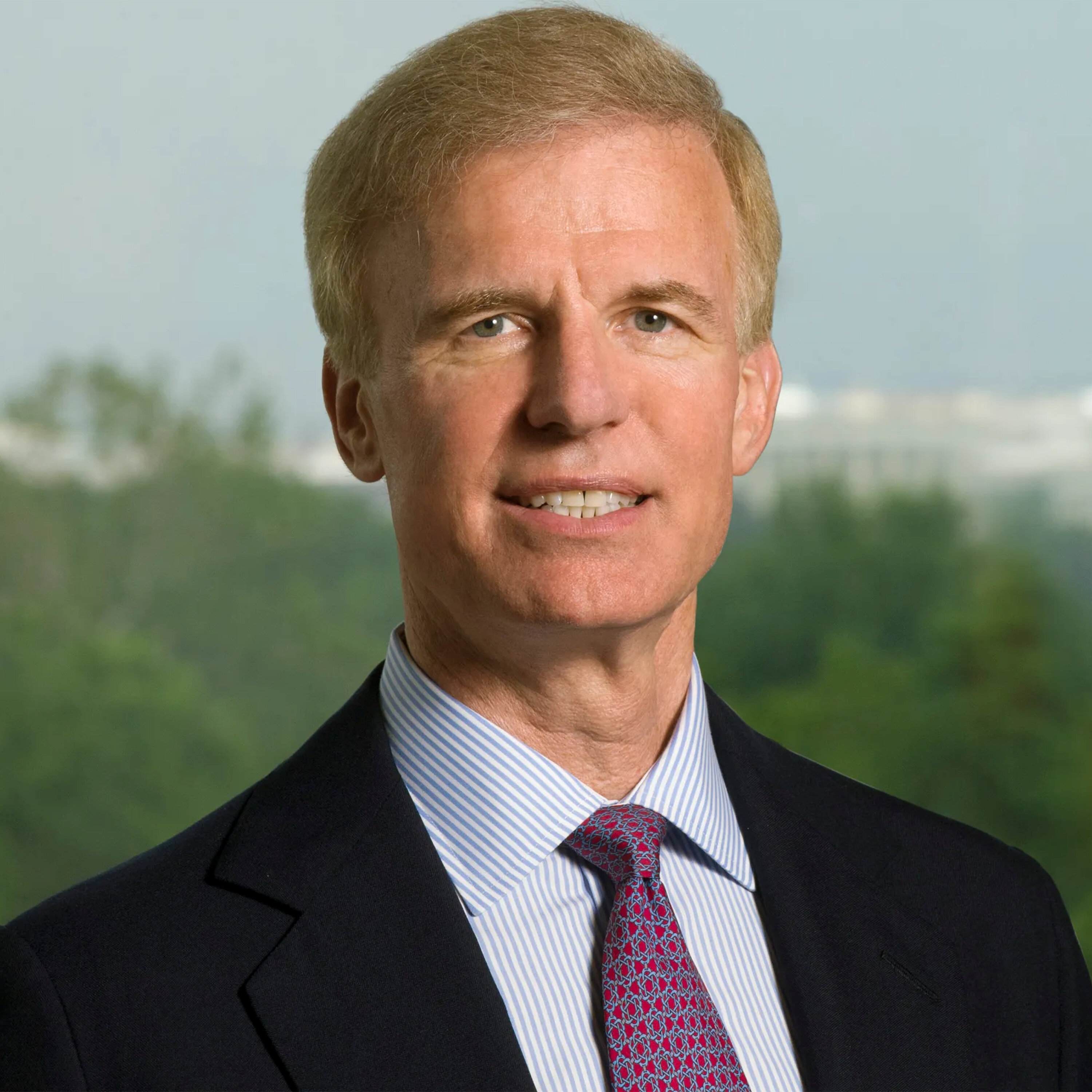
On this episode of Newts World. In his latest op ed, what Reagan Taught Me About Civility, Fred Ryan reflects on President Reagan's legacy of principled civility and why it matters more than ever in today's divided political climate. Quote, reagan taught us a crucial lesson that's in short supply today. In a healthy democracy, everyone needs a way to leave the room with dignity. The Ronald Reagan center on Civility and Democracy's mission is to work with organizations across America to promote civil discourse, help us to find common ground and advance our democracy through informed patriotism. I'm really pleased to welcome my guest, Fred Ryan. He is the chairman of the Ronald Reagan Presidential foundation and Institute and is leading the launch of the new center on Civility and democracy. From 2014 to 2023, he served as publisher and CEO of the Washington Post. He also was co founder of and CEO of POLITICO from 2007 to 2014. Fred, welcome and thank you for joining me on Newts World.
- [04:06]
Fred Ryan
Well, thank you, Mr. Speaker. Pleasure to be with you.
- [04:09]
Newt Gingrich
I mean, you've probably had quite a crowd, known you a long time, and it's amazing how many things you've done during your career.
- [04:16]
Fred Ryan
I keep trying.
- [04:17]
Newt Gingrich
When you look back at where we were after Watergate, the Vietnam War, the bitterness of the Reagan Ford nomination, fight in 76, and then Reagan then of course, defeats Carter, and yet there's something about Reagan's style, about his approach to life that allowed him to be very conservative without necessarily being very divisive. When you look back on all that, what do you think the key to that was?
- [04:49]
Fred Ryan
Well, I think he believed, as I know you did when you were leading Congress, that you had to have firm views, you had deep views, you didn't compromise on those views or those principles, but you could still find ways to find common ground to get things done. And I think President Reagan felt, in fact, he even said it several times when those of us on the staff would be frustrated with things that were happening on Capitol Hill and swearing at the Congress. And he would say, you gotta remember something, they were elected by Americans too, and not just the Republicans, I think also remembering that the Democrat representatives were also elected by Americans. So I think he felt that, particularly as president, it was his responsibility to find ways to find common ground to get things done on areas where agreement could be found. And you know his famous expression, I'm sure he shared it with you because of your close relationship with him, but he would Say, if you could get 80% of what you want in this deal, take it and try to get the rest next time.
- [05:48]
Newt Gingrich
It's something a lot of our folks today don't quite get, that, you know, incremental progress is still progress. It's not a defeat.
- [05:56]
Fred Ryan
Well, it's a little bit. I think part of the problem today that's changed from that era is that it's become more of a zero sum game. It's not enough for you to win. Your opponent has to have a humiliating loss. And it's kind of crazy. If you look at the rest of our lives in business or in the other things we do, you always try to find a way for both sides to go away from the table feeling they got something. Nobody wants to go back to their caucus or to their company and say, yeah, we got nothing. It was a total loss. We should be humiliated instead. To the extent you can do it and be true to your principles, find ways that both sides can get something that they want. And that's what Ronald Reagan was a master doing. As you know, you're one of your predecessors, Tip o', Neill, and he could not have been further apart politically. You had a conservative Republican from the west and liberal Democrat from the East. They disagreed on most things, but they found ways to get things done on the areas where they could agree. And I think the other thing, Newt, is that they, unlike a lot of circumstances today, they could find a way to have a personal relationship, even though they were at odds ideologically on so many things. And that personal relationship, I think, helped them get some of the things done that they did.
- [07:13]
Newt Gingrich
How much of this civility on Reagan's part was sort of a principled understanding of power and how much it was just personality, the way he grew up in Illinois, the way he and Nancy related. I mean, to what extent was it a remarkable personal trait, and to what extent was it the application of a set of principles that he'd learned in dealing? First, of course, as the head of a union leading a strike in Hollywood, and then later on as governor and as a candidate.
- [07:45]
Fred Ryan
I mean, he grew up in the heartland, and he brought those values with him. They were instilled in him from his mother and just from the community. He lived in a small town where everybody knew each other, counted on each other, did things together. So I think a lot of it was just innate with him. And he grew up at a time when America was. We were united, we fought wars, we stood for things together, and I think that was part of it. But he also knew, for, as you mentioned, from his previous experience as governor with a hostile State House, as the head of the Screen Actors Guild at a very difficult time, you had to know how to accomplish what you want, stay firm to your principles, but get the deal done. And I think he was very good at kind of operating in those environments. Part of what he did was he always made sure that he did everything he could to have the American people on his side. And if there were times when he was at odds with Tip o' Neill or others on Capitol Hill, he'd go to the Oval Office, do the address to the nation, and the phones would light up on Capitol Hill, and it would help move his to Ford.
- [08:53]
Newt Gingrich
I have been very struck by a book that Tom Evans wrote called the Education of Ronald Reagan, about Reagan at General Electric for eight years and what he learned from Lemuel Bulwar about the importance of communicating with people, and then that having people lead the leadership, because in the end, the leadership has to follow it was a very elegant strategy for a company that had five Communist Union leaders. They couldn't negotiate with them, so they had to somehow educate the members. I don't know if you've ever had a chance to look at that book.
- [09:31]
Fred Ryan
I got to know Tom Evans, and he's a very thoughtful guy. He was on President Reagan's Private Sector Initiative Task Force, and that's where I got to know him. And I thought his book was very thoughtful. And that period at ge, he learned a lot about America, and he learned a lot about how to communicate to Americans. When he was doing that work with ge, and he would travel from factory to factory and give a speech and then take questions. And it helped him, I think, really hone his communication skills even more. But to get a sense of what was really on working people's minds and to have an understanding of what their priorities were and what their values were. And I think that played a very important role in preparing him for his public service. The other thing that's kind of ties in a little bit to that is I asked him one time when he was giving a talk on this World Net. At the time, it was the first global network where he was literally speaking on every American asset around the world on Radio Free Europe and Marti and all these things called Global Net. So it was maybe one of the largest audiences that any American president ever spoke to. And I asked him, do you get nervous when you think about how many millions and millions of people are listening to you? And he told a story, you May have heard from him as well, where he talked, talked about when he got started in radio. As you know, that was his dream job originally to be a radio announcer. And he auditioned, he got the job. They put him in a dark booth with no windows, and they said, announce. And he kind of stumbled for a minute. He wasn't sure what to do and couldn't quite figure out the role. And then he said he was thinking about the barber shop where he went every two weeks. And every time he'd go in there, the guys in the barbershop had that radio station on. And he knew I'm talking to them. And he just started talking in the announcer's booth as though he was having a conversation with those guys in the barbershop. And what he told me was, he said, you know, even if it's a radio, if it's an interview, this new satellite, global net, I feel like I'm talking to the guys in the barbershop. And it was a way to kind of always keep his communications at a very human level, very personal level, instead of sounding stiff or talking down to people.
- [11:46]
Newt Gingrich
Franklin Roosevelt had a similar device. All of his Fireside Chat radio addresses were written for a illiterate, dead upstate New York farmer who Roosevelt knows a child. And his theory was, if I can explain it so he would understand it, everybody in the country will understand it. Very similar kind of sense of grounding. You talk a little bit about Reagan storytelling, and it strikes me that Lincoln, FDR and Reagan all had a technique of storytelling. In my experiences, when I, on rare occasion, as a very junior member, I would end up flying on Air Force One. And after they took off, you know, he would come back and chat with us and he would tell stories with. One of my most treasured pictures is the two of us in shirt sleeves laughing on Air Force One. And he would tell stories. And I realized after a while, you were totally wrapped up, because here's Ronald Reagan, he's the President of the United States, he's a movie star, he's talking to you, he's telling you these funny. And he collected lots of funny stories. And then, of course, he'd run out of time and leave. So whatever you were going to ask him, he never quite got around to. And I am convinced that Roosevelt, Lincoln and Reagan all had that same technique.
- [13:08]
Fred Ryan
You know, it's a bit disarming first. And by the way, I remember Newt on one of those Air Force One trips when he was flying down to Atlanta to speak the American Bar Association. I think we were seated near each other as seatmates. When he was coming back, President Reagan would often begin a meeting or end a meeting with a joke or a story. He did like to tell stories, as you know, and he had a lot of great ones and great jokes folks. But I think he found it would first off, it would take the anxiety out of the air, it would disarm people. And there were times where I remember when I was a member of his staff and a couple times were members of Congress were demanding to see him. And sometimes I was the person who was walking them into the Oval Office for their meeting and they would be saying, I'm going to give him an earful, I'm going to straighten him out, because he doesn't know that, you know, and they were ready to go and they're pumped up. He'd come in and he would say, well, I know you have something important to say, but first let me tell you. And he would tell a little story and by the end of it they would just kind of look and say, well, that's just great, Mr. President, so nice to see you and keep up the great work.
- [14:13]
Newt Gingrich
It was very disarming.
- [14:24]
Sponsor/Advertiser Voice
Support for the show comes from Public, the investing platform for those who take it seriously. On Public you can build a multi asset portfolio of stocks, bonds, options, crypto and now generated assets which allow you to turn any idea into an investable index with AI. It all starts with your prompt. From renewable energy companies with high free cash flow to semiconductor suppliers growing revenue over 20% year over year, you can literally type any prompt and put the AI to work. It screens thousands of stocks, builds a one of a kind index and lets you back test it against the S&P 500. Then you can invest in a few clicks. Generated assets are like EFTs with infinite possibilities, completely customizable and based on your thesis, not someone else's. Go to public.com podcast and earn an uncapped 1% bonus when you transfer your portfolio. That's public.com podcast paid for by Public Investing Brokerage Services by Open to the Public Investing Inc. Member FINRA SIPC Advisory Services by Public Advisors, llc SEC Registered Advisor Generated Assets is an interactive analysis tool. Output is for informational purposes only and is not in investment recommendation or advice. Complete Disclosures available at public.comdisclosures yo, you know Ball well. Come through with a free $10 from Better Picks, download the Better app, pick more or less on your favorite player stats, watch the games and win some cash. It's that simple. Must be 21 or older. In a jurisdiction where Better Picks operates, terms and conditions apply. Better Picks Sports just got better.
- [15:49]
Podcast Host
Now I'd like to introduce you to Meaningful Beauty, the famed skincare brand created by iconic supermodel Cindy Crawford. It's her secret to absolutely gorgeous skin. Meaningful Beauty makes powerful and effective skin care simple and it's loved by millions of women. It's formulated for all ages and all skin tones and types. And it's designed to work as a complete skin care system, leaving your skin feeling soft, smooth and nourished. I recommend starting with Cindy's full regimen which contains all five of her best selling products including the amazing youth Activating Melon Serum. This next generation serum has the power of melon leaf stem cell technology. It's melon leaf stem cells encapsulated for freshness and released onto the skin to support a visible reduction in the appearance of wrinkles. With thousands of glowing five star reviews, why not give it a try? Subscribe today and you can get the Amazing Meaningful beauty system for just $49.95. That includes our introductory five piece system, free gifts, free shipping and a 60 day money back guarantee. All that available@meaningful beauty beauty.com.
- [16:50]
Newt Gingrich
The second round is this weekend and now you can trade on football legally in nationwide on kalshi. Right now LA is trading at 42% to beat Seattle. That means 100 trade pays out 289 with a win. On Kalshi, you are trading against peers in a live market meaning there's no house. And as the odds change, you can buy in and out of your position all game long. For a limited time, download the Kalshi app and use code iheart to get 20 when you trade 100k a l s h I kalsh trade on anything. You also told a story I'd never heard of Reagan at the Eisenhower library trying to eat and people coming up over and over and over again. And his reaction was very much like Lincoln's would have been that he was actually grateful that they would talk with him. I mean he wasn't offended, he wasn't irritated, but he gained strength from people chatting with him. I think that's a remarkable capacity.
- [17:55]
Fred Ryan
This was after he left office and I was on his staff and a couple of us had traveled with him to visit the Eisenhower library. And as you know, he had a great relationship, great admiration for Eisenhower. And we arrived at the library and from the moment he walked in people were just grabbing him. Hey Mr. President, look this way. Take a picture. Look this way. People were just Hugging him every direction, giving him things to sign, sign this, sign that. And a couple of us on the staff were looking at each other, saying, oh, gosh, this isn't going so well. And then he sat down to eat. And while he's eating, people are coming over and tapping him on the shoulder and getting him up for photos. So afterwards, I was riding with him when we were going to get on the plane to fly back to California, and I figured, well, I better address this thing. And I just got in the car and I said, well, Mr. President, I think I need to have a conversation with you about the people there tonight. And I was about to say, you know, I'm sorry. I guess we didn't do good enough staff work to give you some privacy. And before I could even say it, he just said, aren't people great? I said, yes. That was the message I was about to tell you.
- [19:03]
Newt Gingrich
Right.
- [19:04]
Fred Ryan
You know, I think it's a unique asset for anyone in public service. You just have to be a people person. You have to like people, and you have to know that you're giving part of yourself to them. When you become a public servant or an elected official, they view that you're close to them and you connected with them, and they don't feel that they're intruding when they come over and want to engage with you and take a photo or ask you other things.
- [19:29]
Newt Gingrich
You were with Reagan. You helped launch Politico. You were at the Washington Post. What do you think went sour? Why did we. I mean, in some ways. Well, Clinton and I fought a lot, and I have a reputation of having been very partisan, which I was, because I was trying to create a majority for the first time in 40 years. We could fight half the day and have negotiations half the day and then have a drink in the evening. Yeah. And somehow, I don't know whether it was Bush or Obama or just the nature of what happened to the country, but somehow that capacity for interaction just sort of dried up.
- [20:16]
Fred Ryan
What you were doing with President Clinton was in the great tradition of Reagan and Tip o'. Neill. You could disagree and disagree strongly, but you could have a drink and find a way to engage and keep a channel open. I think part of what we see today is those channels aren't even open. One of the questions as we launched this center here that we've spent a lot of time trying to address is what you had just asked is, how did we get here? A couple of things. I know you've written a number of pieces about our founding Fathers and we've kind of went all the way back to that. As you know, George Washington in his farewell address talked exactly about some of the things we're seeing today. He said his fear was that we became divided into factions and even went on to say that sometimes those factions might try to exact revenge on others. And it was clear that the concern was not so much external threats for our future, but internal. So we've asked how do we go from an era where Reagan and Tip o' Neill could get things done, you and Clinton could get things done, to a point now where we are so divided? And I would say there are really a handful of things that we've identified. It's five things actually, but there are more. But one is just as a society, we've become less trustful of institutions, just in general. There's really no institution that is trusted the way that it once was, whether it's the government, media, the courts. And that's a change where, you know, early on in our country's history, when Alexis de Tocqueville did his travel, he pointed out how we were creating these communities and these institutions that were helping us to get things done. Well, there's less of a trust to that. A second one though, and we've talked a little out in the media. It's media companies and to be candid, is not all, but many have business models that thrive on exploiting differences and to get us to kind of gravitate to our comfort zones. How many times do you put on a cable channel, there might be one on the left or one on the right. And it starts off with the opinion host saying, you will not believe what they did today. And then for the next hour you hear about those terrible people on the other side. That's become a bit of a model where for the cable channels, I mean, to get revenue, you need viewers and in many cases get viewers, you need outrage. So the outrage market has helped social media. Third one, social media has really accelerated that. The anonymity of social media where people can say things, you don't even know who it is, you wouldn't be saying things to someone's face that you'd say on social media. And it also, social media kind of, it connects us to like minded factions like the George Washington. Like minded try. If we find comfort, the algorithms steer us there. And outrage really is the power of. That's the oxygen of many social media sites. The other thing I would say is I think a little bit, and you with your experience so much in Congress and Current relationships in the past may disagree, but I think the model has changed a little bit. People used to rise to positions of power in Congress because of their subject matter expertise or because of their parliamentary skills, or maybe of their fundraising skills. And now you have people, not so much positions of power, but positions of visibility because of what they post that's outrageous on social media and how they land a cable hit and then how they raise money off of that. And then the last thing I would say is, and we're trying to work in this area particularly, is there's just a lack of knowledge, you know, American citizens, students in general, of our own history and civics and how it works. And you've seen the numbers where a majority of Americans cannot name all three branches of government. 20% of Americans can't name a single branch of government. And I think if you don't understand the country, you don't trust it, and you kind of defer to this dark sense that we have a history of oppression and injustice, and you don't have this sense of belonging to a big national culture.
- [24:16]
Newt Gingrich
You may be launching this into the 250th anniversary at exactly the right time, because, in a sense, the tie you mentioned earlier with Washington, all of the Founding fathers understood that they had to have some ability to communicate collectively, to have substantial arguments, and in the end, to find a common ground around which to build a country. And in that sense, I think there's a great opportunity for you this year to use the 250th anniversary as an opportunity to reintroduce the American people to civility.
- [25:01]
Fred Ryan
We are hoping that that can be an outcome of the 250th that one of the terms was saying. We were hoping it'll be a time where Americans fall in love with their country again and hopefully learn more about it, become better informed and better informed in terms of what democracy requires. As you've written and know so well from our founding, is this idea of being a citizen rather than a subject was a unique idea. It was something that was a bit experimental, and today we just accept it, and we think that's how it is. But part of it was incumbent on being a citizen and not the subject of a monarch or a dictator, is that you have certain obligations, certain civic obligations. And one of them is knowing civics and knowing a little bit about our history and knowing how certain qualities are expected from people living in a free country to preserve that freedom for the next generation.
- [26:07]
Newt Gingrich
You've sort of come full circle from learning From Reagan to now, trying to teach us Reagan. What are some of the plans you have at the center on Civility and Democracy?
- [26:19]
Fred Ryan
We've tried to break it down into three areas that you mentioned at the very beginning. One is promoting civil discourse. That is something that is so essential in the country today, I think partly because of technology and the way we've organized our lives, is this idea of just engaging civilly with your fellow Americans, whether it's in the classroom or the neighborhood, or elected service. It's so important. So one thing we've done is our education team has created what we call the Civil Discourse Project. And we put this together for K through 12 students. And it's geared by the level for teachers to teach students. There's no political bias to it because what we're trying to do is we're trying to reach out people on the right and the left and in the middle, but teach people how to engage more civilly in classrooms and with their peers. We created this, we launched it last year with the Department of Defense school system. As you know, there are hundreds of thousands of kids around the world who are at the DOD schools, and we did it as a test and they love it, the teachers love it. It's a teaching tool. So we're now working to roll that out state by state to all 50 states as something that can be hopefully used in the classrooms. On this idea of promoting civil discourse, we have coming out and tied in with the 250th, what we're calling the Civility Handbook. It's pocket sized, like those little pocket constitution that we all have. And it's simple rules on how to act more civilly, engaged more civilly, be more successful as an American. That's coming out in the spring. So one area we look at civil discourse. The second we're talking about is finding common ground. And that's to find ways to bring people together who are opposites, whether they're opposites, politically opposites. We've done it in the sports space. We bring people together from opposite teams where they talk about how they want to win, they want to defeat their opponent, but they don't want to kill their opponent because they want to play them again next season and they want to honor the referees because there have to be some rules. So we've been doing these Common Ground forum where we've had Democrat governor, Republican governor, Democratic Senator, Republican Senator. We've got a number of these coming up now. We've done it with sports. We had just before the Army, Navy Game. We had the players from army and Navy, and we had the anchors of the game, so these Common Ground forums. And then the last thing is this. It ties even real more directly into a 250. And that is this informed patriotism, this idea of just helping people know a little more about their country. And we've had Ken Burns came out to premiere his documentary on the revolution at the Reagan Library. We've had Amy Coney Barrett coming out talking about Gorsuch and others in the legal community, talking about the importance of the law for society, this whole idea of informed patriotism. And we're doing a summit this year. We're doing the first civility summit, where we have students from all across the country, particularly selected to come to Washington to talk about. And these are all people who want to be office holders, how hopefully when they become the next generation of leaders, they'll be able to bring that to the fore.
- [29:22]
Newt Gingrich
I think that that's a very impressive and comprehensive approach. Try to figure out how much of it you can make audio and video because people don't read.
- [29:33]
Fred Ryan
Yeah.
- [29:34]
Newt Gingrich
And then second, try to figure out how much of it you can make autonomously interactive on the Internet so people can get involved in learning how to collaborate almost spontaneously, forming local groups and having tools that help them have local groups. What you're doing, Fred, I think, is a. A very useful thing. I think Reagan would be proud of you, and I think it certainly fits his tradition and his spirit. And anything we can do to help, I want you to know that we'll be in your corner.
- [30:05]
Fred Ryan
Well, thank you. Thank you for those kind words. And, you know, I think part of what we need to do, and you are uniquely able to do this, is everyone knows when you brought their public majority back, there were very strong principles at stake. There were strong positions that were taken, and you were able to govern and get those things done. You didn't have to compromise on your principles. You may be to get the deal done here, tweaking on a certain detail of a bill, but you didn't compromise. And people, I think one of the obstacles we have right now to try to get us past this is people feel that if they're engaging, they must be compromising. If somebody on the far left and somebody on the far right can find an issue where there's 70% approval rating, they ought to be able to get. Get something done. But now, since we've moved into these camps, it's almost like you're trading with the enemy. If you try to get a deal Done. I talked to one governor. He was Republican governor. He was at the Obama White House. He was head of the Governor's association, and he shook hands with Obama and the picture went out and it got posted on the Internet that he was somehow a traitor because he was a Republican governor, head of the Republican Governor association. And he said shaking hands with a Democrat. And we have to kind of get beyond that because if you can't even shake hands with somebody, it's going to be difficult to find ways to advance an agenda that benefits all Americans.
- [31:30]
Newt Gingrich
Somehow we have to get back to the notion that we're all Americans.
- [31:33]
Fred Ryan
Yes.
- [31:34]
Newt Gingrich
And therefore we start with a common ground, which is really a challenge. But I want you to know I will do everything I can to be helpful, and I think what you're doing is really important. Our listeners can learn more about the Ronald Reagan Presidential foundation and Institute and the new center on Civility and Democracy by visiting your website@reaganfoundation.org I really want to thank you, Fred, for the lifetime commitment you've made going all the way back to working with President Reagan and then serving for so many years on the Reagan foundation, which is, I think, one of the great centers of learning in America. Everybody should go to Simi Valley and experience what an extraordinary institution that is.
- [32:19]
Fred Ryan
Well, you're very kind, Newt, and I know we've been fortunate to have you there on many occasions, and I hope that we can welcome you back again sometime soon.
- [32:29]
Newt Gingrich
Thank you to my guest, Fred Ryam. New Troll is produced by Gingrich360 and iHeartMedia. Our executive producer is Garnesy Sloan. Our researcher is Rachel Peterson. The artwork for the show was created by Steve Pendley. Special thanks to the team at Gingrich360. If you've been enjoying Newts World, I hope you'll go to Apple Podcast and both rate us with five stars and give us a review so others can learn what it's all about. Join me on substack@gingrich360.net I'm Newt Gingrich. This is Newt's World.
- [33:16]
Podcast Host
This is an iHeart podcast. Guaranteed Human.