Loading summary
Transcript44 lines
- [00:00]
A
This is an iHeart podcast. Guaranteed Human.
- [00:05]
B
If you're an H Vac technician and a call comes in, Grainger knows that you need a partner that helps you find the right product fast and hassle free. And you know that when the first problem of the day is a clanking blower motor, there's no need to break a sweat. With Grainger's easy to use website and product details, you're confident you'll soon have everything humming right along. Call 1-800-GRAINGER clickgrainger.com or just stop by Grainger for the ones who get it done.
- [00:35]
C
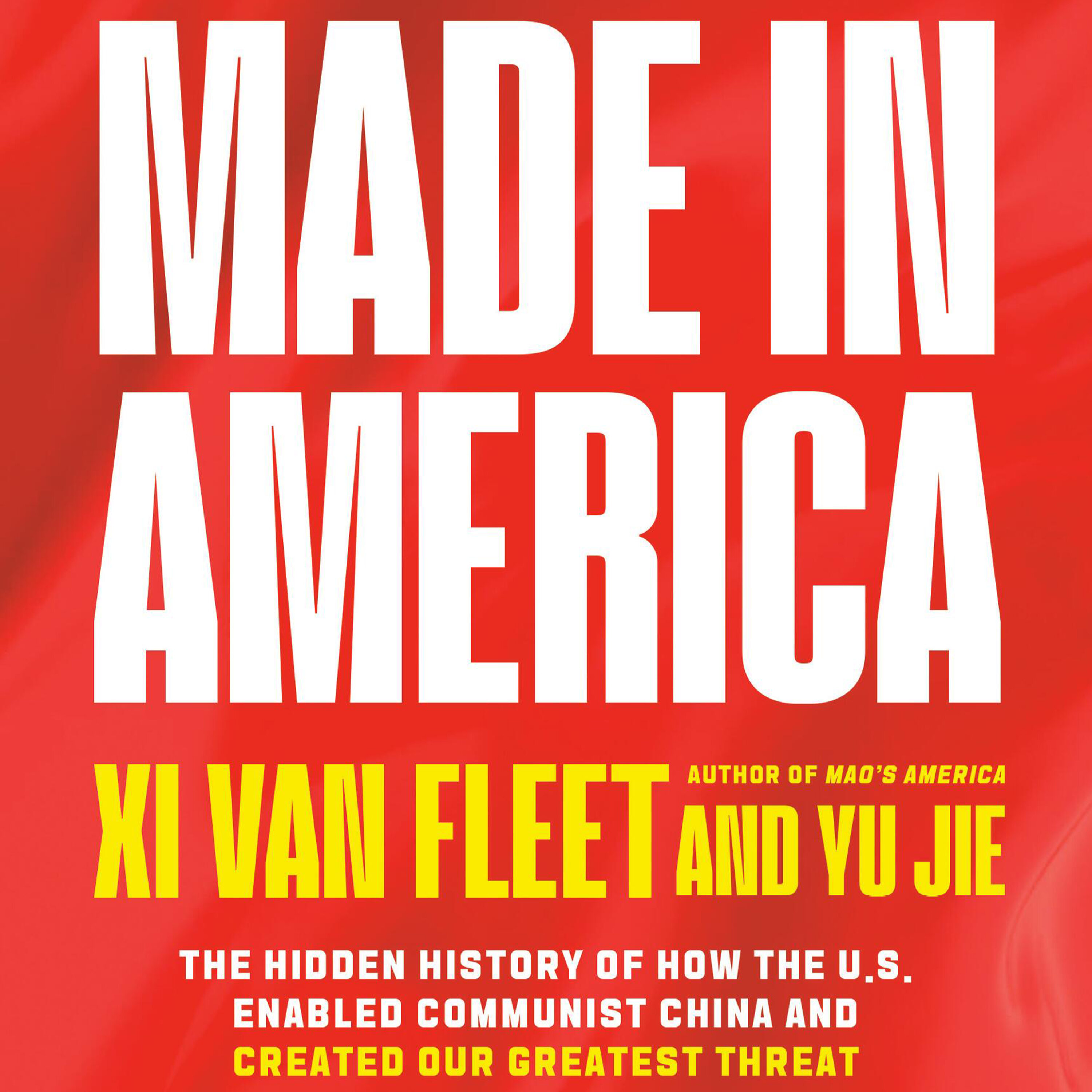
If you're the purchasing manager at a manufacturing plant, you know having a trusted partner makes all the difference. That's why hands down, you count on Grainger for auto reordering. With on time restocks, your team will have the cut resistant gloves they need at the start of their shift and you can end your day knowing they've got safety well in hand. Call 1-800-granger. Click granger.com or just stop by Granger for the ones who get it done. On this episode of Newts World, one of the most effective anti communist voices in America today, Xi Van Fleet, made waves with her breakout book Mao's America, exposing eerie parallels between China's past and America's present woke revolution. Now, alongside renowned Chinese dissident Yu Xi, she sounds the alarm once more, revealing how the Chinese Communist Party's rise was not just enabled by Soviet Russia, but shockingly, by the United States itself in their latest book, Made in America, the Hidden History of How the US Enabled Communist China and Created Our Greatest Threat. Understanding this hidden history is essential for Americans in confronting the CCP's global ambitions and stopping the spread of Communism at home. I'm really pleased to welcome back my guest and friend Xi Van Fleet. She welcome.
- [02:20]
A
Thank you so much Mr. Speaker. And I have to say you are the one that inspired me to write the first book, so I'm just so appreciative of your mentorship. Without your courage, I don't know whether I even take that project well.
- [02:35]
C
You've become a real national asset and I'm delighted that you are remaining so involved. But I think people need to know that you first enter the national spotlight with a one minute speech at a Loudoun county school board meeting where you drew a direct parallel between Critical race theory and Mao's Cultural Revolution, warning that Critical race theory is a form of Marxism. I'm curious, when you were sitting there, what made you decide you had to give that speech?
- [03:07]
A
This is actually A story of its own at that time. I have been in United states for over 35 years. And in those 35 years I did nothing. I thought I left communism behind me. When I Left China in 1986, I thought freedom is a given. I really paid no attention to politics and I just focused on realizing my American dream until I started to see problems, warning signs. But by 2020 that was clear. That was so clear that what's going on in America was a Marxist communist revolution. And I could no longer just sit aside and be observer and make some comments. And that's when I decided to get involved. Because now I'm defending my home. Home is America. And I don't want to see what happened in China happened here, but that's exactly what's happening.
- [04:06]
C
You compared critical race theory to Mao's Cultural Revolution. Now a lot of our listeners frankly won't know much about either one. What was the parallel you were trying to warn people about?
- [04:20]
A
It is really identity politics and how the communists divide people in China. They divided by class and everyone had a label. And even though we all look alike, we're all Chinese, but we have a label. We either were labeled red or labeled black. And black are the people who used to own land, used to own property, or used to have some opinions and free thinking or labeled as a rightist. They all group together as black class. We all have that and we pass that down to our children and our children's children. And when you are labeled black, you're basically second class citizen. Your children could not go to college, you could not get a career or promotion and then come to America. And they're doing exact the same thing, even though they use a different tactic. It's by race and what you are ethically become a label. A label puts you into two groups. Basically same thing, red and black. Black in a way it's like your oppressor. Red is that you are oppressed. Same tactic and the same result divide people before 2020. I start to notice that at workplace and people pay attention to the race of our co workers, which we probably paid little attention before. And we just very, very careful about what we say. We are very afraid to be offensive. What that really is is that we started to censor ourselves just like the Cultural Revolution. And that's what I was taught when I was very little. Just don't say things, just think twice and three times because once you say something you are inviting trouble. Trouble can be imprisonment for some people, it can be execution.
- [06:16]
C
This speech suddenly went viral and you were then invited on Fox News, did a whole series of interview and speaking invitations. When you got up to speak that day, did you think you'd have anything like that impact?
- [06:32]
A
If I knew, I probably would be chickened out. I would be scared to death. But what happened afterwards also shocked me. I thought I was telling something that everyone knew, but no, no. So many people have never heard about Mao's Cultural Revolution, and so many people have no idea what communism is about. And that was a very shocker to me afterwards. And that's one of the reason I decided just going on interview here or speech over there is not going to do it. I have to write a book. That's the reason that in 2020, with your encouragement, I quit my job. That was such a scary thing to do. I have no idea what will happen if I write a book with anyone interested in publishing it. But I just feel like I have to do it. Thank God. And everything worked out just perfectly. And I just really believe it is God's will that he wants me to write this book. And just as you said, a lot of people told me that the book was an eye opener to them. They have no idea that the same thing happened in China and the same thing happened to people like me who are still here. And it's not like 100 years ago. It's not Asian history. It is only 50 years ago.
- [07:51]
C
How hard was it for you to write the book?
- [07:54]
A
Extremely hard. Extremely hard. But somehow I was able to put everything together. And actually, in writing this book, I learned a lot of things myself. People probably can't understand that sometimes you went through an event, you went through a revolution and you saw everything, but you don't understand why. And that's kind of my situation. I went through it. I can just tell that what's going on in America was just like what I went through in China. But I really did not quite understand why Mao would launch that revolution until I start to do the research. So that book was not just educational to American people, to myself as well, because all the research I've done based.
- [08:39]
C
On your research, what is Mao trying to achieve? Power.
- [08:43]
A
That is so simple. And that is exactly what's going on here. Mao launched that Cultural Revolution for one thing, to get power. Power from who? From his political rivals and from basically fellow Communists. He lost some power after the disastrous Great Leap Forward, which killed more than 50 million Chinese. He was forced to give up some of his power. And that was not good for a dictator. He wanted absolute power. So he launched this Cultural Revolution used all the youthful idiots, the Red Guards, the young people, the indoctrinated people who could not think critically to launch this revolution so that he can get his power. And he did. During the Cultural Revolution, he really became our God. As a young kid in school, that's exactly how I look at him, as our savior, as our God. And so it's for power. And that's why I try to tell people here why they do all this, why they In 2020 they launched BMM. It's a revolution. It's a communist. For what? For power. They do it to stop Trump from being elected. And they're sitting doing that. And what they're doing now, same thing, power. Now they lost the election. How do they handle it? They take their anger to the street and they want to stop. And that's what people voted for. It's all about power. When you understand that, I think everything makes sense.
- [10:26]
B
If you're an H VAC technician and a call comes in, Grainger knows that you need a partner that helps you find the right product fast and hassle free. And you know that when the first problem of the day is a clanking blower motor, there's no need to break a sweat. With Grainger's easy to use website and product details, you're confident you'll soon have everything humming right along. Call 1-800-GRAINGER Click grainger.com or just stop by Granger for the ones who get it done.
- [11:03]
C
From that standpoint, you had here in the United States, a group of people on the left who were trying to use the government to force the rest of us to do what they wanted, whether we wanted to do it or not. Is that a fair comment?
- [11:18]
A
Yeah, because this is the thing that in the past few decades the Marxist has succeeded in taking over our institutions, which through what's called long march through institutions. So they absolutely have control of almost everything of our political institutions, cultural institutions, educational institutions, Y they use their power. Absolutely. To force their ideology on us. For what? To secure their power, to expand their power, to take over America, Period.
- [11:53]
C
That process strikes me, it's pretty terrifying.
- [11:58]
A
Absolutely, absolutely. But the people don't even recognize it. That is the danger. The Cultural Revolution. The Red Guards have no idea. The Red Guards have no idea what was Mao really wanted. They were given the power to go to the street, to destroy things, to beat people up, kill people, and they just loved it. But they have no idea that's what Mao wanted. After they accomplished Mao's goal, they were all sent to the Countryside the Gulags to get their so called reeducation. Because those useful idiots were no longer useful. They actually become a threat to Mao. And this is the thing that the people here on the left, they don't know, they never taught and they have no idea. So when they no longer become useful, the same thing will happen to them. That's why I try to warn people with my book and on X every day I tweet things about history. I tell them this is what happened, this is what happening in America. And the same result. The result is we all lose our freedom. And those so called true believers, they will send to the Gulags because they take things too seriously. They think they are fighting for our so called neighbors, the illegals, because they were oppressed people. They will find out that they became a threat to the new regime. If it's successful, they will be the first one to go.
- [13:33]
C
How should we distinguish between people who seriously want to come here to learn and people who want to come here to try to take over? How can you distinguish that?
- [13:44]
A
It's difficult. It is difficult. The battlefield is very, very confusing. There's no enemy lines, there's no like a red coat, whatever. We don't know. And there's a lot of people that came here, okay? I came here as a student, okay? And I love this country. And I took the time and effort to assimilate. My love for America is by learning to appreciate it and especially living in Virginia. I love to visit those historical sites of founding fathers and I developed the love for America. A lot of people came here just like me. But a lot of people also went through universities and got indoctrinated. And this is really, really sad. A lot of people, they were indoctrinated in America and a lot of Chinese who I know, they gladly taken that role as being a victim, that somehow they believed that they were the victim of the white supremacy. And so they seek protection, protection from the Democratic Party. And this to me is just so sad. Even people like me who lived through the brutal regime of communism came here. Somehow they fail to recognize this same identity politics, the same woke ideology is communist. It doesn't make sense. I just think it's very sad. I believe people like Ihan Omar, she's a radical, she's from Somalia, but her education is here. She got her education from American universities. So I believe that her radicalization took place here. So that's the main theme of my new book. It is the communists here, the leftist ideology here that helped enabled the Chinese communist Party and going back, you know, like a century. But also a lot of the radicalization happening here, not just to Americans, but people who come from other countries. The immigrants, they were told not to assimilate. They were told that their culture, no matter what, is just as good as America's. A lot of them took, bought the idea that they are victims of American white supremacy.
- [16:18]
C
It does help explain, you know, you get people who come from a country that's very poor, that has very few opportunities. You would think they'd want to adopt this American culture which is giving them higher incomes, greater choices, more safety, and yet for some of them, they repudiate the very things that are making their lives better. Historians are going to find this very strange thing.
- [16:47]
A
It's taught. That's what I truly believe. It's taught and taught by who? By Americans. What kind of Americans? Communist and Marxist, Leftist and today just easily say Democrats.
- [17:04]
C
So you really think from your own experience and from talking to all these people that there is a very large block, particularly in the academic education world, of people who are sincerely communist and who are basically preaching to convert people to almost a new religion?
- [17:30]
A
Absolutely. It started in universities. Now it went to kindergarten. And that's why they want to free kindergarten. You know, government controlled kindergarten. Yeah, they can start it as baby. That's what Xi Jinping's slogan is. They want to have this new education called patriot education in China, which means really love the party and start from babies. Babies. They want to teach them, indoctrinate them as young as possible. That is exactly. You know, the research come out all the time that in universities, like 95 or in some fields, 99% of the faculties are Democrats and we lost that. And that's why we see this kind of thing that can take place in America. Those people that indoctrinated, they become true believers. They would go to the streets in such cold weather and risk their lives because their lieutenant governor told them to put their lives on the line. Right. They do that. Why? Because they're so indoctrinated.
- [18:38]
C
You watch this in China. So how do you de indoctrinate or how do you de radicalize millions of people?
- [18:46]
A
I know in China they learned hard way, those Red Guards, including me later because I was not part of the Red. I was too young. But by the time I graduated from high school, there's no place for young people because the economy was totally destroyed. I was too sent to the Gulags and work in the fields for three years. And that's how you learn. You learn the hard way. But we can't let it happen here. By the time they learn it from their own experience, it will be too late. So education because that's how they got the people indoctrinated through so called education. We have to do the same or we let America fall. And then everybody figured out. But by then we cannot get the power back without a blood bath.
- [19:42]
B
If you're an H VAC technician and a call comes in, Grainger knows that you need a partner that helps you find the right product fast and hassle free. And you know that when the first problem of the day is a clanking blower motor, there's no need to to break a sweat. With Grainger's easy to use website and product details, you're confident you'll soon have everything humming right along. Call 1-800-GRAINGER clickgrainger.com or just stop by Grainger for the ones who get it done. So if we spend a third of our lives sleeping, shouldn't we try to get the best sleep possible? That's why Denver Mattress is all about that sleep life. And during the January sell off everything is on sale sale. Save 150 bucks off our Doctor's Choice Hybrid lineup and take $100 off any Buena Vista mattress. Plus purchase any Tempur pedic and get a $300 gift or get 60 months no interest and free shipping. Improve your sleep life one night at a time only at Denver Mattress. The easiest way to get the right mattress.
- [20:48]
C
What kind of reaction do you get as you go around the country and tell this story so far?
- [20:54]
A
You know the thing is that so far I only able to approach the conservatives, no one would invite me, you know, on the other side will invite me. But even when I talk to the conservatives, so many of them have no understanding of it. So I would say if we can wake up all the conservatives we will win. And you understand it. We have so many Republicans in name only. They are basically communist light to me. You know, I'm not very diplomatic. But yeah, I call them communist light. And so they don't know and some of them truly don't know. And that is the story of my book that there are so many people made this mistake earlier when we started to deal with China which is really in the 1930s but the whole stage of communist takeover China was laid by Woodrow Wilson. And it's because there's so many Americans never understood communism. Writers, journalists such as Edgar Snow went to China and absolutely dazzled by the communists and their lies and everything and he wrote this book, Red Star Over China. You probably heard about it, and it's still in print today. That was the origin book of the ccp. And then let the whole world know this was the future of China. This was the hope for the millions of suffering Chinese. They helped the regime, they helped the US CCP take over China. And then fast forward, and it was the Americans, one mistake after another and led to the rise of China and now become our worst threat ever. Whole lot worse than Soviet Russia in the Cold War. Because at that time, there is a line, right? The battlefield, there is a line. We know they are there. We are here now. China, Communist China, they're everywhere. They are absolutely embedded in every part of this country. We don't even know who is who. I can't even figure out when I deal with some Chinese I don't know, I would wonder, are they here, sent by the ccp? That is our challenge. And a lot of people, you know, the true believers, they are innocent in many ways, innocent victims because they're indoctrinated.
- [23:25]
C
Part of your own life experience. You were a student, I think, in Florida during Tiananmen Square, when the Chinese Communist Party ruthlessly cracked down on the students. What was your reaction? Here you are, you're a student in America, watching students in Beijing be killed. How did that affect you?
- [23:47]
A
Well, actually, I did not believe that they were open fire. I did not believe until the last second, because I grew up in China, even though I hate communism and everything, but I was so deeply indoctrinated that the poa, the Chinese Liberation army, the People's Liberation Army, PLA is for people. And they would never, never open fire on the Chinese citizens. And when that happened, it shattered my last, last whatever I hold on, that CCP is not that bad. It's over. After that, I said, no, they can do all, anything. They did so much. Now they're doing this and they're going to do more of this.
- [24:31]
C
Well, of course, at the time, they couldn't get the local Beijing parts of the army to shoot, so they spent an extra three or four days and brought in units from Inner Mongolia who came from a different background and who were quite willing to kill the students. It was a serious example that they would do whatever it took to stay in power and they'd kill as many people as they had to to stay in power. I've been fascinated by the degree to which Xi Jinping has been presiding over a very deep purge of the senior Chinese military. I mean, as recently as the last Two days they've had two of the top people fired and it's now reached a very large number of their senior officers who have been purged. What do you make of that?
- [25:21]
A
This is something that I think people should understand. Purge and infight is norm, is the norm of Communist party, period, ccp. Especially when I learn more about it, it seems to be. Most people think the Chinese so called experts, they think even though the people that been purged was promoted to be there by Xi Jinping, but somehow they had some influence of their own and especially in the military. They may have shown that they are not always accept the order from Xi Jinping without any maybe personal input or whatever. That's just not good for dictator. So he got rid of his own people, his own allies. So now anyone who will replace those people will absolutely be 100% yes man. So what does that mean? That can mean something bad. That can mean that if Xi Jinping take reckless action, there's no one there to slow him down or to stop him. And Taiwan might be example.
- [26:29]
C
I worry very much that we're watching them pretty openly practice what it would take to invade Taiwan. I think we underestimate the danger that Xi Jinping might do that.
- [26:42]
A
This is very personal to Xi Jinping. Xi Jinping is the most powerful CCP leader since Mao. But there's something lacking. He's still not Mao. And the only thing he can do to put him the same level or surpass Mao is to take Taiwan. Because Mao was not able to take Taiwan. So it might be just a personal thing that he want to do that so he will remember forever he was the one to so called unite China.
- [27:17]
C
As you look at all this, how do you evaluate President Trump's approach to China?
- [27:24]
A
I'm so glad in my book I specifically talk about Trump and Trump is the only president that really understand this threat from Communist Party of China, the CCP and is taking action and decisive action. So far, everything he's done, I think the ultimate goal is to undermine and defeat communism. Including Panama Canal, including Iran, including Venezuela, everything and Greenland. It's really about China because China has proved itself and it's in its DNA because it's a communist the global ambition always so before Nixon and Kissinger, they believe that Soviet Russia has imperial ambition. China not really wrong. Why? Because Chinese Communist Party is communist first and they have the same ambition. And now absolutely time for them to realize the ambition. Because they are wealthy and they are powerful. They are just like Russia and more so because they have the wealth Now. So everything Trump has done is really aimed, I think, at the tariff. You know, all this is aimed at the ccp. But I go a step further. The threat of the CCP is grave, but really the threat to America is the communist ideology inside our border.
- [28:58]
C
You worry as much about us destroying ourselves as any kind of foreign threat.
- [29:04]
A
Absolutely. Look, what Trump can do in a short period of a year, and now CCP is really isolated and his allies were gone, and it's not that difficult. But what's really difficult is the threat within the CCP can go this far is because they have willing allies inside our border. So that is the most challenging part. Like I said, the enemy line, they're very blurry. We don't know who. Actually, a lot of them, you know, we think they are our allies, but they are not really. So that is the real threat. And there's something I really want to get the opportunity here to explain to people. Anti CCP does not equate to anti Communism. I can use Nancy Pelosi as an example. She is a strong supporter for the pro democracy movement. When she went to China in the 90s, she went to Tiananmen Square with a handmade banner to show her support for the students. And she also support Taiwan. But she's a communist. She absolutely. All her policy and ideology here in the United States is communist. So. And a lot of Chinese dissidents here, too, they only against ccp. They don't even understand the communist threat here in America. And some are absolutely anti Xi Jinping and anti Trump and it makes just absolutely no sense.
- [30:40]
C
I want to thank you. You're always fascinating, you're always thinking. You have a unique personal background and I want to thank you for joining me. Your new book, Made in the Hidden History of How the US Enabled Communist China and Created Our Greatest Threat. It's available now at Amazon and in bookstores everywhere. And as always, you're so helpful and you're so courageous and I really appreciate you taking the time to share with us today.
- [31:08]
A
Thank you so much, Mr. Speaker.
- [31:13]
C
Thank you to my guest, Xi Van Vliet. Newts World is produced by Gamers 360 and iHeartMedia. Our executive producers, Garnesey Sloan. Our researcher is Rachel Peterson. The artwork for the show was created by Steve Pendley. Special thanks to the team at Gingrich360. If you've been enjoying Newt's World, I hope you'll go to Apple podcast and both rate us with five stars and give us a review so others can learn what the is all about. Join me on substack@gingrich360.net I'm Newt Gingrich. This is Newt's work.
- [31:58]
A
This is an iHeart podcast. Guaranteed Human.