Loading summary
Transcript66 lines
- [00:00]
A
This is an iHeart podcast, guaranteed human.
- [00:06]
B
Friday Kick off the Winter Olympics in style with the opening ceremony from Italy featuring a special performance by Mariah Carey. Celebrate the greatest athletes from around the globe as they come together to go for gold. Lipsy for sensational the opening ceremony of the Winter Olympics. Ilia Malady redefining the sport Friday at 8 Eastern, 7pm Central on NBC. And Peacock.
- [00:39]
C
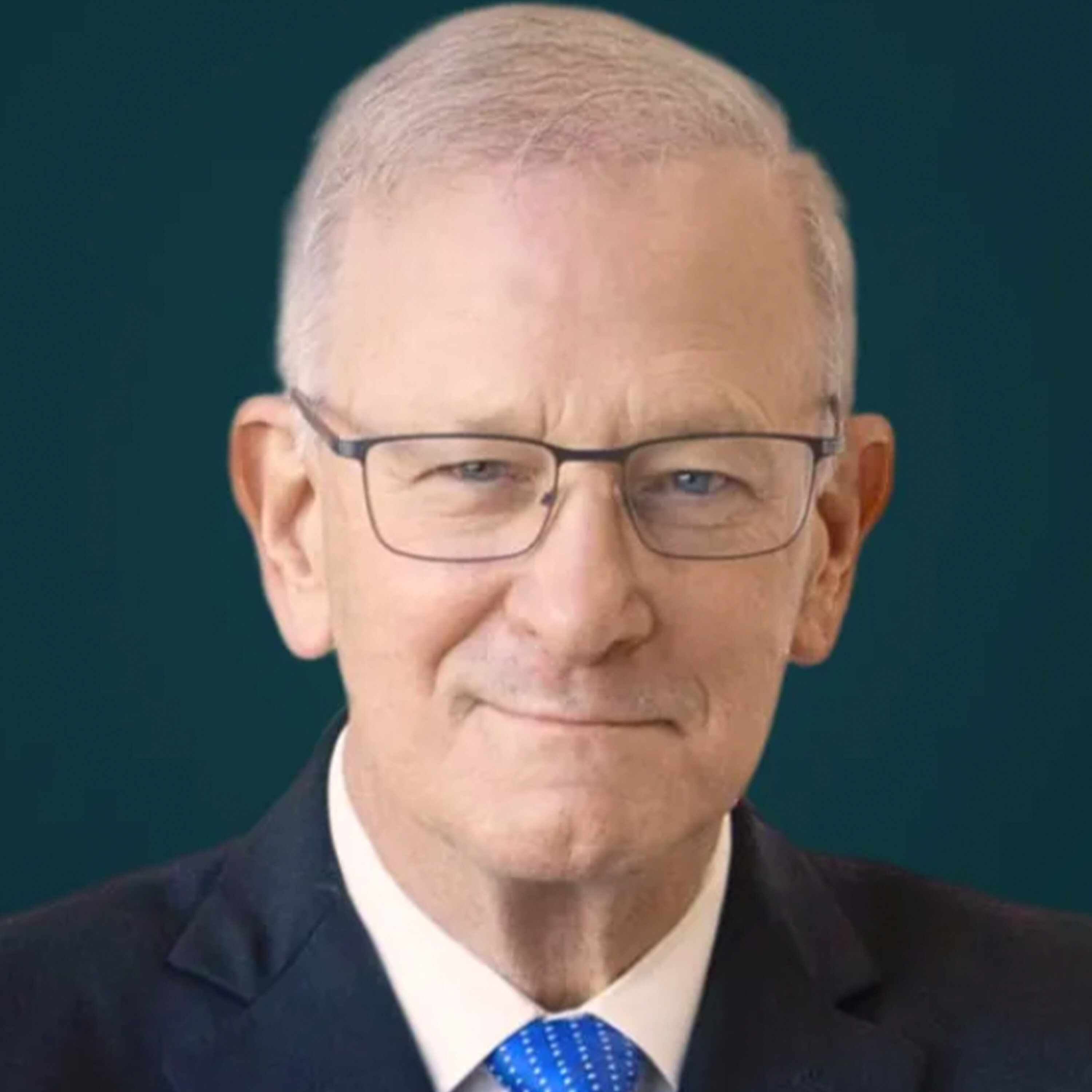
On this episode of Newts World President Trump announced Kevin Warsh as his nomination for the new chairman of the Federal Reserve. We're going to discuss how the markets have reacted to his announcement and Walsh's view on interest rate cuts and the economy in general. I'm really pleased to welcome back my guest, Thomas Honig. He is the former vice chairman of the Federal Deposit Insurance Corporation, former president and CEO of the Federal Reserve bank of Kansas City. He was with the Federal Reserve for 38 years. He is currently a distinguished senior fellow at the Mercatus center at George Mason University. And I can't imagine anybody with a better overall understanding than Thomas. Welcome and thank you for joining me again on Newt's work.
- [01:43]
A
Well, thank you Newt, and it's a delight to be with you once again in these interesting times. So happy to share views here.
- [01:49]
C
They are interesting. I'm hoping you'll make them a little bit more understandable. Trump announced Kevin Warsh as his chair pick. Can you tell us what your sense of Kevin is and were you surprised that this is who he picked?
- [02:03]
A
I wasn't surprised that he picked him. He was, I think, well qualified and has lots of experience. And I think if there's any degree of surprise it's that Kevin, historically and when I was working with him and he's written op EDS in the Wall Street Journal and so forth, which I think the market's claiming they're hawkish. He is very concerned about the growing national debt. He's concerned about when he was at the FOMC about qe, all things that would suggest somewhat tighter policy than what I think the President might want, but only time will tell. So in that sense, slightly surprised, but overall, given his qualifications, I think not necessarily surprised.
- [02:47]
C
So from your perspective, was this a good choice for Trump of the people he was looking at?
- [02:53]
A
I think so from the President's perspective, but certainly I think so from the point of view that he understands the markets and he understands what fiscal policies can do, he understands what monetary policies can do and therefore he's good from that perspective. Now I will tell you, in my opinion, he will be under enormous pressure given the fact that of his track record and the fact that the President apparently wants more rate cuts. And I think for Kevin that will be difficult unless the economy itself has enormous improvements in productivity or some other reason to justify further cuts given where the rates are today.
- [03:36]
C
Which takes you to sort of this interesting balance that on the one hand Presidents would like to control the Fed, on the other hand, the Fed, both legally and by over a hundred year tradition is pretty independent. Kevin, having been on the Fed, I suspect will bring some of that bias that while he'll be friendly to the President, he won't be obedient.
- [04:01]
A
I certainly, my own view is, I certainly hope not because the facts are that like you say, Presidents always want to, shall we say, influence the Fed to do the policies that they think would serve their needs first. And I think therein lies kind of the short term political pressures that are in place. And the Fed is deliberately created to be insulated to some degree from that because Congress knew that it would spend more than it should if it could also control the printing press. And that's really what why the Fed's independent and why it's imperative that Kevin or any chairman resist those influences.
- [04:42]
C
Do you think, given the political tensions that we're living through, will Kevin have a hard time getting through the Senate?
- [04:50]
A
I don't necessarily think so. I know the Democrats may object, although I'm not sure that they should. I don't think the Republicans will since this is the President's choice. I think they will be supportive of that. And so I think he'll get through. To be honest with you, given his qualifications, I mean other than personal preferences, I don't see why the Senators would necessarily object to him now. Some might because they think he would be compliant with the President. But anyone the President would choose would be thought would have that bias. But I think Kevin knows the trade offs and that I think makes him a good choice.
- [05:28]
C
Can you explain to the average American why does the Fed matter?
- [05:35]
A
The Fed matters because it affects their lives in every way. It provides the, what I call part of the fuel, not all of it, but the important part of it that's the monetary element to the economy. And you know how well they do that will affect everyone's lives. If you print too much and you get inflation, as we learned here, not too distant past, it creates havoc for the average American who's trying to pay for groceries and gasoline. They have enormous influence over that, over the cost of living and therefore they play that role. Secondly, as an independent party, they are also Supposed to be somewhat of a check designed by Congress to check Congress, that is its enormous debts that it's accumulating can't go on forever. And the Fed is under the enormous pressure to monetize that debt. And if they fail to say no at the right time, that would only worsen the inflationary biases that the economy would otherwise have. So they are so important to the American people. And the American people really need to understand that, I think, better than they do right now. They think in terms of interest rates, high interest rates being bad, low interest rates being good. But that's not how it works. And Americans need to understand that better so they can monitor and really understand where policy is going.
- [06:58]
C
When you look at the announcement, gold and silver really dropped. In fact, their combined decline, I think, was the worst probably in a half century. Was that a sign that they expect him to tighten up and have more stable money? Because gold and silver both been on this huge run up.
- [07:17]
A
Yes, it had an influence. I think much of, not all, but much of the run up in gold and silver prices in commodities, precious commodities particularly, have been part of an inflation hedge. People think that given the amount, think about it. The government is putting $2 trillion of new debt into the economy. The Fed has been monetizing a good part of that. The debasing of the currency is often talked about. And so the reaction to that is, well, we better find another asset. And part of it was bitcoins and the other part of it was gold, silver and other precious metals. And so that is inflation. So Kevin comes in, if you read his op EDS in the Wall Street Journal and you look at his statements, you would say, well, he is going to be more disciplined in his conduct of policy and therefore that will affect the inflation outlook and therefore affect the price of gold and silver and precious metals. And therefore we need to sell now. Now, some of that's already been recovered. So how they balance all this in time will depend much on the hearings that are held for Kevin in his confirmation. Those will be watched very closely for any hints of which way he will go in the future.
- [08:40]
B
Friday, kick off the Winter Olympics in style with the opening ceremony from Italy featuring a special performance by Mariah Carey. Celebrate the greatest athletes from around the globe as they come together to go for gold. The opening ceremony of the Winter Olympics. Ilya Malin, redefining the sport Friday at 8 Eastern, 7 Central on NBC. And Peacock.
- [09:17]
C
Part of this whole plot is what happens with Chairman Powell, who obviously has had a very contentious relationship with Trump. And Powell, of course, steps down as the chairman in May, but he's actually appointed to the board until 2028. So he could hang around just to make life more difficult for Trump.
- [09:42]
A
Well, that is a possibility. I mean, Chairman Echols who became governor, Echols served after he step down for a while. Powell could do that. And the environment is such that you're not sure what his self interest serves because given all this recent events where they're subpoenaing documents under an investigation, whether he lied to Congress and you have Senator Tillis saying, wait a minute, I'm not going to do anything until that goes away. He might be incented to stay on to make sure that the pressure remains that those inquiries go away. So that's part of the problem. Otherwise, I don't see why he would serve. It's traditional for the chairman to step down. He served over two terms. So there's no other real strong reason for why he should say other than to say, I'll be another balance relative to the policy. But given that the choice was Kevin Wash, who has more of a hawkish view, I don't know why he would stay on.
- [10:38]
C
The other part of that is the drama around Lisa Cook, who's a sitting Fed gov, who Trump tried to remove under the Federal Reserve Act. As I understand it right now, the district court has said he can't do that.
- [10:53]
A
And it's before the Supreme Court right now and people are waiting for that decision. It's a critical decision because if the court were to say you can, that would change the whole dynamics of the FOMC and the Federal Reserve. So that is an extremely important one. And that's on hold until the Supreme Court rules. And I don't know when that will be. I don't know if anyone does other than the court. And that may influence Powell's decision. I don't see that it should.
- [11:22]
C
Powell himself has said it's the most important legal case in the 113 year history of the Fed.
- [11:29]
A
It really is. It will define independence for the Fed.
- [11:32]
C
Right. The presidents can find some excuse to fire you, then your independence is limited by how much you piss off the president.
- [11:40]
A
Exactly. To my opinion, Newt, that would be unfortunate because the Fed is a creature of Congress. Congress has the responsibilities for money and credit in the United States and it delegated that to the Fed. If the Congress were to take it back, I could understand that. But to have the administration take it back and put that in the driver's seat, I think would be unfortunate.
- [12:00]
C
I mean, the whole concept originally was that you needed an independent monetary agency that would basically be technocratic rather than political.
- [12:11]
A
Right?
- [12:12]
C
Part of that also feeds back into the extraordinary cost overruns of this whole modernization of the Fed buildings, which has become like a two and a half billion dollar headquarters project. And that's then led, of course, to some effort to investigate Powell about whether or not he was accurate. I'd like to divide that into two parts, I have to say. This is an outsider who used to serve in the Congress. The idea of pouring $2.5 billion into the federal Reserve headquarters strikes me as a bit much.
- [12:46]
A
It's hard to argue that point. That is a bit much. I don't know the circumstances, maybe that's what people are looking into. But when you start a project and you get all these unexpected events change, orders add up and you have this overrun, that's part of it. Whether it was well overseen, for example, did the Fed have its own architects? How closely did they do pre construction testing? Those are all legitimate issues. Because two and a half billion is a bit much for the renovation of a building. No question about it.
- [13:17]
C
Some people I know, for example, Senator Thom Tillis of North Carolina, who's not a fan of Trump's anyway, has been suggesting that this whole effort of going after the Chairman on this question of renovation is just one more effort at undermining the independence of the Fed. I mean, do you think it's a serious issue, or do you think it's one that's just being used as an excuse?
- [13:43]
A
It's both. I mean, it is a serious issue, those kinds of overruns. The Fed is accountable. I mean, Congress should be looking into that. If they think those overruns are excessive, there's no question that the Fed should be accountable to Congress. And then you go from there. I don't question the need to be accountable. Now, whether you do it that way, which through Congress, or you do a criminal investigation, I think that's debatable. I've said Newt, and you know better than I, I'm sure, but if every agency who had an overrun were investigated on criminal charges, there would be very few people that wouldn't be investigated in Washington, given the overruns that we've seen in defense, you name it. So I think it's a legitimate issue for Congress. It's a bit, to me, a stretch to say it's a criminal matter.
- [14:31]
C
Thomas, one of the things I think is interesting is that the Federal Reserve defense, in part for the elaborate $2.5 billion, is that it's their Money it's not congressionally allocated and therefore people should just sort of relax. Explain why The Fed has $2.5 billion lying around.
- [14:51]
A
Well, actually, the Fed doesn't have two and a half billion dollars lying around, but the Fed is independent and doesn't have to be appropriated. Therefore, the Fed can and does print money. As it does so, it can buy assets or it can spend it on new buildings. It has the flexibility of both being able to create money and the way the Board of Governors does it. It assesses the reserve Banks who actually have the income or deferred liabilities as it currently is. And that money is created, a new liability is created to pay for its new building. So it's that much less that would go otherwise to the treasury in terms of surplus from their monetary policy operations.
- [15:35]
C
So in effect, it is diverted from a stream that would otherwise have gone into the Treasury.
- [15:41]
A
That's correct.
- [15:42]
C
That's helpful. It's confusing, but it's helpful.
- [15:44]
A
Yes, it is confusing.
- [15:56]
B
Friday, kick off the Winter Olympics in style with the opening ceremony from Italy featuring a special performance by Mariah Carey. Celebrate the greatest athletes from around the globe as they come together to go for gold. The opening ceremony of the Winter Olympics. Ilia Malady redefining the Friday at 8 Eastern, 7 Central on NBC. And Peacock.
- [16:32]
C
I think a very real public policy question which I've always been intrigued by, and that is that when they added the Humphrey Hawkins provision, that the Fed has a dual mandate, on the one hand to worry about stability of the dollar and on the other hand to worry about the economy, which I think invariably biases it towards inflationary policies. Would we be better if we went back to making the Fed's assignment specifically monetary without regard to the economy itself?
- [17:09]
A
It would be very difficult to completely separate in that sense. But I would argue that the mandate should be that the Fed should have a stable valued currency. That's its primary goal. That's why it was created. Well, that's one of the reasons it was created. But that should be the goal. And in doing that, the economy can run as a free market economy should, because the Fed is becoming a mastermind of trying to move the economy in different directions. You're right. That is not how it should work. It should work stable prices, only inflation, and I mean asset and price inflation stability, so that the economy can function in a capitalistic system as it should, and not be given this maximum employment. Maximum employment will follow sound monetary zero inflationary policies. And I don't mean deflationary, I mean stable price environment and we've gone way outside of that mandate and we've paid a dear price. I think frankly quantitative ease in used and non crisis moments has been nothing but harmful to the US economy.
- [18:21]
C
And is that because of the intellectual arrogance of the people who staff it and who think they know better than the markets?
- [18:30]
A
It's hard to know. But I made the comment that I think economists take their own position as too exact than they should. They like to think of it as a science. And my point is that economists are not engineers. They cannot engineer the economy that they think will give us the best output. What they can do is they can judge the costs, they can judge trade offs. They know they should be able to think through consequences unintended as well as intended consequences and give their best opinion. But they cannot manage the economy to perfection. And that's where they've made some, I think fundamental mistakes. Fine tuning is not something they're very good at.
- [19:14]
C
If you believe in a dynamic entrepreneurial culture, it's by definition probably not fine tunable.
- [19:23]
A
That's exactly right. Markets make mistakes. But the thing about capitalism is self correcting. But it's not costless. You have to develop these things, you have to learn from it and that's where you make your greatest progress. Because the market will adjust quickly, whereas you get bureaucrats in there managing it doesn't adjust quickly at all. When you start a mistake down a road, that's a mistake. You stay on that road far too long. And therein lies, I think a fundamental flaw in the Fed being so heavily involved in the financial markets today. It's really outrageous that they have a balance sheet that in such a short period went from less than a trillion dollars, less than $900 billion to at $1.9 trillion and still $6.5 trillion. That is a very large footprint in the market and the market knows it. That's why they watch every little move the Fed makes.
- [20:14]
C
Is the Fed clearly the largest factor in how the market behaves?
- [20:20]
A
I think it is, if not the largest among the largest factors in why the market behaves. Let me give you an example. If I have these numbers correct and I looked at this balance sheet, but since December of 2025 when they started buying government securities again, they have purchased about $70 billion of short term treasury bills and another 30 billion in notes and bonds. And the government's debt has increased about 80 billion. I've told. And they are huge participant in in the money market. They're a huge participant in the money market around The Treasury?
- [20:56]
C
Yeah.
- [20:56]
A
They have a very dominant influence in the markets today.
- [21:00]
C
How much control does the Federal Reserve chairman have as compared to the rest of the board?
- [21:06]
A
The chairman is the largest vote on the committee. It has become almost tradition that your goal as a member of the FOMC should be to support the chairman. You have discussions in the meeting and people talk about it. Let's say you're split four to four or whatever the number is. Okay. There's 12 voters, say six and six, something like that. Well, when the chairman says, this is what I think we should do, most will vote with the chairman. Even the six who opposed or the five who opposed. The chairman has enormous influence to the bottom line.
- [21:39]
C
How do you assess 2026 and beyond economically?
- [21:45]
A
Oh, I think 2026 is going to be an inflationary boom year for a whole host of reasons. Number one, it is an election year. Number two, 2025 was stronger than people thought. So we're coming in with some tailwinds. There is a lot of fiscal stimulus. There's new tax breaks for tips for overtime, for buying cars and assets. So there's a lot of additional fiscal stimulus coming in. There's monetary policy, which is, I think, is much easier than people believe or realize. For example, real interest rates today, if you think about it, the fed funds rate is 3.5%. Inflation is 3%. That means real rates are a half a percent. That is accommodative policy in real sense. That means more stimulus into the economy. And as they print money, as they're doing 40 billion new purchases every month, that will push the economy forward. I think the economy will run hot for most of the year of 2026.
- [22:43]
C
Is there any danger that it will run so hot that it will sort of fall back on itself?
- [22:50]
A
Yes, there is that danger. I think it will come after the elections, into 2027, some point into 2027, 28, depending on what policies the Congress decides on and what policies the Federal Reserve chooses to take and then how much impact the deregulation will have. All these factors will come in. But I think potentially, given the amount of boost that is going into the economy right now, there could be a backing off of that in 2027. It could be either a mild recession or, depending on the financial markets, a more serious recession.
- [23:25]
C
In trying to plot this out as a politician, the odds are pretty good that Republicans will be running by September with a reasonably strong economy, but they may be trying to keep the presidency in 28 with a much weaker economy.
- [23:40]
A
That's the risk I could be dead wrong on this because policies change. They could do something that would keep it strong beyond that, or policies that avoid a recession. Those are all things that you can't predict but are at risk.
- [23:54]
C
From your perspective, do you think that there's much danger that the dollar will cease to be the reserve currency for the world?
- [24:03]
A
Not in any near term horizon at all. I mean, really, I like to say that the dollar is the least dirty T shirt in the laundry. We are going to be the reserve currency for some time because there's none that's obviously able to replace it. Now China would like to decouple from us and they're working hard to do it, but that will take them decades and they have their own problems right now that they can't ignore and I think will delay their ability to ever take all the dollar fully.
- [24:32]
C
In some ways you could argue we are the least screwed up of the major currencies, which is different than being smart.
- [24:38]
A
Yeah, that's right.
- [24:41]
C
The others work harder at being dumb than we do. It's amazing. I want to thank you as somebody who studied a little tiny bit of financial history. This is a really complicated area and you are enormously helpful in bringing your lifetime experience and sharing with us. I really appreciate it.
- [25:01]
A
Thanks for asking me, dude. I appreciate that.
- [25:04]
C
And I want our listeners to know that they can learn more about the Quincy Institute for Responsible Statecraft by visiting your website@quincyinstitute.com thank you. Great. It's great fun. Thank you so much.
- [25:17]
A
Thank you for having me. Have a great day.
- [25:22]
C
Thank you to my guest, Thomas Hunning. New Twirl is produced by Gingrich 360 and iHeartMedia. Our executive producer is Garnesy Sloan. Our researcher is Rachel Peterson. The artwork for the show was created by Steve Pendley. Special thanks to the team at Gingrich360. If you've been enjoying Newt World, I hope you'll go to Apple Podcast and both rate us with five stars and give us a review so others can learn what it's all about. Join me on substack@gingrich360.net I'm Newt Gingrich. This is Newts World.
- [26:08]
A
This is an iHeart podcast. Guaranteed Human.