Loading summary
Transcript54 lines
- [00:00]
Jonathan Turley
This is an iHeart podcast.
- [00:02]
Public Investing Platform Announcer
Guaranteed Human support for the show comes from Public, the investing platform for those who take it seriously. On Public you can build a multi asset portfolio of stocks, bonds, options, crypto and now generated assets which allow you to turn any idea into an investable index with AI. It all starts with your prompt. From renewable energy companies with high free cash flow to semiconductor suppliers growing revenue over 20% year over year, you can literally type any prompt and put the AI to work. It screens thousands of stocks, builds a one of a kind index and lets you back test it against the S&P 500. Then you can invest in a few clicks. Generated assets are like ETFs with infinite possibilities, completely customizable and based on your thesis, not someone else's. Go to public.com podcast and earn an uncapped 1% bonus when you transfer your portfolio. That's public.com podcast paid for by Public Investing Brokerage Services by Open to the Public Investing Inc. Member FINRA and SIPC Advisory Services by Public Advisors llc. SEC Registered Advisor Generated Assets is an interactive analysis tool. Output is for informational purposes only and is not an investment recommendation or advice. Complete Disclosures available at public.com/disclosures this Sunday.
- [01:06]
iHeartRadio Announcer
Iheartradio brings you live to Levi's Stadium in Santa Clara for the Super Bowl 60 tailgate concert presented by NetApp. It's the ultimate pre game party featuring an exclusive performance from Teddy Swims. Your front row experience will be on iHeartradio stations across the country and the free iHeartradio app and streaming live on Peacock this Sunday at 3:30 Eastern, 12:30 Pacific. Then after the concert, tune in to the Super Bowl 60 pregame show on NBC.
- [01:35]
Better Picks Announcer
Want to score? When your favorite player does well, you can't unless you download Better Picks. Who is giving away a free $10? Download the Better app, pick more or less on player stats, watch the games and win some cash. It's that simple. Must be 21 or older. In a jurisdiction where Better Picks operates, terms and conditions apply. Better Picks Sports just got better?
- [01:51]
iHeartRadio Announcer
Dreaming of buying your first car or new home? Knowing your FICO score is the first step to making it real. With MyFico you can check your score for free and it won't hurt your credit. You'll get your FICO score, full credit reports and real time alerts all in one simple your credit score is more than just numbers. It's the key to building the future you've been working toward. Visit myfico.com free or download the MyFico app and take the mystery out of your FICO score.
- [02:26]
Newt Gingrich
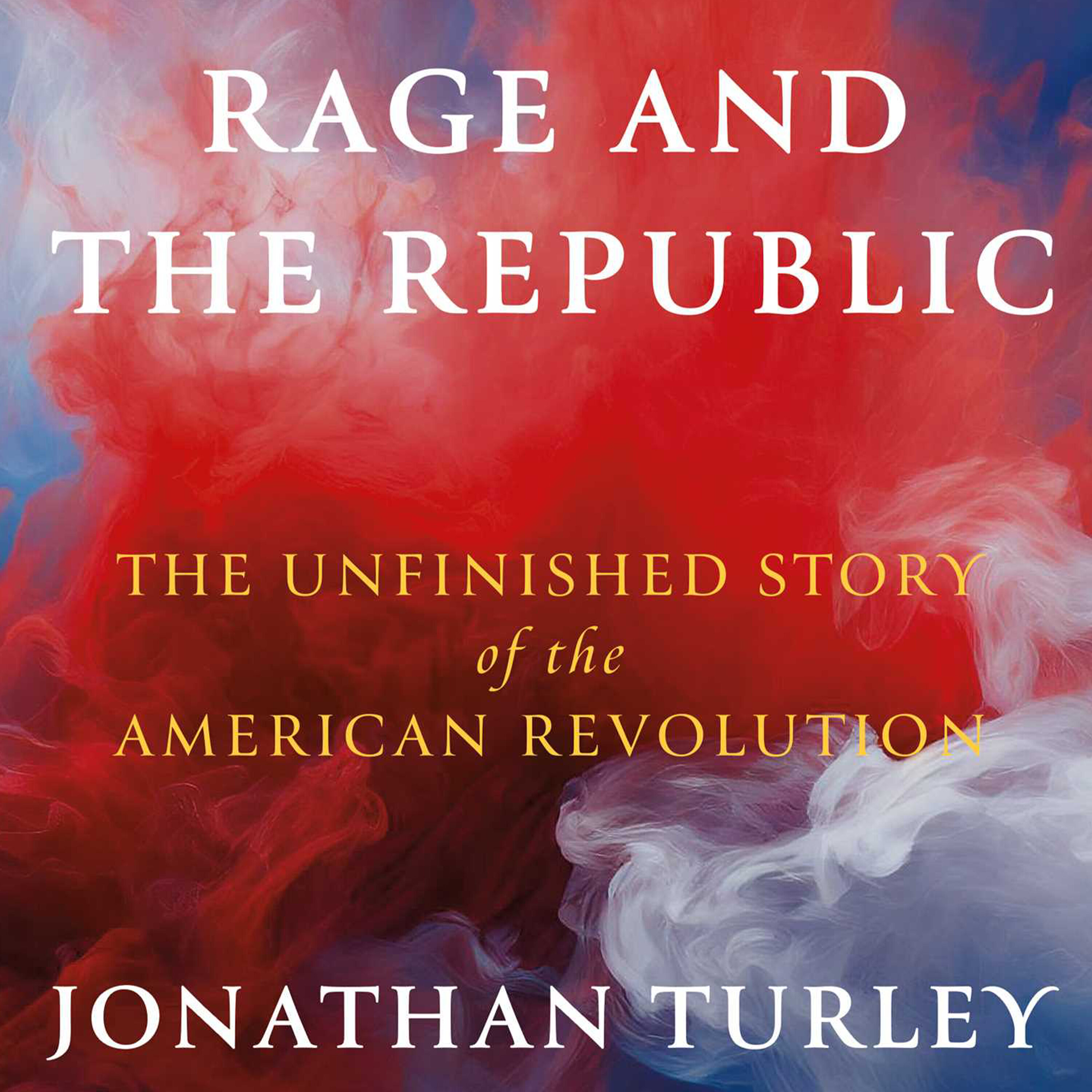
On this episode of newtsworld. Our guest today is one of the top legal minds in the United States, Jonathan Turley. He is a law professor, columnist, television analyst, litigator, and I have to say I cherish him as a friend. He's just a remarkable human being. Since 1998, he's held the Shapiro Chair for Public Interest Law at George Washington University Law School. He has served as counsel in some of the most notable cases in the last two decades. He's testified before Congress over 100 times, including during the impeachments of President Bill Clinton and Donald Trump. He has written for the New York Times, the Wall Street Journal, the Washington Post, the Los Angeles Times, and USA Today. And I can tell you Jonathan Turley is one of the people. When he writes a column, I read it. I don't care what it's about because I know that I will learn something and that he'll be approaching it in a unique way. Now he's joining me to discuss his new book, Rage and the Republic, the Unfinished Story of the American Revolution, in which he explores how the unique origins of American democracy set it apart from other revolutions, whether it can survive and thrive in the 21st century, and how the unfinished story of the revolution will play out in a rapidly changing world. Jonathan, welcome and thank you for joining me again on Newt's World.
- [04:08]
Jonathan Turley
It is such a pleasure to be with you, my friend. When I was writing this book, I would think occasionally this has to pass muster with Newt because you are one of the really most profound writers on the US Constitution, our history. And so I'm so glad to be able to talk to you the week that the book is being released.
- [04:27]
Newt Gingrich
Congratulations. I understand the Rage and the Republic is already a bestseller. That's terrific.
- [04:32]
Jonathan Turley
I'm delighted by it. The funny thing about this book is that, as you know, Newt, you tend to invest yourself in these books. But I have never been more engrossed in a project, and part of it was that I tell the story of the American Revolution, particularly in the first half, which looks back at who we are and how we got here through the eyes of Thomas Paine, who was, hands down, the most interesting historical figure I have ever researched. I drove my kids crazy for five years just digging up things about Thomas Paine. But what was really inspiring about Paine is that he came to this country two years before the Declaration of Independence, and when he landed in Philadelphia, he was a wreck. He had to be carried off the ship and he had had a strange encounter in London. He had failed in everything in his life. He had been fired from every job, his marriages failed, he was penniless, he was unkept. And he finally met this individual in London who saw something in that pile of wreckage, and that was Benjamin Franklin. And Franklin sent him to the United States and told him, you need to write. Within two years of his landing, he was called the Penman of the revolution. Even his critics, like John Adams, who was a bit jealous because of his rocketing fame with common sense, was asked, who was this anonymous writer by his wife. And he said, it wasn't me, he said, but I think I know who it was. There's a man named Thomas Paine. And he described a meeting where he said, he's a man with genius in his eyes. And that was very true. Paine knew what it took to bring a people to revolution. It was James Madison, who I also talk about, who knew what it took to take a revolution and turn it into a republic.
- [06:35]
Newt Gingrich
I was thinking the other day about pain. We ought to reproduce common sense and send it all over the world is our answer to all these dictatorships.
- [06:45]
Jonathan Turley
Yeah, he was a beautiful writer, but he wrote in a way. His prose was penetrating for most Americans, and it was the first best seller. In fact, he did not make money on his very successful books because he kept the prices low so that he could make sure people could buy it. And he donated most of the money to the revolutionary cause. But what makes him fascinating from my book is that he was one of two figures who played a critical role in both the American and French revolutions, the other being Lafayette. And Paine was different from Madison, and that Paine wanted more direct democracy. He didn't like Madison's precautions. And when he went to France, he really did push for more of that general will that Rousseau talked about, that direct democratic impulse. And it came damn near to killing him. He came within a day of being guillotined. He was saved only by accident that a number was written on his door at the Luxembourg prison, that all four people in his cell were to be executed. But because Payne was ill, the door was open to let air in. So when they came to collect everyone to be guillotined, they never saw the number. That's the only reason Thomas Paine lived and survived the French Revolution.
- [08:08]
Newt Gingrich
You talk about the fact that the American republic was born in rage, which I think is a very interesting concept and very different from a lot of the documentaries. What do you mean by that?
- [08:22]
Jonathan Turley
Well, you know like most countries, we are the product of revolution, and we are the product of rage. The Boston Tea Party was rage, after all. And that's part of the human reality. That is, it takes a lot to bring a people to rebellion. It takes rage. The challenge is to convert that rage into something productive. It's very easy to start a revolution when rage is high. It's much harder to end one. And so that's the reason I compare Philadelphia and Paris as a tale of two cities where violence was again occurring in Philadelphia after the Revol. At the same time, Paris was erupting into violence. But in Philadelphia, it stopped almost on a dime. And one of the reasons was the ratification of the US Constitution. Suddenly, people had a way to vent that anger, that rage, to convert it into something. In Paris, where they didn't have those precautions, it became a bloodletting known as the Terror. And what I opened the book with is a statement from one of these French figures who remarked he was one of the few to survive that revolution is like Saturn, it devours its own. He was one of the last people standing. And Paine also made reference to that mythological story, and it's true. The Mountain, as it was called. Those Jacobins, you know, Robespierre, Marat, that I talk about in the book, they were all guillotined. One after another, they were devoured. But the United States became the most stable, successful democracy in history. So the question the book raises is why? Why was this a unique republic? And what can we learn from that? Looking at the 21st century, where we are about to encounter challenges that we have never seen before.
- [10:22]
Newt Gingrich
Before we get to the challenges, one of them, I think, is that in some polls, 63% of Americans say they have little or no trust in the political system. Isn't that extraordinarily dangerous for our survival?
- [10:37]
Jonathan Turley
It is. And you're quite right, Newt. The book talks about the rise of what I call the New Jacobins. And like the old Jacobins, the originals, they're not the proletariat. The Jacobins in the French Revolution were professors, journalists, aristocrats. They were part of the establishment, and they ultimately, many of them, executed themselves, as I noted. But the New Jacobins look a lot like those original models. You know, that we have the dean of Berkeley Law School saying that the Constitution is a failure. We have law professors saying that we have to trash the Constitution. One of my colleagues is pushing to amend the First Amendment because she says it's aggressively individualistic, which of course, is true. The thing of what people have to remember about the American Revolution is it was the first Enlightenment revolution. That's why people were so captivated by it. That's why books that appeared in Europe often described Americans like we were a new species of humanity. Because after all, we didn't have any shared land, culture, religion. We had a legacy of ideas, Enlightenment ideas that individual rights belong to us as a gift from God, not from the government.
- [11:57]
Newt Gingrich
You make a point that the Declaration of independence in 1320 words shatters the entire structure of earth based authority and refers to our rights coming from our Creator. To what extent do you think that moved across the planet and inspired people?
- [12:21]
Jonathan Turley
Well, it certainly inspired it at the time. I quote one Frenchman who wrote a very popular book. He wrote under the name Farmer John and he had a farm in the United States and he used it to describe what was happening. And these copies of his book were snatched up all throughout Europe. But one line really struck me the most and I quoted a great deal in the book. He said, what then is this American? And that really was the question everyone was asking, what then is this American? Who are these people who think that they can create a republic based on natural rights? They were fascinated by us and inspired by us. The French were. Paine was given French citizenship. So was Washington, so was Madison. But what the French could not tolerate was the limits on democratic power. The framers were insistent that they didn't want Athenian democracy. Athenian democracy was a failure. It ultimately resulted in tyranny. They did not want that. They saw direct democracy as nothing but a mobocracy, as one said, or democratic despotism. So they created these limits as a protection of liberty. That's what the French refused to accept and that's what led to the terror.
- [13:54]
Public Investing Platform Announcer
Support for the show comes from Public, the investing platform for those who take it seriously. On Public, you can build a multi asset portfolio of stocks, bonds, options, crypto and now generated assets which allow you to turn any idea into an investable index. With AI, it all starts with your prompt. From renewable energy companies with high free cash flow to semiconductor suppliers growing revenue over 20% year over year. You can literally type any prompt and put the AI to work. It screens thousands of stocks, builds a one of a kind index and lets you back test it against the S&P 500. Then you can invest in a few clicks. Generated assets are like ETFs with infinite possibilities, completely customizable and based on your thesis, not someone else's. Go to public.com podcast and earn an uncapped 1% bonus. When you transfer your portfolio. That's public.com podcast paid for by Public Investing Brokerage Services by Open to the Public Investing Inc. Member FINRA and SIPC Advisory Services by Public Advisors, llc. SEC Registered Advisor Generated Assets is an interactive analysis tool. Output is for informational purposes only and is not an investment recommendation or advice. Complete Disclosures available at public.comDisclosures today iHeartRadio.
- [14:56]
iHeartRadio Announcer
Brings you live to Levi's Stadium in Santa Clara for the Super Bowl 60 tail gate concert presented by NetApp. It's the ultimate pre game party featuring an exclusive performance from Teddy Swims. Your front row experience will be on iHeartradio stations across the country and the free iHeartradio app and streaming live on Peacock today at 3:30 Eastern, 12:30 Pacific. Then after the concert, tune in to the Super Bowl 60 pregame show on NBC.
- [15:24]
Better Picks Announcer
Do you actually know Ball well? Come prove it with a free $10 from Better Picks. Download the Better app, pick more or less on player stats, watch the games and win cash. It's that simple. Must be 21 or older in a jurisdiction where Better Picks operates. Terms and conditions apply. Better Picks Sports just got better.
- [15:40]
Meaningful Beauty Announcer
Now I'd like to introduce you to Meaningful Beauty, the famed skincare brand created by iconic supermodel Cindy Crawford. It's her secret to absolutely gorgeous skin. Meaningful Beauty makes powerful and effective skin care simple and it's loved by millions of women. It's it's formulated for all ages and all skin tones and types and it's designed to work as a complete skin care system leaving your skin feeling soft, smooth and nourished. I recommend starting with Cindy's full regimen which contains all five of her best selling products including the Amazing Youth Activating Melon Serum. This next generation serum has the power of Melon leaf stem cell technology. It's melon leaf stem cells encapsulated for freshness and released onto the skin to support a velvet visible reduction in the appearance of wrinkles. With thousands of glowing five star reviews, why not give it a try? Subscribe today and you can get the amazing Meaningful Beauty system for just 49.95. That includes our introductory five piece system, free gifts, free shipping and a 60 day money back guarantee. All that available@meaningful beauty.com.
- [16:47]
Newt Gingrich
Seems to me that part of it is Our founding fathers had a real belief that being human, it's not something you could change dramatically. Unlike Soviet man or Nazi man or for that matter French Revolution man. That they were accepting all the strengths and weaknesses of people and then trying to develop A machine of government that would protect them from themselves by making it almost impossible for a dictator to make the system work by making it so unbelievably complicated.
- [17:28]
Jonathan Turley
There's so much truth in that. The interesting thing about James Madison, I'm considered a Madisonian scholar, even though I've become infatuated with Paine. But the thing about Madison is I always chafe a bit when people refer to him as a cynic. He wasn't. In many ways, he might have been the greatest optimist. He accepted us for who we are. Both Montesquieu and Madison said, if you want to create a government, you have to start with understanding what a human is. Madison understood that. He particularly understood that in saying that we naturally form factions, we naturally form groups around people like ourselves, and those factions can destroy you unless they have a way of expression where they can have a resolution of their complaints. That's what Madison created. So we have this madness. All of this goes into the center of the legislative branch and it beats around in there with different people, with different constituencies and different interests, and what comes out is a majoritarian compromise. It's not in any way neat and it's not often nice to look at. Tocqueville himself said, you know, it's a very strange thing to watch Americans, they go in every direction, but somehow they seem to get from A to Z faster than any other country.
- [18:43]
Newt Gingrich
Tocqueville, in that sense, was kind of overwhelmed by us. Almost like one of those science fiction movies where he found himself dropped into a society so dramatically different, so energetic, so decentralized and so self initiated, that compared to the aristocratic world he came out of in Europe, it's almost like he's disoriented half the time trying to figure out, how does this work.
- [19:11]
Jonathan Turley
I think that's true. You know, it's really what Locke said, that in the beginning, all the world was America. To paraphrase his statement, there was this feeling that this was not just a new world in terms of territory, that it was a new world in terms of humanity. We weren't subject to those calcified class barriers that existed in Europe. People came here to reinvent themselves. Thomas Paine is the best example of that. He was a human wreck. He had failed in everything. He came to these shores to reinvent himself. What he found out was the most valuable thing he had was in his head, his ability to write. And within two years, showing the prospect of opportunity, within two years, Common Sense would be the world's first bestseller. And he would Be the penman of a revolution.
- [20:03]
Newt Gingrich
Paine writes this amazing common sense. The country's on fire. And then gradually reality sets in. The British army is the most powerful military in the world. They do start grinding us down. And Washington realizes that the optimism of common sense won't carry us through the war, that we need somebody to explain why it isn't working. And he runs into. On the long retreat from New York towards Philadelphia, he runs into Payne, who is marching in the army as a rifleman. And he says, I don't need you as a rifleman. I need you to explain to us why this is so hard. And so he basically sends him onward ahead of the rest of the army and he goes to Philadelphia and he writes the crisis. These are the times that try men's souls. And the crisis is his effort. And I think it's the combination of the two books that makes him such a giant in terms of the rise of liberty in America, because the crisis helps people realize, yeah, it's going to be hard, but we can do it.
- [21:15]
Jonathan Turley
I think that's very true. It's funny because Paine was never really accepted by most of the Founders class. They preferred someone like Jefferson. So do hist. Jefferson was tall and handsome, erudite. He was a landowner. He was a slave owner. Paine was none of those things, including being fervently against slavery. He was also, quite frankly, a drunkard. He tended to have fights with everyone that he came about in a pub. But he had this ability to write beautifully, to speak for a nation.
- [21:50]
Newt Gingrich
And Newt.
- [21:51]
Jonathan Turley
One of the interesting things about the book is I trace him, his life all the way through these revolutions, all the way to the end of his life. Probably the lowest moment came in Luxembourg, in the prison, because he felt that Washington had abandoned him. And it was a very telling series of letters because Paine was not very successful on human relationships. He seemed clueless about humans, but brilliant about humanity. It's sort of an odd combination. But the one person that he seemed to have a deep attachment to was Washington, who I think he felt almost a father relationship. He was always there for Washington and he felt that Washington had abandoned him in that prison. And when he was facing the possible end of his life, ultimately he was spared. But it was one of the most personal moments of pain where you really got a glimpse into him. It was a deep wounding that he felt.
- [22:53]
Newt Gingrich
Well, I think he had a very difficult life, partially because he was a very difficult person and partially because the founding fathers are trying to create a structured revolution. Paine's actually against the structure. He's for the revolution, he's not for the structure. That's true.
- [23:14]
Jonathan Turley
I am a fanatic about film noir. It drives my children crazy. I only watch black and white film noir all day long. I have had something playing in the background. So truly my children are pushed to the point of insanity. But my favorite line from a film noir came in a Fred Murray picture and I mention it in the book, about pain. And Fred Murray is in this scene with the ultimate femme fatale, which he has spent a night with, and then realizes that she has betrayed him like her husband once again. And he goes to the door and turns around and delivers the best line ever made in a film noir movie. He says, you know, I love you so much, I only wish I liked you. And with Thomas Paine, that sort of sums up those of us who love Thomas Paine. It's just really hard to like him, right?
- [24:03]
Newt Gingrich
Oh, I think that's exactly right. He would always be better in the abstract.
- [24:08]
Jonathan Turley
Well, that's what Benjamin Franklin's daughter said. She said it would have been so much better if you had died after common sense. And I point out in the book this was one of his friends. So, you know, this was not a critic, she meant it.
- [24:21]
Newt Gingrich
And of course she was exactly wrong because the crisis in many ways is as important as common sense and that it sustains the morale. People forget this is an eight year long war. You wrote something fascinating the other day in the Hill entitled the Remaking of Alex Pretty. What motivated you to write that and what were you trying to.
- [24:43]
Jonathan Turley
It's interesting because in that column I actually do refer to the rage in the Republic, because there are similarities. I talk about in the book, many of the Jacobins, including the artist David, really sort of created these abstract, perfect heroes, including, if you look at David's painting, which I have in the book of Murat's death, it's called the Death of Murat. Now, Murat was one of the most blood soaked tyrants in history. He relished sending people to the guillotine. He was assassinated by this beautiful woman by name of Corday. And the trial of Corday became a turning point against the Jacobins, against the mountain, against Robespierre. But the painting shows Marat not covered with sores, which he was because he had a rare skin condition. But is this alabaster, almost Pieta in his bathtub where he was killed? The same thing happens in our times that many of the people today who are calling for radical changes, including socialism communism, the dumping of the American Constitution. They're cut out of the same bolt as some of those Jacobins. As I mentioned, what's interesting about Preddy is that we've had these recent sort of a modern version of David where his image was enhanced by AI to make him look more handsome. And Dick Durbin on the Senate floor was accused of using an enhanced AI image that made it look like he was executed with a coup de grace to the head. All of that is very familiar during these periods where imperfect times demand perfect heroes. And the fact is there was no one perfect that day. There never is. Police shootings are never perfect. But there's this need to make that perfect hero. What concerns me about what we're seeing in places like Minneapolis is it is very familiar. If you read this section on Philadelphia in Rage in the Republic, it will read a lot like Minneapolis. Some of the same voices, some of the same demands are being heard and we saw much of the same violence Foreign.
- [27:07]
Public Investing Platform Announcer
For the show comes from Public, the investing platform for those who take it seriously. On Public you can build a multi asset portfolio of stocks, bonds, options, crypto and now generated assets which allow you to turn any idea into an investable index. With AI. It all starts with your prompt. From renewable energy companies with high free cash flow to semiconductor suppliers growing growing revenue over 20% year over year, you can literally type any prompt and put the AI to work. It screens thousands of stocks, builds a one of a kind index and lets you back test it against the S P500. Then you can invest in a few clicks. Generated assets are like ETFs with infinite possibilities, completely customizable and based on your thesis, not someone else's. Go to public.com podcast and earn an uncapped 1% bonus when you transfer your portfolio. That's public.com/podcast paid for by Public Investing Brokerage Services by Open to the Public Investing Inc. Member FINRA and SIPC Advisory Services by Public Advisors llc. SEC Registered Advisor Generated Assets is an interactive analysis tool. Output is for informational purposes only and is not an investment recommendation or advice. Complete disclosures available at public.comdisclosures this Sunday.
- [28:09]
iHeartRadio Announcer
Iheartradio brings you live to Levi's Stadium in Santa Clara for the Super Bowl 60 tailgate concert presented by NetApp. It's the ultimate pre game party featuring an exclusive performance from Teddy Swims. Your front row experience will be on iHeartradio stations across the country and the free iHeartradio app and streaming live on Peacock this Sunday at 3:30 Eastern 12:30 Pacific. Then after the concert, tune into the Super Bowl 60 pregame show on NBC.
- [28:38]
Better Picks Announcer
Do you like free money? Well, today's your lucky day. Better Picks is offering a free $10 just for signing up. Download the Better App, pick more or less on player stats, watch the games and win some cash. It's that simple. Better Picks is available in 33 states, including Texas, California and Georgia. Download the Better App today. That's better. B E T R and get a free $10. No deposit necessary. Must be 21 or older. In a jurisdiction where Better Picks operates. Terms and conditions apply. Better Picks Sports just got better.
- [29:08]
Meaningful Beauty Announcer
Now I'd like to introduce you to Meaningful Beauty, the famed skincare brand created by iconic supermodel Cindy Crawford. It's her secret to absolutely gorgeous skin. Meaningful Beauty makes powerful and effective skin care simple and it's loved by millions of women. It's formulated for all ages and all skin tones and types and it's designed to work as a complete skin care system, leaving your skin feeling soft, smooth and nourished. I recommend starting with Cindy's full regimen which contains all five of her best selling products including the Amazing Youth Activating Melon Serum. This next generation Seriously Serum has the power of melon leaf stem cell technology. It's melon leaf stem cells encapsulated for freshness and released onto the skin to support a visible reduction in the appearance of wrinkles. With thousands of glowing five star reviews, why not give it a try? Subscribe today and you can get the Amazing Meaningful Beauty system for just $49.95. That includes our introductory five piece system, free gifts, free shipping and a 60 day money back guarantee. All that available available@meaningfulbeauty.com.
- [30:19]
Newt Gingrich
You're really drawing I think a grim lesson for most of us that is that the French Revolution was passion unbound and the passion unbound multiplies itself and becomes more and more and more dangerous and more and more self cannibalizing. And what you had with the Americans was in fact the Constitution's written in part in response to Shays Rebellion. Because the moneyed class who are the dominant figures really don't want to go towards a French revolutionary future. They want to go towards a structured environment in which people can be free but not be endangered. If that makes any sense.
- [31:05]
Jonathan Turley
No, it does make sense and that's a critical part of the book. That what concerns me is that we are looking at challenges in this century where we are going to need those values that made this republic such a success. It is an Irony that many of these law professors and pundits are calling for the removal of the very precautions that were central to our success. And if they are lifted, we will go the way of the French Revolution. But I'm actually very optimistic that we can actually come out of this stronger. But we have to still answer that same question that was asked to us by that Frenchman. What then is the American who are we? Not just back then, but now? If we can answer that question, then AI and robotics and global governance are not going to be as great a challenges. But if you look at places like the EU, I have less optimism that the EU will survive this process. In fact, I consider EU a great threat. I consider EU heading very much towards where we saw in the 18th century in France.
- [32:24]
Newt Gingrich
The European Union has gone down a road of bureaucratism and the elites deliberately keeping a lid on the populace by a variety of devices. So that over time you have almost a process of hardening of the arteries. As Brussels is more and more out of touch with popular sentiment and as the bureaucracy is less and less able to modernize and therefore can't deliver the goods and services that are necessary for people to be comfortable with the government. I mean, I don't see frankly how they get off this track.
- [33:11]
Jonathan Turley
Nor do I. I was talking about this book months ago in Prague and one of audience members, there's a lot of EU people there, said, you seem very optimistic about the United States, but not so much the European Union. And I said, that's correct because you've destroyed the very values that this book talks about. You have removed the democratic process from individual citizens. My book talks about how all rights are local, just like politics, that the framers knew that you needed to hold rights the closest. That's why the federalism system was so important. That has all been lost. They have burned away the very structure that they will need to get through this. What I talk about in the book is that the combination of robotics and AI are going to result in massive unemployment. Now, that doesn't mean that that will be permanent, but there will be a large number of people who are unlikely to get jobs. We've never faced a population that large. Capitalism then adjusts and finds what I call homocentric jobs and enterprises that people can. But that is a challenge for us. The difference about this book is that there's a lot of books talking about the estimate of unemployment that will come from AI and robotics. This book looks at even taking the most conservative estimate on that. How will that change the citizen if we Have a large number of people who are supported by the government. How does that change their relationship to the government? We can't have a kept citizenry, as I say in the book. And you can't have an arts and crafts citizenry. You can't have the government just paying you to entertain yourself. It's very important for people to be productive to self realize, much like Thomas Paine did. And so the book explores ways that we can preserve that. And one of the ways we do that is what I call a liberty enhancing economy. This book makes an unabashed case for capitalism. And what people don't understand is that the same year as our Declaration of Independence, Adam Smith published Wealth of Nations. This is also the 250th anniversary of that book. And it did not go over well in Great Britain, but it was a huge success here because the founders recognized that his economic theory was the perfect companion for our political theory. They realized that you could couldn't be truly free, you couldn't truly have liberty unless you were economically independent.
- [35:47]
Newt Gingrich
I think you're going to see enormous stress in the European Union over the next few years with almost no mechanisms for dealing with it. I have to ask you, to what extent do you see Mondami and the rise of socialism as a threat here in the United States?
- [36:06]
Jonathan Turley
Well, I spent a lot of time in Rage of the Republic talking about the rise in popularity of socialism and communism. It's largely among younger Americans and Europeans, people who don't have any experience or memory of the collapse of socialist systems in the 20th century. And so what they have is the sound bites from people like Mandami. They come right out of some Marxist 101 college course about the warmth of socialism and the compassion of socialism. How we just have government stores, all of which failed in a spectacular fashion. And you have people like Bernie Sanders. You know, it's interesting. I talk about Mittherrand in France who destroyed the French economy. But he was able to get there by promising that people didn't have to really work that much anymore. He even appointed a minister of leisure. He actually appointed a minister who would help the French engage in leisure, which is one thing I don't think the French need any help on. And of course the economy collapsed, right. But the year that he went into office, an unknown socialist named Bernie Sanders was elected mayor of Burlington. Well, you can be a socialist in Burlington if you keep it small enough, you can eke by. But what Sanders talks about is the Scandinavian model of socialism. And I go into it in rage in the Republic, saying that it's a complete myth. And the Scandinavians have said that. So all of the countries he's pointing to, you've got ministers saying, we're not socialists, we're ardent capitalists, but that type of mythology we have to be able to deal with. And that's the reason, by the way, I'm a big fan of these Trump accounts. They are very significant in that you're taking millions of people and giving them not some abstraction like wealth of nations, but an actual account to see how individual investment and savings can make your life better.
- [38:10]
Newt Gingrich
It's amazing that Michael and Susan Dell, celebrating the extraordinary milestone for Trump accounts, put up $6,250,000,000 in a charitable commitment from them personally. Let me ask one last thing, which is here we are on our 250th anniversary of the Declaration of Independence. In a way, that was the revolutionary movement, but we actually, it seems to me, annually produce our own revolutionary moment where the most continuously evolving system in history. I mean, what is your take at 250 years?
- [38:53]
Jonathan Turley
Well, you know, this book is pretty much about the 250th anniversary and looking back at who we were, but who we are. And the book goes through the challenges that we're facing, and it makes it clear these are revolutionary times. We've never encountered what's coming, and that is the combination of robotics and AI as well as global governance systems. So these are revolutionary times, but we are a revolutionary people. That's why we have an answer as to what then does this American we are something special. And I think that the key for those of us who love this country, particularly on its anniversary, have got to remind our friends as who we are, what we have to offer the world.
- [39:40]
Newt Gingrich
So I think in that concept, like you, I am a proud American patriot. It seems to me that everyday folks have a greater chance to rise, a greater chance to create, a greater chance to invent in the United States than anywhere in the history of the human race. And I have to say, it's great timing. I'm sure it's relatively well planned because I know you. I think the rage in the Republic has come out at exactly the right moment to give us a deep sense of the passions which, when controlled, led to ongoing freedom for more people than ever in human history. And in that sense, our ability to manage rage within the Republic probably keeps us endlessly new.
- [40:30]
Jonathan Turley
That is very true, Newt, and you've played such a significant role in that history. And for many of us who've been your friends for so long. You have been a North Star for many of us in reminding what we are, who we are, and what we can still be as a people.
- [40:46]
Newt Gingrich
Well, I just want to thank you. This is a great conversation as I knew it would be. And every time I'm with you, I'm struck with how erudite you are, how thoughtful you are. Our listeners can follow the work you're doing by visiting your website, jonathanturley.org or following you on X at Jonathan Turley. In addition, they can pick up a copy of Rage in the Republic and continue its bestseller career. So thank you for being with me.
- [41:15]
Jonathan Turley
Thank you, Newt.
- [41:20]
Newt Gingrich
Thank you to my guest, Jonathan Turley. Newt's World is produced by Gamers360 and iHeartMedia. Our executive producer is Garnesey Sloan. Our researcher is Rachel Peterson. The artwork for the show was created by Steve Pendley. Special thanks to the team at Gingrich360. If you've been enjoying Newts World, I hope you'll go to Apple Podcast and both rate us with five stars and give us a review so others can learn what it's all about. Join me on substack@gingrich360.net I'm Newt Gingrich. This is NewtWorld.
- [42:08]
Jonathan Turley
This is an iHeart podcast.
- [42:11]
Meaningful Beauty Announcer
Guaranteed Human.