Loading summary
Transcript25 lines
- [00:00]
Annabe Sofa Advertiser
This is an iHeart podcast.
- [00:02]
Public Investing Advertiser
Guaranteed Human support for the show comes from Public, the investing platform for those who take it seriously. On Public you can build a multi asset portfolio of stocks, bonds, options, crypto and now generated assets which allow you to turn any idea into an investable index with AI. It all starts with your prompt. From renewable energy companies with high free cash flow to semiconductor suppliers growing revenue over 20% year over year, you can literally type any prompt and put the AI to work. It screens thousands of stocks, builds a one of a kind index and lets you back test it against the S&P 500. Then you can invest in a few clicks. Generated assets are like ETFs with infinite possibilities, completely customizable and based on your thesis, not someone else's. Go to public.com podcast and earn an uncapped 1% bonus when you transfer your portfolio. That's public.com podcast paid for by Public Investing Brokerage Services by Open to the Public Investing Inc. Member FINRA and SIPC Advisory Services by Public Advisors llc. SEC Registered Advisor Generated Assets is an interactive analysis tool. Output is for informational purposes only and is not an investment recommendation or advice. Complete Disclosures available at public.comDisclosures sink into
- [01:07]
Annabe Sofa Advertiser
affordable Luxury Annabe is the only machine washable sofa inside and out with stain resistant slipcovers and a cloud like frame duvet. Everything goes right in the wash. Plus the modular design lets you change the look of your space anytime. Visit washablesofas.com to upgrade your home shop up to 60% off site wide with sofas starting at just $699 and a 30 day money back guarantee. Shop now@washablesofas.com offers are subject to change and certain restrictions may apply.
- [01:36]
iFlag Flag Football Advertiser
Flag football is exploding and iflag is leading the way as the Guinness World Record Holder. Iflag hosts premier flag football tournaments nationwide for boys, girls, high school girls and adults. From first time players to elite competitors, iflag delivers top level competition, unforgettable experiences and a community built around the game. Ready to be part of it? Join the movement, find your tournament and learn more@iflag.org that's iflag.org well, the holidays
- [02:07]
Newt Gingrich
have come and gone once again, but
- [02:08]
Public Investing Advertiser
if you've forgotten to get that special someone in your life a gift, well Mint Mobile is extending their holiday offer of half off unlimited wireless. So here's the idea. You get it now, you call it an early present for next year.
- [02:21]
Newt Gingrich
What do you have to lose?
- [02:22]
Public Investing Advertiser
Give it a try@mintmobile.com Switch limited time
- [02:26]
Annabe Sofa Advertiser
50% off regular price for new customers. Upfront payment required $45 for three months, $90 for six months, or $180 for 12. Taxes and fees. Extra speeds may slow after 50 gigabytes per month when network is busy. See terms.
- [02:41]
Newt Gingrich
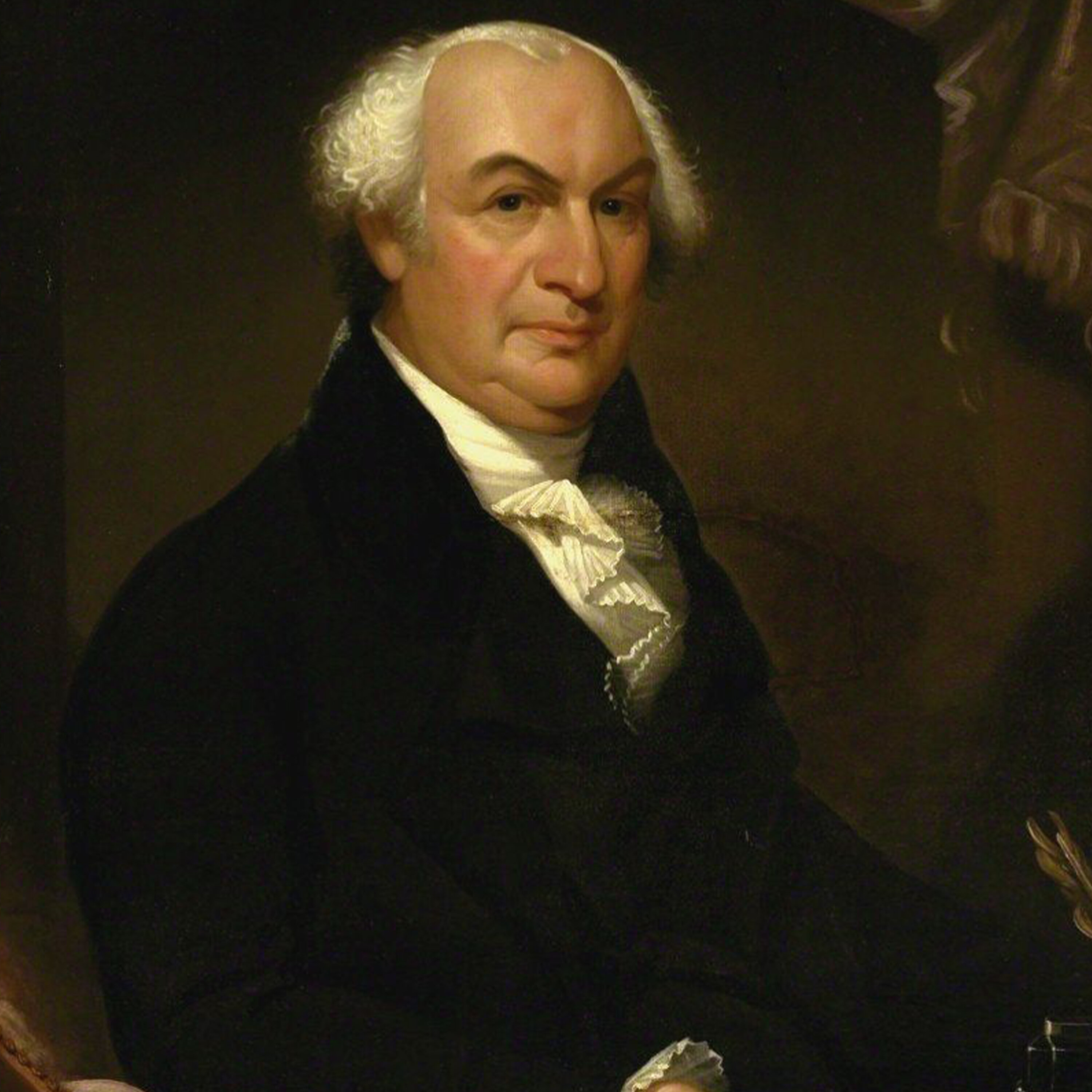
On this episode of newtsworld. The lives of these men are essential to understanding the American form of government and our ideals of liberty. The Founding Fathers all played key roles in securing American independence from Great Britain and in the creation of the government of the United States of America. One of those key men was Gouverneur Morris. Morris was born January 31, 1752, into one of New York's prominent Tory families. Tory meaning very pro King. He was born on the family estate Morrisania. Now think about that for having some sense of identity. Hi, I'm Governor Morris of Morisania on the north side of the Harlem river, which was then in Westchester county but is now part of the Bronx. Interestingly, he was named after his mother Sarah's maiden name, Governor, which means governor in both Dutch and French, which is spelled G O U V E R N E U R. So he lived with that his whole life. And he'd walk up to Bill and say, hi, I'm Governor Morris. Now, you might have thought they thought he was a governor, but they didn't. They figured out, oh, that's his name. Morris's father died in 1762 when Morris was 10 years old. And in his will, he indicated, quote, it is my desire that my son, Gouverneur Morris, may have the best education that is to be had in England or America. Part of that occurred when Morris received a scholarship to King's College of New York, which is now Columbia university. He was 12 years old. They had a very different sense of when you went to school back then and when you went to work. He graduated with both a bachelor's degree in 1768 and a master's degree in 1771. He studied law with Judge William Smith and gained admission to the bar in 1775. Remember, this is a period where you didn't go to law school. That's a 19th century invention. But you went and you've studied with a lawyer and learned from doing things with them, something which Jefferson had done down at Williamsburg during a visit home at the age of 14, Morris's right arm was badly burned when a pot of hot water fell on him. His arm became badly crippled. In later portraits, Morris right arm is often hidden. Immediately after graduating, Morris was studying law in the office of William Smith, who eventually became Chief justice of the province of New York. Notice. Not yet a state Chief justice of the province of New York, Morris was licensed to practice law three months before his 20th birthday. Now, if you get to be a lawyer at 19 again, it tells you a difference in how that society operated. People died younger, they went to work younger, they studied younger. It was a very different kind of experience. Due to his aristocratic background, Morris initially favored reconciliation with England rather than pursuing independence. He was one of those people who had a deep psychological commitment to the King. In 1774, Morris wrote in a paper, taxation is the chief bar and a safe compact. Seems, in my poor opinion, to be now tendered internal taxation to be left with ourselves. Reunion between the two countries is essential to both. I say essential. It is for the interest of all men to seek reunion with the parent state. The spirit of the English constitution has yet a little influence left, and but a little. The remains of it will give the wealthy people a superiority this time. But would they secure it? They must banish all schoolmasters and confine all knowledge to themselves. This cannot be. The mob begin to think. The gentry begin to feel this. Their committee will be appointed. They will deceive the people and again forfeit a share of their confidence. And if these are instances of what with one side is policy, with the other, perfidy. Farewell, aristocracy. I see and I see it with fear and trembling that if the disputes with Britain continue, we shall be under the worst of all possible dominions, the dominion of a riotous mob. Remember, this is a period when you have, for example, patriots who disguise themselves as Indians and throw tea in Boston Harbor. So riotous mob was not totally irrelevant, but it's also the challenge that for many people in America is very deep and very real. They enjoyed being English. They wanted to be part of the British system. They admired the king and felt loyal to him. But at the same time, they had increasing problems. And gradually, inch by inch, people began to realize that, you know, there's something profoundly wrong in this relationship. As the conflict continued, his views shifted. He began to argue that maintaining a connection with Great Britain was no longer possible and independence is absolutely necessary for the future of America. In a sense, as you watch Gouverneur Morris gradually transition from totally loyal British subject to beginning to see that maybe America has to go a different way. You're watching what's happening to thousands and thousands of people across the 13 provinces. In a May 1776 speech to New York's Provincial Congress, Morris says, quote, a connection with Great Britain cannot exist. And Independence is absolutely necessary. Remember, he's saying this in May. They don't actually issue the Declaration of Independence until July. So let me pick up again. Independence is absolutely necessary. I cannot balance between the two. We run a hazard in one path, I confess, but then we are infallibly ruined if we pursue the other. Some, nay, many persons in America dislike the word independence. For my own part, I see no reason why Congress is not as good as States General or Parliament. And it is a mighty easy matter to please people when a single sound will affect is quite a hackneyed topic. Boldly insisted on, though very lightly assumed, that the instant American independence is declared, we shall have all the powers of Europe on our backs. Experience, sir, has taught those powers and will teach them more clearly every day, that an American war is tedious, expensive, uncertain and ruinous. Nations do not make war without some view. Should they be unable to conquer America, it would cost them more to maintain such conquest than the fee simple the country is worth. Morris has detected two things that many people have not yet realized. The first is the other European countries are not so afraid of an American revolution that they're going to side with the British monarchy. In fact, most of them have been fighting with Great Britain. So they're going to see this as an opportunity to help the Americans rebel against the British for the purpose of weakening Great Britain. And in fact, this had been a long view held by the French foreign minister who realized that if he allowed the British to continue to occupy the eastern part of North America, they would become so big that they would not be capable of France opposing them. So all of a sudden you have people who are willing to send money, troops, and in the case of France, both an army and a navy. And Morris sort of intuited this. But second, Morris understood something which Washington really understood, and that is this is a huge country. Back then, Washington was fully prepared, if he had to, to retreat into the mountains. Well, the British could never have dug him out. So from Morris perspective, it's very likely that an American rebellion will succeed eventually. And he was deeply involved in trying to think through that transition. In fact, Morris influenced and shaped the New York Constitution. On July 19, 1778, during a lengthy speech, Morris argued about the necessity of a strong executive leader, stating, quote, the executive magistrate should be the guardian of the people, even of the lower classes, against legislative tyranny, against the great and the wealthy, who in the course of things will necessarily compose the legislative body. A quote which I suspect President Trump would like. Morris was an advocate against slavery, introduced a resolution prohibiting it in New York's Constitution, but was unsuccessful in getting it adopted at that time. But it's a useful reminder. There were many people who were opposed to slavery and who recognized that there was an inherent contradiction between saying, we're endowed by our Creator with certain inalienable rights, but it doesn't apply to everybody. And Morris is one of those who thought, you know, we really have to confront this. In fact, the resolution he introduced argued, quote, whereas with regard to the rights of human nature and the principles of only religion loudly call upon us to dispense the blessings of freedom to all mankind, and inasmuch as it would at present be productive of great dangers to liberate the slaves within the state, it is therefore most earnestly recommended to the future legislature of the State of New York to take the most effectual measures consistent with the public safety and the private property of individuals for abolishing domestic slavery within the same so that in future ages every human being who breathes the air of the state shall enjoy the privileges of a free man. Now that is a long jump. And if you are in Georgia or Virginia or South Carolina, it was a little scary and will of course come back about 70 years later and suddenly lead to the great crisis of the survival of the
- [13:03]
Public Investing Advertiser
foreign. For the show comes from Public, the investing platform for those who take it seriously. On Public you can build a multi asset portfolio of stocks, bonds, options, crypto and now generated assets which allow you to turn any idea into an investable index. With AI. It all starts with your prompt. From renewable energy companies with high free cash flow to semiconductor suppliers growing revenue over 20% year over year, you can literally type any prompt and put the AI to work. It screens thousands of stocks, builds a one of a kind index and lets you backtest it against the S&P 500. Then you can invest in a few clicks. Generated assets are like ETFs with infinite possibilities, completely customizable and based on your thesis, not someone else's. Go to public.com podcast and earn an uncapped 1% bonus when you transfer your portfolio. That's public.com podcast paid for by Public Investing Brokerage Services by Open to the Public Investing Inc. Member FINRA and SIPC Advisory Services by Public Advisors llc. SEC Registered Advisor Generated Assets is an interactive analysis tool. Output is for informational purposes only and is not an investment recommendation or advice. Complete Disclosures available at public.comdisclosures kids, pets, life.
- [14:14]
Annabe Sofa Advertiser
Your sofa sees it all. But with a washable sofa stains don't stand a chance. All of our sofa collections come with fully machine washable covers and cushions making cleanup effortless. Liquid and stain resistant fabrics provide extra protection against everyday messes. Plus with modular designs you can rearrange your sofa however you like. Perfect for growing families and changing spaces. Starting at just $699, it's time to upgrade to a stress free mess proof sofa. Visit washablesofas.com today and save offers are subject to change and certain restrictions may
- [14:42]
iFlag Flag Football Advertiser
apply Flag Football is exploding and iflag is leading the way as the Guinness World Record Holder. Iflag hosts Princess Premier Flag Football tournaments nationwide for boys, girls, high school girls and adults. From first time players to elite competitors, iflag delivers top level competition, unforgettable experiences and a community built around the game. Ready to be part of it? Join the movement, find your tournament and learn more@iflag.org that's iflag.org
- [15:14]
Annabe Sofa Advertiser
ready to buy a car, a home, or just want to take control of your money? Your FICO score matters and 90% of top lenders use it to make decisions. Check your FICO score for free today without hurting your credit score. Visit myfico.com free or download the MyFico app today. MyFico gives you the score lenders use most plus credit reports and real time alerts to help keep you on top of your credit. Visit myfico.com free and take the mystery out of your FICO score.
- [15:50]
Newt Gingrich
Morris had a difficult time with his own family. He had a strained relationship with his mother. She was a loyalist who actively supported Britain during the American Revolution. His mother had given her state to the British for military use and his half brother, Staats Long Morris, served as a major general in the British army during the American Revolution. His other half brother, Lewis Morris, was a signer of the Declaration of Independence. This led to a seven year estrangement between Morris and his mother. This, by the way, is not totally uncommon. Remember that Benjamin Franklin's son becomes the royalist governor of New Jersey and then ultimately sets up a terrorist organization that goes around killing people who want independence. And so you had Franklin as one of the leaders of independence and his son as one of the deep opponents. In 1778, Morris wrote to his mother that since he left home he had not heard directly from her. Writing that never had the satisfaction of knowing that of the many letters I have written, you have received one. It would give me infinite pleasure to hear of my friends, yourself in particular, but since it is my lot to know no more than the burthen of a general Report. I must be contented. I received great pain from being informed that you are distrust on my account. Be of good cheer, I pray you. I have all that happiness which flows from conscious rectitude. I would it were in my power to solace and comfort your declining years. The duty I owe to a tender parent demands this of me. But a higher duty has bound me to the service of my fellow creatures. In other words, no matter how much he loved his mother, he loved America and freedom more. And it was a chasm that they had a hard time getting across. After the American Revolution, Morris eventually returned home to assist his mother with her claim for damages caused by the British army during the war. The claim, which included the destruction of property and the loss of 470 acres of wood used for shipbuilding, amounted to nearly 8,000 pounds. But it was never paid during her lifetime. Morse was a member of the New York State assembly in 1777, 1778 and then in 1778 he was elected to the Continental Congress and almost immediately sent on a fact finding mission to visit General Washington's army at Valley Forge. Upon his return in mid April, he reported the conditions there, describing it as, quote, the skeleton of an army in a naked, starving condition. Out of health, out of spirits. From April to November 1778, Morris corresponded frequently with Washington, receiving updates and requests. In 1779, Morris moved to Philadelphia to resume his law practice. That year Morris lost his left leg during a carriage accident where his left ankle was caught in the turning spokes of a moving carriage wheel. Doctors emptied his left leg just below the knee and Morris used a wooden leg for the rest of his life. Afterwards, Morris wrote to a friend, sir, the loss is much less than you imagine. I shall doubtless be steadier with one leg than with two. That's a pretty determined, optimistic view of life, in my judgment. In 1781, Morris became the Assistant United States Superintendent of Finance under Robert Morris. No relation. The two worked to secure military funding for the remainder of the war, to reform currency standards and draft an early blueprint for national bank. Now we tend to forget you can't have an army without being able to pay for it, without being able to find powder and guns. And so people like Morris are very, very important in Washington's ability to sustain the war and to sustain the army. Morris wrote to a friend shortly before his death. The bank of North America, the first bank in the country, was planned by your humble servant. Morse was involved in the Newburgh Conspiracy of 1783, where Continental army officials remember they had Gotten Cornwallis to surrender. They had gotten to a point where we clearly were going to be an independent country. But continental army officers were frustrated. Congress couldn't pay for the war. They weren't necessarily paying their salaries. And there was a serious effort at Newburgh to challenge the government. Gouverneur Morris, Alexander Hamilton, and Robert Morris advocated for an amendment to the articles of confederation to grant congress the power to tax. But state legislatures rejected the proposal. So here's a congress that's supposed to be paying for the army but has no direct ability to raise any money to pay for it. Morris wrote to congress urging them to address the army's grievances before the situation worsened. On March 10, 1783, a meeting of officers was anonymously called for the following day in the camp at Newburgh. This is one of the most important moments in American history. The army had won the war with the help, of course, of the French. But they were at a key moment. What kind of country were we going to become? The officers who were the center of power in the country were fed up, felt the congress had failed them, were prepared to usurp congressional power. Major John Armstrong, aide de camp to general gates, circulated an inflammatory address that asked the men to force an ultimatum that if congress did not comply, the army should threaten to disband or refuse to disband. After a peace treaty ending the war was signed, One of the key moments, Washington comes to see them. The officers are gathered in an igma, and Washington, in a very dramatic moment, takes off his glasses, reminding them that he had grown old in the service of his country, that he had been at War from 1775 to 1783, that he'd only been home to Mount Vernon once? And he said, would you really give up everything we have fought for the whole principle of the rule of law, the whole principle of individual liberty, and trying to establish a military dictatorship. They collectively were stunned. And gradually they all left, recognizing that Washington had literally saved the concept of freedom as we know it, Compounded, by the way, later, when Washington goes to Annapolis and there's a room dedicated to this in the state capitol, where there's a statue of Washington handing in his sword because he was giving up being the commanding general at a time when he could have, in fact, taken over the whole country. He was the most popular man in the country, the most respected man in the country, the only person in any kind of force that could fight. And he goes to Annapolis, where the continental congress was at that time meeting. And it's a very vivid thing if you get a chance to visit it sometime, because here's Washington standing, holding out his sword. The Congress is sitting as a reminder of who's important. They're the important people. They're sitting. They represent civilian power and he is their servant. He is the general who serves them. And it's a remarkable moment when he heard of it. King George said if Washington really gave up power, he would be the greatest man of the century. And of course he did, and he was. But at this time in 1783, Washington works with Morris and they get Congress to pass legislation on March 20 to pay the officers a lump sum of five years pay. The officers accepted this offer. Three years later, in 1786, Morris's mother passed away and because of his father's will the estate went to his brother, his parents second son, Stotts Longmorris, who was the general in the British Army. Morris's oldest brother had received his portion of the estate before their father passed. The remaining £7,000 were to be paid to the children and of that Morris got a total of £2,000. So he didn't know all that well, didn't do all that badly. But it must have sort of hit him that his brother, who was a general in the British army, actually gets the estate.
- [24:31]
Public Investing Advertiser
Support for the show comes from Public, the investing platform for those who take it seriously. On Public you can build a multi asset portfolio of stocks, bonds, options, crypto and now generated assets which allow you to turn any idea into an investable index. With with AI it all starts with your prompt. From renewable energy companies with high free cash flow to semiconductor suppliers growing revenue over 20% year over year. You can literally type any prompt and put the AI to work. It screens thousands of stocks, builds a one of a kind index and lets you back test it against the S&P 500. Then you can invest in a few clicks. Generated assets are like ETFs with infinite possibilities, completely customizable and based on your thesis, not someone else's. Go to public.com podcast and earn an uncapped 1% bonus when you transfer your portfolio. That's public.com podcast paid for by Public Investing Brokerage Services by Open to the Public Investing Inc. Member FINRA and SIPC Advisory Services by Public Advisors llc. SEC Registered Advisor Generated Assets is an interactive analysis tool. Output is for informational purposes only and is not an investment recommendation or advice. Complete disclosures available at public.com disclosures tired
- [25:32]
Annabe Sofa Advertiser
of spills and stains on your sofa? Wash away your worries with Anabe Annabe is the only machine washable sofa inside and out where designer quality meets budget friendly prices. That's right, sofas start at just $699. Enjoy a no risk experience with pet friendly stain resistant and changeable slip covers made with performance fabric. Experience cloud like comfort with high resilience foam that's hypoallergenic and never needs fluffing. The sturdy steel frame ensures longevity and the modular pieces can be added rearranged anytime. Shop washablesofas.com for up to 60% off site wide backed by a 30 day satisfaction guarantee. If you're not absolutely in love, send it back for a full refund. No return, shipping or restocking fees. Every penny back Upgrade now@washablesofas.com Offers are subject to change and certain restrictions may apply
- [26:32]
iFlag Flag Football Advertiser
Flag Football is exploding and iflag is leading the way as the Guinness World Record Holder. IFL iflag hosts premier flag football tournaments nationwide for boys, girls, high school girls and adults. From first time players to elite competitors, iflag delivers top level competition, unforgettable experiences and a community built around the game. Ready to be part of it? Join the movement, Find your tournament and learn more@iflag.org that's iflag.org new year new vibe.
- [27:03]
Public Investing Advertiser
You want the warmth of a drink, that smooth little kick. But you also want to wake up tomorrow feeling amazing. That's where RK comes in. UK is the world's first zero proof spirits brand and they invented the warm molecule giving you the burn of whiskey or tequila without a drop of alcohol. Start the year strong with 28 Bold 0 proof spirits, 0 calories, 0 sugar, 0 regrets so you can celebrate big and still keep your resolutions on track.
- [27:28]
iFlag Flag Football Advertiser
Start the year right.
- [27:28]
Public Investing Advertiser
Join the Zero Proof Resolution at rkbeverages.com.
- [27:40]
Newt Gingrich
A year later, in 1787, he's chosen as part of Pennsylvania's delegation to the Constitutional Convention. After living in the state for seven years and being considered a resident. He was eager to replace the Articles of Confederation and had said under the Articles, quote, the fate of America was suspended by hair. It was a sad reality that the article simply didn't work. They had too weak a central government. They had no ability to raise money. The system was just not going to function. During the convention, Morris advocated for unlimited terms for the President, a Senate appointed by the President, and a federal property qualification for voting. When speaking on not limiting the term for the President, Morris said, we must either then renounce the blessings of the union or provide an executive with sufficient vigor to Pervade every part of it. Morris spoke 173 times during the convention, more than any other delegate. James Wilson came in second at 168 and Madison third at 161. Fellow delegate William Pierce said, quote, is one of those geniuses in whom every species of talents combine to render him conspicuous and flourishing in public debate. He winds through all the mazes of rhetoric and throws around him such a glare that he charms, captivates and leads away the senses of all who hear him. Pretty strong language. Morris was the only delegate to make a lengthy speech against slavery, Advocating the number of representatives be based on free inhabitants, Stating that slavery, quote, was the curse of heaven on the states where it prevailed. You see here the beginning of the tension and the beginning of what will grow as an anti slavery movement. Morris, when discussing how to calculate the number of representatives, said, quote, upon what principle is it that slaves shall be computed in representation? Are they men? Then make them citizens and let them vote. Are they property? Why then is no other property included? Morse also argued strongly for a popular election over a congressional election for president, saying, if the people should elect, they will never fail to pervert some man of distinguished character or service. Some man, if he might so speak, of continental reputation. If the legislature elect, it will be the work of intrigue, of cabal and of faction. It will be like the election of a pope by a conclave of cardinals. Real merit will rarely be titled to the appointment. I don't know if Morris were alive today if he'd be all that confident that we have produced people of distinguished character or service. But it is a system which has made us much more responsive as a country and has given the people enormous levels of power, More than virtually any country in the world. Morris was assigned to the committee of style during the Philadelphia convention and was given the task of editing the final draft of the constitution. I mean, imagine the sense of responsibility you have to feel that you are now amending a document which, if it is adopted, will go on to be the central organizing document for the United States of America and be copied by many other countries. And here he is editing the final draft. His most significant contribution to American history was the inclusion of the phrase we the people of the United States. Initially it said we the people of states, But Morris wanted to define the country as a nation and not as a collection of independent states. So he included the word united. Now, this is really important. This is a moment when you have colonies who had become states, who had won their independence. And it was a Real question, were we going to be one country or are we going to be a loose coalition of 13 or more countries? And there were a substantial number of people who felt that to protect freedom, you did not want a strong central government. On the other hand, the difference between thinking of yourself as a Virginian and or someone from Massachusetts and thinking of yourself as an American is enormous. So putting in we the people of the United States was in fact a very clever and very significant step in the right direction. Morris wrote in the COVID letter that was sent with the Constitution to the States. Individuals entering into society must give up a share of liberty to preserve the rest. In all our deliberations on this subject, we kept steadily our view, which appears to us the greatest interest to every true American. The consolidation of our union in which has involved our prosperity, Felicity, safety, perhaps our national existence. James Madison said of Morris, contributions. The finish given to the style and arrangement of the Constitution fairly belongs to the pen of Mr. Morris. A better choice could not have been made. As the performance of the task proved, the talents and tastes of the author were stamped on the face of it. Morse decided to take no part in the ratification debates. He turned down an offer from Hamilton to co author the Federalist Papers, which of course are the most famous political pamphlets ever written and are remarkably helpful in understanding the Constitution. After the adoption of the Constitution, Morris succeeded Jefferson as ambassador to France from 1792 to 1794. When Morris was appointed ambassador, the French Revolution was in full swing. The monarchy had been overthrown. The country was in the midst of political unrest. Remember, for all the challenges of the American Revolution, it's essentially not a bloodbath. It's a fight between two movements, the British government and people who want to be free in America. The French Revolution is an orgy of death. Executing aristocrats, executing nuns and priests, executing the king and queen. And finally the revolution begins to devour itself and begins to execute its own members. So it was an imagery and a reality that was horrifying and that actually made Americans much more conservative and much more cautious. As the revolution continued and took a violent turn, Morris, who's there watching it, as the ambassador became concerned, he wrote, quote, the passions of the people are so great that they are beyond the reach of reason. And if the revolution does not soon end, it will destroy itself. By the time of the Reign of Terror, Morris wrote, quote, the revolution has degenerated in a bloody farce. Liberty is being murdered in the streets by the hands of those who claim to be his champions. He is especially Critical of the execution of King Louis xvi, writing, the execution of the king is not an act of liberty, but of vengeance. It will not bring peace to France, but will spread terror to all her neighbors. And of course, ultimately the French Revolution becomes so self destructive that Napoleon takes over, imposes a dictatorship and becomes the emperor of France. Now Maurice returned to the United States in 1799 and in 1809, at the age of 57, he married a member of the prominent Randolph family of Virginia who was a distant relative of Thomas Jefferson. In 1800, Morris was elected as a Federalist to the U.S. senate to fill the vacancy caused by the resignation of James Watson. He served from April 3, 1800 to March 3, 1803. He lost his re election campaign and went back to New York. In 1810, Morris joined the Erie Canal Commission as chairman which planned and organized the construction of a canal from the Hudson river to Lake Erie. This secured New York as a port and helped New York's rapid expansion. For our generation, this is an enormous thing. It's hard for us to remember the idea that you could get in a boat in New York City and go all the way to Lake Erie and then you could go down. Lake Erie suddenly created a channel for commerce, for pioneers, for travel. That was unheard of. And that really led to New York becoming the dominant city and the dominant state for most of the next 200 years. Morris himself opposed the War of 1812. In a speech, he warned that the country was heading toward inevitable division. Writing quote, the general current of events for some years past drives us rapidly towards a condition in which no human power can prevent these states from separating into two or more sections independent of each other. Now, ironically, the problems there were that New England did not want to go to war, the rest of the country didn't want to go to war. So the division he was worried about was totally different than the division which would occur some 45 years later. In 1816, Morris died as a result of a failed attempt to treat a urinary blockage at the age of 64. In those six decades, he had been a major contributor to the emergence of a free, independent and survivable America. Gouverneu Morris is a remarkable figure and he's one of the examples of the citizens who rose up, who did their duty, who weren't motivated by personal ambition. They weren't motivated by a desire for money or fame or power. They were motivated by a deep belief that freedom mattered, that it was time to stand up to tyranny, and that they had to do their part. If America was going to be free, He's a man well worth remembering. Newts World is produced by Gingrich360 and iHeartMedia. Our executive producer producer is Garnesey Sloan. Our researcher is Rachel Peterson. The artwork for the show was created by Steve Pendley. Special thanks to the team at Gingrich360. If you've been enjoying Newts World, I hope you'll go to Apple Podcast and both rate us with five stars and give us a review so others can learn what it's all about. Join me on substack@gingrich360.net I'm Newt Gingrich. This is Newt's World.
- [37:59]
Annabe Sofa Advertiser
Kids Pets Life your sofa sees it all. But with a washable sofa, stains don't stand a chance. All of our sofa collections come with fully machine washable covers and cushions making cleanup effortless. Liquid and spray stain resistant fabrics provide extra protection against everyday messes. Plus, with modular designs, you can rearrange your sofa however you like. Perfect for growing families and changing spaces. Starting at just $699, it's time to upgrade to a stress free mess proof sofa. Visit washablesofas.com today and save offers are subject to change and certain restrictions may apply.
- [38:30]
iFlag Flag Football Advertiser
Flag Football is exploding and iflag is leading the way as the Guinness World Record Holder. If you iflag hosts premier flag football tournaments nationwide for boys, girls, high school girls and adults. From first time players to elite competitors, iflag delivers top level competition, unforgettable experiences and a community built around the game. Ready to be part of it? Join the movement, find your tournament and learn more@iflag.org that's iflag.org Wellness doesn't have
- [39:01]
Annabe Sofa Advertiser
to be perfect, just personal and how your space makes you feel. Pura's well being collection is thoughtfully crafted to support energy, focus, relaxation and sleep through scent. From soft florals to grounding woods, each fragrance is designed to create small feel good moments throughout your day because sometimes feeling better starts at home. Discover what your space needs@pura.com moods this is an I Heart podcast. Guaranteed human.