Loading summary
Transcript28 lines
- [00:00]
Newt Gingrich
This is an iHeart podcast.
- [00:02]
Public Podcast Sponsor / Mint Mobile Advertiser
Guaranteed Human support for the show comes from Public, the investing platform for those who take it seriously. On Public you can build a multi asset portfolio of stocks, bonds, options, crypto and now generated assets which allow you to turn any idea into an investable index with AI. It all starts with your prompt. From renewable energy companies with high free cash flow to semiconductor suppliers growing revenue over 20% year over year, you can literally type any prompt and put the AI to work. It screens thousands of stocks, builds a one of a kind index and lets you back test it against the S&P 500. Then you can invest in a few clicks. Generated assets are like ETFs with infinite possibilities, completely customizable and based on your thesis, not someone else's. Go to public.com podcast and earn an uncapped 1% bonus when you transfer your portfolio. That's public.com podcast paid for by Public Investing Brokerage Services by Open to the Public Investing Inc. Member FINRA and SIPC Advisory Services by Public Advisors llc. SEC Registered Advisor Generated Assets is an interactive analysis tool. Output is for informational purposes only and is not an investment recommendation or advice. Complete disclosures available@public.com
- [01:06]
IFLAG Flag Football Sponsor
Flag football is exploding and IFLAG is leading the way as the Guinness World Record Holder. Iflag hosts premier flag football tournaments nationwide for boys, girls, high school girls and adults. From first time players to elite competitors, iflag delivers top level competition, unforgettable experiences and a community built around the game. Ready to be part of it? Join the movement, find your tournament and learn more@iflag.org that's iflag.org tired of spills
- [01:37]
Annabe Sofa Sponsor
and stains on your sofa? Wash away your worries with annabe. Annabe is the only machine washable sofa inside and out where designer quality meets budget friendly prices. That's right, sofas start at just $699. Enjoy a no risk experience with pet friendly stain resistant and changeable slipcovers made with performance fabric. Experience cloud like comfort with high resilience foam that's hypoallergen and never needs fluffing. The sturdy steel frame ensures longevity and the modular pieces can be rearranged anytime. Shop washablesofas.com for up to 60% off site wide backed by a 30 day satisfaction guarantee. If you're not absolutely in love, send it back for a full refund. No return shipping or restocking fees. Every penny back. Upgrade now@washablesofas.com Offers are subject to change and certain restrictions may apply.
- [02:36]
Public Podcast Sponsor / Mint Mobile Advertiser
Ryan Reynolds here from Mint Mobile I
- [02:38]
Newt Gingrich
don't know if you knew this, but anyone can get the same Premium Wireless for $15 a month plan that I've been enjoying.
- [02:44]
Public Podcast Sponsor / Mint Mobile Advertiser
It's not just for celebrities. So do like I did and have
- [02:47]
Newt Gingrich
one of your assistant's assistants switch you to Mint Mobile today.
- [02:51]
Public Podcast Sponsor / Mint Mobile Advertiser
I'm told it's super easy to do@mintmobile.com
- [02:53]
Cindy Crawford / Meaningful Beauty Sponsor
Switch upfront payment of $45 for 3 month plan equivalent to $15 per month Required intro rate first 3 months only, then full price available, taxes and fees extra. See full terms@mintmobile.com.
- [03:11]
Newt Gingrich
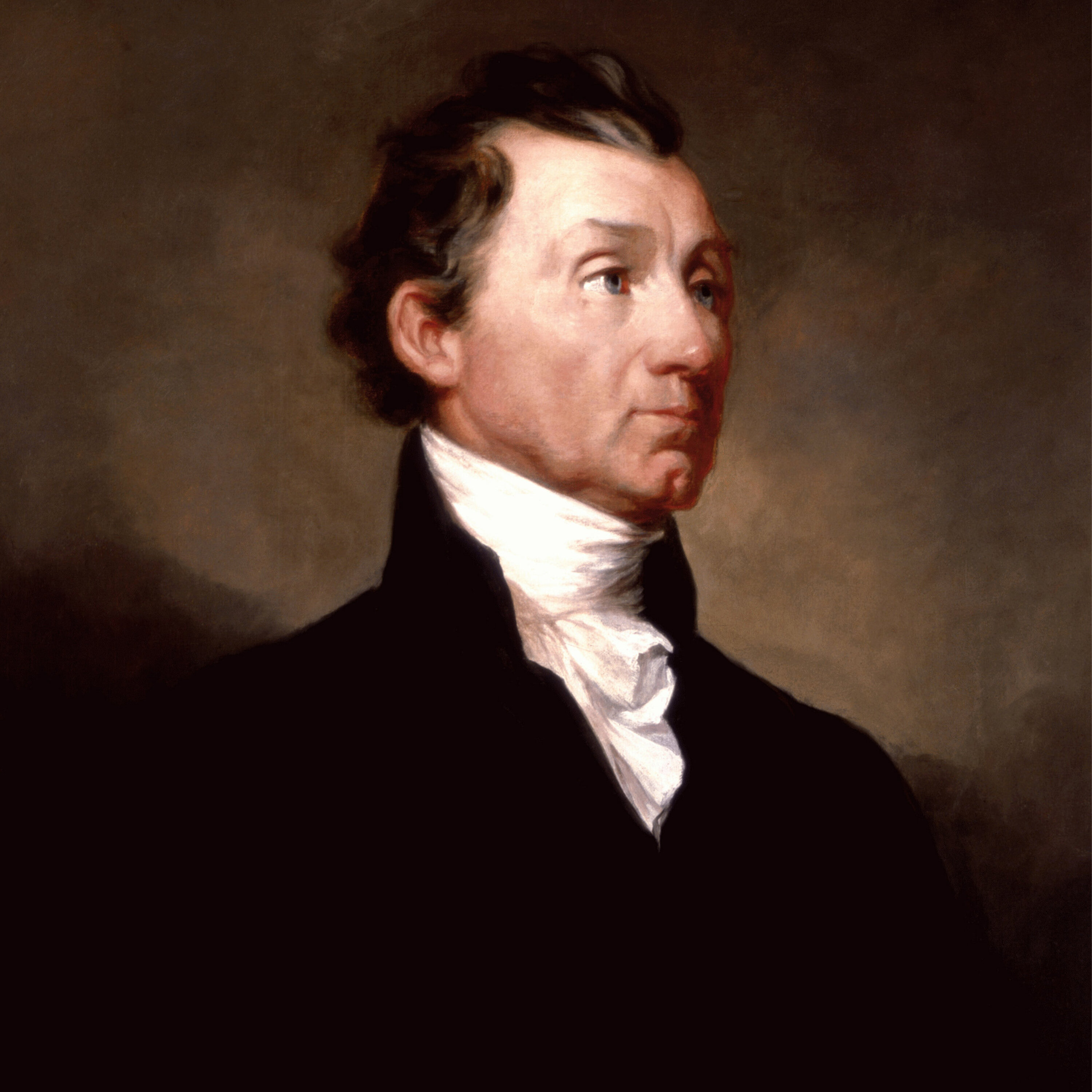
On this episode of Newts World. The lives of these men are essential to understanding the American form of government and our ideals of liberty. The Founding Fathers all played key roles in securing American independence from Great Britain and in the creation of the government on the United States of America now the Life of James Monroe. You know Little is known about James Monroe childhood. He was born on April 28, 1758 to Spencer Monroe, whose relatives fought alongside Charles I in the English Civil wars before being captured and exiled to Virginia in 1649. His mother, Elizabeth Jones Monroe, was the sister of Judge Joseph Jones, a prominent Virginia politician. At the age of 11, James Monroe attended a school run by Reverend Archibald Campbell. He attended school with John Marshall, who later became the Chief justice of the United States. When James Monroe was in his mid teens, both of his parents passed away. His father died in 1774 and his mother probably died earlier than that, but there was no actual date for her death. After this, James and his siblings shared an inheritance of land and some slaves. James and his two brothers, his sister was already married, became wards of their uncle, Joseph Jones. His uncle, Joseph Jones encouraged James Monroe to continue his education, which led Monroe down to the College of William and Mary in Williamsburg, Virginia. However, the Revolutionary War interrupted his education. While at the College of William, Mary Royal Governor Dunmore had fled the capital of Williamsburg fearing that his family was in danger. After he left, James Monroe and a few classmates helped loot the arsenal at the Governor's palace, escaping with 200 muskets and 300 swords, which they then gave to the Virginia militia. By the winter of 1776, Monroe left school and joined the Virginia Infantry. Monroe at this point was 18 years old and slightly more than 6 foot tall. He became an officer in the Continental army and joined General Washington's army in New York. During the war, Monroe fought in the battles of Trenton, Monmouth, Brandywine and Germantown. He was severely wounded at the Battle of Trenton as he was shot in the shoulder as he led a charge against enemy cannon. After recovering, he became a staff officer for General William Alexander. While there, he met and briefly worked alongside Alexander Hamilton, Charles Lee, Aaron Burr, and the Marquis de Lafayette. By the end of his service, Monroe had reached the rank of major. However, because there were already so many majors in the army, he had little chance to command his soldiers in the field and decided to resign from the continental army in 1779. Now, upon the urging of his uncle, Monroe cultivated a friendship with Thomas Jefferson, a friendship that would become valuable for Monroe's career. Jefferson, of course, was a giant both of Virginia politics and of national politics. Co author of the Declaration of Independence, Ambassador of France, Governor of Virginia, a remarkable person, maybe one of the two or three smartest people ever to serve in the presidency, and a man who had enormous nationwide relationships. He actually, with the help of Madison and Aaron Burr, invented the Democratic party, which is today the longest surviving political institution in the world. Now, Jefferson was a figure who would be remarkably helpful to Monroe. He encouraged Monroe to study law, allowed him to use his own personal library whenever he wanted to. Monroe wrote to Thomas Jefferson in letter on September 9, 1780. Your kindness and attention to me in this and a variety of other instances has really put me under such obligations to you that I fear I shall hardly ever have it in my power to repay them. At Jefferson's urging, Monroe purchased property near Monticello in February of 1789. The two houses were so close that they could see each other from their front porches. I should mention, by the way, that when you're told that Jefferson allowed Monroe to borrow books and to read from his library, it's worth remembering Jefferson probably had the largest library in the United States. In fact, Jefferson would ultimately sell the library, and it became the base for the Library of Congress. So he was really opening up to Monroe a huge world of knowledge and a real opportunity. And because books back then were very expensive, the fact that he trusted him enough to loan him books said a great deal about their relationship. Because Jefferson helped him, Monroe continued to study. And in 1782, after studying law under Jefferson, Back then, you didn't go to some fancy law school, you found a practicing lawyer and you worked for them. And so he studied law under Jefferson, and in 1782, he passed the bar exam. He was elected to the Virginia assembly in 1782 and served in the Council of State, advising the governor. In 1783, he was elected to the Continental Congress. While there, he cultivated a friendship with James Madison, whom Jefferson introduced him to. Remember these three Virginians live very close to each other and together they do an enormous amount to shape the United States as we know it today. Monroe strongly opposed John Jay's negotiations with Don Diego de Guarqui and the J. Gardiqui Treaty of 1786 because it would have granted Spain control over the Mississippi river for 25 years. Monroe and James Madison's strong opposition to the treaty helped defeat it while helping secure its popularity in the west, which lasted throughout his political career. People in the west did not want the Spanish to have control of the Mississippi because they were going to ship goods down that river and it was central to their economic future. In 1787, while in New York, Monroe met his wife, Elizabeth Courtright, whose father lost his wealth during the Revolutionary war. She was 16. Monroe was 26. They married a year later on February 16, 1786. In 1788, Monroe was elected to the Virginia convention to ratify the Constitution. But Monroe voted against ratifying the US Constitution. Instead, he wanted a Constitution that allowed for the direct election of senators and the President and a strong bill of rights. On October 15, 1788, Monroe wrote his observations on Jefferson's draft of a constitution for Virginia. Arguing that two year terms for the Senate are too short, Monroe would write, Senate, the term of two years is too short. Six years are not more than sufficient. A Senate is to withstand the occasional impetuosities of the more numerous branches. The members ought therefore to derive a firmness from the tenure of their place. This cannot be done by a body undergoing a frequent change of its members. A senate for six years will not be dangerous to liberty. In his observations on Jefferson's draft of a constitution for Virginia, Monroe argued for an election by the people at large. Quote, an election by the legislature is liable to insuperable objections. It not only tends to faction, intrigue and corruption, but leaves the executive under the influence of an improper obligation to that department. An election where the people at large, as in this in several other states, or by electors, as in the appointment of the Senate in Maryland, or indeed by the people through any other channel than their legislative representatives, seems to be far preferable. Half of the new Constitution was ratified. Monroe unsuccessfully challenged James Madison for a seat in the U.S. house of Representatives, losing by 300 votes. And I must say, given the extraordinary role that Madison played in the first couple of congresses, it's a little hard to imagine how different things would have been had Monroe successfully defeated him. And a race which after all was only 300 vote margin.
- [12:53]
Public Podcast Sponsor / Mint Mobile Advertiser
Support for the show comes from public. The investing platform for those who take it seriously. On Public you can build a multi asset portfolio of stocks, bonds, options, crypto and now generated assets which allow you to turn any idea into an investable index with AI. It all starts with your prompt. From renewable energy companies with high free cash flow to semiconductor suppliers growing revenue over 20% year over year, you can literally type any prompt and put the AI to work. It screens thousands of stocks, builds a one of a kind index and lets you back test it against the S&P 500. Then you can invest in a few clicks. Generated assets are like ETFs with infinite possibilities, completely customizable and based on your thesis, not someone else's. Go to public.com podcast and earn an uncapped 1% bonus when you transfer your portfolio. That's public.com podcast paid for by Public Investing Brokerage Services by Open to the Public Investing Inc. Member FINRA and SIPC Advisory Services by Public Advisors llc. SEC Registered Advisor Generated Assets is an interactive analysis tool. Output is for informational purposes only and is not an investment recommendation or advice. Complete Disclosures available at public.comDisclosures Flag Football
- [13:55]
IFLAG Flag Football Sponsor
is exploding and IFLAG is leading the way as the Guinness World Record Holder. Iflag hosts premier flag football tournaments nationwide for boys, girls, high school girls and adults. From first time players to elite competitors, iflag delivers top level competition, unforgettable experiences and a community built around the game. Ready to be part of it? Join the movement, find your tournament and learn more@iflag.org that's iflag.org
- [14:25]
Annabe Sofa Sponsor
sink into affordable luxury Annabe is the only machine washable sofa inside and out with stain resistant slipcovers and a cloud like frame duvet. Everything goes goes right in the wash. Plus the modular design lets you change the look of your space anytime. Visit washablesofas.com to upgrade your home shop up to 60% off site wide with sofas starting at just $699 and a 30 day money back guarantee. Shop now@washablesofas.com offers are subject to change and certain restrictions may apply.
- [14:54]
Cindy Crawford / Meaningful Beauty Sponsor
Now I'd like to introduce you to Meaningful Beauty, the famed skincare brand created by iconic supermodel Cindy Crawford. It's her secret to absolutely gorgeous skin. Meaningful Beauty makes powerful and effective skin care simple and it's loved by millions of women. It's formulated for all ages and all skin tones and types and it's designed to work as a complete skin care system leaving your skin feeling soft, smooth and nourished. I recommend starting with Cindy's full Regimen which contains all five of her best selling products including the Amazing Youth Activating Melon Serum. This next generation serum has the power of the Melonleaf Stem Cell technology. It's melon leaf stem cells encapsulated for freshness and released onto the skin to support a visible reduction in the appearance of wrinkles. With thousands of glowing five star reviews, why not give it a try? Subscribe today and you can get the Amazing Meaningful Beauty system for just $49.95. That includes our introductory five piece system, free gifts, free shipping and a 60 day money back guarantee. All of that available at Meaningful Beauty.
- [16:02]
Newt Gingrich
Despite losing the house election in 1790, the Virginia State Legislature appointed him to the U.S. senate where he served until May 1794. Monroe opposed virtually all of Secretary of Treasury Alexander Hamilton's measures. He joined Madison Jefferson in the mid-1780s to oppose the Federalist views of Vice President John Adams and Secretary of Treasury Alexander Hamilton. In 1794, President Washington sent Monroe to Paris as the U.S. minister of France, an appointment that lasted two years until he was recalled by the new Secretary of State, Timothy Pickering. At this time, France was unstable. The French Revolution had occurred and of course things were just falling apart. Monroe's mission was to uphold Washington's policy of strict neutrality towards Britain and France, while making sure France understood they did not favor Britain. However, when the US Signed the Jay Treaty with Great Britain, France asked him to tell exactly what was in the record. Jay refused to send Monroe a copy of the treaty. Because of this, France was convinced that the US Was favoring Britain over them. The Federalists blamed Monroe for the deteriorating relations with France and recalled him after two years. The only successful part of his tenure in Paris was getting Thomas Paine released from prison for speaking against the execution of King Louis xvi. Payne, of course, had been the extraordinarily important and famous pamphleteer who wrote Common Sense in the crisis and had a huge impact in America in what were the widest selling pamphlets of their time. He was a radical and ended up in Paris. The nature of the French Revolution at that point was very bloody. It was dangerous for Paine to suggest that executing the King was wrong, and so Monroe probably saved his life by getting him released. When Monroe did come back from France, he wrote a nearly 500 page pamphlet entitled A View of the Conduct of the Executive in the Foreign affairs of the United States, defending his actions and criticizing the administration's handling of French American relations. Though Washington was publicly silent, he did read Monroe's pamphlet and annotated his own copy refuting Monroe's claims page by page. In other words, Washington didn't think Monroe's criticism was correct. Washington thought that in fact his government had done what it had to do to maintain a balance between Britain and France and avoid getting the United States drawn into what would become first the Revolutionary and then the Napoleonic Wars. So there was a profound difference. And Monroe's not an automatic supporter of Washington. After getting recalled from France, Monroe returned to Virginia to practice law. And on December 19, 1779, he was elected Governor of Virginia for one term. During his term in office, an enslaved man named Gabriel, who Thomas Henry Prosser owned, organized a widespread slave uprising that would have been the biggest Americanist. They planned to hold Governor Monroe hostage while they negotiated their freedom. But their plan was thwarted by a sudden severe rainstorm and the disclosure of the plot by several slaves. Monroe called the local militia and the rebellion was stopped. While Governor, Virginia established two key state institutions, the Virginia Penitentiary and the Virginia Manufactory of Arms, a state owned armory producing muskets, rifles, swords and cannon. From 1802 to 1821, the Virginia Manufacturer of Arms produced about 58,000 muskets, 2,000 rifles, 10,000 swords, 4,000 pistols that helped to build up the American military. Monroe was elected to two more one year terms as governor. Remember, for a guy who thought you had to have stability in office, he's serving as governor for one year and has to get reelected again and again on a one year basis. Which may explain part of why he believed in longer tenure. In 1803, President Jefferson sent Monroe back to France to assist Robert Livingstone in negotiations to purchase New Orleans. Although Monroe believed that his arrival in France was what convinced Napoleon to offer the entire Louisiana territory to the United States, Livingston had already opened the negotiations and Monroe just helped close the deal. Remember what a giant deal this was? They decided that they would sell all of the land that the Spanish claimed west of the Mississippi, dramatically expanding the size of the United States, making us a country going all the way from the Atlantic to the Pacific. And basically Jefferson cut the deal, agreed to do it without any approval from Congress by his executive. Aggressiveness really reshaped the whole future of America. Monroe went on to serve as the US minister to Britain from 1803 to 1807, with a brief time as special envoy to Spain in 1805. While in Spain, Monroe tried to negotiate a treaty ceding Spanish territory along the Gulf coast of the United States. Soon, Monroe realized that Spain had no intention of signing the treaty and he went back to Britain. During his time in Britain, Monroe attempted to negotiate an end to the British practice of seizing US Sailors and forcing them to serve in the Royal Navy. Monroe signed a treaty with Britain in 1806, but this treaty did not include a ban on seizing U.S. sailors. President Jefferson did not submit the treaty to the U.S. senate because the lack of this ban, knowing the Senate would disapprove of a treaty without it. Monroe, however, thought this was a first step towards better relations with Britain, and he was upset that Jefferson, who after all, had been his mentor, did not submit the treaty. Although this caused a rift between the two friends, it only existed for a short time. Monroe soon realized that the President had to take domestic politics, the feeling of the public, into account when considering foreign policies. In January 1811, Monroe served a brief stint as the Governor of Virginia. However, by April, President James Madison named him the Secretary of State. Remember, all three of these Virginians live close to each other. They all come out of the same culture, share the same general background. And here's Madison, who had beat Monroe by only 300 votes, now appointing him Secretary of State. As Secretary of State, Monroe focused mainly on relations with Britain and France. At the time, the two countries were at war, which affected the United States commercial trade. The United States, being a neutral country, wanted France and Britain to respect their commercial interest. However, both countries refused to do so. In fighting this war, both Britain and France were trying to use international commerce as a weapon. And so we were constantly seeing tension between the United States and Britain and between the United States and France. The Madison administration primarily focused on Britain because of its continued practice of seizing US Sailors and forcing them to serve in the British Navy. The US declared war on Britain in June 1812. The war was not popular with US citizens, who found it disrupted their access to European markets. The war was a disaster for the United States. The army was unprepared and unequipped, resulting in defeat. Madison's Secretary of War resigned. Monroe temporarily took over the office from December 1812 to February 1813. He did it again from August 1814 to March 1850. Monroe excelled in this role because of his past military experience and his organizational skills. He helped to reorganize the army in 1814. When British troops arrived at the mouth of the Potomac river in August, Monroe led a scouting party to report on their activities. He quickly sent word to Madison that they were marching towards Washington. While most of the government fled, Monroe stayed in Washington, D.C. to help with the evacuation. After the British attack on Washington and the burning of government buildings, including the U.S. capitol. Monroe returned and was placed in charge of defending the Capitol. Because of this, Monroe became popular, especially with 1812 war veterans. He was well positioned to win the Democratic Republican nomination for president in the 1816 election. Democratic Republican was the name of the party which Jefferson founded, but it gave you a flavor they were totally dominant. By 1816, the Federalists basically had gone into extinction. Being unable to compete with the Jeffersonian party, Monroe received 86% of the votes when he defeated Rufus king in the 1816 election. Scholars regard Monroe's cabinet choice as strong and a major reason for the success of his administration. Monroe appointed Southerner John C. Calhoun as Secretary of War and New Englander John Quincy Adams as Secretary of State. He was a broad group of talented people working to run the country. In 1819, the people of the Missouri Territory were denied admission to the Union as a slave state. An amended bill that allowed for the gradual elimination of slavery led to two years of debate in Congress. The Missouri Compromise resolved this by allowing Missouri to be a slave state, Maine a free state, and banning slavery north and west of Missouri. In the 1820 election, Monroe ran unopposed, getting 81% of the vote. One New Hampshire elector kept Monroe from winning unanimously in the Electoral College. Otherwise, all of them voted for Monroe.
- [26:36]
Public Podcast Sponsor / Mint Mobile Advertiser
Support for the show comes from Public the Investing platform for those who take it seriously On Public you can build a multi asset portfolio of stocks, bonds, options, crypto and now generated assets which allow you to turn any idea idea into an investable index with AI. It all starts with your prompt. From renewable energy companies with high free cash flow to semiconductor suppliers growing revenue over 20% year over year, you can literally type any prompt and put the AI to work. It screens thousands of stocks, builds a one of a kind index and lets you back test it against the S&P 500. Then you can invest in a few clicks. Generated assets are like ETFs with infinite possibilities, completely customizable and based on your thesis, not someone else's. Go to public.com podcast and earn an uncapped 1% bonus when you transfer your portfolio. That's public.com podcast paid for by Public Investing Brokerage Services by Open to the Public Investing Inc. Member FINRA and SIPC Advisory Services by Public Advisors llc. SEC Registered Advisor Generated Assets is an interactive analysis tool. Output is for informational purposes only and is not an investment recommendation or advice. Complete Disclosures available at public.comDisclosures Flag Football
- [27:38]
IFLAG Flag Football Sponsor
is exploding and IFLAG is leading the way as the Guinness World Record Holder. Iflag hosts Premier flag football tournaments nationwide for boys, girls, high school girls and adults. From first time players to elite competitors, iflag delivers top level competition, unforgettable experiences and a community built around the game. Ready to be part of it? Join the movement, find your tournament and learn more@iflag.org that's iflag.org sink into affordable
- [28:09]
Annabe Sofa Sponsor
luxury Annabe is the only machine washable sofa inside and out. With stain resistant slipcovers and a cloud like frame duvet. Everything goes right in the wash. Plus the modular design lets you change the look of your space anytime. Visit washablesofas.com to upgrade your home shop up to 60% off site wide with sofas starting at just $699 and a 30 day money back guarantee. Shop now@washablesofas.com offers are subject to change and certain restrictions may apply.
- [28:38]
Cindy Crawford / Meaningful Beauty Sponsor
Hi, I'm Cindy Crawford and I'm the founder of Meaningful Beauty. Well, I don't know about you, but like, I never liked being told oh wow, you look so good for your age. Like why even bother saying that? Why don't you just say you look great at any age, every age. That's what Meaningful Beauty is all about. We create products that make you feel confident in your skin at the age you are now. Meaningful Beauty. Beautiful skin at every age. Learn more@meaningful beauty.com.
- [29:21]
Newt Gingrich
Now Most of us know about Monroe because of what was called the Monroe Doctrine. The Monroe Doctrine was articulated by President James Monroe in his seventh annual address to Congress on December 2, 1823. Monroe warned European nations that the United States would not tolerate further colonization in the New World. Let me quote briefly from it. In the discussions to which this interest has given rise, and in the arrangements by which they may terminate, the occasion has been judged proper for asserting as a principle in which the rights and interested in states are involved, that the American continents, by the free and independent condition which they have assumed and maintain, are henceforth not to be considered as subjects of future colonization by any European powers. Close quote. Now this was occurring because across all of Latin America, the local communities had risen against the European colonies, mostly Spanish. And as a result you had a wide number of relatively small, relatively weak countries and a real danger that France, Britain, Spain, maybe even Russia would try to come in and would in effect try to recolonize. And so by stating this position, Monroe was establishing a principle which was helped, frankly, because the British agreed with that principle and their navy at the time was the strongest in the world. The Monroe Doctrine actually was not invoked for some 42 years, we asserted it was true, but we did not actually apply it to a case until 1865, when the US government supported the Mexican President Benito Juarez, which enabled the successful revolt against the French emperor Maximilian. Almost 40 years later, it was invoked in 1904 when European creditors of Latin American countries threatened armed intervention to collect debt. President Teddy Roosevelt used the Monroe Doctrine to proclaim the right of the US to exercise an international police power and sent US Marines to Santo Domingo in 1904, Nicaragua in 1911, and Haiti in 1915 to keep Europeans out. In 1962, the Monroe Doctrine was invoked symbolically when the Soviet Union began to build missile launching sites in Cuba. So literally, you're talking about. 140 years later, the Monroe Doctrine still was seen as a useful diplomatic tool. Now, there were a lot of things going on in the United States. There were five states admitted to the Union while Monroe was in office. Mississippi, Illinois, Alabama, Maine, and Missouri. So the country continued to grow, and if you'll notice in a number of these cases, it was starting to grow in the direction of the land which we had purchased in the Louisiana Purchase, which Monroe had been involved in. Now, Monroe personally incurred many debts while in public office. At the time, there wasn't a way to reimburse expenses made while in office. You just had to basically pay for it out of your own personal pocket. Near the end of his presidency, Monroe presented a bill to Congress for $53,000, which today would be worth well over a million dollars. He wanted reimbursement for travel and other expenses incurred while in public office. Congress, however, reluctantly decided to give him half of what he requested. He then used that to pay off his debts. But that wasn't enough and he eventually had to sell his plantation. For the rest of his life, Monroe tried to get the rest of what he felt he was owed, but he never did. Congress simply wasn't going to give him any more money. On March 4, 1824, James Monroe, after selling his plantation to pay off debts, resided at Monroe Hill on the University of Virginia campus. He served on the university's Board of Visitors under Jefferson and James Madison until He died in 1831. Monroe was elected as a delegate to the Virginia constitutional convention of 1829-1830. He was elected as one of four delegates from the district in his home district of Loudoun in Fairfax County. In 1829, he was elected by the convention to serve as the presiding officer until his failing health required him to withdraw on December 8th. His wife, Elizabeth, died in 1830, and Monroe moved to 63 Price street at Lafayette Place in New York City to live with his daughter. On July 4, 1831, he died at the age of 73 from heart failure and tuberculosis, making him the third president to have died in Independence Day. He died 55 years after the United States Declaration of Independence was claimed and five years after the deaths of John Adams and Thomas Jefferson. He was an unusual figure who had a wide range of political experiences, served in government at many levels, and while he was not certainly decisive and powerful in the sense of the more famous Founding Fathers Washington, Jefferson, Franklin, Madison, he nonetheless is sort of in the second group. And his career spans such a long period of time that he had a continuous impact on the history of the United States, both as a foreign diplomat, as a legislator at the state level, as a legislator at the congressional level, and as an official inside the government up to and including the presidency. He's a remarkable figure. You can visit his home just outside of Charlottesville. I think he's well worth people paying more attention to than they do because he represented the sort of solid, consistent hard work, intelligence and support which surrounded the famous Founding Fathers with hard working people who actually implemented and made the system work. And in that sense I would argue that Monroe is a significant figure in that era and a person Wilwood Studied Newts World is produced by Gingrich 360 and iHeartMedia. Our executive producer is Garnesy Sloan. Our researcher is Rachel Peterson. The artwork for the show was created by Steve Penley. Special thanks to team at Gingrich360. If you've been enjoying Newts World, I hope you'll go to Apple Podcast and both rate us with five stars and give us a review so others can learn what it's all about. Join me on substack@gingrich360.net I'm Newt Gingrich. This is Newt's World.
- [36:44]
IFLAG Flag Football Sponsor
Flag Football is exploding and iflag is leading the way as the Guinness World Record Holder. Iflag hosts premier flag football tournaments nationwide for boys, girls, high school girls and adults. From first time players to elite competitors, iflag delivers top level competition, unforgettable experiences and a community built around the game ready to be part of it. Join the movement, find your tournament and learn more@iflag.org that's iflag.org kids pets life.
- [37:14]
Annabe Sofa Sponsor
Your sofa sees it all. But with a washable sofa, stains don't stand a chance. All of our sofa collections come with fully machine washable covers and cushions making cleanup effortless, liquid and stain resistant fabrics provide extra protection against everyday messes. Plus, with modular designs, you can rearrange your sofa however you like. Perfect for growing families and changing spaces. Starting at just $699, it's time to upgrade to a stress free mess proof sofa. Visit washablesofas.com today and save offers are subject to change and certain restrictions may apply.
- [37:44]
Newt Gingrich
People at work supported me while I was going through treatment by not treating me like somebody who was going through treatment. Treatment sucks. Cancer sucks. Being engaged with work really helped to oh, I just knew I was going to beat this thing.
- [38:00]
Public Podcast Sponsor / Mint Mobile Advertiser
Research shows there is a significant connection between the ability to continue to work and cancer recovery. We can make work a better place
- [38:09]
Cindy Crawford / Meaningful Beauty Sponsor
for healing, learn more and sign the pledge@workingwithcancerpledge.com the holidays are all about connection,
- [38:17]
Public Podcast Sponsor / Mint Mobile Advertiser
good food, good friends and those cozy moments. This season, skip boring mocktails and celebrate with rk the world's first zero proof Spirits. All the taste and warmth of your favorite holiday pours with zero alcohol, zero guilt and the patented warm molecule for that festive kick. Perfect for toasting, hosting or gifting. Celebrate freely with RK0 proof. Visit rkbeverages.com this is an iHeart podcast.
- [38:45]
Cindy Crawford / Meaningful Beauty Sponsor
Guaranteed human.