Loading summary
Transcript66 lines
- [00:00]
Podcast Host/Announcer
This is an iHeart podcast. Guaranteed Human no one knows what the future holds, but you deserve a weather app that can help. Weatherbug is easy to use and provides forecasts for your every need from storm warnings to pollen levels right at your fingertips. Get the fastest local Alerts and comprehensive 10 day forecasts wherever you are. Its hyperlocal real time customizable alerts make sure the weather never takes you by surprise so you can plan every day with confidence. Download the free Weatherbug app from the App Store today and start getting accurate weather forecasts forecasts 24. 7
- [00:35]
Sponsor Representative/Public Investing
support for the show comes from Public, the investing platform for those who take it seriously. On Public you can build a multi asset portfolio of stocks, bonds, options, crypto and now generated assets which allow you to turn any idea into an investable index with AI. It all starts with your prompt. From renewable energy companies with high free cash flow to semiconductor suppliers growing revenue over 20% year over year, you can literally type any prompt and put the AI to work. It screens thousands of stocks, builds a one of a kind index and lets you back test it against the S&P 500. Then you can invest in a few clicks. Generated assets are like ETFs with infinite possibilities, completely customizable and based on your thesis, not someone else's. Go to public.com podcast and earn an uncapped 1% bonus when you transfer your portfolio. That's public.com podcast paid for by Public Investing Brokerage Services by Open to the Public Investing Inc. Member FINRA and SIPC Advisory Services by Public Advisors llc. SEC Registered Advisor Generated Assets is an interactive analysis tool. Output is for informational purposes only and is not an investment recommendation or advice. Complete Disclosures available at public.comDisclosures
- [01:37]
Sponsor Representative/Washable Sofas
sink into affordable luxury. Annabe is the only machine washable sofa inside and out with stain resistant slipcovers and a cloud like frame duvet. Everything goes right in the wash. Plus the modular design lets you change the look of your space anytime. Visit washablesofas.com to upgrade your home shop up to 60% off site wide with sofas starting at just $699 and a 30 day money back guarantee. Shop now@washablesofas.com offers are subject to change and certain restrictions may apply.
- [02:07]
Sponsor Representative/IFLAG Flag Football
Flag Football is exploding and IFLAG is leading the way as the Guinness World Record Holder. IFLAG hosts premier flag football tournaments nationwide for boys, girls, high school girls and adults. From first time players to elite competitors, iflag delivers top level competition, unforgettable experiences and a community built around the game, ready to be part of it? Join the movement, Find your tournament and learn more@iflag.org that's iflag.org.
- [02:41]
Newt Gingrich
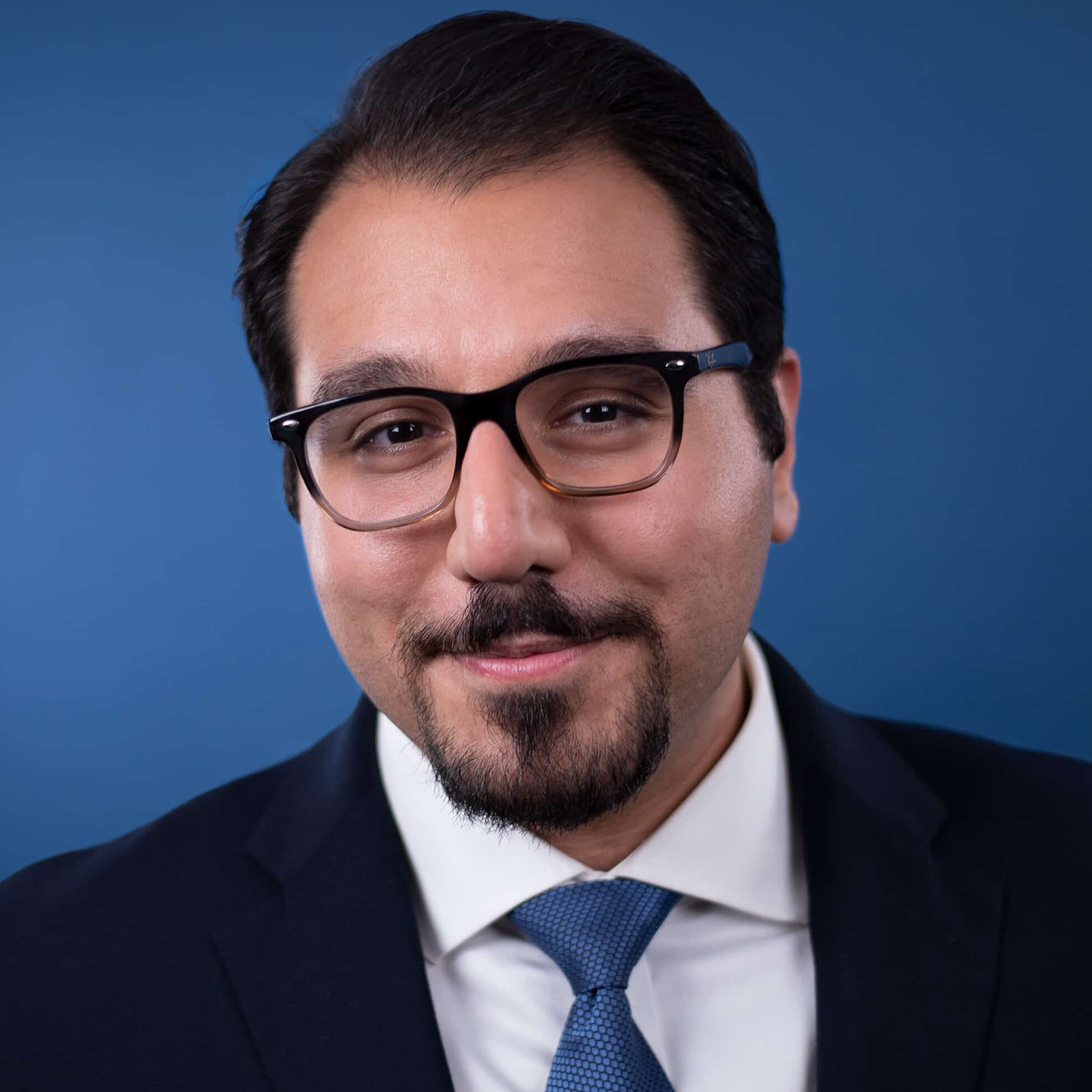
My guest today is Benham Ben Talablu, Senior Director for the foundation for Defense of Democracy's Iran program, where he oversees the depth of FDD's work on Iran, in addition to serving as Senior Fellow specializing in Iranian security and political issues. I should say that I am a huge fan of of the foundation for Defense of Democracies. They do remarkably sophisticated and effective work. He's joining me today to discuss the evolving conflict with the US Israel versus Iran and what we can expect in the coming days and weeks. Foreign. Welcome and thank you for joining me again on Newts World.
- [03:38]
Benham Ben Talablu
It's always a pleasure to be with you, sir, and an honor. And thanks for the kind words you said about Fed. If you love what you do, you never work a day in your life.
- [03:45]
Newt Gingrich
Yeah, that's exactly right. Other people think it's your hobby and luckily you get paid for it. You are one of the leading experts and you watch this every day. Were you surprised when the US And Israel launched strikes in Iran?
- [03:59]
Benham Ben Talablu
It really did feel, given the drumbeat politically and militarily in 2026, as well as the multiple red lines President Trump had drawn on the backdrop of the repressed protests in January of this year, that military action was a matter of when and not if. And regardless of our analysis here in the west, it seems like the hubris of Iran's supreme leader and other officials in the Islamic Republican seemed to have missed that it was going to be a matter of when, not if. And they held an above ground meeting in a compound in broad daylight. And that's exactly how the war began, with the decapitation of the Supreme Leader and Commander in Chief.
- [04:36]
Newt Gingrich
Is it exaggerated in the media or was it in fact sort of amazing that apparently Mossad, the Israeli intelligence people, were able to track this entire thing and then the American military, with the President's approval, were able to move in like 10 hours. Strikes me as almost like a movie.
- [04:57]
Benham Ben Talablu
It does? No, in fact, they say art imitates life, life imitates art. I don't know which way it is these days because throughout the backdrop of this war and the protests, new seasons episodes of Tehran on Apple TV had also been dropping on a weekly basis and people didn't know what to watch, what was more nail biting reality or the fiction on television. But clearly something is an inspiration here for something else, whether it's a spy novel, a movie or a TV series. Because certainly the dribs and drabs of reporting coming out about the spycraft, both from the agency as well as from the Mossad, by the way, that led up to this operation are exceptionally impressive both in terms of risk tolerance, professionalism and operational capacity.
- [05:38]
Newt Gingrich
We saw the Israelis run an astonishing operation against Hezbollah, and then we saw them methodically go after the leaders of Hamas. But it seems to me in these movement kind of systems, sometimes all you're doing is clearing away for a more aggressive, younger leadership. To what extent do you think the leadership in Iran is crippled or is simply transferring to a new generation?
- [06:07]
Benham Ben Talablu
Well, some of these shifts are not necessarily generational as much as they are institutional and political. I think you're right to be skeptical of systems like the Islamic Republic, where unfortunately, the Islamism and the authoritarianism has been institutionalized against the backdrop of a national security deep state. In fact, that's what made Ali KHAMENEI as an 86 year old autocrat, still effective, even though he may not have been managing the day to day operations of the regime internally and externally. And so right now, if I had to say, there are a constellation of institutions, probably two that come to mind, others we can discuss, which are really running the show right now. So regardless of who becomes, quote, unquote, the next supreme leader, if the Islamic Republic survives this thing, and if the US and Israeli confrontation will be limited to just defanging the regime of missiles, then that which would remain would be, in my view, a hardened, coarsened, unpopular riddle national security deep state. And it would be led by the Supreme National Security Council as the most important decision making body in the country, and the military, and in particular the Islamic Revolutionary Guard Corps as the most important security force in that country.
- [07:16]
Newt Gingrich
To what extent does the Revolutionary Guard compete with the regular military? And to what extent do they have a stable kind of relationship?
- [07:28]
Benham Ben Talablu
Well, despite the command lines on paper, where both the artes, which is the national military, and the irgc, which is the newer revolutionary institution, that ideological military that is tasked with defending the revolution rather than the state, on paper, they're supposed to feed upwards into this Iranian version of the Joint Staff called the Armed Forces General Staff, which during wartime is rotated out to be led by this other entity called the Ghata Malambia Central Headquarters. Now all of that is just a fancy way to say on paper that the regime says that they don't compete, but in reality, not only is there a competition, but the competition is over. Unfortunately, the national security state in Iran has preferenced the revolutionary military over the regular military. Whether that's resources, whether that's funding, whether that's core capabilities, whether that's treatment and care for its veterans, all of that. Which is precisely why there is such a chasm between the A tesh and the irgc. And despite attempts by the Iranian government over the past four decades to ideologically indoctrinate multiple generations of new Artes members, it's still believed that this is a more traditional professional military organization.
- [08:36]
Newt Gingrich
Is there any likelihood, as the Revolutionary Guard has weakened, that the military may decide that its future is separate and that there comes a point in time where they're prepared to seize power?
- [08:51]
Benham Ben Talablu
Well, this needed to be, in my view, a persistent part of America's intelligence war against the Islamic Republic. It would be too late to start now, but better late than never. But one would have hoped that this would have been a decades long effort. How to press upon the fissures between these competing services so that the right time that pulling apart would be framed as patriotic duty. And the artist could do essentially what they did in 1979, which was at that point they declared neutrality. And unfortunately, that's when Khomeini declared victory and pounced. But here they could not only declare neutrality, but flip and empower the street against the state. There is a real argument to play to Iranian patriotism and to Iranian nationalism to get that. I think at this moment in time, they're worried about their faith, they're worried about their future. That is right now, far off, but one would hope that this would have been a core line of effort for a foreign intelligence service to try to facilitate.
- [09:43]
Newt Gingrich
Do you agree that we have to replace the regime?
- [09:46]
Benham Ben Talablu
I certainly think the only strategy that provides President Trump with the end game that he said is a win would be replacing the regime. That's really the only art of the deal here to be had. If I could borrow or appropriate a phrase, anything that leaves this regime in power will only give it the time and space to rebuild an exact revenge. And I do worry here about the president's legacy, because he can absolutely get a military win in short order. The challenge is how can he nest that into a political win, both for American national security, but also politically for his own legacy? Because it's highly likely, given the fault lines in the Democratic Party and the Republican Party, they may not have what it takes to go at the Islamic Republic again.
- [10:26]
Newt Gingrich
Well, when you look at it, the Islamic Republic will have learned lessons that it will apply to deepen its capacity to survive. If we don't want to put in American forces, which I think the President would find very difficult to do. We have to find some way of helping the Iranian people themselves mobilize and raising the cost of survival for the Revolutionary Guard. What's your take on all that?
- [10:56]
Benham Ben Talablu
In general, we haven't had the best success with trained and equipped missions ranging from Iraq to Afghanistan to Syria. But I understand the logic of what you're saying, because the logic is the only thing that stops a bad guy with a gun is, is a good guy with a gun. And I think that's why before we have to get to this sort of scenario where Iranians who are untrained and unarmed are all of a sudden armed in some fashion, before we have to get to that scenario, I think it's imperative that we have to do everything possible to fracture the cohesion of the regime's security forces to instill that fear factor, to be gutting the high to mid level command and control. So that low level has every incentive for opportunism, self preservation and survival and defects or doesn't show up to work or on a day to day basis where they do show up to work, do this thing that millennials and Gen Z do, which is called quote unquote, quiet quitting and basically not perform any of their functions, but still show up and be a drain by collecting paychecks. In that sense, there are some signs of cautious optimism in Iran right now. Just this morning the Economist ran a story talking about how police officers, the Islamic Revolutionary Guard Corps and other security forces are not showing up to work. And just today on Persian language social media, we're seeing tents like physical camping tents that have been set up across Iran housing some of these more thuggish security forces like the Basij, because they can't go into their own buildings or barracks or compounds because those were bombed by the Israelis, that they're kind of hanging out in these tents and in the evenings they're going and harassing people and trying to keep regime morale high. Well, the Israelis just bombed some of those tents and that is stuff that I can actually stiffen the spine of protesters, get them to go to the next level in terms of street behavior, but also cause those defections of some of those guys with the guns so the professionals with the arms can go towards the side of the street. And again, here I would say one of the biggest things US Intelligence and other foreign intelligence services need to do is to try to find a way to play on the patriotism that may exist At a more local level of Iran's artes of the national military, that would be really the ideal scenario. I think anything, particularly on the margins, that could be, you know, a train and equip mission for an ethnic minority that could lead to an ethnic insurgency, and that would not provide the President with the political whim that I think he knows he wants and knows he needs here. And worse, could leave the region worse off. And then finally, even worse than that, in my view, I think if the goal would be to use military power in future to drive street pressure and street protests, large swaths of a not so silent great majority of Iranians might sit it out because they might fear civil war. So I think it's an incredibly complex and kaleidoscopic picture. But philosophically you're right that the only thing that stops a bad guy with a gun is a good guy with a gun.
- [13:43]
Newt Gingrich
Well, at the same time, isn't Iran something like 46% non Persian?
- [13:50]
Benham Ben Talablu
It's 51 to 64% Persian, depending on how you count. But I want to, with immense respect, caution you on some of the ethnolinguistic component here, because I think Balkanization doesn't serve us or Israeli interests. I think it's time we have a partner in this part of the world. There's a way to actually benefit from the great masses of Iranians which are, regardless of ethno linguistic background, among the most pro American and most pro Israeli in the heartland of the Muslim Middle East. I don't know if we can say that for many of these other states, which, with immense respect to them, are post Ottoman and post World War I creations in this part of the world, and it would behoove America to have a partner in this part of the world too. That is different. And so for all those reasons, and of course for internal reasons, which are those peripheries, where the majority language is one non Persian language, there is great internal migration and there is great intermarriage such that even Iran's supreme leader, recently deceased supreme leader, is half Aeri. And in places like one of Iran's two Aeran provinces, like the city of Urumia, for example, where the population is split half and half, half Kurd, half Aeri. The Islamic Republic has played imperial games with these two populations, and they really do have pitch streak battles with one another, fight for parliamentary seats with one another, fight for governorships with one another. So it's not as clean and parsimonious as the center versus the periphery or the periphery versus the center.
- [15:23]
Podcast Host/Announcer
No one knows what the future holds, but you deserve a weather app that can help. Weatherbug is easy to use and provides forecasts for your every need from storm warnings to pollen levels right at your fingertips. Get the fastest local Alerts and comprehensive 10 day forecasts wherever you are. Its hyperlocal real time customizable alerts make sure the weather never takes you by surprise so you can plan every day with confidence. Download the free weather bug app from the App Store today and start Getting accurate weather forecasts 24. 7
- [15:53]
Sponsor Representative/Public Investing
Support for the show comes from Public, the investing platform for those who take it seriously. On Public you can build a multi asset portfolio of stocks, bonds, options, crypto and now generated assets which allow you to turn any idea into an investable index with AI. It all starts with your prompt. From renewable energy companies with high free cash flow to semiconductor suppliers growing revenue over 20% year over year, you can literally type any prompt and put the AI to work. It screens thousands of stocks, builds a one of a kind index and lets you back test it against the S&P 500. Then you can invest in a few clicks. Generated assets are like ETFs with infinite possibilities, completely customizable, customizable and based on your thesis, not someone else's. Go to public.com podcast and earn an uncapped 1% bonus when you transfer your portfolio. That's public.com podcast paid for by Public Investing Brokerage Services by Open to the Public Investing Inc. Member FINRA and SIPC Advisory Services by Public Advisors llc. SEC Registered Advisor. Generated Assets is an interactive analysis tool. Output is for informational purposes only and is not an investment recommendation or advice. Complete disclosures available at public.com disclosures tired
- [16:54]
Sponsor Representative/Washable Sofas
of spills and stains on your sofa? Wash away your worries with Anabe. Annabe is the only designer sofa that's made machine washable inside and out. Starting at just $699 plus Anibe sofas are pet friendly, stain resistant and feature changeable slipcovers and modular pieces. Get up to 60% off site wide with a 30 day money back guarantee. Visit washablesofas.com to get yours. Now that's washablesofas.com offers are subject to change and certain restrictions may apply.
- [17:25]
Sponsor Representative/IFLAG Flag Football
Flag Football is exploding and iflag is leading the way as the Guinness World Record holder. IFLAG hosts the premier flag football tournaments nationwide for boys, girls, high school girls and adults. From first time players to elite competitors, iflag delivers top level competition, unforgettable experiences and a community built around the game Ready to be part of it? Join the movement, Find your tournament and learn more@iflag.org that's iflag.org.
- [18:01]
Newt Gingrich
From your perspective. You really think our goal has to be a coherent, unified Iran under a sort of post dictatorship system that's acceptable to the vast majority of Iranians?
- [18:19]
Benham Ben Talablu
Yes, and I think if that gets done right, then the theory of citizenship can be unlocked. You know, it's irrelevant to me who lives and works abroad and I can't dictate the future of the country. But if you do have something that offers Iranians a sense of citizenship beyond ethnolinguistic or sectarian background, that could be one of the keys to stabilize the region. We got this wrong, unfortunately, in places like Iraq. Now we're seeing that in places like Syria really atomized based on those fault lines. I think it would be a mistake to replicate pressing on those fault lines.
- [18:53]
Newt Gingrich
How close do you think the Revolutionary Guard system is to cracking, given the fact that, as you were pointing out with the tents, the ability of the United States and Israel to track things from space and elsewhere and have a very granular sense of what's going on and how to target in a pretty granular way is really very different than any previous war. I mean, both because they now have, for all practical purposes, total air control so they can patrol all day long at minimum risk, and because they have such exquisite information systems to track down, you know, relatively small numbers of people and either go after their car or their house or their tent or their office. How close do you think we are to that beginning to break the morale of the Revolutionary Guard?
- [19:46]
Benham Ben Talablu
You know, this is a multi generational institution with different identities about itself. As glad as I am to see those examples that I offered at the moment, those remain anecdotal and I think the one thing that can move them from anecdotal to empirical so that we can see and feel it, quote unquote, a bit more, is sustained air power and a shift in the campaign. A shift in the campaign away from defanging, which I don't mean it should be stopped prematurely, but it should be successfully completed and then move to a different sort of operation. You know, B2s and F35s are not necessary to target besieged tents, but suicide one way. Attack drones or Low Flying A10s or Tomahawk Cruise missiles or standoff weapons could be more useful in targeting this apparatus of repression, in fostering that fear factor, in having the pressure be felt from the units below that want to survive and the foreign military Pressure from the top, as well as potential renewed streak pressure. This is, I think, doable, but it is doable only if you accept that it is costlier and riskier than just taking the military win and stepping aside. But you are 110% right to point out that we have more intelligence and more technological capabilities to be more granular about the kind of targeting than ever before at this time, let alone the fact that the Islamic Republic system is basically a zombie at this point in time. And even when it wasn't a zombie, as these really showed, it was as penetrated as Swiss cheese with all these holes and cracks and crevices.
- [21:18]
Newt Gingrich
It's very striking to me that both in Venezuela and in Iran, the Chinese and Russian systems just didn't work. There's no evidence that they were ever able to target a single aircraft. And that has to be very sobering in Beijing as they contemplate what they think the correlation of forces is. But we have achieved a remarkable level of air superiority where the only casualties actually were a friendly fire incident in Kuwait wasn't from the Iranians. And I think in that sense, the imbalance of power is astonishing.
- [21:54]
Benham Ben Talablu
And just on China, I'm glad you mentioned this. I'm sure you remember the first time the Trump administration bombed the Assad regime in Syria's chemical weapons depots. It was during a dinner with President Trump and she in the United States. And I think within less than a month, there will be another Trump Xi summit. And I think it would behoove the Trump administration just to take pictures of. I don't know if it was Chinese SAMs or any other kind of Chinese tech, but if there was any Chinese tech that the US Or Israel defeated, just to take the battle damage assessment and share that with the Chinese, just so that they know that in a God forbid future Taiwan invasion situation, Uncle Sam has superiority.
- [22:31]
Newt Gingrich
It's been a surprise to me how clear how decisive it's been. I thought we probably had superiority, but nothing on this particular scale.
- [22:39]
Benham Ben Talablu
Some may say this is crass because President Trump turned to Xi while they were having dessert and said that he was bombing Syria at the moment, or when President Trump met Putin in Alaska, he had the B2s that had just bombed Iran's nuclear facilities fly overhead. But if he comes with this imagery, I think stylistically and substantively, no one can induce that chilling or deterrent effect like the president, who is perhaps more comfortable with raw power than his predecessors.
- [23:08]
Newt Gingrich
I think that's right. And I think dealing with somebody like Xi, that's Actually an advantage that he can't bluff you. For the first time since World War II, an American submarine sank a warship. That apparently was a real shock to the Iranians. I've been just watching their reaction to things they've said. They must have not thought that we would be that aggressive.
- [23:32]
Benham Ben Talablu
Yeah, I think certainly the decisiveness that the US has been engaging in this operation has caught the Islamic Republic off guard. Yes, they saw the US Come in and bomb nuclear facilities late, I have to say, in the 12 day war and leave. But the decisiveness of American power is really being felt. They just felt the tip of the spear for a few hours during Midnight Hammer. This is about five, six days now and ongoing. And that is a fundamentally different quote, unquote, feel on the ground.
- [24:03]
Newt Gingrich
Well, I remember when they damaged an American frigate during Reagan's term, he unleashed, and I think in a two day period, we sank half the Iranian navy.
- [24:15]
Benham Ben Talablu
Oh, yes, Praying Mantis.
- [24:17]
Newt Gingrich
One of the key points, it seems to me, is going to be whether or not we can protect ships going through the Straits of Hormuz. And I'd be curious what your general thinking is, because some people have suggested that they have dug in systems along the straits that would be very, very hard to get at and that would be capable of causing damage to oil tankers as they try to go through there. Do you have any sense of whether or not they can keep the strait closed or whether we can force it open?
- [24:48]
Benham Ben Talablu
I certainly think we can force it open. It's just a matter of how they choose to, quote, unquote, close it. It's never, as, you know, as manatic as flipping on and off a light switch. It could be a sustained mining operation, in which case we have to do counter mining and mine sweeping, which takes time, and we have to have our forces that are doing that be protected from their fire, which is almost certainly likely going to come because it'll be closer to their territory. So there's a whole host of military contingencies that would come our way. Based on the nature of the way the Iranians choose to either harass ships that go through or incrementally close or, quote, unquote, fully close. The Iranians have given a political statement that it's fully closed. President Trump has responded with a political statement that he will help with the insurance for commercial vessels traveling where it has been a drop down, but not a total cessation of any kind of maritime traffic. But I think it's important to note that we could be moving in that direction longer the conflict goes on. And I would just say with respect to the notion of dug in positions, the Islamic Republic does have quite a bit of coastal defenses, anti ship cruise missiles, almost every single variant of which by the way is a licensed or an unlicensed copy of a Chinese anti ship cruise missile, as well as some shorter range rockets which it has buried, as well as having a couple of missile bases and depots across Iran's southern coast. Those same chains of bases that America and Israel are targeting in the west, in the center and in the east, also exist kind of parallel with the Persian Gulf coastline in the south. So it's imperative that those be taken out. If the goal is to get rid of the regime's A2AD capabilities and coastal
- [26:22]
Newt Gingrich
defenses, the last real strategic tool they have is to try to raise the cost of oil sufficiently high that the pain level forces people to ask if it's really worthwhile. And that takes time. It's not obvious to me that they can pull it off.
- [26:39]
Benham Ben Talablu
Bless you. It's still very much a TBD in my view, how much risk tolerance the regime is going to show towards energy installations in this part of the world and energy transit in this part of the world, precisely because they know that they are to a certain degree exposed. Not only would they not be able to have their ships traverse the Persian Gulf and Strait of the Hormuz and be able to skirt sanctions to sell oil, and unlike some other countries, they don't necessarily have overland pipeline options that are sufficient to keep the country afloat. But B, they have an island in the Persian Gulf, Kharak island, where even though 90% of Iranian oil goes to China, about 80 plus percent of all crude exports go through her island. And it really is an Achilles heel. And yes, that would send energy markets probably spiraling and I could see America saving that for a potential end of day scenario. But that could be triggered by more sustained Iranian harassment and kinetic activity against shipping or against US vessels in the maritime domain. And I'm glad we're talking about this, because in the cycles of violence we saw in the Middle East Post Oct 7, the Persian Gulf and Srirada Hormuz maritime threat was exported via the Iranians through the Houthis in Yemen to the Bab El Mandeb and Gulf of Aden and Red Sea. But those were always capable. The regime had perfected for the home front first.
- [28:07]
Podcast Host/Announcer
No one knows what the future holds, but you deserve a weather app that can help. Weatherbug is easy to use and provides forecasts for your every need from storm warnings to pollen levels right at your fingertips. Get the fastest local Alerts and comprehensive 10 day forecasts wherever you are. Its hyperlocal real time customizable alerts make sure the weather never takes you by surprise so you can plan every day with confidence. Download the free weather bug app from the App Store today and start Getting accurate weather forecasts 24. 7
- [28:37]
Sponsor Representative/Public Investing
Support for the show comes from Public, the investing platform for those who take it seriously. On Public you can build a multi asset portfolio of stocks, bonds, options, crypto and now generated assets which allow you to turn any idea into an investable index with AI. It all starts with your prompt. From renewable energy companies with high free cash flow to semiconductor suppliers growing revenue over 20% year over year, you can literally type any prompt and put the AI to work. It screens thousands of stocks, builds a one of a kind index and lets you back test it against the S&P 500. Then you can invest in a few clicks. Generated assets are like ETFs with infinite possibilities, completely custom, customizable and based on your thesis, not someone else's. Go to public.com podcast and earn an uncapped 1% bonus when you transfer your portfolio. That's public.com podcast paid for by Public Investing Brokerage Services by Open to the Public Investing Inc. Member FINRA and SIPC Advisory Services by Public Advisors llc. SEC Registered Advisor Generated Assets is an interactive analysis tool. Output is for informational purposes only and is not an investment recommendation or advice. Complete disclosures available at public.com disclosures kids pets life.
- [29:39]
Sponsor Representative/Washable Sofas
Your sofa sees it all. But with a washable sofa, stains don't stand a chance. All of our sofa collections come with fully machine washable covers and cushions making cleanup effortless. Liquid and stain resistant fabrics provide extra protection against everyday messes. Plus with modular designs you can rearrange your sofa however you like. Perfect for growing families and changing spaces. Starting at just $699, it's time to upgrade to a stress free mess proof sofa. Visit washablesofas.com today and save. Offers are subject to change and certain restrictions may apply.
- [30:09]
Sponsor Representative/IFLAG Flag Football
Flag football is exploding and iflag is leading the way as the Guinness World Record Holder. Iflag hosts premier flag football tournaments nationwide for boys, girls, high school girls and adults. From first time players to elite competitors, iflag delivers top level competition, unforgettable experiences and a community built around the game. Ready to be part of it? Join the movement, find your tournament and learn more@iflag.org that's iflag.org.
- [30:45]
Newt Gingrich
In that setting, as you just pointed out, how much of this is a huge threat to China economically because of their reliance on Iranian oil.
- [30:56]
Benham Ben Talablu
Reliance on Iranian oil as well as reliance on Saudi China is very interesting because it buys the same commodity from two very different types of actors, both sides of the Persian Gulf, the pro American and anti American, the status quo and the anti status quo actor. So real threats to maritime shipping would put a considerable crunch on Iran's biggest importer, be it licit or illicit, of crude oil. And since 2012, 2011, that has been China. And while the Saudis do have capacity, or overland via pipeline, it's not the same volume, but they do have that capacity. The Iranians don't. So the Chinese would certainly be upset by that. And then it raises the question of, you know, how much of this is something that the Islamic Republic did to spite its own face.
- [31:40]
Newt Gingrich
In that sense, you have to wonder how thoughtful their current planning process is and to what extent they're just going to be fumbling around. What's your sense of the son who apparently is going to replace the Ayatollah?
- [31:55]
Benham Ben Talablu
So the Khamenei's second son, Mojtaba Khamenei, is popularly rumored to be his successor. There's a couple of outlets that say he's been kind of quote unquote crowned or nominated or selected already. I'm still waiting for some more public evidence before I go all in on that theory. Even when Khamenei was alive, it was highly likely, in my view, that it would have been Mujtaba. And so many have said that the Islamic Republic cannot have dynastic succession that looks too much like monarchy, in which I've always said, do you know how authority works in Shiite Islam? It is entirely patrilineal succession. It's the descendants of the Prophet Muhammad via his cousin and son in law, Ali with his daughter Fatima, all through the 12 imams. And any cleric who wears a black turban is also signaling that he is a descendant of the Prophet Muhammad. So clearly this stuff is patrilineal and in some ways dynastic. So that doesn't ever prevent me from thinking about such a scenario. But whoever is at the top today or tomorrow or at any point in 2026, they will be leading a rump state that probably would be coarsening if it's left or permitted to stay in power at all. And there I would say actually the secretary of Iran's Supreme National Security Council, that's the most important National Security Council decision making body that probably is the go between between the political and military organs of the state. That individual Ali Darajani probably would still in my view, overshadow and outflank any new or nascent supreme leader, even if it is a member of Khamenei's family. And in this instance, I think we have to be a bit better about unpacking those two institutions, the Supreme National Security Council and the Islamic Revolutionary Guard Corps, and really pressuring them and shaping their decisions for the purposes of the US national interest here. If we're going to be able to affect any meaningful change in Iran, and by meaningful change, I mean we win, they lose, because otherwise these would be the two most important institutions buttressing any supreme leader in that setting.
- [33:51]
Newt Gingrich
Do you think we continue to go after each designated leader if we can find them, and just continue to decapitate the system?
- [34:00]
Benham Ben Talablu
If I had to guess, I think that's already Israel's modus operandi here to make those job tenures as short as possible. And perhaps not even just for the Supreme Leader, but for some of the military or national security elite as well. I think we're on that path dependent course already. It seems to be that way.
- [34:17]
Newt Gingrich
My impression earlier was that you have a considerable respect for the depth of institutional integrity that the Revolutionary Guards built up over this half century and that in fact they're going to be reasonably robust, partly because they have no alternative. If they lose, they will really lose.
- [34:36]
Benham Ben Talablu
And it's in that scenario that breath will not cut it, depth will cut it. So if there will be military force applied to certain institutions, it won't be sufficient to deracinate. You have to deracinate and drill down and drill down so that the entire institution, in terms of political orders and directives, can't communicate or work its way to the top. And given that the Islamic Republic post Iran Iraq war, which was the longest war of the 20th century and was the war that shaped the worldview and the thinking and the security doctrine of the Islamic Revolutionary Guard Corps and birth the regime's interest in these weapons that it has today, like missiles and drones and asymmetric maritime stuff, ultimately it will be about drilling down against those institutions so that the fear factor on the bottom levels, the conscripts, rises up. And because this regime has engaged in coup proofing, the people who have been at mid level and above in terms of officers and commanders probably aren't the savviest or most competent, but they are more likely, on balance, is either opportunistic or ideological. And that's the position that Uncle Sam can get these forces to either make a mistake and that's each one of these can be kind of put in the corner for fight or flight. But I think in the short to medium term we will see lots of fights before we see significant flight.
- [35:56]
Newt Gingrich
This evolves. I hope you will come back and let us continue to pick your brain because you clearly follow this at a level of depth far beyond anything I do. I really deeply respect your work and Cliff's work and everybody who's at the foundation for Defense Democracy. And I would urge our listeners, you can go to fdd.org and see the amazing range of things that they do. But Benham, thank you for this kind of a briefing.
- [36:27]
Benham Ben Talablu
Thank you. It's a pleasure and honor to be with you again and absolutely we will keep in touch.
- [36:34]
Newt Gingrich
Thank you to my guest Benham Ben Taliblu Newt's World is produced by Gingers360 and iHeartMedia. Our executive producer is Garnesy Sloan. Our researcher is Rachel Peterson. The artwork for the show was created by Steve Penley. Special thanks to the team at ginger360. If you've been enjoying the Newts World, I hope you'll go to Apple Podcast and both rate us with five stars and give us a review so others can learn what it's all about. Join me on substack@gingrich360.net I'm Newt Gingrich. This is Newts World.
- [37:21]
Podcast Host/Announcer
No one knows what the future holds, but you deserve a weather app that can help. Weatherbug is easy to use and provides forecasts for your every need from storm warnings to pollen levels right at your fingertips. Get the fastest local Alerts and comprehensive 10 day forecasts wherever you are. Its hyperlocal real time customizable alerts. Make sure the weather never takes you by surprise so you can plan every day with confidence. Download the free Weatherbug app from the App Store today and start getting accurate weather forecasts24.7 tired of spills and stains on your sofa?
- [37:54]
Sponsor Representative/Washable Sofas
Wash away your worries with Anibe. Anibe is the only designer sofa that's machine washable inside and out starting at just $699 plus. Anabe sofas are pet friendly, stain resistant and feature changeable slipcovers and modular pieces. Get up to 60% off off site wide with a 30 day money back guarantee. Visit washablesofas.com to get yours. Now that's washablesofas.com offers are subject to change and certain restrictions may apply Flag
- [38:23]
Sponsor Representative/IFLAG Flag Football
football is exploding and IFLAG is leading the way as the Guinness World Record Holder. IFLAG hosts premier flag football tournaments nationwide for boys, girls, high school girls and adults. From first time players to elite competitors, IFLAG IFLAG delivers top level competition, unforgettable experiences and a community built around the game. Ready to be part of it? Join the movement, find your tournament and learn more@iflag.org that's iflag.org When I was
- [38:53]
Benham Ben Talablu
diagnosed all I wanted to do was get back to work. I wanted to get back to that trajectory that I was on prior to the cancer. I always felt like I had value.
- [39:04]
Newt Gingrich
I had a place on the team.
- [39:05]
Benham Ben Talablu
To just be treated with dignity. It means everything.
- [39:08]
Sponsor Representative/Public Investing
Research shows there is a significant connection between the ability to continue to work and cancer recovery.
- [39:15]
Benham Ben Talablu
We can make work a better place for healing. Learn more and sign the pledge@workingwithcancerpledge.com this
- [39:22]
Podcast Host/Announcer
is an I Heart podcast. Guaranteed human.