Loading summary
Transcript44 lines
- [00:00]
Newt Gingrich
This is an iHeart podcast.
- [00:02]
Podcast Advertiser
Guaranteed Human. I was ordering food for the office from the same few places for too long.
- [00:09]
For workplaces suffering with office food fatigue, every day's a struggle.
- [00:13]
Before starting Ezcator, I assumed having no good vegan options for Carl in finance was normal.
- [00:20]
EasyCater is designed to treat off with a huge variety of favorite restaurants, plus tools to help you meet dietary needs and stay on budget. Use daily. One platform lets you save time and shine. Ask your app store about EasyCater or start an order@ezcator.com NetCredit is here to say yes to a personal loan or line of credit when other lenders say no. Apply in minutes and get a decision as soon as the same day. Loans offered by NetCredit or lending partner banks and serviced by NetCredit applications subject to review and approval. Learn more at netcredit.com partners.
- [00:54]
Newt Gingrich
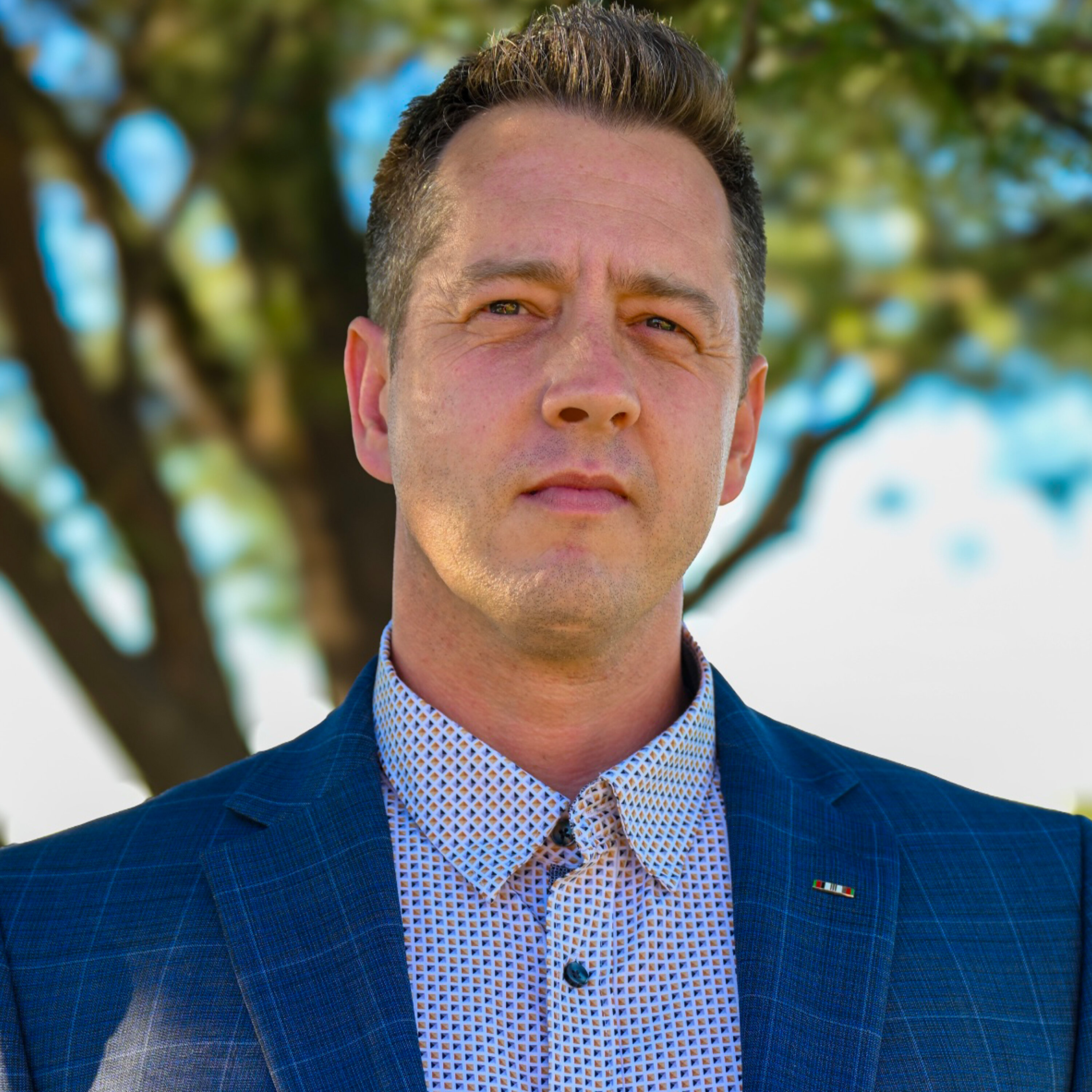
On this episode of Newts World in his new book, the American War on Election Corruption, Seth Keshel draws on his unparalleled expertise to reveal the hidden battles and solutions to restore integrity to our elections. Kessel's impressive knowledge of history, combined with his unique methodologies and understanding of modern election law makes the most compelling case to date that our elections are in dire need of reform. Keshel's military intelligence background informs his methodical dismantling of the way decades of incremental changes, quietly advanced by politicians, bureaucrats and special interests have transformed the American voting system. He presents his signature 10 points to the True Election Integrity, a practical blueprint encompassing same day and in person voting, paper ballots and rigorous scrutiny of voter rolls. Here to discuss his new book, I am really pleased to welcome my guest, Seth Keshel, former Army captain of military intelligence, Afghanistan veteran. His analytical method of election forecasting and analytics is known worldwide and he has been commended by President Donald J. Trump for his work in the field. He writes regularly at his Substack newsletter, Captain K's Corner. Seth, welcome and thank you for joining me again on newtsworld.
- [02:31]
Seth Keshel
Thank you for having me back on.
- [02:32]
Newt Gingrich
Since we've talked, you have really done something pretty remarkable in your new book, the American War and Election Corruption the Crusade to Restore Trust in Voting. It is so timely and you are such an expert in this area that I'm really delighted that you are able to spend some time with us. Tell me just for a minute or two, when you came out of the army, you became, I think, America's leading expert on voter registration and discerned all sorts of long term trends and patterns that nobody in the left wing media wants to cover. And then as part of that process, you realized how really corrupt the election system is in much of the country. What got you into all this?
- [03:20]
Seth Keshel
The last time we did an episode was right before the 2024 election. And we nailed it right on the money. But the election forecasting was a hobby for me. I've always been interested in politics since I was in high school, maybe a greater way to put it, not so much politics, but the fight for liberties, defending freedoms. And I grew up in the south, so naturally I was a Republican oriented young person and voter. And as I got out of the army, my mind was already geared towards statistical analysis as a baseball analyst, but also as an army intelligence officer, taking large amounts of data and trying to condense it into actionable chunks for people to use. So the 2016 election came. I remembered the 2012 election in which everyone that I associated with army officers, of course, just knew that Obama wasn't going to be reelected. And we had a few polls here and there, but we definitely had what I would call fallacy of consensus in which everybody we talked to was a similar demographic. And then the results were Romney won 206 electoral votes. So in 2016, when Trump became the apparent Republican nominee, the polls were busy turning out Clinton plus 15 margins. This was in the springtime before Trump was officially the nominee. And I knew just watching the behavior of the campaigns, you know, Trump was in the industrial Midwest, he was in Wisconsin. These are states that hadn't voted Republican since the 1980s for president. And the polls were showing a landslide, twice the margin there was between Obama and McCain, where everybody knew that Obama was going to carry that election. So I began to deconstruct these polls and go into the state level data where clearly the Trump campaign was working with a different set of information or they were on their way to a historic defeat and they would have to tell everybody why they were in Pennsylvania and Michigan instead of Florida and Georgia and Arizona. So I learned a trick from the historian Larry Schweikart about analyzing voter registration trends. And Larry understood it, and he kept a general rule of thumb that parties that gain in registration gain in margin in the next presidential election. But I put this to the test, I wrote it out and sure enough, at the state level, if you have a large enough sample size, voter registration by party almost never misses, we're looking at a likelihood of trending with the result of over 95% in most cases. And at the state level, it's almost 100%. So I started to look through that. Florida was an obvious Trump win in 2016. North Carolina was an obvious Trump win in 2016. Arizona was going to be one. And then when you compared the known changes there to the track of Pennsylvania and Michigan, which have moved with Florida in every election since 1952, I was able to discern also based on where Ohio looked like it was going, that Pennsylvania and Michigan would go to Trump as well. So I knew the 2016 election result even when Newsweek had Hillary Clinton on the COVID of their magazines before the election and all the aggregates said she had a 98% chance of winning. And after that, that's when I became a real student of following voter registration data.
- [06:15]
Newt Gingrich
I first got involved in looking at your stuff because as you pointed out when we Talked about the 24 election, you were the most accurate person. And you aren't doing it based on this week's polling. You were doing it on very long term patterns of people marching with their feet. What have you seen in the last six months with all the turmoil and all the confusion? What do you see about the trends that you had indicated right after the election were clearly moving towards the Republicans?
- [06:47]
Seth Keshel
There are still only two states out of the 30 that register voters by party that are more favorable for Democrats than they were in November of 2024. Those are new York. And one of the reasons for New York is because they of mayoral primary where everyone knew a Democrat would win. So an inordinate amount of people registered Democrat that is starting to shift back towards the Republicans. The GOP registration gain in February was about 15,000 net. Utah is also slightly left of where it was, but that's a product of a state like that getting much more dense by population and not able to sustain R +39 registration. So all the other states are well more Republican than they were in November of 24. And Florida has a continuous drive towards the GOP, often more than 10,000 every month. It's very rare to have a gain less than 10,000. What that tells me is the transplant settling in other states are overwhelmingly Republican, which I can confirm with data from the Idaho Secretary of State which tracks the party registration status from people from other states. So all the red staters that are worried about Seattle or Los Angeles people moving in, they don't need to be worried about it. Seattle, Portland, Los Angeles all have heavy Republican liens when they send people to Idaho. So Arizona has a similar makeup where you have a large Republican gain since the election. Every county is more Republican or less Democrat than it was in November of 24th. Right now, Democrats are starting to make some marginal gains in Pennsylvania, but I'm not sure if it's tied more to the primaries and voters shifting around to jockey for position in their midterms. But the outlook for the long term for the Republicans, especially when you combine it with the reapportionment in 2030 and fixing the census, is devastating for Democrats in the long run, especially if the Republicans can maintain the Trumpian approach to politics.
- [08:35]
Newt Gingrich
It's very funny. Just as I was getting ready to talk with you, an article came out that there's a new NBC poll. It shows that the Democratic Party is now less popular than ICE.
- [08:45]
Seth Keshel
I'm surprised they even have a 20%
- [08:47]
Newt Gingrich
approval rating given how the media covers it. You would think that they were on a roll. But given how the American people are responding, I think people are sort of getting it that they're not very useful. You raise a very fundamental question in your new book on the American war and election corruption. And that is it doesn't matter how I feel as a citizen, if my vote is going to be stolen and if the election is going to be rigged. What led you to the conclusion that we have a genuine crisis of dishonesty in our voting process?
- [09:22]
Seth Keshel
The voter registration by party. The first sign I had that something was off in the 2020 election was all of those registration trends were blown up. If you read the book, the chapter called 10 points, they can't answer for. That's when I described my presentation at the Cyber Symposium in 2021. So I didn't go in there to talk about anything related to machines. In fact, I am more disposed to talk about the corruption of voter registration and mail in voting. But I talked about these points and I mentioned voter registration by party, how it favored Trump, the Republicans in almost every state. Now, Arizona was an exception, but I believe what happened in Arizona was the corruption of voter registration. Massive Republican gains in Florida, huge Republican gains in Pennsylvania. In fact, the Republican net registration gains from 2016 to and Pennsylvania were a 21:1 ratio, 242,000 net new Republicans and just 11,000 net new Democrats. Yet Joe Biden vanquished Barack Obama's previous voting record in the same year Donald Trump did the same. The breaking of all the voter registration trend data was the first sign for me to look toward a dig because normally if the voter registration indicator fails, it's because some strange circumstance happened. Like Allegheny County, Pennsylvania might move a half a point Republican by registration, but it's got so many nonpartisan vot slightly bump it left, but not by a lot. So looking into where the registration indicators failed, which was almost everywhere, gave me the foundation for the analysis and the shovel to start digging.
- [10:54]
Newt Gingrich
Now, why did that not hold true in 24?
- [10:59]
Seth Keshel
One thing I'd like to point out for your audience is you've given me a new tool on this because I don't think elections are stolen. I think they're rigged like you've said, and the rigging is done in the laws of the states. So what we had in 2020 was a shock, almost like somebody flipped a switch and changed the results overnight. But what has happened, if you go back through the book, in 2015 and 2016, states like California and Oregon started moving to something called automatic voter registration. Now, automatic voter registration is the single biggest sign that a state is going to back a Democrat Presidential candidate Joe Biden won 18 of the 20 states that had it in the 2020 election, 243 electoral votes to nine. And then, even though Trump did marginally better in 24, he, he flipped back Georgia and Nevada and he won Pennsylvania. You have a really big correlation to automatic registration and Democrat voting. And then the expansion of mail in ballots allows organizers to attach mail in ballot requests to the automatic generated registrations. And we have examples of Democrats cheating Democrats in New Jersey primaries and Connecticut primaries that even Biden's FBI investigated. So that is why I believe that in 2024, the rigging of the election was going through the battleground states. Harris only outgained Biden in six states out of 50. And with the exception of Maine and Utah, they were battlegrounds. Pennsylvania, she almost equaled Biden. Michigan, she almost equaled Biden. But in Ohio, she had fewer votes than John Kerry had even 20 years ago. So I believe that it was targeted to avoid having Harris sitting at 81 million votes, which was not a believable number for Joe Biden.
- [12:47]
Podcast Advertiser
Spring is packed. Patios, parties, wedding weekends. And RK0 proof keeps you in the mix without the morning after regret as the original Zero Proof Spirits brand, RK's warm molecule gives you that real deal burn of whiskey or tequila with none of the alcohol, zero calories, zero sugar, and a whole lot of freedom to enjoy the moment. Sip smarter this season@rk0proof.com that's rk0proof.com.
- [13:22]
Newt Gingrich
When you look at all this, the 24 election really was significantly different in makeup than the 20 election. Somehow they turned out votes for Biden in numbers that when you go back and look at them are simply unbelievable. It couldn't have occurred.
- [13:43]
Seth Keshel
81 million votes for someone who didn't campaign, who had all the voter registration statistics going against him. And if you boil it down into the precincts like I do, you'll find that Biden had no enthusiasm in the historically Democrat dominated heavily black counties on the eastern seaboard, like Baltimore City or Bronx county, which is the number one Latino majority county in the northeastern United States. But in Georgia, the black counties surrounding metro Atlanta, so Fulton county at DeKalb county, also in Cobb and Gwinnett, Biden's gains were as high as 46% over Clinton's totals. So very selective gains in the key battlegrounds and when it had to happen the most.
- [14:21]
Newt Gingrich
So Biden himself may not have been all that with it, but he has some people around him who are obviously
- [14:27]
Seth Keshel
very, very clever, very strong organizational skills, and they also commanded the narratives of the 2020 election. We had the coronavirus, which gave the green light to change the laws on the fly. So ever since we've had the movement's automatic registration and mail in voting, what's happened is the capacity for a new ballot count has spiked. It's like if you followed baseball in the 90s, which I'm sure you probably did back in those days, but you would have guys that would average 20 home runs a year, and all of a sudden, for a five year sprint, they'd hit more than 40 a season. So now because of a certain input, the outputs have changed. The home run counts are different, so now the ballot possibilities are much different as well.
- [15:09]
Newt Gingrich
And you cite this universal mail in voting as a major problem, which goes back to the question about rigging elections. It seems to me the American public is becoming more and more offended by that kind of manipulation. And that's part of why there's so much strength on behalf of some kind of requiring people to prove who they are. It's an 80 something percent issue, but the Democrats, of course, are bitterly opposed to it. How do you think that works out?
- [15:40]
Seth Keshel
Ultimately, the mail in voting is widely rejected throughout the world. 34 out of 47 European countries completely ban the practice. And some of the ones that allow it only allow it for citizens overseas, where we're only talking about thousands of people, not tens of thousands or hundreds of thousands of people. You can look at a lot of other major countries around the world, Russia, Japan, Mexico, Israel, all banned mail in voting. Jimmy Carter, on a bipartisan commission in 2005, concluded on his panel that mail in voting was the most significant vector for corrupting elections anywhere possible. So anywhere you look you can find people even back to the Civil War. McClellan's operatives trying to deprive Abraham Lincoln of New York's electoral hosts. Which wound up coming down to one point that's documented in the book. Dr. John Lott's research about mail in balloting when she was putting out screaming from the rooft in the summer of 2020 is also in that book. But look, the mail in voting allows for ballots to be generated. A ballot is the same as an enthusiastic vote as far as what it counts for on the scoreboard. And ever since Obama left the scene, the Democrats main problem they have many of them but they no longer have enthusiastic and reliable turnout from minority men, especially black men. And the way to get those in is to change the rules to make sure that they can just go be passively picked up by harvesters. So the three things that blue states run to automatic voter reg. Expanding mail in voting. There's eight states with universal which send a mail ballot out to every registration and then collecting the ballots in the urban areas which we will not be able to keep up with. Of course they have. The other issue of the white working class has shifted size and now backs Republican candidates. So that's their problem throughout the heart of Pennsylvania and Michigan.
- [17:22]
Newt Gingrich
And do you see any sense at all that folks in the core MAGA coalition are likely to be turned off? I worry a lot about whether there'll be enough enthusiasm this fall to get them to vote.
- [17:38]
Seth Keshel
This is why the information war is so important. And this is why I think that people that write legitimately actionable books do what they do. We do have some dissension in the ranks. There's a lot of senior citizen voters in Florida and Arizona like their mail in ballots. But no workaround for that is what Governor DeSantis did in 2022 signing the Senate bill that forced tightening restrictions on mail in votes. Nobody is disallowed from requesting or sending in a mail invoke. You just have to verify your address on a postcard and sign to confirm that that's you. It's very hard for a fake registration that doesn't exist on a person to request a ballot. So Arizona has a bill like that ready. But Katie Hopps won't sign it. My wife Rachel is a state representative in Arizona. She sponsored tons of legislation about bringing elections back to the precinct to get it back to voting in person. But a lot of this is in the SAVE act about fixing a lot of the Issues with voter registration and of course it has ID specifications. But the voter registration is important and I'm excited about the SAVE act and everyone needs to get behind it because it will gut automatic voter registration by requiring in person proof of citizenship. It will also gut online voter registration. But the existing problem is going back and trying to figure out how to deal with non maintained voter registration files, especially in states like Georgia.
- [18:55]
Newt Gingrich
Let me go back to where you live. I mean Maricopa county is a huge share of Arizona and it seems to always have some kind of voter problem. Is that incompetence or deliberate or what's the actual process by which Maricopa. Why is it such a problem?
- [19:15]
Seth Keshel
Arizona and Nevada are essentially mirror images of one another. Nevada sits left of Arizona, but Maricopa county plus Pima county, which is metro Tucson and the surrounding area, they add up to more than 75% of the vote. Pima and Maricopa counties, if you look at Nevada, Clark and Washoe counties are more than 88% of the vote. So seven of every eight votes in Nevada come from Clark and Washoe counties. It's very easy then for big margins in those counties to override the margins of what Nevada has, which is 15 surrounding counties and Arizona has 13 surrounding counties. So there is a definite play on the part of local officials. You can see it in the 2022 lawsuits for Arizona governor and the down ticket races on election day knowing Republicans were going to overwhelmingly in person, 3 to 1 ratio. Voting machines were shutting down in only Republican portions of town lines were four hours long and people were turned away. One of the pollsters, Richard Barris, said that if he would have had the normal turnout based on not being turned away, the statistics would have suggested Kerry Lake and the rest of the Republicans on the ticket would have won that race. So it's easy to rig elections without necessarily doing anything objectively illegal as far as the ballots themselves are contained. So that is definitely going on. Pima county is a good example. That is the county I live in with my wife Rachel. And we found in the 2024 election one of Rachel's old constituents had moved to Texas and went back on Arizona's portal because they did not remove her from the registration list or the mail list and contacted my wife and said that her ballot on the portal had been requested in return. It was awaiting signature verification. So we raised hell about this. My wife contacted the recorder of Pima County. She's a liberal activist and of course the office dodged that, said that it was an error on the and that the ballot had been destroyed. But this leads me to wonder if people are casing a change of address database or looking for vacant registrations to land fraudulent mail ballots on, which is actually what the methodology is in places like New Jersey.
- [21:30]
Newt Gingrich
You're clearly one of the leading, if not the leading, expert in the country on this topic. But this book's coming out at a very important time when the country's facing some really big decisions. What prompted you to decide that right now you had to bring this book out?
- [21:50]
Seth Keshel
It was Larry Schweikart again, the guy who first tipped me off about voter registration. We did a show on election night covering election covers to give an alternative means of following along for the public that didn't want to watch mainstream coverage. He and I followed along with what we both predicted, you and I, in the months up and the election turned out exactly like we knew it would. And over the coming months, we talked about the forecasting models, watching voter registration shift towards the gop. And he was talking with this publisher, Postal Press, Anthony Zuccardi, and mentioned what we'd been doing, mentioning that all the states were moving a Republican. And the guy asked, do you think he, meaning me, has a book in him? And up until this time, a lot of people have been following my newsletter and my work around the country, wondered if I would ever write a book. And my answer was that I didn't think that the chapter was ready to close yet, that it was time to write a book. And when that was brought up, I figured that we'd reached a point where we could definitely make some lessons learned out of the 20, 22 and 24 election cycles. And that is where the American war on election corruption was born. And I think that one of the great things about you writing the forward is that it's difficult for grassroots types to break in and influence the overall conversation. So giving credibility from the mainstream Republican Party and getting that into the bloodstream there is essential to shaping the conversation. That's one thing we learned about Charlie Kirk. A lot of people said Charlie wasn't extreme enough on this issue or that, but Charlie was able to access the biggest portion of the electorate for change, and he knew exactly what he was doing. So if we can't change the minds of the disengaged, nominally Republican voter, then we're going to have a very hard time advancing these concepts anywhere else. And it's simple. We could run fair elections and transparent elections if we wanted to, because we ran them 40 years ago.
- [23:36]
Newt Gingrich
I look at France and if I understand it correctly, the French vote in one day and have the result by the end of the day. Now, if the French can do that, why can't we?
- [23:49]
Seth Keshel
Because our precincts are too large and people are creating the disease to sell the cure. In Arizona, I point this out in the book. There are at least 17 precincts in Maricopa county that have more than 5,000 registered voters in the precinct. So with precincts that big, especially if you go to places like Atlanta, then the press is going to cry about voter suppression. If you try to push people to vote in person and limit access to mail in voting and early voting, I tend to believe that early voting is less about access as it is that provides a window to collect the mail in ballots. I did an exercise one time with Orange County, California, and I think I determined that for about $300,000, you can hire enough ballot collectors to produce another 100,000 more in the count. Which, by the way, Harris lagged Joe Biden in Orange county by 100,000 votes. Kamala Harris managed to lag Joe Biden by 1.8 million votes in her own home state, when everyone knows that a presidential candidate has an advantage in his or her own home state. So that's why my belief in the 2024 election is that New York, Texas, Florida, California, Illinois, these big states with big red or blue margins were left to run as they normally would run. And the results were astounding. Of course, Trump ran up his scores in Texas and Florida. Texas was the biggest surprise to me. As far as red state goes. I figured Trump would win it by eight points. He won it by 14. That's the big Latino shift. But you can look at the precinct problem. Rachel, my wife, has run legislation trying to get precincts reduced in size. So you don't have these 5,000 registered voter precincts trying to get it down below 2,500. That's the first step to providing elections in which people can vote in person and not have long lines wrapping around the corner, wrapping around the firehouse. But until we can get elections into a smaller subsection like that, we won't be like France, because France breaks it down enough where you can vote in person. People can tabulate the ballots at the precinct and then report up like it's supposed to happen. Now we have a big backlog at the central count. Urban areas report late, which is, I think, a bit convenient for them. I'm not sure how Pennsylvania would react if 65 counties waited for Philadelphia and Pittsburgh to report and then came in with consistently pro Republican margins every election.
- [25:57]
Newt Gingrich
That is how they used to do it.
- [25:59]
Seth Keshel
I think that we should have laws on the books that require the 10% of largest counties to report their votes first.
- [26:05]
Newt Gingrich
In the old days, like in New York, and Roosevelt was running for governor, I think it was in 30. And upstate New York was very Republican and tended to vote suspiciously strongly. And he talked to the boss of Brooklyn who said to him, there's going to be a very long count, and I guarantee you there'll be enough precincts out when Buffalo finishes that you will be governor. Both sides were stealing like crazy. And the question was, who had the nerve to steal last? It was a different world.
- [26:40]
Seth Keshel
You had the Hayes and tilden race of 1876. The same thing was going on. People were pushing the other party's voters out. People were stealing votes and doing everything they could. And one personal point of interest for me was when I was researching the book, I had to recount what I remembered from Afghanistan in 2010. The elections that were held in 2010, which is the year I was serving over there, they were a complete disaster. More than a quarter of the ballots were invalid, thrown out. They were finding ballots all over the place. People were buying off votes there. Certain places in the country where the elections weren't even certifiable, but we put a stamp of approval on it and moved on. And that was my first experience with corrupted elections. To me, it's not so much about who wins the election, it's about the public confidence in the process, because if we don't have it, then we don't have the consent of the governor, we don't have the constitutional republic. But the loss of Trump as president spurred a lot of people that care about our elections. There is a risk for people that are interested in election integrity that now that he's back in the presidency, that maybe this was just a bad dream. It's not. Our elections are fundamentally different from where they were even 10 years ago.
- [27:43]
Newt Gingrich
It does seem to me that on our 250th anniversary of signing, the declaration is a pretty good time to reestablish the integrity of the system, because we believe that every single person has equal right under the law in a way that's really quite different from a lot of other countries. But if, in fact, you can't have your ballot honestly counted and you are simply drowned by a series of false votes, then you have broken the core social contract that made America unique.
- [28:20]
Seth Keshel
The point of elections is to make sure that we can resolve these differences peacefully. Before voting became a thing, people had far different means of obtaining power and it wasn't really good for the world. If we don't have that ability to redress our grievances peacefully, you're going to have a corruption of where society should be. It's not going to be a good place to live. And we can see that in places around the world that have broken government and broken election systems. And we can even see it here at home where certain people have given up on the chance to reform states and they move en masse to states that they perceive to be more open to self government.
- [28:52]
Newt Gingrich
You wrote a very important book, the American War and Election Corruption, the Crusade to Restore Trust in Voting. But in addition to that, what you do every day, you stay in touch with newsletters and you have live appearances. Talk just for a minute about if people want to stay in touch with you and track as we go through not just this year but 2028, what are the best ways for them to be able to follow your work?
- [29:20]
Seth Keshel
My newsletter, Captain K's Corner, is a bestseller on the substack platform, which is a unique social media it's not really social media, but it's a unique platform in that it attracts a certain type of reader that enjoys deep reads, deep analysis, more so than the pithy insults that you find on places like X or the quote retweets and trying to dunk on people. And CaptainK US is the URL for that. And that is a 34,000 plus mailing list and a large paid subscriber base. It's got significant analysis for all the events that are going on in the world, and I usually extend that to anything to do with the current state of politics or election analysis around election time. I make predictions and forecasts and put my work out there. And any sort of geopolitical events, especially those of a military nature, I like to analyze those as well. I think my perspective as an intelligence officer allows me to see the playing field a little bit differently. And obviously that's helped me understand the conflict in Iran right now in a way that a lot of people online are frustrated about. They don't understand.
- [30:20]
Newt Gingrich
I do think you have a unique background in that sense, and I do want to encourage everyone to both read the book and share with your friends. But also pay attention to what Seth does on a regular basis because you'll find that both going into this fall and then going into the 28 election, that you'll just know a heck of a lot more than your friends and neighbors. If you actually keep up with the work that Seth is doing, I want to congratulate you. Your book is off to a great start. It's not a topic you would automatically think of as a bestseller, but it is a bestseller. And I think that the President actually, in his effort to pass the SAVE act, he ought to share your book with every member of the House and Senate in both parties. I want to thank you for joining me and your new book, the American War on Election the Crusade to Restore Trust in Voting, is available now on Amazon and in bookstores everywhere, and our listeners can follow the work you're doing by joining you on substack at Captain Kay's Corner.
- [31:22]
Seth Keshel
I am thankful for your leadership for many years that you've provided. I appreciate the help that you've given me to boost this book and what the forward. People have loved listening to the forward and the overarching viewpoint that you present. And I agree with you. I would love for the President to get his hands on this book and push it out there, not for my sake, but for the sake of pushing this discussion into the mainstream because I didn't take a lot of logical leaps on the book. Everything is well researched, everything is sourced, and a lot of my. More I guess you could say extreme opinions of what I think is going on aren't in the book. This is something you should be able to give to anybody and make that conversation. So thank you again for having me on.
- [32:03]
Newt Gingrich
Thank you to my guest, Seth Keshel. New World is produced by Gingrich 360 and iHeartMedia. Our executive producer is Garnesy Sloan. Our researcher is Rachel Peterson. The artwork for the show was created by Steve Penley. Special thanks to the team at Gingrich360. If you've been enjoying Neutral, I hope you'll go to Apple Podcast and both rate us with five stars and give us a review so others can learn what it's all about. Join me on substack@gingrich360.net I'm Newt Gingrich. This is Newts World. This is an iHeart podcast.
- [32:50]
Podcast Advertiser
Guaranteed Human.