Loading summary
Transcript62 lines
- [00:00]
Weatherbug Announcer
This is an iHeart podcast. Guaranteed Human no one knows what the future holds, but you deserve a weather app that can help. Weatherbug is easy to use and provides forecasts for your every need from storm warnings to pollen levels right at your fingertips. Get the fastest local Alerts and comprehensive 10 day forecasts wherever you are. Its hyperlocal real time customizable alerts make sure the weather never takes you by surprise so you can plan every day with confidence. Download the free Weatherbug app from the App Store today and start getting accurate weather forecasts forecasts 24. 7
- [00:35]
Public Investing Sponsor
support for the show comes from Public, the investing platform for those who take it seriously. On Public you can build a multi asset portfolio of stocks, bonds, options, crypto and now generated assets which allow you to turn any idea into an investable index with AI. It all starts with your prompt. From renewable energy companies with high free cash flow to semiconductor suppliers growing revenue over 20% year over year, you can literally type any prompt and put the AI to work. It screens thousands of stocks, builds a one of a kind index and lets you back test it against the S&P 500. Then you can invest in a few clicks. Generated assets are like ETFs with infinite possibilities, completely customizable and based on your thesis, not someone else's. Go to public.com podcast and earn an uncapped 1% bonus when you transfer your portfolio. That's public.com podcast paid for by Public Investing Brokerage Services by Open to the Public Investing Inc. Member FINRA and SIPC Advisory Services by Public Advisors llc. SEC Registered Advisor Generated Assets is an interactive analysis tool. Output is for informational purposes only and is not an investment recommendation or advice. Complete Disclosures available at public.comDisclosures Flag Football
- [01:37]
IFLAG Flag Football Sponsor
is exploding and IFLAG is leading the way as the Guinness World Record Holder. Iflag hosts premier flag football tournaments nationwide for boys, girls, high school girls and adults. From first time players to elite competitors, iflag delivers top level competition, unforgettable experiences and a community built around the game. Ready to be part of it? Join the movement, find your tournament and learn more@iflag.org that's iflag.org tired of spills
- [02:07]
Annabe Sofa Sponsor
and stains on your sofa? Wash away your worries with Anabe. Annabe is the only designer sofa that's machine washable inside and out. Starting at just $699 plus. Annabe sofas are pet friendly, stain resistant and feature changeable slipcovers and modular pieces. Get up to 60% off site wide with a 30 day money back guarantee visit washablesofas.com to get yours. Now that's washablesofas.com offers are subject to change and certain restrictions may apply.
- [02:41]
Newt Gingrich
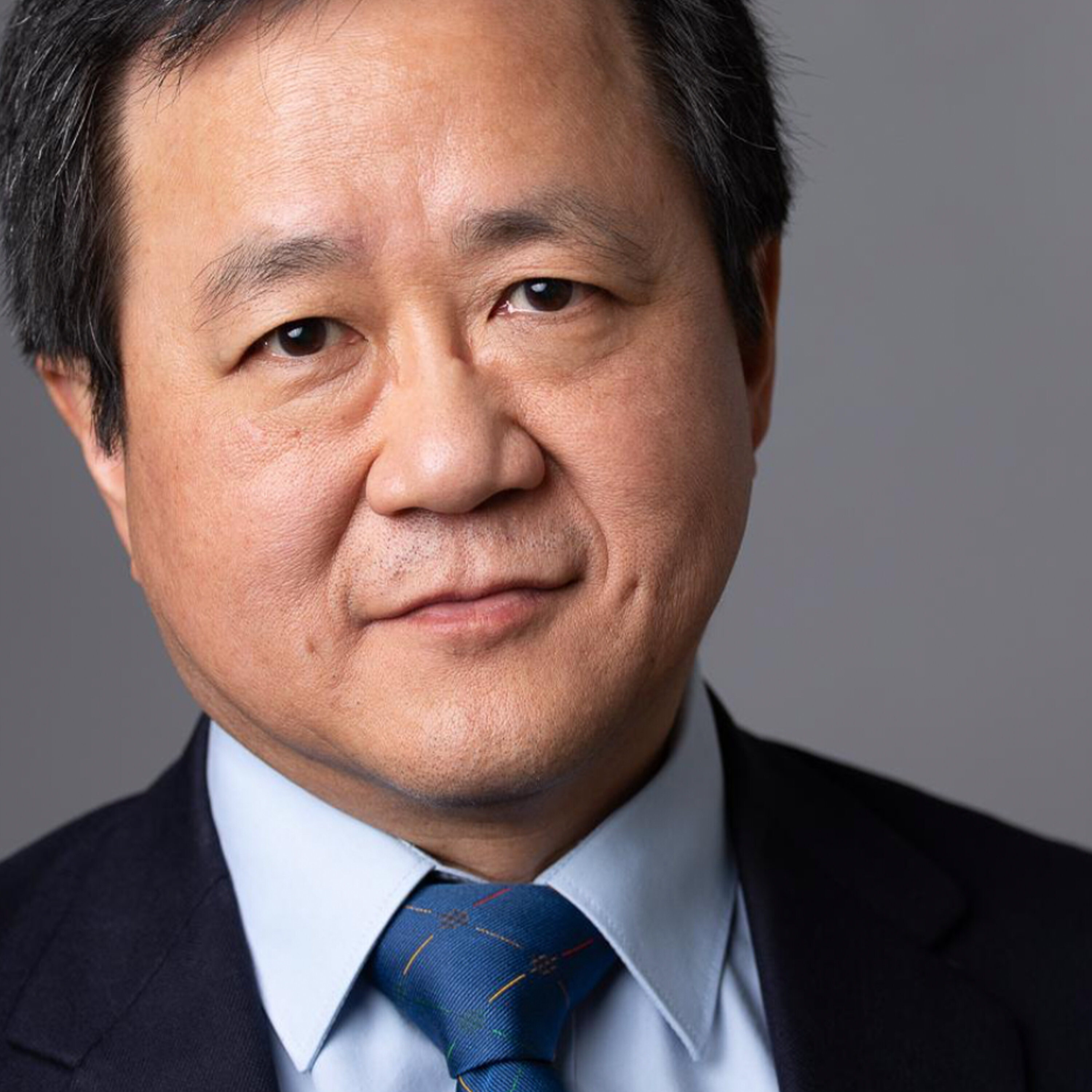
On this episode of Newts World. As the United States and Israel continue their attacks on Iran, I wanted to explore the broader global impact that the war in Iran could have, particularly with China. I'm really pleased to welcome my guest, Steve Tsang, director of the SLAS China Institute. Steve, welcome and thank you for joining me on Nature.
- [03:20]
Steve Tsang
Well, thank you for inviting me.
- [03:22]
Newt Gingrich
Describe a little bit the SOAS China Institute.
- [03:26]
Steve Tsang
Well, the SOAS China Institute used to be called the School of Oriental and African Studies, and we are one of the largest concentration of China specialists in a European university. And we work on China without fear or favor. So when the Chinese government or China as a whole does something that we should appreciate, we say so. But if it says something or does something which is not so good, we will criticize it openly.
- [04:02]
Newt Gingrich
From your perspective, how do you think the Chinese see the Middle east today?
- [04:10]
Steve Tsang
Well, the Chinese government sees the Middle east as offering good opportunities for China. We have to bear in mind that China today is not the China of 15 years ago or earlier. China today under Xi Jinping's leadership, has a well developed global strategy. And that global strategy is not on the one hand, simply competing with the United States for global hegemony, but it is about establishing Chinese global preeminence for which the United States undermining its global standing and support from the international community would be helpful. And from their perspective, at the moment, the United States is doing a very fine job fulfilling Xi Jinping's global strategy in the Middle East. It is alienating friends. It is making the US Appear as a bit of an unreasonable hegemon.
- [05:20]
Newt Gingrich
From that perspective, how do you analyze the recent purging of the Chinese military?
- [05:27]
Steve Tsang
The purging of the military. I mean, here we really are talking about the purge of the single most senior and important figure in the Chinese military, General Zhang. You Sha. Now, General Zhang was not only the most senior officer in uniform in the Chinese military, but he's also somebody who had a strong personal and family connections with Xi Jinping. So if any Chinese general could try to pursue a path of modernizing the People's Liberation army in the way that he think is most appropriate, but not necessarily following every single word of Xi Jinping, that would have been General Zhang Yousha, who has indeed long past retirement age and was kept in office by Xi Jinping by special arrangement. And that I put it to you sir was exactly the reason why he was being sacked because he was not simply doing everything Xi Jinping has said needs to be done. Xi focused on strengthening the political loyalty and party control over the military. General Zhang Yousha did a bit more in terms of promoting the professionalism of
- [06:51]
Newt Gingrich
the military Was it designed to consolidate Xi Jinping's unchallengeable power or to send a signal about shaping the military in a certain way?
- [07:04]
Steve Tsang
Well, it's a bit of both. The problem with Xi Jinping, a problem he created is that in his last 10 years he has replaced collective leadership by his own strongman rule. When you became the strongman leader you have to constantly remind others that you are in control and in charge. So even people who were promoted by him as his proteges will have to be purged in this new paradigm Whereas in his first 10 years in office he did not purge one of his own proteges at all. Now, in terms of the strengthening of the PLA Xi Jinping believes that it is vitally important to make sure the PLA is first and foremost loyal to the party and to him as supreme leader. That will give the military great fighting capacity. But General Zhang realized that moving forward the PLA may well actually have to get into combat for which military professionalism and actual training and combat readiness is more important than just political loyalty. Not saying that he disregards the political loyalty he simply did not put political loyalty ahead of the actual combat capacity and this is where the problem comes in. But once you have somebody like General Zhang youh being removed by Xi Jinping for doing what he thought was the right thing for the military I don't think you are going to find another general in the PLA who will attempt to do that moving forward. They will simply say to Xi Jinping yes, sir, if you want me to jump My only question, sir, is how high not whether jumping on this moment is going to be right or whether it is going to bring the ceiling down in the floor below.
- [09:04]
Newt Gingrich
Some people have suggested that Xi Jinping now has so consolidated power that he may be the most powerful Chinese leader since Mao Zedong.
- [09:17]
Steve Tsang
I think he is clearly the most powerful leader since Mao Zedong and I think Xi Jinping is aiming to be the most powerful leader including from when Mao Zedong was in power. He is not trying to imitate Mao Zedong he is not going to attempt a restoration of the Mao Zedong era He is creating, establishing and consolidating the Xi Jinping era which he believes will be the greatest ever which means in
- [09:46]
Newt Gingrich
Part that he's much more dangerous in the long run than Mao.
- [09:52]
Steve Tsang
In the long run, yes. There is a global vision that Xi Jinping has envisioned for China, and that vision is one of establishing the Chinese global, not regional, preeminence. And I use the word preeminence very carefully, because he is not intending to establish Chinese global hegemony in order to replace American global hegemony. He has no intention of filling in the shoes that America may willingly or unwillingly be forced to vacate. He is creating a new pair of shoes to replace the old pair of shoes, and it will be designed by China at Chinese standards and at a timing of China's choosing. But he does indicate that he would expect this to be achieved when it reached the point of the centenary of the People's Republic of China, and therefore 2049 or 2050 at the absolute latest.
- [11:02]
Newt Gingrich
I think we in the west probably, even though we're currently celebrating our 250th anniversary as a country, we probably underestimate how important psychologically that date is in commemorating the consolidation of China under the Communists. And that setting goals for that date sort of supercharges them emotionally.
- [11:28]
Steve Tsang
Oh, I think you're right. It is absolutely important to Xi Jinping. It will not necessarily be so important to the Communist Party as a whole. I mean, they would always have wanted it to be a big celebration. But Xi Jinping had defined that as the date when his China dream of national rejuvenation needs to be achieved. And his idea of the China dream of national rejuvenation, if I may borrow from your president's language, is to make China great again. And make China great again is about recreating what Xi Jinping believed was the rightful and best time in human history. And he believed the best time in human history was when China was number one in the world. So powerful, so rich, so advanced, so civilized, that every other nation would warrantarily choose to defer to China, respect China and embrace Chinese leadership. And that's what he meant, that China will not need to exercise hegemony, but China's preeminence will simply be embraced. Now, of course, that's very bad history. But since Xi Jinping has also banned any other version of history than the Communist Party's version of history in China since 2013, what he says is now, therefore, history in China.
- [13:02]
Newt Gingrich
I think, as seen, for example, by Vietnam, Chinese preeminence may not be that good a deal.
- [13:09]
Steve Tsang
Absolutely. And in fact, you will have many other countries in the vicinity of China who would rather contest the Xi Jinping version of Chinese global preeminence historically, because the history that others would remember would be that when China was number one, China behaved exactly the same as the Roman Empire or the Persian Empire or the Ottoman Empire in its heydays, or for that matter the British Empire in the modern era. Except that when it comes down to the narrative from Beijing, they make a clear distinction. When it's being practiced by China, by definition, they do it in quotation marks, the kingly way, the civilized, gentlemanly, non hegemonic way. Whereas if the same thing is being practiced by any other empire, then it was a tyrannical hegemony. But you could be doing exactly the same.
- [14:26]
Weatherbug Announcer
No one knows what the future holds, but you deserve a weather app that can help. Weatherbug is easy to use and provides forecasts for your every need, from storm warnings to pollen levels right at your fingertips. Get the fastest local Alerts and comprehensive 10 day forecasts wherever you are. Its hyperlocal real time customizable alerts. Make sure the weather never takes you by surprise so you can plan every day with confidence. Download the free weather bug app from the App Store today and start getting accurate weather forecasts 24. 7
- [14:56]
Public Investing Sponsor
support for the show comes from Public, the investing platform for those who take it seriously. On Public you can build a multi asset portfolio of stocks, bonds, options, crypto and now generated assets which allow you to turn any idea into an investable index with AI. It all starts with your prompt. From renewable energy companies with high free cash flow to semiconductor suppliers growing revenue over 20% year over year, you can literally type any prompt and put the AI to work. It screens thousands of stocks, builds a one of a kind index and lets you backtest it against the S&P 500. Then you can invest in a few clicks. Generated assets are like ETFs with infinite possibilities, completely customizable and based on your thesis, not someone else's. Go to public.com podcast and earn an uncapped 1% bonus when you transfer your portfolio. That's public.com podcast paid for by Public Investing Brokerage Services by Open to the Public Investing Inc. Member FINRA and SIPC Advisory Services by Public Advisors llc SEC Registered Advisor Generated Assets is an interactive analysis tool. Output is for informational purposes only and is not an investment recommendation or advice. Complete Disclosures available at public.comDisclosures Flag Football
- [15:58]
IFLAG Flag Football Sponsor
is exploding and IFLAG is leading the way as the Guinness World Record Holder. Iflag hosts premier flag football tournaments nationwide for boys, girls, high school girls and adults. From first time players to elite competitors, IFLAG delivers top level competition, unforgettable experiences and a community built around the game. Ready to be part of it? Join the movement, find your tournament and learn more@iflag.org that's iflag.org tired of spills
- [16:28]
Annabe Sofa Sponsor
and stains on your sofa? Wash away your worries with Anabe. Annabe is the only designer sofa that's machine washable inside and out starting at just $699 plus. Anabe sofas are pet friendly, stain resistant and feature changeable Slipcovers and modular pieces. Get up to 60% off site wide with a 30 day money back guarantee. Visit washablesofas.com to get yours. Now that's washablesofas.com offers are subject to change and certain restrictions may apply.
- [17:03]
Newt Gingrich
This is mythology of the peaceful China, but in fact, if you watch the gradual growth of the Han, they're gradually absorbing all sorts of people around their periphery.
- [17:14]
Steve Tsang
Well, indeed. I mean, Xi Jinping talks about China's 5,000 years of history where China evolved from a principality in the Yellow river basins to a continental size empire. And he said China had never invaded anybody, ever. That there's not one single imperialist gene in the Chinese gene pool. Well, a lot of people who are now living in the boundaries of the PLC may disagree if they were allowed to do so. And even the concept of Han itself was a very mixed one, because if you look at the Terracotta army, you would see that the soldiers in the Terracotta army have very different features. Some of them have features that are very oriental looking, some of them have features that are Caucasian looking. And so even in that conceptualization, when China was being brought together in the first Empire under first emperor of Qin, the Qin army itself was cosmopolitan rather than one single ethnic group.
- [18:33]
Newt Gingrich
And then we're talking about 200 BC. There's a long tradition here. It's important for people to realize that Xi Jinping in fact makes up the history that is appropriate for what he wants to do.
- [18:44]
Steve Tsang
Absolutely. And the history is there to, in that language, serve the people who are the people. The Party represents the people.
- [18:54]
Newt Gingrich
So from that perspective, how do you think Xi Jinping and his team think about the Middle East?
- [19:00]
Steve Tsang
Well, the Middle east matters to China because the Middle east is an important source of energy security for China, which still really matters. The Middle east is an area which historically has tied the United States down. The Middle east is an endless source of conflict and trouble which will make whichever country happen to be the Global hegemon, a lot of headache. The Middle east is part of the Global South. And in Xi Jinping's conceptualization of the New World Order, the Global south is very, very, very important indeed. And because Xi Jinping talks about the, in his words, the internationalization of international relations and the construction of this conceptualization is that the Global south constitutes a clear, indeed overwhelming majority of the world's population and the same of member states of the United nations. And with China being forever, again, his word, forever a part of the developing world, therefore the Global South, China is the natural leader. China represents the interests of the Global South. Therefore, the international system, including the UN needs to be democratized and put not to the interests of the elitist, small democratic west first, but put the interests of the overwhelming majority Global south as represented by China first, then you have a better world. And that is how that transformation is meant to happen. Not by creating a new world order to replace the existing one, but by capturing the existing one to make it into something different. But that can only be done with the support of the Global south. And the Middle east is an important part of it.
- [21:05]
Newt Gingrich
Given that, where does Iran fit into Xi Jinping's thinking and his approach?
- [21:14]
Steve Tsang
Well, Iran has been an important comprehensive strategic partner for China. And China was able to use its relationship with Iran not only for strengthening energy security, but also for achieving a significant diplomatic success when China bookered a rappart Mormon between Saudi Arabia and Iran before the Gaza war started. And since the Gaza war, Iran was able to cause a lot of disruptions which caused a negative light on the United States for supporting Israel very, very closely and therefore strengthen China's standing in the Middle East. That China is projecting that China is there without private self interest, but supporting the oppressed people against the Israeli aggressions back up by American hegemony. That's the kind of narrative they are able to put forward. And if you're looking at people in the region, the Chinese narrative does have some attractions.
- [22:37]
Newt Gingrich
Does President Trump's decision to attack Iran once again undermine the efforts of the Abrahamic Accords in the effort to create a common front among the Arab countries?
- [22:51]
Steve Tsang
President Trump's attack on Iran from the Chinese perspective poses some problems, serious problems, but also create a huge amount of advantages to China. The first thing that would present is that if the Western alliance criticized Russia for the war in Ukraine, how can the Western alliance not criticize the United States for using force against Iran? Because there is no more threat posed by Iran to the US Directly immediately prior to the conflict than there was posed by Ukraine to Russia. So that was a helpful thing for them. And the very substantial disruption of the global economy will be pinned on the United States because the United States started the war, China didn't do it. And the Chinese, before the conflicts started earlier this year, was working very hard to buy as much oil as they could to increase the strategic oil reserve because they were expecting that the US might well use force against Iran. So they are preparing for it and it takes them a few months before they will really feel the economic pinch. But in the meantime, Western economies and economies in the global south which are not prepared for the war are suffering and they will be blaming the United States for it.
- [24:39]
Newt Gingrich
Is China comfortable with the idea that they too may be caught up? Look at the Strait of Hormuz, which is the current big topic and it strikes me, correct me if I'm wrong, but the one set of tankers that have been getting through are carrying oil to China.
- [24:59]
Steve Tsang
The Chinese are not completely comfortable with that at the moment. The reasons why I think the Chinese are not completely comfortable with that at the moment is that it looks like that the Iranians have delegated the powers to attack shipping across the Strait of Hormuz to local commanders, that the central command and control system of the Uranium Armed forces has not yet been fully restored to good functionality. So until that is being delivered, the Chinese cannot be sure that the local Iranian commanders will be able to differentiate a Chinese ship from a non Chinese ship and guarantee this absolute safety of a Chinese ship sailing through the Strait of Hormuz. But when Iran get back to a situation where that command and control is fully re established, then the Chinese will feel much more comfortable that the Iranian partners would respect Chinese shipping. And after all, a lot of the Chinese shipping going through the Strait of Hormuz are going to Iranian ports buying Iranian oils and sending them back to China, which is a mutually beneficial thing.
- [26:23]
Weatherbug Announcer
No one knows what the future holds, but you deserve a weather app that can help. Weatherbug is easy to use and provides forecasts for your every need from storm warnings to pollen levels right at your fingertips. Get the fastest local alerts and comprehensive 10 day forecasts wherever you are. Its hyperlocal real time customizable alerts make sure the weather never takes you by surprise so you can plan every day with confidence. Download the free Weatherbug app from the App Store today and start Getting accurate weather forecasts 24. 7
- [26:53]
Public Investing Sponsor
Support for the show comes from Public, the investing platform for those who take it seriously on Public. You can build a multi asset portfolio of stocks, bonds, options, crypto and now generated assets which allow you to turn any idea into an investable index with AI. It all starts with your prompt. From renewable energy companies with high free cash flow to semiconductor suppliers growing revenue over 20% year over year, you can literally type any prompt and put the the AI to work. It screens thousands of stocks, builds a one of a kind index and lets you back test it against the S&P 500. Then you can invest in a few clicks. Generated assets are like ETFs with infinite possibilities, completely customizable and based on your thesis, not someone else's. Go to public.com podcast and earn an uncapped 1% bonus when you transfer your portfolio. That's public.com podcast paid for by Public Investing Brokerage Services by Open to the Public Investing Inc. Member FINRA Advisory Services by Public Advisors llc SEC Registered Advisor Generated Assets is an interactive analysis tool. Output is for informational purposes only and is not an investment recommendation or advice. Complete Disclosures available at public.comDisclosures Flag Football
- [27:55]
IFLAG Flag Football Sponsor
is exploding and IFLAG is leading the way as the Guinness World Record Holder. Iflag hosts premier flag football tournaments nationwide for boys, girls, high school girls and adults. From first time players to elite competition competitors, iflag delivers top level competition, unforgettable experiences and a community built around the game. Ready to be part of it? Join the movement, Find your tournament and learn more@iflag.org that's iflag.org tired of spills
- [28:24]
Annabe Sofa Sponsor
and stains on your sofa? Wash away your worries with Anabe Anibe is the only designer sofa that's machine washable inside and out. Starting at just $699 plus. Anabe sofas are pet friendly, stain resistant and feature changeable slip covers and modular pieces. Get up to 60% off site wide with a 30 day money back guarantee. Visit washablesofas.com to get yours. Now that's washablesofas.com offers are subject to change and certain restrictions may appreciate from
- [29:02]
Newt Gingrich
their standpoint, how big a problem would it be if the United States did in fact succeed in replacing the current dictatorship?
- [29:15]
Steve Tsang
Now if the Americans can replace the existing Iranian regime with a new regime that is stable and an American puppet regime, they would not be very happy about it in the overall aggregate. But then there would be the advantage that stability and order to the international economic order would be restored. So it was not terrible result. But I don't think the Chinese are calculating on that basis. I don't think the Chinese see it as a realistic pushback that the United States will be able to replace the Iranian regime. Because all that the Iranian regime needs to do is to survive. And unless Americans are prepared to put in ground troops in substantial numbers, it is very unlikely that the United States can deliver a regime change. And the Chinese would certainly be happy to do what the Iranian friends asked them to do to support the regime to survive in this crisis.
- [30:23]
Newt Gingrich
How much of a danger is there that by forcing American combat power to focus so strongly on the Persian Gulf and on the Iranian regime, that we actually create a deeper imbalance around Taiwan and almost create an opportunity for the Chinese communist regime because, in fact, we don't have the capacity to project power in both places simultaneously.
- [30:55]
Steve Tsang
Well, the Chinese will be watching that very, very carefully, and they are certainly pondering that very question. And I think the first sign that the Chinese are seeing that effect in the Indo Pacific Command of the United States is when the news came out, I think yesterday or day before that. America may well be redeploying the Patriot and thaad batteries from South Korea to the Middle East. And that's an indication that the United States are redeploying important assets from the Indo Pacific Command away from that command to the CENTCOM operational areas. But will that therefore result in China invading Taiwan? I don't think so. Now, I don't think so because we have to understand where China is coming from, what China's plans are. Xi Jinping has a plan for Taiwan. He absolutely intends to take Taiwan by force if necessary, which is probably something he recognized will be needed. But then he also needs to be sure that the PLA is ready. Now, the fact that at the moment, the United States is not in a good place to defend Taiwan because of the diversion in Iran and the shortage of ammunitions is not a guarantee of Chinese success unless the PLA is ready. And what we have seen in 13 years of Xi Jinping in power is that he is a calculated risk taker. He's very careful, he takes risks, but very carefully. He has not ever been reckless at any point in the last 13 years. And going to war over Taiwan, assuming that the Americans are unable to interfere, is reckless because that's not a guarantee of an easy, quick victory across Taiwan, one of the most difficult operations. And Xi Jinping has a much longer time frame for Taiwan to be taken back than it has to be done. In the next three years, the German
- [33:20]
Newt Gingrich
army could not figure out how to cross 21 miles. The Taiwan Strait is 140. That's actually a Big problem, not a small one.
- [33:32]
Steve Tsang
And the Strait of Taiwan is one of the most treacherous waters to cross. And you mentioned about the German army couldn't actually cross the English Channel. But we even have a problem of the much more powerful allied powers having to prepare for two years before they could do the Normandy landings. And continental Europe had enormous number of ideal landing beaches. Taiwan had a dozen or less beaches where any kind of landing could be done. And they are short, they are small, they are beaches that faces steep cliff with very short distance. So they are much more difficult amphibian operations to begin with. And that's why I think the Chinese would be very careful. They have only very recently built up the kind of capability that they could launch amphibian attacks on Taiwan. They have not trained for them, they have not therefore prepared for them. If they draw the lessons that the Americans can run out of ammunition so quickly in Iran, then they will also be realizing that in fact they can be running out of ammunition themselves too. Because your smart weapons needs to have a very large stock before you can actually start using them liberally for an operation like that that you can't afford to lose.
- [35:06]
Newt Gingrich
When you look at sophisticated systems like the Patriot, they're really expensive and they take a long time to build. And it's not like you can churn them out every half hour.
- [35:18]
Steve Tsang
Well, it's not like the second World War paradigm any longer. Nobody is today able to build a warship a day and a hundred aircraft a week in shorter time space which the United States wartime economy in the Second World War was able to do. Nobody can do that any longer because those weapons have become so complicated, so sophisticated and therefore time consuming to get them right.
- [35:44]
Newt Gingrich
Yeah, I think that part has been, at least for me it's been a surprise how relatively fast you use up all of your munitions.
- [35:54]
Steve Tsang
Yes, I'm not a military expert, but it would seem to me that is partly because the pre war planning was actually the old paradigm. Because we have in the west the experience of the Ukraine war. And a lot of the planning should have taken into account the Ukrainian experience and a lot of your Patriot and others expensive anti air missiles would not need to have been used by the Gulf states or Israel or the United States in the Middle east to take out Iranian drones. They could have been taken out by anti drone drones that a country like Ukraine has managed to produce and fuel. And if we have talked to the Ukrainians and if we have basically told the Ukrainians we supply you with your missiles, share your technology with us about the anti drones before we do what we need to do. I think Ukrainians would have said, thank you, we'll help. How can we help?
- [36:59]
Newt Gingrich
It's been fascinating to watch, particularly drone warfare, how rapidly it's evolved and how different the world is becoming.
- [37:08]
Steve Tsang
Absolutely.
- [37:09]
Newt Gingrich
I'm really glad that you take time to talk with us because I think you bring a different perspective and much deeper understanding of Xi Jinping. Steve Ono thank you for joining me and our listeners can follow the work you're doing at SOS China Institute by visiting your website at soas.ac.uk you clearly are studying this stuff all the time and you have, I think, a very real insight into the nature of Xi Jinping and into the nature of the challenge and frankly some of the shortfalls on the American side, not just in weapons but in thinking strategically. So I think you are a real asset to us. US meaning the Western world, not just the United States. And I'm grateful for the time you put into this.
- [38:02]
Steve Tsang
Well, thank you very much. It's been a great pleasure.
- [38:08]
Newt Gingrich
Thank you to my guest, Steve Tsang. Neutral is produced by Gingrich360 and iHeartMedia. Our executive producer is Garangi Shlomo. Our research is Rachel Peterson. The artwork for the show was created by Steve Penley. Special thanks to the team at Gingrich360. If you've been enjoying Newt's world, I hope you'll go to Apple Podcast and both rate us with five stars and give us a review so others can learn what it's all about. Join me on substack@gingrich360.net I'm new Gingrich. This is Newts World.
- [39:00]
Weatherbug Announcer
No one knows what the future holds, but you deserve a weather app that can help. Weatherbug is easy to use and provides forecasts for your every need. From storm warnings to pollen levels right at your fingertips. Get the fastest local alerts and comprehensive 10 day forecasts wherever you are. It's hyperlocal, real time, customizable alerts. Make sure the weather never takes you by surprise so you can plan every day with confidence. Download the free Weatherbug app from the App Store today and start getting accurate weather forecasts 247
- [39:30]
IFLAG Flag Football Sponsor
flag football is exploding and IFLAG is leading the way as the Guinness World Record Holder, iflag hosts for premier flag football tournaments nationwide for boys, girls, high school girls and adults. From first time players to elite competitors, iflag delivers top level competition, unforgettable experiences and a community built around the game. Ready to be part of it Join the movement, find your tournament and learn more@iflag.org that's iflag.org from the creators of
- [40:01]
Public Investing Sponsor
Jury Duty comes a new installment full of hijinks, hilarity and hot sauce. This season, we're taking the comedy out of the courthouse and into the mountains for an annual company retreat. The catch? Everyone but the new guy is an actor. Oh yeah, and the company is fake. Season two arrives with bigger laughs, higher stakes and the same heart that made season one a cultural phenomenon. Watch Jury Duty presents Company Retreat, streaming On Prime Video March 20.
- [40:30]
Annabe Sofa Sponsor
Tired of spills and stains on your sofa? Wash away your worries with Annabe. Annabe is the only machine washable sofa inside and out where designer quality meets budget friendly prices. That's right, sofas start at just $699. Enjoy a no risk experience with pet friendly stain resistant and changeable slip covers made with performance fabric. Experience cloud like comfort with high resilience foam that's hypoallergenic and never needs fluffing. The sturdy steel frame ensures longevity and the modular pieces can be rearranged anytime. Shop washablesofas.com for up to 60% off site wide, backed by a 30 day satisfaction guarantee. If you're not absolutely in love, send it back for a full refund. No return shipping or restocking fees. Every penny back. Upgrade now@washablesofas.com Offers are subject to change and certain restrictions may apply.
- [41:30]
Weatherbug Announcer
This is an iHeart podcast. Guaranteed Human.