Loading summary
Transcript64 lines
- [00:00]
Weatherbug Announcer
This is an iHeart podcast. Guaranteed Human no one knows what the future holds, but you deserve a weather app that can help. Weatherbug is easy to use and provides forecasts for your every need from storm warnings to pollen levels right at your fingertips. Get the fastest local Alerts and comprehensive 10 day forecasts wherever you are. Its hyperlocal real time customizable alerts make sure the weather never takes you by surprise so you can plan every day with confidence. Download the free Weatherbug app from the App Store today and start getting accurate weather forecasts forecasts 24. 7
- [00:35]
Public Investing Advertiser
support for the show comes from Public, the investing platform for those who take it seriously. On Public you can build a multi asset portfolio of stocks, bonds, options, crypto and now generated assets which allow you to turn any idea into an investable index with AI. It all starts with your prompt. From renewable energy companies with high free cash flow to semiconductor suppliers growing revenue over 20% year over year, you can literally type any prompt and put the AI to work. It screens thousands of stocks, builds a one of a kind index and lets you back test it against the S&P 500. Then you can invest in a few clicks. Generated assets are like ETFs with infinite possibilities, completely customizable and based on your thesis, not someone else's. Go to public.com podcast and earn an uncapped 1% bonus when you transfer your portfolio. That's public.com podcast paid for by Public Investing Brokerage Services by Open to the Public Investing Inc. Member FINRA and SIPC Advisory Services by Public Advisors llc. SEC Registered Advisor Generated Assets is an interactive analysis tool. Output is for informational purposes only and is not an investment recommendation or advice. Complete Disclosures available at public.comdisclosures kids, pets, life.
- [01:37]
Washable Sofas Advertiser
Your sofa sees it all. But with a washable sofa, stains don't stand a chance. All of our sofa collections come with fully machine washable covers and cushions making cleanup effortless. Liquid and stain resistant fabrics provide extra protection against everyday messes. Plus with modular designs you can rearrange your sofa however you like. Perfect for growing families and changing spaces. Starting at just $699, it's time to upgrade to a stress free mess proof sofa. Visit washablesofas.com today and save. Offers are subject to change and certain restrictions may apply.
- [02:07]
Firestone Tires Advertiser
Your vehicle doesn't just get you from here to there, it's a bridge to the people and places that matter most. It's how you show up for your family, your community and everyone else that depends on you. That's why for 125 years, Firestone has been building tires with one thing in to deliver products that are as reliable as you are. Firestone always dependable since 1900.
- [02:40]
Newt Gingrich
Welcome to new Twirl podcast on the iHeart podcast network. You may have noticed we've reformatted the show. We figured it was a good time to do this. I've been hosting this podcast since 2019, and I want to thank you for listening and supporting us over the years. So moving forward, we're going to start each show with my thoughts on what's happening in the world today. This is a pivotal moment in American history. President Trump has been very aggressive in pushing American interests, in taking gambles, going into Venezuela to replace the Maduro regime by literally replacing Maduro in what was a brilliant operation, trying to, on the one hand, prop up the Ukrainian government, on the other hand, not get into a nuclear war with Russia, make sure that we are helping get to some kind of stable peace in Gaza. Now, of course, a major fight with the Iranians, who I think turned out to be a little better trenched in. I think they've done a little bit more job of both in the organization inside Iran and in there, having thought through how to resist the opening wave of Israeli and American attacks. So they've proven to be, I think, a little more formidable than some people thought they would be, which doesn't mean they're going to win. At the same time. All of this creates ripples. And so you have grave concern about gasoline, and you have a pretty large block of Americans who know that if Donald Trump did it, it's wrong. We've been at war for a couple weeks. We have had absolute dominance. We have been steadily degrading the military and governmental capabilities of the dictatorship. When you think about traditional wars and how long they last and how difficult they are, people who already are saying, oh, this is terrible, we're going to lose. We'll have a truce Tuesday. You would think when their own country's engaged against an enemy, by the way, who has been fighting us since 1979, it's important to remind your friends and neighbors, as soon as Ayatollah Khomeini took over in Iran, he declared the United States was the Great Satan. Politicians in Iran have ever since 1979, chanted Death to America. They actually seized 60 of our diplomats, illegally, held them hostage for 444 days, illegally waged war against us in Lebanon, where they killed over 240 Marines, where they kidnapped and tortured and then sent to President Reagan. The audio tape of the American CIA chief for the region being tortured to death. These are not nice people. And they have recently killed over 30,000 Iranians who are demonstrating for freedom. We're up against the dictatorship, which is dangerous and has proven consistently that is prepared to fight and to take on the United States. So I think we have an obligation to be a little calm. This is a huge country, the United States. It's an enormous economy. We have fabulous resources. The fact is, we will muddle through and everything will be fine. And it's also important to remember the election's not next Tuesday. The election's not till November. I was with George H.W. bush as vice president when he was behind by 19 points in May. He won the election. Harry Truman was so far behind running for reelection, the Gallup quit polling because they said it was over. I think we have to be a little bit cautious in thinking of life as a Polaroid snapshot. Life is a motion picture. Things can change. Events happen. I think that the United States has most of the advantages in the competitions that are going on. We are enormously ahead in artificial intelligence. We are very far ahead in reusable vehicles to get into space. We have the most innovative society in the world. We have the most powerful capitalist society for going out and starting new companies, having people you go back and look at who founded what are now giant companies, and you'll find that in the Silicon Valley tradition, a lot of them were like, 18, 19, 24. Because America is a place where we just keep inventing the future. So I'm an optimist. I think in the end, the Iranian dictatorship will fall. I think in the end, Venezuela will gradually become more open, more peaceful, and ultimately we'll have a free election. I think in the end, the Cuban dictatorship is almost certainly going to evolve and will not be able to survive as an anti American dictatorship. All of this is a tribute to Donald Trump, which of course, nobody in the media is ever going to give him credit for. But his firm sense of putting America first, of doing what works, of not worrying about the daily headlines and not worrying about the academics and the think tanks and the liberal news media, that has really begun to profoundly change history. And that's a topic I'll be coming back to again and again, because I think it's important to recognize we are living in a unique, historic moment, something which 50 years from now, people will be studying, because the scale of change that President Trump represents at home and abroad is so enormous, and the degree to which he is persisting and organizing and pushing to get that scale of change is so remarkable that I think it's important to be optimistic that in fact we have a dramatically better future coming. Coming up, we're going to talk about the future of Cuba given the crisis they are facing with my guest Dr. William Leogrant.
- [09:12]
Weatherbug Announcer
No one knows what the future holds, but you deserve a weather app that can help. Weatherbug is easy to use and provides forecasts for your every need from storm warnings to pollen levels right at your fingertips. Get the fastest local Alerts and comprehensive 10 day forecasts wherever you are. Its hyperlocal real time customizable alerts. Make sure the weather never takes you by surprise so you can plan every day with confidence. Download the free Weatherbug app from the App Store today and start getting accurate weather forecasts 24. 7
- [09:43]
Public Investing Advertiser
support for the show comes from Public, the investing platform for those who take it seriously. On Public you can build a multi asset portfolio of stocks, bonds, options, crypto and now generated assets which allow you to turn any idea into an investable index with AI. It all starts with your prompt. From renewable energy companies with high free cash flow to semiconductor suppliers growing revenue over 20% year over year, you can literally type any prompt and put the AI to work. It screens thousands of stocks, builds a one of a kind index and lets you backtest it against the S&P 500. Then you can invest in a few clicks. Generated assets are like ETFs with infinite possibilities, completely customizable and based on your thesis, not someone else's. Go to public.com podcast and earn an uncapped 1% bonus when you transfer your portfolio. That's public.com podcast paid for by Public Investing Brokerage Services by Open to the Public Investing Inc. Member FINRA and SIPC Advisory Services by Public Advisors llc SEC Registered Advisor. Generated Assets is an interactive analysis tool. Output is for informational purposes only and is not an investment recommendation or advice. Complete Disclosures available at public.comDisclosures sink into affordable luxury.
- [10:46]
Washable Sofas Advertiser
Annabe is the only machine washable sofa inside and out with stain resistant slipcovers and a cloud like frame duvet. Everything goes right in the wash. Plus the modular design lets you change the look of your space anytime. Visit washablesofas.com to upgrade your home shop up to 60% off site wide with sofas starting at just $699 and a 30 day money back guarantee. Shop now@washablesofas.com offers are subject to change and certain restrictions may apply.
- [11:15]
Firestone Tires Advertiser
Your vehicle doesn't just get you from here to there. It's a bridge to the people and places that matter most. It's how you show up for your family, your community and everyone else that depends on you. That's why for 125 years Firestone has been building tires with one thing in to deliver products that are as reliable as you are. Firestone always dependable since 1900.
- [11:49]
Newt Gingrich
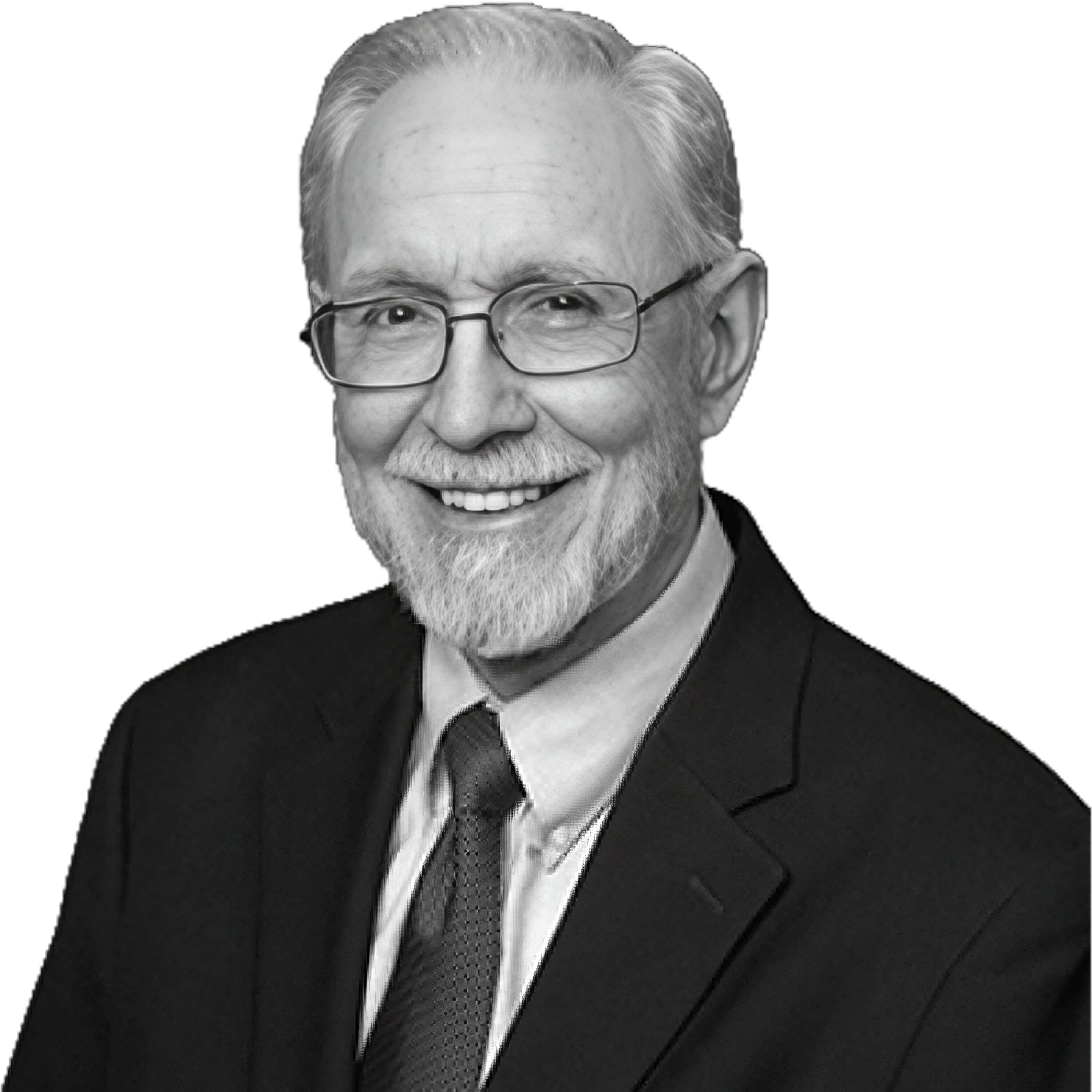
I'm really pleased to welcome my guest, Dr. William Leogrand. He is a non resident Fellow at the Quincy Institute and Associate Vice Provost for Academic affairs, professor of Government and Dean Emeritus of the School of Public affairs at American University in Washington, D.C. he holds a Ph.D. in political science from the Maxwell School at Syracuse University. Professor Leogrand specializes in comparative politics and US Foreign policy and has written widely in the field of Latin American politics and U.S. policy toward the region, with a particular interest in Central America and Cuba. William, welcome and thank you for joining me on New Twilight.
- [12:35]
Dr. William LeoGrande
Well, thanks for having me on. I appreciate it.
- [12:37]
Newt Gingrich
This is a remarkable moment, or at least it seems like it could be becoming a remarkable moment in the history of Cuba and its relationship with the US but to understand that, can we go back and look at how does Cuba's evolution and Cuba's history help explain where we are today?
- [12:56]
Dr. William LeoGrande
Well, Cuba had a revolution in 1959. Fidel Castro first came to power. It was a revolution that lasted basically from around 1953, when he first launched an attack on a military post in Santiago de Cuba. It was really a revolution initially against the military dictatorship Fulgencio Batista, who had been an ally of the United states since the 1930s, became really ruthless during the 1950s, very repressive and alienated most of Cuban society. And that gave rise to armed insurrection against Batista both in the mountains and in the cities. And Fidel Castro emerged as the leader of that. And they triumphed on January 1, 1959. And gradually that evolved over the next two years into a socialist revolution. And relations with the United States, as you can imagine, deteriorated pretty rapidly as a result of that. Cuba looked to the Soviet Union as a partner because we imposed both economic sanctions on Cuba as it moved to the left and radicalized. And of course, President Eisenhower began the planning for the Bay of Pigs invasion and other paramilitary actions to try to overthrow the Cuban government. He didn't get that done before he left office. But President Kennedy picked up and carried through on the Bay of Pigs, and of course it became sort of what one author called the perfect failure and a terrible embarrassment from there we went to the Cuban Missile Crisis in which for the first time the world really came to the edge of nuclear holocaust when the Russians tried to put medium range nuclear weapons into Cuba. And we've had a bad relationship with Cuba pretty much ever since then.
- [14:47]
Newt Gingrich
How much of that relationship involved the amount of property seized by the new Castro dictatorship in 6061?
- [14:58]
Dr. William LeoGrande
So Castro seized basically all American owned private property on the island in 1960-61, and most of the private sector in Cuba as well. And so there are two kinds of outstanding claims. One is the certified claims of U.S. companies and U.S. citizens who lost property during that period. The other is the claims of Cuban Americans who were Cuban citizens at the time but have since become naturalized US Citizens and who are entitled to some redress of their losses under the 1996 Cuban Liberty and Democratic Solidarity act, which is also known as the Helms Burton act, for the members of Congress who sponsored it. Those claims issues have always been on the agenda of US Negotiations with Cuba. The United States government has always been trying to reach some kind of compensation for those from the Cuban government. Cuba recognizes that it has an obligation to settle the claims of US Companies and individuals, the certified claims, because under international law that's the norm. It does not recognize that it has an obligation to settle the claims of Cuban Americans because they were Cuban citizens at the time. Now the reality is, I think if Cuba wants Cuban Americans to invest in the island going forward, they're going to have to find some mechanism for settling those claims.
- [16:38]
Newt Gingrich
But given the decay of the Cuban economy, could they possibly have the resources to meet all those claims?
- [16:47]
Dr. William LeoGrande
No, absolutely not. At the moment they don't have any resources. They don't have enough resources today to keep the lights on. But there's a long history of countries settling claims. We settled claims finally with all of the European socialist countries. And there are lots of different mechanisms. There are debt equity swaps, there are ways to set up funds based on tariffs that then can provide the money to pay claims over a longer period of time. The reality is that most of the commercial claims, those are properties now that the claimants really don't want to reclaim. What the claimants would like to have is some kind of financial compensation and new access to the Cuban market. So I think if the two sides actually have the political will to come to an agreement and settle those claims, there are ways that can be worked out to do that.
- [17:48]
Newt Gingrich
Isn't it true that in the 1950s Cuba was sort of the jewel of the Caribbean that had hotels that had Casinos. It was seen as a very good place to go for vacation. There were reasons, except for the way the Batista government degenerated into a repressive dictatorship. But there are reasons to believe that Cuba could have had a really good future and a really relatively prosperous future.
- [18:15]
Dr. William LeoGrande
Cuba was in the 1950s, one of the more developed Latin American countries economically, but it suffered from tremendous inequalities. The central of the Cuban economy was sugar. And during the Spanish colonial period, it was slave labor that manned the sugar plantations. And there had always been and remained in the 1950s, enormous discrepancy between middle class and upper class Cubans living in urban areas and poor Afro Cubans living in rural areas. And that was a source of social tension really from the time that slavery ended and colonialism ended all the way up through the 1950s. But Cuba could have addressed some of those problems, I guess, but it never had a government that was really willing to tackle both the racial issue and the inequality issue. And that gave Fidel Castro a political platform to run on.
- [19:14]
Newt Gingrich
When Castro does take over, a significant number of the Cuban middle class and upper class leave. They do redistribute the property. And for a while it seems like it's working. And in fact, Cuba became an exporter of military capabilities and special police capabilities, and they're in places like Mozambique and Angola, Grenada and so forth. And I think that up to the most recent American intervention, they had a very significant role to play in Venezuela. But out of all that, they also were very dependent, it seems to me, on foreign money. And when the Soviet Union collapsed, the major source of their subsidies collapsed with it. And they had a pretty large crisis. I think they lost about a third of their gross domestic product after the Soviet Union collapsed. How would you compare the current crisis in Cuba economically with what it was like back in the mid-90s?
- [20:21]
Dr. William LeoGrande
Well, it started out very similar. When the Soviet Union collapsed, Cuba lost about $3 billion a year worth of economic assistance that it was getting from the Soviet Union and had been getting from the Soviet Union for a long time. In the very early years of the Cuban revolution, when Castro gave people free healthcare, free education, low cost housing, guaranteed job and a guaranteed subsistence income, at least the revolution was very popular with Cubans, especially most of the poor Cubans who had supported it in the first place and didn't leave. But the problem was Cuba was a poor country still, and it didn't really produce enough to sustain that level of extensive social welfare the way it was able to do it for 20 to 30 years was with the help that it got from the Soviet Union. Now, there were economic ups and downs during that period for sure, but was able to maintain that level of social services because of the subsidies it got from the Soviet Union. When the Soviet Union collapsed, the Cuban economy collapsed with it. And you're right, they lost 35% of their gross domestic product. And things were really desperate on the island. What we've seen in Cuba over the last couple of years, really since the end of the pandemic, is a similar kind of dynamic. Cuba had become dependent on its deal with Venezuela to send Cuban doctors and medical technicians to Venezuela to provide medical services to poor people to Hugo Chavez's constituency in exchange for low cost Venezuelan oil. And as Venezuelan oil production declined because the government there wasn't maintaining the industry properly, what they were sending to Cuba declined as well. And then finally, of course, since January 3rd, when the United States grabbed President Maduro, Venezuela has not sent any oil to Cuba. And that has been a disaster for the Cuban economy. And more recently, President Trump has threatened US Sanctions on any other country that sends oil to Cuba. And so right now, nobody's sending oil to Cuba, and about 60% of their oil is normally imported. So the economy really is in a very desperate situation right now.
- [22:53]
Newt Gingrich
And weren't they already having rolling electric blackouts before the Venezuelan intervention?
- [23:01]
Dr. William LeoGrande
Yes, they were. And it was precisely because Venezuelan oil shipments to Cuba had already fallen about 75% from what they had been about a decade ago at the peak.
- [23:13]
Newt Gingrich
There was a brief period under President Obama where there was sort of an effort at rapprochement. And it seems to me that Obama was trying to find a way to stabilize our relationship with Cuba. We recognized him. Secretary of State John Kerry actually went to Havana to ceremonially raise the American flag over the US Embassy. But then that sort of became cut off almost immediately by the Trump administration when they took over. And I don't get the sense that the Biden administration spent much energy trying to get back to the Obama model. Me. Would that be a fair summary?
- [23:56]
Dr. William LeoGrande
Absolutely. Fair summary. And I think a lot of Democrats were really surprised. And as an analyst, I was surprised that President Biden did not go back to the Obama policy of rapprochement. I mean, after all, he was President Obama's vice president during the campaign. He said that he would go back to the Obama policy. For the most part, he qualified it. But a couple of things happened, I think, early in his presidency that changed his mind. One was, I'm sure you remember his first speech to Congress as president framed his foreign policy as a global struggle between democracy and authoritarianism. And the authoritarian countries he identified as on the other side of this struggle were Russia and China, same countries as in the Cold War. And of course, Cuba had a good economic relationship and to some extent, strategic partnership still with both Russia and China. And Cuba is an authoritarian country. And so Cuba was in effect placed on the other side in this global struggle between democracy and authoritarianism. So there was that element of it. There was nationwide demonstrations in Cuba on July 11, 2021, first demonstrations like that since 1959. And the government repressed them. Not with as much violence as we've seen, for example, in Iran recently. But nevertheless, they repressed them. They arrested about a thousand people. And President Biden always had a commitment to internationally recognized human rights. And I think he felt like he couldn't move forward with a better relationship with Cuba in the wake of that crackdown. And finally, of course, there's always been the domestic political consideration of the political power of the Cuban American community in South Florida. And during the Obama period, there was strong support in the Cuban American community for Obama's policy of rapprochement. By the end of the Obama administration, 56% of Cuban Americans in a South Florida poll reported that they were in favor of lifting the embargo entirely. But Donald Trump's first term turned that around because Donald Trump, I think, revitalized the feeling in the Cuban American community that the Castro government could be overthrown. And so by the time Biden came in, we had already seen a kind of a shift back toward a more hardline majority in the Cuban American community. And I think that there was still that sense among Democrats that, oh, we mustn't alienate this constituency because they played such an important role in the year 2000 when it was the issue of Cuba that gave the presidency to George W. Bush.
- [26:52]
Newt Gingrich
When we come back, I want to talk about how Venezuela and the entire approach of Secretary of State Rubio are affecting where we are. So we'll get to this in just a minute.
- [27:05]
Weatherbug Announcer
No one knows what the future holds, but you deserve a weather app that can help. Weatherbug is easy to use and provides forecasts for your every need, from storm warnings to pollen levels right at your fingertips. Get the fastest local Alerts and comprehensive 10 day forecasts wherever you are. Its hyperlocal, real time, customizable alerts. Make sure the weather never takes you by surprise so you can plan every day with confidence. Download the free weather bug app from the App Store today and start getting accurate weather forecasts. 247
- [27:36]
Public Investing Advertiser
support for the show comes from Public, the investing platform for those who take it seriously. On Public you can build a multi asset portfolio of stocks, bonds, options, crypto and now generated assets which allow you to turn any idea into an investable index with AI. It all starts with your prompt. From renewable energy companies with high free cash flow to semiconductor suppliers growing revenue over 20% year over year, you can literally type any prompt and put the AI to work. It screens thousands of stocks, builds a one of a kind index and lets you back test it against the S&P 500. Then you can invest in a few clicks. Generated assets are like ETFs with infinite possibilities, completely customizable, customizable and based on your thesis, not someone else's. Go to public.com podcast and earn an uncapped 1% bonus when you transfer your portfolio. That's public.com podcast paid for by Public Investing Brokerage Services by Open to the Public Investing Inc. Member FINRA and SIPC Advisory Services by Public Advisors llc. SEC Registered Advisor Generated Assets is an interactive analysis tool. Output is for informational purposes only and is not an investment recommendation or advice. Complete disclosures available at public.com disclosures kids pets life.
- [28:37]
Washable Sofas Advertiser
Your sofa sees it all. But with a washable sofa, stains don't stand a chance. All of our sofa collections come with fully machine washable covers and cushions making cleanup effortless. Liquid and stain resistant fabrics provide extra protection against everyday messes. Plus with modular designs you can rearrange your sofa however you like. Perfect for growing families and changing spaces. Starting at just $699, it's time to upgrade to a stress free mess proof sofa. Visit washablesofas.com today and save offers are subject to change and certain restrictions may apply.
- [29:08]
Firestone Tires Advertiser
Your vehicle doesn't just get you from here to there, it's a bridge to the people and places that matter most. It's how you show up for your family, your community and everyone else that depends on you. That's why for 125 years Firestone has been building tires with one thing in to deliver products that are as reliable as you are. Firestone always dependable since 1900.
- [29:43]
Newt Gingrich
I think it's fascinating that with Marco Rubio as National Security Advisor and Secretary of State you have a first generation American whose parents fled Cuba. He has thought about this his entire life. He is from South Florida, he is representative of the Cuban American community and he seems to be across all of Latin America applying pressure both to cut out the Chinese and secondarily the Russians and Iranians, but also to really move the countries back towards more free market economics and a more close relationship to the United States. And, of course, the impact of the raid which captured Nicolas Maduro and his wife was an enormous shock, I think, to people. I think there were very few people who have said to you on the 1st of January that we'll have a dramatic regime change, and that will be done so cleanly and with so little direct use of force. How do you think that shock affected Cuba and the rest of Latin America?
- [30:57]
Dr. William LeoGrande
Well, it was clearly a really big shock. It is the first time in a long time that the United States has used military intervention against a Latin American country. But we saw, you know, in the President's new National Security Strategy document, a very clear statement that this administration regards the Western Hemisphere as a sphere of influence of the United States. The security document claims that the United States must be preeminent in the Western Hemisphere. And the President himself has used the word dominant in the Western Hemisphere. And that harkens back to, of course, the Monroe Doctrine, which the President has updated in calling it the Don Row Doctrine, which means that we won't tolerate the influence of extra hemispheric powers, specifically, as you said, Russia, China and Iran, but also that we're not going to tolerate really adversarial regimes in the region either. And so first we saw the intervention in Venezuela. Now we're seeing pressure on Cuba. And of course, there is a third regime, Nicaragua, which may be next on the agenda whenever the administration settles what it's trying to do with Cuba one way or another, whatever that actually is, because we don't really have a clear idea yet of what the President means when he says he's going to take over Cuba.
- [32:26]
Newt Gingrich
It's not as clear as occasionally, some of his Truth Social tweets. Do you think the current dictatorship could afford to, in fact, allow a great deal more freedom if that was the cost of oil and economic survival? Or do you think that the potential for the system to implode is so great that they really can't back up and create a zone of civil liberty?
- [32:56]
Dr. William LeoGrande
So, of course, we're in discussion with Cuba right now. I mean, the President has been talking about it for the past month or so, and the Cuban government just last week admitted finally that, yes, in fact, they are talking with us. We don't quite know what the agenda of those talks is, but it seems to focus more on economic issues than political ones. And even Secretary Rubio, who, of Course, as you say, built his political career around wanting to see a change in the government in Cuba, has been emphasizing the economic side of things. And he's been careful to say, well, change has to be gradual. It's not going to change overnight. We have to be patient. And there needs to be dramatic economic change and political change. Eventually. He said, now, I thought that was a really interesting adverb that he added there. Eventually, it has to be political change. And we've seen, of course, in Venezuela that the administration has clearly prioritized economic change over political change, particularly getting US Oil companies back into the Venezuelan oil industry. That's been problematic, of course, because the Venezuelan oil industry is so deteriorated that most oil companies are not really interested in trying to go in there and spend several billion dollars trying to bring it up to the production levels it had before. We saw the CEO of Exxon tell the president face to face that Venezuela right now is uninvestable. But put that aside. I mean, clearly the United States priority in our relations with Venezuela has been the oil companies and the oil industry. And the administration has been willing to leave most of the current political regime in place for fear that if you just try to remove it all, what you'll end up with is another Iraq. And the president said that very explicitly. Someone asked him, why haven't you allowed Maria Karina Machado, whose opposition movement won the 2024 election, why haven't you helped her back into power? And the president said, do you remember Iraq, where we fired everybody and what happened? So I would assume there's a sort of similar logic that would apply in the Cuba case. And I think that's why most of the discussions, what we know of them so far, have focused on economic issues. I think there's an economic deal to be made, actually, because even Cuba's leaders know the economy is a wreck, and not only because of U.S. sanctions. And there's been a deadlock in Cuba over economic change. There's some people in the leadership who've been pushing for more of a move toward a kind of market economy, like Vietnam, for example. And there's been others who are not willing to let go of the past. This current crisis may actually strengthen the hand of people who want to see economic reform on the island. And if we could get an agreement between Cuba and the United States that focuses on opening up the economy, getting US Investors back in, lifting some of the sanctions in return, you could see a real economic revival on the island, not overnight, but over the next couple of years. But that's not going to be enough for Cuban Americans in South Florida, and my guess is that's probably not going to be enough for Marco Rubio, although I think it might be enough for the President. I think we'll just have to wait and see how that evolves. But if we don't get an agreement and the current situation continues, the Cuban economy is going to collapse in relatively short order and you're going to have massive social unrest on the island and potentially a migration crisis like we saw in 1980, 1994 and after Covid, and that is not good for the interests of the United States.
- [37:01]
Newt Gingrich
When we come back, I want to pick up on your comments about Marco Rubio, because it seems to me that he has had a remarkable run so far across the whole planet and has certainly turned out to be dramatically more influential than he was back in the Senate. So we'll talk about that in just a minute.
- [37:22]
Weatherbug Announcer
No one knows what the future holds, but you deserve a weather app that can help. Weatherbug is easy to use and provides forecasts for your every need from storm warnings to pollen levels right at your fingertips. Get the fastest local Alerts and comprehensive 10 day forecasts wherever you are. Its hyperlocal real time customizable alerts. Make sure the weather never takes you by surprise so you you can plan every day with confidence. Download the free weather Bug app from the App Store today and start Getting accurate weather forecasts 247
- [37:52]
Public Investing Advertiser
support for the show comes from Public, the investing platform for those who take it seriously. On Public you can build a multi asset portfolio of stocks, bonds, options, crypto and now generated assets which allow you to turn any idea into an investable index with AI. It all starts with your prompt from from renewable energy companies with high free cash flow to semiconductor suppliers growing revenue over 20% year over year. You can literally type any prompt and put the AI to work. It screens thousands of stocks, builds a one of a kind index and lets you back test it against the S&P 500. Then you can invest in a few clicks. Generated assets are like ETFs with infinite possibilities, completely customizable and based on your thesis, not someone else's. Go to public.com podcast and earn an uncapped 1% bonus when you transfer your portfolio. That's public.com podcast paid for by Public Investing Brokerage Services by Open to the Public Investing Inc. Member FINRA and SIPC Advisory Services by Public Advisors llc. SEC Registered Advisor. Generated Assets is an interactive analysis tool. Output is for informational purposes only and is not an investment recommendation or advice. Complete disclosures available at public.com Disclosures Life
- [38:54]
Washable Sofas Advertiser
gets messy spills, stains, head accidents and kid chaos. But with anibe, cleaning up is easy. Our sofas are fully machine washable inside and out so you never have to stress about messes again. Made with liquid and stain resistant fabrics that means fewer stains and more peace of mind. Designed for real life, our sofas feature changeable fabric covers allowing you to refresh your style anytime. Need flexibility? Our modular design lets you rearrange your sofa sofa effortlessly. Perfect for cozy apartments or spacious homes. Plus they're earth friendly and built to last. That's why over 200,000 happy customers have made the switch. Upgrade your space today. Sofas start at just $699. Visit washablesofas.com now and bring home a sofa made for life. That's washablesofas.com offers are subject to change and certain restrictions may apply.
- [39:54]
Firestone Tires Advertiser
Your vehicle doesn't just get you from here to there. It's a bridge to the people and places that matter most. It's how you show up for your family, your community and everyone else that depends on you. That's why for 125 years Firestone has been building tires with one thing in to deliver products that are as reliable as you are. Firestone always dependable since 1900.
- [40:29]
Newt Gingrich
The rise of Marco Rubio, who always been very impressive. I knew him back when he was a state legislator before he became speaker of the House in Florida and then became Senator, ran for President and lost and continued in the Senate and then was chosen by President Trump to be Secretary of State and then ended up doing something that only Kissinger had done, and that is being both National Security Advisor and Secretary of State. But I can tell you, sitting here in Europe, the impact of Rubio's speech to the Munich Security Conference, the subtlety of it, the tone of it, was a tour de force. People looked at that and thought, wow. And we've seen him come and go through Geneva for meetings on Ukraine, meetings on Iran, meetings on Gaza. I'm curious, how do you assess his general role and what you've seen so far of him as a leader in making American foreign policy?
- [41:33]
Dr. William LeoGrande
Well, I think he clearly has become the President's right hand man on foreign policy issues, especially on Cuba. I think it's very notable that every time the President and Marco Rubio are together and reporters ask the President a question about Cuba, he says a couple of sentences and then he tosses the ball to Marco Rubio to talk in more detail about Cuba. So, yes, he's become very influential and more than one might have expected given his tense relationship with the President before he was named to the cabinet. I think a lot depends on how the war in Iran actually turns out. It doesn't seem to me that it's unfolding in quite the way that the administration anticipated. Obviously, our military has performed extraordinarily well. But the ability of Iran to close the Strait of Hormuz, it seems like it's going to be very hard to open that up and convince shippers that it's safe to go through it. And if that goes on for any length of time, the economic consequences, not just for the United States, but for the entire global economy, could be really dire. And then you may see public opinion, which is already skeptical in the United States, already skeptical of this, turn strongly against it.
- [42:57]
Newt Gingrich
One of the things you made a comment about that I think is very perceptive and may also relate to the challenge we're facing in Iran. You've said that you can't take a kind of decapitation strategy which in Venezuela allowed us to go in and seize Maduro and his wife and have a decisive shift in the government, but that if you're trying to apply that to Cuba, that the strength of the Cuban system, that they would in fact be much more resilient and have a much broader base of resistance, which may also be part of what we're encountering now in Iran. That there's in fact was a deeper network of powerful people than we initially thought. But describe just for a minute the differences you see it between Venezuela and Cuba.
- [43:54]
Dr. William LeoGrande
So the Venezuelan government, it seems to me, was a kind of a coalition of semi autonomous groups in bureaucracies, but also armed groups, not just the regular military, but the pro Chavez paramilitaries, the so called colectivos that we saw riding around on motorbikes with AK47s threatening opposition demonstrations. Plus you've got narcotics traffickers from Colombia who are working in Venezuela. And then finally you've got the Colombian guerrilla army, the army of National Liberation, which operates along the border and partly inside of Venezuela. So Maduro's strength was that he was able to sort of balance these different interest groups and hold them together. It turns out Dulce Rodriguez is pretty good at that as well, probably better than most people thought. And she has the added advantage that she has the confidence of the oil industry, both domestic and international. And that's why I think she's proven to be such an adept leader in Venezuela. But in Cuba, it's a much more institutionalized and hierarchical system. It's a classic Marxist, Leninist political organization. And if Miguel Diaz Canel, the president, had a heart attack tomorrow, they'd just pick a new president. And there isn't someone I don't believe, like Delsey Rodriguez, who would be willing to essentially cooperate with the United States in pretty much anything that we wanted. The regime is just too institutionalized, and the people at the top are just too committed to do that. But it does mean that it is possible to negotiate a deal with Cuba and that the current leadership would be able to make that deal stick. And so as I look at the situation, I see a certain analogy to Venezuelan, not in how we get to some kind of modus vivendi. I think it's got to be negotiated directly with the Cuban government and the Cuban case. But I think the formula of focusing on economic issues and putting political ones either off to the side or off to the future, that I think is an analogous situation that could be successful.
- [46:18]
Newt Gingrich
One last thing about Cuba. To what extent do you think Russia and China can have an influence with the outcome in Cuba, and to what extent do you think the sheer weight of the United States when we pay attention to an island 90 miles off our coast makes them basically not have much leverage?
- [46:41]
Dr. William LeoGrande
Well, I think neither of them is going to step in financially and save Cuba the way Nikita Khrushchev did in the 1960s, because it turned out that bill was very large. And China has a good relationship with Cuba, but it's fundamentally a commercial one more than anything. There is apparently some intelligence cooperation, although I'm not sure it's as extensive as some people have claimed. There's a stronger military relationship historically, of course, with Russia, but neither Russia nor China have the capacity or the interest in trying to confront the United States militarily in the Caribbean. That would be a losing strategy on both parts.
- [47:25]
Newt Gingrich
So there's not a lot that they
- [47:26]
Dr. William LeoGrande
can do right now for Cuba other than to try to provide it with enough assistance to survive the immediate crisis. And I think both of them are trying to do that. China has pledged them a lot of humanitarian assistance and has been really instrumental in helping them begin to convert to renewable energy, particularly solar, of course, because China is one of the world's main producers of solar panels and batteries. And the Russians have been trying to send them oil, but we have been letting them know that we're not willing to let them get away with that. Of course, the President recently waived sanctions on Russian oil in order to increase the world's supply because of the crisis in Iran. But just a couple of days ago, the administration issued a new regulation that exempted Cuba from this waiver and said that Cuba is one place that the Russians cannot send this oil. So there have been two Russian tankers crossing the Atlantic on the way to Cuba with oil and we'll have to see what they do.
- [48:38]
Newt Gingrich
I have a hunch they will turn around or find another port.
- [48:42]
Dr. William LeoGrande
I have a hunch they will too, but it is a little bit reminiscent of the Cuban missile crisis.
- [48:47]
Newt Gingrich
Well, it would be if the Russians were inclined to try to do that. William Ona thank you for joining me. This has been a great conversation about an area that is undergoing remarkable change. Our listeners can follow the work you're doing at the Quincy Institute for Responsible Statecraft by visiting the website@quincyinst.org and I really appreciate you spending the time helping educators.
- [49:12]
Dr. William LeoGrande
Wow. Thank you very much. It's been a pleasure.
- [49:18]
Weatherbug Announcer
No one knows what the future holds, but you deserve a weather app that can help. Weatherbug is easy to use and provides forecasts for your every need, from storm warnings to pollen levels right at your fingertips. Get the fastest local Alerts and comprehensive 10 day forecasts wherever you are. Its hyperlocal real time customizable alerts make sure the weather never takes you by surprise so you can plan every day with confidence. Download the free Weather Bug app from the App Store today and start getting accurate weather forecasts 24. 7
- [49:49]
Public Investing Advertiser
support for the show comes from Public, the investing platform for those who take it seriously. On Public, you can build a multi asset portfolio of stocks, bonds, options, crypto and now generated assets which allow you to turn any idea into an investable index. With AI. It all starts with your prompt. From renewable energy companies with high free cash flow to semiconductors suppliers growing revenue over 20% year over year. You can literally type any prompt and put the AI to work. It screens thousands of stocks, builds a one of a kind index and lets you back test it against the S&P 500. Then you can invest in a few clicks. Generated assets are like ETFs with infinite possibilities, completely customizable and based on your thesis, not someone else's. Go to public.com podcast and earn an uncapped 1% bonus when you transfer your portfolio. That's public.com podcast paid for by Public Investing Brokerage Services by Open to the Public Investing Inc. Member FINRA and SIPC Advisory Services by Public Advisors llc. SEC Registered Advisor Generated Assets is an interactive analysis tool output is for informational purposes only and is not an investment recommendation or advice. Complete Disclosures available at public.comDisclosures sink into
- [50:51]
Washable Sofas Advertiser
affordable luxury Annabe is the only machine washable sofa inside and out with stain resistant slipcovers and a cloud like frame to duvet. Everything goes right in the wash. Plus the modular design lets you change the look of your space anytime. Visit washablesofas.com to upgrade your home shop up to 60% off site wide with sofas starting at just $699 and a 30 day money back guarantee. Shop now@washablesofas.com offers are subject to change and certain restrictions may apply.
- [51:20]
Firestone Tires Advertiser
Your vehicle doesn't just get you from here to there. It's a bridge to the people and places that matter most. It's how you show up for your family, your community and everyone else that depends on you. That's why for 125 years Firestone has been building tires with one thing in to deliver products that are as reliable as you are. Firestone always dependable since 1900.
- [51:56]
Newt Gingrich
Now I'm pleased to introduce a new segment to Newt World where I answer listeners questions and if you would like you can send me questions@newtingrich360.com that's newtingrich360.com I look forward to hearing your questions. The first one that came in is from Ames, Iowa where John asked that. He's been reading that the Strait of Hormuz is a critical waterway for fertilizer and he's wondering how this is going to impact both our farmers and the price of food. Frankly, I think that you have to recognize about 50% of the nitrogen rich fertilizers on a global basis, 50% of the world production comes through the strait. However, I personally think the strait will be reopened pretty rapidly. There will be a spike for a very short time in fertilizer prices, but if you're patient, I think it's going to come down with remarkable speed once they get the straight open. And I'm convinced they're going to get the straight open. We heard from Christopher from Atlanta who asked I'm an Uber driver in Atlanta. I do a lot of drives to and from the airport. Governor Brian Kemp just signed a bill that temporarily suspends the state's gas tax for 60 days. But I'm concerned about what happens after those 60 days rub. For those of us who make a living driving, what do you think should be done to help us? I suspect within 60 days the price of gasoline will come down dramatically, and I suspect if it has not, they will extend the temporary suspension for another 60 or 90 days. But I doubt very much if we're going to see a spike in gasoline that last more than 60 days. Annabelle from Dallas, Texas asked, I don't understand why Democrats are so against the SAVE act that would help secure our elections by only allowing United States citizens to vote. I have to say it is to me crazy that the Democrats are opposing the requirement that you prove who you are. We do this to get on an airplane. We do this to be able to drive a car. The idea that somehow it's shocking that you have to actually have some identification that proves who you are in order to vote. I think that is a tribute to the degree to which the Democrats want to be able to steal votes. And I can't understand any other rationale for why they are so deeply determined to not let the SAVE act pass. The Senate may find a way to get it through. The opposition of the Democrats is very deep and very strong and tells you a lot about the nature of the modern Democratic Party. Let me remind you. I look forward to hearing from you and you can ask a question by just emailing me at newtingrich360.com thank you to my guest, Dr. William Leo Grand Newt's World is produced by Gingrich360 and iHeartMedia. Our executive producer is Garnes E. Sloan. Our researcher is Rachel Peterson. The artwork for the show was created by Steve Penley. Special thanks to the team at univers360. If you've been enjoying Newts World, I hope you'll go to Apple Podcast and both rate us with five stars and give us a review so others can learn what it's all about. Join me on substack at the ingress 3 seconds. I am Newt Gingrich. This is neutral.
- [55:38]
Weatherbug Announcer
No one knows what the future holds, but you deserve a weather app that can help. Weatherbug is easy to use and provides forecasts for your every need from storm warnings to pollen levels right at your fingertips. Get the fastest local Alerts and comprehensive 10 day forecasts wherever you are. Its hyperlocal real time customizable alerts. Make sure the weather never takes you by surprise so you can plan every day with confidence. Download the free Weatherbug app from the App Store today and start getting accurate weather forecasts24.7
- [56:08]
Washable Sofas Advertiser
tired of spills and stains on your sofa? Wash away your worries with Anabe. Annabe is the only machine washable sofa inside, inside and out where designer quality meets budget friendly prices. That's right, sofas start at just $699. Enjoy a no risk experience with pet friendly, stain resistant and changeable slip covers made with performance fabric. Experience cloud like comfort with high resilience foam that's hypoallergenic and never needs fluffing. The sturdy steel frame ensures longevity and the modular pieces can be rearranged anytime. Shop washablesofas.com for up to 60% off site wide, backed by a 30 day satisfaction guarantee. If you're not absolutely in love, send it back for a full refund. No return shipping or restocking fees. Every penny back Upgrade now@washablesofas.com Offers are subject to change and certain restrictions may apply.
- [57:10]
Firestone Tires Advertiser
Your vehicle doesn't just get you from here to there. It's a bridge to the people and places that matter most. It's how you show up for your family, your community and everyone else that depends on you. That's why for 125 years Firestone has been building tires with one thing in to deliver products that are as reliable as you are. Firestone always dependable since 1900,
- [57:39]
Dr. William LeoGrande
flag football
- [57:40]
Public Investing Advertiser
is exploding and IFLAG is leading the way as the Guinness World Record Holder, iflag hosts premier flag football tournaments nationwide for boys, girls, high school girls and adults. From first time players to elite competitors, iflag delivers top level competition, unforgettable experiences and a community built around the game.
- [58:00]
Newt Gingrich
Ready to be part of it?
- [58:01]
Public Investing Advertiser
Join the movement, find your tournament and learn more@iflag.org that's iflag.org this is an iHeart podcast.
- [58:11]
Weatherbug Announcer
Guaranteed Human.