Loading summary
Transcript46 lines
- [00:00]
A
This is an iHeart podcast. Guaranteed Human.
- [00:04]
B
When you manage procurement for multiple facilities, every order matters. But when it's for a hospital system, they matter even more. Grainger gets it and knows there's no time for managing multiple suppliers and no room for shipping delays. That's why Grainger offers millions of products in fast, dependable delivery, so you can keep your facility stocked, safe and running smoothly. Call 1-800-GRAINGER click granger.com or just stop by Granger for the ones who get it done.
- [00:38]
A
Welcome to new Twirl podcast on the iHeart podcast network. You know, we had an amazing opening of this week with two huge events. One was the launch of of Artemis 2, the largest rocket ever launched, taking four astronauts past the moon. Not just to the moon, but past the moon. They will be the furthest into the solar system of any humans in history. And they will swing around behind the moon and see parts of the moon that we have never seen before. The fact that you have this gigantic rocket and it worked and they are on a nine day trip I think is astonishing. And I thought it was historic by itself. But the very same day you had a 20 minute speech by President Trump putting in place his rationale for what he's doing with Iran, his explanation of why we cannot tolerate a nuclear armed Iran, and his commitment that we will do whatever it takes to make sure that Iran is not capable of threatening the United States. I think it was one of the most important speeches of President Trump's career. I think as a historian that it was a major speech that people will look at for many years to come. And I think the combination of both things the same day, the launch of four astronauts literally past the moon and then circling back around the moon to come back home on a nine day trip, really the first time in 50 years that we've seen this kind of departure for not just low Earth orbit where we're now pretty comfortable, but beginning to go back, first to the moon. And then as Jared Isaacman, the administrator at NASA said last week, they have an entire new program to land on the moon, to develop a permanent base on the moon and to begin preparing to land on Mars. And the difference is we're not going as visitors, we're going to go and we're going to stay. Similarly, if you read carefully, President Trump's speech, he was laying out some very important historic facts. First of all, he was basically saying that the very nature of the Iranian religious dictatorship limits their capacity to claim to be sovereign and that we are going to insist that if they try to develop nuclear weapons, if they try to develop missiles, that we will go back and continue to break up their systems until they finally give up. In addition, he outlined that we're shifting responsibility to our allies that we've had really since 1945 at the end of World War II. We've been the people who paid the price in blood, paid the price in money, sustained the military. And President Trump has been saying now, starting in his first term, that the time has come for the NATO nations in Europe to step up to the plate, do their job. They collectively have an economy almost the size of ours, and they have refused to spend money to build up their defenses. And he's really telling them, look, we produce more than enough gas and oil on our own. We don't need anything from the Strait of Hormuz. You have a problem, we don't. And you need to take significant responsibility for meeting the that challenge. Now, it's going to take a little while, a little bit of turmoil, but I do think you're seeing a deliberate effort by the president to say that we're not going to police the entire planet. We have a major competitor with China. We need to focus on that. We have some things we have to clear up in the Western Hemisphere, most notably after Venezuela, fixing Cuba, and then potentially one or two more places. But it's not our job to police every place on the planet, to risk American lives everywhere and to spend American treasure everywhere. This is a very decisive break with the establishment position which has existed now since 1945. And it's deliberate. It's not an accident. It's not something he's just doing on a hunch. It's something if you go back, you will see that he was talking about the danger of the Iranian dictatorship in the 1980s as a private citizen. And you'll see he was talking about getting the Europeans to pay their fair share. These are things he said many years before he became a candidate because he believed as a citizen that was right. So two huge events, both on the same day, and they indicate that America is going out into space in a giant way, and America is going to do what it takes to make sure that the Middle east is not threatened by a nuclear armed religious dictatorship in Iran. Pretty big deals, and I think really important to pay attention to them. Coming up, I will be joined by Congressman Rick Crawford, chairman of the House Permanent SOIC Committee on Intelligence, to talk about the importance of counterintelligence reform, the Iran war, and the necessity of a fully funded public Department of Homeland Security.
- [06:15]
C
Before we had AT&T business wireless coverage, our delivery GPS wasn't the most reliable. Once our driver had to do a 14 point turn to get back on route. A 14 point turn, an influencer even livestream the whole thing. Not good for business. Now with AT&T business wireless routes are updating on the fly and deliveries are on time. And the influencer did get us 53 new phones followers though.
- [06:39]
D
AT&T business wireless connecting changes everything.
- [06:51]
A
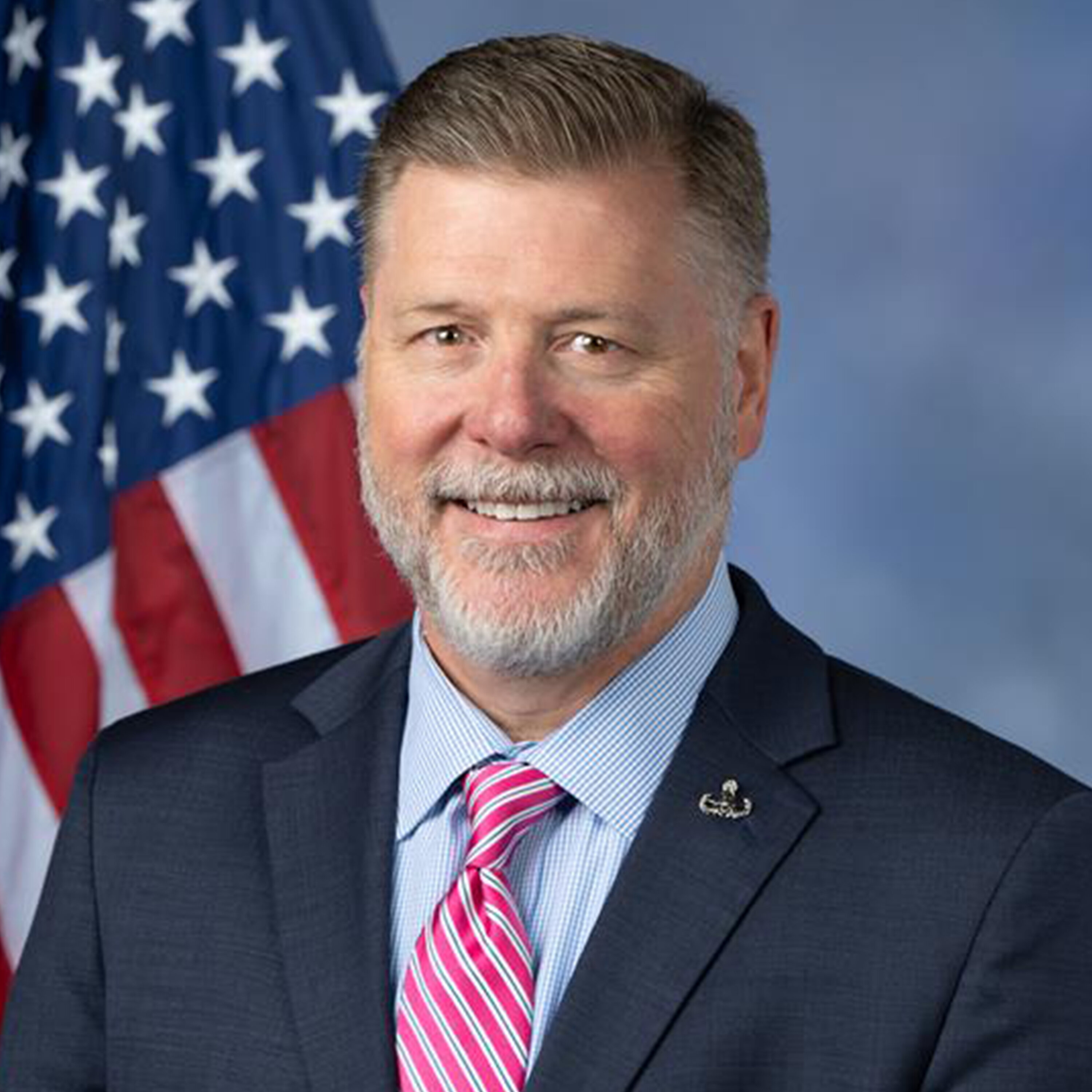
I am really pleased to welcome my guest, Congressman Rick Crawford, representing Arkansas's 1st district. He is the chairman of the House Permanent Select Committee on Intelligence. Rick, welcome and thank you for joining me on Newts World.
- [07:07]
D
You bet. Thank you, Mr. Speaker. I appreciate you having me.
- [07:10]
A
Well, I want to start with a bigger picture because you've really been looking at this and bring some unusual, I think, breadth of experience. Why do you think the United States needs counterintelligence reform right now? What are you seeing that concerns you the most?
- [07:29]
D
Well, I'll give you some examples of some recent things that have happened. As recently as January, we've seen a Chinese national was charged with taking unauthorized pictures at Whiteman Air Force Base in March, we saw that IED plot at MacDill Air Force Base in Florida. Last September during the UN General assembly, there was an attempt to disrupt telecommunications through a SIM farm, very close proximity to the United nations. And that was actually forwarded by the Secret Service. They were the ones that actually intervened on that one. So I think as we start to see our enemies develop and deploy capabilities in our homeland, I think first off, we have to recognize our homeland is now contested space. We've really never had that sense before. We've never really had that conversation. But the reality is our open society has allowed these bad actors, primarily China, Russia, Iran, to some degree, North Korea, Cuba has been doing this for years. And as you well know, I mean, they've got a long history of acting not only on their own behalf, but as sort of proxy for other nations like Russia and possibly Iran and China. These threats are pervasive not only from a counterterrorism is one thing, but counterintelligence and espionage is another. And I just think we are probably in our weakest position from a counterintelligence perspective than we've been since the Cold War. I think it's just time to revisit our CI posture and how we can augment the current CIA enterprise.
- [08:58]
A
I mean, in a sense, if I understand it, the United States itself is now a battlefield.
- [09:04]
D
Absolutely. And I think one of the things that we're missing out on is we don't want to have the conversation about the idea that our adversaries may be engaged in what we call operational preparation of the environment that is prepping the battlefield. And if we are to have this conversation, that we need to acknowledge that the United States, our homeland, is now a contested space. It stands to reason that our adversaries will be in fact engaged in ope, prepping the battlefield for whatever operations they might want to undertake. And so we've really got to harden our targets and redouble our efforts and spread this CIA enterprise across not only the federal level. Here's an interesting thing that you can probably appreciate. There are numerous states that are now trying to stand up their own counterintelligence posture at the state level because they don't believe that the federal government is filling the gaps that they see. So that's a conversation I think we need to have, and it really comes down to domain awareness. But I think we just need an all hands on deck, a whole of government approach to how we counter these intelligence threats across the homeland.
- [10:13]
A
Juan, as I understand it, the whole rise of cyber capabilities really changes the risks and the possibilities. Apparently there was a year long cyber operation that was really driven by a Chinese government project called APT41 and their estimate was it siphoned off an estimated trillions in intellectual property theft. That just strikes me as almost unimaginable.
- [10:43]
D
Well, it is, and they're very good at it. And we've seen these cyber attacks that have been taking place now for years, the better part of a decade, if not longer. And this has basically been sort of a proof of concept at the non state actor level. So you might have, as an example, you might have, you know, I don't mean to identify one particular country, but there was some examples of a Romanian acting in his own, you know, on his own behalf, ostensibly, and doing some things. But I think he may have been being handled by a nation state. And we're trying to see, you know, okay, where can we find some gaps, weaknesses, vulnerabilities, exploit those and then be able to replicate at scale. And so what you're talking about is the at scale version of that type of cyber intrusion that a nation state can execute. We're really good at cyber defense, and quite frankly, we're really good at cyber offense. But it's a question of authorities and willingness to use that technology in a way that goes after those state and non state actors that threaten us in the cyber realm.
- [11:54]
A
I noted that the FBI estimated that the annual cost to the U.S. economy from counterfeit goods, pirated software and theft of trade secrets is somewhere between 225 billion and $600 billion a year. Isn't this a topic that we should be much more aggressively dealing with?
- [12:20]
D
100%. And I was just at an event at Carlisle Barracks in Pennsylvania where we brought in sort of, you know, stakeholders from around the state to talk about what the private sector can do, how they ought to interact with the federal government, what kind of communication streams we implement so that there's an upstream downstream reporting protocol and that the private sector is better positioned to counteract these cyber threats. Because here's the other thing that you know, and I don't think we have this conversation often enough and that is our whole of government approach to this problem set is inadequate to match China because China's whole of society is bearing down on us because they own everything. It's not a whole of government, it's their entire economy because the government controls and owns their economy. Whereas here in the United States we can't compel the private sector to do anything. I mean, it is the private sector by definition. And so the only way we're going to be able to implement a whole of society approach is by being proactive and reaching out into the private sector and say, here are the threats that we see, here's what you can do to counter that. Tell us about what you're seeing so that we can have better awareness of this problem. And how do we continue that communication upstream and downstream so that we're protecting not only our government assets, but also, but our private sector as well. And there may be some tips and cues that they receive as a result that helps better position the government. And this has got to happen. I've done three or four of these meetings in various locations. But this has got to be replicated over and over again at scale across the entire country. Every state needs to be engaged. And that's why I see some value in the idea of states actually implementing their own CI strategies.
- [14:04]
A
From that standpoint you see sort of a combined federally coordinated, but in many ways state implemented series of strategies.
- [14:16]
D
I think it really comes down to domain awareness. I'll give you an example. If there were hypothetically, I mean this happened, but there's some Chinese nationals taking photos or collecting in adjacent to a strategic military asset, we'll say in North Dakota, so you see this and you go, okay, we'll better report that to the federal government. So the federal government response is to send some FBI agents TDY temporary duty to North Dakota and get their eyes on that problem. Well, they don't have the level of domain awareness that they need that the folks in North Dakota already have. They know what's going on in North Dakota. They can spot when something's out of character or when it doesn't pass the smell test. That's domain awareness. And we can leverage state assets. And where I think we can go and should go is to our National Guard, because counterintelligence. You and I were having this conversation before a few weeks ago. Counterintelligence and law enforcement are not the same thing. And so we know that our military actually is really, really good at counterintelligence, which means that our military could train our National Guard, our agr, active Guard and reserve elements that reside in those states so they can get the skill sets they need and combine that with the domain awareness that really lends itself, itself to a more robust CI posture. And in that state,
- [15:37]
A
she would have some kind of, through the National Guard Bureau, sort of a special line for cyber activities that would reach out to every single state.
- [15:49]
D
Absolutely. And here's the other thing. You know, under dhs, every state has a fusion center, and that's where these federal agencies sort of collaborate with the state agencies, that is the state police, the state Department of Emergency Management, and whatever other law enforcement agencies exist at the state level. They're also even we have at the table in these fusion centers. We have educators, you know, that are there to advise and coordinate as it applies to school shootings. I mean, so these fusion centers can be the clearinghouse for all this stuff. And the DHS runs that. Those are funded through federal dollars. And. But there are multiple seats at the table, and many times they're not filled. And so the fusion centers can be sort of the clearinghouse for that activity that reaches out into the state and becomes sort of the conduit between the state and the federal government. And they are that critical node of information upstream to the federal government, and then that's information, intelligence and whatnot that's pushed down to the states through those fusion centers. So it's a great way to coordinate at state level, and it's a construct that already exists.
- [16:58]
A
Looking at all this and given your experience, how long have you served on the Intelligence Committee?
- [17:03]
D
About eight years now. Been the chairman for a little over a year.
- [17:07]
A
And in those eight years, how much has changed?
- [17:11]
D
Well, the China threat has evolved, in my observation, just in that eight years. But we've seen a heck of a lot change. The level of cyber has increased dramatically, and the sophistication and the scale of cyber attacks, the vulnerability across multiple industries. Everybody is at risk. Doesn't matter how big or small you are. We've seen that evolve. We've seen AI now playing a huge role in the intelligence community as it applies to various applications. A lot of it has to do with expediting analysis so that you can sort of. It's a force multiplier for analytic tradecraft as it applies to imagery intelligence or signals intelligence and things like that. I wouldn't want to say that AI is taking anyone's job, but it's making people's jobs a heck of a lot easier. And so those new things have taken place just in the last eight years that I've been on the committee. It's already making a whale of a difference in the way that we employ tradecraft in the intelligence community and what the adversaries are doing as well.
- [18:19]
A
You said that this led you to conclude that we need some substantial reform. So you've introduced what you call the SECURE Act, Strategic Enhancement of Counterintelligence and unifying Reform efforts. Somebody sat around and figured that out to turn it into secure. But in any event, tell us about that act.
- [18:41]
D
I can give you just a quick overview. It basically addresses our. What I consider to be a disjointed counterintelligence apparatus. And for some, the reasons that we've just discussed consists of it kind of scattered across multiple federal agencies. It would redefine the scope and the authorities of the Office of Director of National Intelligence. Now, I think there's been some misconceptions about what this seeks to do. It's not to operationalize the odni. The ODNI doesn't exist as an operational entity. It exists as an administrative entity. And that's where I think that what we're targeting is the administrative functions of how you synchronize and expand and augment our current counterintelligence apparatus. And so I think that what this would do would replace that failed apparatus, which is now currently what we call the National Counterintelligence and Security center, with what we would call a National Counterintelligence center that exercises primacy over CI activities and establishes a national counterintelligence program for strategy and budget, and give you an example. So when you think about counterintelligence, you're probably going to talk about the FBI, and the FBI is a law enforcement agency, and as we already discussed, a law enforcement agency and counterintelligence agency is. And I learned this from you, you actually brought this point out to me. Counterintelligence assumes the worst. Law enforcement assumes the best. That's the world we live in, because law enforcement is governed by crime, constitutional protections, and the assumption that you're innocent until proven guilty, all those kinds of things that are enshrined in our Constitution. Whereas counterintelligence, you sort of have to take the worst case scenario and go, what if? And those are the two differences. And the other key difference is that law enforcement has a different end state. Law enforcement wants to arrest people and prosecute them and throw them in jail. Counterintelligence is about detecting, disrupting, dismantling intelligence networks as they exist. And what we can learn from that. It's not always the end State is not always the same. In fact, in many cases, we would be doing ourselves a major disservice by arresting someone that we could otherwise glean positive intelligence information from. So can the two overlap? Absolutely. There's going to be times when certainly that you need the FBI's arrest authority. I'm a former bomb tech. I always try to use this analogy. Anything to the right of boom is consequence management. So what we want is threat mitigation. We want to be left of boom, and so we want threat mitigation. And how do we achieve that threat mitigation ability? And it is by expanding and augmenting our CIA enterprise to support what the FBI currently does. And that doesn't always entail arrest authority, but if the case is there, then certainly make that referral so the FBI can roll them up and prosecute them accordingly, and whatever happens. But it's almost like if you could prevent a murder, wouldn't you want to prevent that murder? And if the murder takes place, you go out and arrest the murderer. Okay, congratulations, you arrested that murderer. But it's not bringing back the victim. It's too late at that point. So what we want to do is, as I said, we want to get left of boom and engage in threat mitigation before it becomes consequence management.
- [22:04]
A
So in a sense, you have to have a much more aggressive counterintelligence attitude than you would have if you were law enforcement.
- [22:17]
D
One of the most pervasive threats is obviously on military targets. And who's really good at counterintelligence and Department of War is it's agencies like the Air Force, osi, it's army CI, it's ncis. So why wouldn't we leverage those defense assets and use them to augment the defense of the Homeland as applies to counterintelligence. I think we're foolish to pass up that expertise when it could be a much more widely used tool than what we're currently using. Doesn't mean that they're not engaging in that now, but we need to expand it and coordinate that effort and further on in the bill. What this bill would do is to establish that individual that, yes, they actually would reside in the odni, but they're not there to operationalize. They're there to administer a CI posture that basically puts the best athlete in the field to address whatever the problem is. I want to identify who's the best we have available that I can put them out on the field right now and address that problem set. And that centralized individual that's not an operational office that is basically making that determination. For lack of a better term, I would call them maybe like a referee. We're going to put you here, and we want you to get after this problem set as it applies to this particular target. And if and when it becomes necessary for us to take someone into custody or to initiate some sort of an arrest, then at that point, you may have FBI agents already embedded, or you may just simply make a referral, and here comes the FBI to go hook those guys up and take them off to jail. But, you know, those are the success stories that we say, okay, we took someone to jail, but we don't know the backstory in many cases of how long they've been engaged in espionage against us and what targets they were working and what individuals they may have impacted or turned potentially, because it's not just about collecting intelligence in the context of pictures and information. Sometimes it's about turning US Citizens and having them work against us. And how do we identify that and exploit those networks? I'm not saying the FBI can't do that, but what I am saying is we can probably augment what the FBI is doing and have better results. And I think the evidence of that is that we wouldn't necessarily know it. I might know it as a member of the Intel Committee. I would probably get briefed on it. But you're probably not going to go out and have a press conference about it, because that's counterintuitive to actually disrupting and disabling, dismantling these potential intelligence networks.
- [24:52]
A
From your standpoint, you think we need better coordination, in part, so we can distinguish which is counterintelligence and which is law enforcement.
- [25:04]
D
I think that's a good way to look at it because, you know, as we've discussed it. The two are not one in the same. They're also not necessarily mutually exclusive. It doesn't mean that the FBI can't get after that mission. It just means that, you know, you have a different approach to it as a law enforcement agency versus what a pure intelligence community agency would have. And so when you have, for example, in the army, there's CI officers, that's their mission. I mean, they're there to protect military assets, disrupt networks, collect on adversaries here in the homeland and try to get a better picture, an intelligence picture on these adversaries. It's not like they're out there just arresting people. Whereas the FBI, they have a different sort of metric for success. They actually do need to bring people in and show the American people that they're protecting the American people. And so when you have that as your primary objective, then arrests and prosecutions become the desired end state, more so than the disruption of networks. This isn't the first time we've had this conversation to this degree. I mean, immediately following 9 11, we were having this conversation about counterterrorism and counterterrorism. Counterintelligence are not necessarily the same. Very similar in terms of tradecraft and disrupting networks and things of this nature, but they're not necessarily exactly the same. But that sort of brought this conversation of how do we overcome the institutional inertia to help us get after this problem across the entire enterprise.
- [26:46]
A
When we come back, I want to discuss how big a threat are the Iranians inside the American environment? Let's talk about Iran. I first got involved as a freshman when the Ayatollah Khomeini took power, called us the Great Satan and they seized the American Embassy and illegally kept 61 diplomats hostage for 444 days. We've been at war with them for a long time. It's mostly been one sided. But since 1984, our State Department every single year has said that Iran is the largest state sponsor of terrorism in the world. From your perspective in the Intelligence Committee and what you see here at home, how big a threat are the Iranians inside the American environment?
- [27:46]
D
What we know here in the United States is that there is a huge Iranian diaspora here. And I don't know that we can vet all of them. I don't know that they're necessarily hostile. I think many of them, in fact probably most of them probably fled Iran as you suggested, from 1979. I mean, we've been at war, in my opinion, and I can get into some greater detail you have the historic context here because you were there in 1979. I actually served under President Reagan in the army and was deployed to Pakistan in 1988 during Operation Praying Manus when they were mining the Strait of Hormuz and was targeted as a direct result of that action. I have sort of this historic context on the issue with Iran as well. And so I think we need to be conscious of the fact that when you have 30 million Shiites aligned with the mullahs, that presents them the opportunity to project power asymmetrically. That is, that's how they engage in terror. That's why they're the number one state sponsor of terror and have been since 1984. They go out and recruit proxies. And those proxies we typically think of Hamas, Hezbollah, Houthis, the Iraqi Shia militia. But it doesn't mean that they don't have the ability to project power asymmetrically here in the United States and threaten the homeland. So we, we need to be really, really careful and guarded about that potential as it applies to what's taking place in Iran right now. After Midnight Hammer, which I thought was a great strike, there was no after action to recover fissionable material, which even if it wasn't ready for development into a deliverable nuclear weapon that could yield, it's still fissionable material. They still have the ability to range up to 3,000 miles. They were able to demonstrated they could range Diego Garcia, so change directions. That means Europe's in range. So they could deliver fissionable material. That is a dirty bomb, a long range delivery. And they could hit European targets, they could hit American targets in the region. And so I think it was definitely in our interest to recognize that they still had this capability, not necessarily a nuclear weapon, as we understand nuclear weapons, where you actually achieve a yield, but the ability to deliver radioactive materially and create havoc using their ballistic missile delivery, not to mention their asymmetric network of 30 million Shiites positioned around the world. So the question is, are we going to wait until something happens? Are we going to recognize that that threat exists and take the appropriate action to prevent it? In my opinion, it wasn't about the nuclear capability, it was about the ballistic missile capability that they demonstrated the ability to range beyond the short range into the intermediate and long range. That is the threat. Why they're there, it's almost like North Korea. Why didn't we go in and do something against North Korea? Well, because they were within artillery range of 10 million people in Seoul, South Korea. That's why we didn't. And they put up essentially a fence that protected them and allowed them to develop nuclear weapons because we didn't want to run the risk of an all out strike against Seoul. And so this is a playbook that Iran has adopted right out of the North Korean playbook. And they built essentially a fence around themselves with their ballistic missile capability to help them enhance their ability to develop nuclear weapons and not be challenged. I think this was absolutely necessary. And all the hand wringing that's going on in Europe right now, as the speaker, you can appreciate this. That to me looks like the vote no hope, yes caucus. They needed us to do that. But they talk, you know, in hushed tones about it. And then they go in the new press conference about, you know, I can't believe this. President Trump, he's just doing all kinds of crazy things. But deep down inside, they know that this threat threatened them, threatens the European continent and their way of life. But they're so afraid because they've opened the floodgates of immigration from these Islamic countries that they're afraid to say something that might put themselves on the X. So they sort of backhandedly speak about the President in less than complimentary tones. But deep down inside, they knew this had to happen.
- [32:16]
A
The Europeans would like to be innocent while getting all the goodies.
- [32:21]
D
Well, I mean, and you can understand why the President says what he says. I mean, he's basically verbalizing what many of us have thought for decades, and that is the United States does the heavy lifting, spends all the money, has all the troops, and protects Europe. And they enjoy all the benefits of not only that security, but the economic impact of having our military present in Europe. If you took the military out of Germany, I fully believe their economy will collapse. If the US Military picked up and moved east to Poland and Romania, I believe the German economy would be in a tailspin within six months.
- [32:59]
A
There's no question that the Europeans cleverly got this agreement where we protect them. They spend the money on social welfare, and we spend extra defense money to defend people who won't defend themselves. And I think in that sense, Trump has drawn some historically important lines in the sand. When we come back, I want to discuss why it's important to have a fully funded Department of Homeland Security and what the holdup is in getting a funding bill passed as seen by the House. I want to shift to something that gets closer to home, which is funding for the Department of Homeland Security. You warned that failing to fund DHS is a real national security risk. What is the immediate concern if that funding does not come through.
- [33:58]
D
First off, the immediate pain that we have felt as a result of not having DHS fully funded was TSA agents. That was the immediate effect. That's the tip of the iceberg. Yeah, that's inconvenient. Makes us have to go to the airport three or four hours earlier than we want to. It's a pain, but it's something that we got around. What we haven't talked about is the potential calamity that ensues when we don't have our border properly protected. We don't have our border patrol in position to keep that border under control. We don't have things like the Secret Service. These guys are not getting paid. I already gave you an example of where the Secret Service intercepted a CI threat in that SIM farm right adjacent to the UN General assembly back in September. The Secret Service is often forgotten about in the role that they play, not just protecting the president, it's Homeland Security Investigations, it's the dea, it's fema. So all those folks in North Carolina, for example, that are still waiting for relief from fema, they're going to have to wait a little bit longer because that funding has not come through. It's a big, big thing. And people don't fully appreciate the breadth of the DHS.
- [35:10]
A
When the Senate the other night at 3 in the morning, unanimously by voice vote passed it, and then it's within 12 hours, Speaker Johnson said the way it was written just was very destructive. Do you think they can work out an agreement?
- [35:28]
D
Well, the latest I've heard is that they're going to try to address this through reconciliation. As you know, we passed for a fourth time a DHS funding bill and they declined to take it up. Now, they've demonstrated a willingness to UC legislation while they're out of town, but this is one they weren't willing to uc. They could have, but they didn't. And so even though there was no one there to object at 3am Whenever that came through, they found somebody there to object on Monday morning whenever it was where they attempted to UC it or didn't. My point being that now they're looking at possibly reconciliation. Are we going to use reconciliation as a tool? And if that's the case, that means we'd have to go ahead and take up that resolution that the Senate sent us by uc, pass it, and then address reconciliation. As you well know, reconciliation is not easy and it takes weeks, sometimes months. And so how long are we going to be in this state of Flux. Because keep in mind that there were two things in the Senate package that were sent over. One was stripping out CBP funding and the other was ICE funding. So we can't function we without those two as a part of our homeland security, law enforcement complement. I don't know how we're going to get there, but I mean, we'll see. I think that's going to be talked about later today. I know we have a conference call scheduled for later this morning. We'll get some information on that.
- [36:59]
A
Let me just say for the record, having once upon a time been speaker of the House, I am astonished at how much you guys get done with no margin. I could never have accomplished what you guys have accomplished.
- [37:16]
D
What was your best margin during your tenure as Speaker?
- [37:20]
A
Oh, I think it was like 229. I had a good enough margin the two times I was Speaker. I had a good enough margin in the first time. We had I think six or seven Democrats who switched and we won several specials. So it kept growing, you know, so I could have six or seven or eight guys get mad at me or disagree. We could still pass something. But you guys operate some days like with one vote margin or two vote margin. I'm very proud of the conference for sticking together in what has to be one of the most challenging environments in the history of the entire House since we were created.
- [37:59]
D
Yeah, I agree with that. And I mean I came in in 2011 when we had, I mean, I don't know, 240 something. It was insane. And you know, the speaker could play hardball with guys then, you know, like now it takes a lot of finesse and a lot of diplomacy.
- [38:15]
A
You don't have muscle, you have to have therapy.
- [38:17]
D
My wife says that all the time. She's a mental health therapist and she said that's what we need up in Washington is a little more therapy.
- [38:23]
A
Well, she understands Mike Johnson's problem then. Anyway, I know you got to go do some serious work, but I appreciate you sharing with us. I appreciate the leadership that you are giving us on the Intelligence Committee and I appreciate the fact that you are developing serious reforms, which I think it's very important that we work on and that we develop. So I just want to tell you how impressed I am with the job you are doing.
- [38:51]
D
I appreciate that means a lot coming from you and I surely do appreciate you giving me the opportunity to visit with you today.
- [39:06]
A
I'm pleased to introduce a new segment to Newt's World where I answer listeners questions. To ask a question, please email me at newtingrich360.com David asked Mr. Speaker, how can America reclaim its greatness when a significant portion of our population no longer understands our history or the capitalist principles that shaped us? When our media, our schools, and even our entertainment industry appear to erode those very foundations, and when too many citizens are disengaged from the pressing issues of our time, absorbed instead in the fleeting world of social media? It's a great question outlined very well. David, we're in a big fight. We have to understand that 60 or 70% of the American people believe in the work ethic. Actually, among the work ethic is about 90%, but 60 or 70% believe in all of the major core values that have made America the most amazing country in history. A significant minority, probably in the 20% range, but located strategically in the academic world, in the news media, in the bureaucracy, among the politicians do not agree with that. They would like a smaller, weaker, less important America. And that's what the fight's all about. So we're going to win this fight because in the end, work is better than indolence. In the end, patriotism is better than anti patriotism. In the end, deciding that you want to be part of a positive, better, more exciting future just beats being pessimistic, downtrodden and having no hope. But it is a fight. And there's a large block, I think probably between 15 and 20% of the country which doesn't agree. And the answer is we have to work on them, try to convince them. And when we don't convince them, we just have to beat them. But I'm a confident American. I believe the American tradition is such that we will win, people will come with us and we will create a better future. But thank you for your question, David. I look forward to hearing from you. To ask a question, please email me at newtinglish360.com thank you to my guest, Congressman Rick Crawford. Newts World is produced by Gingrich360 and iHeartMedia. Our executive producer is Garn C. Sloan. Our researcher is Rachel Peterson. Special thanks to the team at Gingrich360. If you're enjoying Newts World, I hope you'll go to Apple Podcast and both rate us with five stars and give us a review so others can learn what it's all about. Join me on substack@gingrich360.net I'm Newt Gingrich. This is Newt World. This is an iHeart podcast. Guaranteed Human.