← Next Comes What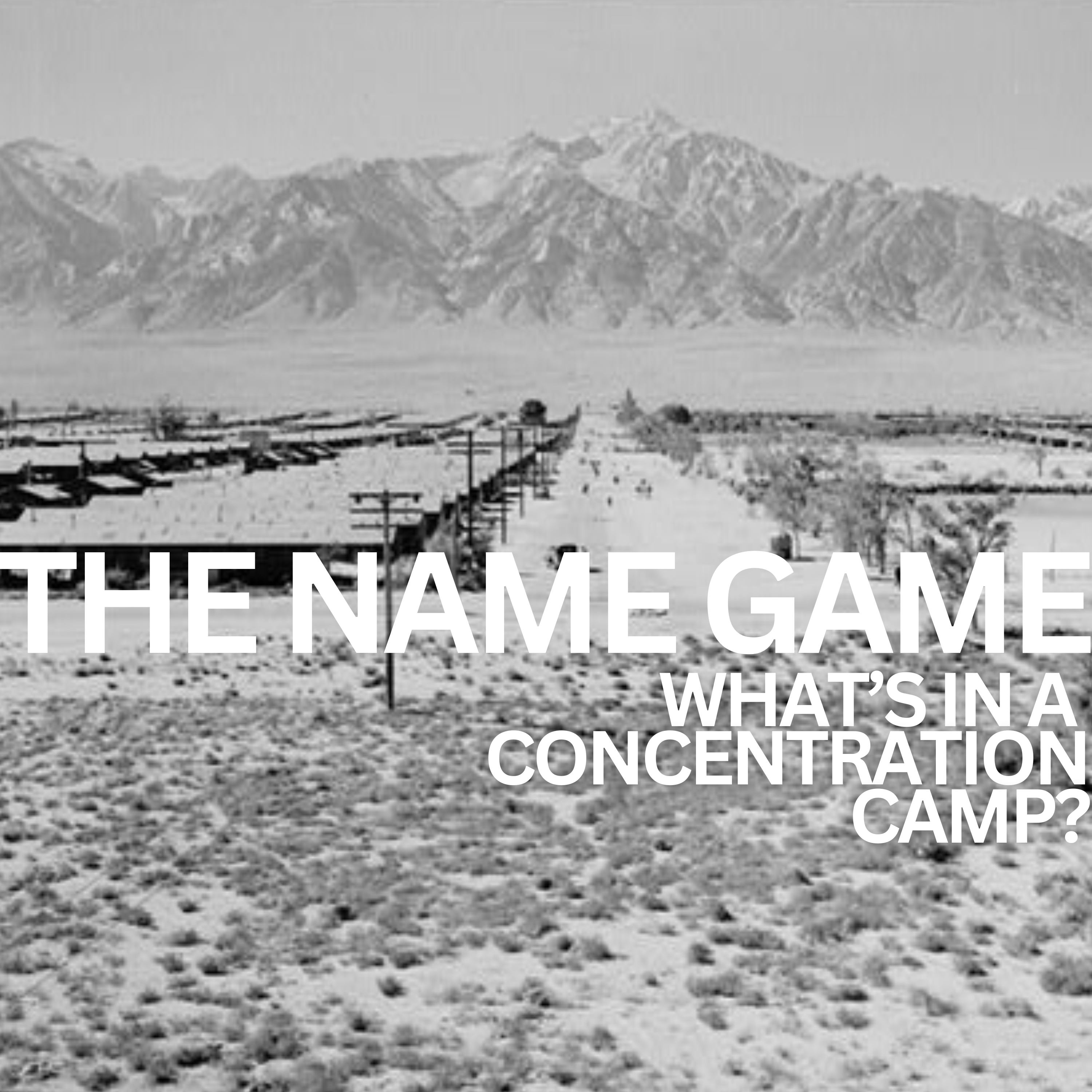
Next Comes What
What's in a Concentration Camp?
00:32:21
A guide to understanding our new concentration-camp era and how to fight it. Read the post that inspired this episode: Subscribe to Andrea Pitzer’s Degenerate Art newsletter to support Next Comes What: Watch this episode: In this...
Loading summary
Transcript1 lines
- [00:00]
Andrea Pitzer
You're listening to Next comes what from Degenerate Art. This is Andrea pitzer. Subscribe@Andreapitzer.com so that this podcast can remain free for everyone. Get out My Swan the Trump administration's opening of the Everglades concentration camp this month has triggered a lot of fury. I wrote a piece this weekend for MSNBC that looked at the facility and compared it to our global legacy of detention camps, especially concentration camps. The headline they went with was don't call it Alligator Alcatraz. Call it a concentration camp. They didn't keep the one I offered, but I don't have a problem with it. My main worry? That some people seemed to read the headline and not the piece itself. That headline launched a thousand posts calling for referring to the Florida camp as Alligator Auschwitz instead. I'll talk about naming a little bit later in the episode, but honestly, I'm worried less about naming than I am about making sure that people will understand what's going on in the Everglades. Those afternoon thunderstorms easily create flooding, and in swampy areas like this one, plenty of mud. Already reports of flooding inside the facility. I've been studying concentration camps in one form or another since 2008. We're going to cover six continents and a century of camps, so hold on tight. I sometimes forget that most of my audience encounters just one or two things I've written or said on video, but they haven't actually followed every word I've written in the last 17 years. Why would you do that? So it's good to stop and occasionally provide context. That might be helpful. On behalf of the Harvard Bookstore and our co sponsor this evening, the Nieman Foundation, I'm very pleased to welcome you to this evening's event with Andrea Pitzer presenting her new book, One Long Night. We're pleased to have C SPAN's Book TV here taping today. Today I want to talk about what a camp is, what they've looked like in the world and in the US and how we can reclaim the country from a political system that gives rise to such monstrosities. History is full of moments in which hindsight provides the only clear view. This is not one of them. In Saturday's piece, I defined concentration camps as mass civilian detention without real trials targeting vulnerable groups for political gain based on ethnicity, race, religion or political affiliation, rather than for crimes committed before Nazi extermination factories rose in Europe, before the first prisoner entered the Soviet Gulag, before the 20th century had even begun, concentration camps found their first home in the cities and Towns of Cuba, breaking that down. We're talking about camps for civilians, so not prisoner of war camps. There are no perfect bright lines between camp Systems. And sometimes POWs have been intermingled with civilian detainees, but typically they've been separate. The modern experiment in preemptively detaining groups of civilians without trial was launched by two generals, one who refused to bring camps into the world and another who did not. These concentration camps emerged in the last half of the 19th century, though Martinez Campos found Cubans dangerous and unconventional fighters. He described how they had nursed Spanish wounded who fell into their hands and returned prisoners of war unharmed. He could not, he telegraphed to Spain, raise the stakes in brutality against an opponent he felt to be honorable and began as imperial projects establishing control in colonial regions, usually fighting independence movements. I cannot, he wrote, as the representative of a civilized nation, be the first to give the example of cruelty and intransigence. So Martinez Campos was recalled. A man whose nickname was the Butcher was sent in his stead, and the first concentration camps came into the world. Did mass relocation and detention happen before that? Absolutely. And you can't get to concentration camps without the Spanish, British, and US Government abuse of and genocide against indigenous populations around the world. In the centuries before concentration camps arose, I mentioned the Spanish mission system and Native American reservations, because those are all the closest precursors, not just geographically and in time, but they are most kin to those things. What made concentration camps a new form of. Of that kind of prior detention that was already existing was the patenting and mass production of barbed wire. It's going to take a lot of people to hold these people. Well, it turns out if you order a whole bunch of barbed wire from Oliver Brothers in Pittsburgh, you don't have to have that many people in automatic weapons. The other invention that makes it possible to have a small guard force holding a large number of people in a fixed setting. Think of it as going from the atomic bomb to. To a hydrogen bomb. And in that definition, when I talk about not having real trials, the truth is that most people who end up in concentration camps historically haven't had any trial. But where there are trials, they are expedited. End runs around the standard judicial process. The Soviet Union had trials, too, in which no real defense could be presented. And the length of gulag detention went in waves every few days, sometimes with countless people in a row in getting whatever was the sentence of the day. In colonial Kenya, British judges meted out detention to hundreds of people at a time with the wave of a hand in the current case, the US Is importing non immigration judges over from the National Guard and giving them boot camp training to handle immigration. Governor DeSantis has proposed using National Guard, deputizing them as immigration judges to get through this massive backlog of people in the immigration court. Would you be open to that? Yes, he has my approval. That wasn't too hard to get, was it? He didn't even have to ask me. They're setting up expeditionary, let's call them mobile courtrooms to plan to try and deport people immediately. Given the vetting of service members at prior events that we've already seen, we're likely to end up with a Trumpist bench of judges at these facilities, further politicizing an already nasty process. These are kangaroo courts and kangaroo justice for those who say that the communities involved are not being targeted on the basis of race or ethnicity. I think the people whose ancestors fought in the Civil War have a hell of a lot more claim over America than the people who say they don't belong. I don't think that caveat holds water because the current lead on immigration detention, Stephen Miller, has said publicly that America is for Americans and Americans only. It's no mystery what he means by this. His anti immigrant stance has been traced at least as far back as his high school years. Am I the only one who is sick and tired of being told to pick up my trash when we have plenty of janitors? And we've seen the distinct targeting of people of color from the Trump administration. Stephen Miller had this meeting in late May where he said, why don't you try Home Depot and why don't you try 7 11? And lo and behold, here, just weeks later, we saw the targeting of Home Depots in la, running from its current priorities on visa restrictions globally, going all the way back to Trump's first weeks in office in 2017, trying to ban Muslims. And we all recall what he said about Africa, African countries, Nigerians. The biggest group affected by the expansion of the ban, he said, would never go back to their huts if we allowed them to come to the United States. Right? And so we just see him going from one prejudice to another, from one racist version of this ban to an expanded racist version of this ban. We do see others who get swept up in the net, like Harvard scientist Ksenia Petrova. She brought back frog embryo samples for her lab, and the government says she knowingly broke the law and failing to properly declare them. A typical customs violation results in a fine. But Petrova had her visa revoked, was detained and flagged for deportation. And there's a Canadian detainee who has resided in the US since age 10 who was reportedly abducted. At a green card interview this week, she says her parents brought her to the United States from Toronto when she was just a little girl. The US Is my country. You know, that's where I met my husband. That's where I went to high school, school, junior high, elementary. That's where my kids. This diversification of the target pool to occasionally include Russians or Canadians is less a sign of any lack of bias and more a sign that the government will preferentially target people of color, but is happy to simultaneously target those who have publicly opposed Vladimir Putin, as Petrova has. She's been a vocal critic of the Russian government and its actions in Ukraine and fears persecution if deported there. But honestly, they're happy to add more individuals to the pool because it adds to the general terror, further solidifying their power. Over the last 130 years, concentration camps have existed on five continents. Monarchies have imposed them, democracies have embraced them. Communist Party run nations have adopted them. There is no national political system that hasn't resorted to them, because every culture has fault lines unscrupulous political actors can use to divide a country's population. What unites Islamists, gender studies majors, socially liberal white urbanites, and Big Pharma lobbyists? It isn't the ideas of Thomas Jefferson or even of Karl Marx. It's hatred. They hate the people in this room. As many have noted before me, the most vulnerable groups are usually targeted. But once mass detention is established for one group, it becomes much easier to extend to other groups than it was to set up in the first place. Whether camps persist and become entrenched is often a question of internal power struggles, and sometimes also depends on whether there's external war happening. After defeating Spain handily, we inherited the Philippines, where there was also a rebellion underway, and we ended up using concentration camps ourselves in that conflict. Democracies are more likely to undo a concentration camp regime. This is likely due to the fact that citizens in a democracy have occasional chances at removing their leaders. So in the space of a decade, concentration camps come into the world and are used as colonial outposts in a number of locations. In each case, camp systems rise out of national and international influences. After that, they die down for a while because the results are so horrific that people want to distance themselves from them. During World War I, when internment of aliens became a global phenomenon, occurring in dozens of countries and even more territories, most parts of the planet developed some kind of procedure and bureaucracy for the preemptive mass detention of civilians. During World War I, this idea of preemptively detaining civilians becomes too convenient to resist. The international culture and trend became even more pronounced after World War I ended. In the 1920s and 30s, camps became ubiquitous. They aren't seen as a bad thing at all. They're seen as an unfortunate necessity of the modern era. After the rise of both advertising and political propaganda created potent psychological weapons to sell even really nasty things to the public, the kind of demonization necessary to create a concentration camp regime became exponentially easier to do. So you get the gulag in the Soviet Union, which is very tied up also with the history of forced labor in Tsarist Russia, but becomes a new phenomenon combined with this specific idea of concentration camps. It usually takes years of propaganda, regardless, to get people to accept camps. But exposed to enough, a majority will either embrace their neighbors being rounded up, or tolerate it out of fear and confusion. Yet because of the role of national culture in identifying who gets targeted from the beginning, each ruling party, when asked about its camps, is emphatic that their country isn't running camps like those other horrible ones that you've heard or read about elsewhere. Theirs are different, they will say, because this particular group is a real threat to public safety or to the nation and deserves to be locked up. So more boots on the ground means regress. More bad people make this country safe, and there will already be some people who believe that. You voted for Trump. How do you feel now? Horrible. Horrible. What did you vote for? I voted for change, but I didn't vote for this change. And like her husband, she too supported President Trump's promise to launch the largest deportation program of criminals in American history. My wife is a very well, up until 18 days ago, was a strong believer in what was going to happen the next four years. But we feel totally blindsided, betrayed. International trends combine with specifics from each national culture to make camps possible in a given place. So the outcomes are quite different, and they don't as much cross pollinate as they rise out of these same roots. With that in mind, it's worth Looking at U.S. history and the roots of the current immigration detention crisis. From its very beginnings, the US has arbitrarily targeted groups for relocation, detention, and political gain on the basis of who had citizenship. So I believe one of the most pressing problems for us to face as statesmen is, is to redefine the meaning of American citizenship in the 21st century. Indigenous people received the rights on paper at least afforded to US citizens only a century ago, though they've faced ongoing oppression on many fronts in the years since. The transatlantic slave trade legalized the kind of cross border human trafficking currently embraced by the Trump administration for deportations. And they made it into a hallowed American institution. Jefferson wrote a draft of the Declaration of Independence, including a long passage that denounced the slave trade. Slavery is a war against human nature itself, violating its most sacred rights of life and liberty by captivating and carrying Africans into slavery and miserable death. It was the only passage of the Declaration removed by the Continental Congress on the demand of the Georgia delegation. Asian Americans found themselves denied citizenship decade after decade in the U.S. and during World War II, Japanese Americans who were in fact citizens found themselves herded into camps all the same. Everybody at first called them concentration camps because they didn't know about death camps yet, but the government called them war relocation centers. From Japanese American internment to Jim Crow to native reservations, the rights of citizenship for minorities, even once secured on paper, have long been contingent and unfulfilled. It has to be said that civilian detention as a whole in the US likewise has a shameful history with tremendous abuses in the prison system. The United States itself has routinely had the highest incarceration rates among democratic nations around the world. Acceptance of atrocious conditions of mass incarceration and staggering numbers of prisoners, higher rates of incarceration than under Stalin as an integral part of American society has helped to pave the way for acceptance of a brutal immigration system. Today, after 9 11, we saw so much more money funneled into the system, into border security, into immigrant detention, and the detention system doubled. We're in that situation again. Much of what Trump is doing in terms of immigrant detention comes from policies carried out by prior presidents who have all in recent decades, enacted policies further brutalizing immigrants. People are being packed into overcrowded cells. People are not getting medical care. They're in conditions where they're languishing. Though to be clear, it's possible to make bad policies worse. And they're doing everything they can to expand, expand, expand, both here in the US and also seeing people be now detained in third countries abroad. Monstrous systems can always be made crueler. And right now, the current administration has its foot on the accelerator. So I promised to address this question of naming. So I want to turn to that now. Is it important to call these things concentration camps? Should we compare it to Auschwitz? Is that disrespectful to this singular, specific, horrific span of history? I want to underline that Auschwitz was sort of an Alpha and Omega of camp systems to date. It had forced labor, it had massacre and executions, it had detention in barracks as we sort of think of the classical model from a number of German camps. When I wrote my book, it was in part because some people didn't know any history of concentration camps except Auschwitz. It was a regular concentration camp. It was also part of the extermination camp system. And so even though it had these roots, it went into a place that no other place had gone before or since. Some knew about the pre death camp sites like Dachau or had heard about the Soviet Gulag. But there was little understanding that the camps had risen out of these specific colonial settings at the turn of the 20th century. I wanted to write about how we had gotten to Auschwitz and what happened after it. The damage done by concentration camps has never stopped the reflexive enthusiasm for their use. Because of course, all the camps around the world didn't disappear even as humanity began to confront the horrors of Nazi extermination. The Nazi example looms over everything. But if we go back to the very beginning and see how the phrase emerged and what it's meant over time, I want to sort of bring that definition back. Because we're much less likely to face gas chambers at Auschwitz. We're much more likely to face a situation like we have with the Rohingya today or something that was meant as a detention, that was segregation, but to sort of quell riots and violence that was happening then. If you don't wrap it up, if you don't reintegrate those people, they are labeled the enemy and it turns into something much more dangerous. So for me, as an individual, it's important to use the phrase concentration camp because I'm trying to inform people about this arc that camps have had affecting tens of millions of lives worldwide across more than 100 years. As Justice Antonin Scalia said of Japanese American internment, you are kidding yourself if you think the same thing will not happen again. I want my readers and listeners to understand that we have a lot of history that suggests that what's happening right now in the US isn't going to vanish on its own. I talk about that when a system is sort of choking on itself. And I think that is a danger sign. It can also be a sign of health when it's choking on itself, that there's some remedies that are still available to allow it to choke. We're going to have to act. I think political leaders who are opponents of camps should consider naming these camps for what they are and should work to educate people about what a concentration camp is. But what individual people call these camps is less important to me. And there may be times where even public officials use different names in talking to different people. Sometimes you're going to be calling attention to the grim history we're repeating. At other times, you might want to persuade someone who's bought into propaganda about immigrants in the past by talking about the physical setting and the treatment of people in these facilities instead of using a phrase that will trigger them. I don't think it's disrespectful to the memory of the dead to use the term concentration camp. But saying that the Everglades concentration camp is equivalent to Auschwitz is, to my mind, a different matter. It has two problems. The first is it isn't true. People know that a million detainees haven't been murdered in the Everglades this week. But it was understood right after the war that it was a horrific thing. That was a new innovation in sort of modern horror. But the thing that happened also as a result of that understanding was that the bar was kind of reset for concentration camps, and anything less than that somehow became not a concentration camp. It so changed the whole way that these camps were viewed that anything less than that still seemed permissible. The second problem is that as things get worse in the detention system under Trump, and they will. How can you convey what changes are going on if you've been misrepresenting what's been happening all along? Dissonant humor can be fantastic and powerful stuff, but I think memes and hyperbole tend to render concentration camp information into a reality show rather than actual reality. And that tendency has been weaponized in powerful ways by the right. Hey, Biden wanted me in here. Okay? He wanted me. It didn't work out that way, but he wanted me in here. My sense on this issue is that it's better not to let the administration set the terms of how we talk about it. Alligator Alcatraz seems aimed at terrorizing and entertaining, so I wouldn't use it. Substituting Auschwitz seems even worse for its dishonesty and for letting the administration set the framework for our language. But really, it's up to you. I'm not here to give you rules as much as I'm trying to help people think about what is true and what is real and what will be effective. I promise. Today, talk about ways to resist the expanding concentration camp regime. And unlike my usual rambling list, I want to be strategic in how I explain it today. Giving a framework to how I'm thinking about it might help you come up with other ideas on your own, because I want to be clear. There are so many ways that you can push back and you don't need to wait for a guru or an influencer to tell you what to do. In terms of how to start First, I want to say a word about people suggesting violent and illegal acts. I generally address nonviolence on here because those have typically been the most effective movements. Nonviolent campaigns had a better track record and were much more likely to have created democratic breakthroughs like way more likely than their violent counterparts, and they're the easiest to study in terms of what works. I myself endorse nonviolence while understanding that even those who commit to nonviolent action frequently end up charged with with assaulting police officers or faced with other bogus charges. My dear fellow clergyman, while confined here in the Birmingham City Jail, I came across your recent statement calling my present activities unwise and untimely. I have no illusions that committing to nonviolence completely protects protesters. In any nonviolent campaign, there are four basic steps collection of the facts to determine whether injustices exist negotiation, self purification, and direct action. We have gone through all these steps in Birmingham, but after the Everglades camp opened last week, I saw people talking about armed liberation of the camp or making drone attacks on it. I would like to respectfully say that if you're posting on social media about taking these kinds of violent actions, you have already removed yourself from being an effective agent of the violent action you're expressing an interest in taking. And honestly, there are so many things you can do that are likely to make a significant difference without you having to be convicted of a crime because you posted it on social media before you did it. The most immediate thing I would recommend you do is to push back on these developments on the ground level near you. Start with where suffering is already happening and work backward to see strategic places where you can insert yourself to alleviate harm or to gum up the concentration camp machinery. That means helping detainees and families of those already detained or deported. You can reach out to church groups, immigrant nonprofits, cultural associations, and many other places to see how you can help. You may have invaluable skills that are rare, or just the patience to do grunt work that's necessary. It's all important if we take a step backward in the process of harm. From there, we can consider how to keep people from being caught by ICE in the first place. There are education efforts to help immigrants know their rights, which is not always sufficient but has already saved a lot of people from arrest. If you're undocumented and Immigration and Customs Enforcement, or what we often think of as being the immigration police, stop you on the street or stop you in a public place. Know that you have these following you have the right to remain silent. You do not have to speak to an immigration officer. You do not have to answer any questions. You may ask if you are free to leave. If the officer says no, you may exercise your right to remain silent. If you are asked where you were born or how you entered the United States, you may refuse to answer. You may refuse to remain silent. If you choose to remain silent, however, you must say so out loud. When you know those rights as well, you can be more effective at helping people. In addition, there are people helping to file requests for virtual hearings for those who have to attend court. But a fear arrest by ICE and stepping back to an earlier stage of the problem, we're faced with the issue that facilities even exist for this kind of detention in your community. So find out where immigrants are detained in your state, county or town. If you can't find out, email or call your elected representatives and ask them. Ask them to find out, too. Trace the networks. Trace the money. Find ICE facilities. Work on cutting access and funding and economic partnerships with agencies or businesses locally. Meet with philanthropists, business owners and religious leaders and ask them to partner with you to respect the rights of all area residents and to deny the use of area locations for detention. Taking another step further back invites the question of how is this legal to do in the first place? Pressure your elected officials to protect immigrant rights as key to protecting everybody's rights and tell them that immigrants are critical to the country and to your community. Ask them what they're doing to protect everyone. Public protest against these policies and concentration camp detention doesn't meet a need the way that offering direct services or volunteering with a nonprofit does. But it's also critical by clamping down on immigrant rights, the administration is clamping down on every American's rights. Nearly everything that's been set as a priority in this second Trump administration, and a lot of what was tried the first time out appears aimed at imposing dictatorship. Public dissent is a critical right and key to blocking dictatorship. It has to be exercised on a regular basis all over the country if it's to be kept. The bigger demonstrations become, the more they will break through the silos and the harder they will be to dismiss as the work of paid subversives. Big protests, especially those that seem fun alongside the serious messaging, start to feel like the honorable side, like the winning side to more people. But in addition to big national movements, we need local demonstrations too. You organizing even a small one in your community, especially if it's in a deep red area, will help make the connections for those who might otherwise never see or hear what's happening in their neck of the woods. The more you can call out local detention sites and actions, the better. Many people don't realize where their money's going or even know how their community is tied up in the Nationwide Immigration Detention Project. Handing out flyers at protests or carrying signs can be key sources of information for people who don't get a lot Mamdani responding in a statement the President of the United States just threatened to have me arrested, stripped of my citizenship, put in a detention camp and deported, not because I've broken any law, but because I will refuse to let ICE terrorize our city. We will not accept this intimidation. And if you can close the loop by connecting local actions to a national network, you'll likely learn best practices that help you feel the energy boost that comes from support and solidarity on the largest level. You don't even have to focus on the immigration issue to tackle this problem. You can help other targeted groups, or you can take the most panoramic view possible and focus on corruption. I firmly believe that one of the best ways to shift the American trajectory is to fuel an anti corruption movement. An anti corruption campaign has universal appeal. Saying Trump is deceiving you or MAGA is brainwashed is unlikely to change anyone's mind. But saying we are all, every one of us, getting cheated every day is tremendously unifying. To Democrats, Independents, non voters and Trump supporters alike, anti corruption has been a powerful force in politics at home and abroad across history, and I think it will continue to be useful because corruption is at the heart of most of what Trump is doing. It may be the only way that some Trump supporters who feel too bound up with him will be able to walk away. He wants to distract from what I fight for. I fight for working people. I fight for the very people that have been priced out of this city, and I fight for the same people that he said he was fighting for. An anti corruption movement allows those potential voters to be swept up without making them the intensive and resource draining singular focus of outreach. So whether you go big or small, local or national, or all of the above, remember that re knitting our communities together more tightly is the only way we can get past this and emerge with a better country. You have to demand your officials represent our interests and not just those of wealthy, powerful donors. You have to know that people have your back, and they have to know that you have theirs. Just get three or four friends or neighbors or co workers or acquaintances from a college course, or your rock climbing class, or pick up basketball or your church, or your quilting or discord group. Decide to do something together and then get started. And that's it. Thanks for listening To Next Comes what? Please share this with anyone who's looking for ways to help each other survive this mess. To support this podcast, Please subscribe@Andreapitzer.com and consider giving Next Comes what? A five star review where you get your podcasts.