Podcast
Nice Genes!
Hosted by Genome BC · EN
From healthcare and biotechnology to forests and fisheries, the evolving study of genomics is leading to some of the most exciting and world-changing discoveries in science and medicine. Like – did you know that your individual genomic signature can help determine the healthcare treatment you receive? Or that mapping the genomes of trees can inform forest management?
But while the study of genomics holds great promise for the health of people, animals, and the environment, it also confronts us with big questions: How do we study genetic patterns in a way that respects sensitive genetic information, history, and equity? How do we use the power of genomic research to fight climate change? Save the salmon?
Join Dr. Kaylee Byers – a self-described “rat detective” and science communicator as she guides you through fascinating conversations about the what, the why, and the how of genomics.
26episodes
Episodes
Newest firstAll episodes
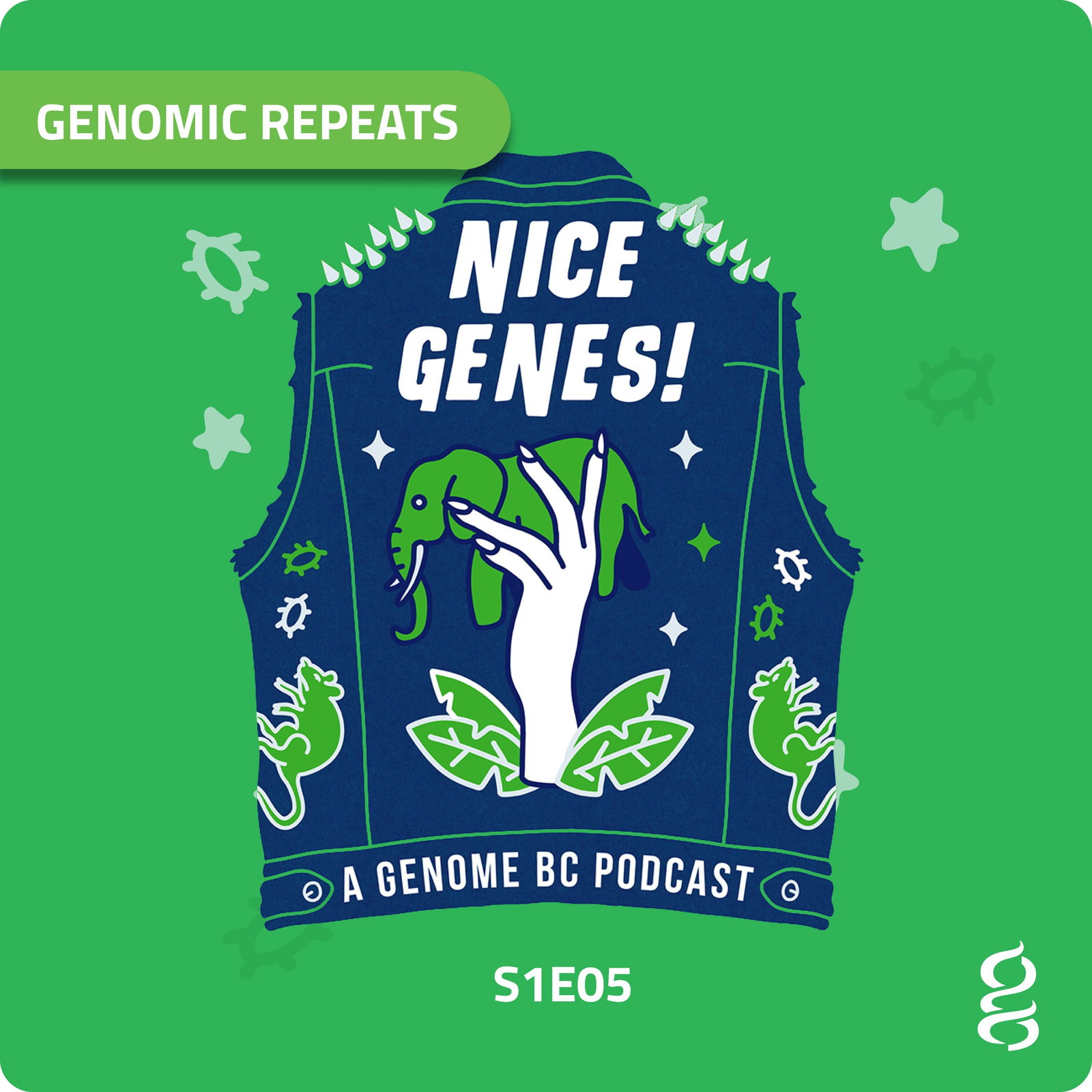
Genomic Repeat: Nodding our Tusks to Heroic Mutations
2w ago00:41:52Tap to summarizeThis episode was originally released on August 2, 2022Just like any good superhero comic, we start this episode with the science going incredibly wrong. Think: vats of toxic waste producing evil mutants that ravage the city. Or maybe not so evil. It really depends on your perspective. Just like the X-men, genetic mutations get a bad rap in the public eye. But they aren’t all nasty.Dr. Kaylee Byers speaks with data scientist and evolutionary biologist Dr. Brian Arnold on how the genetic ‘mistakes’ known as variants occasionally encode incredible abilities. Odd elephants, hiding in our ocean depths, and Rogue-ish bacteria are just a few examples. Dr. Arnold defends these genetic anomalies, and explains how they can make a huge difference to the future of humanity and life on this planet. Also joining us is marine biologist Dr. Maria Pia Miglietta, who shares an incredible ability sitting in our ocean depths. Immortality.So strap on your capes, because we’re heading straight into the strange terrain of “heroic mutations.” Listen to Nice Genes! wherever you get your podcasts, brought to you by Genome British Columbia.Resources: Genetic Mutation - NatureGenomic mutation rates: What high-throughput methods can tell usShane Campbell Staton Group - Tuskless ElephantsIvory poaching and the rapid evolution of tusklessness in African elephants - ScienceReal-Life X-Men: How CRISPR Could Give You Superpowers in the Future - synthego.comIndonesian divers have evolved bigger spleens to hunt underwater - ScienceMutations may reveal how Tibetans can live on world's highest plateau - ScienceThe Immortal Jellyfish - American Museum of Natural HistoryCellular reprogramming and immortality: Expression profiling reveals putative genes involved in Turritopsis dohrnii’s life cycle reversalTranscriptome Characterization of Reverse Development in Turritopsis dohrnii (Hydrozoa, Cnidaria)Horizontal gene transfer and adaptive evolution in bacteria - nature reviews microbiologyHorizontal gene transfer overrides mutation in Escherichia coli colonizing the mammalian gut - PNASThe Ship of Theseus Dilemma - Open Okstate
Transcribe →
Why Orange Cats Are Orange
Jul 700:05:45Tap to summarizeHave you ever wondered why most orange cats are male? Scientists have been scratching their heads over this for decades, and now we finally have answers. In our final Gene Short of the season, Sarah Lando and Dr. Kaylee Byers explain the surprising new evidence that finally explains this purr-ticular quirk.Resources1. Gene behind orange fur in cats found at last- Science.org2. Scientists track down mutation that makes orange cats orange- Science Daily
Transcribe →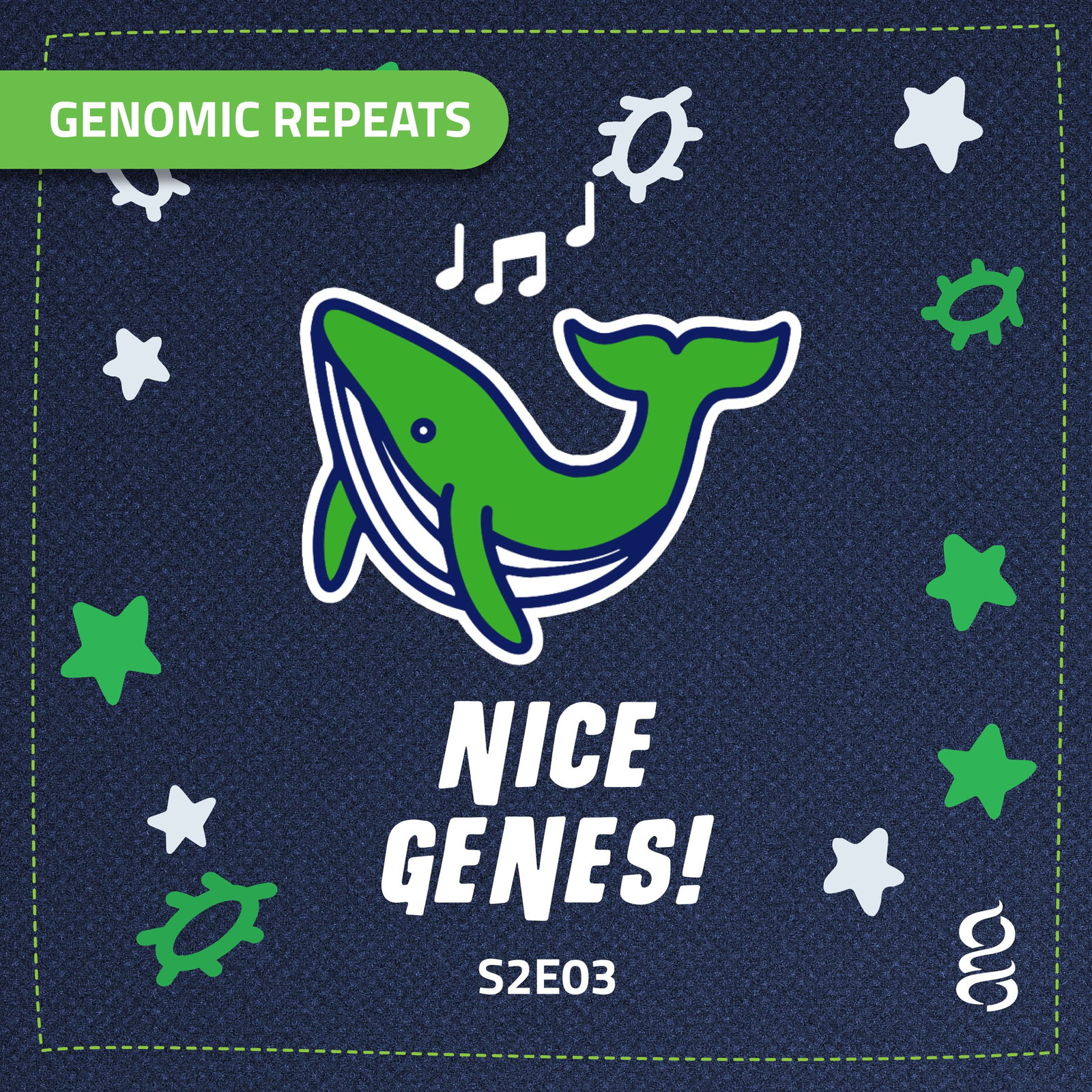
Genomic Repeat: Calls from the Deep - A genomic whale of a story
Jun 200:52:41Tap to summarizeThis episode was originally released on November 15, 2022Things aren’t always what they seem on the surface, especially when it comes to our oceans. So many mysteries hum below its watery surface. So, you may just have to use your ears when it's too dark to see exactly what's going on down there.Dr. Kaylee Byers looks into the ocean giants that lurk in the depths and the unique songs they share with us. She sits down with whale biologist Dr. Jennifer Allen on how whale songs are imparting a cultural exchange between populations that are hundreds of miles apart. Filmmaker Joshua Zeeman shares his journey to find the infamously dubbed 'Loneliest Whale'. And Paeleobiologist Dr. Travis Park from the Museum of Natural History in London tells us how whales developed their unique singing superpowers by taking us back through millions of years of evolution. Finally, researcher Grace Baer brings us to a remote west coast station studying whale populations and the effects of ocean traffic noise.It's a whale-sized episode taking you on a listening journey into this wonderful watery world!Special thanks to Captain Gaelen Krause of the Island Odyssey, for capturing recordings on his journey to search for whales along the British Columbia coast.Resources:1. Southern Resident Killer Whale Research Project | Parks Canada2. Whales learn songs from each other in a cultural 'deep dive' | phys.org3. Whale-monitoring robots are oceanic eavesdroppers with a mission | Popular Science4. Whale Songs Are Getting Deeper | The Atlantic5. The search for the loneliest whale in the world | The Guardian6. The Loneliest Whale: The Search for 52 | Bleecker Street Media7. BTS (방탄소년단) Whalien 52' MV | BigHit Entertainment7. Watkins Marine Mammal Sound Database | Woods Hole Oceanographic Institution8. Underwater Noise Pollution Is Disrupting Ocean Life - But We Can Fix it | TIME9. Convergent evolution in toothed whale cochleae | BMC Evolutionary Biology10. Evolutionary Basis of High-Frequency Hearing in the Cochleae of Echolocators Revealed by Comparative Genomics | Oxford Academic11. Genome-culture coevolution promotes rapid divergence of killer whale ecotypes | Nature12. DNA Suggests Cultural Traits Affect Whale Evolution | Science13. San Francisco: Dead Whale Opens Seafood Season | Universal International Newswire14. Songs of the Humpback Whale | Roger Payne, CRM Records15. Whaling Commission | Associated Press Archive16. Monaco - International Whaling Commission | Associated Press Archive17. Bubble Net Feeding | BC Whales18. Cool Genomics Facts - Fact 4 & 5: Environmental DNA | Genome British Columbia
Transcribe →
Spit Happens! The History of 23andMe
May 500:08:19Tap to summarizeThe story of 23andMe has more twists than a soap opera. Spit parties, ghosting the FDA, unicorn valuations, and massive data breaches—this company has done it all. In this Gene Short, Sarah Lando walks Dr. Kaylee Byers through the drama behind the headlines, and what it all means if you’re thinking about exploring your own ancestry DNA.Resources1. The rise and fall of 23andMe - Business Insider2. The rise and fall and rise again of 23andMe - Nature
Transcribe →
Genomic Repeat: Slipping Through the Spectrum - Rethinking the Divide in Autism Diagnoses
Apr 700:33:11Tap to summarizeThis episode was originally released on November 5, 2024Dr. Hannah Belcher was already studying autism she found out she herself was Autistic. Getting her diagnosis felt like everything suddenly clicked… but why did it take so long to get answers?In this episode, Hannah shares her journey and talks about how many Autistic people, especially women, learn to mask their true selves to fit in– causing them to slip through the diagnostic cracks. Then, we invite Dr. John Constantino to break down the genetic underpinnings of Autism Spectrum Disoder and related conditions like ADHD—and how science is shaking up the genomic picture of what we thought we knew about this male-female bias.From outdated theories to “refrigerator mothers,” join hosts Dr. Kaylee Byers and Dr. Rackeb Tesfaye as they comb through the tangled web of sex bias and ask whether our current methods of studying neurodiversity is actually addressing the questions the people with ASD want answered?A Note on Language:When talking about Autism - semantics matter. So, it’s important to recognize the nuances of language. Many people in the Autism community prefer identity-first language, such as "Autistic person," as it centers Autism as a core part of their identity. Others, however, may prefer person-first language, like "person with Autism," which places the individual before the condition. We’ve used both forms of language in this episode, and we encourage respecting individual preferences by asking what each person is most comfortable with. For more on this, check out resources like the National Institutes of Health’s guide on writing respectfully about identity and the Autistic Self Advocacy Network’s explanation of identity-first language.Additionally, when we refer to ‘Autism risk’ in the context of academic research, it typically means an increased genetic likelihood of receiving an Autism diagnosis. However, we recognize that "risk" can imply a negative connotation (which we do not support.) Instead, we aim to discuss Autism in ways that honour the neurodiversity of all individuals.Lastly, regarding sex differences in Autism diagnoses, in this episode, we’re talking specifically about sex assigned at birth. Although we mention gender, we want to be clear that we aren’t exploring how Autism diagnoses may vary by gender identity—that area remains understudied! So, our conversation is focused on differences between males and females, and we look forward to seeing more research on the richly complex interactions between gender identitiy and neurodiversity in the future.Highlights:(6:32) Growing up undiagnosed(18:52) The genetic underpinnings of Autism and related neurodiverse conditions(22:20) Debunking the “female protective effect”(26:37) A biased assessmentResources:1. ‘Taking off the Mask: A Practical Guide for Managing Autistic Camouflaging and Mental Health‘ - Dr. Hannah Belcher2. Inherited Risk for Autism Through Maternal and Paternal Lineage - National Institute of Health3. 'Decade of data dents idea of a ‘female protective effect’- The Transmitter4. How ADHD Gender Bias is Slowly, Steadily Harming Females - ADDitude Mag5. Refrigerator Mothers - A Discredited Cause Of Autism- Autism Help6. Study challenges idea that autism is caused by an overly masculine brain- Science.org7. Autism Spectrum Conditions In Women: Diagnosis, Mental Health, And The Role Of Camouflaging- Research Gate
Transcribe →
The 200-Year Old Whale
Mar 1000:07:05Tap to summarizeBowhead whales can live for nearly 2 centuries, weigh as much as 22 elephants, and– surprisingly– rarely get cancer. So what’s their sea-cret? Sarah Lando from Genome BC brings us the splashy new genomic research behind these Arctic giants’ longevity, and what it could mean for the future of cancer research.Resources1. “This whale lives for centuries: its secret could help extend human lifespan”- Nature2. Evidence for improved DNA repair in long-lived bowhead whale - Nature3. Peto’s Paradox: Large mammals may hold clues in preventing cancer among humans - HealthyDebate
Transcribe →
Genomic Repeat: Germ Spotting - Tracking diseases using genomics
Feb 1000:46:49Tap to summarizeThis episode was originally released on December 13, 2022Stop the presses! New research shows that viruses locked in the Arctic permafrost for thousands of years have the potential to infect present-day organisms. Accompanied with a warming planet, this issue is really starting to thaw out. So what can brave scientists and institutions on the frontlines of tracking diseases do about it? And how can understanding our genomic history with diseases over thousands of years better prepare us in the fight to overcome them?Dr. Kaylee Byers starts our journey by slinking into a disease-tracking genomics lab at Simon Fraser University to meet Dr. Michael Trimble and Dr. Will Hsiao to understand the challenge of outpacing the rapid evolution of viruses. Then she pops across the ocean to speak with Dr. Birgitta Evengård and Dr. Jean-Michel Claverie about whether the Pandora's box of ancient diseases frozen in the arctic have the potential to become the next global outbreak as temperatures warm. Plus, we unearth ancient burial sites in Vietnam with Dr. Melandri Vlok, to investigate how climate change exacerbates the tension between human health and pathogens.Special thanks to Dr. Will Hsiao and Dr. Michael Trimble for allowing us to record with them at Simon Fraser University.Resources:1. Infection control in the new age of genomic epidemiology | British Columbia Centre for Disease Control Public Health Laboratory2. The permafrost pandemic: could the melting Arctic release a deadly disease | Unearthed3. Viral spillover risk increases with climate change in High Arctic lake sediments | The Royal Society4. Healthy ecosystems for human and animal health: Science diplomacy for responsible development in the Arctic | The Nordic Centre of Excellence5. Understanding and Responding to Global Health Security Risks from Microbial Threats in the Arctic: Proceedings of a Workshop | National Academies of Science, Engineering, Medicine6. Next pandemic may come from melting glaciers, new data shows | The Guardian7. Scientists Revived Ancient 'Zombie Viruses' Frozen For Eons in Siberia | Science Alert8. A 48,500-year-old virus has been revived from Siberian permafrost | NewScientist9. Anthrax outbreak in Siberia | euro news10. CBC News: The National | Russia invades Ukraine | Canadian Broadcast Corporation (CBC)11. National Geographic: Explorer Directory, Melandri Vlok | National Geographic12. Paleoepidemiological Considerations of Mobility and Population Interaction in the Spread of Infectious Diseases in the Prehistoric Past | Bioarchaeology International13. The Epidemiological Transition: A Theory of the Epidemiology of Population Change | Milbank Memorial Fund14. Forager and farmer evolutionary adaptations to malaria evidenced by 7000 years of thalassemia in Southeast Asia | nature portfolio15. CARD 2020: antibiotic resistome surveillance with the comprehensive antibiotic resistance database | Department of Molecular Biology and Biochemistry, Simon Fraser University
Transcribe →
The Music That Moves Us
Feb 300:43:09Tap to summarizeListening to and creating music is one of the most universal human experiences. It gets stuck in our heads, makes us cry in the car, and has the power to bring people together – sometimes without even a single word. So for something so deeply ingrained in us - IS IT... ingrained in us? like, in our DNA? it raises a big question: is our connection to music something we learn… or something written into our DNA?In this special bonus live episode, host Dr. Kaylee Byers takes the pod on stage for the very first time to explore the science of music. Joined by neuroscientist Dr. Lara Boyd, clinical geneticist Dr. Alison Castle, and (virtually) behavioural geneticist Dr. Miriam Mosing, our panel unpacks how music shapes and rewires our brains, why it can be such a powerful tool for therapy and lifelong learning, what genes can (and definitely can’t) tell us about musicality– and why music even exists in the first place.So warm up those vocal cords, and get ready to sway in your seat… this is Nice Genes! live.Special thanks to musician (and recovering physicist) Dr. Martin Austwick for the live musical magic throughout the show.-Highlights(7:24) How Opera Training Influences the Brain(10:30) Music’s Role in Memory and Dementia Prevention(22:27) Heritability of Musical Behaviour(36:24) If we could identify specific musical genes, should we?-Show Notes/Resources:1. Twin modelling reveals partly distinct genetic pathways to music enjoyment- Nature Communications2. New multi-faculty research initiative weaves notes and neurons- Djavad Mowafaghian Centre for Brain Health
Transcribe →
TB Trails and Tails
Dec 1600:35:08Tap to summarizeWhy Tuberculosis is still the most deadly infectious disease.Attention, DNA detectives! We’ve got a rat on the loose – but don’t worry, not the snitching, double-agent kind. We’re talking about the whiskered, hyper-skilled, tiny agents who aren't snitching - they're sniffing out one of the world’s deadliest diseases: tuberculosis (TB).Tuberculosis might sound old-timey, but it’s still the globe’s top infectious killer– growing tougher, more drug-resistant, and hitting hardest where access to care falls short. So for our Season 5 finale, host Dr. Kaylee Byers digs into TB’s fascinating backstory, and teams up with microbiologist Dr. Jennifer Guthrie to figure out why this ancient disease still has such a tight grip, and how genomics is helping track its every move. Along the way, Dr. Zolelwa Sifumba shares her story as a multidrug-resistant TB survivor, and how her treatment journey fuels her advocacy today.Buckle up: this investigation has it all : science, politics, global inequities… and a squad of extraordinary rats.Special thanks to APOPO for sending us field recordings and interviews from their HeroRAT training program.Highlights(3:42) The history of TB(8:19) Why TB sits at the top of the global disease podium(15:30) Meet Zolelwa - a multi-drug-resistant TB survivor(30:48) The power of education–Show Notes/Resources:1. Giant Rats Trained to Sniff Out Tuberculosis in Africa- National Geographic2. The Making of a HeroRAT: From Tiny Pup to Life-saving Hero- APOPO3. Tuberculosis: an ancient disease that remains a medical, social, economical and ethical issue- Journal of Preventive Medicine and Hygiene4. History of World TB Day- CDC5. The history of tuberculosis- Respiratory Medicine6. Chapter 12: An introductory guide to tuberculosis care to improve cultural competence for health care workers and public health professionals serving Indigenous Peoples of Canada- Canadian Journal of Respiratory, Critical Care, and Sleep Medicine7. Everything is Tuberculosis- John Green
Transcribe →Leave Us a Review
Dec 900:01:08Tap to summarizeGot a sec?Kaylee’s popping into your feed with a teensy, weensy favour to ask: if you’re a fan of the podcast, would you do us the honour of leaving Nice Genes! a review?Not only does it help the show, but it could also score you some very fun, one-of-a-kind prizes (details below).How to leave a review:Apple Podcasts: Scroll to the bottom of our show page, tap those five shiny stars, and tell us what you think.Spotify: Tap the star rating at the top of our show page and leave a comment on your favourite episode this season.Contest details:If you leave the pod a review by December 31st and DM a screenshot to @GenomeBC on Instagram, you could win a swag bag, or the chance to maybe even be featured on the show next season.Your feedback helps our beloved podcast reach new ears, supports the science stories you care about, and lets us know exactly what’s resonating most with you.So… what are you waiting for? Show the pod a little love and earn yourself a shot at some exclusive Nice Genes! goodies!
Transcribe →