Loading summary
Transcript2 lines
- [00:01]
A
Hey, no Bullshit Leaders. Quick heads up. Doors are now open for leadership beyond the theory. If you've ever wished you had a better boss, this is your chance to be that boss. Over nine weeks, you'll learn how to cut the busy work, lead with confidence, and handle the tough conversations like a pro. No fluff, no theory, no bs, just practical tools from Marty, who's the former CEO of a multi billion dollar business. He's done it all at the highest level and had to learn by trial and error to get there. Enrolment's now open, but spots are limited. So head to leadershipbeyondthetheory.com and grab yours today. I can't wait to see you in there. Welcome to the no Bullshit Leadership Podcast. In a world where knowledge has become a commodity, this podcast is designed to give you something more access to the experience of a successful CEO who has already walked the path. So join your host, Martin Moore, who will unlock and bring to life your own leadership experiences and accelerate your journey to leadership excellence.
- [01:04]
B
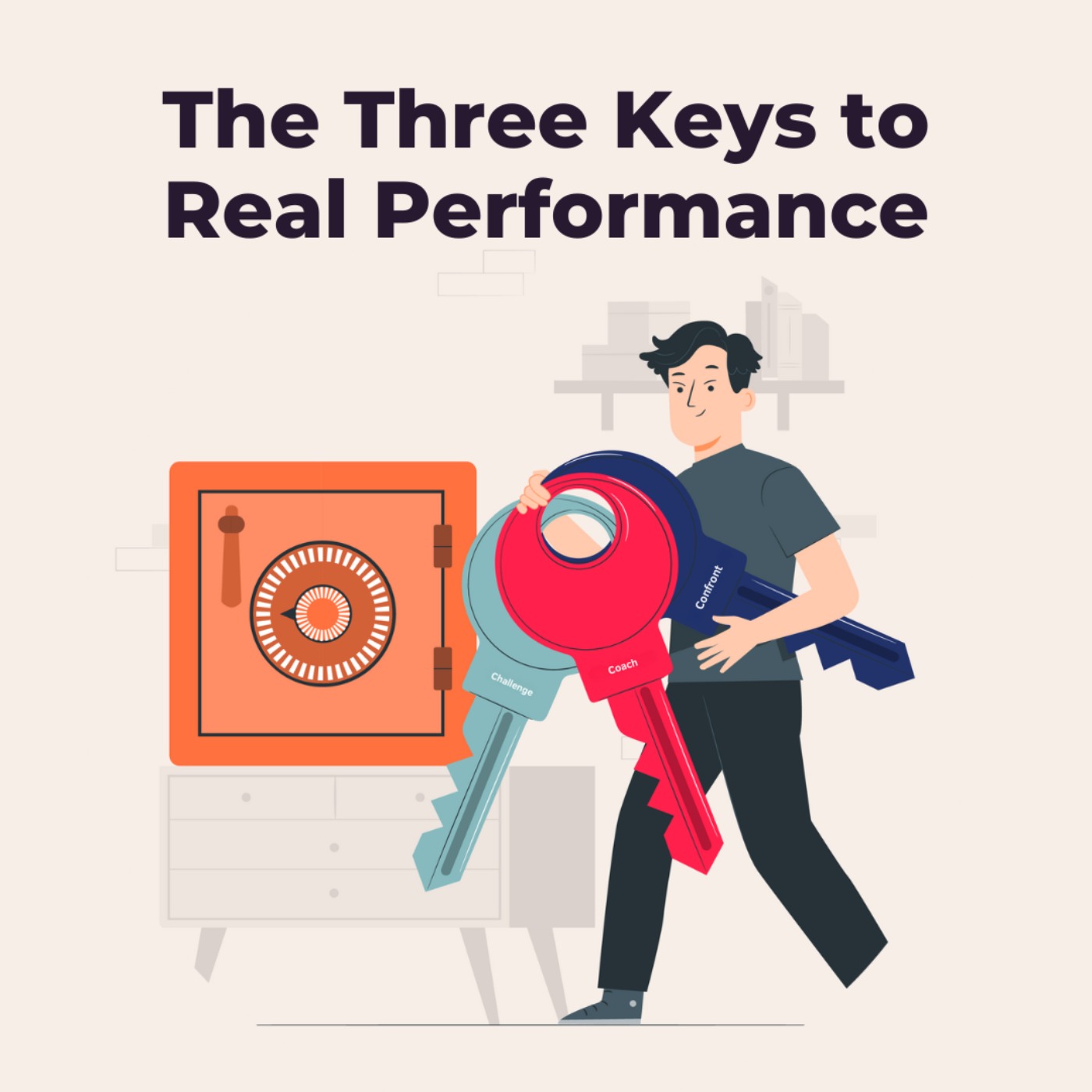
Welcome to Moments with Marty, your short, sharp shot of leadership insight to help you to stay on track between our weekly episodes of the no Bullshit Leadership Podcast. The Challenge Coach Confront framework is the foundational toolkit for setting expectations, for helping people to meet those expectations, and for responding when they don't. The challenge phase is all about establishing the right targets, and to do this well, you've got to know each of your direct reports pretty well. Individually, you need to know what they're capable of and how to get that little bit extra out of them to stretch them and set them up with expectations that are crystal clear and most importantly, expectations that are mutually agreed. Many leaders, though, fall at this first hurdle because they're afraid to stretch their people. What if I overwork them? What if I upset them? What if they don't like me? If you don't set clear targets that are ambitious but realistic, you're not doing your people any favors. If there isn't at least a little bit of stretch, the type that puts a lump in someone's throat, well, your people are going to approach their work differently. Less energy, less creativity, and less attention. You might think that's not such a bad thing for the individual, but in effect, you're robbing them of the opportunity to produce their best work and to feel the elation that comes when they have real impact. This is where they learn to overcome their fears and doubts and build their confidence. Without the skillful challenge of a strong leader, people never get to experience this in their work environment. The second Phase is the fun part. Coach. This is where you spend time helping people to achieve the outcomes that they signed up to. In the challenge phase, you're their cheerleader, their mentor and their accountability partner. You're there with them to help them solve problems, make decisions and work through the inevitable issues that are going to arise. The nuance of the coach phase is that you need to support your people without giving them the answers and without making their decisions for them. A really good leader knows how to bring out the best of their people without over functioning for them. Now, the challenge and coach phases are iterative. You'll find yourself continually switching between challenging and coaching and coaching and challenging as you look for that sweet spot that brings out each person's peak performance. If you do this well, you're going to spend 95% of your time here. But on the 5% of occasions when someone doesn't meet the agreed expectations, you have to confront them. It may not surprise you to hear many leaders avoid the confront phase when their people don't deliver. Instead of stepping into the difficult but necessary conversation, they lean on excuses and rationalisations. This doesn't help anyone. When you don't address underperformance decisively, it has devastating consequences for team culture and performance. Those who are meeting the standard see it being applied selectively. They wonder why they're bothering to work so hard for those who aren't performing well. They get a free kick and they begin to relax. They know that there are no consequences for their lack of performance under performers get dangerously comfortable with their situation and they quickly work out how to do just enough to survive. This sets a low watermark for team performance that everyone else calibrates their own performance against. Unless you tackle underperformance head on, your team will gradually but inevitably slide into mediocrity. Once that happens, your best people are going to leave to find a team that's more aligned with their aspirations. And if you lose them, well, your poorest performers are going to start to look relatively okay. But your team will become a talent backwater. And you know what? You really have no one to blame but yourself. For more depth on this insight, have a listen to episode 57 of the no Leadership podcast, Challenge Coach Confront. We'll leave a link in the show notes. I really hope you enjoyed this moment and that it gives you that extra little spark to be a no bullshit leader.