Loading summary
Transcript5 lines
- [00:00]
A
When we started this podcast, we had to figure out a lot of it on our own, which was pretty daunting at times. When you're starting off with something new, it seems like your to do list just keeps growing and it can begin to consume every waking moment. Finding the right tool that helps you out and simplifies everything can be a game changer for millions of businesses. That tool is Shopify. Shopify is the commerce platform behind 10% of all e commerce in the US from household names to brands that are just getting started. Shopify is also packed with helpful AI tools that write product descriptions, page headlines, and even enhance your product photography. Get the word out like you have a marketing team behind you. If you're ready to sell, you're ready for Shopify. Turn your big business idea into With Shopify. Sign up for your $1 per month trial and start selling today at shopify.com selling leadership go to shopify.com leadership welcome.
- [00:59]
B
To the no Bullshit Leadership Podcast. In a world where knowledge has become a commodity, this podcast is designed to give you something more access to the experience of a successful CEO who has already walked the path. So join your host, Martin Moore, who will unlock and bring to life your own leadership experiences and accelerate your journey to leadership excellence.
- [01:22]
C
Welcome to Moments with Marty, your short, sharp shot of leadership insight to help you to stay on track between our weekly episodes of the no Bullshit Leadership Podcast. Almost every leader talks about value, but surprisingly few can articulate it in any meaningful way. If you really want to improve value capture, first you have to be able.
- [01:41]
A
To describe it clearly.
- [01:43]
C
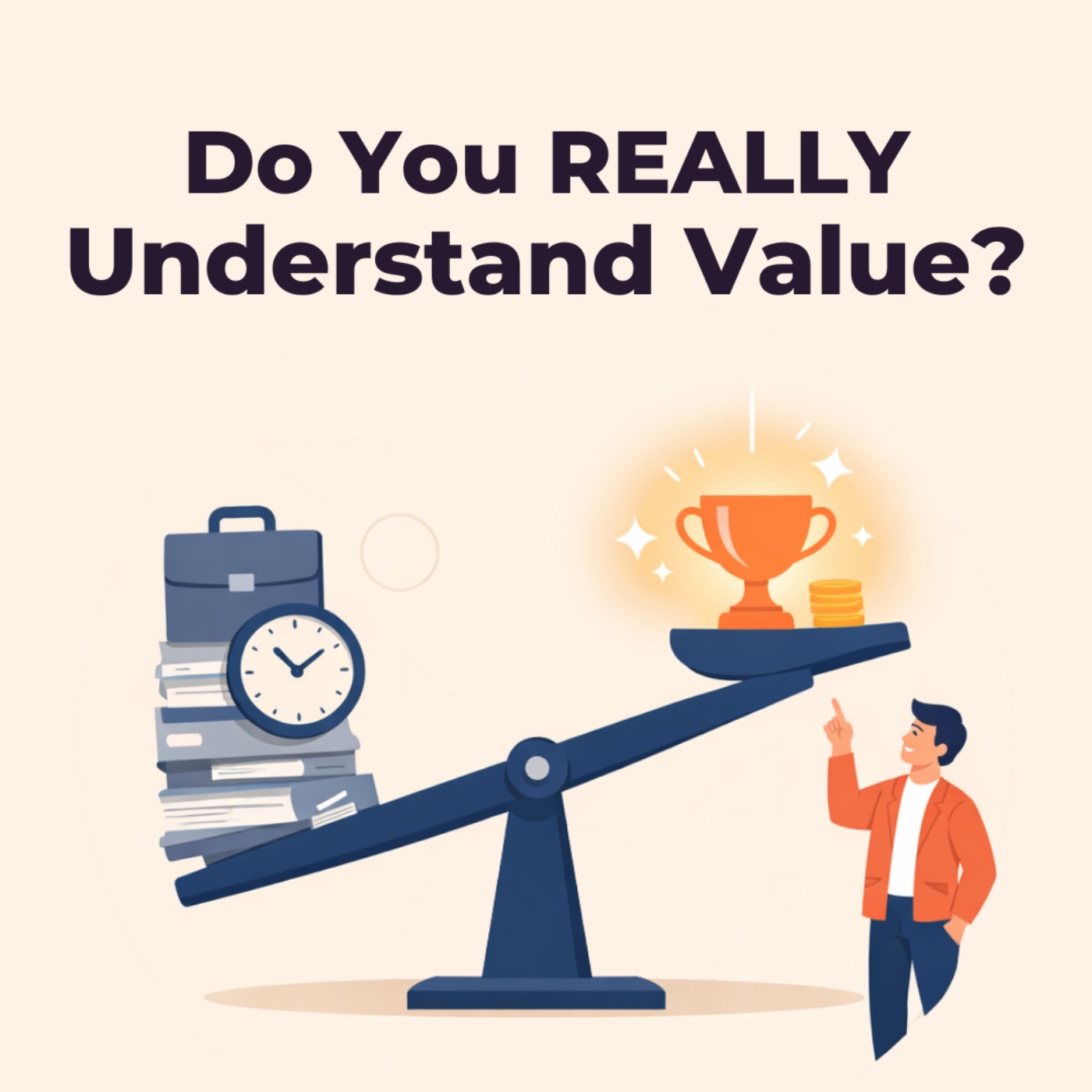
Then you have to translate it into the activities that are going to give you the biggest bang for buck. And often the hardest part. You've got to stop all the other shit. Now the first step is to understand the difference between cost and value. A budget mentality is going to focus you on cost control, and although that's not a bad thing, any expenditure should be viewed in the context of the potential return it can generate. During my executive career, I spent a lot of time chairing capital investment committees that would evaluate business proposals to allocate the company's capital to the various projects. If someone wanted to spend $20 million on a project with unclear benefits, well, that $20 million had no chance of getting the green light. But we would happily approve a $20 million project if the expected benefits were clearly defined, and we believe there was a high likelihood of capturing those benefits. The very first step in any decision to spend money is whether it's $1,000 or $1,000,000 is to work out what the expected return is relative to the size of the investment. Your primary objective in any leadership role is to understand value and to make sound decisions about how and where to invest the company's scarce resources. If you can get your people to focus only on the things that generate value for the business, your results will improve accordingly without having to work harder or invest more. But there are six common barriers that are going to prevent you from capturing that value. And most of them are cultural. The first is the rusted on activity of the business. A lot of stuff gets done just because it's always been done, whether it creates value or not. You have to start with a blank sheet of paper and ask the hard questions. And if your people can't explain exactly when and where the value is going to be delivered, it has to be ruthlessly culled. The second barrier is your inability to articulate value. If you can't explain with complete clarity which things drive the most value for your business, how on earth are you going to tell your people what to do to improve results? The third barrier is lack of measurability. Sometimes we intuitively sense that a particular activity is valuable, but it's hard to work out if it actually creates any value. Now safety is a classic example. You might think that any investment into safety is a no brainer. Well, not so fast. If that investment doesn't ultimately reduce the number of incidents and injuries that your people experience, then there's no value in the investment. You're just polishing knobs. The fourth barrier is excessive politeness. Most teams are simply too polite. There's no friction. I'm not saying you should seek animosity. What I am saying is you need to embrace a culture of robust, respectful challenge that enables you to harness productive tension. This is where you're going to find performance and this is where you're going to find value. The fifth barrier is perfectionism. The principle of excellence over perfection is critical in being able to capture value. Even if you manage to get a pretty good sense of the highest value things, they will wither and die on the vine. Unless you can execute with a sense of urgency. Perfectionism slows your team's momentum to glacial speed. And finally, the sixth barrier is self interest. Self interest drives people to do a lot of things that destroy or dilute value. For example, setting soft KPI measures to make it easier to meet your bonus targets. It really takes a special leader to put self interest completely aside and just do whatever it takes to deliver maximum value for the business. If you're aware of these cultural traps, you can overcome them. And when you do, you'll find the smoke clears and your team's gonna start to effortlessly deliver massive performance improvements. If you wanna take a deeper dive into how you can help your team to get more traction, have a listen to episode 261 of the no Bullshit Leadership podcast. Do you really understand value? We'll leave a link in the show notes. I really hope you enjoyed this moment and that it gives you that extra little spark to be a no Bullshit Leader.