Loading summary
Transcript2 lines
- [00:02]
A
Welcome to the no Bullshit Leadership Podcast. In a world where knowledge has become a commodity, this podcast is designed to give you something more access to the experience of a successful CEO who has already walked the path. So join your host, Martin Moore, who will unlock and bring to life your own leadership experiences and accelerate your journey to leadership excellence.
- [00:25]
B
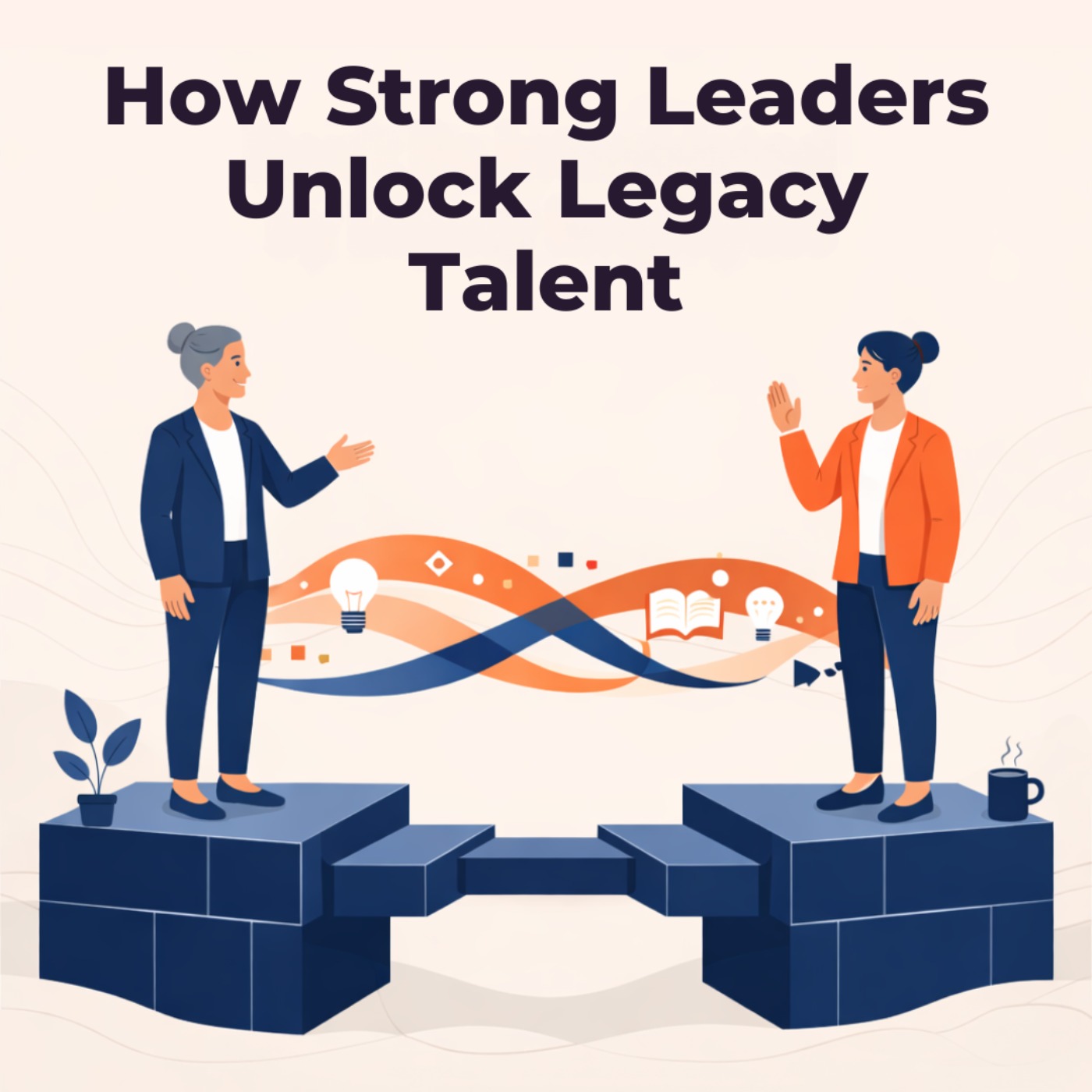
Welcome to Moments with Marty, your short, sharp shot of leadership insight to help you to stay on track. Between our weekly episodes of the no Bullshit Leadership Podcast, I get a lot of questions from young leaders who are struggling to manage the older workers in their team. It's not at all uncommon to have older workers in the team who've become part of the organizational furniture and now they report to you. And that can be quite intimidating. There are lots of negative perceptions about legacy employees, and these are really easy to buy into. Their lack of motivation and energy, declining mental acuity, change resistance and a reluctance to adopt new technology. But there are also many positives which are easy to overlook. Their many years of experience, deep resilience and valuable scar tissue, the willingness to give back and mentor others, and a greater focus on purpose and impact. If you can work out how to tap into these positives, there's real value to be had. But like I said, managing legacy employees isn't always easy. They know a whole lot more than you do about a whole bunch of things. So if you aren't confident in yourself, you can end up resenting them, or even worse, being afraid of them. Now some wily old dogs are going to use their experience and their political savvy to openly challenge you, or to actively undermine you, or maybe just to ignore you. This is why you have to learn to manage your older workers to bring out their best the same way you would with anyone else. Here are my top five tips for how to do that. Deal with your own issues first, if you're a strong, confident leader, you can manage anyone. It won't worry you that they might be older or smarter or richer or better looking than you are. If you focus on improving your own leadership capability, you'll develop the confidence to do the things that will bring out the best in your legacy employees. Tip number two Understand and harness their value. Think about how you might be able to use your legacy employees superior knowledge. Now let's face it, you don't have to know everything yourself. You do have to work out, though, how to liberate your people's individual expertise and talent. Don't let your legacy worker's experience feed your insecurity. Instead, just work out how to exploit it more effectively. Tip number three Define a role for them that plays to their strengths. As the sun sets on people's careers, they're often happy to take a step back from that ruthless corporate ladder climbing and occupy a more relaxed posture. Older workers are almost always looking to contribute to others in return. They just want a little respect. If you can build a role that allows them to pass on their knowledge and exit the workforce gracefully, you're likely to get much better results. Tip number four Set a consistent standard, but don't expect the same things. You want everyone on your team to meet the minimum acceptable standard. Not everyone's going to be a high powered, driven, ambitious go getter. Older workers are going to create value in a different way, which might not be as obvious as the outputs you get from your rising stars. Think about how your legacy employees can lift the knowledge and wisdom of your less experienced team members. And finally, tip number five, if they really don't want to get on board, you really don't have to keep them. There was a line I used often with legacy employees who had no interest in changing. I would say to them, listen, I'm not going to ride the bucking bronco. If they didn't want to get on board, that was fine. But they couldn't be part of the team either. Many of them seemed to think that because they were only a few years from retirement, they could do whatever they wanted. But I made it abundantly clear that any considerations around retirement were at the discretion of the company. If they chose not to meet the standard I was setting, they would absolutely be held to account for that choice. Even though you may feel like typecasting older workers and treating them differently, you have to play every ball on its merits, just like everyone else on your team. Work out how to stretch them and work out how to get the most value possible from their skills and capabilities. Their age is the least interesting thing about who they are, and it's your job to lead them to give their best. But if they don't want to be there, you have to be strong enough to make that obvious choice if you want to take a deeper dive into how you can liberate the dormant talent of your legacy employees. Have a listen to episode 242 of the no Bullshit Leadership podcast, Leading Older Workers. We'll leave a link in the show. Notes I really hope you enjoyed this moment and that it gives you that extra little spark to be a no Bullshit leader.