Loading summary
Transcript2 lines
- [00:02]
A
Welcome to the no Bullshit Leadership Podcast. In a world where knowledge has become a commodity, this podcast is designed to give you something more access to the experience of a successful CEO who has already walked the path. So join your host, Martin Moore, who will unlock and bring to life your own leadership experiences and accelerate your journey to leadership excellence.
- [00:25]
B
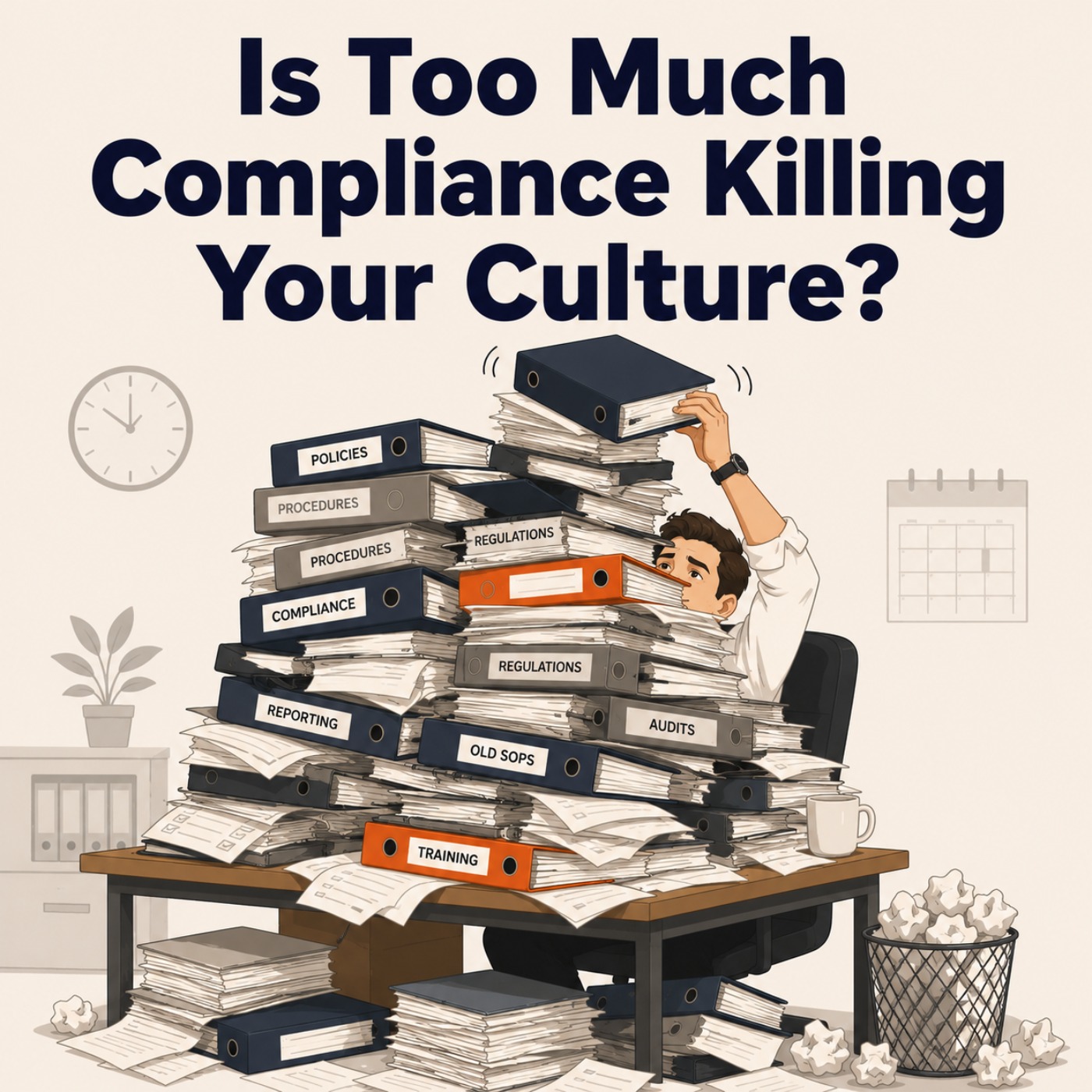
Welcome to Moments with Marty, your short, sharp shot of leadership insight to help you to stay on track between our weekly episodes of the no Bullshit leadership podcast. In 2019, the Haine Royal Commission into the Australian financial services industry released its final report. Naturally, the findings reinforced the popular narrative of corporate greed running rampant. Many of the criticisms we hear about the banking and finance sector are entirely warranted. For centuries, bankers have earned eye watering amounts of money which often wildly exceed the value they create. And when it comes to accountability, the main offenders always seem to get off scot free. As we saw in the wake of the 2008 global financial crisis, the Royal Commission uncovered a bunch of negligent behaviour and non compliance in the major Australian banks. For example, instances of money laundering for drug syndicates and the occasional turning of the blind eye to terrorism financing. The banks were clearly in a position where they had to respond to the Commission's findings. But interestingly, it very quickly became about not doing the things that would fix the root cause of the problem, but more about being seen to be doing something. Whenever there's a failure to comply with the rules, everyone's first instinct is is to look at their compliance regime. They try to create more rules, more controls, more safeguards. In Australia, this spawned a multi billion dollar surge in the compliance industry. In fact, a Macquarie Research estimate put the total sector cost at over $6 billion. And this didn't include the billions of dollars the government spent implementing more legislation and increasing the scale of the regulatory bodies that act as corporate watchdogs. The banks no doubt dumped the 6 billion into growing their internal compliance teams and paying the big four consulting firms to guide them on world's best practice. In reality, this is several billion dollars pissed away on meetings, PowerPoint decks and new procedures. As we sit here five years later, am I confident that this can't happen again? Absolutely not. But the only tool the government has is to create more legislation and regulation. And the increased burden of compliance that they create pushes companies into defensive mode. They focus on being able to prove that they're following the rules. No doubt the number of rules, procedures and systems in the banks has increased tenfold since 2019. But while procedures and processes are necessary, they're not sufficient. There's no such thing as a perfect procedure, or a perfect spreadsheet or a perfect contract. And when the holes appear, it's what happens next that matters most. A highly motivated person driven by self interest will always find a way around even the tightest procedure. History has proven this repeatedly. We see the same dynamics play out in many other industries. In the industrial businesses that I worked in, I learned pretty quickly that a process won't stop an individual from taking a shortcut when they're loading a truck in a Cargo Bay at 5:30 on a Thursday morning. The only thing that keeps people safe is strong leadership, clear accountability, and a disciplined approach to the work. In short, a great culture. If you focus on helping people to identify, assess and respond to the risks in their environment, it'll be 1000% more effective than giving them a new rule sheet to follow. The next time someone in your company proposes a new policy or process to fix a cultural problem, ask them the harder question what was the leadership failure that made this necessary in the first place? If you want to go deeper on how to balance compliance and performance, have a listen to episode 33 of the no Bullshit Leadership podcast. Regulation Can't Fix Culture. We'll leave a link in the show notes. I really hope you enjoyed this moment, and that gives you that extra little spark to be a no Bullshit.