Loading summary
Transcript3 lines
- [00:01]
Martin Moore
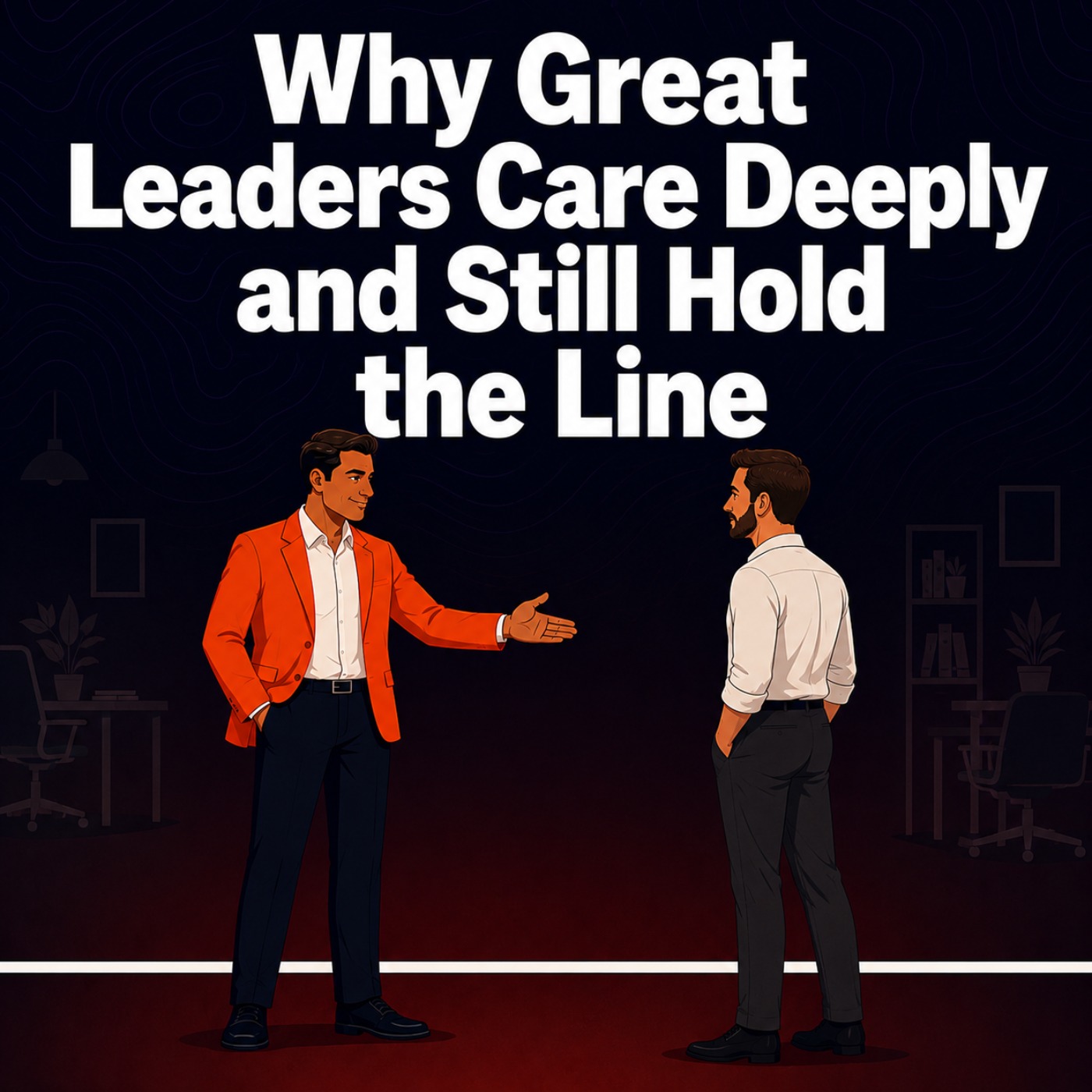
Should your customers pay more simply because you can't run an efficient team? Should your shareholders earn lower returns because you can't bring yourself to set a high standard for performance? Should the communities you operate in suffer the impacts of your poorly run business because you don't hold people to account for results? Empathy is critical if you want to connect with your people and build trust. But but you can't allow your empathy to turn into sympathy.
- [00:30]
Podcast Narrator
Welcome to the no Bullshit Leadership Podcast. In a world where knowledge has become a commodity, this podcast is designed to give you something more access to the experience of a successful CEO who has already walked the path. So join your host, Martin Moore, who will unlock and bring to life your own leadership experiences and accelerate your journey to leadership excellence.
- [00:53]
Martin Moore
Welcome to Moments with Marty, your short, sharp shot of leadership insight to help you to stay on track between our weekly episodes of the no Bullshit Leadership Podcast. In the checklist of desirable leadership attributes, empathy is right up there with integrity, humility, and authenticity. Empathy is just understanding another person's feelings, being able to put yourself in their shoes and see the world through their eyes. But the word empathy has been hijacked in recent years, and now it seems to be virtually interchangeable with the word sympathy. This is dangerous, because sympathy goes way beyond understanding. Sympathy is about feeling sorry for someone, so instead of just recognising their feelings, you jump down in the hole with them and try to help them. This might be the appropriate response for family and friends, but as a leader, you can't allow empathy to morph into sympathy. If you do, you're going to start making concessions for certain people. You'll treat them differently, you'll lower the standard. You'll put their individual wants and needs ahead of the team or the organization. The difference between empathy and sympathy might seem subtle, but when it comes to performance, it's everything. Everyone has a life outside of work, everyone goes through difficult times. And yes, everyone deserves your compassion and your understanding. But if that stops you from making the right decisions, decisions that are in the best interest of the wider team, then that's a problem. And it's becoming increasingly hard to avoid the sympathy spiral. The whole people before profits movement has skewed our thinking. The people that that bumper stick and slogan refers to are of course your employees. Now that translates into put your employees interests ahead of the company's interests. Sounds noble, right? But it's simply an excuse for weak leaders to avoid accountability under the pretence of caring, the people get what they want and you get to feel good about yourself, but what about the other people that you're there to serve? Should your customers pay more simply because you can't run an efficient team? Should your shareholders earn lower returns because you can't bring yourself to set a high standard for performance? Should the communities you operate in suffer the impacts of your poorly run business because you don't hold people to account for results? Empathy is critical if you want to connect with your people and build trust, but you can't allow your empathy to turn into sympathy. This is the difference between strong leaders and weak leaders. A strong leader with high empathy is incredibly effective for both the company and the individuals they lead. They have understanding, compassion and connection, but it doesn't stop them from making tough decisions, holding a line on the standard and producing results. A weak leader with high empathy is disastrous. Their compassion turns into capitulation. The best leaders have boundless empathy, but they're also strong enough to hold the lines that they need to hold because they're important not to cross. If you want to go deeper on how to stop empathy from becoming sympathy, have a listen to episode 135 of the no Bullshit Leadership podcast. When Empathy Becomes Sympathy, we'll leave a link in the show notes. I really hope you enjoyed this moment and that gives you that extra little spark to be a no Bullshit leader.