Loading summary
Transcript10 lines
- [00:00]
Marty
When you start something new, whether it's a business, a project, or a podcast, there's always that moment of doubt. Is this the right move? Is it actually going to work? Look, I've been there. And while the uncertainty never fully goes away, having the right systems in place makes a big difference. That's where Shopify comes in. Shopify is the commerce platform behind millions of businesses around the world and it powers 10% of all E commerce in the US from established brands to people just getting started. It's time to turn those what ifs into with Shopify today. Sign up for your $1 per month trial today at shopify.com leadership. Go to shopify.com leadership. That's shopify.com leadership.
- [00:52]
Em
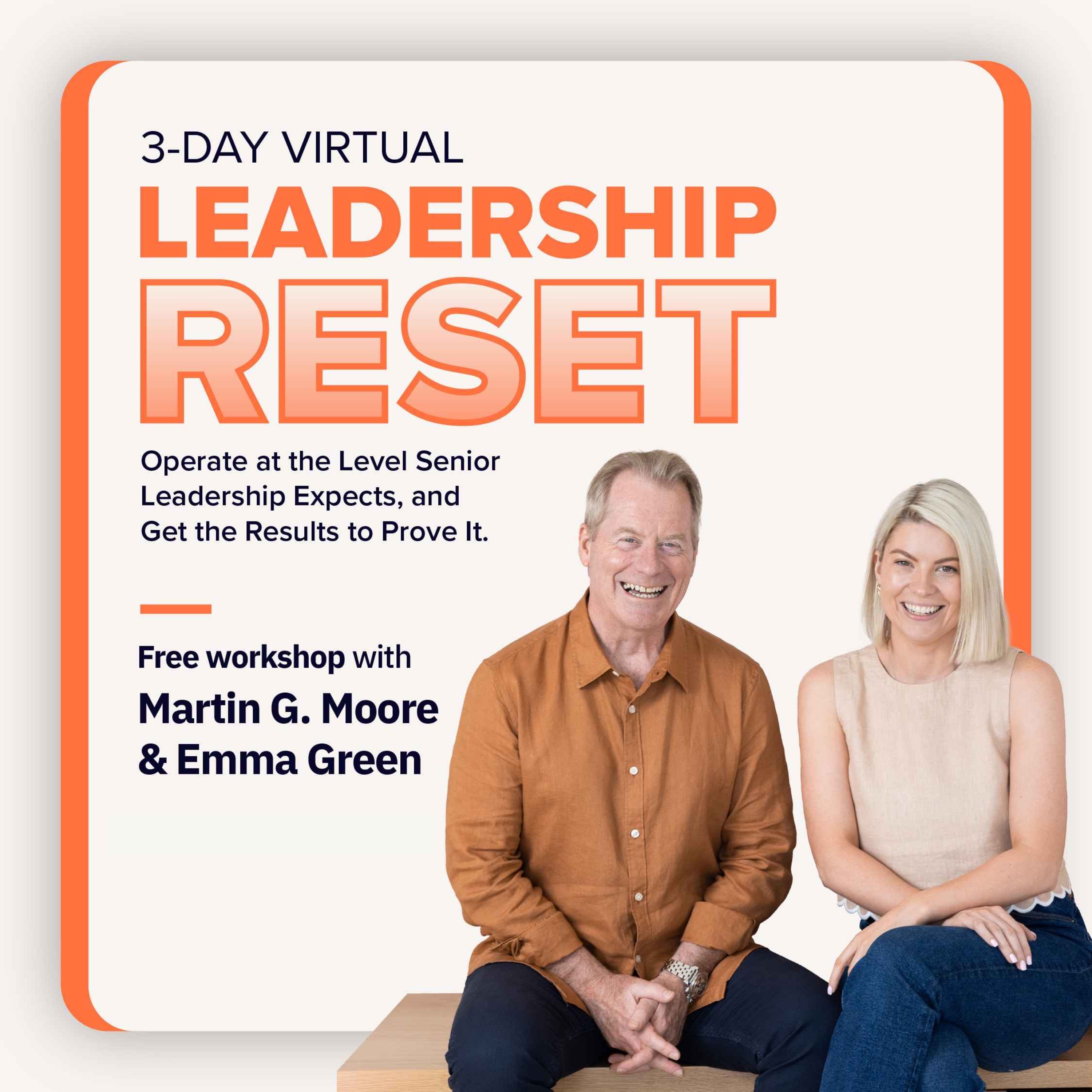
You reset the standard. You had the conversation. You. You walked away feeling like a different leader. And then someone missed the mark and you let it slide. Now, if that's you, this episode is going to hit hard. This is a little bonus episode, day two of our Leadership Reset workshop. And the reason it's here is because so many of you reached out after yesterday's episode asking for more. So here it is. Day three is dropping tomorrow as well, but only for a limited time. So make sure you are subscribed to the podcast or following us. Now, this episode is all about the moment that actually separates leaders who stall from leaders who progress. Accountability. How do you turn clarity into execution? How do you stop letting standards slide the second they get tested? If this resonates with you, I also really want you to think about joining the next cohort of leadership. Beyond the theory, we've already got over 100 people signed up and it's going to be an incredible cohort. Head to leadershipbeyondtheory.com to check it out. But for now, enjoy. Day two. Welcome to the no Bullshit Leadership Podcast. In a world where knowledge has become a commodity, this podcast is designed to give you something more access to the experience of a successful CEO who has already walked the path. So join your host, Martin Moore, who will unlock and bring to life your own leadership experiences and accelerate your journey to leadership excellence. Welcome back to day two of the Leadership Reset. So this is our three day workshop, designed to help you deliberately raise your leadership standard and lead at the level that your role actually demands. Now, yesterday was about standards, so seeing the leadership drift and owning where you've let things slide, that is where the real work begins. And Marty, next slide. It was so exciting to see so many people in the hub recognizing that they were in drift too. And I just think like Anything. Awareness is always the first step. So we focused on resetting your tone, pace and standard. And Marty shared a bunch of really practical reset activities to help you get there. But here is the reality. You can reset the standard, you can communicate it clearly. You can even feel really good walking out of that conversation. And then someone misses the mark, they might miss a deadline. They deliver something below standard, they push back, they test whether you really mean it. And that is where leadership actually starts. Charts. Because standards without accountability are just words. So today is all about closing that loop. This is all about how high performing leaders turn clarity into execution and why accountability is the difference between leaders who stall and leaders who progress. Now we are so certain about accountability being the key to true leadership performance that we have an entire module of leadership beyond the theory. Our nine week online program dedicated to the practical reality of driving real accountability. So, Marty, let's start with why accountability is so important when we're resetting our leadership.
- [03:58]
Marty
Yeah, and the reason, the reason accountability is so important is because that's the point at which you either enforce and uphold the tone, the pace and the standard that you're trying to set, or you choose to let it slide because of the thousand rationalizations you're going to make in your head. So most leaders don't fail because they don't understand what they're trying to achieve, because they do. It's those hard moments where you get that split second decision, am I going to enforce this standard? Am I going to talk to the person about the gap between what I'm expecting, what they're doing, or am I just going to let it slide? And this is what you have to master. So you're not going to find this in any leadership textbook. This is just about how do I approach these practical situations and train myself to do the hard thing, to make that decision at the time when it matters the most. And look, just to go back a bit and tell you a bit of a story, right? One of the things that drove me to become a CEO was not the title or the money, although that was cool. It was about getting above the noise. It was about getting above all of that bullshit that went on above me. It was about getting into a place where I could set the tone, the pace and the standard for a whole company. And I wasn't going to have someone above me who was acting out of fear or self interest telling me to do things a different way because that just constrains me in how I want to lead. So I found it really, really important to get to a point where I could have as much impact as I could cope with, to be held to account for my performance for better or for worse, and to really have a crack at changing a whole business. And, you know, when I had that experience, I found it incredibly rewarding. Stressful at times, yes, Frustrating at times, for sure, but still absolutely worth it. And so a lot of you are going to have bosses who want to follow the path of least resistance and they're going to say to you, hang on a minute, everyone here has to be included. We are all about collaboration and when we make decisions, we want everyone to agree on those decisions. So you've got to bring everyone along for the journey. Excuse me just one minute. Sorry. Just while I do. To bring everyone along for the journey.
- [06:13]
Em
It's one of those like, oh, Marty, are you okay? No. That really hits the spot.
- [06:17]
Marty
It's just one of those cliches that really gets up my goat because not that you shouldn't engage people, not that you shouldn't bring them along and have them understanding why you're trying to get where you're trying to get, but it's often used as a platitude that excuses weak leadership, and that's a problem. So when you're in an environment where they're setting a low bar for performance, one of the symptoms of that is the extraordinary focus on collaboration and consensus over the focus on performance. It changes the way you think from thinking about the best solution to a problem or the best answer to a challenge. And it puts your focus instead on how to satisfy the people, which should not be your primary objective as a leader. So when you're in a low bar environment, you've got to recognize that and say, I am going to create an island of excellence. That's it. It doesn't matter what happens above you or beside you, you have control over your own domain. So you've got to turn that into an island of excellence. And look, it's hard, it's challenging, but it's absolutely worth it and it can be done as long as you're not too counter cultural. And we'll talk about this a little bit later, as long as you're not too countercultural and going completely off piste, if you can get your boss behind you to at least be neutral, then you can do it. And when we think about performance and collaboration, collaboration is essential, don't get me wrong. And in our decision making framework in module 6 of LBT, we talk about why it's so important to collaborate and to have a consultation and ideas and, you know, pressure testing of problems so that you get the best outcome but you don't wait around for everyone to get on board. It's a fast recipe for disaster. You find though, that the rhetoric sometimes outstrips the reality. So if your CEO saying we're a high performing organization, we have high performing teams, then you've got to ask yourself, do we really like, if we look at a comparator of the companies we're competing against, are we really in that top 10% of performance? Because if we're not, we've got an opportunity and we've got some work to do. But quite often a company might be performing pretty well just because it's lucky, it's got the right product in the market at the right time, in the right business cycle and things are just working. But that's not going to last forever. The only thing that's sustainable is having a strong accountability culture where people perform at their peak. So, you know, the island of excellence principle says that you don't lose your obligation to build a high performing team just because you're in a low accountability culture. It's just harder and you've got to be a shitload more tenacious to get it done properly.
- [09:15]
Em
Marty, I want to talk about where leaders get accountability wrong. Because the bosses that you don't like, I can guarantee that they are doing this to you. I am forever hearing about leaders who try to hold their people accountable before they've empowered them. And I just think that's not leadership. That's a stitch up. So a lot of people think that empowerment is just like hiring great people and getting out of their way, but it's actually a much more active and deliberate process. Accountability and empowerment are two sides of the same coin. And I just want to run through like how you actually empower people. So you set clear objectives, we got to agree on realistic deadlines, you got to resource your people properly, no trampling all over their decision rights and you got to support them when they're challenged. Then and only then can you hold them to account. And if someone isn't empowered and you still demand outcomes, outcomes, that's not accountability, that is cruelty.
- [10:17]
Marty
Yeah, absolutely. There's a big difference between supportive stretching to reach a goal and scapegoating. And the people who work for you are going to feel that difference straight away. So the few things that Em's just said about empowerment are critical. If you just try and put accountability on people, it's not going to work. They're going to duck and weave and try and get out from underneath it. If you empower them and make them feel like they have some autonomy and control, which we'll talk about in a little while, then you've got much more likelihood of being able to impose a strong accountability culture over the top of that. But the foundations are the same, right? And we spoke about this yesterday. People want to know three things. And if you want to hold them accountable, you better be really good at the first two. Extreme clarity over what you're expecting from them in terms of the shape of the deliverable, the timing of the deliverable, the cost, the resources. You've got to be absolutely crystal clear about what's expected. And this doesn't happen in one conversation. It happens in many conversations over the duration of a task where you're checking in with people, not micromanaging, checking in, verifying that they're on track and inspecting progress. So if you can actually let people know exactly what they need to do, and then you can follow that up with an exact communication about where you are in relation to that. So here's where I think you should be, here's where you are, here's what the gap is. Let's talk about that gap and let's work out how to bridge that gap for you. If you're doing that constantly, that is an incredibly supportive process. Incredibly supportive. And it makes them feel as though you're on their side. You're not just waiting there to smack them over the back of the head with a wet newspaper when they get something wrong. But you know you're going to get pushback. And if you've gone into a team or an organization as a new leader and you're fresh and you go at it with a fresh set of eyes, you won't get as much pushback because people are expecting you to want to do something different. So they're more likely to go underground with their resistance. And you'll get all this passive aggressive stuff going on where people are just nodding and smiling and, you know, say, yes, Marty, yes, Marty, Yes, Marty. And the minute you turn around, they go, right. And this happens. Right. And some of you have seen that happen. And so you've got to be a little bit careful about the passive aggressive resistance. But if you're a leader who's been in a role for a while and you've let leadership drift take over and you're in a position now where your team, who you know pretty well are coming back to you with responses to the change, you're going to get pushback. Well, hang on, Matty, why is this a problem? It's never been a problem before. Like, what's the deal? Like, why do we have to change? Or why don't you say this earlier? Like, I've been working for you for two years. You've never told me I haven't been hitting the mark or the classic is, you know, don't you trust me anymore? Like, what have I done? I thought you trusted me and now you don't trust me anymore. So you're going to get all flavor. And by the way, there's another hundred questions you'll get. Like this. It's just the flavor of pushback, right? So you want to change something to lift the bar and raise the standard. And when you try and reset tone, pace and standard, you'll find that a lot of people have to come out of their comfort zone. People don't want to come out of their comfort zone. Like, we know this about humans. Like, we're all the same. So you don't want to leave your comfort zone when you're challenged by something new. And this is why as a leader, you've got to work out how to get your people through it. So the obvious answer to any question about why are we changing and why we're changing now is that you take it back onto yourself. Look, I realize I haven't been clear enough about what we should be doing. Or I realize I haven't been leading us well enough to get the performance we need to out of this team. Or I realize that I haven't done a good job in X, Y or z. Right? So, so, so if you start with yourself and you talk about why you failed the team, but now that you know more than you did three weeks, four months, 10 years ago, you've been able to change the way you approach things for the better. And it's going to be better for the team, it's going to be better for the individuals, and it's going to be better for the organization. So that messaging is super important. So there's a two stage reset approach. Here in module eight of lbt, we've got a lesson that deals specifically with how to structure a communication like this. So when you want to change something, you start with the team. And when I say the team, I mean your direct reports. You don't have a town hall with a thousand people. You start with your direct reports and you just get them in a room and you say, hey, look, I realize that we've been leaving A lot of value on the table here for these reasons. It's my fault, you know, I haven't led you as well as I should have. But here are the things that we really need to change if we're going to lift our performance. And so that, that process of just talking about, here's what I've realized, here's what we need to do differently, here's why we need to do it differently now, and here's the prize at the end of that. Here's what the world looks like when we get through that and we get to the end of this process. Here's why it's going to be better for me, for you, and for the people that you lead. So you start at the team and you sell the team on the change that needs to happen because they need to be on board with you. Yes, you do need to bring your direct report leaders along for the journey, there's no doubt about it. But stage two, which happens almost immediately after this, is that you talk to people about their individual contributions. So I would have a one on one with every one of my direct reports in the few days following a team meeting like that. And I'd say to them, okay, you know that team meeting we had the other day? Yeah, Marty, well, what did you hear? I just ask them, what did you hear? And I get them to play that back to me to make sure that we're on the same page with that messaging. I want to know that they've heard it the same way I've tried to give it to them. And that gives me an opportunity to see how they've interpreted the message, which will have both their listening skills and their filtering brought to the front there. And then it'll give me another opportunity to reinforce and say, well, yep, you spot on with that. But don't forget this piece here, because this is important. And then it's a case of, well, you know, when I said this to the team, it applies obviously, but for you, here's what it means for you, and you're really going to need to lift in this area because this I've observed is quite a weakness in how you do things, but it's essential in the way we're going to run this team. Or you might have another individual conversation that says, okay, well, you know, you, you're hitting the ball out of the park on this already, like you're the exemplar for this process in the team. So I want you to help me to change this team culture because even though you're peer to these other guys, you are first amongst equals when it comes to this particular function we're trying to improve. So I want you to be a leader of change and I want to be able to rely on you and lean on you to help me through with it. So those individual conversations are going to be vastly different depending on the observed performance of the individuals in your direct reports line. And you know, when people need to be held accountable, it's not always pressing the big red button. But you've got to have graduated consequences that don't involve sacking someone or putting on a performance improvement plan or something else because you know, otherwise you'd have no one working for you. So you know, what are the things that you can do that show people there are consequences for their choices about performance? Well, you know, losing the right to lead that work or you know, not getting the prime projects or you know, reducing their autonomy and maybe sometimes even putting someone in over the top of them or not getting the development opportunities that will go to other people who are, you know, more likely to deliver or you know, ultimately it's going to come down to the performance rating at the end of the year. But performance has to matter in practice. It can't just be a theoretical thing where you talk about it and wax lyrical about what a high performing team you've got and then don't back it up with individual issues. What do you reckon Em?
- [18:24]
Em
Yeah, I think I wanted to put this slide in because you know, some people go, well am I in a low accountability culture? And if you're not sure if you're in a strong or a weak accountability culture, this is what it actually looks like. So in weak accountability cultures decisions are made by committee, so everyone has a say, no one owns the outcome and the power of veto is very much accepted. There's a culture of all care, no responsibility, so lots of opinions, but no one is willing to take accountability for the outcome. And you will have glacial decision making pace. So this looks like endless meetings about what needs to be done with no execution. And if you'd like to do a quick little test here down the bottom, this is it. When an issue comes up, ask who's accountable for this. And if you don't get a single name immediately, Sarah, Greg, Jack, you know that you have a weak accountability culture. And Marty, this is why one of your most popular Marty Isms is one.
- [19:22]
Marty
Head to pat, one ass to kick. They both belong to the same person. It's so important that you have this single point accountability. And when People talk to me about the things they learn in LBT in the early modules. It's also valuable. And I say, just wait until you get to module seven and then wait till you get to module eight. Because in module seven we talk about accountability. And even if you did nothing else in the first six modules, if you just did this one thing, which was to instill strong single point accountability, every individual knows what they're accountable for and they go after it and they're held to account for, would change the way your team performs by night and day difference. And the feedback I get from leaders who've actually focused on this and done it, they come back to me later and say, Marty, I would not have believed how much of an impact that had. As soon as you've got this lack of ownership, you know, this all care, no responsibility attitude that Em spoke about, you're going to have gaps and you're going to have overlaps. And you know, I've seen this so many times in business where I'll say, well, who's accountable for this? And the answer will be, well, you know, Marty, well, I'm accountable for this bit and Jenny's doing that bit and Greg's doing this piece over here and I'm not really sure who's bringing it all together, but you know, I'm pretty comfortable about my bit. There's no sense of urgency, there's no ownership, there's no, there's no desperation when things are going wrong. When you put a single point, accountability in place, what happens is you've got a person who says, I own this. No one else is going to solve this problem. And if I find a problem, I'm in Marty's office pronto, because I need to talk through this and how we're going to solve it. And it just forces people to be adult in the workplace, not to rely on other people or to shirk their responsibilities, but it helps them to perform well. And the interesting serendipity here is that once people accept the accountability and empowerment of their role, they are so much happier because they are having impact and they are achieving difficult things, which creates self esteem. And just remember, you know, as a leader, you've got a choice and the only person that really knows about you making this choice is yourself. But weak leaders lower the standard to meet the performance. Strong leaders raise the performance to meet the standard. Just let that sink in. Are you lowering the standard for individuals so that they can meet the performance or are you raising the performance of those people so that they get to the standard you're setting as the minimum. Very, very powerful. And then, you know, you've got to think about how you do motivate people and you know, does money motivate? Probably to an extent. But Daniel Pink did a bunch of work and referenced some academic research, which was widely known as the MIT Incentive study, to try and work out what drives people and what gives them the motivation to do their job better. And it came down to three things. Autonomy, mastery and purpose. So giving people that ownership, this is what we're talking about with empowerment, autonomy and control. Mastery. When you stretch them, it gives them the ability to get really good at something that they weren't that good at. And as they get better and better and better, they get more confidence. People love mastering difficult challenges. And then of course there's purpose. And that is really the connection between, you know, what am I doing? Am I just moving a widget from the left hand side of my desk to the right hand side, or am I making a difference to someone and something. And particularly in larger organizations, you can get this sense of, well, I'm just a very small cog in a really big wheel and I don't really make that much difference. And that's not a good place to have your people. So what you're constantly trying to do through your line of leadership is to connect the organization's purpose and strategy to what each individual is doing on a day to day basis to make that happen and to show them how they're contributing. So autonomy, mastery and purpose are the things that drive people to be better. So when we talk about how to bring all this together, the career link that most leaders miss is that leadership drives culture, culture drives performance. And this is pretty much everything we do at your CEO mentor is based on this. The principle that if you can lead better, if you can get more out of people, if you can set the tone, the pace and the standard to get them to perform in a way that they haven't done before, it becomes part of the culture. The robust challenge and respectful dealing with others, the willingness to take on accountability for the decision they have to make, the collaboration that's required to get the best outcome. All of these things come from a culture where you've set a really good tone, pace and standard. You know, that sense of urgency is bred into everyone. The continuous improvement mindset of, you know, better, faster, cheaper, all of that stuff when it's built into people, lifts the way they do their work and massively improves team outcomes. And that leads to performance. They're the results that you didn't necessarily expect because you've got the team running so well that it's exceeded your expectations. That's when you get promoted. Because they can't ignore performance, whether they like you or not. No one can ignore performance. Now, if you can't get this done, you're going to find yourself snookered. You can't get promoted until you can demonstrate that you're ready to move on to something else. And your team is not going to collapse behind you. So this concept of making yourself redundant rather than making yourself indispensable is super important. The ceiling that you're going to hit isn't arbitrary. It'll be a judgment made by the people above you as to whether or not you've scaled your leadership to the point where you are leading through other people in a way that makes them productive without you having to be there.
- [25:31]
Em
So much good stuff in there. And I definitely recommend people go back and listen to the replay. But before we wrap day two, I want to set up what tomorrow is really about. Today was about accountability. How you turn clarity into execution, how you stop letting standards slide once they're tested, and how you lead performance through your people. But here's what happens next for a lot of leaders. You reset the expectations, you hold people accountable, and then suddenly everything comes back to you. You're making the calls, you're clearing the roadblocks, you're rescuing during every decision. Does this sound familiar, guys? And while your team might be performing better, you are still stuck. And that's because accountability without the right systems just creates more efficient versions of the same problem. So tomorrow is about lifting your leadership altitude. It's about moving from activity to value, from being busy to being effective. And we're going to show you how strong, successful leaders design their work so that they're not the bottleneck and their teams are forced to step up. Now, this is the shift that accelerates careers, because the leaders who progress, they aren't the ones who do the most. They're the ones who do the right work at the right level. So tomorrow, we'll show you how to reset your systems so leadership at the next level actually becomes possible. And a quick reminder, tomorrow's session is an hour because we have a lot to get through. So, Marty, a big thank you again for today. We will see you all for the final day of the Leadership Reset workshop tomorrow.