Loading summary
Transcript3 lines
- [00:00]
A
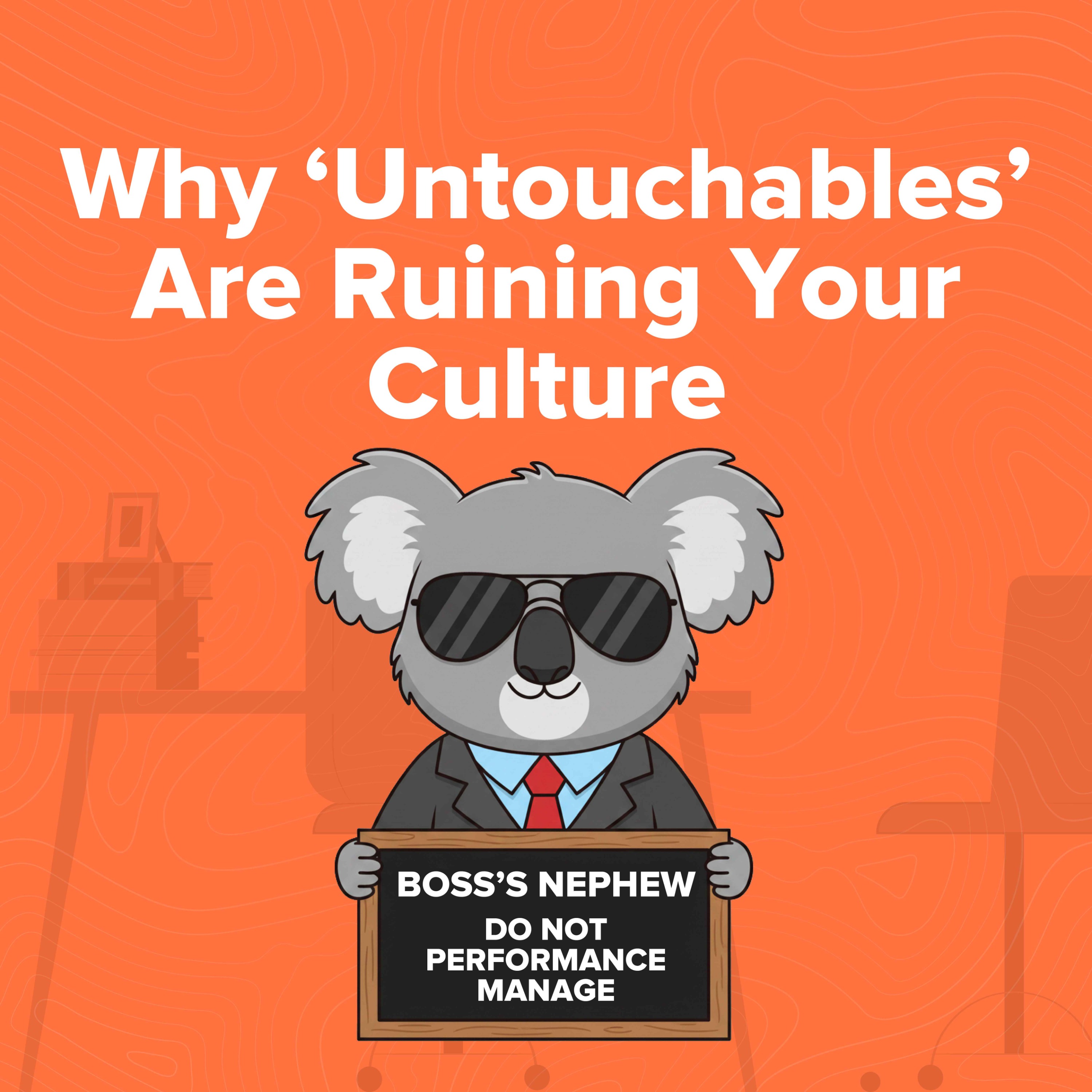
Hey there and welcome to episode 378 of the no Bullshit Leadership Podcast. This week's episode Corporate Koalas They're a.
- [00:09]
B
Protected Species welcome to the no Bullshit Leadership Podcast. In a world where knowledge has become a commodity, this podcast is designed to give you something more access to the experience of a successful CEO who has already walked the path. So join your host, Martin Moore, who will unlock and bring to life your own leadership experiences and accelerate your journey to leadership excellence in Australia.
- [00:35]
A
Koalas are a protected species. So when one of the leaders in our no Bullshit Leaders club started talking about koalas in his company, I knew exactly what he meant. Occasionally, for whatever reason, someone you work with assumes an air of superiority. You can tell from their attitude, their tone, their body language that they think they're untouchable. No matter how justified the koala may think their attitude is, it has rarely, if ever, been earned through performance. Working with koalas can be infuriating. They don't play by the same rules or observe the same cultural standards as everyone else does. It's almost as if they're trying to see how far they can go before someone brings them into line. The more they get away with, the more emboldened they become. Today I'm going to explore three different breeds of koala. The Founder's nephew, the talented jerk and our old favourite, the ass kisser. I'm going to give you some tips for how to deal with each breed of koala. Whether they work in your team or they're just an annoying pair that you have to live with. So let's get into it. Let's start with the Founder's nephew. Nepotism is rife in many businesses. Often this is a nasty morning after style hangover that you get when you build a successful company from the ground up. As the business becomes more prosperous, family members put the weights on you for a job. So they're given a role in the company that provides them with a decent income, often with little expectation of commensurate performance. Sometimes these family members hang around way beyond their use by date. Even worse, some remain in key positions or get promoted to a level where they can cause some real damage. But in terms of their capability and performance, they're about as useful as an ashtray on a motorbike. Most problems aren't caused by what they do, but rather by what they don't do. Because they have some sort of familial connection to the founder and CEO, they think they're untouchable. They develop A sense of entitlement that's unique to someone who genuinely believes in their heart of hearts that they have a job for life. They often think they have a leave pass on both behaviour and performance because their uncle would never sack them. I mean, let's face it, this week is Thanksgiving. Who wants to deal with conflict or animosity at a family holiday gathering? Isn't it better just to turn a blind eye and keep carrying the nephew? After all, you can probably afford it and it's really not hurting anyone. Well, it's hurting the business more than you could possibly imagine. It's incredibly destructive to the culture. People who aren't part of the inner circle become resentful of those who are. These family members are just tourists sitting in prime seats on the company bus and they probably didn't even pay for their ticket. And to make matters worse, these koalas use their privileged position to lord it over the people who don't have the same connections at the top. So your good people drop their standards along with their motivation. They ask themselves the question, quite reasonably, why should I work my butt off when Jimmy is just cruising along delivering almost nothing? This breed of koala doesn't just include family members working in founder led businesses. It could be a long standing employee who's been with you from the very beginning. It could be someone with a close personal relationship to a senior person who parachuted them in without a rigorous selection process. It could even be a union delegate who thinks they live in an impenetrable bubble. If you find yourself having to deal with this breed of koala, there are three scenarios that that might help you to navigate the situation. The first scenario is that you're working in the same vicinity as the koala. But they don't have any influence over your team's ability to deliver outcomes. My advice, ignore them. Don't get sucked into burning your precious energy by thinking about them. They'll only bother you if you let them bother you. And as infuriating as they may be, they're not your problem. The second scenario is a little trickier. If your team relies on a koala to produce critical deliverables, that's different. They can actually have a bearing on your team's outcomes. If this is the case, you can't just ignore them. Unfortunately, it's really important that you lock them into delivering what your team needs. You'll need to have lots of direct conversations to get their commitment to deliver. You'll need to have lots of follow up, preferably in writing to confirm those agreements, and you'll have to have lots of visible public reviews of their progress to plan. Basically, you have to paint them into a corner where they only have two to deliver or to be embarrassed in front of their peers. It's unfortunate, but sometimes that's the only thing that's going to get their attention. Right. Here's the hard part. You know what to do if the koala doesn't work for you. But what if they're on your team? I released a moments episode last week about upwards bullying, and this is often a go to defensive strategy for a koala who works for you. They'll try to leverage the veiled threat of going over your head to get what they want from your boss or whoever it is they're related to. Now, if you give in to this pressure, you have no chance of getting the koala to perform or behave in an acceptable fashion. So here's the strategy. You have to have two critical conversations, which may actually turn out to be a series of conversations with the two people involved. The first conversation is with the koala's protector, usually your boss. You need their blessing to manage the koala the same way you do the rest of the team. Now, I always found an approach like this to be extremely effective. Hey, boss, I know you wouldn't want me to show any favouritism to Jimmy just because he's your nephew. Now, let me know if this isn't the case, but I'm assuming you want the best outcomes for the business. Obviously, it's important for the culture that everyone knows we don't play favourites. The boss is rarely going to disagree with this sentiment, but that doesn't mean he won't fold as soon as Jimmy complains about how hard you're being on them. This is why you need to constantly reinforce what you're doing and why the second conversation is with Jimmy himself. He needs to know that you intend to lead him every bit as diligently as you do everyone else in the team. It's important that you explicitly communicate the minimum acceptable standard to Jimmy and that there are no exceptions to meeting this standard, and that you'll be clear with him about how you rate his performance, just as you do with everyone else. Now, after you've had these two conversations with Jimmy and his uncle, you'll set the scene for the many situations that you'll be forced to address in the near future as they both come to terms with your approach. Jimmy might nod and smile initially, but he's not going to take it lying down. Trust me. He'll do everything in his power to prove that he's calling the shots, not you. He'll be having sidebars with his uncle whenever possible. He'll try to discredit you at every turn, and he'll try to convince your boss to intervene so that he doesn't have to meet the standard that you're setting. Jimmy's uncle is going to struggle to adjust too. Whenever Jimmy complains about you, he'll be annoyed that he's the proverbial meat in the sandwich. He'll wish you'd just sort it out in a way that didn't cause him any conflict. He'll be tempted to tell you to back off for his own peace of mind, and he'll forget why you're doing it. You're not trying to be a dickhead, you're just trying to get results, which is, after all, the reason he's paying you. He has to be clear on the fact that protecting koalas destroys results. You can break the back of the situation with those two initial conversations, but it's likely that you're going to have to constantly reinforce the principles with both Jimmy and his uncle every time they lose sight of performance and sink into the warm embrace of nepotism. The second breed of koala is the Talented Jerk. Talented Jerks are everywhere, and very few businesses manage to completely escape their clutches. In the same vein as the founder's nephew, Talented Jerks think they're indispensable not because of their relationships, but because of the value they think they bring to the business. I went into a lot more depth on the Talented Jerk in a podcast episode we released some time ago. It was episode 240, so we'll leave a link to that in the show. Notes Talented Jerks typically produce great outcomes in their area of core expertise, and this is where they develop that annoying air of invincibility. But it's most often their behaviors that are questionable, not their performance. Having a talented jerk working for you is frustrating. Having one work beside you can be downright soul destroying. Now, there are three subspecies in this Talented jerk koala breed. The first uses arrogance as a mask. They put on an air of superiority and arrogance which no one likes. Interestingly, they may or may not be performing well. They could actually be an untalented jerk, and this is why it's hard to break through their facade. They know the perception they create is critical to protecting their job. They'll do anything they can to perpetuate their talent myth. The second type of Jerk is the rainmaker. This is a top sales or business development person who brings in a large portion of the company's business, so at least their performance is quantifiable. But this only speaks to the what, not the how. And it can lead to all sorts of bad behaviour. Everything from treating their boss with callous disregard to misuse of the company expense account. The third subspecies is the information hoarder. This person has some unique or highly valued technical expertise and they use it as an offset to their errant behaviour. They've managed to acquire some privileged information and it's not just technically valuable, but also specific to the company. They're normally long standing employees who've built their knowledge over many years or even decades. And they refuse to share it because this is what underpins their value now. It makes them really difficult to replace and they know instinctively that their ongoing job security relies on it. They're confident that their knowledge secures their position. But this species is going to come under increasing threat of extinction as AI develops in the coming years. If you have to work alongside these koalas, like I said, it can be soul destroying. There's not a lot you can do, but you do have a couple of tools in your kit bag. The first is to not let them treat you disrespectfully. Stand up for yourself and set a boundary if they're rude or dismissive. The second is to call out their bullshit if they don't deliver. Don't let them hide behind their arrogance. And finally, never ever cover for them. You might think that helping them will put you in their good books, but it won't. If you have a talented jerk koala species working on your team, your job is simple. Make it abundantly clear to them that their overall performance isn't just measured along a single dimension. Their performance has to be holistic. For example, a rainmaker can't just bring in revenue. They also have to demonstrate performance and capability in other core leadership areas, like working across boundaries and developing team capability. Talented jerks only thrive if they're allowed to rely on one performance dimension to the exclusion of all others. And when it comes to their behaviours, you need to be a no tolerance zone. Any behaviours that don't meet the standard you're setting for the rest of the team simply can't be tolerated. I don't care how smart or how knowledgeable or how competent someone is. If they can't play happily in the sandpit with others, all of that value will be eradicated. The team culture will Suffer and you'll be much worse off overall. So don't take any shit from a talented jerk. They need to know that they are not a protected species. The third and final breed of koala is the ass kisser. A surprisingly large number of people rise to the top simply because they are yes men. They ingratiate themselves to the powers that be by agreeing with them, by telling them how smart they are, and by doing exactly as they're told. They're often kiss up, kick down bosses. One of the worst type possible to work for. I must say, I find this koala breed especially hard to stomach. There was one guy I worked with several years ago who was such an accomplished butt licker that I almost had to admire his skill. Let's just call him Michael now. In executive meetings, Michael would hang on the CEOs every word whenever the CEO spoke. He would look at him attentively and adoringly. He would nod sagely whenever the CEO made a point. He would laugh at every little quip the CEO made. And I got to admit, this CEO could say the odd funny thing. Then Michael the ass kissing koala would jump in to passionately reinforce the points the CEO had just made. Using his own eloquent interpretation, he would wax lyrical about how important it was for the team to adopt the CEO's position. I can't begin to tell you the number of times that I threw up in my mouth just a little bit. But this particular CEO, despite his intellect, his power and his position, was just a tad insecure and he absolutely lapped it up. He basically gave Michael the run of the house, putting his trust in someone who was inherently untrustworthy. A great talker who delivered very little and spent most of his time throwing rocks from the sidelines. They eventually caught up with him, but it wasn't until many years of damage had been done to the company. We all make mistakes when it comes to appointing people, but the ass kissing koala is one we all need to be constantly on the lookout for. If you have to work around one of these people, just beware. They are masters of political subterfuge and they generally take no prisoners when it comes to discrediting you or neutralising any other perceived threat. I want to point you to an episode we produced Last year, episode 314, Surviving Office Politics. In this episode, I give these political animals a fairly thorough treatment. The trick is to learn how to survive the rough and tumble of corporate politics without becoming a political player yourself. But what do you do if you're a leader who has an ass kissing koala in your team. Let's face it, it's really seductive to have someone who tells you how good you are. Someone who supports you no matter what and agrees with you on every level. A lot of leaders read this as loyalty, not the political trickery that it actually is. This is why you have to be very conscious about putting hurdles in place that everyone has to clear. Even the people that you think are awesome because they're so aligned with you. There are four hurdles here. The first hurdle is the hurdle that says results matter. You have to watch their feet, not their lips. Forget what they tell you, look at what they produce. The second hurdle is to look at the capability they build below them. Ass kisses are normally a little insecure, so they surround themselves with mediocre people. But then they're going to tell you how good their people are. Don't be fooled by this one. Hurdle number three, don't let them just stand on the sideline and throw rocks. Many ass kissing koalas do this because it's the easiest way to maintain their position of influence. Just ask yourself, what are they really delivering and how much value is really in the things they produce. And finally, hurdle number four, make sure everyone brings something different to the table. When one of your people constantly agrees with your position, that shouldn't be a comfort to you and it should be a red flag. I used to say to my executives, if you think exactly the same as I do, then at least one of us is redundant. And it's probably not me. Look, I don't want to hate on koalas. I'm talking about the animals here. They're an Australian icon. They're cute, they're cuddly, they're totally lovable. Right? But I have little time for corporate koalas, the protected species. The last word I'd use to describe them is cute. If you're in a position to do something about the koalas in your business, then do it. If you don't, they're going to kill your culture and it's death by a thousand cuts. If you stand up to the founder's nephew, the talented jerk and the ass kisser, your team is going to respect you for it and they'll double down on their own effort. But if you let them go unchecked, your credibility as a leader is going to be shot to pieces. Your people are going to see you as a weak, hypocritical leader who's afraid to maintain the same standards for the koalas. That you expect from everyone else. Alright, so that brings us to the end of episode 378. I really hope you enjoyed it, but as I'm sure you know, listening is easy, leading is hard. That's why we created Leadership beyond the Theory, our flagship program that turns insight into action and action into results. This is where we unlock the secrets of elite leadership performance and give you the tools that you need to stop your koalas from breeding in plague proportions. I'm looking forward to next week's episode where I'm going to get super practical interview questions that are guaranteed to expose the bullshitters. Until then, I know you'll take every opportunity you can to be a no Bullshit.