Loading summary
Transcript3 lines
- [00:00]
A
Not getting the results you expect. Well, don't blame luck, because in leadership, results are rarely random and the causes are rarely a mystery. In this episode, I'll show you how to diagnose the root cause of any performance slump, and I'll give you four interventions that are guaranteed to get your team back on track quickly.
- [00:19]
B
Welcome to the no Bullshit Leadership Podcast. In a world where knowledge has become a commodity, this podcast is designed to give you something more accessed to the experience of a successful CEO who has already walked the path. So join your host, Martin Moore, who will unlock and bring to life your own leadership experiences and accelerate your journey to leadership excellence.
- [00:42]
A
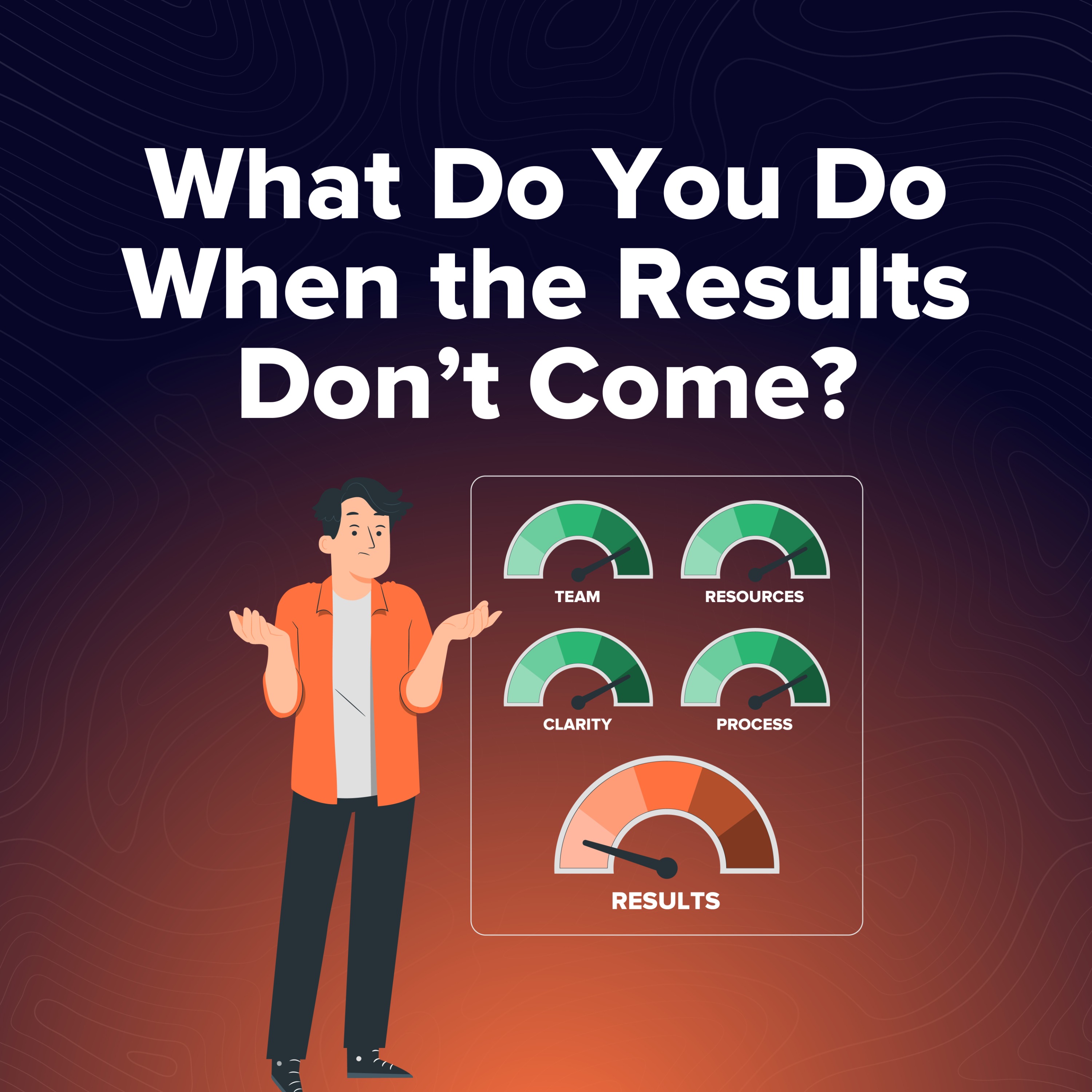
Hey there and welcome to episode 395 of the no Bullshit Leadership Podcast. This week's episode what do you do when the results don't come often? As a leader, you can feel as though you're doing everything right. You've built a good team, you've resourced it appropriately. You've put together a work program that's ambitious but achievable. You've made sure people are clear on their accountabilities, and you've empowered your decision makers with autonomy and support. Yet, for some unknown reason, the results don't come. Whether you have a team that's been performing well and has just hit a bit of a lean patch, or whether your team has never reached the heights you expected it to, knowing what to do to turn it around can be a little tricky. Today I'm going to demystify that process so that you can be confident about taking the right steps to get performance back where it should be. I'll begin with a story about a high performance team slump. I'll give you a list of potential root causes, what I call the seven deadly performance sins. And I'll finish with four clear interventions that are going to have your team firing again on all cylinders. So let's get into it. I want to see a friend of ours play song Shocker a few weeks ago. She's a professional athlete playing in the Australian A League women's comp. The team had been performing really well, and when I'd seen them play several weeks earlier, they looked formidable. But on this occasion, you could tell that something wasn't quite right. There seemed to be a lack of cohesion between the players. When one of them made a mistake, they didn't spring back into position with renewed energy and their body language seemed negative and defeated. Well, it turns out they'd had a few losses in a row and this had dented their confidence. And it happened In a matter of only a few weeks. Initially, I put it down to a lack of resilience. But the more I thought about it, the more I suspected it was a function of poor team culture and maybe even poor coaching. Not being able to keep the team focused on the right things and not knowing what to do when performance dipped. The team culture simply didn't deal with failure very well. The next thing that crossed my mind was something that my high performance coaches told me for years. When the results aren't coming, you have to go back to process. In the case of this soccer team, the talent was clearly there. There was a track record of past performance, but for some inexplicable reason, the winds had dried up. So what is the process that you'd look to go back to? Well, it's all the building blocks that contribute to high performance. When the scoreboard isn't moving in your favour, you have to go back to the things that you know from experience are going to make the score move. These are the things that separate winning teams from losing teams. Now let's think for a moment about what that might mean for a team of professional athletes. They would explore the known key performance drivers. Start with sleep and nutrition, for example. Are those key performance indicators on track? Or have we become complacent and started to take some shortcuts? A few too many late nights or perhaps a few too many cheeseburgers? How about our strength and conditioning work? Are we pushing every muscle group to exhaustion in the weights room? Are we constantly trying to improve our speed and fitness? And are we putting in the extra reps on the training paddock? How about mental focus and control? Are we meditating? Are we making time to focus on the result we want? How about teamwork and communication? Are we aligned in how we think? Do we work together? Do we know how to utilise each other's strengths? And how about the critical skills? Is every player working every day to improve their ball skills and dexterity? I'll never forget the story of Donald Bradman, Australia's greatest ever cricketer, practicing with a golf ball and a cricket stump to improve his eye hand coordination. This was an order of magnitude harder than playing with the bat and ball that he would use in actual cricket matches. And the skill he built showed out in his record breaking career. Sleep, nutrition, strength, fitness, mental focus, teamwork, ball skills. These are the building blocks of performance for a professional athlete. And going back to the process demands that you look at these building blocks and see which ones have been neglected. Get this right and the wins will come again. Let's bring the conversation back to business leadership. When you're not getting the results you expect, you've got to examine the root causes to see where the leak is coming from. What are the common performance building blocks in leadership and business? Well, I'm going to look at the seven deadly sins of performance leakage. Most performance slumps tend to come from one of these root causes. The first is capability erosion. Your team capability may be weaker than you think. And no matter how much you try to convince yourself you have an awesome team, the results don't lie. Capability deficit comes in two separate flavours. The first is you may not have stretched your people sufficiently to get the best out of them. They're effectively on cruise control, loving life, not being too stressed, doing just enough to get by. Perhaps you never stretched them, or perhaps you just became a little complacent yourself about the team's performance. The second variety of capability deficit is more insidious. And it happens when you have a tourist on the team, someone who's a clear underperformer. Just remember, the quality of your team isn't set by your strongest performer. It's set by your weakest performer. If you allow an obvious underperformer to stay on the team, everyone takes their cues from them. It has a massive cultural impact because the rest of the team is thinking, well, why should I work twice as hard as buggerlugs over there for the same money? Or if I perform at my peak, I just get given his work to do? Or why am I busting my gut for high performance when my boss doesn't care about it? I can hear you saying right away, but I do care, Marty. Well, I don't know. If you choose not to deal with your worst performers, the message you send to your team is, is that you don't care. And they would be right. The second deadly sin is distractions. It's critical to focus on the biggest value drivers of the business. Often a lapse in team performance comes when the focus on the main game is lost. The first place it's lost is in the strategy and planning process. You simply put too many things on the list in the hope that you'll be able to do them all. But this is self defeating. You already know you don't have enough resources to achieve what you've planned to achieve, let alone all the new things that aren't on the plan that you know are going to pop up. The only thing I know for certain about your team is that you will Never have enough time, money and people to do all the things that you'd ideally like to do. So why is it then that in our well meaning planning meetings we're so keen to shoot ourselves in the foot? Not limiting the work to the delivery of the really high impact value drivers is one thing, but even if you do get that right, it's so easy to let distractions creep in. Everyone has a good idea that could be added to the program, but what that does in effect is to dilute the focus on the things that matter most. The risk increases, resources are dissipated, schedules slip and benefits are watered down. Low value distractions are a scourge in virtually every team. Alright, I'm going to pick up the pace a little for the next five deadly sins. Number three is culture drift. This happens when the behaviours that you know create a high performance culture are allowed to slide. Things like the discipline of clear lines of accountability, decision making, tempo, having the hard conversations that are necessary to keep people on track, going the extra mile to meet a deadline, robust challenge and debate, the ability to experiment within the guardrails, and of course an absence of politics and backstabbing. It's easy to let these things drift and to lift your head up to find that the culture is no longer sustaining itself, but backsliding into mediocrity. The fourth deadly sin is poor boundaries. We all want to please the people around us and we all have a tendency to say yes when someone asks for help. But not all help is appropriate. For example, when someone asks you to take on an unplanned task, is it easier just to add it to your agenda and do it, or to push back and have the argument see, boundaries are critical if you want to preserve value and to not be distracted from what you've agreed are the most important deliverables. A mismatch in KPIs across teams is almost inevitable because this is the way planning is done in organisations. So when you're asked to do something for one of your peers, don't just be the nice girl and take it on. You've got to question it and have the hard conversation, otherwise it could derail the things that your team's performance is really going to be judged on. The fifth deadly sin is scope reductions. Now, in projects, there are only four levers that you can pull to improve the eventual outcome. Scope, cost, quality and time. And each one of these can affect the other. Most projects experience blowouts in some way, but the project manager will be ultra focused on the levers of cost and time. Well, why is that? Because they all want to be able to say I deliver this project on time and on budget so they compromise the less visible things that erode value, scope and quality. We produced a podcast episode a little while back that talks about projects in more detail. It was episode 323, how to stop Missing Targets. We'll leave a link in the show notes for that one. The sixth deadly sin is inward focus. Performance can sometimes decline simply because the team loses focus on the reason they are actually there. Well, in case you're wondering, it's to produce outputs that directly contribute to a customer's value proposition. This is more difficult for functional support areas like IT and legal and marketing to do well. But focusing outwardly on the value contribution you're making to the organization's target customers is a non negotiable. We can so easily get caught up with our own self importance, but the only reason we're actually employed is to contribute in some way to creating value for our chosen target customer. And this is just as true whether you work in a commercial business, a not for profit, or a government agency. So work out what contribution you make, focus outwardly and stop polishing knobs. Finally, sin number seven is complacency. In good times, it's easy to become complacent and forget what it was that earned your initial success. I think a great example of not becoming complacent is the New Zealand All Blacks rugby side. For a century or more, they've been consistently the best team in world rugby. Their win rate over the last 30 years is 83%. They win 83% of their matches and this coming from a nation of only 5 million people. One of their secrets is never having allowed complacency to creep in. Even the very best players know that their place in the All Blacks lineup is dependent upon consistent high performance. Even the biggest names can be relegated to the bench if they don't perform. And if the All Blacks manage to build an early lead in a game, they don't back off for one second. They never think about protecting the lead. They double down and they go even harder. So if they find themselves leading 21 to nothing after 10 minutes, they're not taking it easy. They're firing each other up about getting to 50. They simply never back off the pressure. These seven deadly sins are frighteningly common in teams of all sizes across all industries. So if you're experiencing poor performance in your team, start here, work your way down that list and identify which ones are hurting you the most. So how can you fix this? What circuit breakers can you use if you find your team's results are slipping? I'm going to give you four interventions that you can use. And these can be implemented at any time, in any order. But just remember, you don't want to flip flop around trying random interventions. In any well conducted scientific experiment, you change one variable at a time, keeping everything else the same. That way, if you do manage to get a different result, you know which change has caused it and it's exactly the same in leadership. Do the root cause analysis first and design the solution that's going to give you the highest impact. Now, I'm going to cover off on these four interventions and you can deploy them for multiple root causes. They should give you everything you need to fire up the boiler and get things moving again. The first intervention is remove the tourists. You've got to fix the capability from the bottom up. And that means the person who you know is not meeting the standard can't stay in the comfortable world of mediocrity. You have to move them either up or out. Start with results and work your way backwards. If they aren't delivering, make sure they have clarity on your expectations. Give them an amount of support that's fair and reasonable. Now, if the results still don't come, get closer to them and ratchet up the pressure, they'll eventually work out how to deliver to the required standard. Or they won't. Removing a tourist who's adding no value will have a stimulatory effect on the whole team when everyone else sees you're serious about setting a high standard. Intervention number two, reduce the workload. This is a little counterintuitive, which is precisely why I've worded it the way I have. A huge workload causes so many problems and it masks the real issues. It gives people ample excuse for non performance. Oh, sorry Marty, I couldn't deliver this because I had to do that instead. It also lets people play the stress and burnout cards as a standard. Go to excuse. Reducing the workload gives everyone line of sight to the key deliverables and it reduces the volume of stuff that they have to deal with, which gives them time back in their packed daily schedules. Of course it means the things that are left on the agenda have to be extremely high value. Get rid of the noise and do more of the high value work. And if you do this, your team's performance will improve instantly. Intervention number three, increase the urgency, tone, pace and standard. When results start to slide, any of those three could be the culprit, but it's most likely to be a problem with pace. A lack of urgency, writes an ironclad guarantee that your results are going to deteriorate. But assuming 1 and 2 are okay, that is to say your work program is value focused and you don't have any obvious capability issues, then picking up the PACE is a no brainer. And as a leader, it's one of the easiest things to change too. Finally, the fourth intervention reinforce the culture. Tell the team which elements specifically you've let slip and explain the impact of that slippage. Be specific on what needs to be done differently and give your commitment to lead better and ask people to hold you to account. Now, this can be anything from how you treat each other to having clear single point accountabilities to being prepared to contribute your views in meetings. These cultural objectives can be reinforced in both group and one on one settings and should draw the link directly to the performance outcomes you're seeking. When you sense your team is hitting a performance slump, you've got to step in quickly to try to recover the situation. But to give your intervention the greatest chance of success, it's important to understand the root cause. Undoubtedly, when results don't come, you need to go back to process. When the scoreboard's not moving, return to the basics and double down on the work. It shouldn't surprise anyone to see one of these four interventions having an immediate positive impact. So just pause to think about this for one moment. As much as these are excellent remedial strategies to reclaim results, do you really need to wait for a noticeable decline in performance before you do these things? These are the things that really good leaders are doing anyway. All right, that brings us to the end of episode 395. I really hope you enjoyed it, but as I'm sure you know, listening is easy. Leading is hard. That's why we created Leadership beyond the Theory, our flagship program that turns insight into action and action into results. This is where we unlock the secrets of elite leadership performance. I'm really looking forward to next week's episode Champions Do Extra. Until then, I know you take every opportunity you can to be a no bullshit leader. Sam.