← No Bullsh!t Leadership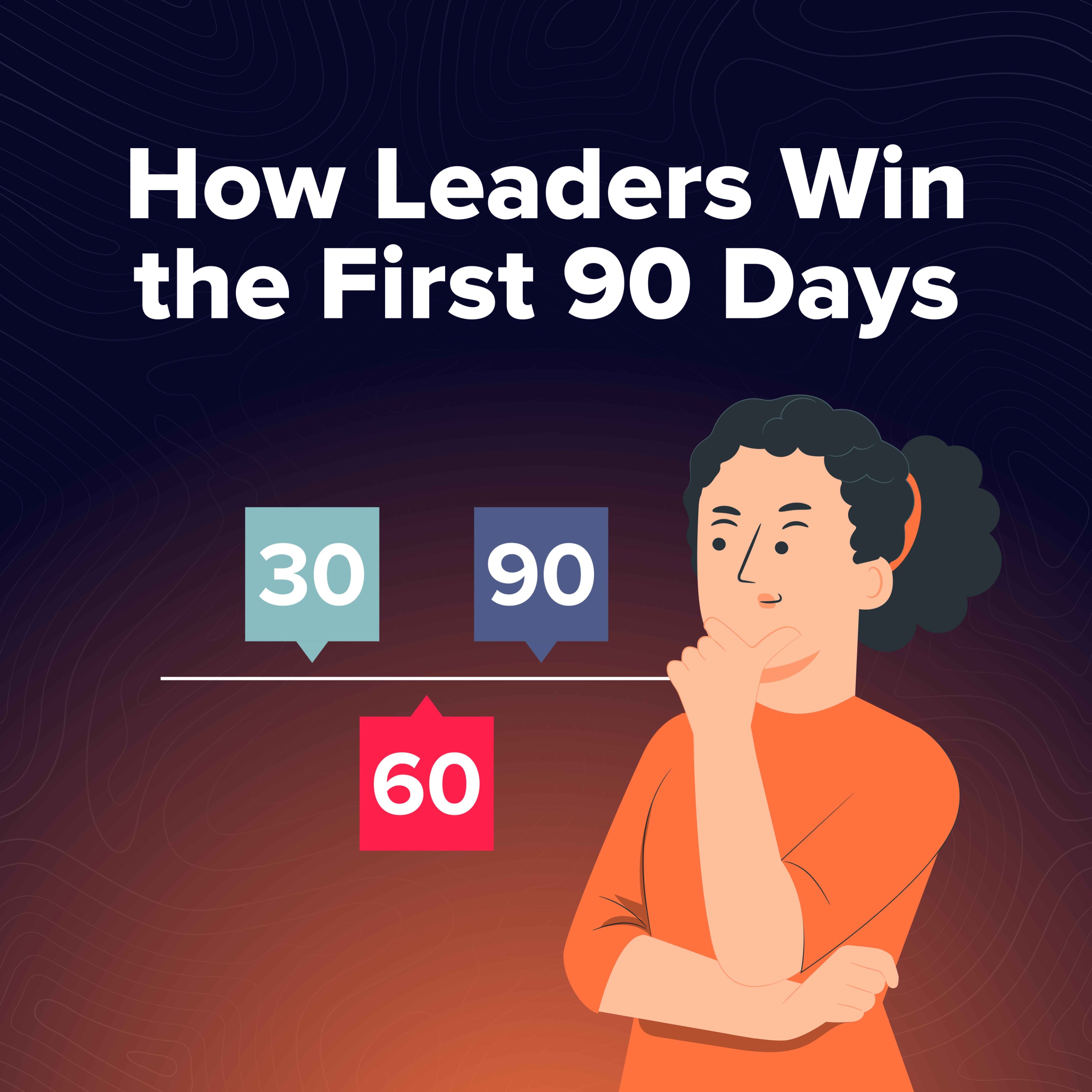
No Bullsh!t Leadership
Your First 90 Days: Prove You Belong at the Next Level [90 MINUTE BONUS EPISODE)
01:24:57
Loading summary
Transcript41 lines
- [00:00]
Martin Moore
Hey there and welcome to episode 369 of the no Bullshit Leadership Podcast. This week's episode the first 90 days at any new level. How to win trust, build credibility and deliver results.
- [00:13]
Emma
Welcome to the no Bullshit Leadership Podcast. In a world where knowledge has become a commodity, this podcast is designed to give you something more access to the experience of a successful CEO who has already walked the path. So join your host, Martin Moore, who will unlock and bring to life your own leadership experiences and accelerate your journey to leadership excellence.
- [00:36]
Martin Moore
Once or twice a year, we run a free webinar focusing on a topic that we're seeing a lot of engagement in our global community. We ran one of these webinars last week to address the age old question, what can I do to ensure my success at a new level? If you've just been promoted, or if you anticipate a promotion sometime in the next 12 months, or even if you were promoted some time ago, but don't feel as though you've solidly established your credibility in the new role, you're going to find this episode invaluable. Breaking your first 90 days up into three distinct one month phases. I outline specifically what you need to do to ensure a smooth and successful transition, whether it's an internal promotion or an external one. During that critical first 90 days, your team, your peers and your boss are going to be watching you and they're trying to answer one very important question. Was it a good decision to promote you or was it just another hiring mistake? Now, even though we like to keep our standard no Bullshit Leadership episodes to around 20 minutes, not running the full webinar would be like telling you the start of a joke and leaving you hanging before the punchline. That's why we decided to run the webinar in today's episode in full. So grab the popcorn, get ready to take some notes, and settle in for what we think will make the difference between success and failure in your new role. Oh, and by the way, we've decided to give our podcast audience access to our Blind Spot Identifier tool, a fantastic free resource to help you work out what things might hold you back at your new level. So let's get into it. Every transition is a test. And the question is, are you going to rise to that level or are you going to stall out? Because stalling out is much more common. Because when people go into a new role, they don't really understand what's required of them to show everyone that they have been promoted justifiably. And it vindicates the decision of the person who's promoted them. And so the real test begins when you're in the role. Everyone is watching you. They're trying to work out if you can perform at the level you've just gone into. Because particularly if you're coming from a level below, the very first instinct is, we think Marty's going to be able to handle this new role at the new level. But let's just have a look and see. And so there's going to be some, even from your most ardent and positive supporters. There's going to be a healthy level of skepticism as to whether or not you're going to be able to make that turn from the level you were at and perform quite well at, obviously to get promoted and the level you've just gone up to. So it's really important to keep that in mind. So today, in 90 minutes, we're going to give you a roadmap to your leadership success. So the first thing is we're going to talk about understanding your context and particularly how to focus on the highest value things. Now, I'm going to spend a fair bit of time on the value piece because it's absolutely critical as the foundation for everything else you're going to do in that first 90 days. And that's a matter of setting really clear expectations with your people, the new team that you have, and the people around you as well, your peers and your boss, raising the standard of performance. So if you're just going to go in and just crank the handle and have business as usual, then what are you doing? Right? You're not exactly going to mark yourself as a person for the future or a leader who can be relied upon to get results and make changes. And I think everyone wants to see a leader make change and to improve the team that they've inherited. That's always what people are looking for. And even if they're not looking for it, they'll tell you they're looking for it. So the psychology of that can be really interesting with a boss who doesn't want to make too many waves. But when you go into a new role, what do you want to do? You want to make some waves, you want to get some things done, and you want to make it really clear that you're there to get the best you possibly can out of your people and out of the resources you've been gifted by the organization. So you are going to have to raise the standards of performance. We're going to talk about accountability and we're going to talk about leading at the right altitude, because it's very, very easy to slip back into your old habits and to be really, really comfortable where you were and to seek out that level. Because being up to the level you've just been promoted to seems like it's hard and unfamiliar. We're going to go through three phases here. The first 30 days is all about understanding it. Understand where you are, just work out your context, get a really deep understanding of where the value lies, what the value levers are that you have access to, to pull and create that productive tension in your own head and in the heads of your team members that says, here's where we are now, but I know that we could be here. So how are we going to do that? How are we going to bridge this gap? What do we need to do differently and how are we going to do it? And that's what you have to lead your people through in phase two, 30 to 60 days, it's about proving it. So you get an understanding of where you are, you get a familiarity with your environment. And then you've got the next 30 days to say, I'm going to start to make a mark here, I'm going to start to do some things and make some decisions and I'm going to start to align the team so that they're with me in where I want to take it moving forward. And you'll align other key stakeholders who appears. And of course, you'll get some sort of acceptance and agreement for your boss about what you're going to do with the team or what you're going to deliver. So that's really important in the next 30 days, days 30 to 60. And you want to lift performance where you can see it's going to make the biggest difference right. Of the thousand things you could do. It's all about focusing down on things that will make the most difference and attacking those with clarity and vigor. And then of course, in the final 30 days, up to 90 days, you want to create ironclad accountabilities, you want to get the team set up to execute really, really well. And for those of you who've been in our community for a while, I know there's many of you who know, know me and our content really, really well and have applied it to get the results you need to get. This is all about making sure that you have really strong single point accountability. There's a level of clarity. You can free yourself up from the busy work of doing things that your team should be doing, build that capability below you and make sure that you're holding people accountable for the job they're supposed to be doing and the things they agree to. So that's in a nutshell where we're going to head. So what you're going to walk away with today is your 90 day roadmap. So it's a very well established system for how to go about this. And you want to set yourself up for breakthrough performance. Not just, not just, you know, I'm going to do a few things differently and people might see me doing a few things differently. And the team will notice a couple of different things. You know, I'm talking about breakthrough performance, I'm talking about performance that people can't ignore. And you can set yourself up for that very, very early. It doesn't take long to set yourself up for that. Then we're going to talk about some of the practical strategies, you know, how to build momentum and win credibility and trust and some of the actionable tactics for that next 30 days and then how to make sure that you don't fall into these traps for young players that quite often are the common pitfalls that we fall into. If you're fortunate enough to have just been promoted, this is just hitting you at exactly the right time. This is exactly what you need to understand what you need to do in the next 90 days to be as successful as possible. And even if you're just ready for a promotion, you feel as though you're going to get promoted soon. It's really good to start thinking about this stuff now because it can be a self fulfilling prophecy. It can be a situation where because you're focused on the next level and you're focused on doing the things you need to to start building that level of alliance and support and clarity and value focus that this will be a self fulfilling prophecy for the promotion itself. And you'll find yourself getting elevated faster because you have this mindset. So there's that promotion ready high performer piece. And then also I think there's also a very, very strong case for leaders who've been in their role for a while. So they've been there for a period of time. And what they're finding is they haven't really established themselves yet. There are still question marks, things are still hard, relationships still aren't working properly. Clarity around what makes the most difference is isn't there and you're still getting sucked into the day to day all the time. And so you know this work workshop is for you as well. This can be applied readily across all of those types. So, you know, the question is when you're getting promoted, that's when you're under the most scrutiny. This is before anyone automatically assumes that you can do do the job you're doing. And there's still that level of healthy skepticism. Can you actually make the turn? Can you be effective at this level? Because we've probably all had experiences where we've promoted someone who was awesome at one level and they simply haven't been up to the job of going to the next level. Despite all our efforts and coaching and mentoring and support and resources and everything else, they simply haven't made the turn for one reason or another. So, you know, if that happens to you once or twice, you become quite attuned to thinking about, okay, well, is this person actually making the turn? And there's a lot of eyeballs on you in that first three months. So are you going to show yourself as being credible and promotable and have that promotion justified in everyone's mind saying, well, of course Marty should be in that role, he's doing an awesome job, or straight away, do you want to show yourself as being absolutely replaceable and needing to be replaced? I guess the question is, for those of you who don't know me that well, what is it that equips me to talk about these types of things? And I had a fairly long career in the corporate world. I started off as an IT guy in the mid-80s. So there is hope for all of you. Don't worry, Leon, you know this. So there's hope for everyone. But I decided in probably the late 20th century, coming into 2000, I probably wanted to do a bit more with my life and wanted to have an executive career. So my first executive role was chief information officer at a mining company, ASX 50 mining company in Queensland. And since that time, I had executive roles in different industries. Mining, insurance, rail, freight, transportation and energy. And I went across a bunch of different portfolios. It, of course, finance, sales and marketing and strategy. So I sort of did the tour of different industries and different functional areas. I had staff or functional support roles, and I had line roles. And so I worked out what the commonalities were in terms of performance. And this is all about performance. What you want to do as a leader is to be posting the sort of performance from your team that no one around you can ignore. You want it to be so blatantly obvious that your results are superior because you've worked out how to lead your team. And that was my skill was working out how to go into a completely foreign context and lead the team to get better outcomes. So my final role in the corporate world as Chief executive of CS Energy, I went in there in 2013, I had a five year contract, and in that five years, you'll see that little timeline there. On revenues of around a billion dollars, it was a, was a just over $2 billion balance sheet. And on revenues of a billion dollars, I increased the ebitda earnings from 17 million to 441 million in five years. So that represents a compound annual growth rate of 125%. In other words, each of those five years, the EBITDA doubled, more than doubled from the year prior. Now when I say I did that, I did very little of that myself, okay? I had great teams in there, people who were deeply expert in different areas, people who really knew their stuff. Smart, driven, ambitious, people who really came to the fore to make that happen. And my job was to liberate their talent. And this is the skill that leadership is. It's the skill to liberate the talent of the people that you have at your disposal who are working for you. So once you learn how to do that, you can be knowledgeable of the content, but not expert in the content and still get really, really good outcomes. Now, of course, since I left the corporate world in 2018, Emma and I set this business up, your CEO mentor. And you know, we've, we've done a lot in seven years. So we've had over two and a half thousand leaders go through our leadership beyond the theory program and we're going to talk about some of those leaders later. We've had over 7 million downloads of our podcast, no bullshit leadership. And as I said this morning, this isn't like vanity stats, right? This is not about, you know, oh, I got 10 million views for my YouTube video, whatever, that's just vanity, right? These podcast Downloads represent over 7 million opportunities for a leader to take some content about how to lead better and to apply that straight away into their jobs and their organizations and their teams. And so in our view, our purpose, which is to improve the quality of leaders globally, it comes to life there. This is where people are actually changing their view about what they can do as a leader to make a difference for their companies and for their people. So those 7 million downloads for us represent massive, massive change in the way leaders think. And the podcast in over 150 countries. So it's one of the most widely listened to podcasts, leadership podcasts in the world now and probably One of the reasons why when we published the book in the US in 2021, it jumped almost to the top of the Wall Street Journal bestseller list. Got. Got knocked out at number two by Atomic Habits, which, as N pointed out this morning, has been number one on the Wall street journalist for, I don't know, 4,000 years or something since the dawn of time.
- [15:01]
Emma
You know, if any book's gon like, I'm fine that it was that one, you know.
- [15:07]
Martin Moore
Yeah, there's, there's a few I would have been happy to beat us, like Atomic Habits Multipliers, you know, good to great. Like any of those would have been fine. So, so anyway, so, so, yeah, so. So we're finding that the work that we're doing now is really making a difference to leaders all over the world. And this is why we're doing this free webinar tonight is to make sure that we can give you some tools that will really make a difference. So let's talk about phase one. First 30 days, what's value? What the hell is value? Right? We've got to think about value before activity. And our tendency is going to be, you step into a new role. The very first thing you want to do is impress people. Here's what I can do, here's how smart I am, here's what I know. And you focus on doing the things that for you, demonstrate your own worth. Instead of thinking about that, think about a slightly different way. Your first 30 days, just shut the hell up. Just listen, just watch, just learn, just work out where you've landed. Now, of course, if you are being promoted internally, you'll already have a pretty good understanding of the company and the people. But even then, take the time to step back and say, okay, well, what does the view look like from this new vantage point, which is a higher level than I was at before, which means I have a broader scope of view, broader scope of vision. I can see more now. I'm closer to the top. And I also have more accountability and responsibilities below me. So always take the time to just step back. Now, the very first thing you have to think about is value. And this is at the core of everything. So when we look at the noble leadership framework, value is at the center. This is where it all begins and ends with value. And I'm going to talk about this for a few minutes because I think it's so important, but value is the object of the exercise. You are not in a leadership role so that you can help your people to live their best lives. I Hate to tell you that that's not why you're paid. Now, if you lead really, really well, that will be a serendipity of what you do. But it's not your core focus. Your core focus is value. And everything else around that central core is designed to help you do that. So we've got four elements that are about you as a leader and the capabilities you need. You've got to be able to handle conflict, build resilience, work at the right level and master ambiguity. But you've got to be able to do those things as a leader. It's just got to be core and part of who you are. And we'll talk about some of those capabilities shortly. In terms of execution, you've got to be able to make great decisions and you've got to be able to drive accountability. Those are the two execution levers that you have. And you know, I'm a simple man, I like simple things. I like to say that the companies that win are simply the companies that make better decisions faster than their competitors. That's it, just make better decisions faster than your competitors. You're going to do okay. And then of course, down the bottom there, connect the dots with those seven core pillars of leadership performance. We worked out a few years ago that there's really nothing that was stitching it all together and making the day to day practical application very obvious. So whereas each of these pillars create, deliver value, handle conflict, build resilience, etcetera, are the pillars of leadership performance, connecting the dots cuts across all seven of those and it basically gives you the opportunity to see, okay, how do I take all of these concepts and join them together and meld them into a very seamless approach to my day to day leadership? Why is value so important? Now, I'm sure that there's a few of you who are already squirming in your seats at my, you know, blatant, outrageous, capitalist, heartless tendencies, right? It's all about value. And well, that's probably true, but let me in my defense, value can mean a lot of different things. It can mean a lot of different things. Sure, there's financial value. There isn't an organization on the planet that survives if it isn't healthy financially. Doesn't matter whether you're a not for profit, purpose driven organization, ngo, a government department, you don't have funding, you cease to exist. So your financial health is everything. And that's got to be there. But on top of that, think about why you're there, what's your purpose so for example, value for a doctor who's running a surgical practice, in that context, value might mean better post operative outcomes for patients. That's what it might mean. That's what value might mean in that context. If you're the principal of a high school, value might be to maximize the percentage of your graduating students who are accepted into the university or college of their choice. So value can mean a whole lot of different things. There's also value in better compliance with regulations because that protects your license to operate. There's also value in risk management. There's also value in safety performance. So how do you make the environment safer for your workers? And having worked in many industrial businesses, for me safety was absolutely critical. But value has to be traceable. We do so much shit that makes absolutely no difference at all. None whatsoever. Every organization is full of meaningless activity. Why do we work on that stuff? Well, because, number one, it sounds like a good idea at the time. It sounds like it should create value even if it doesn't. Everyone has a good idea about how to make improvements, but it's not necessarily value or creative. Sometimes it's just the rusted on activity of the organization. We just got. We've been doing this for 20 years, we're going to do it for another 20. Sometimes because people come emotionally attached to the work. I mean, there's a whole range of reasons why we continue to work on things that don't deliver value. So your job is to understand what value is, to be able to say, okay, I know that if I invest these resources here, then this is the outcome. I'm going to get over here at the end of it. And you've got to be able to trace that value from the point of investment of resources. When I say resources, I mean, you know, money, people, assets, time. You know, when you invest those things, you want to see a return for it. And you've got to know where it's going to come. And it's not always going to be quantitative. It's not even always going to be highly tangible. Sometimes it's quite intangible and quite qualitative, but there's got to be a link there. So you're trying to trace value from the point of investment of resources through to the point where that value is realized. Now once you get this principle really, really firmly in your head, it'll give you the ability to question stuff diligently. When people come up with you and say, I've got a really good idea for this money, you'll go, okay, great. That that sounds awesome. So when and where am I going to see the value from that? Now, this is normally followed by a pregnant pause that could go anywhere between three seconds and forever. Because sometimes when you ask the value question, they just don't come back because they realize intuitively there's no value case for it. So it's absolutely critical that you understand this connection whether you're trying to improve safety. And if I'm going to invest money in a safety initiative, I want to know that at the back end, what am I going to get? Fewer incidents, fewer injuries, Hazard reduction? Like I want to know I'm going to get these things because otherwise why would I invest if it doesn't stop people from getting hurt? I'm not spending the money, so I've got to make sure it's having an impact. And in fact, I talk about, you know, that the coin's hitting the piggy bank. You've got to hear the noise, right? Because even though, like I said, a lot of these value value outcomes aren't necessarily financial, I just like the metaphor of hearing the coin drop into the piggy bank. It just makes that ding and you go, that's the value being recovered. Whether that's reduced risk, a safer environment or financial outcome. The next thing is it's really important to know the relative value of things you could work on. Now, for a lot of you, I don't know anything at all about your companies. I don't know where you work, I don't know what industries you're in, I don't know what country you're in. But I'll tell you one thing I do know. You will never have enough time, money or people to do all the things that you would ideally like to do. You won't. There's always more work and more good ideas than there are resources to deliver it. So if you accept that as one of the fundamental truths of being in any organization, then you also have to accept the fact that you've got to make choices about what you're going to do and what you're not going to do. Those choices have to be conscious and deliberate. They have to be made in the context of really understanding where the highest value drivers are, where the biggest opportunities are to make a difference and create value. And the only way to do that is by knowing exactly what that value is. We spoke about value traceability. I invest this here and this comes out the back end. It's like you're just thinking about putting resources through a machine and seeing what the outputs are. And you've got to be able to compare them. But it's interesting because it's not like you're comparing apples and apples. If you think about a financial outcome where you have a marketing campaign that increases sales of a product, that's very different from a compliance campaign that invests money in making sure that you protect your license to operate. So it's not like you're comparing apples and apples. Like sometimes you're comparing dog and nylon. Completely different things just don't make sense. But you've got to go through that process. And as Dwight Eisenhower said, plans are useless, but planning is indispensable. It's what you learn when you go through that process that makes the difference. It's the conversations you have, the robust conversations where you're arguing about, well, hang on a minute, I think there's more value here. No, no, no, but you've neglected this. I mean, this is where the value is. It's those conversations that let you arrive at a value ranking result that tell you which things are most important. But you're not looking for the perfect spreadsheet. You're looking for a basis and a foundation on which to have the value discussion. And that way, anything else that comes in, anything else that comes from left field or one of these, like awesome thought bubbles that comes down from a board of directors, they say you have to do this is the way you defend it. So if you don't have any sort of concept of value ranking, when these things come down from the top, they'll go. The boss will say to you, okay, Marty, I need you to do this. This is priority one. And you go, okey dokey, but I've already got six priority ones. Which one of those priority ones you want me to drop? And then they go, well, I don't care. You work out how to get it done. It's priority one. Just do it. So your boss becomes a Nike boss, and you haven't really got a defense for that. It's a completely different conversation when the boss comes down to you and says, hey, Marty, you need to do this. It's priority one. I go, wow, okay, that's an awesome idea, but let me have a look at what I've already got in our plate because we've already agreed what our highest value initiatives are. And you know, I can do what you ask me to do, no worries at all, but it means I'm going to have to distract some people or take them off what they're working on. Let's work out what we're going to sacrifice here. And out comes the value ranking list. And so, you know, where does this fit in our current priorities? Because something's got to give. So let's work out where that is. And it just completely changes the conversation. So if you want to say no to a boss who keeps throwing shit at you, the best way to do it is say, oh, that's an awesome idea. Let's work out where it fits. And they'll answer it for themselves, because most bosses aren't stupid. So value ranking becomes really important. Now, once you have your value ranking, here's a key principle of value delivery, simplicity and focus. You've got to focus on the things that are most important. And I used to say to teams all the time, and I'd say to my executives, guys, what can I take off your plate? How can I make your life simpler? How can I simplify what you're doing? How can I get rid of the noise for you so that you can focus on the things that are most important? And I had this constant drive for the most important thing at any point in time. Not the most urgent, not the one that is the most recent thought bubble from the chairman. What is the most critical thing we could be doing to create the most value with the resources we have right now? Full stop. That was it. And that's how you take a company from 17 million to 441 million EBITDA, right? It's by doing those things. But it takes real discipline. If you can get this done in your first 30 days, if you can understand this and build this list and have it in the shape that you can communicate it to the people above you and beside you and below you, you're going to be in really good shape. There's just one more principle I want you to talk about, and I want to use this analogy from professional sport. Does anyone play the most frustrating game in the world? So I. I do. Very badly. I did get out for around yesterday morning. Brisbane's beautiful this time of year. So what this guy's doing is he's just driving. He's just trying to hit the ball as far as he can straight down the fairway and land it right in the middle of this fairway, right on this beautiful expanse of perfectly groomed grass. Now, given that that's what the intention is, have a think about the very best players in the world, the top players in the golf world on the PGA Tour. These guys are making tens of millions of dollars every year, right? They are the best of the best of the best. How often, as a percentage, do you reckon they manage to land the ball on the fairway when they drive? Just throw it in the chat. Let's have a couple of ideas.
- [29:43]
Emma
And if you've heard Marty tell this story before, you're not allowed to put it in the chat. You already know the answer.
- [29:51]
Martin Moore
I don't know. I think it's the first time I've told this story, actually.
- [29:55]
Emma
No way.
- [29:58]
Martin Moore
All right, what are we getting?
- [29:59]
Emma
30S, 50s, 40s? 50? Ben says 95. 45 from Jared.
- [30:05]
Martin Moore
It's been in sales. Ben, you're exaggerating. You're in sales. So I Keep going.
- [30:09]
Emma
Leon, 49. James, 95. Claudia, 10, James, 16. Like, we've, we've, we've got it all, okay?
- [30:17]
Martin Moore
We've got a pretty, pretty big. Pretty big variation. So the top golfers in the world were on the PGA tour about 60% of the time on average. So about. About six out of 10 times. Now, whoever said 50% around that area, I think 49%. When Tiger woods was winning everything on offer, his, his fairway hitting percentage was. Was just under 50%, right? And he was winning everything. Now, there's a point to this story, right? Excellence over perfection. You don't need to be perfect. You need to be consistently excellent. So you hear a golfer like Rory McElroy being interviewed, and he'll say, I would rather hit the ball 30 or 40 yards further because I can really unleash and drive it further. And I don't care if it's in the first or second cut, because I can play from there, but I'd rather be closer to the green from that tee shot. So they know that they can play the second shot from anywhere. They don't have to be perfect. They've just got to be consistently excellent. So if you think about how this applies to your culture and how it operates in your organization, right? If you're making a decision, right, a decision that's 80% right today is infinitely better than a decision that's 85% right next week. And that decision is going to be infinitely better than the decision that's 90% right in a month's time. Because momentum is valuable. And what you're going to do is to seek to create momentum. This is so important. And so you don't want to vacillate around waiting to get to 100%. You're never going to find it. You can work for 10 years and not get it to 100%, work out when the right time is to move forward, you've got to be pretty good, you've got to be excellent, you've got to be directionally right. But when you hit that target, it means you can adjust as you go. And momentum is way more important than being perfect. All right, so here's the litmus test. Can you clearly articulate what value means in your role and in the organization right now? Because if you can't, you're probably going to be in a bit of trouble. This is where it all starts. And if you can't articulate where that highest value piece is, then you're going to struggle to get anything else done. Because even if you can rally your troops and motivate them and point them towards clear objectives, if they're working on the wrong things, it doesn't matter. So always be thinking about that. Now, I don't have a quick word about the internal versus external promotion thing. If you're being promoted internally, the good news is that the organization knows you really well. The bad news is that the organization knows you really well. So you will have an idea and an understanding of what the organization is, what the tolerances are, what the culture's like, who's who in the zoo. Like you'll know all that sort of stuff. But this level of familiarity that comes with that means that people will have a perception of you in the role that you were previously in. They'll know you from that role, and it might be a shift of mental gymnastics for them to imagine you at the role you've been promoted to. And so you've got to win that space. And sometimes that's difficult. If you come in from outside, then guess what? Shiny new toy you've come in from outside the organization. You've got different experiences and skills. You're going to bring best practice in. There's a whole range of stuff you get to do that people have expectations around. And you're a much less known quantity. And so people will watch you carefully, but you'll get the benefit of the doubt. But you'll also get some resistance because you represent change. And you know, a lot of people, let's face it, they don't like change. So when you come into an organization and you're seen as being a foreign intruder, the white blood cells will swarm around to try and eliminate you. It just happens, right? And any of you who've been appointed at a high level in an organization will know that the white blood cells will try and stop you, whether it's explicitly or in a passive aggressive way, from doing what you're doing. So each of those promotion vantage points can create challenges for you. And I think the context you work in, if you come in from an external post, I think it's important you work out how to establish yourself credibly quickly. And this is like, perfect for you. Tailor made for you, this first 90 day stuff. If you're coming internally, there's already some boxes you can tick, but your biggest problem is going to be complacency. So I'm going to talk about what that complacency looks like in a little while, because it can be damaging. And if you want to understand your new role, there's a bunch of questions to ask. Now, I'm not going to go through all of these, but I just want to touch on a few of them. So, you know, how does your role differ from the last role? This is really important. You've got to explicitly think through what's going to be different, what do I need to change, how do I need to view the world differently? What relationships are new, what groups am I joining and how do I contribute to those? There's a range of questions that are going to enable you to nail down. What is it that I'm going to be doing differently because I'm at a higher level? What does my new boss expect me? How do I get. Second point here is really important. How do I get the best quality people into my new team? If you're promoted into a role, particularly if you've come from, you know, the team that you're in and you're now leading that team with a bunch of people who were previously peers, that can be really hard. And you have emotional connection, excuse me, emotional connections. You have relationships, it's tricky to do, right, but you've got to work out how to get the best quality, highest capability team you can. And that isn't necessarily the people who you happen to find in the positions when you take on the new role. So building capability is really important. We often surround ourselves with artificial constraints, as I call them, because we assume that we can't change things that we actually can if we have the mind to, and we have the courage to. So thinking about your capability is important. That's going to go well beyond, of course, the first 30, 60, 90 days. And then, of course, are there any immediate issues you need to deal with? Is there anything that's in crisis mode? And particularly if you've come in from outside, you might have to quell the insurgents fairly quickly. So if you've been appointed and you come in from outside and there's someone internally who feels as though they had a level of incumbency to the role and they don't like the fact that they've selected an outsider, then that person could be very, very difficult to deal with. So you can't let those things fester. That would be one of those things that I call an immediate issue that you should probably want to deal with. So, pro tip, you know, go in and listen. Don't rush to get a big win in the first 30 days. Just understand where you are, what are the couple of things that if you really nail them, you're going to make the right impression, and that's really important. Okay. So the first month I developed this technique, which was so useful, right, just before I started my new role, because most of my appointments to big roles came externally when I was coming into the company for the first time. Funnily enough, my first CEO role, which was at CS Energy, I'd never worked in the energy sector before, was my very first role. So as one of my direct reports quite, you know, clearly pointed out to me on the first day, when it comes to electricity, you probably don't know shit from Clay, and. And he would have been right. But there's a couple of things I did know which. Which stood me in good stead. But the very first thing you want to do is understand how your people think, who's who in the zoo. So what I'd say a couple of weeks before I come in, I will be arriving and take out my personal daydex. In that first week, I'm going to schedule presentations for each of my direct reports, where they're going to bring their direct reports in and present their part of the business to me. Tell me what you think I need to know about your division. That was it. Use any format you like, put any data in you like. I just want you to tell me what you think I need to know about what you're doing. This is unbelievably eye opening, unbelievably eye opening to see how people respond to this, what they choose to tell you, what they choose to not tell you. And I think today's podcast episode was all about, you know, how do you actually know what's going on below you? Because it's really hard to find out sometimes what they choose not to tell you, whether they sugarcoat things, whether they're likely to tell you the truth, how forthcoming they are about the people they have working for them and their capability, whether they talk about their capability, whether they talk about culture, whether they talk about their leadership performance, like all that stuff tells you a hell of a lot about that individual. So I always say in the first month, get your direct reports to present to you. Assess the capability of those direct reports, because that's the first thing you're going to need to do is to make some in or out decisions. And you know, you've got to give people the benefit of the doubt and give them some time and get them to understand your style and to learn to work with you. But you don't want to give them too long, you don't want to give them 12 months, because you know you're going to see a lot of opportunity escape by then. So in the first few months, you should be able to make a pretty good assessment of what you're dealing with in terms of your people's capability. And, you know, just listen for what they're telling you. Listen for who's on the level. You know, you'll develop a really, really fine bullshit detector if you go through this a few times. So your fast track to value delivery, now, talking about the principles of how this should work is pretty straightforward, right? And I'm sure that all of you, from what I've spoken about in the last half hour, will be very, very clear on what's required for value delivery. But doing it is a whole different proposition. It's a different ballgame altogether. And this is why in Leadership beyond the theory, we dedicate module one to trying to understand exactly how to implement this value process, to seek out the highest value things and then to rank everything in value priority order. So if you've ranked everything, you have that basis moving forward, knowing exactly what the highest value things are. That way you know that when you're sending people out to do work, they're doing the right work. And that makes a big difference. I'm going to draw a breath in. I'm going to have a drink of water. Are there any burning questions coming through in the chat?
- [41:08]
Emma
Yeah. So Mohamed did ask how to differentiate what are unvaluable tasks and activities than most fall for. You know, I think you've kind of answered that just then by saying, you know, obviously we have a really robust system in leadership beyond the theory to help you do that. Is there anything, anything that you can watch out for, you know, to see are people just doing activity or are they, are they actually delivering value?
- [41:35]
Martin Moore
So it's a couple of things. I think the first thing is knowing what people are working on. So They've got to have very clear objectives. You've got to know the tasks that are allocated to them and what you're expecting in terms of delivery inputs are a very poor way to manage. It's a very poor proxy for value. So, you know, sitting next to people and watching them work 10 hours a day doesn't help. It's about having very clear value initiatives that they need to deliver. So knowing what they're working on is the first thing. The second thing is the traceability element. You've got to know that anything that someone says, I'm doing X, you've got to know how that contributes to the value outcome. You've got to be able to say, I'm investing resources over here because this is the outcome I'm going to get. And that outcome is able to be stated in value terms. Now, the number of times I had people come to me and say, you know, oh, you know, we need, we need to invest X million dollars in this. And I go, okay, talk me through that. Tell me why it's a good thing to do. And they say, oh, you know, it's really good. It's going to improve our process. Okay, and what does that do for us? Well, you know, it's going to make our lives a lot easier. Okay, what's that going to do for us? Nothing. Nothing. There's no value at the other end of it. It's just noise, a different process, more red tape, bureaucracy. Like, it does nothing. It does nothing but slow you down. And the most important thing is that traceability. If I invest a dollar here, I know that I'm going to get it back here in multiples of 3, 5, 10 times.
- [43:10]
Emma
And Lan said, should all values trace back to revenue, costs and risks, or are there others?
- [43:15]
Martin Moore
No, there's everything. It's safety, safety, compliance, brand, customer, like, you name it. You can decide how you categorize the value initiatives you're working on. But, you know, a lot of organizations have communication departments. They add value, right? They create value because they're helping you speed information flow through the organization externally. So it can be a whole range of things, right? It's not just financial, it's a.
- [43:40]
Emma
You just have to pick what it is for you exactly in your business.
- [43:44]
Martin Moore
In your context and your team. Like, if you're, if you're running the communications team, well, you know, how do you create value for the organization in a communications brief where you're largely a functional support area, that's seen as a cost. So it's about having the Value mindset around whatever it is you're doing and being able to say, because we do this, here's the impact of that work.
- [44:05]
Emma
And Marty, just a little pep up before you go into phase two. Sean said, I'm just realizing this is one of the only talks where I haven't begun to zone out after 20 to 25 minutes. This no bullshit approach is keeping me engaged. Thank you, Marty. There you go. Keep, keep. You get, get you through the next, the next block.
- [44:22]
Martin Moore
It will. Well, I'm doubling down now. Thanks for that. That's great. You've encouraged me. You're only encouraging me, you know.
- [44:27]
Emma
Yeah, I know. He's a words of affirmation kind of guy. So, you know, I gotta, gotta get that in when it comes up.
- [44:34]
Martin Moore
Thanks him. All right, so where are we next? Okay, the standards you set of the standards you get. I mean, you know, there's a lot of ways of saying this, but I think establishing the standard that you want to set is really important. And anything you let go initially, you're sort of letting it go forever. You can't backtrack on it. Oh, well, you can, but it's a lot harder if you, if you try and backtrack. So it's sort of important that you work out which things you'll tolerate and which things you won't, which things you want to encourage and see more of. Which things you want to sort of bring out in people and say, hey, that's, that's awesome. I love the way you do that. Let's do more of that. So it's a whole range of things, and once you understand the value drivers, it sort of becomes a little bit easier. It's always good to look for quick wins. So you want to have some symbols of change and you want people to see what's changing. And if you can do that with quick wins, it's sort of cool. And quick wins are interesting because there's quick wins that come from stopping stuff. Right? Stopping stuff will give you quick wins. But it's not my natural go to in that early phase because people just feel threatened. And particularly I've seen leaders come in and symbols of change. Okay, we're going to cancel all the newspaper subscriptions and we're going to take the cookies and free coffee out of the break room. So.
- [45:57]
Emma
So never take the cookies. I know people get really shitty about the cookies, Marty.
- [46:04]
Martin Moore
I know if you're gonna, if you're gonna do something to cut costs, that's not the way to do it, because, number one, it's an infinitesimal amount of money in most organizations compared to the big picture. Number two, you're not taking the money out of your own salary, so you probably want to shut up. And number three, like, are you trying to deprive people and just turn them into austerity? It's not appropriate in 99% of situations. So I think those sorts of things that people think are symbols of change aren't necessarily what I'd use. What I would try and do is find quick wins by trying to make people's lives better. So what I normally do is I'll go, okay, let's talk about the things that really grind your gears. What are some of the long standing problems that you just haven't been able to solve that you'd really like to solve that would make a massive difference? And if they tell you 10 things, you bet your life that at least one of those is a fairly easy fix. So look for the things where you can give people a quick win. It makes their lives better. It makes, it creates value for the organization and it sets you up in a place that says, okay, well this guy's prepared to make change and he's going to help us with what we need to do to be better. And if you can do that once or twice, it establishes a level of trust and credibility for all the other things that are going to follow. Which is sort of cool, right? So, you know, you've got to define what you'll stop. I mean, it is important because you know right from the word go that, that focus, that laser, like focus on value is really important. So the more you message that in the way you talk, the better. And you know, assess your talent like who's who in the zoo. Make sure you've got a team that you either can lift to the person to say, okay, well I think I can get more out of you. I think I can stretch you and I think I can improve your performance. Or people who you will tell very, very quickly have zero interest in changing or lifting or progressing. And they'll, they'll tell you pretty quickly who they are. And it's, it's really important that you operate with a sense of urgency when you do this, because in any new role, you will be corrupted. You will be corrupted soon enough. Now if you're being promoted internally, it's too late. Don't worry about it. You're already corrupted. When I say corrupted, you're complacent about the way things are. Normally, I get the way the organization works I understand the culture, I know the people. This is what it is. And it really boxes you in. If you come in from outside, then you will have this opportunity for a short window of time where you can make a difference because you can see the contrast between, you know, what good looks like and then what's happening here. And you should use that to fuel you and to fuel your team. And I remember such a good story. CS Energy. We had a guy who'd been appointed to, not a GM role, maybe level below gm. So he's a few lays away from me in the organization, but we'd been looking for this role for a while. It was a critical role in one of the power stations and he'd come out of the oil and gas sector. And oil and gas had a reputation for being very disciplined around what they did and how they did it. Of course, I was keen to get his first impressions at what he thought about this particular site he was working at, CS Energy. And I caught up with him in his first, you know, week or two on the job. I said, oh, Charles, really great to meet you, introduce myself. And I said, what are you seeing so far? And the color just drained from his face. It was. It was not. If it wasn't so serious, it would be comical. The color drained from his face as he told me all of the things that he saw that he was really worried about because the environment he'd just come from, I'm going to tell you who it was, but one of the big oil and gas majors. And he'd just come into our organization. He said, this is not right. There's holes here, there's holes there, there's gaps here, there's complacency here. He was as close to beside himself as you'd imagine a professional heavy asset leader could be. I ran into him a few months later when I was on the same site and we caught up. I made a point of catching up with him. I said, hey, Charles, how's it going, mate? He's gone. Oh, yeah, good, Marty. So we had this conversation when you first started and you were really, really worried about a whole bunch of things. And I took good note of it. He's gone. Yeah. He said, well, you know. Yeah, he said, that's. That's right. But he said, but I understand the environment better now, you know, I just sort of didn't understand the company that well. And now that. Now. Now that I'm sort of, you know, sort of a little bit more inducted into the way we do things around here. It's, you know, I'm okay with it. He was corrupted. Like, he's a fantastic guy. But I had to, I had to say to him, you know, charles, maintain the rage, mate. Maintain the rage. What you saw in those first few days, that freaked you out. Don't, don't lose that. Keep a hold of that, because that's going to drive you. So this is, this is just striking while the iron's hot, you know, define really clear expectations about what needs to change. Make that gap really clear between here's where we are, here's where we need to be, and don't let go of it, no matter what. And you know you can, you know, you can, you can yell and scream and jump up and down and bang your fist on the table. I mean, that doesn't work. There's no point in doing it. One of the most important things you can do is appeal to people's sense of belonging, people's sense of identity. What type of team do we want to be? Like, it's a really simple question. If I say I need to do this differently, do this, do that, this is wrong, that's wrong, There's a hole here. Fix that. If I'm doing that, I'm just going to, like, people just look at me and go, this guy's a dickhead. Right? And I'm sure people have thought that about me in the past, in the recent past. But, you know, but the whole point is, you know, you got to lift them to something better. What type of thing do we want to be? Do we want to be a bunch of also rans that everyone else in the organization looks at and goes, you know, smarties team, they're pretty hopeless, you know, you don't expect to get anything out of them. Or do you want to be the sort of team where everyone goes, wow, how did that happen? How did they get that done? That's really awesome. Like, that team used to be a basket case. Like, it was a backwater. Now it's going really, really well. So that's the impression. And you've got to enlist your people's aid and commitment to that. So you can't do any of this unless you are really comfortable in conflict. You've got to be able to handle the hard conversations you're going to have to have with people to talk about these things. You've got to be able to go one on one. You've got to be able to go eyeball to eyeball to get through some of this mess, right? You've Got to get through the muck. You've got to get through to the point where you appeal to them. They understand what you're saying, you're clear on your expectations, you don't pussyfoot around, you're not mealy mouthed, you tell them clearly and directly what's required, you listen to them, you're compassionate. But you have these really, really potentially high conflict conversations. And when you're trying to reset a standard, you're going to have dozens of these. You just are. It's unavoidable. And the reason it's unavoidable is because if you want to lift the standard, you've got to be able to explain the difference between where you are now and where you need to be. And you're going to have to talk to people about what needs to change to get from A to B. And that's not easy and people are going to be resistant to it. But you know, trust and respect is where you have to be. And the whole mantra about, you know, conflict and handling conflict is respect before popularity. Not everyone's going to like you and that's okay. It just comes with the territory. What you've got to be able to do is to get comfortable with that and then do the work of leadership anyway. Really important. And you know, sometimes you're going to companies, as I did in Horizon. That's a coal train, in case you guys haven't seen one. I just thought I'd drop that in to break it up a bit. 10,000 tons of high quality metallurgical coal making its way to the Dalrymple Bay coal terminal there. And the logo on that train is a Ryzen, where I used to work as an executive. So in that organization. When I first went in there, it was government owned at the time and we were just taking it to the privatization. And when I came in to lift the standard, I seriously parted a lot of people's hair. They simply weren't prepared to change the way we needed them to, to make that business commercially viable and a high performing business, which, you know, when it listed on the ASX, it made the ASX top 30 companies by capitalization. So. So it was a pretty big deal, right? But when I went in there to sit and lift the standard, you'd be amazed at the number of people who self selected really fast. They could see what was coming down the line because I was really clear about what had to happen to be successful. And so they scurried out from under the rock they'd been hiding under and Scurried under another rock. Somewhere else in the company they just would call their mates, have you got a job for me over there? This guy's just, he's going to tear this place apart. Like, have you got a job for me? And I wasn't going to do anything of the sort, but I certainly represented a change agenda and I was going to lift the standard. And for the people who aren't interested in that, they'll let you know pretty quickly, they'll go and find another job. Some of them will nod and smile and go, oh yeah Matty, I'm behind you all the way mate. And then, you know, as Sir Humphrey used to say in yes Minister, if you want to stab someone in the back, you first have to get right behind them. So this, this happens sort of a fair bit in corporate life, but it's important to realize that this is part and parcel of your environment. Don't worry about it, it's going to happen to you. If you want to lead well, you want to be a great leader and make an impression in your first 90 days, that's what you're going to have to do. Stakeholders, absolutely critical, absolutely critical. You've got to know who's who in the zoo. You've got to form the relationships with the people who are going to be important to your success or failure. You've got to know who they are and you've got to know how to connect with them and engage with them. So stakeholder is going to be a key piece of that second 30 day block. And then of course, no regrets, moves. And I've spoken about the symbols of change a little bit. What can you do quickly to improve life not just for the team but for the whole organization and in a way that makes it really clear that you are value focused. I don't care that much about tradition, I don't care that much about, you know, about people's power bases. What I care about is turning this team into a team that everyone admires and respects because we are having impact and we are performing and we are delivering. So you know, it's got to be not just business as usual. There's got to be a point where you say this is what we want to be and this is what we're going to do differently. And you need to get on board with that. So, you know, the standard setting conversation is, is pretty straightforward. Here's the issue, here's where we need to be, here's where I see you, here's what we need to change. I'M going to support you, I'm going to get behind you, I'm going to give you all the resources you need. But not changing is not an option and I'm going to make sure that that happens. So I'd love to have you on board, but, you know, gotta meet me halfway. I can't do it myself. I need you and you need to meet me halfway on this with your intent and energy and vigor and your willingness to do something different. So those are your conversations to set the standard again and make sure when you identify your critical stakeholders, you just have a bunch of one on one meetings. Don't leave it as an implicit expectation that because you happen to be in a role that things are going to be different. Make it explicit. And when you know who's really important in those relationships at your new level, in your new role, then go and have a coffee with them. Talk about what you expect from them, what you need from them to be successful, and what they can expect from you in your role and what you plan to do to help them as well. Because the what's in it for me driver is pretty, pretty serious. So you're fast tracked to strong, confident conversations in leadership beyond the theory. Module two, Handle conflict. It's all about doing this. And you know, I often say it's only the first hundred conversations that are hard. But as EM reminded me this morning, you can make a really big impact very, very quickly. Five, six, seven conversations will completely change the way you think about that process if you do them well and you have the courage to step into them. So in module two, we're not just talking about the skill of having difficult conversations. We're talking about the psychological elements of what's going to move you to action. What is it that's going to convince you that you need to act and have those conversations for the good of the people involved? So we get right into the nitty gritty there and there's lots of pie in the face moments. For our leaders who go through module two, Handle conflict. We see so many of our leaders who just really go from strength to strength once they get this nailed. And as I said, after you've done dozens, hundreds of these conversations, it just becomes second nature. It's just who you are. It's completely seamless. It's just part of your process. You don't think about it, it's just what you do day to day. You become unconsciously competent and that's where you want to be. All right, let me push through phase three. Work at the right level and accountability. And I think by the time you get through this first 90 day period, you've got to be out of the weeds. Like, it's okay to try and get close to your people to understand what's going on. And I'd say it's almost essential to do that. But you can't be down in there with them. Like, you've got to cast your vision upwards and start thinking about the problem ahead for you as the leader. So you've got to be out of the weeds, which means you've got to have people below you who are functioning the way they need to to do the job. So working level is really important, right? So every level of leadership is different. And if anyone's read the Leadership Pipeline, Steve Drotter's book, fantastic, it talks about what's different about each level, that you go up to, the different time horizons, the different focal points, like what you're accountable for at each different level. And it does that for organizations big enough to be General Electric, where Steve was when he did that writing. So when you're getting promoted, you've got to be able to understand what's different. And you know, if you're still stuck where you were, then everyone's going to look at you and just go, ah, you know, couldn't make the turn to the next level. That's a real shame. You know, he was so good at the level before, it's just a shame he couldn't make that turn. So, you know, people will form an opinion about how likely it is you're going to be successful in that role based on what they see in that first few months. And unless you are really, really confident to put single point accountability in place, you're going to find that hard to do because you've got to find a way to hold your people accountable for doing the jobs that they're paid to do underneath you. If you don't hold them accountable, your only option to deliver the outcomes is to do it yourself. And you'll find yourself down in there trying to do it well, either that or you or you don't deliver. So you've got to get to the point where in that first 90 days you are crystal clear and your people are crystal clear on where the value is on who's doing what and making sure that they step up to do the job they're paid to do. You've got to leave that vacuum that people are going to grow into, right? If you don't, if you don't leave the vacuum for them to fill, then you're just going to get sucked down into the mire. That's not what you want, obviously. So, you know, critical question, you know, you're going to understand what's different at the job you're going into and what work you need to stop doing, what work your people should be doing and what new work you have to pick up. What is it that you need to be doing? And the whole accountability principle is just, you know, it's easy. One head to pat, one ass to kick. Like it's that visual. So useful, right? It's just one head to pat one ass to kick. A single person for any deliverable so that you know who's accountable for creates a completely different culture. If you don't put this accountability in place, then you end up having management by committee, decision making by consensus. It's slow and it's unhelpful. See, we like to think that having everyone to agree on a decision is the best path forward. More often than not, those decisions are the worst decisions you could make, because the minute you say you want consensus, you're shifting your priority. Instead of trying to find the best solution to the problem, you're trying to appease the people. And that's a different focus and it gives you a very different outcome. And it's bloody slow because you've got people who sit there and go, well, I know that the other 20 said that they think this is a good idea, but I'm not convinced yet. I think I want to go away and have a think about that. And you'll find this, particularly with those sorts of senior untouchable people that have been in the organization for a long time. And so they get this, you know, this de facto power of veto that they wield as a weapon. So accountability cuts through all of that. So it's got to be one head to pat, one ass to kick. I know that sounds harsh, but you can't have accountability without empowerment, right? Two sides of the same coin. You can't have one without the other. And empowerment is a lot more than the old phrase of hire good people and get out of their way. It's a lot more than that. You've got to give people real clarity of objectives. What do you expect from them? What does good look like? What standards do they need to deliver to? You've got to be available for them, you've got to give them support, and they've got to be able to get your guidance where they need it. You've got to Provide air cover from all the weird shit that happens above you. Like, you've got to protect them from corporate craziness because there's lots of it, sometimes depending on the size of the organization. And most importantly, you've got to preserve their authority to make decisions. You've got to preserve their right to control their own destiny. People love autonomy, and once they have that level of autonomy, it's really easy to superimpose accountability over the top of it. So start with autonomy first. Build autonomy. Give people that sense of control and ownership. They will develop a level of comfort. And then accountability slides easily over the top. You know what you're supposed to be doing, you're supported to do it. You've got all the resources you need, and you've got control of your destiny because you get to make the calls. Okay. Okay, if I hold you to account for that? Sure, Marty, no problem. So it turns it from being the fear of a big stick and retribution to the opportunity to excel. That's what that change does. So empowerment and accountability make all the difference. So when we talk about fast tracking to the next level, getting this concept of working at your level is critical. And it's not easy because like everything I talk about, I talk about it in really black and white terms. But it's never black and white. There's always a bunch of gray, just this band of gray, which sometimes has a thousand annoying shades of difference in there, and you've got to try and work out how to navigate it. So this sort of stuff we go into the nuance of in Leadership beyond the Theory, both in module four and of course, module seven, where we talk about accountability and accountability in complex organizations. I don't know many that do it well. And with some of my clients, I spend a hell of a lot of time just saying, okay, let's just get these accountabilities clear. Because most of the problems are from having unclear touch points and unclear accountabilities for who's doing what and who has the authority and the obligation to deliver certain things. So if you can work out how to do this, this is absolutely your secret weapon, all right? It's really important. Just think about this, right? Getting the promotion isn't the win. The work starts when you get the promotion, thriving in your first 90 days, showing that you can actually do that job and that you can adapt and transform yourself into that next level is the win. So your boss, your peers, everyone's going to be looking at you to go, can Marty actually function at this level? Can he do this. Is he good enough for this role? So you've got this impression that you're going to make. You'll either come out of that first 90 days as a credible performer or people think that you're a promotion mistake. Which do you want? I know which one I'd want. So you want to be seen as a credible performer. And what I've just gone through is really the what you need to achieve to have that credible performance in play. So just summarize where we've been first 30 days, understand where you are, know your context, find the value. The second 30 days, prove it, raise the standard, show where you're going to make a difference and enlist your team. Make some no regrets moves as some symbols of change and understand what you're dealing with. And then the final 30 days, work at the right level, drive accountability and create an execution environment where people can start to deliver on the stuff that you know, they should. And if you can come out of that first 90 days like that, you'll find that you're running, you are absolutely running towards success. But, you know, like I said, there's an implementation gap, right? So you've seen the what, and these are the big levers. But how to do it is really hard. How do you cut through the noise and define the value? How do you get through those early conflict conversations where you're trying to shift people's thinking about what's important now when they've thought, maybe for years, that different things are important? How do you, how do you shift from, if you've been internally promoted from doing the work to leading the work, from being a star and, you know, the person who gets things done to being the leader, who looks for leverage to leverage the talent and the value of the people below them. Now, of course, many of you have already done leadership beyond the theory, and, you know, once again, I'm very happy for any of you who've completed the program to put your honest views into the chat and just talk about, you know, what it's done for you. But I think this is the only leadership program that you'll need in your toolbox. We've had this cut across pretty much every country on the planet, pretty much every industry you can think of, every level of leader, from aspiring leaders through to CEOs of large organizations. And regardless of the context, this works, right? It's the leadership framework that actually, if you can apply it, gives you the practical tools to make a difference today. So even if you've only listened to the podcast, you'll know that you know just by listening to the podcast. Our focus is on the things that will make the most difference. How do you do things differently that are going to materially impact the results you can get? That's what it's all about. And leadership beyond the theory is where we turn that into the rubber meeting the road. You're going to come out of this with confidence, credibility and control. Okay? This is what you want as a leader more than anything else. We get people coming out and just saying, I'm just so much more confident to make decisions now. I feel like I know what I'm doing and that's really, really valuable. The people around you will see you change the way you deliver and change the way your team operates, and that will win you credibility and you won't feel out of control anymore because you'll have the tools that you need to make sure you lead the way you should. So, you know, nine week program, it used to be an eight week program. Then we worked out that the Deliver Value module is so meaty and has so much, so much content in there that you can apply straight away that we've decided to now put two weeks in a module one. So we do deliver value in the first couple of weeks, then handle conflict, build resilience, work at level master ambiguity as we've spoken about before, those are the four key capabilities that you need as a leader to be able to do this stuff. The two execution pieces make great decisions and drive accountability. How do you achieve execution excellence? And then of course, bring it all together last week with Connect the Dots M. Do you just want to talk a little bit about what's in lbt?
- [71:10]
Emma
Yeah, absolutely. So, you know, our real foundation. So we start with a bunch of bonuses, of course. So we've got our implementation playbook and our Next Level Leadership series, which are both created really to help you implement. We have a big bias towards action with leadership beyond the theory. So we do whatever we can to make sure that you can take a lesson or a concept that day and actually go and implement it. We've got a couple of great short courses in there, how to motivate your team and AI for leadership success. And then obviously the private podcast that we also have all the lessons on as well, which is great for you if you're, you know, traveling on the go, whatever. On top of that, obviously you get lifetime access to the content as we make changes, updates, you know, add new AI brainstorming tools in whatever that might be, you get access to it forever. You get access to a private school community, which is fantastic because it's really just full of like minded, no bullshit leaders. So, you know, you can get really close with the type of people who are just like you. And then obviously, you know, the resources, the core content. So over 12 hours of video lessons, nothing in there that's extraneous. Everything that's in there has a point and a purpose and just over 60 supporting resources, all designed to be practical, simple and immediately useful. That's what we want, Marty.
- [72:33]
Martin Moore
Absolutely.
- [72:34]
Emma
Each week you get a live Q and A with me and Marty. So 90 minutes, that is on Tuesdays at 8am Sydney time. But if your question doesn't get answered in the webinar, that's okay. Marty spends time doing one on one videos back to everyone. So seven years, we've never missed a question. Very proud, Marty. You've done a great job. And then, yeah, you know, I think it really is just like a system that over two and a half thousand leaders have already used to become more confident, credible and in control. Like it's practical, it's tested and it just works. Okay, so for this cohort, we used to do cohorts up to 400, but that ended up taking up pretty much, pretty much Marty's whole week in doing one on one videos. So we've had to cap it over the years. So 150 leaders for this cohort that's coming up in October. We only have I think 40 spots left for this one. Doors close on the 26th of September. Price. Okay, this is a big one, Marty. If you stall out as a leader, that cost is actually really big. The lost credibility, missed promotions, and even career stagnation, which is, you know, no one wants that. Right. And that can easily be a six figure mistake. LBT on the other hand, is only $2,750 including GST. Um, and we've got payment plan options as well, three or six months. So I just, I really want you to think about it from this angle that like one promotion, one bonus, it pays for this so many times over that I just think it's an absolute no brainer. And I was on a call with someone yesterday and you know, we were talking about the price and I said, oh, that sounds like really good value. And I said, yeah, in fact, I probably should have put the price up recently. But you know, I feel like it's just, just a good amount that you can get through on a company credit card without too many questions being asked. So we haven't, we haven't increased the price with inflation, but it's, you know, the, the value that you get back is absolutely tenfold. And if you don't feel like you got value out of it, we have a 100% money back guarantee. So, you know, you don't get the value that you wanted to get out of it, we'll give you your money back. No problems. We've got a very, very, I'm very proud, I should say, of our refund rate, which is 0.25%, and we haven't had any refund requests in the past three years. So, Marty, you must be doing something right, because. Yeah, you know, it's. We're just absolutely loving every single cohort of this program and every, every single cohort. We just get so many leaders coming out better, doing incredible things, you know, having that confidence and just having a playbook. They're not sitting there going, I don't know what, I don't know anymore. And, you know, that's, that's an incredible gift for any leader, whether you're in your first 90 days or you've been, you know, leading for 30 years. So, yeah, Marty, you can, you can wrap it up for us and we might go a little bit over, but let's just answer a couple of questions.
- [75:43]
Martin Moore
Yeah, I'm happy to do that, but I think leadership beyond the theory is everything you need. And, you know, we get lots of comments from people who did the program years ago who are saying, I got promoted, I went back to the materials, and I found new things that I hadn't seen before, I hadn't noticed before that are now relevant. So this is sort of your companion for your whole career in terms of whenever you need a change in approach or context, come back to these materials and they will serve you well. Whether you're, you know, a frontline leader or whether you're chief executive of a major business. These are the things that are going to make a difference to you. So enough said about that. Let's go in and do a few questions. In fact, I'll stop sharing so that people would stop seeing photos of me and see the real me.
- [76:25]
Emma
Yeah, I think those photos of you are nice, Marty. Okay, good question from Joan. I'm having some challenges. Challenges visualizing these symbols for internal promotion. Can anyone shed some light on examples? So what are some visual symbols? If you're internal, if you're being promoted?
- [76:43]
Martin Moore
Okay, so the first thing is you're not going to do some things you used to. If you used to have, you know, lunch in the tea room with a couple of people for your team every day. Not going to do that anymore. And the reason is because you've got to break those relationships. You might have had some, you know, rather clicky relationships with some of your peers. Those have to be gone. Right. You've got to form new bonds, establish a new level of credibility, and show that you're going to be completely even handed with all of the people in your team. There are no favorites. The only favoritism is based on performance and merit. And so you can send that message really quickly just by changing your habits around how you have those conversations or, you know, social interactions with the people who you used to have them with. Now, I'm not saying give up your friendships, but that's the type of thing that can signal really quickly that it's not just business as usual. We're doing rapid fire. Right? So that's.
- [77:34]
Emma
No, no, that's good. That's good. I like it.
- [77:36]
Martin Moore
We're enough on that one for the moment. Yeah.
- [77:38]
Emma
Yeah. Good. Tammy, what if you don't want a decision by committee, but you're unable to obtain the agreement on who owns the decision for the area?
- [77:47]
Martin Moore
That's a tricky one because. Because, as I said, not. Not many companies are really good at this single point accountability stuff. And in fact, we did a podcast episode, you know, several weeks ago, based on a question from one of our LBT graduates who said, you know, hey, I've got an mba and, you know, I've. I've been to lots of leadership courses and read a whole lot of books. Why doesn't anyone talk about this stuff? Why is this the first time I've come across it in leadership, beyond the theory? And I guess the answer to that is because, you know, it's hard. It's hard to do this stuff, and people tend to avoid hard stuff and then rationalize why they don't need to do it. So, you know, it's not. It's not common. It's not the. It's not the common path. This is. This is the road less traveled that we're going to be on. And in an organization, you may be swimming against the current, there's no doubt about it. So what you've got to do is to create your own island of excellence. You can't control what your peers do or what your boss does. The only thing you control is what you do. And you can influence the way your team does that as well. So you set the standard, you set the accountabilities, you decide which things are the highest value, whatever's in your control to do, you need to do that. And then once you have the performance coming through, because make no mistake, if you do these things well, the performance will lift. And so if you manage to do that, then what you'll see is you start to win credibility and people will start to be going, oh, okay, Marty, so how did you do that? Or you can go to someone and say, okay, I've actually managed to achieve this result. Oh, we weren't expecting you to do that. Well, I know you weren't, but here's what we've done and you know, some of the things that we've managed to do here, it'd be really useful to think about how the rest of the organization could benefit from it. So first you win at home, you earn the credibility from getting the results and implementing the principles, and then you can take it wider. But in the first instance, just, you know, charity starts at home. Control what you can control, Leon.
- [79:46]
Emma
If you're well past the 90 days, thoughts on undoing mistakes you might have realized you made while watching this webinar?
- [79:56]
Martin Moore
I love the way you ask questions, Leon. Okay, so then we're talking about a line in the sand reset. It's absolutely doable anytime. It's harder to do if you've been in a position for a while. And the reason it's hard is because people will expect you to backslide. So if you're going to make a change, any change, anytime, here's the technique. I'm going to draw a line in the sand here. What I've realized is that the way we've been doing X isn't working. And I know there's a better way to do it. And it's not your fault, it's my fault. I'm the leader. I just haven't been paying enough attention to this. But here's why I think it's a really good idea that we do it differently. And here's what we're going to do differently going forward. And here's what I expect from all of you. And I want you to hold me to account for my part in that. So it's some sort of rousing speech like that to the whole team. When I say the whole team, I mean just your direct reports line. Like, you know, you don't call, you know, a 300 person town hall and have this huge mea culpa and you know, self flagellate in front of them or anything like that. But with your direct reports, you sort of quite open about, you know, what, what you've noticed as being a failing and the fact that you're committed to fixing it and how life is going to be better on the other side of that fix. It's really important that you, you, you say it out loud, you make it really, really explicit so that you don't let yourself a back door that you can just slide out of gets too hard. Then after you've done that rousing speech to the team, your direct reports, then it happens one on one after that. So I would schedule one on ones in the day or two after that and in every one of those one on ones I'd say, okay, so you know how we had the team meeting yesterday and I spoke about this thing we're going to change? Yes, Marty. Okay, well, what did you take from that? Just ask them what did you take from that? What do you think it meant to you? And let them talk about how they see the change impacting them. That's going to tell you whether or not they were listening, whether they were thinking about what they were going to have for dinner that night. And then from there you can reinforce the message you said and say particularly, okay, this is what I'm trying to address with the team. In your case, for you, it means this. Here's where I see you at the moment and here's what I think you need to do differently or in some cases the conversation will be, here's what I'm trying to get the team to do. You already have that nailed, Leon. You're awesome at that. So I'm really going to help, I'm really going to ask you to help me and be a role model for this change as I try and put it through the team. Because you're already doing this really, really well. So all of your one on one conversations are going to be like on the ends of the spectrum and everywhere in between. And you'll both tell them what you're trying to do and why. And then for each individual, you make it really clear what your expectations are of them. And that way you can put a line in the sand and set up the change so that it can be done pretty effectively. Now, when you backslide, I know this was supposed to be rapid fire, but I get excited with this one.
- [83:00]
Emma
That's all right, we'll finish on this question because it's a really good.
- [83:04]
Martin Moore
When you backslide, people are going to say to themselves, ah, you know, well, yeah, Leon said he was going to change this, but he hasn't changed the thing, he's just, same old Leon. And that's when it gets important. So when they think that you're backsliding and not doing what you said you were going to do, they're not necessarily going to hold you to account. They're just going to make an assumption that you weren't serious about the change. So you've got to find a way to hold yourself to account so that when you do slip, you recognize it and you pick it up and you're once again very forthright with the team. Hey, look, my bad. I know I said I was going to do this. What I did yesterday was a mistake. I apologize. Let's get back on track. And sometimes it's going to be hard for you to see it. So the only way to see it is with a trusted advisor. And we have a whole lesson on using trusted advisors in leadership beyond the.
- [83:53]
Emma
Theory, which you have full access to.
- [83:56]
Martin Moore
Which you have full access to Leon for the rest of your life, mate. Anytime you want to put a line in the sand, you've got leadership beyond the Theory to help. That speech I gave was just pretty much modulate lesson one. All right, so that brings us to the end of episode 369. I really hope you enjoyed it. But as I'm sure you know, listening is easy, leading is hard. That's why we created Leadership beyond the Theory, our flagship program that turns insight into action and action into results. This is where we unlock the secrets of elite leadership performance and give you the tools you need to to really nail that new role. I'm looking forward to next week's episode. Values don't count until they cost you something. Until then, I know you'll take every opportunity you can to be a no bullshit leader.