Podcast
No Small Endeavor with Lee C. Camp
Hosted by Tokens Media · EN
What does it really mean to live a good life—in our politics, our faith, our work, and our relationships?
On No Small Endeavor with Lee C. Camp, we explore the ideas, practices, and public debates that shape human flourishing today. Each week you’ll hear thought-provoking conversations with bestselling authors, philosophers, neuroscientists, psychologists, theologians, artists, and political leaders—people wrestling with the biggest questions of meaning and purpose in our time.
Together we ask:
How can religion be a force for healing instead of division?
What does neuroscience reveal about happiness, habits, and productivity?
Where do politics and justice meet the pursuit of the common good?
How do truth, beauty, and goodness help us live well—personally and collectively?
If you care about faith, politics, social justice, science, or the search for meaning, you’ll find courageous, practical conversations here. Because pursuing a meaningful life is no small endeavor—and we’re with you on the road.
Learn more at nosmallendeavor.com.
75episodes
Episodes
Newest firstAll episodes

NSE+ Books You Should Know: The Honesty Crisis by Christian B. Miller
6d ago00:06:39Tap to summarizeMost people who share misinformation already suspect it is false. This is a short preview of Lee's conversation with philosopher Christian B. Miller, from Books You Should Know, our quarterly series on NSE+. His new book, The Honesty Crisis, skips the easy target of lying public figures to ask a harder question: what kind of people do we become when deception gets cheap, convenient, and almost impossible to catch? The full conversation is available now on NSE+, along with ad-free episodes, bonus content, and exclusive series. Giveaway! Every NSE+ member is entered to win one of five copies of Christian's book, plus one of five signed copies of Lee's book Scandalous Witness. Every member is eligible, whether you joined three years ago or you join tonight. Entries close August 19th. JOIN NSE+ Learn more about your ad choices. Visit megaphone.fm/adchoices
Transcribe →
The Subtext: Free Speech with Jacob Mchangama Part 1
1w ago00:47:49Tap to summarizeNikki Minaj thanked Elon Musk for saving free speech, so naturally, Lee and Savannah had to phone a friend to learn more about what is going on. Jacob Mchangama, Founder and Executive Director of The Future of Free Speech sat down with The Subtext to discuss everything from social media and censorship to hate speech, political polarization, and the First Amendment. They examine the real costs of protecting speech we disagree with and why history suggests those costs may still be worth paying. Want to keep learning more? Well, you're in luck because Jacob's organization is hosting a summit in Nashville, TN this fall: The Future of Free Speech - Global Free Speech Summit Oct. 2-3, 2026. Things we mentioned in this episode: Letters from a Stoic by Lucius Annaeus Seneca Europe Since Napoleon by David Thomson The Agency on Paramount+ Meditations by Marcus Aurelius Enchiridion by Gil Epictetus The Courage to be Disliked by Ichiro Kishimi and Fumitake Koga M*A*S*H* on Hulu The Future of Free Speech - Global Free Speech Summit Oct. 2-3, 2026 Follow Jacob! Facebook | X | Instagram Follow The Future of Free Speech! Facebook | X | Instagram Follow The Subtext: Instagram | Threads | X | YouTube | TikTok Follow Lee: Instagram | Twitter | Lee's Newsletter Follow Savannah: Instagram | Substack Join our Email List: nosmallendeavor.com Learn more about your ad choices. Visit megaphone.fm/adchoices
Transcribe →
273: Annie Jacobsen: Why Biological War Scares Her More Than Nuclear
1w ago00:51:08Tap to summarizeWouldn't you rather not know how the world ends? Nine nations hold nuclear weapons, and every one of them is watched, counted, and deterred. A biological weapon needs no nation, no missile, and no submarine. The delivery system is a pair of lungs, and the barrier to entry is a working knowledge of biology and a computer. That asymmetry is why the journalist who wrote the definitive account of how the world ends in seventy-two minutes has spent the last two years on something that frightens her more. Annie Jacobsen is a Pulitzer Prize finalist and New York Times bestselling author who has spent more than fifteen years reporting on classified military and intelligence programs, reconstructing worst-case scenarios from the testimony of the people who built them. Her new book, Biological War: A Scenario, follows Nuclear War: A Scenario. She calls us to courage by reminding us that you cannot fix what you cannot face. Key Ideas Six Minutes to Decide What the nuclear chain of command actually looks like once a missile is airborne, and why the clock is the least of the problems. The Delivery System Is a Pair of Lungs Why a biological weapon needs no missile, no submarine, and almost no barrier to entry, and why that changes everything about who has to worry. What the Pandemic Actually Cost Us Jacobsen's argument that the most lasting damage of COVID was never counted in cases, and that we are still paying it. The Pope's Quiet Backchannel A story she learned at the Vatican about how the world once stepped back from the brink, and why almost no one was allowed to know. Old Men in Their Nineties What decades of interviewing soldiers near the end of their lives taught her about how a human being changes. Solution, Solution, Solution Her answer to the reader who finishes the book, decides the worst case is inevitable, and gives up. Show Notes, Resources, and Transcript for abridged episode with Annie Jacobsen Thank you to our sponsors: The Wonder Project: Subscriber support makes more great content like I Gotta Ask with Annie F. Downs possible. The Wonder Project subscription on Prime Video is available in the U.S. for $8.99/month or $89.99/year after a 7-day free trial. Visit IGottaAsk.com to learn more! Join NSE+ — our subscriber-only community — for ad-free listening, member-only bonus content, and early access to live show tickets. Your membership helps make No Small Endeavor sustainable. No Small Endeavor: An award-winning podcast that asks what it means to live a good life. Through conversations with leading thinkers across theology, philosophy, psychology, politics, and the social sciences, we explore human flourishing, meaning and purpose, faith and culture, science and religion, virtue and character, religion and spirituality, community, and the practices that help shape a good life grounded in truth, beauty, and goodness. Follow @nosmallendeavor Host Lee C. Camp: Lee has worked as a professor of theology & ethics for more than 25 years, teaching and writing on topics of faith & politics, inter-religious dialog, and human flourishing at the intersection of theology, moral philosophy, and social sciences. Follow @leeccamp Learn more about your ad choices. Visit megaphone.fm/adchoices
Transcribe →
272: Unabridged Interview: Malcolm Guite
2w ago01:07:09Tap to summarizeThis is our unabridged interview with Malcolm Guite. A frightened knight, cornered in a castle he doesn't understand, grabs a spear he was warned not to touch and drives it into the king. And because the king and the land are one, the whole country goes barren. The rivers empty, the crops fail, nothing can be born. It's called the Dolorous Stroke, and poet Malcolm Guite first heard it at eight years old from his mother. When he protested that the knight didn't know what he was doing, that no world could work this way, his mother answered him: “I'm telling you this story because you need to know that you live in just such a world.” But there's a second half. The same spear that wounded the king is the only thing that can heal him. Guite is a poet, Anglican priest, life fellow of Girton College, Cambridge, and the frontman of a rhythm-and-blues band. His latest work is Merlin's Isle: An Arthuriad, a four-volume epic retelling of the Arthurian legends in ballad form, beginning with Galahad and the Grail. He's convinced these old stories are older and wiser than we are, that they know something we've spent a few centuries forgetting. Key Ideas The Dolorous Stroke One rash act, one seized spear, and a whole land laid waste. The medieval image Guite thinks describes exactly where we are now. The Spear That Wounds Also Heals The strange logic at the heart of the Grail story, and why the cure has to come through the very thing that caused the wound. You Live in Just Such a World What Guite's mother told an eight-year-old about a world that can be undone by one frightened person, in the shadow of the Cuban Missile Crisis. The Boy Who Read the Poem At sixteen, homesick and depressed, Guite reads Keats and walks out certain something had happened that brain chemistry could never fully explain. The Immense Relief of Being a Creature What happens when you stop having to be the be-all and end-all of everything, and why that turns out to be freedom rather than loss. Vulnerable Means Woundable The Latin root that reframes depression, love, and the whole shape of a good life. Love doesn't tower over. It comes down on the level with you. The Wasteland We're In Now How a barren medieval kingdom became, for Guite, a picture of disenchantment, ecological ruin, and a culture that's lost the thread of its own story. Show Notes, Resources, and Transcript for abridged episode with Malcolm Guite Thank you to our sponsors: The Wonder Project: Subscriber support makes more great content like I Gotta Ask with Annie F. Downs possible. The Wonder Project subscription on Prime Video is available in the U.S. for $8.99/month or $89.99/year after a 7-day free trial. Visit IGottaAsk.com to learn more! Join NSE+ — our subscriber-only community — for ad-free listening, member-only bonus content, and early access to live show tickets. Your membership helps make No Small Endeavor sustainable. No Small Endeavor: An award-winning podcast that asks what it means to live a good life. Through conversations with leading thinkers across theology, philosophy, psychology, politics, and the social sciences, we explore human flourishing, meaning and purpose, faith and culture, science and religion, virtue and character, religion and spirituality, community, and the practices that help shape a good life grounded in truth, beauty, and goodness. Follow @nosmallendeavor Host Lee C. Camp: Lee has worked as a professor of theology & ethics for more than 25 years, teaching and writing on topics of faith & politics, inter-religious dialog, and human flourishing at the intersection of theology, moral philosophy, and social sciences. Follow @leeccamp Learn more about your ad choices. Visit megaphone.fm/adchoices
Transcribe →
The Subtext: Deconstructing Christianity
2w ago00:42:56Tap to summarizeWhat happens when a retired theology professor walks into a party full of deconstructing twenty-somethings? It sounds like the start of a joke. But really. How do we show up for ourselves and the people we love when doubt and deconstruction enter the chat? This week on The Subtext, Lee and Savannah discuss one of the more defining conversations of modern faith: deconstruction. Whether you're asking big questions yourself or walking alongside someone who is, this episode is an invitation to keep showing up with curiosity, compassion, and hope. Things we mentioned in this episode: Of Grammatology by Jacques Derrida Mother Teresa: Come Be My Light: The Private Writings of the Saint of Calcutta 40% OFF SCANDALOUS WITNESS: Use code WITNESS40. Code is good for 40% off the paperback of Scandalous Witness. Only valid when ordering on Eerdmans.com, only valid for USA shipping addresses. Code is good until end of 2026. Follow The Subtext: Instagram | Threads | X | YouTube | TikTok Follow Lee: Instagram | Twitter | Lee's Newsletter Follow Savannah: Instagram | Substack Join our Email List: nosmallendeavor.com Learn more about your ad choices. Visit megaphone.fm/adchoices
Transcribe →
272: Malcolm Guite: A Wounded King, a Barren Land, and the Spear That Heals
2w ago00:51:13Tap to summarizeA frightened knight, cornered in a castle he doesn't understand, grabs a spear he was warned not to touch and drives it into the king. And because the king and the land are one, the whole country goes barren. The rivers empty, the crops fail, nothing can be born. It's called the Dolorous Stroke, and poet Malcolm Guite first heard it at eight years old from his mother. When he protested that the knight didn't know what he was doing, that no world could work this way, his mother answered him: “I'm telling you this story because you need to know that you live in just such a world.” But there's a second half. The same spear that wounded the king is the only thing that can heal him. Guite is a poet, Anglican priest, life fellow of Girton College, Cambridge, and the frontman of a rhythm-and-blues band. His latest work is Merlin's Isle: An Arthuriad, a four-volume epic retelling of the Arthurian legends in ballad form, beginning with Galahad and the Grail. He's convinced these old stories are older and wiser than we are, that they know something we've spent a few centuries forgetting. Key Ideas The Dolorous Stroke One rash act, one seized spear, and a whole land laid waste. The medieval image Guite thinks describes exactly where we are now. The Spear That Wounds Also Heals The strange logic at the heart of the Grail story, and why the cure has to come through the very thing that caused the wound. You Live in Just Such a World What Guite's mother told an eight-year-old about a world that can be undone by one frightened person, in the shadow of the Cuban Missile Crisis. The Boy Who Read the Poem At sixteen, homesick and depressed, Guite reads Keats and walks out certain something had happened that brain chemistry could never fully explain. The Immense Relief of Being a Creature What happens when you stop having to be the be-all and end-all of everything, and why that turns out to be freedom rather than loss. Vulnerable Means Woundable The Latin root that reframes depression, love, and the whole shape of a good life. Love doesn't tower over. It comes down on the level with you. The Wasteland We're In Now How a barren medieval kingdom became, for Guite, a picture of disenchantment, ecological ruin, and a culture that's lost the thread of its own story. Show Notes, Resources, and Transcript for abridged episode with Malcolm Guite Thank you to our sponsors: The Wonder Project: Subscriber support makes more great content like I Gotta Ask with Annie F. Downs possible. The Wonder Project subscription on Prime Video is available in the U.S. for $8.99/month or $89.99/year after a 7-day free trial. Visit IGottaAsk.com to learn more! Join NSE+ — our subscriber-only community — for ad-free listening, member-only bonus content, and early access to live show tickets. Your membership helps make No Small Endeavor sustainable. No Small Endeavor: An award-winning podcast that asks what it means to live a good life. Through conversations with leading thinkers across theology, philosophy, psychology, politics, and the social sciences, we explore human flourishing, meaning and purpose, faith and culture, science and religion, virtue and character, religion and spirituality, community, and the practices that help shape a good life grounded in truth, beauty, and goodness. Follow @nosmallendeavor Host Lee C. Camp: Lee has worked as a professor of theology & ethics for more than 25 years, teaching and writing on topics of faith & politics, inter-religious dialog, and human flourishing at the intersection of theology, moral philosophy, and social sciences. Follow @leeccamp Learn more about your ad choices. Visit megaphone.fm/adchoices
Transcribe →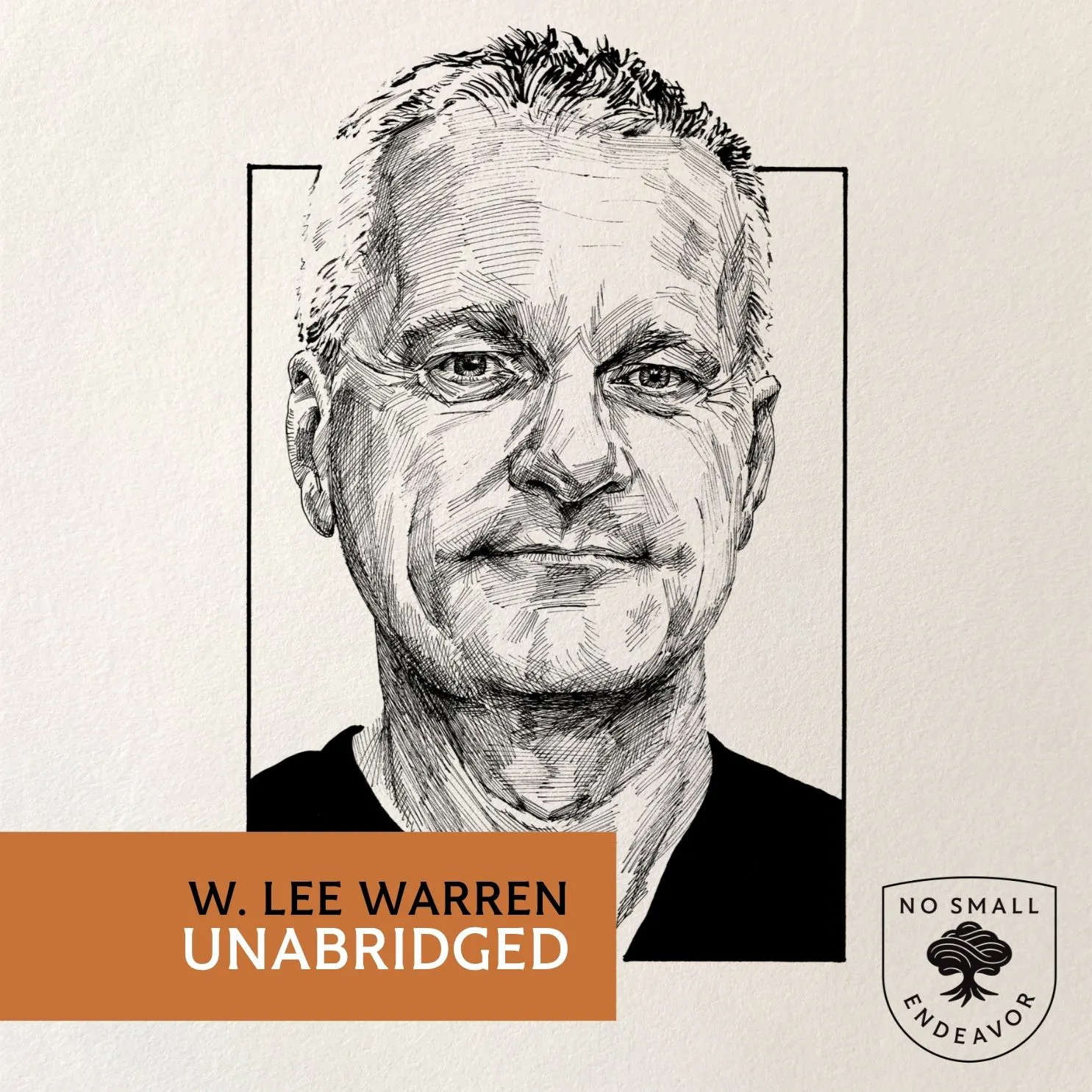
271: Unabridged Interview: Lee Warren
3w ago01:15:15Tap to summarizeThis is our unabridged interview with W. Lee Warren. Can you change your brain? The anxious tendencies, the recurring grief, the patterns of rumination? Our guest today says you can. Dr. W. Lee Warren is a neurosurgeon and Iraq War veteran who performed 200 brain surgeries in a tent hospital during the war, came home carrying PTSD he wouldn't name for years, and later lost his 19-year-old son to murder. His book, The Life-Changing Art of Self-Brain Surgery, argues that the mind can reshape the very brain it thinks through, and that no grief, trauma, or lifelong pattern gets the final word on who you become. KEY IDEAS Feelings as barometer, not navigation: Why an alarming share of what you feel isn't tracking anything that's actually happening, and the small practice that changes how you respond to it. The 90% problem: Most of what you thought about today, you also thought yesterday, and that quiet repetition is busy building the exact brain you're convinced you're stuck with. Grief that refines instead of defines: What a father learns about resilience when the worst thing that ever happened to him threatens to become his whole identity. The fear you inherited but never earned: How trauma can travel three generations down a family line, and the study suggesting it can also be undone in one. Doing the hard thing on purpose: The small, unglamorous brain circuit that willpower actually runs on, and why making the bed can matter more than it sounds. Show Notes, Resources, and Transcript for abridged episode with W. Lee Warren Thank you to our sponsors: The Wonder Project: Subscriber support makes more great content like I Gotta Ask with Annie F. Downs possible. The Wonder Project subscription on Prime Video is available in the U.S. for $8.99/month or $89.99/year after a 7-day free trial. Visit IGottaAsk.com to learn more! Join NSE+ — our subscriber-only community — for ad-free listening, member-only bonus content, and early access to live show tickets. Your membership helps make No Small Endeavor sustainable. No Small Endeavor: An award-winning podcast that asks what it means to live a good life. Through conversations with leading thinkers across theology, philosophy, psychology, politics, and the social sciences, we explore human flourishing, meaning and purpose, faith and culture, science and religion, virtue and character, religion and spirituality, community, and the practices that help shape a good life grounded in truth, beauty, and goodness. Follow @nosmallendeavor Host Lee C. Camp: Lee has worked as a professor of theology & ethics for more than 25 years, teaching and writing on topics of faith & politics, inter-religious dialog, and human flourishing at the intersection of theology, moral philosophy, and social sciences. Follow @leeccamp Learn more about your ad choices. Visit megaphone.fm/adchoices
Transcribe →
The Subtext: Hookup Culture, Power, and Love
3w ago00:44:09Tap to summarizeWhat do capitalism and hookup culture have in common? This week, Lee and Savannah unpack the viral Empire State Building skywalker stunt, exploring whether power is inherently corrupting. Lord of the Rings has finally entered the chat! They break down a fascinating view on hookup culture, exploring how capitalism, attachment, purity culture, and our understanding of freedom all shape the way we think about sex and relationships. Things we mentioned in this episode: Do you really have a shirt from your town? Then Lee will wear it! Mail it to us: P.O. Box 50652, Nashville, TN 37205 Follow Lee on Substack! Skywalkers: A Love Story on Netflix The Lord of the Rings by J.R.R. Tolkien The Republic by Plato Colton Barnaby's video on hookup culture Being Consumed by William T. Cavanaugh 40% OFF SCANDALOUS WITNESS: Use code WITNESS40. Code is good for 40% off the paperback of Scandalous Witness. Only valid when ordering on Eerdmans.com, only valid for USA shipping addresses. Code is good until end of 2026. Follow The Subtext: Instagram | Threads | X | YouTube | TikTok Follow Lee: Instagram | Twitter | Lee's Newsletter Follow Savannah: Instagram | Substack Join our Email List: nosmallendeavor.com Learn more about your ad choices. Visit megaphone.fm/adchoices
Transcribe →
271: Lee Warren: Why You’re Not Stuck With the Brain You Have
3w ago00:50:51Tap to summarizeCan you change your brain? The anxious tendencies, the recurring grief, the patterns of rumination? Our guest today says you can. Dr. W. Lee Warren is a neurosurgeon and Iraq War veteran who performed 200 brain surgeries in a tent hospital during the war, came home carrying PTSD he wouldn't name for years, and later lost his 19-year-old son to murder. His book, The Life-Changing Art of Self-Brain Surgery, argues that the mind can reshape the very brain it thinks through, and that no grief, trauma, or lifelong pattern gets the final word on who you become. KEY IDEAS Feelings as barometer, not navigation: Why an alarming share of what you feel isn't tracking anything that's actually happening, and the small practice that changes how you respond to it. The 90% problem: Most of what you thought about today, you also thought yesterday, and that quiet repetition is busy building the exact brain you're convinced you're stuck with. Grief that refines instead of defines: What a father learns about resilience when the worst thing that ever happened to him threatens to become his whole identity. The fear you inherited but never earned: How trauma can travel three generations down a family line, and the study suggesting it can also be undone in one. Doing the hard thing on purpose: The small, unglamorous brain circuit that willpower actually runs on, and why making the bed can matter more than it sounds. Show Notes, Resources, and Transcript for abridged episode with W. Lee Warren Thank you to our sponsors: The Wonder Project: Subscriber support makes more great content like I Gotta Ask with Annie F. Downs possible. The Wonder Project subscription on Prime Video is available in the U.S. for $8.99/month or $89.99/year after a 7-day free trial. Visit IGottaAsk.com to learn more! Join NSE+ — our subscriber-only community — for ad-free listening, member-only bonus content, and early access to live show tickets. Your membership helps make No Small Endeavor sustainable. No Small Endeavor: An award-winning podcast that asks what it means to live a good life. Through conversations with leading thinkers across theology, philosophy, psychology, politics, and the social sciences, we explore human flourishing, meaning and purpose, faith and culture, science and religion, virtue and character, religion and spirituality, community, and the practices that help shape a good life grounded in truth, beauty, and goodness. Follow @nosmallendeavor Host Lee C. Camp: Lee has worked as a professor of theology & ethics for more than 25 years, teaching and writing on topics of faith & politics, inter-religious dialog, and human flourishing at the intersection of theology, moral philosophy, and social sciences. Follow @leeccamp Learn more about your ad choices. Visit megaphone.fm/adchoices
Transcribe →
270: Unabridged Interview: Curtis Chang
4w ago01:04:41Tap to summarizeThis is our unabridged interview with Curtis Chang. What if our institutions, even the broken ones, are worth saving? Curtis Chang doesn't think you can understand American politics right now unless you understand one thing, and it isn't what you'd expect. It isn't policy or party. It's fear: an anxiety about future loss that “both” sides are quietly managing, with liberals afraid of having religion imposed on their lives and conservatives afraid of losing a tradition they love. Chang, the founder of Good Faith and co-author of The After Party with David French and Russell Moore, has spent his life as a bridge person, ever since he arrived from Taiwan at age three. Here, he and Lee trace that fear all the way down to our institutions, which Curtis argues are not systems to build up or tear down, but people, and therefore worth repairing. Show Notes, Resources, and Transcript for abridged episode with Curtis Chang Thank you to our sponsors: Hiya: Receive 50% off your first order on any of their products. Visit hiyahealth.com/NSE! The Wonder Project: Subscriber support makes more great content like I Gotta Ask with Annie F. Downs possible. The Wonder Project subscription on Prime Video is available in the U.S. for $8.99/month or $89.99/year after a 7-day free trial. Visit IGottaAsk.com to learn more! Join NSE+ — our subscriber-only community — for ad-free listening, member-only bonus content, and early access to live show tickets. Your membership helps make No Small Endeavor sustainable. No Small Endeavor: An award-winning podcast that asks what it means to live a good life. Through conversations with leading thinkers across theology, philosophy, psychology, politics, and the social sciences, we explore human flourishing, meaning and purpose, faith and culture, science and religion, virtue and character, religion and spirituality, community, and the practices that help shape a good life grounded in truth, beauty, and goodness. Follow @nosmallendeavor Host Lee C. Camp: Lee has worked as a professor of theology & ethics for more than 25 years, teaching and writing on topics of faith & politics, inter-religious dialog, and human flourishing at the intersection of theology, moral philosophy, and social sciences. Follow @leeccamp Learn more about your ad choices. Visit megaphone.fm/adchoices
Transcribe →