Loading summary
Transcript288 lines
- [00:08]
A
Kaleidoscope. Hey, what's up? It's Devin. Today we're actually rerunning one of my favorite episodes. Maybe the episode that birthed no Such Thing. This is an og. It was in your feeds a year ago, so most of you probably did not hear it. So here it is. Do Horses Hate Running? Remastered.
- [00:34]
B
I'm Manny. I'm Noah.
- [00:36]
A
This is Devin. And this is no Such Thing. The show where we settle our dumb arguments and yours. By actually doing the research on today's episode, we settle an argument we've been having for nearly 10 years.
- [00:48]
B
I think it's kind of insane to say that horses don't like to run.
- [00:53]
C
Most people that have a set perception about anything haven't spent very much time observing with any sort of open curiosity.
- [01:01]
A
So good times.
- [01:02]
C
Timing. The snakes aren't out yet.
- [01:05]
B
Hi, Saturn.
- [01:12]
A
There's no.
- [01:13]
B
No Such thing.
- [01:14]
C
No Such thing. No such thing.
- [01:19]
B
No such thing. No such Thing.
- [01:28]
C
When the holidays start to feel a bit repetitive, Reach for Sprite Winter Spice Cranberry and put your twist on tradition. It's a refreshing way to shake things.
- [01:37]
A
Up this sipping season, and only for a limited time.
- [01:40]
C
Sprite. Obey your thirst.
- [01:42]
B
Honestly.
- [01:43]
A
Honestly. Honestly. No one wants to think about hiv, but there are things that everyone can.
- [01:48]
B
Do to help prevent it.
- [01:49]
A
Things like prep. PREP stands for Pre Exposure Prophylaxis, and it means routinely taking prescription medicine before you're exposed to HIV to help reduce your chances of getting it. Prep can be about 99% effective when taken as prescribed. It doesn't protect against other STIs, though, so be sure to use condoms and other healthy sex practices. Ask a healthcare provider about all your prevention Options and visit findoutaboutprep.com to learn more. Sponsored by Gilead.
- [02:15]
B
And Doug. What a horrible call.
- [02:17]
C
Hey, ref.
- [02:18]
A
Open your eyes, ref.
- [02:19]
B
You're really not gonna call that? Come on. Hey, ref, why don't you customize your car insurance with Liberty Mutual and save money? I don't think you get what we're doing. Sure I do. We're all just giving him advice. You guys on sports, me on saving money. Nope, that's not it. Only pay for what you need@libertymutual.com Liberty.
- [02:40]
C
Liberty.
- [02:41]
B
Liberty.
- [02:42]
C
Liberty.
- [02:45]
A
So I grew up in a suburb in New Jersey, and like most suburbs in the Northeast, there's not much to do. So we spent a lot of time going back and forth to the mall. At one point, actually work at the mall. And to avoid a lot of the traffic on the main roads, we would take the back roads and on these back roads, there were a ton of horse farms. So we'd often be driving back and forth past horses. And I started to notice every single time we would drive past these horse farms, they were never running. I don't see. You know, and to that point especially, I had not seen a lot of horses in my life. You know, not up close, but we see all these pictures, all this what I'll call propaganda as children, of horses running, being majestic. And I was like, how come every time when there are no people around on this farm, the horses are just standing still, mostly eating, not really moving around much at all? Not even a trot?
- [03:51]
B
No gallops?
- [03:52]
A
No, barely a gallop. They're just standing there, right? And I'm like, if I were to put a group, you know, and this is when they're together, you know, the family's together. Is it rare? Rare. I would see one horse alone there, usually two or three of them. And what do you call it? A pen? I don't know what you call those things.
- [04:11]
B
Like, yeah, I don't know. A fenced area.
- [04:15]
A
A fenced in area. This is how much I know about horses. Right. And I was like, if I had that same area and I put three dogs at some point from all these trips, I would see those dogs running. And to this day, I have never seen horses run in person without humans telling them to do it or forcing them to do it.
- [04:45]
B
So. So.
- [04:46]
A
Or prodding them to do it.
- [04:47]
B
Okay.
- [04:48]
A
So then I started to think, do horses even like running? Like, I don't think horses like to run because if they like to run, they would be running when humans weren't around. I guess I never really said this out loud until we started working together, because it's always been something that's percolating in my mind.
- [05:05]
B
Yeah.
- [05:06]
A
And, you know, we'd get into our dumb arguments and have our dumb conversations. And I brought it up to both of you one day and I was like, actually, I don't think horses like to run.
- [05:16]
B
And so now all of our listeners are in the exact same position that Noah and I were in right after you saw.
- [05:22]
A
But think about.
- [05:22]
B
Silence.
- [05:23]
A
But think about it. Think about it. When have you seen horses run right in person? We're gonna get. Later, we will get to the videos, the documentaries.
- [05:35]
B
So called documentaries. The movies.
- [05:37]
A
Yeah, so called. I got lots to say about that. But just when in your life have you just seen a horse just going for it, like sprinting, just like I'm running. Oh, I like this.
- [05:52]
B
I can't Say I have. I've also, you know, like you, I haven't really been around the horses. Yeah. I guess it's tough for me to recall because I haven't seen any horses really.
- [06:02]
A
So neither one of you have seen horses on a farm, running on their own?
- [06:09]
B
No. No.
- [06:09]
A
Okay. I think we could maybe end the podcast here.
- [06:13]
B
Yeah.
- [06:14]
A
End.
- [06:14]
B
Cut.
- [06:15]
A
So I guess maybe I should just say what like, to restate my opinion is I don't think horses like to run. I think horses are good at running. I think they're majestic creatures. They're very strong, they're very powerful. They look beautiful running. But I don't think, like, in terms of, like, if horses got to decide whether or not they would like to run, I don't think most horses, they would never run. Like, running.
- [06:41]
B
They would never run.
- [06:42]
A
This is just based on what I've seen and everyone that I've talked to. I haven't talked to anyone who's said they've seen horses run for fun. That being said, I don't know very many horse people. I don't spend a lot of time with a lot of horse people. But as a casual observer. Look, that's why I bring up the dog example. Right. Because even if something. Manny doesn't really fuck with dogs.
- [07:05]
B
Yeah.
- [07:06]
A
Manny has seen a dog run.
- [07:07]
B
Seen them run all the time. The dog example is pretty powerful. I don't remember this one.
- [07:12]
A
Yeah. And it's like, usually dogs running, no human interaction. You go to a dog park, all the humans. None of the humans are moving. The dogs are going off.
- [07:23]
B
Yeah. I mean, the dogs, they have, you know, really fast bursts of energy. I wonder if horses on their own might do that, you know, and we're just kind of seeing it.
- [07:30]
A
Like, I have not seen it, not once, but, like. So. But I guess I think, yeah. Where do we all stand on this?
- [07:37]
B
I think it's kind of insane to say that horses don't like to run. I think.
- [07:44]
A
Okay, so my initial. My initial. My initial prompt was horses hate running, which is, I. That's a little strong, I admit. A little strong. But sometimes you got to get people's attention, you know?
- [07:55]
B
Yeah. I think my initial kind of reaction to this is I would imagine that, like humans, some horses might like running, some might not. I don't like running. I'll do it for exercise. But there are some people who do enjoy running. So I'm. I. I think my initial reaction would just to be that it's probably similar to. And. And even so, that's still a Very small portion of what you do if you're a runner.
- [08:25]
A
Yeah, that's true.
- [08:26]
B
So it's like I spend a lot of time running thinking like, you know, you watch like a nature documentary and.
- [08:32]
A
We'Ll talk about documentaries more, especially nature documentaries.
- [08:36]
B
But I'm kind of saying that. But my point is that you only see kind of the extreme bits in those where you're not seeing most. Most of life, and this goes for humans as well as animals, is pretty much doing nothing. And then there's damn moments of extreme activity happening.
- [08:52]
A
Most of life is doing.
- [08:54]
B
What I mean is like you watch physically documentary and it's like, okay, you see the. The predator attacking. Yeah. Most of the time these animals are just sitting around drinking water. Yeah. So I kind of view that similarly to the. The running, where it's like, yeah, we'll run for five minutes, you know, kind of get our little moves on and then, yeah, we're just going to chill out, eat. We like, why would we? Especially on a farm in the back roads. Yeah, yeah, there's not much going on, so, yeah, we're just going to chill. Yeah. I think what's interesting, we trotted around early in the morning, you know, before the cars are coming by. I think what's interesting about this question is that it is true that growing up, we are kind of led to believe that, like, horses are running all the time.
- [09:36]
A
All the time. Ride like the wind. Bullseye who? Horses like to run.
- [09:51]
B
Horses like to run. Horses like to run.
- [09:56]
A
Have you ever seen a video image of a horse not running?
- [10:00]
B
Yeah, like right now I'm gonna type a horse into. Yeah, it's the default post into Google.
- [10:06]
A
And what are the images we have immediately?
- [10:08]
B
The first horse is a horse galloping.
- [10:12]
A
Right. And it's kind of interesting because it's with other animals. But I'd say outside of like a cheetah.
- [10:19]
B
Yeah, I was gonna say cheetahs.
- [10:20]
A
You know, cheetah. Cause we love to talk about how fast they are. So, yeah, those are images we're gonna see any other animal.
- [10:25]
B
It's just like we love to talk about it.
- [10:27]
A
Love. Do we not. Do we love to talk about how fast. Cheaters.
- [10:31]
B
When I was in middle school, I was talking a lot about how fast cheetahs were insane.
- [10:35]
A
But we are fed this. Horses run, run, run, run. And I think part of it. Part of it I think is innocent in that horses are very good at running. They're, you know, some would say built to run. But I think part of it too is that from Humans very first interactions with horses, we like to make them do shit. Whether that's pulling things, Racing, racing. And in order for us to feel better about making them do that stuff.
- [11:08]
B
Even just transit, like.
- [11:10]
A
Yep. Getting from one place to the next. Right. That's a lot harder to do if in your mind you're thinking maybe this animal actually doesn't like doing this.
- [11:29]
B
So you asked this question earlier. Have we ever seen a horse running and in person? We haven't, but there's, you know, countless footage of this footage. So yeah, I want to.
- [11:41]
A
Let's talk about the footage.
- [11:42]
B
So what do you think is happening with the horses that are running in the footage?
- [11:45]
A
Okay, what. What type of footage we talking about here?
- [11:47]
B
Because they'll just be in a field galloping with their homies, usually where.
- [11:52]
A
Let's think about this. Right? Beautiful, majestic. The sun. Sun setting. What is usually the angle we see of these horses? Is it. Is it down below?
- [12:01]
B
Kind of a bird's eye view?
- [12:02]
A
A bird's eye point of view. Wow. Okay, so what we got a bird's eye view of the horses. Right. So usually when we get bird's eye views of things, especially horses out in the wild wearing something I like to call a helicopter.
- [12:20]
B
Right, you like to call them that? You like to call them that? Okay, yeah. Okay, I like to call them that.
- [12:28]
A
Let me ask you this. Are helicopters quiet?
- [12:33]
B
No.
- [12:33]
A
Are those quiet machines? Can a helicopter just pull up here real quick and no one noticed that a helicopter's outside? No, they're really loud.
- [12:41]
B
So you're saying the horses are running because they're.
- [12:43]
A
Horses are easily spooked. That's like the. Everyone knows that.
- [12:47]
B
That's probably the second fact we know about horses.
- [12:49]
A
Are you ever see horses at the. Okay, I have been to like a horse show before. Once again, none of the horses doing anything besides when the people are making them do stuff. They're trained. Yeah.
- [13:03]
B
They're broken.
- [13:04]
A
But you know, to some horses, they have the blinders on because they can't see something to the side or they'll lose their damn mind. Okay, so. And you gotta think about horses in the wild. Survival. If something is coming, if a threat, a predator is coming, that's when you gotta run, go. Right.
- [13:26]
B
Horses mean that every time they're running, it's only because of.
- [13:32]
A
You're asking me the question was about footage. Nature footage, nature documentaries. Right. So what I'm saying is that in these documentaries, most of the what you're seeing is from a bird's eye point of view. A Helicopter, very noisy. And the horses are running because they're running away from the damn helicopter.
- [13:49]
B
What if you're at some other perch, like on a. A mountaintop?
- [13:53]
A
Oh, okay. Look, I'll also concede that horses run to get from one place to another.
- [13:57]
B
Yeah, they must.
- [13:58]
A
Yeah. It's like, hey, we gotta go over there and get some water.
- [14:01]
B
Let's run.
- [14:02]
A
Let's run. That don't mean they enjoy doing it.
- [14:05]
B
You know, but why wouldn't they walk to the water?
- [14:07]
A
Because it takes longer. And let's just put this out there in terms of. I don't know if either one of you have actually consumed anything in regards to nature documentaries, but they're all full of shit.
- [14:21]
B
Yeah, that I do. That's kind of my point.
- [14:23]
A
Before all of nature documentaries, not even just in regards to horses, in regards to all animals, they fake a lot of stuff in nature documentaries. The sound is all made up. I was listening to a story the other day, a podcast story. I didn't read it in the book, but thank you. What are those things called? Lemons.
- [14:43]
B
Lemons. Lemmings.
- [14:44]
A
Lemmings?
- [14:44]
B
Yeah, you know that jump over cliffs?
- [14:47]
A
Yeah, they don't actually do that. That's made up.
- [14:50]
B
So what? What?
- [14:51]
A
So, like, there's this famous documentary of, like, a bunch of lemmings. Like, what? The idea is that one runs and jumps off a cliff and they're all so stupid. They're just like, oh, you did it. I'm gonna do it. So that. That's become, like, a saying. Now, one of these is a mousy little rodent called the lemming. Here's an actual living legend, for it's said of this tiny animal that it commits mass suicide by rushing into the sea in droves. Most people think it was popularized by this Disney documentary from the 50s. And this Canadian journalist, like, looked into it and he found that they literally, like, faked the whole thing.
- [15:28]
B
Really.
- [15:29]
A
These lemmings were, like, brought in from a part of Canada where they're not even native to. And the filmmakers were, like, literally pushing them off the cliff. They reached the final precipice. This is the last chance to turn back. Yet over they go, casting themselves bodily out into space. It's all made up.
- [15:58]
C
Okay.
- [15:58]
B
Physically pushing them off the cliff or, like, scaring them to jump.
- [16:02]
A
I don't know. You know, they're forcing them off the cliff. Forcing them off the cliff. Insane. You know, this thing come from nowhere. Lemmings do dissipate from an area, right? Like, they go to an area they Eat up all the food. And then they're like, all right, we gotta get outta here. We gotta leave. So the thinking is that, like, people saw this happening, and sometimes they do all get all lined up on a cliff when they're doing this, but they're not, like, committing suicide.
- [16:26]
B
They're not trying to fall off the cliff. They're just trying to move on somewhere.
- [16:29]
A
They're trying to just leave the area. They're not like, it's time to die. I'm gonna see if I can find one.
- [16:33]
B
We'll put that in the show notes. Yeah. Knowing how was set up and kind of fake those documentaries are. It wouldn't surprise me if in this footage of horses running in the wild, that they did something to make run first before they hit record. I don't know if it's a helicopter scaring them, but it wouldn't surprise me if they did something. I also think something. We're kind of ascribing human conceptions of liking. And I don't know how to really talk about animals and the pleasure they perceive. Like. Yeah. Do any animals do anything purely because they. For fun, like, it. Even. Even. We talk about the dogs running outside.
- [17:17]
A
I think my. I think Ollie.
- [17:19]
B
They play.
- [17:19]
A
I think he loves running, but, I mean, is it.
- [17:21]
B
Or is it just like their body saying, like, you need to exercise and you're. You have all this energy to use?
- [17:27]
A
I think.
- [17:27]
B
Is there a difference?
- [17:28]
A
Yeah, but I think he enjoys the act of running. The only thing I would concede is, to Manny's point, I think horses are more similar to humans than we give them credit for. I think they have different personalities. Some of those motherfuckers might like to run. And I think, you know, we talk about the horses. We haven't even brought up the racetrack stuff because I know that's. We all can agree that's bad.
- [17:53]
B
Well, we know they're good at running.
- [17:54]
A
They're good at running.
- [17:55]
B
They're being controlled and.
- [17:56]
A
And they're bred to run anything. Like, they're being. Their whole life is being reinforced to run. So I think that is a different type of horse than a horse in the wild. Because it's like, yeah, literally your existence is dependent on running. Like racehorses. Yeah. I don't think you really have a choice on whether or not you like it. You just do it. I think horses in the wild are. There's probably some lazy horses. There's probably some horses who love to run and wanna run. And I think if we had to, like, give horses a survey I think more horses would not like running versus horses that enjoy running.
- [18:34]
B
That's interesting. So why? Why do you say that?
- [18:37]
A
Because I've never seen a horse run.
- [18:39]
B
All right, so how would we try to get an answer for this, then?
- [18:44]
A
That's a good question. I think there's a lot of people who are invested in this. The truth not getting out.
- [18:50]
B
This goes back to the documentaries. Yeah. I guess a good question is, why do you think it's been important for humankind to beat into us that horses enjoy running?
- [19:03]
A
To my earlier point, everything we do with horses involves them moving.
- [19:08]
B
This is the first domino.
- [19:10]
C
Yeah.
- [19:11]
A
If the truth comes out that these horses are not really down for that and you are forcing them to do that, I think people have to feel very differently about the way that we interact with horses day to day. So I think it's a lot easier to just say, hey, they're good at this. They like it. They like when my daughter Susie is riding it every Tuesday for two hours and jumping over stuff. Cause that's what they would do in the wild. They just like doing that. So, like, we're giving her the opportunity to do that. And I'm like, I don't think horses. I think if you let that horse be left alone, then have little Susie riding will not be running and jumping. It will be standing there eating some food. Run when it needs to. But otherwise, leave me alone, Susie. I don't want to just be out here running.
- [19:55]
B
So we tell ourselves horses enjoy running to rationalize what we do to them.
- [20:00]
A
Yes.
- [20:00]
B
Is that what you're saying?
- [20:01]
A
Absolutely.
- [20:03]
B
Wow.
- [20:04]
A
Absolutely.
- [20:05]
B
How can we go about trying to get to the bottom of this?
- [20:08]
A
We gotta find some people who are not in the horse industrial complex.
- [20:14]
C
Oh, my God.
- [20:16]
A
After the break, we talk to someone who left the horse industrial complex and take a journey that made us re evaluate our entire relationship to animals.
- [20:25]
C
Hello.
- [20:26]
B
Hi.
- [20:26]
A
So we got a horse walking up to us.
- [20:30]
C
Okay. Only 10 more presents to wrap. You're almost at the finish line.
- [20:35]
A
But first.
- [20:48]
B
There, the last one.
- [20:52]
C
Enjoy a Coca Cola for a pause that refreshes.
- [20:59]
B
In sports and in life, timing is everything. You can have the right talent, the right mindset, even the right team. But if you don't act at the right moment, the opportunity slips away. That's true on the field, and it's true when it comes to your health. If you or someone you care about is facing metastatic prostate cancer, there's a treatment called Plavicto, Lutetium, Lu177, Vapivotide, Tetraxitan it's not chemotherapy. It works differently by targeting PSMA positive cells, including prostate cancer cells. Pluvicto is a prescription treatment used to treat adults with prostate specific membrane antigen positive metastatic castration resistant prostate cancer or psma positive MCRPC who have already been treated with hormone therapy and are considered appropriate to delay chemotherapy. Pluvicto involves contact with radioactivity, which may increase the risk for cancer and cause fetal harm. Patients are advised to drink plenty of fluids, urinate often, use contraception and talk to their doctor about how to reduce the risk of exposing others to radiation during and after treatment. It can also cause low levels of blood cell counts, kidney problems and infertility. If you experience weakness, pale skin, shortness of breath, bleeding or bruising more easily an infection or changes in urination, talk to your doctor. Side effects include decreased blood cell counts, tiredness, dry mouth, nausea, appetite loss, joint or back pain and constipation. Here's the bottom line. This isn't just about treatment. It's about making the most of the time. You have time to be with the people who matter. Time to keep showing up for the moments that count. So if you or someone you love is in this fight, ask your doctor about Pluvicto. Because in sports and in life, the best players don't just react. They anticipate. They prepare. They act. Visit pluvicto.com to learn more. That's P L U V I c t o.com the world's best ski and.
- [22:55]
A
Snowboard athletes are chasing medals.
- [22:57]
B
Now you can follow their every move.
- [22:59]
A
Join Insider, the official US Ski and Snowboard fan loyalty program, and get premium viewing at World cup ski events, exclusive athlete meetups, discounts from brands you love, and a custom welcome gift mailed direct to your doorstep. This winter, show your support as they race for the podium. Head to insider.usski and snowboard.org and join today. So we got some interesting responses to last week's episode about does religion make you happier? So we heard from Cody from Connecticut who actually has a correction to issue to Manny. Manny said that his confirmation saint was Saint Andrew because he's the Saint of Lost Things. But in reality the Saint of lost things is St. Anthony. So be on the lookout for Manny's notes apology for getting that one incorrect. And then we heard from Ben in Omaha who had a possible alternative to religion. A lot of people in Europe have mentioned that European soccer has replaced religion for them. Well, at least Christianity for them, like football has become religion for them.
- [24:13]
B
And I mean it Makes sense for English soccer fans. They sing for two hours. They congregate for two hours every week together.
- [24:20]
C
Some people have season tickets that are.
- [24:22]
A
Generational, so they've known the people who sit next to them at the seats. So, yeah, if you wanted to look at something that was non giving thanks to some foreign human that may or.
- [24:35]
B
May not exist, it seems like football.
- [24:38]
A
Soccer is one of those venues. All right, fellas, we're back in the studio. So we've had this question for a while, and I think sort of the tough thing with this question is finding the right person to talk to. Because as we discussed in part one and in the 800 previous conversations we've had about this topic, there's a lot of biases involved.
- [25:12]
B
It's a very touchy issue.
- [25:14]
A
On this issue. I don't, you know, I don't really trust anybody on it, but I think.
- [25:21]
B
Can't even trust your own eyes.
- [25:22]
A
Can't trust. Well, I can't trust my own eyes, which is why we're here. Sure. But I think I found the perfect person for this. Okay. Because she's someone who has experience on both sides of the fence. Let's say.
- [25:45]
C
My name is Ren Hurst. I've got a 20 year background as a professional horsewoman. Relatively successful as both a. A horse trainer and a farrier.
- [25:54]
A
I had to look up what the hell that is. F E R F A R R I E R. This shows how little we know about horses. This is someone who, like, trims horse hooves.
- [26:04]
B
Oh, okay.
- [26:06]
A
Like professionally. So, you know, she's a trainer. She rode horses. She spent 20 years with horses. Let's just say she's built for this.
- [26:13]
B
And what does she do now?
- [26:15]
A
She actually left the industry entirely. Wow. Okay.
- [26:20]
B
Why did she leave?
- [26:21]
A
Well, we're gonna get to that. So she grew up in Texas, where I present. Yeah. Manny was born in Dallas.
- [26:28]
B
Yeah. I didn't actually grow up there. That doesn't count.
- [26:29]
A
But she joked that where she grew up, there were actually more horses than people in her hometown.
- [26:35]
C
I grew up in rodeo country, usa, going to rodeos as a kid, being around horses. Like most girls, I looked at horses as a symbol of freedom and power and beauty and was, you know, obviously drawn to that for all the reasons that most people are.
- [26:51]
A
Siddhen Wren went on to have a pretty successful career as a professional horsewoman. She said her transformation to where she is now didn't happen overnight, but there was, like, one really big catalyst that put her on the path that she's on today.
- [27:02]
C
I ended up in this very esoteric school of horsemanship out of Russia called Nevtsarov Otakol.
- [27:07]
A
Thanks to the school's method, such relations between horse and man now turn out to without the use of any special painful device in its mouth, without punishment, without any means of control.
- [27:22]
C
And I had no intention of coming to the conclusions that I did. But I thought, here's a man, the guy that's leading the school at the time, that can do things that I've never seen done before. And I was really advanced in my own horsemanship skills. So that was saying something.
- [27:37]
A
And Wren was shocked because she said, unlike what she was doing day to day, what this guy was doing didn't involve any actual training, what whatsoever.
- [27:47]
C
And for one, you have to understand there's all sorts of different ways to modify an animal's behavior or a human's behavior in from a. From the perspective of having a unequal power dynamic where somebody has control of the situation and can manipulate, coerce force. So I'm speaking to absolutely in any forms of training, it doesn't matter how positive you perceive the training to be. And I switched that with listening, feeling, intuiting, and leading from an embodied place that made the animal feel very safe to be with me, because I was not being dishonest on any level.
- [28:25]
A
So then Wren actually took those tools and tried to put them into practice.
- [28:29]
C
And I started working with this very untamed stallion that was potentially really dangerous. And after having a long, successful career as a trainer, what I was applying with this horse was completely dismantling everything I had ever thought to be true. And it completely shattered my reality, both as a horse trainer, but also just as a human being on this planet, looking at what the fuck are we doing dominating nature in this way and separating ourselves from each other and from the natural order of things.
- [29:04]
A
So the school completely shattered Wren's worldview and her philosophy of, like, how humans should be interacting with animals.
- [29:10]
C
Everything we think we know about horses is viewed through the lens of our own domestication, rather through the lens of actually understanding what it means to be horse, much less animal.
- [29:20]
A
So Wren does still have horses now, but she's not like, out there riding them or like forcing them to run around.
- [29:27]
C
I have undomesticated my herd, which basically means I have returned them to their own emotional sovereignty, which means that I have allowed them to be guided by their own intrinsic forces rather than my perceived ideas of what is good and not good for them. And that has rewritten my truth around what horses need, who horses are and what is actually good for them. And when you spend a lot of time with wild or undomesticated animals, you get to have an entirely different experience of what it means to be fully embodied animal. Our entire society is set up to keep you from doing that. Because domestication is the intentional interruption of emotional development so that someone can control your behavior. And that is the essence of capitalism and society as it currently exists. They still are selling you the feel goods instead of the feel it alls.
- [30:26]
B
She took the red pill.
- [30:28]
A
Oh, wow. Wow. The feel goods versus just feel it.
- [30:31]
B
Ren is operating on a different level. Yeah, she's on a different plane.
- [30:34]
A
Let me.
- [30:34]
B
Let me get this straight. So basically, Ren is making an argument as to why we shouldn't domesticate horses. And basically the specific argument is that domestication is a form of, like, trauma. And so, like, if you domesticate an animal, their development is constantly being interrupted. Yes, because we're interfering in their lives. That they were not built. They weren't built for us to do that.
- [30:58]
A
And I think her takeaway is, like, we should just be focused on ourselves and not, like, trying to domesticate others. And that's including animals. But before we go too deep down that rabbit hole, I wanted to ask her, you know, how the horses are behaving now that she's changed the way that she's interacting with them.
- [31:15]
C
So I have a herd of 20 that I still care for. And this most significant difference is the herd is just very, very peaceful. More, I mean, just all the time. Like, they listen, they're very cooperative. They don't act like horses that have anything to worry about. Everything is easy to do. If I need to trim somebody's hooves, if I need to do vet care, if I need to manage them, if I need to move them from place to place, we don't use any training. There's no manipulation. And yet there is a cohesiveness and a harmony and a cooperative state of being here. Just because they know that they are cared for and safe and don't have to, you know, they know they're always going to be heard now that that's.
- [31:58]
B
How she behaves towards horses. Like, that's her new kind of line of thinking. Did you ask her, like, if horses are running on their own more willingly or doing it less often because of that new dynamic? So basically, without the human interaction, what are they doing?
- [32:19]
C
These guys run when they play. They definitely have bouts of that where I'll wake up and see the whole herd running around and rearing up and bucking and they're just, you know, feeling good in themselves. And it's intrinsically motivated. And you can tell they're being joyful because they're playing. There's also times where they get scared of something and then they run because it's instinctual. They never run because anybody's telling them to, because there's nobody to do that. I don't think anyone can say horses love to run about any horse all the time. Like, just like, I can't say you love whatever you're drinking right now all the time. Like, there are moments I love to run because it feels good to do so, but those moments are not consistent. They're not every day. And it has nothing to do with who I am. And if anybody perceived that about me, I'd be like, you don't know shit about me. Like, why would you even say that? And that's. We typically project. I mean, that's what domestication is. It's like a constant projection of trauma from the human world.
- [33:19]
B
That is insightful to me because it's. It's basically, the answer is horses do like running when they want to run.
- [33:26]
A
Yeah.
- [33:27]
B
Which is. I know that's not super novel, but, like, it does help me to understand what we're talking about. Yeah. It's helpful because when most of the time horses are running, they don't want to. It's like a race.
- [33:37]
A
Or.
- [33:37]
B
When we're seeing them.
- [33:38]
A
Yeah.
- [33:38]
B
Our work or labor. Yeah. Even our question, in her view, is probably a form of domesticating the. Well. Yeah.
- [33:47]
A
Well.
- [33:47]
B
Yeah. Cause it's the idea that we're perpetuating the world where horses can only like.
- [33:53]
A
Or do. Yeah. It's like the whole point of this question was to be like, everyone thinks horses love to run. I don't think they do. And it's like. So then now we've gone to the other extreme of saying, like, no, horses don't like running at all at any time, rather than, like, I don't know. It's kind of complex. Sometimes I like to run something.
- [34:12]
B
They're individual creatures for. There's different moods and different things.
- [34:17]
A
And even horses that like to run may not want to run on one day versus another day.
- [34:22]
B
Yeah. I mean, yeah.
- [34:23]
C
It's.
- [34:24]
B
It's the most logical explanation. Yeah. It makes the most sense. Yeah. It seems like another kind of framing we had was if horses were left to their own devices, would they be running more or less? It sounds like the answer is less.
- [34:41]
A
Yeah, I think that's true. And even talking to people Who I would say, like, really disagree with run. They had a similar sentiment that, like, no, horses aren't just going to be out there sprinting just because, like, they aren't like, cross country runners. That's not the case.
- [34:56]
B
Yeah, I agree with that. It sounds like even the horses that may like running probably aren't doing it for, you know, vast lengths of time or across great distances. Even if you humans had no impact on their lives, which is contrary to kind of what we grew up believing.
- [35:21]
C
I really think that the more healed we become in our own animal body, the less domestication is even interesting. And there's a reason that wild animals out there aren't domesticating each other because they don't need to, and there's no value in that. So when you talk to these other people and ask them that question, it's like, well, what happens when you remove all of your influence from the horse? Are they still running? The answer is, no, they're not. Because their horses are so freaking traumatized that that's why they stand around in pastures all day and do nothing. And that's not black and white either, because the better a horse is loved and cared for, the better they feel in their body. And the better you feel in the body, the more you want to move it. But that doesn't mean they're out there running around for the sake of running around, because no healthy animal is unaware of the importance of the conservation of energy, especially a prey animal. You're not going to have horses running around expending energy for no reason when they might need to run away from a threat when it comes. But, I mean, most people that have a set perception about anything haven't spent very much time observing with any sort of open curiosity at all about the thing that they're perceiving.
- [36:40]
B
Oh, we might not need them, but.
- [36:43]
A
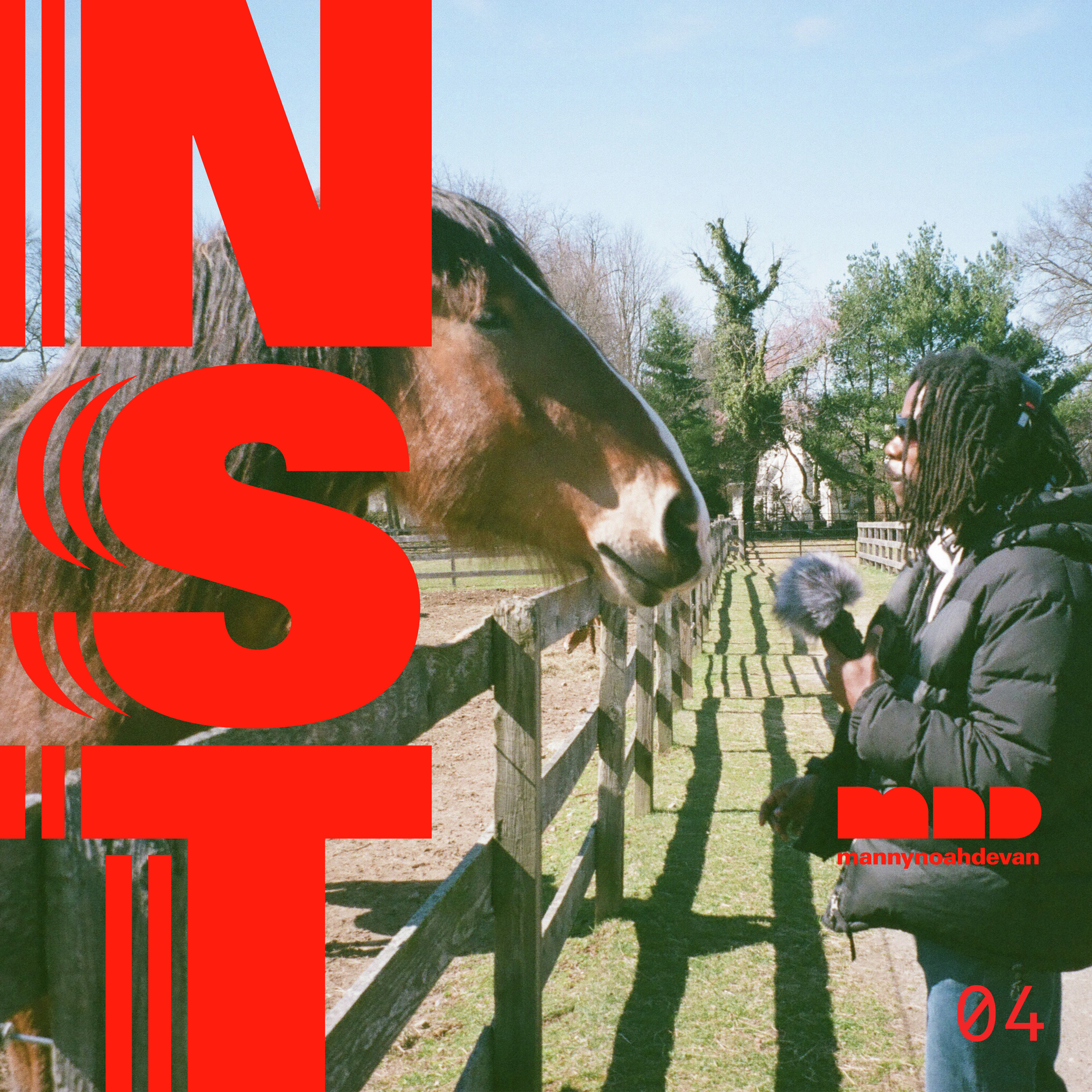
I brought some gloves. Yeah, I have gloves, too. And to Wren's point, it felt weird for three guys to do a whole podcast about horses without us actually spending any time with horses. So we went back to those New Jersey back roads and visited one of those horse farms where this whole thing started. Your destination will be on the left.
- [37:06]
B
All right, we. We're pulling up on the ranch here, and I. And we see some horses outside, and I will say, not a single one of them are running right now. In fact, not only are they not running, they are standing completely still. I can't believe we've seen.
- [37:24]
A
Okay, one of them is walking. Okay, we got some movers.
- [37:27]
B
Let's go inside and See what's up. Oh, outside or go outside? That's right.
- [37:32]
A
We took a tour of Bergen County Horse Rescue with Aaron, who's the founder.
- [37:37]
B
So give me a little background on the pod.
- [37:41]
A
So we're doing a podcast about whether or not horses love running.
- [37:45]
C
Okay.
- [37:46]
A
And Jen, who's the equine manager.
- [37:49]
C
So good timing. The snakes aren't out yet.
- [37:53]
B
Hi, Saturn.
- [37:56]
C
So now Olive is going to come over and say hi to us.
- [37:58]
A
Hey, Olive.
- [37:59]
C
And as soon as. As soon as Saturn comes over here, Saturn is going to chase her away because Saturn's top force and Luna and Olive is on the bottom. So now watch.
- [38:09]
B
Saturn's ears are going to come back.
- [38:12]
C
And she's going to chase her away.
- [38:14]
A
Yeah.
- [38:14]
C
And she's out and Saturn's going to come and say hi.
- [38:17]
B
So, yeah, they really. They have all different personalities. People will ask me if horses know their names, and I do B, I believe that they all know their names, but 90% of them are just going.
- [38:35]
A
To ignore you anyway. So more cat. More like cats. Yeah, yeah, exactly.
- [38:39]
B
It's like. Okay. All right. Murphy, though. You call Murphy and he comes right on. And I swear he loves it. And we had him for probably two.
- [38:48]
A
Weeks and he already learned his name.
- [38:51]
B
Wow. Which is pretty wild.
- [38:53]
C
This is Murphy.
- [38:54]
A
Hello, Murphy.
- [38:55]
C
This is drop kick Murphy.
- [39:01]
A
Okay, so I'm running in the corner now. It's more of a trot. Okay. All right, all right. Okay. I won't call that a run.
- [39:15]
B
Definitely moving a little bit. But this is essentially like the equivalent of me, like trying to beat the crosswalk time.
- [39:21]
A
Yeah.
- [39:22]
B
A light little dog. And then I'm done after 10 seconds.
- [39:25]
A
Yeah.
- [39:26]
B
It's the weather. This is more of a lazy day for them.
- [39:30]
A
The sun is strong, so you probably in a little while, a lot of.
- [39:35]
B
Them will be laying, laying down and sleeping.
- [39:38]
A
Now you said, you know, you gotta exercise them. So left to their own devices, I guess they're not.
- [39:45]
B
They're just kidding. Media that you see about horses is always about how much they are running all the time. And like, right. There's movies or, you know.
- [39:54]
C
Seriously.
- [39:55]
B
Yeah, I watch even some of the stuff. And, you know, they're on these rides throughout these United States in there. And I'm like, like, the horses need to rest.
- [40:06]
A
Why aren't they?
- [40:07]
B
And meanwhile, it's like a movie. I'm like, they better water those horses soon. Probably one of the most animals that.
- [40:15]
C
There'S a lot of misconceptions about.
- [40:18]
B
You know, people just don't know enough about them. And the stuff that's out there for the general public is really misinformed. Oh, he's gonna try to eat your bike.
- [40:53]
A
Sam. No Such Thing is produced by Manny Fadal, Noah Freedman and me, Devin Joseph. Theme song by Manny this is I've always been the first to say I love you by Certain self. Our guests this week were Aaron and Jen from the Bergen County Horse Rescue and Ren Hurst, who has a book out titled the Wisdom of Wildness. Thanks to our friends for their notes. Julia Lindsay, Mietta Graff, Catherine Isaac, Sarah Floyd and Shruti Imran. PJ from Search Engine Visit no such thing that show to see photos of us with Murphy at the Bergen County Horse Rescue and some of our wild horses hate running merch that we made back in 2019.
- [42:12]
B
Easy to love, Easy to love Easy to love.
- [42:19]
A
I've always been the first to say you lost me. But I want to know what it feels like for you to want me still for someone I care about, someone.
- [42:33]
C
Who makes me sick to work for them.
- [42:39]
A
The holidays are already in full swing. The lights are up.
- [42:42]
B
You got good people, good food and good vibes.
- [42:45]
A
And there to help keep that energy going is Sprite Winter Spice Cranberry with.
- [42:50]
B
That crisp cranberry flavor with a smooth winter spice twist.
- [42:54]
A
It's the drink that livens up game nights, gift exchanges, or just catching up in the kitchen with a burst of holiday flavor. It's a seasonal favorite, but it's only here for a limited time, so grab it while you can. Sprite Winter Spice Cranberry Sprite Obey your thirst. Yes, it's me again. And we prepped. Prep oh wow.
- [43:21]
B
Oh wow.
- [43:22]
A
Oh wow.
- [43:26]
B
It's the time for empowerment. And I've got a message for you.
- [43:36]
A
You gotta think about sexual health no.
- [43:39]
B
Matter what, when, or with who. Yeah. Yeah. To all you lovers out there, ain't no judgment. This is a cue. It's time to talk about pre special prophylaxis, a part of HIV prevention. Talk to a healthcare provider and visit carefortheculture.com to learn more.
- [44:11]
A
The world's best ski and snowboard athletes are chasing medals.
- [44:15]
B
Now you can follow their every move.
- [44:17]
A
Join Insider, the official US Ski and Snowboard fan loyalty program, and get premium viewing at World cup ski events, exclusive athlete meetups, discounts from brands you love, and a custom welcome gift mailed direct to your doorstep. This winter. Show your support as they race for the podium. Head to Insider, usski and snowboard.org and join today.
- [44:40]
B
Bring incredible sound into every corner of your home this holiday with the new Wimsound smart speaker. Get high resolution audio with a 1.8 inch touchscreen, smart control and modern design in one powerful speaker for just 2 99. From Quiet Mornings to lively holiday gatherings, Windsound makes every moment sound better and feel better too. Get the gift of the season for the music enthusiast in your life or for yourself. Whim Sound Beautifully designed, effortlessly connected. Shop now at Amazon and search Whim Sound that's W I I m s o u n d.