← NO SUCH THING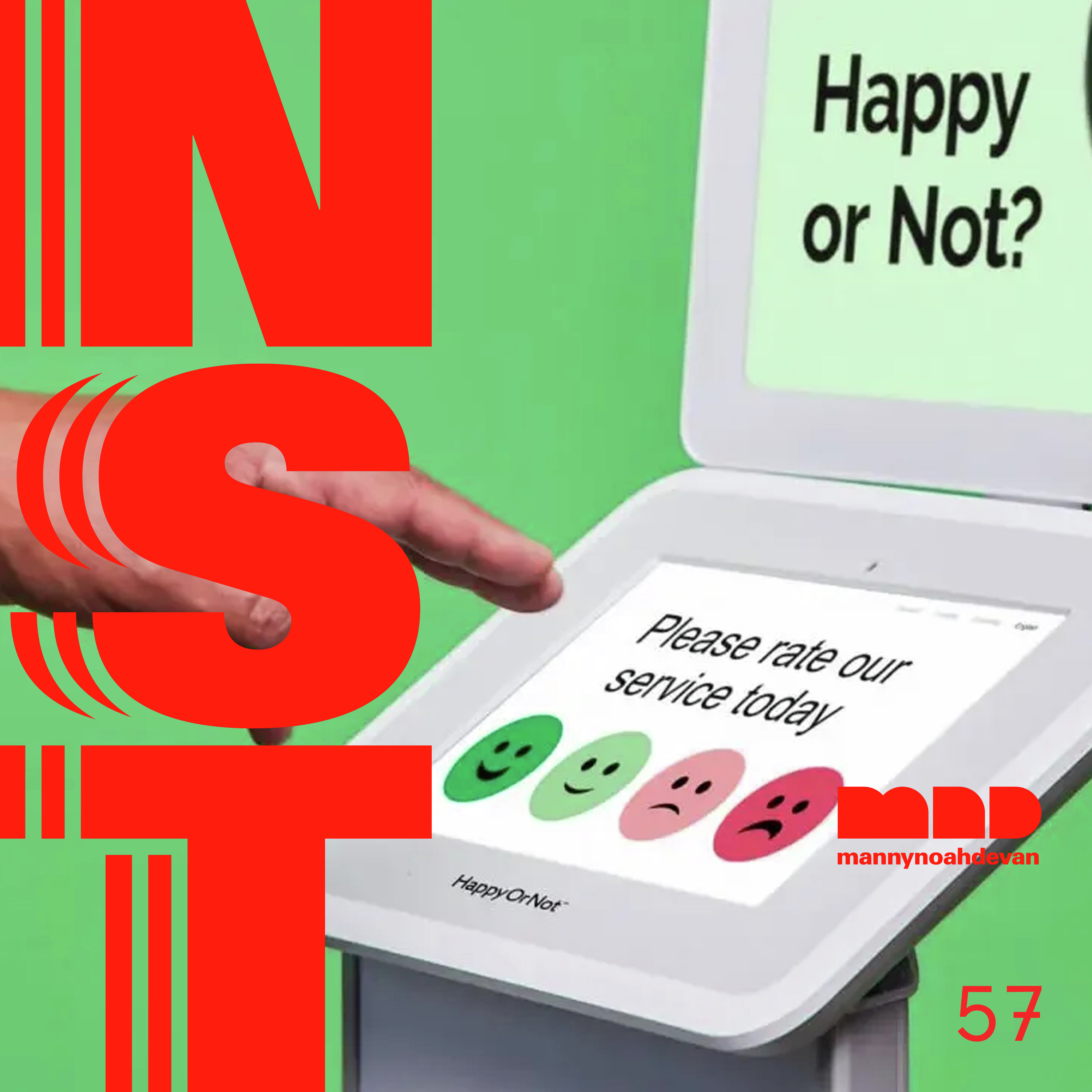
NO SUCH THING
TINY CAMERAS!?! We found out what those customer satisfaction buttons actually do
00:35:30
Loading summary
Transcript421 lines
- [00:08]
Scott Erickson
Kaleidoscope.
- [00:12]
Manny
I'm Manny.
- [00:13]
Noah
I'm Noah, this is Devin and this is no Such Thing. The show where we settle our dumb arguments and yours by actually doing the research on today's episode. Are you happy or not? A deep dive into those bathroom reaction buttons.
- [00:32]
Devin
I know there's no no such thing.
- [00:34]
Noah
No such thing.
- [00:37]
Devin
No such thing.
- [00:40]
Noah
No such thing. No such Thing.
- [00:49]
Klarna/CVS/Kate Osborne (ads and production)
This is an I Heart podcast.
- [00:51]
Ryan Seacrest
Guaranteed human hey, it's Ryan Seacrest for Albertsons and Safeway. You don't want to miss the annual beauty event for big savings on all your favorite beauty products. Now through April 28, spend $25 on participating products and save $5. Shop in store or online for items like Billie Women's razors, Billie Body Buffer or Body Wash Native hand Soap, Neutrogena Makeup Remover towels and Q Tips. And save $5 when you spend $25. Offer ends April 28. Restrictions apply. Offers may vary. Visit albertsons or safeway.com for more details.
- [01:24]
Public Investing
Support for the show comes from Public, the investing platform for those who take it seriously. On Public, you can build a multi asset portfolio of stocks, bond, crypto and now generated assets which allow you to turn any idea into an investable index with AI. It all starts with your prompt. From renewable energy companies with high free cash flow to semiconductor suppliers growing revenue over 20% year over year, you can literally type any prompt and put the AI to work. It screens thousands of stocks, builds a one of a kind index and lets you back test it against the S&P 500. Then you can invest in a few clicks. Generated assets are like ETFs with infinite possibilities, completely customizable and based on your thesis, not someone else's. Go to public.com podcast and earn an uncapped 1% bonus when you transfer your portfolio. That's public.com podcast paid for by Public Investing Brokerage Services by Open to the Public Investing Inc. Member FINRA and SIPC Advisory Services by Public Advisors llc. SEC Registered Advisor Generated Assets is an interactive analysis tool. Output is for informational purposes only and is not an investment recommendation or advice. Complete disclosures available at. Public.com disclosures this week on a special
- [02:27]
Podcast Host/Ad Voice
episode of WebMD's Health Discovered podcast, we're taking a closer look at a common form of lung cancer that accounts for 85% of all cases. When I first heard the words you have lung cancer, I was in shock. It's a diagnosis that changes everything. So what does it really mean to advocate for yourself when you're living with non small cell lung cancer Listen to health discovered on the iHeartRadio app, Apple Podcasts, or wherever you get your podcasts.
- [02:59]
Noah
All right, so today's episode was actually inspired by. By a listener named Emma.
- [03:07]
Podcast Host/Ad Voice
Hey, guys, my question is, what is the purpose of those immediate reaction in person reviews? Like when they ask you to hit a smiley or frowny face after you go to the bathroom? I just was asked to fill out one at the post office. I know that most online reviews help with Google ratings, but it doesn't seem like those in person ones would contribute to that. And it's also hard to believe that they actually care enough to look at the reviews in these places. Thanks. Bye.
- [03:38]
Noah
The bathroom one is really interesting to me. Some of the other ones make more sense. Like, you know, now when you do the tap to pay, sometimes they like, they got the. At the restaurant, they got the thumbs up down there. Usually skip it, whatever. But that makes sense because it's like, oh, we're getting a lot of thumbs down based on the.
- [03:54]
Manny
Bobby.
- [03:54]
Noah
Yeah.
- [03:55]
Devin
It's an immediate.
- [03:55]
Noah
Why is everyone thumbs down? You. Whoever's doing it.
- [03:58]
Devin
Yeah.
- [03:59]
Noah
But the bathroom one. One is a physical button.
- [04:01]
Manny
Yeah.
- [04:02]
Devin
Like in airports.
- [04:03]
Noah
I. Yeah.
- [04:03]
Devin
That's where I first noticed it.
- [04:04]
Scott Erickson
Yeah.
- [04:05]
Devin
I feel like stadiums.
- [04:06]
Noah
Yes.
- [04:06]
Devin
Have it now.
- [04:07]
Noah
Like, how did we do?
- [04:08]
Devin
Because it's like gas stations or random places.
- [04:10]
Manny
Sometimes in those kind of super public places, it's not like our choices matter.
- [04:15]
Devin
Yes, exactly.
- [04:17]
Noah
There's not an option.
- [04:19]
Devin
My thought when I read this question was, I bet those things probably are barely even or no one's looking at it.
- [04:25]
Noah
It's.
- [04:26]
Devin
It's purely just like a. Maybe I'm mad because I had to wait in line and now I get to do this. And it makes me feel better. And it might stop me from going off.
- [04:33]
Noah
Yes. I don't.
- [04:34]
Devin
Online or something.
- [04:35]
Noah
I don't got to find a person. I already.
- [04:37]
Devin
I'm done. I'm done.
- [04:38]
Manny
So this would be somewhat of a conspiracy.
- [04:42]
Noah
Yeah.
- [04:42]
Manny
I think it's putting that out there. And they know that it doesn't.
- [04:45]
Noah
It's like the button thing at a crosswalk.
- [04:48]
Devin
Oh, yeah.
- [04:49]
Noah
Where, you know, some. So much of them are not even connected.
- [04:51]
Devin
Right. Yeah.
- [04:53]
Klarna/CVS/Kate Osborne (ads and production)
Only 259 of the 1200 crosswalk buttons in San Francisco actually change a traffic pattern. Meanwhile, in New York City, just 100 of the 1,000 worked in 2018.
- [05:04]
Noah
But you get there and you press the button and you think, okay, I press the button.
- [05:07]
Manny
And now it goes.
- [05:08]
Noah
Something's gonna change.
- [05:09]
Devin
Someone got a signal.
- [05:10]
Noah
And then 30 seconds later it Changes. And you're like, that was because of me. No. Yeah.
- [05:14]
Devin
They would have just, you know, traffic would have never stopped.
- [05:18]
Noah
So maybe it's something of that. Like today, like you're saying it's like, okay, yeah.
- [05:22]
Devin
Kind of just like TSA or like kind of theater of.
- [05:25]
Noah
Yes.
- [05:26]
Devin
Doing something.
- [05:26]
Noah
Like, we, we care about your opinion on this thing. Go ahead, press that button.
- [05:30]
Podcast Host/Ad Voice
Cool.
- [05:30]
Devin
Yeah.
- [05:31]
Noah
That button not even connected. Nothing.
- [05:32]
Manny
Do you guys ever press those buttons?
- [05:33]
Noah
No.
- [05:33]
Devin
I was maybe when I was a kid. I have, I think, but not again. Not thinking it's going to do anything. Maybe almost more just like a. For fun, something to do.
- [05:42]
Manny
Yeah.
- [05:45]
Devin
You know, I've got a curious mind. I want to let my opinions be known.
- [05:49]
Manny
Put like a fidget spinner on the way out of the bathroom.
- [05:53]
Devin
Well, I guess I'm also thinking, like, if I have hit them, I've never hit the happy one. I'm probably always hitting the deep red. I like that. I do like that. It's not just happy and sad. It's like there's four usually in the most famous ones. So it's really upset. Kind of upset. Okay.
- [06:10]
Noah
And then really happy.
- [06:12]
Devin
So it's. I like that gradient.
- [06:19]
Noah
So it's been a few weeks since we had our last discussion about those buttons in the bathroom. So I found the company behind most of those devices. Their name is HappyOrNot and I spoke
- [06:35]
Scott Erickson
with Scott Erickson and I am the VP of US Sales and global channels at Happy or not.
- [06:42]
Noah
Happy or not, like I said, is the company behind most of those instant reaction buttons. It is a Finnish based company, which is funny because Finland last eight years, happiest country.
- [06:55]
Manny
Oh.
- [06:56]
Noah
Happy or not. Pretty happy for them.
- [06:59]
Devin
Maybe.
- [06:59]
Manny
The ability to give feedback in so many public places has made them more happy to them feeling heard and respected.
- [07:08]
Noah
So the founder actually came up with the initial idea when he was a teenager.
- [07:12]
Scott Erickson
A guy named Heiki Vonanen and he was actually shopping in a retail store somewhere in Finland and he couldn't find
- [07:20]
Noah
someone to help him. So we've all been at a place where you're like, this is annoying. Like you want to complain, but like you don't want to go find a manager you're not going to like put in a store.
- [07:29]
Devin
The stores are big too, famously.
- [07:31]
Noah
Yeah. So he was like, man, it would be cool if there was a quick way to get feedback.
- [07:34]
Scott Erickson
And he had this moment of inspiration. Like, there's gotta be a way to easily share that sentiment with that particular company.
- [07:49]
Noah
He was a teenager at the time, so he didn't really do anything about it, but he came back to the idea. And the cool thing in Finland is if you have, like a startup idea, the government will actually give you some money.
- [08:00]
Manny
Wow.
- [08:00]
Noah
So they got a lot of startup money from the government of Finland to put this idea together. So the company has a few different devices. We're most familiar with, like the four emoji version. They also have, like, iPads and other things. But I realized last time we did a pretty bad job of actually explaining what it looks like. So I'm actually going to send a photo here.
- [08:26]
Manny
What I'm looking at here is essentially a stand with a device at the top of the stand. And it says, please rate our service today. And there's four emoji options, two smiley faces, one really dark green, one lighter green, two frowny faces, one kind of red, and then the final one is very red.
- [08:48]
Noah
So this is what we fucked up last time. There's no neutral option here.
- [08:51]
Manny
Yeah. This is really happy or not.
- [08:53]
Noah
Yeah. You gotta pick a side.
- [08:54]
Manny
There's no meh.
- [08:55]
Scott Erickson
So we take the neutral out of it. You're either really happy, you're happy, you're unhappy, or you're really unhappy. So we truly do force that person.
- [09:05]
Noah
You gotta pick one.
- [09:06]
Scott Erickson
Exactly. To tell us which side of the fence they're on. There's no middle ground for us. Cause we don't think the middle ground actually does anything as you're describing.
- [09:13]
Noah
We've done plenty of surveys where there's a lot of neutral options. Yes.
- [09:17]
Devin
And they're annoying.
- [09:17]
Noah
And I always say I use them. Yeah.
- [09:20]
Devin
They probably get it. And they're like, what the hell am
- [09:22]
Noah
I going to do?
- [09:26]
Devin
Yeah.
- [09:27]
Noah
So, yeah, the big thing is there's no neutral option on the device. You got to pick you happy or not. And the most shocking thing to me is someone is actually looking at this data. How real time is this? Is this something that you're collecting? I press the button and that data is being transferred automatically. Does it happen in batches? Is it, you know, a couple days later that you're able to sort of look at it collectively, or is it, you know, just in the moment?
- [09:55]
Scott Erickson
It is indeed real time. And all of our devices have a SIM card in them, so they act like a cellular device. So they're transmitting via cellular network.
- [10:05]
Noah
Ah.
- [10:06]
Scott Erickson
As soon as you make it live, it's transmitting data live in real time. Which, again, is the true essence of what we're trying to do for our customers.
- [10:17]
Noah
Is it a big thing too? Is that they're collecting this data as the thing is happening. Right. A lot of surveys are asking you about a moment in your past. You know, you're leaving the bathroom and you are immediately like, was that bathroom clean or not? You're not thinking back to, that's powerful. Was the bathroom clean? It's very powerful.
- [10:36]
Devin
Well, because it's like, especially something seemingly as innocuous as an airport bathroom. Even if I have a, you know, say there's no toilet paper or something's missing, I'm not happy with the situation.
- [10:46]
Noah
Yeah.
- [10:47]
Devin
If someone reached out a month later, like, hey, we know you flew into lax, what'd you think? Unless something really horrible happened, I'm going to just be like, yeah, I'm not doing this.
- [11:00]
Manny
Click now do real time. Meaning when I press frowny face, it's going to be like 9:14pm yes. Okay. Wow. That is very.
- [11:07]
Devin
And not only that, but someone, if they're looking at it, could see that.
- [11:10]
Manny
Could see.
- [11:11]
Noah
Right.
- [11:11]
Devin
Not like there's a log of it. And then we'll look at it.
- [11:15]
Noah
Yeah.
- [11:15]
Devin
Wow.
- [11:16]
Noah
Yeah. So let me, let me play this bite. That's going to talk about how they sort of look at this data in real time.
- [11:22]
Scott Erickson
Circling back to my restroom use case example. So we're helping those airport operations teams monitor the cleanliness of those restrooms where our devices are deployed. And then on the back end, we're collecting all of those feedback data points and displaying it to them in a clean, simple to use analytics dashboard so they can monitor the trends every single day, all day long. And then we even have an alert mechanism. So if things are trending south, where we know there could be a problem with feedback, we can alert staff in real time so they can take the necessary action to go improve the clanis of that specific restroom.
- [12:02]
Noah
Hmm. So you could send out basically like you're saying a push alert a. You know, the bathroom by terminal A is getting a lot of, you know, mad faces.
- [12:12]
Scott Erickson
Exactly.
- [12:12]
Noah
So say Manny goes in there, just it up. Bad situation, nasty all over the floor.
- [12:19]
Manny
Which has never happened.
- [12:20]
Noah
Never.
- [12:21]
Manny
Okay.
- [12:21]
Noah
I'm just saying this, for example.
- [12:23]
Manny
Yeah.
- [12:23]
Devin
It's not you, Manny, not you. It's a guy named Manny in the
- [12:27]
Noah
bathroom of an airport.
- [12:28]
Manny
Sure, sure.
- [12:29]
Devin
So then handsome tall guy.
- [12:31]
Manny
There we go. This is much better now.
- [12:35]
Noah
So then there's, you know, 15, 20 minutes and everybody just red, red smiley face.
- [12:41]
Devin
It's horrible.
- [12:42]
Noah
Nasty. It's gross.
- [12:43]
Devin
Not happy.
- [12:45]
Noah
The people who work at that airport could get an alert on their phone saying, oh, go check out the bathroom near Terminal A, you got a code red. We got a lot of reds. And that is. That's not the norm at this time of day.
- [12:55]
Manny
This is kind of game changing. To me that this is happening in real time.
- [12:59]
Noah
The fact that anyone is looking at it at any point.
- [13:01]
Devin
I basically thought those things weren't even plugged in.
- [13:03]
Manny
Yes.
- [13:04]
Devin
Or whatever would be. I thought it was literally like a board game or something with a little button that doesn't.
- [13:11]
Noah
Like a cage toy. Yeah, exactly.
- [13:13]
Manny
Now, here's a question. Have either of you seen what happens to the screen after you press one of the buttons? Does it say, like.
- [13:20]
Noah
It's just like a. I've never seen one with a screen.
- [13:22]
Devin
It's literally. Literally four buttons.
- [13:25]
Manny
So it doesn't say like your response has been sent to.
- [13:27]
Devin
It doesn't even. I don't even think they light up when you press.
- [13:29]
Noah
No, it's literally.
- [13:31]
Devin
It's like if you press the light switch and nothing happened. Yeah, that's how it would feel. That's how it does feel.
- [13:38]
Noah
It's like pressing a button on a remote.
- [13:39]
Manny
I see.
- [13:40]
Devin
Yeah. Yeah, that's.
- [13:41]
Noah
There's no tv.
- [13:43]
Devin
Yeah, there's no TV to do it.
- [13:45]
Noah
You don't know if it's registering, but
- [13:46]
Manny
there is something happening. You're turning on a TV somewhere.
- [13:49]
Noah
Yeah, exactly.
- [13:50]
Devin
You could be. You could be.
- [13:52]
Noah
No, you definitely are. And they have versions that are more complicated, like iPads and stuff that are more thorough. But the ones that we are. That we say the most popular ones are just the four buttons. There's no. Ain't a question. That's it. Yeah, it's simple.
- [14:05]
Devin
Simple.
- [14:07]
Manny
I feel like we have to test this.
- [14:09]
Noah
What you're going to go press.
- [14:10]
Manny
Maybe not worth going through airport security, but we just start hitting that red button.
- [14:15]
Devin
You need such scale.
- [14:17]
Noah
Yes. The thing, too is they can protect against people fucking doing some bullshit.
- [14:24]
Devin
Because if you were pressing a million times all at once.
- [14:26]
Manny
Yeah.
- [14:26]
Devin
That's not gonna really register versus. Okay, we got an hour.
- [14:29]
Noah
And it takes time for something is still there.
- [14:32]
Manny
Yeah.
- [14:32]
Noah
So a manager can't just go and just press green, green, green, green, green, green.
- [14:36]
Manny
Wow. They've thought of everything.
- [14:37]
Noah
Unless they're chilling in the bathroom.
- [14:38]
Devin
See, that's smart.
- [14:40]
Noah
But there's also something very shocking about these devices.
- [14:44]
Devin
Shocking.
- [14:46]
Noah
There's a camera in them.
- [14:47]
Devin
Oh.
- [14:47]
Julian Edelman
Oh.
- [14:47]
Manny
What the fuck? This?
- [14:49]
Devin
I did not know.
- [14:50]
Manny
Camera in a bathroom. Immediately raising some red flags.
- [14:54]
Noah
All right, we are going to take a quick break, and when we get back, what the hell are cameras doing in these devices?
- [15:06]
Ryan Seacrest
Hey, it's Ryan Seacrest for Albertsons and Safeway. Take care of yourself this spring with great savings on all your favorite wellness brands. Now through April 28, save $5 when you buy three or more participating wellness items. Shop in store or online for products like Centrum Silver, Nexium, 24 Hour, Tums Ultra Strength or Smoothies tablets and Flonase spray. And save $5 when you buy three or more. Get these deals before they're gone. Offer ends April 28th. Restrictions apply. Offers may vary. Visit albertsons or safeway.com for more details.
- [15:36]
Public Investing
Support for the show comes from Public, the investing platform for those who take it seriously. On Public, you can build a multi asset portfolio of stocks, bonds, options, crypto and now generated assets which allow you to turn any idea into investable index with AI. It all starts with your prompt. From renewable energy companies with high free cash flow to semiconductor suppliers growing revenue over 20% year over year, you can literally type any prompt and put the AI to work. It screens thousands of stocks, builds a one of a kind index and lets you back test it against the S&P 500. Then you can invest in a few clicks. Generated assets are like ETFs with infinite possibilities, completely customizable and based on your thesis, not someone else's. Go to public.com podcast and earn an uncapped 1% bonus when you transfer your portfolio. That's public.com podcast paid for by Public Investing Brokerage Services by Open to the Public Investing Inc. Member FINRA and SIPC Advisory Services by Public Advisors llc. SEC Registered Advisor Generated Assets is an interactive analysis tool. Output is for informational purposes only and is not an investment recommendation or advice. Complete disclosures available at public.com disclosures it's
- [16:38]
LifeLock
tax season and by now I know we're all a bit tired of numbers, but here's an important one you need to hear. $16 billion. That's how much money in refunds the IRS flagged for possible identity fraud. Here's another one in four honest, hard working, taxpaying Americans has been a victim of identity theft. But it's not all grim news. LifeLock monitors millions of data points per second for your personal information and alerts you to threats you could easily miss on your own. If your identity is stolen, LifeLock's US based restoration specialist will fix it, backed by another good number, the million dollar protection package. In fact, restoration is guaranteed or your money back. Don't face identity theft and financial losses alone. There's strength in numbers with Lifelock Identity Theft Protection for Tax season and beyond. Visit lifelock.com iheart and save up to 40% your first year. That's 40% off. At lifelock.com iheart terms apply.
- [17:42]
Noah
There's also something very shocking about these devices.
- [17:45]
Devin
Shocking.
- [17:46]
Noah
There's a camera in them.
- [17:47]
Devin
Oh.
- [17:48]
Manny
Oh, what the fuck?
- [17:49]
Devin
This, I did not know.
- [17:50]
Manny
Camera in a bathroom immediately raising some red flags.
- [17:55]
Scott Erickson
So there is a camera in the device and we're not taking photos of anyone, but we are assessing via some AI technology to allow us to predict that person's age and gender.
- [18:10]
Noah
Mm.
- [18:11]
Scott Erickson
And that can generate a number of benefits. But one of the main benefits is automatically filtering out feedback from certain age groups. As you can imagine, a lot of kids are drawn to using their devices
- [18:24]
Noah
out there in the wild and just pressing away.
- [18:27]
Scott Erickson
Exactly. So that kind of technology allows us to automatically filter out all of the feedback from that age group because we know our customers probably don't view that as true feedback.
- [18:39]
Noah
So when you're, so you're, are you using this, the age and gender data just to weed stuff out or do you also use it as, say, hey, we're noticing that, you know, a lot of older people are giving, you know, negative reviews to, you know, let's say a restaurant. You know, maybe that's a signal that the music is too loud or something. You know, it's like, are you, how are y' all using that age data?
- [19:04]
Scott Erickson
Yeah. So filtering out age data is one definitive use case. But let me give you another practical use case. In one of our customers in Europe airport specifically, they're using this device to measure feedback in their food court area. And they had transitioned to requiring passengers to order basically through a kind of a QR code approach. And as you can imagine, the older generation is not totally thrilled with that kind of ordering model. And the feedback through again, this demographic based approach highlighted that like that category of demographic was just not happy with that change that they implemented in the airport. So they fixed it and take a wild guess what happened. Feedback went back the other direction as far as the general satisfaction of passengers in that area.
- [19:56]
Devin
Well, yeah, cause my thought was obviously the kids thing, but then I was like, oh well you could also then filter out kind of, you know, the Karen's, you know, be like, you know, they're, they're not going to be satisfied.
- [20:07]
Noah
55 year old white.
- [20:08]
Devin
So like, yeah, we're going to trash. Yeah, we're going to cut out this segment and under 14 grock please.
- [20:15]
Manny
Under 14 boys and then 40 plus year old white women from the Response.
- [20:20]
Devin
Yeah, they're messing up with the data too much. It's not fair.
- [20:23]
Noah
They're outliers.
- [20:24]
Devin
Yeah.
- [20:25]
Manny
That is crazy, though, the camera thing. I mean, it makes sense from their use case of wanting to filter out people. People who are more likely to be just fucking around on there.
- [20:35]
Noah
Yeah.
- [20:35]
Manny
But that does raise some concerns about just like, okay, my child is being recorded in the bathroom, and this is
- [20:41]
Noah
not a device that you would. I have seen a lot of these. There's no indication that there. There's a camera.
- [20:47]
Devin
When I think of them. Oh, my God. I'm sure there's a small dot somewhere. Now, I'll keep an eye out, but I imagine this is something that came on later.
- [20:53]
Noah
So. Yeah, they actually started introducing cameras post Covid. So remember, Covid happens in 2020. Oh, we don't want to touch stuff.
- [21:04]
Devin
Yes.
- [21:05]
Noah
So In March of 2021, they introduced a device that recognized gestures versus touching an actual button. So you would hold up a certain amount of fingers which would indicate whether you're happy or not. So you'd put up like two fingers which would be like a smiley face, and then it would recognize it on the device. So that was how it started. And then it later evolved so that in 2023, they started using a similar system to capture demographic data, like he was saying, age and gender. And now it's on all of their devices, but the people who are buying them. So, like, you know, the stores and the airports or whatever, they have to opt into having it on.
- [21:52]
Manny
Oh, I see.
- [21:53]
Devin
And to be fair, as far as the bathroom concern is, they're always positioned on the entryway. Yeah, yeah.
- [22:00]
Manny
You're not getting.
- [22:01]
Devin
Usually it's like even around the corner from where you'd be. Even by the sinks.
- [22:04]
Manny
Yeah, yeah. But you can imagine.
- [22:05]
Devin
Yeah, of course.
- [22:06]
LifeLock
Certain.
- [22:06]
Devin
Well, yeah.
- [22:07]
Manny
These days, politicians.
- [22:08]
Noah
Hey. And I asked him, I didn't even know this thing had a camera. How are you protecting my security?
- [22:15]
Devin
Yeah.
- [22:16]
Noah
My privacy, I should say. Well, let me ask you this. So you're, like you said, you're not taking or storing photos of people. So what happens with. How do you protect customer data? Because I would imagine most people don't even realize that that's happening when you're pressing the buttons. So how do you make sure that that data is not, you know, doesn't end up somewhere?
- [22:38]
Scott Erickson
Yeah. This is getting probably a little bit technical, but just generally speaking, we're not storing anything on the actual device nor in the cloud. So rest assured to your listeners, there's no privacy concerns. Of any kind of. We're simply just taking what we call a vector analysis of that person's face and that allows us to map it against a predictive method to predict the age and the gender.
- [23:08]
Noah
Gotcha. So it's not, I would imagine the devices are not being trained on the data that's being inputted. It's taking sort of whatever prompts you have already given it and applying it in that instant. And then the photo is gone.
- [23:22]
Scott Erickson
Yes.
- [23:22]
Noah
Does that make sense?
- [23:23]
Scott Erickson
You're describing correctly, Although there is no photo. There's.
- [23:27]
Noah
Yeah, no photo.
- [23:27]
Scott Erickson
There's no record of any kind that is maintained.
- [23:30]
Noah
So not gonna lie. You know, I went into this thinking, I was just talking about buttons. Now we're talking about AI and privacy concerns.
- [23:36]
Manny
Yeah.
- [23:37]
Noah
So I need, you know, I reached out to Jason Keibler, he's a tech reporter at four four Media, to get some insight into like should we be concerned about this, you know, what's happening here?
- [23:48]
Manny
So I'm concerned.
- [23:50]
Noah
He was pretty shocked that there were came so he had some privacy concerns, not only about like the disclosures that they're recording you, but like how are they processing this data? So I reached back out to Happier not after I did the interview. And they reiterated what Scott said during the interview, that the system does not collect, store or transmit identifiable images or personal data. The AI detects a face and it creates a 128 dimensional vector based on it in real time. No actual photograph of the feedback giver's face is saved or uploaded anywhere, happy or not, does not collect any personally identifiable data. So Jason's follow up to that was that okay, if you're using an AI system to do this, first of all, AI being able to detect people's ages and genders, he said, is notoriously like not reliable. I also followed up with Matty Belichick, who you may remember as the AI researcher from Shell Game, who says, yeah, Jason is correct. These models are notoriously not great at detecting age and gender, even in perfect lab settings. He says the performance varies a lot by race and gender, saying they tend to perform worse with women of color. And he said if they're not training these models on this new data, their models are going to be even worse. Right. So Happy or not responded saying that accuracy was validated through a combination of control testing in real world deployment prior to launch, ensuring performance across a range of environments and use cases with age and gender recognition achieving up to 95% accuracy. Now I'm gonna call it there up
- [25:48]
Manny
to yeah, I Mean, that could be
- [25:50]
Noah
literally anything under that could be 1%. It could be 1% at its worst.
- [25:56]
Devin
That's a good way to phrase it.
- [25:58]
Noah
Up to means the most accurate is gonna be is 95%. It's never gonna get to 100. So certain situations, and we're talking, you
- [26:06]
Devin
know, stadiums are talking thousands, airports even more, talking thousands of people every day. It could be thousands slipping through the cracks.
- [26:12]
Noah
It could be up to being wrongly aged. It could be up to. But, you know, who knows? And this is the sort of thing where it's like, yeah, they're not going to share with me their AI data and the. And they shouldn't know.
- [26:27]
Devin
I should hope not.
- [26:28]
Noah
We should hope not. But it is, you know, also asked about, like, what is the likelihood that, you know, something like this can be hacked? They said everything's encrypted, you know, on the device itself, you can't get access to the data too. So, you know, they said they put in a lot of precautions to make sure that whatever demographic data they are collecting on you is not traceable back to you. There's no photos or live streams or anything that is stored anywhere. But I did ask the disclosure question of just sort of like, okay, all this is fine, but like, shouldn't you guys just say, like, hey, there's a camera here?
- [27:04]
Devin
Yeah.
- [27:05]
Noah
And they're like, that's basically on the people who are buying these devices based on. Wherever you are, you should follow whatever local rules there are around having to disclose.
- [27:16]
Devin
Yeah.
- [27:16]
Noah
That information.
- [27:17]
Devin
Yeah.
- [27:18]
Manny
Because I wondered if. I mean, it does sound illegal
- [27:23]
Devin
when you go. When you go into, say a bar or something and they're filming something or whatever. And it has the sign on the front line.
- [27:28]
Ryan Seacrest
Yeah.
- [27:29]
Devin
It might be recorded.
- [27:30]
Manny
Yeah.
- [27:30]
Devin
I guess it's basically that rule. And maybe. I guess an airport probably does have that. Yeah.
- [27:35]
Noah
Yeah.
- [27:35]
Devin
You know, or whatever. Like, most of us probably have it.
- [27:37]
Noah
We gotta look out to see if they're. Yeah. Because there's probably. They would probably say it's the same.
- [27:42]
Devin
It's all under one thing. Yeah.
- [27:44]
Noah
Like we got security cameras and there's a camera.
- [27:46]
Manny
You're on camera in an airport and
- [27:48]
Noah
that camera is not going to be used, you know, if there's a trial.
- [27:51]
Devin
Yeah, right, right.
- [27:52]
Noah
And you stole something. They're not going to be able to pull the happy or not information.
- [27:56]
Devin
That's the real test.
- [27:57]
Noah
Theoretically.
- [27:58]
Devin
Well, here's what we do.
- [28:00]
Noah
Commit a crime. Yes.
- [28:01]
Devin
In full view of one of these things. No other witnesses. Yes. And see what happens. So I'll Rob one of you guys.
- [28:09]
Noah
Kill one of us.
- [28:09]
Devin
See what they do.
- [28:10]
Noah
Kill one of us. Yeah, Go to a bathroom. A Happy or not.
- [28:13]
Devin
Yeah, I know how to. Well, we know how to kill from episode 33, whatever it is.
- [28:19]
Noah
You go on these devices and you do like a jinx confession. I, Noah Friedman, have killed.
- [28:25]
Devin
I just killed this man in front of the happier not button.
- [28:30]
Manny
My experience was great
- [28:34]
Devin
green smile.
- [28:35]
Noah
That'll be true because then we'll know. Because then, then you'll get like the feds, you know, you get police trying to, hey, you gotta give us this information. So if it is being stored anywhere, that would be. That's how we'll find out.
- [28:46]
Manny
We could even like pose as like. Yeah, someone who's looking for information. Just email them like, hey, I just got my. My friend just got murdered in this bathroom.
- [28:57]
Devin
Hey, see the footage.
- [28:58]
Noah
I'm the FBI.
- [29:04]
Manny
Federal Bureau of Investigation.
- [29:06]
Noah
A man was murdered in a JFK bathroom.
- [29:09]
Devin
And full view of the happy or
- [29:10]
Manny
not, but could you slide me that link?
- [29:14]
Devin
Please unencrypt the vector.
- [29:17]
Manny
Please unencrypt the 128 dimensional vector.
- [29:20]
Devin
I think that'll really help with this case.
- [29:24]
Noah
I asked him basically what percentage of people who pass these devices actually press a button.
- [29:31]
Scott Erickson
Yeah, again, it does vary by the sector and the use case, but just as a kind of a high level average. To give you. We're in the kind of the 10% neighborhood. In certain environments, we see 20 to 30% engagement. So it can be really, really high.
- [29:51]
Noah
Which to me doesn't seem that high.
- [29:53]
Devin
No, but if you think where they are.
- [29:55]
Noah
Yeah, I mean, so he said, let
- [29:57]
Devin
me see, airports and stadiums.
- [29:59]
Manny
10 of people that go to the bathroom in the airport.
- [30:01]
Noah
I mean, that's thousands. That's a lot of people. He put me on the spot, asked me, I'm gonna ask y', all, how many people are there in the world?
- [30:07]
Devin
Oh, it's like 8 billion now.
- [30:09]
Noah
Okay, I got that right. I just took that off. I just.
- [30:13]
Manny
I only know it used to be 7 billion.
- [30:14]
Devin
Yeah, I only know from doing the seven footer episode everyone should listen to. Because growing up. Yeah, it used to always be, oh, 7 billion, 7 billion.
- [30:23]
Noah
So they've gotten. Anyway, this is a long way.
- [30:27]
Devin
This is the longest we've done.
- [30:30]
Noah
They've gotten 2 billion responses. So he was comparing this to say, like, you know when you get those like email surveys or whatever after the fact, and like, what percentage of people actually fill those out?
- [30:41]
Scott Erickson
It is not unheard of for email surveys. As far as the engagement level to be in like the quarter percent to half a percent response rate.
- [30:51]
Manny
I'm offended when they send me those.
- [30:52]
Noah
No, no.
- [30:53]
Devin
Even what? Yeah. Or like you go to McDonald's or something and it's like you get free sandwich. You can get 10 free sandwiches. Fill out the survey. I'm like, no.
- [31:01]
Noah
And another interesting, I would assume like many was saying earlier, you know, there's no neutral option if people are going to press these buttons. I would assume for the most part
- [31:10]
Manny
they'll be more likely to be upset.
- [31:11]
Noah
Yeah, I'm going to come. This is my way of complaining without actually complaining. Yeah.
- [31:15]
Manny
Press the damn sour with me leaving
- [31:16]
Devin
a review, doing something else.
- [31:18]
Noah
Yep. But my boy Scott said that's not the case. People assume that they're just going to get negative reactions. They get a lot of positive reactions.
- [31:28]
Manny
That is fascinating.
- [31:29]
Scott Erickson
A lot of people think they're just deployed to gather negative feedback and it's actually quite the opposite. You'd be surprised how heavily weighted the positive feedback actually is.
- [31:40]
Noah
Really?
- [31:40]
Scott Erickson
Yeah. And I think as humans we're kind of wired to want to share feedback, good or bad. But people generally like to share positive feedback. Without a doubt.
- [31:51]
Devin
I could see at a store, like a convenience store, something and something cashier is just friendly, nice, whatever, easy. I could see smashing a positive for sure.
- [32:04]
Noah
All right, so that was happy or not. We're gonna take a break. When we come back, we're bringing back one of my favorite segments, devs hot takes. All right.
- [32:15]
Devin
We're Kurt said we did once maybe.
- [32:18]
Noah
Yeah. This is our second time doing it.
- [32:19]
Podcast Host/Ad Voice
Yeah.
- [32:27]
Ryan Seacrest
Hey, it's Ryan Seacrest for Albertsons and Safeway. Take care of yourself this spring with great savings on all your favorite wellness brands. Now through April 28, save $5 when you buy three or more participating wellness items. Shop in store or online for products like Centrum Silver, Nexium, 24Hour, Tums Ultra Strength or smoothies tablets and Flonase spray. And save $5 when you buy three or more. Get these deals before they're gone. Offer ends April 28th. Restrictions apply. Offers may vary. Visit albertsons or safeway.com for more details.
- [32:58]
Public Investing
Support for the show comes from public, the investing platform for those who take it seriously. On public, you can build a multi asset portfolio of stocks, bonds, options, crypto and now generated assets which allow you to turn any idea into an investable index with AI. It all starts with your prompt. From renewable energy companies with high free cash flow to semiconductor suppliers growing revenue over 20% year over year, you can literally type any prompt and put the AI to work. It screens thousands of stocks, builds a one of a kind index and lets you back test it against the S&P 500. Then you can invest in a few clicks. Generated assets are like ETFs with with infinite possibilities, completely customizable and based on your thesis, not someone else's. Go to public.com podcast and earn an uncapped 1% bonus when you transfer your portfolio. That's public.com podcast paid for by Public Investing Brokerage Services by Open to the Public Investing Inc. Member FINRA and SIPC Advisory Services by Public Advisors llc. SEC Registered Advisor Generated Assets is an interactive analysis tool. Output is for informational purposes only and is not an investment recommendation or advice. Complete Disclosures available@public.comDisclosures have you heard about Klarna?
- [34:01]
Klarna/CVS/Kate Osborne (ads and production)
Klarna is an app designed to make everyday spending simpler and more transparent. It gives you flexibility to decide how you want to pay, whether that's paying right away, paying later, or spreading payments over time, depending on what works best for you. Everything is managed in the Klarna app so you can keep track of purchases and stay organized. You can also discover deals and even earn cash back when you shop through the Klarna app with participating brands. It's all about flexibility and staying in control of how and when you pay. Download the Klarna app today or visit klarna.com to learn more. Terms Apply California Resident Loans made or arranged pursuant to a California Finance Law License NMLS Number 1353190 Klarna Balance Account required to be eligible for cashback points. Limitations, terms and conditions apply.
- [35:07]
Noah
All right, welcome back. It is time. Ladies and gentlemen, Start the music for Dev's hot takes. Sometimes we do this.
- [35:17]
Devin
Dead silence. It is time. Everyone's waiting.
- [35:25]
Noah
Sometimes we do these at the end of episodes. The people have been asking for them.
- [35:29]
Devin
Sometimes sometime we do them. I can't do this.
- [35:33]
Noah
So, fellas, last night I went to the movies.
- [35:37]
Devin
Oh, nice.
- [35:39]
Noah
I saw Project Hail Mary. Beautiful film. You should bring Baby Lula to it.
- [35:43]
Podcast Host/Ad Voice
Okay.
- [35:43]
Noah
It's a good family film.
- [35:44]
Devin
Okay.
- [35:45]
Noah
I got there late, which at the movies is early. So I got there about 15, 20 minutes. The trailers were still showing trailers.
- [35:55]
Devin
They probably just started the trailers and
- [35:56]
Noah
they said to do like 15, 20 minutes more of trailers.
- [35:58]
Manny
Damn.
- [35:59]
Noah
Here's the thing about when you go to the movies, it's one thing to show 30, 40 minutes of trailers. Yeah, it should be illegal.
- [36:08]
Devin
I know.
- [36:09]
Noah
To show goddamn Amazon commercials. Geico commercials. You should not be allowed to Show a commercial once the trailers start.
- [36:20]
Devin
Yeah. If you're doing that in the pre. Pre moment before the trailer starts, you have whatever. Geico, Amazon and Maria Menounos. Yes, that's fine. And trivia.
- [36:30]
Noah
Trivia.
- [36:31]
Devin
Yeah, that's fine. Once it's time. And it's trailer time. Once it's trailer time, I'm watching real trailers, real commercials.
- [36:37]
Manny
I paid to be here.
- [36:38]
Noah
I don't need to see a mobile ad when it's 25 minutes after movie was already supposed to start.
- [36:45]
Manny
So wait, and this is a long. I don't think I've run into this. You saw trailers and then you saw advertisements.
- [36:52]
Noah
They try to fool you.
- [36:53]
Devin
Yeah. So it'll be like whatever. It'll be like a Rolex commercial or something in there. And it's like. And they're. They're like so highly produced. Where they start, you're like, yeah, they didn't show the thing. And you're like, what movie is this? And then it's like, oh. Or it's a Range Rover commercial. It's the one. There's like, who, who's the guy from White Lotus? Theo James. Yeah, he'll be there driving around. Not in a movie.
- [37:15]
Manny
Wow. I haven't run into this.
- [37:17]
Noah
What theater did you know it's, you know, we're Regal heads here. So if I'm president, I'm passing a law. First of all, you should have to tell people what time the movie actually starts. Well, yeah, I need to plan my day. If you're not going to start the movie till 8:20. I had about, you know, 15, 20 minutes worth of stuff I could have did before seeing the movie.
- [37:35]
Manny
Yeah. And what's.
- [37:36]
Devin
What's even at big theaters like that, it's. It kind of varies as far as when they actually start. Because sometimes if you go not. Not at like a prime time, 7pm or something that's gonna have the standard trailers, but if you go sometimes to a noon or something.
- [37:49]
Noah
Yes.
- [37:50]
Devin
There might not even be any trailers. One trailer.
- [37:52]
Noah
They'll show it, which is nice.
- [37:54]
Manny
Like halfway through the movie.
- [37:55]
Noah
Yeah, yeah.
- [37:55]
Devin
So like, if you're used to the AMC Regal Lifestyle, basically, you got 30 minutes.
- [38:01]
Noah
Yep.
- [38:01]
Devin
You can't take that luxury all the time.
- [38:04]
Noah
I got burned by that during. What's that movie? Widows Windows.
- [38:09]
Manny
Widows.
- [38:10]
Noah
Widows.
- [38:10]
Devin
The Steve McQueen. No windows. What's the one with the bank?
- [38:15]
Noah
No, with the lady with the hair.
- [38:17]
Manny
Oh, Weapons.
- [38:20]
Devin
I was like, wow. You're talking about a movie from five years, like eight years ago.
- [38:24]
Noah
Earl Weapons. I showed up somewhere in the window.
- [38:28]
Devin
Hey, I mean, they're looking through the windows. I said, to be fair, there are
- [38:32]
Noah
no weapons in the movie.
- [38:33]
Devin
Hey, there's the one that they imagine. And it's not about school shooting. Yeah, yeah, okay.
- [38:38]
Noah
But I showed up to that 10 minutes late. I was like, oh, I got plenty of time. Oh, the movie was already started.
- [38:44]
Manny
That happened to me.
- [38:45]
Devin
They should.
- [38:46]
Manny
They should be.
- [38:46]
Devin
It should be on the ticket or it should alert you.
- [38:48]
Noah
Yes.
- [38:49]
LifeLock
Somehow.
- [38:49]
Noah
It should be online or something. Say, hey, it's going to start 15, 20 minutes.
- [38:52]
Devin
There's no reason they can't have that.
- [38:53]
Noah
And I get worried. You know, I'm someone who likes to be there even before. No risk. So 10 minutes. You're always safe with 10 minutes.
- [39:00]
Devin
Yeah.
- [39:00]
Noah
I show up, the kids are already gone.
- [39:03]
Manny
Damn. Didn't even see the kids.
- [39:04]
Noah
Thank God I know the kids.
- [39:06]
Devin
What the hell is going on here? What's the problem?
- [39:08]
Noah
I've been to Regal Movies, where it's been 30 minutes of trailers and people show up 30 minutes into the movie. You are an hour late to the Showtime that is on your TV.
- [39:19]
Devin
It's like they're treating it like it's the 20s or something. And it just like you just show up to the movies and you just sit through whatever's playing. It's like, what's going on?
- [39:26]
Noah
You paid $25 to be an hour late.
- [39:30]
Devin
I don't get it.
- [39:31]
Noah
Well, the thing was, hey, I want my money back. I'm going to see another Showtime.
- [39:34]
Devin
Yeah. Especially now.
- [39:35]
Manny
You can.
- [39:35]
Devin
You can basically refund any ticket. I feel like the thing with the
- [39:39]
Manny
commercials that's so sinister, I feel like, is that we've got, you know, kind of a social, Somewhat of a social agreement that if you pay money for something, you don't get advertisements.
- [39:51]
Noah
Exactly.
- [39:52]
Manny
You pay for the Netflix without ads. Or like, you pay for YouTube Premium or whatever.
- [39:56]
Noah
Yeah.
- [39:57]
Manny
If I'm pay. Paying for this movie ticket and I have to see ads. Trailers are another thing. Because you're. They're trailers for other movies you might be interested in, but, like commercials for cars and. Yeah, that's disgusting.
- [40:10]
Noah
You should be paying me to show that.
- [40:11]
Devin
Not literally meant commercials for the theater you're in.
- [40:13]
Noah
It's.
- [40:14]
Devin
We know. I. I know. We love the Nicole Kidman thing. I get it. But I'm here already. Yeah.
- [40:20]
Manny
Yeah.
- [40:20]
Devin
Show that on tv.
- [40:21]
Noah
Yeah.
- [40:22]
Devin
Why don't they show that on tv? True. Hello. Be like, this is cool. Yeah, I'm here. You don't need to tell me, Nicole.
- [40:31]
Manny
It's like a pep talk or something.
- [40:32]
Devin
It makes no sense.
- [40:33]
Noah
No no no no. No such thing. Hey, in case you missed it, Manny's new book, Colored People Time is out. Anywhere you buy books, bring a link to it in the show notes. If you enjoy the humor and heart of this show, you'll love it. It's a collection of essays. I really love it. And I'm not just saying that because he's my friend. No Such Thing is a production of Kaleidoscope Content. Our executive producers are Kate Osborne and Mangeshadakadur. The show was created by Manny Noah and me, Devin Theming credits song by Manny Mixing for this episode by Steve Bone and thank you to Tyler Hale for some additional production on this episode. Our guest this week was Scott Elliot Erickson from Happy or Not. There's actually a great New Yorker piece about Happy or Not by David Owen that we're going to link to in our show notes, so check that out. Visit no Such Thing show to subscribe to our newsletter. If you have feedback for us or question, you can email us@mannynoadevinmail.com or if you're in the US you can leave us a voicemail calling the number in our show notes. And who knows, we may do an entire episode based on your question. Emma, thanks for writing in. We had a lot of fun getting to the bottom of this one. We'll see you all next week.
- [42:07]
Julian Edelman
This is Julian Edelman from Games With Names. I want to take a second to talk about something that's personal to me. I've had the privilege of working closely with Robert Kraft for a long time, and one thing I've always respected is how seriously he takes up standing up to hate. As a Jewish athlete, my identity is something I am proud of, but I also know what it feels like to be singled out for it. That's why this new commercial for the Blue Square Alliance Against Hate that aired during the Big Game really hit home. It's about showing up for someone when they're targeted, even if you don't have the perfect words. And sometimes standing next to someone is enough. And you can show support by sharing
- [42:49]
Ryan Seacrest
the Blue Square hey, it's Ryan Seacrest for Albertsons and Safeway. You don't want to miss the annual beauty event for big savings on all your favorite beauty products. Now through April 28, spend 25 on participating products and save $5. Shop in store or online for items like Billie Women's Razors, Billie Body Buffer or Body Wash Native Hand Soap, Neutrogena Makeup Remover towelets and Q Tips and save $5 when you spend $25. Offer ends April 28. Restrictions apply. Offers may vary. Visit albertsons or safeway.com for more details.
- [43:22]
Klarna/CVS/Kate Osborne (ads and production)
At CVS it matters that we're not just in your community, but that we're part of it. It matters that we're here for you when you need us, day or night, and we want everyone to feel welcomed and rewarded. It matters that CVS is here to fill your prescriptions and here to fill your craving for a tasty and, yeah, healthy snack. At cvs, we're proud to serve your community because we believe where you get your medicine matters. So Visit us@cvs.com or just come by our store. We can't wait to meet you. Store hours vary by location.
- [43:57]
Noah
Hear that?
- [43:58]
Podcast Host/Ad Voice
That's the sound of your skin silently crying out for hydration. Luckily, Dr. Teals has just the thing to get you glowing in no time. Meet Dr. Teals Skin renewal Deep Hydration, made with a proprietary triple magnesium complex, plus skincare actives for 50% improved skin hydration after just one bath, the words dry and dehydrated are about to be wiped from your vocabulary. Find Dr. Teals all dressed in blue in your local bath aisle. Dr. Teals. Yep, you needed that.
- [44:28]
Klarna/CVS/Kate Osborne (ads and production)
This is an iHeart podcast. Guaranteed human.