← NPR's Book of the Day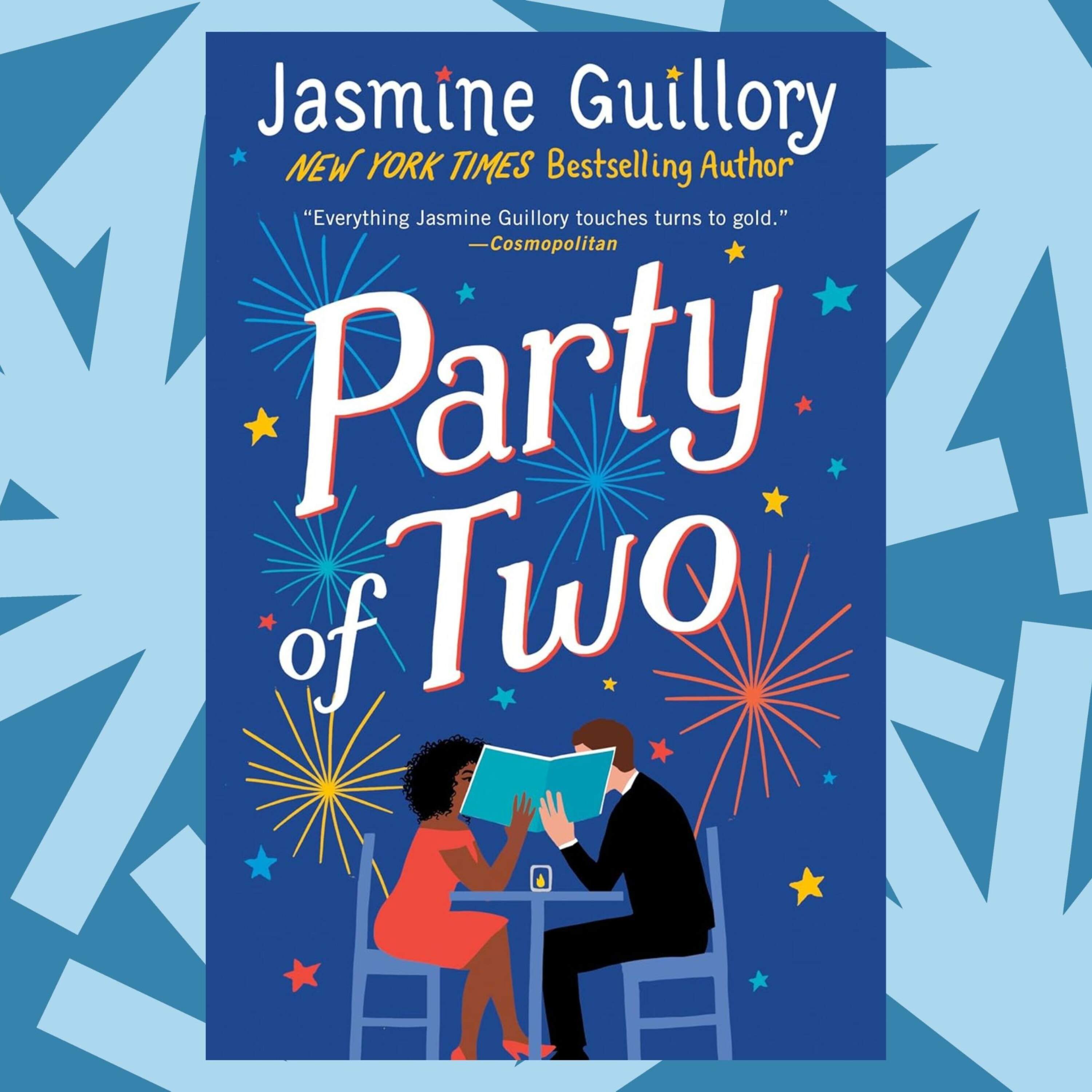
NPR's Book of the Day
A meet-cute followed by real life: 'Party of Two' is about love in the real world
00:08:00
Loading summary
Transcript20 lines
- [00:02]
A
Hey, it's NPR's Book of the Day. I'm Andrew Limbong. Something I love about doing this show, particularly when we get to listen to older interviews with authors, is that they're a time capsule of what was going on. Yes, great literature is forever, but these interviews capture a specific moment. So let's go back to summer 2020, deep in early Covid times and during the discussions about race and racism we were having as a country after the killing of George Floyd. At the time, author Jazan Guillory had just come out with her book Party of A romance, about a U.S. senator and a lawyer. One is black and the other is white. This wasn't Guillory's first go at writing a romance involving an interracial couple. And in this interview, Guillory talks to then NPR host Lulu Garcia Navarro about why the theme is so important to her. That's coming up.
- [00:52]
B
This message comes from feeling heavy and depleted after the holidays. Prolon's five day Fasting Mimicking diet aims to make it easy to reset your body habits and energy heading into the new year. Developed at USC's Longevity Institute, the goal of Prolon's nutrition program is to rejuvenate you from within by working at the cellular level to support fat loss, glowing skin and Sharper Focus. Get 15% off plus a bonus gift when you subscribe at prolonlife.com NPR Olivia.
- [01:24]
C
Monroe has just moved to Los Angeles to open her own law firm. Max Powell is a U.S. senator who spends weeks in D.C. after a meet cute at a hotel bar, they begin a casual weekend's only long distance fling. Or is it more? Party of Two is the latest romance novel by Jasmine Guillory, who joins me now. Hello.
- [01:44]
D
Hello. How are you?
- [01:46]
C
I am very well. I gotta say, this is a romance story with a lot of pretty timely themes. Olivia is black. Max is white. How does race play out in their relationship?
- [01:58]
D
You know, race plays out in their relationship in the different ways they view the world and the different ways the world has impacted them. Max has a very kind of happy go lucky attitude towards life, which is easy for him because he grew up wealthy, he's a white man. He's sort of had everything he's touched turned to gold in many ways. And while he recognizes very well a lot of the struggles that other people go through, those have never been his struggles, whereas Olivia has fought for everything that she's ever gotten. And so they just have very different attitudes towards how to get through the world.
- [02:41]
C
Max is well meaning, but he has some Blind Spots, for example. He doesn't understand what it means for Olivia that she was arrested as a teenager.
- [02:50]
D
In an academic way, he gets it. He used to be a prosecutor, and he kind of had a big change of perspective when he was a prosecutor and recognized when what happened to kids who were arrested, he tried to reform within the office. He is now a senator and is trying to reform that way. But it's nothing that he's ever had to go through. And so he doesn't understand viscerally what she went through.
- [03:19]
C
You have interracial couples in your other books as well, not just Party of Two. Why is it important to sort of touch on these conversations in your fiction?
- [03:28]
D
It's very difficult for me, and I know for other people to write a book about people falling in love and getting to know one another without talking about something that is core to their identity. I've never had a relationship, whether it's a romantic relationship or a good friendship, where we didn't talk about race. My close friends and I talk about race all the time. You know, especially right now in all of the conversations we're having about race. I mean, I've had a number of conversations about race with my white friends in the past few weeks that have not felt stressful or fraught because I've talked to them about that before. You know, I don't think that you can have a real relationship with a person without having those conversations and knowing where you stand. And I feel like my characters feel a lot the same way. And so I wanted them to have those conversations, not in a big deal way every time, but just so that they keep referring to it and know that they're on the same page for everything.
- [04:29]
C
Okay. On a less serious note, I want to ask about the third main character in this book, which is dessert. Max woos Olivia initially with a cake delivery. There's a ton of food in all your books. And it didn't really occur to me until after I'd read this book that you don't often get a lot of eating in romance novels. But I feel like Max and Olivia eat almost as much as they have sex.
- [04:56]
D
Maybe more. I think, like, a lot of times when I'm reading books, I kind of wonder, like, did they stop for lunch? You know, like, I mean, partly. That's just logistically, you know, when I'm watching movies and they have this long action sequence, I think they must be real tired and hungry after that. Like, maybe they need a snack. And so there's definitely a lot of snacking in this book.
- [05:24]
C
I want to end by asking you about this moment in our country, because, as you've mentioned, we're in the midst of these conversations about race and justice. And there has been a lot of attention recently on the publishing industry and how much it it pays black authors. And earlier this year, there was a huge scandal in the Romance Writers association after one author, Courtney Milan, called out racism in another author's book. You had already left the RWA some time ago because of racism. How do you deal with these issues within your industry at the same time that the whole country is reckoning with them on this huge scale?
- [06:00]
D
These are issues that I have been dealing with and reckoning with in every industry I've worked in. You know, when I was a lawyer, I distinctly remember there was a survey that said 100% of black women lawyers leave their first law firm. And then I thought about all of the black women lawyers I knew, who I had known at the firm, who were all gone. And I was like, yeah, okay, that makes sense. The legal industry is very racist. The publishing industry is very racist. Like, name an industry and you'll say that. And that's what systemic racism means. And so all, you know, what I try to do is lift up other black writers, give them advice, because I think a lot of publishing is kind of a whisper network. If you don't get those whispers, then you don't know who to avoid or what's happening or what you should ask for. And so that's what I try to do. Sometimes it feels like that isn't enough, but the whole industry is above me, and so I'm just trying to fight as hard as I can.
- [07:01]
C
Does this moment feel different to you?
- [07:03]
D
You know, it does really feel different. It has heartened me to see places like publishing houses making commitments to saying that they're gonna, you know, do an audit of their staff and the books that they put out. So that's a. And then what are they going to do? What's the recruitment going to be? What's the retention going to be? That thing I said about 100% of black women lawyers leave their first law firm. It wasn't that they couldn't get jobs. It was because they left because the atmosphere there was too hard and difficult. And they didn't get mentors and they didn't get sponsors. And that's what people need who work in publishing, is they need people to have their backs. Like, they need to not be the only black person in a room when they're trying to fight for a book by another black person. You know, I'll be checking back in in a few months and then a few years and see if there's been progress.
- [07:59]
C
Jasmine Guillory, her new book is Party of Two. Thank you very much.
- [08:03]
D
Thank you so much.
- [08:05]
A
And just a reminder that signing up for book of the day plus is a great way to support NPR's book coverage and public media. And you'll get to listen to every episode of Sponsor Free. So please go find out more@plus.NPR.org BookOfTheDay.
- [08:32]
E
This message comes From NPR sponsor 1Password. Anyone else feel like 99% of your emails and texts are password reset codes trusted by millions of users and over 175,000 businesses? 1Password lets you skip the resets and sign in securely. With strong, unique passwords that autofill across all your devices, you can safely share logins, store cards and files. And finally, stop using your pet's name as a password. Try it free for two weeks@1Password.com NPR this message comes from NPR sponsor Capella University. Interested in a quality online education? Capella is accredited by the Higher Learning Commission. A different future is closer than you think with Capella University. Learn more at capella.edu. this message comes from Bombas. You need better socks and slippers and underwear because you should love what you wear every day. One purchased equals one donated. Go to bombus.com NPR and use code NPR for 20% off.