← NPR's Book of the Day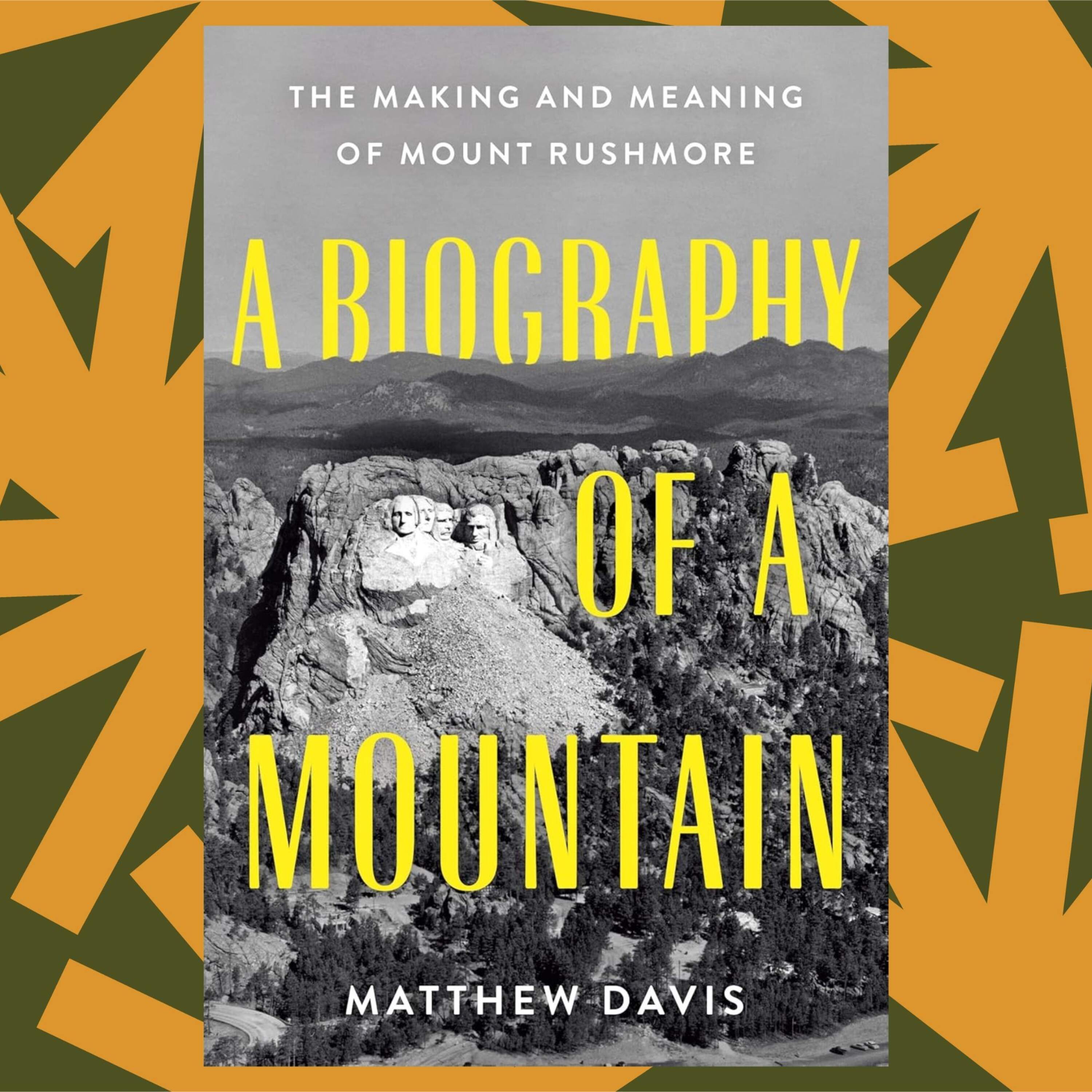
NPR's Book of the Day
After 100 years of Mount Rushmore, its biographer says the landmark is incomplete
00:07:09
Loading summary
Transcript22 lines
- [00:02]
Andrew Limbong
Hey, it's NPR's Book of the Day. I'm Andrew Limbong. If I asked you what is your Mount Rushmore of romance movies or your Mount Rushmore of 70s rock bands or your Mount Rushmore of authors, you generally know what I'm asking, right? Top four of your choosing. It could be your personal favorite or the ones you deem most culturally relevant or historically important. But when it comes to the actual Mount Rushmore, the selection process was a bit more complicated. Matthew Davis is the author of a new book about the landmark titled A Biography of a the Making and Meaning of Mount Rushmore. And in this interview with npr, Sachet Pfeiffer, he talks about how Rushmore is still, to this day, incomplete. That's coming up.
- [00:48]
NPR Sponsor Announcer
This message comes from LinkedIn ads. One of the hardest parts about B2B marketing is reaching the right audience. That's why you need LinkedIn ads. You can target your buyers by job title, company role, seniority and skills, all the professionals you need to reach in one place. Get a $250 credit on your next campaign. So you can try it yourself. Just go to LinkedIn.com nprpod that's LinkedIn.com nprpod Terms and conditions apply only on LinkedIn ads.
- [01:20]
Sachet Pfeiffer
When I was driving cross country about 20 years ago, I stopped at the Black Hills of South Dakota to see Mount Rushmore. It's quite a sight, the heads of four US presidents, each about 60ft, tal carved into stone. But I hadn't known the history of that national monument until I read a new book called A Biography of a the Making and meaning of Mount Rushmore. Its release is timed to the sculpture's 100th anniversary this year, and its author, Matthew Davis, explained to me why four famous faces ended up being carved into a mountain in South Dakota.
- [01:56]
Matthew Davis
This is actually my favorite part of the Rushmore story, because the initial idea for Mount Rushmore came from a state historian named Doane Robinson, who was very concerned about the state's economy in the 1920s. Basically, after World War I, the South Dakota agricultural and commodities markets crashed, and the state historian was looking for a way to diversify the state's economy. So he landed on this idea of tourism, of attracting the car tourists that were driving around the Midwest to come into the Black Hills of South Dakota for a tourist attraction. And that tourist attraction was what he wanted to sculpt into the Black Hills. His idea was was to have figures of the American west, like the great Lakota leader Red Cloud Sacagawea Lewis and Clark Custer be carved into the pinnacles of the Black Hills to attract tourism to that part of South Dakota.
- [02:50]
Sachet Pfeiffer
And the vision of what should be carved into that mountain changed over time. So how did we end up from his vision, the state historian's vision, to four US Presidents being in that rock?
- [03:00]
Matthew Davis
When Doane Robinson hired Gunson Borglum to.
- [03:03]
Do the sculpture, that's when the vision began to change. And Gunson Borglum wanted to create a memorial to American empire, to American exceptionalism. And he had the idea of carving four presidents into Mount Rushmore. And those four presidents, of course, are George Washington, Thomas Jefferson, Abraham Lincoln, and Theodore Roosevelt. And each represented a certain segment of that idea of American empire.
- [03:26]
Sachet Pfeiffer
And it took more than a decade to carve those faces in the mountain, I think 1927 to 1941. Why so long?
- [03:34]
Matthew Davis
Well, there were a lot of reasons. One of them, at the beginning especially, was funding.
- [03:38]
There were fits and starts in terms.
- [03:39]
Of how much money was available to carve the memorial. And then later on, it was really a very detailed process. You can only work in the summer months because it got very cold in South Dakota in the wintertime. And it was a process that today would seem kind of absurd. I mean, there was no technological laser scanning, for example. There are very little environmental reports put forward beforehand about how the memorial should be carved. And so Gunsen Borglum really took it on an act of faith that the memorial would appear, the sculpture would appear as he had envisioned it to. And so it was a work in progress, and still is a work in progress, as the memorial is not fully.
- [04:17]
Sachet Pfeiffer
Complete, which part of it is incomplete.
- [04:19]
Matthew Davis
Borglum's original vision was to include the torsos of the presidents, not just the faces. And that, of course, is not the case at Mount Rushmore. And I think even more interesting to me is that if you look at the memorial, you'll see rubble at the bottom of the faces, granite boulders that were blown off the mountain by dynamite. And those were initially going to be removed, but the memorial ran out of money, so they could not remove those.
- [04:42]
Sachet Pfeiffer
Matthew Davis, you write in your book how the land where Mount Rushmore is was sacred Indian land that was taken by the United States. And the Lakota nation later won a Supreme Court ruling that ordered the US to pay them more than $100 million for land theft. But the Lakota continued to refuse to take that money because they say they just land back. How likely is that ever to happen?
- [05:06]
Matthew Davis
I don't think it's that likely to happen. I mean, the United States would would need to Give that land back to the Lakota. And that encompasses a large amount of of land, including all of present day western South Dakota. I mean, there has been some discussion over what it might look like to have land that is currently owned by the federal government co jointly stewarded with the Lakota. But I think those options are probably not the most likely scenario for what will happen to the land. I think what will happen to the land is that there will not be much change in terms of ownership. But that doesn't mean that many Lakota people don't want the land back. There is a big rallying cry amongst many in the Black Hills to have the land returned to the Lakota as it was taken illegally, as the Supreme Court said, by the United States.
- [06:00]
Sachet Pfeiffer
By the way, you have visited Rushmore in every season. Which season is your favorite to visit?
- [06:06]
Matthew Davis
It's the fall. I love Mount Rushmore. I love the Black Hills in October when it is beautiful. The weather is perfect. The skies are blue, the air is crisp. The crowds are not as many as they are in summertime. It's a perfect time of year to be there. And it's actually in October. October 1, 1925 was the first dedication of Mount Rushmore. So at that time, Vincent Borglum probably knew that he was doing this the best in the fall as well.
- [06:35]
Sachet Pfeiffer
The original vision to make Rushmore a tourist attraction that would help the economy, I assume it's been quite successful in that way for South Dakota.
- [06:41]
Matthew Davis
It has been quite successful. I mean, Doane Robinson, of course, who had the initial idea, if he were alive today and recognized and understood that over 2 million people visit Mount Rushmore every year, he would have been overjoyed with that result. Those visitors generate millions of dollars for the local economy. And they also, a lot of those visitors then go other towns, other other memorials, other national parks that are in South Dakota. And so, you know, Doane Robinson was, was really quite a visionary and he had this idea to have Rushmore be a tourist attraction. It really has. You have to drive out of your way to go see Mount Rushmore. And as I said, millions of people do every year.
- [07:22]
Sachet Pfeiffer
That's Matthew Davis. He's the author of a biography of a mountain, the Making and Meaning of Mount Rushmore. Matthew, thank you.
- [07:29]
Matthew Davis
Sasha, thank you so much for having me.
- [07:41]
NPR Sponsor Announcer
This message comes From NPR sponsor 1Password. Anyone else feel like 99% of your emails and texts are password reset codes trusted by millions of users and over 175,000 businesses? 1Password lets you skip the resets and sign in securely with strong, unique passwords that autofill across all your devices. You can safely share logins, store cards and files. And finally, stop using your pet's name as a password. Try it free for two weeks at 1Password.com NPR this message comes from NPR sponsor NetSuite. Every business is asking the same question. How did they make AI work for them? With NetSuite by Oracle, you can put AI to work. Today, NetSuite is the number one AI Cloud ERP trusted by over 43,000 businesses. It's the unified suite that brings your financials, inventory, commerce, HR and CRM together. If your revenues are at least in the seven figures, get the free business guide Demystifying AI at netsuite.com story.