← NPR's Book of the Day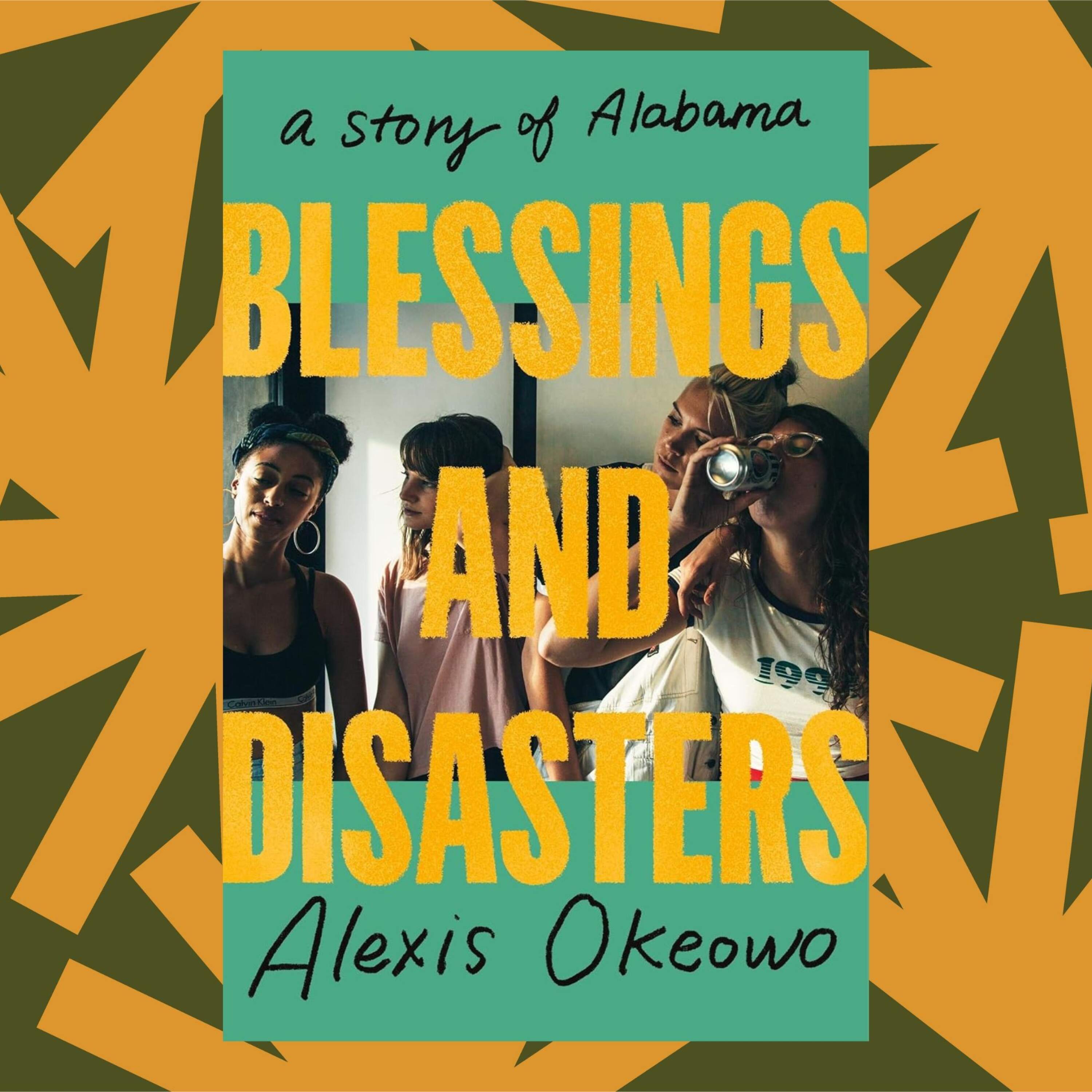
NPR's Book of the Day
Alexis Okeowo’s ‘Blessings and Disasters’ is an ode to Alabama’s complicated history
00:08:46
Loading summary
Transcript30 lines
- [00:02]
Andrew Limbong
Hey, it's NPR's Book of the Day. I'm Andrew Limbong. I guess I can't speak for other states, but in Maryland, where I live, people love showing their state pride through stuff. You know, crabs, beers, Old Bay, our chaotic looking flag, you know what I mean? But really, at the end of the day, many people love their home state because of other people. That's at least true of Alexis Okeowo, who is from Alabama. It is a state that is often both misunderstood and maligned. But she's got a new book out titled Blessings and Disasters, the Story of Alabama. It's part memoir, part reporting on the people that make up Alabama. And in this interview with Empire's Emily Kwong, Okeo talks about the importance of talking to people often left out of the story of Alabama. That's ahead.
- [00:50]
NPR Sponsor Announcer
Support for this podcast and the following message come from indeed. You just realized your business needed to hire someone yesterday. Indeed's sponsored jobs helps you stand out. According to INDEED data, sponsored jobs posted directly on indeed have 45% more applications than non sponsored jobs. Speed up your hiring right now with Indeed and get a $75 sponsored job credit to get your jobs. More visibility@ Indeed.com book terms and conditions apply. Hiring Indeed is all you need.
- [01:24]
Emily Kwong
Yellowhammer, camellia, Southern longleaf pine. These are all symbols of Alabama, the home state of Alexis Akayawo, a staff writer at the New Yorker and daughter of Nigerian immigrants who wanted to write a book about what it means to love the place where she's from while still acknowledging its sins. That book is called Blessings and Disasters, A Story of Alabama. Alexis Akao joins me now. Hi, welcome to ALL Things considered.
- [01:52]
Alexis Okeowo
Hi. Thank you for having me.
- [01:54]
Emily Kwong
You know, relationship to your home state is a very personal thing. Can you tell us the story of what happen that made you want to write this?
- [02:01]
Alexis Okeowo
Yeah. So Alabama to me has always been home. It's the place I've known best. It's where I spent my childhood. But it wasn't until I left for college in the Northeast that I realized how people outside of Alabama held such strong convictions and stereotypes about a place that they, in my opinion, didn't really know. Alabama is often defined by its worst events, its worst characteristics, its history. And I wanted to tell an alternate history of the state. I wanted to talk about the things that are left out of the state story and the experiences of people who decide to stay there despite so many people writing Alabama off.
- [02:50]
Emily Kwong
Yeah, the approach you take to depicting a multifaceted view of Alabama is so brilliant. And you Write about how so much of Alabama is a battle over who gets to tell the story. And the first sentence of the book is. And I underlined this, and I was like, wow, this is such a good first sentence of a book. It depends on who is doing the looking. And as the book goes along, we look at Alabama through different eyes.
- [03:18]
NPR Sponsor Announcer
We.
- [03:18]
Emily Kwong
Why did you choose to do it this way and to weave your story in with these half a dozen others?
- [03:25]
Alexis Okeowo
Yeah, because to me, Alabama and the south in general has always been most interesting because of the people who make it home. And I think those people and their visions of what Alabama could be is what has pushed the state forward, whether it's wanted to go or not. The Native Americans who managed to stay, the. The black people who decided to stay, the white Alabamians, the Latino migrants who have been coming and are still coming, immigrants like my parents from Nigeria. These are the people that are shaping Alabama and making it what it is. And a lot of those perspectives I found are not included in Alabama's official story or what people think Alabama's official story is.
- [04:09]
Emily Kwong
Some of the most riveting passages to me in the book are about the Poarch Creek Indians, this community that is Southern and Indian, and this tribe, their ancestors managed to escape the Trail of Tears and hold onto their land in Alabama. You write the Poarch Creek, where kin and country, the survivors of the worst events that can befall a people from displacement to near eradication. And for over a century, the federal government had treated them alternatively, like an extra finger or a phantom limb. You didn't mingle, it seems, a ton, with the Poarch Creek tribe growing up. So how did writing about the first Alabamians change how you saw the state?
- [04:55]
Alexis Okeowo
Their experience was not something that was included in the story of Alabama that I was taught growing up. Wow. And that, to me, isn't applicable at all.
- [05:05]
Emily Kwong
At all.
- [05:06]
Alexis Okeowo
And now I've seen mentions of their story more in historical markers downtown in Montgomery, but that's a more recent occurrence. And yet here is a small group of people that, as you said, managed to avoid getting onto the Trail of Tears, have become incredibly prosperous and consider themselves deeply Alabamian and Native American. And I was fascinated by their experience because they're still in a tricky situation where they still battle with the state of Alabama over their sovereignty and their businesses, but they're not going anywhere.
- [05:44]
Emily Kwong
Growing up, I learned about Alabama primarily through the lens of relationships between black and white Albanians. But you complicate that picture in sharing your personal Story, your family is from Nigeria, and you talk about the black immigrant community in Alabama being a whole other layer. Can you paint us that picture?
- [06:06]
Alexis Okeowo
Yes. I mean, people are still always shocked when I tell them, yeah, my parents have a whole West African community. The mini. I'm calling it sort of an Africa town in a way, because that hearkens to another Africa town in Alabama where the last enslaved people brought to Alabama illegally after the slave trade ended, made a home in Alabama after the Civil War. And I compare that experience a little bit to West African immigrants who came willingly for school and then found themselves in a bit of an odd racial limbo. Yeah. Not black American, but black. And how they made their way and made home in Alabama.
- [06:55]
Emily Kwong
Yeah. I love how you write about your aunties and auntie style. These West African women, these black women who you grew up with being so kind of colorful in their style and expressive in their style. Have they weighed in on your press tour outfits, what you should be wearing to represent Alabama fashion as you share this book with the world?
- [07:18]
Alexis Okeowo
Well, I'm already thinking about the outfit I will be wearing at my book event in Montgomery next week. I know it has to meet certain standards because all my aunties are coming. My mom is coming.
- [07:29]
Emily Kwong
What are you gonna wear?
- [07:31]
Alexis Okeowo
Very good question. I haven't decided yet. This is a very big decision I have to make.
- [07:36]
Emily Kwong
For those who have not read the book, what would you say about why Alabama is a great place to be from and a place worth returning to?
- [07:46]
Alexis Okeowo
First of all, I think it's physically beautiful. It's a beautiful place. I think that it produces.
- [07:52]
Emily Kwong
Yeah, the green land.
- [07:53]
Alexis Okeowo
Ye. Yeah, the green. The green is magnificent, and I'll always be drawn to that. I think it also produces some of the best people I've ever met in my life. I think the kind of warmth and honesty, generosity I find there is unlike any other I've found in this country. And I think there's a certain feeling and in the air and walking around and being with people that is just really valuable and meaningful. And I think that also it really shaped me into who I am. I think it taught me how to be around people I don't agree with, but who I can talk to. I think I can talk to almost anybody because I'm from Alabama.
- [08:41]
Emily Kwong
Alexis Akayewo is the author of Blessings and A Story of Alabama, which is available now. Thank you so much for coming on All Things Considered to talk about your book.
- [08:51]
Alexis Okeowo
Thank you.
- [08:53]
Andrew Limbong
And just a reminder that signing up for Book of the Day plus is a great way to support NPR's book coverage and public media. And you'll get to listen to every episode sponsor free. So please go find out more@plus.NPR.org BookOfTheDay.
- [09:21]
NPR Sponsor Announcer
This message comes from Warby Parker what makes a great pair of glasses at Warby Parker? It's all the invisible extras without the extra cost, like free adjustments for life. Find your pair@warbyparker.com or visit one of their hundreds of stores around the country. This message comes from Leesa. Leesa has a lineup of beautifully crafted mattresses tailored to how you sleep without the luxury price tag. Each mattress is designed with specific sleep positions and feel preferences in mind. From night one, you'll feel the difference. Visit leesa.com for 30% off mattresses, plus get an extra $50 off with promo code NPR. That's L E dashes.com promo code NPR.
- [10:04]
Capital One Sponsor Announcer
This message comes from Capital One. With the Venture X card, earn unlimited double miles on everything you buy. Plus get premium benefits at a collection of hotels when booking through Capital One Travel. What's in your wallet terms? Apply details at capitalone.
- [10:20]
Alexis Okeowo
Com.